🏬Supersize Online Funeral Retailer🪦1000's of Headstones⚱️Over 10,000 Cremation Urns⚰️Caskets Overnight Delivery🛒Funeral & Memorial Superstore🚚FREE Shipping on ALL Orders👨👩👧👦Helping Families for over 20 Years💰Lowest Price Guarantee🏬Supersize Online Funeral Retailer🪦1000's of Headstones⚱️Over 10,000 Cremation Urns⚰️Caskets Overnight Delivery🛒Funeral & Memorial Superstore🚚FREE Shipping on ALL Orders👨👩👧👦Helping Families for over 20 Years💰Lowest Price Guarantee
🏬Supersize Online Funeral Retailer🪦1000's of Headstones⚱️Over 10,000 Cremation Urns⚰️Caskets Overnight Delivery🛒Funeral & Memorial Superstore🚚FREE Shipping on ALL Orders👨👩👧👦Helping Families for over 20 Years💰Lowest Price Guarantee🏬Supersize Online Funeral Retailer🪦1000's of Headstones⚱️Over 10,000 Cremation Urns⚰️Caskets Overnight Delivery🛒Funeral & Memorial Superstore🚚FREE Shipping on ALL Orders👨👩👧👦Helping Families for over 20 Years💰Lowest Price Guarantee
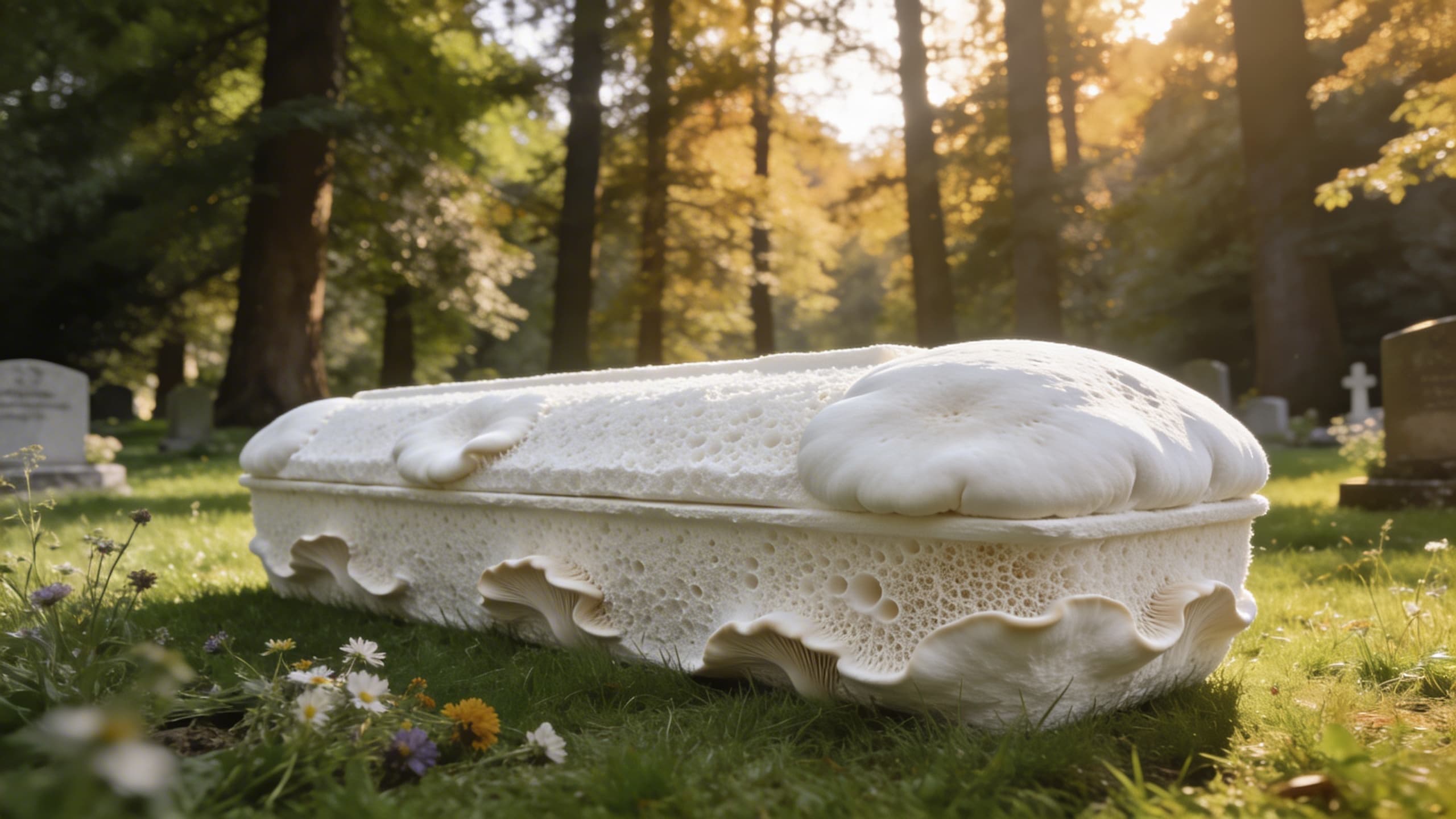
A mushroom coffin is a biodegradable casket grown from mycelium — the dense, thread-like root network of fungi — and designed to decompose within weeks of burial, actively enriching the surrounding soil in the process. For families weighing eco-friendly alternatives to conventional burial or cremation, mushroom-based burial products represent one of the most talked-about innovations in modern death care. If you are still exploring all the options available to you, our cremation planning guide walks through the full range of decisions families face, from disposition method to memorialization.
The concept is simple and powerful: instead of sealing a body inside a container that resists nature for decades, a mycelium coffin becomes part of nature's decomposition cycle almost immediately. The fungi break down organic material, neutralize certain toxins, and convert remains into nutrient-rich soil that supports new plant growth. Mushroom burial suits work on a related principle, using garments embedded with mushroom spores to achieve similar goals without a at all.
This guide covers how both products work, what they cost, where they are available, and how they compare to other green burial options like aquamation, tree pod burial, and biodegradable caskets.
How a Mushroom Coffin Works
A mushroom coffin — also called a mycelium casket or living coffin — is cultivated rather than manufactured. The production process begins with mycelium, the root structure of mushrooms, which is combined with organic material such as hemp fibers or wood chips inside a coffin-shaped mold. Over approximately seven days, the mycelium grows to fill the mold completely, binding the organic material into a solid, lightweight structure. The coffin is then dried, which halts the growth process and makes the vessel sturdy enough to hold and transport a human body.
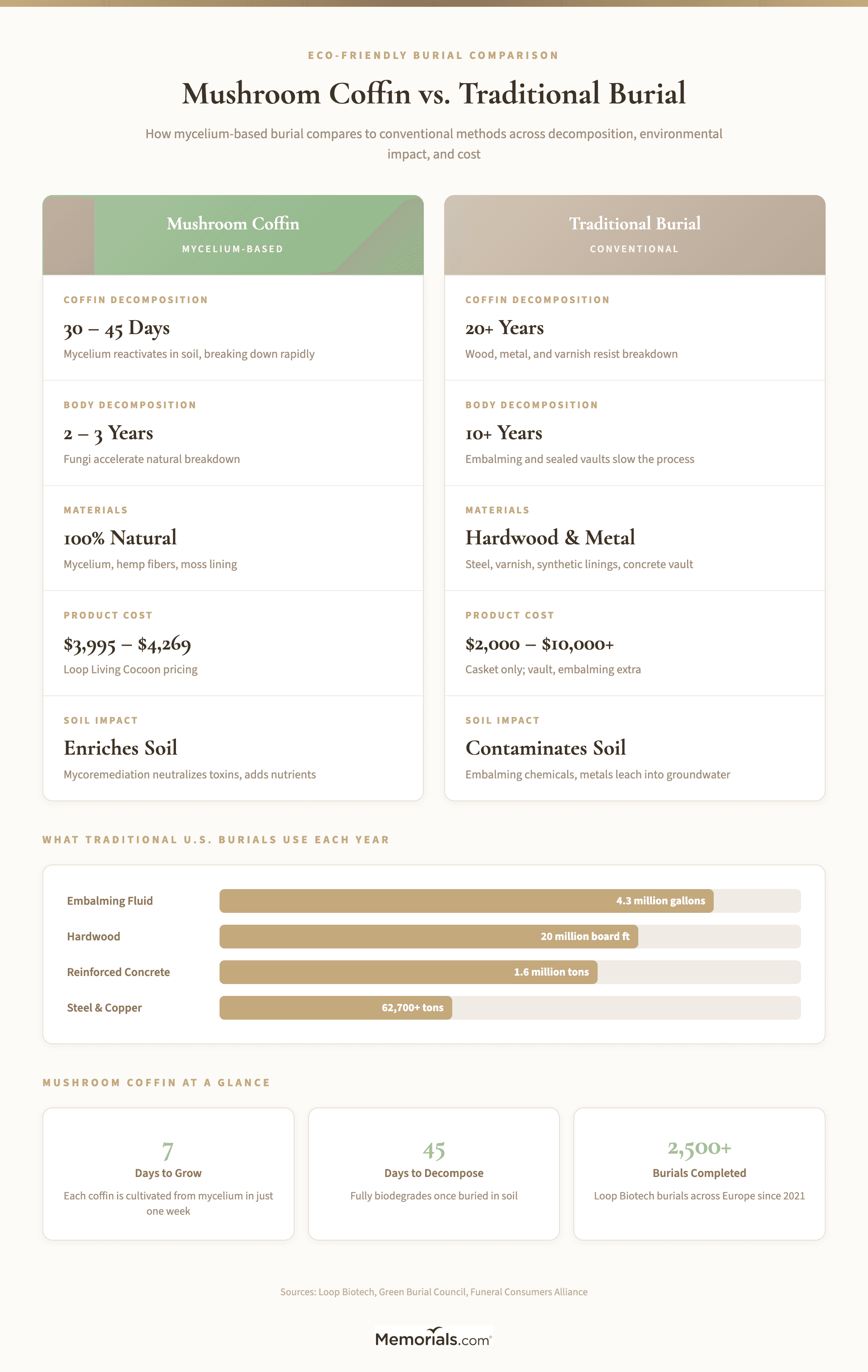
Once buried and exposed to groundwater and soil microorganisms, the mycelium reactivates. The coffin itself typically decomposes within 30 to 45 days — far faster than conventional wooden caskets, which can take decades to break down. The body inside also decomposes more quickly, usually within two to three years compared to ten or more years in a standard burial. This accelerated decomposition is one of the central appeals for families drawn to environmental impact of cremation discussions and the broader search for lower-impact alternatives.
The fungi release enzymes that aid in decomposition while also performing a process called mycoremediation — breaking down and neutralizing toxins that accumulate in the human body over a lifetime, including heavy metals and residual chemicals from food, dental work, and medical procedures. Instead of leaching these substances into the soil the way a traditional embalmed burial can, a mycelium coffin actively cleans the surrounding earth.
The Loop Living Cocoon: The Leading Mushroom Coffin
The most well-known mushroom coffin on the market is the Loop Living Cocoon, developed by Bob Hendrikx and his Netherlands-based company Loop Biotech. Hendrikx created the product during his graduate studies at Delft University of Technology with a clear goal: transforming burial from something that harms the earth into something that heals it.
Key specifications of the Loop Living Cocoon include the following. The coffin is made entirely from mycelium and upcycled hemp fibers and is grown in just seven days. It weighs approximately 66 pounds but supports up to 440 pounds. The interior comes lined with a soft bed of moss, with optional wool, hemp, or organic cotton linings available. It features six integrated jute handles suitable for shouldering or lifting, and it is certified for natural burial, traditional burial, and cremation by GreenLeave standards.
Since 2021, Loop Biotech has facilitated more than 2,500 burials using the Living Cocoon across Europe. The first burial in the United States took place on June 1, 2025, when Mark C. Ancker was laid to rest at Cedar Brook Burial Ground in Industry, Maine. Loop Biotech officially launched in the U.S. market on June 5, 2025 — World Environment Day.
The Living Cocoon is priced starting at approximately $3,995 to $4,269 depending on lining choices, which is comparable to a mid-range traditional casket. Families should also factor in burial plot costs, digging fees, and any transportation charges, though green burials typically eliminate embalming and vault expenses.
The Mushroom Burial Suit (Infinity Burial Suit)
The mushroom burial suit is a separate product from the mushroom coffin, though both share the goal of using fungi to aid decomposition. The Infinity Burial Suit was created by artist and researcher Jae Rhim Lee and brought to market by her company Coeio. Lee's concept emerged from her research at MIT into mycoremediation — using fungi to remove toxins from the environment.
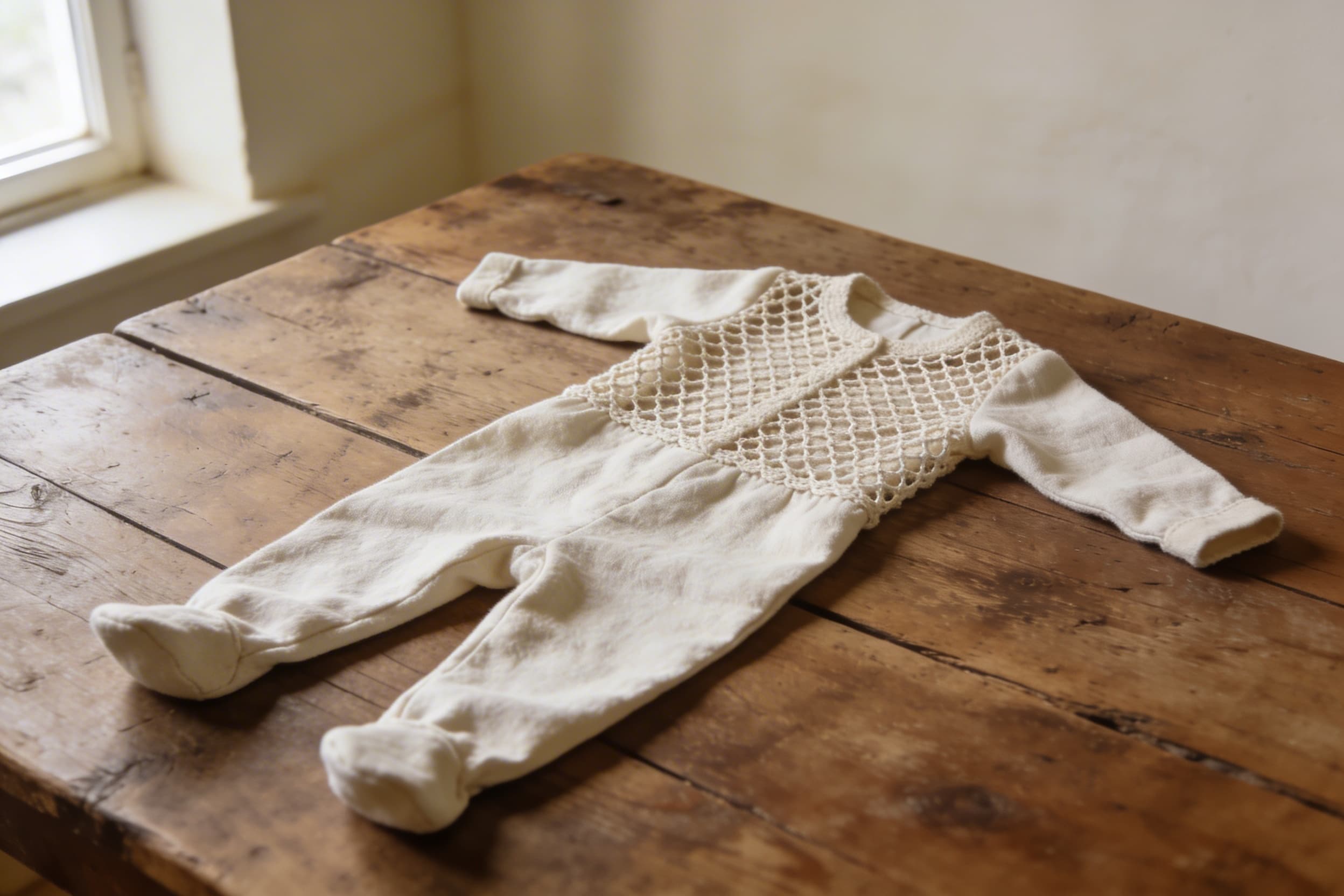
The suit itself is a full-body garment made from organic cotton, with a crocheted netting infused with specially cultivated mushroom spores that Lee developed through years of experimentation, feeding them her own hair, skin cells, and nail clippings. Once the body is buried in the suit, the spores activate in the soil and begin breaking down both the garment and the body while neutralizing contaminants.
The mushroom burial suit gained widespread public attention in 2019 when actor Luke Perry was laid to rest wearing one. His daughter confirmed the choice on social media, noting that the decision reflected his commitment to environmental values. The moment brought mainstream awareness to an option most people had never heard of.
A Coeio Infinity Burial Suit for humans costs approximately $1,500. Coeio also produces pet burial suits priced around $200. The suit is designed for whole-body natural burial — it is not intended for cremated remains, since cremation ashes are chemically altered and have a high pH that can inhibit fungal growth.
Mushroom Coffin vs. Mushroom Burial Suit: Key Differences
Both mushroom-based burial products serve families seeking eco-friendly alternatives, but they differ in form, function, and price.
A mushroom coffin is a complete casket made entirely from mycelium. It provides structural containment for the body, supports traditional funeral procedures like viewings and services, and is compatible with both natural and traditional cemeteries. It decomposes in 30 to 45 days after burial and costs approximately $4,000 to $4,300.
A mushroom burial suit is a wearable garment, not a container. It replaces the casket entirely and is most appropriate for natural burial cemeteries that allow shrouded burial without a coffin or vault. The suit relies on direct soil contact to activate the mushroom spores and costs approximately $1,500.
The practical choice between them often depends on the cemetery. Traditional cemeteries typically require a casket or vault, making the mushroom coffin the better fit. Green cemeteries that accept shroud burials give families the option of using a suit alone. Some families combine a burial suit with a simple biodegradable casket for structural purposes, especially if a viewing or ceremony is planned before burial.
How Much Does a Mushroom Coffin Cost?
Cost is one of the most common questions families ask. Here is how mushroom-based burial products compare to conventional options.
The Loop Living Cocoon mushroom coffin ranges from approximately $3,995 to $4,269 depending on lining material. The Coeio Infinity Burial Suit costs approximately $1,500 for humans and around $200 for pets. A traditional metal or hardwood casket typically ranges from $2,000 to $10,000 or more. A biodegradable wicker or bamboo casket usually falls between $500 and $3,000. A burial shroud without mushroom technology can cost as little as $100 to $500.
Beyond the product itself, families should consider the total cost of the burial. Green burials often eliminate some of the most expensive line items in traditional funerals — embalming (typically $500 to $900), a burial vault ($1,000 to $10,000), and elaborate cemetery maintenance fees. A natural burial plot at a green cemetery can be less expensive than a conventional plot, though prices vary widely by region.
For families comparing the full cost of disposition methods, our cost of cremation vs burial breakdown offers a detailed side-by-side comparison.
Where to Buy a Mushroom Coffin in the United States
Availability of mushroom coffins in the U.S. has expanded significantly since Loop Biotech's official American launch in mid-2025. The Loop Living Cocoon can be ordered through Loop Biotech's website and through select funeral home partners. Passages International, a distributor of green burial products, also carries the Living Cocoon.
The Coeio Infinity Burial Suit can be purchased directly from the Coeio website and is also available through funeral homes that offer green burial services.
When ordering either product, families should confirm two things before purchasing. First, verify that the cemetery where the burial will take place accepts the specific product. Natural and green cemeteries generally do, but traditional cemeteries may have restrictions. Second, confirm lead times and shipping logistics, since both products involve specialized manufacturing and may require advance planning.
The Green Burial Council maintains a directory of certified green cemeteries across the United States, which can help families identify burial locations that welcome these products.
Is a Mushroom Coffin Right for You? Key Considerations
Choosing a mushroom coffin or burial suit is both a practical and philosophical decision. Here are the most important factors to weigh.
The environmental benefit is meaningful. Traditional burials in the United States use approximately 20 million board feet of hardwood, 4.3 million gallons of embalming fluid containing formaldehyde, and 1.6 million tons of reinforced concrete for vaults each year. A mushroom coffin eliminates all of these materials and turns the burial itself into an act of soil regeneration.
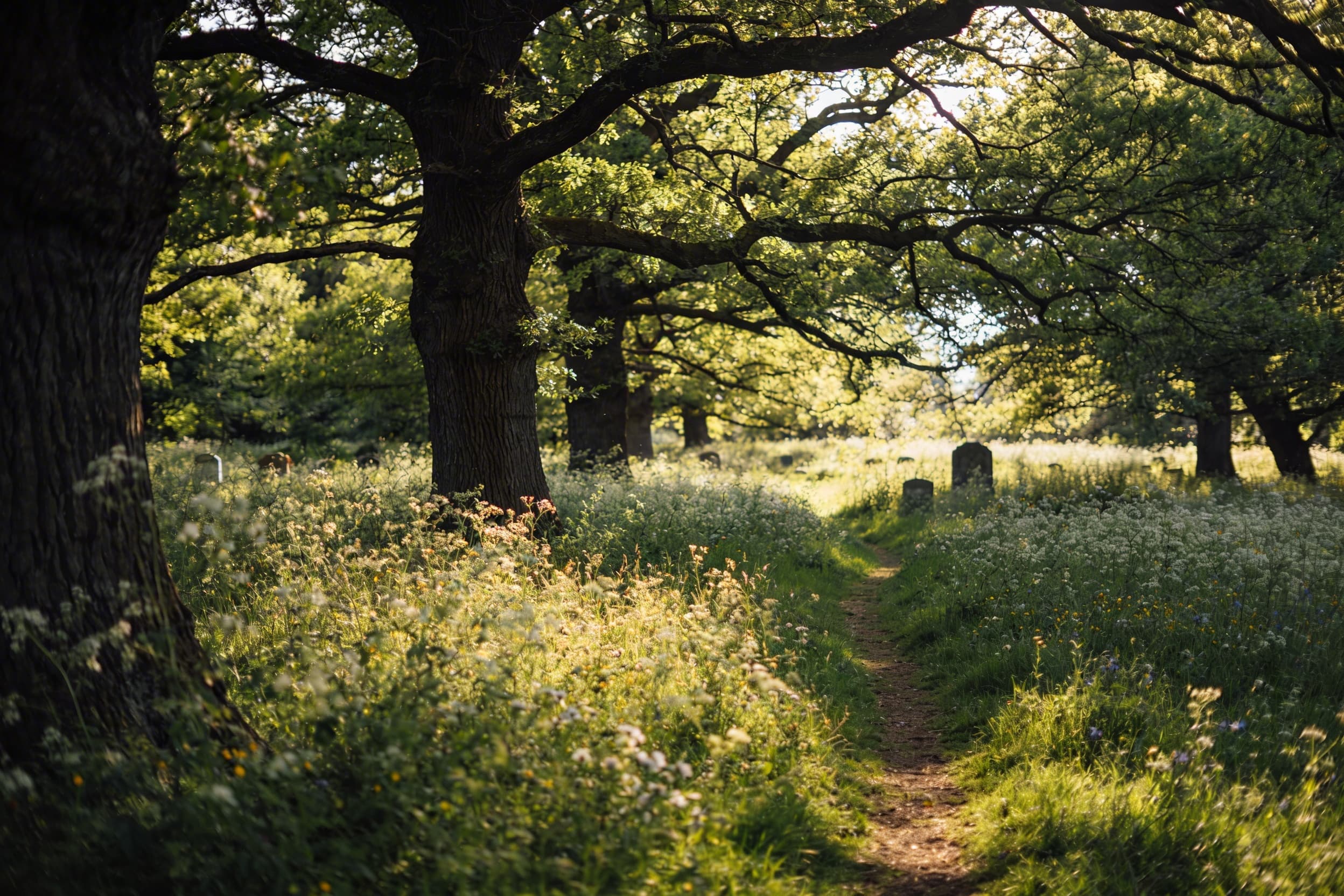
Cemetery compatibility matters most. Not every cemetery accepts mushroom coffins or burial suits. Green cemeteries certified by the Green Burial Council are the most reliable option. Some conventional cemeteries are beginning to offer "green sections" that may accommodate biodegradable containers, but families need to ask specifically.
Religious and cultural views vary. Some faith traditions have strict requirements around burial containers, body preparation, or decomposition that may or may not align with mushroom-based products. Families should consult with religious leaders or community elders if this is a concern.
These products are designed for whole-body burial. Mushroom coffins and burial suits are not designed for cremated remains. If your family has already chosen cremation, the environmental values behind mushroom burial can still be honored through biodegradable urns or living-memorial options like tree pod burial options.
There are skeptics. Some funeral professionals have raised questions about whether the mycoremediation claims made by certain products have been sufficiently proven through independent research. The decomposition benefits of mycelium coffins are better documented than those of burial suits, but the science is still evolving. Families should make decisions based on the practical and environmental benefits that are well established, rather than relying solely on marketing claims about toxin removal.
How Mushroom Burial Compares to Other Eco-Friendly Options
Mushroom coffins and burial suits exist within a growing landscape of eco-friendly alternatives to conventional burial and cremation. Understanding where they fit can help families choose the option that best matches their values and circumstances.
Aquamation, also called alkaline hydrolysis or water cremation, uses water, heat, and alkalinity to accelerate natural decomposition. It produces fewer emissions than flame cremation and results in a sterile powder similar to cremation ashes. Aquamation is a good fit for families who want the convenience of cremation with a lower environmental footprint, but it does require specialized facilities that are not yet available in every state.
Tree pod burial involves placing cremated remains or, in some cases, an entire body inside a biodegradable pod designed to nourish a planted tree. This creates a living memorial that grows over time. For families drawn to the regenerative philosophy of mushroom burial but who have chosen cremation, tree pods represent one of the closest alternatives.
Conventional green burial — using a simple biodegradable shroud, wicker casket, or untreated wood coffin — achieves many of the same environmental goals as a mushroom coffin at a lower cost. The key difference is that mycelium actively accelerates decomposition and performs mycoremediation, while a wicker casket simply allows natural processes to occur at their own pace.
Each option serves a legitimate environmental purpose. The right choice depends on whether burial or cremation has been selected, what the family's budget allows, and which cemeteries or facilities are accessible in the region.
Frequently Asked Questions
Can you buy a mushroom coffin in the United States?
Yes. Loop Biotech launched the Loop Living Cocoon in the United States in June 2025. It can be ordered through the Loop Biotech website, through Passages International, and through participating funeral homes. The Coeio Infinity Burial Suit has been available in the U.S. since the mid-2010s and can be purchased directly online.
How long does a mushroom coffin take to decompose?
The mycelium coffin itself typically decomposes within 30 to 45 days after burial. The body inside decomposes in approximately two to three years, compared to ten or more years inside a traditional casket. Exact timing depends on soil moisture, temperature, and microbial activity.
Can mushroom coffins be used for cremation?
The Loop Living Cocoon is certified for cremation as well as burial, meaning it can serve as a ceremony vessel before cremation takes place. However, the primary environmental benefits — soil enrichment, accelerated decomposition, mycoremediation — only apply when the coffin is buried. The mushroom burial suit is designed exclusively for whole-body burial and is not suitable for cremated remains.
How much does a mushroom burial cost in total?
The mushroom coffin itself costs approximately $3,995 to $4,269. A mushroom burial suit costs approximately $1,500. Total burial costs will also include a burial plot, digging fees, and possibly transportation. Green burials typically eliminate embalming, vault, and maintenance costs. A complete mushroom coffin burial might range from $5,000 to $8,000 depending on location, while a burial suit arrangement could be significantly less.
Are mushroom coffins safe for the environment?
Yes. Mushroom coffins are made from 100% natural materials — mycelium and hemp fibers — with no plastics, metals, or synthetic chemicals. The mycelium actively enriches soil and can help neutralize certain toxins from the body. The coffins are certified by GreenLeave and align with Green Burial Council standards for natural burial.
Mushroom coffins and mushroom burial suits offer families a way to make the final act of life a regenerative one. Whether the appeal is environmental, philosophical, or simply a desire for something more natural than embalming fluid and reinforced concrete, these products represent a genuine shift in how we think about burial. For families still weighing their options, the most important first step is confirming what the local cemetery accepts — the right product is the one that fits both your values and your practical circumstances. Browse Memorials.com's selection of green caskets and biodegradable urns to explore eco-friendly products available for purchase today.