🏬Supersize Online Funeral Retailer🪦1000's of Headstones⚱️Over 10,000 Cremation Urns⚰️Caskets Overnight Delivery🛒Funeral & Memorial Superstore🚚FREE Shipping on ALL Orders👨👩👧👦Helping Families for over 20 Years💰Lowest Price Guarantee🏬Supersize Online Funeral Retailer🪦1000's of Headstones⚱️Over 10,000 Cremation Urns⚰️Caskets Overnight Delivery🛒Funeral & Memorial Superstore🚚FREE Shipping on ALL Orders👨👩👧👦Helping Families for over 20 Years💰Lowest Price Guarantee
🏬Supersize Online Funeral Retailer🪦1000's of Headstones⚱️Over 10,000 Cremation Urns⚰️Caskets Overnight Delivery🛒Funeral & Memorial Superstore🚚FREE Shipping on ALL Orders👨👩👧👦Helping Families for over 20 Years💰Lowest Price Guarantee🏬Supersize Online Funeral Retailer🪦1000's of Headstones⚱️Over 10,000 Cremation Urns⚰️Caskets Overnight Delivery🛒Funeral & Memorial Superstore🚚FREE Shipping on ALL Orders👨👩👧👦Helping Families for over 20 Years💰Lowest Price Guarantee
Cremation is now the most common form of final disposition in the United States, yet many families are surprised to learn that not everyone can be cremated right away — and in some cases, not at all. Medical devices, legal requirements, religious traditions, and even body size can each create situations where cremation must be delayed, modified, or replaced with an alternative like burial.
If you are working through end-of-life arrangements and want a clear understanding of what might affect your plans, our cremation planning guide walks you through the full process from start to finish. This article focuses specifically on the situations that can prevent or delay cremation, so you know what to expect and can prepare accordingly.
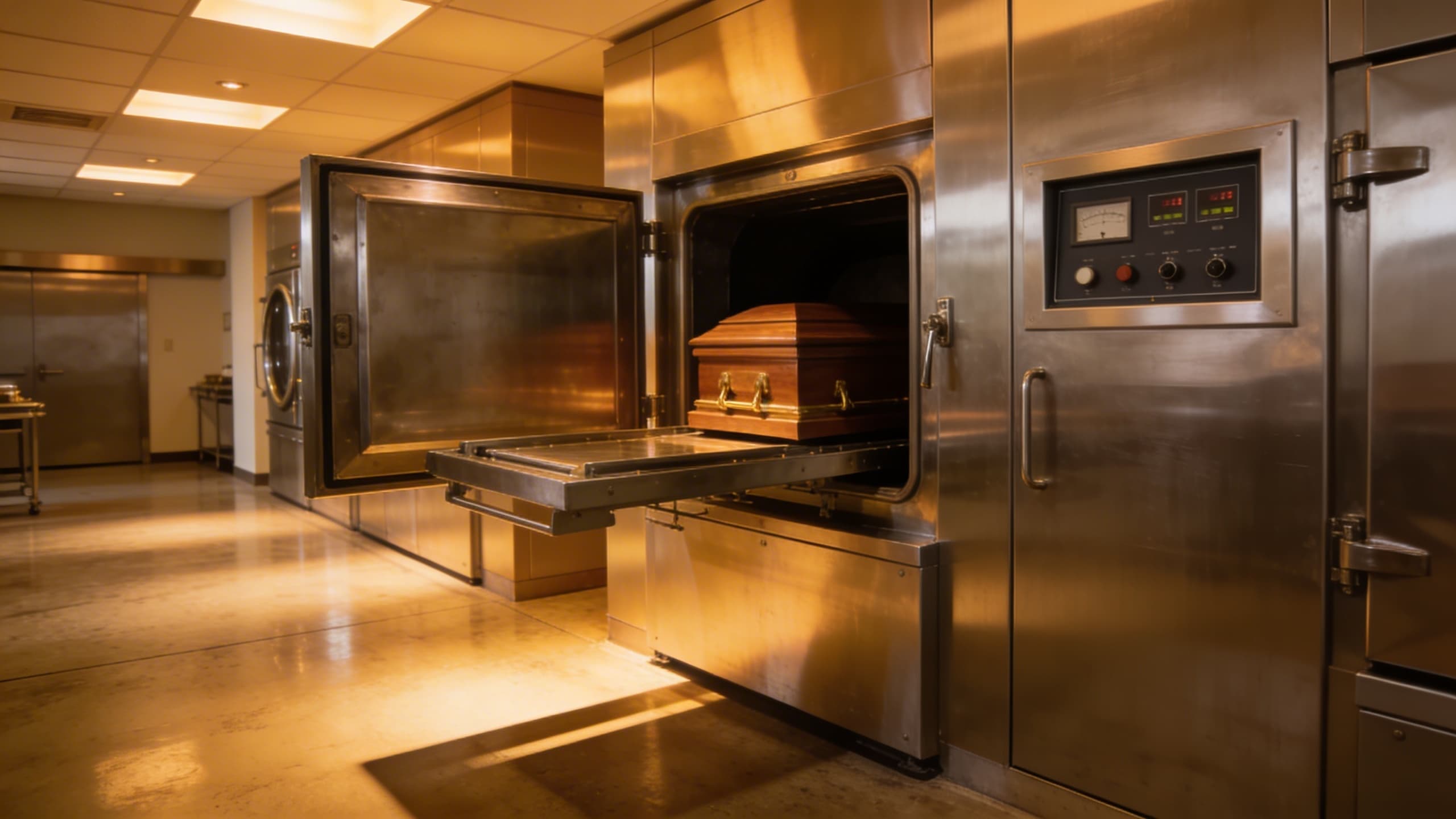
The most common reason a body cannot go directly into the cremation chamber — also called a retort — is the presence of certain medical devices. Cremation temperatures reach approximately 1,800 degrees Fahrenheit, and some implanted devices react dangerously at those temperatures.
Understanding what happens during cremation helps explain why specific implants pose a risk. The intense, sustained heat that reduces a body to bone fragments can cause battery-powered devices to explode violently, potentially injuring crematorium staff and damaging the retort chamber.
Pacemakers and Defibrillators
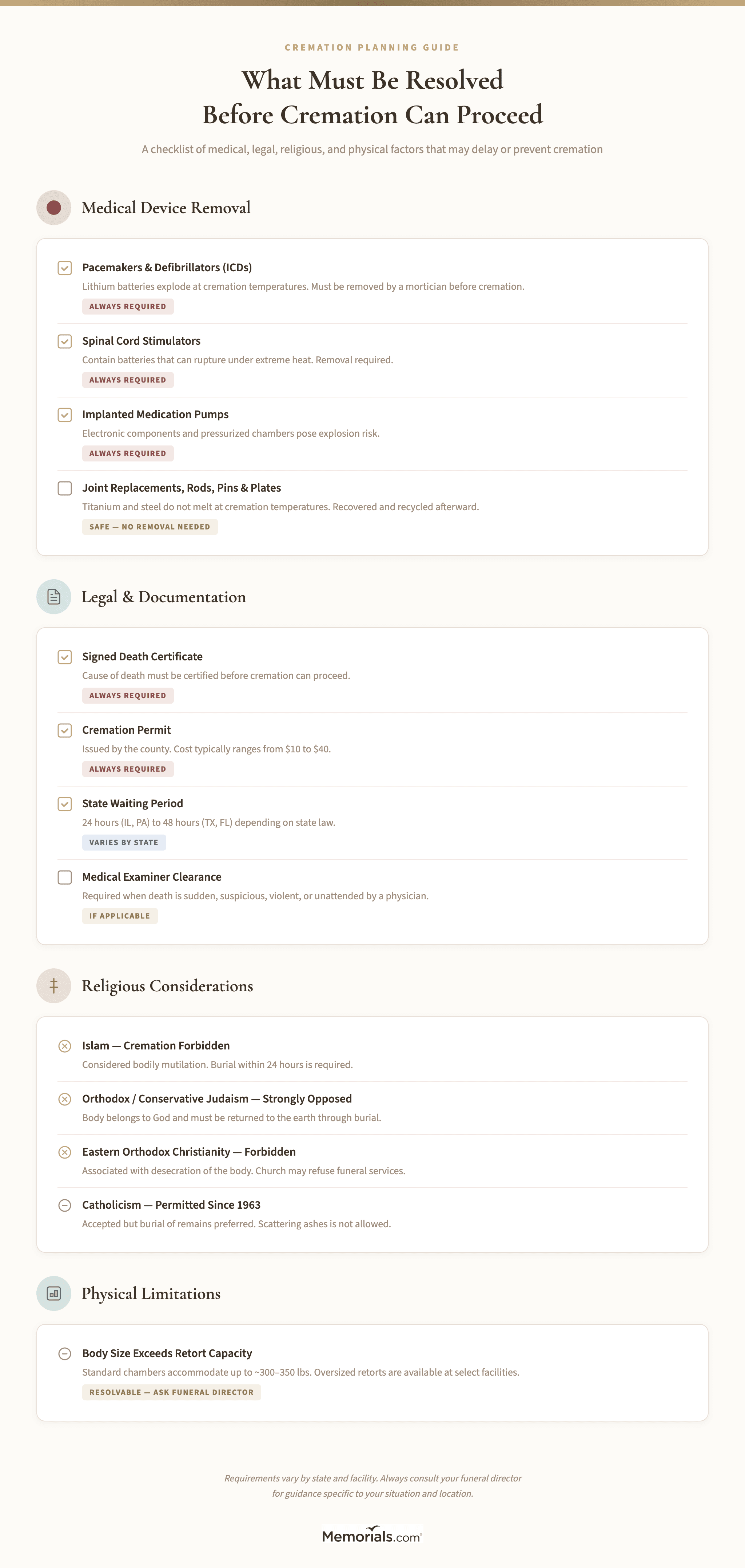
Pacemakers and implantable cardioverter-defibrillators (ICDs) are the most well-known devices that must be removed before cremation. Both contain lithium batteries that can explode when exposed to extreme heat, producing sound levels exceeding 120 decibels and enough force to damage the brick lining of a cremation chamber.
Approximately 700,000 pacemakers are implanted worldwide each year, making this one of the most frequent pre-cremation considerations funeral directors encounter. State laws in most jurisdictions explicitly prohibit cremating a body with a pacemaker or other hazardous implant in place, and the authorizing agent — typically the next of kin — is legally responsible for disclosing any known devices.
Traditional pacemakers sit in a subcutaneous pocket near the collarbone and can be removed through a small incision. Newer leadless pacemakers, such as the Micra Transcatheter Pacing System, are implanted directly inside the heart and are far more difficult to detect and remove. Current research suggests that these miniature devices produce minimal risk during cremation, and some jurisdictions are beginning to exempt them from mandatory removal requirements.
Spinal Cord Stimulators and Medication Pumps
Spinal cord stimulators, used to manage chronic pain, also contain batteries that can rupture under cremation temperatures. Similarly, implanted medication pumps — sometimes used for chemotherapy delivery or pain management — include electronic components that pose an explosion risk. Both must be identified and removed before cremation can proceed.
Implantable Loop Recorders
These small cardiac monitoring devices, roughly the size of a USB stick, are implanted beneath the skin in the chest area. Like pacemakers, they contain a battery and must be removed prior to cremation. Because they are small and lack external leads, families may not realize their loved one has one.
What About Other Implants?
Not every medical implant needs to be removed. Many common implants are safe to leave in place during cremation:
Generally safe during cremation: Titanium rods, pins, and plates from orthopedic surgeries do not melt at cremation temperatures and pose no explosion risk. They are recovered from the remains afterward using powerful magnets and typically recycled. Dental implants, gold teeth, and silver fillings are also safe, though dental gold alloys may partially melt and mix with the bone fragments. Silicone implants (breast, joint) can remain in place during flame cremation, although the melted material may adhere to the remains. Joint replacements made from metal or ceramic are inert at cremation temperatures.
Important distinction: If a family chooses aquamation — also called alkaline hydrolysis or water cremation — instead of flame cremation, all implants and devices remain intact and are separated from the remains without any explosion risk.
Legal Requirements That Can Delay or Prevent Cremation
Beyond medical devices, several legal requirements can stop a cremation from proceeding, either temporarily or indefinitely.
Death Certificate and Cremation Permit
Before any cremation can take place, a signed death certificate must be on file. The cause of death must be established and certified by the attending physician, coroner, or medical examiner. A separate cremation permit, issued by the county, is also required in most states.
If the deceased was not under the care of a physician at the time of death, a post-mortem examination may be required to determine the cause, which can delay the process by several days or more.
Mandatory Waiting Periods
Many states impose a waiting period between death and cremation. These waiting periods exist to allow time for proper documentation, a potential autopsy, and confirmation that no investigation is needed.
Common waiting periods include 24 hours in states like Illinois and Pennsylvania, and 48 hours in states like Texas and Florida. Even states without a formal waiting period still require full documentation before cremation can begin, which typically takes at least a day to complete.
Medical Examiner or Coroner Holds
When a death is sudden, unexpected, involves violence, occurs under suspicious circumstances, or happens during incarceration, the medical examiner or coroner has authority to place a hold on the body. A cremation cannot proceed until the investigation is complete and the examiner releases the remains.
Deaths that typically trigger a medical examiner review include homicides or suspected homicides, suicides, accidental deaths, deaths occurring within 24 hours of hospital admission, deaths of individuals not recently attended by a physician, and deaths of children under two years of age in some states.
Because cremation permanently destroys the body, medical examiners are particularly cautious about releasing remains for cremation in cases where evidence might later be needed.
Autopsy Requirements
If an autopsy is ordered, the cremation timeline is extended significantly. An autopsy itself may take only a day or two, but the full report — including toxicology and microscopic examination — can take four to eight weeks to complete. In most cases, the body is released for cremation after the physical examination, even if lab results are still pending.
In some states, if a family member objects to an autopsy on religious grounds, the examiner must wait 48 hours before proceeding, during which time the family may file a legal challenge.
Religious and Cultural Prohibitions
While cremation is the majority choice in the United States, several major world religions either prohibit or strongly discourage the practice. For families whose faith tradition opposes cremation, burial is the expected disposition.
Islam
Islam holds the strongest opposition to cremation among major world religions. Islamic teaching considers the body sacred both before and after death, and cremation is viewed as a form of bodily mutilation. Muslims are instructed to bury the deceased as quickly as possible, ideally within 24 hours. Participating in or even witnessing a cremation is forbidden under Islamic law, with only rare exceptions during epidemics when public health concerns override traditional practices.
Judaism
Orthodox and Conservative Judaism strongly oppose cremation. Jewish law teaches that the body belongs to God and must be returned to the earth through traditional burial. Cremation is seen as a violation of this obligation. For families exploring these traditions in more detail, our article on Jewish views on cremation covers the full range of denominational perspectives. Reform and Liberal Jewish communities are generally more accepting of cremation as a personal choice, though even these branches tend to prefer burial.
Eastern Orthodox Christianity
Eastern Orthodox and Oriental Orthodox churches forbid cremation and associate it with a deliberate desecration of the body. An Orthodox church may refuse to hold funeral services for someone who has been cremated. This position reflects the belief in bodily resurrection and the sanctity of the physical form.
Latter-day Saints (Mormonism)
The Church of Jesus Christ of Latter-day Saints advises against cremation, citing beliefs about the eternal connection between body and spirit. Cremation is not officially prohibited, however, and members who choose it are not denied church funeral services or ordinances.
Other Traditions
Roman Catholicism lifted its prohibition on cremation in 1963 but still prefers burial and requires that cremated remains be buried or entombed — not scattered or divided. Most Protestant denominations leave the decision to the individual. Hinduism and Buddhism both accept and, in many traditions, prefer cremation as a sacred rite.
Body Size and Physical Limitations
Modern cremation retorts are designed to accommodate most body sizes, but there are practical limits. Standard retort chambers typically accommodate remains up to approximately 300 to 350 pounds, though larger chambers exist.
For individuals whose body size exceeds the capacity of a particular crematorium's equipment, the facility may refer the family to a provider with a larger retort. Some crematories have invested in oversized chambers specifically for bariatric remains. This is not a prohibition on cremation itself — it is a logistical limitation that can be resolved by finding the appropriate facility.
Families in this situation should discuss the matter directly with their funeral director, who can identify a suitable crematorium. There is no reason to feel embarrassed; funeral professionals handle this with sensitivity and discretion.
When Cremation Is Not Possible: Alternatives to Consider
If cremation is not an option due to religious beliefs, legal complications, or personal preference, several alternatives are available.
Traditional Burial
Traditional burial in caskets remains the most common alternative. Families who were initially planning cremation but cannot proceed may find that burial offers a meaningful path forward, particularly when faith traditions call for returning the body to the earth. When comparing cremation and burial, both options can be paired with a full memorial service, viewing, and personalized remembrance.
Green Burial
For families drawn to cremation for environmental reasons but unable to proceed, green burial offers a natural alternative. Biodegradable caskets made from materials like wicker, willow, or sustainably harvested wood allow the body to return to the earth without the chemicals used in traditional embalming. Green burial is accepted by virtually all religious traditions and avoids the emissions associated with cremation.
Aquamation (Water Cremation)
Aquamation, also called alkaline hydrolysis, uses warm water and an alkaline solution to gently reduce the body to bone fragments. It produces remains that look and feel similar to traditional cremation ashes. Aquamation is accepted by an increasing number of religious traditions and does not require the removal of medical implants beforehand.
However, aquamation is not yet legal in all states, and availability varies. Families interested in this option should check local regulations and provider availability.
Embalming and Burial
When cremation is delayed or prevented by a legal hold, the embalming process preserves the body while the investigation is completed. This allows the family to hold a viewing and memorial service, with cremation or burial proceeding once the remains are released.
What You Can and Cannot Be Cremated With
A related question many families ask is what personal items can accompany the body during cremation. Some items are safe, while others must be removed.
Items safe to include: photographs, letters, dried or fresh flowers, prayer cards, a favorite blanket or soft toy (particularly for children), and clothing made from natural fibers like cotton or wool.
Items that must be removed: anything with a battery (cell phones, e-cigarettes, hearing aids with batteries), glass objects, bottles of alcohol or other combustible liquids, leather goods, latex or vinyl clothing, and items containing pressurized containers like snow globes.
Your funeral director will review the specific items you wish to include and advise you on what is permitted. Most cremation caskets and alternative containers are designed to hold personal keepsakes alongside the body.
Frequently Asked Questions
Can you be cremated if you have a pacemaker?
Yes, but the pacemaker must be removed before cremation can proceed. Pacemaker batteries can explode violently at cremation temperatures, posing a danger to crematorium staff and equipment. The removal is typically performed by the funeral home's mortician through a small incision. Newer leadless pacemakers implanted directly in the heart may be exempt from removal in some jurisdictions.
Can you be cremated with metal implants like hip replacements?
Yes. Titanium and steel implants from joint replacements, rods, pins, and plates do not pose a safety risk during cremation. They do not melt at cremation temperatures and are recovered from the remains afterward using magnets. The metal is typically recycled.
What happens if someone dies under suspicious circumstances — can they still be cremated?
Not right away. The medical examiner or coroner must complete their investigation and release the remains before cremation can proceed. Because cremation is irreversible, authorities are especially careful to complete all necessary examinations first. Once the investigation concludes and the examiner signs off, cremation can move forward.
Does any religion completely forbid cremation?
Islam is the most absolute in its prohibition — cremation is considered a violation of the body's sanctity and is forbidden in virtually all circumstances. Orthodox Judaism, Eastern Orthodox Christianity, and some other traditions also strongly oppose cremation, though individual adherents may make different personal choices.
Can an extremely large person be cremated?
Yes, though not every crematorium has equipment large enough to accommodate all body sizes. Standard retort chambers typically handle remains up to about 300–350 pounds, but oversized chambers are available at some facilities. A funeral director can help identify a suitable crematorium.