🏬Supersize Online Funeral Retailer🪦1000's of Headstones⚱️Over 10,000 Cremation Urns⚰️Caskets Overnight Delivery🛒Funeral & Memorial Superstore🚚FREE Shipping on ALL Orders👨👩👧👦Helping Families for over 20 Years💰Lowest Price Guarantee🏬Supersize Online Funeral Retailer🪦1000's of Headstones⚱️Over 10,000 Cremation Urns⚰️Caskets Overnight Delivery🛒Funeral & Memorial Superstore🚚FREE Shipping on ALL Orders👨👩👧👦Helping Families for over 20 Years💰Lowest Price Guarantee
🏬Supersize Online Funeral Retailer🪦1000's of Headstones⚱️Over 10,000 Cremation Urns⚰️Caskets Overnight Delivery🛒Funeral & Memorial Superstore🚚FREE Shipping on ALL Orders👨👩👧👦Helping Families for over 20 Years💰Lowest Price Guarantee🏬Supersize Online Funeral Retailer🪦1000's of Headstones⚱️Over 10,000 Cremation Urns⚰️Caskets Overnight Delivery🛒Funeral & Memorial Superstore🚚FREE Shipping on ALL Orders👨👩👧👦Helping Families for over 20 Years💰Lowest Price Guarantee
Religious imagery on a memorial does something an inscription cannot: it is read instantly, from a distance, by someone who never knew the person. A cross, a Star of David, a crescent — each one places the grave before anybody has read a word.
That legibility is also why the choice is worth making deliberately. A symbol is not decoration; it is a statement of belonging, and it is permanent. This page covers what the common symbols carry, how the traditions differ on what may be carved at all, and the practical constraints that decide how much of it fits.
The Symbols You Will See Most
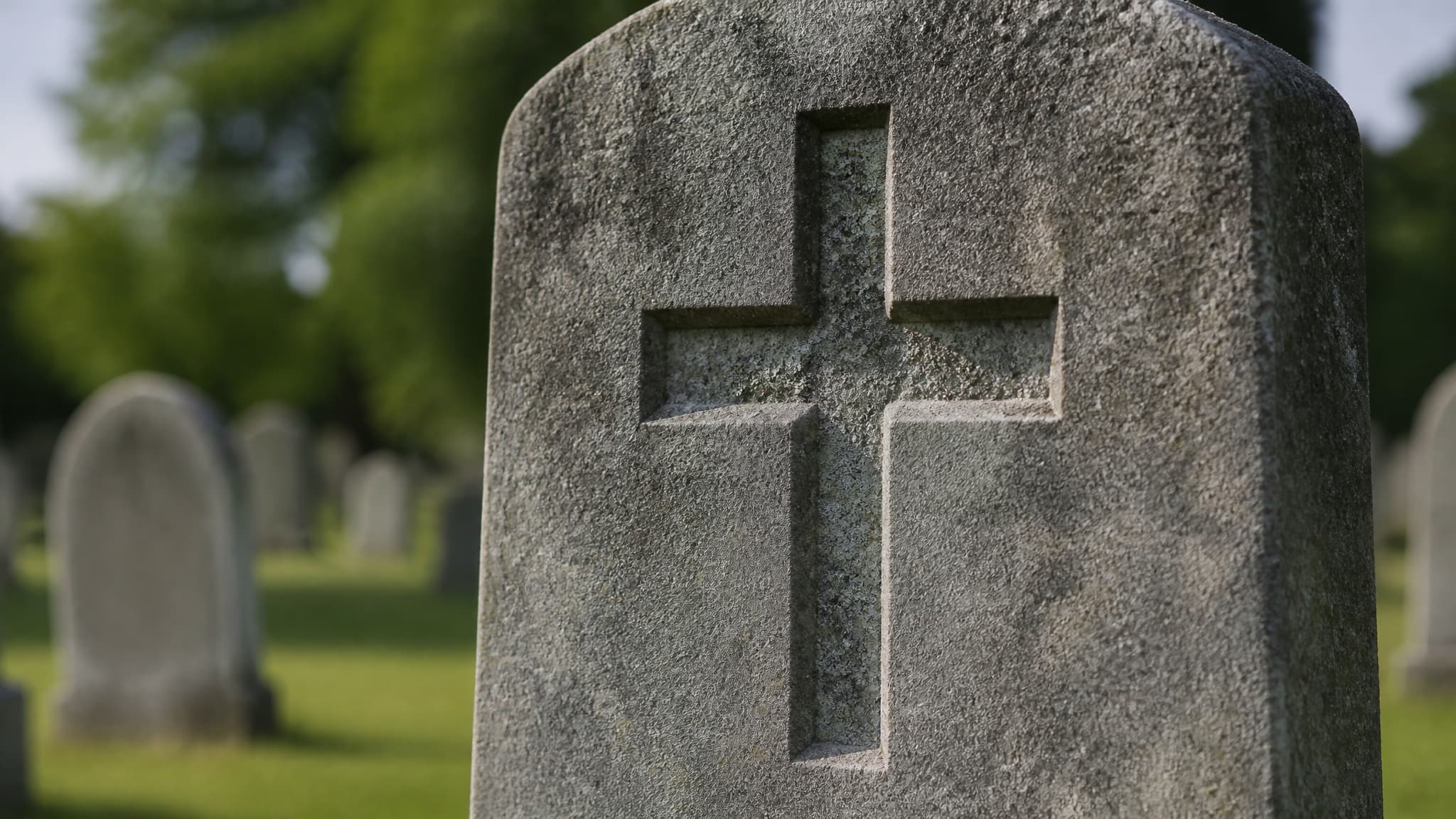
The Latin cross. The commonest religious symbol on Western memorials by a wide margin. Plain, and readable at any size.
The Celtic cross. A cross within a ring. Irish and Scottish in origin and now used far beyond those communities; the ring is variously explained and no single explanation is authoritative.
The crucifix. A cross bearing the figure of Christ. Distinctly Catholic where the plain cross is not, and a meaningful distinction to families on either side of it.
The Star of David. Two interlocking triangles. The principal Jewish symbol on a memorial and used almost universally in Jewish cemeteries.
The crescent and star. Used on Muslim graves in many countries, though not universally, and more a cultural convention than a religious requirement.
The Khanda. The Sikh emblem — a double-edged sword within a circle, flanked by two curved swords.
The lotus. Buddhist and Hindu. Growth from muddy water into something clean, which is a resurrection image in a different vocabulary.
The Om. Hindu, and increasingly seen on Western memorials as families settle across generations.
Praying hands. Christian but broadly so, and chosen frequently by families who want faith indicated without denomination.
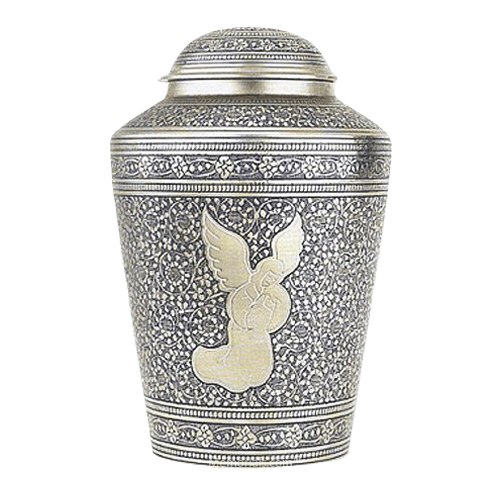
The dove. The Holy Spirit in Christian use, and peace almost everywhere else, which makes it one of the few symbols that reads well across a mixed family.
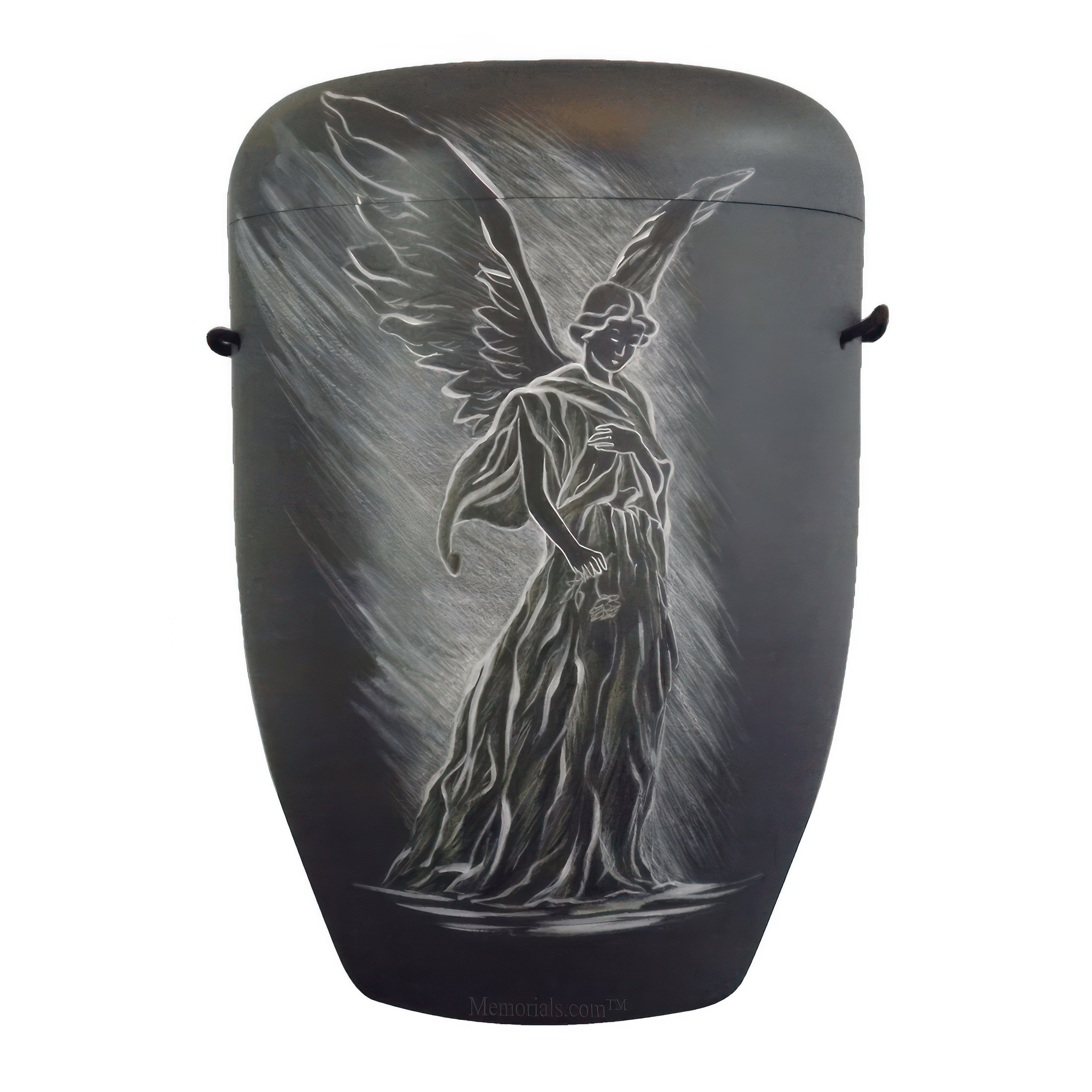
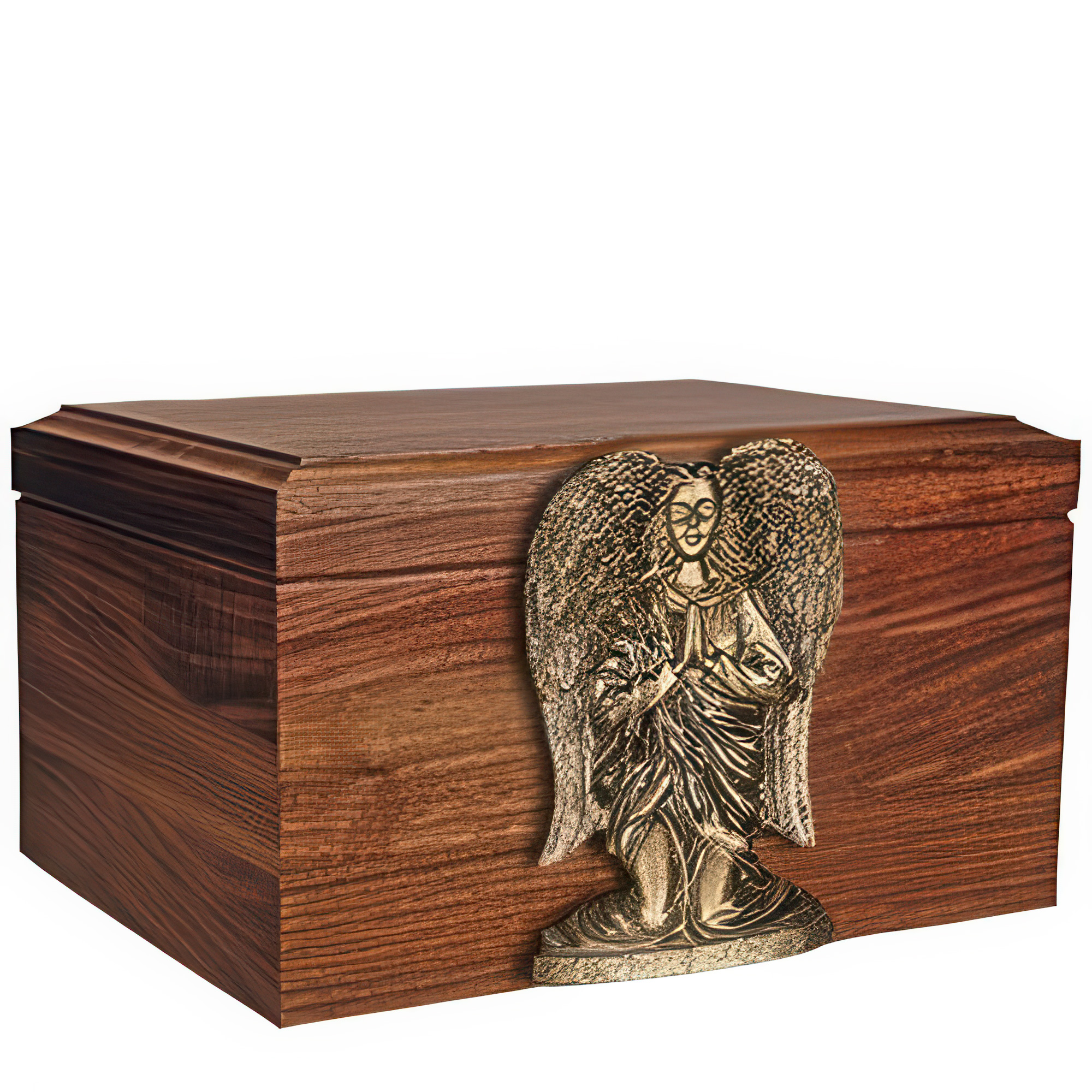
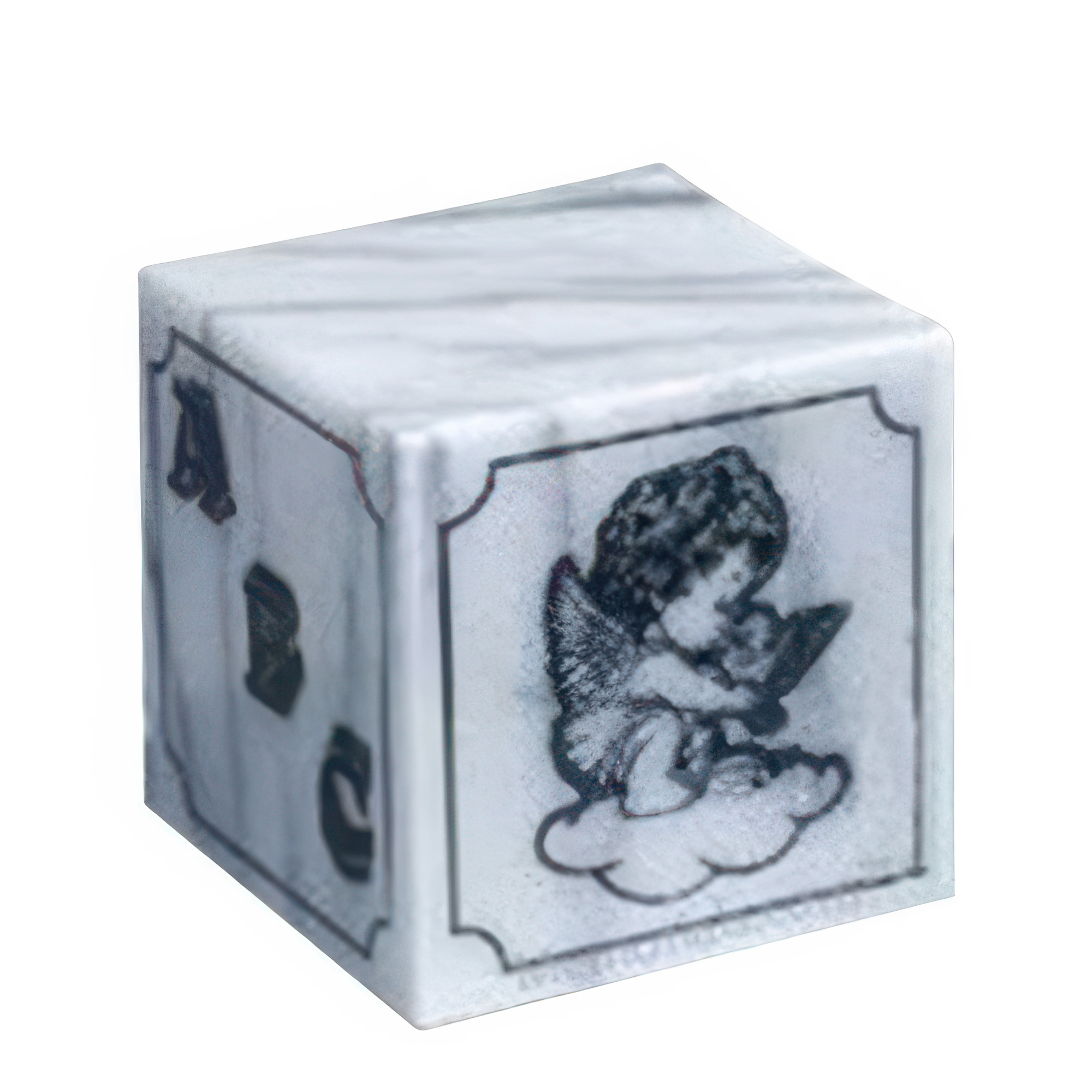
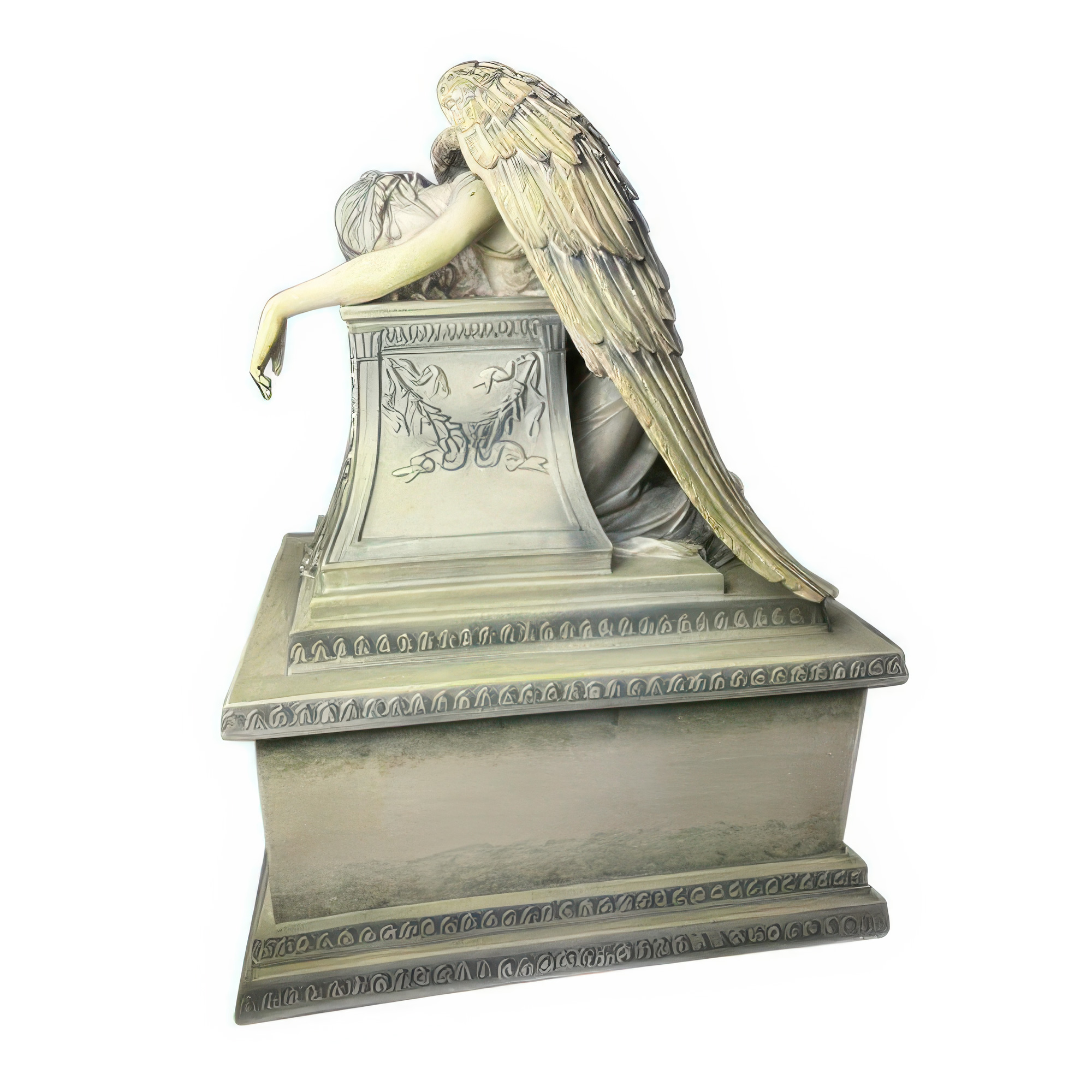
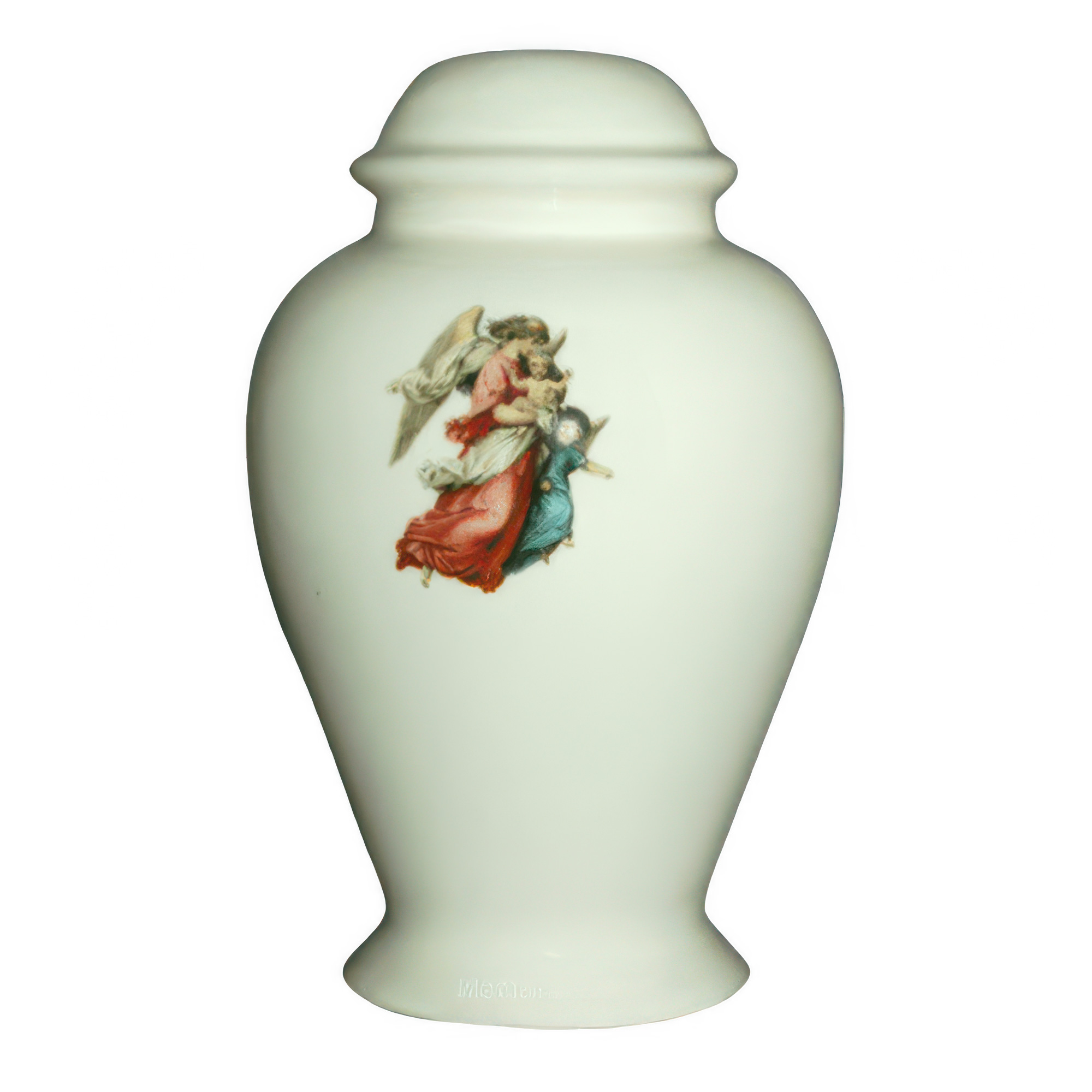
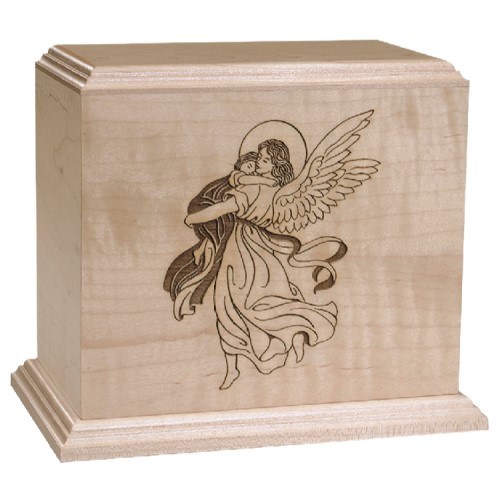
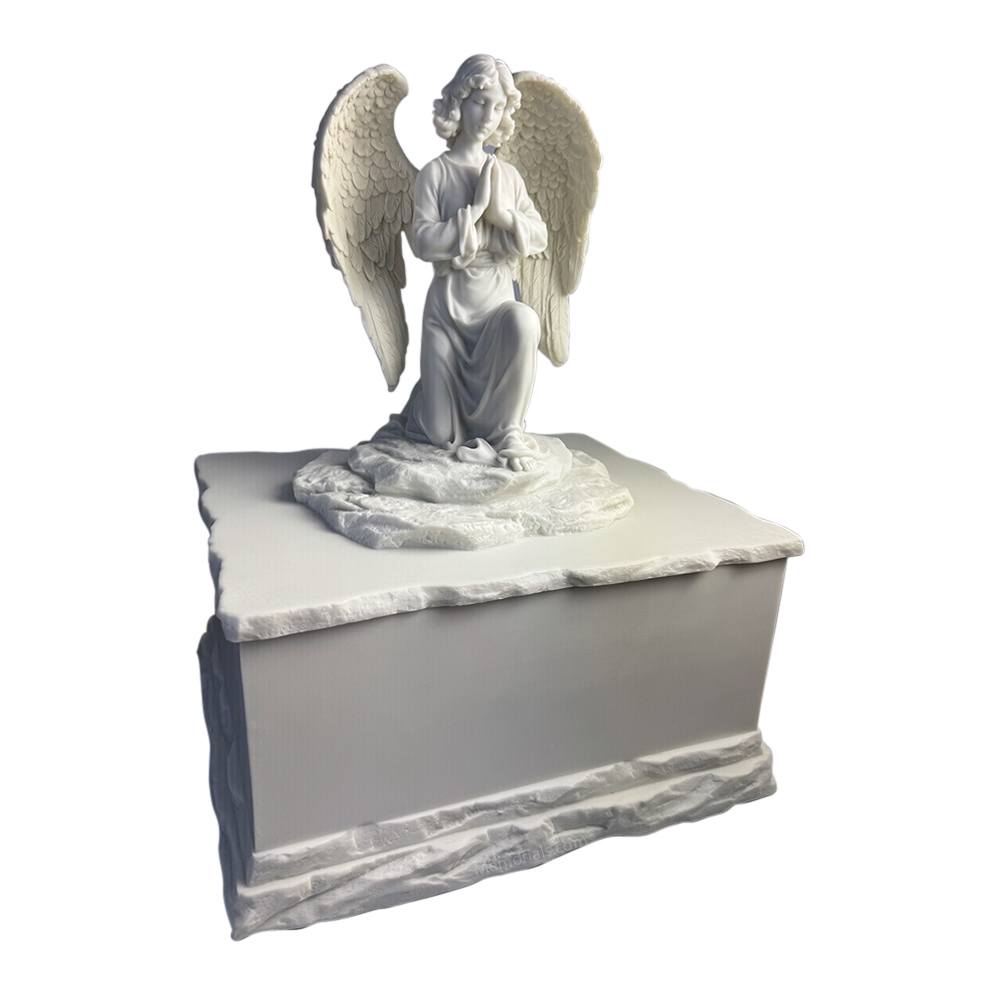
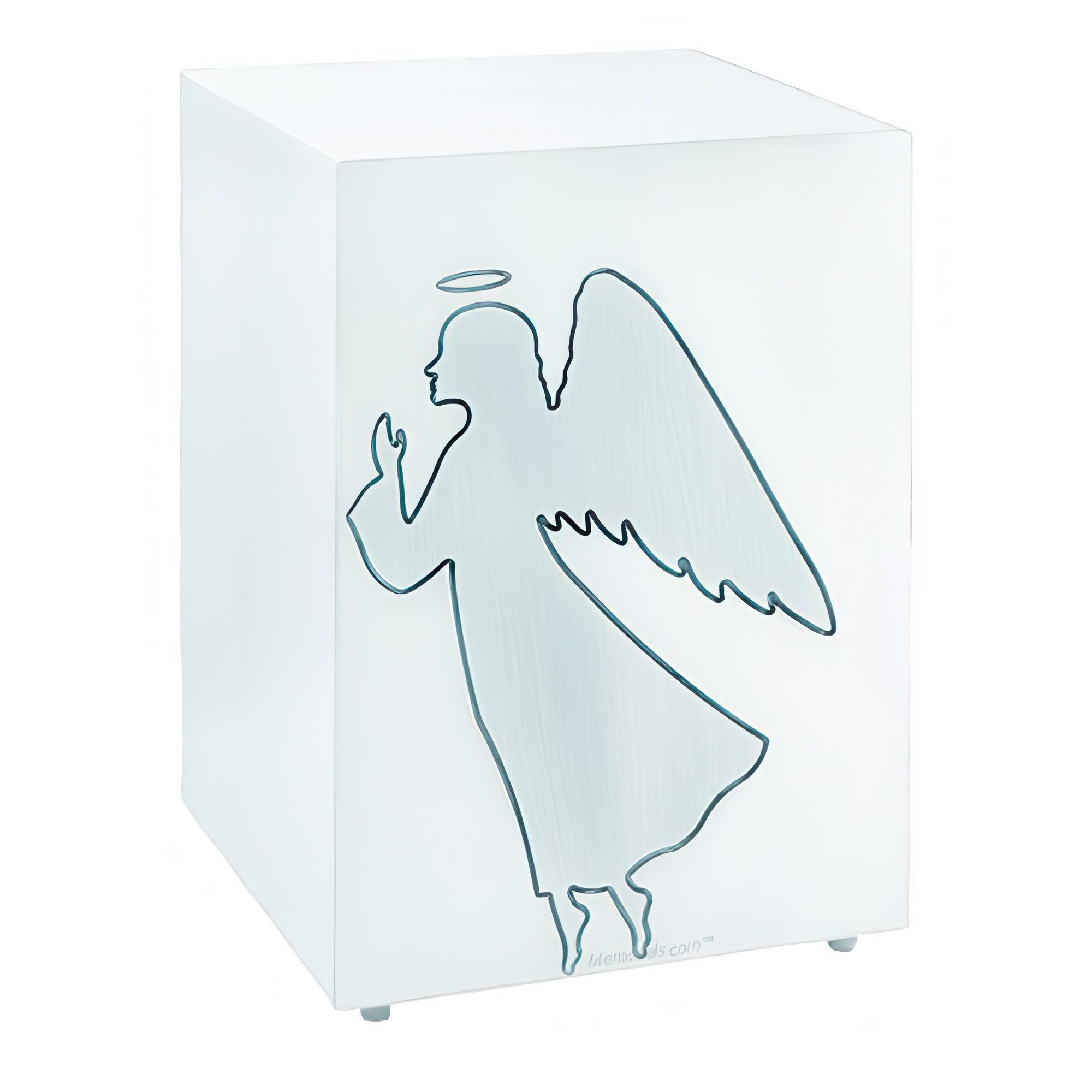
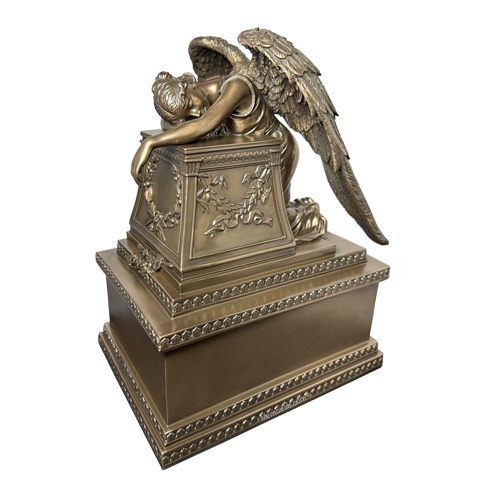
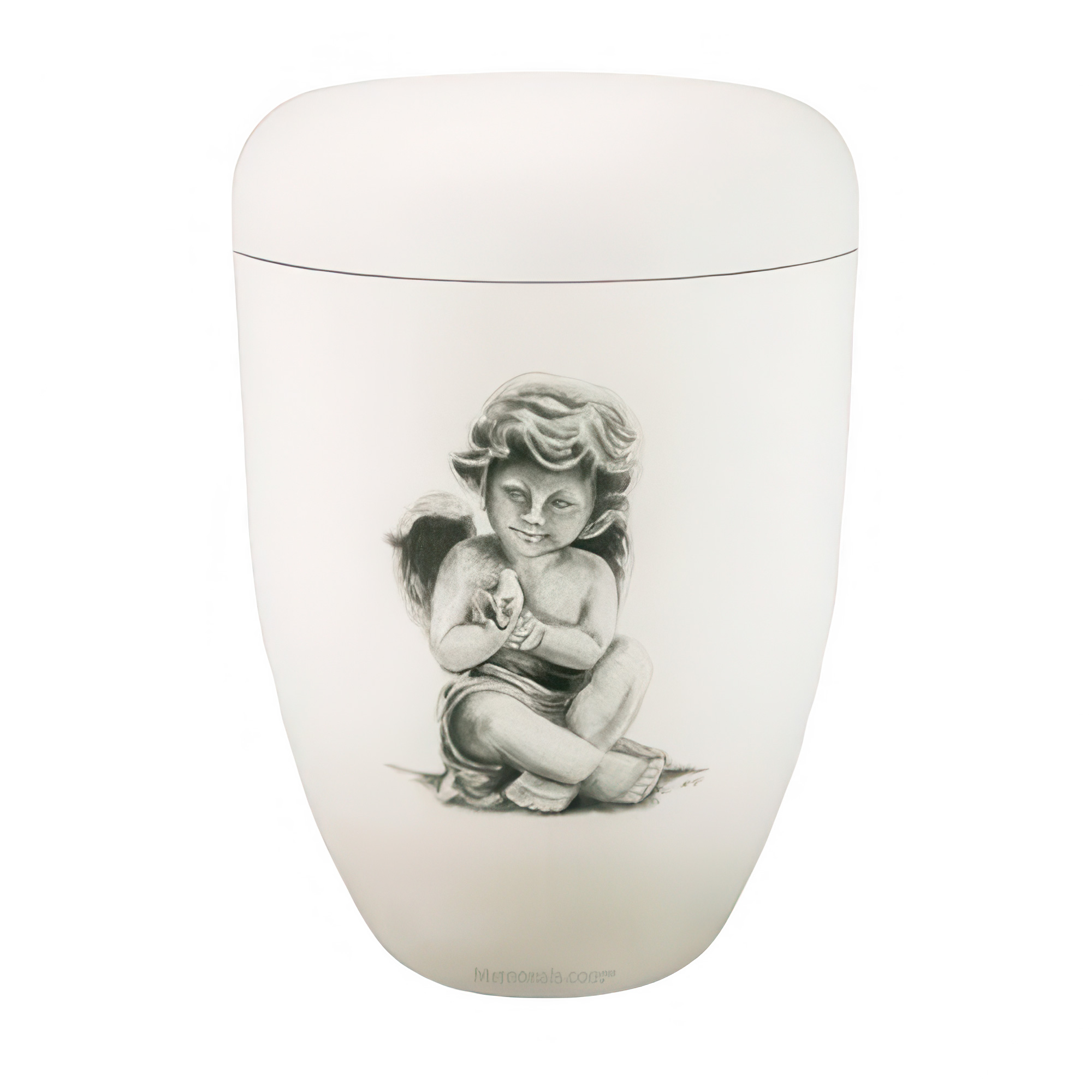
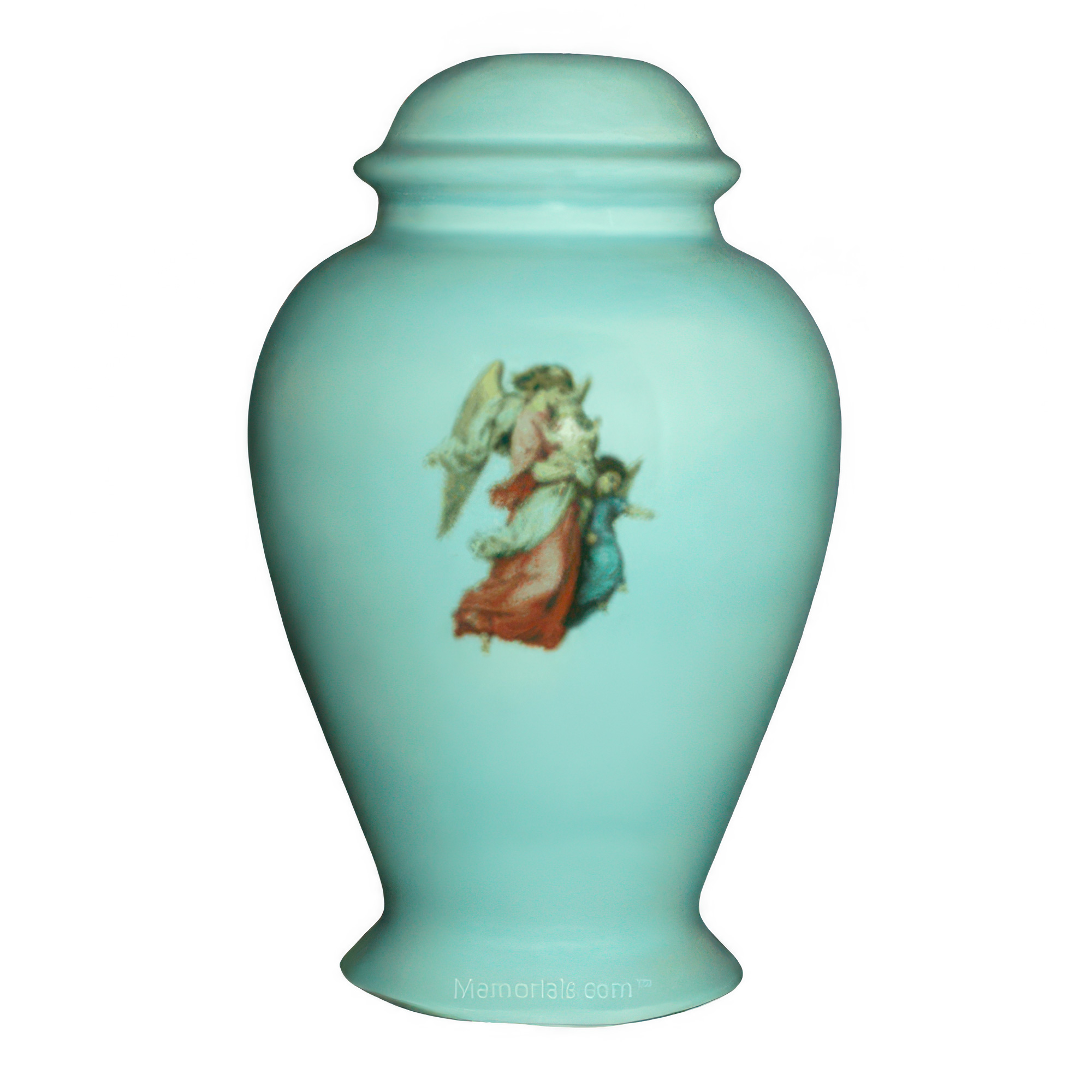
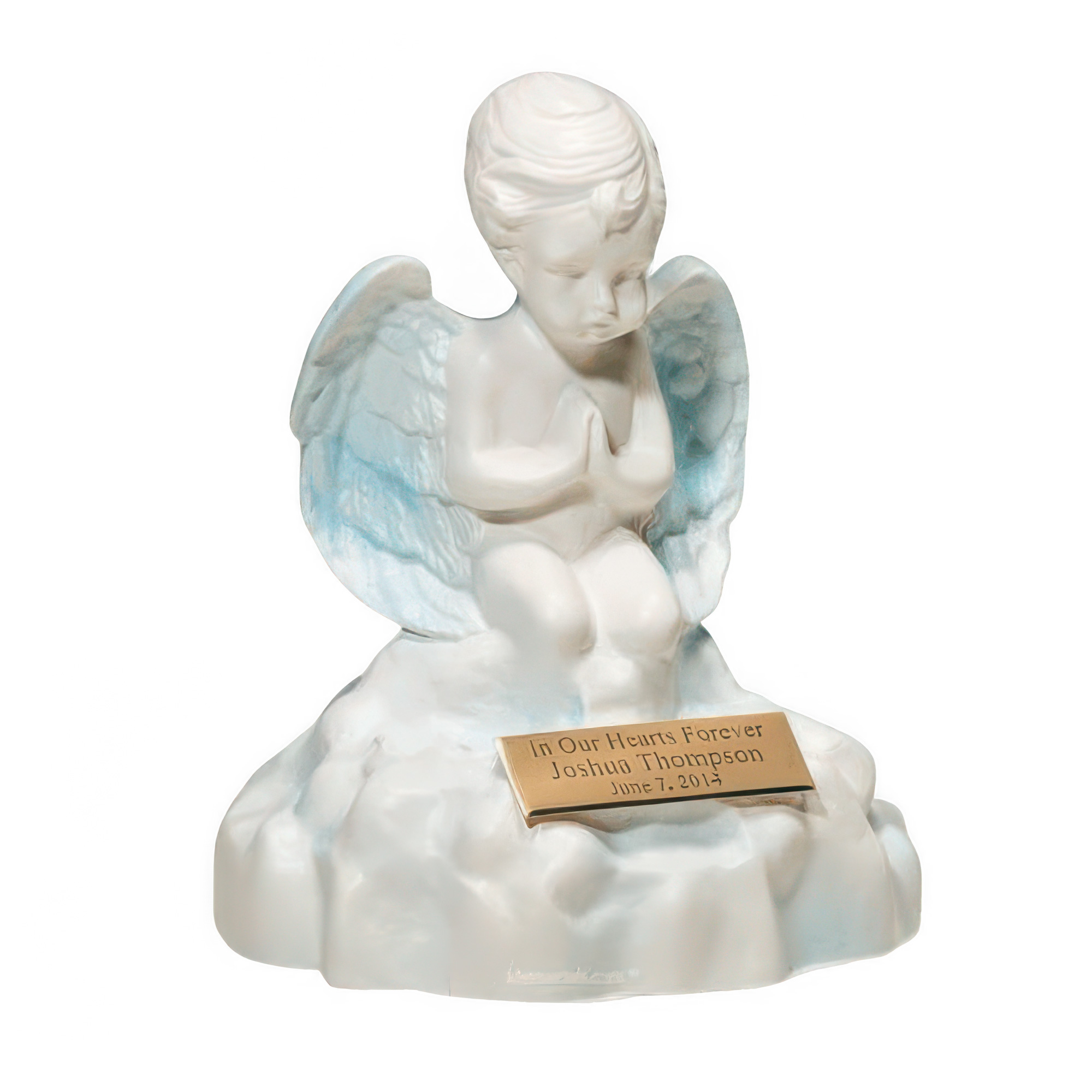
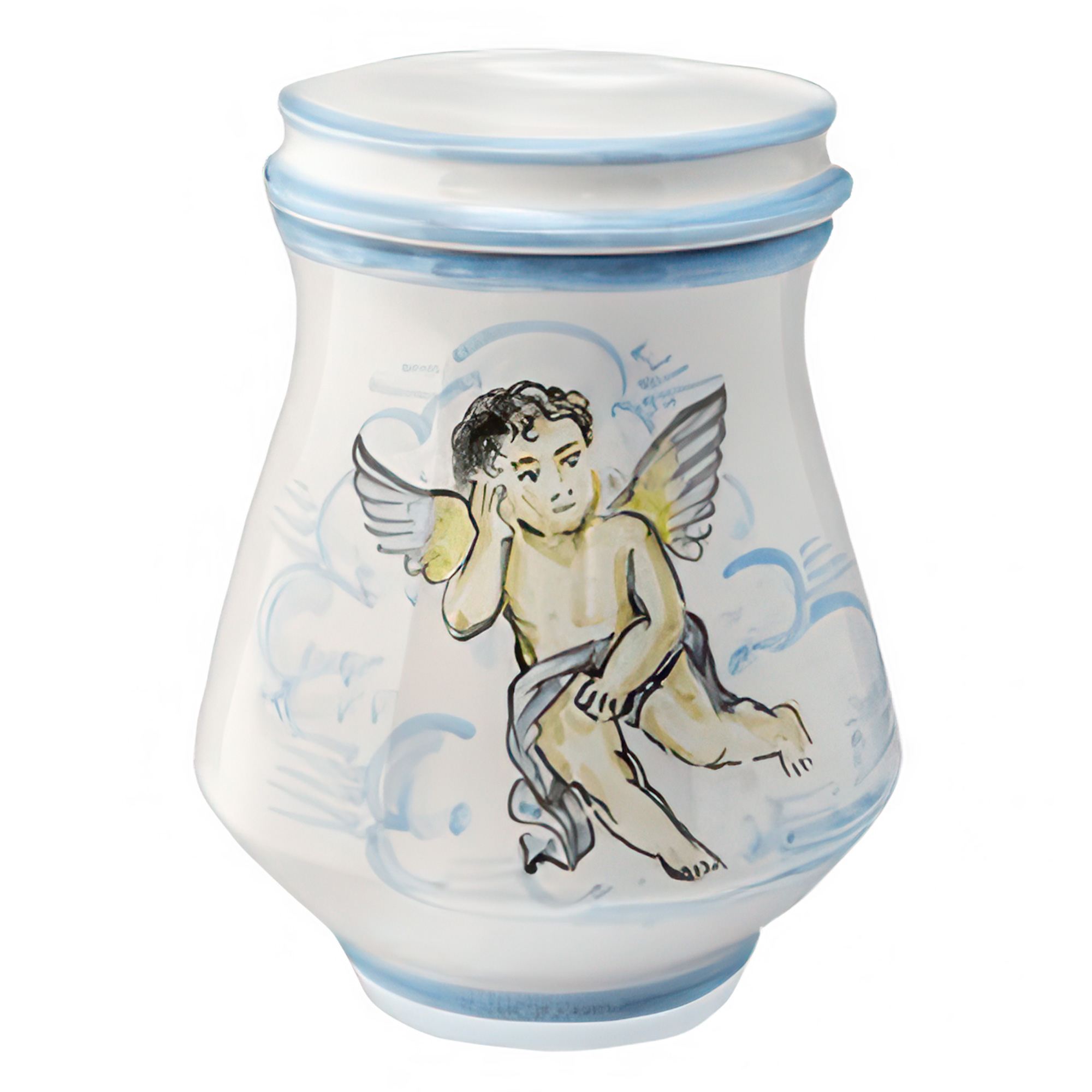
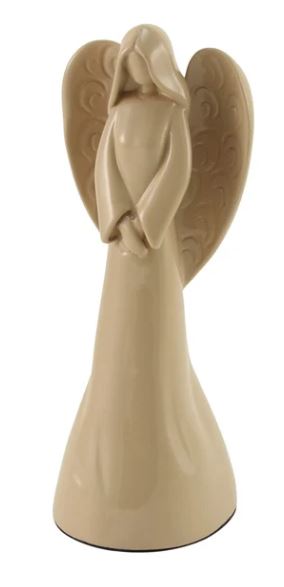
The angel. Less doctrinal than it appears and used very widely, including by families who would not call themselves religious.
This is the part most guides skip, and it is where families most often get an unwelcome surprise from a cemetery or a religious authority.
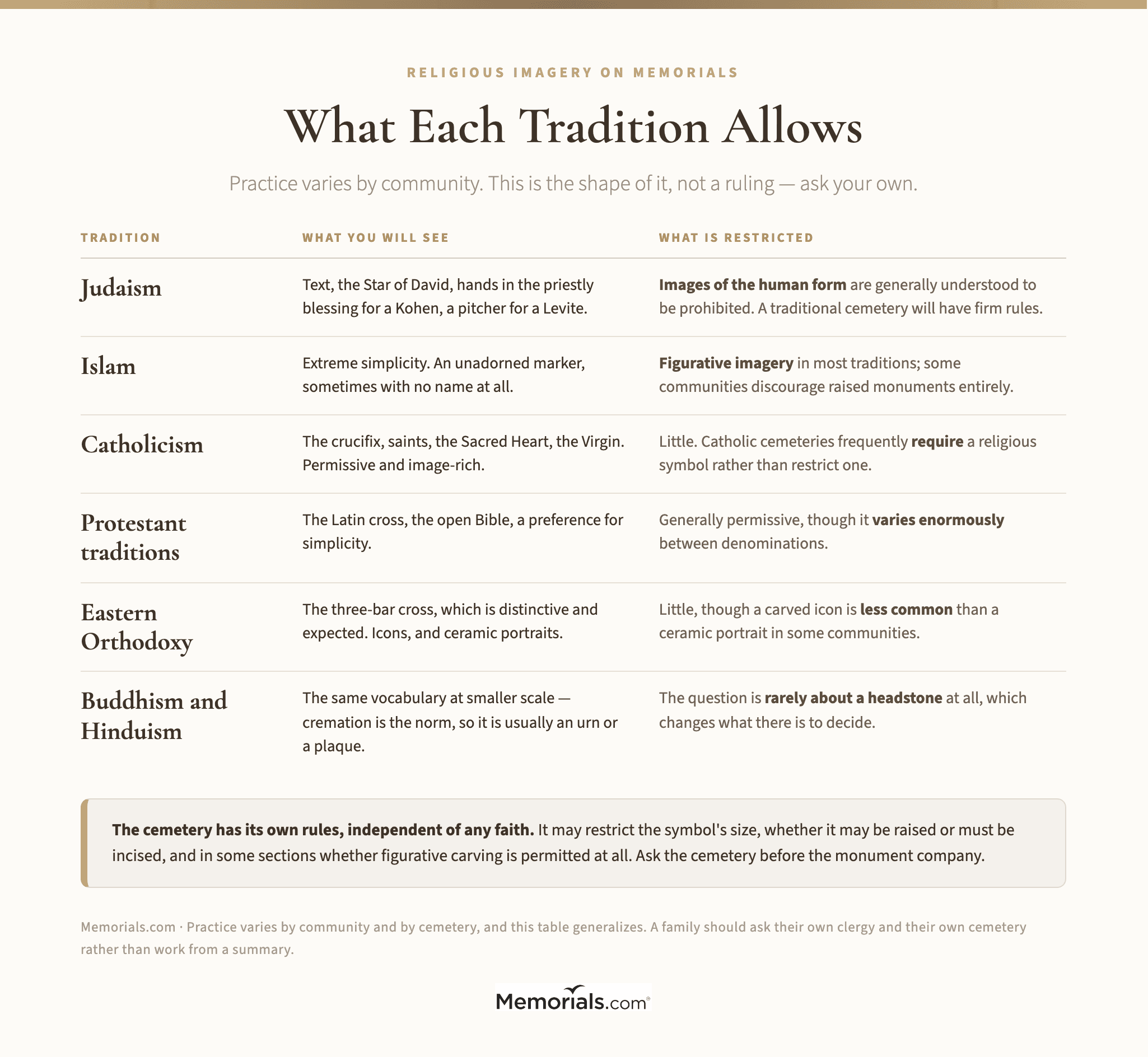
Judaism. Jewish law is generally understood to prohibit images of the human form on a grave, which is why Jewish memorials carry text, the Star of David, hands in the priestly blessing for a Kohen, a pitcher for a Levite, and very little figurative work. Practice varies by community and a traditional cemetery will have firm rules.
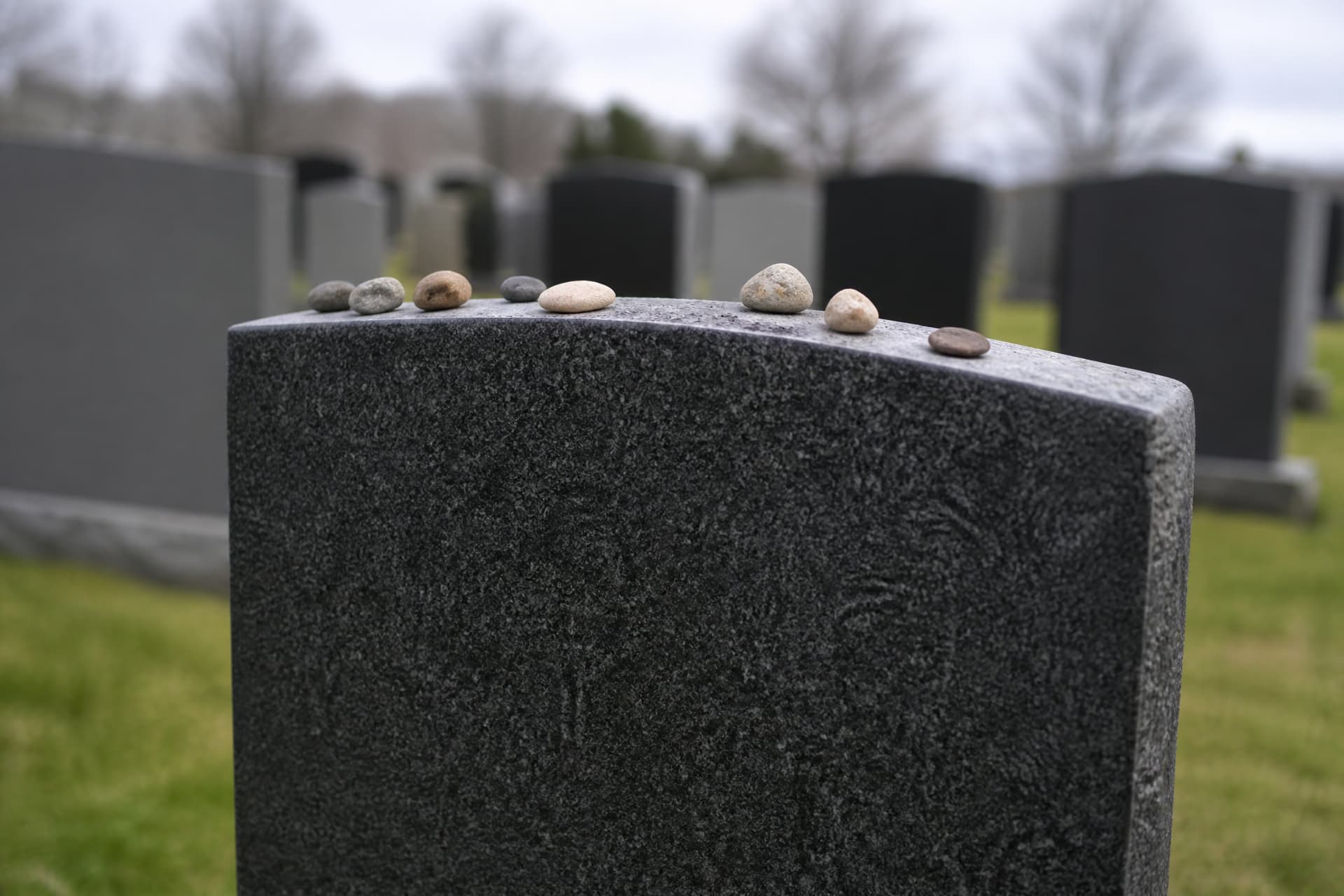
Visitors leave a stone rather than flowers. Nothing about the custom is carved, which is part of why Jewish memorials carry so much less figurative work than the cemeteries around them.
Islam. Practice varies widely, but many traditions favor extreme simplicity — an unadorned marker, sometimes with no name at all, and no figurative imagery. Some communities discourage raised monuments entirely. A family should ask their own community rather than generalize.
Catholicism. Permissive and image-rich. The crucifix, saints, the Sacred Heart and the Virgin all appear routinely, and Catholic cemeteries frequently have their own rules requiring a religious symbol rather than restricting one.
Protestant traditions. Generally permissive with a preference for simplicity, though this varies enormously between denominations.
Eastern Orthodoxy. The three-bar cross is distinctive and expected. Icons appear, though a ceramic portrait is more common in some communities than a carved icon.
Buddhism and Hinduism. Cremation is the norm in both, so the question frequently concerns an urn or a plaque rather than a headstone, and the imagery follows the same vocabulary at smaller scale.
The cemetery may have its own rules. Independent of any faith, a cemetery may restrict the symbol's size, whether it may be raised or must be incised, and in some sections whether figurative carving is permitted at all. Ask the cemetery before the monument company.
Practice varies by community, so this is the shape of the question rather than a ruling. The last line is the one families skip: the cemetery has rules of its own.
Funeral Art Beyond the Headstone
Funeral art is a broader category than the stone, and religious imagery appears throughout a service in forms families choose without thinking of them as art at all.
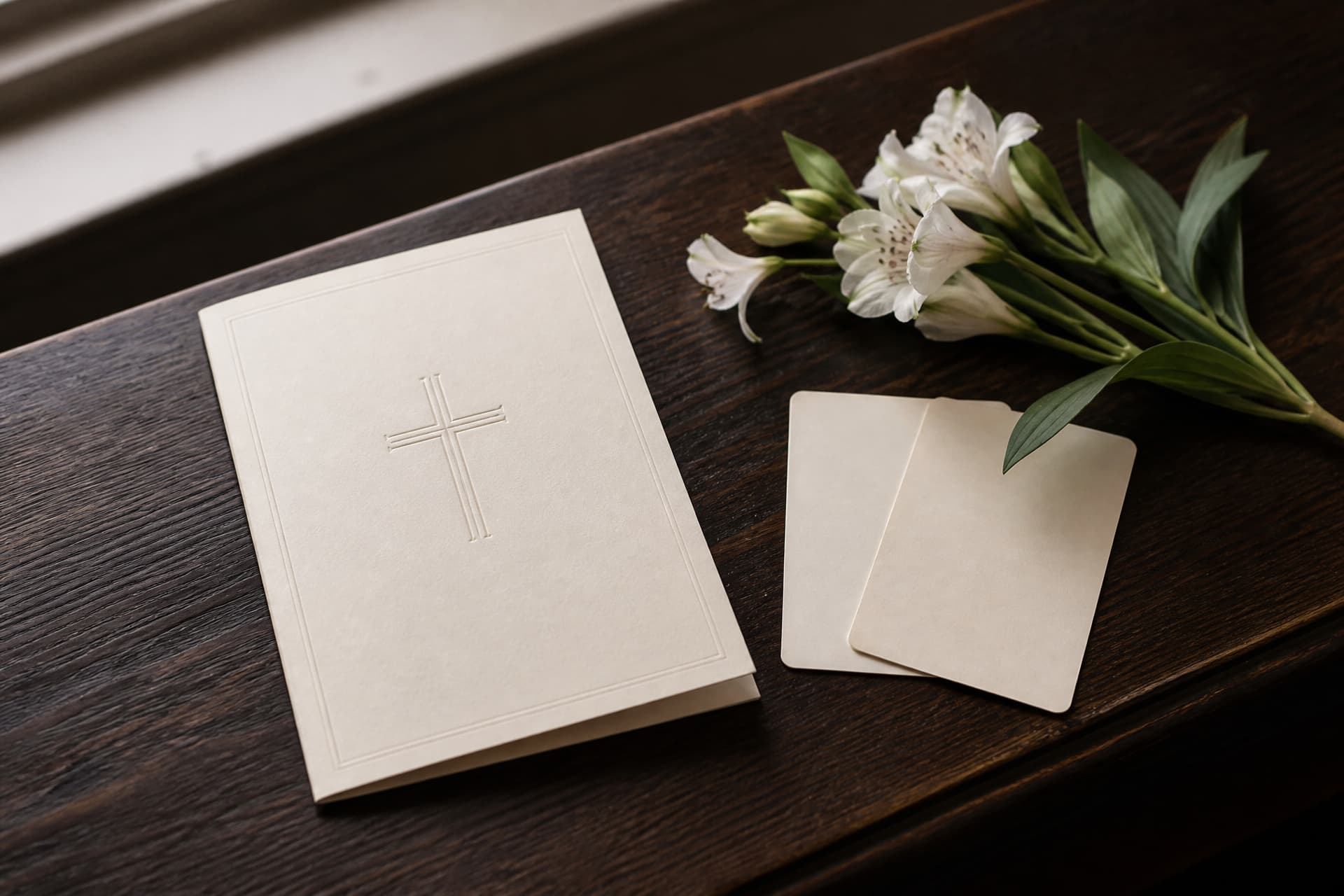
The order of service. A cross or other emblem on the cover is the commonest piece of religious imagery any family commissions, and the one most people will actually take home.
Memorial cards. The small printed card handed out at the service, frequently carrying an image on one side and a prayer on the other. In Catholic practice these are a tradition in their own right.
Floral arrangements. A cross or a wreath in flowers is figurative work with a short life, and it is read at the service exactly as a carved symbol is read at the grave.
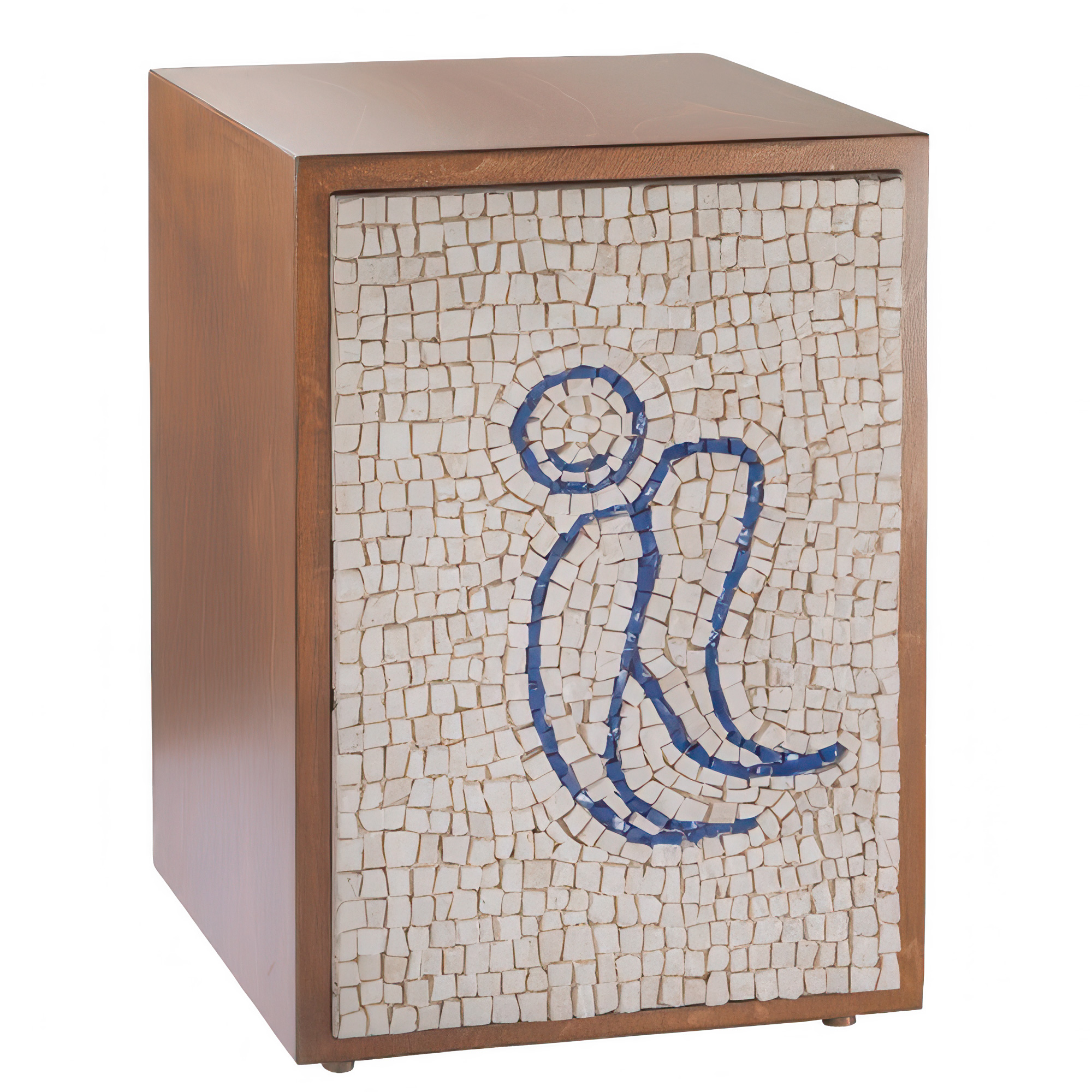
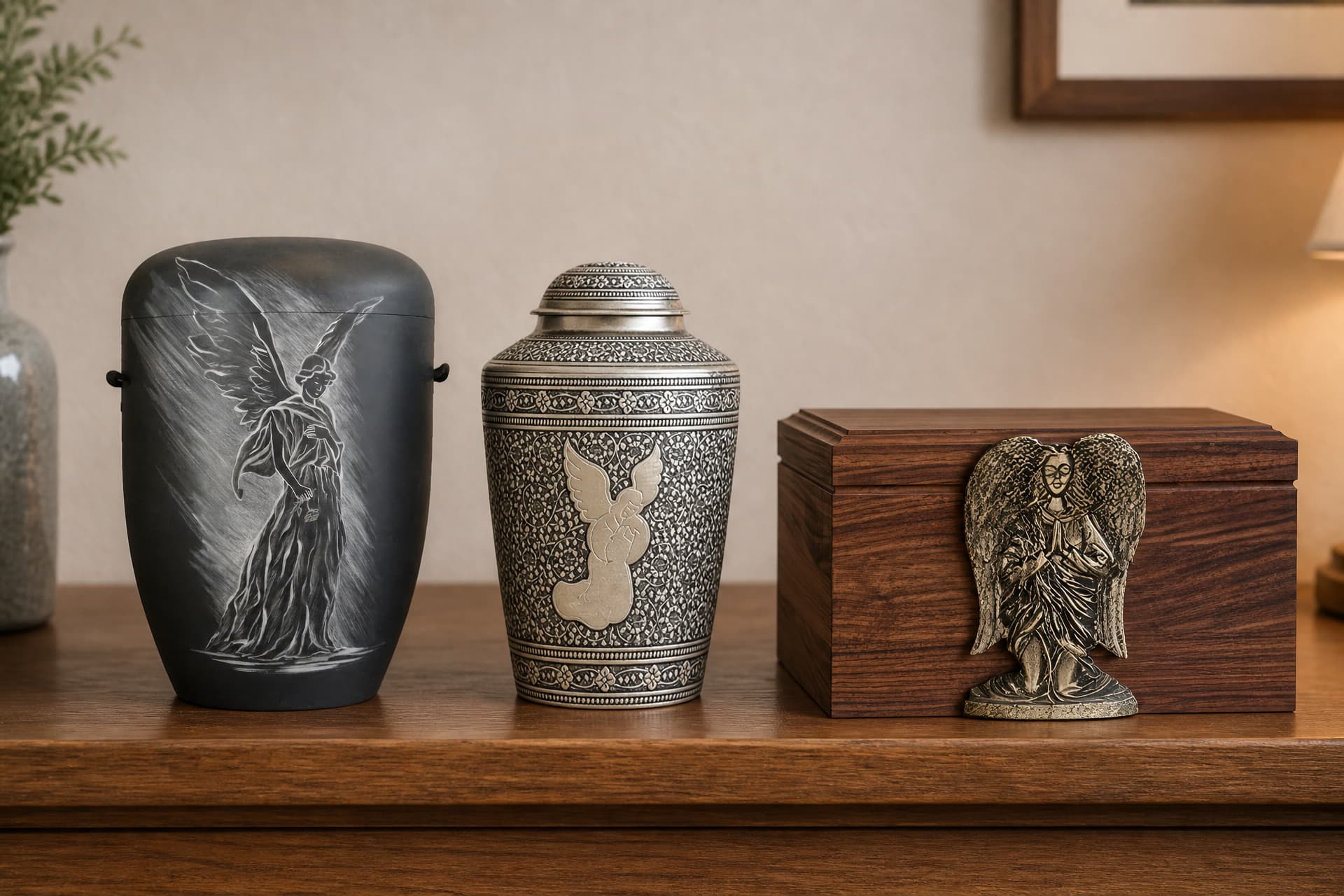
The urn or casket. Both are available with religious motifs, and for a cremation the urn frequently carries the only permanent symbol there will be.
Vestments, cloths and the pall. Provided by the church rather than chosen by the family, but part of what the room says.
Funeral artwork in the sense of a commissioned piece — a painting, a carved plaque, a stained glass panel given in memory — is a separate and older tradition, and it is generally arranged with the church rather than the funeral home. A memorial window or a plaque in a church is a form of cenotaph: it marks a person who is buried elsewhere.
The commonest piece of religious imagery any family commissions is not carved at all. It is the emblem on the cover of the order of service, and it is the one most people take home.
The practical constraint decides more of this than the theological one, and families meet it late.
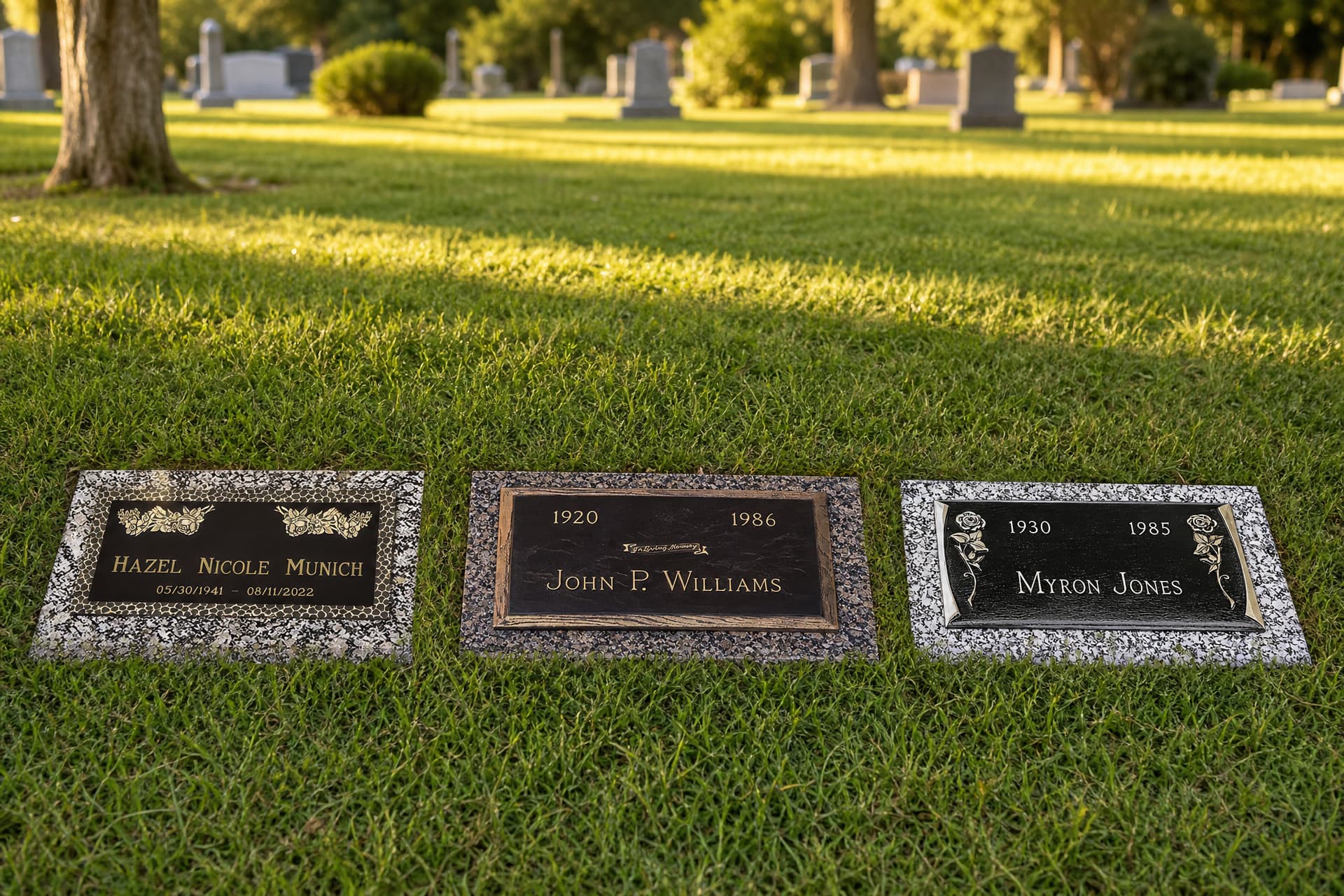
A symbol occupies space that lettering cannot use. On a flat marker — two to four lines at roughly twenty to thirty characters — a medium carved emblem can halve the room left for text. On an upright monument there is more latitude, but a large carved cross still dominates the face.
Incised is cheaper than raised. Cutting a symbol into the stone costs less than carving away the surrounding stone to leave it standing proud. Shaped and relief carving add both cost and production time.
Detail needs the right stone. Fine work holds in granite and blurs in softer stone. Dark granites give the strongest contrast for incised work without paint.
Decide the symbol and the inscription together. This is the single most useful piece of advice on this page. Families routinely choose the words first, take them to the monument company, and discover the emblem they assumed would be there no longer fits.
More families face this than the guides acknowledge, and there are established ways through it.
Two symbols, balanced. A cross and a Star of David on one stone is not unusual and no cemetery of either tradition is likely to refuse it, though a strictly observant one may.
One symbol, chosen by the person who died. If they were clear, that settles it, and it settles it in a way nobody can argue with afterward.
A neutral image. A dove, a tree, hands, a sunrise. These carry warmth without claiming a tradition, and they are frequently the answer where a family cannot agree.
Nothing at all. A name, dates, and good lettering on good stone. This is not an absence of meaning and nobody visiting reads it as one.
The question worth asking is not what the family believes but what the person believed, and whether they would have wanted it announced. Some devout people want the cross; others found their faith private and would be startled to see it carved four inches high.
Emblems of Belief on Government Markers
For a veteran eligible for a government-furnished marker, the choice works differently and more generously than most families expect.
The Department of Veterans Affairs maintains a list of approved emblems of belief that may be carved on a government headstone or marker. It is long — well over seventy — and it has expanded considerably over the years. It covers the major faiths and a wide range beyond them, including Humanist and Atheist emblems, so a veteran's marker is not restricted to a cross or nothing.
A good deal of the imagery on older graves is religious in a way that has since gone quiet, and families restoring or reading an old stone frequently misread it.
The urn and the willow. Ubiquitous on eighteenth and nineteenth century American stones, and neither is Christian in origin — both are classical mourning motifs that arrived through neoclassical fashion. They read as generically funerary now.
The hand pointing upward. Extremely common on Victorian graves and almost always meaning the soul's ascent. A hand pointing down is not damnation, as visitors often assume, but God reaching for the soul.
Clasped hands. Usually a farewell, and where the cuffs differ — one masculine, one feminine — a married couple parted by death.
The broken column. A life cut short, typically a young adult.
The lamb. Almost always a child's grave, and Christian in reference to the Lamb of God, though families chose it for its gentleness as much as its doctrine.
IHS. A Christogram from the Greek for Jesus, not an English abbreviation, and not the initials of anything.
Knowing these changes what an old cemetery looks like. Most of what appears to be decoration is text in another alphabet.
Before You Sign the Proof
Five checks, because a carved symbol is the least correctable thing on a memorial.
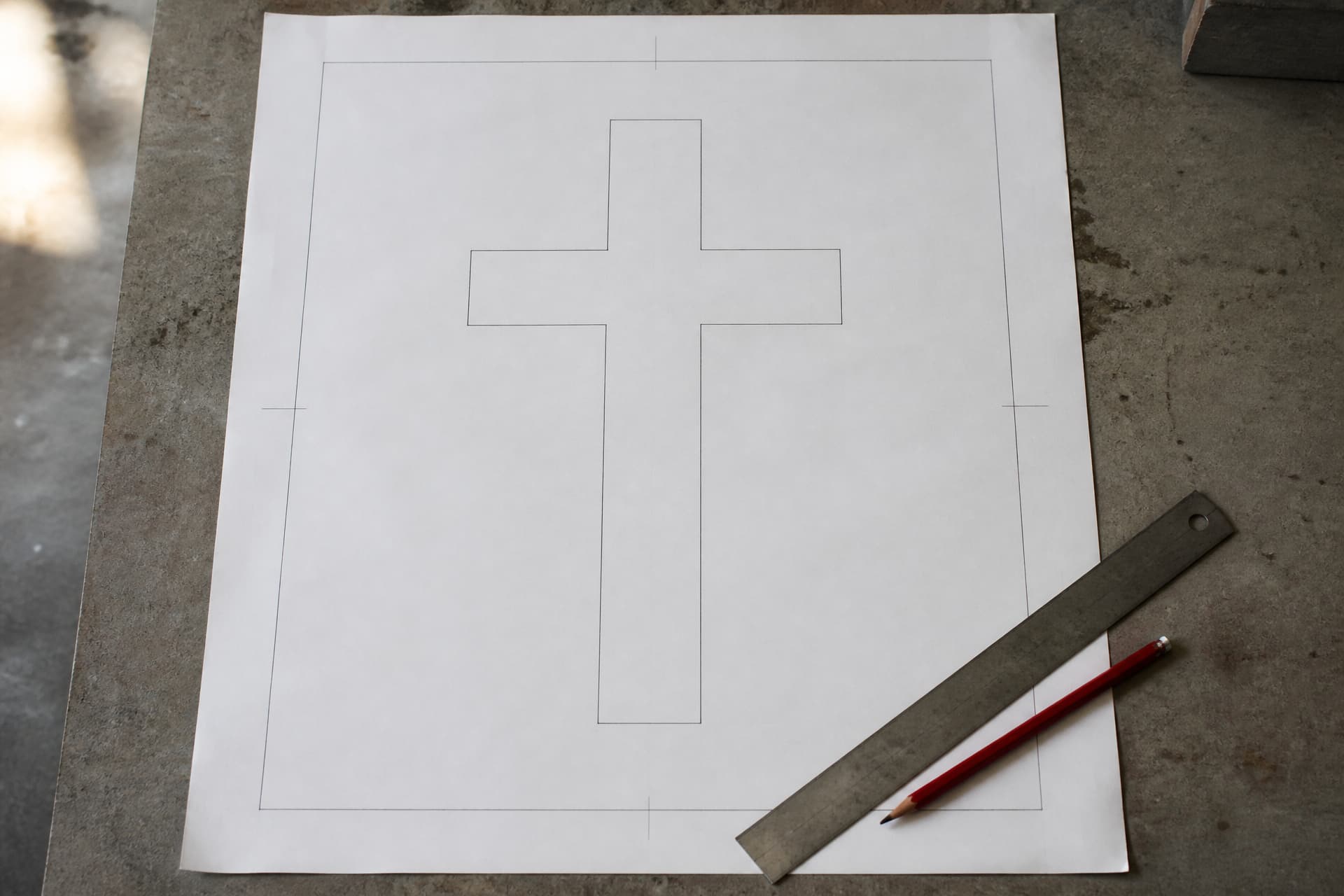
See it at full size on paper. A symbol that looks balanced in a small rendering frequently overwhelms the stone at actual scale.
Check the orientation. Crosses, crescents and the Khanda all have a correct way up and it is not always obvious in a design file.
Ask whether it is incised or raised, and what each costs. Families often assume the more expensive one without being told there was a choice.
Confirm the cemetery has approved it if the section has rules. Approval after carving is not approval.
Show it to whoever will visit most. They are the person who will see it every time, and their reaction is the one that matters.
This is what to ask for. A symbol that looks balanced in a small rendering frequently overwhelms the stone at actual scale, and paper is the cheapest place to find that out.
Frequently Asked Questions
What religious symbols can go on a headstone?
Almost any, subject to the cemetery's rules and the family's tradition. The commonest are the Latin cross, the Celtic cross, the crucifix, the Star of David, the crescent and star, the Khanda, the lotus and the Om, along with broadly Christian images like praying hands and doves.
Does a symbol reduce the space for words?
Yes, and more than families expect. On a flat marker a medium emblem can halve the room left for lettering. Decide the symbol and the inscription together rather than one after the other.
Can two faiths appear on one stone?
Generally yes, and it is a common solution for mixed families. A strictly observant cemetery may refuse it, so ask that cemetery before designing it.
Why do Jewish headstones have no figures?
Jewish law is generally understood to prohibit images of the human form on a grave. Jewish memorials therefore carry text and non-figurative symbols — the Star of David, the priestly hands, the Levite's pitcher.
What emblems can go on a military headstone?
The VA maintains a list of approved emblems of belief, well over seventy of them, covering the major faiths and a wide range beyond, including Humanist and Atheist emblems. One per marker.
Is a symbol required?
No. A name, dates and good lettering is a complete memorial, and it reads as considered rather than as lacking.
The Short Version
Choose the symbol with the inscription, not before it, because the two compete for the same stone and the stone always wins. Ask the cemetery what it permits before you ask the monument company what it can carve — approval after carving is not approval, and the stone is already cut.
And ask what the person would have wanted announced. A symbol is read by everyone who passes, and it is read forever, which is both its whole value and the reason to be sure of it.
If the family cannot agree, the neutral images are genuinely neutral. A dove or a tree carries warmth without claiming a tradition, and no visitor has ever stood at a grave and felt the symbol was insufficiently specific.