🏬Supersize Online Funeral Retailer🪦1000's of Headstones⚱️Over 10,000 Cremation Urns⚰️Caskets Overnight Delivery🛒Funeral & Memorial Superstore🚚FREE Shipping on ALL Orders👨👩👧👦Helping Families for over 20 Years💰Lowest Price Guarantee🏬Supersize Online Funeral Retailer🪦1000's of Headstones⚱️Over 10,000 Cremation Urns⚰️Caskets Overnight Delivery🛒Funeral & Memorial Superstore🚚FREE Shipping on ALL Orders👨👩👧👦Helping Families for over 20 Years💰Lowest Price Guarantee
🏬Supersize Online Funeral Retailer🪦1000's of Headstones⚱️Over 10,000 Cremation Urns⚰️Caskets Overnight Delivery🛒Funeral & Memorial Superstore🚚FREE Shipping on ALL Orders👨👩👧👦Helping Families for over 20 Years💰Lowest Price Guarantee🏬Supersize Online Funeral Retailer🪦1000's of Headstones⚱️Over 10,000 Cremation Urns⚰️Caskets Overnight Delivery🛒Funeral & Memorial Superstore🚚FREE Shipping on ALL Orders👨👩👧👦Helping Families for over 20 Years💰Lowest Price Guarantee
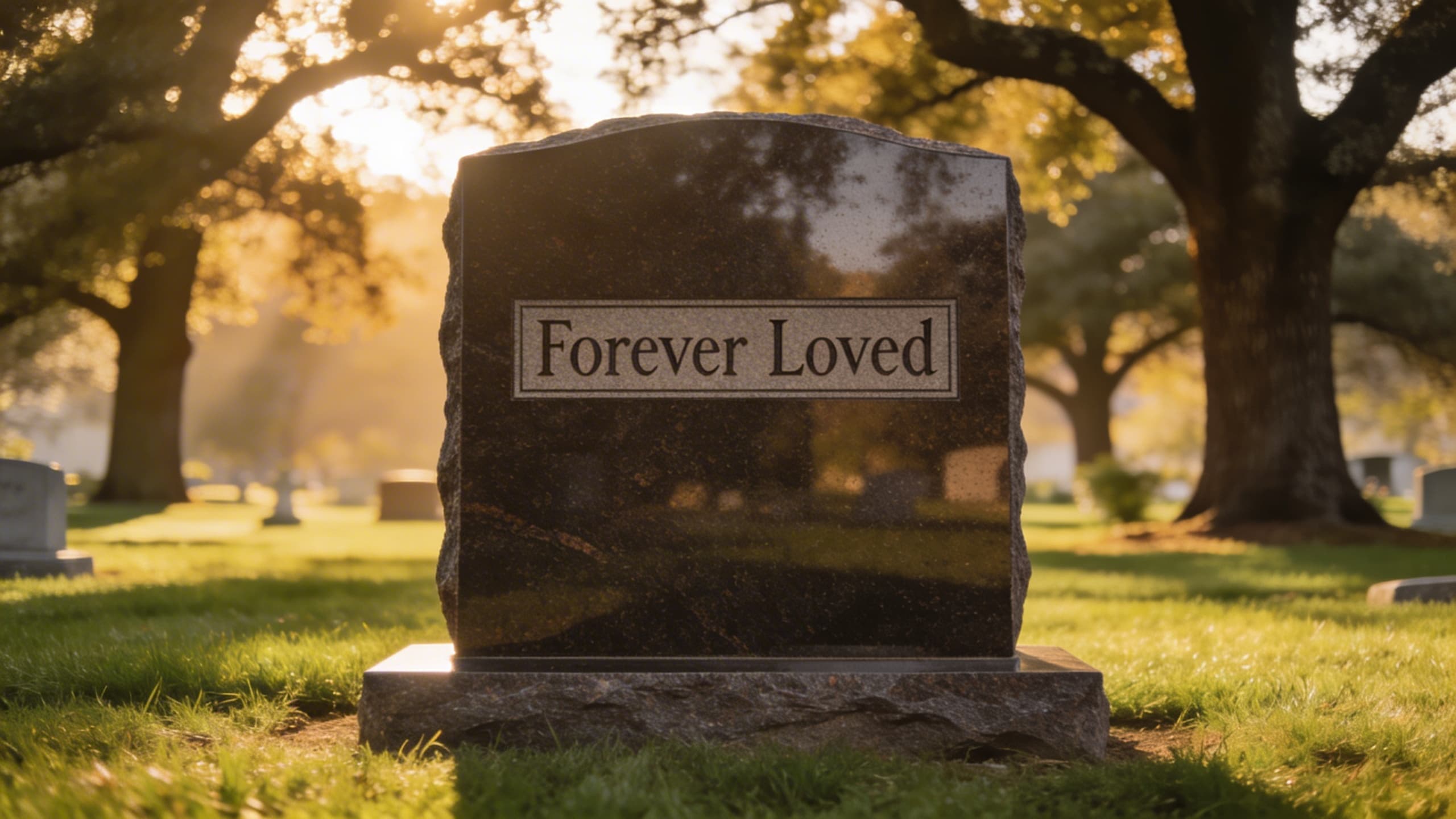
An epitaph is a short text written in memory of someone who has died, most often inscribed on a tombstone or memorial marker. The word comes from the Ancient Greek epitaphios, meaning "a funeral oration," formed from epi ("upon") and taphos ("tomb"). While epitaphs once referred strictly to text carved into stone, the meaning has broadened over the centuries to include any brief written tribute honoring the deceased — whether engraved on headstones, etched onto cremation urns, or printed in a memorial program.
If you are choosing an inscription for a loved one's memorial, understanding the epitaph tradition can help you find words that feel both timeless and personal. For a broader look at all the ways you can personalize a memorial, covers everything from engraving methods and materials to wording ideas for every type of memorial.
Epitaph Definition: More Than Just Words on a Stone
At its simplest, an epitaph is a phrase, sentence, or short verse that commemorates a person who has died. Most epitaphs include the person's name, dates of birth and death, and a brief message — a quote, a scripture verse, a line of poetry, or a personal statement that captures something essential about who they were.
The format can range from a single word ("Beloved") to several lines of verse. Some epitaphs are chosen by the person themselves before death, while others are selected by family members or friends. There is no required length, no mandatory structure, and no rule that says an epitaph must be solemn. The only real requirement is that the words feel true to the person they honor.
It is worth noting the distinction between an epitaph and similar terms that are sometimes confused:
Epitaph vs. epithet. An epitaph is an inscription honoring the dead. An epithet is a descriptive name or title for a living or historical person — like "Alexander the Great" or "The Iron Lady." The two words sound similar but serve very different purposes.
Epitaph vs. epigraph. An epigraph is a quote placed at the beginning of a book, chapter, or essay. The same words could serve as both — a line of poetry might appear as an epigraph in a novel and as an epitaph on a tombstone — but the terms refer to different uses.
Epitaph vs. inscription. An inscription is any lettering cut into a surface, memorial or not. Every epitaph is an inscription, but not every inscription is an epitaph — the name and dates on a headstone are inscriptions too. Monument companies call the whole engraved text the memorial inscription, with the epitaph the part that says something about the person.
Epitaph vs. eulogy. A eulogy is a speech delivered at a funeral service, usually several minutes long. An epitaph is much shorter and meant to endure on stone or metal rather than exist only in the moment.
Epitaph vs. elegy. An elegy is a poem or song of mourning, often longer and more literary than an epitaph. Some elegiac lines have been adapted as epitaphs, but the two forms differ in length, medium, and context.
So if you are looking for the word for an inscription on a gravestone, it is epitaph. That is the term a monument company, a cemetery office, and an engraver will all recognize, and the one to use when you place the order.
A Brief History of Epitaphs
Ancient Origins
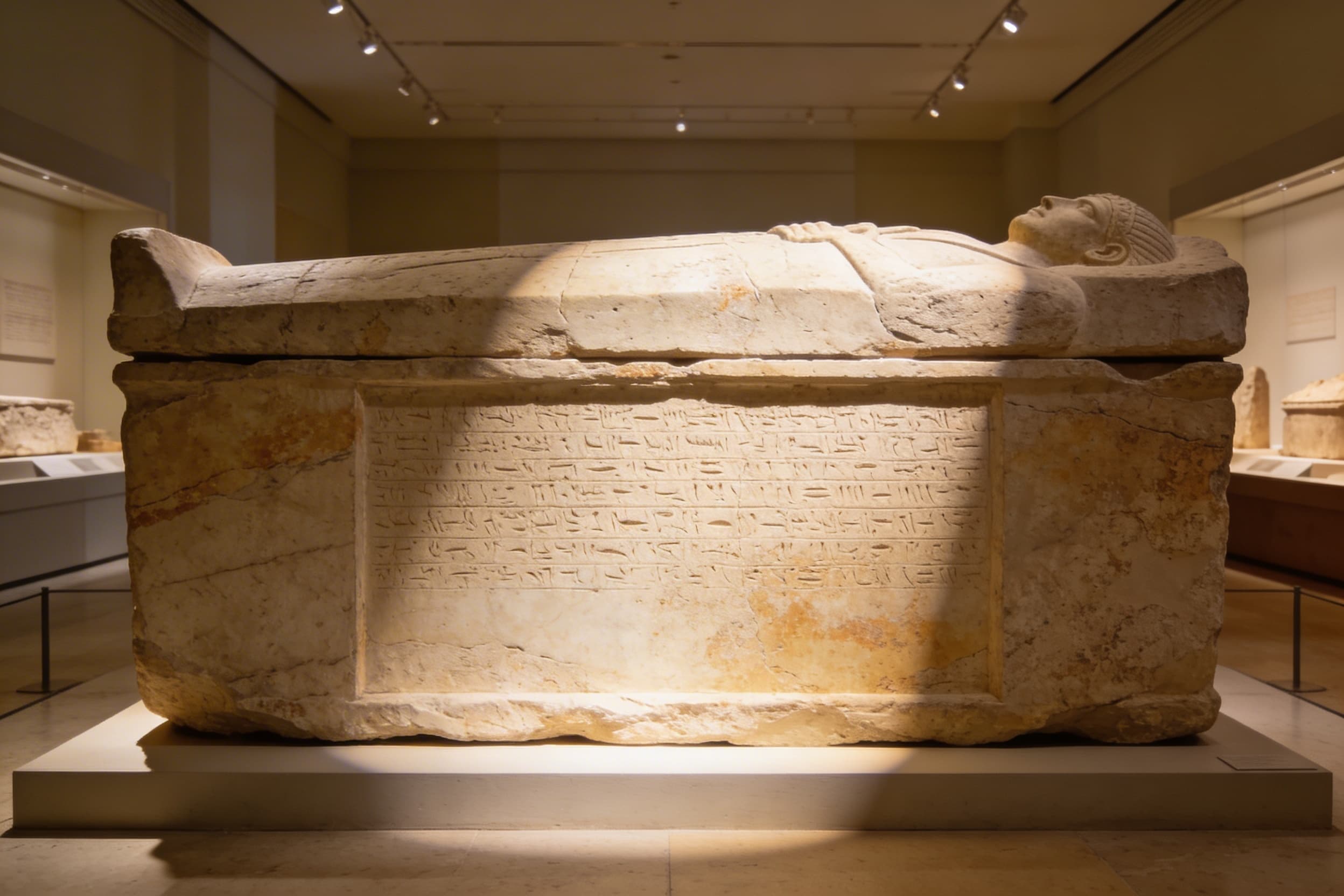
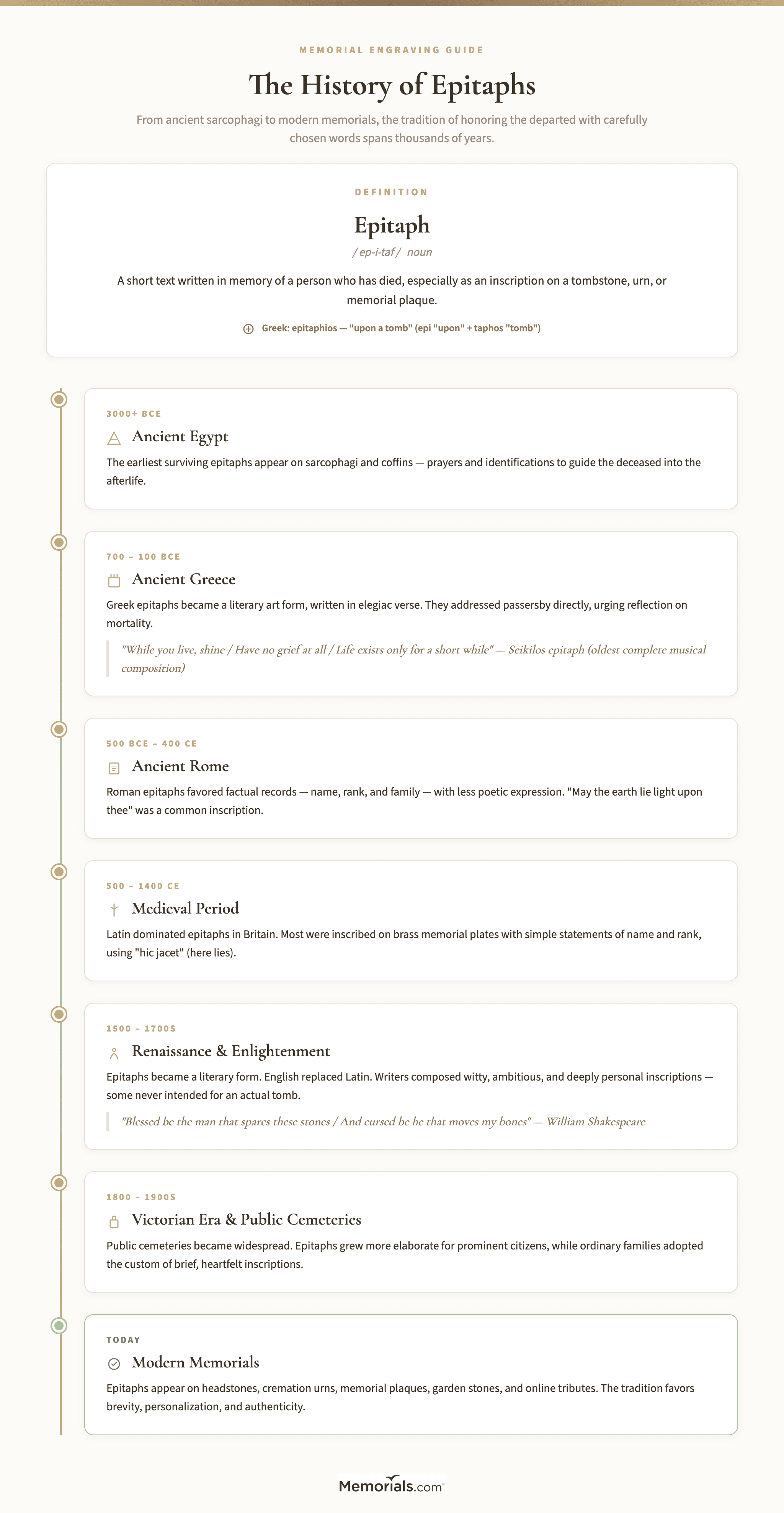
The epitaph tradition stretches back thousands of years. The earliest surviving examples come from ancient Egypt, where inscriptions on sarcophagi and coffins identified the deceased and offered prayers for the afterlife. These texts were functional — they told the gods who was inside and why they deserved passage to the next world.
Ancient Greek epitaphs are among the most celebrated in literary history. Written in elegiac verse, they were often deeply emotional and artistically refined. Greek funerary inscriptions did more than identify the dead; they spoke directly to passersby, urging them to pause and reflect on the brevity of life. The Seikilos epitaph, discovered on a first-century marble column in what is now Turkey, is the oldest surviving complete musical composition — a song inscribed on a tomb reminding the living to enjoy their brief time.
Roman epitaphs, by contrast, tended to be more formulaic. A common Roman inscription was the Latin phrase meaning "may the earth lie light upon thee." Most recorded basic facts: name, family relationships, and civic achievements. Still, some Roman epitaphs carried warmth and wit, and the tradition of warning tomb visitors against disturbing the remains began in this period.
Medieval and Renaissance Epitaphs
Through the medieval period, epitaphs in Britain were written primarily in Latin, reflecting the language of the church and the educated classes. The earliest English-language epitaphs appeared around the fourteenth century, but Latin continued to dominate for centuries. Many medieval epitaphs were inscribed on brass memorial plates rather than stone.
By the Renaissance and into the Elizabethan era, epitaphs became more literary and personal. Writers began composing epitaphs as a recognized poetic form — some for actual tombs, others as literary exercises never intended for inscription. William Shakespeare's own epitaph, placed on his tomb in Stratford-upon-Avon, warns against moving his bones — a concern rooted in the common practice of relocating remains to make room in crowded burial grounds.
From the seventeenth through the nineteenth century, epitaphs for prominent citizens grew increasingly elaborate, often detailing family origins, career accomplishments, and civic virtues at considerable length. The tradition reached a turning point with Thomas Gray's famous poem about an English country churchyard, which helped popularize a more reflective, democratic approach to memorializing ordinary lives.
Modern Epitaphs
Today's epitaphs tend to be shorter and more personal than their historical predecessors. Families choose from a wide range of sources — scripture, poetry, song lyrics, personal mottos, and original phrases. Some people write their own epitaphs in advance, treating the task as a final act of self-expression. Others are chosen by family members during the memorial planning process.
The tradition has also expanded beyond headstones. Epitaphs now appear on cremation urns, memorial plaques, columbarium niches, garden stones, and online memorial pages. Families who want short inscription ideas for plaques or dedication memorials draw from the same epitaph tradition that began in ancient Greece — the impulse to distill a life into a few carefully chosen words is universal.
Types of Epitaphs
Epitaphs vary widely in tone, purpose, and format. Understanding the main categories can help you decide which approach feels right for your loved one.
Descriptive Epitaphs
These are the most common type. They identify the deceased by their relationships and roles: "Beloved Mother and Grandmother," "A Devoted Husband and Friend," or "Cherished Daughter, Taken Too Soon." Descriptive epitaphs are straightforward, dignified, and universally understood.
Literary and Poetic Epitaphs
Many families draw on published poetry, hymns, or literary works for their epitaph. Lines from the Psalms, from Tennyson, from Rumi, from Emily Dickinson — the range is vast. A well-chosen literary epitaph connects the deceased to something larger, linking a personal loss to the enduring human experience of grief and remembrance.
For inspiration drawn from the most enduring inscriptions across centuries, famous epitaphs throughout history offers a collection that spans ancient Greece to the modern era.
Humorous Epitaphs
Not every epitaph is solemn. Some people choose humor as their final statement — a reflection of a personality that valued laughter above all else. Mel Blanc, the voice of Porky Pig, famously has "That's All Folks!" on his gravestone. The Irish comedian Spike Milligan's epitaph reads in Irish Gaelic: "I told you I was ill." These lighthearted inscriptions celebrate a life lived with wit and warmth. If this approach resonates, humorous epitaphs that make you smile explores the tradition in depth.
Religious and Spiritual Epitaphs
Scripture verses and spiritual phrases are among the most popular choices. "The Lord is my shepherd," "Rest in peace," "With God all things are possible," and "Absent from the body, present with the Lord" are familiar examples. These epitaphs offer comfort to mourners and affirm the family's faith.
Personal and Original Epitaphs
Some of the most meaningful epitaphs are original — phrases that meant something specific to the person or the family. An inside joke, a personal motto, a line from a letter. These inscriptions may not resonate with every stranger who reads them, but they carry profound meaning for those who knew the person best.
Pet Epitaphs
The epitaph tradition extends to beloved animal companions. Families memorialize pets with inscriptions on garden stones, pet urns, and small grave markers. The language tends to be tender and direct: "Forever in Our Hearts," "The Best Boy," or "Until We Meet Again at the Bridge." For ideas, pet epitaph examples gathers inscriptions for dogs, cats, and other cherished animals.
How to Write an Epitaph
Writing an epitaph is one of the most personal decisions in the memorial process. There is no formula, but these guidelines can help you find the right words.
Start With the Person, Not the Stone
Before thinking about word counts or character limits, spend time reflecting on who the person was. What mattered most to them? What would they want a stranger to know? What phrase or idea captures their spirit? Sometimes the right epitaph emerges from a conversation with family members, from reading old letters, or from remembering something the person said repeatedly.
Keep It Brief
The best epitaphs are concise. Headstone space is limited — most inscriptions range from a few words to two or three short lines. Even when space is not a constraint, brevity serves the form. An epitaph that says too much often says less than one that chooses its words carefully. "Less is more" is the guiding principle of memorial engraving.
Consider the Audience
An epitaph speaks to two audiences: the people who knew and loved the deceased, and the strangers who may read the inscription decades or centuries from now. The most enduring epitaphs balance personal meaning with universal resonance. They say something true about one person that also rings true about the human condition.
Respect the Deceased's Wishes
Some people leave instructions for their epitaph in a will, in a letter, or in conversation with family. Honor those wishes whenever possible. Even if the choice surprises you — even if it is funny, unconventional, or extremely simple — the person's own words carry an authenticity that no one else can replicate.
Match the Tone to the Person
A solemn epitaph for someone who lived with joy and humor would feel dishonest. A lighthearted inscription for someone who valued quiet dignity would feel wrong. The best epitaphs sound like the person they describe. Read your draft aloud and ask: "Does this sound like them?"
Know the Practical Limits
Before finalizing wording, confirm the available space on the headstone or memorial. Engraving costs typically increase with the number of characters, and some cemeteries have specific regulations about inscription length and content. Talk with your monument company early in the process so you know your constraints before falling in love with a four-line verse that will not fit.
Common Elements of a Headstone Epitaph
Most headstone inscriptions include a standard set of information alongside the epitaph itself:
The deceased person's full name appears at the top of the headstone, followed by dates of birth and death. Family relationships are often noted — "Beloved Father," "Devoted Wife," "Cherished Daughter." The epitaph, if included, typically appears below these standard elements. Some families also add religious symbols, military emblems, or decorative engravings.
Where Epitaphs Appear Today
While tombstones and gravestones remain the most traditional surface for epitaphs, the practice has expanded to many other memorial forms:
Cremation urns — Engraved urns often include the person's name, dates, and a short epitaph. The limited surface area makes brevity essential, and many families choose just one or two meaningful words alongside the standard identifying information.
Memorial plaques — Bronze and dedication plaques on benches, garden features, buildings, and trees carry epitaph-style inscriptions. These are especially common for friends, community members, and public figures.
Columbarium niches — The small plaques that seal columbarium niches typically have room for a name, dates, and a very short epitaph — often just three to five words.
Garden memorials and stones — Memorial rocks and garden markers provide a less formal surface for inscriptions. These are popular for both human and pet memorials.
Online memorials — Digital memorial pages and tribute websites have created a new space for epitaph-style writing, unconstrained by physical limits but still rooted in the same impulse: to capture a life in a few honest words.
Frequently Asked Questions
What is the difference between an epitaph and an inscription?
An inscription is any text carved or engraved onto a surface — a building, a statue, a ring, a headstone. An epitaph is a specific type of inscription: one that is written in memory of someone who has died. Every epitaph is an inscription, but not every inscription is an epitaph.
Can you write your own epitaph before you die?
Yes, and many people do. Writing your own epitaph gives you control over how you are remembered and spares your family from making the decision during a difficult time. Some people include their chosen epitaph in their will, a letter of final wishes, or advance funeral planning documents.
How long should an epitaph be?
Most epitaphs are between three and twenty words. Cemetery regulations and headstone size determine the practical maximum, but the tradition favors brevity. A short, carefully chosen phrase almost always makes a stronger impression than a lengthy passage.
Do you have to put an epitaph on a headstone?
No. A headstone can include only the person's name and dates without any additional epitaph. Many families choose this simpler approach, and there is nothing wrong with letting the name and dates stand on their own.
What is the most common epitaph?
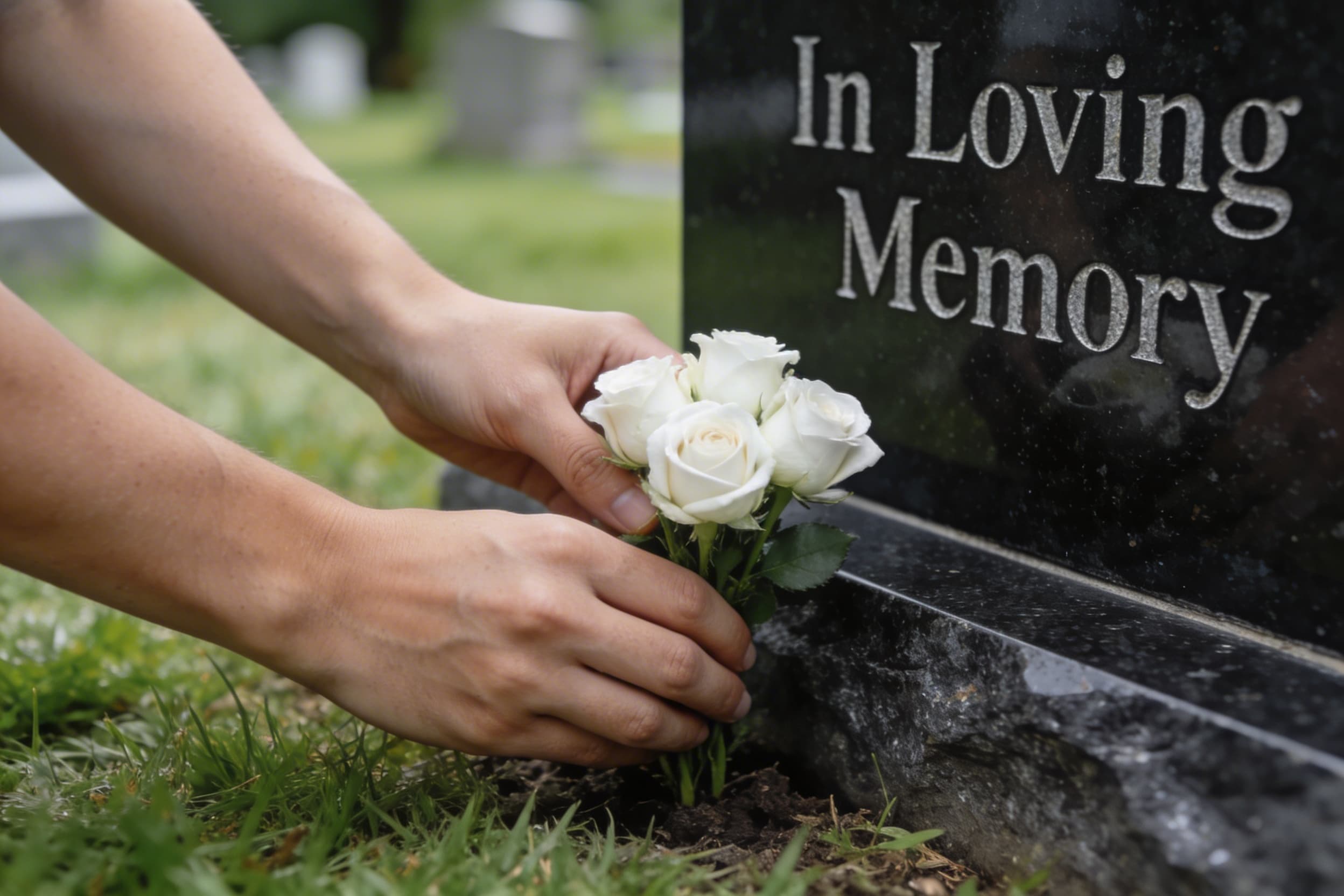
"In Loving Memory" is one of the most widely used epitaph phrases in the English-speaking world. "Rest in Peace," "Gone But Not Forgotten," and "Forever in Our Hearts" are also extremely common. Religious families frequently choose scripture verses, with Psalm 23:1 ("The Lord is my shepherd") being among the most popular.
Choosing an epitaph is a quiet, meaningful act — a chance to say something lasting about someone you love. There is no right or wrong answer, only the words that feel truest. Take your time, talk with family, and trust that the right phrase will come.
If you are exploring memorial engraving options and want to see the full range of inscriptions, quotes, and design ideas available, the Memorials.com headstones collection offers a complete selection of granite and bronze memorials ready for personalization.