🏬Supersize Online Funeral Retailer🪦1000's of Headstones⚱️Over 10,000 Cremation Urns⚰️Caskets Overnight Delivery🛒Funeral & Memorial Superstore🚚FREE Shipping on ALL Orders👨👩👧👦Helping Families for over 20 Years💰Lowest Price Guarantee🏬Supersize Online Funeral Retailer🪦1000's of Headstones⚱️Over 10,000 Cremation Urns⚰️Caskets Overnight Delivery🛒Funeral & Memorial Superstore🚚FREE Shipping on ALL Orders👨👩👧👦Helping Families for over 20 Years💰Lowest Price Guarantee
🏬Supersize Online Funeral Retailer🪦1000's of Headstones⚱️Over 10,000 Cremation Urns⚰️Caskets Overnight Delivery🛒Funeral & Memorial Superstore🚚FREE Shipping on ALL Orders👨👩👧👦Helping Families for over 20 Years💰Lowest Price Guarantee🏬Supersize Online Funeral Retailer🪦1000's of Headstones⚱️Over 10,000 Cremation Urns⚰️Caskets Overnight Delivery🛒Funeral & Memorial Superstore🚚FREE Shipping on ALL Orders👨👩👧👦Helping Families for over 20 Years💰Lowest Price Guarantee
Choosing an inscription for your mother's cremation urn is a decision that carries weight far beyond the words themselves. The phrase you select will live alongside her ashes — a quiet, permanent expression of the bond you shared. Unlike a headstone inscription that visitors read from a distance, an urn engraving is intimate. You see it when you walk past the shelf, when you dust the mantelpiece, when you pause and remember.
The challenge is that urn engraving space is limited, and grief makes even small decisions feel enormous. This guide gathers the most meaningful short urn quotes for mom, organized by tone and style, with practical advice on character limits, fonts, and engraving options. For a broader look at engraving methods and materials across all memorial types, see our engraving guide for urns and headstones. And if you are also choosing words for a headstone, our article on covers that process in detail.
Before selecting a quote, decide what information goes on the urn itself. Most families follow a standard format that includes some combination of these elements:
A relationship line — something like "Beloved Mother," "Our Mom," or "Mama" — anchors the inscription and immediately tells anyone who sees the urn who she was to the family. Below that, her full name (or the name everyone actually used) and her dates of birth and death provide the essential record.
The quote or sentiment comes last, filling whatever engraving space remains. On a full-size cremation urn, you may have room for two to three lines of text beyond the name and dates. On a keepsake urn, you might only have room for a single short phrase.
A common date format for urn engravings is the abbreviated month style — "Jan. 15, 1948 – Mar. 22, 2025" — which saves characters compared to spelling out full month names. If space is tight, just the years work well: "1948 – 2025."
Classic Short Inscriptions for Mom's Urn
These time-tested phrases have been engraved on urns and memorials for generations. They are familiar, dignified, and universally understood.
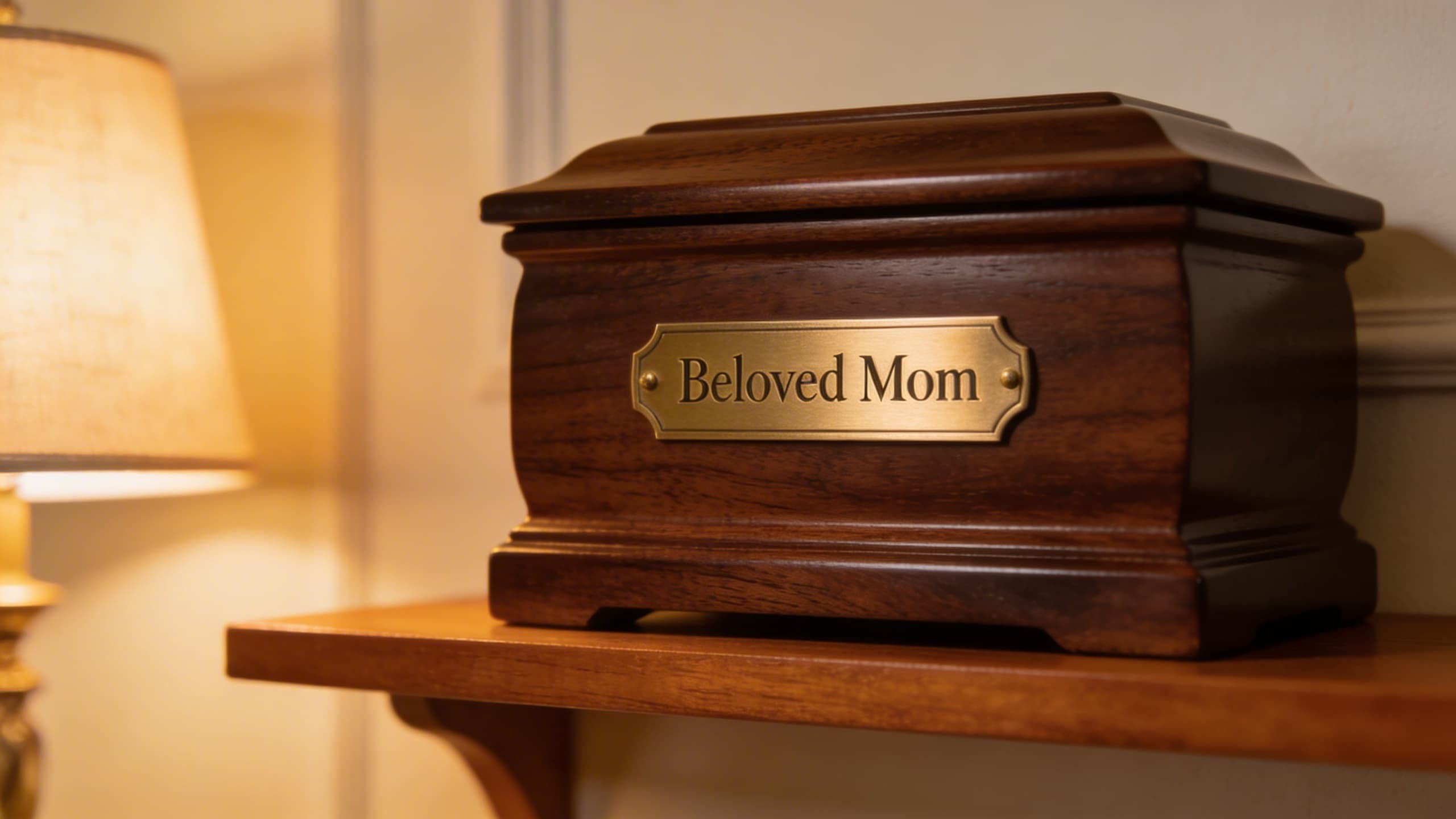
"Beloved Mother" remains the most requested relationship line on engraved urn nameplates because it says everything that needs to be said in two words. Other classic options include:
"In Loving Memory" — the most widely used memorial phrase, appropriate for any material and any setting. "Forever in Our Hearts" — expresses enduring love without religious specificity. "Always Remembered, Forever Loved" — slightly longer but fits most full-size urns. "Rest in Peace" — traditional and universally recognized. "Gone but Never Forgotten" — acknowledges the loss while affirming her lasting presence.
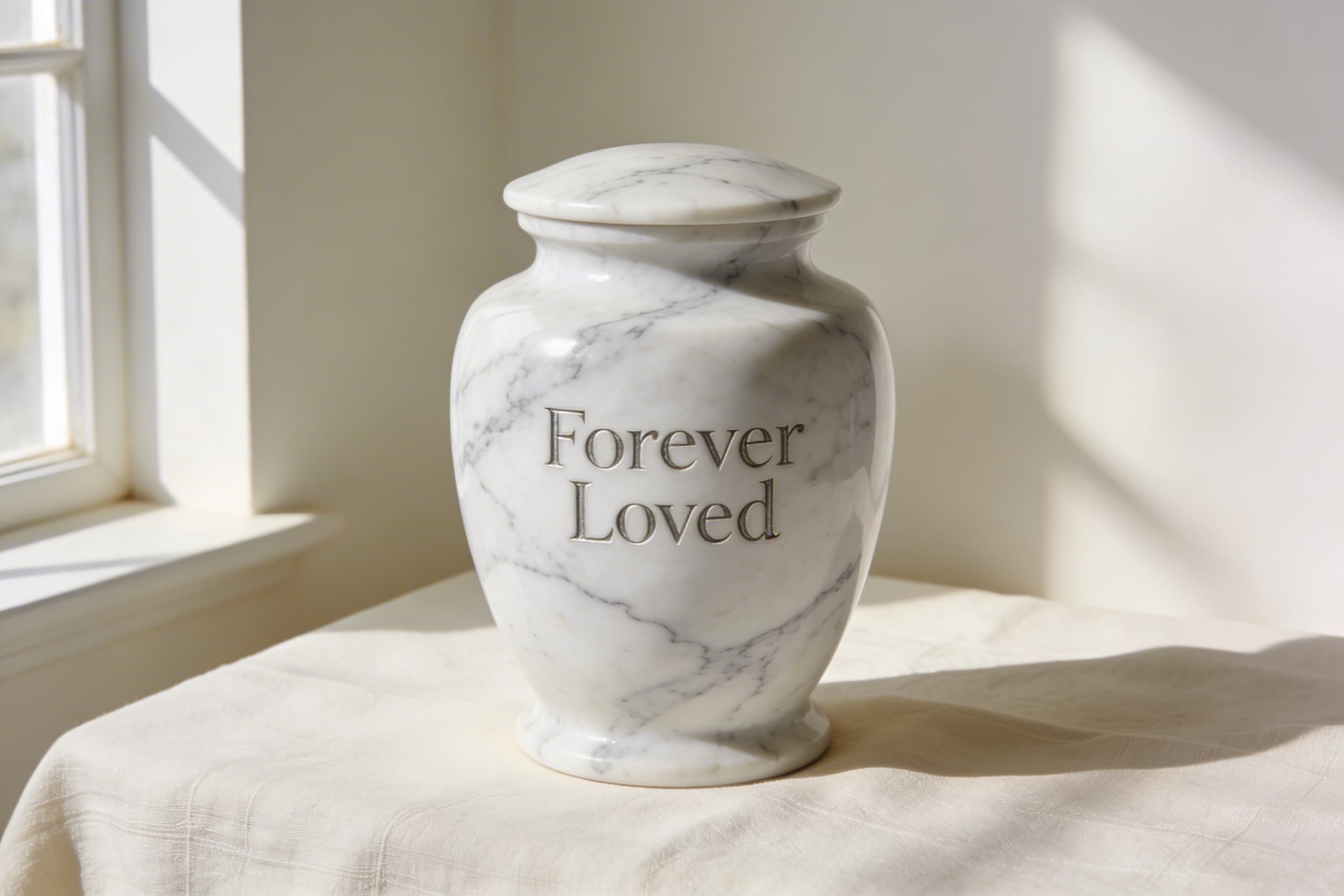
These phrases work especially well on marble urns and stone memorials, where the engraving style tends toward formal serif fonts that complement classic wording.
Heartfelt Urn Quotes That Capture a Mother's Love
When a classic phrase feels too broad, a more personal quote can better reflect who your mother was and what she meant to the family. These inscriptions express the specific qualities of a mother's love — warmth, sacrifice, guidance, protection.
"A mother's love lives forever." This five-word inscription fits even the smallest engraving spaces and captures the most essential truth about maternal love — that it does not end with death.
"She gave us roots and wings." This quote speaks to the dual nature of good mothering — stability and freedom — and resonates especially with adult children who have built their own lives on the foundation she created.
"Her love made us who we are." A tribute that acknowledges her shaping influence on the entire family. Works well on companion or family-display urns where multiple children or grandchildren will see it.
"The heart remembers what the mind forgets." A gentle inscription for mothers who struggled with memory loss in their final years, honoring the emotional connection that outlasted everything else.
"You were my first friend, my best friend, my forever friend." Longer, but fits on wooden urns with larger engraving surfaces or on a separate brass nameplate attached to the urn.
Scripture and Bible Verses for Mom's Urn
For mothers whose faith was central to their identity, a scripture verse transforms the urn into a spiritual tribute. The key is choosing a passage she actually lived by — one her family heard her quote, saw underlined in her Bible, or felt reflected in her daily actions.
"Her children rise up and call her blessed." This passage from Proverbs 31:28 is the most frequently requested scripture for a mother's urn inscription because it directly honors the maternal role. At just eight words, it fits comfortably on most engraving surfaces.
"Well done, good and faithful servant." From Matthew 25:21, this verse honors a mother who served her family and her faith with quiet dedication. It works especially well for mothers who were active in their church or community.
"Precious in the sight of the Lord is the death of his faithful ones." Psalm 116:15 offers comfort to the family by affirming that God values and receives her. Longer than most urn inscriptions, so it works best on full-size urns or on a separate nameplate.
"She is clothed with strength and dignity; she can laugh at the days to come." Proverbs 31:25 captures a mother who faced life with both resilience and joy. Consider abbreviating to "Clothed in Strength and Dignity" if space is limited.
"I have fought the good fight, I have finished the race." Second Timothy 4:7 suits a mother who endured hardship with perseverance. The verse feels especially fitting for mothers who faced long illnesses with courage.
If you are selecting words for both an urn and a headstone, choose different verses for each to avoid duplication. The urn inscription is the private, family-facing tribute; the headstone is the public memorial. They serve different purposes and benefit from different words.
Personal and Custom Urn Inscriptions for Mom
The most meaningful urn inscriptions are often the ones no one has ever seen before — words pulled from your family's own language, your mother's own phrases, the private vocabulary that only her closest people understood.
Her catchphrase or signature saying is often the most powerful inscription. If she said "call me when you get home" every time anyone left the house, those six words carry more emotional weight than any published quote. If she hummed a particular tune while cooking, the song title could become a quietly beautiful inscription.
Her nickname — the one her grandchildren used, the one her husband called her, the one her siblings still say — can stand alone as an inscription more personal than any quote. "Nana," "Mama Bear," "Sunshine" — these names carry entire relationships in a single word.
A reference to her passion or calling adds specificity. "She made beautiful things grow" works for a mother who gardened. "Teacher, always" honors a career she loved. "The kitchen was her kingdom" captures a mother whose cooking held the family together.
When writing a custom inscription, read it aloud before committing to the engraving. If it sounds like something you would actually say to her — or something she would say back — it is the right choice.
Combining an Urn Quote with Names and Dates
The most common layout for a mother's urn engraving follows this structure:
The top line carries the relationship line — "Beloved Mother" or "Our Mom" or simply "Mom." The second line shows her full name. The third line contains her dates. The fourth line (if space allows) holds the quote or sentiment.
For example, a complete inscription might read: Beloved Mother / Jane Marie Thompson / January 8, 1945 – October 3, 2025 / Forever in Our Hearts. That is four lines with a total of roughly 80 characters — well within the capacity of most full-size urn engraving surfaces.
If you want a longer quote, consider placing the name and dates on the front of the urn and the inscription on the back or lid. Many wooden urns accept engraving on multiple surfaces. Alternatively, an engraved nameplate attached to the urn body lets you include more text without engraving the urn itself.
Practical Engraving Considerations
Understanding the physical constraints of urn engraving helps you choose an inscription that looks as good as it reads. For a complete walkthrough of engraving methods, materials, and costs, our urn engraving and personalization guide covers every detail.
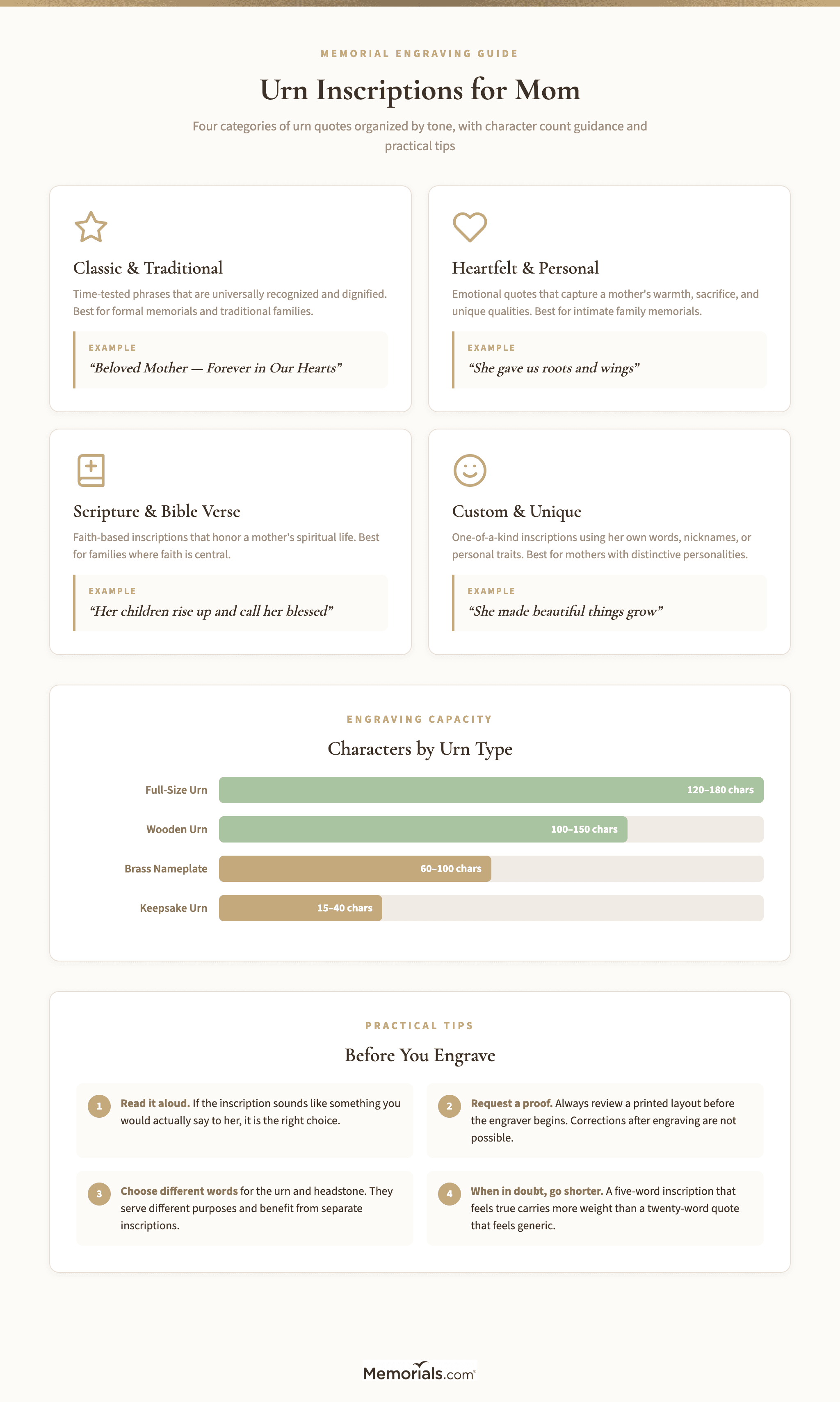
Character limits vary by urn material and surface area. Metal and brass urns typically allow 4 to 6 lines of text with 20 to 30 characters per line. Marble and stone urns offer more surface area but require deeper engraving that costs more per character. Wood urns accept laser etching or rotary engraving, and the contrast between burned text and natural grain creates a warm, organic appearance.
Font choice affects both readability and capacity. Serif fonts like Times Roman look elegant on marble and stone but consume more horizontal space than sans-serif options. For shorter quotes, a serif font adds formality. For longer inscriptions, a clean sans-serif font fits more characters per line.
Engraving cost typically runs between three and ten dollars per character, depending on the material and method. A short inscription like "Beloved Mom / 1948 – 2025" might cost forty to sixty dollars to engrave. A longer quote with name, dates, and four lines of text could run one hundred to one hundred fifty dollars. Request a proof from the engraver before final approval — spelling and layout corrections after engraving are not possible.
When One Quote Is Not Enough
Some families feel that a single short phrase cannot capture everything their mother meant to them. If that resonates with you, there are options beyond trying to fit a longer inscription onto a single urn.
A keepsake urn set lets each family member choose their own inscription for their individual urn, so every sibling or grandchild carries a different quote that reflects their unique relationship with her. One child might engrave "My First Teacher," while another chooses "My Biggest Cheerleader."
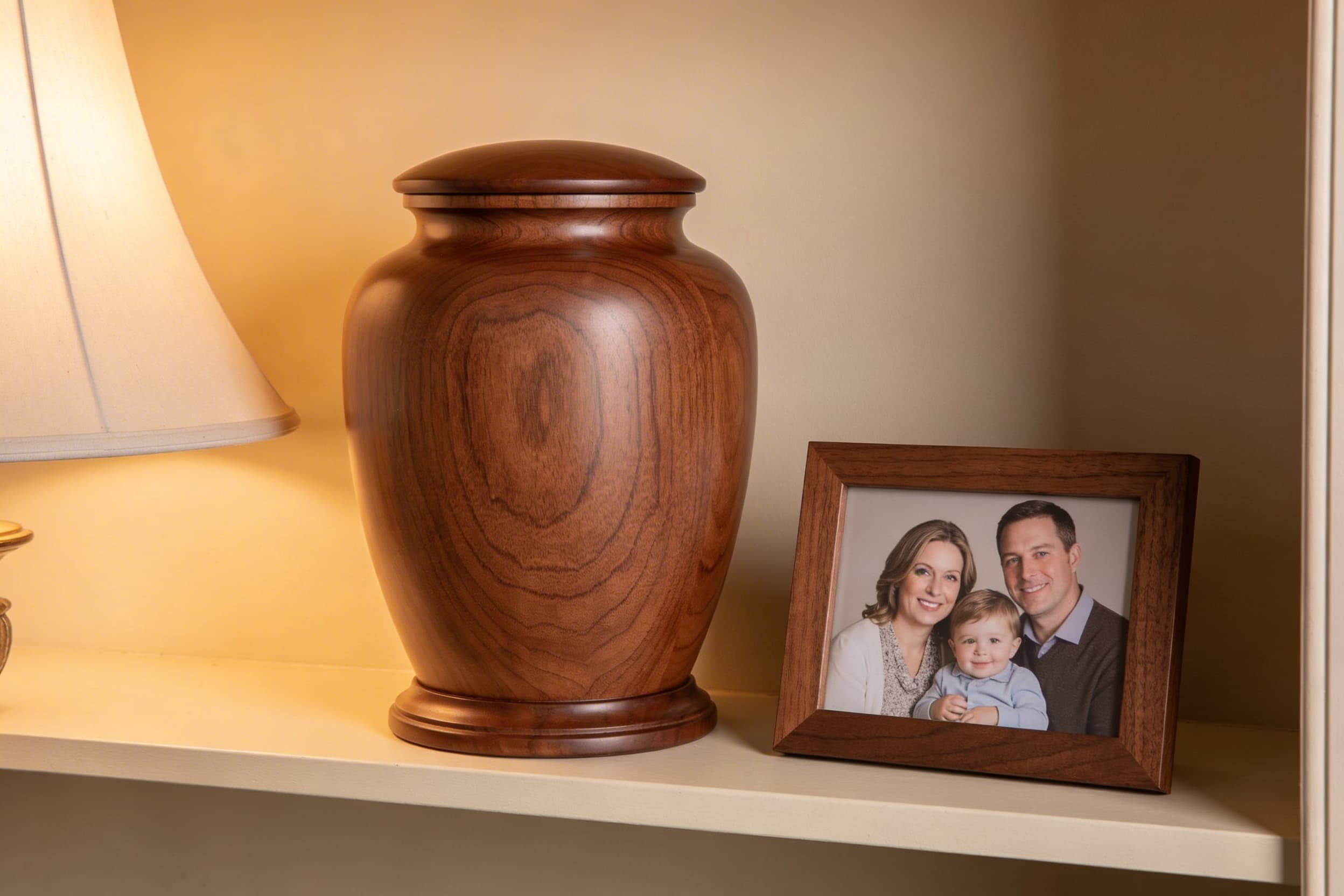
A memorial display — placing the urn alongside a framed quote, a favorite photograph, or a small written tribute — gives you space to say more without being constrained by engraving limits. The urn carries the essential information, and the surrounding display tells the fuller story.
If you are also creating inscriptions for parents — a companion headstone or a shared memorial — the urn can carry the personal, intimate tribute while the headstone handles the formal, public inscription. The two complement each other.
For ideas on inscription wording for other memorial types — dedication plaques, garden stones, and bench plates — our guide to short memorial inscription ideas covers formats beyond urns and headstones.
Frequently Asked Questions
How many characters can fit on a cremation urn? Most full-size cremation urns accommodate 4 to 6 lines of engraved text with 20 to 30 characters per line, depending on the material and font size. Keepsake urns typically allow only 1 to 2 lines with 15 to 20 characters each. Ask your engraver for the exact capacity of the urn you have selected.
Can I engrave my mom's urn after the ashes are already inside? Yes. Many engravers work on urns that already contain ashes, though some require the ashes to be temporarily removed for safety during the process. Confirm with the engraving provider before scheduling.
What is the best urn material for engraving? Brass, bronze, and marble hold engraved detail exceptionally well and resist fading over time. Wood urns accept laser etching with beautiful contrast. Ceramic and glass urns generally do not accept traditional engraving, but a separate nameplate can be attached instead.
Should I use the same quote on the urn and the headstone? Different inscriptions serve different purposes. The urn is a private, family-facing memorial; the headstone is a public tribute. Choosing different words for each gives you two opportunities to honor different aspects of your mother's life.
How much does it cost to engrave a cremation urn? Engraving costs range from three to ten dollars per character, with most complete inscriptions (name, dates, and short phrase) falling between forty and one hundred fifty dollars depending on the material and method.
The words you choose for your mother's urn do not need to be extraordinary. They need to be true. Whether you select a classic phrase that has comforted families for generations, a scripture passage she carried in her heart, or a custom line that only your family would understand, the inscription becomes part of how her memory lives on. Take your time. Read the options aloud. And when a phrase makes you pause — when it sounds like something she would have nodded at — that is the one.