🏬Supersize Online Funeral Retailer🪦1000's of Headstones⚱️Over 10,000 Cremation Urns⚰️Caskets Overnight Delivery🛒Funeral & Memorial Superstore🚚FREE Shipping on ALL Orders👨👩👧👦Helping Families for over 20 Years💰Lowest Price Guarantee🏬Supersize Online Funeral Retailer🪦1000's of Headstones⚱️Over 10,000 Cremation Urns⚰️Caskets Overnight Delivery🛒Funeral & Memorial Superstore🚚FREE Shipping on ALL Orders👨👩👧👦Helping Families for over 20 Years💰Lowest Price Guarantee
🏬Supersize Online Funeral Retailer🪦1000's of Headstones⚱️Over 10,000 Cremation Urns⚰️Caskets Overnight Delivery🛒Funeral & Memorial Superstore🚚FREE Shipping on ALL Orders👨👩👧👦Helping Families for over 20 Years💰Lowest Price Guarantee🏬Supersize Online Funeral Retailer🪦1000's of Headstones⚱️Over 10,000 Cremation Urns⚰️Caskets Overnight Delivery🛒Funeral & Memorial Superstore🚚FREE Shipping on ALL Orders👨👩👧👦Helping Families for over 20 Years💰Lowest Price Guarantee
The funeral flag presentation script is one sentence, it takes about twelve seconds, and it is spoken quietly to one person rather than announced to the gathering. Most families hear it once and remember only fragments afterward, which is why it is worth reading beforehand.
The wording used by the Department of Defense is this:
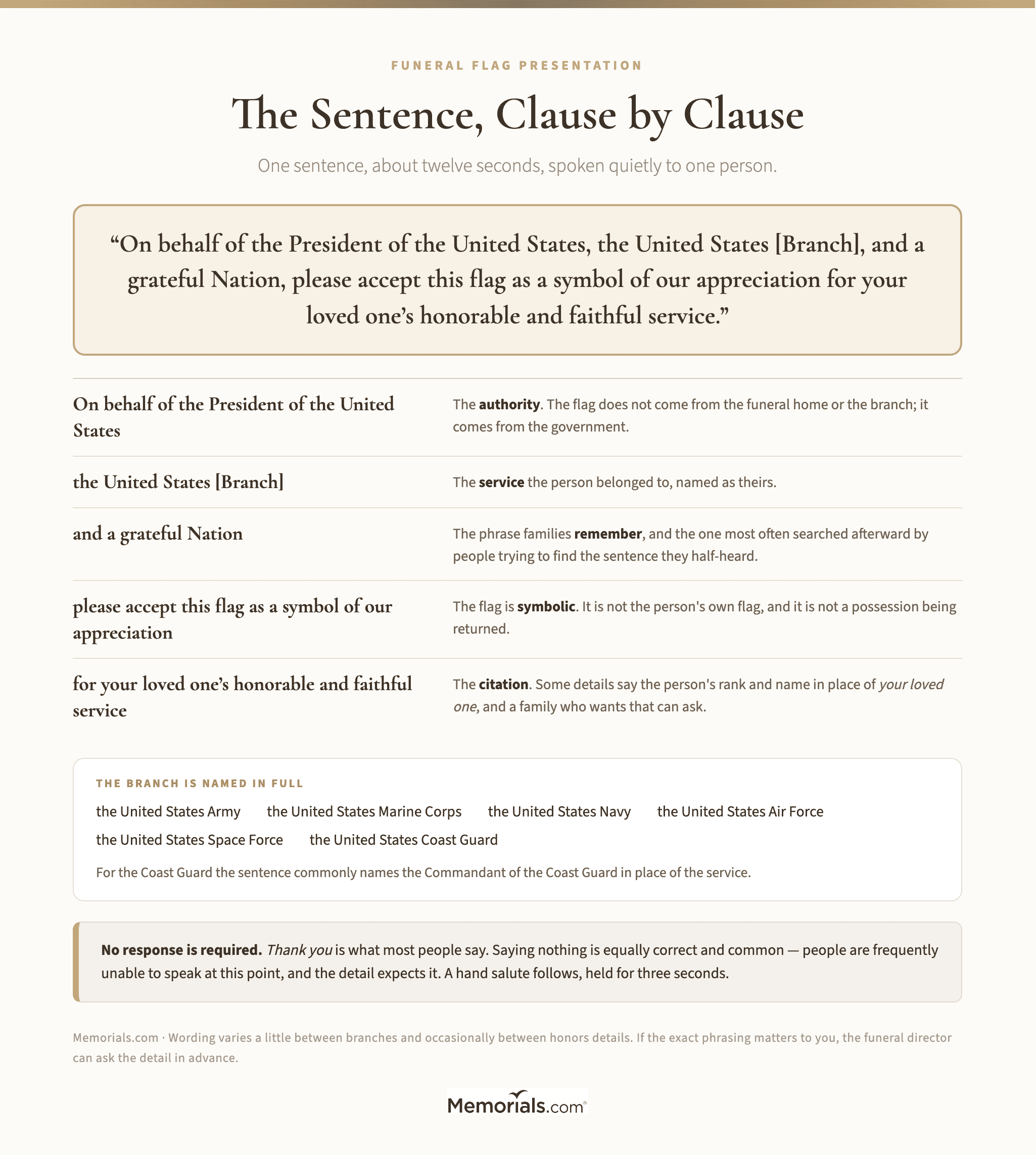
"On behalf of the President of the United States, the United States [Branch], and a grateful Nation, please accept this flag as a symbol of our appreciation for your loved one's honorable and faithful service."
The branch is named in full — the United States Army, the United States Marine Corps, the United States Navy, the United States Air Force, the United States Space Force, or the United States Coast Guard. For the Coast Guard the sentence commonly names the Commandant of the Coast Guard in place of the service.
Wording varies a little between branches and occasionally between honors details. If the exact phrasing matters to you, the funeral director can ask the detail in advance, and they will tell you.
What Is Said During the Flag Presentation, Line by Line
What is said during the flag presentation is a single sentence, but each clause is doing something.
On behalf of the President of the United States — the authority. The flag is not a gift from the funeral home or the branch; it comes from the government.
the United States [Branch] — the service the person belonged to, named as theirs.
and a grateful Nation — the phrase families remember, and the one most often searched afterward. People look up on behalf of a grateful nation trying to find the sentence they half-heard at a graveside.
please accept this flag as a symbol of our appreciation — the flag is symbolic. It is not the person's own flag, and it is not a possession being returned.
for your loved one's honorable and faithful service — the citation. Where the person died on active duty, the detail may say for your loved one's service to this Country and a grateful Nation or similar.
Some details replace your loved one with the person's rank and name. Both are correct, and a family who wants the name said can ask for it.
Each clause is doing something. The one families remember is "and a grateful Nation", which is what most of them search for afterward.
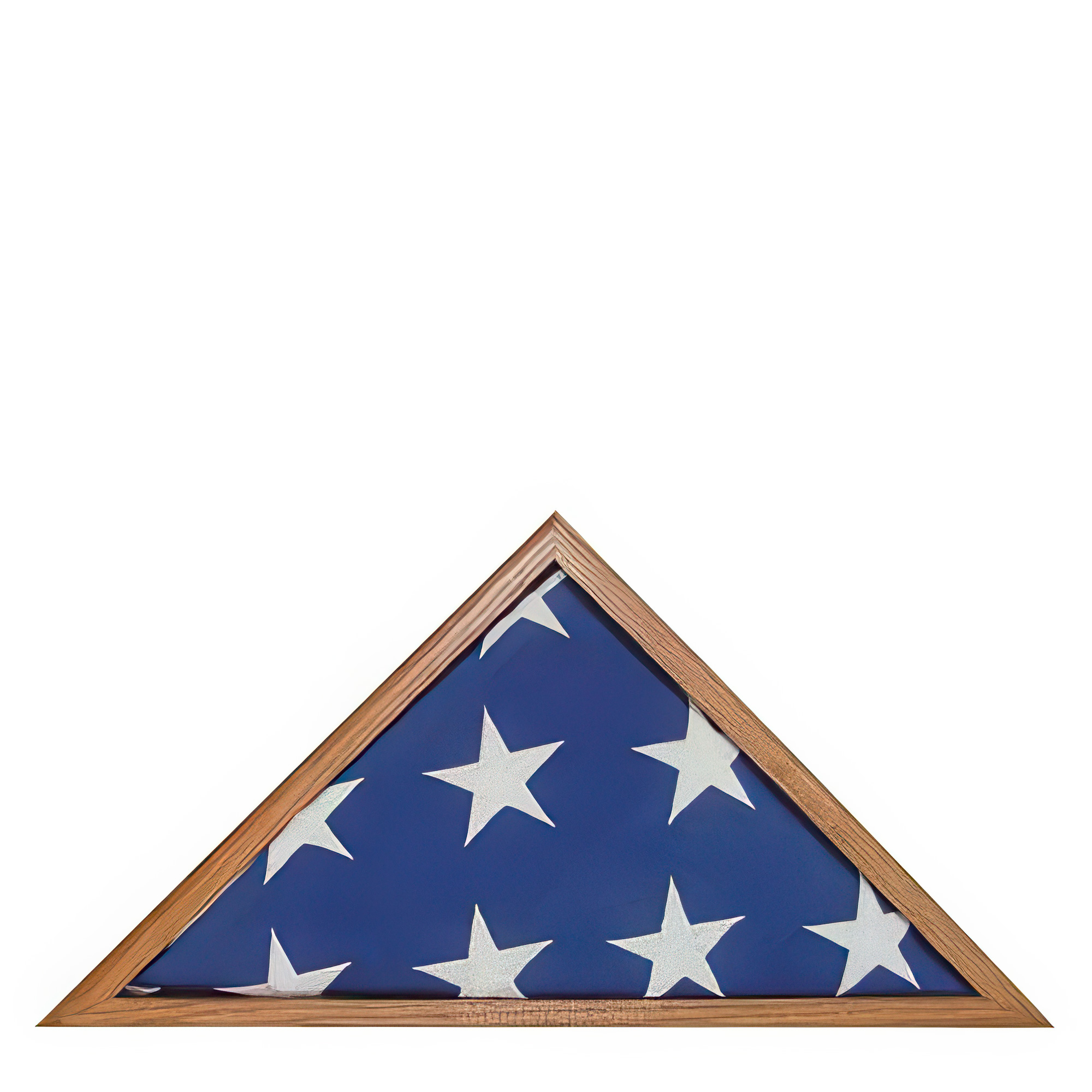
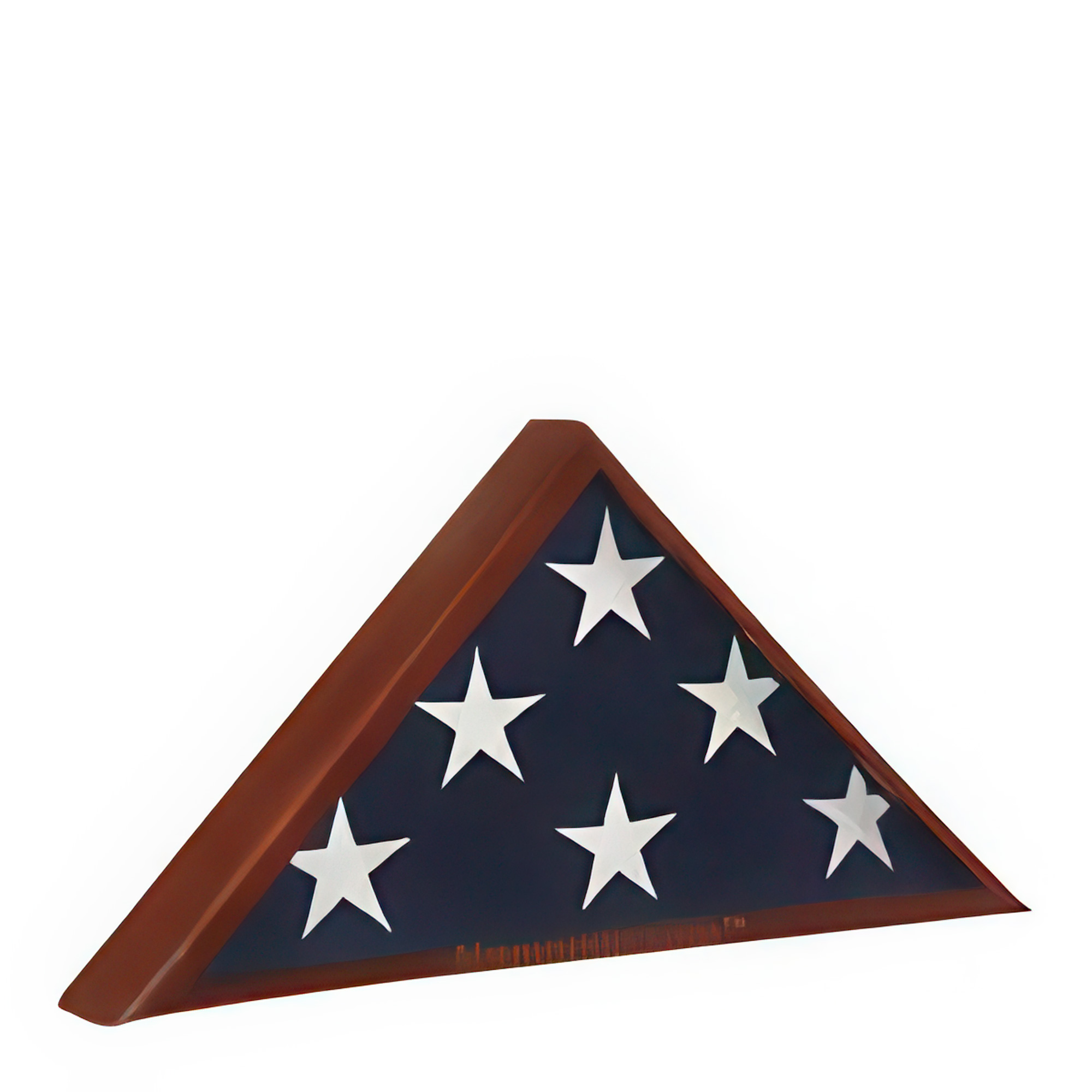
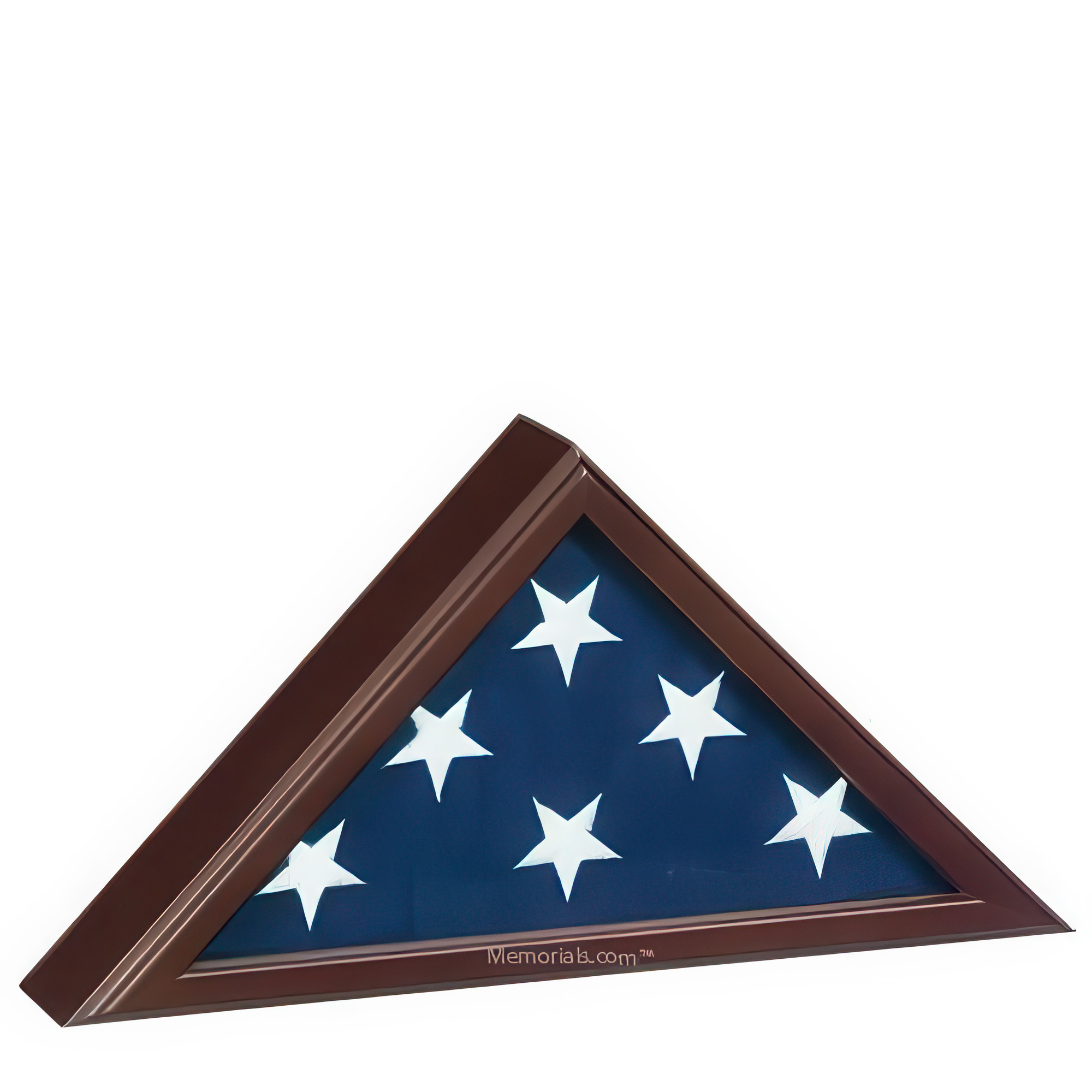
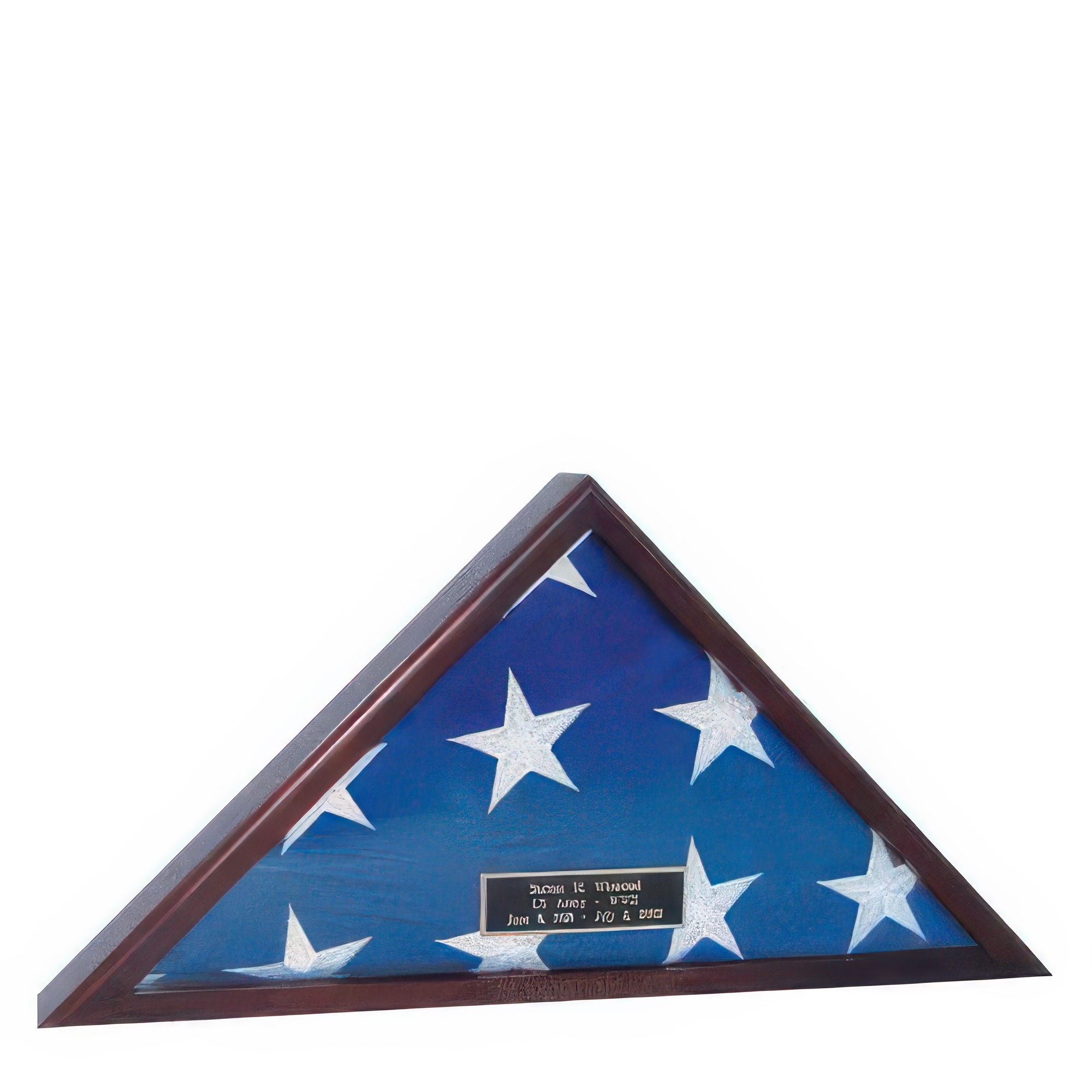
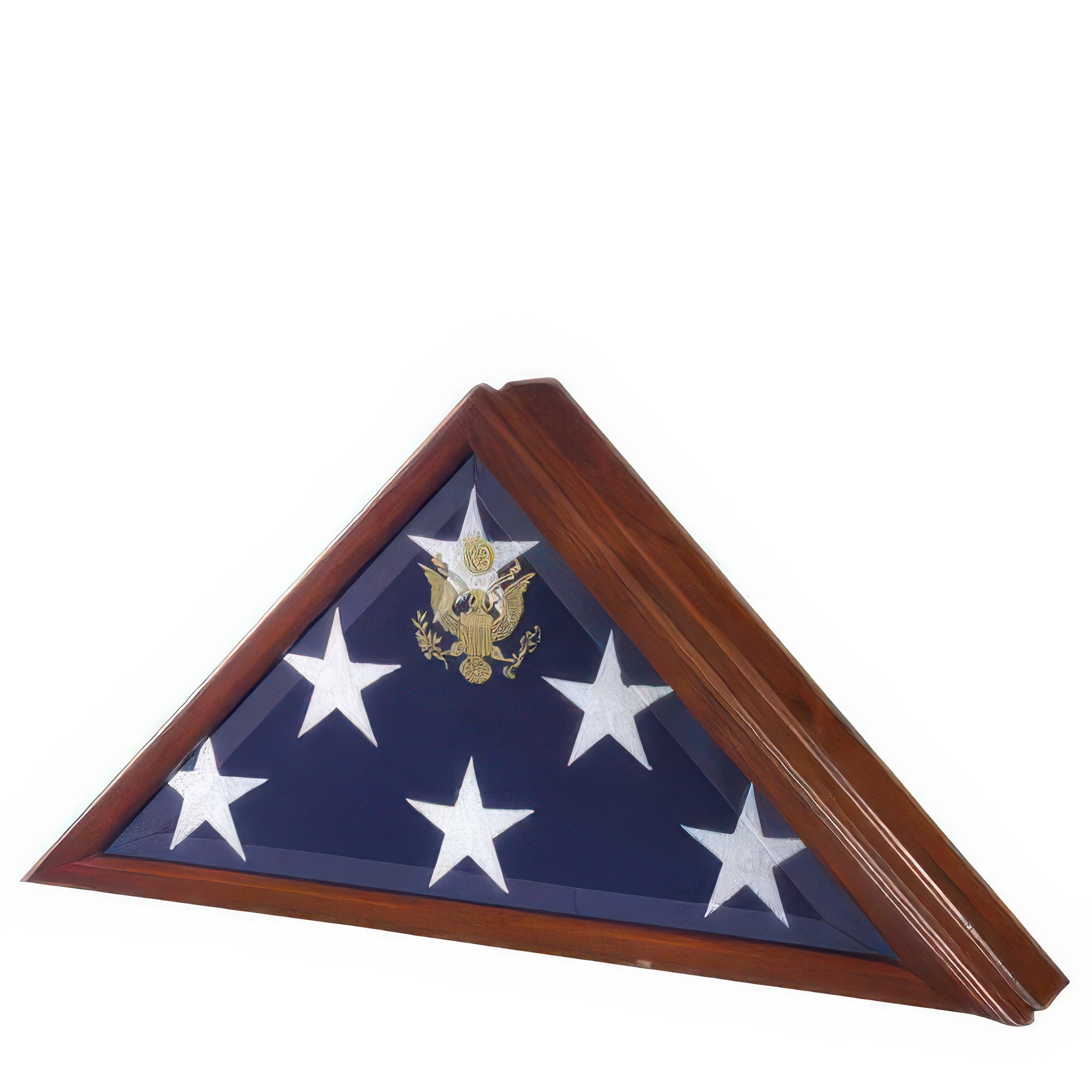
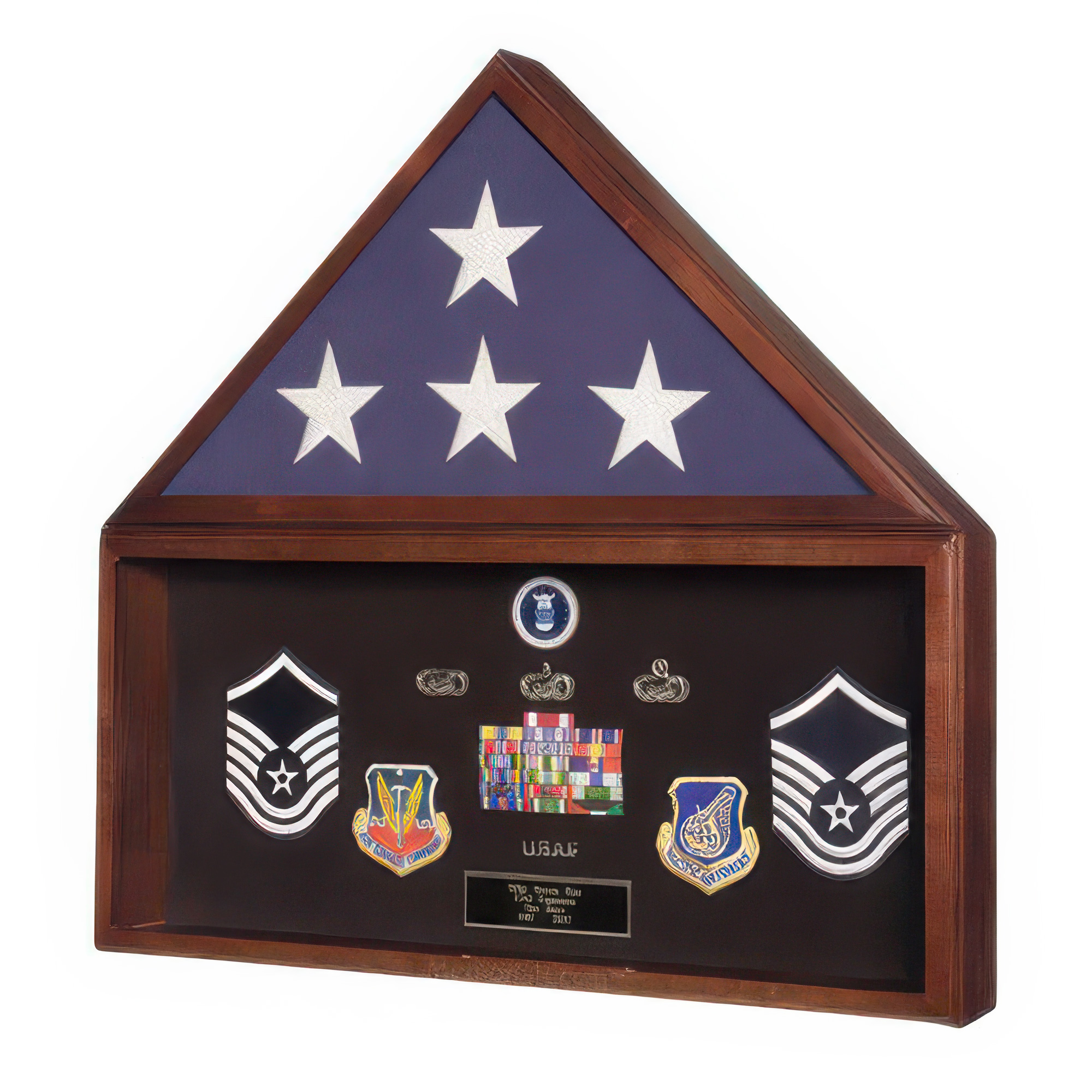
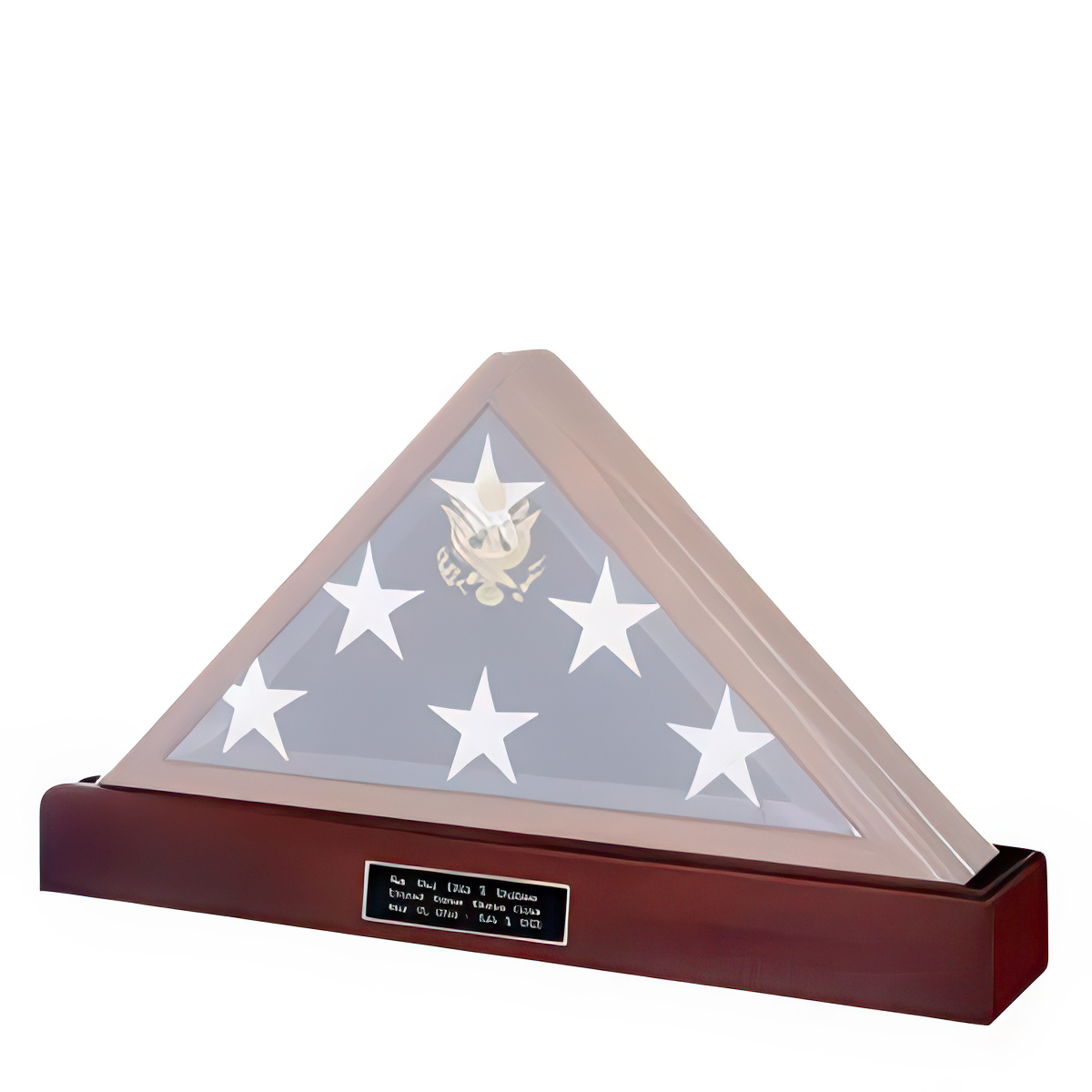
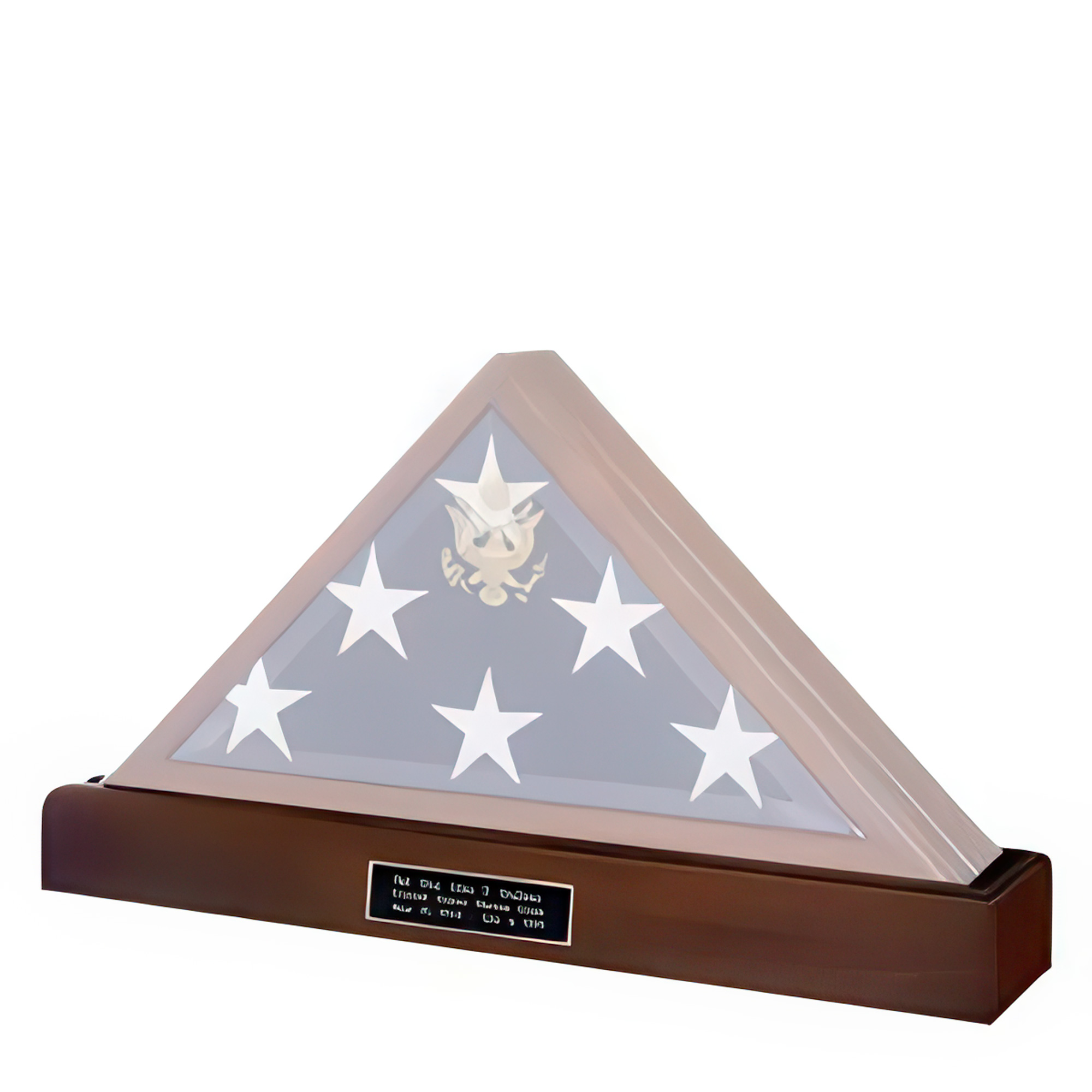
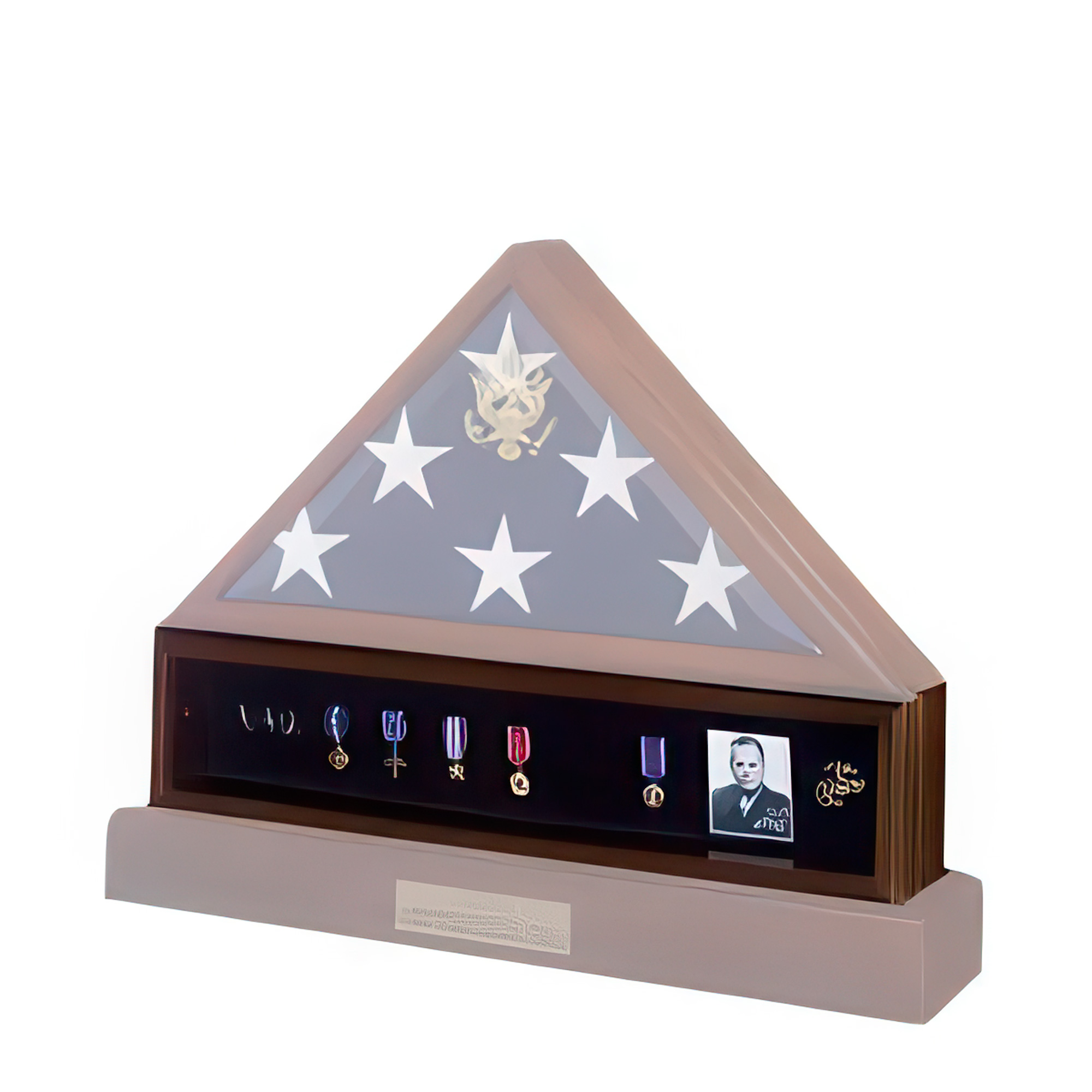
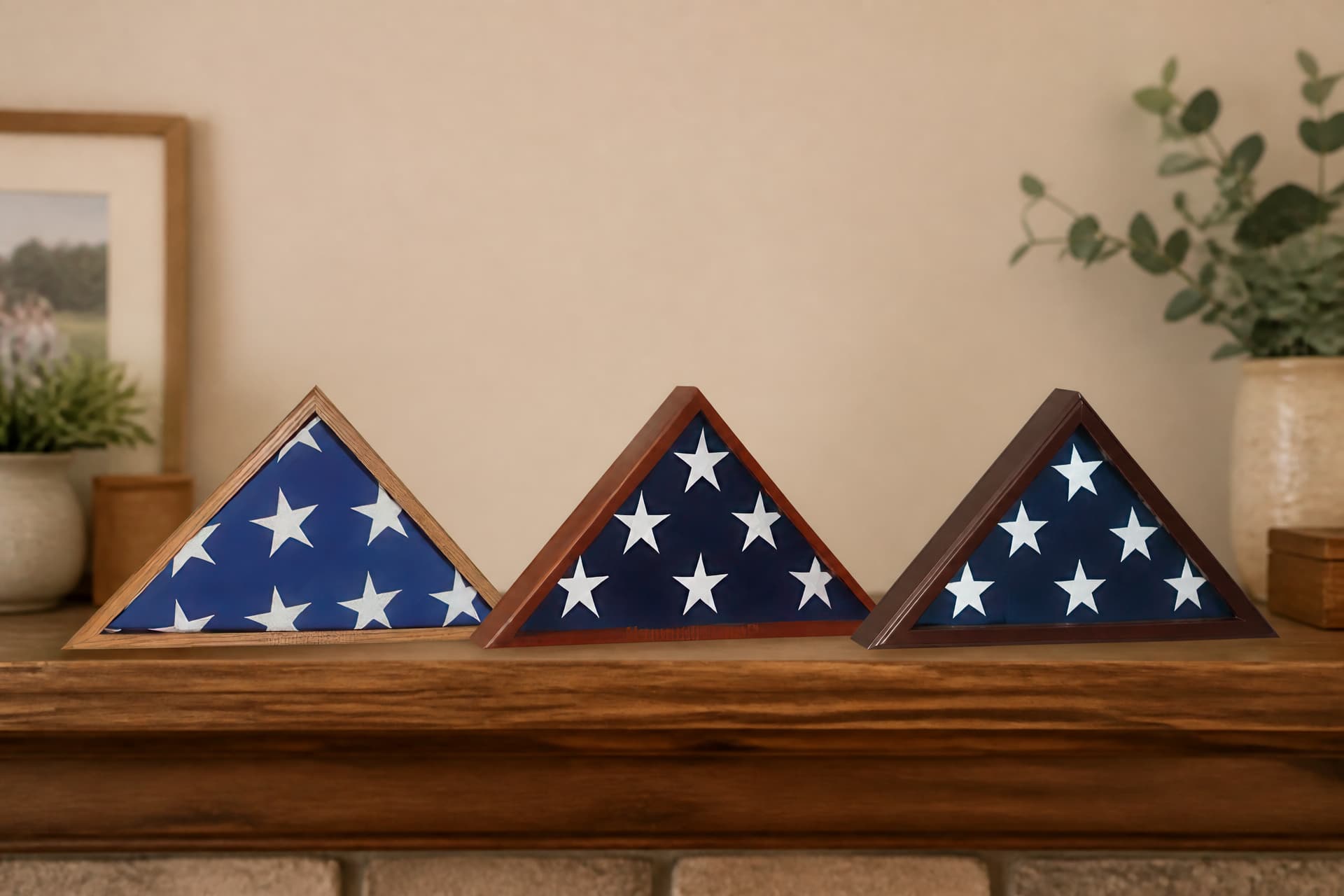
Shop Flag Cases
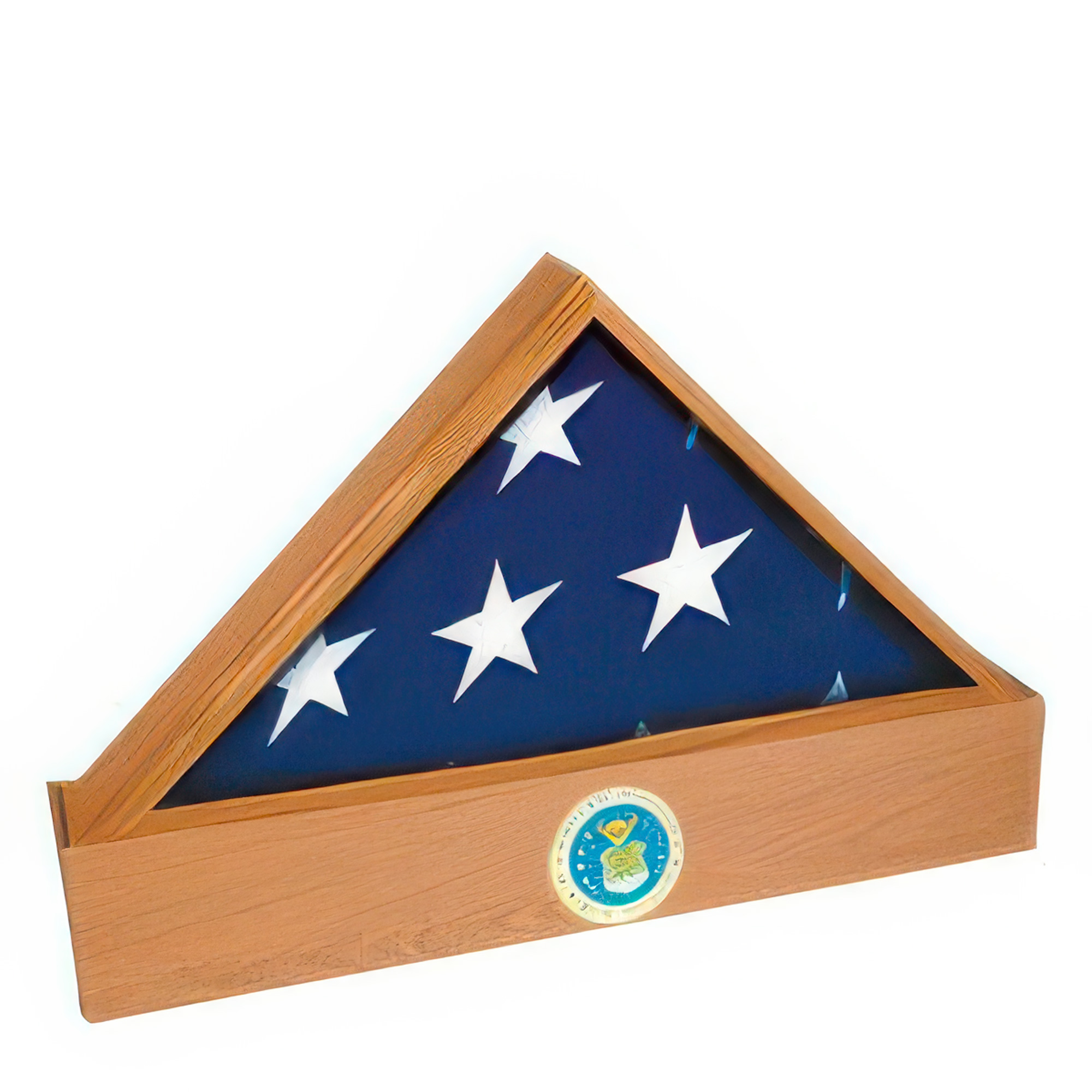
Triangular cases sized to a folded burial flag, in oak, cherry and walnut
The presentation is the most choreographed moment of the service and the least noisy.
One uniformed service member presents. Usually the detail's non-commissioned officer in charge, from the same branch as the person who died. Where the family requested a specific presenter and the detail can accommodate it, they will.
They kneel if the recipient is seated. The flag is offered at the recipient's eye level, not down at them. If the family is standing, the presenter remains standing.
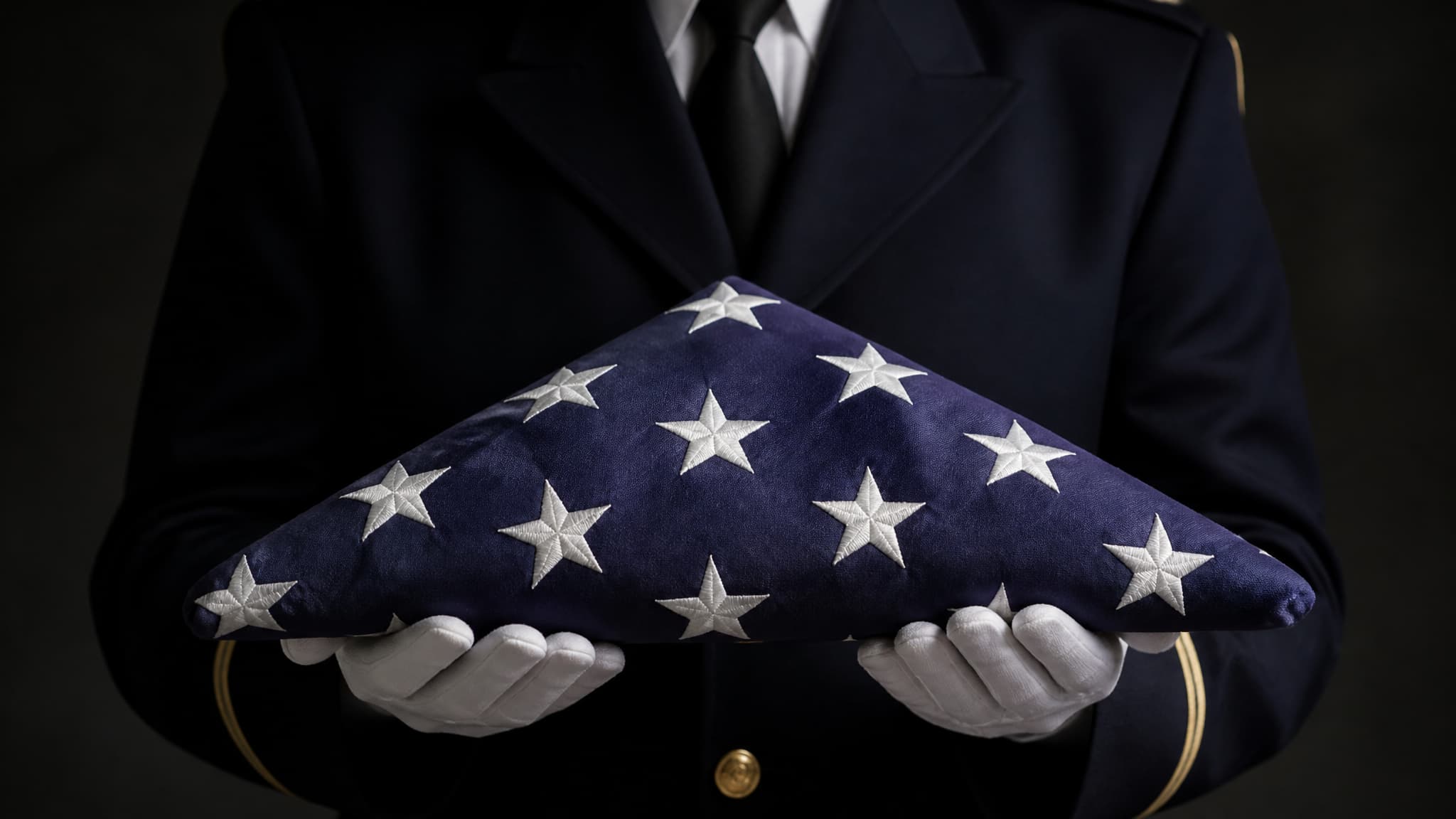
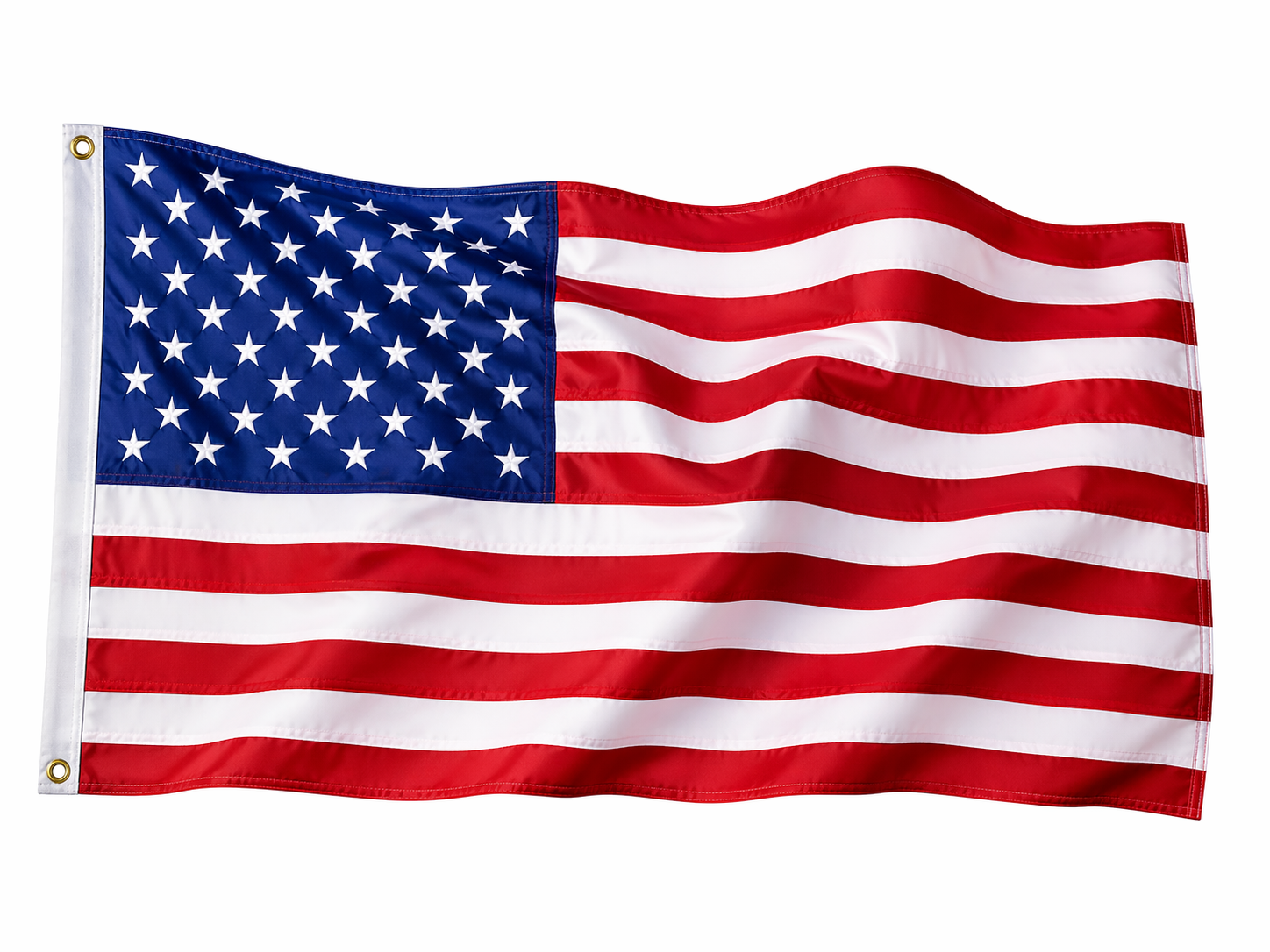
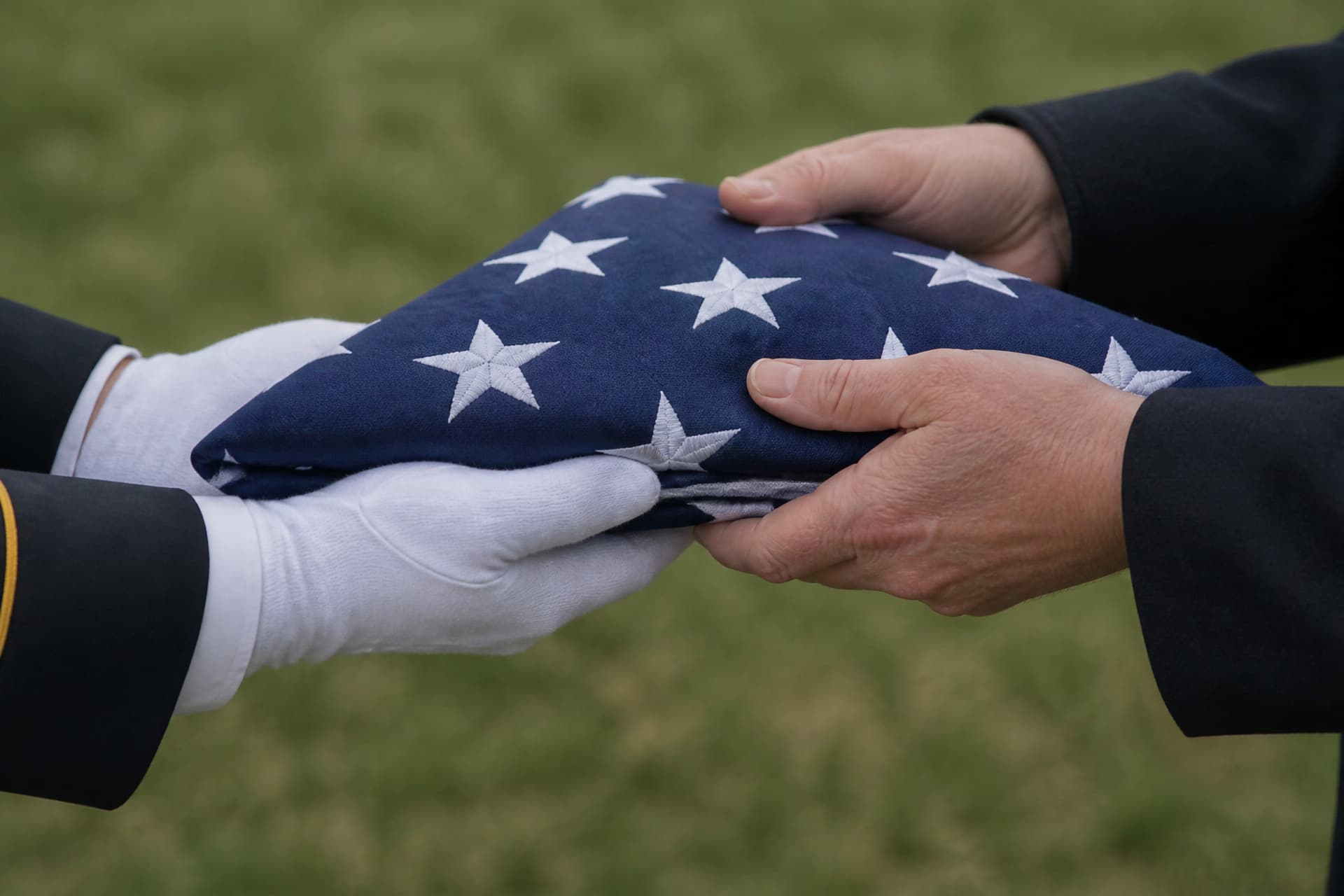
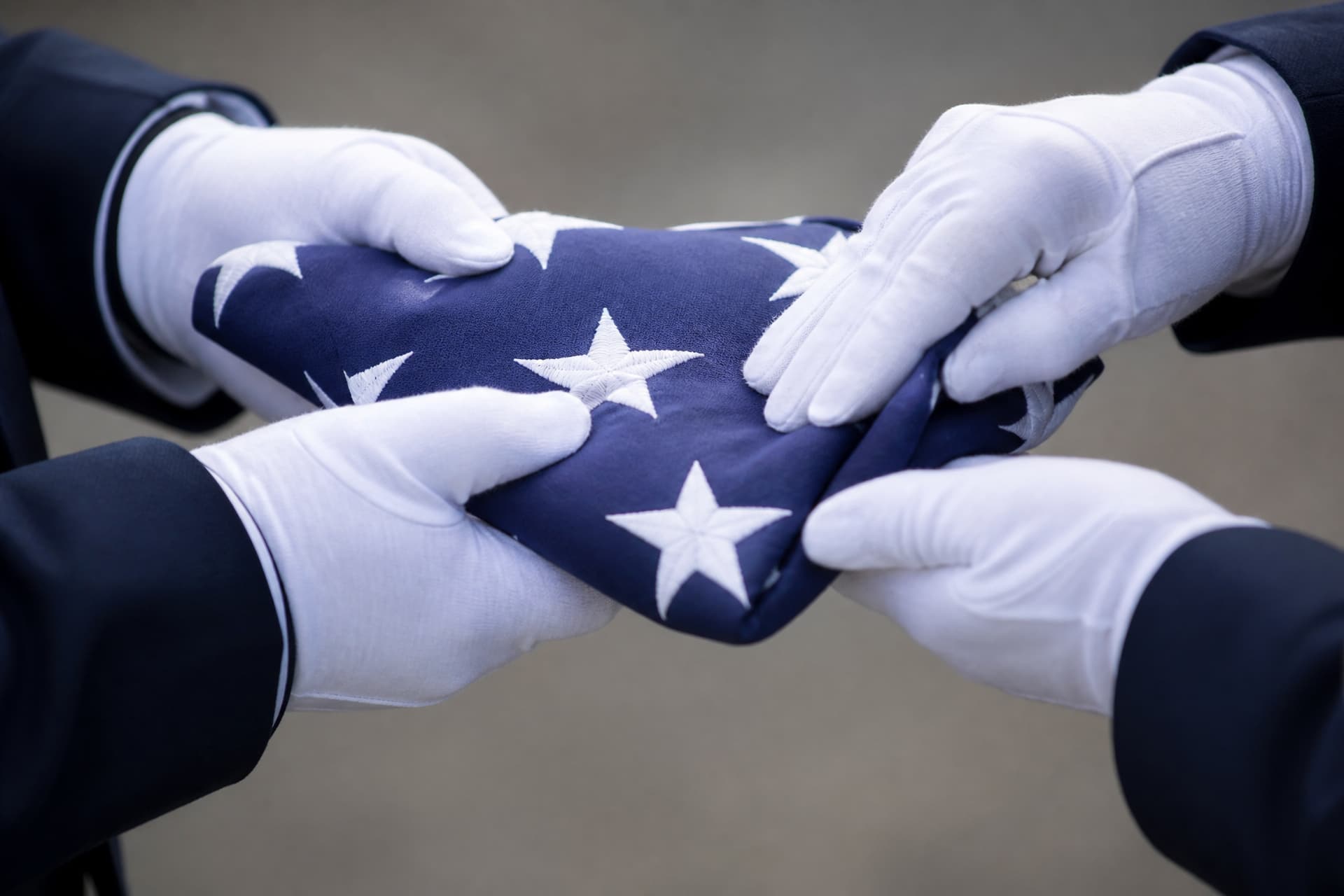
The flag is held with the straight edge toward the recipient and the blue field uppermost, offered in both hands.
It is spoken quietly. The sentence is for the person receiving the flag. Others nearby may hear it; nobody else is meant to.
There is no response required.Thank you is what most people say. Saying nothing is equally correct, and common — people are frequently unable to speak at this point and the detail expects it.
A hand salute follows. The presenter steps back and salutes the flag, holding it for three seconds, then departs.
The flag is offered in both hands, straight edge toward the recipient and the blue field uppermost. The presenter kneels if the recipient is seated, so that it is handed across rather than down.
Who Receives the Flag
One flag is furnished, and one person receives it. That is the part families most often wish they had known earlier.
The flag goes to the next of kin, in the order the branch recognizes: the surviving spouse first, then children by age, then parents, then siblings. An active-duty service member will usually have designated a recipient already, and that designation stands.
Where a family is blended, estranged, or simply large, the single flag can become a difficulty at exactly the wrong moment. Two things help:
Decide beforehand who receives it, and tell the funeral director. The detail will present to whoever the family names.
Additional flags can be obtained. The VA furnishes one burial flag at no cost. Families wanting more commonly buy them, and some organizations provide them. This is worth arranging before the service rather than discovering afterward.
Where It Sits in the Military Funeral Flag Ceremony
The military funeral flag ceremony is a sequence, and the presentation is the last part of it.
The flag is draped over the casket before the service, blue field at the head and over the left shoulder. With cremation, it is already folded and stands beside the urn.
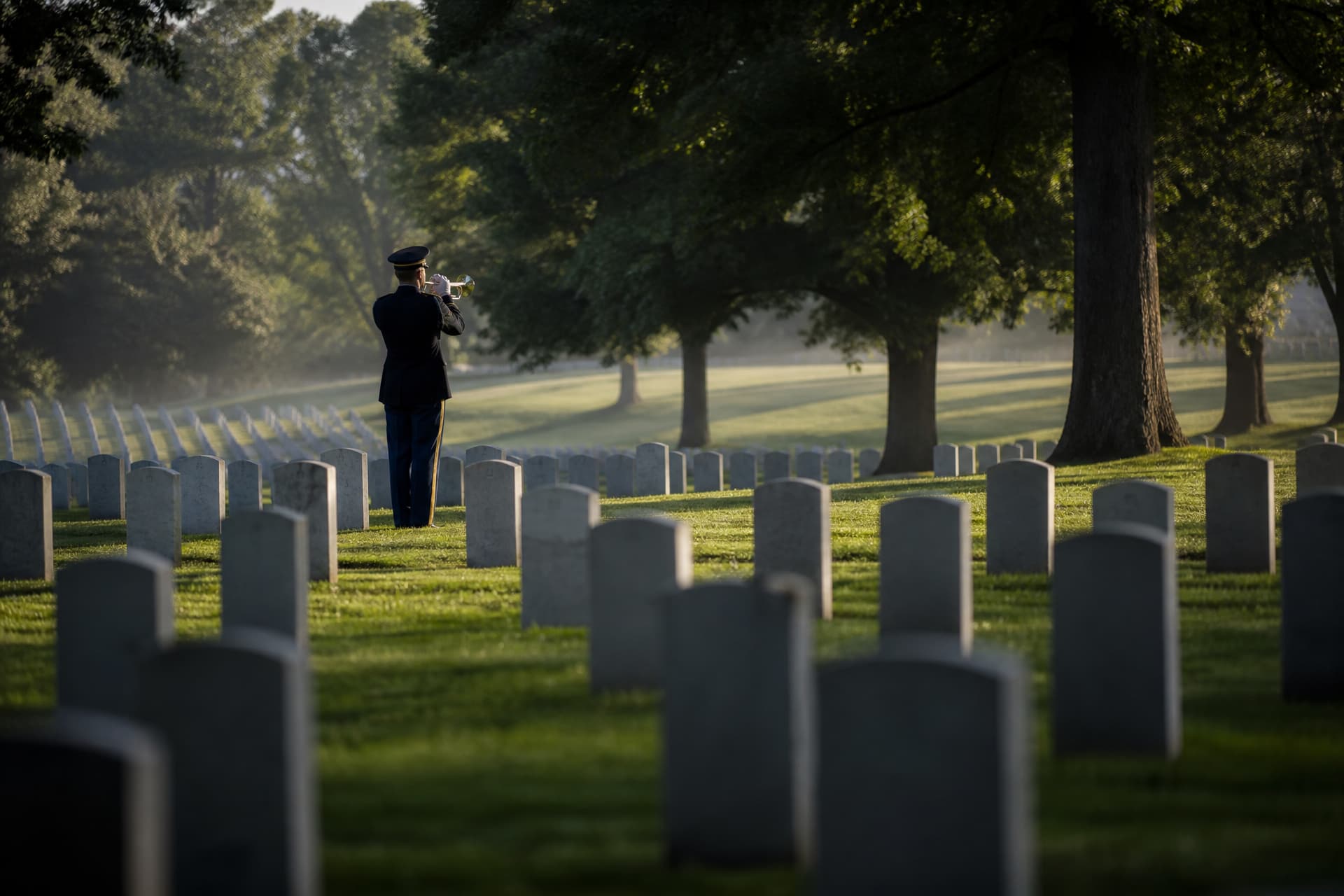
Taps is played, by a bugler where one is available and by a ceremonial bugle where one is not.
The flag is lifted and folded by the detail, in thirteen folds, into the triangle. No red or white should show when it is done — only the blue field and the stars.
The flag is passed along the detail to the presenter, hand to hand, without being tucked under an arm.
The presentation, with the sentence above.
The salute, three seconds, then the detail withdraws.
A two-person detail is the statutory minimum and is what most families receive. A larger detail with a firing party of seven is available for some, and the funeral director can tell you which applies.
Taps comes before the presentation and after the folding. Where a live bugler is not available the detail uses a ceremonial bugle, and it is worth asking beforehand which you will get.
If You Are the One Receiving It
A few things worth knowing in advance, from families who have done it.
You will be sitting. Take the flag in both hands. It is heavier than it looks — roughly the weight of a hardback book — and the triangle is stiff.
You do not have to say anything. Nodding is enough. The presenter has done this many times and expects silence as often as speech.
Hold it against your chest afterward rather than in your lap. That is what the shape is for, and it is steadier.
You may not remember the words. Almost nobody does. That is the reason this page exists, and reading it now is not cheating.
Ask someone to photograph it if you want that. Quietly, from a distance, and agreed beforehand. Many families are glad to have it later and would not have thought to ask on the day.
After the Service
The flag goes home with the recipient and there is no rule governing what happens next. The US Flag Code does not address burial flags after the ceremony.
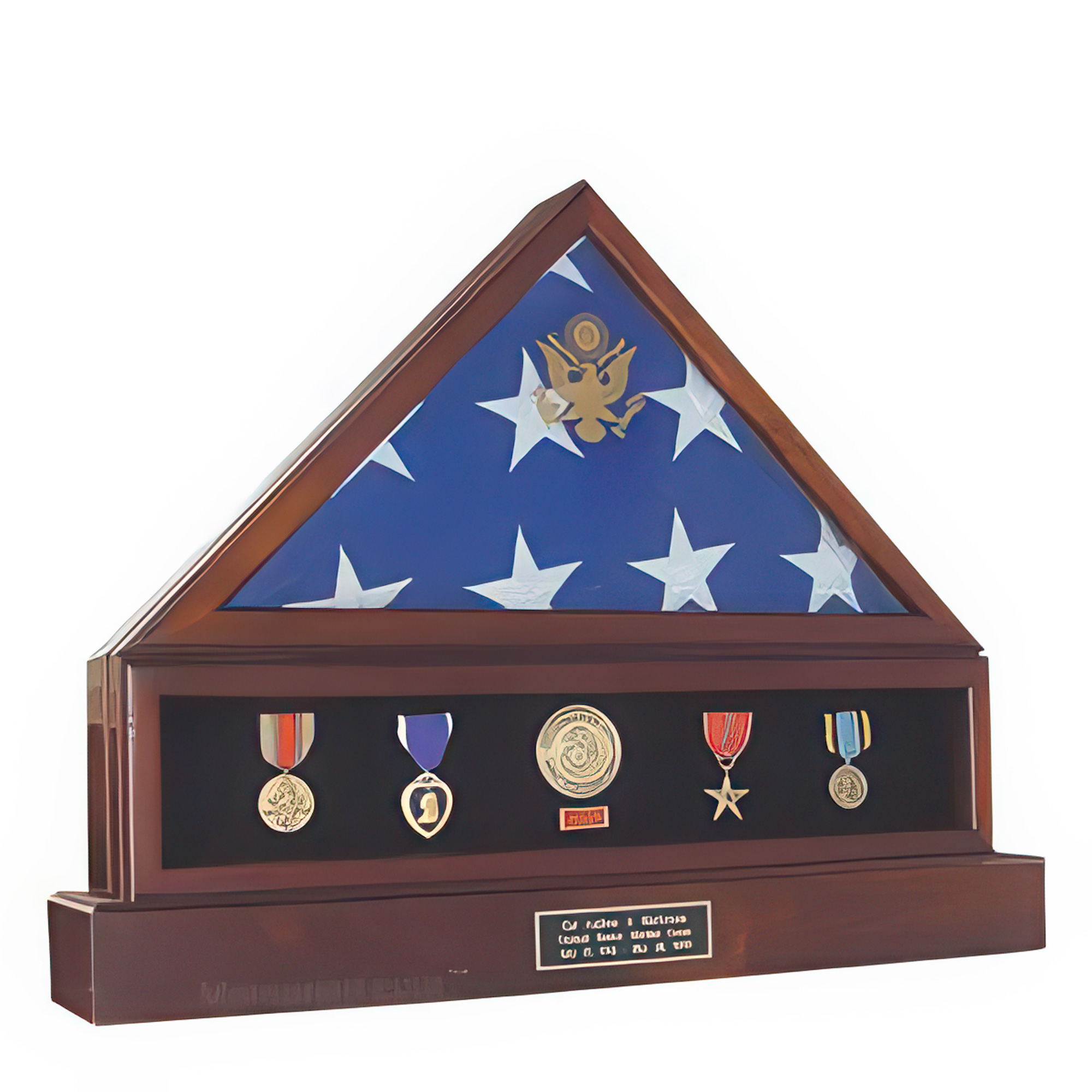
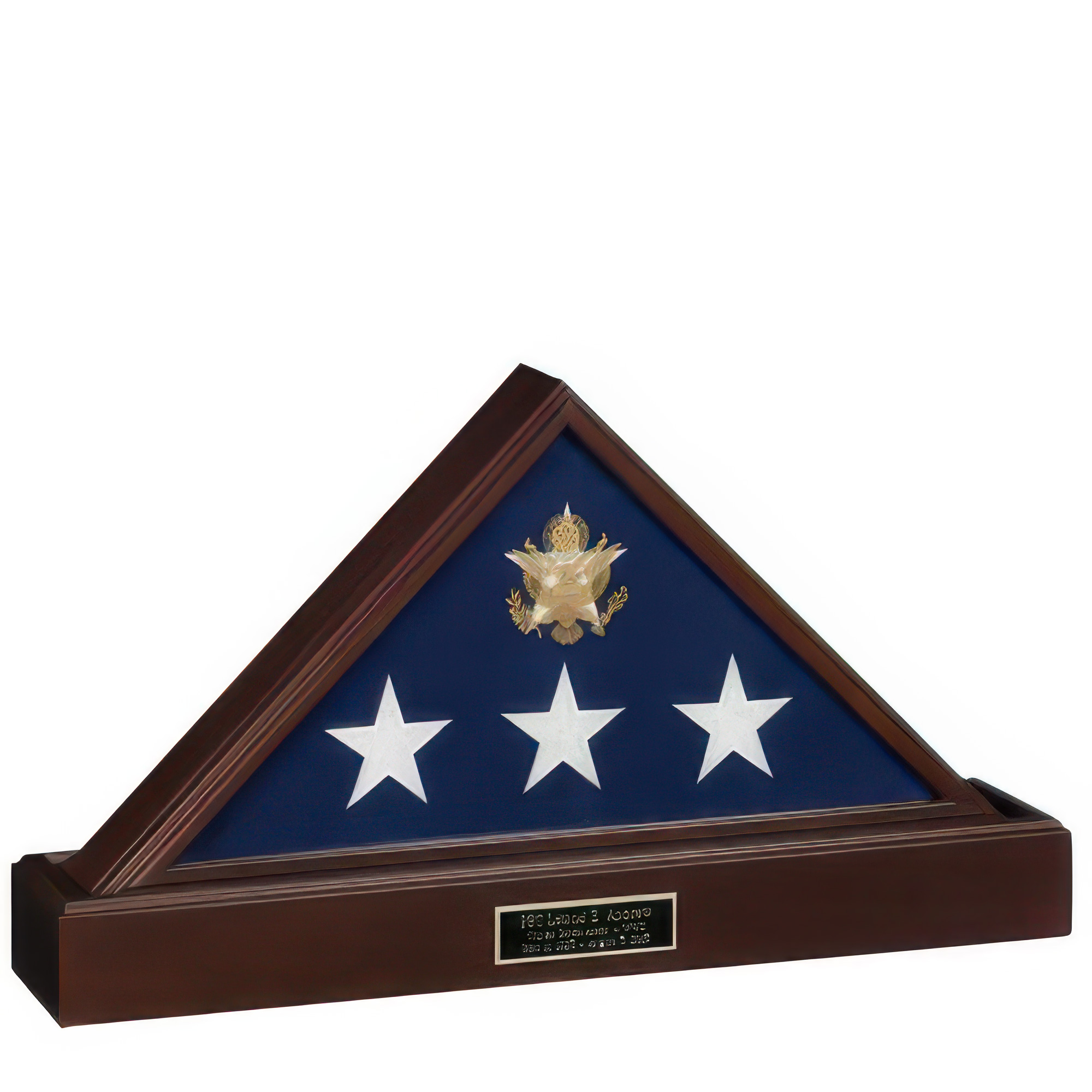
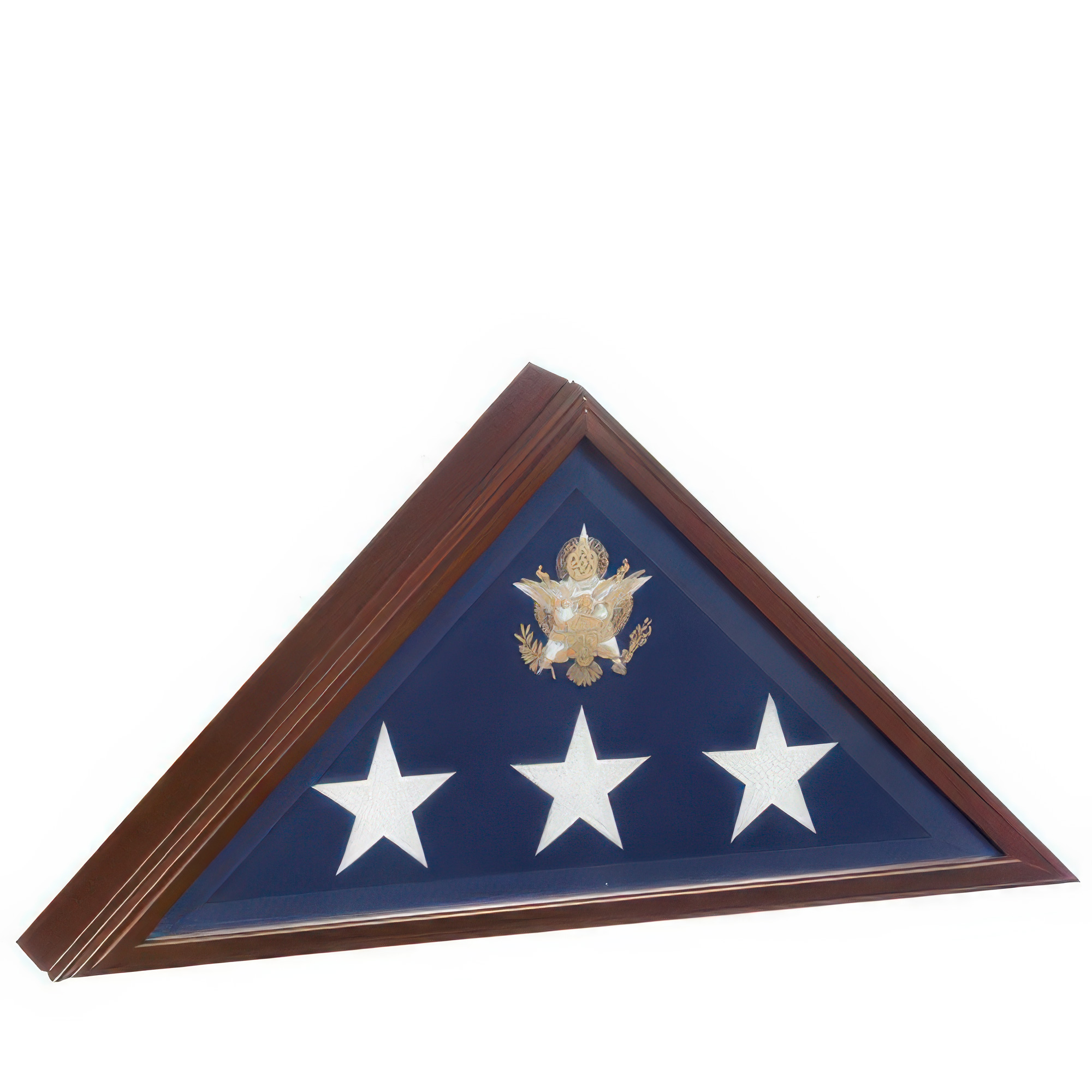
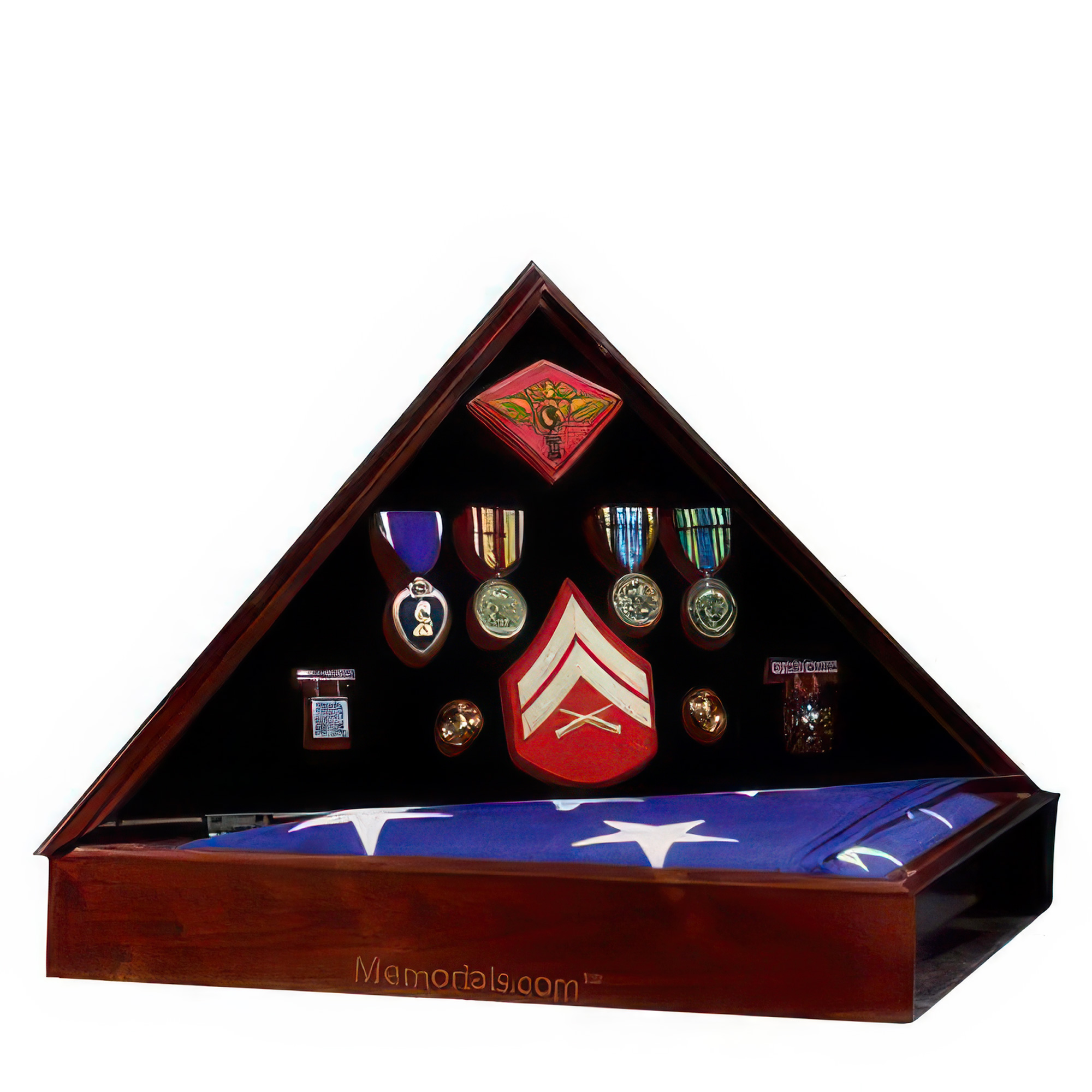
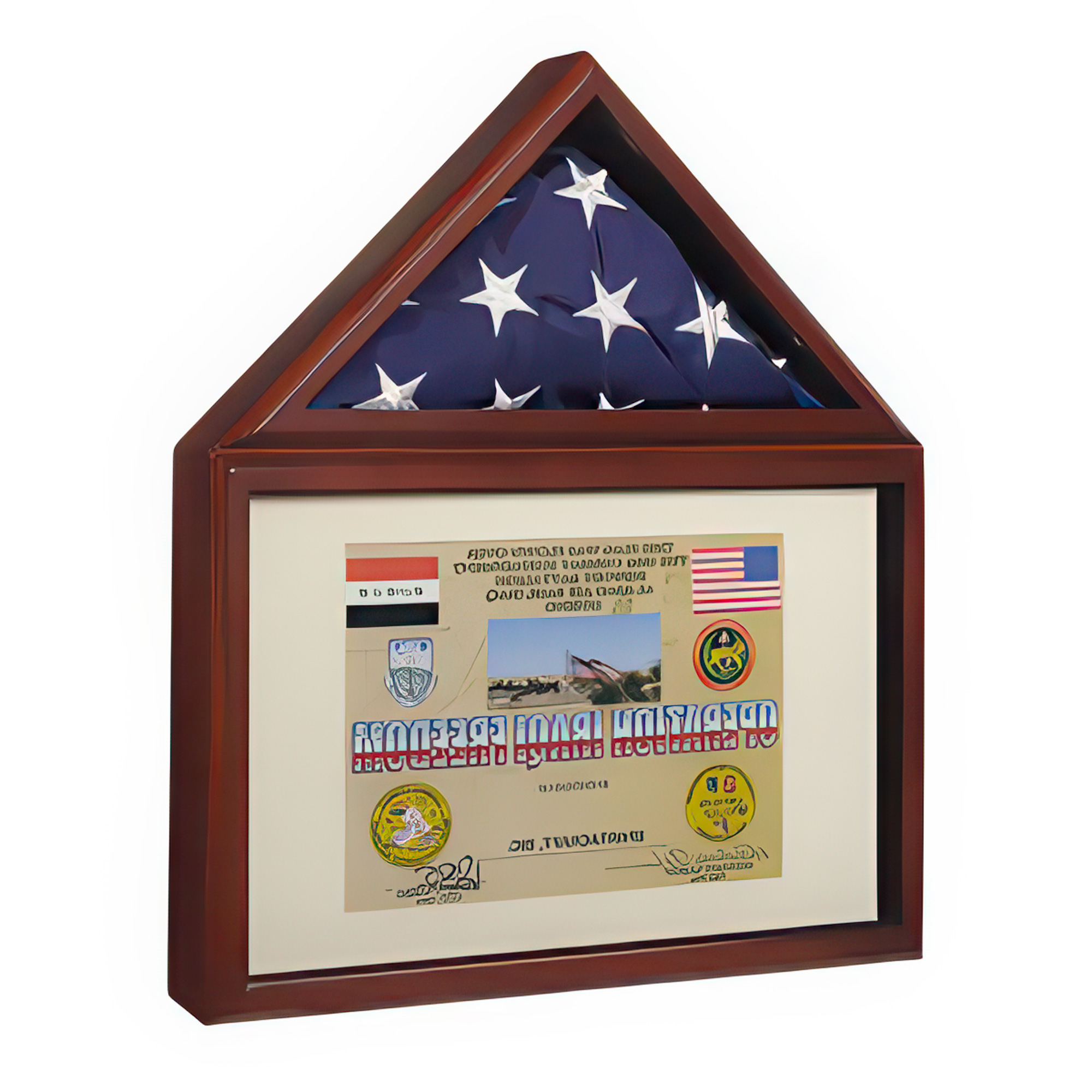
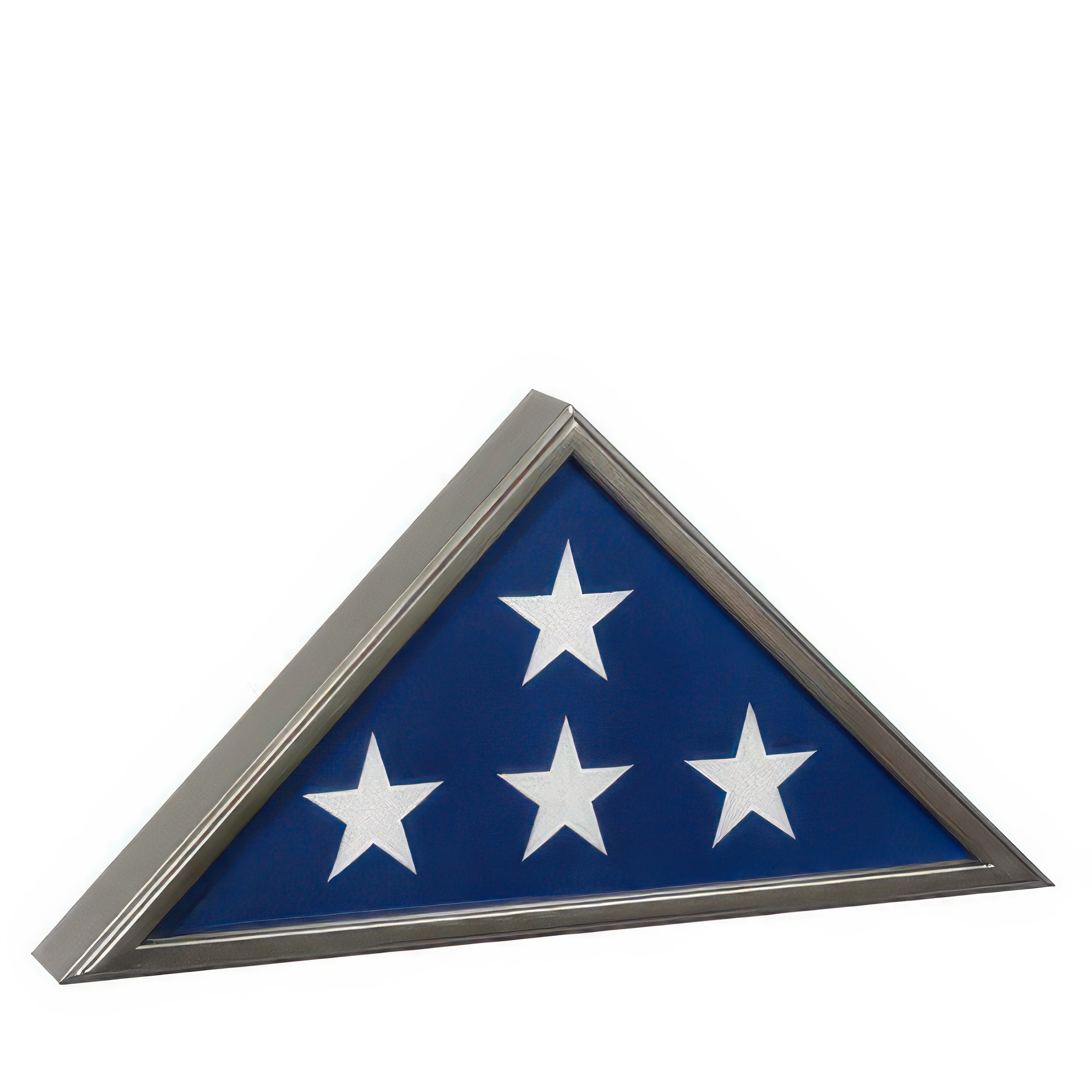
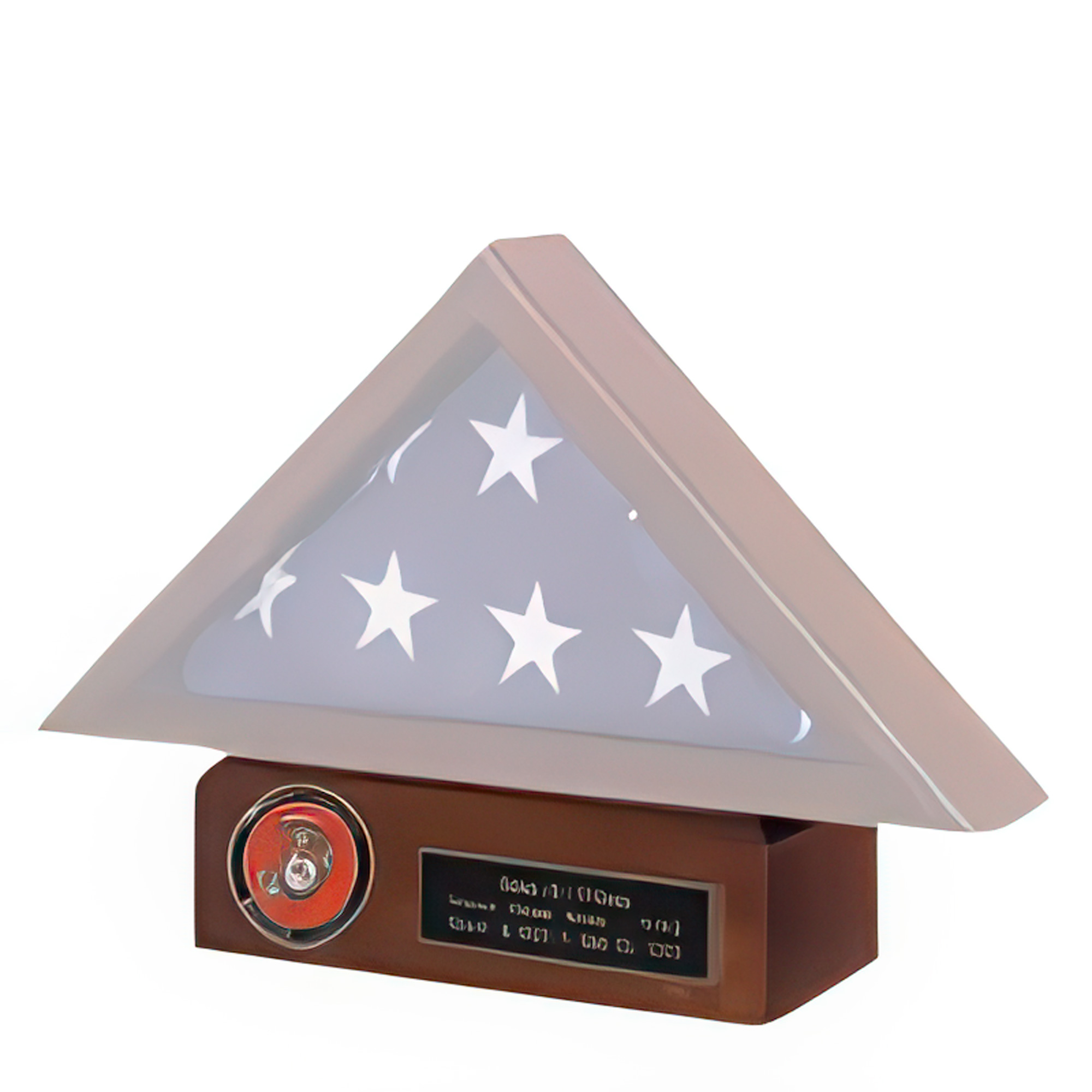
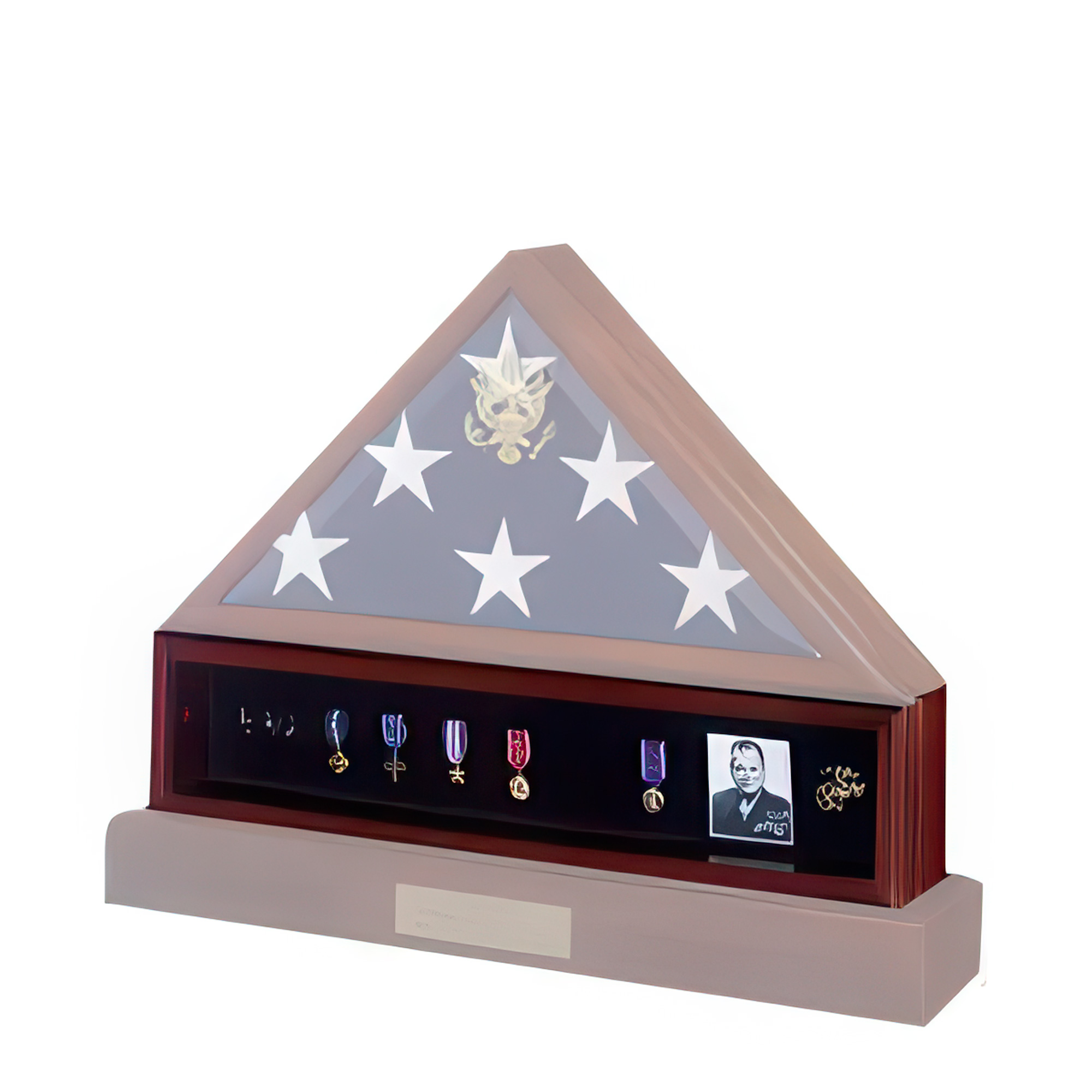
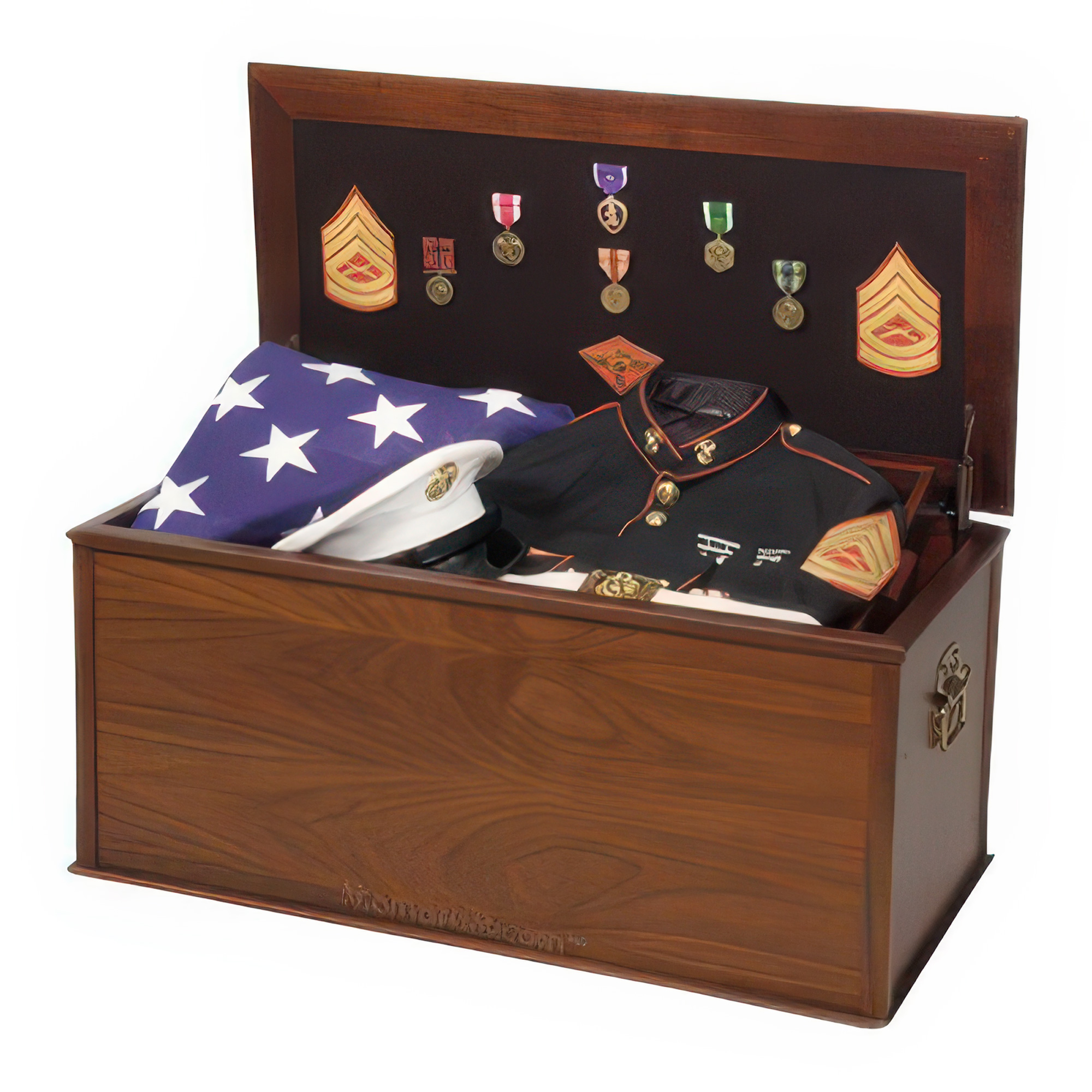
Most families case it. A triangular flag case holds the folded flag behind glass, which is how the great majority end up displayed. The folded flag measures roughly twenty-four inches along the bottom edge, so cases are sized to that.
Some fly it. Unfolding a burial flag to fly is entirely permitted, though most families find they do not want to once it has been folded by a detail.
Some pass it on. To a child or grandchild, often at a milestone. There is no protocol for this and no ceremony attached; families invent their own.
Storing it folded and out of light is the practical advice. Sunlight fades the blue faster than anything else, which is an argument for a case with UV glass if the flag will hang in a bright room.
The honors are requested rather than automatic, and the request goes through the funeral director.
The funeral director makes the call. They contact the branch's casualty assistance or funeral honors office, and they will need the discharge paperwork — the DD Form 214 for most veterans — to establish eligibility.
Find the paperwork early. This is the single commonest delay. If nobody can locate the DD 214, the funeral home can request a copy, but it takes time the family may not have.
Say what you want. A specific branch representative, the name read aloud during the presentation, a particular family member receiving the flag — all of these can usually be accommodated if asked in advance and none of them can be arranged on the day.
Ask what size detail you will get. Two people is the statutory minimum and is what most families receive. Whether a firing party or a live bugler is available depends on the branch and the region, and knowing beforehand prevents a disappointment at the graveside.
The thirteen folds are the part families ask about most afterward, usually because someone at the reception offered an explanation and someone else disagreed.
The honest answer is that there is no single official meaning. The thirteen folds are a practical consequence of the flag's proportions — folding it that way produces the triangle with only the blue field showing. Various recited meanings circulate, assigning a significance to each fold, and several of them are genuinely used at ceremonies. None is prescribed by the US Flag Code.
What is consistent is the result: the triangle recalls the tricorn hats worn by soldiers of the Revolution, and no red or white stripe should be visible when the fold is correct. If you were handed a flag with a stripe showing, the detail would notice before you did.
A family that wants a particular reading of the folds spoken aloud can ask, and many details will do it. It sits after Taps and before the presentation.
What is consistent is the result, not the meaning. The triangle recalls the tricorn hats of the Revolution, and no red or white stripe should show when the fold is correct.
Frequently Asked Questions
What words are said when the flag is presented at a military funeral?
"On behalf of the President of the United States, the United States [Branch], and a grateful Nation, please accept this flag as a symbol of our appreciation for your loved one's honorable and faithful service." Branch wording varies slightly, and some details use the person's rank and name in place of your loved one.
Does the wording change by branch?
Only in the naming. Each service names itself in the sentence, and the Coast Guard commonly names the Commandant. The rest is the same.
Who receives the flag?
The next of kin — the surviving spouse, then children by age, then parents, then siblings. An active-duty member has usually designated a recipient in advance, and that designation stands.
Can more than one family member receive a flag?
The VA furnishes one burial flag. Families wanting additional flags usually buy them, and this is far easier arranged before the service than after.
Do I have to say anything when I receive it?
No. Thank you is what most people say and silence is equally correct. The detail expects both.
Does the presenter kneel?
If the recipient is seated, yes — the flag is offered at eye level rather than down at the family. If the family is standing, the presenter stands.
When There Is No Detail Available
Honors are provided where the branch can supply them, and there are places and weeks where they cannot. It is worth knowing the alternatives exist.
Veterans organizations fill the gap constantly. Posts of the VFW, the American Legion and similar organizations provide honor guards for members and frequently for non-members, and in many communities they perform more services than the active-duty details do.
A recorded bugle is normal. Live buglers are scarce, and a ceremonial bugle — an electronic insert that plays Taps from within a real bugle — is standard rather than a substitute. Nobody at the graveside can tell, and no family has ever been short-changed by one.
The flag is furnished regardless. Eligibility for a burial flag and availability of a detail are separate questions. If the branch cannot send anyone, the flag still comes, and the funeral director can fold and present it.
Ask the funeral home what they can do. Many keep a folded flag and a practiced staff member for exactly this, and will present it with the same words.
The Short Version
One sentence, twelve seconds, spoken to one person: on behalf of the President, the branch, and a grateful Nation.
Decide beforehand who receives the flag and tell the funeral director, because the single flag and a large family is a problem nobody wants to solve at a graveside. Find the discharge paperwork this week rather than next, since that is what holds up a detail more than anything else.
Everything else on the day is handled by people who have done it hundreds of times, quietly and well. You are not required to hold yourself together, and nobody there expects you to.