🏬Supersize Online Funeral Retailer🪦1000's of Headstones⚱️Over 10,000 Cremation Urns⚰️Caskets Overnight Delivery🛒Funeral & Memorial Superstore🚚FREE Shipping on ALL Orders👨👩👧👦Helping Families for over 20 Years💰Lowest Price Guarantee🏬Supersize Online Funeral Retailer🪦1000's of Headstones⚱️Over 10,000 Cremation Urns⚰️Caskets Overnight Delivery🛒Funeral & Memorial Superstore🚚FREE Shipping on ALL Orders👨👩👧👦Helping Families for over 20 Years💰Lowest Price Guarantee
🏬Supersize Online Funeral Retailer🪦1000's of Headstones⚱️Over 10,000 Cremation Urns⚰️Caskets Overnight Delivery🛒Funeral & Memorial Superstore🚚FREE Shipping on ALL Orders👨👩👧👦Helping Families for over 20 Years💰Lowest Price Guarantee🏬Supersize Online Funeral Retailer🪦1000's of Headstones⚱️Over 10,000 Cremation Urns⚰️Caskets Overnight Delivery🛒Funeral & Memorial Superstore🚚FREE Shipping on ALL Orders👨👩👧👦Helping Families for over 20 Years💰Lowest Price Guarantee
Military funerals carry a weight that civilian services rarely match. Every movement — from the precision of the honor guard to the last note of Taps — follows protocol rooted in centuries of tradition. One of the most common questions families and friends ask before attending is straightforward: when should I salute, and what should I do if I'm not in the military? For a broader look at all the ways families can honor a service member's legacy, our covers benefits, products, and planning steps from start to finish.
This guide walks through every moment in a military funeral ceremony where a salute or gesture of respect is expected — and explains the correct response for veterans in uniform, veterans in civilian clothing, and civilian attendees who have never served.
Who Salutes and Who Doesn't
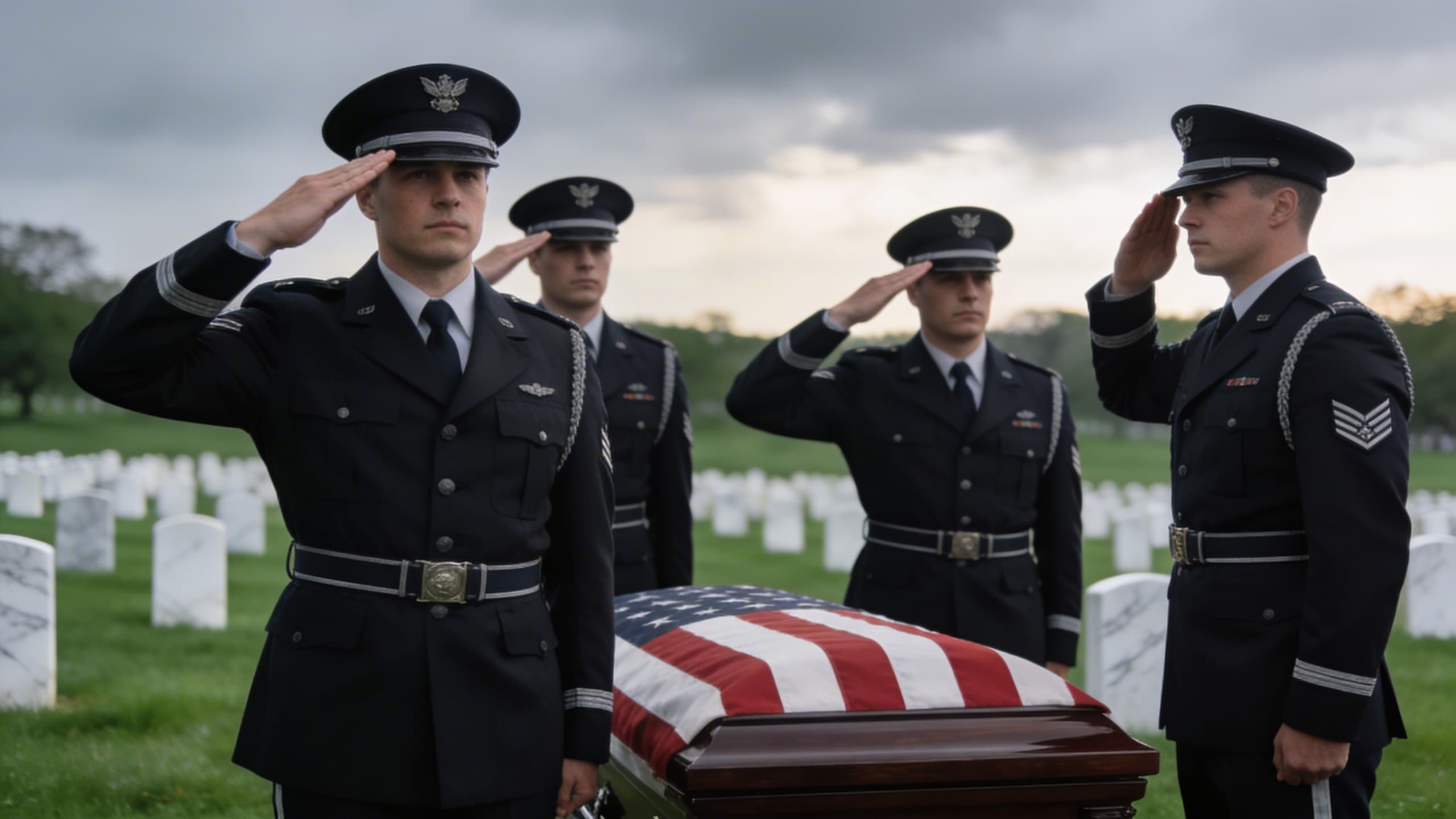
The military salute is a gesture exchanged between service members. It is not expected from civilians, and offering one when you haven't served can create an awkward moment during an otherwise solemn ceremony. The key distinction is simple:
Veterans and active-duty service members render a hand salute at designated moments during the ceremony. Veterans in civilian clothing gained the right to salute during the National Defense Authorization Act of 2009, which extended saluting privileges to all veterans and retired military personnel, even when not in uniform. Before that legislation, only those wearing a military uniform were authorized to salute.
Civilians show respect by standing, removing any headgear, and placing their right hand over their heart. This applies during every moment where a salute would otherwise be rendered. If you are not wearing a hat, simply place your right hand over your heart.
Not every military funeral includes the same ceremony elements, and the level of honors affects when saluting moments occur. There are two primary tiers:
Standard military honors — available to all eligible veterans — include a minimum two-person honor guard detail, the playing of Taps, and the folding and presentation of the American flag. These are the three core moments where salutes are rendered.
Full military honors add a rifle team for the three-volley salute, additional pallbearers, a military chaplain, and sometimes a horse-drawn caisson or flyover. Higher-ranking officers may receive gun salutes (not to be confused with the three-volley salute — the 21-gun salute is reserved for presidents and certain senior officials).
The more honors rendered, the more saluting moments a ceremony will include.
When to Salute: Ceremony Element by Element
Arrival of the Hearse
When the hearse carrying the casket or urn arrives at the cemetery or funeral site, all military personnel should salute as it passes. Civilians stand at attention with their right hand over their heart. This marks the beginning of the formal military portion of the service.
Movement of the Casket
Each time the casket is moved — from the hearse to the graveside, or from a chapel to the committal site — military members salute for the duration of the transfer. Pallbearers and the casket team handle the physical movement, while attendees standing along the route render salutes or place their hand over their heart until the casket reaches its destination.
If the casket arrives without a flag draping, the honor guard will place the American flag over the casket at the graveside. Military personnel salute during this draping. Once the flag is in position and the casket is placed, all attendees may stand at ease until the next ceremony element begins.
The Three-Volley Salute (Rifle Volley)
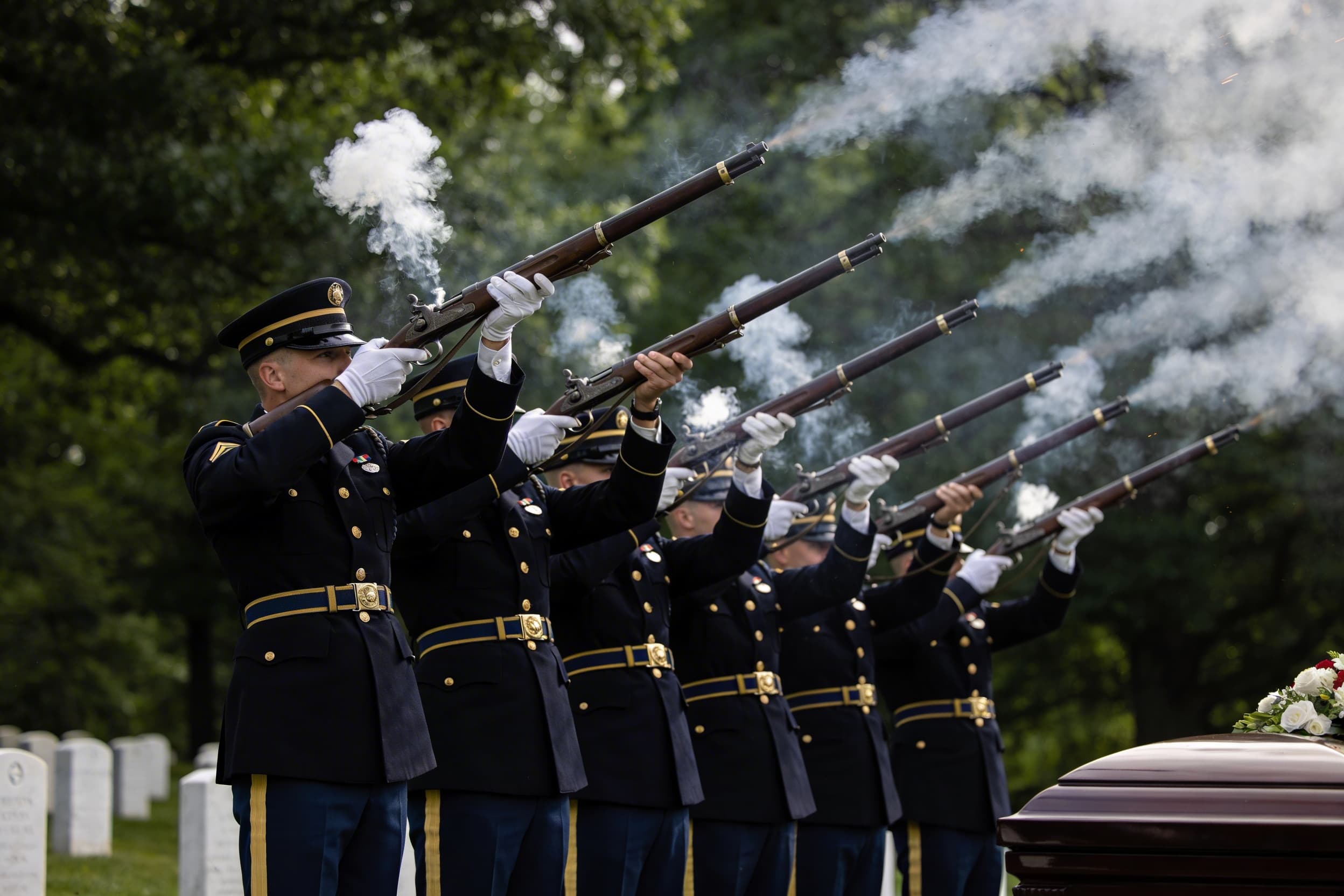
The three-volley salute is one of the most recognizable elements of a full military honors funeral. A rifle team — typically three to seven members — fires three volleys of blank cartridges in unison. This tradition originates from battlefield custom, where firing signaled that the dead had been collected and fighting could resume.
During each volley, military members hold their salute. Civilians stand with hand over heart. The volleys are loud and can startle attendees who are unprepared; knowing they are coming helps families stay composed during this powerful tribute.
Many people mistakenly call this a "21-gun salute." The three-volley salute uses rifles and is available for all eligible veterans. The actual 21-gun salute uses artillery pieces and is reserved for presidents, heads of state, and certain flag officers.
Playing of Taps
Taps is the 24-note bugle call played at every military funeral, whether standard or full honors. A lone bugler typically stands 30 to 50 yards from the graveside.
When Taps begins, everyone should stand and face the direction of the bugler or the flag. Military members salute for the entire duration of the call. Civilians stand with their right hand over their heart. Taps lasts approximately 60 seconds — hold your salute or hand placement for the full duration, lowering only after the final note fades.
Flag Folding Ceremony
After Taps, two members of the honor guard fold the American flag into its traditional triangular shape — 13 precise folds. The folding is performed in silence, and military funeral flag protocol dictates that the blue field of stars must face upward when folding is complete.
Military personnel may remain at salute during the folding if they were already saluting during Taps. Once the folding is complete and the flag is tucked, the salute is lowered briefly before the presentation.
Flag Presentation
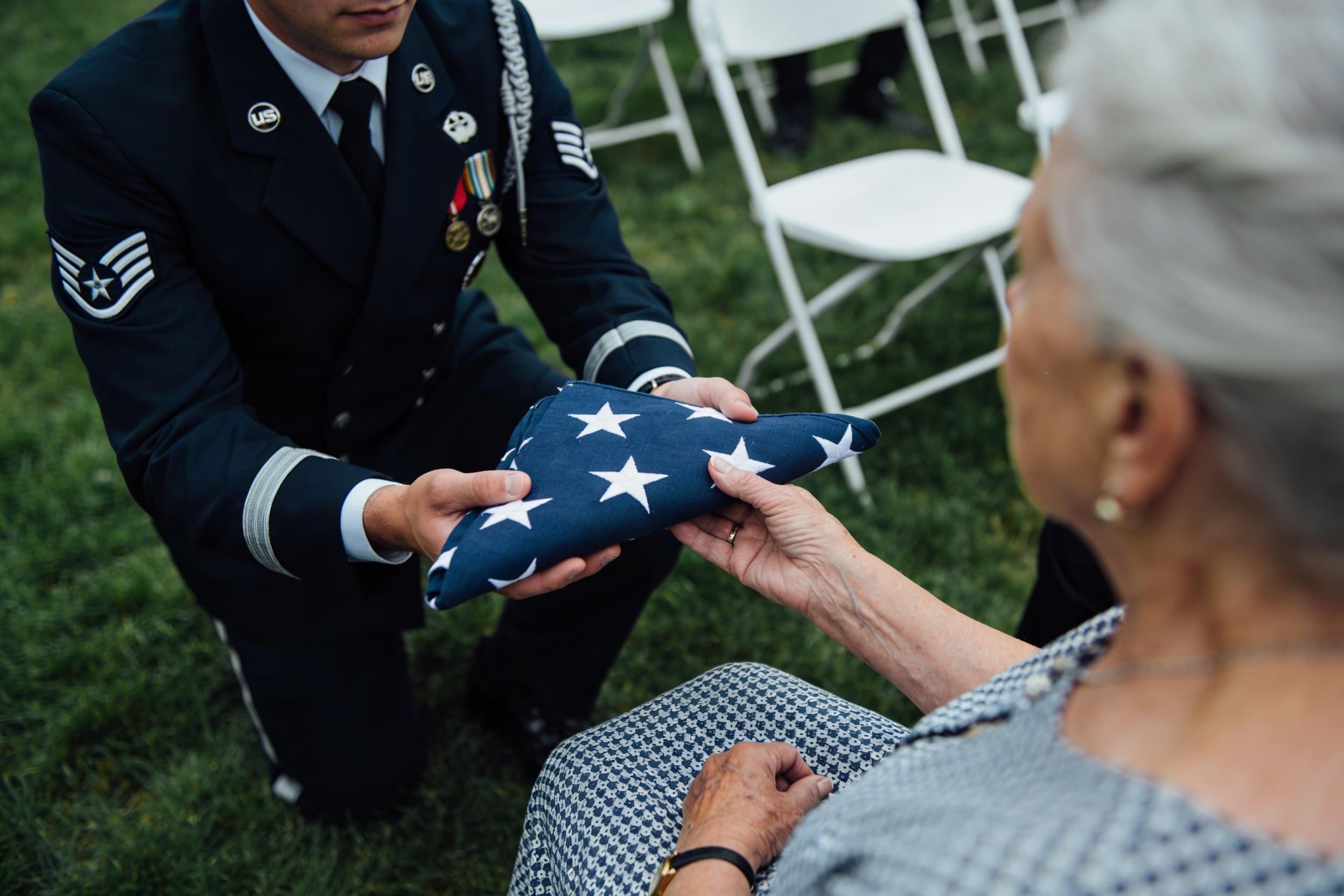
A uniformed service member kneels before the next of kin — usually the spouse, parent, or eldest child — and presents the folded flag with a brief statement of gratitude on behalf of the United States and the branch of service. This is the most personal moment of the ceremony.
Military members salute during the presentation. Civilians stand with hand over heart. If you are the person receiving the flag, you do not need to salute or stand — simply accept the flag with both hands.
The words said as the flag changes hands are one sentence and take about twelve seconds, and most families hear them once and remember only fragments. The funeral flag presentation script sets out the exact wording, including how it changes by branch, if you would rather read it beforehand than try to hold on to it on the day.
Lowering the Casket
At some ceremonies, the casket is lowered into the ground before attendees depart. If this happens as part of the formal honors, military personnel render a final salute. Civilians stand respectfully. In many cases, however, the lowering occurs after guests leave, handled privately by cemetery staff.
Dress Code and General Conduct
What you wear and how you carry yourself matter at a military funeral. While the focus of this article is saluting protocol, a few etiquette guidelines apply to all attendees:
Military personnel wear their dress uniform (Class A or equivalent). Cover (hat) is worn outdoors and removed indoors. The cover stays on during outdoor salutes.
Civilians should dress conservatively — dark suits, dresses, or slacks with a button-down shirt. Avoid bright colors, casual wear like jeans or sneakers, and anything that draws attention away from the ceremony. If you wear a hat, remove it and hold it over your heart whenever a salute is called for. That standard is the same one in what to wear to a funeral for men, with the hat rule as the addition specific to this setting — at a civilian graveside it is a matter of preference.
Seating: Immediate family sits at the front. Close friends and fellow service members fill in behind. If you are not family, follow the funeral director's or usher's guidance and avoid taking reserved seats.
Phones: Silence your phone before the ceremony. Photography is generally acceptable at military funerals but should be discreet — never during the flag presentation or while Taps is playing.
Military Grave Traditions After the Service
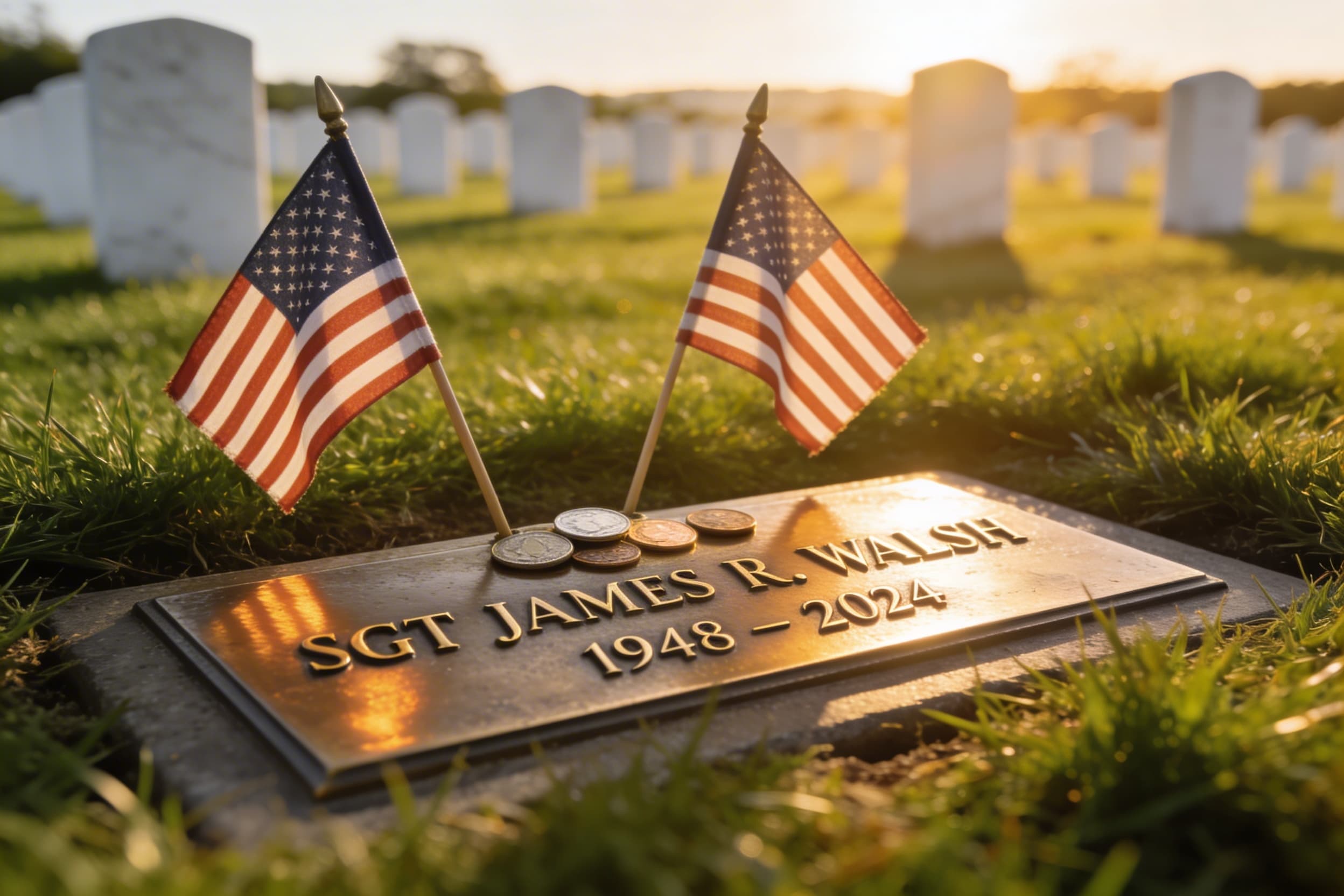
Once the formal ceremony ends, many families and fellow veterans observe graveside customs that honor the fallen in quieter, personal ways. Leaving coins on a veteran's headstone is one of the most enduring military grave traditions — each denomination carries its own meaning. Challenge coins, flowers, and small flags are also placed at military grave markers as signs of respect. These gestures are not part of the formal protocol, but they are deeply meaningful to military families and fellow service members.
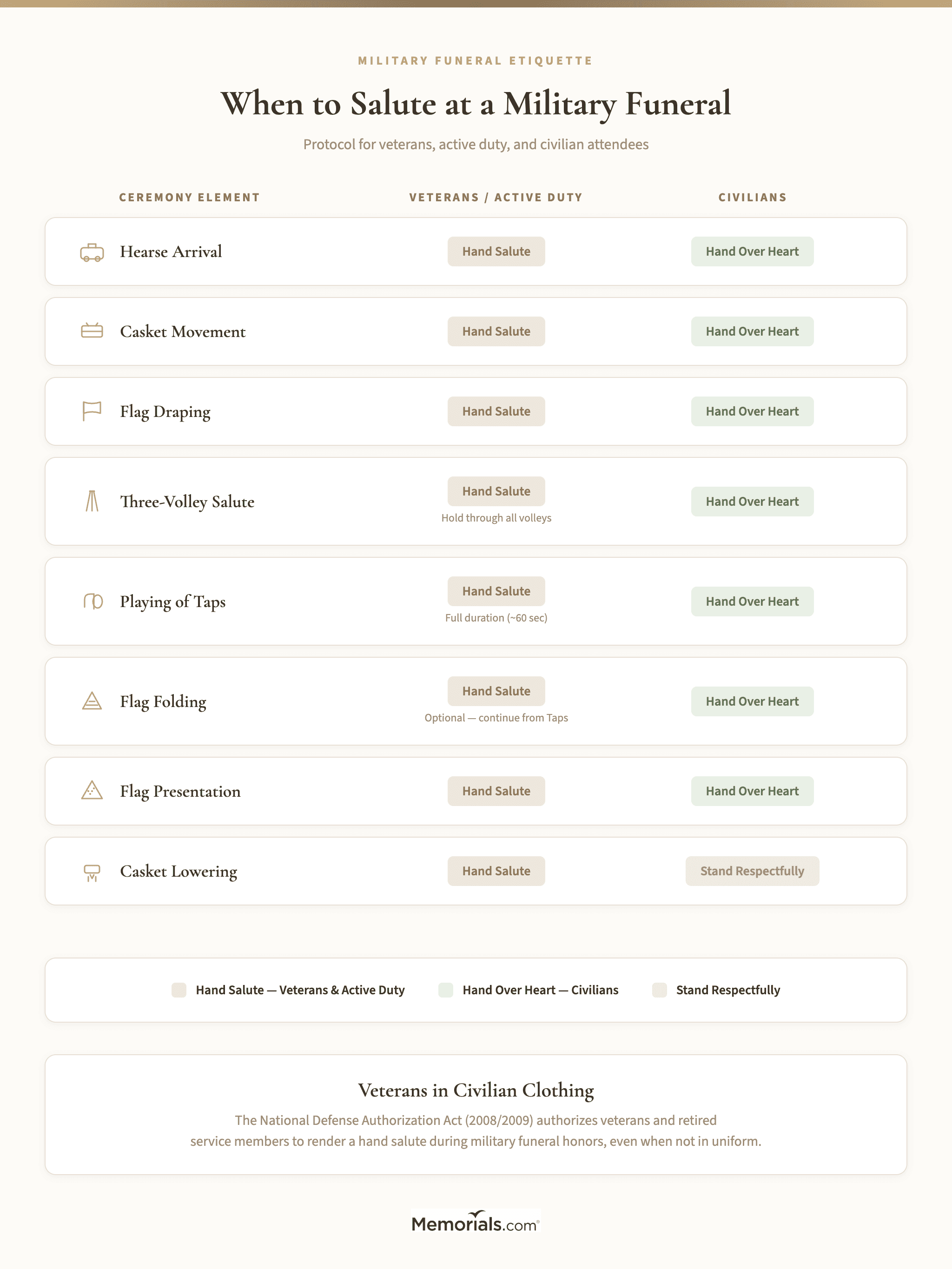
Quick Reference: Salute Protocol Summary
Ceremony Element
Veterans / Active Duty
Civilians
Hearse arrival
Hand salute
Hand over heart
Casket movement
Hand salute
Hand over heart
Flag draping
Hand salute
Hand over heart
Three-volley salute
Hand salute (hold through all volleys)
Hand over heart
Taps
Hand salute (full duration)
Hand over heart
Flag folding
Hand salute (optional continuation from Taps)
Hand over heart
Flag presentation
Hand salute
Hand over heart
Casket lowering
Hand salute
Stand respectfully
Frequently Asked Questions
Can a civilian salute at a military funeral?
Civilians should not render a military hand salute. The appropriate gesture is to stand, remove any headgear, and place the right hand over the heart. This applies during Taps, the flag folding, the three-volley salute, and whenever the casket is being moved.
Can veterans in civilian clothes salute?
Yes. The National Defense Authorization Act of 2008 (Section 595) — later amended and clarified in 2009 — authorizes veterans and retired service members to render a hand salute during the playing of the national anthem, the raising and lowering of the flag, and during military funeral honors, even when not in uniform.
What is the difference between a 21-gun salute and a three-volley salute?
The three-volley salute uses rifles and is the standard rifle volley fired at military funerals for any eligible veteran. A 21-gun salute uses artillery (cannons) and is reserved for presidents, former presidents, heads of state, and certain senior military officials. Most military funerals include the three-volley salute, not the 21-gun salute.
Should I stand for the entire military funeral ceremony?
Yes. Attendees at a military funeral should remain standing for the duration of the graveside service. The exception is immediate family members who may be seated in provided chairs. If religious readings or prayers are part of the service, follow the chaplain's guidance on sitting or standing.
What do I do if I don't know the protocols and make a mistake?
Follow the lead of the military honor guard and the family. If you miss a cue to stand or place your hand over your heart, simply correct yourself quietly. Military funerals are solemn events, but no one expects civilian attendees to know every protocol detail. Your presence and respectful demeanor are what matter most.
Honoring Their Service
A military funeral is one of the most dignified ceremonies in American tradition. Knowing when to salute — or when to place your hand over your heart — allows you to participate fully and respectfully. Whether you served alongside the fallen or are attending your first military funeral as a civilian, the protocol is simple: stand, show respect, and let the ceremony honor the person who gave so much. If your family is planning a military memorial, exploring military urns, flag display cases, and other military and veteran memorial products can help you create a tribute worthy of their service.