🏬Supersize Online Funeral Retailer🪦1000's of Headstones⚱️Over 10,000 Cremation Urns⚰️Caskets Overnight Delivery🛒Funeral & Memorial Superstore🚚FREE Shipping on ALL Orders👨👩👧👦Helping Families for over 20 Years💰Lowest Price Guarantee🏬Supersize Online Funeral Retailer🪦1000's of Headstones⚱️Over 10,000 Cremation Urns⚰️Caskets Overnight Delivery🛒Funeral & Memorial Superstore🚚FREE Shipping on ALL Orders👨👩👧👦Helping Families for over 20 Years💰Lowest Price Guarantee
🏬Supersize Online Funeral Retailer🪦1000's of Headstones⚱️Over 10,000 Cremation Urns⚰️Caskets Overnight Delivery🛒Funeral & Memorial Superstore🚚FREE Shipping on ALL Orders👨👩👧👦Helping Families for over 20 Years💰Lowest Price Guarantee🏬Supersize Online Funeral Retailer🪦1000's of Headstones⚱️Over 10,000 Cremation Urns⚰️Caskets Overnight Delivery🛒Funeral & Memorial Superstore🚚FREE Shipping on ALL Orders👨👩👧👦Helping Families for over 20 Years💰Lowest Price Guarantee
Grieving a dog inside a life of faith can come with an extra weight on it: a quiet worry that this much sorrow over an animal is disproportionate, or that there is no room in the tradition for it. If someone at church has already said "it was only a dog," you know exactly what that weight feels like. These bible verses for dog lovers are gathered for that situation — and so is the honest answer, further down, to the question people actually want settled.
Everything quoted here is the King James Version, which is in the public domain and can be read, printed and engraved freely. Most modern translations — NIV, ESV, NLT, NKJV — are under copyright with limits on how much you may reproduce, which matters if you are putting a verse in a service program or on a marker. Where the King James wording is difficult, the plain sense is given alongside it. The pet sympathy guide covers what to say and send more generally.
These are the load-bearing ones, because they establish that the animal mattered to God and not only to you. They are the answer to "it was only a dog."
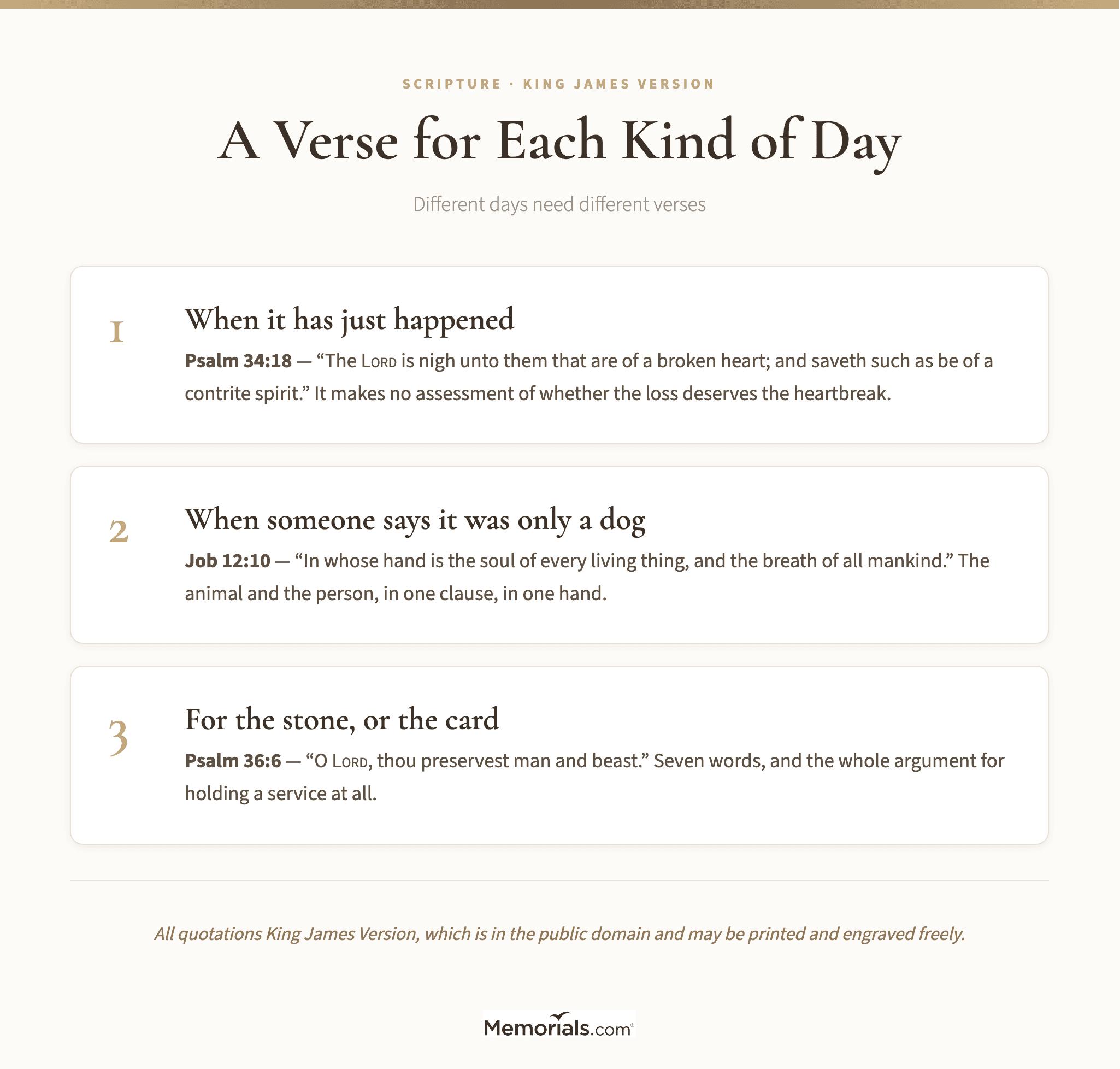
In whose hand is the soul of every living thing, and the breath of all mankind. — Job 12:10
Job puts the animal and the person in the same clause, held in the same hand. It is one of the clearest statements in the Bible that living creatures are God's rather than merely ours.
Thy righteousness is like the great mountains; thy judgments are a great deep: O LORD, thou preservest man and beast. — Psalm 36:6
The word doing the work is preservest — kept, sustained, looked after. Man and beast, in the same sentence, receiving the same care.
Are not two sparrows sold for a farthing? and one of them shall not fall on the ground without your Father. — Matthew 10:29
The point is not that sparrows are valuable. It is that even the least valuable creature — two for the smallest coin there was — does not die unnoticed. If that is true of a sparrow sold for a farthing, it is true of the dog who slept at the end of your bed for thirteen years.
And God made the beast of the earth after his kind, and cattle after their kind, and every thing that creepeth upon the earth after his kind: and God saw that it was good. — Genesis 1:25
Good is the operative word, and it is said of the animals before people appear. Bible verses about animals begin here: they were called good in their own right, not as equipment.
Scripture treats animals as God's rather than ours — which is the ground everything else on this page stands on.
These are not about animals. They are about you, and they apply whatever you are grieving.
The LORD is nigh unto them that are of a broken heart; and saveth such as be of a contrite spirit. — Psalm 34:18
The most quoted verse in grief for a reason. It makes no assessment of whether the loss deserves the heartbreak. It simply says where God is when the heartbreak is happening.
He healeth the broken in heart, and bindeth up their wounds. — Psalm 147:3
Bindeth up is a slow verb. Nothing here promises speed, and that is a mercy on a page like this.
And God shall wipe away all tears from their eyes; and there shall be no more death, neither sorrow, nor crying, neither shall there be any more pain: for the former things are passed away. — Revelation 21:4
Note what it does and does not say. It promises an end to death and grief in general. It does not specify who or what is present. That ambiguity is where the next section lives, and it is worth being straight about rather than reading into.
Cast thy burden upon the LORD, and he shall sustain thee: he shall never suffer the righteous to be moved. — Psalm 55:22
Short enough for a card, and it asks nothing of the grieving person except to put something down.
Different days need different verses — the one that helps when it has just happened is not the one that helps when someone has told you it was only a dog.
Do Pets Go to Heaven? What Scripture Does and Does Not Say
Here is the honest answer, which most pages avoid: the Bible does not say. It neither promises that animals are raised nor rules it out, and Christians who take Scripture seriously have landed in different places on it for centuries.
The case that they are is built on a few threads. Animals are called good at creation, before humanity. They are included in God's covenant after the flood — and with every living creature that is with you, of the fowl, of the cattle, and of every beast of the earth (Genesis 9:10). Isaiah's picture of the world set right is full of animals living peaceably: the wolf also shall dwell with the lamb, and the leopard shall lie down with the kid (Isaiah 11:6). And Romans 8 describes the whole creation groaning and waiting for redemption, not only people.
The case against is that Scripture's explicit promises of resurrection are made to human beings, and that reading animal salvation into passages about the renewal of creation is inference rather than statement.
Both readings are held by serious people. What Scripture is unambiguous about is narrower and, for most of the people reading this, sufficient: God made animals, called them good, sustains them, notices their deaths, and includes them in his covenant. You are not being sentimental or unscriptural to grieve one. That is the thing worth taking from this page.
If you want the wider treatment of what different traditions believe about where animals go, where dogs go when they die covers it at length, including the beliefs that are not Christian at all.
When Someone at Church Says It Was Only a Dog
It happens often enough to be worth preparing for, and it usually comes from someone who means no harm at all — an older relative, a well-meaning person at the door after a service, someone whose own theology genuinely does not have a place for this.
You do not owe them a debate. But if you want one sentence to have ready, this is the one that ends the conversation kindly: "In whose hand is the soul of every living thing" — Job says that, and I think he meant it.
More usefully, know what is happening. Grief that other people do not recognize as legitimate has a name — disenfranchised grief — and its distinguishing feature is that the sufferer ends up managing other people's comfort instead of their own loss. If that is where you are, the useful move is not to win the argument but to find the person who does understand, and there is usually one in any congregation.
It is also worth saying that the church has more room for this than its individual members sometimes do. Blessings of the animals are ordinary parish practice. Francis of Assisi is a saint, not a sentimentalist. The tradition has never actually taught that animals are beneath God's notice, whatever a particular person said to you in a hallway.
Verses to Read at a Pet's Burial
Short, sayable out loud, and unlikely to break you halfway through.
The LORD is my shepherd; I shall not want. He maketh me to lie down in green pastures: he leadeth me beside the still waters. — Psalm 23:1–2
Almost everyone knows the opening, which means you do not have to read it perfectly for people to follow. The green pastures are a mercy for a dog burial specifically.
To every thing there is a season, and a time to every purpose under the heaven: a time to be born, and a time to die … — Ecclesiastes 3:1–2
Plain, unsentimental, and it does not overclaim.
O LORD, thou preservest man and beast. — Psalm 36:6
Six words if you take only the second half, and it is the whole argument for having a service for a dog at all.
If you would like something written rather than quoted, dog prayer has original blessings for a burial and a euthanasia appointment, and dog eulogy examples has full pieces to adapt.
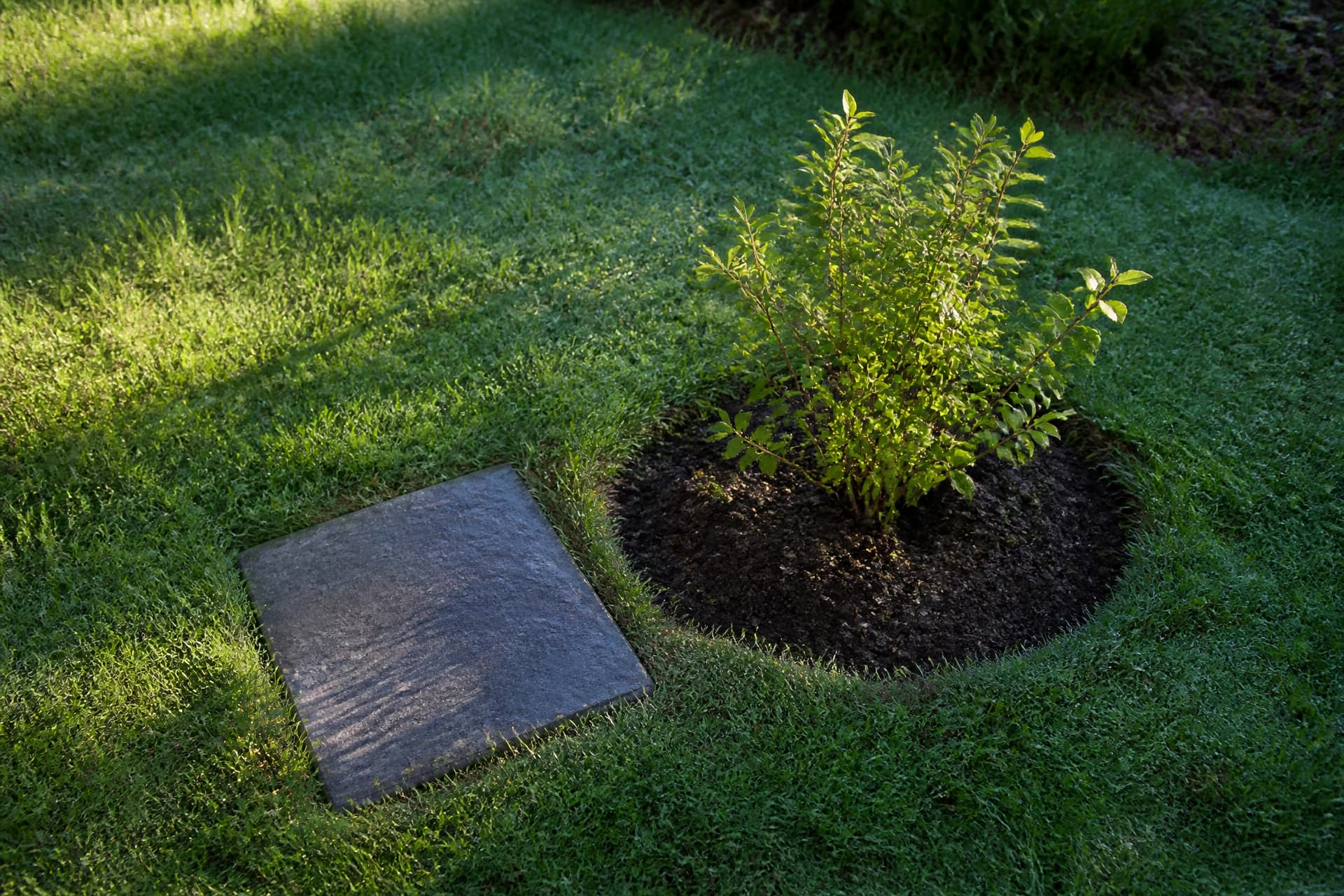
A home burial kept simple — an unmarked stone and something planted beside it. There is no liturgy for this and no prohibition against it; families do it constantly, with a reading and a few words.
Verses to Write in a Card for a Christian Friend
A verse in a sympathy card works when it is short and when it is doing the comforting rather than the arguing. Psalm 34:18 and Psalm 147:3 both fit on a card with room left for a sentence of your own.
What to avoid is a verse that reads as a correction — anything that could be heard as this is smaller than you think or you should be looking forward rather than grieving. Revelation 21:4 is beautiful and can land that way if it arrives alone in week one.
Always add your own line as well. Scripture on its own can read as a form response; scripture plus "I'm so sorry about Bear" cannot. If you want the wording for the second part, short message for loss of pet has messages sorted by how well you knew the person.
What to Say to a Child Who Asks
A child in a Christian household will usually ask directly whether the dog is in heaven, and they will ask the person least able to answer it calmly.
The honest answer is available and it is not frightening: the Bible does not tell us, but it does tell us that God made him, God loved him, and God did not stop paying attention when he died. That is true, it does not require you to promise something you cannot, and it does not leave a child with nothing.
Do not say the dog is definitely in heaven if you do not believe it — children remember and check. Do not say animals do not go to heaven, either; that is equally unsupported and considerably crueler. And do not use "went to sleep," which produces a child who is frightened of bedtime. The published guide to how to help a child deal with a pet's death covers the conversation properly.
A Prayer for a Dog That Has Died
Original, and free to use or adapt.
Lord, you made him and you called it good.
Thank you for the years of him — for his noise, his loyalty, his ridiculous joy at ordinary things.
He asked us for very little and gave us the whole of himself.
Hold him now as you held him then.
And be near us, because we are of a broken heart tonight, and you have promised to be.
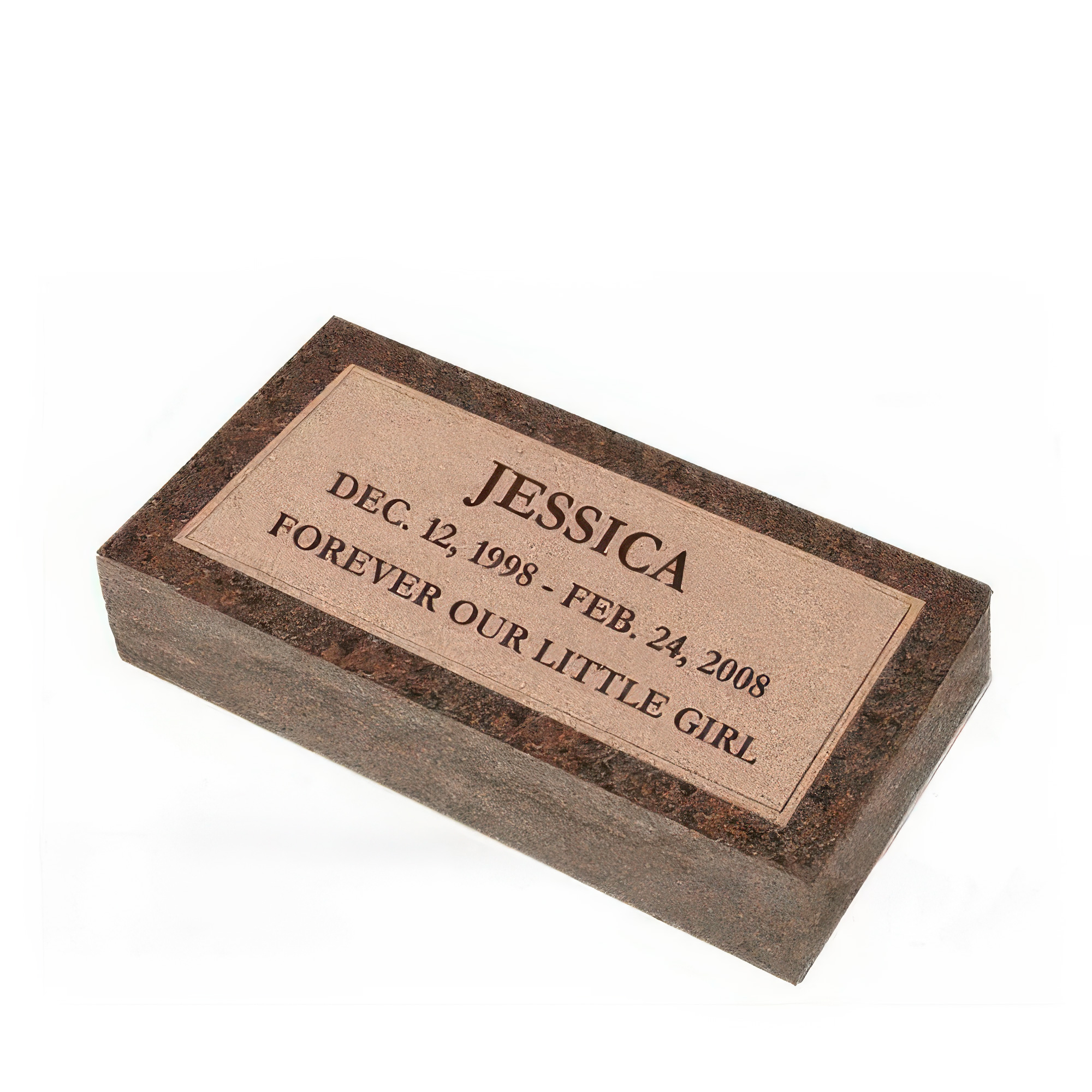
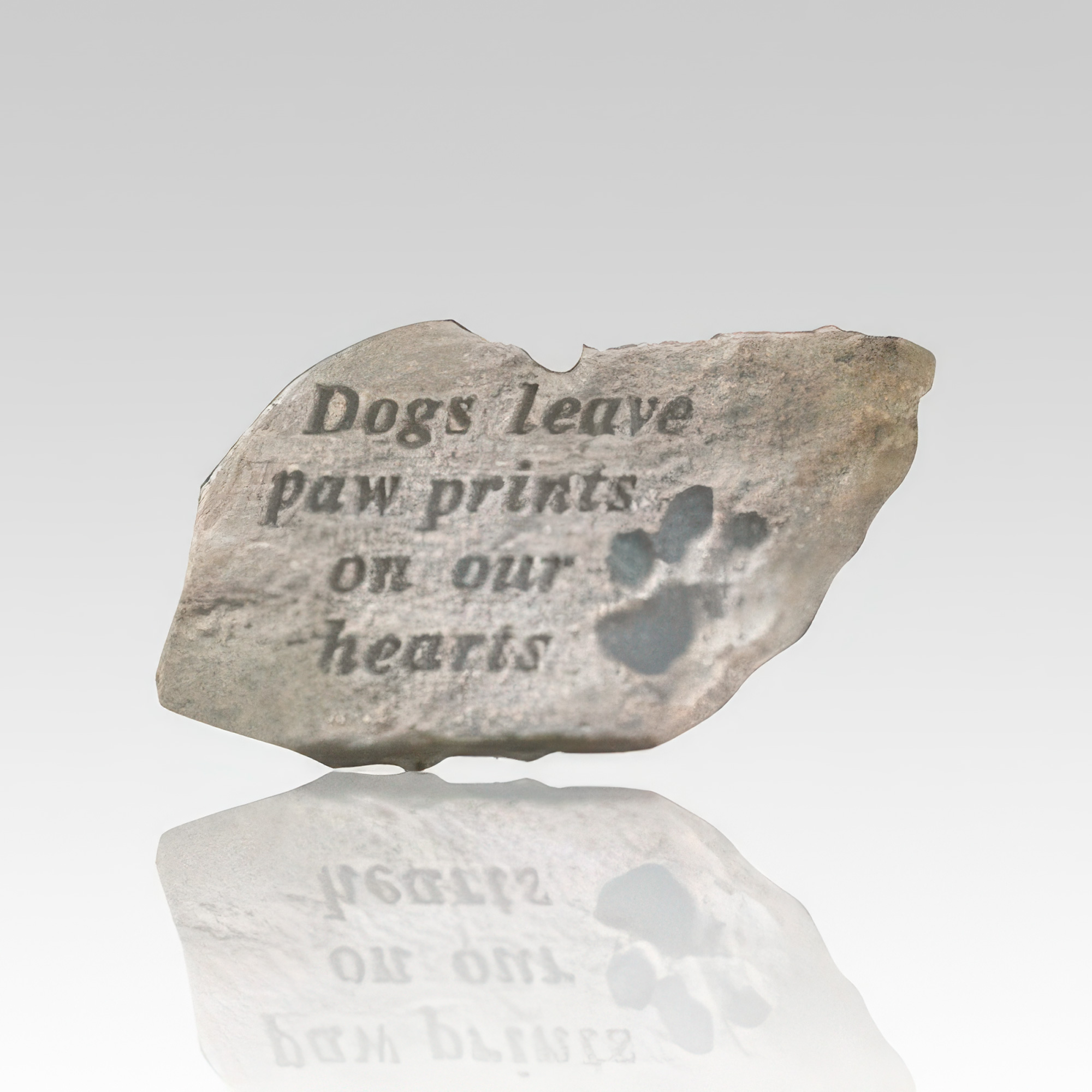
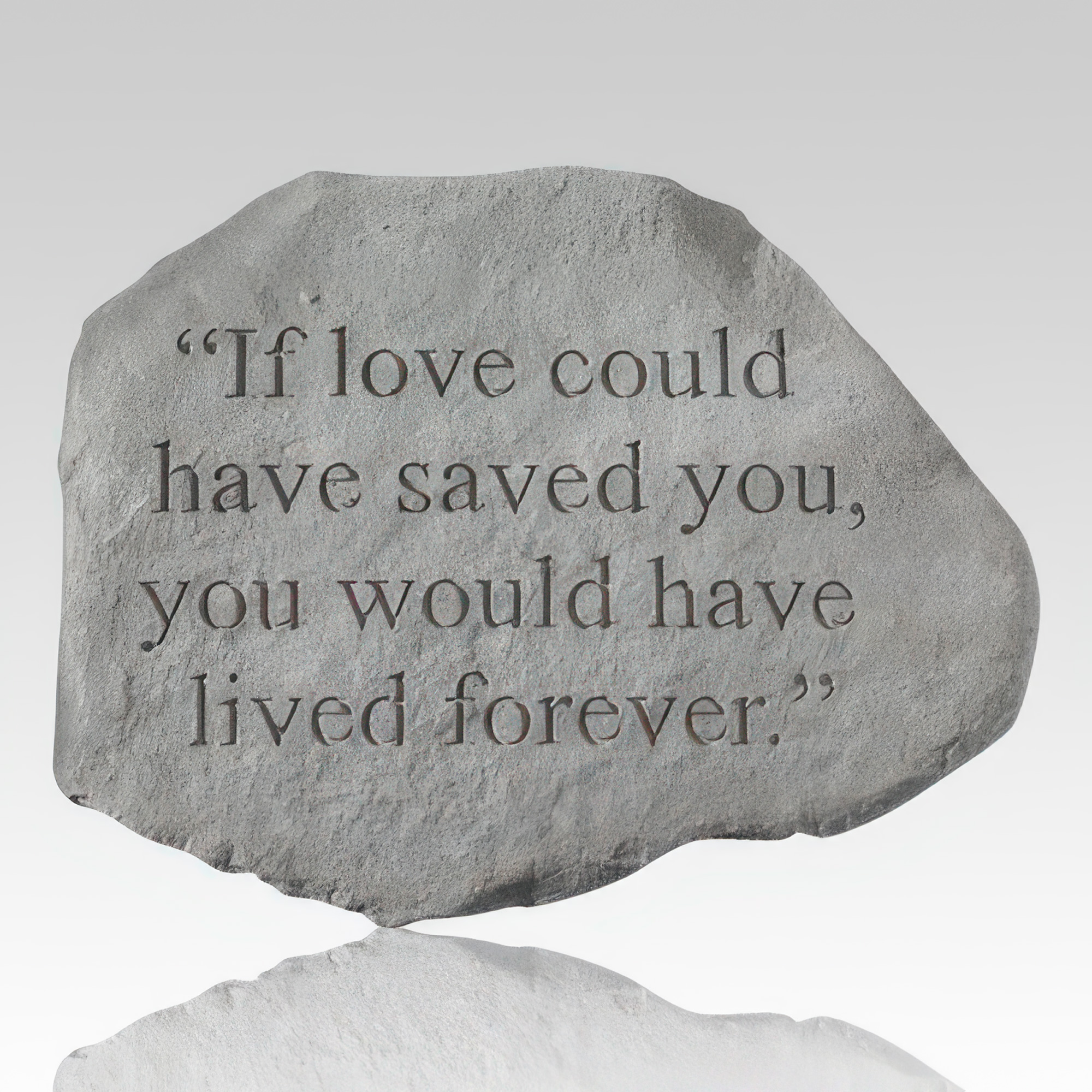
If you are choosing something to keep or to put in the garden, a short verse engraves better than a long one — Psalm 36:6's second half is seven words, and Job 12:10 fits most markers. Dog memorials include garden stones and plaques that take an inscription, and animal urns come in sizes for every dog.
Confirm the wording and the reference before anything is engraved. Verse numbering differs slightly between translations, and a misquoted reference on a permanent object is the kind of error a churchgoing family will notice every time they look at it.
Many parishes hold a blessing of the animals near the feast of St Francis at the start of October.
Frequently Asked Questions
Does the Bible say animals go to heaven?
It does not say either way. It says animals were made good, are sustained by God, are included in the covenant after the flood, and appear in Isaiah's picture of the world set right. Sincere Christians read that differently. Anyone telling you Scripture settles it is overstating.
Is there a bible verse for pet loss?
There is no verse about pets specifically. The ones people use are Job 12:10 and Psalm 36:6 for God's care of animals, and Psalm 34:18 and Psalm 147:3 for grief. Together they are the standard scripture for pet loss.
Is it wrong to grieve a pet this much?
No. Scripture treats animals as God's creatures rather than as property, and grief is a response to love rather than a measure of theological accuracy.
Can you hold a Christian service for a dog?
There is no liturgy for it and no prohibition against it. Families do it constantly — a reading, a prayer, a few words in a garden. Many parishes also hold a blessing of the animals around the feast of St Francis at the start of October.
What verse is good for a pet memorial engraving?
O LORD, thou preservest man and beast (Psalm 36:6) is the most fitting and among the shortest. Check the character limit before ordering.
He Made Them Too
If you came to this page carrying the suspicion that grieving a dog is somehow beneath the faith, the verses above are the answer, and they are not a stretch or a kindness extended to you. Animals are called good before people are mentioned. They are held in the same hand. Not one of them falls without the Father noticing.
You are allowed to be this sad. Say the psalm, bury him properly, and let the ache take the time it takes. And if it is not lifting at all after weeks, pet grief counseling exists specifically for this and using it is not a failure of faith.