🏬Supersize Online Funeral Retailer🪦1000's of Headstones⚱️Over 10,000 Cremation Urns⚰️Caskets Overnight Delivery🛒Funeral & Memorial Superstore🚚FREE Shipping on ALL Orders👨👩👧👦Helping Families for over 20 Years💰Lowest Price Guarantee🏬Supersize Online Funeral Retailer🪦1000's of Headstones⚱️Over 10,000 Cremation Urns⚰️Caskets Overnight Delivery🛒Funeral & Memorial Superstore🚚FREE Shipping on ALL Orders👨👩👧👦Helping Families for over 20 Years💰Lowest Price Guarantee
🏬Supersize Online Funeral Retailer🪦1000's of Headstones⚱️Over 10,000 Cremation Urns⚰️Caskets Overnight Delivery🛒Funeral & Memorial Superstore🚚FREE Shipping on ALL Orders👨👩👧👦Helping Families for over 20 Years💰Lowest Price Guarantee🏬Supersize Online Funeral Retailer🪦1000's of Headstones⚱️Over 10,000 Cremation Urns⚰️Caskets Overnight Delivery🛒Funeral & Memorial Superstore🚚FREE Shipping on ALL Orders👨👩👧👦Helping Families for over 20 Years💰Lowest Price Guarantee
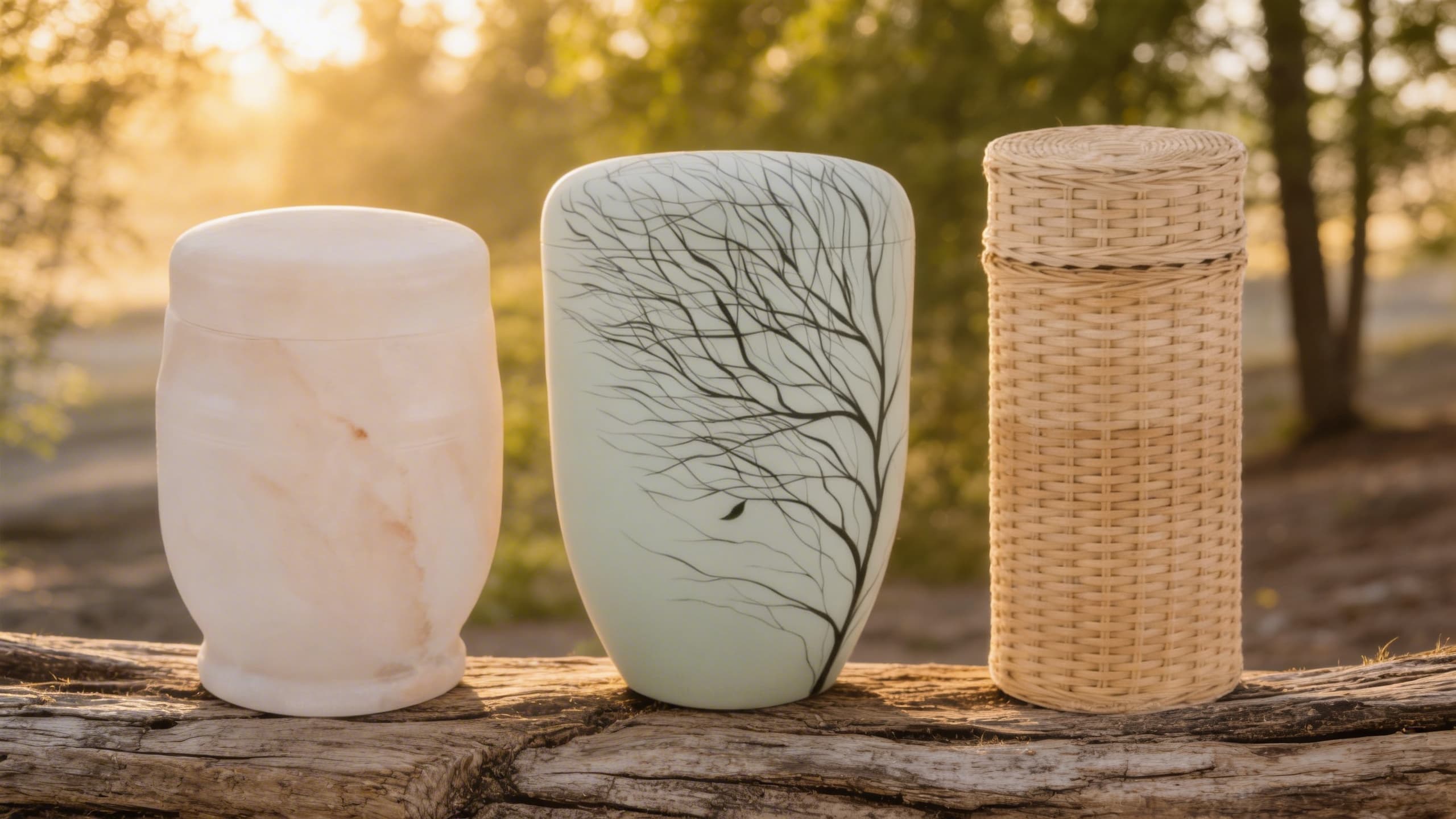
Choosing an eco-friendly biodegradable cremation urn for storing ashes can feel like a simple decision until you start looking at materials, intended use, and rules about where a ceremony can take place. The good news is that most of the confusion clears up once you separate two very different products that get grouped under the same label: urns meant to dissolve in water and urns meant to break down in soil. If you're still weighing all your options, our cremation urn buying guide covers every factor to consider — including eco-friendly choices like these.
A biodegradable urn is not just "natural-looking." It is designed to return to the environment without leaving behind metal, plastic, or other long-lasting debris. For families who have not yet settled on a final disposition, our overview of can help clarify the full range of paths available.
What "biodegradable" should mean (and what it does not)
A biodegradable urn is a container made from natural, renewable materials that is intended to hold ashes and break down completely after placement in water or burial in the ground. That "after" matters. These cremation urns still need to hold cremated remains safely during handling, travel and a ceremony.
Biodegradable also is not a guarantee of instant breakdown. In water, some biodegradable cremation urns float briefly and then disperse quickly, while others take longer to dissolve. In soil, breakdown is driven by moisture, temperature, and microbial activity, so timing varies by climate and burial depth.
After you read product descriptions in a biodegradable cremation urns guide, you should be able to answer two questions in plain language: what is it made of, and where is it meant to go?
Water urns vs. earth urns: the practical differences
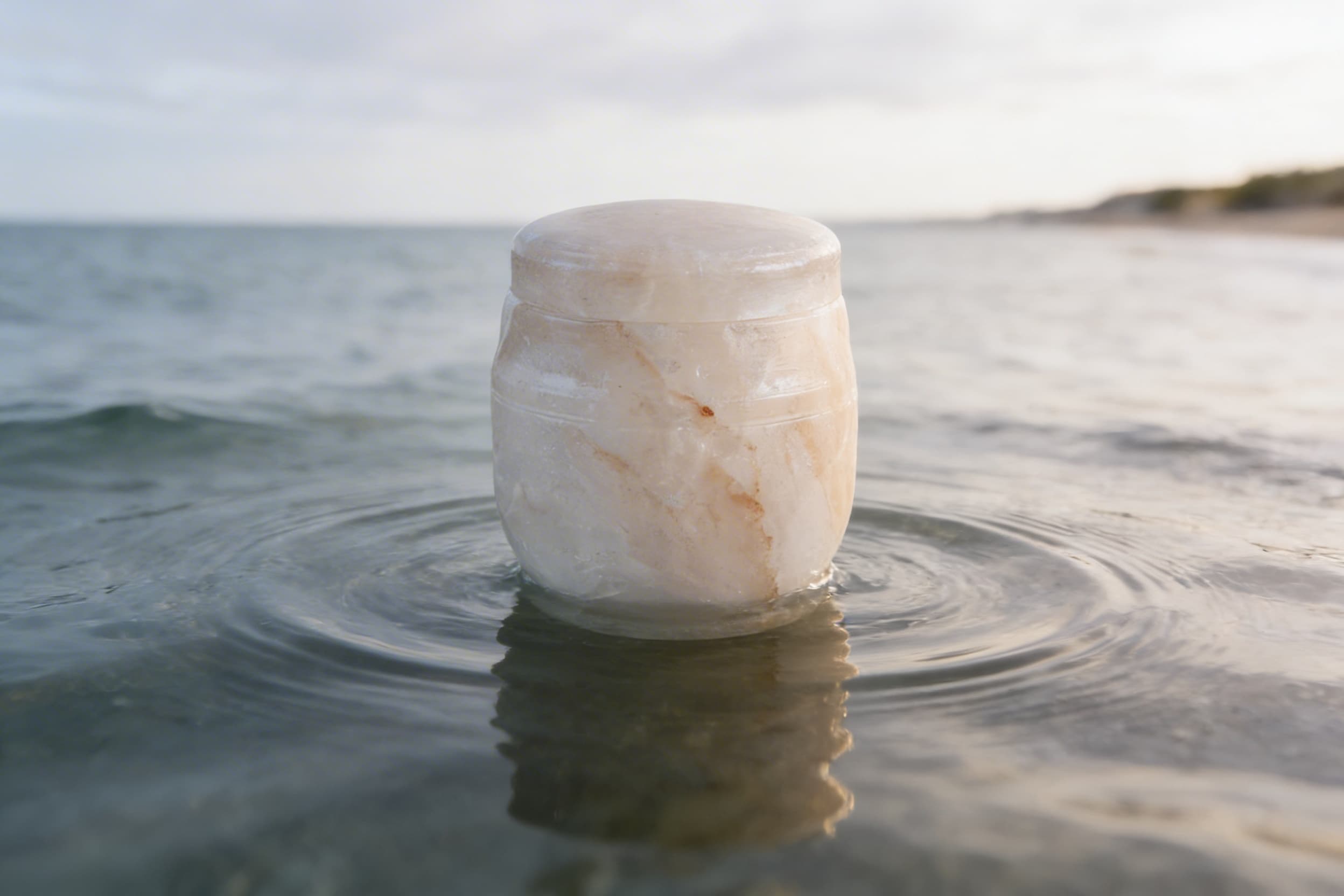
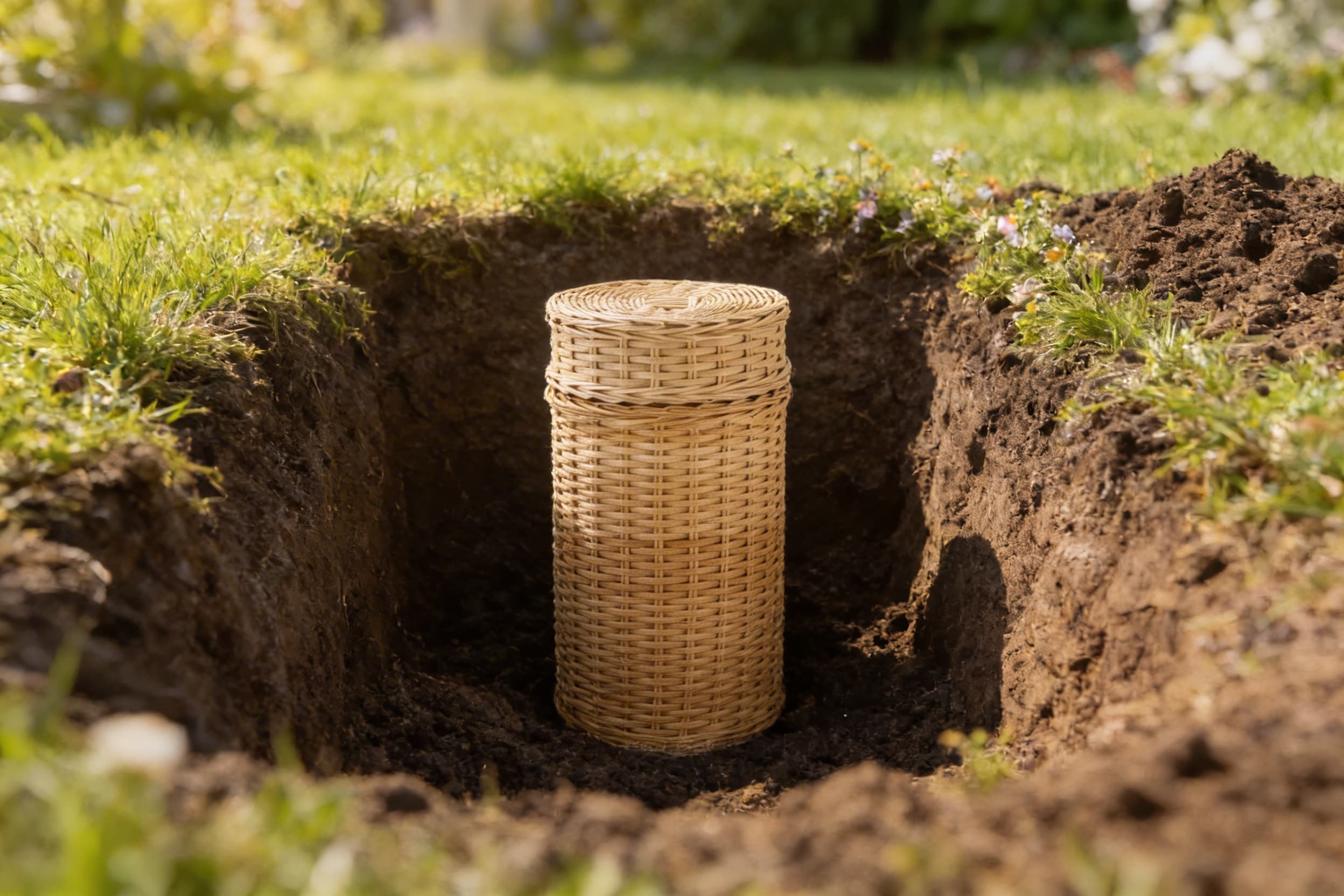
Urns made for water and urns made for ground burial can look similar online, but their engineering and scattering behavior is different. Water urns are built to resist splashing and handling, then dissolve once fully placed into a body of water. Earth urns are built to stay intact during burial, then gradually soften and decompose underground.
A quick way to keep them straight is to think "water soluble" versus "soil compostable."
After you decide on the setting for the memorial services, the rest of the choices get easier:
Ceremony pacing: Water urns often float briefly before sinking or dispersing.
Handling needs: Ground urns are usually sturdier, while some water-soluble materials can be more sensitive to humidity.
End result: Water urns disperse into water; earth urns break down and allow the ashes to return to the soil over time.
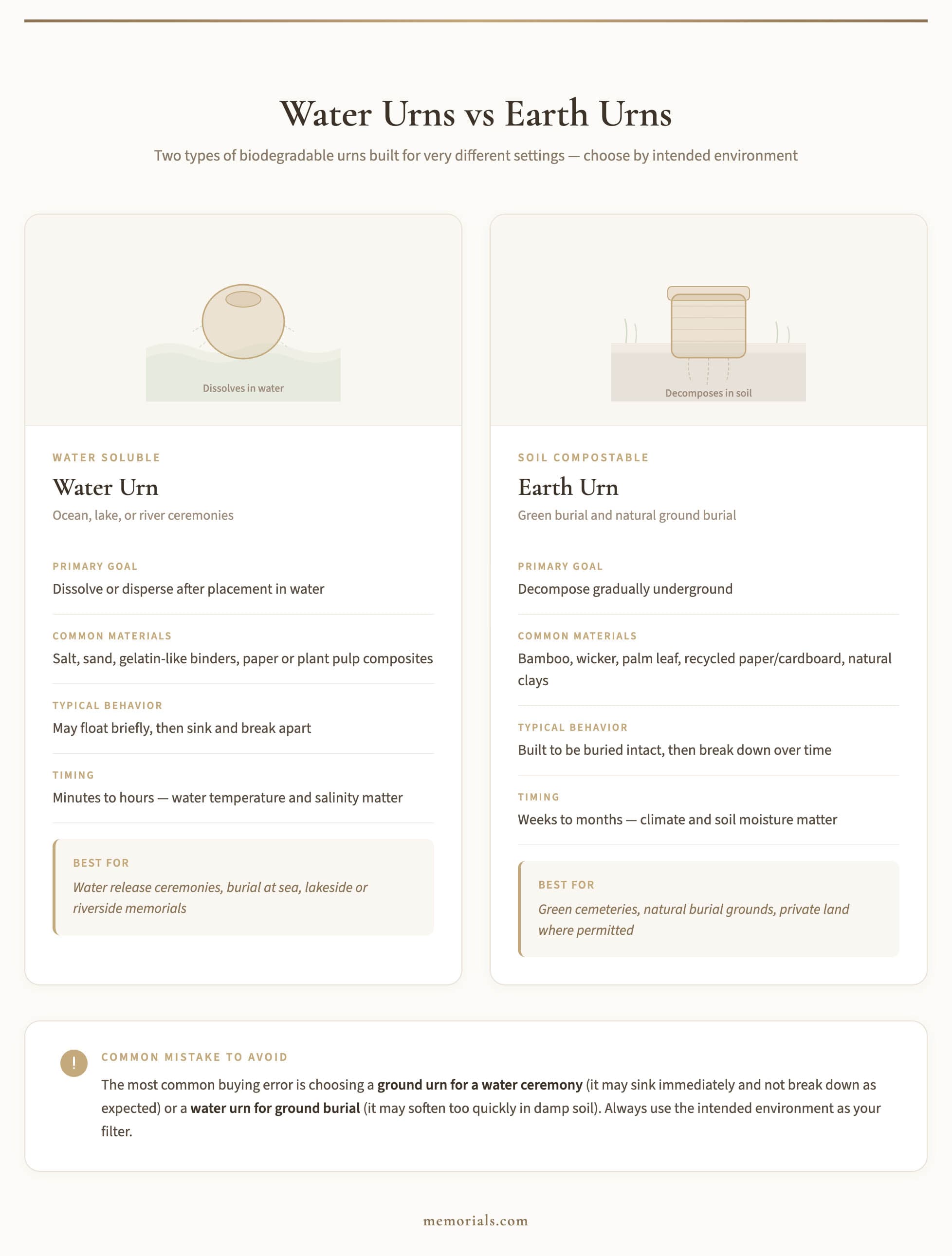
A side-by-side comparison you can save
The most common buying mistake is choosing a beautiful ground urn for a water ceremony (it may sink immediately and not break down as expected) or choosing a water urn for a ground burial (it may soften too quickly if the soil is damp). Use the intended environment as your filter.
Feature
Urn for Water (ocean, lake, river)
Urn for Earth (burial in soil)
Primary goal
Dissolve or disperse after placement in water
Decompose gradually underground
Common materials
Salt, sand, gelatin-like binders, paper or plant pulp composites
No flotation; built to be buried and then break down
Timing
Minutes to hours in many cases, conditions matter
Weeks to months, climate and soil moisture matter
Best for
Water release ceremonies, burial at sea
Green cemeteries, natural burial grounds, private land where permitted
Materials: what to look for, what to question
Materials tell you how the urn will behave, and they also tell you whether "biodegradable" is a marketing label or a real design standard. Water urns often use salt and sand composites or plant-based pulps that disperse cleanly. Earth urns often use woven plant fibers, recycled paper, or clay-like materials intended to break down in soil. For a broader look at materials beyond biodegradable options, see our overview of other types of cremation urns.
One sentence that should appear somewhere in a reliable listing is specific composition, not vague claims. "Plant fiber and salt" is useful. "Eco friendly material" is not.
Here are common materials and what they usually signal:
Salt and sand composites: Often chosen for water ceremonies because they dissolve and disperse well.
Woven bamboo, seagrass, wicker: Often categorized as nature cremation urns, these are typically intended for ground burial and gradual decomposition.
Recycled paper, cardboard, plant pulp: Can work for land burial and some scattering needs, but check durability if you need the urn to travel.
If you see mentions of resin, fiberglass, plastic liners, or metal fasteners, ask direct questions, especially if you are looking for an environmentally conscious and eco-friendly option. Sometimes a product is mostly natural but includes a non-biodegradable closure or interior bag that changes the environmental impact.
How long does breakdown take?
Families often want a clear time estimate, and sellers sometimes give one, but nature does not run on a stopwatch.
In water, temperature, salinity, and wave action can speed up or slow down dissolution. Some urns are designed to float for a short period to allow a few words or a moment of silence, then sink and disperse. Colder water can slow the process.
In soil, moisture and microbial activity do the work. Dry climates and cold winters can slow decomposition significantly, while damp soil tends to speed it up. Burial depth matters too since deeper soil can be cooler and less oxygenated.
If your plans depend on timing (a boat captain's schedule, or a cemetery service window), consult a biodegradable cremation urns guide and look for an urn described as purpose-built for that setting, not "okay for both" unless it clearly explains how.
Sizing: capacity matters more than style
Biodegradable urns still need to hold the full amount of ashes from a cremation. A widely used guideline is about 1 cubic inch of urn capacity per pound of body weight. Many adults need an urn around the 190 to 220 cubic inch range, but the right size depends on the person.
This can get complicated when families plan to divide ashes among multiple keepsake urns, scatter a portion, or place some in cremation jewelry, considering the scattering methods available.
A few sizing tips that prevent last-minute stress:
Choose slightly larger if you are between sizes.
Check whether the listed capacity is "total volume" or "usable capacity."
If splitting remains: confirm each container's capacity, not just the main urn.
Pet urn sizing is its own category. If you are memorializing a pet, look for pet-specific biodegradable urns or keepsakes sized for smaller volumes.
Rules and permissions: what to check before you schedule anything
The most important rules depend on location: ocean, inland water, cemetery, or private land.
For ocean burial in the United States, federal guidance allows cremated human remains to be released at sea when certain requirements are met, including distance offshore and use of a fully biodegradable container. Many families work with a charter service that is familiar with the process and paperwork. For more detail on planning a release ceremony — including choosing a location and what to expect — see our guide on how to scatter ashes.
Inland water releases (lakes and rivers) can be regulated by local or state rules, and some parks or municipalities require permits. Cemeteries also set their own policies. A green cemetery may require biodegradable containers like green urns and may not allow a vault, making it suitable for an eco burial. A conventional cemetery may require an outer burial container, which can conflict with a biodegradable plan.
One detail that surprises people: rules for human remains and pet remains are not always the same, and mixing them can create problems in settings regulated as "burial at sea."
Planning the ceremony: small details that make a big difference
A biodegradable urn, especially in the context of cremation, is part of a moment, not only an object, and the biodegradable cremation urns guide can help ensure you make the right choice for your needs. Handling, transport, and setup can change what you need to buy.
If you are traveling with an urn that contains ashes before the ceremony, prioritize secure closure and protective packaging to prevent any unintended scattering. Water-soluble urns in humid environments may need extra care. If multiple people will participate, consider the urn's shape and grip, especially on a dock or boat.
After you have your plan, ask yourself these practical questions:
Who will carry it: One person, two people, or passed among family members?
Where it will be filled: At home, at the funeral home, or at the ceremony site?
How it closes: Screw top, clasp, glue seal, or biodegradable bag inside?
Eco standards and labels: what adds confidence
"Biodegradable" is not always tightly policed as a term, so third-party standards can help. Some shoppers look for Green Burial Council approval for green burial compatibility, and some look for FSC certification when wood or paper products like green urns are involved. Compostability marks used in other industries may also offer reassurance, even when they are not urn-specific.
If no standards are listed, you can still evaluate quality by pushing for specifics: composition, dyes, binders, and whether any hardware is included.
After a loss, it is completely reasonable to want a simple purchase that you do not have to research like a science project.
Where Memorials.com fits in (selection, shipping, and returns)
Many people start their search at retailers that carry a wide range of cremation items, including biodegradable urns for water and earth, as well as pet memorials. Memorials.com is one example of a store that groups products by use case, which can help you avoid mixing up water urns and ground urns.
Shopping policies matter with biodegradable items because you may need time to confirm cemetery requirements or coordinate a date for a water ceremony. Memorials.com lists free ground shipping and a 30-day return window for non-custom items in resalable condition, with returns generally subject to a restocking fee and return shipping. Customized products typically have stricter limits once production begins, and damage claims are time-sensitive.
Before you place an order, it helps to keep a short "ask list" handy:
Material disclosure: What exactly is the urn made from, including closures and bags?
Intended use: Is it explicitly labeled for water, ground, or both with clear instructions?
Capacity: What is the listed cubic-inch volume, and is it suitable for your needs?
Beyond urns: mushroom burial, living memorials, and reef options
Biodegradable urns are the most common eco-friendly option for cremated remains, but the green burial movement has expanded into territory that would have sounded like science fiction a decade ago.
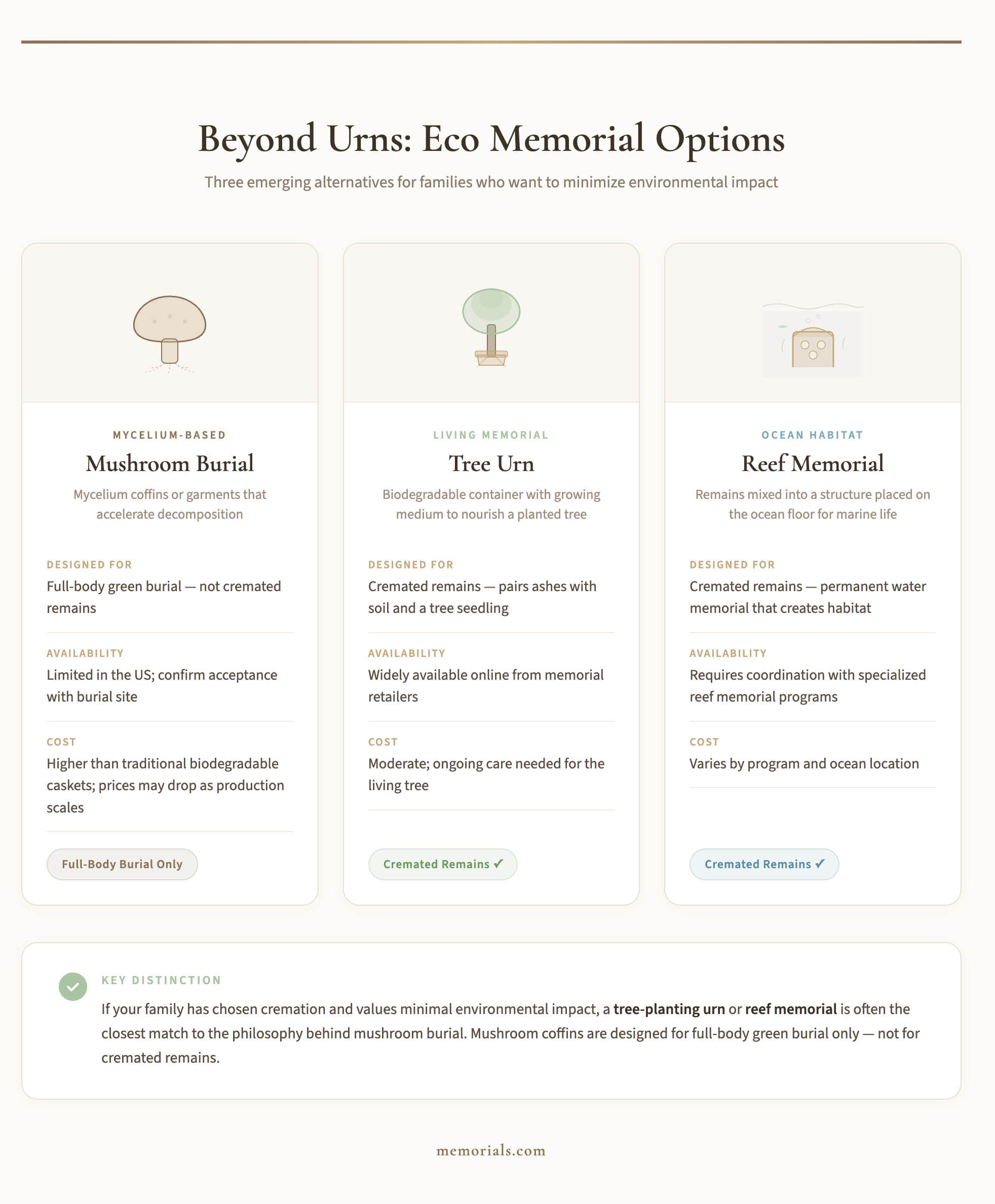
Mushroom burial suits and mycelium coffins have drawn significant public attention in recent years. These products use mushroom mycelium — the root-like network of fungi — to create coffins or burial garments designed to accelerate decomposition and return nutrients to the soil. The concept is that mycelium actively breaks down organic material and may help neutralize some of the environmental concerns associated with conventional burial, including embalming chemicals and non-biodegradable casket materials.
A few things worth knowing if you are researching this option:
Mushroom coffins and burial suits are designed for full-body green burial, not for cremated remains. If your family has already chosen cremation, a mushroom coffin is not the right product, but the values behind it — minimal environmental impact, returning to nature — are the same values that drive families toward biodegradable urns.
Availability in the United States is still limited, and not all green cemeteries have approved mycelium-based products. Confirming acceptance with the specific burial site is essential before purchasing.
Cost varies widely. Early mycelium coffins have been priced significantly higher than traditional biodegradable caskets, though prices may shift as production scales.
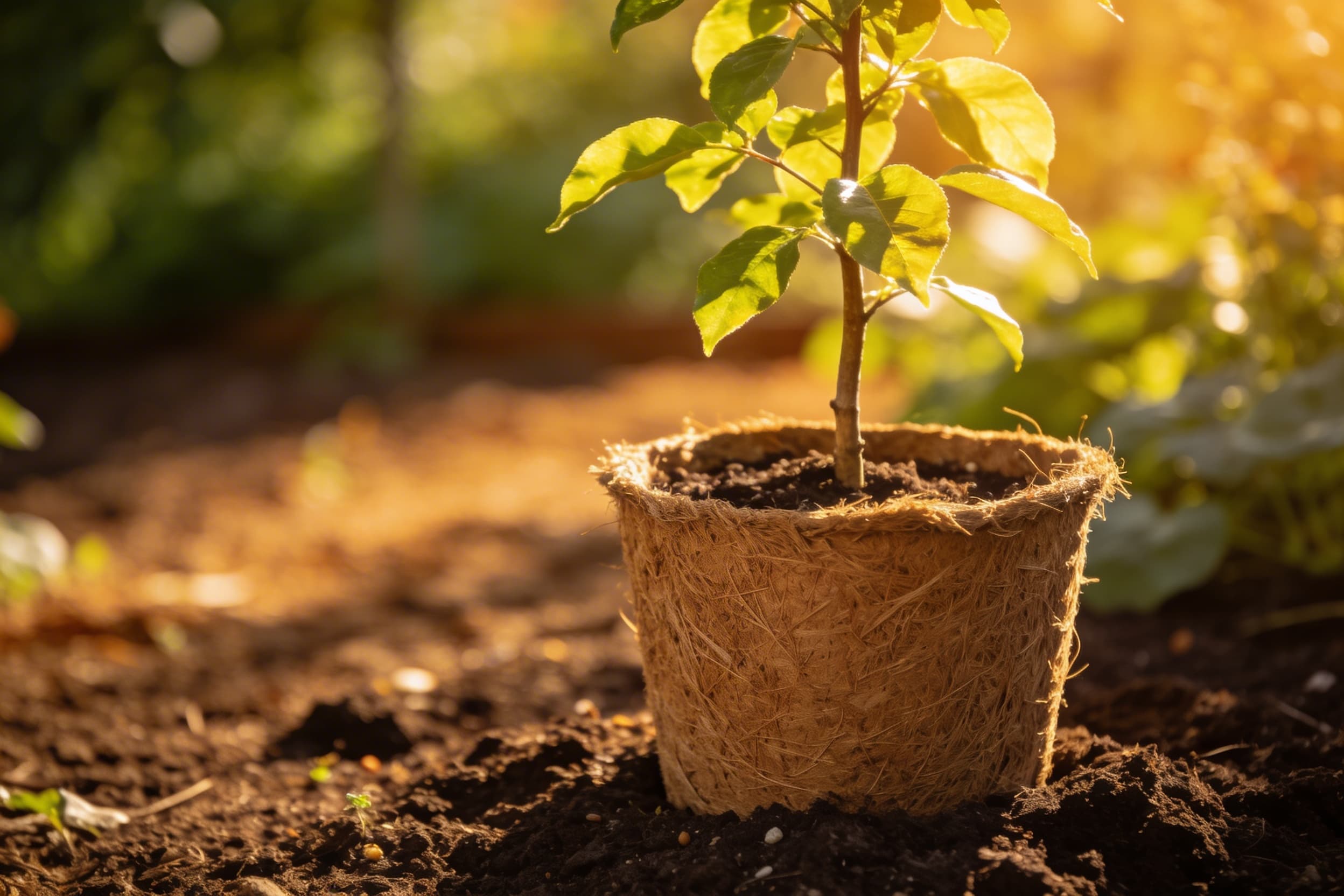
Tree urn kits take a different approach to the same goal. Rather than accelerating decomposition, they pair a biodegradable container with growing medium so cremated remains can nourish a planted tree or shrub. This creates a living memorial that families can visit and care for over time. If you are drawn to the environmental philosophy behind mushroom burial but your family has chosen cremation, a tree-planting urn is often the closest match.
Reef-style memorials are designed for water settings. These mix cremated remains into a concrete-like structure that is placed on the ocean floor in approved locations, creating habitat for marine life. They are a more permanent form of water memorial compared to a dissolvable biodegradable urn and require coordination with reef memorial programs.
Each of these options works best when the setting — cemetery, private land, ocean — has been confirmed in advance, and when the family understands the difference between products designed for whole-body burial and those designed for cremated remains.