🏬Supersize Online Funeral Retailer🪦1000's of Headstones⚱️Over 10,000 Cremation Urns⚰️Caskets Overnight Delivery🛒Funeral & Memorial Superstore🚚FREE Shipping on ALL Orders👨👩👧👦Helping Families for over 20 Years💰Lowest Price Guarantee🏬Supersize Online Funeral Retailer🪦1000's of Headstones⚱️Over 10,000 Cremation Urns⚰️Caskets Overnight Delivery🛒Funeral & Memorial Superstore🚚FREE Shipping on ALL Orders👨👩👧👦Helping Families for over 20 Years💰Lowest Price Guarantee
🏬Supersize Online Funeral Retailer🪦1000's of Headstones⚱️Over 10,000 Cremation Urns⚰️Caskets Overnight Delivery🛒Funeral & Memorial Superstore🚚FREE Shipping on ALL Orders👨👩👧👦Helping Families for over 20 Years💰Lowest Price Guarantee🏬Supersize Online Funeral Retailer🪦1000's of Headstones⚱️Over 10,000 Cremation Urns⚰️Caskets Overnight Delivery🛒Funeral & Memorial Superstore🚚FREE Shipping on ALL Orders👨👩👧👦Helping Families for over 20 Years💰Lowest Price Guarantee
Water burial is one of the oldest and most meaningful forms of final disposition. Whether a family chooses to lower a full body into ocean waters or release cremated remains from a chartered boat, burial at sea offers a powerful connection between a loved one and the natural world. For those navigating the full range of end-of-life decisions, our cremation planning guide covers every option from cremation to burial and everything in between.
This guide explains how water burial works in its modern forms, the federal regulations you need to follow, what it costs, and how to plan a ceremony that honors the person you've lost.
What Is Water Burial?
Water burial refers to the disposition of human remains — either a full body or cremated ashes — into a body of water, most commonly the ocean. The term encompasses several distinct practices that share the common element of returning remains to water rather than earth.
Full-body burial at sea involves preparing a body in a weighted casket or natural fiber shroud and lowering it into deep ocean water, where it sinks to the seafloor permanently. This form has deep historical roots in maritime culture and remains an option under federal law.
Burial at sea for cremated remains is far more common today. Families place ashes inside a biodegradable urn designed to dissolve in water, releasing the remains into the ocean. Others scatter ashes directly from a boat or shoreline.
It is important to distinguish water burial from aquamation and water cremation, which is a fundamentally different process. Aquamation uses heated water and alkalinity to reduce a body to bone fragments as an alternative to flame cremation. Water burial, by contrast, is a disposition method — what you do with remains after cremation or as an alternative to earth burial.
A Brief History of Burial at Sea
Burial at sea stretches back thousands of years across cultures and continents. Ancient Greek and Roman sailors committed their dead to the waters during long voyages, viewing the sea as a sacred realm governed by the gods. In the South Pacific, some communities placed their dead in canoes and launched them into the ocean as a final act of reverence.
Viking funeral traditions gave burial at sea perhaps its most dramatic form. Norse warriors were sometimes placed on ships that were set ablaze and sent out to sea, though land-based ship burials were actually more common. The tradition of a warrior's send-off on the water has endured in popular imagination for centuries.
British naval tradition formalized sea burial during the Age of Sail. The body was sewn into a canvas shroud — often the dead sailor's own hammock — and weighted with lead shot to ensure it sank. The ship's captain presided over a brief ceremony before the remains were committed to the deep. This practice continued through both World Wars and remains part of military tradition today.
Hindu funerary customs center on scattering cremated ashes in sacred rivers, most notably the Ganges. This practice reflects the belief that water purifies the soul and carries it toward liberation. Many Hindu families continue this tradition across the globe.
EPA Regulations for Burial at Sea
The United States Environmental Protection Agency regulates burial at sea through the Marine Protection, Research, and Sanctuaries Act (MPRSA). Federal rules differ depending on whether you are burying a full body or scattering cremated remains.
Full-Body Burial at Sea Rules
Full-body burial at sea must meet specific federal requirements. The body must be deposited at least three nautical miles from shore in ocean waters at least 600 feet deep. In some areas of Florida — specifically east central Florida, the Dry Tortugas, and the region between Pensacola and the Mississippi River Delta — the minimum depth increases to 1,800 feet.
All measures must be taken to ensure the remains sink rapidly and permanently. If a casket is used, the EPA recommends drilling at least twenty two-inch holes in the casket, securing it with six bands, and adding weight so the total reaches at least 300 pounds. If no casket is used, the body should be wrapped in a natural fiber shroud with additional weight, such as a steel chain, to aid sinking.
No permit application is required for full-body burial at sea under the MPRSA general permit, but families must notify the EPA within 30 days after the burial. Materials that are not readily decomposable in the marine environment — plastic flowers, metal wreaths, tombstones, or monuments — may not be placed at the burial site. Only biodegradable flowers and wreaths are permitted.
Rules for Cremated Remains at Sea
Scattering cremated remains at sea is subject to fewer restrictions. Ashes may be scattered in ocean waters of any depth, provided the scattering occurs at least three nautical miles from shore. The same EPA notification requirement applies within 30 days of the event.
Cremated remains may include the casket or container if it was cremated along with the body, though metal objects should be removed beforehand. Families who use a biodegradable urn simply place the sealed urn into the water, where it dissolves over a period of minutes to hours depending on the material.
One important distinction: the MPRSA general permit applies only to ocean waters. Scattering ashes in inland waters such as lakes, rivers, and bays falls under state law rather than federal regulation. For a comprehensive overview of where and how you can legally scatter ashes across different environments, see our guide to scattering ashes laws and regulations.
Can Pets Be Buried at Sea?
The EPA's general permit for burial at sea specifically applies to human remains only. Placement of non-human remains, including pet ashes, in ocean waters is not authorized under the MPRSA. Scattering pet ashes in inland waterways may be permitted under state law, but check local regulations before proceeding.
How Much Does a Water Burial Cost?
The cost of a water burial depends on whether you are scattering cremated remains or conducting a full-body burial, and whether family members attend the ceremony.
Cost of Scattering Ashes at Sea
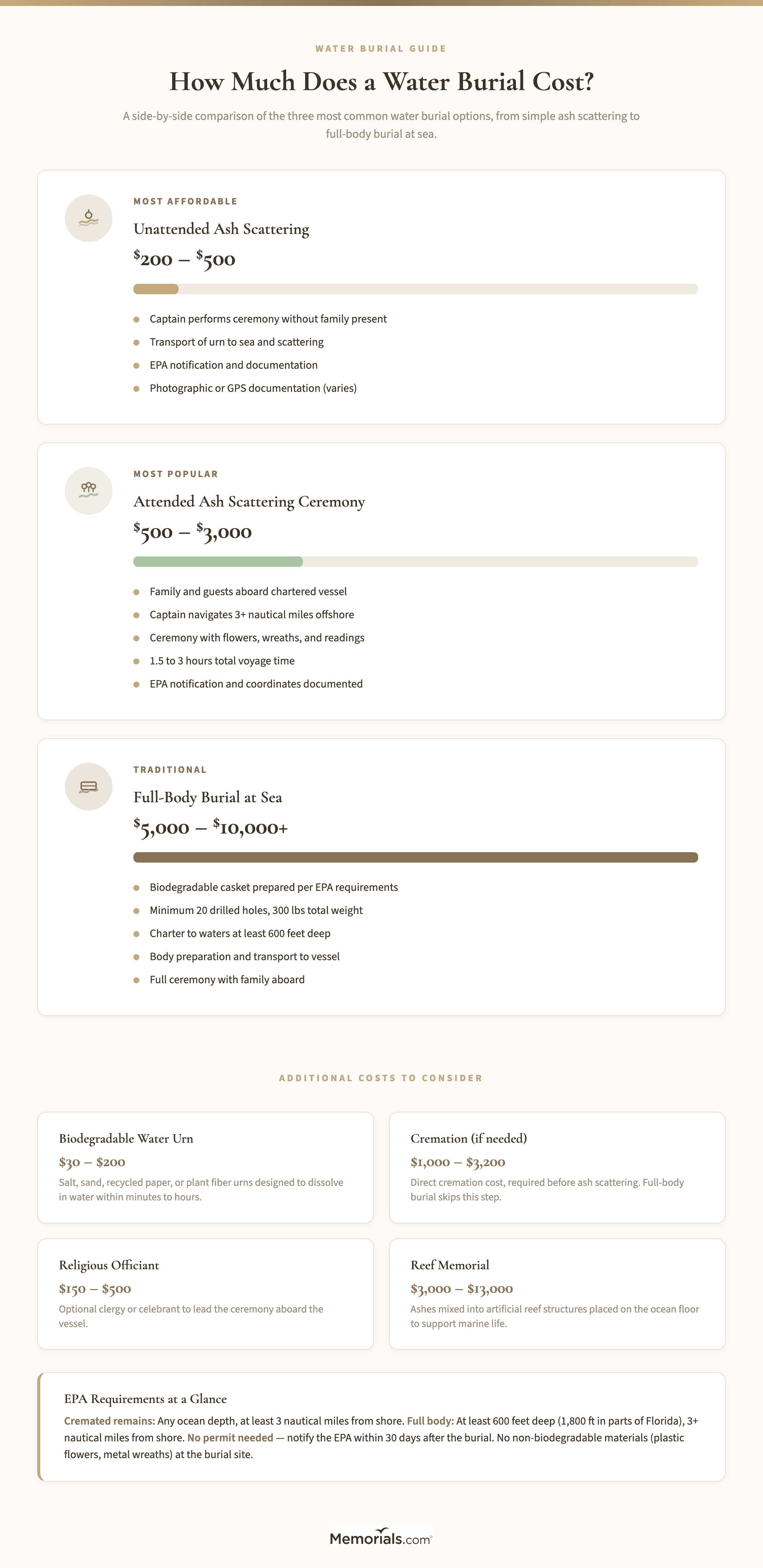
An unattended ash scattering — where the charter captain handles the ceremony without family present — typically costs between $200 and $500. The service includes transport of the urn to sea, a brief ceremony, and EPA documentation.
An attended ash scattering with family and guests aboard the boat ranges from $500 to $3,000 or more. The price varies based on the number of passengers, departure location, duration of the voyage, and any extras like floral arrangements or a religious officiant. Most charter services accommodate 6 to 35 passengers on standard vessels, with larger groups requiring bigger boats at higher costs.
A biodegradable water urn typically costs between $30 and $200, depending on materials and design. Some families opt to scatter ashes directly without an urn, though many prefer the ceremonial element of lowering a sealed container into the water and watching it dissolve.
Cost of Full-Body Burial at Sea
Full-body burial at sea is significantly more expensive. Including the casket preparation, transport to the vessel, boat charter, and compliance with EPA casket requirements, families can expect to pay between $5,000 and $10,000. The casket must be constructed from biodegradable materials with proper weight and drainage holes, and the charter vessel must travel far enough offshore to reach waters of adequate depth.
Some funeral homes that specialize in sea burials offer all-inclusive packages. Others require families to coordinate separately with a crematory or funeral home for body preparation and a charter boat company for the at-sea service.
Cost Comparison at a Glance
The most affordable option is an unattended ash scattering starting around $200 plus the cost of a biodegradable urn. An attended ceremony with a small group of guests typically runs $700 to $2,000. A full-body sea burial with casket and charter is the most expensive option, ranging from $5,000 to $10,000 or more depending on location and vessel size.
Types of Water Burial
Full-Body Burial at Sea
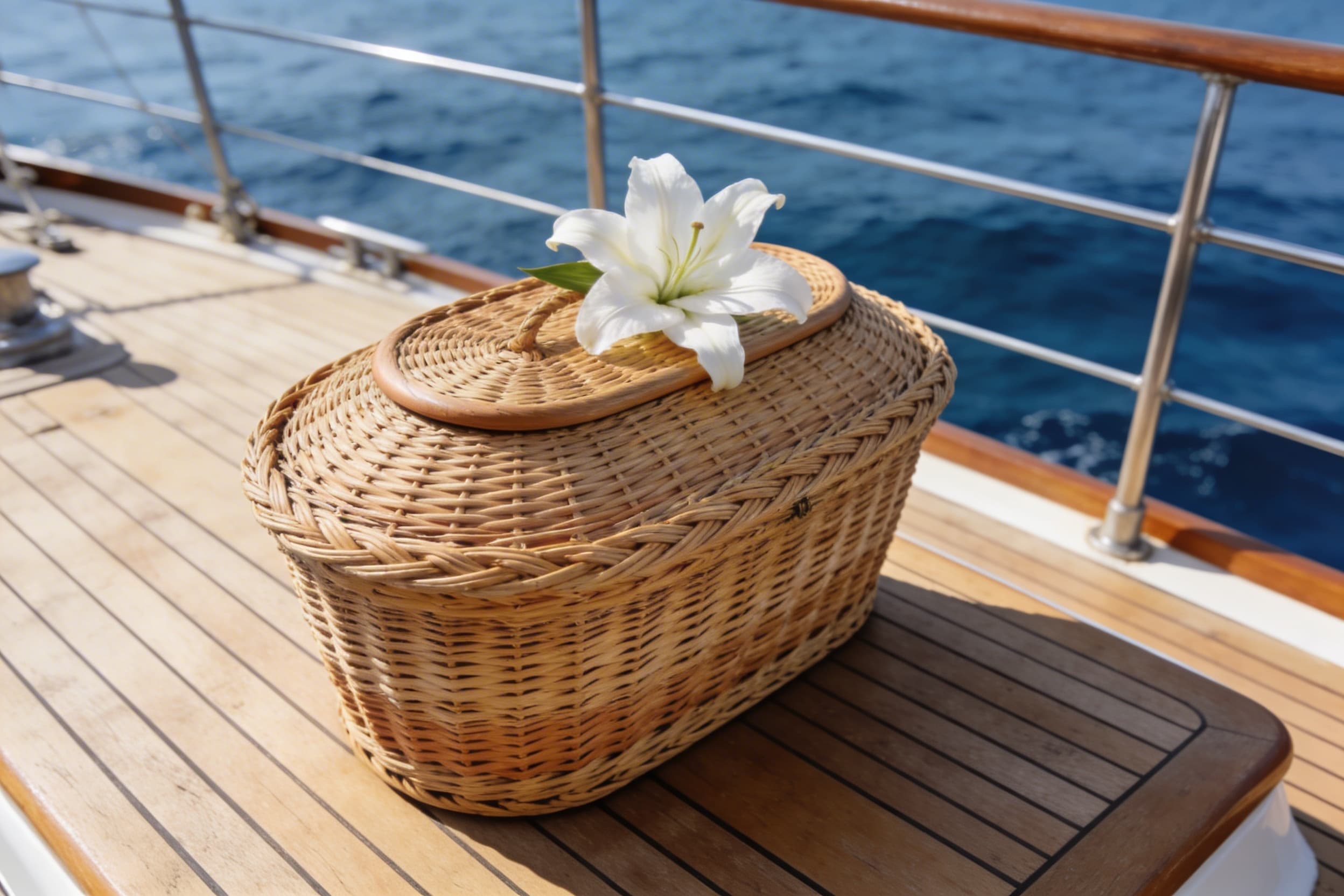
Full-body sea burial involves placing the unembalmed or embalmed body in a specially prepared casket or natural shroud and lowering it into deep ocean waters. The casket must meet EPA requirements for weight, drainage, and biodegradability. Biodegradable caskets made from materials like wicker, seagrass, or softwood are commonly used because they decompose naturally in the marine environment.
This option appeals to families who want a traditional burial without the long-term land use of a cemetery. It also aligns with the values of those exploring eco-friendly funeral options who prefer to minimize their environmental footprint.
Scattering Ashes From a Boat
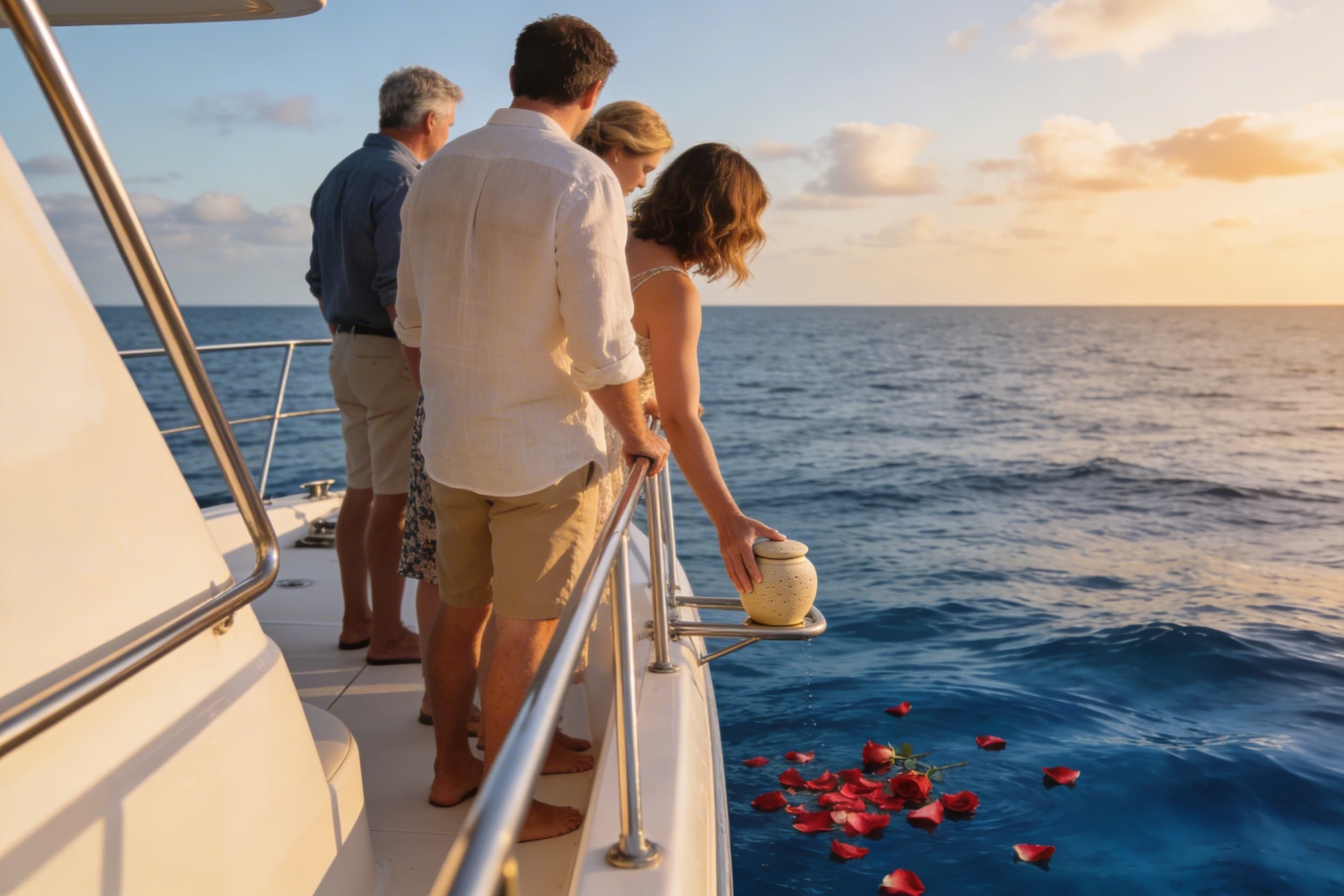
The most popular form of water burial today is scattering cremated remains from a chartered vessel. The boat travels at least three nautical miles offshore, the captain stops the vessel, and the family releases the ashes into the water during a brief ceremony. Many services provide biodegradable wreaths, rose petals, and leis to accompany the scattering.
After the ashes are released, the boat traditionally circles the spot — a maritime gesture of respect. Some services ring the ship's bell eight times to signal the end of watch, borrowing from naval tradition.
Biodegradable Urn Water Burial
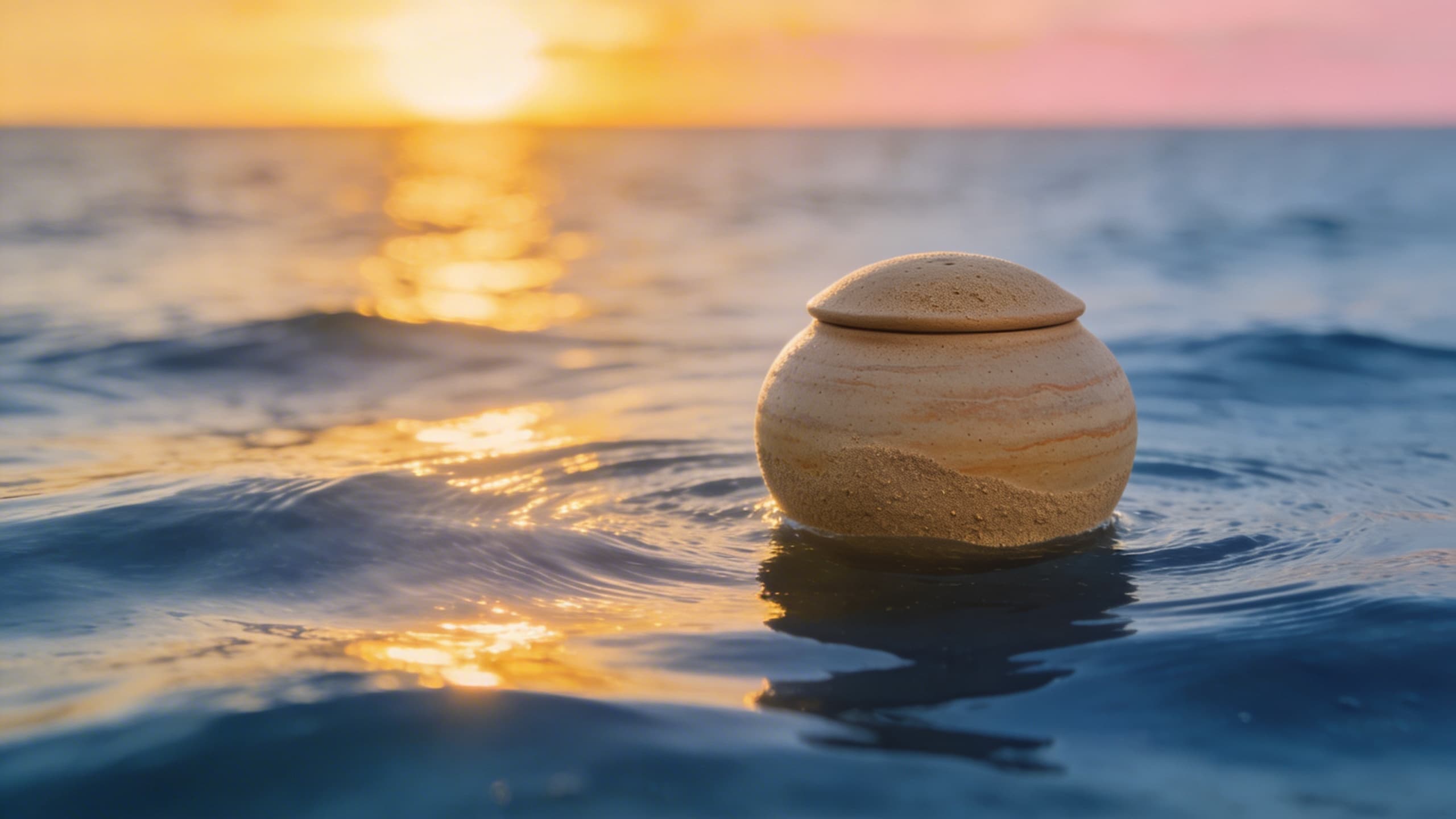
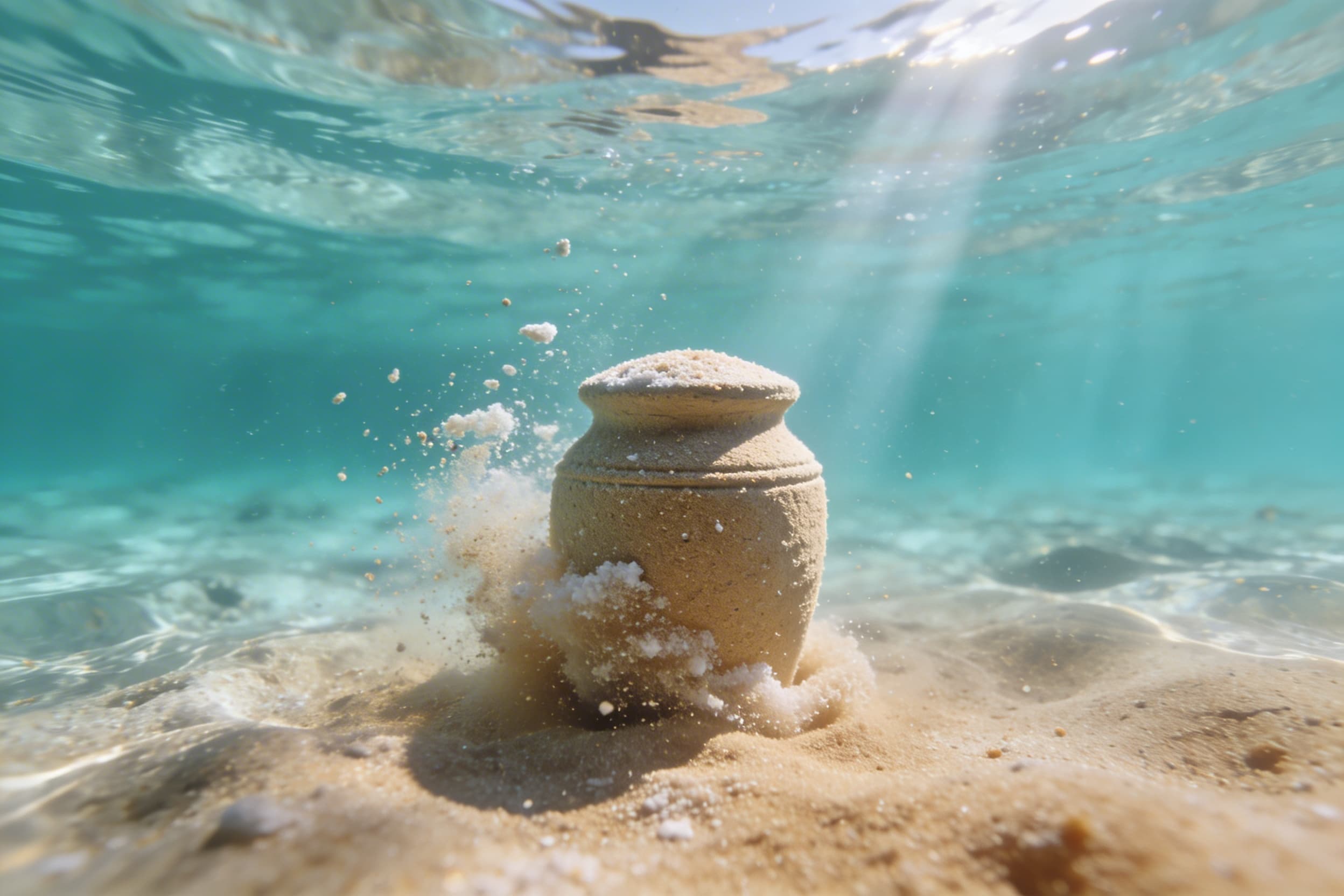
Rather than scattering ashes directly, many families place cremated remains inside a biodegradable water urn and lower the sealed urn into the ocean. The urn floats briefly on the surface before absorbing water, softening, and gently sinking. Depending on the material — sand, salt, recycled paper, or compressed plant fiber — the urn dissolves within minutes to several hours, releasing the ashes into the water.
This approach gives the ceremony a tangible focal point. Families can watch the urn descend and take comfort in the visual of their loved one becoming part of the ocean. Biodegradable urns designed for water burial are widely available, and our collection of biodegradable urns includes options specifically crafted for ocean, lake, and river ceremonies.
Reef Memorials
A newer option combines cremated remains with concrete and other marine-safe materials to create artificial reef structures. These reef balls are placed on the ocean floor, where they attract coral, fish, and other marine life over time. The deceased literally becomes part of a living ecosystem. Reef memorial programs operate primarily off the coasts of Florida and cost between $3,000 and $13,000 depending on the size and customization of the reef structure.
Planning a Water Burial Ceremony
A water burial ceremony can be as simple or as elaborate as the family wishes. There is no single required format, and most families find that personal touches make the experience more meaningful than following a strict protocol.
Choosing a Charter Service
Search for burial at sea charter companies near your desired departure port. Many coastal cities have multiple operators who specialize in memorial services. When evaluating services, ask about the vessel size and passenger capacity, the duration of the trip, whether the captain will officiate or if you should bring your own clergy, what is included in the price (flowers, wreaths, documentation), and whether they handle the EPA notification filing on your behalf.
What to Expect on the Day
On the day of the ceremony, the family typically boards the vessel 15 to 30 minutes before departure. The captain navigates to the designated location at least three nautical miles from shore. Once the boat stops, the ceremony begins.
Most families share a few words, read a poem or scripture passage, and say their goodbyes before releasing the ashes or urn into the water. Some bring the person's favorite music to play during the ceremony. Others observe a moment of silence. Biodegradable flowers, rose petals, and leis are commonly placed on the water alongside the remains.
The entire trip typically lasts 1.5 to 3 hours, including travel time to and from the burial site.
DIY Ash Scattering Without a Charter
Families who own a boat or have access to one can conduct their own ash scattering ceremony without hiring a charter service. The same EPA rules apply: cremated remains must be scattered at least three nautical miles from shore, and the EPA must be notified within 30 days. No permit or fee is required, but families should ensure they have a vessel capable of safely reaching waters three miles offshore.
Scattering ashes from the shore, a pier, or a dock does not meet the three-nautical-mile requirement for ocean scattering. However, scattering in rivers, lakes, or bays may be permitted under state law. Check local regulations before proceeding.
Environmental Considerations
Water burial is often chosen by families with strong environmental values. Compared to traditional earth burial, which involves embalming chemicals, non-biodegradable caskets, concrete vaults, and ongoing cemetery land use, water burial using a biodegradable urn or casket leaves a much smaller footprint.
Cremation itself generates carbon emissions and energy consumption, though its overall environmental impact is lower than conventional burial when measured over time. Families concerned about cremation's environmental impact may want to weigh water burial against other green alternatives such as natural burial, tree pod burial, or aquamation.
For water burial specifically, the key environmental concern is what enters the water. The EPA prohibits non-biodegradable materials at the burial site, ensuring that caskets, urns, flowers, and wreaths all decompose naturally without harming marine ecosystems. Cremated ashes themselves are composed of calcium phosphate and other inorganic minerals that are naturally present in ocean water and pose no ecological risk.
Military and Veteran Burial at Sea
The U.S. Navy continues to perform burial at sea ceremonies for eligible veterans and active-duty service members. Navy ceremonies follow formal military protocol, including the playing of Taps, a rifle salute, and the presentation of a folded American flag to the next of kin.
Eligible individuals include active-duty members of any branch, honorably discharged veterans, and dependent family members of active-duty or retired personnel. The Navy conducts these ceremonies from ships at sea as operational schedules permit, meaning families cannot choose the date or location. The service is provided at no cost to the family, though there may be a waiting period of several months.
Families who prefer to arrange their own military-themed ceremony can hire a civilian charter service and incorporate military elements such as Taps, a flag ceremony, and a prayer. Several coastal charter companies specialize in veteran memorial voyages and can coordinate these details.
Religious Views on Water Burial
Religious perspectives on water burial vary significantly by faith tradition.
The Catholic Church permits burial at sea but views it as less preferable than cemetery burial. When cremated remains are buried at sea, the Church requires that ashes be kept together in a sealed container and sunk intact to the ocean floor rather than scattered on the surface. Scattering ashes is not permitted under Catholic teaching.
Most Protestant denominations leave the decision to the individual and family, with no formal prohibition on water burial or scattering of ashes at sea.
In Hinduism, committing ashes to water — particularly sacred rivers — is the preferred form of final disposition. Many Hindu families living near coastlines adapt this tradition by scattering ashes in the ocean.
Orthodox Judaism and Islam both require earth burial and do not permit cremation. Sea burial of a full body is acceptable only in extreme circumstances, such as death aboard a ship with no ability to return to land.
Buddhism generally accepts cremation and water burial, following the historical precedent of the Buddha's own cremation and the subsequent distribution of his relics.
Frequently Asked Questions
Do you need a permit for burial at sea?
No permit application is required for burial at sea under the EPA's MPRSA general permit. However, you must notify the EPA's Regional Office within 30 days after the burial. The notification should include the name of the deceased, the date and location (latitude and longitude) of the burial, and whether the burial involved a full body or cremated remains.
Can you scatter ashes at sea from the beach?
Federal law requires that ashes be scattered at least three nautical miles from shore when deposited in ocean waters. Scattering from a beach or pier into the ocean does not meet this requirement. However, scattering ashes in rivers, lakes, or bays may be permitted under state regulations. Always check your state and local laws before scattering from shore.
How long does a biodegradable urn take to dissolve?
Most biodegradable water urns begin dissolving within minutes of being placed in water and fully break down within a few hours. Salt urns and sand urns tend to dissolve fastest, often within 10 to 30 minutes. Urns made from recycled paper or compressed plant fiber may take several hours. The urn will float briefly on the surface, absorb water, and then gently sink as it softens.
What is the difference between water burial and aquamation?
Water burial is a disposition method — it refers to placing a body or ashes into a body of water as a final resting place. Aquamation (also called alkaline hydrolysis or water cremation) is a cremation alternative that uses heated water and alkalinity to reduce a body to bone fragments. The two processes serve entirely different purposes: aquamation replaces flame cremation, while water burial replaces earth burial or urn display.
Can you bury someone at sea anywhere in the world?
Regulations vary by country. In the United States, the EPA governs ocean burials under the MPRSA. In the United Kingdom, burial at sea requires a license from the Marine Management Organisation and is limited to designated sites. Australia requires a permit and specifies minimum water depths of 2,000 meters. If you plan to transport remains internationally for burial at sea, consult both the origin and destination country's regulations.
A Farewell on the Water
For those who loved the sea — or for families drawn to the simplicity and symbolism of returning a loved one to nature — water burial offers a farewell unlike any other. The ocean's vastness, its rhythms, and its permanence provide a setting that many families find deeply comforting.
Whether you choose a full-body burial from a chartered vessel, a quiet ash scattering with family, or a biodegradable urn ceremony at sunset, the tradition of committing the dead to water honors a practice as old as human civilization. Explore our collection of biodegradable cremation urns designed specifically for water burial, and take the first step toward planning a memorial that reflects a life connected to the sea.