🏬Supersize Online Funeral Retailer🪦1000's of Headstones⚱️Over 10,000 Cremation Urns⚰️Caskets Overnight Delivery🛒Funeral & Memorial Superstore🚚FREE Shipping on ALL Orders👨👩👧👦Helping Families for over 20 Years💰Lowest Price Guarantee🏬Supersize Online Funeral Retailer🪦1000's of Headstones⚱️Over 10,000 Cremation Urns⚰️Caskets Overnight Delivery🛒Funeral & Memorial Superstore🚚FREE Shipping on ALL Orders👨👩👧👦Helping Families for over 20 Years💰Lowest Price Guarantee
🏬Supersize Online Funeral Retailer🪦1000's of Headstones⚱️Over 10,000 Cremation Urns⚰️Caskets Overnight Delivery🛒Funeral & Memorial Superstore🚚FREE Shipping on ALL Orders👨👩👧👦Helping Families for over 20 Years💰Lowest Price Guarantee🏬Supersize Online Funeral Retailer🪦1000's of Headstones⚱️Over 10,000 Cremation Urns⚰️Caskets Overnight Delivery🛒Funeral & Memorial Superstore🚚FREE Shipping on ALL Orders👨👩👧👦Helping Families for over 20 Years💰Lowest Price Guarantee
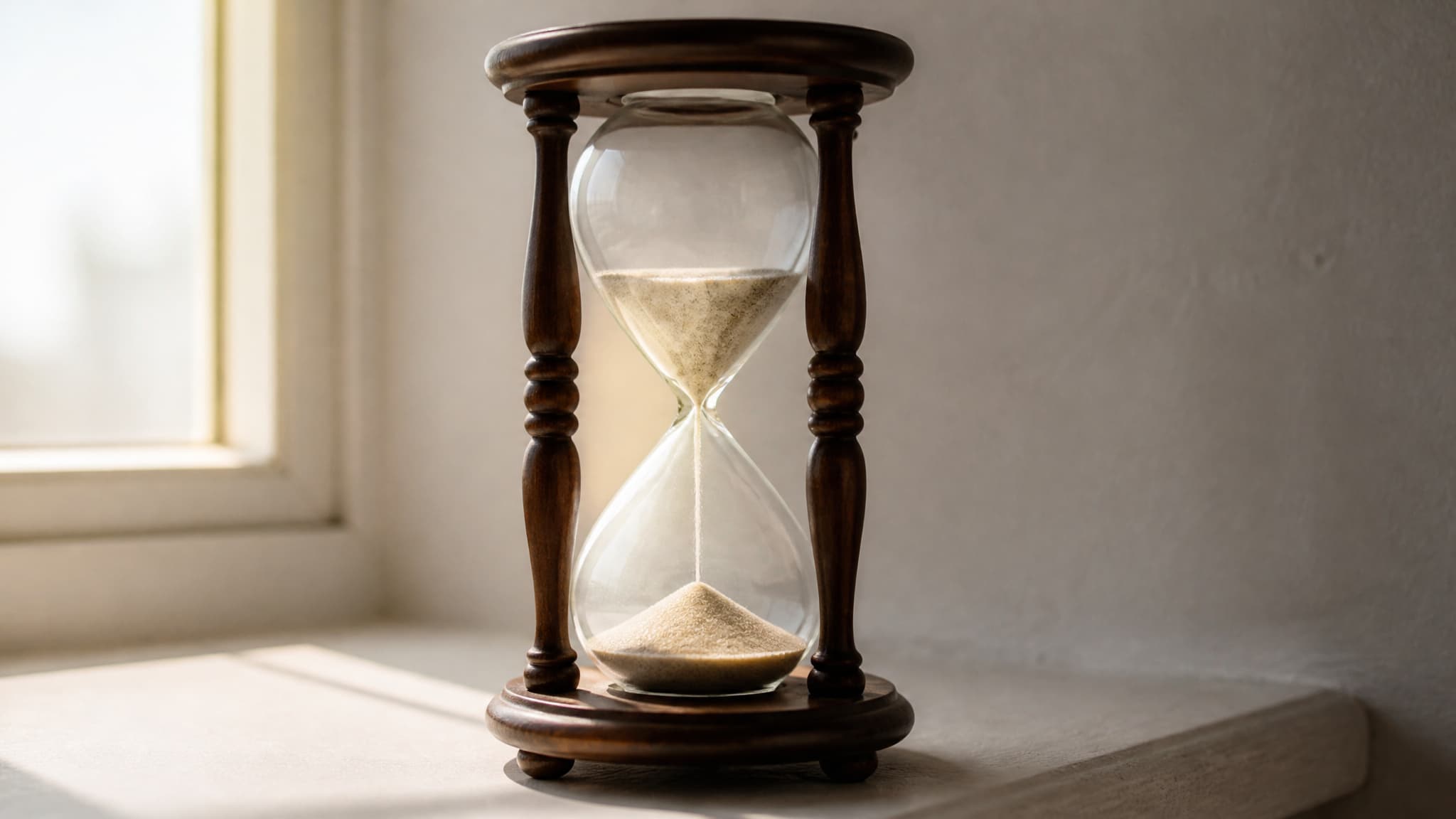
Hourglass urns hold a small portion of cremated remains inside a sealed glass timer, so that turning it over sends them falling slowly from one chamber to the other. They are keepsakes rather than urns in the usual sense, and the single most useful thing to know before buying one is how little they hold.
That is not a criticism. It is the thing families most often get wrong, because the object looks substantial and the word "urn" sets an expectation it was never built to meet.
You will also see them described as an egg timer for ashes, which is not a slight — it is simply what the shape is, and searches for egg timers for ashes land on exactly these. The vocabulary is loose because the object sits between two categories: it is a keepsake urn that happens to be a timer.
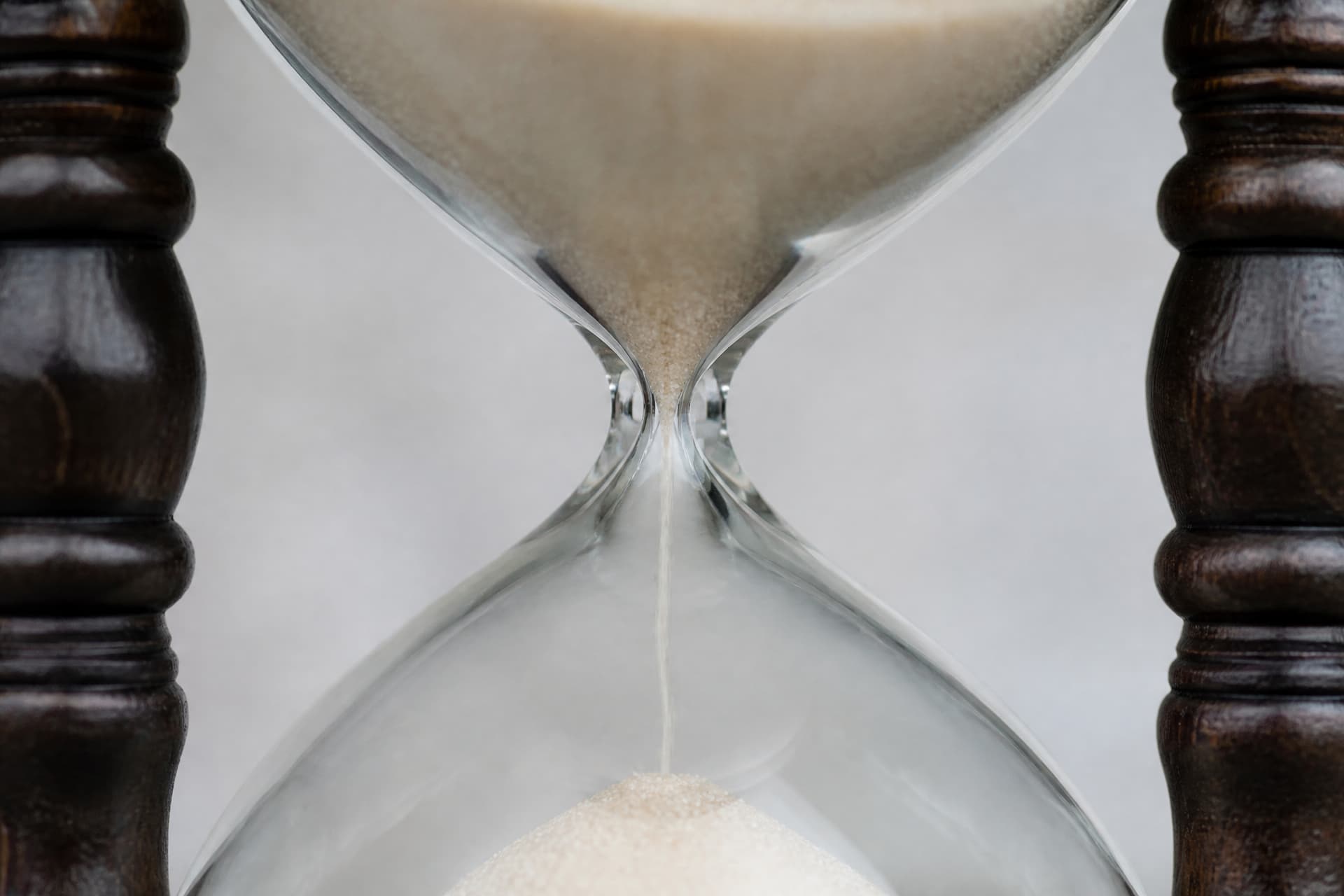
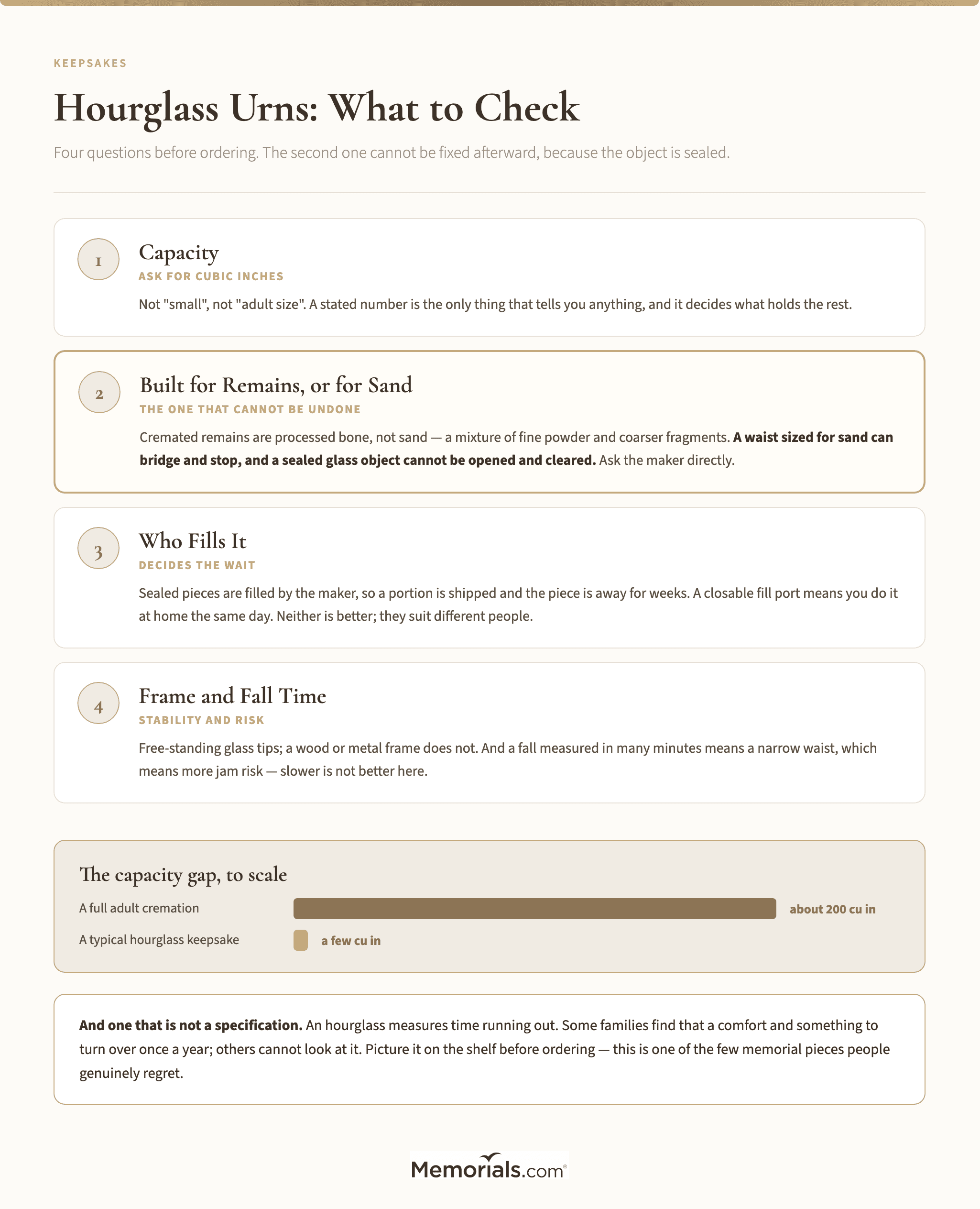
Everything depends on the waist. It has to be wide enough that uneven material passes and narrow enough that the fall is slow — and that is the whole engineering problem.
A full adult cremation produces roughly 200 cubic inches of remains, which is why a standard adult urn is about the size of a large coffee tin. An hourglass holds a fraction of that — a few cubic inches at most, and often less, because the chambers have to leave room for the material to move.
So an hourglass takes a portion. The rest goes somewhere else: a full-size urn, a burial, a scattering, or divided between family members. Decide that before you order, not after, because dividing remains is a separate decision with its own weight and it is better made deliberately. Our guide to what size urn do I need covers the arithmetic for the main container.
Searches for an hourglass for ashes and for a keepsake urn are mostly the same search, and the capacity is why: both describe something that holds a share.
On "hourglass urns for adults." The phrase turns up in searches, and the honest answer is that the adult-versus-child distinction does not really apply here, because no hourglass holds a complete adult's remains in the first place. What varies is the size of the keepsake, not whose remains go in it.
This is the question nobody asks before buying and everybody asks afterward, and it deserves a direct answer: it depends on the remains, not on the hourglass.
Cremated remains are not sand. They are processed bone fragments, and the result is a mixture — fine pale powder that pours freely, and coarser pieces that do not. A well-made hourglass has a waist sized for that mixture. A decorative one designed for actual sand can jam, and once it jams, a sealed glass object is not something you can open and fix.
Three things make flow more reliable:
Processed remains. Most crematories process the remains to a consistent grade before returning them. If yours were processed, flow is rarely a problem.
A wider waist. Slower is not better here. A waist narrow enough to make the fall last several minutes is narrow enough to bridge and stop.
Filling it dry, and not overfilling. Moisture clumps bone mineral. So does packing it tight.
Ask the maker directly whether the piece is built for cremated remains or adapted from a sand timer. It is a fair question and a good one will answer it plainly.
The four things that decide whether one works, and the one that cannot be fixed afterward.
The Metaphor Is Not for Everyone
Worth saying plainly, because it is the real reason some families love these and others cannot look at one.
An hourglass measures time running out. For some people that is exactly right — a deliberate, unhurried reminder that a life had a span, and something to turn over on an anniversary as a small private act. For others it is the last image they want, and they know it the moment they see one.
There is no correct answer and no need to justify either reaction. But it is worth picturing the object on the shelf before buying, because this is one of the few memorial pieces that people genuinely regret. If the thought makes you uneasy, that unease is information.
A gentler variant some families prefer: keep it lying on its side, so nothing is falling, and turn it upright only on the day it means something.
Glass Urns Are a Different Thing
The search terms run together and the products do not.
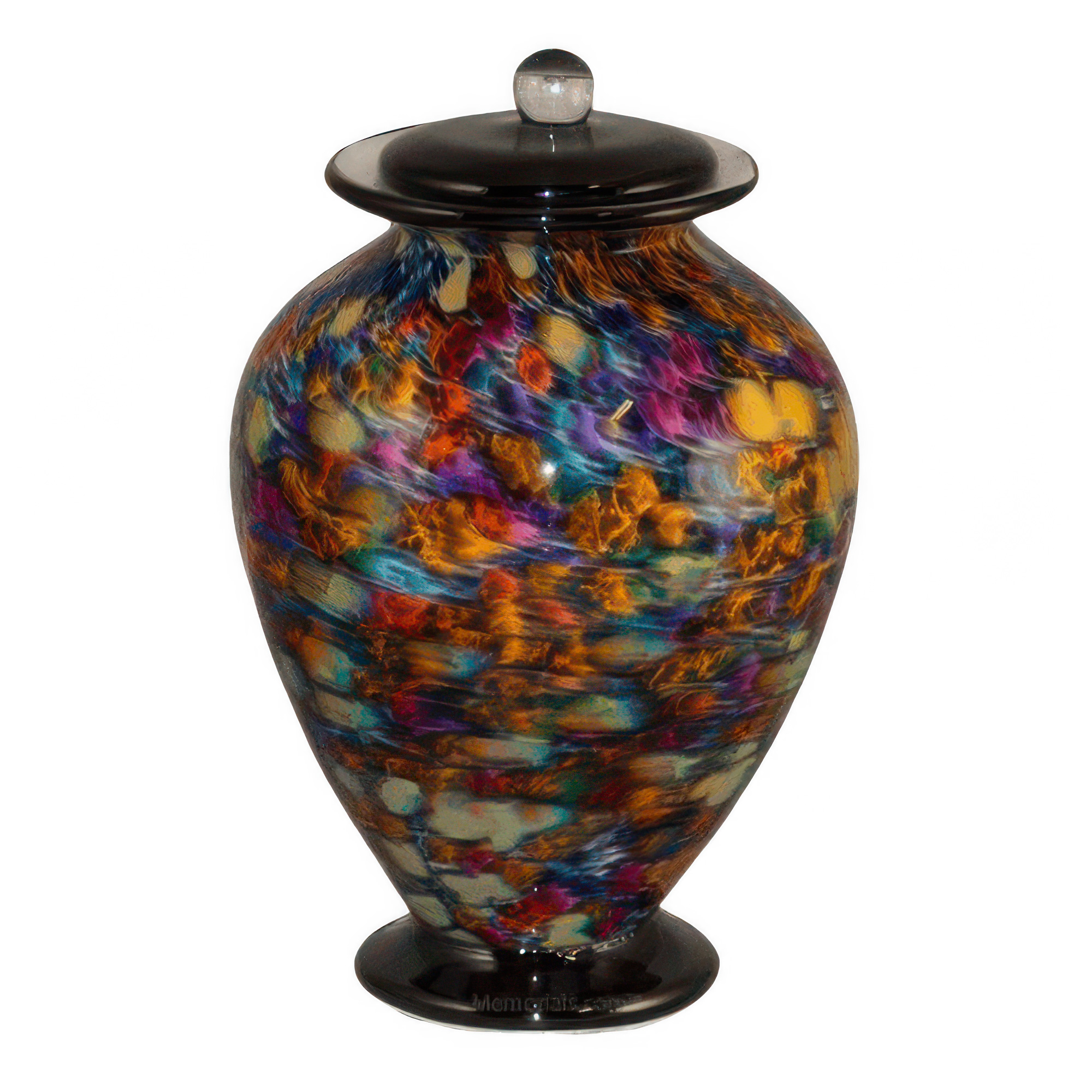
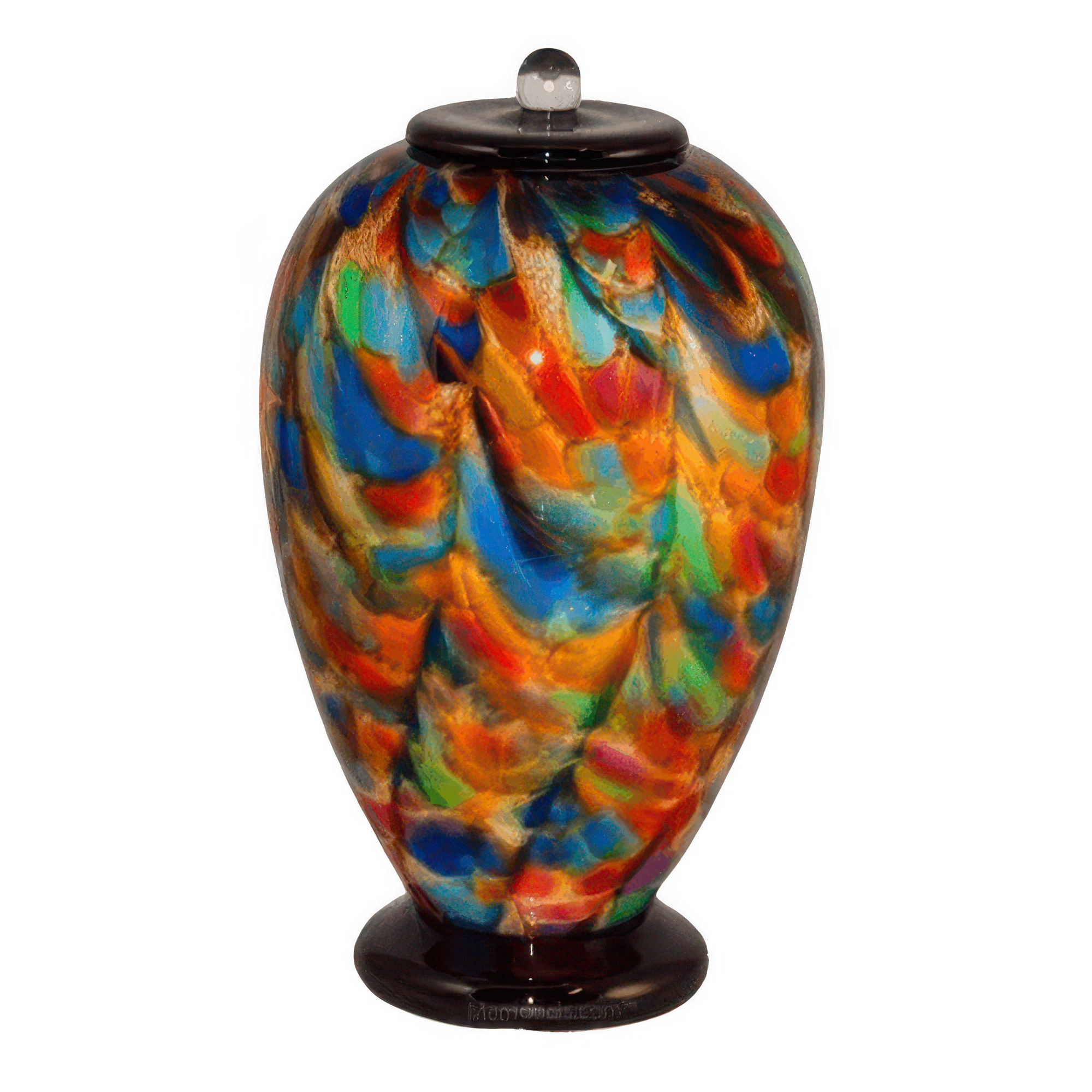
A glass urn is a full-size container, usually blown or cast, that holds the complete remains and stays sealed. An hourglass is a keepsake with a moving interior. People looking for one frequently find the other, and the disappointment runs in both directions — somebody wanting a hand-blown vessel for a mantelpiece does not want a timer, and somebody wanting the falling motion does not want a sealed sculpture.
And a note on the cremation watch. It is a nearby search and a different object again: a wristwatch or pocket watch with a small sealed compartment holding a pinch of ashes. The appeal overlaps — both are timepieces of a sort, both are things you handle rather than display — but one is worn and one stands still, and we do not carry them. If being able to carry someone is the part that matters, cremation jewelry does that in a far wider range of forms, and what is cremation jewelry covers how the chambers are sealed and what they hold.
If the glass is what drew you rather than the mechanism, our glass urns for ashes range is the right place to look instead.
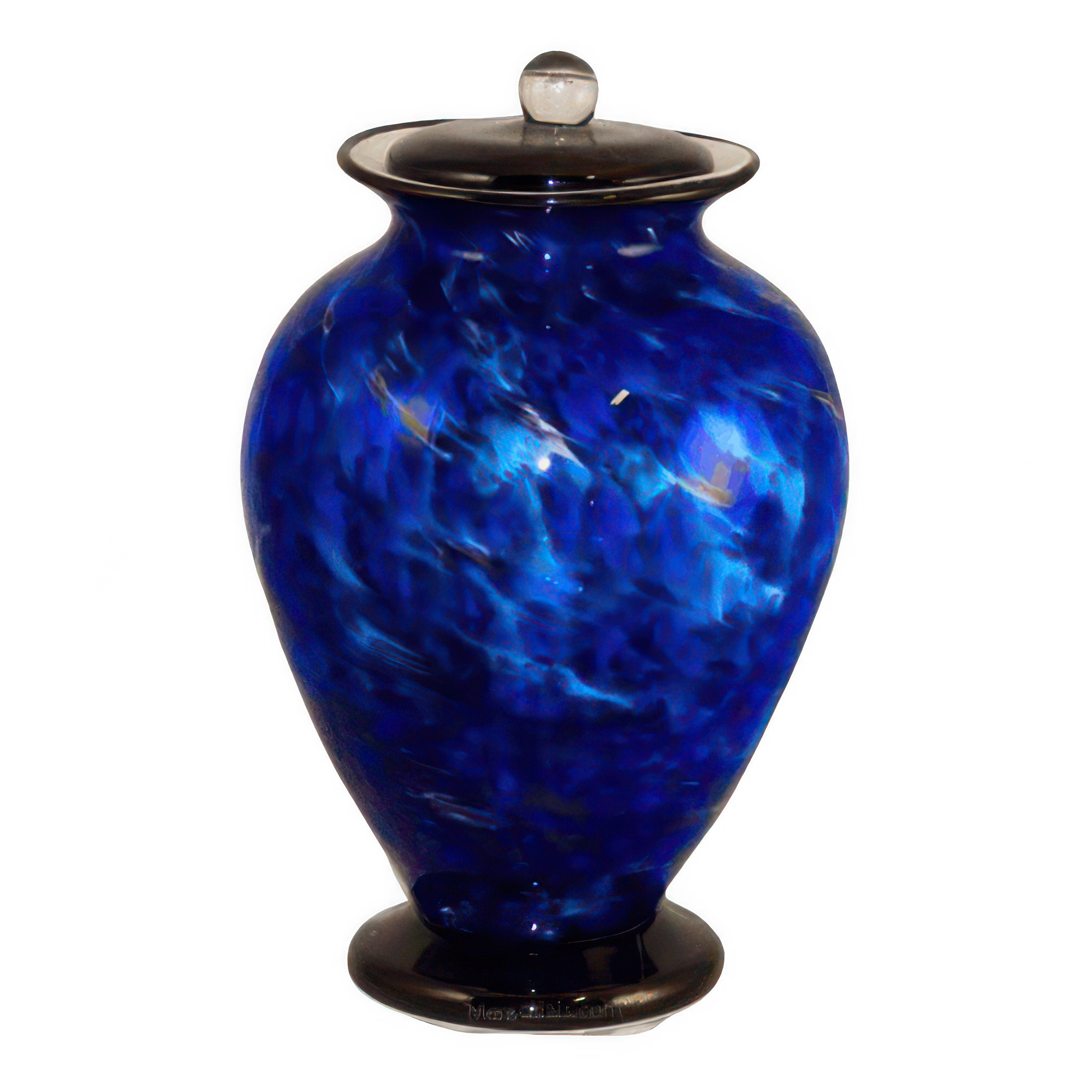
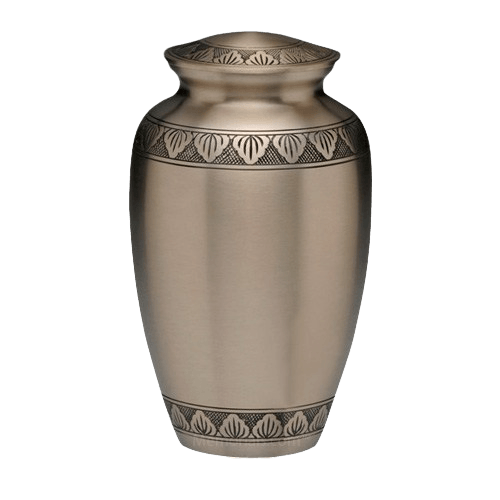
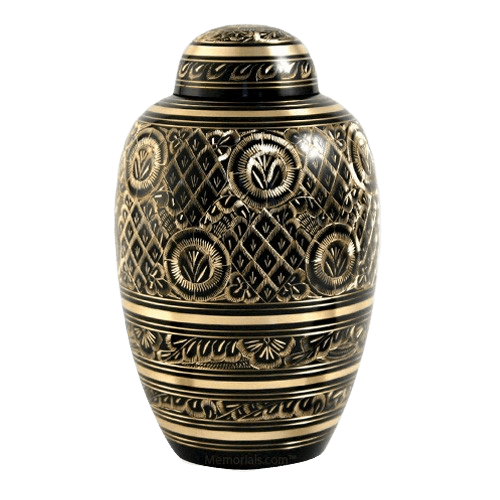
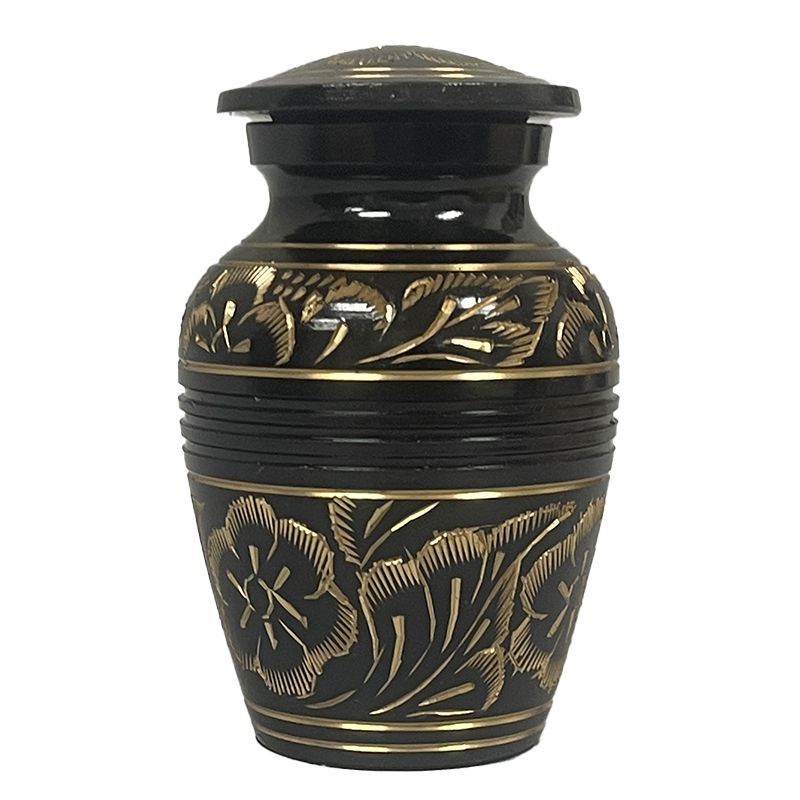
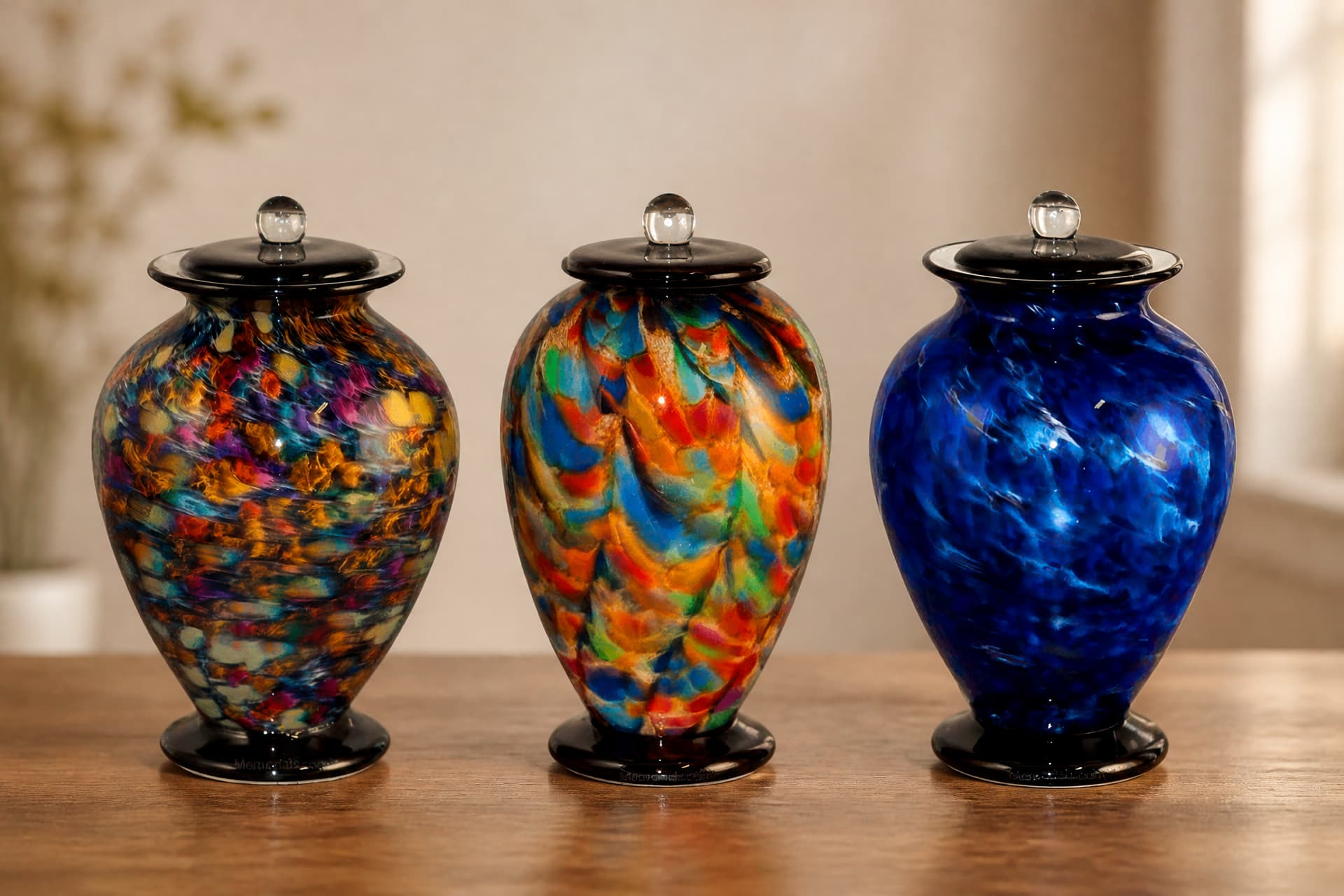
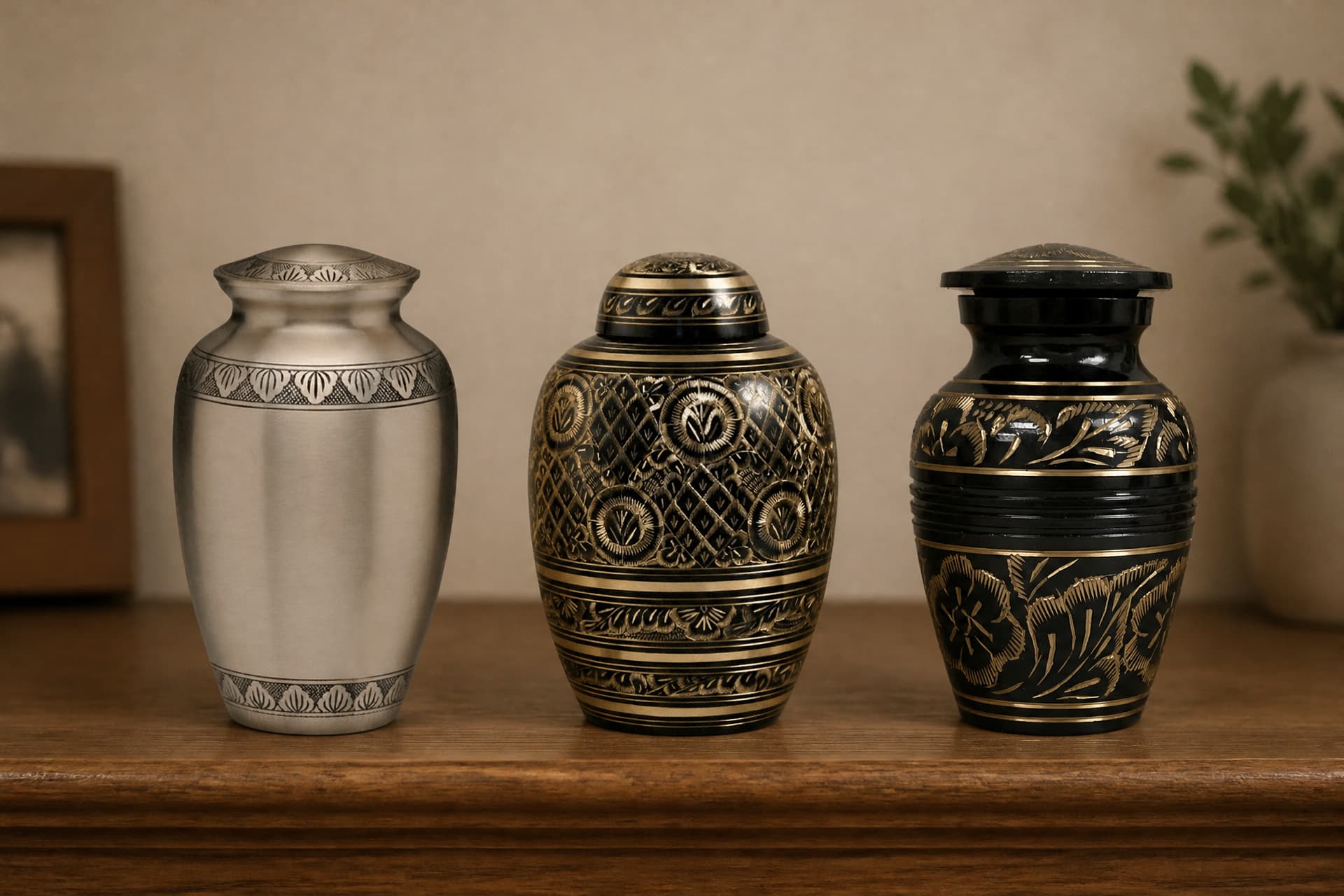
The keepsake category an hourglass belongs to. Photographs flatter the scale of these — every one holds a share rather than a whole cremation, which is the number to check on the listing rather than judge by eye. Products from left to right: Dignity Pewter Keepsake Urn, Eternity Keepsake Urn and Classic Eternity Keepsake Urn.
What to Look For
What to check
Why
Build
Made for remains, or a repurposed sand timer
A jam in a sealed object cannot be undone
Seal
Permanently sealed, or fillable and re-closable
Decides whether you fill it or the maker does
Frame
Wood, metal, or free-standing glass
Free-standing glass tips; a frame does not
Capacity
Stated in cubic inches, not "small"
The only number that tells you anything
Fall time
Measured in minutes, not hours
A long fall means a narrow waist means a jam risk
Buying an empty one. A fillable hourglass urn arrives unsealed, with a closable port, and you put the portion in yourself. Searches for an empty hourglass for ashes are usually people who have worked out that they would rather not ship remains anywhere, which is a sound reason. The trade is that the seal is then yours to get right, and that a piece designed to be opened is never quite as sealed as one that never was.
Who fills it matters more than it sounds. Some arrive sealed and are filled by the maker from remains you send, which removes the risk and adds shipping and a wait. Others arrive with a closable port for you to fill at home, which is immediate and puts the care on you. Neither is better; they suit different people, and the difference is rarely obvious from a listing photograph.
Living With One
Keep it out of direct sun. Bone mineral is pale and stays pale, but wooden frames fade and adhesives in sealed joints become brittle. A bright room away from a south-facing window is right.
Expect a little to cling. Fine material coats the inside of the glass slightly and stays there. It looks like dust on the inner surface and it is not a fault.
Move it as a whole. Do not carry it by the frame's upright posts. Two hands under the base, like anything else that cannot be replaced.
Turning it is optional. Some families turn it every year on the same date; some never turn it once it is set. There is no convention here and nobody is watching.
If It Is Not the Right Piece
A reasonable number of people research hourglass urns, like the idea, and then find the capacity or the metaphor does not suit. The want underneath is usually "something small, of them, that I can see" — and there are several ways to that.
Small urns for ashes cover the same keepsake role without the moving interior, in a far wider range of materials. A portion sealed in jewelry travels with you instead of sitting still. And whichever urn for ashes holds the main share, how to display a cremation urn at home covers placing it somewhere that works for the household rather than somewhere that happens to be free.
If dividing the remains is the part giving you pause, is it wrong to separate cremated ashes takes the question seriously, including the religious positions, rather than assuming the answer.
Decide where it goes before it arrives. An hourglass is meant to be turned, which means it needs somewhere reachable rather than somewhere high.
Sending Remains to a Maker
If the piece arrives sealed, somebody has to fill it, and that somebody is usually the maker. It is a straightforward arrangement and worth understanding before you commit to it.
What you send is a portion, not everything. Measure out a share at home into a small sealed bag or container, keep the rest in the main urn, and send only what the piece needs. A maker will tell you the quantity; if they do not, ask, because sending too much wastes it and sending too little means a part-filled chamber.
Shipping cremated remains has rules. In the United States, the postal service is the carrier that handles them, and it requires specific packaging and labeling rather than an ordinary parcel. The private couriers generally do not accept them at all. Any maker who does this regularly will send you instructions — if they are vague about it, that tells you how often they actually do it.
Ask three questions before sending anything. How long will it be away? What happens if it is damaged in transit or in the workshop? And will any remains be left over, and returned? The third one is the one people forget, and the answer should be yes.
Allow for the wait. A sealed piece filled by a maker takes weeks rather than days once shipping runs both ways. That is not a problem unless you have an anniversary in mind, in which case work backwards from the date and add margin.
The alternative is a piece with a closable fill port that you fill yourself. Nothing is shipped, nothing waits, and the whole thing is done in an afternoon — at the cost of doing it yourself, which some people find they would rather not.
What They Cost, and What Drives It
Price here tracks craft rather than capacity, which is unusual in this category. A larger urn generally costs more; a larger hourglass does not necessarily.
What moves the price is the glass and the frame. A machine-made timer in a simple turned frame sits at the low end. Hand-blown glass, a hardwood or cast-metal frame, and engraving put it well above that — and an engraved plate on the base is the common way these get personalized, since there is no flat face to work on.
Two things worth not economising on, because they are the two that fail: the waist, which decides whether it jams, and the seal, which decides whether it stays closed. The decoration is where you can spend less without losing anything that matters.
Set against the rest of the arrangement, a keepsake like this is a small line. Where it sits in the whole picture — alongside the main container, any burial or scattering, and a marker — is covered across our urn selection guide, which is worth reading once before committing to any single piece.
Frequently Asked Questions
How much ash does an hourglass urn hold? A few cubic inches at most — a small portion, not full remains. A complete adult cremation is roughly 200 cubic inches, so an hourglass always takes a share and something else holds the rest.
Do the ashes flow like sand? Usually, if the piece is built for remains and the remains were processed to a consistent grade. Cremated remains contain coarser fragments than sand, so a timer with a narrow waist designed for sand can bridge and stop.
Can you open one to refill or clean it? Most are permanently sealed, which is the point — the contents cannot spill. Some are made with a closable fill port. Check before buying, because it decides whether you fill it or the maker does.
Is an hourglass urn suitable for a whole adult's remains? No. Nothing in this format holds a complete adult cremation. The phrase appears in searches, but the distinction that matters is keepsake size, not age.
What if the ashes jam? In a sealed piece, very little can be done, which is why waist width and build quality matter more than appearance. Ask the maker whether it is designed for cremated remains specifically.
Is it strange to find the hourglass image upsetting? Not at all, and it is common. It is a reminder of time passing, which some families find comforting and others find painful. Picture it on the shelf before ordering.
Where the Remaining Share Goes
Because an hourglass always takes a portion, every family that buys one is also deciding what happens to the rest — and that second decision is the larger one.
One main container, the hourglass beside it. The most common arrangement. The full-size urn holds the share, sits wherever the household has settled on, and the keepsake is the piece people actually pick up.
Divided between several people. Where there are siblings or children in different houses, several small pieces solve a problem that one large urn creates. It needs agreeing rather than assuming, and it is easier agreed early.
Scattered, with a keepsake held back. Families who scatter often keep a little, and an hourglass is a reasonable thing for that little to live in. The order matters here: set the portion aside before the scattering, because afterward the option is gone.
Buried, with a keepsake above ground. The same logic as a cemetery interment with a pendant — the permanent record is one place, the thing you can hold is another.
None of these is the right answer. What they have in common is being decided deliberately rather than discovered later, which is the failure mode worth avoiding: a sealed keepsake filled in a hurry, from remains that had not yet been allocated, with nobody quite having agreed.
A Small Object With a Large Argument In It
What makes these unusual is that the design takes a position. Most memorial objects are deliberately still — a sealed urn, a marker, a pendant. They hold something and do not comment on it. An hourglass moves, and in moving it says something about time that not everyone wants said in their living room.
That is worth knowing because it explains the split in how people react. The families who love them are not responding to the glass or the wood. They are responding to being able to turn something over and watch it take its own time, once a year, in private. If that sounds like a comfort, it probably will be. If it sounds like a clock, something still and quiet will serve you better.