🏬Supersize Online Funeral Retailer🪦1000's of Headstones⚱️Over 10,000 Cremation Urns⚰️Caskets Overnight Delivery🛒Funeral & Memorial Superstore🚚FREE Shipping on ALL Orders👨👩👧👦Helping Families for over 20 Years💰Lowest Price Guarantee🏬Supersize Online Funeral Retailer🪦1000's of Headstones⚱️Over 10,000 Cremation Urns⚰️Caskets Overnight Delivery🛒Funeral & Memorial Superstore🚚FREE Shipping on ALL Orders👨👩👧👦Helping Families for over 20 Years💰Lowest Price Guarantee
🏬Supersize Online Funeral Retailer🪦1000's of Headstones⚱️Over 10,000 Cremation Urns⚰️Caskets Overnight Delivery🛒Funeral & Memorial Superstore🚚FREE Shipping on ALL Orders👨👩👧👦Helping Families for over 20 Years💰Lowest Price Guarantee🏬Supersize Online Funeral Retailer🪦1000's of Headstones⚱️Over 10,000 Cremation Urns⚰️Caskets Overnight Delivery🛒Funeral & Memorial Superstore🚚FREE Shipping on ALL Orders👨👩👧👦Helping Families for over 20 Years💰Lowest Price Guarantee
Choosing a cremation urn, from the various types of cremation urns available, is both practical and personal. It needs to hold the right amount, fit where it will be kept, and reflect a life in a way that feels honest. Some families want something traditional and permanent, while others prefer a simple container meant only for scattering.
A helpful way to narrow the options is to think in three layers: materials (what it's made from), styles (what it looks like and how it functions), and uses (where it will go and what will happen next). If you're just getting started, our guide on how to choose a cremation urn walks through each decision step by step.
Start with the basics: size, capacity, and what "adult urn" means
Most standard adult cremation urns are sized for an adult's full cremated remains. A common guideline is about 1 cubic inch per pound of body weight (before cremation). Many adult urns are around 200 cubic inches, though it varies. If you're unsure about capacity, our guide on what size urn do I need includes a sizing chart and calculator.
If more than one person's remains will be placed together, or if you plan to divide ashes among relatives, the "type" of urn you need may change as much as the material does, possibly incorporating keepsake containers for shared remains.
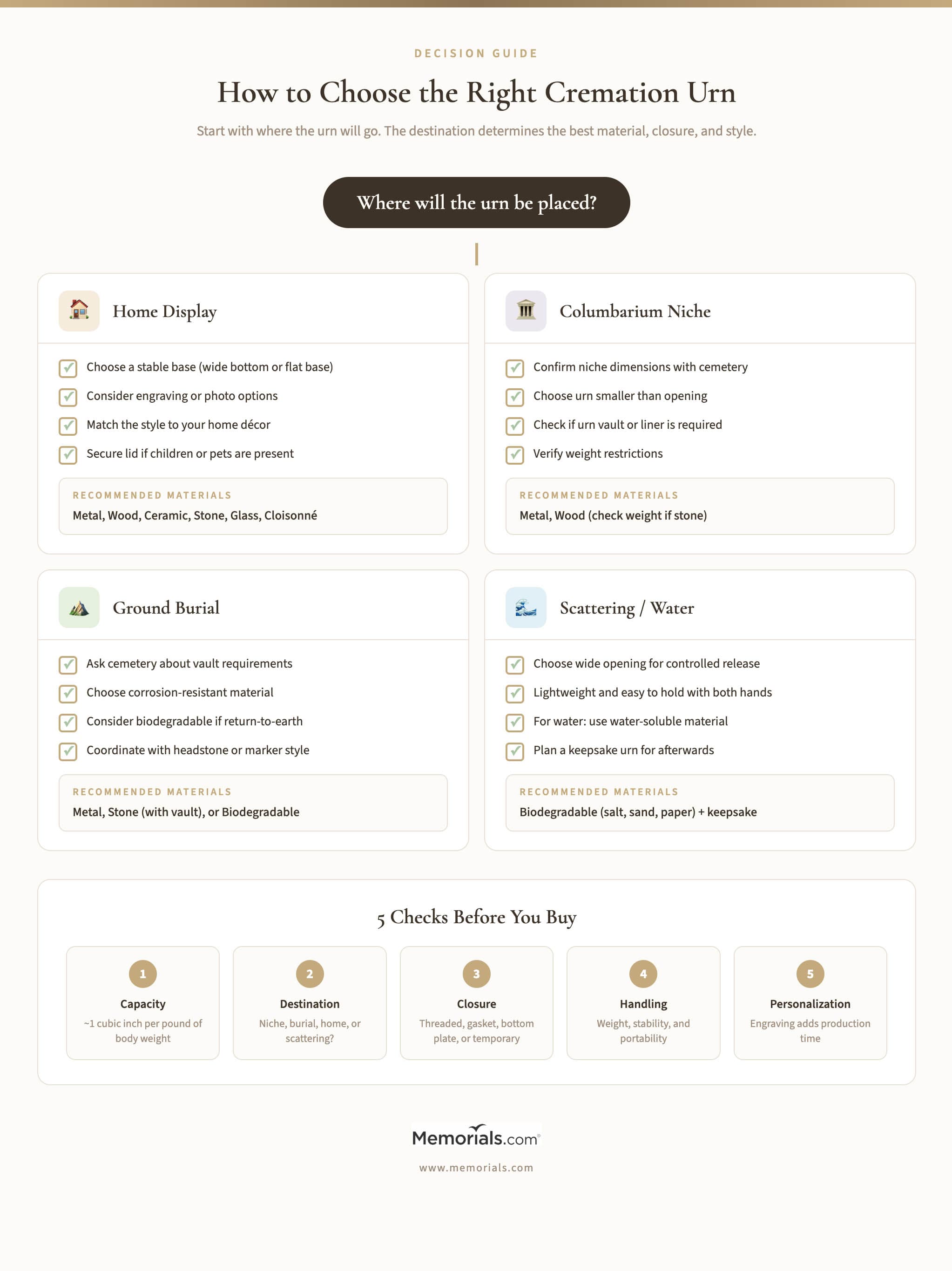
After you've confirmed capacity, it helps to decide whether the urn will be used after cremation and if it will be:
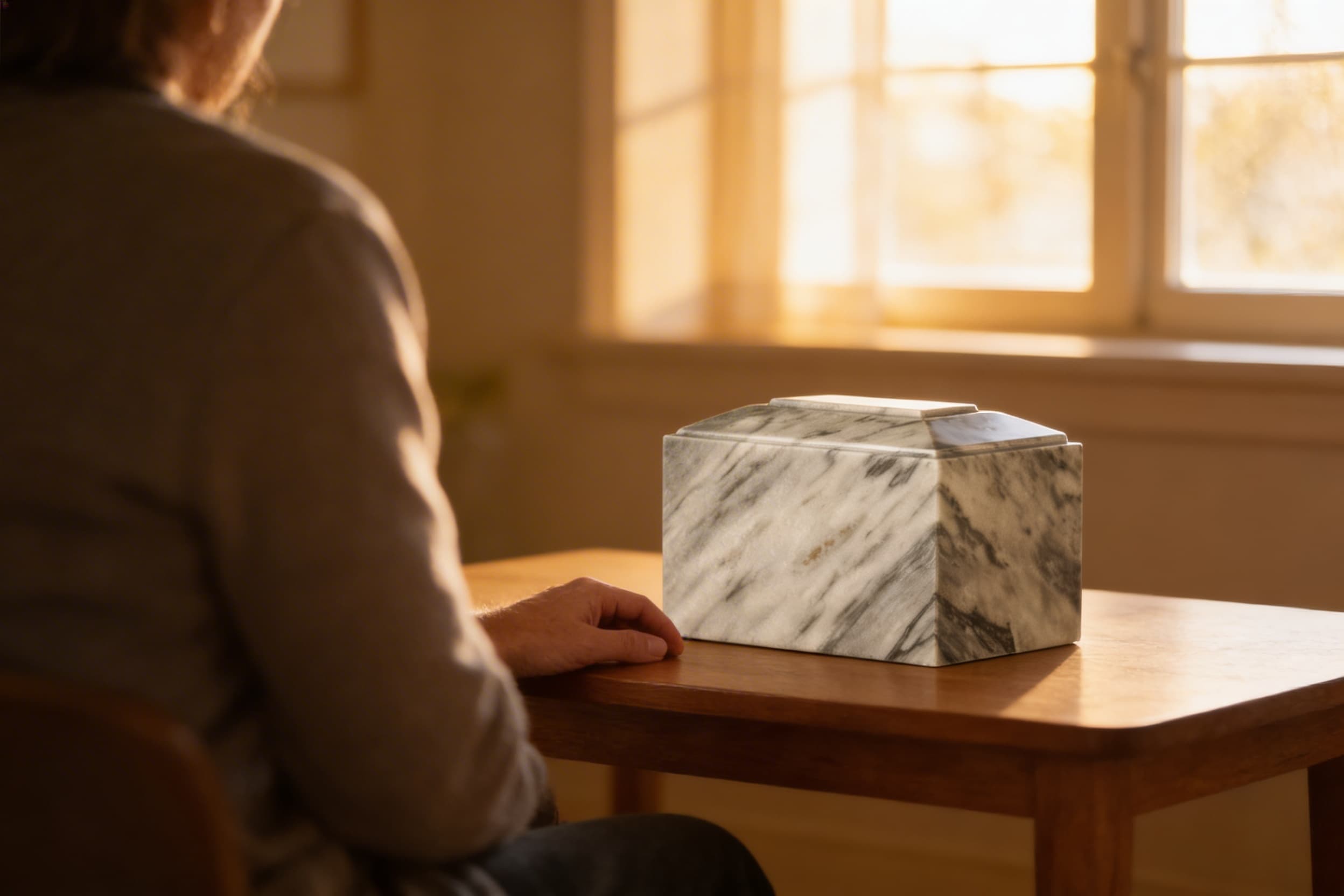
kept at home long term
placed in a columbarium niche
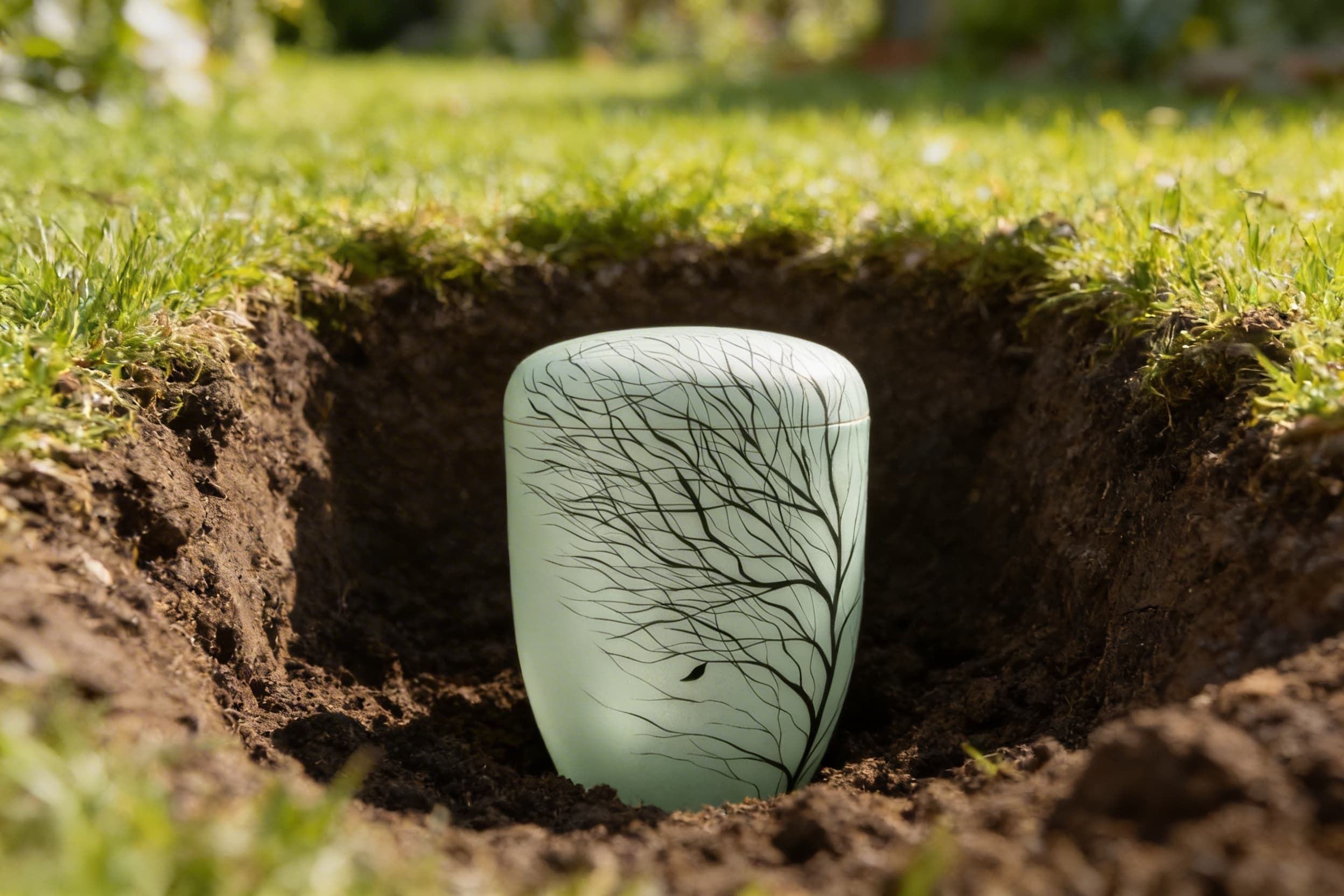
buried in a cemetery
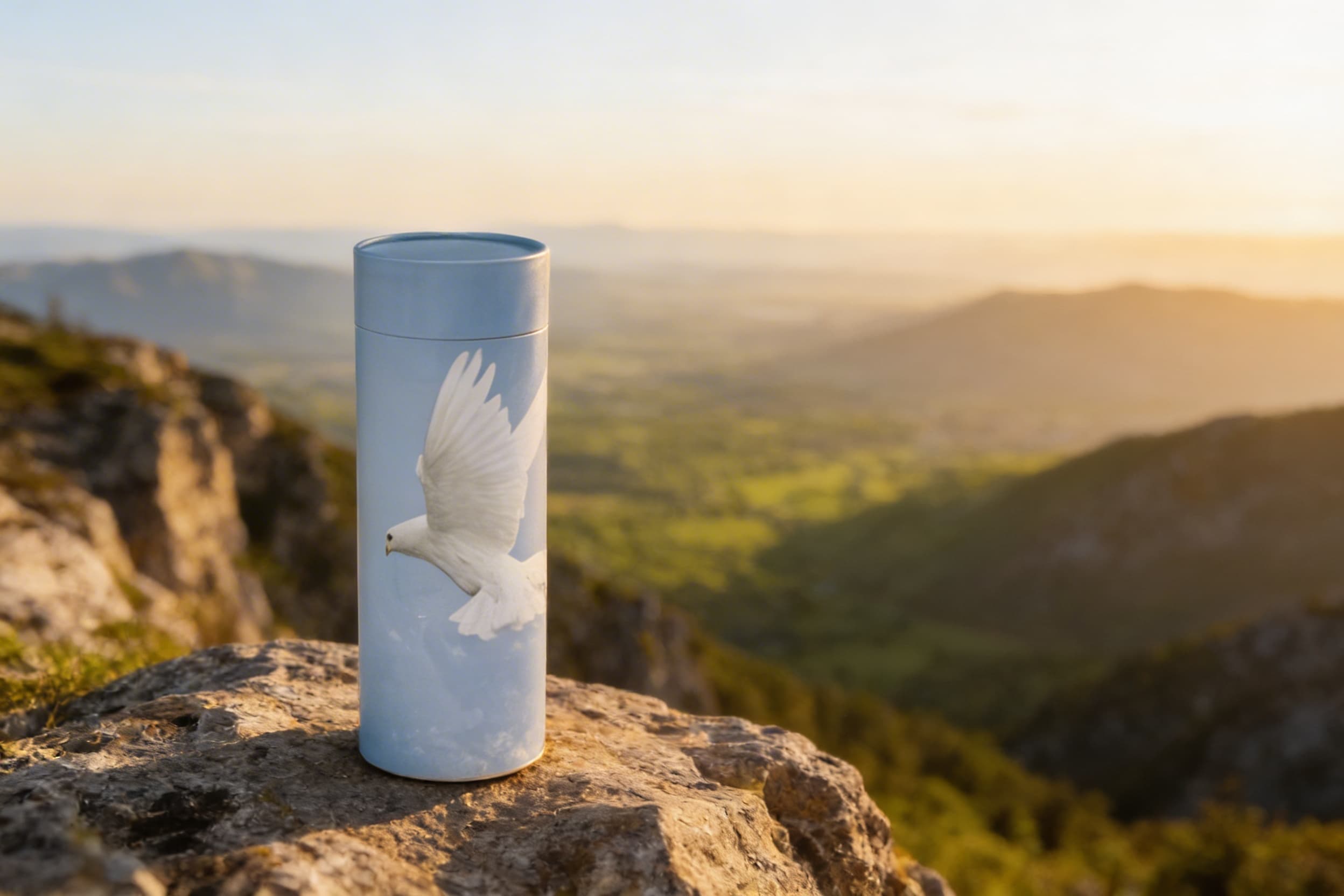
used for scattering and then kept as a keepsake
That use will drive the best material and closure style (threaded lid, gasketed lid, bottom plate, or temporary closure).
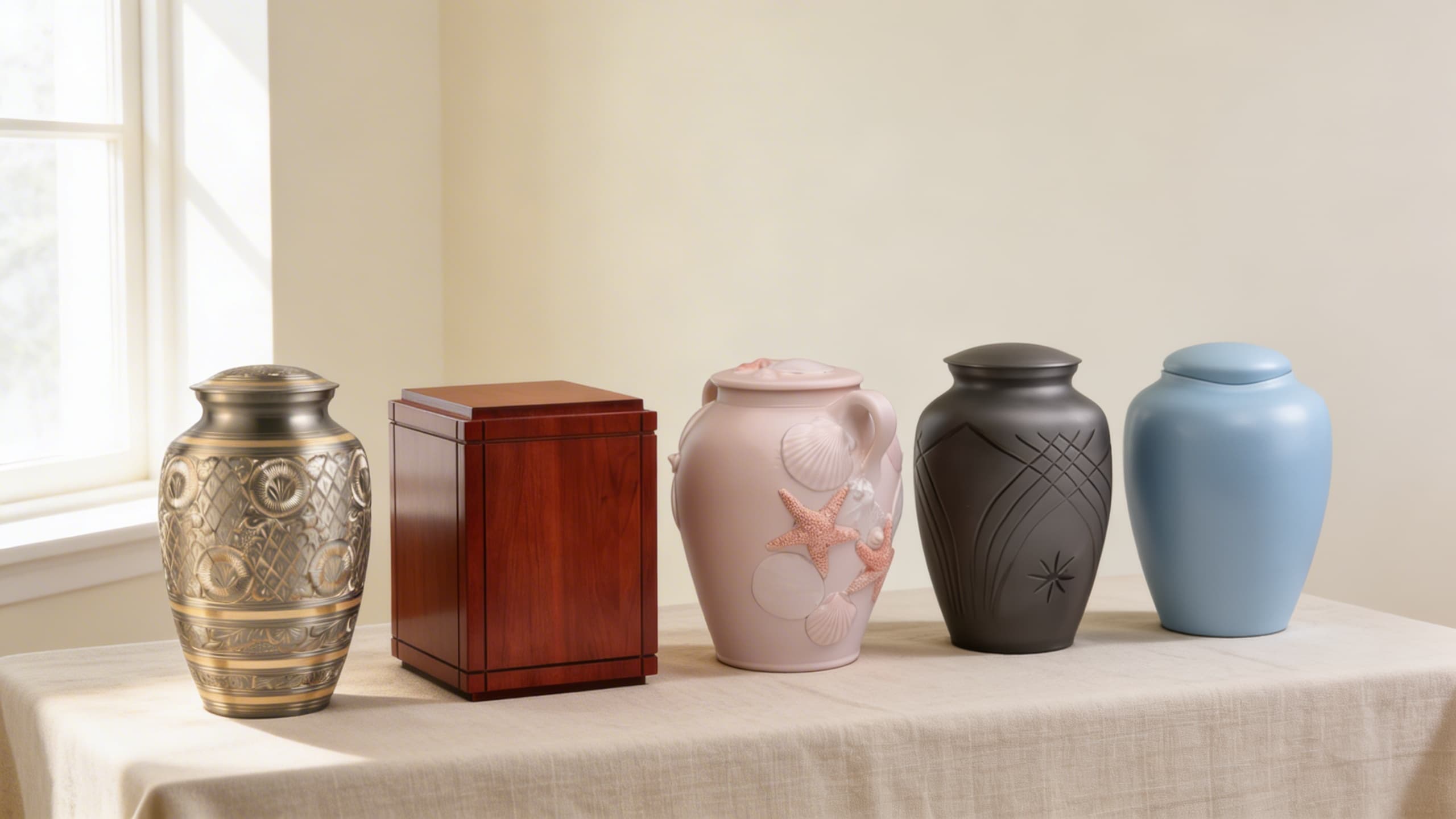
Cremation urn materials (and what each is best at)
Materials affect appearance, weight, durability, and whether an urn can be buried or used outdoors. Even within the same material, quality ranges a lot, so pay attention to thickness, finish, and how the lid seals.
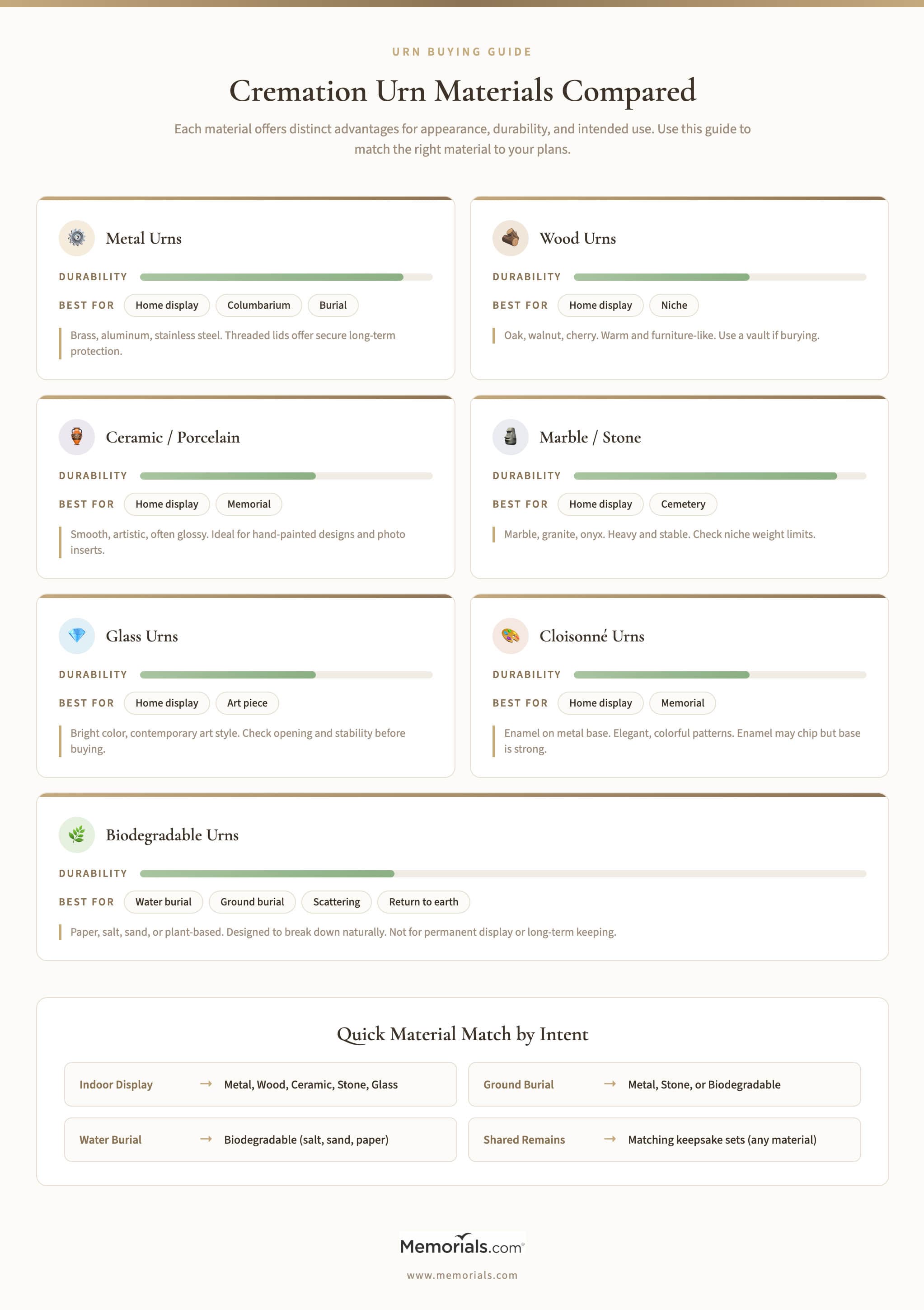
Below is a practical comparison you can use while shopping:
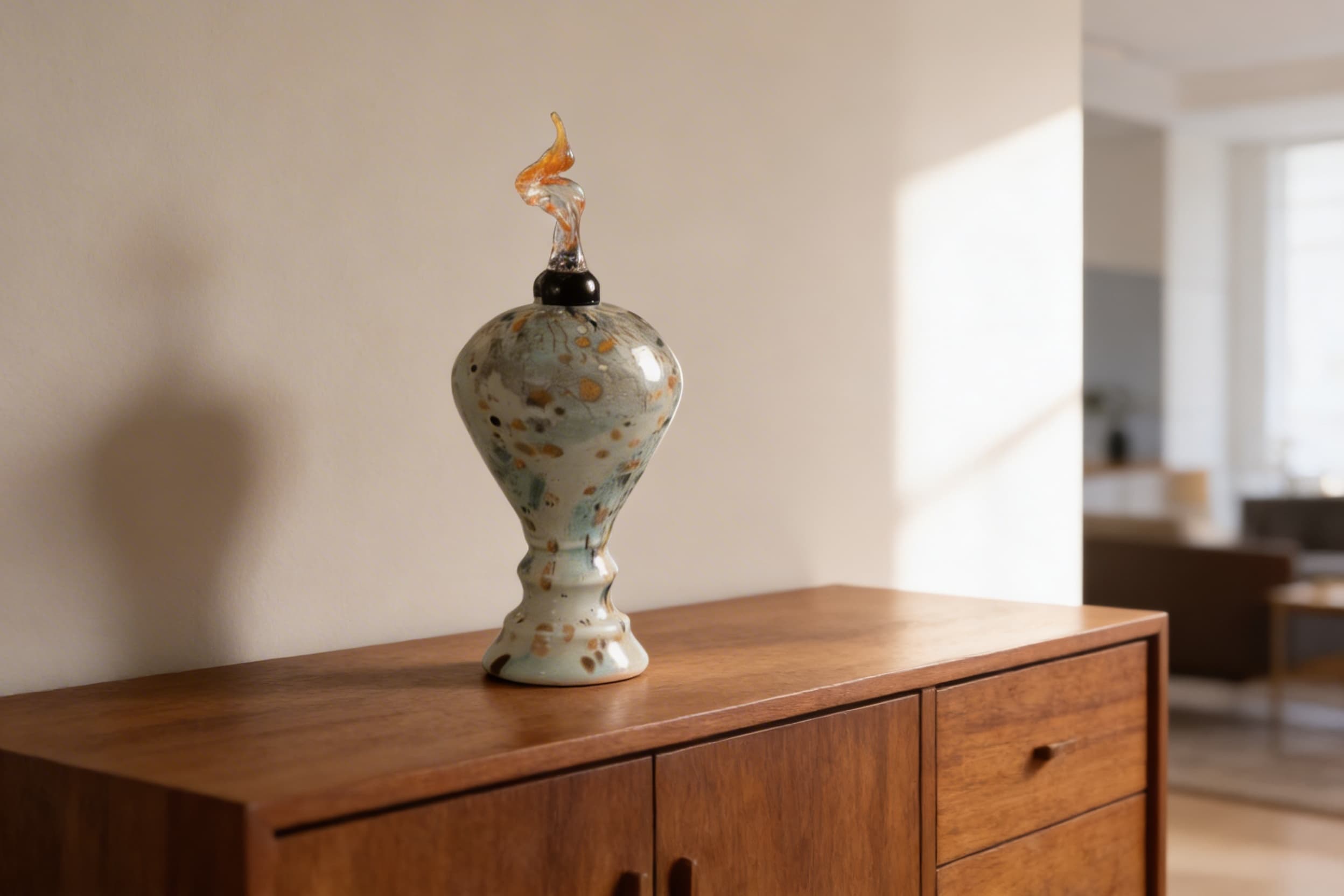
Elegant, colorful, glossy finish with intricate patterns
Medium
Home display, memorial services
Very durable; enamel can chip if dropped, but metal base is strong
A quick way to match material to intent is to think in terms of protection, permanence, and the available cremation options. Metal and stone tend to be chosen when people want something that feels lasting. Biodegradable options are chosen when the plan involves nature, water, or burial without a permanent container. For a breakdown of pricing across these materials, see our guide on how much cremation urns cost.
Here are a few common decision points people weigh:
Ground burial: metal or stone (often with a vault), or biodegradable if the goal is return-to-earth
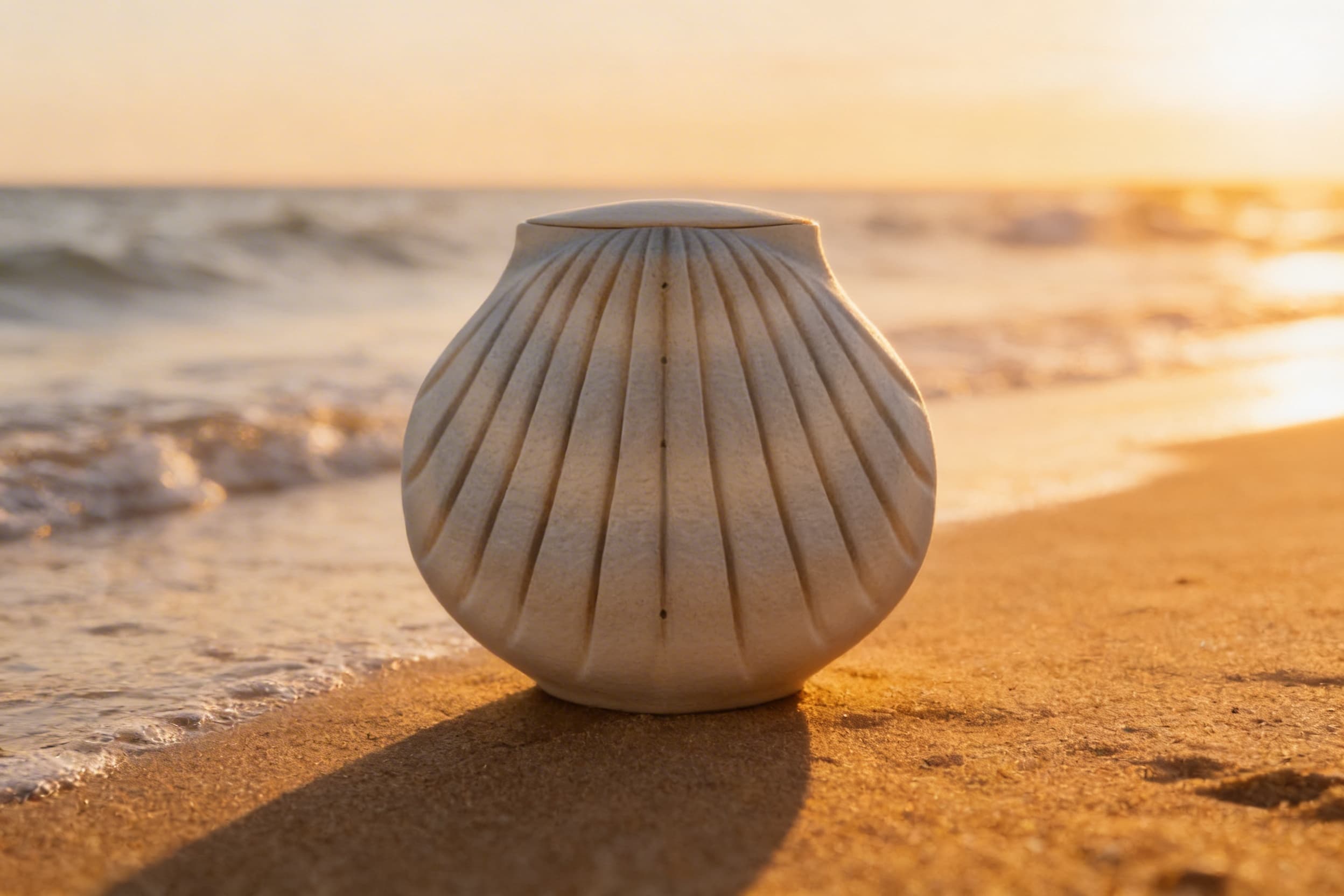
Water burial: biodegradable salt/sand urns, water-soluble paper urns
Shared remains: keepsakes in matching material sets
Popular urn styles (shape, function, and design)
"Style" is more than just colors. It includes the silhouette, how the ashes are accessed, and whether the urn is meant to be seen as décor or kept private.
Most urn styles fall into a few recognizable groups. Some are traditional vase shapes. Others look like boxes, sculptures, or natural stones. Many families choose a style that matches the home, not because the urn needs to blend in, but because it should feel like it belongs.
A few style features matter more than people expect: the lid type (threaded vs. lift-off), the base (wide for stability), and whether it includes a velvet bag or interior container. If you expect to move the urn between homes, a secure closure matters.
Urn Styles Reflecting Personality, Beliefs, and Passions
In addition to urns categorized by material, there are many unique urn styles designed to reflect a loved one's personality, beliefs, hobbies, or profession.
Religious urns feature symbols and designs that honor spiritual faith, while military and veteran urns pay tribute to those who served with patriotic motifs and emblems. Art urns showcase creative and artistic designs, making each piece a work of remembrance.
Nature urns are inspired by the beauty of the outdoors, often featuring natural elements or scenic imagery. For those with a passion for sports, sport urns celebrate favorite activities and even college and professional sports teams, while car and motorcycle urns are perfect for automotive enthusiasts.
Hunting and fishing urns capture the spirit of outdoor adventure, and photo urns allow families to display a cherished image alongside the ashes.
With so many specialized options, it's possible to find an urn that truly honors the unique life, interests, and values of your loved one.
Urns by use case: where the urn will go next
Once you know the likely destination, the "right" urn type becomes clearer.
Home display urns
These are built to be seen and to last indoors. Many are designed with engraving panels, photo options, or artistic finishes that highlight various colors.
Before choosing, think about where it will sit. A tall, narrow urn can look elegant but may be less stable on a small shelf. A cube or rectangle can tuck neatly into a bookcase or keepsake containers.
Columbarium niche urns
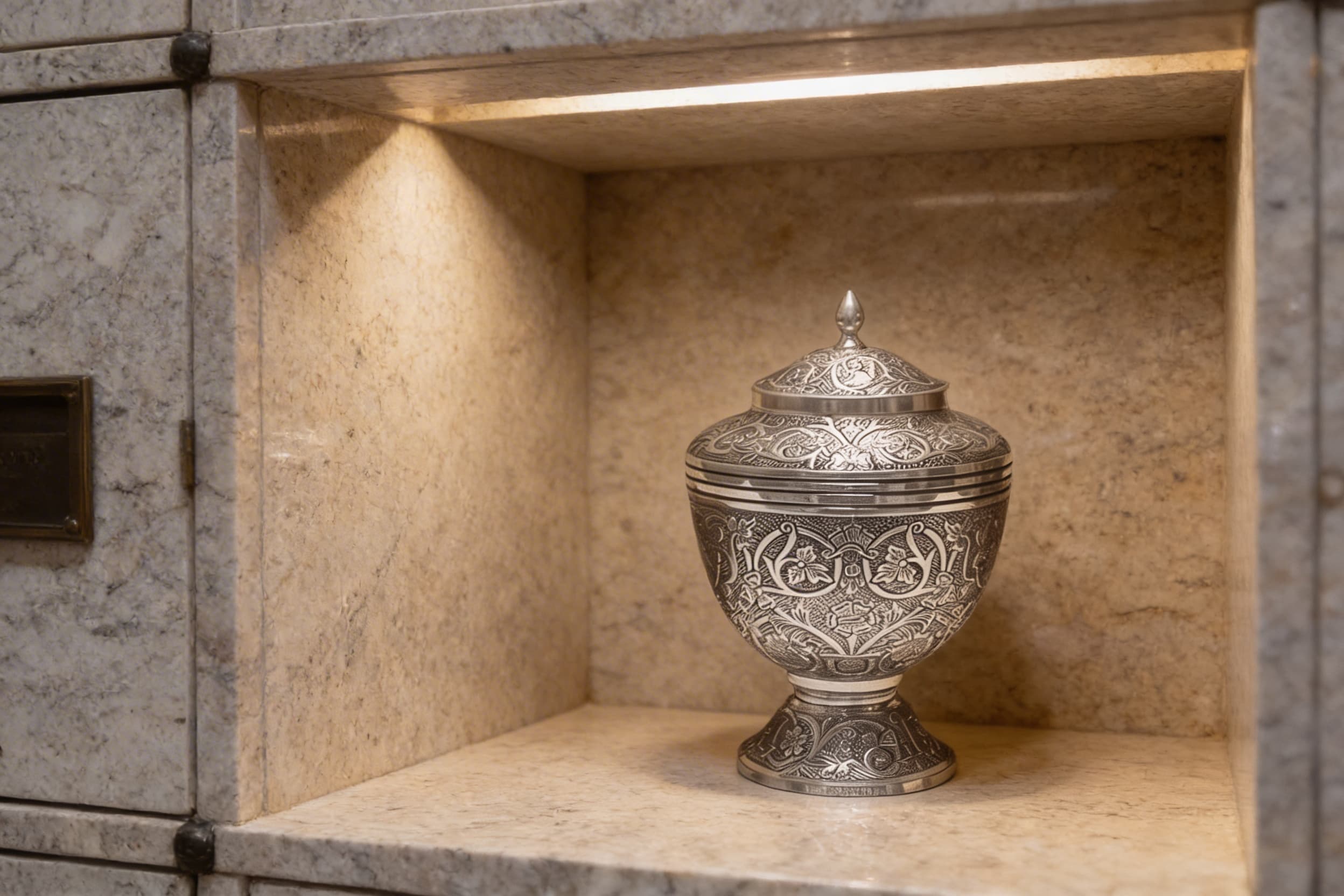
Niches have strict size limits, and the opening may be smaller than the interior space. It's wise to confirm niche dimensions with the cemetery, then choose an urn that fits with room to spare.
Many niche urns are metal or wood, and some families choose a protective urn vault or niche liner when required.
Burial urns
A burial urn may be placed in a cemetery plot, sometimes inside a vault. Material matters here: wood can degrade over time and may not be accepted without an outer container. Metal and stone are common for burial when permanence is the goal.
If the plan includes a headstone or grave marker, families sometimes coordinate the urn style with the memorial design, keeping the overall feel consistent.
Scattering urns
Scattering urns are designed for ease of handling and controlled release. Some look like traditional urns, while others are lightweight tubes or paper containers.
Many scattering designs include a wide opening and a shape you can hold securely with two hands. If you're considering an eco-friendly option, our guide to biodegradable cremation urns explains what to look for in water-soluble and earth-friendly designs.
After people decide to scatter, they often still want something to keep. That's where keepsake urns and jewelry become part of the plan.
Making your own urn
A DIY urn is a reasonable project and a common one, usually because somebody in the family works with wood and would rather the container came from them than from a catalog.
Capacity first, because this is where homemade urns go wrong. An adult cremation needs roughly 200 cubic inches, which is larger than most people picture — measure the internal volume before cutting anything. A box built by eye is almost always too small, and discovering that on the day is the one failure that cannot be absorbed gracefully.
Then the lid and the base. A lid that can be secured rather than a friction fit, and a base solid enough to carry the weight, because cremated remains are heavier than they look. Beyond that the construction is ordinary woodworking.
Leave the remains in their bag. They arrive from the crematory in a sealed plastic bag, and the sensible approach is to build the box around that rather than pour anything. A homemade urn does not need to be airtight if the inner bag stays intact; it needs to be sturdy and to close properly.
Where a handmade urn can be refused. If it is going into a cemetery, the cemetery sets the requirements — many ask for a burial container or urn vault, and some specify dimensions a handmade box will not meet. If it is going into a columbarium, the niche has fixed internal dimensions and an oversized urn simply will not fit. Ask before building, not after. For keeping at home or for scattering, none of this applies.
Keepsake urns and sharing urn sets
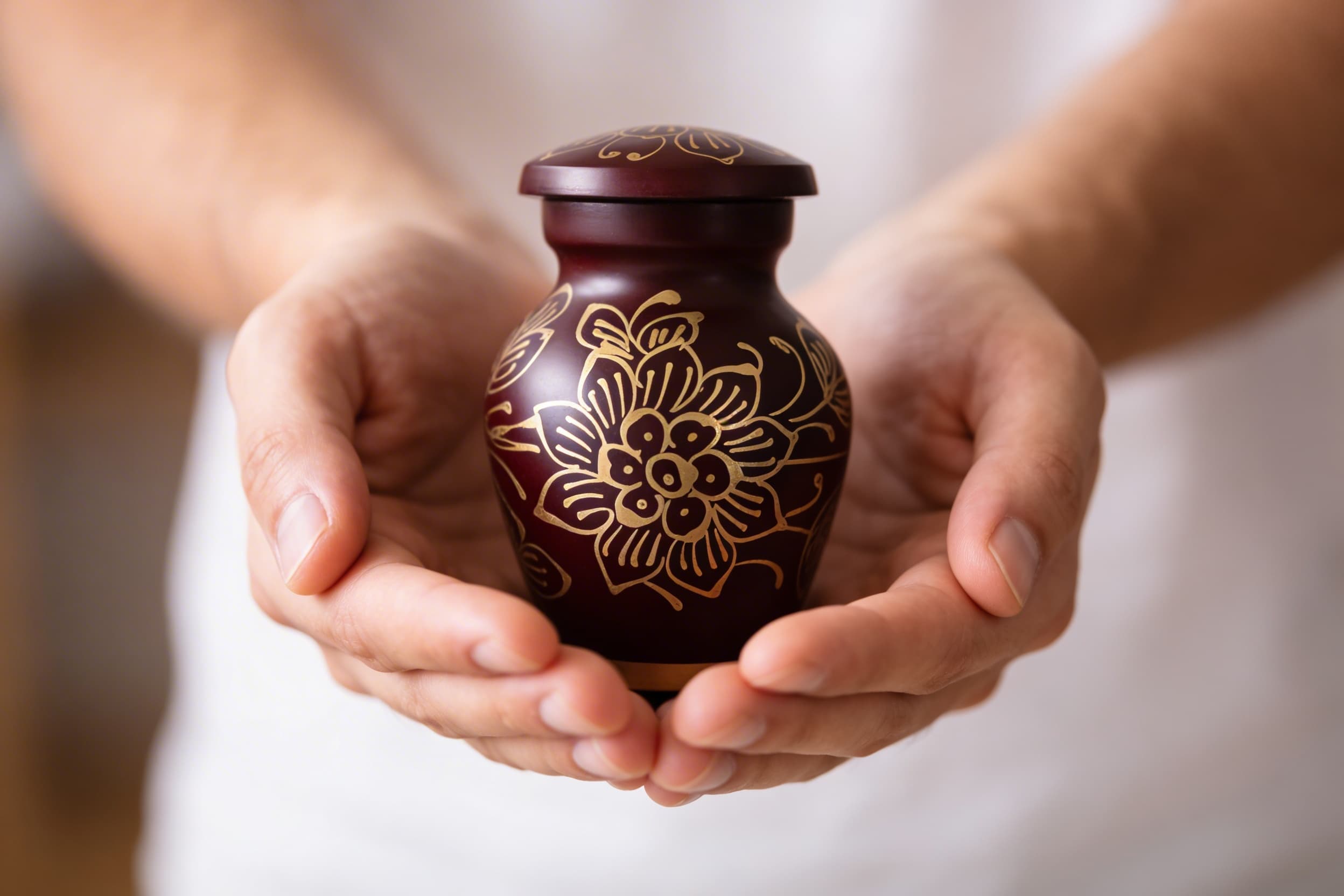
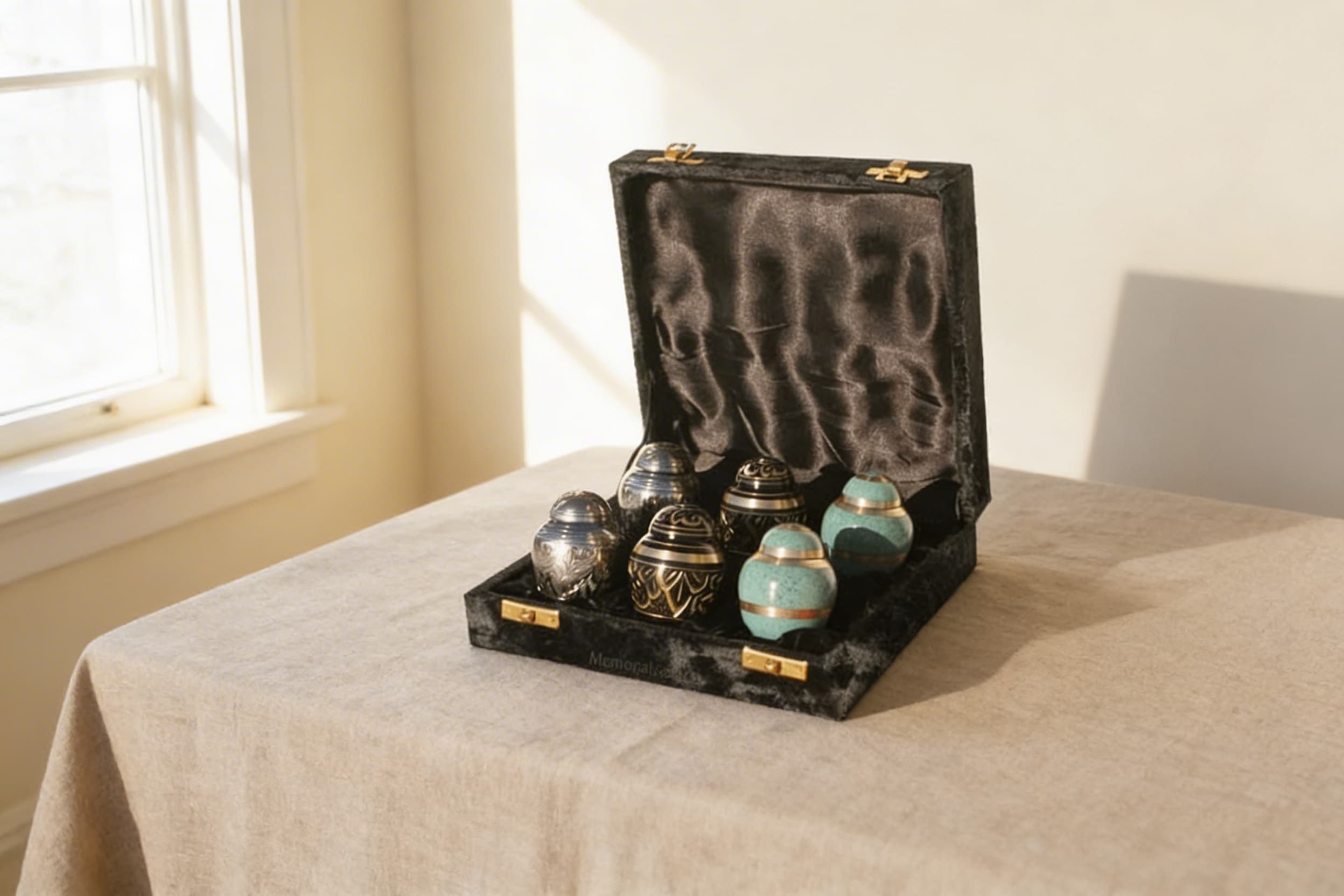
Keepsake urns hold a small portion of cremated remains, allowing families to share ashes among relatives or keep a small amount at home after cremation, scattering, or burial elsewhere. Some keepsakes match the main urn, creating a unified set.
It's worth thinking through how many keepsakes you may need, and whether they should all be identical or reflect each person's taste. For a closer comparison of sizing, capacity, and when each option makes sense, see our guide to keepsake urns vs full-size urns.
Common ways families divide ashes include:
Matching mini urns: same design, scaled down
Token keepsakes: very small, palm-sized containers
Sharing sets: one full-size urn with several coordinated keepsakes
Separate urns by household: each home chooses a different style
If you plan to split ashes, ask the crematory or funeral home about their process. Some will divide and bag portions upon request, which can make transferring into small keepsakes simpler.
Cremation Jewelry
Cremation jewelry offers a discreet way to keep a loved one close, holding a small portion of remains inside a pendant, ring, or other keepsake. Available in a variety of styles and materials, these pieces are designed for daily wear or private remembrance. Explore our full selection of cremation jewelry and keepsakes for more options.
Companion urns for two people
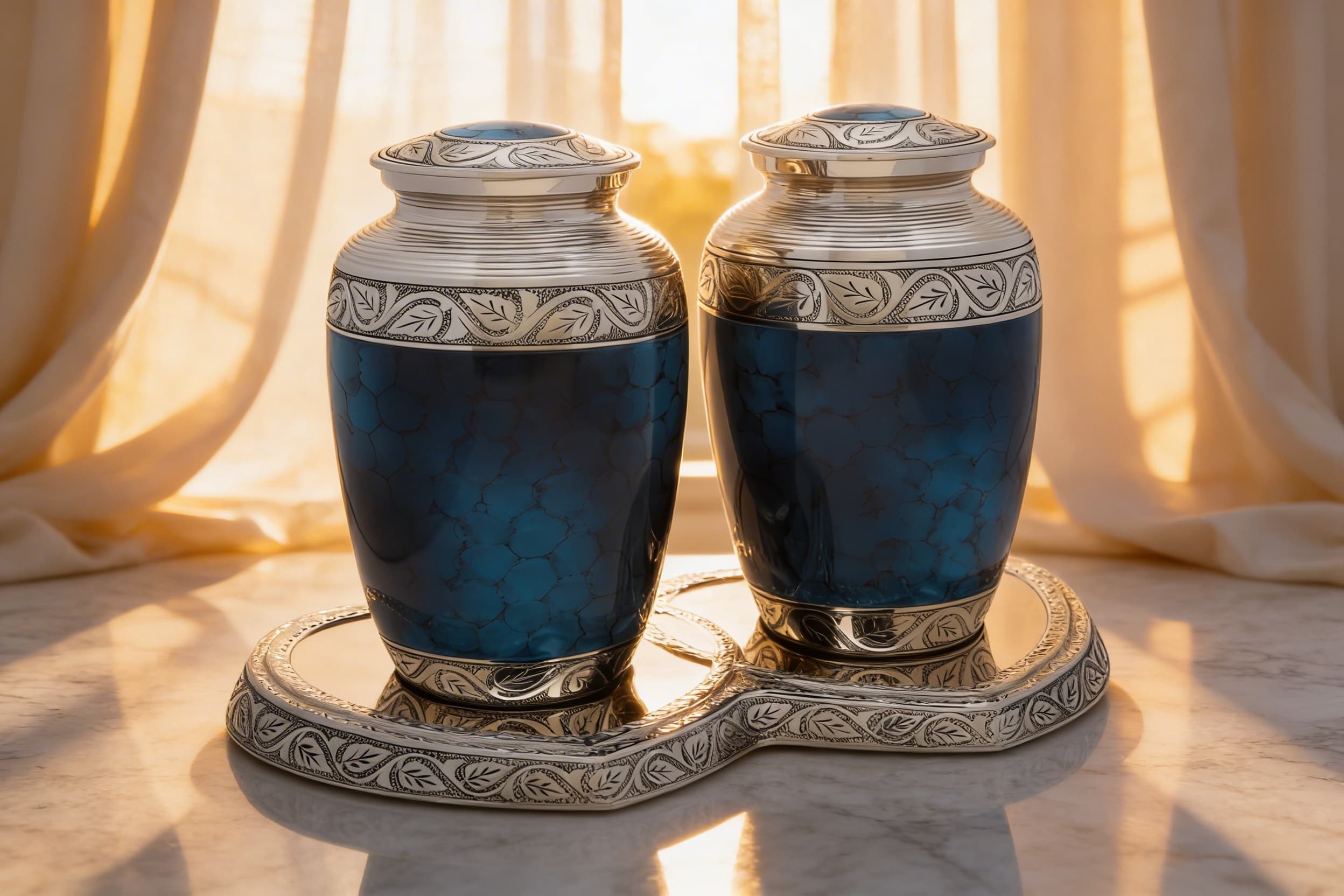
Companion urns are designed to hold the remains of two individuals together. Some have a single large interior, while others have two separate compartments.
A companion urn can be chosen years in advance, or after the second loss. When it's selected early, some families choose a temporary arrangement for the first person's remains, then transfer later. If you think that might happen, choose an urn type that can be reopened securely and respectfully.
Companion designs can be vase-shaped, side-by-side, heart-shaped, or box-style. The style often reflects the couple's preferences: traditional, modern, faith-based, or nature-inspired.
Pet Urns and Memorial Options
Pet urns are available in the same range of materials as traditional urns, including wood, metal, ceramic, stone and biodegradable options. Designs often feature pet-inspired details to help honor beloved animal companions. For more information and to explore the full selection, visit our pet urns category.
Personalization options: engraving, photos, and meaningful symbols
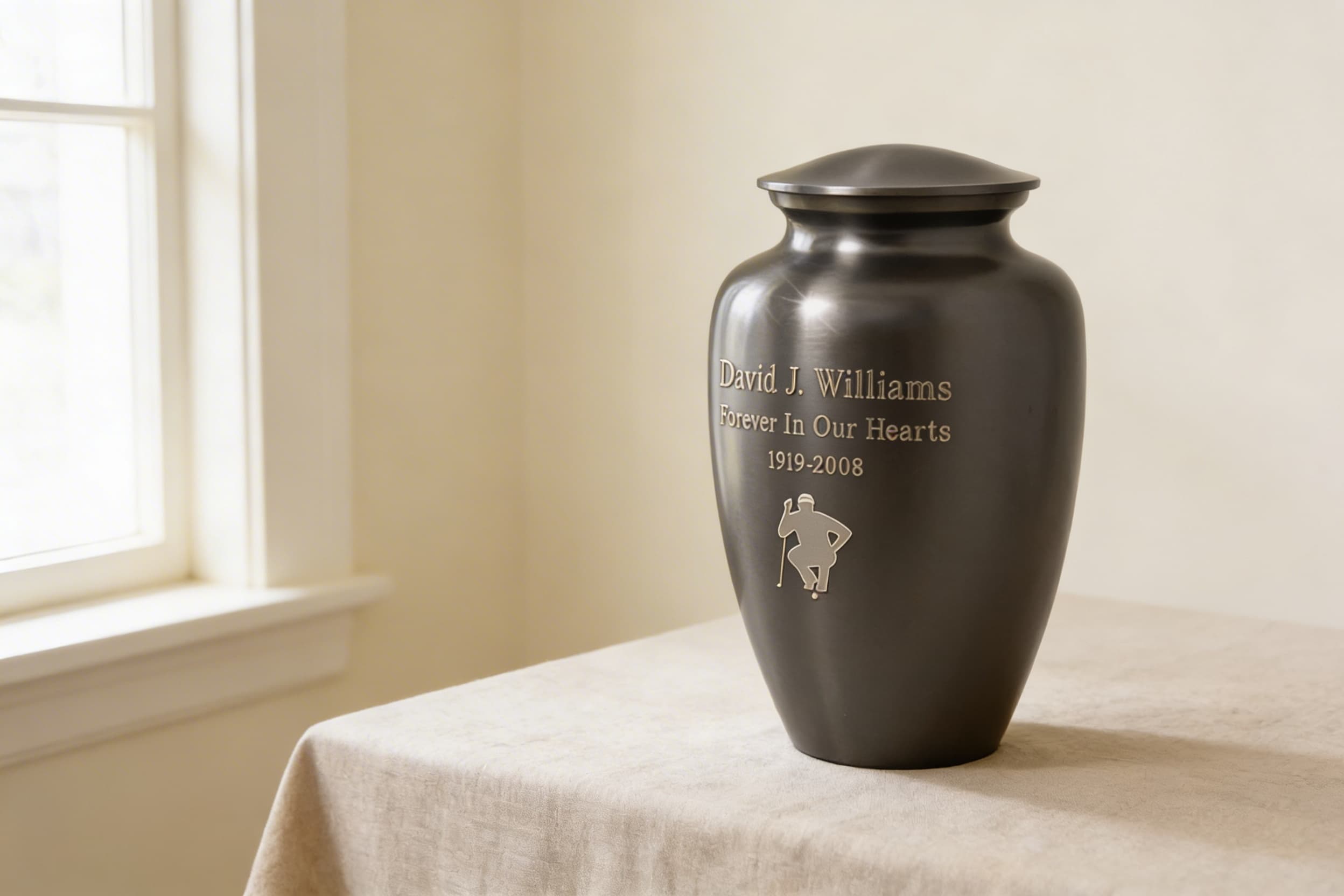
Personalization can be as simple as a name and dates, or as detailed as artwork and a message in a loved one's words. Our urn engraving and personalization guide covers the full range of options, timelines, and costs.
Common personalization methods include engraving on metal, laser engraving on wood, etched stone, ceramic photo inserts, and nameplates. If a design includes an emblem (military, religious, hobby-related), confirm whether it's applied as a medallion, printed image, or etched detail, since that affects durability.
Personalization also includes choices you might not think of as "custom," like selecting a finish that matches home décor, or choosing a shape that reflects a passion for travel, art, faith, or the outdoors.
Practical checks before you buy (so you do not have to repurchase)
A little planning helps avoid the most common missteps: ordering the wrong size, choosing a material that does not meet cemetery rules, or picking a style that does not fit a niche.
Here's a short checklist that covers the issues that tend to come up when selecting different types of cremation urns:
Confirm capacity needed (full remains vs. keepsake portion).
Decide on closure and security (threaded lid, gasket, bottom panel).
Think about handling (weight, stability, whether it will be moved).
Plan personalization timing (some engraving adds production time).
If you're ordering online, look for clear sizing details and a return policy, just in case the urn does not fit the niche or feels different than expected at home. Memorials.com, for example, carries a wide range of urn materials and styles, and policies like free ground shipping and a 30 day return window can make decision-making less stressful when plans are moving quickly.
Choosing among types without rushing the meaning
Many families start by searching for a "best" urn, then realize there isn't one. There's only the urn that fits the plan and feels right to live with.
Some people want a permanent centerpiece for the cremation remains. Others want something quiet and simple, with the focus on a scattering ceremony, a grave marker, the cremated remains, or a piece of jewelry worn close. When materials, style, and use are chosen together, the urn becomes less of a purchase and more of a steady place to put love.