🏬Supersize Online Funeral Retailer🪦1000's of Headstones⚱️Over 10,000 Cremation Urns⚰️Caskets Overnight Delivery🛒Funeral & Memorial Superstore🚚FREE Shipping on ALL Orders👨👩👧👦Helping Families for over 20 Years💰Lowest Price Guarantee🏬Supersize Online Funeral Retailer🪦1000's of Headstones⚱️Over 10,000 Cremation Urns⚰️Caskets Overnight Delivery🛒Funeral & Memorial Superstore🚚FREE Shipping on ALL Orders👨👩👧👦Helping Families for over 20 Years💰Lowest Price Guarantee
🏬Supersize Online Funeral Retailer🪦1000's of Headstones⚱️Over 10,000 Cremation Urns⚰️Caskets Overnight Delivery🛒Funeral & Memorial Superstore🚚FREE Shipping on ALL Orders👨👩👧👦Helping Families for over 20 Years💰Lowest Price Guarantee🏬Supersize Online Funeral Retailer🪦1000's of Headstones⚱️Over 10,000 Cremation Urns⚰️Caskets Overnight Delivery🛒Funeral & Memorial Superstore🚚FREE Shipping on ALL Orders👨👩👧👦Helping Families for over 20 Years💰Lowest Price Guarantee
Cemeteries are among the most sacred spaces in any community. They hold the stories and remains of people who were deeply loved, and every visit carries emotional weight for someone nearby. Whether you are mourning a recent loss, honoring a grandparent's memory on the anniversary of their passing, or simply exploring a historic burial ground, understanding cemetery etiquette ensures your presence contributes to the peace rather than disrupting it.
This guide covers the essential dos and don'ts of visiting a cemetery so you can feel confident and respectful from the moment you arrive. If you are also in the early stages of navigating cemetery decisions like choosing a plot or understanding costs, these behavioral guidelines will serve you well during any cemetery visit along the way.
Almost every cemetery posts its own set of regulations near the entrance gate, on a sign board, or on its website. These rules typically address visiting hours, parking areas, decoration policies, and pet restrictions. Taking a few minutes to review them before your visit prevents awkward situations and shows consideration for the grounds and the families who rely on that space.
Most cemeteries are open from dawn to dusk. Arriving after dark without permission can result in trespassing charges, so plan accordingly. If the cemetery you want to visit has a staffed office, calling ahead is always a good idea — especially if you are visiting with a larger group, bringing children, or planning to leave something at a gravesite.
Some cemeteries restrict certain types of gravestone decorations to keep the grounds tidy and prevent damage from wind or weather. Others allow nearly anything, from flags and pinwheels to small statuary and solar lights. When in doubt, ask. The cemetery office can clarify what stays and what gets removed during seasonal cleanups.
Respect the Quiet Atmosphere
Cemeteries are places of reflection, grief, and remembrance. Noise carries easily outdoors, and even a casual conversation at normal volume can travel far enough to disturb someone kneeling at a gravesite nearby.
Do:
Speak in a low, conversational tone
Silence your phone or switch it to vibrate before entering
Close your car doors gently
Turn off your car radio or keep it at a barely audible level
Don't:
Use speakerphone, play music, or take loud phone calls
Shout to someone across the grounds
Allow children to run, yell, or treat open green spaces as a playground
The guiding principle is straightforward: if your behavior would feel out of place in a library or a house of worship, it probably does not belong in a cemetery either.
Walk With Care Around Gravesites
One of the most important and often overlooked aspects of graveyard etiquette is how you move through the grounds. Burial plots, headstones, and monuments deserve the same respect you would give someone's front yard.
Use designated pathways and sidewalks whenever possible. When you need to step off the path to reach a specific grave, walk between headstones rather than across burial plots. This is both a sign of respect and a practical concern — ground above older graves can be uneven or soft, and stepping on it may cause damage over time.
Avoid leaning against, sitting on, or touching grave markers, monuments, or mausoleums. Older stones are especially fragile, and even a gentle touch can accelerate wear on inscriptions that have survived for decades or centuries. If you are curious about the features and structures in a cemetery, admire them from a respectful distance.
What to Bring (and What to Leave Behind)
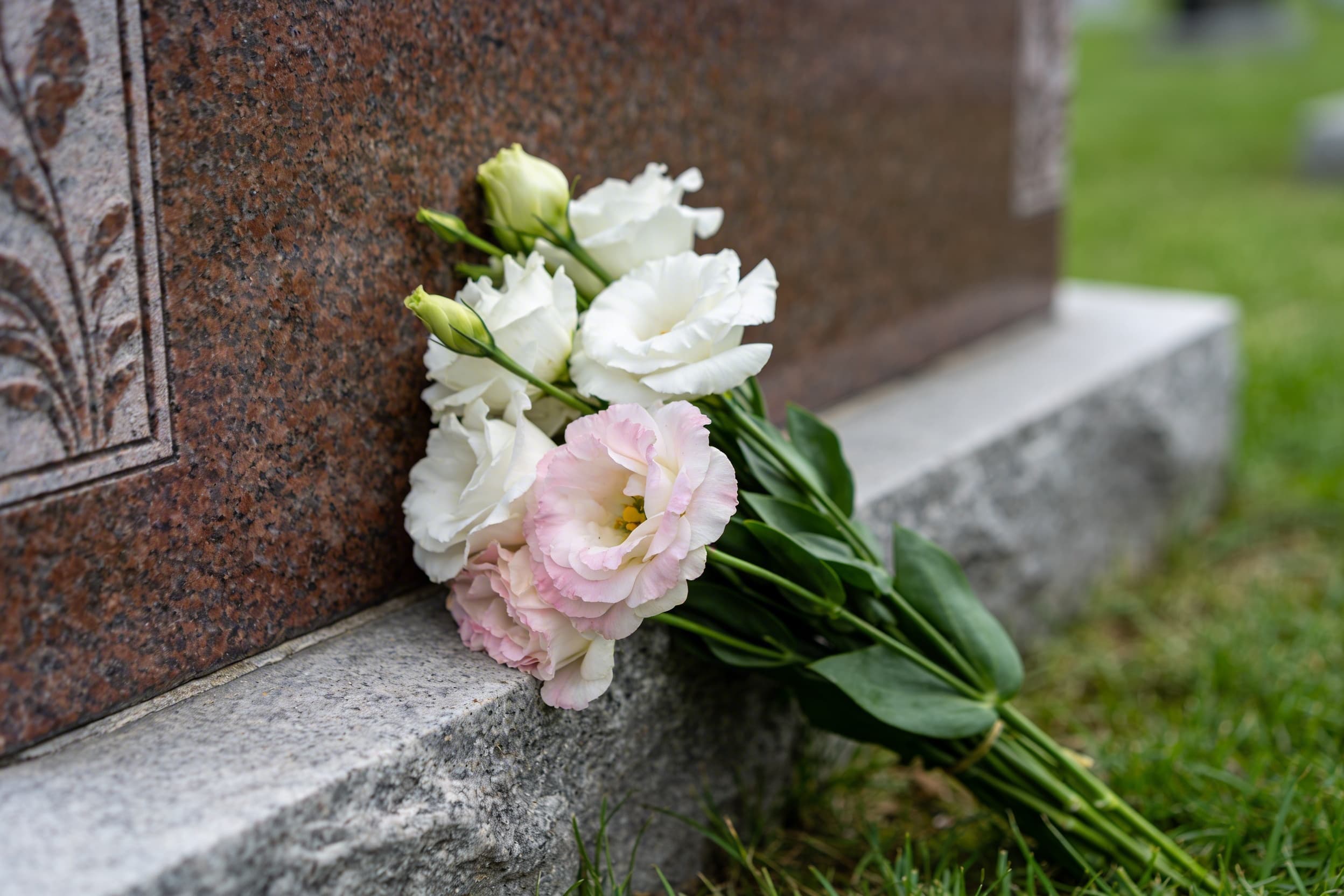
Many visitors want to leave something at a loved one's grave as a token of remembrance. Fresh or silk flowers are the most universally accepted option. Small mementos — a coin, a seashell, a written note — are also common. In the Jewish tradition, visitors place small stones on the headstone as a lasting marker of their visit.
Before bringing anything elaborate, check the cemetery's decoration policy. Some grounds restrict items to prevent maintenance issues or damage to adjacent plots. If you plan to place flowers in a built-in holder, many graves are equipped with cemetery vases designed to hold arrangements neatly without tipping in wind or rain.
If you are looking for more creative ways to honor a gravesite, our article on ideas for decorating a gravesite covers seasonal approaches and year-round options that comply with most cemetery policies.
Leave no trace otherwise. Take all wrappers, packaging, water bottles, and trash with you when you go. If no trash receptacle is nearby, carry your waste out. Cemetery caretakers already have demanding jobs maintaining acres of grounds, and litter from visitors adds an unnecessary burden while detracting from the peaceful environment everyone deserves.
How to Behave Around Other Mourners
You will likely share the cemetery with other visitors who may be in the middle of deeply emotional moments. A woman quietly weeping at a headstone, a family gathered around a fresh burial site, a man sitting alone on a bench staring into the distance — these are private moments that deserve space and silence.
Do:
Give mourners a wide berth and avoid walking through their immediate area
Offer a quiet nod or brief "hello" if you make eye contact, but do not initiate conversation unless they do
Yield the right of way on narrow paths or roads
Don't:
Stare at other visitors or linger near their gravesite
Photograph other mourners without consent
Interrupt a funeral service, procession, or graveside ceremony — if you arrive during an active service, wait at a respectful distance or return later
If you encounter a funeral procession while driving through the cemetery, pull your vehicle to the side of the road, stop, and wait for it to pass. This is both a matter of etiquette and, in many areas, law.
Driving and Parking in a Cemetery
Cemetery roads are narrow, winding, and shared with pedestrians who may be distracted by grief. Drive slowly — most cemeteries set speed limits at ten to fifteen miles per hour, and even that can feel fast on a single-lane path.
Do:
Stay on paved roads and designated driving lanes
Watch for pedestrians who may step into the road without looking
Pull to the side and yield if you meet another vehicle on a narrow lane
Park in designated areas or along the road edge
Don't:
Drive on the grass or park on the lawn
Park close enough to headstones that your doors could hit a marker when opened
Honk your horn for any reason
Speed through the grounds to reach a distant section quickly
Visiting With Children
Bringing children to a cemetery can be a meaningful way to introduce them to the concepts of remembrance, family history, and reverence. But large open green spaces look like parks to young eyes, and the temptation to run and play is natural.
Before your visit, talk to your children about what a cemetery is and why people go there. Explain that the stones mark where real people are resting and that families come to remember them. Give children a constructive task — helping you pull weeds from a grandparent's plot, placing flowers, watering a plant, or reading inscriptions aloud — so they feel included without getting restless.
Keep children close and supervise them at all times. Climbing on monuments, chasing each other between headstones, and playing on flat grave markers are all behaviors that risk damaging property and disrespecting other visitors.
Bringing Pets
Cemetery pet policies vary widely. Some welcome leashed dogs on walking paths, while others permit only service animals. Always check the rules before bringing your pet.
If pets are allowed:
Keep them on a short leash and under your direct control at all times
Bring waste bags and clean up immediately
Keep them calm — barking and excited pulling disturb the quiet atmosphere
Stay on paths and keep your pet off gravesites
If your dog tends to bark at strangers or become difficult to manage, leaving them at home is the considerate choice.
Photography Etiquette
Historic cemeteries attract genealogists, history enthusiasts, and photographers drawn to the artistry of old monuments and the atmosphere of the grounds. Photography is generally acceptable in most cemeteries, but it comes with important boundaries.
Always check whether the cemetery permits photography before you begin. Never photograph other visitors, especially mourners, without their explicit permission. Avoid photographing active funeral services or graveside ceremonies under any circumstances. If you are interested in learning more about respectful approaches, our guide to cemetery photography etiquette covers the full scope of best practices.
When photographing headstones, do not touch, move, or rearrange anything to get a better shot. Grave rubbings — a practice where paper is placed over a stone and rubbed with charcoal to capture the inscription — can cause damage to older markers and are prohibited in many cemeteries.
Respecting Cultural and Religious Traditions
Cemeteries often serve communities with diverse cultural and religious backgrounds, and burial customs vary significantly. You may encounter traditions you are unfamiliar with — stones placed on headstones in Jewish cemeteries, offerings of food or incense in Buddhist or Shinto sections, or specific mourning attire in Muslim burial grounds.
When you encounter unfamiliar traditions, observe quietly and respectfully. Do not touch offerings or items left by others, do not remove stones from headstones, and do not photograph religious rituals without permission. If you are visiting a cemetery with sections dedicated to different faiths, a brief online search about those traditions beforehand can help you avoid unintentional disrespect.
Special Days: Memorial Day, Veterans Day, and Holidays
Cemeteries experience their highest visitor traffic on Memorial Day, Veterans Day, Mother's Day, Father's Day, and around major religious holidays. On these days, parking fills quickly, paths are busier, and the emotional atmosphere can be especially intense.
Plan to arrive early on high-traffic days. Be extra patient with other visitors and cemetery staff. If you are visiting a veteran's grave, small American flags are a traditional and welcome tribute — many veterans' organizations place flags at military headstones annually, and adding your own is a respectful gesture.
Some cemeteries host organized ceremonies on these days. Check the cemetery's website or social media pages in advance to learn about scheduled events, road closures, or modified visiting hours.
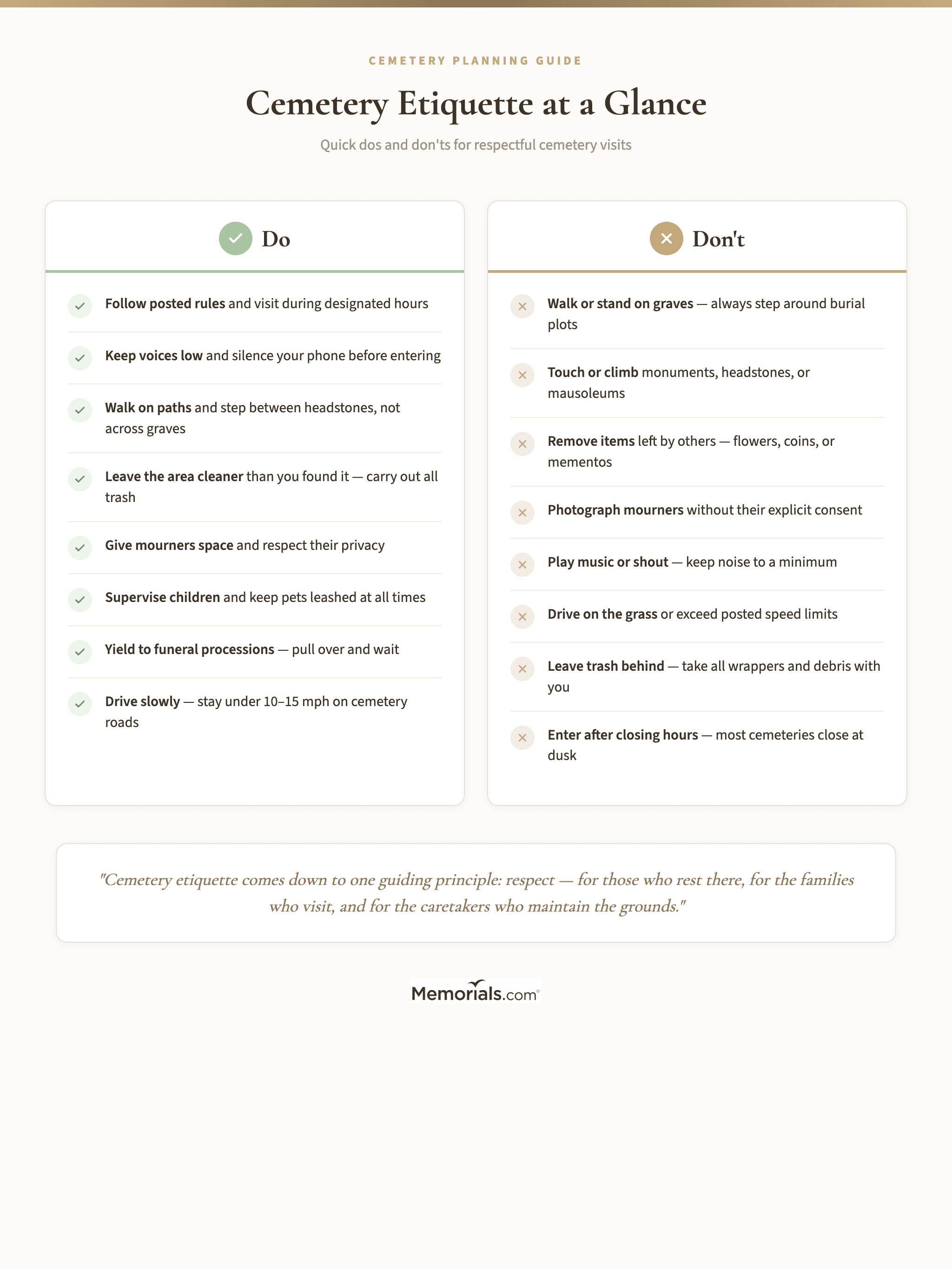
Cemetery Etiquette Quick Reference
Always Do:
Read and follow posted cemetery rules
Visit during designated hours
Keep voices low and phones silenced
Walk on paths and between headstones
Leave the area cleaner than you found it
Give other visitors space and privacy
Supervise children and leashed pets closely
Yield to funeral processions
Never Do:
Walk or stand on top of graves
Touch, lean on, or climb monuments and headstones
Remove flowers, coins, or items left by others
Photograph other mourners without consent
Play music, shout, or make unnecessary noise
Drive on the grass or exceed posted speed limits
Leave trash, packaging, or debris behind
Enter after posted closing hours
Frequently Asked Questions About Cemetery Etiquette
Is it disrespectful to walk through a cemetery for exercise?
Walking through a cemetery for exercise is generally acceptable as long as you stay on paths, keep quiet, and respect the space. Many cemeteries have peaceful walking routes that residents use regularly. Just avoid jogging between headstones or using the grounds for high-energy workouts, and always yield to mourners and funeral services.
Can you visit a cemetery at night?
Most cemeteries close at dusk, and entering after hours can result in trespassing charges. Some cemeteries offer special nighttime events like candlelight tours or holiday commemorations — these are the appropriate times for after-dark visits. If a cemetery gate is closed, do not climb over it.
Is it okay to eat or drink in a cemetery?
Eating a packed lunch on a cemetery bench is not inherently disrespectful, but use discretion. Avoid noisy food packaging, clean up completely, and be mindful of nearby mourners. Alcohol consumption is prohibited in most cemeteries, and picnicking on or near gravesites is considered poor form.
What should you wear to visit a cemetery?
There is no strict dress code for a casual cemetery visit, but modest, understated clothing is appropriate. If you are attending a funeral or memorial service, darker colors and respectful attire are expected. Avoid clothing with offensive graphics or slogans.
Can you leave food at a grave?
In some cultures, leaving food at a grave is a meaningful tradition — offerings of fruit, bread, or cooked meals are common in many Asian, African, and Latin American traditions. Check the cemetery's policy, as some prohibit food to prevent attracting animals. If allowed, use biodegradable containers and return to remove anything that has not been consumed or absorbed.
Honoring Sacred Ground
Cemetery etiquette is not a complicated set of arbitrary rules. At its core, it is simply respect — respect for the people who rest there, for the families who visit them, and for the caretakers who maintain the grounds. Every quiet step, every gently closed door, and every piece of trash carried out contributes to an atmosphere where grief can be expressed, memories can be honored, and love can endure undisturbed.
If you are beginning to explore cemetery options for yourself or a family member, understanding these popular cemetery memorial types can help you envision how a final resting place might look and feel for the people who will visit for years to come.