🏬Supersize Online Funeral Retailer🪦1000's of Headstones⚱️Over 10,000 Cremation Urns⚰️Caskets Overnight Delivery🛒Funeral & Memorial Superstore🚚FREE Shipping on ALL Orders👨👩👧👦Helping Families for over 20 Years💰Lowest Price Guarantee🏬Supersize Online Funeral Retailer🪦1000's of Headstones⚱️Over 10,000 Cremation Urns⚰️Caskets Overnight Delivery🛒Funeral & Memorial Superstore🚚FREE Shipping on ALL Orders👨👩👧👦Helping Families for over 20 Years💰Lowest Price Guarantee
🏬Supersize Online Funeral Retailer🪦1000's of Headstones⚱️Over 10,000 Cremation Urns⚰️Caskets Overnight Delivery🛒Funeral & Memorial Superstore🚚FREE Shipping on ALL Orders👨👩👧👦Helping Families for over 20 Years💰Lowest Price Guarantee🏬Supersize Online Funeral Retailer🪦1000's of Headstones⚱️Over 10,000 Cremation Urns⚰️Caskets Overnight Delivery🛒Funeral & Memorial Superstore🚚FREE Shipping on ALL Orders👨👩👧👦Helping Families for over 20 Years💰Lowest Price Guarantee
Cemeteries hold centuries of history in stone. The carvings, the weathered inscriptions, the way morning light falls across a row of granite markers — all of it tells a story that words alone cannot capture. Cemetery photography preserves those stories, whether you are documenting a family ancestor's resting place, contributing to a genealogy archive, or simply drawn to the solemn beauty of these grounds.
This guide covers the practical side of photographing cemeteries — the techniques that produce compelling images and the dos and don'ts for cemetery visitors that keep your work respectful. Whether you are a seasoned taphophile or picking up a camera for the first time in a graveyard, these tips will help you capture meaningful photographs while honoring the people remembered there. For broader context on , our complete planning guide covers everything from choosing a plot to understanding regulations.
The reasons people photograph cemeteries are as varied as the cemeteries themselves. Genealogists document headstones to build family trees and verify records. Volunteers upload images to databases like Find a Grave so that distant relatives can see a loved one's marker without traveling hundreds of miles. History enthusiasts seek out the oldest sections of a burial ground, reading dates and epitaphs that connect them to another era.
Then there are the photographers who are drawn to cemeteries as creative subjects. The interplay of light and shadow on carved stone, the symmetry of military rows, the overgrown corners where nature is slowly reclaiming the landscape — these scenes offer visual richness that few other settings match. Some photographers identify as taphophiles, a term for people with a genuine passion for cemeteries, epitaphs, and the art of memorialization. Others simply appreciate the quiet and the beauty.
Whatever your reason, photographing a cemetery is an act of attention. You are choosing to look closely at a place most people pass through quickly, and in doing so, you create a record that outlasts weathering, neglect, and time.
Best Lighting for Cemetery Photography
Lighting is the single most important factor in graveyard photography. The quality of light determines whether a headstone's engraving is legible in your image or lost in flat, featureless gray.
Golden Hour: Sunrise and Sunset
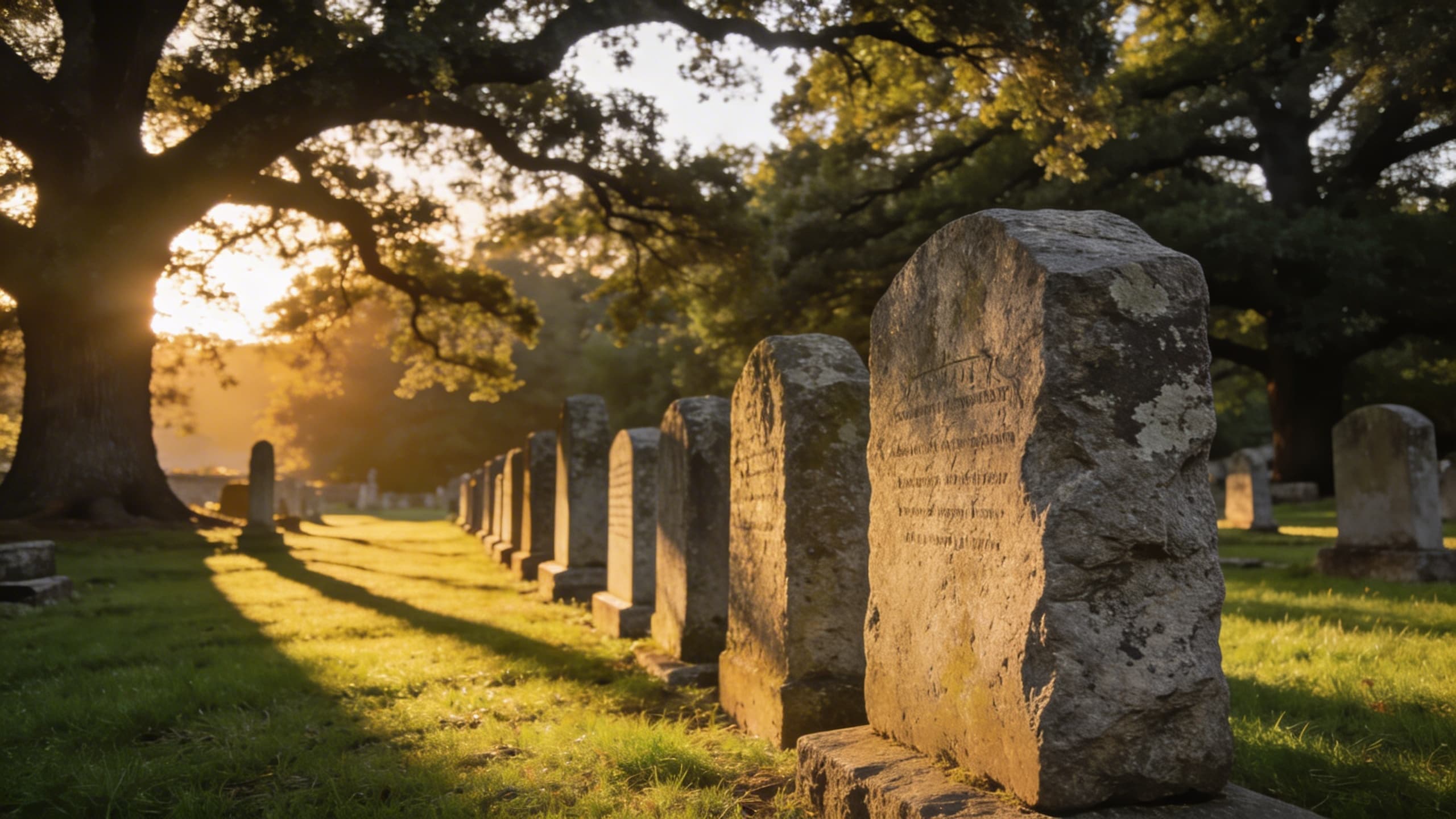
The soft, warm light during the first and last hours of sunlight produces the most striking cemetery photographs. Long shadows add depth to flat markers. Side lighting reveals carved letters and ornamental details that disappear under overhead sun. Many historic cemeteries were laid out with headstones facing east, which means early morning light strikes the inscriptions directly — a practical advantage that photographers have relied on for generations.
Overcast Days
A uniformly cloudy sky acts as a natural diffuser. There are no harsh shadows, and the even light makes it easier to capture detail on both light and dark stone surfaces. Overcast conditions are particularly useful when photographing cemetery statues, where harsh sunlight can blow out white marble highlights while leaving recessed features in deep shadow.
Midday Challenges
Avoid shooting between roughly 11 a.m. and 2 p.m. on sunny days. Direct overhead light flattens texture, washes out inscriptions, and creates unflattering shadows beneath ledger stones and raised monuments. If you must photograph at midday, focus on close-up detail shots rather than full-scene compositions.
Fog, Rain, and Dramatic Weather
Some of the most atmospheric cemetery images come from mornings when fog settles between the stones. Rain can add a reflective sheen to polished granite. Overcast skies before a storm create a moody palette of grays and greens that suits the setting. Carry a microfiber cloth to wipe your lens between shots, and use a weather-sealed bag or a simple plastic cover for your camera body.
Composition Techniques for Graveyard Photography
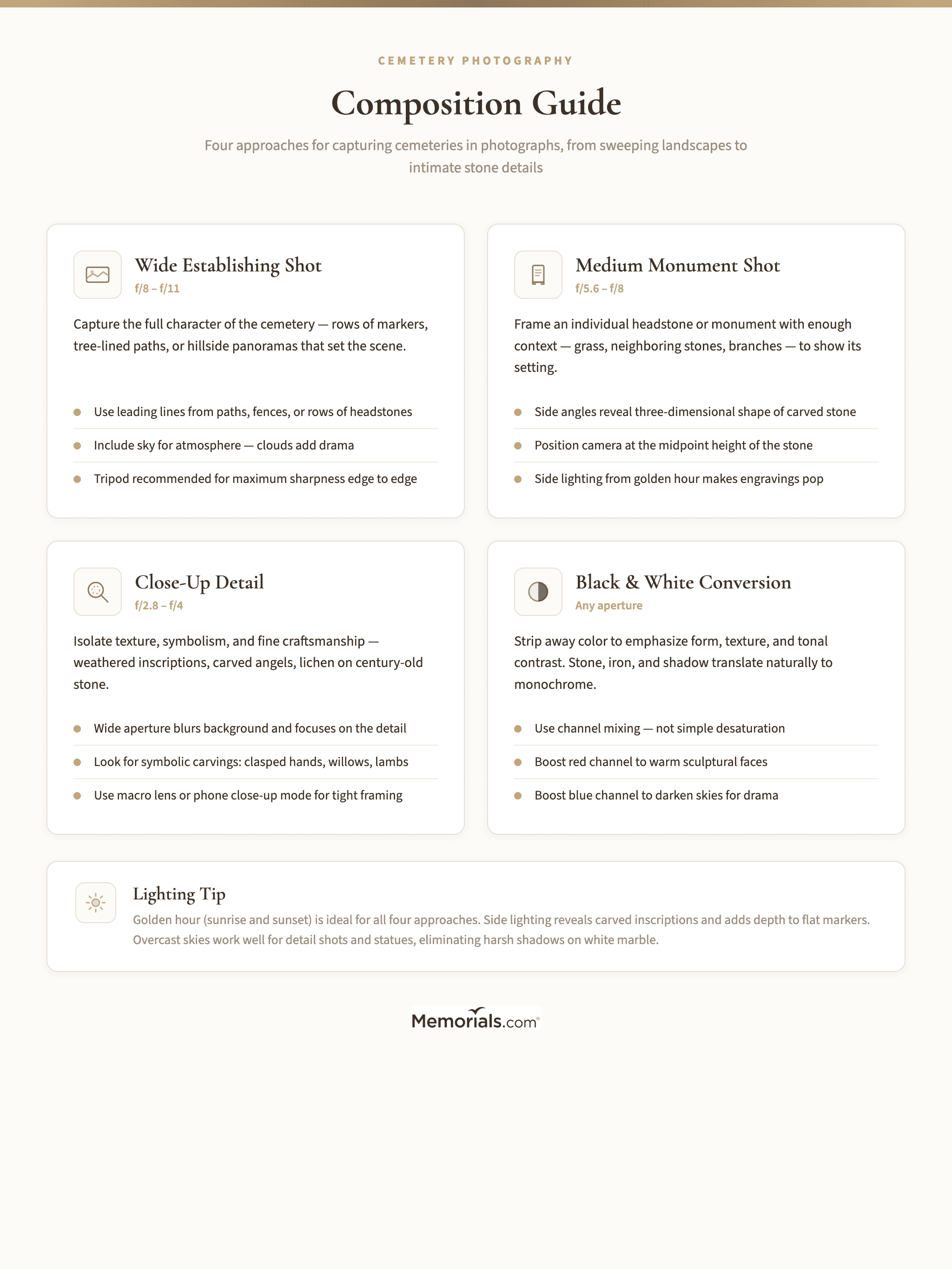
Good cemetery photography balances the grand scale of the grounds with the intimate details carved into each stone. Varying your composition keeps a cemetery photo series visually interesting.
Wide Establishing Shots
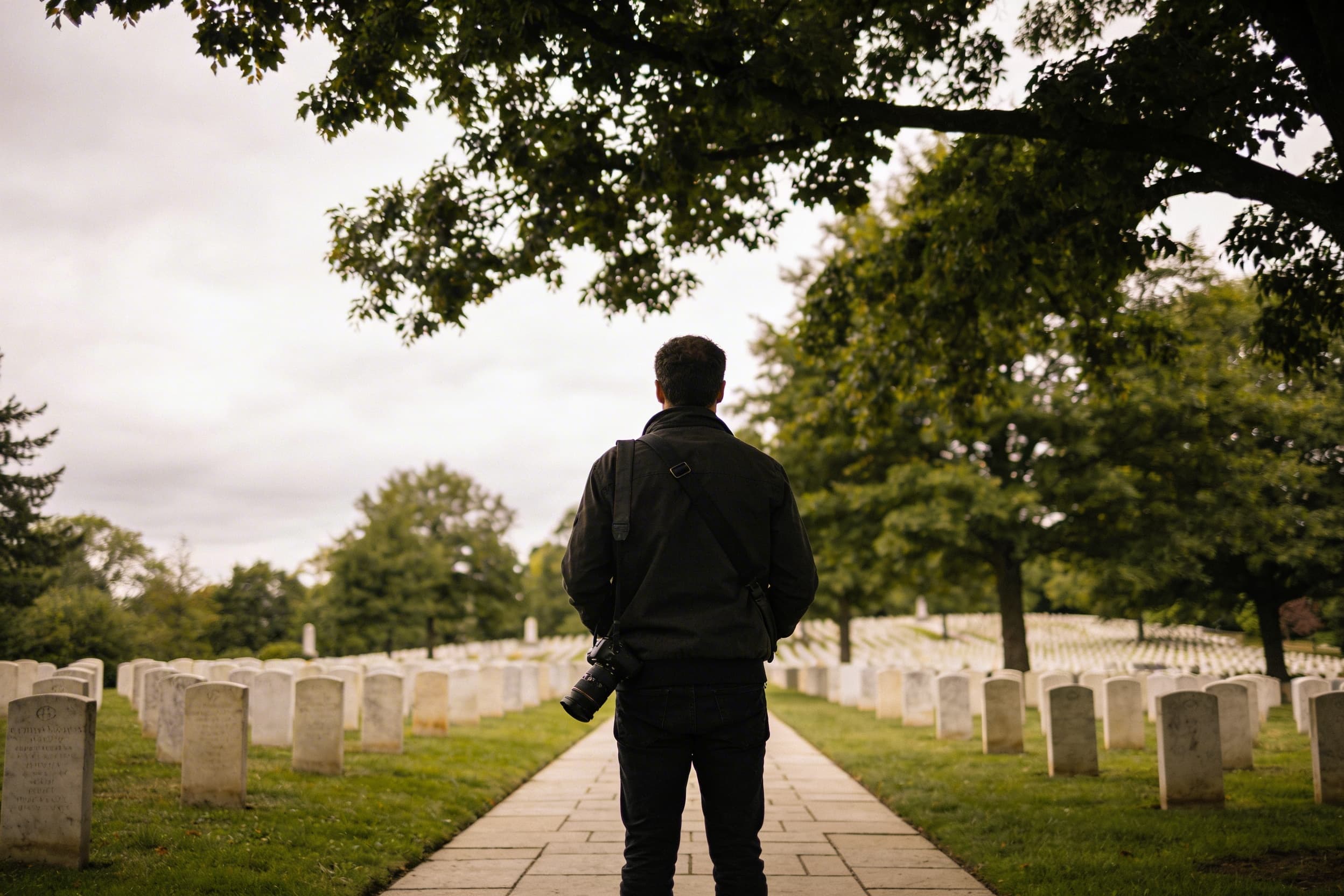
Start with wide-angle views that capture the overall character of the cemetery. Rows of uniform markers, a tree-lined path leading to a chapel, or a hillside dotted with monuments — these images set the scene and give context to the detail shots that follow. Leading lines formed by pathways, fences, or rows of stones draw the viewer's eye into the frame.
Medium Shots of Individual Monuments
Step closer to capture the full form of a headstone, mausoleum, or sculptural monument. Include enough of the surroundings — grass, neighboring stones, overhanging branches — to place the monument in its environment. Side angles often work better than head-on compositions because they reveal the three-dimensional shape of carved stone.
Close-Up and Macro Details
The texture of weathered granite, a carved angel's face, lichen spreading across a 200-year-old inscription — these details reward close attention. Use a macro lens or your phone's close-up mode to isolate small elements. Shallow depth of field (a wide aperture like f/2.8 or f/4) blurs the background and focuses attention on the detail.
Look for symbols that carry specific meanings: clasped hands representing a farewell, a willow tree symbolizing mourning, a lamb marking a child's grave. These carved symbols connect to centuries of funerary art tradition and make compelling subjects. You can explore many of these interesting things to find in cemeteries in our visual guide.
Black and White Conversion
Monochrome processing strips away the distraction of color and emphasizes form, texture, and contrast. Cemetery subjects — stone, iron, shadow — translate naturally to black and white. Many photographers shoot in color and convert later during editing, which preserves the option to keep a color version while also producing a dramatic monochrome image.
Equipment: What to Bring
You do not need expensive gear to take compelling cemetery photographs. A smartphone with a decent camera is more than capable, especially in good light. That said, certain equipment can expand your options.
Camera and Lens Suggestions
A DSLR or mirrorless camera with a versatile zoom lens (24–70mm or 24–105mm equivalent) covers most situations. A wide-angle lens (16–35mm) is useful for sweeping landscape shots and interior mausoleum details. A macro lens or close-up filters let you capture fine carvings and inscriptions.
Tripod
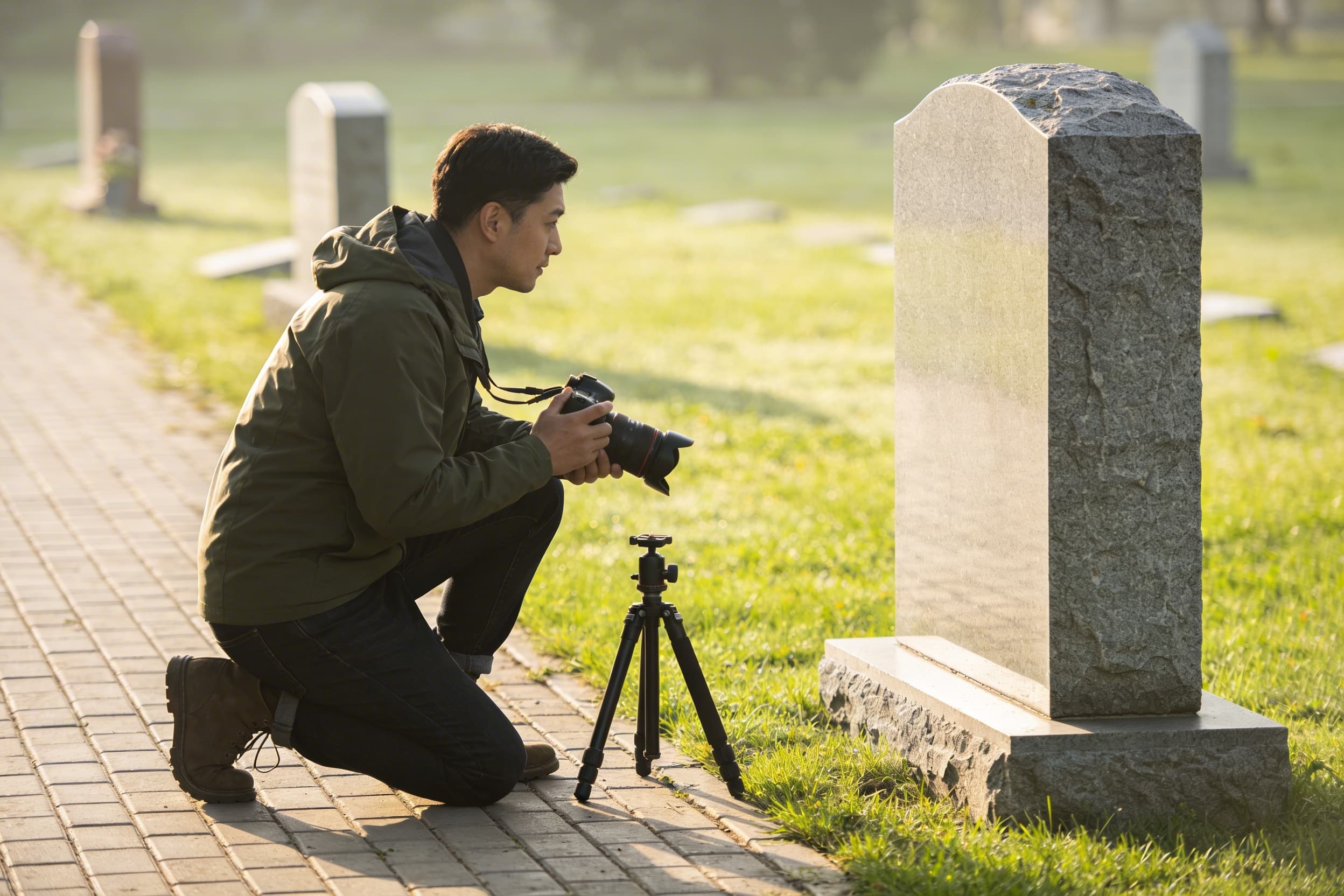
A tripod is essential for low-light shooting — early morning, late afternoon, or interior mausoleum work. It also helps when you want maximum sharpness at smaller apertures (f/8 to f/11) for detail-rich monument shots. Choose a lightweight travel tripod that is easy to carry through uneven ground.
Smartphone Tips
Modern smartphones handle cemetery photography well. Use the HDR mode to balance bright sky and shadowed stone. Tap to focus on the inscription or detail you want sharp. The portrait mode on many phones creates a pleasing background blur for individual headstone shots. Clean your lens before you start — a smudged phone lens is the most common cause of hazy photos.
Other Useful Items
Pack a microfiber cloth for wiping rain or condensation from your lens, a small flashlight for illuminating shadowed inscriptions, and a notebook for recording names, dates, and locations that correspond to your images. If you are contributing to Find a Grave or a genealogy project, a GPS-enabled app that geotags your photos saves significant time later when matching images to specific graves.
Seasonal Considerations
Each season changes the character of a cemetery, and returning to the same site across the year produces a richer body of work.
Spring brings fresh flowers, green grass, and blossoming trees that soften the landscape. Families often visit and place new arrangements during this season, and decorated gravesites become creative gravesite decoration ideas worth documenting. Summer offers long days and abundant light but also heat haze, overgrown vegetation that can obscure markers, and harsh midday sun. Autumn is a favorite for many cemetery photographers — fallen leaves, golden light, and the natural palette of amber and rust complement stone and iron beautifully. Winter strips the landscape bare, revealing headstones and monuments that are hidden behind foliage the rest of the year. Snow adds a clean, high-contrast backdrop, and frost on carved stone creates stunning macro opportunities.
Plan visits around the season that best suits your creative vision. Historic cemeteries, in particular, look dramatically different across the four seasons.
Cemetery Photography Etiquette
Respectful behavior is not optional — it is the foundation of ethical cemetery photography. These grounds are sacred to the families who visit them, and your presence as a photographer should never add to someone's grief or discomfort.
Get Permission First
Many cemeteries are managed by a church, municipality, historical society, or private trust. Contact the managing organization before your visit, especially if you plan to photograph extensively or use the images commercially. Some cemeteries require a permit. Others have posted rules that restrict photography during certain hours or in specific sections. Follow whatever guidelines are in place.
Respect Mourners
If you encounter a funeral, graveside service, or someone visiting a loved one's grave, give them space. Move to another section of the cemetery and return later. Never photograph mourners without their explicit consent. A telephoto lens does not make it acceptable to photograph private grief from a distance.
Do Not Touch, Move, or Disturb
Never lean against, sit on, or stand on a headstone, ledger, or monument. Do not move flowers, flags, mementos, or other items placed at a grave. Do not rearrange objects to improve your composition. The items at a gravesite were placed there by someone who cared, and they are not props for your photograph.
Walk on Paths When Possible
Stay on designated paths and walkways. When you must walk on grass to approach a specific grave, step carefully and avoid walking directly over burial sites. Soft or wet ground can sink under your weight, and heavy foot traffic damages turf that the cemetery staff works to maintain.
Handle Names and Privacy Thoughtfully
A general guideline among experienced cemetery photographers is to avoid publishing clearly legible names on relatively recent graves — within the last 50 to 100 years — without the family's permission. Older historic graves are generally considered part of the public record, but use your judgment. If in doubt, frame your shot to blur or exclude the name, or obscure it during editing. Genealogy contributors uploading to Find a Grave follow different norms, since their purpose is documentation, but even then, respect for the family's wishes takes precedence.
Observe Posted Hours and Rules
Most cemeteries have operating hours, typically dawn to dusk. Do not trespass after hours for nighttime shots, no matter how appealing the idea sounds. If you want a dark or nighttime effect, shoot during the last minutes of twilight and adjust exposure in post-processing. The results are often more visually compelling than actual nighttime shots, and you stay within the rules.
Photographing Specific Cemetery Features
Different elements within a cemetery call for different approaches. Understanding what you are looking at helps you photograph it more effectively.
Headstones and Grave Markers
The most commonly photographed cemetery feature. Side lighting reveals engraved text best. For flat markers set flush with the ground, try shooting from a low angle — kneel or place your camera near ground level to capture the inscription with the landscape behind it. Upright headstones photograph well with the camera at roughly the midpoint of the stone's height.
Mausoleums and Crypts
These larger structures benefit from wide-angle perspectives that capture architectural detail. If the door or gate is open and you have permission to enter, interior shots can be dramatic — use a tripod for the low-light conditions inside. Stained glass windows in older mausoleums create stunning backlit compositions.
Cemetery Statues and Sculptures
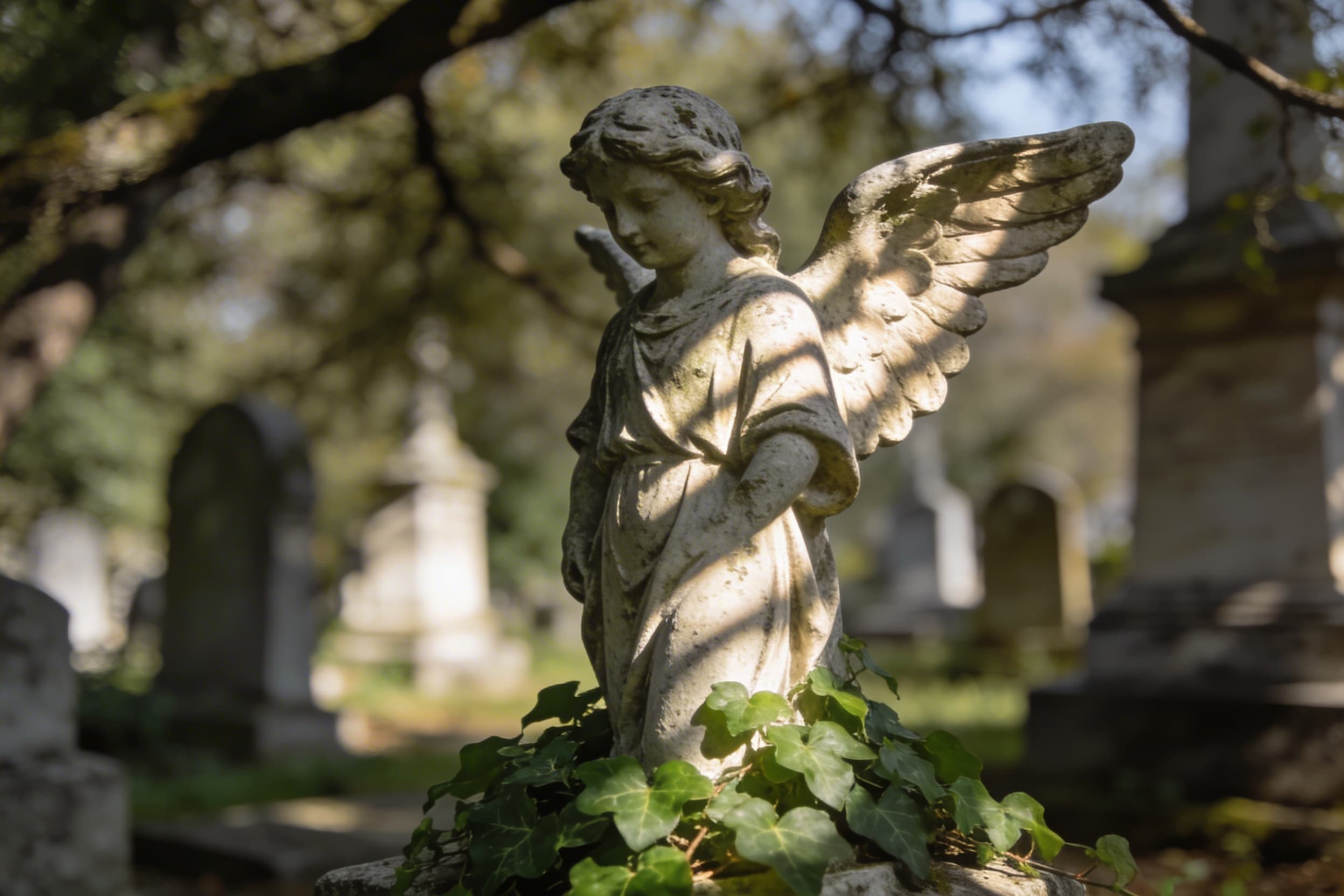
Statues — particularly angels, weeping figures, and religious icons — are among the most visually compelling subjects in any cemetery. Many of the beautiful cemetery memorial designs that draw photographers include hand-carved figures in marble, bronze, or granite. Photograph statues from multiple angles. A face in profile often carries more emotion than a straight-on view. Watch for dappled light filtering through tree canopy, which can create striking patterns on sculpted surfaces.
Ironwork, Gates, and Fences
Wrought iron fences, ornate gates, and decorative railings are common in older cemeteries and provide excellent graphic compositions. The repeating patterns of iron pickets or the curves of a scrollwork gate work well in both color and black and white. Rust and patina add character and warmth to metalwork images.
Landscaping and Natural Elements
Trees, flower plantings, pathways, and water features all contribute to the atmosphere of a cemetery. Spanish moss draped over live oaks, a Japanese maple arching over a bench, or a stone bridge crossing a small creek — these landscape elements provide context and beauty that complement the memorial structures around them.
Taphophilia: The Growing Community of Cemetery Enthusiasts
The community of people who actively seek out and explore cemeteries is larger — and more organized — than most people realize. Taphophiles, also known as tombstone tourists, cemetery enthusiasts, or gravers, share a passion for the history, art, and cultural significance of burial grounds. The term comes from the Greek word taphos, meaning tomb or burial.
Social media has accelerated the growth of this community. Instagram accounts dedicated to cemetery photography attract tens of thousands of followers. Online groups organize group cemetery walks and share tips on locating historic sites worth visiting. Find a Grave, one of the largest volunteer-run databases, relies on contributor photographers to document millions of gravesites worldwide.
For taphophiles, cemetery photography is more than a visual exercise — it is a form of preservation. Headstones erode. Inscriptions fade. Entire cemeteries are sometimes lost to development or neglect. A photograph becomes the permanent record of a marker that may not survive another century.
If you are exploring this interest for the first time, start with your local historic cemetery. Walk slowly, read the inscriptions, and notice the details — the hand-carved flourishes, the symbols, the way one era's headstone style gives way to another. The camera comes second. Observation comes first.
Post-Processing Tips for Cemetery Images
A few editing techniques can elevate your cemetery photographs without making them look artificial.
Exposure and contrast adjustments help recover detail in both bright marble and dark granite. Most editing apps — Lightroom, Snapseed, or your phone's built-in editor — let you brighten shadows and tone down highlights selectively.
Sharpening enhances the readability of inscriptions and the texture of carved stone. Apply it moderately — over-sharpened stone looks gritty and unnatural.
Black and white conversion deserves deliberate attention. Rather than simply desaturating, use channel mixing to control how different colors translate to gray tones. Boosting the red channel warms skin tones on sculptural faces; boosting blue darkens skies for a more dramatic backdrop.
Cropping can tighten compositions that felt right in the field but include distracting elements at the edges. A tighter crop on a headstone inscription or a statue's face often strengthens the image.
Avoid heavy-handed filters, dramatic vignettes, or artificial fog effects. The beauty of cemetery photography lies in the reality of the place. The goal is to present it honestly, not to manufacture a mood that was not there.
Frequently Asked Questions
Is it disrespectful to take photos in a cemetery?
No, as long as you follow basic etiquette. Cemeteries are often public or semi-public spaces, and photography for genealogy, history, art, or personal remembrance is widely accepted. What matters is how you conduct yourself — stay on paths, do not touch monuments, avoid photographing mourners, and follow any posted rules. Respectful photography actually helps preserve the memory of those buried there.
Do I need permission to photograph in a cemetery?
It depends on the cemetery. Publicly owned cemeteries generally allow photography without a permit, though some have restrictions during funerals or posted quiet hours. Privately owned or church-managed cemeteries may require advance permission, especially for commercial or professional shoots. Always check before you visit, and carry identification in case a groundskeeper or security guard asks about your purpose.
What is a taphophile?
A taphophile is someone with a passion for visiting cemeteries, studying headstones and epitaphs, and exploring the history and artistry of burial grounds. The word combines the Greek taphos (tomb) with phile (lover). Taphophiles often photograph their visits, contribute to genealogy databases like Find a Grave, and participate in gravestone preservation efforts. The practice is also called tombstone tourism or graving.
What time of day is best for cemetery photography?
Early morning and late afternoon — the golden hours — produce the most flattering light. Side lighting at these times reveals engraved text and carved details that are invisible under midday sun. Overcast days also work well, providing soft, even illumination without harsh shadows. If the cemetery faces east (as many do), morning light strikes the headstones directly.
Can I publish cemetery photos on social media or in a book?
Generally, yes. Photographs taken in public or semi-public spaces, including most cemeteries, can be published. However, exercise judgment about privacy. Avoid publishing images with clearly legible names on recent graves without the family's consent. Historic graves — typically more than 50 to 100 years old — are broadly considered part of the public record. If you plan to use images commercially, consult the cemetery's management about any restrictions.
Capturing Stories in Stone
Cemetery photography connects the living to the past in a way that few other hobbies can. Every headstone carries a name, every name carries a story, and every photograph you take preserves a small piece of that story against the steady erosion of time and weather.
Start with patience and observation. Learn the etiquette that keeps your work respectful. Pay attention to light, composition, and the details that make each cemetery unique. Whether you are documenting family history, building a portfolio, or simply spending a quiet morning among the stones, the images you create today may be the only record that survives tomorrow.
Browse our collection of cemetery products to find plaques, vases, lights, and accessories that honor the memory of those you photograph — and those you love.