🏬Supersize Online Funeral Retailer🪦1000's of Headstones⚱️Over 10,000 Cremation Urns⚰️Caskets Overnight Delivery🛒Funeral & Memorial Superstore🚚FREE Shipping on ALL Orders👨👩👧👦Helping Families for over 20 Years💰Lowest Price Guarantee🏬Supersize Online Funeral Retailer🪦1000's of Headstones⚱️Over 10,000 Cremation Urns⚰️Caskets Overnight Delivery🛒Funeral & Memorial Superstore🚚FREE Shipping on ALL Orders👨👩👧👦Helping Families for over 20 Years💰Lowest Price Guarantee
🏬Supersize Online Funeral Retailer🪦1000's of Headstones⚱️Over 10,000 Cremation Urns⚰️Caskets Overnight Delivery🛒Funeral & Memorial Superstore🚚FREE Shipping on ALL Orders👨👩👧👦Helping Families for over 20 Years💰Lowest Price Guarantee🏬Supersize Online Funeral Retailer🪦1000's of Headstones⚱️Over 10,000 Cremation Urns⚰️Caskets Overnight Delivery🛒Funeral & Memorial Superstore🚚FREE Shipping on ALL Orders👨👩👧👦Helping Families for over 20 Years💰Lowest Price Guarantee
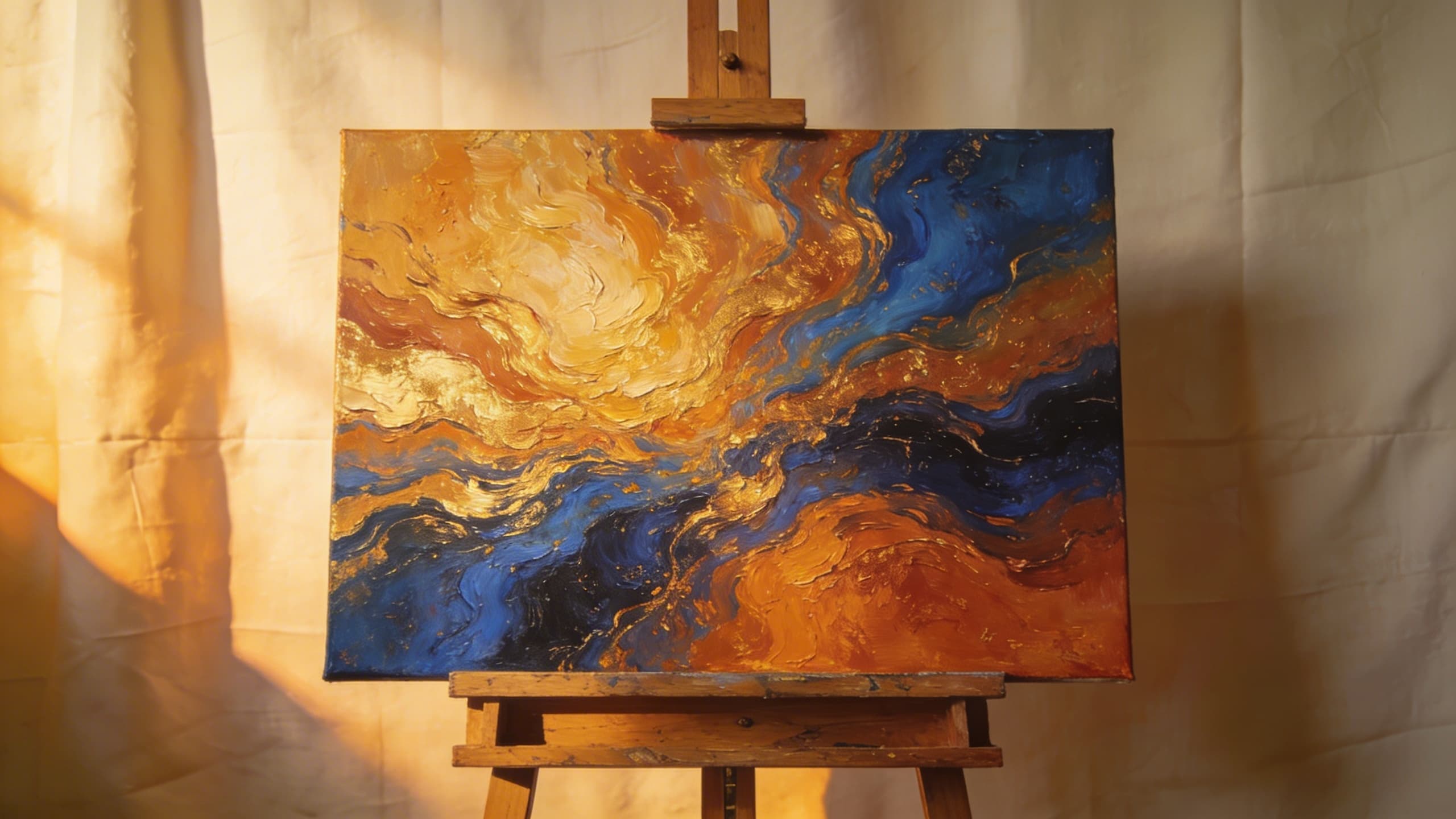
There is a growing number of families who want something more than a traditional urn. They want something that can hang on a wall, fill a room with color, and reflect the personality of the person they've lost. Cremation art paintings – canvas pieces made by incorporating a small amount of cremated ashes into original artwork – have become one of the most meaningful ways to honor someone while creating something truly lasting.
The concept may sound unconventional, but the history of humans using organic materials in art stretches back centuries. Today's artists who specialize in memorial paintings bring that tradition into a deeply personal context: your loved one's ashes become part of the artwork itself, sealed permanently into the piece, invisible to the eye but present in every brushstroke. For a broader look at the full range of ways ashes can be transformed into lasting keepsakes, our covers sculptures, glass art, and other memorial formats alongside paintings.
This guide explains how cremation art paintings work, the techniques artists use, what to expect when commissioning a piece, and how this form of memorial compares to other options families consider. It is also part of our complete cremation jewelry guide, which covers the full range of ways families incorporate ashes into lasting tributes.
What Are Cremation Art Paintings?
Cremation art paintings are original works of art created using a small portion of cremated ashes mixed into the paint, medium, or canvas preparation. The ashes become a physical part of the finished piece – not sprinkled on top, but integrated into the layers of paint so the artwork is both beautiful and structurally sound.
Most finished pieces require only a tablespoon or less of ashes, which means families who have chosen to scatter most of a loved one's remains, or who have already placed ashes in an urn, can still commission a painting without needing a significant amount of cremated remains. This also makes cremation ash artwork a natural companion to cremation jewelry, where similarly small amounts of ashes are used.
The resulting artwork can range from a vibrant abstract painting to a realistic portrait – the style depends entirely on the artist and the family's wishes. Once sealed, the ashes remain permanently embedded in the piece and can be passed down as a family heirloom for generations.
How Artists Use Ashes in Paintings
There is no single technique for creating memorial paintings from ashes. Artists have developed several distinct approaches depending on the medium, style, and how visible they want the ashes to be in the final piece.
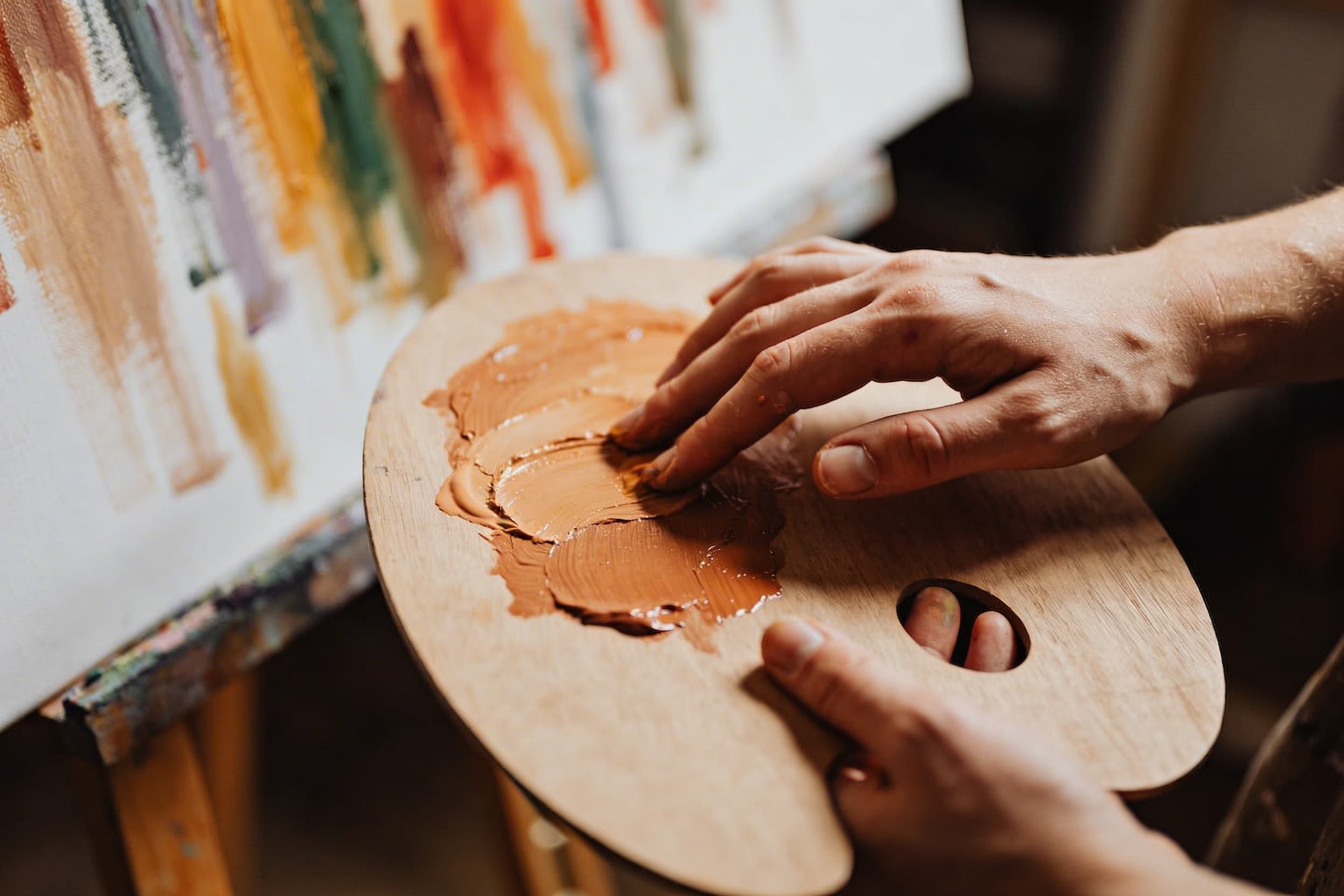
Mixing ashes directly into oil or acrylic paint is among the most common methods. The ashes are blended with linseed oil or another paint medium, creating a mixture that can be applied to canvas with a brush or palette knife. Depending on the ratio of ashes to paint, the finished layer may show subtle texture and a slightly muted, earthy tone. Artists who favor this method often work from photographs – creating a portrait, a landscape of a meaningful place, or an abstract composition that evokes the person's energy.
Incorporating ashes into the gesso base layer gives the artist more control over color in the final piece. Gesso is the preparatory coating applied to canvas before painting begins. Mixing ashes into this layer embeds the remains into the foundation of the artwork, over which any color palette can be applied. The ashes remain present but do not affect the pigments used on top.
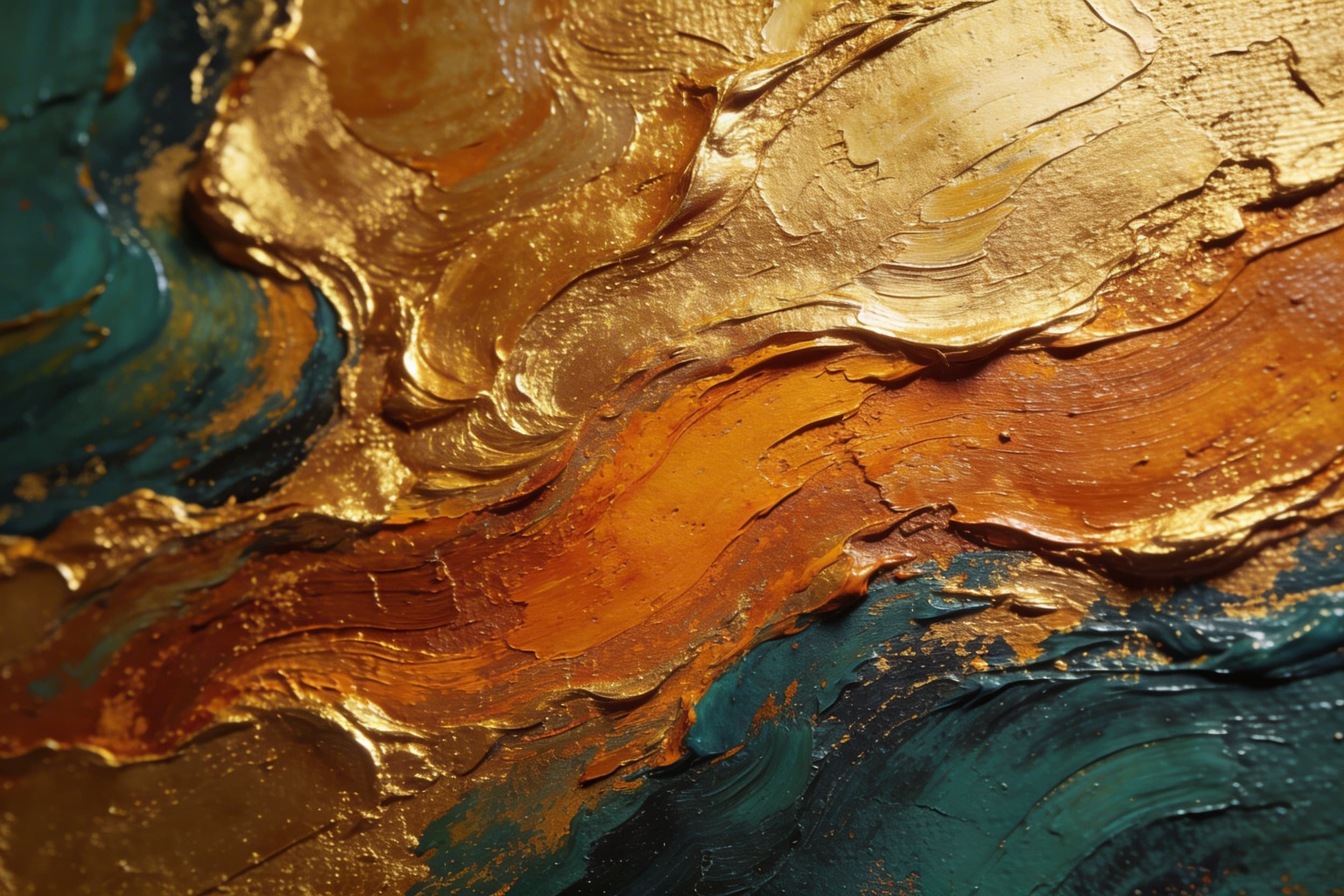
Epoxy resin and mixed-media approaches have grown significantly in popularity. Artists mix ashes with pigmented resin and pour it onto a hardwood panel or into a canvas build-up, creating layers of depth and glossy visual texture. The cremation ash artwork produced this way is tactile – family members can touch the surface and feel the dimension of the piece. These works are often archival and UV resistant, designed to remain vibrant for decades.
Watercolor with ashes is a softer, more delicate approach. The ashes are suspended in water and used as a wash alongside traditional watercolor pigments. The result tends to be translucent, luminous, and visually gentle – a style that some families find particularly fitting for a child or infant memorial.
Each technique produces a genuinely different aesthetic result. The right choice depends on the style preferences of the family and the artist's specialty.
Types of Cremation Ash Artwork
The category of memorial art extends well beyond paintings on canvas. Understanding the range of options helps families identify which format best fits how they want to display and live with the piece.
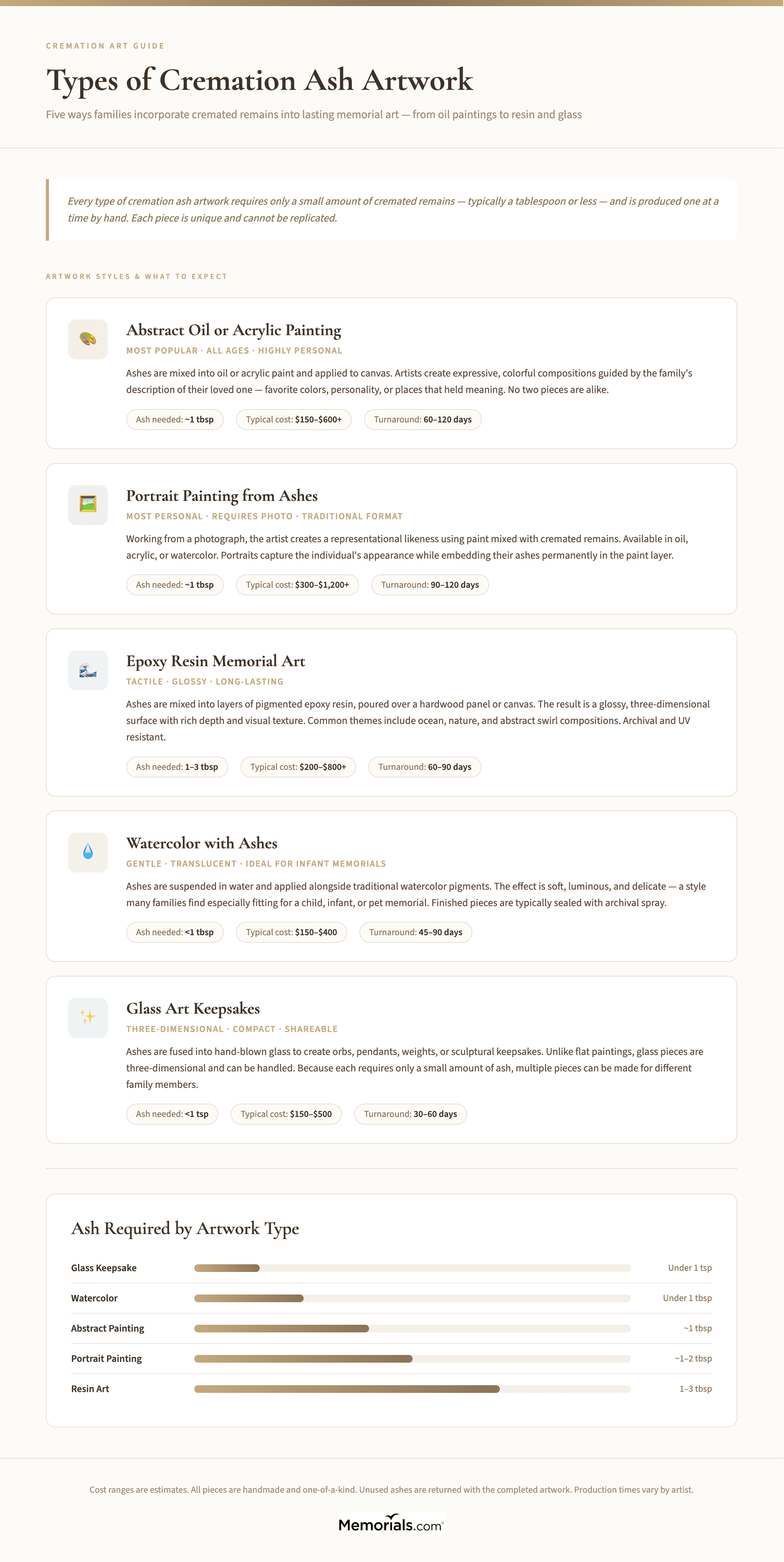
Abstract paintings are the most common style in this category. Artists create expressive, colorful compositions that evoke mood, energy, and personality without depicting any specific subject. Abstract pieces are well-suited to memorial art because grief itself is rarely literal – the open-ended visual language of abstraction allows families to find their own meaning in the piece over time.
Portrait paintings use ashes mixed into the medium to create a representational likeness of the person who has passed. Working from photographs, artists paint faces, scenes, and moments from a life. Portrait memorial paintings are offered in oil, acrylic, and watercolor – and can range from photorealistic to painterly and interpretive.
Memorial paintings from ashes of beloved pets follow the same techniques. Many artists who specialize in this work serve both human and animal memorials. The process is identical; only the subject changes.
Resin and epoxy wall art incorporates ashes into translucent colored resin layers poured over wooden or canvas panels. Ocean-inspired, nature-themed, or abstract geometric compositions are all common within this style. The glossy surface creates a striking visual depth, and the archival materials ensure the piece holds its color for generations. For more on how glass and resin are used as memorial mediums, our guide to glass cremation jewelry explains the infusion process in detail.
Beyond paintings, families often choose complementary cremation art pieces in other formats – including glass art keepsakes, cremation sculptures, and cremation touchstones. Some families commission an oil painting and a glass keepsake simultaneously so different family members can share a memorial without dividing the ashes. For families drawn to three-dimensional options, our guide to cremation sculptures and touchstones explains how these tactile pieces compare to framed artwork.
How Much Ash Is Required?
One of the most common concerns families have before commissioning a memorial painting is how much of their loved one's cremated remains will be needed. The answer is reassuring: most artists require only a very small amount.
For paintings that use ashes mixed into the paint or gesso layer, a tablespoon is typically sufficient. Some artists work with even less. For resin-based pieces, the quantity can vary slightly depending on the size of the artwork, but rarely exceeds a quarter cup.
This means cremation ash artwork is entirely compatible with other decisions families have already made – scattering, burial in an urn, or creating multiple keepsake pieces. Artists return any unused remains with the completed artwork.
What to Expect When Commissioning a Cremation Art Painting
Ordering a memorial painting is a collaborative and deeply personal process. Understanding each stage helps families know what questions to ask and what decisions they'll need to make.
Choosing a style and artist. The first step is identifying the kind of artwork you want – abstract, portrait, resin, or another format – and finding an artist who specializes in that style. Many memorial artists share galleries of previous work online. Look for archival-quality materials, clear communication about their process, and explicit statements about how ashes are handled and returned.
Sending the ashes. Artists provide shipping instructions for securely mailing a portion of cremated remains. Remains are handled with gloves and processed individually – reputable artists have strict tracking systems in place to ensure only your loved one's ashes are used in your piece.
Providing reference materials. For portraits, a high-quality photograph is essential. For abstract pieces, some artists ask families to describe the person – their personality, favorite colors, meaningful places, or the feeling you want the piece to evoke.
Production time. Custom cremation art paintings typically require 60 to 120 days from the time ashes are received, depending on the artist's schedule and the complexity of the piece. Artists generally provide progress updates during production.
Size and cost. Pricing is typically based on the size of the finished piece. Smaller works (8" x 10" to 12" x 16") often start around $150-$300. Larger, more complex pieces – particularly detailed portraits or multi-layer resin works – can range from $500 to well over $1,000. All works are one-of-a-kind, handmade, and will not be replicated.
Sealing and archiving. Most reputable artists apply a final varnish or archival sealant over the completed piece. This protects the painting from UV light, humidity, and physical contact, ensuring the cremation ash artwork remains intact and vivid for generations.
Cremation Paintings vs. Other Memorial Options
Families navigating decisions about cremated remains often find themselves weighing several different types of memorialization. Each has its own character.
Cremation paintings vs. cremation jewelry. Cremation jewelry allows family members to keep a small portion of ashes wearable and close at all times. Paintings, by contrast, become a permanent part of a room – a visible, daily presence rather than a personal keepsake. Many families choose both: jewelry for individual family members and a shared painting for the home.
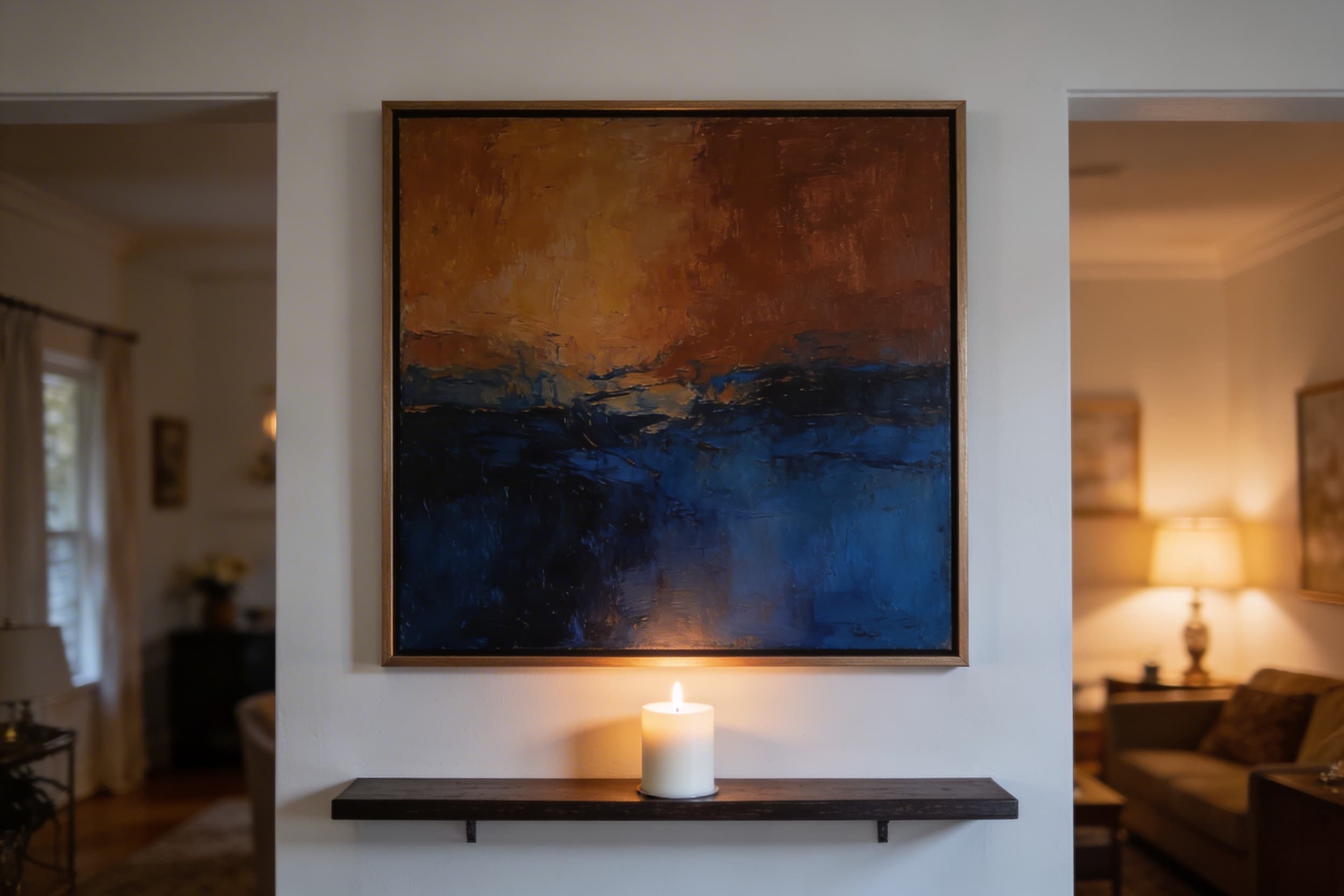
Cremation paintings vs. urns. A cremation urn stores all of a loved one's remains in a single vessel. A painting uses only a small fraction, so the two are fully compatible. Some families display an urn alongside a cremation ash painting as part of a dedicated memorial space at home.
Cremation paintings vs. art in ashes oil paintings. Art in Ashes is a specific product line of modern oil paintings that incorporate cremated remains. These pieces offer a curated selection of styles and are produced by professional painters. Custom commissioned paintings offer more personalization but involve a longer production window and higher cost variability.
Cremation paintings vs. cremation heirlooms.Cremation heirlooms – including sculpted glass and touchstone pieces – are compact, three-dimensional, and often more portable than a canvas painting. For families with limited wall space or those who want something they can hold, heirloom pieces may be a better fit.
There is no single correct answer. The right memorial is the one that will bring the most comfort and feel like a true reflection of the person being honored.
Is Cremation Art Appropriate for Every Family?
Memorial paintings sit at the intersection of grief, art, and deeply personal belief. For many families, the idea that a loved one's ashes are literally woven into a piece of art is profoundly comforting. For others, it raises questions about what feels right or reverent.
Cultural and religious traditions vary widely on the subject of cremation and memorialization. Families with questions about whether cremation ash artwork aligns with their beliefs may want to speak with a faith leader or grief counselor before commissioning a piece.
For families who find it meaningful, cremation art paintings offer something few other memorials can: a daily, visible reminder of a person's life that is also beautiful, unique, and alive with color. The ashes are invisible within the piece, but they are present – transformed from grief into something that endures.
Frequently Asked Questions
How does painting with cremation ashes actually work? Artists incorporate a small amount of cremated remains – typically a tablespoon or less – into an oil, acrylic, or resin medium. The ashes are mixed into the paint itself, added to a base gesso layer, or suspended in epoxy resin. Once sealed with an archival varnish, the ashes become a permanent, structural part of the finished artwork.
How much do cremation art paintings cost? Pricing varies significantly by artist, style, and size. Small abstract works typically start around $150-$300. Detailed portrait paintings and large-format resin pieces can range from $500 to several thousand dollars. Production time is usually 60 to 120 days after the artist receives the ashes.
Can I get a memorial painting if most of the ashes have already been scattered? Yes. Most artists require only a tablespoon or less of cremated remains. Even families who have already scattered ashes, placed them in an urn, or shared them among multiple family members typically have enough to commission a painting.
Will the ashes be safe inside the painting? Yes, when produced by a reputable artist using archival materials. Ashes are mixed into layers of paint or resin and sealed with UV-resistant, archival varnishes. The finished piece is stable, durable, and appropriate for display in a home for many years or generations.
Can cremation ash artwork be made for a pet? Absolutely. Many memorial artists work with both human and animal cremated remains. The process is identical. Some artists specialize specifically in pet memorial art, while others serve both.
Finding the Right Memorial Artwork
Cremation art paintings represent a deeply personal choice – one that creates something both beautiful and enduring from an experience of loss. The right piece will feel like an authentic reflection of the person it honors, and will bring comfort to the family members who live with it every day.
Explore the full range of cremation heirlooms and memorial art options at Memorials.com, including art in ashes oil paintings, glass art keepsakes, and complementary cremation jewelry pieces that use only a small portion of ashes, allowing families to create multiple meaningful tributes.