🏬Supersize Online Funeral Retailer🪦1000's of Headstones⚱️Over 10,000 Cremation Urns⚰️Caskets Overnight Delivery🛒Funeral & Memorial Superstore🚚FREE Shipping on ALL Orders👨👩👧👦Helping Families for over 20 Years💰Lowest Price Guarantee🏬Supersize Online Funeral Retailer🪦1000's of Headstones⚱️Over 10,000 Cremation Urns⚰️Caskets Overnight Delivery🛒Funeral & Memorial Superstore🚚FREE Shipping on ALL Orders👨👩👧👦Helping Families for over 20 Years💰Lowest Price Guarantee
🏬Supersize Online Funeral Retailer🪦1000's of Headstones⚱️Over 10,000 Cremation Urns⚰️Caskets Overnight Delivery🛒Funeral & Memorial Superstore🚚FREE Shipping on ALL Orders👨👩👧👦Helping Families for over 20 Years💰Lowest Price Guarantee🏬Supersize Online Funeral Retailer🪦1000's of Headstones⚱️Over 10,000 Cremation Urns⚰️Caskets Overnight Delivery🛒Funeral & Memorial Superstore🚚FREE Shipping on ALL Orders👨👩👧👦Helping Families for over 20 Years💰Lowest Price Guarantee
Can I be buried on my property? Usually yes — and that answer is almost useless on its own, which is why this page is longer than it.
The question has four answers stacked on top of each other, and most people only ever hear the first one. State law typically permits home burial. Then county zoning, your deed, and a chain of permits each get a say, and any one of them can stop it. The order matters, because people tend to research the layer that is easiest to find and discover the expensive one after the funeral.
This page walks the four layers, shows the mechanics with one state spelled out in statute, and then answers the much simpler version of the question that a lot of people searching this are actually asking: whether you can bury ashes in your own yard. Those are different legal questions with very different answers, and conflating them is the single most common mistake here.
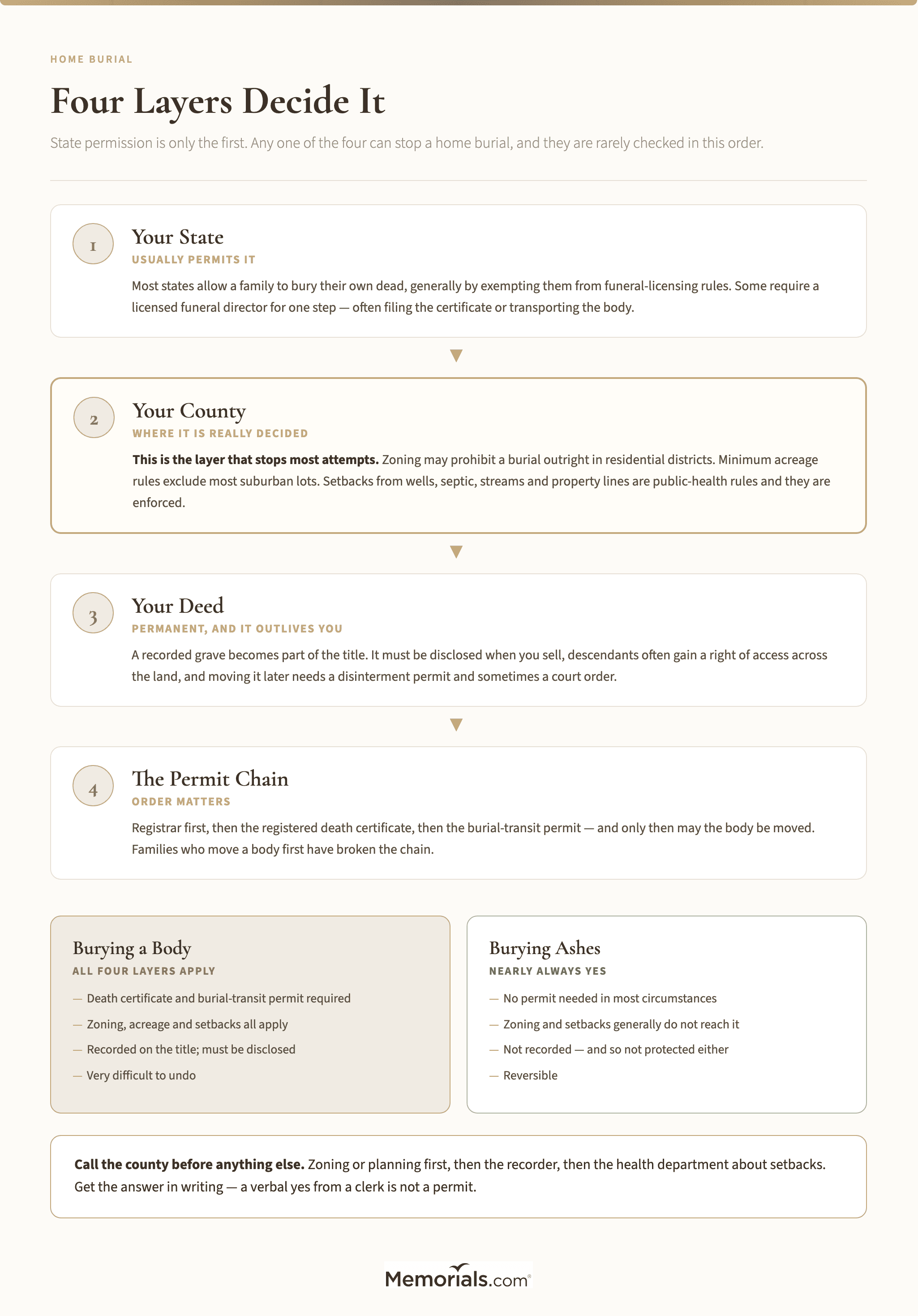
Any one of the four can stop a home burial, and they are rarely checked in this order. The second is where most attempts actually fail.
The Short Version
Whole-body burial on private land is permitted in most states, with conditions. Only a small number effectively require a licensed funeral director's involvement somewhere in the process.
The decision usually happens at the county, not the state. Zoning, minimum acreage, and setbacks from wells, water, and property lines are local rules, and they are where home burials most often fail.
A grave is a permanent encumbrance on the land. It is recorded, it must be disclosed when you sell, and in many states it creates access rights for descendants that outlive your ownership.
The paperwork does not go away. A death certificate and a burial-transit permit are required whether a funeral home is involved or not.
Cremated remains are a different question entirely, and the answer is nearly always yes on your own land.
Start here, but do not stop here. State statutes on home burial fall into roughly three patterns.
Most states permit it outright, usually by exempting families who bury their own dead without compensation from the licensing rules that govern funeral establishments. The exemption is the mechanism — the law does not so much grant permission as decline to regulate you.
Some states require a funeral director for one specific step, most often filing the death certificate or transporting the body. That single requirement changes the cost and the timeline substantially, because it means engaging a funeral home for a service you were trying to handle yourself, and not every funeral home will sell one step without the rest.
A few states regulate the land instead of the body, requiring that any new burial ground be surveyed, platted, and recorded, sometimes with a minimum acreage.
This is why the state-specific searches are the right instinct. People look up can you be buried on your own property in Kentucky, or can you bury someone on your property in Illinois, or can you be buried on your own property in Iowa, because they have correctly worked out that the answer changes at the state line. It does. It then changes again at the county line, which is the part that surprises people.
We are not going to list fifty states here with a sentence each. Home burial laws are the kind of thing where a confidently wrong sentence costs a family real money, and a one-line summary of a statute is usually wrong in the way that matters. What follows instead is one state spelled out properly, so you can see the shape of what to look for in yours.
One State, Spelled Out: How Iowa Actually Works
Iowa is worth walking through because its statutes are unusually explicit, and because the structure they reveal is common even where the wording differs.
The death certificate does not require a funeral director. Iowa Code 144.27(1) assigns that duty to "the funeral director who first assumes custody of a dead body," and then says plainly: "When a person other than a funeral director assumes custody of a dead body, the person shall be responsible for carrying out the provisions of this section." A family member may file it.
Home burial is contemplated by the statute rather than merely tolerated. Iowa Code 156.2(4) exempts from the funeral-licensing chapter "Persons who, without compensation, bury their own dead under a burial transit permit secured pursuant to section 144.32." Two things in that sentence do real work. Without compensation means this is a family provision, not a business one. And under a burial transit permit means the permit is not optional.
The sequence is specific, and getting it out of order is the common failure. Under IAC 641—97.11(3), a person other than a funeral director who assumes custody "shall first contact the state registrar for instructions for registering the certificate of death," and only then — "After review and registration of the certificate of death" — will the registrar issue the burial-transit permit, which must be in hand "prior to removal of the dead human body … from the place of death."
Read that order again, because it is the practical heart of this page: registrar, then certificate, then permit, then the body moves. Families who move a body first and handle the paperwork afterward have broken the chain, and that is true in most states, not just Iowa.
And one Iowa finding that cuts the other way. Family-directed cremation is effectively unavailable there, because a cremation establishment "will not contract directly with the general public" (IAC 481—900.10(2)). So in Iowa, burying your own dead is contemplated by statute while cremating them yourself is foreclosed by regulation — the opposite of what most people assume. Our guide to green burial in Iowa goes further into what the state does and does not allow.
Your state will have its own version of each of those four things: who may file the certificate, whether a family exemption exists, what the permit sequence is, and what is quietly foreclosed somewhere else in the code.
Layer Two: The County, Which Is Where It Is Really Decided
State law tells you whether home burial is possible. County and municipal rules tell you whether it is possible on your land, and this is the layer that stops most attempts.
Zoning. Many jurisdictions treat a burial as a cemetery use, which may be prohibited outright in residential zoning, or permitted only by special exception after a hearing. Backyard burial inside city limits is the hardest case and often simply is not allowed, whatever the state statute says.
Minimum acreage. Where a rule exists it is commonly somewhere between one and twenty acres. A suburban lot rarely qualifies.
Setbacks. Distances from wells, septic fields, streams, wetlands, and property lines. These are public-health rules and they are enforced, because the concern is groundwater. If you are on a private well, expect this to be the binding constraint.
Access. Some jurisdictions require that the burial ground be reachable by a public way, which is about descendants' visitation rights rather than about you.
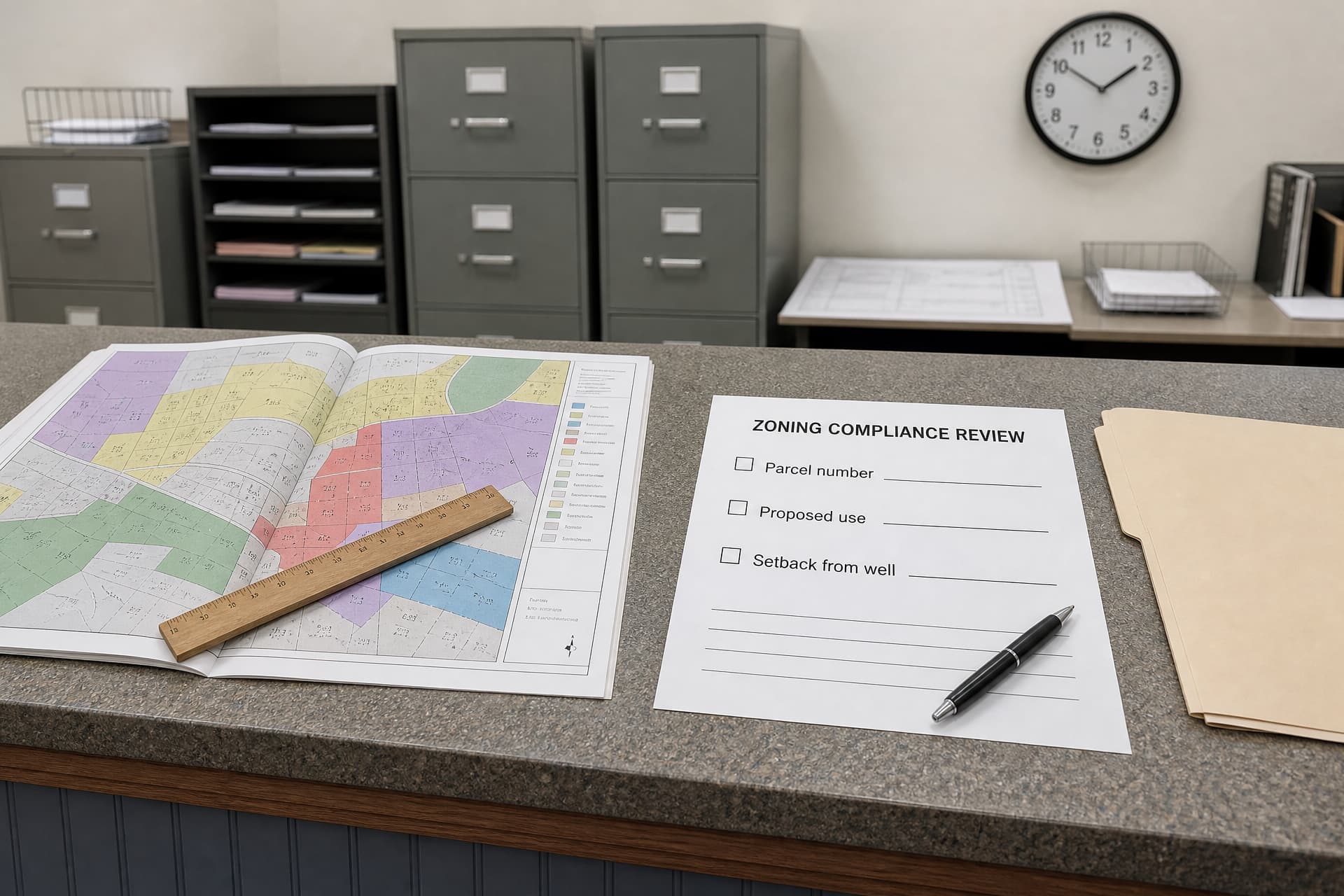
This is the desk that decides it. Ask zoning or planning first, then the recorder, then the health department about setbacks — and get each answer in writing.
Call the county, and ask the right office. Not the state. Zoning or planning first, then the county recorder, then the health department about setbacks. Get the answer in writing — a verbal yes from a clerk is not a permit, and staff turnover is real.
Layer Three: Your Deed, and What Happens When You Sell
This is the layer almost nobody researches in advance, and it is the one with the longest tail.
A grave does not move when the property does. If you bury family on your property, you are changing the property, not just holding a funeral on it. Burial on private land generally has to be recorded — surveyed, platted, and filed with the county recorder — which means it becomes part of the title. From then on:
You must disclose it to a buyer. It is a material fact about the property. A buyer may walk, or may discount.
Descendants often gain a right of access. Many states guarantee family members reasonable access to a family burial ground regardless of who owns the surrounding land. You are creating an easement across property you will not always own.
Moving the grave later is hard. Disinterment generally requires a permit, and sometimes next-of-kin consent and a court order. It is expensive and slow, and "we will relocate it if we move" is not a plan.
The platted area may be exempt from development. Fine now; a constraint for whoever holds the land in forty years.
None of that is an argument against home burial. It is an argument for deciding it as a permanent land decision rather than a funeral decision, because that is what it is.
Layer Four: The Permit Chain
Whatever your state, the sequence is some version of this, and the steps run in order:
1. The death is pronounced and certified. A physician, medical examiner, or coroner completes the medical portion. 2. The death certificate is registered with the state or county registrar. 3. A burial-transit permit is issued. This is the document that authorizes the body to be moved and buried, and it is what the funeral home would otherwise obtain for you. 4. The body may be moved. Not before. 5. The burial is recorded with the county, and the plat filed if required.
Two practical notes. Bodies are not embalmed by default, and most states do not require embalming for a burial happening within a day or two — refrigeration or simply prompt burial is the normal alternative. And the timeline is usually tighter than families expect, which is the reason to have the county's answer before it is needed rather than during the week you need it.
Cremated Remains Are a Completely Different Question
If what you are actually asking is whether you can bury ashes rather than a body, the answer changes almost entirely, and most of this page stops applying.
Is it legal to bury ashes in your yard? On land you own, essentially always, yes. Is it legal to bury cremated remains on your property without a permit? In nearly all circumstances, yes. Cremation destroys the public-health concern that drives the whole body-burial regime — remains are inert, sterile bone mineral — so the zoning, setback, and permit machinery above generally does not reach them. Burying ashes on private property is not a cemetery use; it is closer to planting a tree.
The limits that do exist are worth knowing:
Your own land, or written permission. Burying or scattering on land you do not own needs the owner's consent, and some states say so explicitly. Iowa's rule is unusually blunt: under IAC 641—97.13(3), local ordinances "shall not allow the scattering of cremated remains upon public property or upon private property without the property owner's consent," and in the absence of any local ordinance, it "shall not be allowed" either. Our guide to scattering ashes laws and etiquette covers the state-by-state picture for scattering specifically.
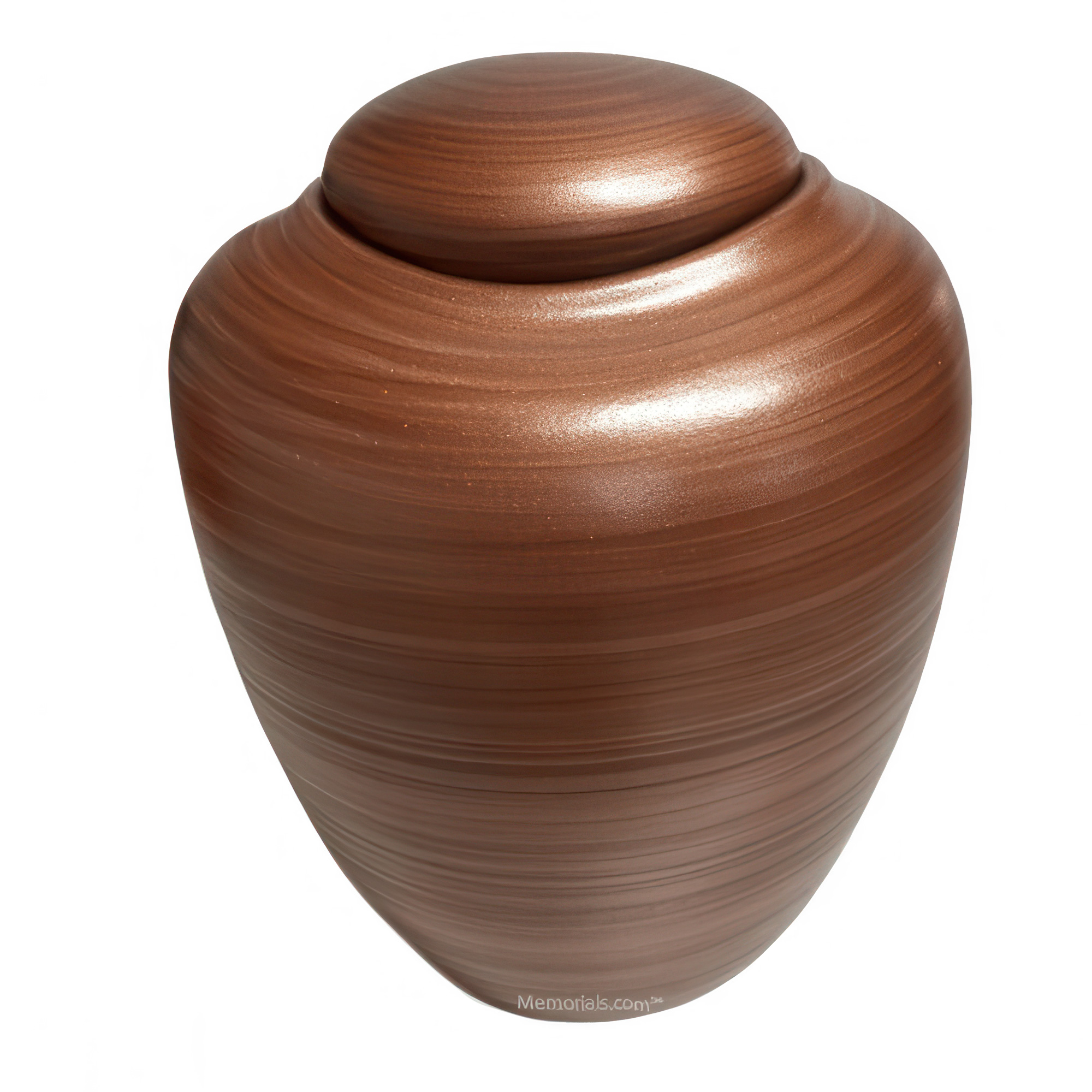
A container buried in soil should be chosen for it. A sealed metal or stone urn does not break down and is not meant to; a biodegradable urn is built to return to the ground over months. If the point is that the remains become part of the place, the container matters. Whichever urn for ashes you choose, decide before the burial rather than after — opening a sealed urn later is a job nobody enjoys.
It is not recorded, so it is not protected. The flip side of needing no permit is that nothing in the title says the remains are there. A future owner has no obligation to you. If permanence matters, cremation urns for burial in a cemetery plot buy something a backyard cannot.
Disclosure is still the decent thing. No duty attaches in most places, but telling a buyer is the right call, and it avoids a discovery that upsets someone later.
Often, but by less than people expect, and the savings are not where they look.
What you avoid is the funeral home's service fee, casket markup, and the cemetery's plot and opening-and-closing charges — which together are the bulk of a conventional burial. What you take on is a survey and plat if your county requires one, the recorder's fees, possibly a special-exception hearing, excavation, and your own time during the worst week of your life. A rough comparison:
Conventional burial
Home burial
Burying ashes at home
Who may handle the body
funeral director
family, in most states
n/a — already cremated
Permits needed
handled for you
death certificate + burial-transit
usually none
Typical land requirement
none
often 1–20 acres, by county
none
Recorded on the title
no
usually yes
no
Reversible later
limited
very difficult
easily
Disclose when selling
no
yes, required
not usually required
The honest summary: home burial of a body is a land decision with a funeral attached, and burying ashes at home is a funeral decision with no land consequences. Those are different undertakings and the second one is available to almost everybody.
Family Cemeteries, If You Are Thinking Beyond One Burial
If the intent is more than a single grave, you are proposing a family cemetery, and that is a distinct legal object in most states. It generally means a surveyed and recorded plat, sometimes a minimum acreage, occasionally a maintenance arrangement, and in some states registration with a state board. The upside is durability: a recorded cemetery is far better protected against a future owner than an unrecorded grave. The cost is that it is the most formal version of this, and the hardest to undo.
If what draws you to the idea is land and simplicity rather than ownership, a conservation or green burial ground may get you most of the way there without the plat, the hearing, or the permanent encumbrance on a house you may sell.
What To Do Next
In this order, because each step can end the process. Our cremation planning guide covers the surrounding decisions — cost, timing, and what a provider does and does not have to be involved in.
1. Decide body or ashes. If ashes, most of this page stops applying and you can proceed. 2. Call county zoning and ask whether a burial is permitted on your parcel, and under what conditions. Get it in writing. 3. Ask the health department about setbacks from your well, septic, and any water. 4. Ask the county recorder what must be surveyed, platted, and filed. 5. Confirm the permit chain with your state registrar or vital records office — specifically who may file the certificate and how the burial-transit permit is obtained. 6. Then decide, knowing it is a permanent feature of the title.
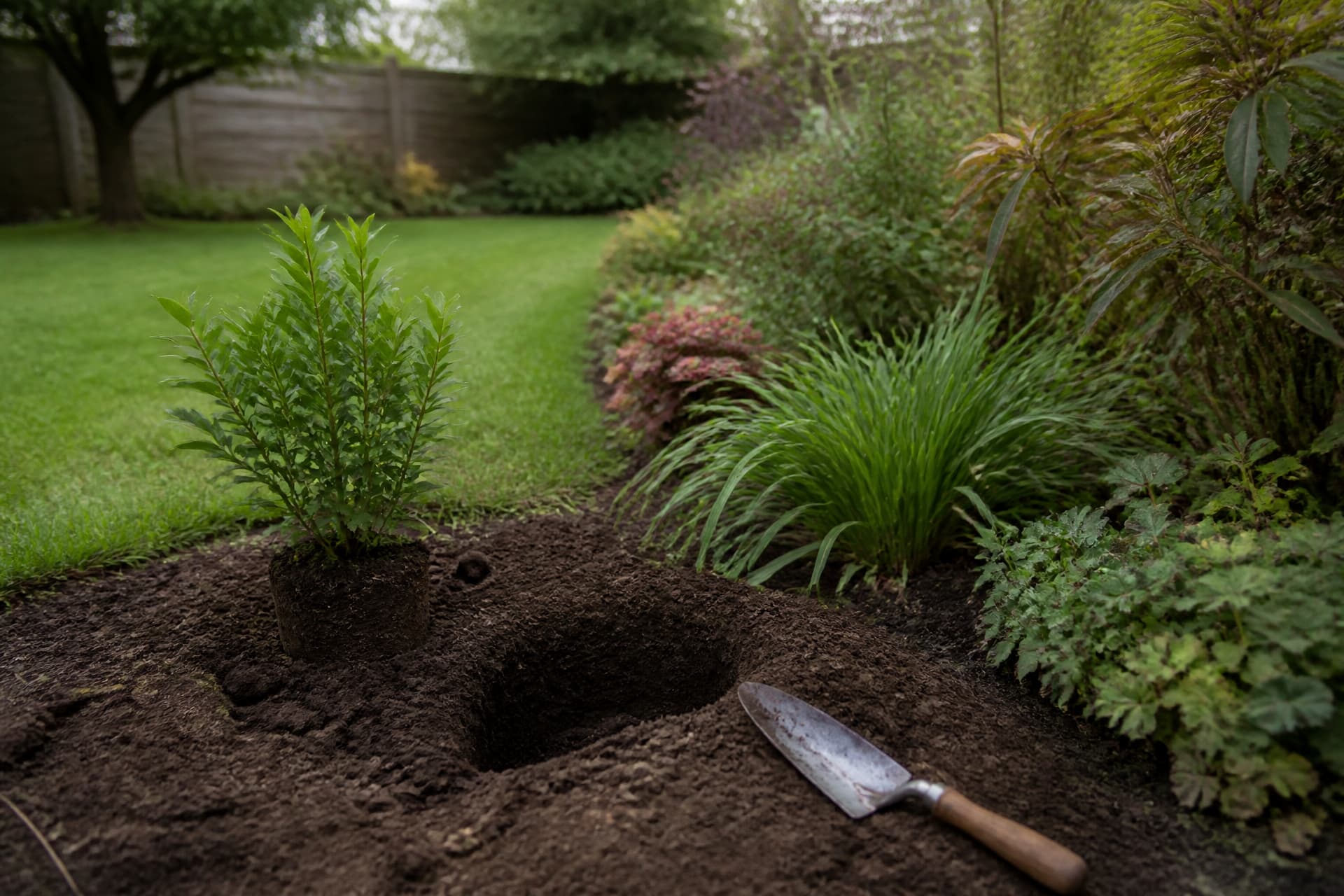
The version almost everybody can have. Burying ashes needs no permit on your own land, and planting over the spot is the part people say they come back to.
If step two or three comes back no, that is not the end of the question. Can I bury a loved one on my property and can their ashes rest here are different questions, and the second one is usually still available on exactly the land where the first was refused.
Frequently Asked Questions
Can you be buried on your own property? In most states, yes, with conditions — and state permission is only the first of four layers. County zoning, minimum acreage and setback rules, your deed, and the permit chain all have to clear as well, and the county is where attempts most often fail.
Is backyard burial legal inside city limits? Rarely. Residential zoning commonly prohibits a cemetery use outright, and where it is allowed at all it usually needs a special exception. Acreage minimums make most city and suburban lots ineligible regardless.
Do you need a casket for a home burial? Generally no. Most states do not require a casket for burial, only that the body be in some container or shroud. Cemeteries impose casket and vault requirements by their own rules, which is a reason home burial can cost less — but check your county, because a few set their own standards.
Do you still need a death certificate? Yes, always, and a burial-transit permit in most states. Those obligations attach to the death, not to who handles it. Skipping them is the one part of this with real legal exposure.
Can you bury ashes in your yard without a permit? In nearly all circumstances, yes. Cremated remains are inert, so the public-health rules behind body burial do not reach them. Use a container suited to soil if you want it to break down, and note that nothing records the remains are there.
Can you move a home burial later? With difficulty. Disinterment generally requires a permit, often next-of-kin consent, and sometimes a court order. Treat the location as permanent when you choose it.
Does a grave on my land affect the property value? It must be disclosed to a buyer and some buyers will decline or discount. In many states descendants also gain a right of access to a family burial ground, which is an easement that survives your ownership.
One Decision, Two Timescales
The reason this question is harder than it looks is that it is really two decisions wearing one sentence. There is the burial, which happens in a week, and there is the land, which outlasts everyone making the choice. The paperwork is the manageable part. The part worth sitting with is that you are writing something permanent into a deed on behalf of people who are not in the room, at a moment when nobody is thinking about resale.
Which is also why the ashes answer matters so much. For a great many families, the real wish is that someone rest somewhere that meant something — and cremated remains deliver that, on the same land, with none of the permanence problems. If the ground is what matters rather than the formality, that is the version that is almost always available.