🏬Supersize Online Funeral Retailer🪦1000's of Headstones⚱️Over 10,000 Cremation Urns⚰️Caskets Overnight Delivery🛒Funeral & Memorial Superstore🚚FREE Shipping on ALL Orders👨👩👧👦Helping Families for over 20 Years💰Lowest Price Guarantee🏬Supersize Online Funeral Retailer🪦1000's of Headstones⚱️Over 10,000 Cremation Urns⚰️Caskets Overnight Delivery🛒Funeral & Memorial Superstore🚚FREE Shipping on ALL Orders👨👩👧👦Helping Families for over 20 Years💰Lowest Price Guarantee
🏬Supersize Online Funeral Retailer🪦1000's of Headstones⚱️Over 10,000 Cremation Urns⚰️Caskets Overnight Delivery🛒Funeral & Memorial Superstore🚚FREE Shipping on ALL Orders👨👩👧👦Helping Families for over 20 Years💰Lowest Price Guarantee🏬Supersize Online Funeral Retailer🪦1000's of Headstones⚱️Over 10,000 Cremation Urns⚰️Caskets Overnight Delivery🛒Funeral & Memorial Superstore🚚FREE Shipping on ALL Orders👨👩👧👦Helping Families for over 20 Years💰Lowest Price Guarantee
Nearly everyone who asks "is it legal to scatter ashes on the beach" is really asking one of two different questions, and they do not have the same answer.
One is about releasing ashes into the water while standing on the shore. The other is about placing them on the sand itself. The first runs into a federal regulation written for ocean waters. The second never touches that regulation at all, and is decided by whoever owns or manages the beach.
Most guidance collapses the two and produces a single confident answer that is half right. Here is the honest version: scattering into the sea from the shoreline does not satisfy the federal rule, and scattering on dry sand is a permission question rather than a federal one.
The federal rule that everyone half-remembers is a burial-at-sea permit. It governs what happens in the ocean. A beach is the edge of the land, and the dry sand above the tide line is not ocean water — so whether that rule applies depends entirely on where the ashes end up.
Wade in and release them into the surf, or pour them from a rock into the water, and you have placed cremated remains in ocean waters. Scatter them across dry sand well above the high-water mark and you have not. Same beach, same afternoon, two different legal frameworks.
Our guide to scattering ashes laws and etiquette covers the whole national picture — federal rules, state variation, national parks and private property, and it sits alongside the rest of our cremation planning guide. This page is narrower on purpose: it is about the shoreline specifically, because that is where the two frameworks meet and where the confusion lives.
Into the Water: What the Federal Rule Actually Says
Burial at sea in the United States runs under a general permit in the federal ocean-dumping regulations, and the provision for cremated remains is short enough to quote in full.
40 CFR 229.1(a)(3) reads: "Cremated remains shall be buried in or on ocean waters without regard to the depth limitations specified in paragraph (a)(2) of this section provided that such burial shall take place no closer than 3 nautical miles from land."
Three things in that sentence matter for a beach.
"In or on ocean waters." The permit is about the water. That is the phrase that makes dry-sand scattering a different question.
"No closer than 3 nautical miles from land." Three nautical miles is roughly 3.5 statute miles, or about 6,000 yards. A beach is zero. There is no distance at which standing on the shore satisfies this.
"From land." The regulation defines the word rather than leaving it to common sense. 40 CFR 229.1(b): "Land means that portion of the baseline from which the territorial sea is measured, as provided for in the Convention on the Territorial Sea and the Contiguous Zone, which is in closest proximity to the proposed disposal site." In plain terms, the measurement runs from the coastal baseline, not from the last thing you can see.
Two further provisions of the same section are worth knowing before a ceremony.
Flowers and wreaths are addressed separately.40 CFR 229.1(c) permits them at the same site as the remains, but only those "consisting of materials which are readily decomposable in the marine environment." A bouquet wrapped in cellophane, a ribbon, a plastic-stemmed arrangement — none of those are covered.
There is a report, and its wording gives the rule away.40 CFR 229.1(d): "All burials conducted under this general permit shall be reported within 30 days to the Regional Administrator of the Region from which the vessel carrying the remains departed." The reporting duty is written around a vessel. The regulation assumes you went out on a boat, because the distance it requires cannot be reached any other way on foot.
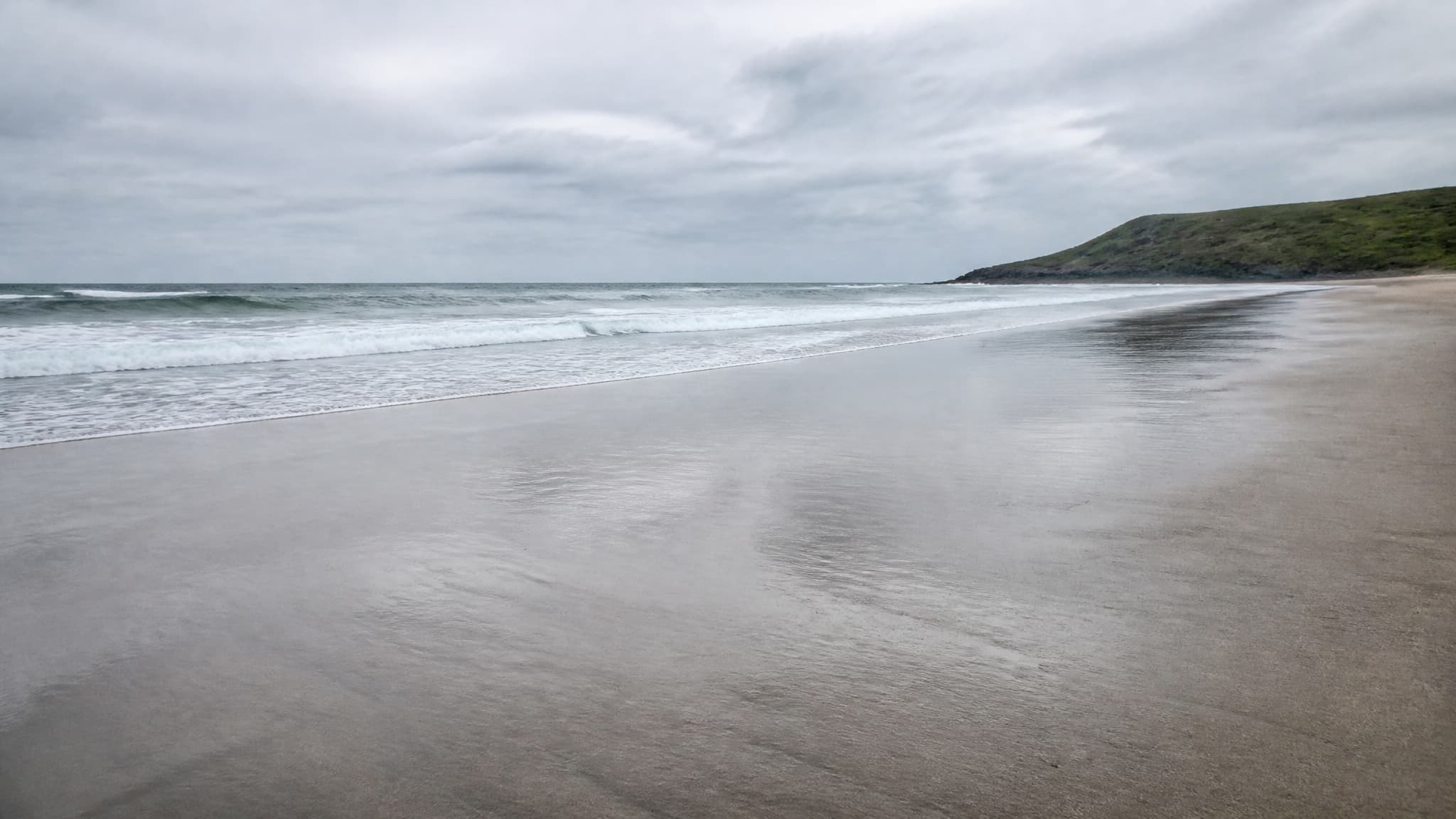
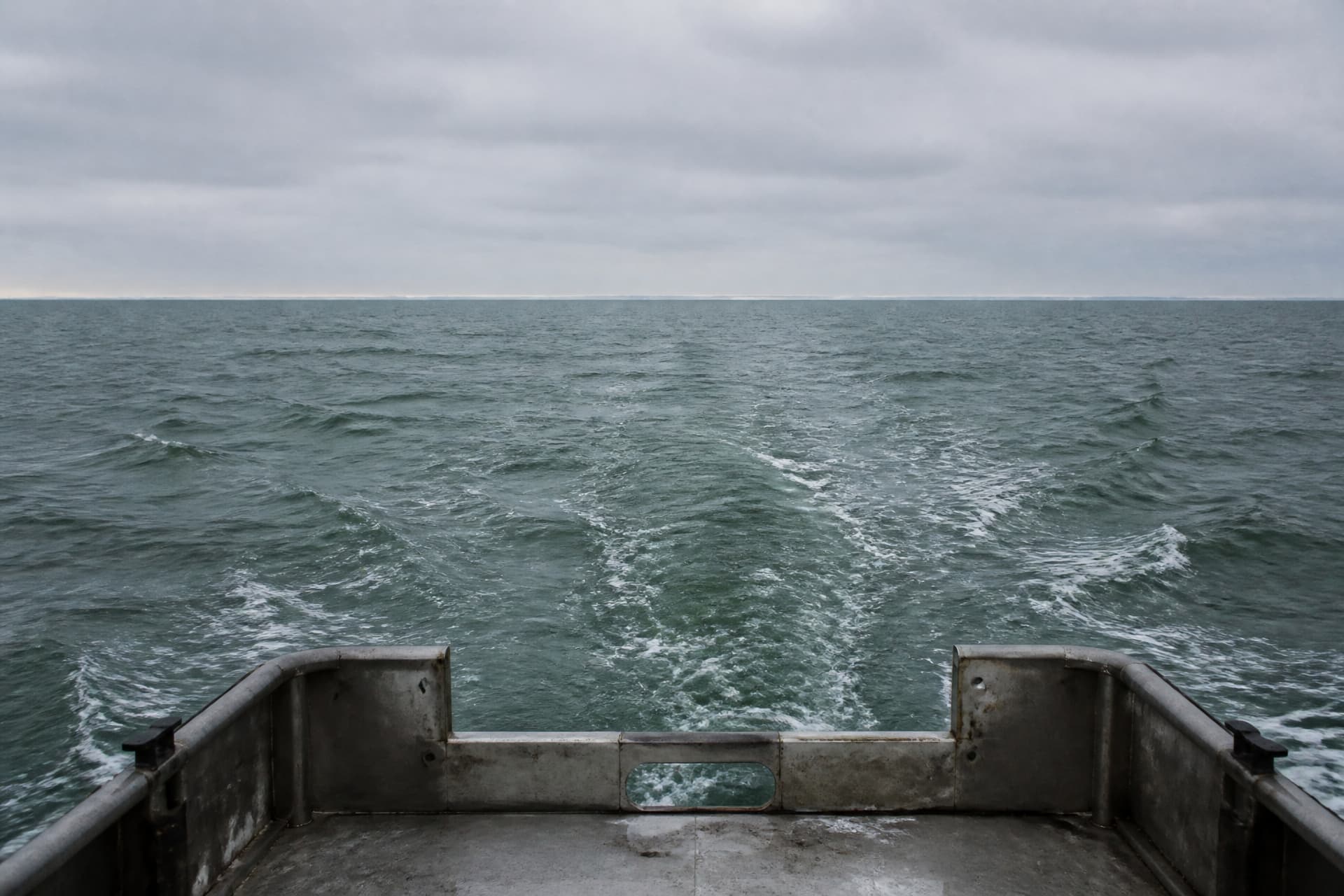
What three nautical miles from land actually looks like. At this distance the shore is a line on the horizon, which is the point of the distance requirement and the reason it cannot be met from a beach.
So is scattering ocean ashes legal? Yes — and the answer for the sea is clean: it is legal beyond the three-mile line, which means you need a boat or an aircraft. Our water burial guide covers the charter side of that, what a service typically includes, and what happens on the day. Scattering ashes over water from shore is also one of the methods in our scattering ashes guide, which is worth reading alongside this page because the legal position and the practical technique are different subjects.
On the Sand: A Question About Who Manages the Beach
Take the ocean out of it and the federal permit falls away. What remains is a property question, and beaches in the United States have a startling number of different owners.
A single stretch of coast can pass through federal, state, county, municipal and private hands inside a few miles. Each one sets its own rules, and the relevant question stops being "what does the law say" and becomes "who do I ask".
National Park Service shoreline. Many of the most-visited beaches in the country sit inside a national seashore, a national recreation area or a national park. These generally require a permit from the park itself, some prohibit scattering outright, and the rules are specific to the unit rather than national.
State park and state beach. Usually a written request to the park district, and often with conditions attached. California's system is a good worked example and appears below.
County and municipal beaches. The most variable category. Some have an explicit policy, many have none, and a beach with no written rule is not the same as a beach that permits it.
Private beach. Permission from the owner, in the same way as any other private land.
Every one of these belongs to somebody — a national seashore, a state park district, a county, a city or a private owner. Which one decides the answer, and there is no national beach rule to look up.
The practical consequence is that a truthful answer for a specific beach almost always requires one phone call. Beach ash scattering laws are not really national laws at all — they are a patchwork of land-management policies, and there is no national beach rule to look up because there is no national beach.
Where State Law Says It Explicitly
A few states have written the shoreline question into statute rather than leaving it to the land manager, and those states give the clearest picture of how the two frameworks interact.
California is the most explicit. Health and Safety Code section 7117 permits cremated remains to be "taken by boat from any harbor in this state, or by air, and scattered at sea" — and then draws a line much closer in than the federal one: "no such scattering may take place within 500 yards of the shoreline." The same section states that it "does not allow the scattering of cremated human remains or hydrolyzed human remains from a bridge or pier", and its definition of "at sea" reaches "the inland navigable waters of this state, exclusive of lakes and streams."
Read those together and California has answered the beach question twice over: not from a pier, not within 500 yards of the shoreline, and not in a lake or a stream. Its own state park system puts it even more bluntly, listing beaches among the places where scattering is not allowed and citing the federal three-mile requirement as the reason.
California also permits land scattering under a separate section with real conditions attached, which is a different and more permissive rule than most people expect. Scattering ashes in California is covered in full on its own page.
Hawaii has no such statute, which surprises people who assume the most ocean-oriented state in the union would regulate it most. There is no Hawaii law fixing where ashes may be kept or scattered. What exists instead is a permitting layer over public land and water administered by the state, and a longstanding cultural dimension the statutes themselves acknowledge. Scattering ashes in Hawaii is covered on its own page.
The general pattern across the rest of the country: states with a detailed scattering statute tend to address water and land separately, and states with no statute leave the beach entirely to the land manager.
What to Do Instead
None of the above makes a coastal farewell difficult. It changes the mechanics rather than the possibility.
Charter a vessel. This is the direct answer for scattering at sea, it resolves the distance requirement and the reporting duty at once, and an operator that does this regularly will handle the filing. Many coastal ports have services that do nothing else.
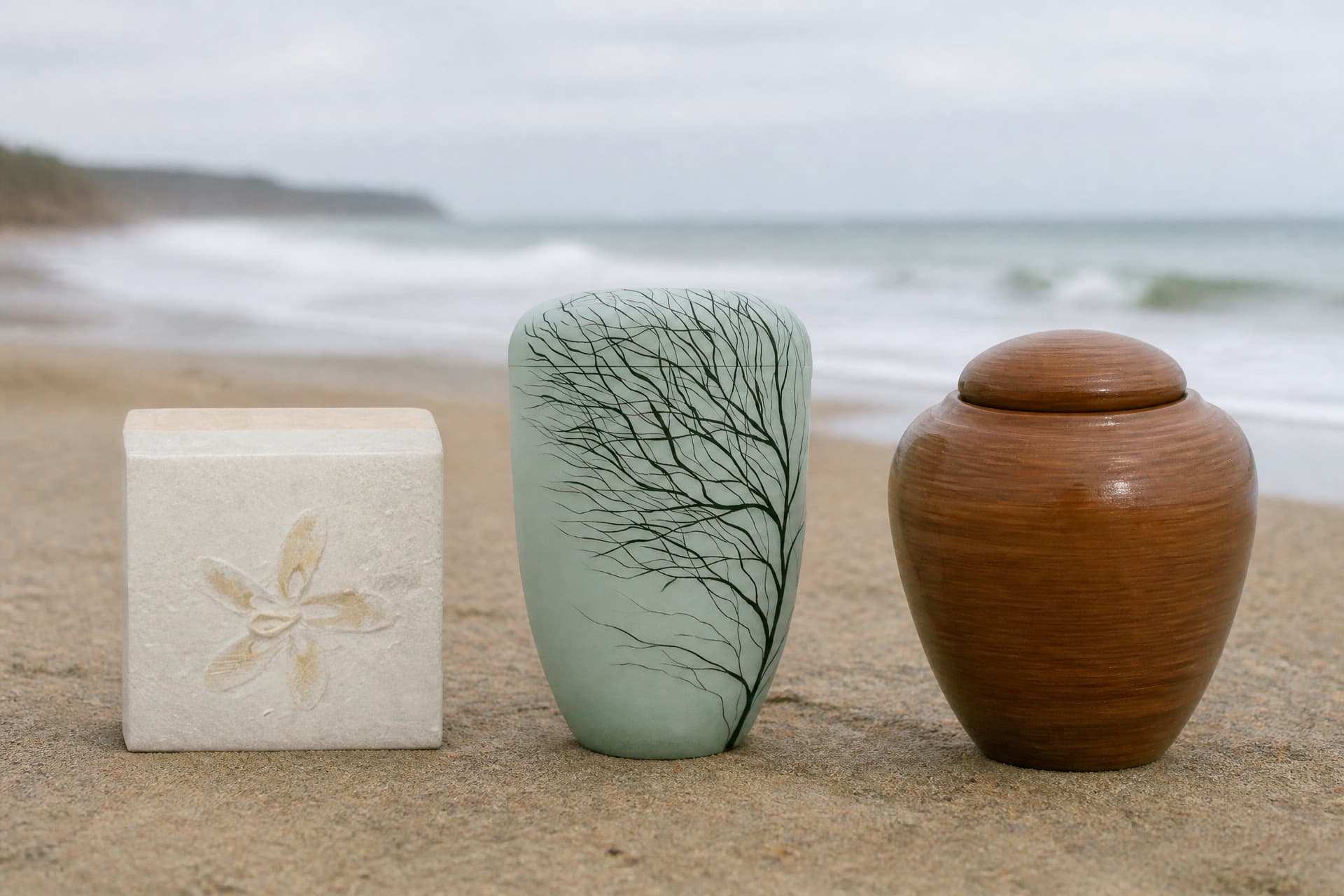
Use a water urn rather than pouring. A biodegradable urn designed for water release floats briefly and then sinks and breaks down, which turns the moment into something a family can watch rather than something they have to manage in the wind. Our biodegradable urns are made for exactly this, and the same principle is why they suit a green burial on land.
Scatter above the tide line only where you have permission. If dry sand is what matters, ask the land manager and get the answer in writing. A purpose-made scattering urn with a controlled opening makes a measured release far easier than tipping a container, and it keeps the ashes where you intend them rather than where the wind takes them. Our scattering urns for ashes are built around that control, and sit alongside the wider range of cremation urns.
Split the difference. There is no requirement to scatter everything in one place. Many families release a portion at sea and keep the rest, and our guide to human ashes covers what that looks like practically.
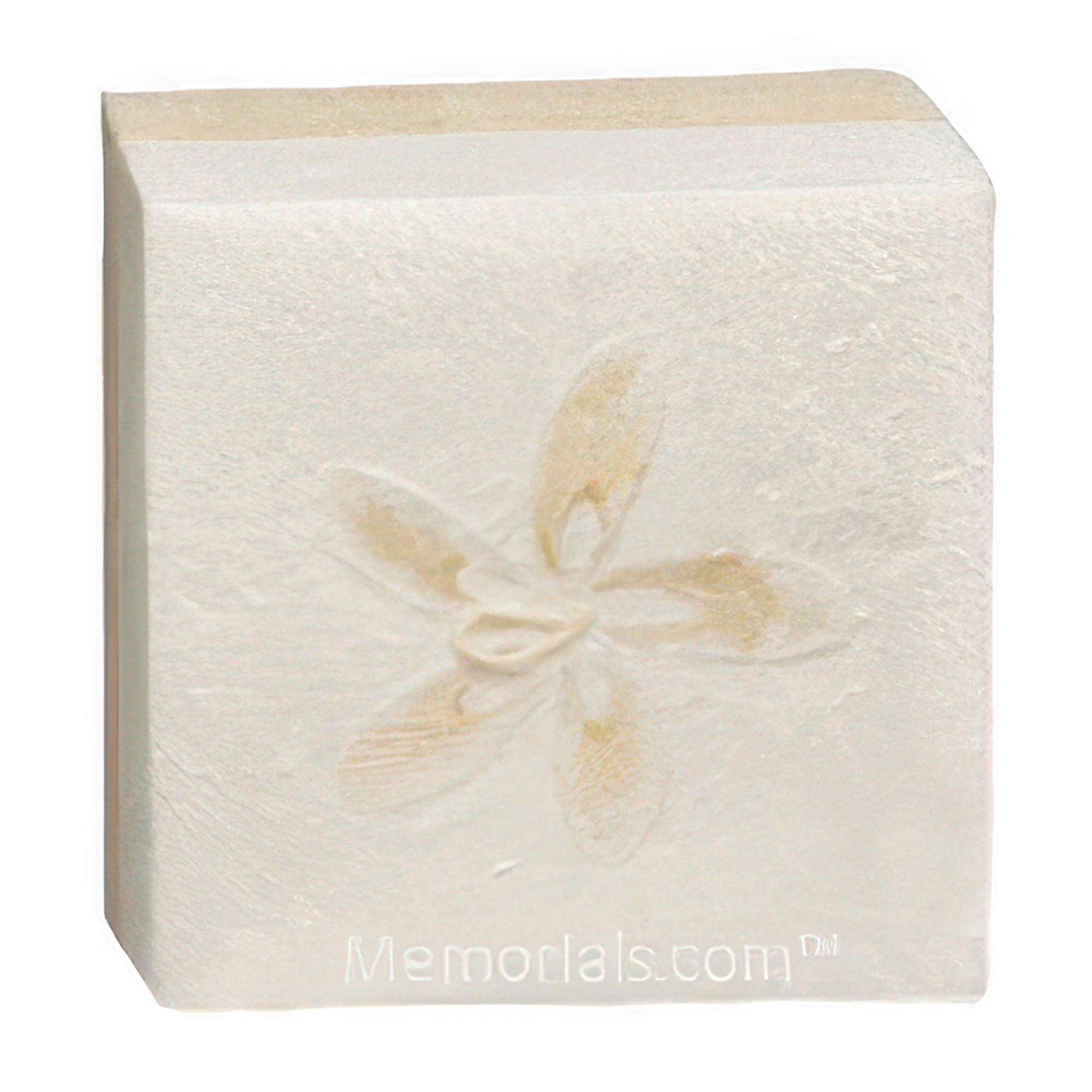
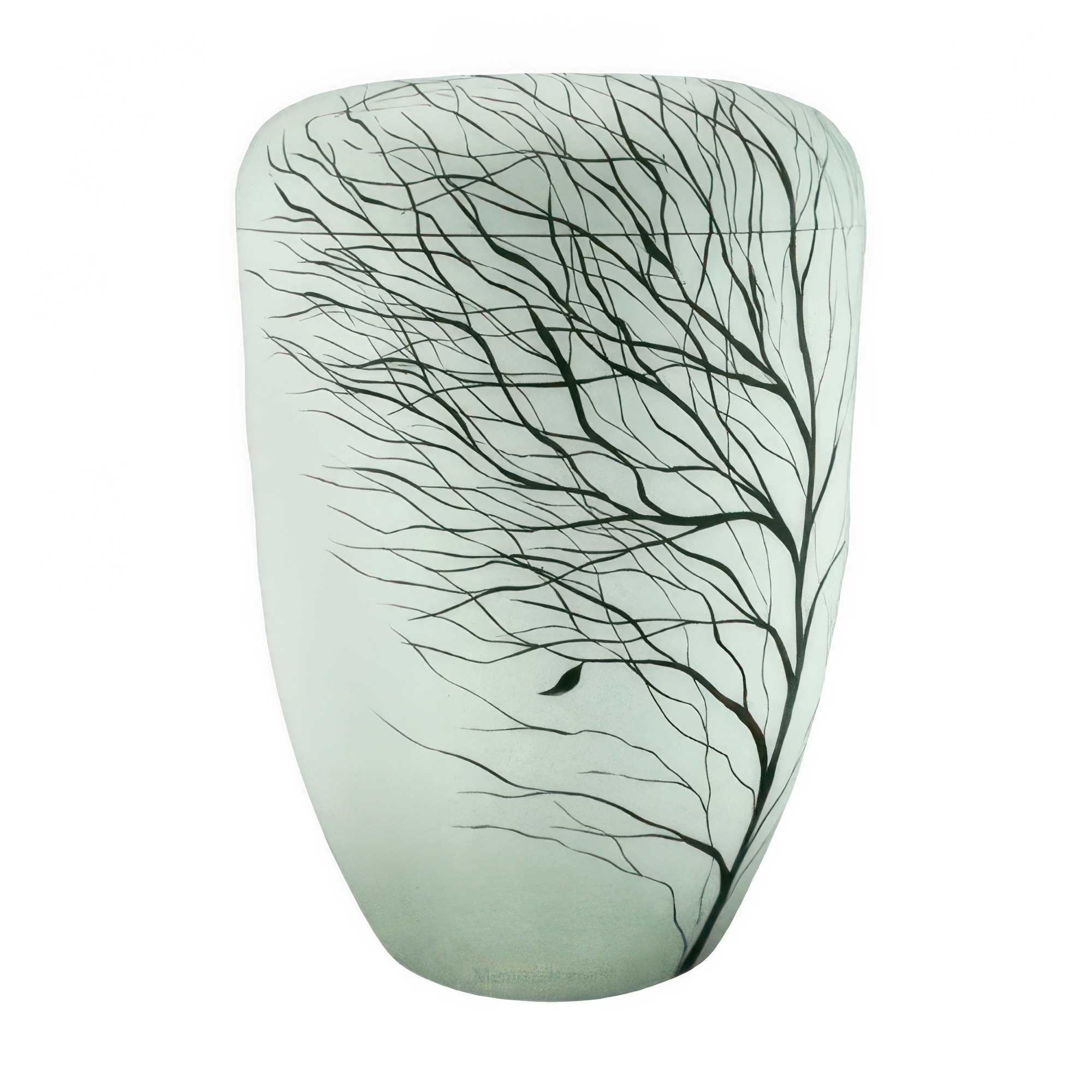
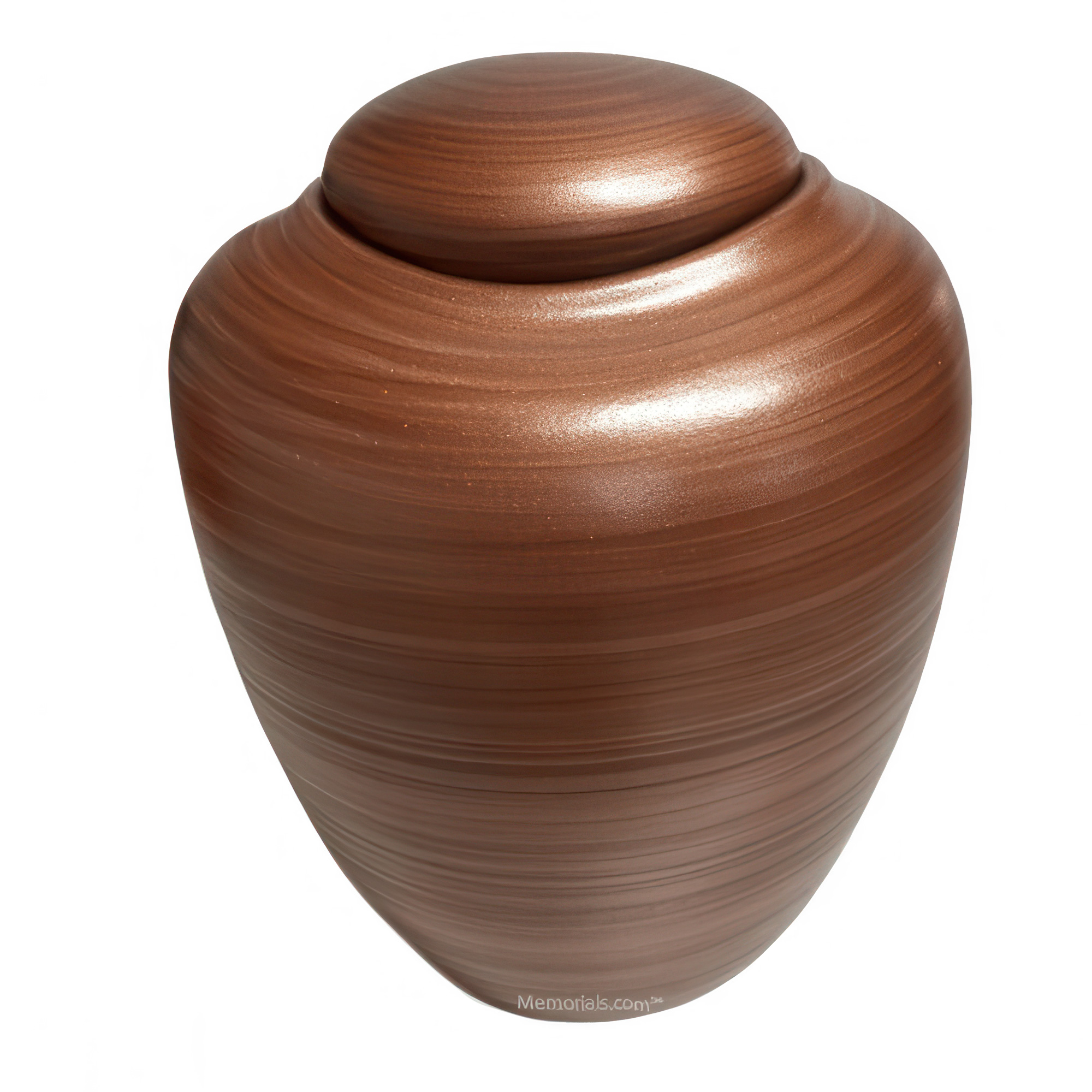
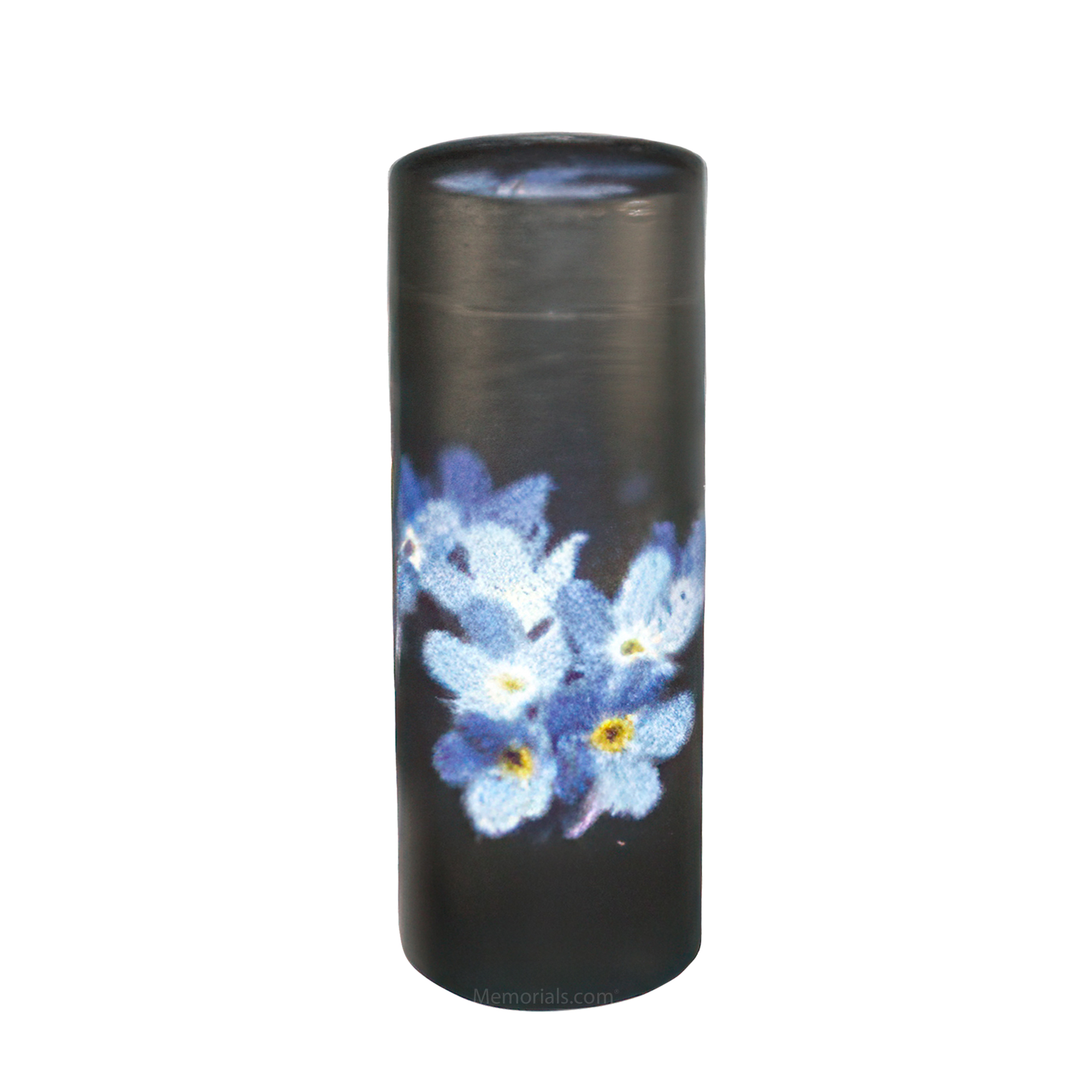
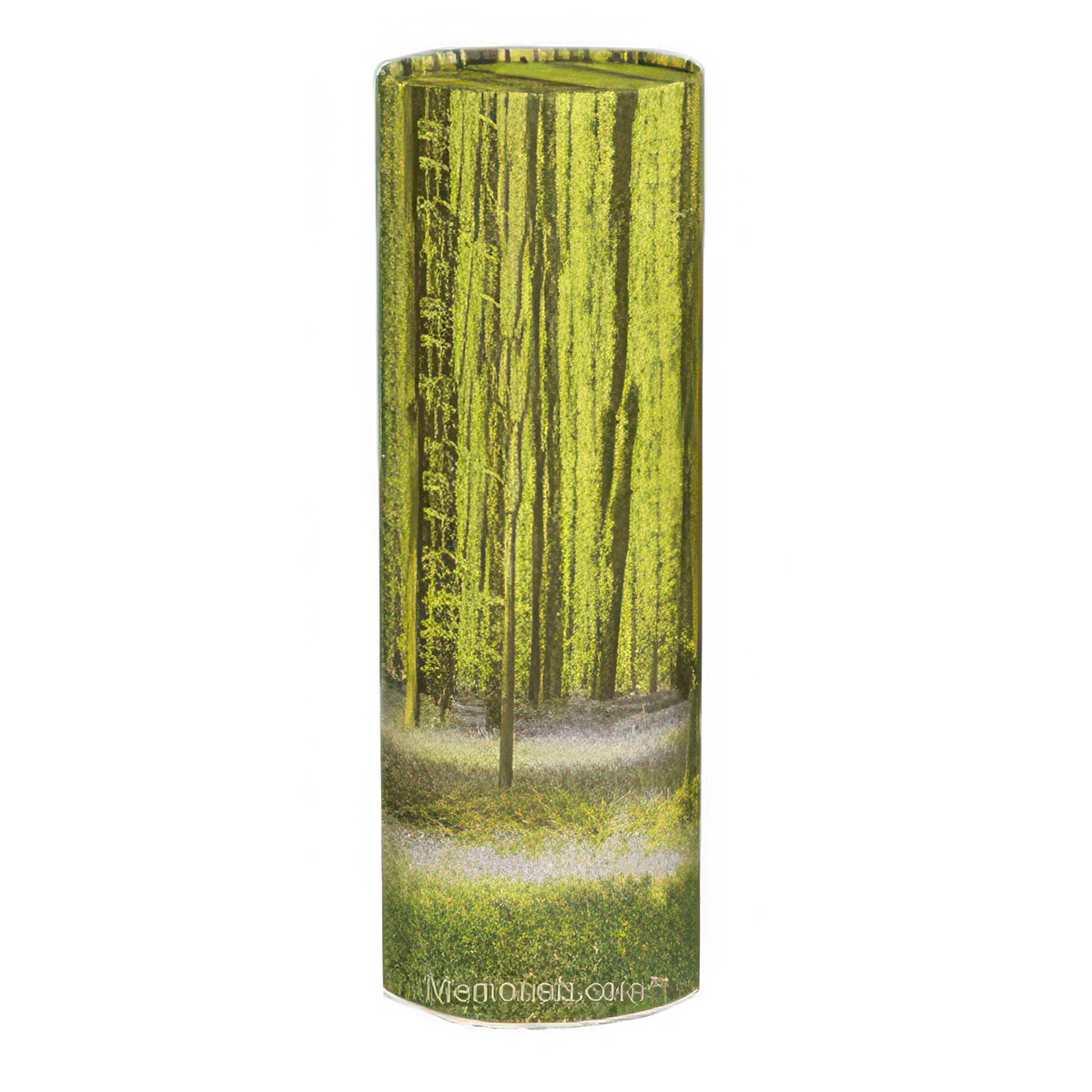
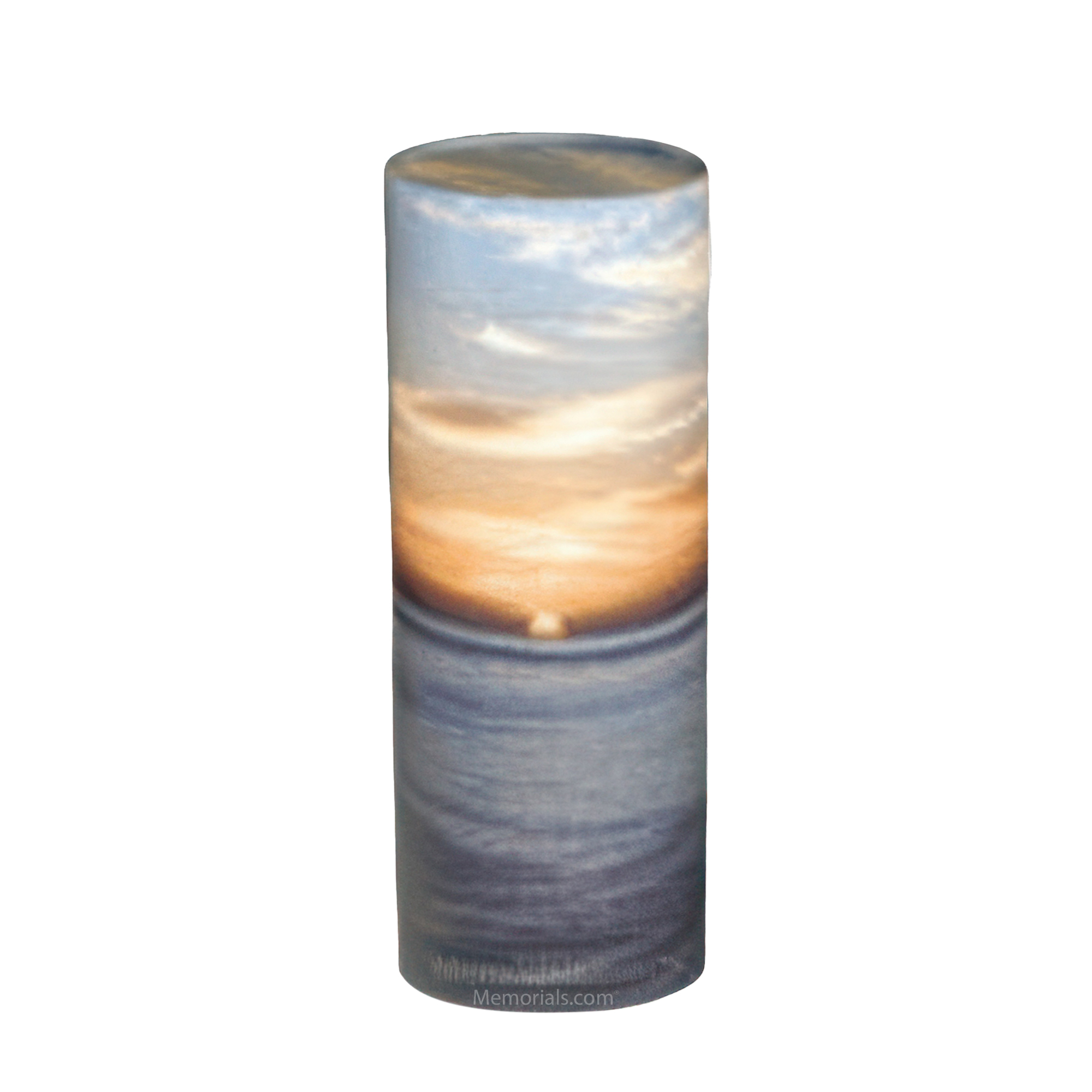
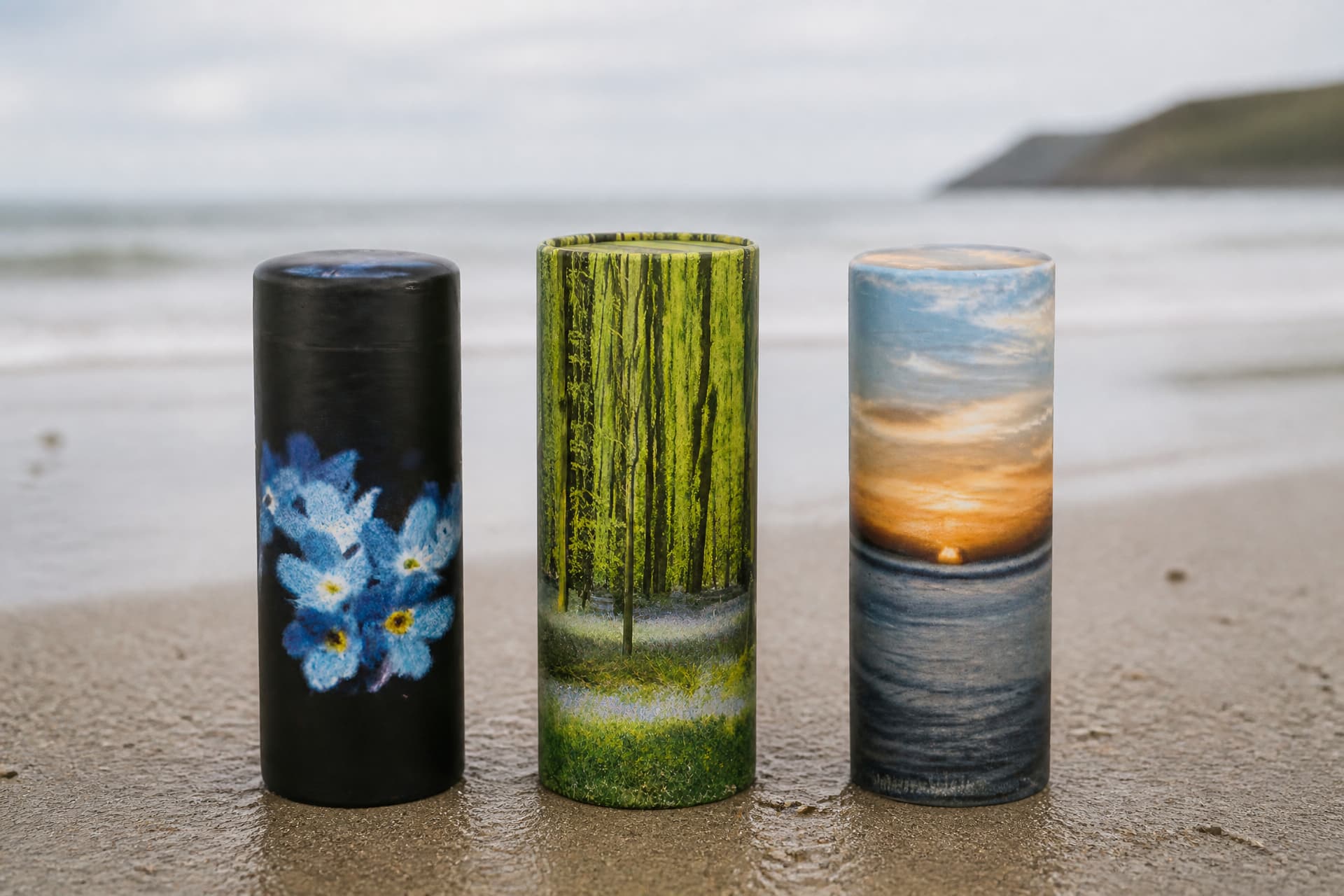
Biodegradable urns made for water release. They float long enough for a family to watch, then sink and break down, which is the practical answer to the distance rule once a boat is involved.
Mind the Practical Things, Not Just the Legal Ones
Two realities catch families out on a beach regardless of whose permission they hold.
Wind on an open shore is stronger and less predictable than inland. Cremated remains are a coarse pale grit rather than a fine powder, but a sea breeze will still carry the lightest fraction. Release low, downwind, and with everyone standing upwind of the person scattering.
Ashes are visible on sand. They are pale gray and sand-textured, so on dark wet sand they show clearly and will remain visible until the tide reaches them. Families who want the moment to be private often scatter on a falling tide close to the water's edge, so the sea completes it.
Neither of these is a legal point. Both are the difference between a ceremony that goes the way it was imagined and one that does not.
A controlled opening meters the release, which matters far more in a sea breeze than on a still day inland.
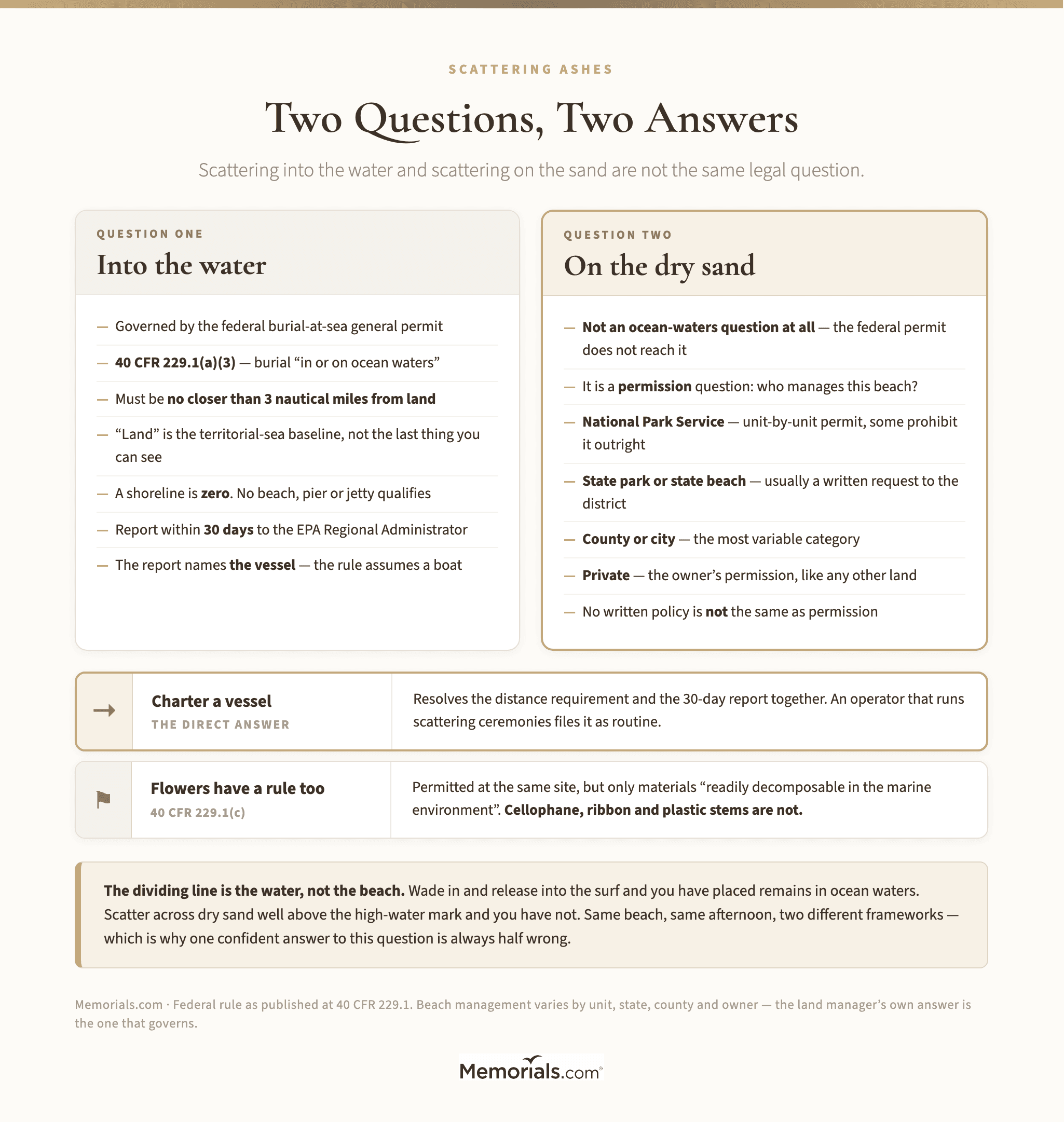
The federal rule governs ocean waters and sets a three-nautical-mile line. Dry sand above the tide is a permission question, and the answer depends on who manages the beach.
Frequently Asked Questions
Can I scatter ashes into the ocean from the beach? Not under the federal general permit. 40 CFR 229.1(a)(3) requires burial in or on ocean waters to take place no closer than three nautical miles from land, and no point on a shoreline meets that. A boat or an aircraft is what the regulation contemplates, and its reporting provision refers to the vessel the remains departed on.
Is it legal to scatter ashes on the dry sand? That is not governed by the federal ocean rule, because dry sand is not ocean water. It is decided by whoever owns or manages the beach — the National Park Service, a state park district, a county, a city or a private owner. Some permit it with a written request, some prohibit it, and many have no policy at all. Ask, and get the answer in writing.
Do I need a permit to scatter ashes at sea? The federal rule is a general permit, so there is no application to file in advance. What it does require is a report within 30 days to the EPA Regional Administrator for the region the vessel departed from. A charter operator that runs scattering ceremonies will normally handle this.
What about scattering from a pier or a jetty? It fails the federal distance requirement for the same reason a beach does, and some states prohibit it by name. California's Health and Safety Code section 7117 states specifically that it does not allow scattering from a bridge or pier.
Are flowers allowed at a sea scattering? Yes, with a material restriction. 40 CFR 229.1(c) permits flowers and wreaths at the same site, provided they consist of materials "which are readily decomposable in the marine environment." Cellophane, ribbon and plastic stems are not.
What happens if someone scatters on a beach without permission? In practice, enforcement against a family is uncommon. That said, unauthorised disposition of remains is an offense in many states, and scattering on land you do not own or control can be treated as trespass independently of any burial statute. Our scattering ashes laws guide sets out the penalties that exist and how they vary.
A Final Thought
The rule that frustrates people here is not arbitrary. The three-mile line exists because the ocean-dumping regulations treat coastal waters as something to protect, and the permission requirement on land exists because a beach belongs to somebody even when it feels like it belongs to everybody.
Neither one stops a family doing what they intended. A charter turns the distance requirement into an afternoon on the water, and a phone call turns a dry-sand scattering into a permitted one. The only version that goes wrong is the one where nobody asked.