🏬Supersize Online Funeral Retailer🪦1000's of Headstones⚱️Over 10,000 Cremation Urns⚰️Caskets Overnight Delivery🛒Funeral & Memorial Superstore🚚FREE Shipping on ALL Orders👨👩👧👦Helping Families for over 20 Years💰Lowest Price Guarantee🏬Supersize Online Funeral Retailer🪦1000's of Headstones⚱️Over 10,000 Cremation Urns⚰️Caskets Overnight Delivery🛒Funeral & Memorial Superstore🚚FREE Shipping on ALL Orders👨👩👧👦Helping Families for over 20 Years💰Lowest Price Guarantee
🏬Supersize Online Funeral Retailer🪦1000's of Headstones⚱️Over 10,000 Cremation Urns⚰️Caskets Overnight Delivery🛒Funeral & Memorial Superstore🚚FREE Shipping on ALL Orders👨👩👧👦Helping Families for over 20 Years💰Lowest Price Guarantee🏬Supersize Online Funeral Retailer🪦1000's of Headstones⚱️Over 10,000 Cremation Urns⚰️Caskets Overnight Delivery🛒Funeral & Memorial Superstore🚚FREE Shipping on ALL Orders👨👩👧👦Helping Families for over 20 Years💰Lowest Price Guarantee
The Irish wake is one of the most distinctive funeral traditions in the world — a gathering that blends grief and celebration, prayer and storytelling, tears and laughter into a single farewell. For centuries, families across Ireland have opened their homes to community, laid their loved ones out for viewing, and kept watch through the night until burial. The tradition runs deep enough that many families of Irish descent still practice some version of it today, whether in rural County Clare or a suburb of Boston.
If you are planning a funeral and exploring how different cultures honor the departed, understanding the Irish wake meaning offers a window into how ritual, community, and even humor can play a role in the grieving process. This guide covers the wake's origins, its core customs, what to expect if you attend one, and how modern families are adapting this centuries-old tradition.
The word "wake" in a funeral context does not mean waking someone from sleep. It comes from the Old English term meaning "to keep watch" or "to remain awake." The Anglo-Saxons called the practice a lich-wake, from the word lic meaning corpse — literally, a vigil kept over the body of the dead.
Over time, the religious vigil aspect of the wake faded in much of England and Europe, but it survived and flourished in Ireland. In Irish Gaelic, the wake is called tórramh or faire, and it became one of the most deeply rooted rituals in Irish life. To this day, some people confuse "wake" with the idea of waiting for a deceased person to "wake up." While there is a popular legend about lead poisoning from pewter tankards causing drinkers to fall into death-like states — prompting families to watch the body for signs of revival — historians consider this a myth. The true origin of wake keeping lies in the vigil tradition: staying awake with the dead as an act of love, protection, and respect.
Understanding the difference between a wake and a funeral helps clarify why the Irish wake occupies such a unique place among farewell customs. A funeral is a formal ceremony of burial or cremation. A wake is the gathering that precedes it — less structured, more personal, and in the Irish tradition, far more communal.
Origins of the Irish Wake
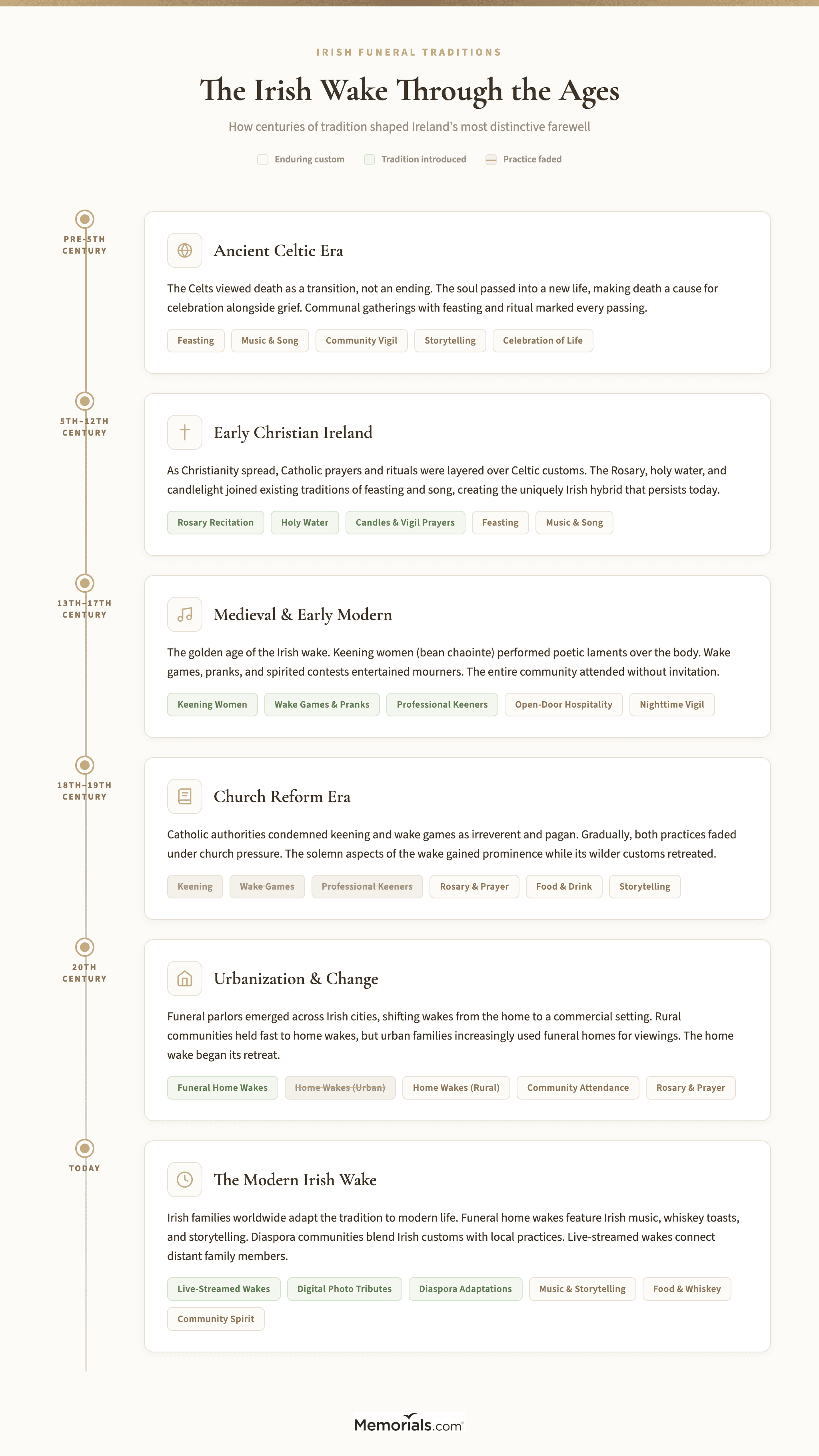
The exact origins of the Irish wake are lost to time, but most historians trace its roots to ancient Celtic beliefs about death and the afterlife. The Celts did not view death as an ending. They believed the soul passed into a new life, making death as much a cause for celebration as for sorrow. Early Celtic funeral gatherings included feasting, music, and ritual — elements that carried directly into the Irish wake tradition.
As Christianity spread across Ireland, Catholic practices merged with older pagan customs. Prayers, rosary recitation, and holy water were layered over the existing tradition of communal gathering and celebration. The result was a uniquely Irish hybrid: a ritual that could move from reciting the Rosary to singing ballads to sharing a glass of whiskey within the same evening, all without contradiction.
Some historians also point to parallels with the ancient Jewish custom of leaving the burial chamber unsealed for three days so relatives could check for signs of life. Whether the Irish wake borrowed from this tradition directly or developed independently is debated, but the shared impulse — watching over the dead before final burial — appears across many cultures throughout history.
Traditional Irish Wake Customs
A traditional Irish wake followed a set of rituals that varied slightly by region but shared a common structure. Each custom served a specific purpose — practical, spiritual, or communal.
Preparing the Body and the Home
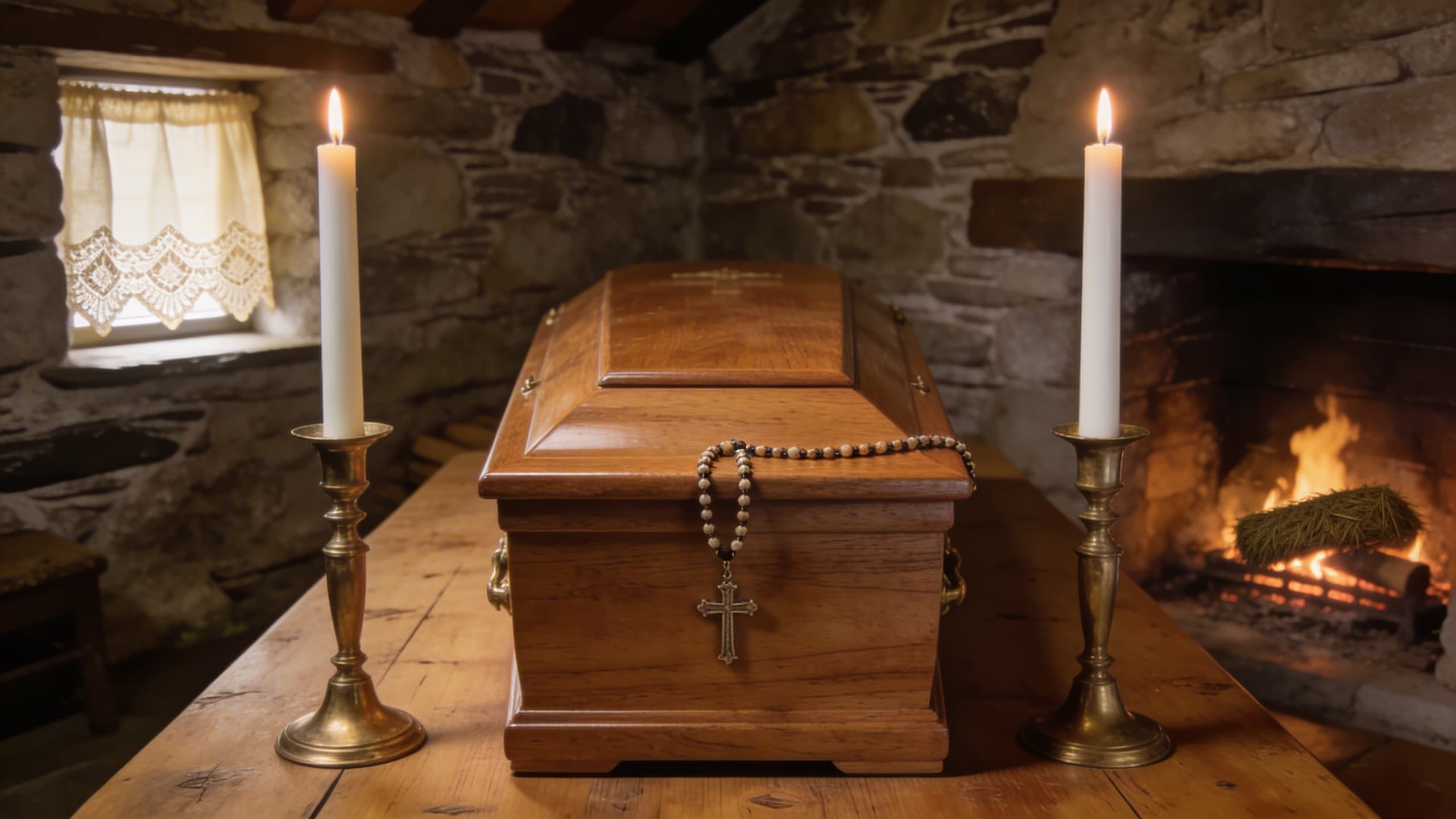
Shortly after death, the body was washed, groomed, and dressed, historically by local women skilled in the practice. The deceased was placed in a wooden coffin and laid out in the main room of the home, which then became the "wake house." Families prepared the space by covering mirrors, stopping all clocks at the time of death, and opening a window to allow the soul to leave. Candles were lit around the body, and in some regions, a plate of salt was placed on the deceased's chest — a custom believed to slow decomposition and symbolize preservation of the soul.
Household pets were kept away from the room, and shoes were sometimes placed near the feet of the deceased to help guide their journey through purgatory. These gestures may seem superstitious by modern standards, but each one reflected a deep reverence for the transition between life and death.
The Vigil
The body was never left unattended. Family members and close friends took turns sitting with the deceased around the clock, from the moment of death until the coffin was carried to the church or burial ground. This nighttime vigil, or wake keeping, was the heart of the tradition. Men from the community often arrived late in the evening to relieve the immediate family, sitting quietly with the body through the small hours while the bereaved rested.
The Rosary was typically recited twice during the wake — once around midnight and again near dawn. Between prayers, conversation flowed freely. Stories about the deceased were shared, often cycling between heartfelt tributes and surprisingly funny anecdotes. The emotional range of an Irish wake — moving from tears to laughter within minutes — is one of its most defining characteristics.
Keening: The Irish Lament
One of the most striking elements of a traditional Irish wake was keening, a form of vocal lamentation performed by women known as bean chaointe (keening women) or collectively as Mná Caoine. The lead keener would chant poetic verses addressed directly to the deceased, praising their life and mourning their passing, while other women joined in a rhythmic, swaying death wail.
Keening was more than an expression of grief. It was a structured art form with roots in pre-Christian Ireland, and skilled keeners were respected members of the community. Some families even hired professional keeners to ensure the farewell was fittingly powerful. The Catholic Church, however, viewed keening with suspicion — the practice was seen as too pagan, too emotional, too uncontrolled — and church authorities condemned it throughout the 18th and 19th centuries. By the early 20th century, keening had largely disappeared from Irish funerals, though echoes of it survive in the mournful singing and storytelling that still mark Irish wakes today.
Music, Storytelling, and Wake Games
An Irish wake was never a silent affair. Music was central — fiddles, tin whistles, and voices filled the wake house with traditional airs, ballads, and sometimes drinking songs. Storytelling was equally important, with neighbors and friends recounting the deceased's life in vivid, often humorous detail. The goal was not to minimize grief but to honor the whole person — their achievements, their quirks, their best jokes.
In earlier centuries, wakes also featured "wake games" — physical contests, riddles, mock trials, and even pranks that could turn boisterous. These games were a holdover from pagan celebrations and served as a way to reassert the vitality of the community in the face of death. Church authorities discouraged wake games alongside keening, and by the mid-1800s, most had faded from common practice. Still, the underlying spirit — that laughter belongs alongside grief — remains a hallmark of the Irish approach to death.
Food, Drink, and Hospitality
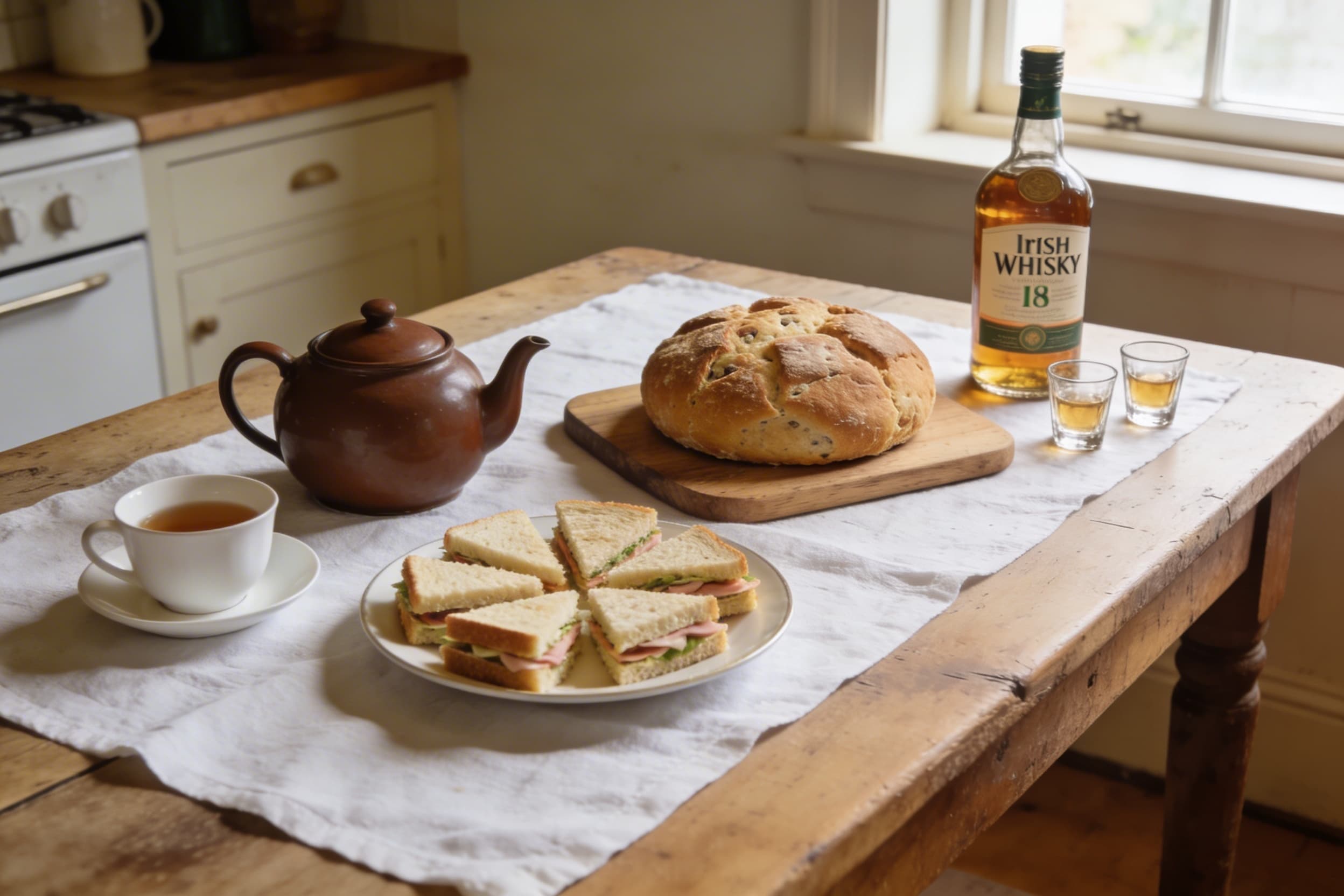
Hospitality was a non-negotiable element of the Irish wake. The family of the deceased was expected to provide food and drink for every visitor, and visitors were expected to accept. Tea, sandwiches, cold meats, cakes, and biscuits were standard fare, along with generous quantities of whiskey, stout, and beer. In rural areas, neighbors often brought food to the wake house to ease the burden on the grieving family — a custom that connects to broader funeral food traditions found across many cultures.
The open-door policy of an Irish wake meant that anyone who knew the deceased or their family could attend without invitation. Colleagues, distant relatives, old schoolmates, and even acquaintances were welcome. This inclusiveness served a practical purpose: it ensured the family was surrounded by support, and it allowed the wider community to process the loss together.
What to Expect at a Modern Irish Wake
While the full-scale home wake has become less common in Irish cities and among diaspora communities, many of its customs persist in adapted form. Understanding what happens at a modern wake helps those who may attend one for the first time.
Location
Traditional wakes took place in the home. Today, many families hold the wake at a funeral home, especially in urban areas where space is limited. Some families still choose the home setting, particularly in rural Ireland, and the term "wake house" continues to carry meaning. A growing number of Irish families outside Ireland — in the United States, Canada, Australia, and the United Kingdom — host wakes at their homes or at rented venues, blending traditional customs with local norms.
Duration
A traditional wake lasted from the time of death until burial, sometimes spanning two or three days. Modern wakes are typically shorter — one evening or a single afternoon-and-evening session. Some families extend to two evenings if the deceased had a large social circle or if relatives need travel time.
The Atmosphere
Expect a mix of solemnity and warmth. The deceased may be present in an open casket, and visitors are welcomed by a family member who guides them to pay respects. The Rosary may be recited at a set time. Between formal moments, conversation is free-flowing — stories about the deceased, updates from people who have not seen each other in years, and the occasional burst of laughter. Tea and food are always available.
Etiquette
Dress conservatively in dark or muted colors. Approach the family, shake hands, and offer your condolences. You are not required to view the body if an open casket is present, but it is customary to at least approach the area and bow your head. Bringing food or drink is welcome, and sympathy gifts such as mass cards, prayer cards, or flowers are appreciated. Understanding basic funeral etiquette will serve you well, though Irish wakes tend to be more forgiving of awkwardness than highly formal services — the emphasis is on showing up, not on performing grief correctly.
You do not need to stay for the entire wake. Some visitors arrive for thirty minutes, while others remain for hours. Close friends and family members may stay through the night, continuing the ancient tradition of keeping the vigil. The key is simply to be present, however briefly.
The Departure
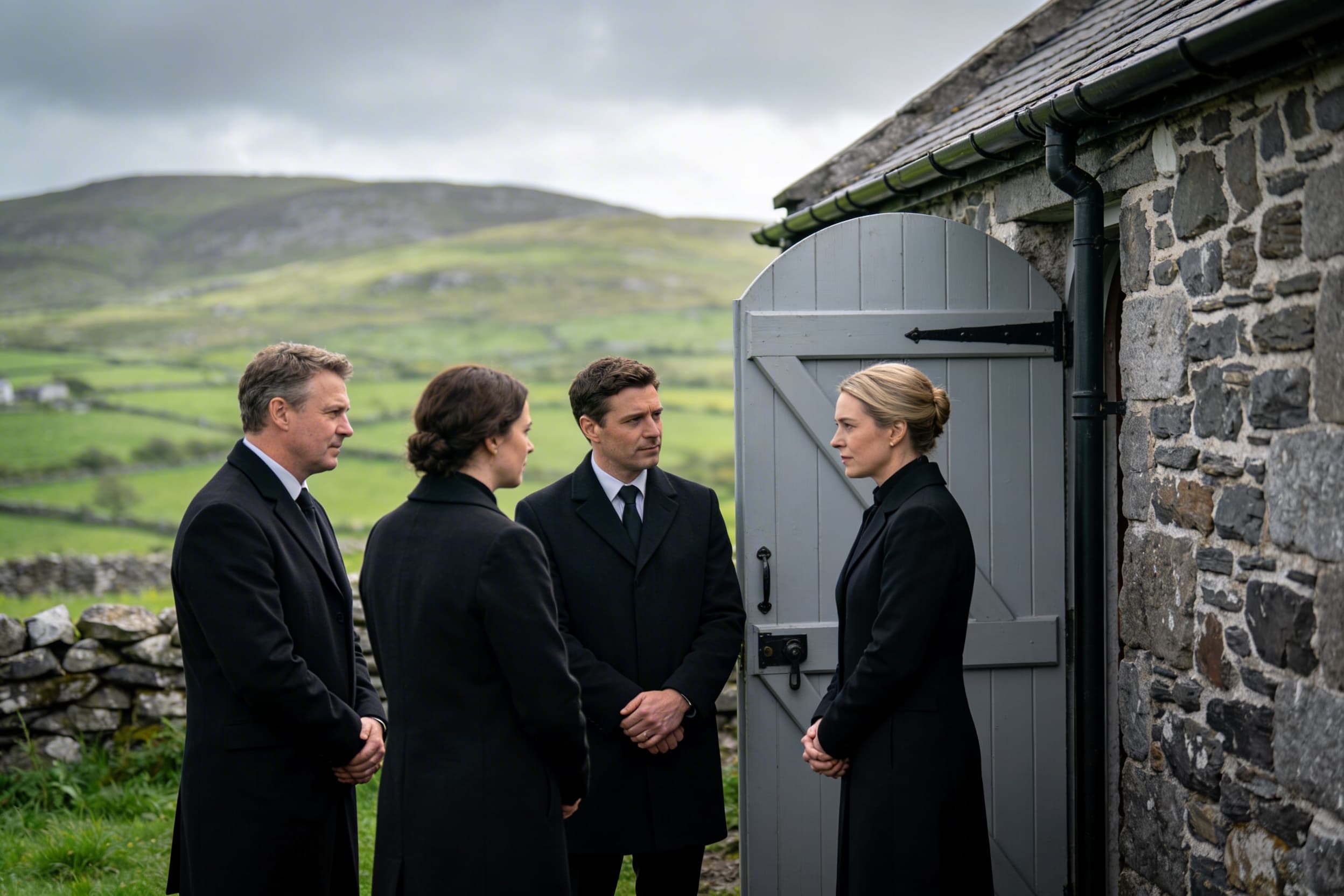
At the end of the wake, the coffin is traditionally carried from the house by male family members and close friends. In some communities, this is still done by hand, with the procession walking to the church. A final prayer is said, and the family closes the door of the wake house — a symbolic act marking the deceased's departure from the home they shared.
How Modern Families Are Adapting Irish Wake Traditions
The Irish wake is not frozen in the past. Families today are finding ways to honor the tradition while adapting to modern life.
Some host a wake-style gathering after cremation, displaying an urn alongside photographs and personal effects rather than an open casket. Others plan a formal funeral visitation at a funeral home but incorporate distinctly Irish elements: traditional music, whiskey toasts, storytelling rounds, and the recitation of the Rosary.
In the Irish-American community, the "Irish wake" has become shorthand for any funeral gathering that emphasizes celebration alongside mourning. Families who may be generations removed from Ireland still request live music, prepare traditional foods like soda bread and colcannon, and encourage guests to share stories rather than sit in silence. The spirit of the tradition — that death should be met with community, honesty, and even joy — translates across settings and generations.
Technology has also played a role. Live-streamed wakes allow family members who cannot travel to participate in real time, and digital photo slideshows have replaced the framed photographs that once lined the mantelpiece of the wake house. These adaptations do not diminish the tradition. They extend it, ensuring that the communal spirit of the Irish wake reaches people wherever they are.
Frequently Asked Questions
Why is a wake called a wake?
The word "wake" comes from Old English meaning "to keep watch" or "to remain awake." It referred to the vigil kept over a dead body before burial. Despite a popular myth linking the term to waiting for a person to "wake up" from lead-induced unconsciousness, the true origin is the practice of staying awake with the deceased as an act of respect and spiritual protection.
What is wake keeping?
Wake keeping is the tradition of maintaining a continuous watch over the body of the deceased from the time of death until burial. In the Irish tradition, family members and friends took shifts sitting with the body, ensuring it was never left alone. Prayers, particularly the Rosary, were recited at regular intervals throughout the vigil. The practice reflects a belief that the dead deserve companionship and guardianship during the transition from life.
What happens at an Irish wake?
The body is laid out in a coffin, traditionally in the family home. Visitors arrive to pay respects, offer condolences to the family, and share memories of the deceased. Food and drink — tea, sandwiches, whiskey, and stout — are offered to all guests. The Rosary may be recited, and traditional music, singing, and storytelling fill the gaps between formal prayers. The atmosphere moves between solemnity and warmth, with both tears and laughter considered appropriate.
Are Irish wakes still held today?
Yes, though the format has evolved. Home wakes remain common in rural Ireland, while urban families and diaspora communities often hold wakes at funeral homes or rented venues. Many families adapt traditional customs — music, storytelling, communal food — to fit modern settings. The core principle of gathering as a community to honor the deceased and support the bereaved remains unchanged.
Can anyone attend an Irish wake?
Traditionally, anyone who knew the deceased or their family was welcome without a formal invitation. This open-door custom still holds in most cases. If a death notice says "house private," the wake is limited to invited guests only. Otherwise, attending to pay respects — even briefly — is encouraged and appreciated.
Honoring a Tradition That Endures
The Irish wake has survived centuries of change because it addresses something fundamental about loss: the need to be together. Where other traditions emphasize formality or solitude, the Irish wake insists on community. It asks mourners to show up, to eat and drink and talk, to cry freely and laugh without guilt, to stay awake with the dead and carry them forward through story.
Whether you are of Irish descent or simply drawn to the idea of a farewell that makes room for the full range of human emotion, the customs of the Irish wake offer a model worth considering. The specifics may shift — from cottage to funeral home, from keening to Spotify playlists, from whiskey poured by hand to a catered reception — but the meaning holds. Death is a passage, and no one should make it alone.