🏬Supersize Online Funeral Retailer🪦1000's of Headstones⚱️Over 10,000 Cremation Urns⚰️Caskets Overnight Delivery🛒Funeral & Memorial Superstore🚚FREE Shipping on ALL Orders👨👩👧👦Helping Families for over 20 Years💰Lowest Price Guarantee🏬Supersize Online Funeral Retailer🪦1000's of Headstones⚱️Over 10,000 Cremation Urns⚰️Caskets Overnight Delivery🛒Funeral & Memorial Superstore🚚FREE Shipping on ALL Orders👨👩👧👦Helping Families for over 20 Years💰Lowest Price Guarantee
🏬Supersize Online Funeral Retailer🪦1000's of Headstones⚱️Over 10,000 Cremation Urns⚰️Caskets Overnight Delivery🛒Funeral & Memorial Superstore🚚FREE Shipping on ALL Orders👨👩👧👦Helping Families for over 20 Years💰Lowest Price Guarantee🏬Supersize Online Funeral Retailer🪦1000's of Headstones⚱️Over 10,000 Cremation Urns⚰️Caskets Overnight Delivery🛒Funeral & Memorial Superstore🚚FREE Shipping on ALL Orders👨👩👧👦Helping Families for over 20 Years💰Lowest Price Guarantee
Few gestures carry as much weight during bereavement as the simple act of preparing or bringing food. Funeral food connects mourners to one another, provides nourishment during an emotionally exhausting time, and honors cultural customs that families have practiced for generations. Whether you are organizing a reception after a service or wondering what dish to drop off at a neighbor's doorstep, understanding the traditions and logistics behind funeral food helps you offer genuine support when it matters most. For a broader look at each decision families face during this process, our guide to funeral planning walks through every step from service options to budgeting.
This guide covers the cultural roots of funeral food, practical menu ideas for receptions of every size, what to bring to a grieving family, and the etiquette that keeps your kindness helpful rather than burdensome.
The gathering that follows a funeral service is traditionally called a repast (sometimes spelled "repass"). It is a shared meal where mourners come together to eat, talk, remember the person who died, and support the bereaved family. The word itself comes from the Latin repascere, meaning "to feed again," and the practice stretches back thousands of years. Ancient Egyptian and Roman funeral traditions included communal feasts to honor the dead. Today the repast remains a nearly universal custom across religions and cultures, even when the specific foods and settings look very different.
A repast can be as simple as coffee and sandwiches in a church hall or as elaborate as a catered dinner at a restaurant. The format depends on family preference, the size of the gathering, the venue, and the budget. What stays constant is the purpose: a shared meal gives mourners a structured moment to transition from the intensity of the service back into ordinary life. It creates space for stories, laughter, tears, and the kind of practical connection that grief often needs.
Understanding the difference between a wake vs funeral matters here because food expectations shift depending on the type of gathering. A visitation or wake may call for lighter fare — finger foods, coffee, and desserts — while a full reception after a burial or memorial service often includes a more substantial meal.
Cultural Funeral Food Traditions
Funeral food is deeply tied to cultural identity. The dishes served after a death tell a story about a community's values, its relationship to grief, and the ingredients that were historically available in times of sudden loss.
Southern Funeral Food
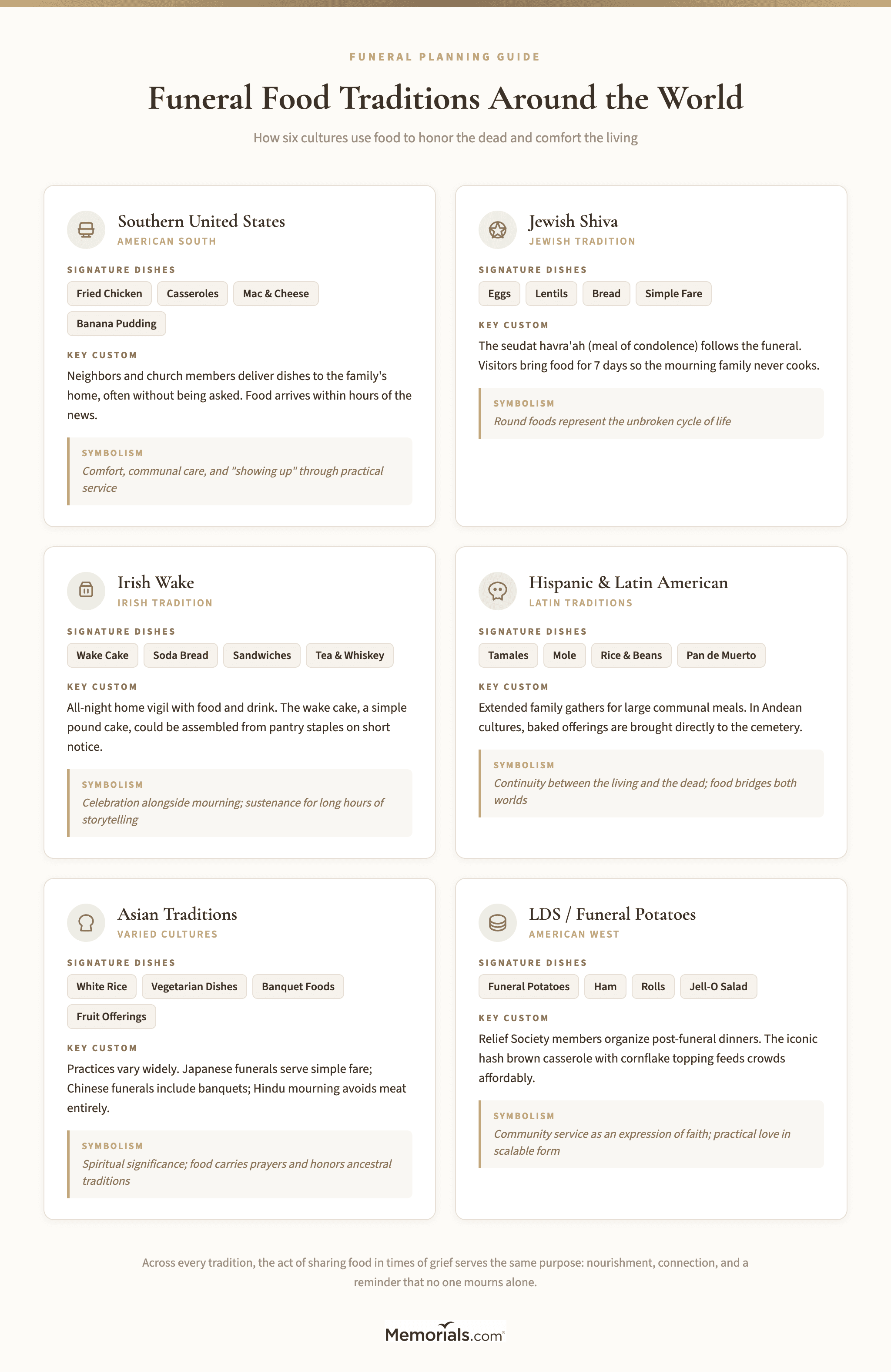
In the American South, funeral food is an institution. Neighbors and church members deliver dishes to the bereaved family's home within hours of hearing the news, often without being asked. The staples are comfort food through and through: fried chicken, baked ham, macaroni and cheese, deviled eggs, cornbread, banana pudding, and layer cakes. Casseroles are the backbone — chicken and rice, green bean, broccoli cheese, and hash brown casseroles all appear regularly. The tradition reflects a communal belief that feeding someone is the most direct way to say "I'm here for you."
Jewish Shiva Meals
In Jewish tradition, the seven-day mourning period known as shiva centers on community visits to the mourner's home. Visitors bring food so the bereaved family does not have to cook. The first meal after the funeral, called the seudat havra'ah (meal of condolence), holds specific symbolism. Round foods like eggs and lentils represent the cycle of life. Bread is always present. The meal is intentionally simple, focused on sustenance rather than celebration. Throughout the shiva period, friends and extended family continue to deliver meals, often coordinating through a designated organizer to prevent duplication.
Irish Wake Food
The Irish wake is a vigil held in the home of the deceased, often lasting through the night. Food and drink are central to the gathering. Traditional offerings include tea, coffee, sandwiches, soda bread, and a dense "wake cake" — a simple pound cake made from pantry staples that could be assembled on short notice. Whiskey, stout, and other drinks have been part of the tradition for centuries, despite historical efforts to limit them. The wake is as much a social event as a solemn one, and the food reflects that duality — hearty enough to sustain people through long hours of storytelling and remembrance. For a deeper look at these customs, our article on Irish wake traditions covers the history and modern practices families still follow today.
Hispanic and Latin American Traditions
In many Latin American communities, food after a funeral reflects both Catholic influence and Indigenous customs. Mexican families often serve tamales, rice, beans, and mole at the reception. In Andean cultures, pan de muerto (bread of the dead) and other baked offerings are brought to the cemetery on the Day of the Dead, blurring the line between funeral food and ongoing memorial traditions. At home those offerings sit on an ofrenda beside the Dia de los Muertos velas, the candles lit to guide the dead back to the table. The communal nature of the meal matters as much as what is served — extended families gather, children are included, and the table becomes a place where the dead are spoken of openly.
Asian Funeral Food Customs
Funeral food traditions across Asia vary widely. In Japanese funerals, white rice and simple vegetarian dishes are common, reflecting Buddhist influence. Chinese funerals often include a banquet after the burial, with specific dishes served in odd numbers (considered auspicious for the deceased). In the Hindu tradition, meat is avoided during the mourning period, and visitors bring fruit baskets, vegetable dishes, or samosas. Korean funerals feature a shared soup called yukgaejang (spicy beef soup), served to sustain mourners through multi-day observances. Across these traditions, the common thread is that food is not merely practical — it carries spiritual significance.
Dress follows the same logic and catches guests out more often, because the Western default is wrong in several of these traditions rather than merely unnecessary. Japanese funeral attire is stricter than most Western funerals rather than looser, Chinese funeral attire has one absolute rule a Western guest would never guess — nothing red — and Indian funeral attire is usually white rather than black. Worth reading before you go rather than after.
Funeral Potatoes and LDS Traditions
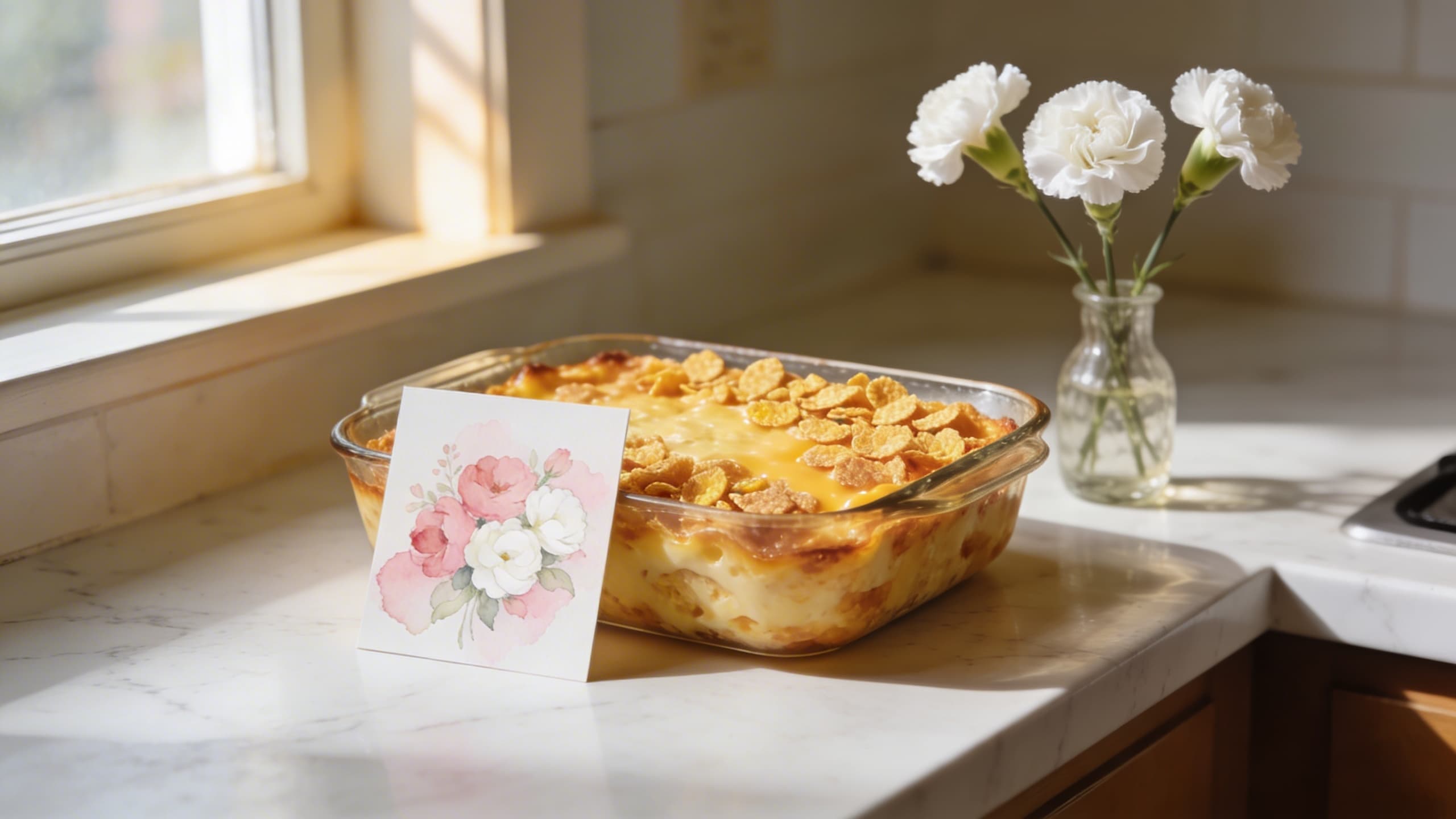
No discussion of funeral food in the United States is complete without mentioning funeral potatoes. This cheesy hash brown casserole — made with frozen potatoes, cream of chicken soup, sour cream, cheddar cheese, and a crispy cornflake topping — originated in Latter-day Saint communities in the American Intermountain West. It became a fixture at post-funeral dinners organized by the Relief Society, the LDS women's organization, and its popularity eventually spread well beyond Utah and Idaho. The dish embodies everything a funeral food should be: inexpensive, easy to make in large quantities, forgiving if left in the oven a bit too long, and deeply comforting.
Funeral Reception Food Ideas and Menu Planning
Planning food for a funeral reception means balancing taste, logistics, budget, and the number of guests. The three most common formats are finger food spreads, buffet-style meals, and catered dinners. Each works well in different situations.
Finger Food and Appetizers
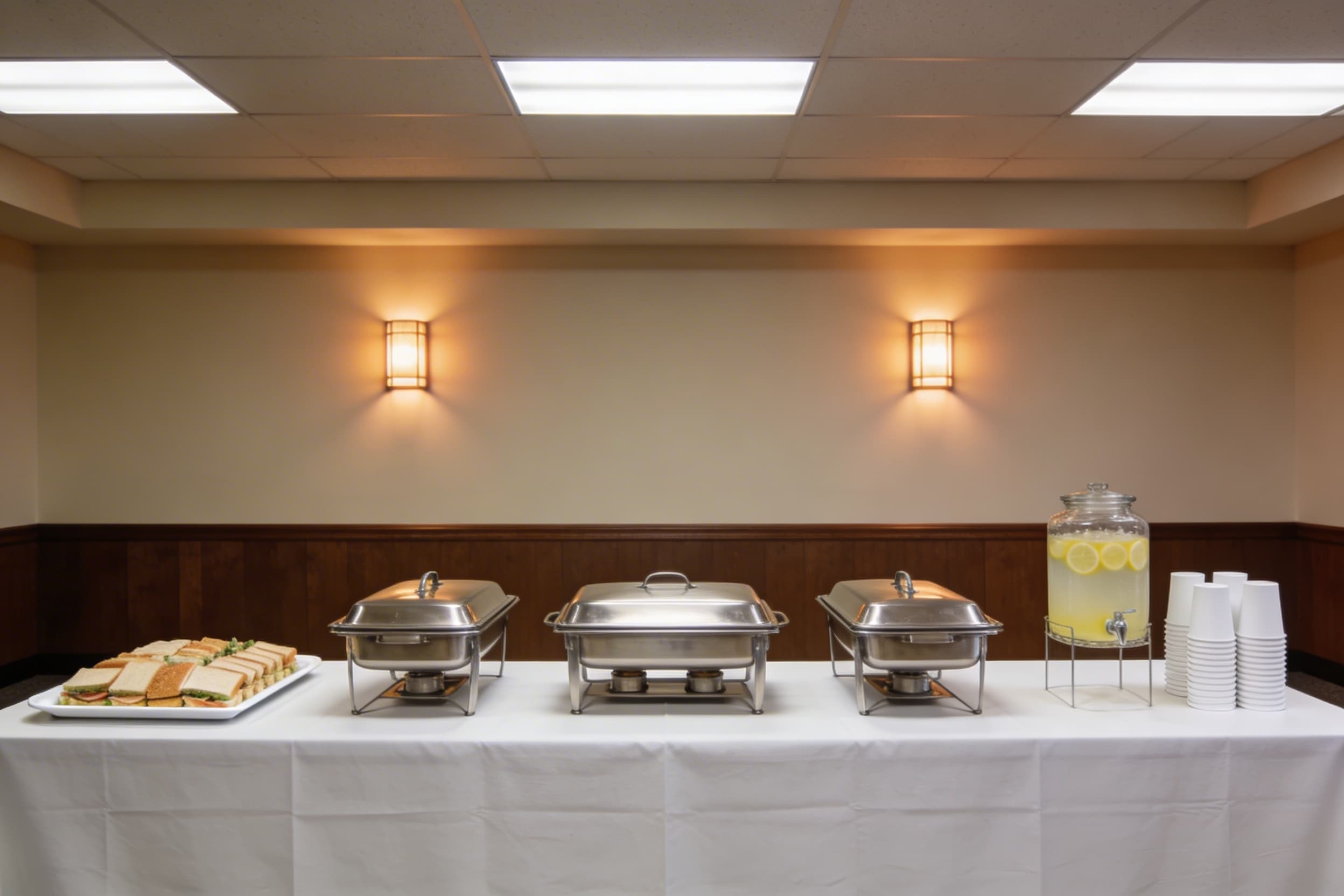
Finger foods work best for shorter receptions, visitations, or gatherings where guests will come and go at different times. They require no utensils, minimal cleanup, and can sit at room temperature longer than plated meals. Strong choices include sandwich platters (egg salad, chicken salad, deli meat and cheese), fruit and vegetable trays, cheese and cracker boards, deviled eggs, meatballs, mini quiches, and cookies or brownies. If you are coordinating a finger food spread, plan for six to eight pieces per person for a two-hour reception.
Buffet-Style Meals
A buffet is the most versatile option for larger receptions. It accommodates dietary differences, lets guests serve themselves at their own pace, and scales well from twenty to two hundred people. A balanced buffet might include a protein (baked ham, roasted chicken, or a pasta bake), two to three sides (green salad, rolls, roasted vegetables or a potato dish), and a dessert table. Keep serving equipment simple — slow cookers and chafing dishes keep hot food at a safe temperature without requiring oven access at the venue.
Comfort Food Classics
Certain dishes appear at funeral receptions so consistently that they have become their own category. Casseroles are the single most reliable choice: baked ziti, chicken and rice, broccoli cheese, and the famous funeral potatoes all reheat evenly, feed a crowd, and travel well. Mac and cheese, fried chicken (for smaller gatherings), and hearty soups or stews round out the comfort food lineup. Including one or two of the deceased person's favorite dishes adds a personal, meaningful touch that guests often remember long after the service.
Desserts and Beverages
Desserts at a funeral reception lean toward the familiar: sheet cakes, pies, brownies, cookies, and banana pudding. Amish and Pennsylvania Dutch families serve one named for the occasion — funeral pie, a raisin pie whose dried filling could be made in any season, without waiting on fresh fruit. Elaborate decoration is unnecessary — the food is there for comfort, not presentation. For beverages, coffee and iced tea are non-negotiable staples in most regions. Water, lemonade, and soft drinks fill out the basics. Some families choose to serve wine or beer, particularly for evening receptions or cultural traditions like Irish wakes. A simple beverage station with clearly marked options prevents confusion.
What to Bring to a Grieving Family
If you are attending a funeral or visiting a grieving family at home, bringing food is one of the most appreciated gestures you can make. The key is choosing something practical — food that keeps well, reheats easily, and does not create extra work for a family that is already overwhelmed.
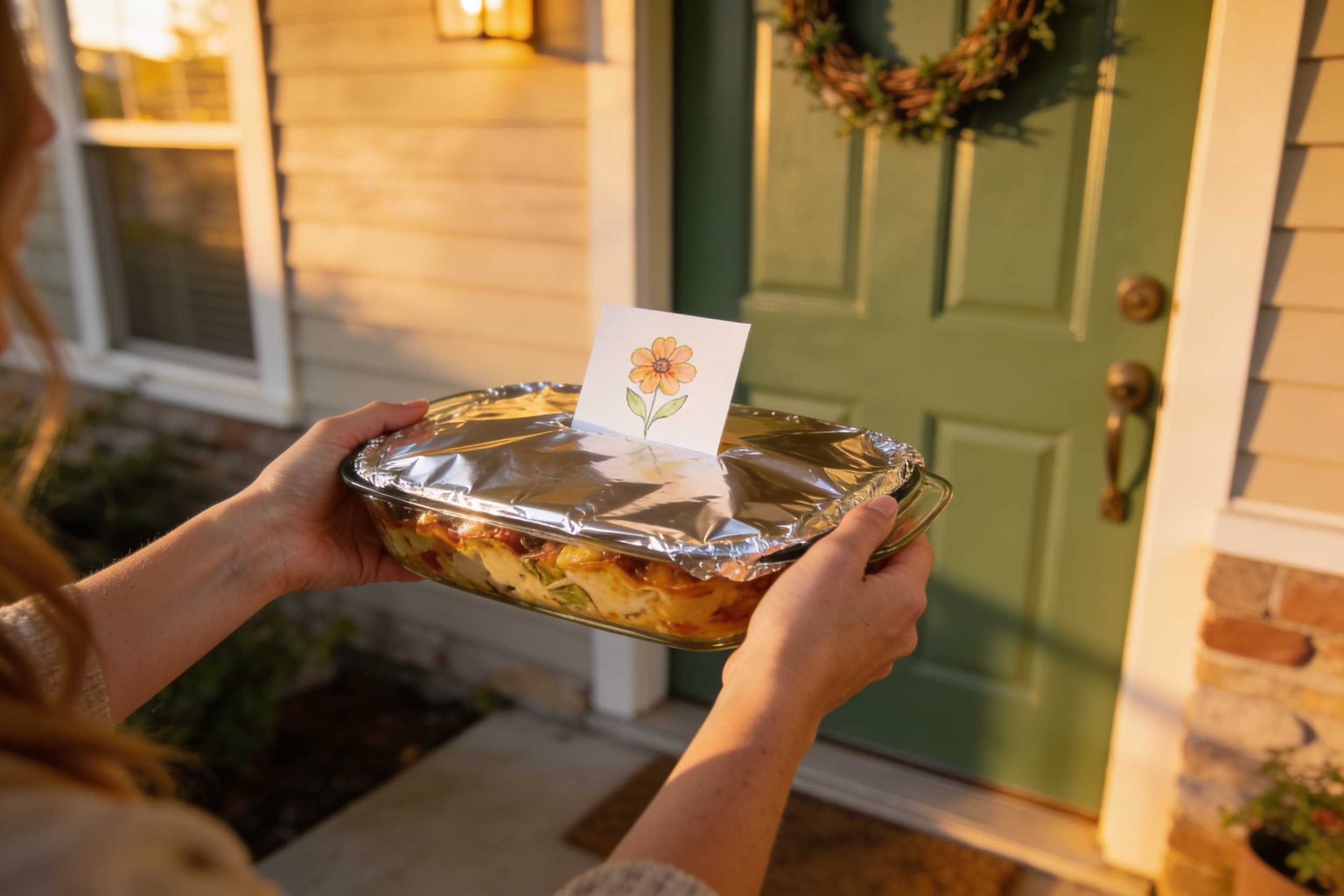
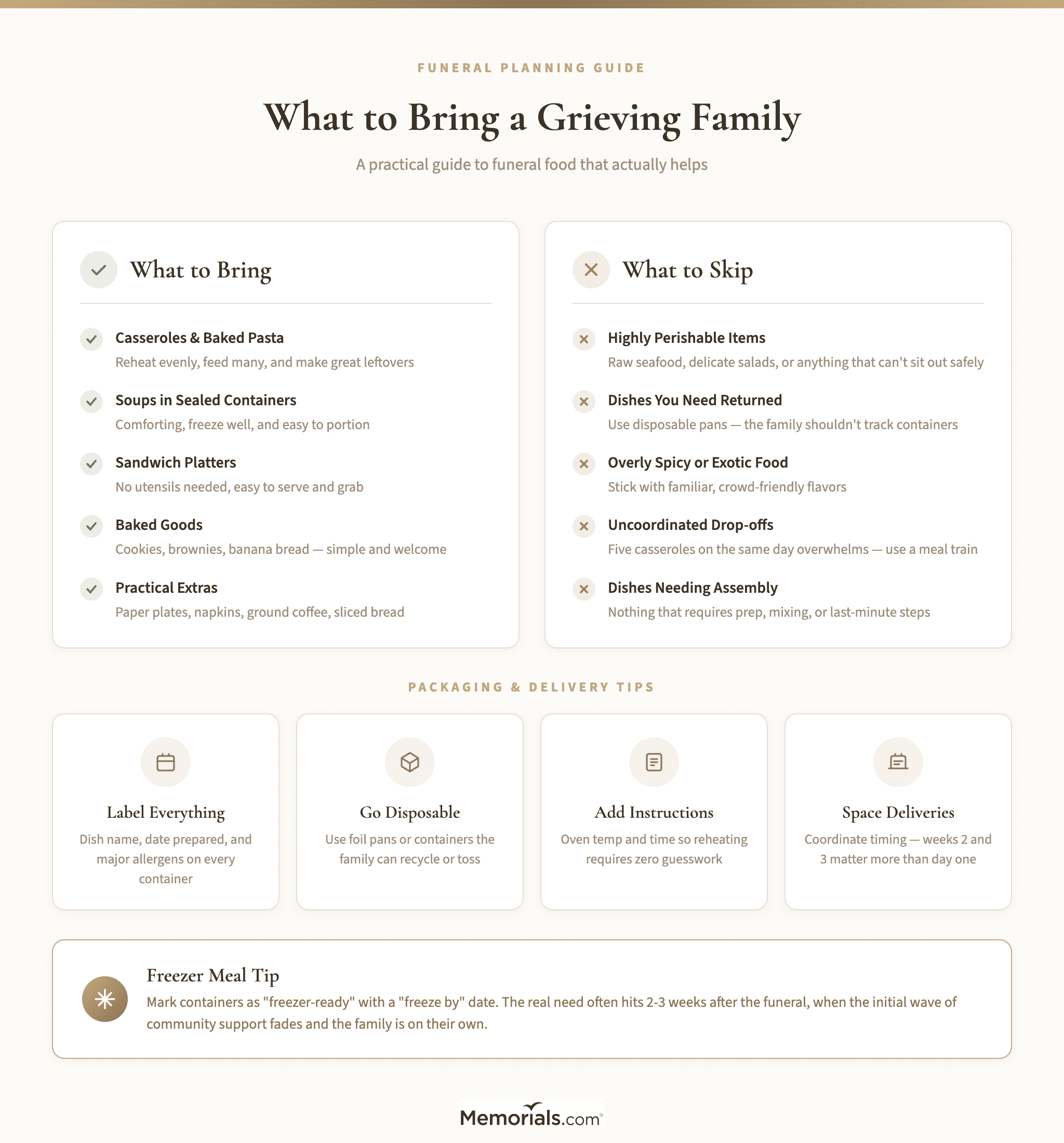
Choose dishes that travel well. Casseroles, baked pasta, soups in sealed containers, and sandwich trays are better choices than delicate salads or anything that needs last-minute assembly. Freezer-friendly meals are especially valuable because the family may receive a surge of food in the first few days and need meals they can store for later.
Use disposable containers. This eliminates the awkward task of returning dishes to their owners during a time when the family has no bandwidth for logistics. If you use your own glassware, label it clearly so it can be returned later without confusion.
Label everything. Write the dish name, the date it was prepared, and any major allergens (nuts, dairy, gluten) on the container. Add simple reheating instructions — oven temperature and approximate time — so the family does not have to guess.
Consider dietary needs. If you know the family includes someone with a specific allergy or dietary restriction, accommodate it. When you do not know, stick to dishes with common, widely tolerated ingredients. Including one vegetarian or dairy-free option alongside a standard casserole covers more ground.
Include extras. Paper plates, napkins, disposable utensils, a loaf of sliced bread, or a bag of ground coffee are small additions that reduce the burden on the household. These practical sympathy gifts — a meal paired with thoughtful extras — often matter more than flowers in the days after a loss.
Potluck vs. Catering: Choosing the Right Approach
The decision between a potluck-style reception and professional catering depends on your budget, the number of guests, and the level of coordination you can manage during an already stressful time.
Potluck works well when a strong community network — church members, neighbors, coworkers — is ready to contribute. Assign a coordinator who is not a member of the immediate family to manage the sign-up, prevent duplicate dishes, and handle setup and cleanup. The advantage is cost: a potluck can feed a large crowd for very little money, and the communal cooking effort itself becomes an act of support.
Catering is the better choice when the family does not have a strong local network, the guest count is high, or the venue lacks kitchen facilities. Many funeral homes offer in-house catering or can recommend local providers. Catering costs vary widely — a simple sandwich and salad spread might run $10–$15 per person, while a full buffet with a protein, sides, and dessert could be $25–$40 per person. Some families find a middle path: they cater the main protein and sides while asking friends to contribute desserts.
Adding food planning to your funeral planning checklist early in the process prevents last-minute scrambling. Decide on format, assign a coordinator, confirm the venue's kitchen and storage capabilities, and set a per-person budget before the day of the service.
Funeral Food Etiquette
Food at a funeral comes with its own set of unwritten rules. Following basic funeral etiquette around food prevents well-intentioned gestures from becoming burdens.
If you are bringing food to the family's home, call ahead or coordinate with the designated point person. Dropping off unannounced meals on the same day as five other people creates a storage problem and potential waste. Ask what the family needs — sometimes a bag of groceries or a gift card to a local restaurant is more useful than another casserole.
If you are attending a reception, follow the family's lead on when to eat and when to linger. The reception is about connection, not the food itself. Offer to help with cleanup at the end of the reception if you are close to the family.
Avoid overly elaborate or unfamiliar dishes. A funeral reception is not the moment to experiment with adventurous cuisine. Familiar, crowd-friendly food reduces the risk that large portions go uneaten. Keep portions moderate and flavors accessible.
Respect cultural and religious food customs. If the family is observing specific dietary laws — no pork during a Jewish shiva, no meat during a Hindu mourning period, fasting customs during Ramadan — follow those guidelines when choosing what to bring. When in doubt, ask.
How to Organize a Meal Train
A meal train is a coordinated schedule where friends, family, and community members sign up to deliver meals to a bereaved household over a period of days or weeks. It is one of the most effective ways to provide sustained food support beyond the initial days after the death.
Choose a coordinator. This person should not be a member of the grieving family. Their job is to set up the schedule, communicate dietary needs and delivery preferences, and fill gaps in the sign-up.
Use a shared sign-up tool. Free online meal train platforms let contributors pick a date, note what they are bringing, and see what others have already signed up to deliver. This prevents the common problem of five lasagnas arriving on the same Tuesday.
Space meals beyond the first week. The first three to four days after a death usually bring a flood of food from the immediate community. The real need often hits in weeks two, three, and beyond — after the visitors go home and the routine of grief sets in. A well-planned meal train extends support into this quieter, harder period.
Include variety and timing notes. Specify whether the family prefers lunch or dinner deliveries, whether they have young children who eat early, and whether the home has freezer space for extra meals. These details prevent logistical friction.
Frequently Asked Questions
What is the most common food to bring to a funeral?
Casseroles are the single most common dish brought to a funeral or to a grieving family's home. Baked pasta, chicken and rice casserole, and funeral potatoes top the list because they reheat easily, feed multiple people, and keep well as leftovers. Sandwich platters, fruit trays, and baked goods are also widely appreciated.
What are funeral potatoes?
Funeral potatoes are a cheesy hash brown casserole made with frozen potatoes, sour cream, cream of chicken soup, cheddar cheese, butter, and a crunchy cornflake topping. The dish originated in Latter-day Saint communities in the American West and became a staple at post-funeral dinners. It has since spread across the country and is now served at potlucks and gatherings of all kinds.
How much food should I plan for a funeral reception?
A general guideline is six to eight pieces of finger food per person for a two-hour reception, or one full plate of buffet food per guest. For a sit-down meal, plan one serving of protein (four to six ounces), one to two servings of sides, and one dessert per person. Always prepare about 10–15% more than the expected headcount to account for unexpected attendees.
Is it appropriate to bring alcohol to a funeral reception?
This depends entirely on the family's wishes and cultural or religious traditions. Many receptions include wine, beer, or spirits — particularly in Irish, Catholic, and secular settings. Other traditions, including many Protestant denominations and Muslim observances, do not include alcohol. Follow the family's lead or ask the reception coordinator.
What should I not bring to a funeral?
Avoid highly perishable foods that cannot sit at room temperature safely, overly spicy or unusual dishes that may not appeal to a broad group, and anything that requires extensive preparation at the venue. Dishes in containers you need returned can also create an unwanted obligation for the grieving family — use disposable pans whenever possible.
Turning a Meal Into a Lasting Gesture of Support
Food brought during a time of loss does more than fill a stomach — it tells a grieving family that their community is paying attention, showing up, and willing to handle one small piece of the overwhelming logistics of death. The casserole left on the porch, the coffee cake dropped off before the service, the meal delivered three weeks later when everyone else has moved on — these are the gestures families remember.
If you are looking for additional ways to show support beyond food, a thoughtful sympathy gift — a comfort stone, a memorial keepsake, or a personalized remembrance piece — can offer lasting comfort alongside the meals that sustain a family through their hardest days.