🏬Supersize Online Funeral Retailer🪦1000's of Headstones⚱️Over 10,000 Cremation Urns⚰️Caskets Overnight Delivery🛒Funeral & Memorial Superstore🚚FREE Shipping on ALL Orders👨👩👧👦Helping Families for over 20 Years💰Lowest Price Guarantee🏬Supersize Online Funeral Retailer🪦1000's of Headstones⚱️Over 10,000 Cremation Urns⚰️Caskets Overnight Delivery🛒Funeral & Memorial Superstore🚚FREE Shipping on ALL Orders👨👩👧👦Helping Families for over 20 Years💰Lowest Price Guarantee
🏬Supersize Online Funeral Retailer🪦1000's of Headstones⚱️Over 10,000 Cremation Urns⚰️Caskets Overnight Delivery🛒Funeral & Memorial Superstore🚚FREE Shipping on ALL Orders👨👩👧👦Helping Families for over 20 Years💰Lowest Price Guarantee🏬Supersize Online Funeral Retailer🪦1000's of Headstones⚱️Over 10,000 Cremation Urns⚰️Caskets Overnight Delivery🛒Funeral & Memorial Superstore🚚FREE Shipping on ALL Orders👨👩👧👦Helping Families for over 20 Years💰Lowest Price Guarantee
A wedding day gathers the people you love most into a single room — and it's the absence of certain people that can feel the sharpest. A missing parent, grandparent, sibling, or close friend leaves a gap no amount of planning can fill. But couples across generations have found that small, intentional gestures of remembrance can transform that absence from a source of grief into a quiet celebration of lasting love.
This article walks through the most meaningful ways to honor a deceased loved one at your wedding, from visual tributes at the ceremony to wearable keepsakes that keep them close throughout the day. Many of these ideas pair naturally with cremation jewelry, photo charms, and other tangible tokens that bridge the distance between memory and presence. If you're also navigating the broader landscape of grief and gift-giving, our guide to sympathy gifts for every relationship covers how to support others — and yourself — through loss at every stage.
The Memorial Table: A Visible Tribute to Those You've Lost
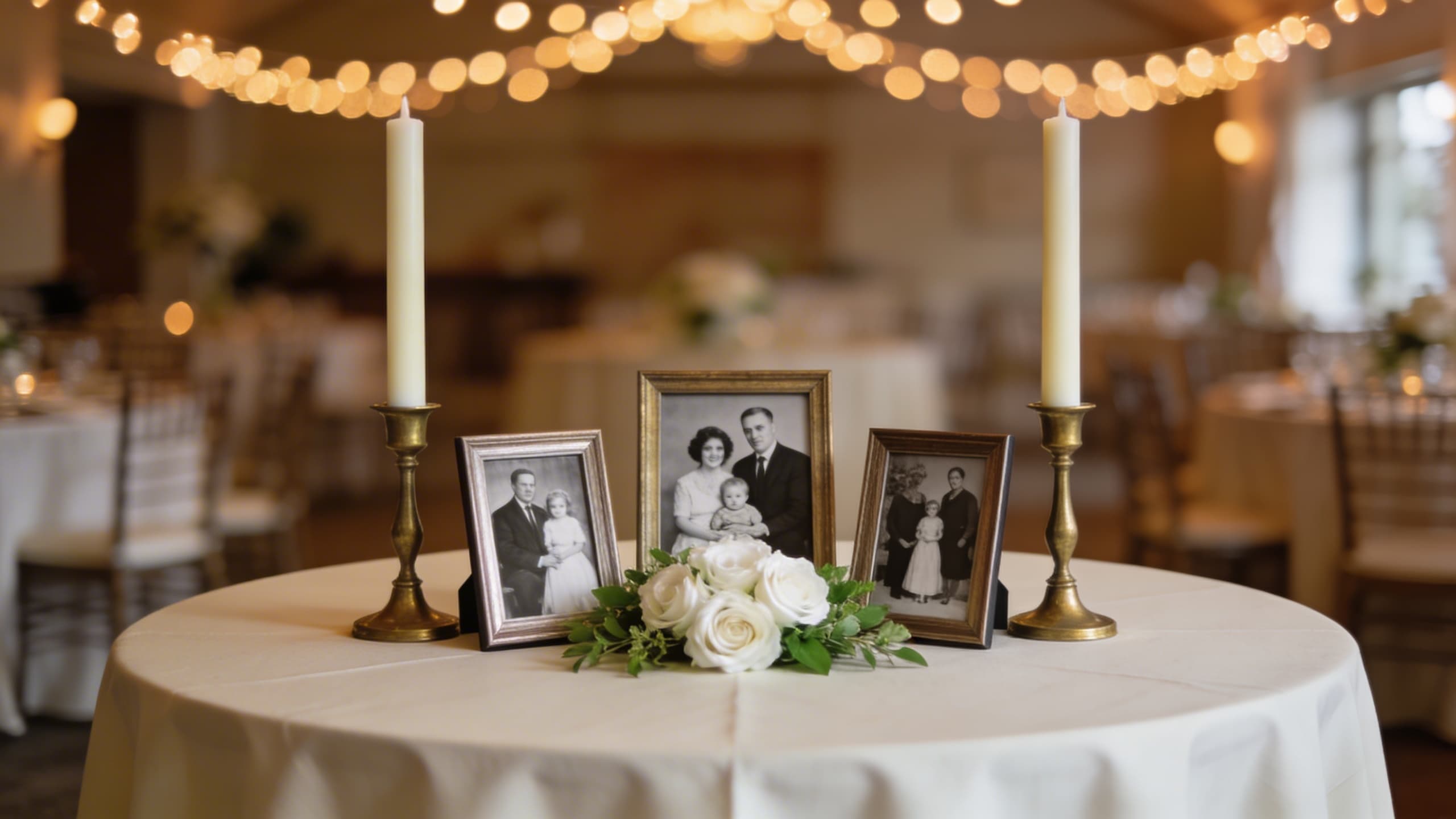
A memorial table is one of the most recognized and versatile ways to honor deceased loved ones at a wedding. Placed near the entrance, guestbook, or ceremony space, it creates a dedicated area where guests can pause, reflect, and feel the presence of the people who are missed.
What to Include on a Wedding Memorial Table
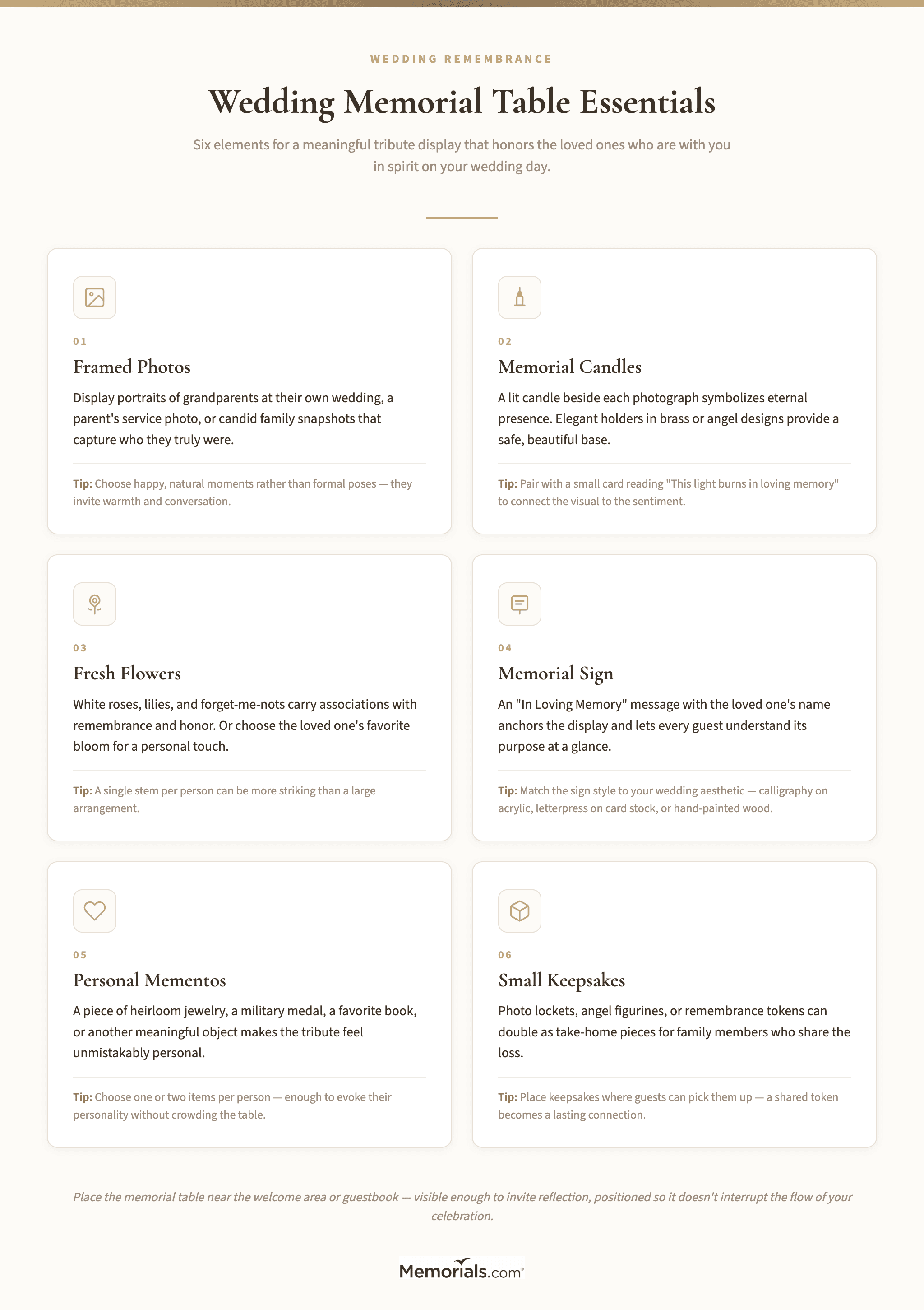
The most effective memorial tables combine personal photographs with a few meaningful objects. Framed portraits of grandparents at their own weddings, a parent's military service photo, or a candid snapshot from a holiday dinner all work beautifully. Angel picture frames designed for remembrance add a layer of tenderness that standard frames cannot match, and their angelic detailing signals to guests that this display carries special meaning.
Candles have deep roots in memorial tradition across cultures. Placing a lit candle beside each photograph symbolizes eternal presence, and memorial candle holders provide a stable, elegant base for this tribute. Many couples add a small sign reading "This light burns in loving memory" or a similar message to connect the visual to the sentiment behind it.
Fresh flowers round out the display. White roses, lilies, and forget-me-nots each carry associations with remembrance and honor. Some couples choose the loved one's favorite flower instead, turning a simple bouquet into a deeply personal statement.
If you're looking for more options for photo-centered remembrance pieces, photo memorial keepsakes range from engraved lockets to portrait stones that work just as well on a memorial table as they do in a home display after the wedding.
Memorial Table Placement Tips
Position the table where guests will encounter it naturally — near the welcome area, favor table, or reception entrance — rather than in a hidden corner. A table that's too prominent risks overshadowing the celebration, while one that's tucked away goes unnoticed. The sweet spot is a location that invites reflection without interrupting the flow of the event.
Ceremony Tributes: Honoring the Absent During Your Vows
The ceremony is the emotional center of a wedding, making it a natural place for remembrance. Even subtle gestures carry enormous weight when they happen alongside the exchange of vows.
The Reserved Seat
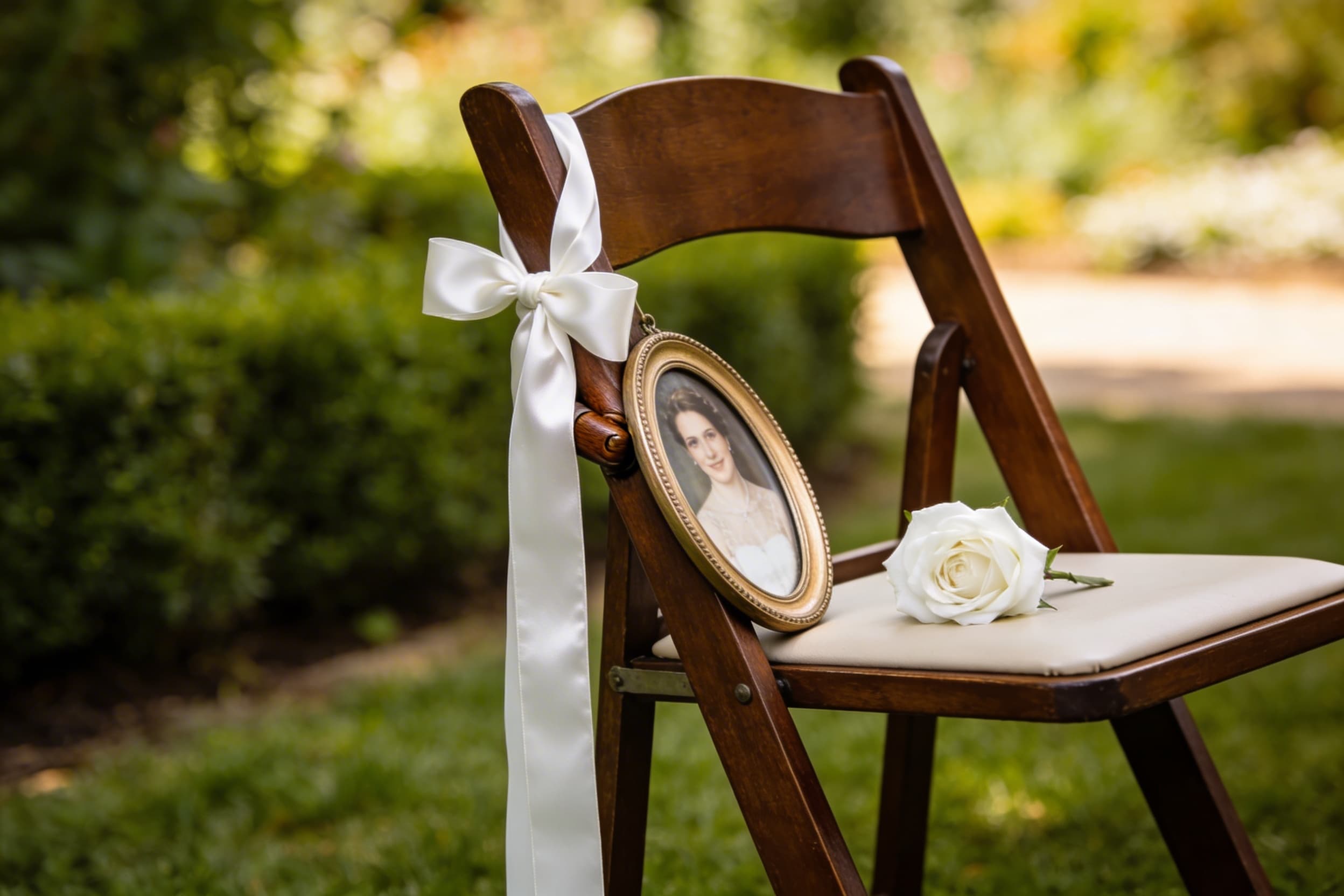
An empty chair with a framed photograph, a single flower, or a "Reserved in Loving Memory" sign placed in the front row creates a visual reminder that the person's place in your life has not been forgotten. Seeing that seat during the processional is often the moment where couples feel the strongest connection to their loved one on the day.
Some families drape the chair with a piece of the deceased's clothing — a father's suit jacket, a grandmother's shawl — adding texture and familiarity to what might otherwise be an abstract tribute.
A Moment of Silence
Your officiant can introduce a brief pause for reflection, typically after the welcome or just before the vows. Sample wording might be: "Before we begin, let us take a moment to remember those who are with us in spirit — especially [name], whose love and presence are deeply missed today."
A moment of silence works for any size wedding and any level of formality. It acknowledges the loss without dominating the ceremony, and it gives every guest a shared second of connection.
Wedding Program Dedication
Including an "In Loving Memory" section in the ceremony program allows you to honor multiple people by name. This quiet, printed tribute reaches every guest without requiring a spoken moment, which can be a relief for couples who worry about getting emotional during the ceremony. A short line like "We carry your love with us today and always" beneath the listed names is both concise and meaningful.
Wearable Memorials: Keeping Loved Ones Close Throughout the Day
Some of the most powerful remembrance gestures are the ones only the wearer knows about. Wearable tributes let you carry a loved one's memory through every moment of the day — from getting ready to the last dance.
Bouquet Charms and Lockets
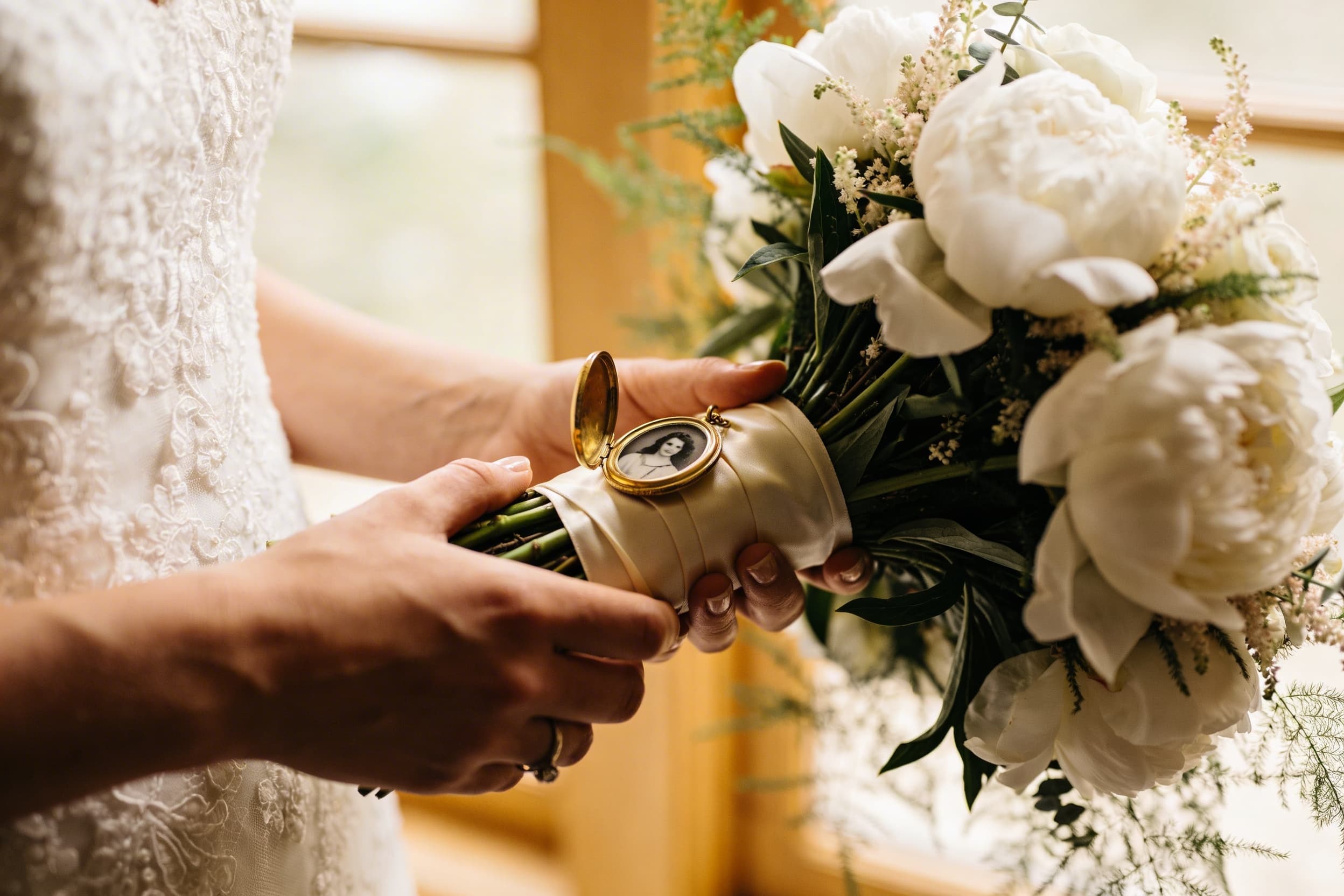
Attaching a small photo locket or charm to the bridal bouquet is a longstanding tradition. Wrapped among the stems, a tiny portrait of a parent or grandparent travels with the bride down the aisle. Similar charms can be pinned inside a suit jacket, attached to a boutonniere, or even placed inside a shoe so a father can symbolically walk his daughter to the altar.
Cremation Jewelry Worn as a Discreet Tribute
For families who have chosen cremation, wearing a necklace or bracelet that holds a small amount of cremated remains is one of the most intimate memorial gestures available. These pieces are designed to be beautiful on their own — a guest would never know the jewelry carries ashes unless told. The discretion is part of the appeal: the wearer feels the connection without the tribute becoming a public focal point.
Memorial keepsakes designed for remembrance can also serve dual duty, acting as a gift for a sibling, parent, or close friend who shares the loss and wants their own way to carry the person's memory on the wedding day.
Fingerprint and Handwriting Jewelry
Fingerprint jewelry engraved with a loved one's actual fingerprint or thumbprint adds an extraordinary layer of personal connection. A bride wearing a pendant with her late mother's fingerprint, or a groom with a ring bearing his father's thumbprint, carries a one-of-a-kind piece that no other memorial can replicate. For a broader look at how fingerprint impressions can be preserved across different formats, explore fingerprint memorial ideas that extend beyond jewelry into keepsake art and home displays.
Heirloom Incorporation
Sometimes the most meaningful tribute requires no purchase at all. Wearing a grandmother's earrings, using a mother's pearls, stitching a heart-shaped patch of a father's favorite shirt inside the wedding dress lining, or carrying a grandfather's pocket watch — these gestures weave the loved one's physical belongings into the fabric of the day. Many couples use heirlooms to fulfill the "something old" or "something borrowed" tradition, layering new meaning onto a familiar custom.
Reception Ideas for Keeping Their Memory Alive
The reception offers a more relaxed atmosphere for remembrance. Toasts, music, and shared meals all open doors for honoring a loved one without formal ceremony.
A Toast in Their Honor
Raising a glass to a deceased parent, grandparent, or friend during the reception speeches is one of the simplest and most moving tributes a couple can offer. It does not need to be long — a few heartfelt sentences acknowledging what the person would have felt about this moment is enough. If speaking feels too difficult, ask a sibling, best friend, or wedding party member to deliver the words on your behalf.
For a wedding following the recent loss of a spouse's parent or partner from a previous marriage, this gesture carries particular weight. Thoughtful memorial gifts for loss of a spouse or partner can also extend the remembrance beyond the wedding day itself.
Signature Drink or Favorite Recipe
Naming a cocktail after your loved one or featuring their go-to drink on the bar menu turns a simple beverage into a conversation starter and a tribute. Label it with a card that reads something like "Papa Joe's Manhattan — his favorite, and ours too."
Including a beloved family recipe in the reception menu or offering it as a take-home favor gives every guest a taste of your loved one's life. Grandma's lemon bars or a father's famous barbecue sauce bring warmth, laughter, and shared memory to the table.
Music Dedications
Playing a loved one's favorite song during cocktail hour, as part of the DJ's playlist, or as the backdrop to a special dance creates an immediate emotional connection. Some couples dedicate the father-daughter or mother-son dance to a deceased parent, dancing with a sibling or another family member while the song plays. Others choose to keep the music dedication private — hearing the song is enough.
Charitable Donations in Lieu of Favors
Donating to a charity that mattered to your loved one and noting it on a small card at each place setting replaces a standard wedding favor with something lasting. A contribution to a cancer research fund, a veterans' organization, or a local animal shelter in a loved one's name extends their values and passions into the future.
Wedding Memorial Wording and Quotes
Having the right words ready can ease the pressure of speaking about loss in a celebratory setting. Here are a few approaches for different placements.
For the Ceremony Program
Keep it brief and warm. A single line beneath the loved one's name is sufficient:
"Forever in our hearts, forever part of this day."
"We know you would be here today if heaven weren't so far away."
For a Memorial Sign or Table Display
The sign anchors the visual tribute. Pair it with photographs and candles:
"In loving memory of those who are celebrating with us from heaven."
"Though your chair is empty, your place in our hearts is full."
For a Reception Toast
Spoken words can be simple and direct:
"Before we celebrate, we want to raise a glass to [name], who would have loved every minute of today. We feel you here, and we carry your love forward."
Balancing Remembrance With Celebration
The goal of a wedding memorial is to acknowledge absence without letting it overshadow the joy of the day. A few practical considerations can help:
Talk with your partner about comfort levels early in the planning process. One of you may want a spoken tribute during the ceremony; the other may prefer a quiet, visual-only gesture. Both approaches are valid, and the best plan is the one you both feel good about.
Consider the feelings of close family members. If your future mother-in-law recently lost her own mother, a memorial table that includes her mother's photo can be deeply comforting — but surprising her with it may catch her off guard. A quick conversation beforehand turns a potential emotional ambush into a shared act of love.
Keep the number of formal memorial moments to one or two. A reserved seat at the ceremony and a brief toast at the reception provides ample recognition without shifting the emotional tone of the entire event. Guests will follow your lead — if you frame the tribute with warmth and gratitude, they will respond in kind.
Frequently Asked Questions
Is it appropriate to have a memorial table at a wedding?
A memorial table is one of the most widely embraced wedding remembrance traditions. Placed thoughtfully — near the welcome area or guestbook rather than at the center of the dance floor — it gives guests a chance to reflect without disrupting the celebration. Most wedding planners and officiants encourage it as a tasteful way to honor those who've passed.
How do you honor a deceased parent at a wedding without making guests uncomfortable?
The key is subtlety and framing. A reserved seat with a small sign, a brief moment of silence introduced by the officiant, or a short toast at the reception all acknowledge the loss without dwelling on it. Framing the tribute in gratitude — "we carry your love with us" rather than "we're heartbroken you're not here" — sets a tone that invites warmth rather than sadness.
Can you wear cremation jewelry to a wedding?
Absolutely. Cremation jewelry is designed to be beautiful and discreet. Most pieces look like standard necklaces, bracelets, or rings, and only the wearer knows they contain a small amount of cremated remains. Wearing one to your own wedding or to a family member's wedding is a deeply personal way to feel close to someone you've lost.
What do you write on a wedding memorial sign?
Common phrases include "In loving memory of those who are with us in spirit," "Forever in our hearts," and "We know you would be here today if heaven weren't so far away." Choose language that reflects your family's personality — formal, playful, religious, or simple — and pair it with the loved one's name or names.
How do you include a deceased grandparent in a wedding?
Many couples display a grandparent's wedding photo at the memorial table, wear a piece of their jewelry, play their favorite song during dinner, or reserve a chair with a small floral tribute. These gestures are gentle enough to fit any wedding style and meaningful enough to be remembered long after the day is over.
Your wedding day will always carry the weight of who is missing alongside the joy of who is there. Giving yourself permission to feel both — and creating space for both within your celebration — is not only appropriate, it is one of the most loving things you can do for yourself and for the people you carry with you.