🏬Supersize Online Funeral Retailer🪦1000's of Headstones⚱️Over 10,000 Cremation Urns⚰️Caskets Overnight Delivery🛒Funeral & Memorial Superstore🚚FREE Shipping on ALL Orders👨👩👧👦Helping Families for over 20 Years💰Lowest Price Guarantee🏬Supersize Online Funeral Retailer🪦1000's of Headstones⚱️Over 10,000 Cremation Urns⚰️Caskets Overnight Delivery🛒Funeral & Memorial Superstore🚚FREE Shipping on ALL Orders👨👩👧👦Helping Families for over 20 Years💰Lowest Price Guarantee
🏬Supersize Online Funeral Retailer🪦1000's of Headstones⚱️Over 10,000 Cremation Urns⚰️Caskets Overnight Delivery🛒Funeral & Memorial Superstore🚚FREE Shipping on ALL Orders👨👩👧👦Helping Families for over 20 Years💰Lowest Price Guarantee🏬Supersize Online Funeral Retailer🪦1000's of Headstones⚱️Over 10,000 Cremation Urns⚰️Caskets Overnight Delivery🛒Funeral & Memorial Superstore🚚FREE Shipping on ALL Orders👨👩👧👦Helping Families for over 20 Years💰Lowest Price Guarantee
How to Choose the Right Sympathy Gift: A Complete Guide for Every Relationship and Occasion
grief
When someone you care about loses a loved one, the instinct to do something — anything — to ease their pain is immediate and real. A card feels small. Flowers feel temporary. And standing in a store or scrolling online, you may wonder whether what you choose will truly matter.
It will. A thoughtful sympathy gift does not fix grief. Nothing can. But the right gesture tells a person they are seen, that their loss is acknowledged, and that they are not carrying it alone. The challenge is knowing what to send, when to send it, and how to match the gift to the person, the relationship, and the moment.
This guide walks through every part of that decision. From basic etiquette to relationship-specific recommendations, budget considerations to memorial keepsake options, you will find a clear framework for choosing a sympathy gift that genuinely helps.
Grief isolates. In the first days after a loss, a bereaved person is often surrounded by logistics — funeral arrangements, phone calls, paperwork — while simultaneously processing the deepest pain of their life. A sympathy gift cuts through that fog. It communicates care without requiring a response. It arrives when the recipient may not have the energy to ask for help.
The value of a sympathy gift is not in its price tag. It is in the intention behind it and the comfort it provides in the weeks and months that follow. A memorial keepsake displayed on a shelf becomes a daily reminder that someone cared enough to choose something meaningful. A garden stone engraved with a loved one's name creates a quiet place for reflection long after the funeral flowers have faded.
Understanding why memorials are important can help guide your gift selection. Memorials serve as anchors — physical touchpoints that help the living maintain a connection to someone they have lost. When you choose a sympathy gift with that perspective, you are giving more than an object. You are offering a small piece of ongoing comfort.
Sympathy Gift Etiquette: The Basics You Should Know
Before choosing a specific gift, it helps to understand the general expectations around timing, presentation, and appropriateness. Getting the etiquette right ensures your gesture lands the way you intend it to.
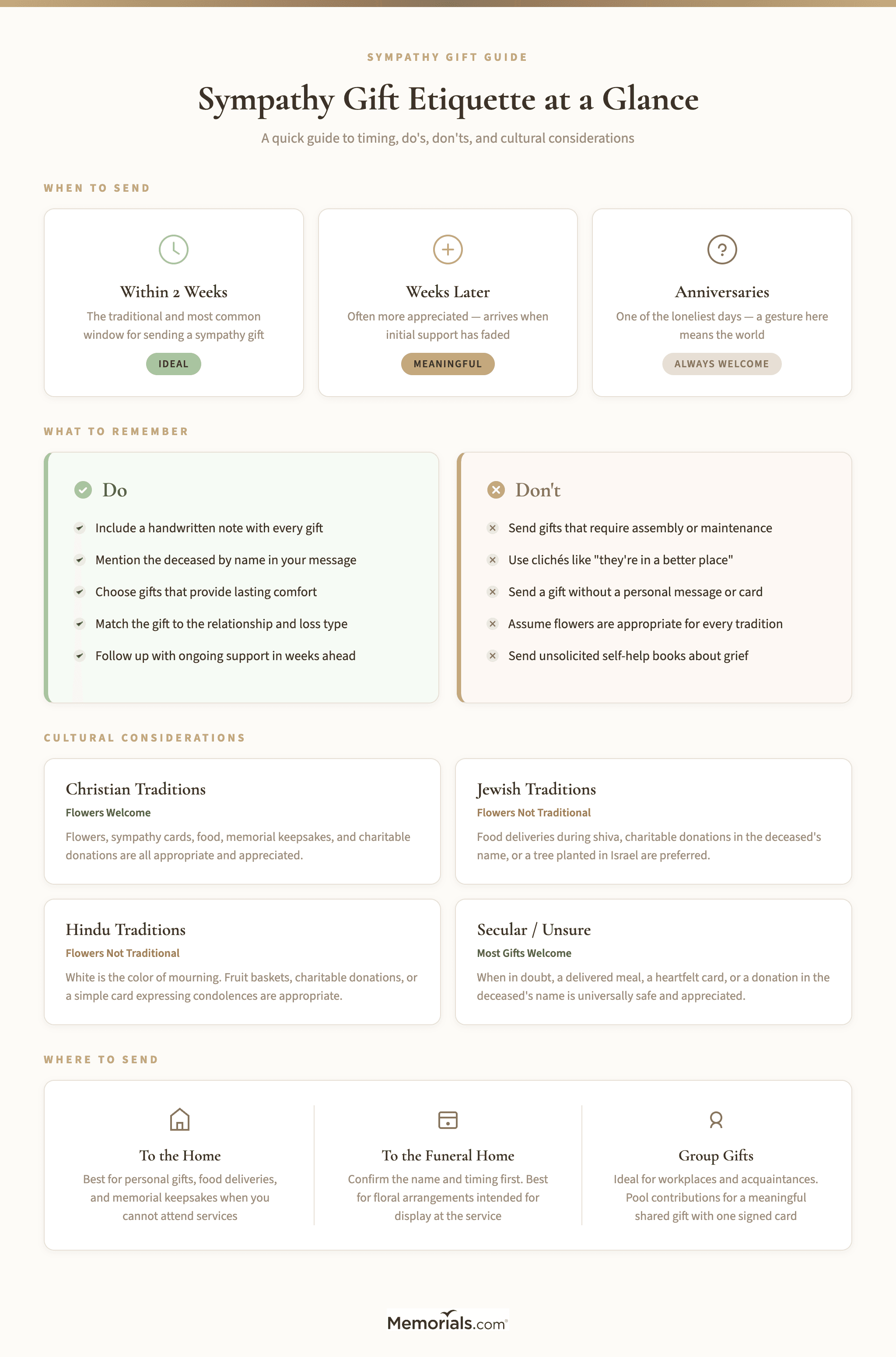
When to send. The best window for sending a sympathy gift is within the first two weeks after a loss. Gifts sent to the home are appropriate if you cannot attend the service. That said, grief does not follow a calendar. A gift that arrives a month later — especially when the initial wave of support has quieted — can be just as meaningful.
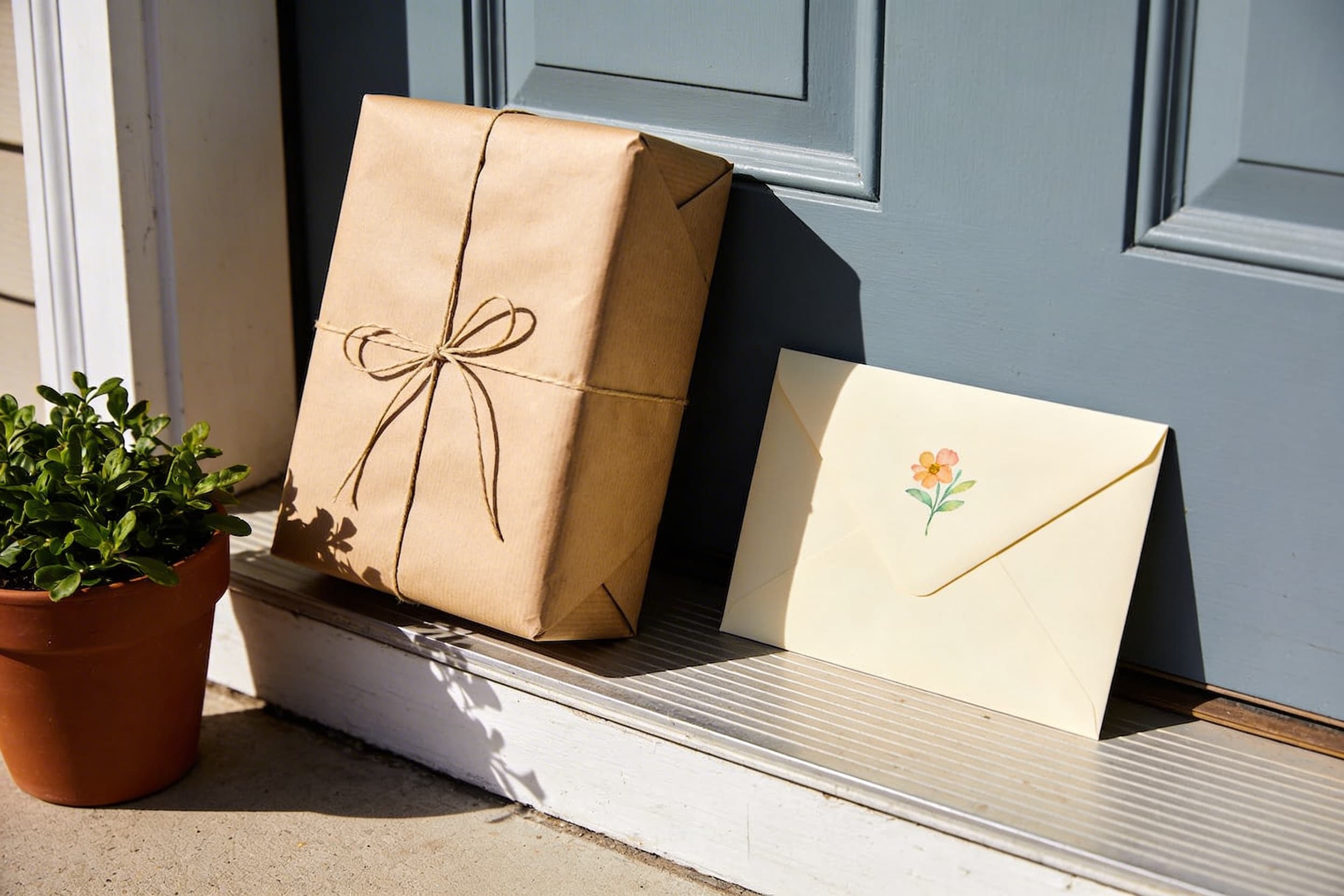
What to include. Always pair your gift with a handwritten card or note. A few sincere lines acknowledging the loss by name are far more powerful than a generic printed message. You do not need perfect words. "I am thinking of you and holding space for your grief" is enough.
What to avoid. Steer clear of gifts that demand energy from the recipient — anything that requires assembly, maintenance, or an immediate response. Avoid overly cheerful messaging or gifts that attempt to minimize the loss.
Cultural and religious considerations. Some traditions do not include flowers at funerals. Others have specific mourning customs that influence what is appropriate. When you are unsure, a charitable donation in the deceased's name or a simple food delivery is almost universally appreciated.
For a deeper look at timing, delivery, and cultural nuances, our full sympathy gift etiquette guide covers every scenario in detail.
Choosing a Sympathy Gift by Relationship
The relationship between you and the grieving person — and their relationship to the deceased — shapes what kind of gift is most appropriate. A close friend who lost a parent needs something different from a colleague who lost a grandparent.
Gifts for a Grieving Friend
Friendship allows for more personal, intimate gestures. You know their tastes, their home, their routines. Lean into that knowledge. A personalized photo frame, a comfort care package, or a memorial keepsake chosen with their personality in mind will resonate more than a generic arrangement.
Consider ongoing support beyond the initial gift. Meal deliveries in the second and third weeks, a standing coffee date, or a simple text that says "I am still here" can matter as much as anything you put in a box.
Gifts for Loss of a Parent
Losing a parent reshapes a person's identity. The gifts that tend to be most cherished are those that honor the parent-child bond — a custom photo collage, a picture memorial gift featuring a favorite family photograph, or a memory box where they can store letters, photos, and small mementos.
Our guide to sympathy gifts for loss of a parent provides detailed recommendations organized by the type of parent-child relationship and the recipient's stage of grief.
Gifts for Loss of a Spouse or Partner
Spousal loss is among the most devastating forms of grief. The bereaved partner is not only mourning a person but an entire shared life — routines, plans, daily companionship. Gifts that acknowledge the depth of that bond tend to carry the most weight.
Cremation jewelry offers a way to carry a physical connection to the deceased. A pendant or ring that holds a small amount of cremated remains becomes a quiet, private source of comfort worn close to the body every day. Memorial jewelry like this is deeply personal and often becomes one of the most treasured possessions a grieving spouse will own.
For relationship-specific ideas and guidance on navigating the unique dynamics of spousal loss, see our full guide to sympathy gifts for loss of a spouse.
Gifts for a Coworker
The workplace presents a unique challenge. You want to show genuine care without overstepping professional boundaries. Group gifts are common and effective — a signed card paired with a modest gift from the team, such as a memorial card set or a delivered meal, strikes the right balance.
If you worked closely with the person, a more personal gesture is appropriate. Our guide to sympathy gifts for a coworker walks through the professional etiquette involved in workplace sympathy, including how to navigate group contributions and what to do if your coworker is also a friend.
Choosing a Sympathy Gift by Occasion
Grief does not end after the funeral. Many of the most meaningful opportunities to support a grieving person come weeks, months, or even years later — at holidays, anniversaries, and life milestones where the absence is felt most sharply.
Funeral and Immediate Aftermath
In the days immediately following a death, practical support often matters most. Delivered meals, help with household tasks, or a simple comfort package with a candle, tea, and a heartfelt note all provide tangible relief during a time when the bereaved person is consumed by logistics and emotion.
If you want to send a lasting remembrance, a keepsake that the recipient can set aside and return to later — when the initial chaos subsides — is often more appreciated than something that demands attention right away.
Anniversaries and Memorial Dates
The anniversary of a death can be one of the loneliest days of the year. Most people have moved on with their lives, but for the grieving person, that date carries the full weight of the original loss. A card, a small gift, or even a message that says "I remember, too" can mean the world.
Holidays
Thanksgiving, Christmas, Mother's Day, Father's Day — each holiday that arrives after a loss can feel like reopening a wound. Thoughtful gestures during these seasons show the bereaved person that their loved one has not been forgotten. A memorial ornament for the holiday table, a dedicated place setting, or a donation made in the deceased's name all serve as gentle acknowledgments.
A wedding, a graduation, the birth of a child — joyful milestones often carry an undercurrent of grief when someone important is missing. A memorial tribute woven into the celebration, like a photo table, a reserved seat, or a small keepsake charm on the bride's bouquet, honors the absent person without overshadowing the occasion.
Meaningful sympathy gifts exist at every price point. The value of a condolence gift comes from its thoughtfulness, not its cost. A handwritten letter recalling a specific memory of the deceased costs nothing and can become one of the most treasured things a grieving person receives.
Under $15. A sympathy card with a heartfelt personal message. A small candle with a comforting scent. A packet of wildflower seeds with a note about planting new life in memory of someone lost.
Under $25. A comfort care package with tea, chocolate, and a cozy pair of socks. An angel worry stone designed to be held during difficult moments. A journal for writing letters to the person they have lost.
Under $50. A personalized photo frame or picture memorial gift. A memorial garden stone engraved with a name or short tribute. A remembrance wind chime that turns a breeze into a gentle reminder.
Premium ($50+). A custom fingerprint memorial keepsake that preserves the unique touch of a loved one. A cremation jewelry pendant or ring. A curated memorial display that includes a keepsake urn, a framed photo, and a candle.
For detailed recommendations at every price tier, including specific product suggestions and guidance on when each budget range is appropriate, see our sympathy gifts by budget guide.
Photo and Fingerprint Memorial Gifts
Some of the most emotionally powerful sympathy gifts are those that preserve something unique and irreplaceable about the person who died — their face, their handwriting, their fingerprint.
Picture Memorial Gifts
A photograph captures a moment, a smile, a relationship. Transforming a cherished photo into a memorial gift — a custom canvas, an engraved photo keepsake, or a crystal with a laser-etched portrait — gives the bereaved person a tangible way to keep that image close.
Photo-based gifts work across every relationship and occasion. They are especially effective for grandparents, parents, and spouses whose daily lives were intertwined with the deceased. Our picture memorial gifts guide covers every format and style available.
Fingerprint Memorial Ideas
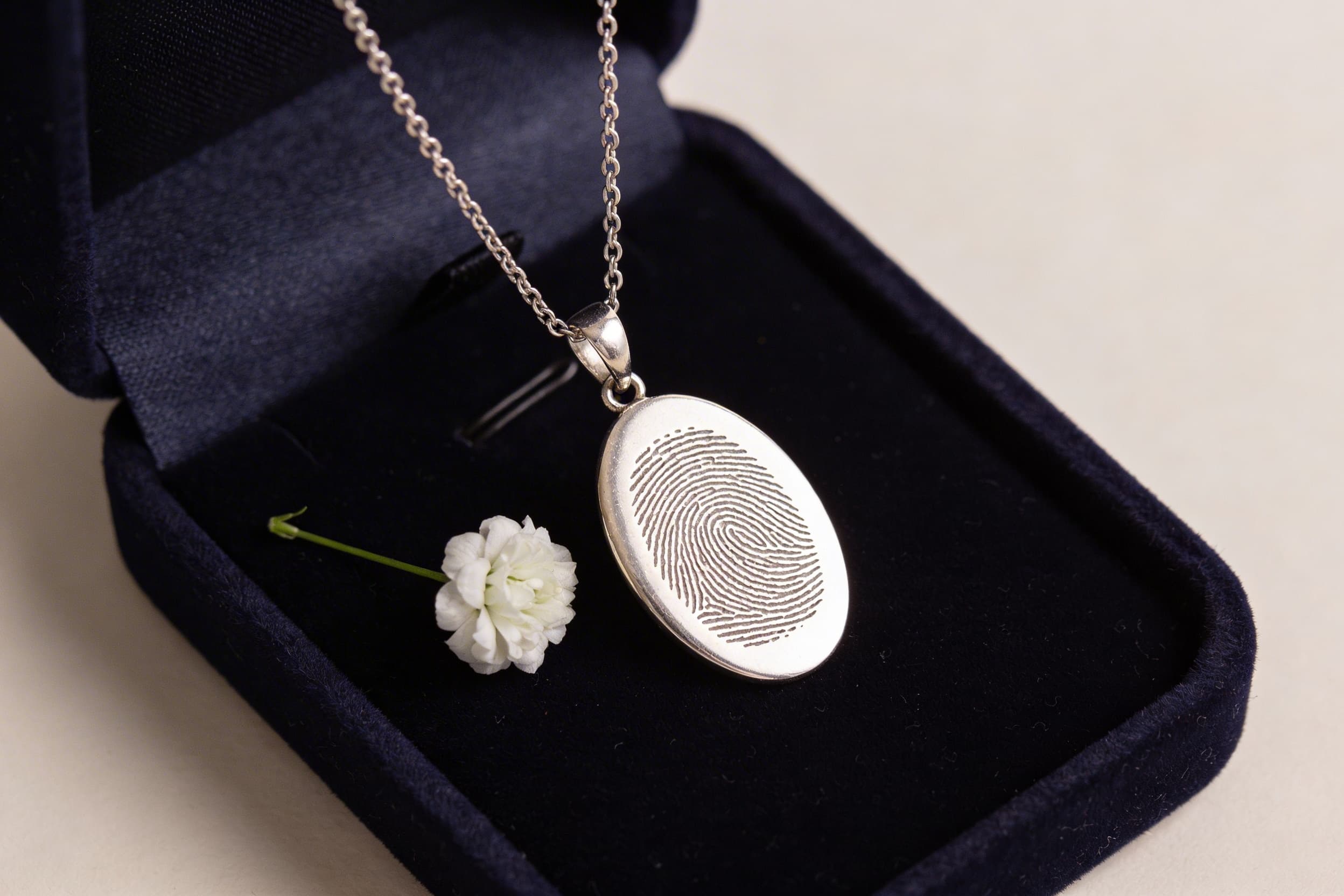
A fingerprint is the most personal identifier a person has. Fingerprint memorial keepsakes transform that unique mark into jewelry, art, and home décor that allow the bereaved to literally feel the presence of the person they have lost.
Fingerprint jewelry — pendants, rings, and bracelets etched or molded from an actual fingerprint — has become one of the fastest-growing categories in memorial gifting. These pieces are deeply personal, discreet enough to wear daily, and carry a meaning that only the wearer fully understands.
What Not to Send as a Sympathy Gift
Not every well-intentioned gesture lands well. Some gifts, despite coming from a place of genuine care, can feel tone-deaf or even hurtful to a grieving person. Understanding what to avoid is just as important as knowing what to send.
Gifts that minimize the loss — anything with phrases like "they are in a better place" or "everything happens for a reason" — can feel dismissive to someone in acute grief. Self-help books on grief, unless specifically requested, can feel presumptuous. Perishable food sent without coordination may arrive at an inconvenient time.
The most common mistake is not the gift itself but the absence of a personal message. A beautiful arrangement or expensive keepsake without a card or note can feel impersonal and transactional.
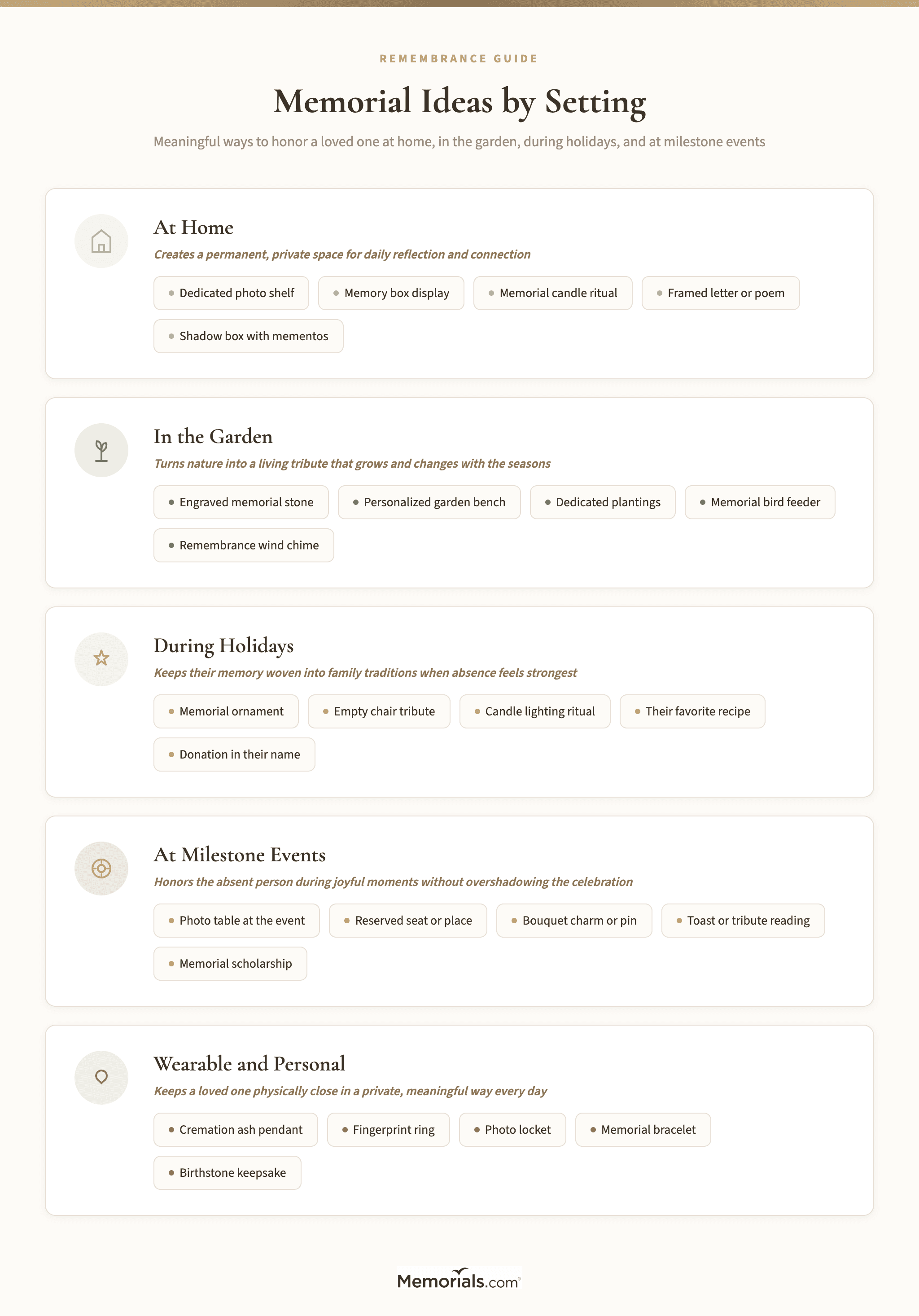
Memorial Ideas Beyond Gifts: Ongoing Ways to Honor a Loved One
A sympathy gift marks a single moment of support. But grief extends far beyond the first weeks, and there are many ways to honor a loved one's memory over time that complement or replace a traditional gift.
Home Memorials
Creating a dedicated space in the home — a shelf, a corner table, a windowsill — where photographs, keepsakes, and mementos are displayed together provides a permanent place for reflection. This kind of memorial at home evolves over time, growing as new memories are added and as the bereaved person moves through different stages of grief.
Garden Memorials
An outdoor memorial transforms a garden or yard into a living tribute. Engraved memorial stones, dedicated plantings, personalized garden benches, and bird feeders all create spaces where the bereaved can sit with their memories in the open air. These memorials are especially meaningful for people who found peace in nature or who spent time in their garden with the person they lost.
Seasonal and Holiday Tributes
As discussed in the occasions section above, annual rituals built around a loved one's memory — lighting a candle at Thanksgiving, hanging a memorial ornament at Christmas, visiting a gravesite on a birthday — create continuity and help the bereaved person integrate their loss into the ongoing rhythm of their life.
For a broader collection of remembrance approaches, our memorial ideas for loss guide provides creative, practical options for every setting and personality.
Navigating Grief: What You Should Know About the Grieving Process
If you are choosing a sympathy gift for someone, it helps to understand what they are going through. Grief is not a linear process with a clear beginning and end. It arrives in waves, shifts in intensity, and looks different for every person.
The First Week
The initial days after a loss are often described as a blur. The bereaved person may be functioning on autopilot — making arrangements, receiving visitors, handling logistics — while the full emotional weight of the loss has not yet landed. Practical support during this period is often more helpful than sentimental gifts. Understanding what to expect in the first week after loss can help you calibrate your support appropriately.
The Longer Timeline
There is no standard timeline for grief. Some people begin to find a new equilibrium within months. Others carry acute grief for years. The question of how long grief lasts has no single answer, but understanding the general patterns — including the difference between normal grief and grief that may require professional support — can help you offer the right kind of support at each stage.
Grief can also manifest physically. Fatigue, disrupted sleep, appetite changes, and even chest pain are common responses to loss. Being aware of the physical symptoms of grief helps you understand why a grieving person may seem exhausted or unwell even weeks after the funeral.
Specific Types of Loss
Certain kinds of loss carry unique grief dynamics. Anticipatory grief — the grief experienced while a loved one is still alive but terminally ill — can leave people feeling emotionally depleted before the death even occurs. Pregnancy loss is a deeply personal grief that is often minimized by others. Grief in the workplace creates a tension between professional expectations and emotional reality.
Understanding these dynamics does not mean you need to become a grief counselor. It simply means your sympathy gift — and the message that accompanies it — can acknowledge the specific kind of pain the person is experiencing, rather than offering a one-size-fits-all response.
Frequently Asked Questions
How soon should I send a sympathy gift after someone dies?
The first two weeks are the traditional window, but there is no expiration date on sympathy. Gifts that arrive weeks or months later often carry extra meaning because they arrive after the initial surge of support has faded and the bereaved person feels most alone.
Is it appropriate to send a sympathy gift if I did not know the deceased?
Yes. Your gift is for the living person who is grieving, not for the person who died. If you care about the recipient, a sympathy gift acknowledging their pain is always appropriate regardless of whether you knew their loved one.
What is the best sympathy gift for someone I do not know well?
A simple, respectful option like a delivered meal, a sympathy card with a sincere message, or a modest comfort package is ideal. Avoid overly personal gifts for acquaintances — save those for close friends and family.
Should I send flowers or something else?
Flowers are beautiful but temporary. If you want a lasting remembrance, consider a memorial keepsake, a garden stone, or a piece of memorial jewelry. That said, flowers are perfectly appropriate and always appreciated when accompanied by a personal note.
What do you write in a sympathy card?
Keep it simple and sincere. Mention the deceased by name. Share a brief, specific memory if you have one. Avoid clichés like "they are in a better place." Say something like: "I will always remember [Name]'s warmth and kindness. I am holding you in my thoughts."
The Sympathy & Grief Support Hub Library
This guide is part of the Memorials.com Sympathy & Grief Support collection. Explore our full library of resources below to find exactly what you need for any situation.
Condolences by Relationship
What to actually write, grouped by who died and who you are to the person reading — plus the phrases that land badly and what to say instead.
What families notice in the last days and hours, and what each change actually means. Written for the person sitting up at three in the morning, not for a clinician — and every one of them explains why what looks frightening usually is not.
Mottling at End of Life: What It Looks Like and What It Means — The lacy, purple-red pattern that appears as circulation slows — where it starts, how long it tends to last, why it is not painful, and where to look for it on darker skin, which almost no other guide covers.
The Death Rattle: What That Sound Is, and Whether It Hurts — Why the wet, rattling sound is not drowning or choking, what helps, and what to stop doing — including why suctioning, the instinct almost everyone has, is usually the wrong one.
The Final 48 Hours: What to Expect — A walk forward through the last week, the last days and the final hours in the order changes usually arrive, plus the sudden clear spell that families mistake for recovery.
Related Guides from Other Hubs
Explore our other comprehensive resource hubs for specific memorial product categories and planning needs.
Choosing a sympathy gift is not about finding something perfect. It is about showing someone that their grief has been noticed and that they are not forgotten. The best condolence gifts are the ones chosen with the recipient's personality, relationship to the deceased, and current needs in mind.
Whether you choose a handwritten card, a delivered meal, a piece of memorial jewelry, or an engraved garden memorial stone, what matters most is the intention behind it. Grief is a long road, and the people who show up along the way — not just at the funeral but at the anniversaries, the holidays, and the quiet Tuesday afternoons when the loss hits all over again — are the ones who make the journey a little less lonely.
Browse the full sympathy gift collection to find keepsakes, memorial stones, and comfort gifts for every relationship and occasion.