🏬Supersize Online Funeral Retailer🪦1000's of Headstones⚱️Over 10,000 Cremation Urns⚰️Caskets Overnight Delivery🛒Funeral & Memorial Superstore🚚FREE Shipping on ALL Orders👨👩👧👦Helping Families for over 20 Years💰Lowest Price Guarantee🏬Supersize Online Funeral Retailer🪦1000's of Headstones⚱️Over 10,000 Cremation Urns⚰️Caskets Overnight Delivery🛒Funeral & Memorial Superstore🚚FREE Shipping on ALL Orders👨👩👧👦Helping Families for over 20 Years💰Lowest Price Guarantee
🏬Supersize Online Funeral Retailer🪦1000's of Headstones⚱️Over 10,000 Cremation Urns⚰️Caskets Overnight Delivery🛒Funeral & Memorial Superstore🚚FREE Shipping on ALL Orders👨👩👧👦Helping Families for over 20 Years💰Lowest Price Guarantee🏬Supersize Online Funeral Retailer🪦1000's of Headstones⚱️Over 10,000 Cremation Urns⚰️Caskets Overnight Delivery🛒Funeral & Memorial Superstore🚚FREE Shipping on ALL Orders👨👩👧👦Helping Families for over 20 Years💰Lowest Price Guarantee
The design engraved on a headstone carries as much meaning as the words it surrounds. Symbols, images, and lettering styles each add a layer of personalization that transforms a memorial from simple stone into a lasting tribute. Whether you are choosing a carved rose to honor your mother's garden or selecting a font that reflects your father's quiet strength, every design element tells part of the story.
This guide walks through the most meaningful headstone engraving designs — from religious and floral symbols to portrait etching and font selection — so you can make informed choices that honor your loved one for generations. For a broader look at inscription wording, engraving methods, and personalization across all memorial types, our engraving guide for urns and headstones covers everything in one place.
Religious imagery remains the most requested category of headstone engraving designs. These symbols connect a memorial to the faith that guided a person's life, offering comfort to visiting families and a visible statement of belief.
Crosses and Crucifixes
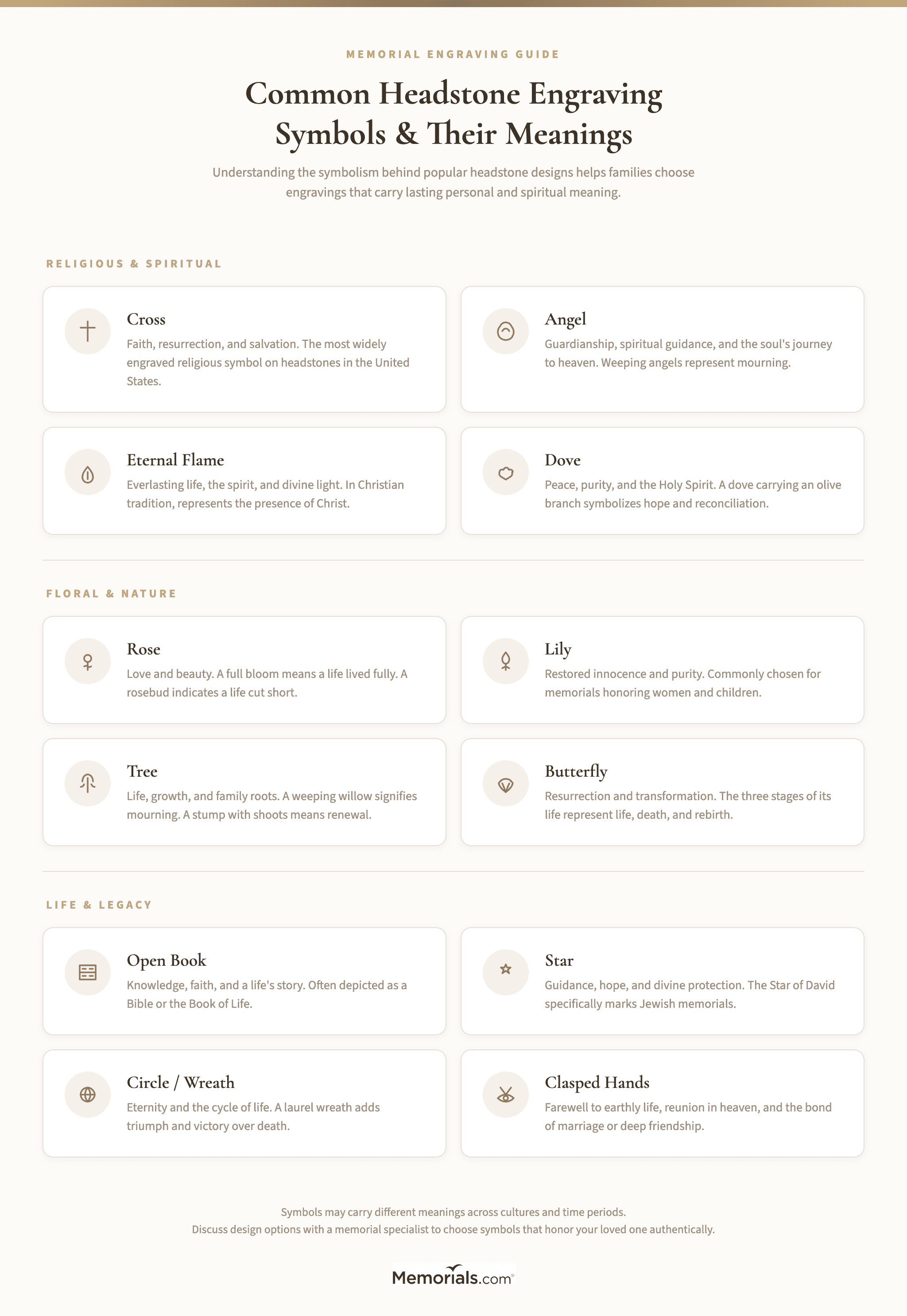
The Latin cross is the most widely engraved religious symbol on headstones across the United States. Variations include the Celtic cross with its distinctive circle at the intersection, the Orthodox cross with three horizontal bars, and the crucifix depicting Christ on the cross. Each carries slightly different denominational meaning. Celtic crosses are particularly popular on granite headstones because the intricate knotwork translates well into sandblasted or laser-etched granite surfaces.
Angels and Cherubs
Angels appear in several poses, each with its own significance. A weeping angel represents mourning and grief. An angel with outstretched wings symbolizes guardianship and the soul's journey to heaven. Cherubs — small, childlike angels — are traditionally used on the headstones of infants and children. A full-figured angel with a trumpet represents the call to resurrection. Families often choose angel engravings when the deceased had a deep spiritual life or when the loss feels especially profound.
Other Faith-Based Designs
The Star of David marks Jewish memorials, while the crescent moon and star identify Islamic headstones. A menorah may appear on the graves of Jewish women, and a Torah scroll on those of scholars. Buddhist families may choose the lotus flower or the dharma wheel. The hands of blessing, depicted as two hands with fingers spread in a specific pattern, indicate a descendant of the priestly class in Judaism. Each of these symbols carries centuries of tradition and should be selected with an understanding of their religious context.
Floral and Nature Engravings
Flowers and natural elements are the second most common category of headstone engraving designs, and they carry rich symbolic meaning that often surprises families who view them simply as decoration.
Roses
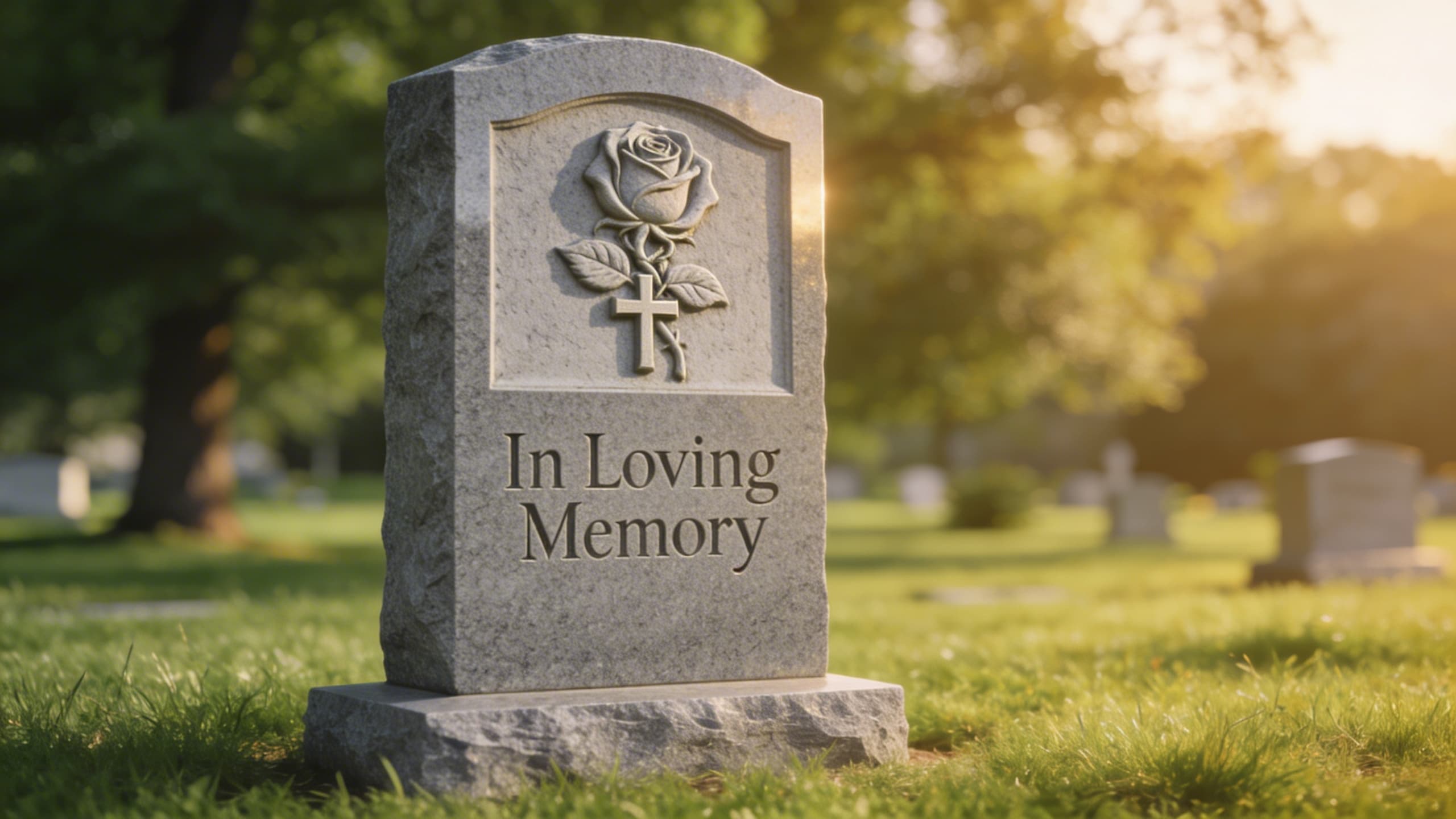
The rose is the most frequently engraved flower on memorials. A rose in full bloom represents a life lived fully, while a rosebud signifies a life cut short — often used for children or young adults. A rose with a broken stem indicates a life ended prematurely. The number of roses can also carry meaning: a single rose suggests singular devotion, while a wreath of roses represents eternal love and heavenly joy.
Lilies, Ivy, and Other Florals
The lily symbolizes restored innocence and purity, making it a common choice for memorials honoring women and children. Ivy represents fidelity, attachment, and undying affection — its evergreen nature connects it to immortality. The morning glory signifies resurrection, youth, and the bonds of love. Oak leaves carved into a headstone represent strength, faith, and endurance, while the acanthus leaf symbolizes the heavenly garden. The thistle, Scotland's national emblem, represents earthly sorrow and is commonly found on memorials for those of Scottish heritage.
Trees and Landscapes
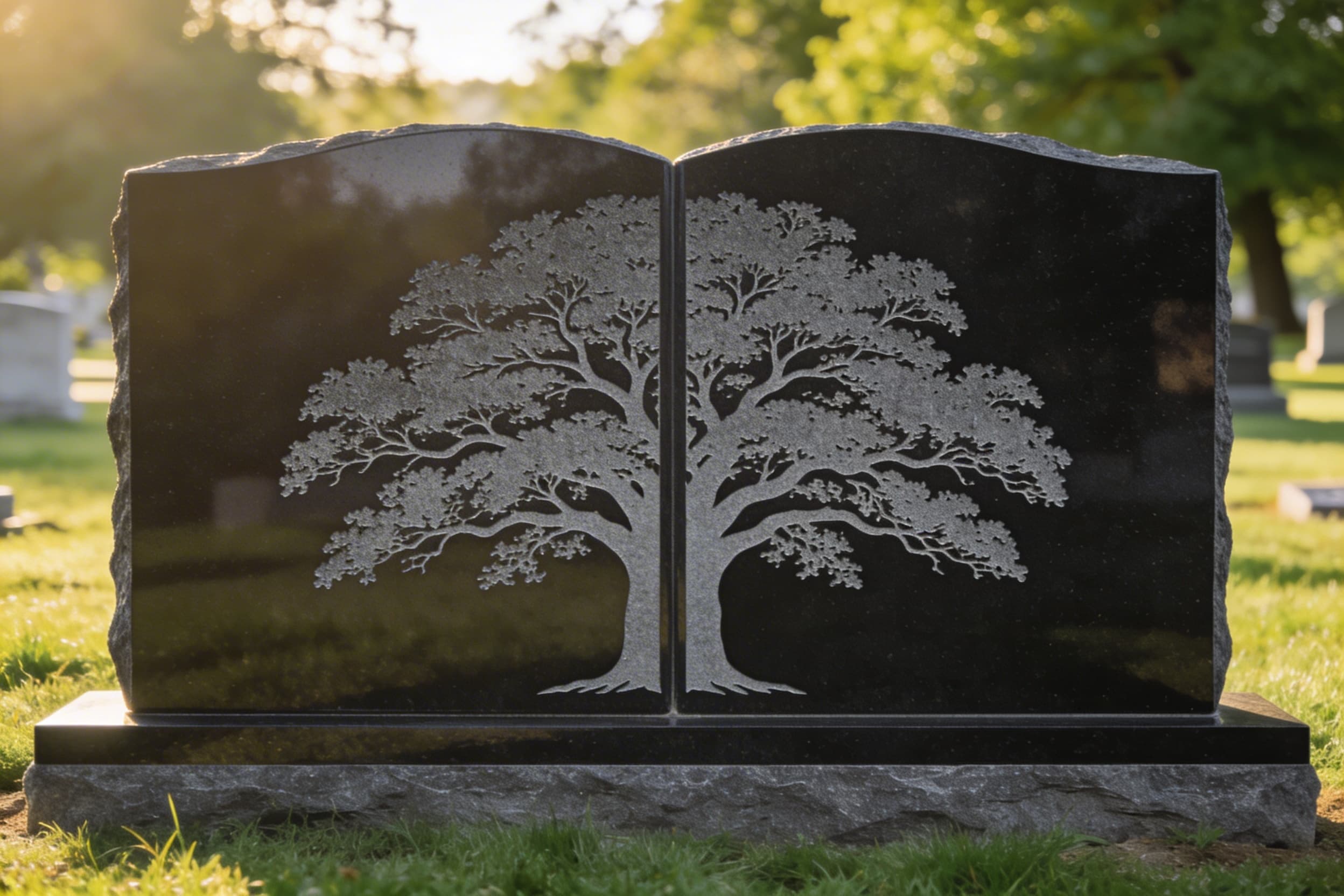
A tree engraved on a headstone may represent life, growth, and shelter. A weeping willow — one of the most recognized memorial motifs — has signified mourning since the Victorian era. A tree stump with new shoots represents life continuing after death, while a bare or broken tree indicates a life ended suddenly. Some families choose to engrave an entire landscape scene, perhaps a mountain view, a lakeside, or a beloved garden, creating a truly personalized tribute.
Fraternal, Military, and Hobby Symbols
Beyond religious and floral motifs, headstone engraving designs often reflect the organizations, service, and passions that defined a person's life.
Military and Veteran Emblems
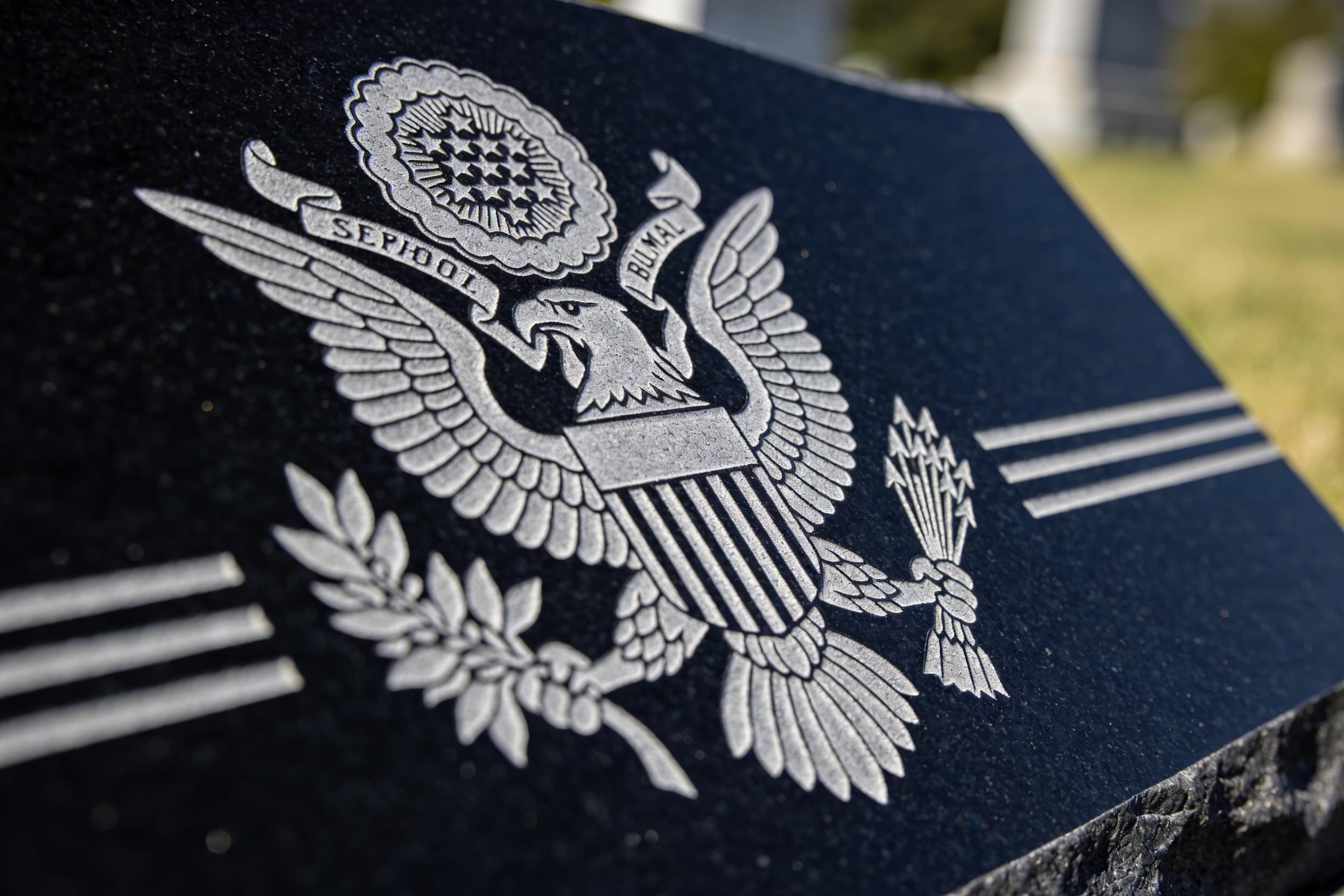
Military headstones frequently include branch-of-service emblems: the eagle, globe, and anchor for the Marine Corps; the shield and sword for the Army; the anchor for the Navy. The U.S. Department of Veterans Affairs provides bronze medallions and markers at no cost for eligible veterans, and many families add additional military imagery to privately purchased bronze headstones. Purple Heart recipients, combat veterans, and retired service members may have specific insignia engraved alongside standard inscription text.
Fraternal and Civic Organizations
The compass and square identify Freemasons, while the three-link chain represents the Independent Order of Odd Fellows. The elk's head marks members of the Benevolent Protective Order of Elks, and the Knights of Columbus emblem — a shield bearing a fasces, an anchor, and a short sword — appears on Catholic fraternal members' memorials. These symbols were once far more common than they are today, but they still appear regularly on headstones in established cemeteries. Masonic funerals have their own graveside rite as well, and the evergreen each brother drops into the grave — the sprig of acacia — carries the same meaning as the emblem on the stone.
Hobbies and Personal Interests
Modern engraving technology has made it possible to carve almost any design a family can imagine. Fishing rods, musical instruments, sports equipment, motorcycles, boats, and gardening tools all appear on contemporary headstones. A painter's palette might honor an artist, while a stack of books could memorialize a teacher or lifelong reader. These personal touches transform a standard memorial into something unmistakably individual. Understanding the headstone engraving process helps families know which designs are feasible for their chosen stone type and engraving method.
Portrait Etching and Photo Engraving
One of the most personal headstone engraving designs available today is the portrait — a photorealistic image of the deceased etched directly into the stone surface.
Laser Etching
Laser etching produces the highest level of photographic detail. A computer-controlled laser burns the polished surface of dark granite to create a light gray image with remarkable clarity. Portraits, full-body images, and even scenic photographs can be reproduced with precision that rivals a printed photograph. Laser etching works best on dark granite colors — Jet Black, Impala Black, and India Red — because the contrast between the polished surface and the etched area creates a sharp, visible image. On lighter granites, laser-etched images can appear washed out and difficult to read from a distance.
Ceramic and Bronze Photos
For families who want a color photograph on the memorial, ceramic and bronze pictures for headstones offer a durable alternative. Ceramic photos are fired at high temperatures, fusing the image permanently into the plate, and they are guaranteed against fading, deterioration, and breakage. Bronze portraits use a chemical etching process that produces a warm, golden-toned image with extraordinary longevity. Both types mount directly to the headstone or grave marker surface with industrial-grade adhesive, and they are available in sizes ranging from small ovals to larger rectangles suitable for companion memorials.
Design Considerations for Portraits
When planning a portrait engraving, select a high-resolution photograph with clear facial features and good lighting. Profile shots and candid images can work well, but heavily shadowed or blurry originals will produce poor results on stone. Many monument companies can digitally enhance the source photo before engraving. Some families choose to engrave portraits of the deceased at different life stages, or to include images of meaningful places — a childhood home, a favorite vacation spot — alongside the traditional portrait.
Lettering Styles and Font Selection
The font on a headstone affects readability, tone, and overall design harmony. Choosing the right lettering style is one of the most important — and often overlooked — decisions in the engraving process.
Lettering in Spanish adds one step to this. Accent marks are dropped by design software more often than any other character, and a missing tilde is permanent once carved — our guide to lapidas sencillas y bonitas is written in Spanish and covers the phrases that fit, with the characters counted.
Serif Fonts
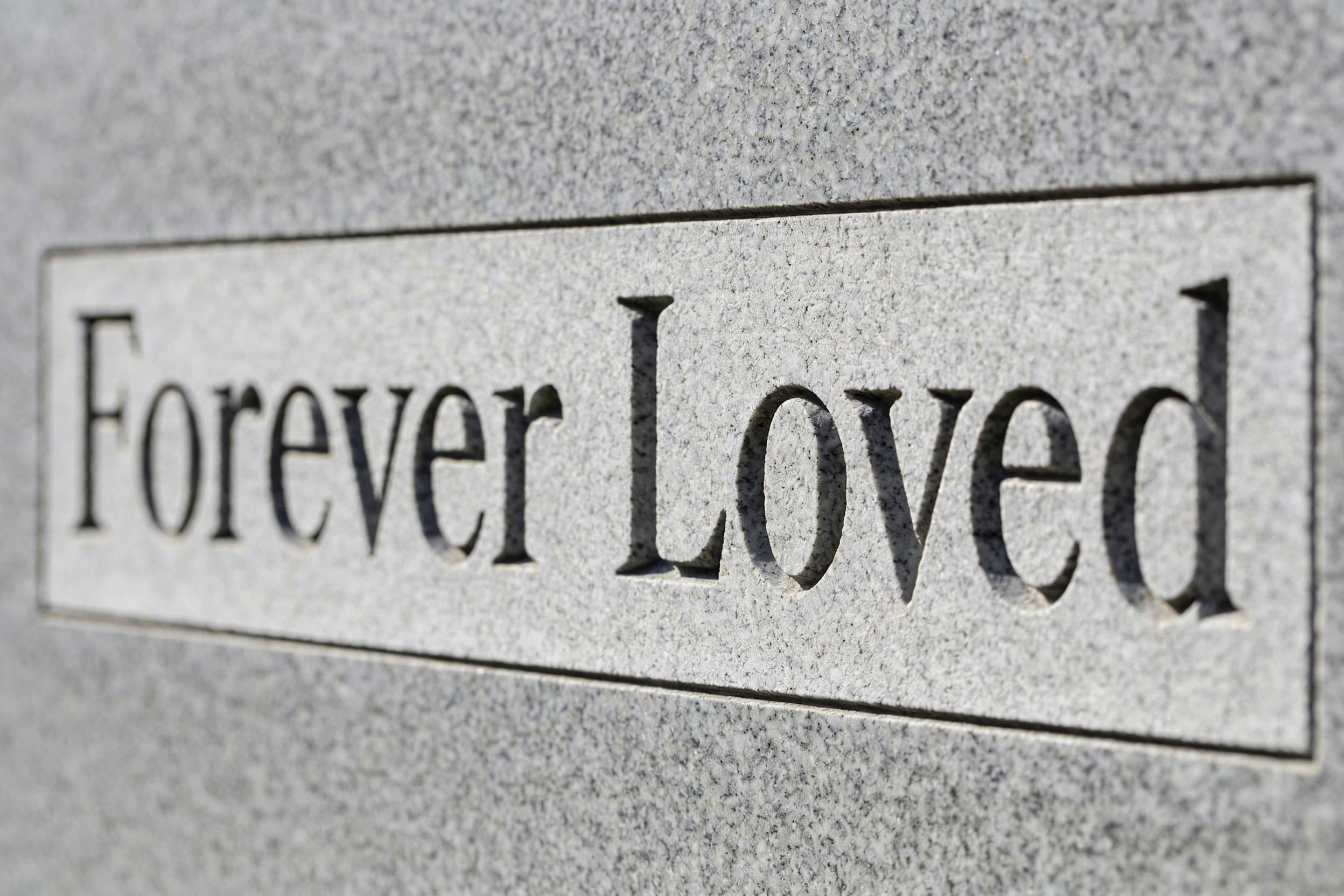
Serif fonts feature small decorative strokes at the end of each letter. They are the most traditional and widely used headstone fonts because they convey formality, dignity, and timelessness. Times New Roman, Garamond, and Georgia are popular serif choices. These fonts remain legible for decades because the serifs help guide the eye along each letter, even as natural weathering softens the stone surface over time. Serif fonts are appropriate for virtually any headstone style, from flat granite grave markers to tall upright monuments.
Sans-Serif Fonts
Sans-serif fonts — those without the small decorative strokes — present a cleaner, more modern appearance. Helvetica, Arial, and Futura are common sans-serif options. These fonts work particularly well on contemporary memorial designs, flat markers, and headstones with minimal ornamentation. Because sans-serif letters have simpler shapes, they can be easier to engrave at smaller sizes, making them a practical choice when the inscription includes a significant amount of text.
Script and Cursive Fonts
Script fonts mimic handwriting and add elegance to short inscriptions — a name, a brief endearment, or a single meaningful word. Monotype Corsiva and similar flowing scripts can be beautiful on headstones, but they must be used with care. Overly ornate script at small sizes becomes illegible, especially for older visitors or in low light conditions. Most monument professionals recommend reserving script for the primary name line or a short quote, while using a more legible serif or sans-serif font for dates, epitaphs, and longer text passages.
Gothic and Old English Fonts
Gothic fonts — also called Blackletter or Old English — feature dramatic thick-and-thin strokes with ornate flourishes. They carry a strong historical and religious character, and they pair well with Gothic-style or traditional memorials. Old English lettering is sometimes used for family surnames on large upright monuments, where the bold, decorative letterforms command attention from a distance. Because Gothic fonts can be difficult to read quickly, they work best for short text elements rather than full epitaphs.
Matching Font to Stone
The material and color of the headstone should influence font selection. Dark granite with skin-traced or laser-etched lettering creates strong contrast that supports even delicate script fonts. Lighter granite colors like Barre Gray or Bethel White show more clearly with deeply cut V-sunk lettering, which pairs best with bold serif or sans-serif fonts. Slate headstones cannot accommodate deep cuts, so thin, elegant fonts with natural flourishes tend to look best. Bronze memorials use cast or etched lettering and can reproduce virtually any font style with lasting clarity. The cost of headstone engraving varies by method and complexity, so discussing font options early in the design process helps families balance aesthetics and budget.
Engraving Methods and How They Affect Design
The engraving method determines which designs are possible, how detailed they can be, and how well they hold up over time. Each method has strengths and limitations that directly influence design choices.
Sandblasting
Sandblasting is the most common engraving method for granite headstones. A rubber stencil is applied to the stone surface, and an abrasive material is blasted at high pressure to cut the exposed areas. Sandblasting produces clean, deep lettering and simple designs, but it cannot achieve the fine detail required for portraits or highly intricate patterns. It works on all granite colors and produces long-lasting results that remain legible for a century or more.
Laser Etching
Laser etching uses computer-controlled technology to burn extremely fine details into polished stone. It excels at reproducing photographs, detailed illustrations, and delicate fonts that sandblasting cannot achieve. Laser-etched designs appear as light gray markings on the polished surface. While visually impressive, laser-etched lines are shallower than sandblasted ones, which means they may be less visible from a distance on lighter-colored stones. Laser etching is the preferred method for any design that includes photographic imagery or very fine linework.
V-Sunk and Raised Lettering
V-sunk lettering is hand-cut by skilled stonecutters using specialized tools. The letters are carved deep into the stone in a V-shaped profile, creating a shadow effect that keeps the text readable without added paint — particularly effective on lighter granites. Raised lettering reverses this process: the background stone is carved away so the letters stand above the surface in polished relief. Raised lettering is striking and distinctive, but it is more expensive and more vulnerable to damage from lawn care equipment on flat markers. Monument specialists generally recommend raised lettering only on upright memorials where the text is safely above ground level.
Hand Carving and 3D Engraving
Hand carving by a master stonecutter produces sculptural depth that no machine can replicate. Floral designs, angel figures, and decorative borders gain texture, dimension, and realism when carved by hand. Advances in technology have also introduced 3D engraving, where CNC machines cut stone at varying depths to create designs that appear to emerge from the granite surface. A beloved pet's face, a floral arrangement, or a religious figure can appear three-dimensional and lifelike. Hand carving and 3D work are premium options that significantly increase the tombstone design inspiration available to families willing to invest in a truly one-of-a-kind memorial.
Design Ideas for Specific Memorial Types
Different headstone shapes and sizes lend themselves to different engraving approaches. Matching the design to the memorial type ensures a cohesive, visually balanced result.
Upright Monuments
Upright headstones offer the most design space and flexibility. The broad, polished face can accommodate large portraits, detailed scenes, multi-line inscriptions, and decorative borders. Families choosing upright monuments often combine several design elements: a carved floral border at the top, a laser-etched portrait on one side, and an epitaph in serif font on the other. The height of upright monuments also allows for raised lettering and deeply carved 3D elements that would not be practical on smaller markers.
Flat and Lawn-Level Markers
Flat markers require simpler, bolder design choices because they are viewed from directly above and are exposed to foot traffic and lawn equipment. Sans-serif fonts at larger sizes, simple symbols, and minimal decorative borders work best. Avoid script fonts at small sizes and raised lettering on flat markers, as both can become difficult to read or physically damaged over time.
Companion and Double Headstones
Companion headstones for married couples present an opportunity for unified design across two sets of personal information. Many families choose a shared central motif — clasped hands, intertwined rings, a shared tree — with individual portraits or text on either side. Symmetrical layouts create visual harmony, while asymmetrical designs can represent two distinct personalities within a shared memorial. For inscription ideas specific to shared memorials, our guide to headstone designs for couples offers wording and layout suggestions.
Bronze Memorials
Bronze markers and plaques accept engraved or cast designs with exceptional durability. Text and images can be raised, recessed, or etched flat, and the warm golden tone of bronze adds a natural elegance. Because bronze ages beautifully — developing a rich patina over decades — many families choose designs that incorporate fine linework and detailed imagery, confident that the material will preserve the design indefinitely.
Tips for Choosing the Right Design
Selecting headstone engraving designs involves balancing personal meaning, aesthetic appeal, practical durability, and cemetery regulations. These guidelines can help:
Check cemetery rules first. Many cemeteries restrict headstone size, shape, material, and even engraving content. Some sections allow only flat markers. Others require specific dimensions. Always confirm regulations with the cemetery office before finalizing any design.
Match design complexity to engraving method. If you want a photographic portrait, plan for laser etching on dark granite. If you prefer deep, lasting text, V-sunk lettering on lighter granite is a better choice. Discuss options with a monument specialist before committing to a design that the chosen method cannot execute well.
Prioritize readability. A headstone should be legible from several feet away, in full sun and overcast light alike. Choose fonts and letter sizes that remain clear as the stone ages naturally. Test the font by viewing it at the expected reading distance — not just on a computer screen.
Start with one strong design element. A single well-executed symbol, portrait, or decorative border makes a stronger impression than a surface crowded with competing elements. The most memorable headstones are often the simplest — one meaningful image, a few carefully chosen words, and generous open space that lets each element breathe.
Work with an experienced memorial specialist. Professional designers can show real-stone samples, demonstrate how different fonts and engraving methods look on various granite colors, and help bring your vision to life within the constraints of the stone, the cemetery, and the budget.
Frequently Asked Questions
What is the most popular headstone engraving design?
The Latin cross remains the most widely requested headstone engraving design in the United States, followed closely by roses and angel motifs. However, personalized designs — hobby symbols, portrait etchings, and custom artwork — have grown significantly in popularity as laser etching and CNC technology have made complex engravings more accessible and affordable.
Can you put a picture on a headstone?
Yes. Portraits can be laser-etched directly into dark granite, or a ceramic or bronze photo can be mounted onto the headstone surface. Laser-etched portraits work best on dark-colored polished granite. Ceramic and bronze photos are available in full color, grayscale, and sepia tones, and they are guaranteed against fading and deterioration.
What font is best for a headstone?
Serif fonts like Times New Roman and Garamond are the most popular because they are highly legible and convey a timeless, dignified tone. Sans-serif fonts offer a more modern look, while script fonts add elegance to short inscriptions. The best font depends on the stone material, the engraving method, and the overall design style of the memorial.
How much does it cost to add a design to a headstone?
Simple engraved symbols or decorative borders typically add $100–$300 to the base cost of a headstone. Laser-etched portraits range from $200–$600 depending on size and detail. Ceramic or bronze photos start around $150–$400 per piece. Hand carving and 3D engraving are premium services that may add $500 or more. For a detailed breakdown, see our guide to headstone engraving costs.
Do headstone engravings fade over time?
The longevity of an engraving depends on the method and material. Sandblasted text on granite can remain sharp for well over a century. Laser-etched images on polished granite may gradually lighten over several decades as natural weathering dulls the polished surface. Ceramic photos are fired at high temperatures and are warranted against fading for life. Regular cleaning and occasional re-lettering can maintain the appearance of any engraved headstone.
Choosing a Design That Lasts
The right headstone engraving design speaks for someone who can no longer speak for themselves. A carved symbol, a carefully selected font, or an etched portrait transforms granite and bronze into something deeply personal — a permanent record of what mattered most in a life well lived. Take the time to explore your options, consult with a professional, and choose designs that your family will be proud to visit for generations to come.
Memorials.com offers a wide selection of headstones in granite and bronze, including options that accept custom engraving, ceramic portraits, and personalized design elements. Browse our collection to find the right memorial for your family.