🏬Supersize Online Funeral Retailer🪦1000's of Headstones⚱️Over 10,000 Cremation Urns⚰️Caskets Overnight Delivery🛒Funeral & Memorial Superstore🚚FREE Shipping on ALL Orders👨👩👧👦Helping Families for over 20 Years💰Lowest Price Guarantee🏬Supersize Online Funeral Retailer🪦1000's of Headstones⚱️Over 10,000 Cremation Urns⚰️Caskets Overnight Delivery🛒Funeral & Memorial Superstore🚚FREE Shipping on ALL Orders👨👩👧👦Helping Families for over 20 Years💰Lowest Price Guarantee
🏬Supersize Online Funeral Retailer🪦1000's of Headstones⚱️Over 10,000 Cremation Urns⚰️Caskets Overnight Delivery🛒Funeral & Memorial Superstore🚚FREE Shipping on ALL Orders👨👩👧👦Helping Families for over 20 Years💰Lowest Price Guarantee🏬Supersize Online Funeral Retailer🪦1000's of Headstones⚱️Over 10,000 Cremation Urns⚰️Caskets Overnight Delivery🛒Funeral & Memorial Superstore🚚FREE Shipping on ALL Orders👨👩👧👦Helping Families for over 20 Years💰Lowest Price Guarantee
A headstone engraving transforms raw stone into a permanent tribute — names, dates, quotes, and artwork carved into granite or bronze that will stand for generations. Understanding the headstone engraving process helps you make confident decisions about lettering styles, design complexity, and material choices before you place an order. For a broader look at inscription options across all memorial types, our memorial engraving guide covers urns, plaques, and markers alongside headstones.
This guide walks through the most widely used headstone engraving methods, explains how each technique affects the finished look and durability of the inscription, and outlines what to expect from design consultation through final installation.
Whether you are ordering a brand-new memorial or adding a death date to an existing gravestone, most engraving jobs follow the same general sequence.
The process begins with a design consultation. You provide the text — names, dates, an epitaph or quote — along with any artwork, symbols, or images you want included. A memorial company uses CAD software to create a digital layout, positioning each element on the stone to ensure proper spacing, legibility, and visual balance. Some artisans still sketch layouts by hand for highly custom or artistic commissions, but computer-aided design has become the industry standard because it allows precise font matching and consistent character spacing.
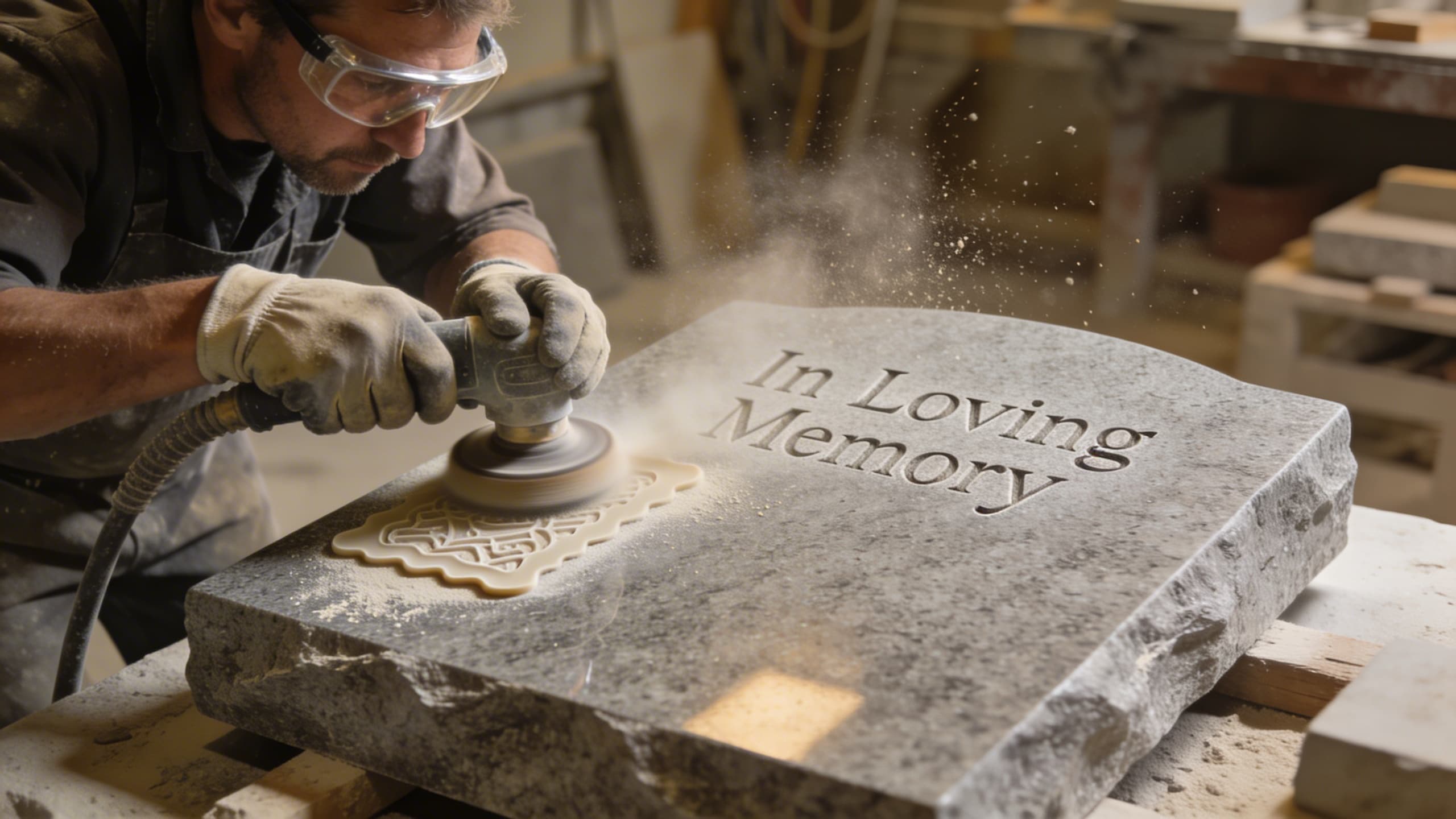
Once you approve the digital proof, the designer generates a rubber stencil from the CAD file. A stencil-cutting machine carves each letter, numeral, and design element into the rubber sheet, and the technician removes the portions that will be engraved — leaving a precise template that exposes only the areas where stone needs to be removed.
The stencil is carefully aligned and applied to the polished granite surface. For existing headstones in a cemetery, a memorial mason takes detailed rubbings and measurements of the original lettering first, matching font, size, depth, and spacing so new additions blend seamlessly with the original work.
With the stencil in place, the engraver carves the design into the stone using the selected method — most commonly sandblasting, though laser etching, CNC machining, and traditional hand carving are also used depending on the design requirements.
After engraving, each character is inspected for consistency and depth. Finishing touches may include paint fill (often black or white lithochrome), gold leaf application, or hand-tooling with chisels to refine details. The stencil is removed, the stone is cleaned, and the headstone is ready for delivery or on-site installation at the cemetery.
Headstone Engraving Methods Explained
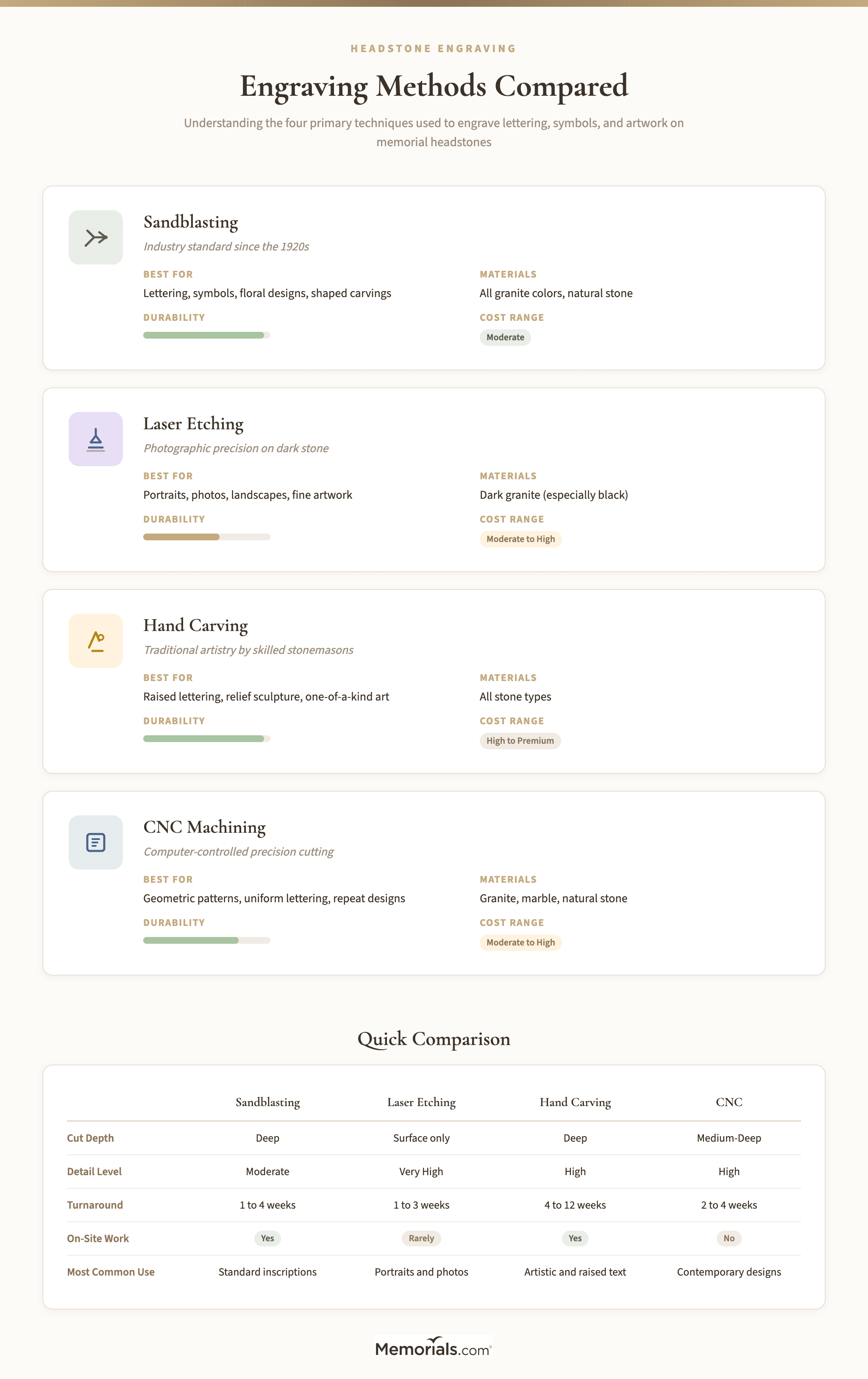
Not every engraving technique produces the same look. The method your memorial company uses determines the depth, contrast, detail level, and long-term durability of the inscription. Here are the four primary methods.
Sandblasting
Sandblasting is the most widely used headstone engraving method and has been the industry standard since the late 1920s. It uses compressed air to propel abrasive particles — typically aluminum oxide or a similar grit — through a nozzle at high pressure. The stream of abrasive material erodes the exposed stone surface while the rubber stencil protects the surrounding area.
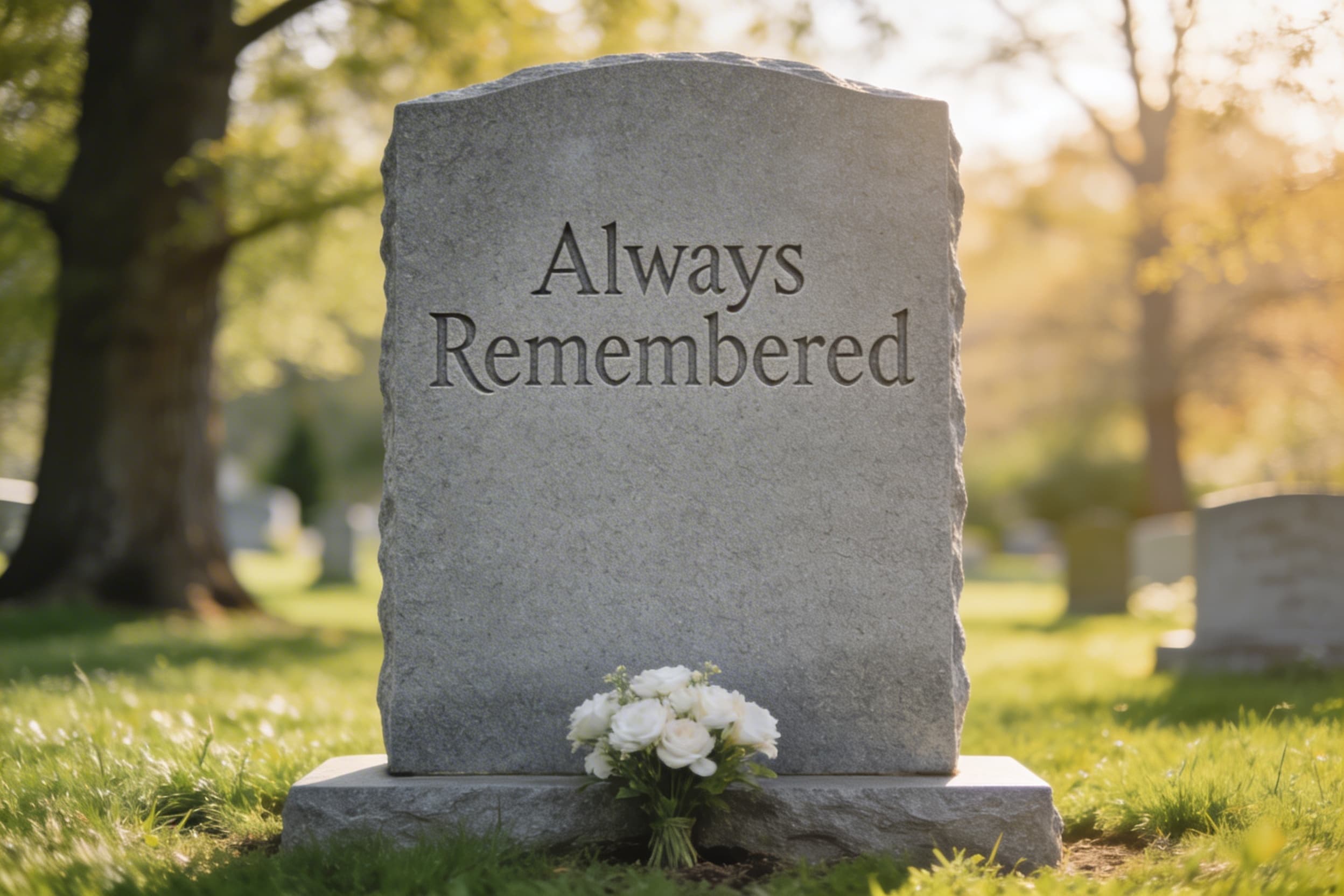
Sandblasting produces deep, clean cuts that hold up exceptionally well against rain, snow, UV exposure, and general weathering. The technique works on both light and dark granite colors and accommodates lettering, numerals, borders, floral motifs, religious symbols, and shaped carvings. Most memorial companies use sandblasting for standard inscriptions because it delivers reliable results at a moderate cost.
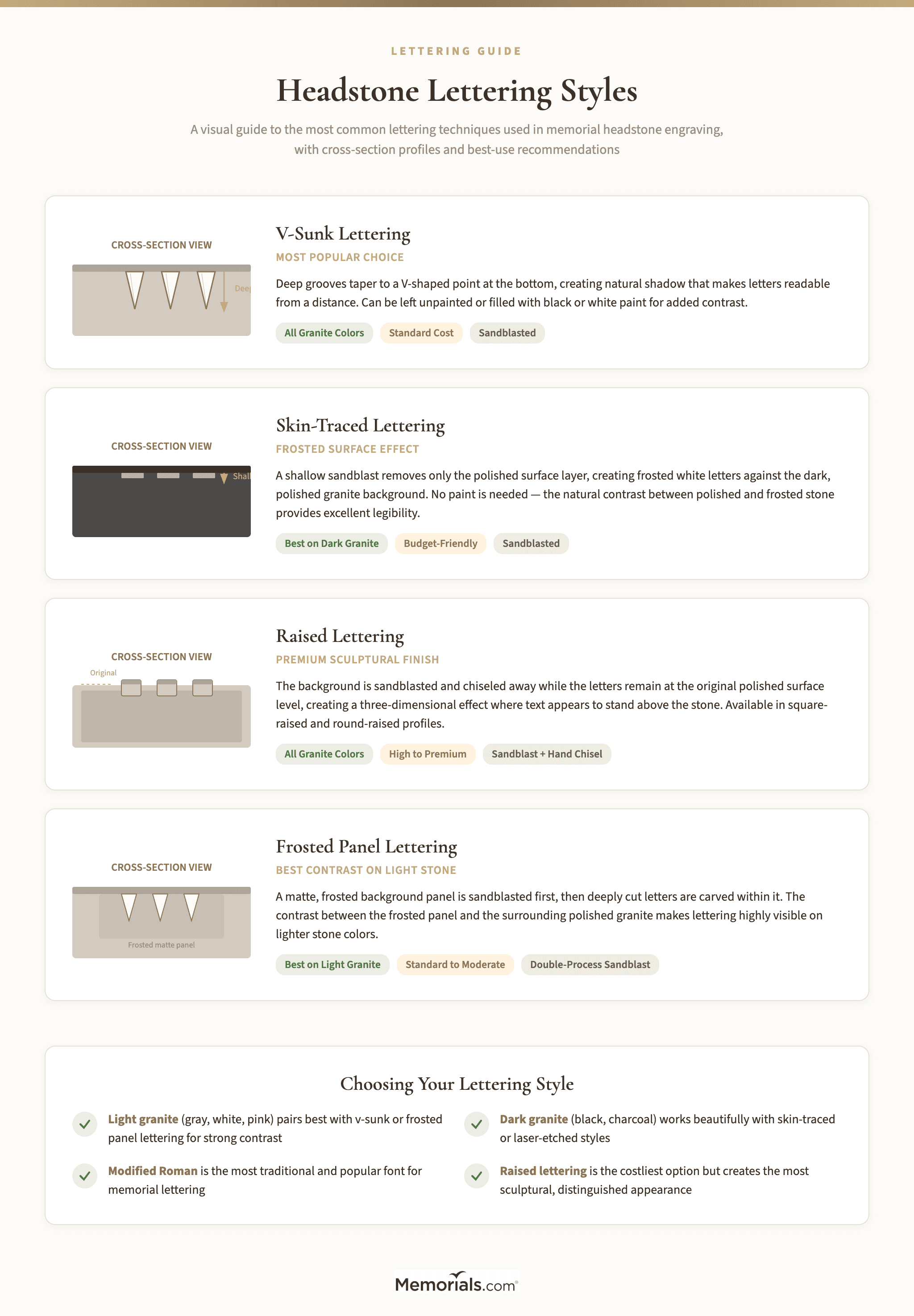
There are several lettering variations achievable through sandblasting. V-sunk lettering creates deep grooves where the bottom of each letter tapers to a point, producing natural shadow and excellent legibility even without paint. Skin-traced lettering uses a shallower blast to create a frosted appearance on the stone's surface, working particularly well on darker granites like black or charcoal. Frosted panel lettering sandblasts a matte background area first, then engraves deeply cut letters within that panel for strong contrast on lighter stones. Shaped carving is a multi-pass sandblast technique that creates three-dimensional effects — roses, angels, and other sculptural elements with realistic depth and contour.
For a detailed look at how these design elements translate into finished memorials, explore our collection of engraving design ideas for headstones.
Laser Etching
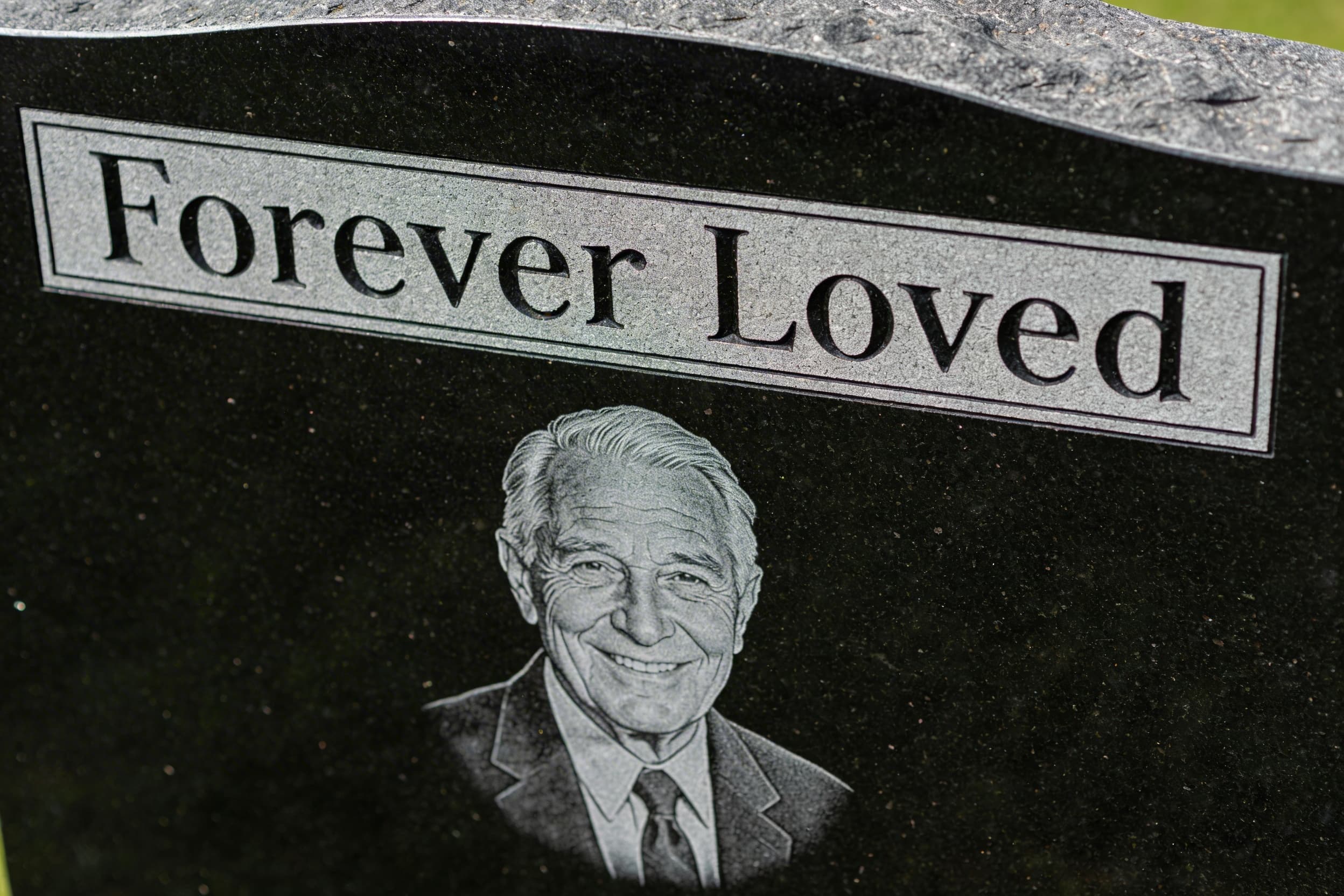
Laser etching uses a computerized laser beam that burns away the polished surface of the stone, creating a light-colored image against the dark, polished background. This method excels at reproducing photographs, portraits, detailed landscapes, and intricate artwork with precision that sandblasting cannot match.
Laser etching works best on dark-colored granite — particularly black granite — where the contrast between the polished surface and the etched area is strongest. The resulting image is shallower than a sandblasted inscription, so laser-etched designs are more susceptible to weathering over long periods. Many memorial masons recommend laser etching for protected indoor settings like columbarium niches or mausoleums, or as a complementary technique alongside sandblasted lettering on the same headstone.
Hand Carving
Hand carving with a hammer and chisel is the oldest headstone engraving method, practiced for centuries before any mechanical alternative existed. A skilled stonemason uses a diamond-tipped engraving tool or traditional steel chisels to carve each letter and design element by hand, one strike at a time.
This method is rarely used for full inscriptions today due to the time and skill required, but it remains the preferred technique for high-end artistic elements — raised lettering, sculptural relief work, and one-of-a-kind custom designs. Some memorial artisans also use hand-tooling as a finishing step after sandblasting to refine details, sharpen letter edges, or create hand-etched portraits using a diamond-tipped stylus that scratches fine lines into the stone surface one dot at a time.
CNC Machining
Computer Numerical Control (CNC) machining uses a computerized cutting tool to precisely carve designs into stone. The CNC machine follows a digital file, producing consistent depth and uniform lettering with mechanical accuracy. This method is particularly useful for repetitive designs, large-scale projects, or intricate geometric patterns where hand-blasting would introduce variation.
CNC-engraved headstones offer sharp, clean lines and are growing in popularity, especially for contemporary memorial designs that favor precision over the organic texture of hand-finished work.
Headstone Engraving vs. Headstone Etching: What Is the Difference?
The terms "engraving" and "etching" are often used interchangeably, but they refer to different techniques that produce different results.
Headstone engraving cuts into the stone. Sandblasting and hand carving both remove material, creating grooves, channels, or v-shaped cuts beneath the stone's surface. Engraved inscriptions have depth — you can feel the letters with your fingertips. This depth makes engraved lettering more durable and resistant to weathering over decades.
Headstone etching works on the surface. Laser etching and hand etching alter or remove only the top layer of the polished stone, creating contrast without significant depth. Etched images are smoother to the touch and can reproduce fine detail that engraving cannot, but they are more vulnerable to long-term exposure.
Many families choose both techniques on a single headstone — sandblasted lettering for names, dates, and inscriptions alongside a laser-etched portrait or scenic image. This combination gives the memorial both the permanence of deep-cut text and the photographic detail of surface etching.
Types of Headstone Lettering Styles
The lettering style you choose affects both the appearance and the cost of your headstone engraving. Memorial companies typically offer these options.
V-sunk lettering is the most traditional and popular choice. Each letter is sandblasted deep into the granite until the bottom forms a V-shaped groove. The natural shadow created by the angled cut makes v-sunk letters easy to read from a distance without paint, though black or white paint can be added for additional contrast. This style works well on most granite colors.
Skin-traced lettering is a shallow sandblast that creates a frosted, light-colored impression on the stone's surface. The result looks similar to laser etching but with slightly more depth. Skin-traced lettering is cost-effective and works beautifully on dark granites where the contrast between polished and frosted areas is naturally high.
Raised lettering leaves the letters polished and at the original surface level while the background area is sandblasted away and chiseled smooth. The letters appear to stand above the surrounding surface. Square-raised and round-raised are the two main variations — round-raised lettering, where each letter has a convex, sculpted profile, is the most difficult and expensive headstone lettering method available.
Frosted panel lettering sandblasts a rectangular matte panel into the polished surface first, then engraves deeply cut letters within that panel. This technique provides strong contrast on lighter-colored granites like Barre Gray or Pearl White where v-sunk lettering alone might lack visibility.
When selecting a font, Modified Roman remains the most widely chosen and traditional option. Memorial companies also offer script fonts, block fonts, and even custom handwriting reproduction — a family member's actual signature can be duplicated and engraved onto the stone.
What Materials Can Be Engraved?
Granite is the most common headstone material and the most versatile for engraving. Its hardness, density, and resistance to weathering make it the preferred choice for both sandblasted and laser-etched work. Darker granites (black, charcoal, and dark gray) provide the highest contrast for laser etching, while lighter granites (gray, pink, rose, and white) showcase sandblasted v-sunk lettering at its best.
Bronze headstones use a different process entirely. Letters and designs on bronze memorials are cast into the metal during manufacturing rather than engraved after the fact. Modifications to an existing bronze marker typically require removing the plaque from the cemetery and sending it to a foundry — unlike granite, bronze cannot be sandblasted on-site.
Marble and limestone accept engraving well and were historically the most common headstone materials, but they weather much faster than granite. Engraved text on marble softens and loses legibility over decades as the stone erodes, which is why modern monument companies rarely recommend marble for new installations.
Flat grave markers — flush-mounted granite slabs set level with the ground — are engraved using the same sandblasting process as upright headstones. Because flat markers sit at ground level and are exposed to mowing equipment, foot traffic, and standing water, their engravings may require re-painting or touch-up more frequently than upright memorials.
The timeline for headstone engraving varies based on the complexity of the design, the method used, and whether the work is performed in a shop or on-site at a cemetery.
A standard inscription with names, dates, and a short epitaph typically takes a few weeks from design approval to completion. More elaborate designs involving custom artwork, portraits, shaped carvings, or raised lettering can take several weeks to a few months, particularly if hand carving or hand etching is involved.
On-site engraving — adding a death date or additional text to an existing monument — can often be completed in a single visit. A memorial mason brings portable sandblasting equipment and stencil-cutting tools directly to the cemetery, eliminating the need to remove or transport the headstone. Most on-site work is performed during the warmer months (roughly late March through mid-December in northern climates) because sandblasting chemicals and adhesives require above-freezing temperatures to work properly.
Seasonal backlogs around Memorial Day and Veterans Day can add delays, so families planning engraving work for an existing headstone may benefit from scheduling outside peak periods.
What to Know Before You Order
Ordering headstone engraving involves a few practical considerations beyond choosing your text and design. For a full headstone engraving cost breakdown, see our dedicated pricing guide — costs vary by method, lettering style, text volume, and whether the work is performed in-shop or on-site.
Cemetery regulations matter. Most cemeteries require design approval before any engraving or installation takes place. Requirements vary, but cemeteries commonly review the material type, headstone dimensions, lettering size, and whether the design includes any imagery that falls outside their guidelines. Always confirm your cemetery's rules before finalizing a design.
Proofread carefully. Once text is sandblasted into granite, correcting a mistake requires grinding down the stone and re-engraving — an expensive and sometimes impossible fix. Review the digital proof thoroughly. Verify every name, date, and word. Have multiple family members review the layout before giving approval.
Consider future additions. If you are ordering a companion headstone or a family monument, discuss the layout for future inscriptions upfront. Your memorial company can leave appropriately spaced blank areas and match the original engraving style when the time comes.
Ask about maintenance. Sandblasted lettering may need re-painting every 10 to 20 years depending on climate and exposure. Laser-etched images can fade faster in harsh weather. Your memorial company can recommend paint types, cleaning methods, and maintenance schedules to keep the inscription legible for decades.
For broader tombstone design inspiration — including monument shapes, material combinations, and layout ideas — browse our comprehensive design guide.
Frequently Asked Questions
How are headstones engraved?
Most headstones are engraved using sandblasting. A rubber stencil is applied to the polished granite surface, and a high-pressure stream of abrasive material (typically aluminum oxide) erodes the exposed stone to create letters, numbers, and designs. Laser etching, CNC machining, and traditional hand carving are also used for specific design requirements.
What is the difference between headstone engraving and headstone etching?
Engraving cuts into the stone to create grooves or channels with measurable depth, producing durable lettering that resists weathering. Etching alters only the surface layer, removing the polished finish to create contrast. Engraving is better for text and bold designs; etching is better for detailed images and portraits.
How long does headstone engraving last?
Sandblasted engraving on granite can remain legible for a century or longer with minimal maintenance. Laser etching is less durable and may lose contrast after several decades, especially in harsh climates. Paint fill in sandblasted letters typically lasts 10 to 20 years before needing a touch-up.
Can you add engraving to an existing headstone?
Yes. Memorial companies offer on-site engraving services where a technician brings portable sandblasting equipment to the cemetery. This is commonly done to add a death date to a companion headstone or to include additional text, artwork, or symbols. The technician matches the original font, depth, and spacing so the new engraving blends seamlessly.
How much does it cost to engrave a headstone?
Headstone engraving costs vary based on the method, complexity, amount of text, and whether the work is done in-shop or on-site at a cemetery. Simple inscriptions are generally the most affordable, while raised lettering, hand carving, and portrait etching are at the higher end. Visit our detailed pricing guide for a full breakdown.
Your Headstone Engraving Is a Lasting Tribute
The engraving on a headstone is one of the most enduring decisions a family makes — text and imagery cut into granite that will be read by visitors for generations. Taking the time to understand the methods, materials, and options available helps ensure the finished memorial is exactly what your family envisions. When you are ready to explore headstone options, browse the full collection of granite headstones, bronze headstones, and flat grave markers at Memorials.com.