🏬Supersize Online Funeral Retailer🪦1000's of Headstones⚱️Over 10,000 Cremation Urns⚰️Caskets Overnight Delivery🛒Funeral & Memorial Superstore🚚FREE Shipping on ALL Orders👨👩👧👦Helping Families for over 20 Years💰Lowest Price Guarantee🏬Supersize Online Funeral Retailer🪦1000's of Headstones⚱️Over 10,000 Cremation Urns⚰️Caskets Overnight Delivery🛒Funeral & Memorial Superstore🚚FREE Shipping on ALL Orders👨👩👧👦Helping Families for over 20 Years💰Lowest Price Guarantee
🏬Supersize Online Funeral Retailer🪦1000's of Headstones⚱️Over 10,000 Cremation Urns⚰️Caskets Overnight Delivery🛒Funeral & Memorial Superstore🚚FREE Shipping on ALL Orders👨👩👧👦Helping Families for over 20 Years💰Lowest Price Guarantee🏬Supersize Online Funeral Retailer🪦1000's of Headstones⚱️Over 10,000 Cremation Urns⚰️Caskets Overnight Delivery🛒Funeral & Memorial Superstore🚚FREE Shipping on ALL Orders👨👩👧👦Helping Families for over 20 Years💰Lowest Price Guarantee
Choosing a tombstone is one of the most meaningful decisions a family makes after losing someone they love. The design you select becomes a permanent tribute — a lasting statement about who that person was and what they meant to the people around them. Whether you are drawn to a timeless granite monument, a personalized marker engraved with a favorite hobby, or a simple flat stone with just the right words, the options available today go far beyond what most people expect.
This article walks through the full range of tombstone ideas, from classic shapes and materials to creative personalization options that capture a life well lived. If you are still exploring how inscriptions, lettering, and engraving methods factor into the design, our engraving guide for urns and headstones covers those details in depth.
Understanding the Differences: Tombstone, Headstone, and Gravestone
Before diving into design inspiration, it helps to understand the terms people use when talking about memorial markers. In everyday conversation, the words tombstone, headstone, and gravestone are used interchangeably, and for practical purposes they refer to the same thing — a stone or bronze marker placed at a gravesite. Historically, "tombstone" referred to the slab covering a burial vault, "headstone" described the stone at the head of the grave, and "gravestone" was a general term for any stone marking a burial. Today, these distinctions have largely faded, and monument companies use all three.
The broader category of "grave markers" also includes flat markers, bronze plaques, and memorial stones designed for garden placement rather than cemetery use. Knowing the terminology helps when communicating with a monument dealer or cemetery office about your design preferences.
Headstone Types and Shapes
The shape and style of the headstone itself is the starting point for any design. Cemetery regulations often dictate which styles are permitted in specific sections, so check with the cemetery office before committing to a particular shape.
Upright Headstones
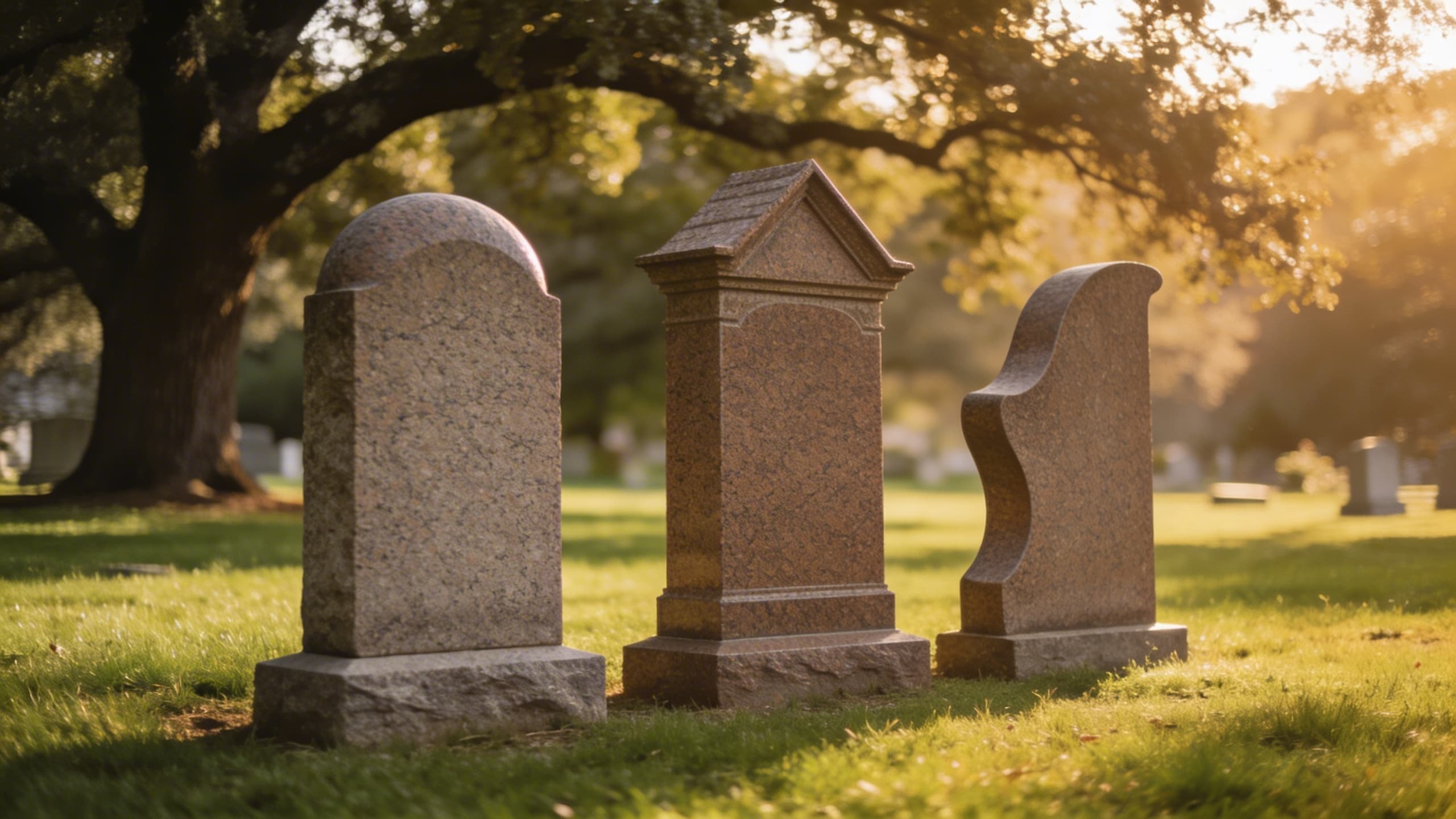
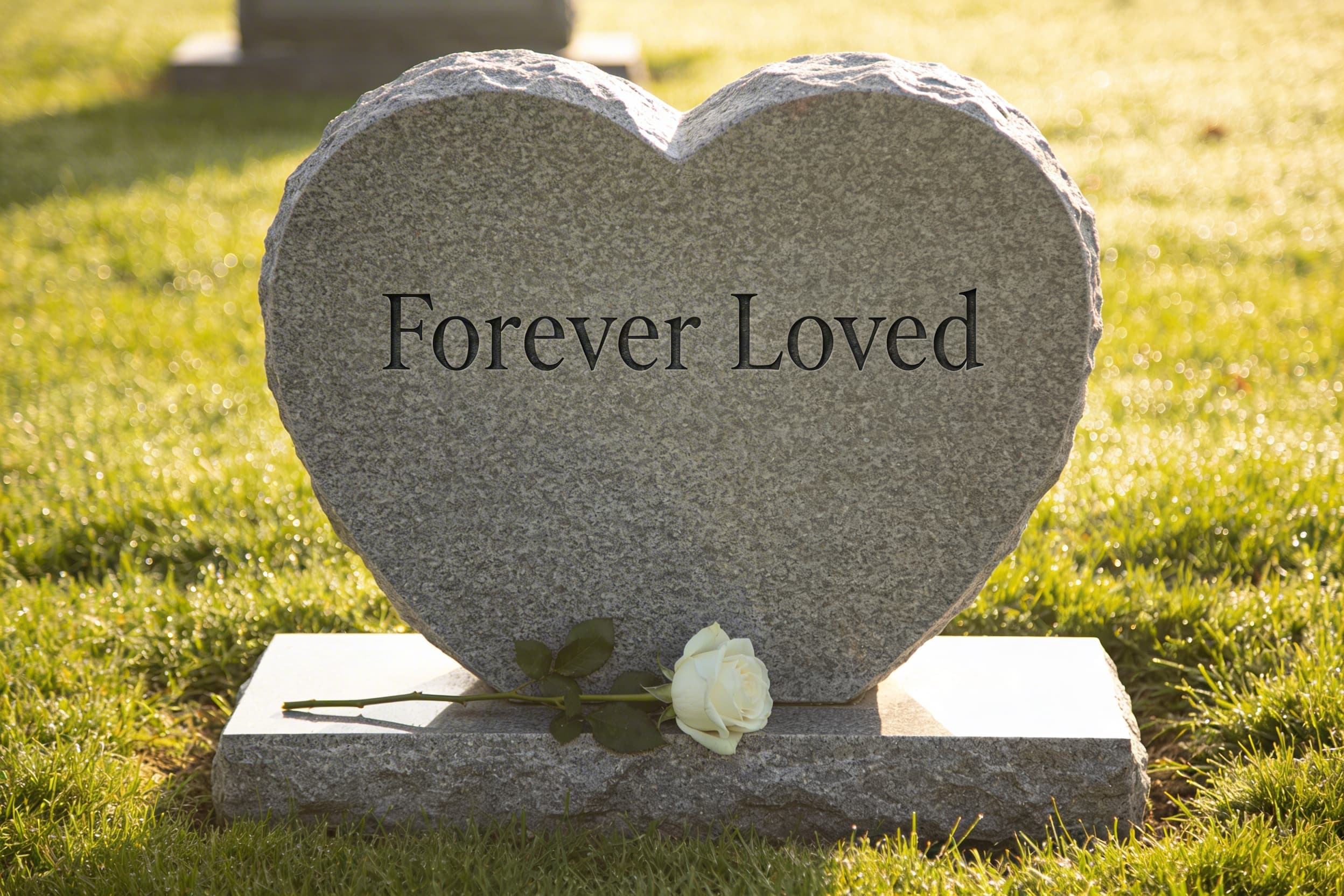
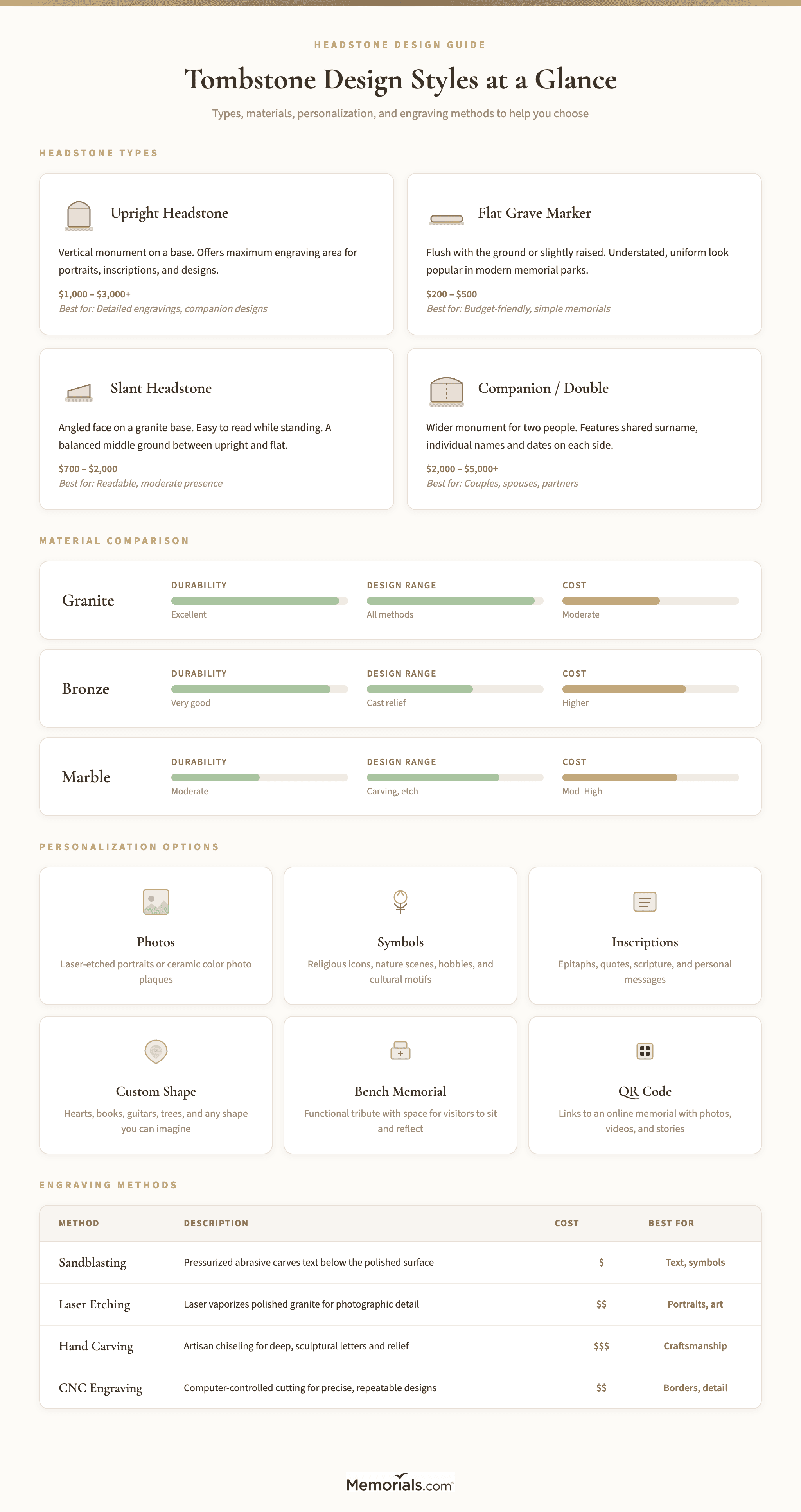
Upright headstones are the most recognizable cemetery monuments. They stand vertically on a base and offer generous surface area for inscriptions, portraits, and decorative engraving. Common top shapes include serpentine curves, half-round arches, peaked gables, heart silhouettes, and oval contours. Single uprights typically measure 20 to 28 inches tall above the base, though larger custom monuments can exceed 36 inches.
Upright styles work well for families who want room for detailed engravings, large inscriptions, or photo etchings. They are also the best option for double or companion designs shared by spouses.
Flat Grave Markers
Flat grave markers sit flush with the ground or rest just slightly above the lawn surface. These markers are common in modern memorial parks that require uniform, low-profile monuments for easier maintenance. Despite their smaller footprint, flat markers still accommodate meaningful inscriptions, bronze medallions, and engraved imagery.
Flat designs appeal to families seeking understated simplicity. They are also among the most affordable tombstone options, making them a practical choice when budget matters.
Slant Headstones
A slant gravestone sits at an angle on a granite base, creating a tilted face that is easy to read from a standing position. Slant markers offer a middle ground between the commanding presence of an upright monument and the simplicity of a flat marker. They provide a comfortable amount of space for inscriptions and modest decorative elements without dominating the landscape.
Companion and Double Headstones
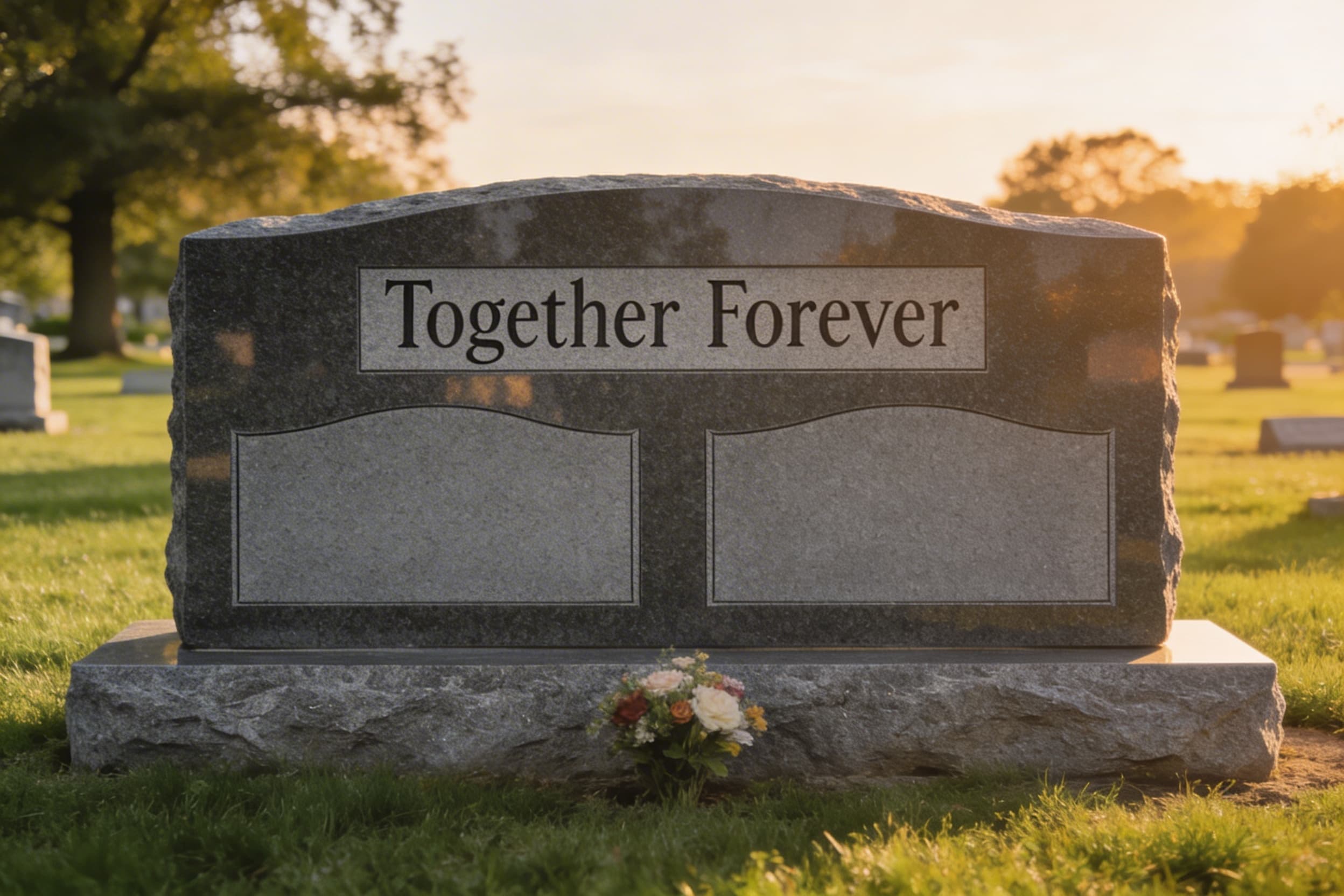
Couples and partners who wish to share a single memorial often choose a companion or double headstone. These monuments are wider than single headstones and feature two sets of names, dates, and inscriptions side by side. Granite headstones designed for couples often include a shared last name at the top, individual first names and dates on each side, and a shared inscription or symbol in the center. For deeper inspiration on how to design a shared memorial, explore companion headstone designs for couples.
Custom and Shaped Headstones
For families seeking something truly unique, custom-shaped headstones break away from traditional rectangles entirely. Monument companies can carve granite into shapes reflecting the person's life — a guitar for a musician, a book for a lifelong reader, an open heart for a beloved parent, or a tree symbolizing deep family roots. Custom shapes cost more than standard designs and may require cemetery approval, but they create a memorial that is unmistakably personal.
Tombstone Material Options
The material you select affects the headstone's appearance, durability, engraving options, and price. Most tombstones are made from one of three primary materials.
Granite
Granite is the most popular headstone material in the United States, and for good reason. It is exceptionally durable, weather-resistant, and available in dozens of colors — from jet black and charcoal gray to warm pinks, deep reds, and polished blues. Black granite is especially popular for laser-etched designs because the contrast between the etched and polished surfaces produces a striking, photographic-quality image.
Granite accepts virtually every engraving method, including sandblasting, hand carving, and laser etching. It requires very little maintenance and retains its appearance for generations, making it the standard choice for permanent memorials.
Bronze
Bronze headstones offer a distinctive warm metallic appearance that develops a natural patina over time. Bronze is typically cast as a flat plaque mounted on a granite base, combining the elegance of metal craftsmanship with the stability of stone. Letters and designs in bronze are raised rather than recessed, giving them a three-dimensional quality that catches light beautifully.
Bronze markers are also available as flat bronze grave markers — popular in veterans' sections and memorial parks that require uniform design standards. Military families often choose bronze for its association with honor and distinguished service.
Marble and Natural Stone
Marble, slate, limestone, and sandstone are traditional headstone materials with centuries of history. Marble offers a classic white or gray elegance and is associated with some of the world's most famous memorials. However, marble is softer than granite and can erode over decades of weather exposure, causing inscriptions to become difficult to read.
Natural stone options like slate and sandstone appeal to families who prefer a more organic, hand-crafted aesthetic. These materials accept hand carving beautifully and pair well with rustic or natural cemetery settings.
Engraving Methods and Lettering Styles
The engraving technique determines how text and imagery will look on the finished tombstone. Understanding your options helps you match the design to the stone and choose a method that suits the memorial's aesthetic. For a complete overview, see the headstone engraving process explained.
Sandblasting is the most common method, using pressurized abrasive material to carve text and designs below the polished surface. Sandblasted letters are clean, deep, and highly legible. This technique works on virtually all stone types and offers excellent durability.
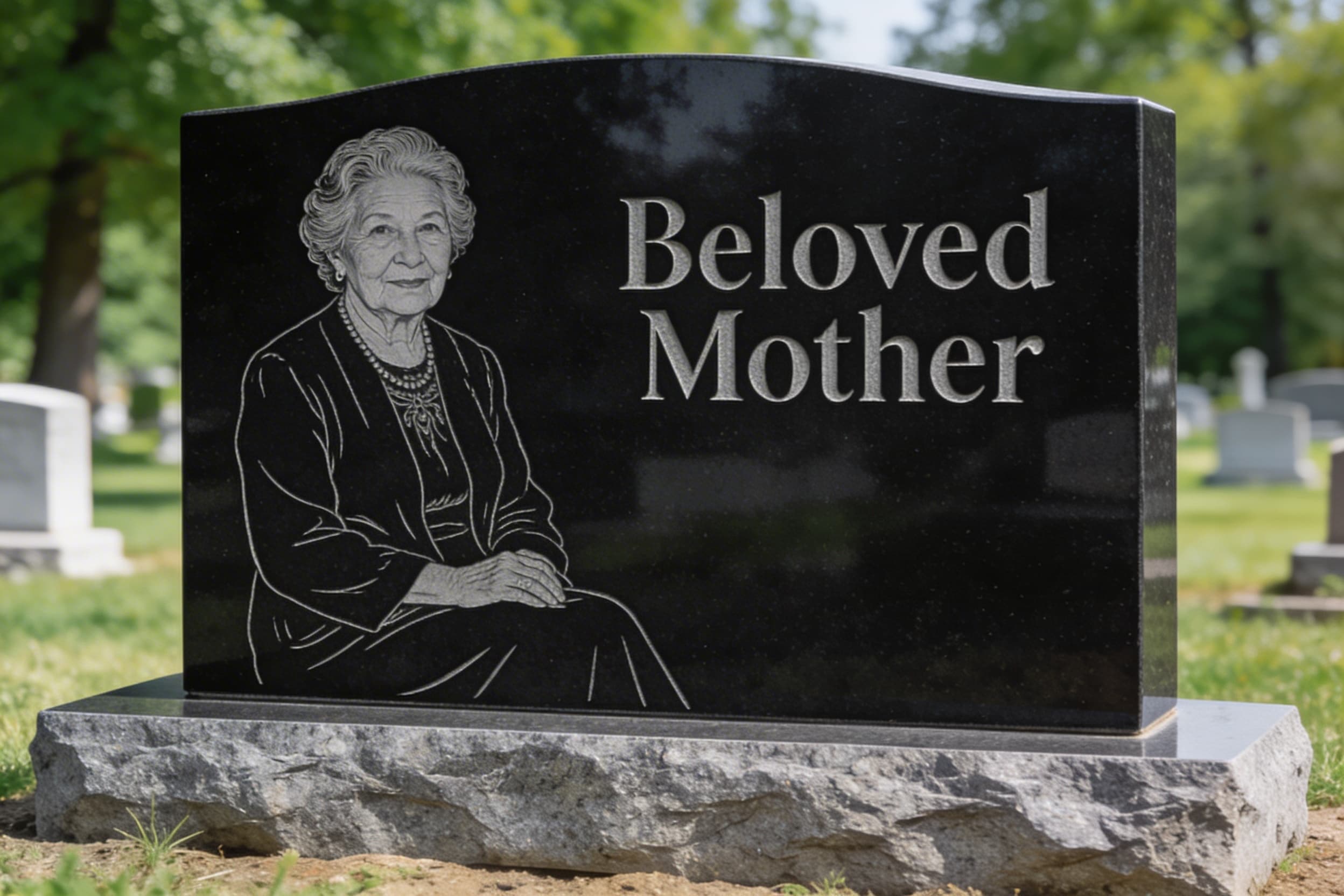
Laser etching uses a focused laser beam to vaporize the polished surface of dark granite, producing detailed grayscale images with photographic clarity. Laser etching is the method of choice for portraits, landscape scenes, and fine decorative artwork. It works best on black or very dark granite where the contrast is strongest.
Hand carving is the oldest and most artisanal technique. Skilled carvers use chisels and mallets to create deeply sculpted letters and relief designs. Hand-carved memorials have a warmth and character that machine methods cannot fully replicate, making this technique ideal for families who value craftsmanship.
CNC engraving uses computer-controlled cutting tools to produce precise, repeatable designs. CNC work is common for ornate borders, detailed symbols, and consistent lettering across companion headstones where both sides need to match exactly.
Lettering style also shapes the tombstone's personality. Serif fonts convey tradition and formality. Script and calligraphic fonts add elegance. Sans-serif fonts feel modern and clean. Some monument companies offer hand-drawn lettering and custom typography for truly one-of-a-kind inscriptions. For specific headstone engraving design ideas including symbols, borders, and decorative motifs, we have a dedicated guide.
Personalization Ideas for Headstones
The most memorable tombstones go beyond names and dates to tell a story about the person who lived.
Photos and Portraits
Adding a photograph to a headstone creates an immediate, personal connection for anyone who visits the gravesite. Laser etching on black granite produces the most detailed photographic reproductions, turning a favorite portrait into a permanent part of the memorial. Families can also choose ceramic or porcelain memorial pictures — full-color images sealed in a weather-resistant ceramic oval that mounts directly onto the headstone face. These mounted photographs retain their color and clarity for decades, even in harsh weather.
Symbols, Hobbies, and Passions
Engraved symbols are among the most powerful design elements on any headstone. A fishing rod and tackle for a lifelong angler, musical notes for a pianist, a garden scene for someone who spent every weekend in the soil, a motorcycle for a rider, or a set of golf clubs for a devoted player — these images communicate a life's passions at a glance. Religious symbols like crosses, Stars of David, Celtic knots, rosaries, and angels remain deeply popular and offer spiritual comfort to families and visitors. Nature-themed imagery such as trees, flowers, birds, and mountain landscapes evokes peace and the cycles of life.
Religious and Cultural Motifs
Religious and cultural traditions shape many tombstone design choices. Catholic families often incorporate crosses, praying hands, and images of saints. Jewish monuments traditionally feature the Star of David, menorah, or Kohen hands. Islamic headstones may include Arabic calligraphy, crescent and star motifs, or verses from the Quran. Celtic heritage inspires interlocking knot patterns and high cross designs. Each tradition carries deep symbolism that families can discuss with their monument provider to ensure the design is respectful and accurate.
Inscription Ideas for Tombstones
The words on a tombstone carry weight that lasts for generations. Most tombstones include the person's full name, date of birth, and date of death. Beyond these essentials, families choose from several inscription approaches.
Epitaphs and short phrases are the most common additions. Lines like "In Loving Memory," "Gone But Never Forgotten," "At Rest," or "Forever in Our Hearts" are timeless choices that convey love simply and clearly. Families seeking something more personal might choose a phrase the person often said, a line from a favorite poem, or a few words that capture who they were.
Relationship titles add warmth — "Beloved Mother," "Devoted Father," "Cherished Grandmother," "Loyal Friend." These small additions ground the memorial in the person's role within their family and community.
Wording from a family tradition is the fourth common route, and it carries a constraint the others do not: the line has to fit. An Irish blessing funeral reading runs to six lines, and our guide to lapidas sencillas y bonitas counts the Spanish phrases the same way, in Spanish. Both give the character count beside each line, which is the figure a monument company works to.
Scripture and literary quotes offer comfort rooted in shared faith or shared reading. Bible verses like Psalm 23:4 ("Yea, though I walk through the valley of the shadow of death, I will fear no evil") and John 11:25 ("I am the resurrection and the life") appear frequently on headstones. Families also draw from poetry, hymns, and literature for language that captures the tone they are after.
Longer passages are possible on larger monuments, particularly uprights and companion headstones. A full stanza from a poem, a military service record, or a paragraph describing the person's life can fill the back or sides of a larger stone.
Creative and Unique Tombstone Designs
Creativity in tombstone design has grown significantly in recent years. Families are moving beyond standard templates to create memorials that reflect the individuality of the person being honored.
Bench memorials combine function and tribute by providing visitors a place to sit and reflect. The bench surface or sides carry inscriptions, and some bench designs incorporate a traditional headstone at one end.
Natural boulder headstones use uncut or minimally shaped fieldstone with hand-carved or sandblasted inscriptions. These memorials blend into the landscape and appeal to people who valued nature and simplicity in life.
Interactive elements represent the newest frontier. Some families embed QR codes on the headstone that link to an online memorial — a website with photographs, videos, stories, and tributes that extend the memorial far beyond what stone and text can hold.
Themed monuments can depict an open book, a lighthouse, a tree stump, a sports scene, or virtually any shape the stone carver can execute. The key is balancing creative ambition with the cemetery's regulations and the monument company's capabilities.
Working with Cemetery Regulations
Before finalizing any tombstone design, contact the cemetery office to ask about their specific regulations. Many cemeteries restrict headstone dimensions, materials, and styles. Some sections may require flat markers only. Others may prohibit certain colors or require granite rather than marble. Veterans' sections often have specific size and material standards.
Cemetery rules exist to maintain the grounds and keep the overall appearance consistent, so working within those guidelines from the start prevents costly redesigns later. A reputable monument company will know the regulations at local cemeteries and can guide you toward designs that comply.
How Much Do Headstone Designs Cost?
Tombstone costs vary widely depending on the type, size, material, and level of customization. A basic flat granite grave marker starts around $200 to $500. Standard upright granite headstones typically range from $1,000 to $3,000 for a single monument, while larger companion uprights can run $2,000 to $5,000 or more. Bronze markers fall in the $800 to $2,500 range depending on size and mounting.
Custom shapes, laser-etched portraits, ceramic photo insets, and elaborate engraving designs add to the total cost. Hand carving is the most expensive engraving method, while sandblasting is the most affordable. Understanding headstone engraving pricing and how design complexity affects the final number helps you plan a memorial that fits your vision and your budget.
Installation fees, cemetery setting charges, and foundation requirements are additional costs that many families overlook. Ask the monument provider and the cemetery about these charges upfront so there are no surprises.
FAQ
What is the difference between a tombstone, a headstone, and a gravestone?
In modern usage, these three terms mean the same thing — a marker placed at a gravesite to identify and memorialize the person buried there. The historical distinctions have faded, and monument companies, cemeteries, and families use the terms interchangeably.
Can I customize a headstone with any design I want?
Most monument companies offer extensive customization, including custom shapes, laser-etched portraits, hand-carved symbols, and personalized inscriptions. However, the cemetery where the headstone will be placed may have rules about size, shape, height, and material. Always confirm cemetery regulations before ordering a custom design.
How long does it take to get a headstone made?
The timeline varies by complexity and the monument company's workload. Simple flat markers may be ready in two to four weeks. Standard upright headstones typically take six to twelve weeks. Custom-shaped monuments and highly detailed laser etchings can take three to six months. Ordering well in advance and finalizing your design early shortens the waiting period.
What is the best material for a long-lasting headstone?
Granite is the industry standard for durability and longevity. It resists weathering, retains sharp engraving, and requires virtually no maintenance over decades. Black granite is especially popular for laser-etched designs. Bronze is also highly durable and develops a distinguished patina over time.
Can I add a photo to a headstone?
Yes. Laser etching on dark granite produces detailed grayscale portrait reproductions. Families can also choose ceramic or porcelain photo plaques that display full-color images and mount directly onto the headstone surface. Both options are weather-resistant and designed to last for years.
Are there affordable tombstone options that still look beautiful?
Flat granite grave markers are the most budget-friendly option, starting around $200 to $500. Even at lower price points, these markers can include meaningful inscriptions and simple engraved designs. Choosing a standard shape rather than a custom shape and selecting sandblasted lettering rather than hand carving also keeps costs manageable.
Memorials.com offers a complete selection of headstones in a range of styles and price points, making it easier to find a design that honors your loved one while fitting your family's budget. Whatever direction you choose, the most important thing is that the memorial reflects the person it represents — their personality, their relationships, and the mark they left on the world.