🏬Supersize Online Funeral Retailer🪦1000's of Headstones⚱️Over 10,000 Cremation Urns⚰️Caskets Overnight Delivery🛒Funeral & Memorial Superstore🚚FREE Shipping on ALL Orders👨👩👧👦Helping Families for over 20 Years💰Lowest Price Guarantee🏬Supersize Online Funeral Retailer🪦1000's of Headstones⚱️Over 10,000 Cremation Urns⚰️Caskets Overnight Delivery🛒Funeral & Memorial Superstore🚚FREE Shipping on ALL Orders👨👩👧👦Helping Families for over 20 Years💰Lowest Price Guarantee
🏬Supersize Online Funeral Retailer🪦1000's of Headstones⚱️Over 10,000 Cremation Urns⚰️Caskets Overnight Delivery🛒Funeral & Memorial Superstore🚚FREE Shipping on ALL Orders👨👩👧👦Helping Families for over 20 Years💰Lowest Price Guarantee🏬Supersize Online Funeral Retailer🪦1000's of Headstones⚱️Over 10,000 Cremation Urns⚰️Caskets Overnight Delivery🛒Funeral & Memorial Superstore🚚FREE Shipping on ALL Orders👨👩👧👦Helping Families for over 20 Years💰Lowest Price Guarantee
Families arranging a veteran's burial face a painful reality: the grief is immediate, but many VA benefits take weeks or months to process. Knowing realistic timelines for each benefit — from burial allowance reimbursement to headstone delivery — helps families plan ahead, avoid unnecessary follow-up calls, and understand exactly where things stand at each stage. For a full overview of every benefit available, see our .
This guide breaks down the actual processing timelines for the five main VA burial benefits, explains what causes delays, and covers practical steps families can take while waiting. It also addresses the difference between applying before a veteran passes (pre-need) and applying at the time of need, since timing affects nearly every part of the process. For a comprehensive look at VA burial benefits for veterans, including eligibility requirements and current reimbursement amounts, our detailed overview covers everything families should review before filing.
Understanding Pre-Need vs. At-Need Applications
The VA offers two paths for establishing burial benefit eligibility, and the one your family uses directly affects how quickly things move after a veteran passes.
Pre-Need Eligibility Determination
Veterans can apply for a pre-need eligibility determination while still living, using VA Form 40-10007. This confirms whether they qualify for burial in a VA national cemetery before the family ever needs to make arrangements. Processing time for pre-need applications varies based on the complexity of the veteran's service record. Applications with complete discharge documents (DD214) and straightforward service histories may be reviewed in a few weeks. Cases requiring the VA to verify service records, obtain missing documents, or clarify discharge status can take significantly longer.
Once approved, the VA mails a pre-need decision letter. This letter does not reserve a specific cemetery or gravesite — it simply confirms eligibility. Families should store this letter in a safe, accessible location alongside the veteran's DD214 and other discharge documents. Having these on hand at the time of need eliminates one of the most common causes of delay.
At-Need Applications
When a veteran passes without a pre-need determination, the family works directly with a funeral home to contact the National Cemetery Scheduling Office at 800-535-1117. Cemetery staff verify eligibility at the time of need, and burial at a VA national cemetery can typically be scheduled within a few business days once eligibility is confirmed and the funeral home provides the required documentation.
The difference is significant: families with a pre-need letter in hand skip the eligibility verification step entirely and move straight to scheduling.
Burial Allowance Processing: 4 to 12 Weeks
The VA burial allowance is a partial reimbursement for funeral, burial, and transportation expenses — it is not an upfront payment. Families cover costs first and then apply for reimbursement by submitting VA Form 21P-530EZ.
Current Reimbursement Amounts (2025–2026)
For veterans whose death was service-connected, the VA reimburses up to $2,000 for burial and funeral expenses. If the veteran is buried in a VA national cemetery, transportation costs may also be reimbursed.
For non-service-connected deaths occurring on or after October 1, 2025, the VA pays up to $1,002 for burial and funeral expenses and a separate $1,002 for a plot or interment allowance if the veteran is not buried in a national cemetery.
How Long Claims Take
Most families report that burial allowance claims are processed within 4 to 12 weeks. Service-connected death claims tend to move faster, often within 30 to 45 days. Non-service-connected claims may take 8 to 12 weeks, and periods of high claim volume can extend processing further.
The completeness of the initial application is the single biggest factor affecting speed. Missing documents — especially the DD214, death certificate, or itemized funeral bill — are the most common reason claims stall. Submitting everything together with the first filing reduces wait times substantially.
Surviving Spouse Exception
Surviving spouses listed on the veteran's VA profile do not need to file a separate burial allowance claim. When the VA receives notice of the veteran's death, it automatically pays a set amount to eligible surviving spouses to cover plot and interment costs.
Tips for Faster Processing
Submit online through VA.gov rather than by mail. Include all required documents — DD214, death certificate, and itemized funeral receipts marked "paid" — with the initial submission. Families can check claim status at VA.gov after applying online.
VA Headstone and Marker Delivery: 30 to 60+ Days
The VA furnishes headstones, grave markers, and medallions at no cost for eligible veterans. The timeline depends on whether the veteran is buried in a national cemetery or a private one.
National Cemetery Burials
When a veteran is buried in a VA national cemetery, cemetery officials order the headstone or marker directly based on inscription information provided by the family. Families should contact the cemetery for delivery status. There is no separate application for the family to file — the cemetery handles everything. Setting and installation are also done by cemetery staff at no charge.
Private Cemetery Burials
For veterans buried in private cemeteries, the family or an authorized representative must submit VA Form 40-1330, Claim for Standard Government Headstone or Marker. The VA ships the headstone or marker at no charge to a designated consignee (typically the cemetery or funeral home), but all installation costs are the family's responsibility.
The VA advises contacting them if more than 30 days have passed since submitting the form and the claim has not been acknowledged. If more than 60 days have passed and the grave remains unmarked, families should contact the cemetery or funeral home to check whether delivery was received. If not, the Applicant Assistance Unit can help at 800-697-6947.
Incomplete or inaccurate information on VA Form 40-1330 is a frequent cause of delays or incorrect inscriptions. Double-checking the veteran's service details, dates, and requested inscription before submitting saves weeks of back-and-forth. When families are ready to explore purchased options alongside the VA-provided marker, our guide to VA-provided vs purchased grave markers compares both paths.
Burial Flag: Same Day to a Few Days
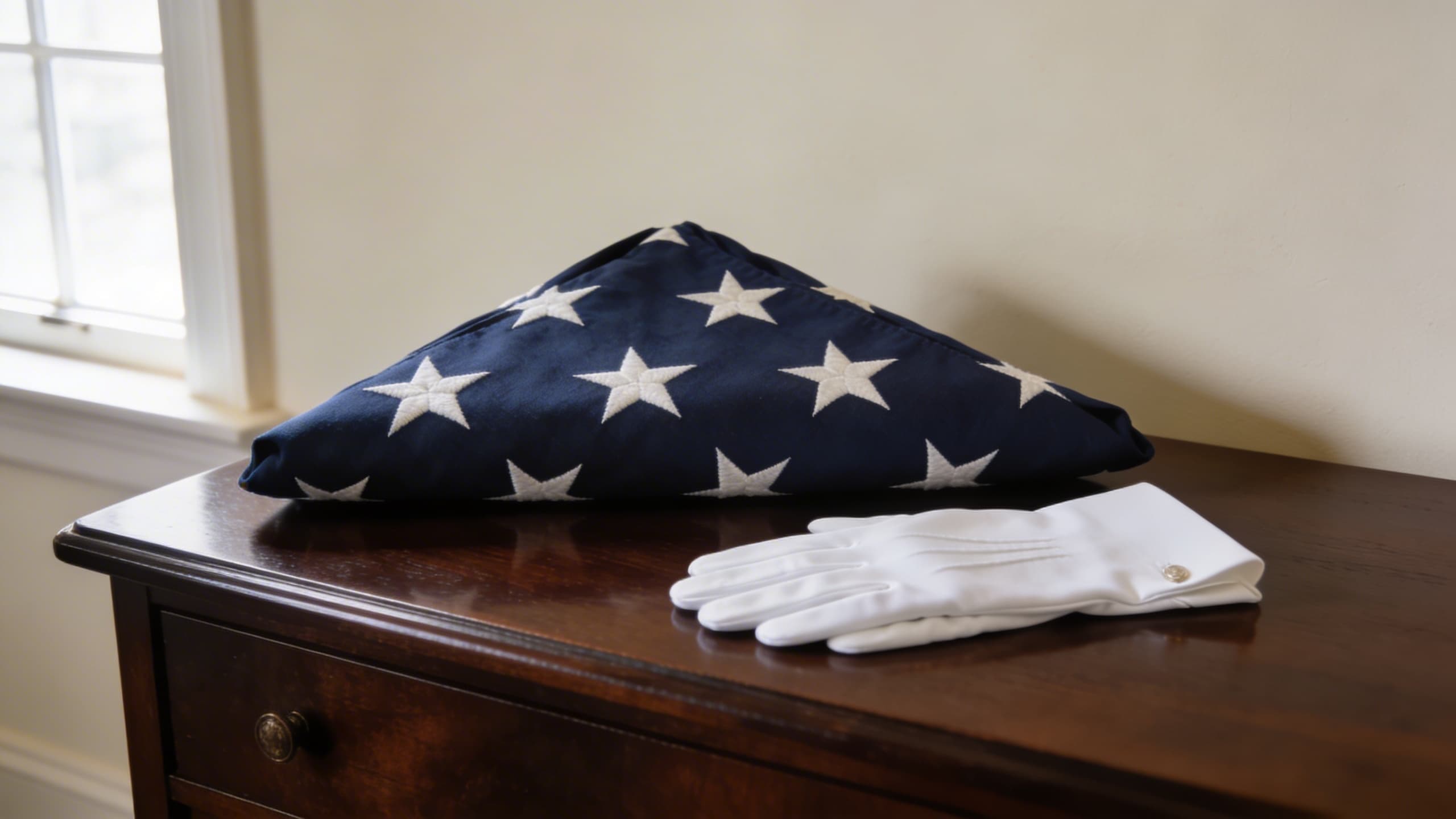
Of all VA burial benefits, the burial flag is the fastest to obtain. A United States flag is furnished at no cost to drape the casket or accompany the urn of any veteran who served honorably.
To receive a burial flag, the family or funeral director completes VA Form 27-2008, Application for United States Flag for Burial Purposes. Flags are available at VA regional offices and most U.S. post offices. In many cases, the funeral home handles this step as part of their services, and the flag is available the same day or within a few days of the request.
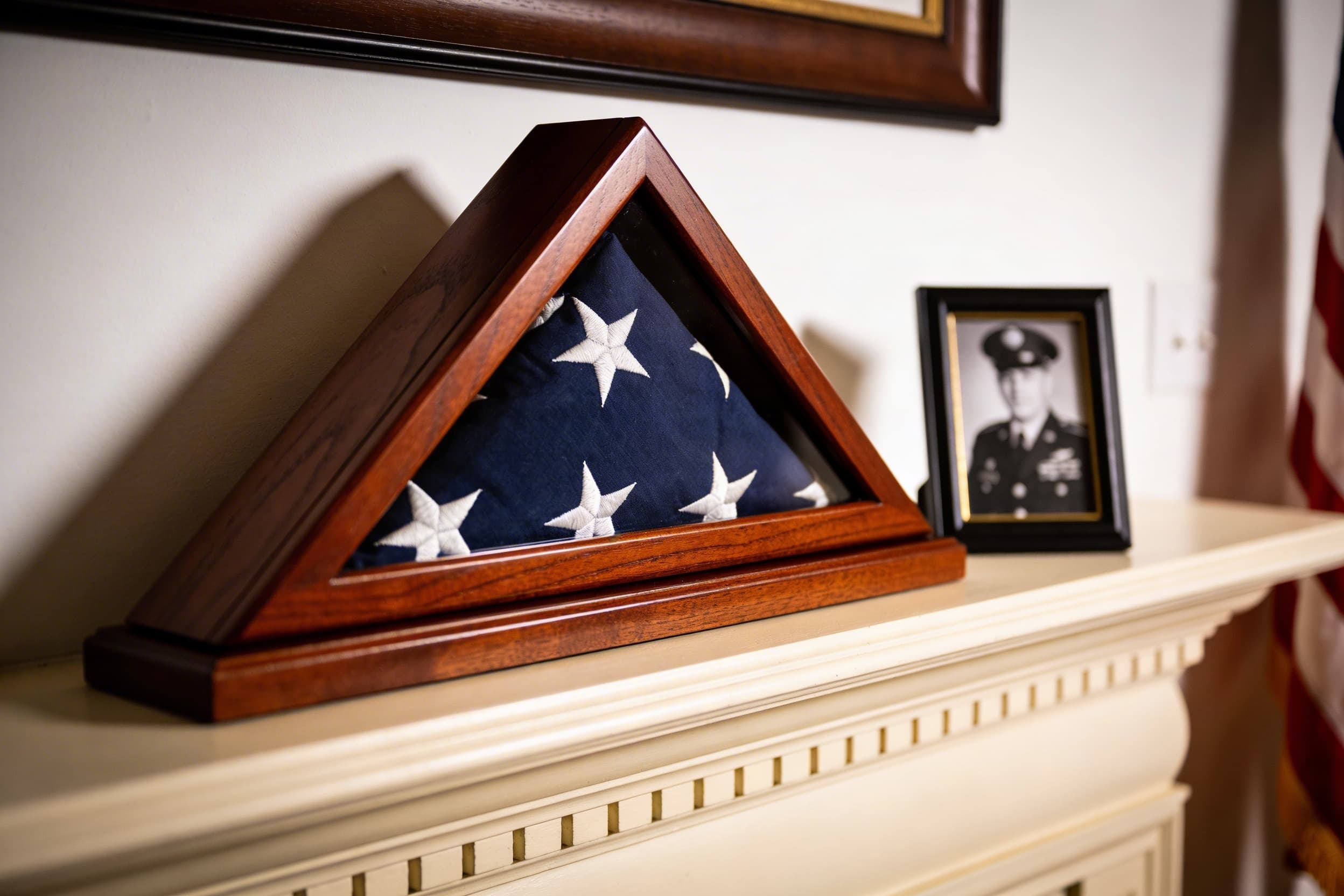
Only one burial flag is provided per veteran. After the ceremony, many families choose to preserve the flag in a flag display case as a lasting tribute.
Presidential Memorial Certificate: Up to 4 Months
A Presidential Memorial Certificate (PMC) is an engraved paper certificate, signed by the current president, recognizing the veteran's military service. Multiple copies can be requested for different family members.
National Cemetery Burials
For veterans buried in a national cemetery, the VA automatically presents a PMC to the next of kin at the time of burial. No separate application is needed.
Private Cemetery Burials
For veterans buried in private cemeteries, a family member or close friend must apply by submitting VA Form 40-0247 along with copies of the veteran's discharge documents and death certificate. Applications can be submitted by fax (800-455-7143) or through the QuickSubmit tool on AccessVA.
The VA advises families to allow up to 4 months for PMC processing. If a certificate has not arrived after that period, families can call 800-697-6947 for a status update. Sending a second application before being asked to do so is not recommended, as it can create duplicate records and further delays.
Military Funeral Honors: Arranged at Time of Need
Military funeral honors — including a flag folding and presentation ceremony, the playing of Taps, and a rifle salute — are coordinated through the funeral home at the time of need. There is no separate VA application or processing delay for honors. The funeral director contacts the appropriate military branch, and honors are typically arranged to coincide with the burial date.
The level of honors provided depends on the veteran's eligibility status. Understanding the military funeral eligibility requirements ahead of time helps families know which honors to expect and request.
What Causes Delays?
Across all benefit types, the same handful of issues account for most processing delays:
Missing DD214 or discharge documents. This is the most common holdup. If the family cannot locate the veteran's DD214, they can request a copy through the National Personnel Records Center, but that request itself can take weeks to fulfill. Keeping the DD214 with the pre-need decision letter prevents this problem entirely.
Incomplete applications. Forms submitted without required supporting documents — death certificates, itemized funeral bills, service records — are returned or held until the missing items arrive. Every round trip adds weeks.
High claim volume periods. After major policy changes or during periods of increased veteran deaths, the VA's processing capacity can be stretched. Service-connected claims are generally prioritized.
Incorrect form submissions. Using outdated form versions, submitting to the wrong address, or providing inaccurate inscription information on headstone claims all create avoidable delays.
What Families Can Do While Waiting
The weeks between filing for VA benefits and receiving them do not have to be idle. Many families use this period to make meaningful memorial decisions that are entirely within their control.
Choose a Memorial Urn or Marker
VA-provided headstones and markers are available in standard government styles. Families who want a more personalized memorial can purchase bronze veteran grave markers that reflect the veteran's branch of service, rank, and personal story. These purchased markers can be placed alongside or instead of the VA-provided option, depending on cemetery regulations.
For cremated veterans, selecting a military urn is a decision families can make at any time. Branch-specific designs are available in multiple materials and sizes. To learn more about what the VA provides for veteran urns — including the commemorative urn program and its permanent trade-offs — review our dedicated guide.
Preserve Service Memorabilia
While waiting for formal VA benefits, families often organize the veteran's service memorabilia: medals, ribbons, photographs, challenge coins, and unit insignia. A shadow box or display case is a meaningful way to honor the veteran's career and keep these items visible rather than stored away.
Request Additional PMC Copies
Since there is no limit to the number of Presidential Memorial Certificates a family can request, consider identifying all family members and close friends who would appreciate one. Submitting a single batch request — rather than multiple individual ones — is more efficient and less likely to create processing confusion.
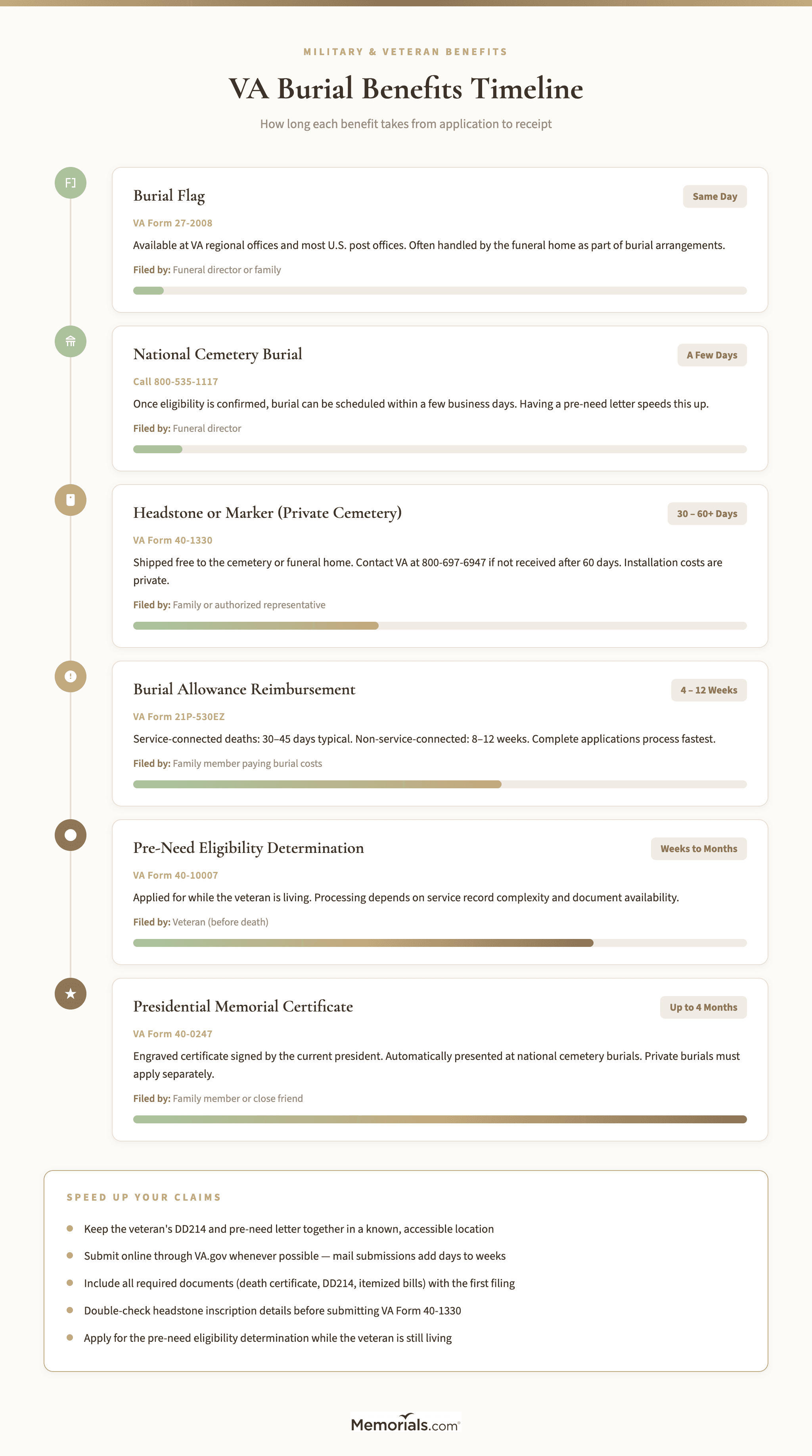
VA Burial Benefits Timeline at a Glance
Benefit
Form
Typical Timeline
Who Applies
Pre-need eligibility
VA Form 40-10007
Varies (weeks to months)
Veteran (before death)
Burial at national cemetery
N/A (call 800-535-1117)
Days (once eligibility confirmed)
Funeral director
Burial allowance
VA Form 21P-530EZ
4–12 weeks
Family member paying costs
Headstone/marker (national cemetery)
N/A (cemetery orders it)
Handled by cemetery staff
Cemetery officials
Headstone/marker (private cemetery)
VA Form 40-1330
30–60+ days
Family or representative
Burial flag
VA Form 27-2008
Same day to a few days
Funeral director or family
Presidential Memorial Certificate
VA Form 40-0247
Up to 4 months
Family member or friend
Military funeral honors
N/A (funeral director coordinates)
Arranged for burial date
Funeral director
Frequently Asked Questions
How long does the VA take to process a burial allowance claim?
Most burial allowance claims are processed within 4 to 12 weeks. Service-connected death claims typically move faster, often within 30 to 45 days. Non-service-connected claims may take 8 to 12 weeks. The most effective way to reduce wait time is submitting a complete application with all required documents — DD214, death certificate, and itemized funeral bills — on the initial filing.
Can I check the status of my VA burial benefit claim online?
Yes. Families who submitted a burial allowance claim online through VA.gov can check claim status through their VA.gov account. For headstone and marker orders for private cemeteries, the Applicant Assistance Unit at 800-697-6947 can provide status updates. For headstones ordered for national or state cemeteries, contact the cemetery directly.
Does the VA pay for the burial upfront?
No. The VA burial allowance is a reimbursement, not an upfront payment. Families pay funeral, burial, and transportation costs first and then apply for partial reimbursement through VA Form 21P-530EZ. One exception: surviving spouses listed on the veteran's VA profile receive automatic payment after the VA is notified of the veteran's death, without needing to file a separate claim.
What happens if my VA headstone order takes longer than 60 days?
The VA recommends contacting the cemetery, funeral home, or party responsible for accepting delivery to check whether the headstone or marker has arrived. If it has not been received after 60 days, families should call the Applicant Assistance Unit at 800-697-6947 (Monday through Friday, 8:00 a.m. to 5:00 p.m. ET) for a status update. Incomplete or inaccurate applications are the most frequent cause of delays.
Is there a deadline to apply for VA burial benefits?
For service-connected deaths, there is no time limit to file for the burial allowance. For non-service-connected deaths, families generally must file within 2 years of the veteran's burial. If the VA changed the veteran's discharge status after death, the 2-year window begins from the date of that change.
The actual work of honoring a veteran does not start when the VA processes a form — it starts with the family's first decision about how to remember their loved one. Whether that means selecting a cremation urn that reflects the veteran's service, choosing a meaningful military casket for a traditional burial, or simply preserving the burial flag in a display worthy of the sacrifice it represents, these choices are always in the family's hands.