🏬Supersize Online Funeral Retailer🪦1000's of Headstones⚱️Over 10,000 Cremation Urns⚰️Caskets Overnight Delivery🛒Funeral & Memorial Superstore🚚FREE Shipping on ALL Orders👨👩👧👦Helping Families for over 20 Years💰Lowest Price Guarantee🏬Supersize Online Funeral Retailer🪦1000's of Headstones⚱️Over 10,000 Cremation Urns⚰️Caskets Overnight Delivery🛒Funeral & Memorial Superstore🚚FREE Shipping on ALL Orders👨👩👧👦Helping Families for over 20 Years💰Lowest Price Guarantee
🏬Supersize Online Funeral Retailer🪦1000's of Headstones⚱️Over 10,000 Cremation Urns⚰️Caskets Overnight Delivery🛒Funeral & Memorial Superstore🚚FREE Shipping on ALL Orders👨👩👧👦Helping Families for over 20 Years💰Lowest Price Guarantee🏬Supersize Online Funeral Retailer🪦1000's of Headstones⚱️Over 10,000 Cremation Urns⚰️Caskets Overnight Delivery🛒Funeral & Memorial Superstore🚚FREE Shipping on ALL Orders👨👩👧👦Helping Families for over 20 Years💰Lowest Price Guarantee
Adding edging to a loved one's grave creates a defined, cared-for space that stands apart from the surrounding grounds. A well-chosen border frames the headstone, protects flowers and plantings from mower damage, and gives the entire plot a sense of permanence. Whether you prefer the classic weight of granite coping or a simple row of natural fieldstone, grave plot edging is one of the most meaningful ways families personalize a cemetery space.
This guide walks through the most popular edging materials, design ideas organized by style, a step-by-step installation overview, the cemetery regulations you need to check first, and long-term maintenance. If you are navigating cemetery decisions for the first time, understanding what is and is not allowed at your specific cemetery is an essential starting point. Families who are also thinking about broader ways of will find that edging is the foundation that ties every other element together.
Choosing the right material is the single biggest decision. Each option carries a different look, price range, durability profile, and level of cemetery acceptance. Below is a breakdown of the five most common categories.
Granite and Natural Stone
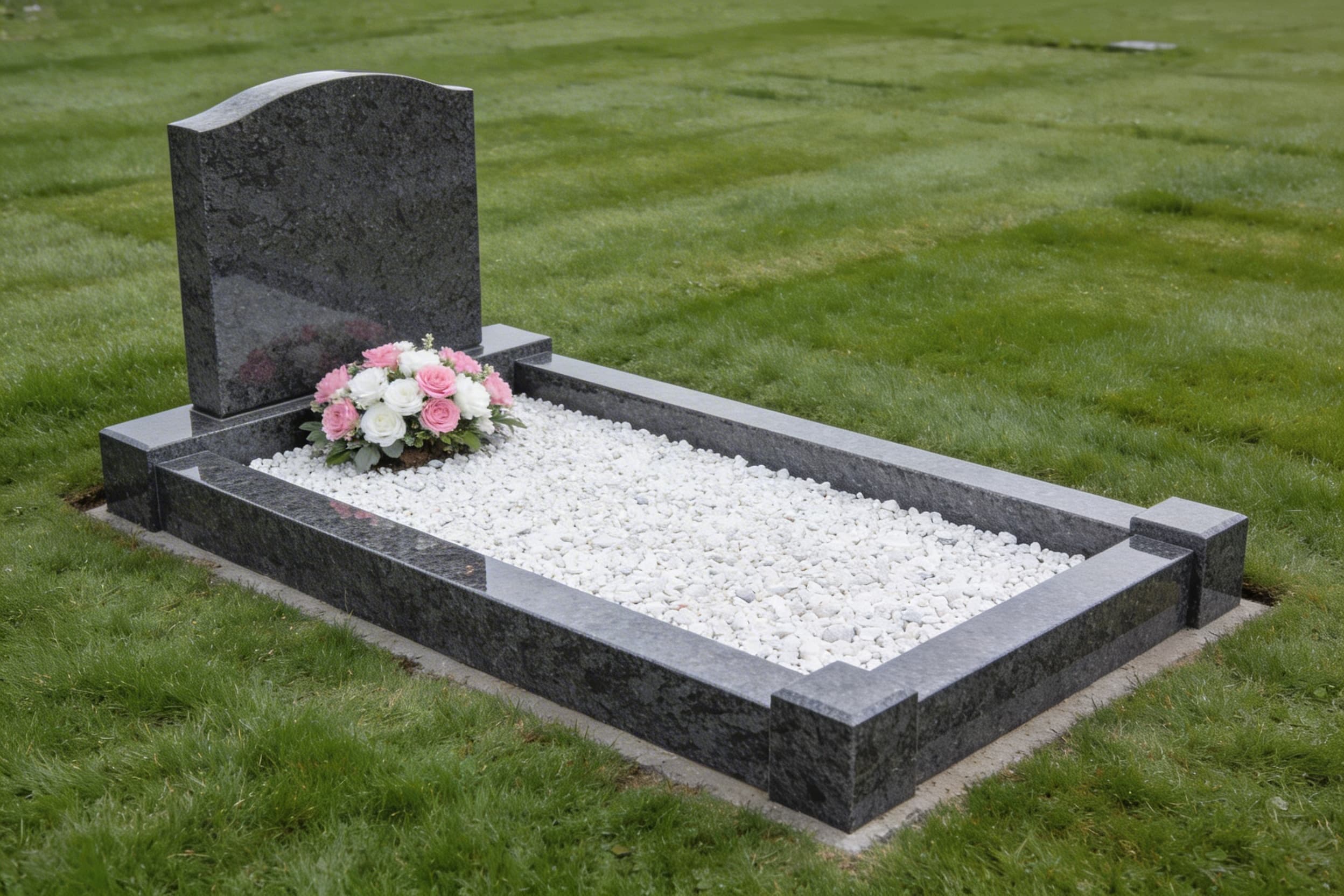
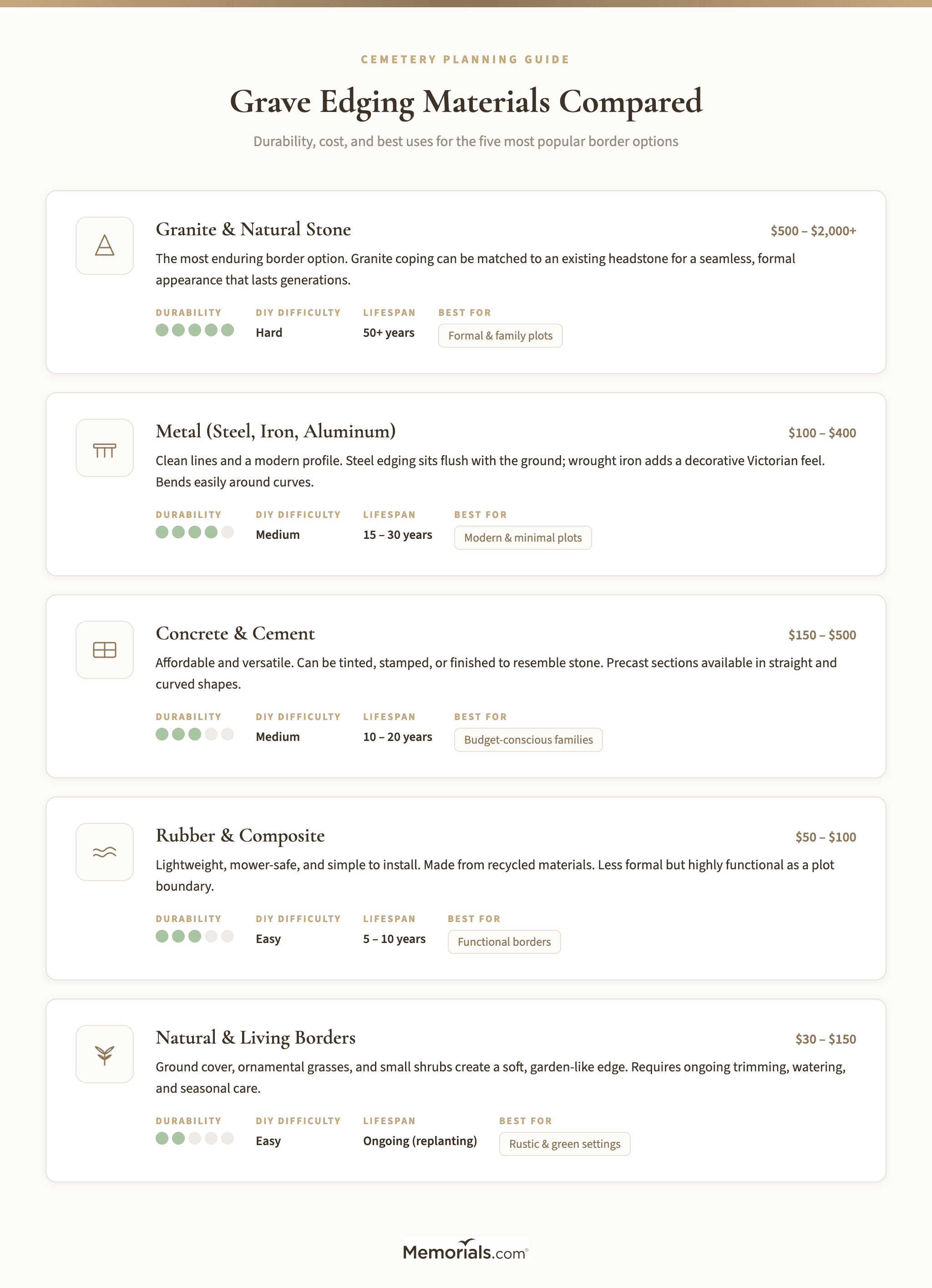
Granite coping is the traditional gold standard for cemetery plot borders. Cut and polished to match the headstone, granite edging creates a seamless frame that can last for generations. Marble, limestone, and sandstone are also used, though they weather faster in humid or freeze-thaw climates. Many monument companies can fabricate coping pieces in the same color and finish as an existing grave marker, giving the entire plot a unified appearance.
Granite is the heaviest and most expensive option, but it rarely needs replacement. Families who value a formal, permanent look — especially in older cemeteries with established family plots — tend to choose granite. Natural fieldstone or river rock offers a more rustic alternative at a lower cost and can be arranged without professional cutting.
Placing memorial stones at the corners or along one side of the border adds a personalized accent that complements granite coping especially well.
Metal Edging
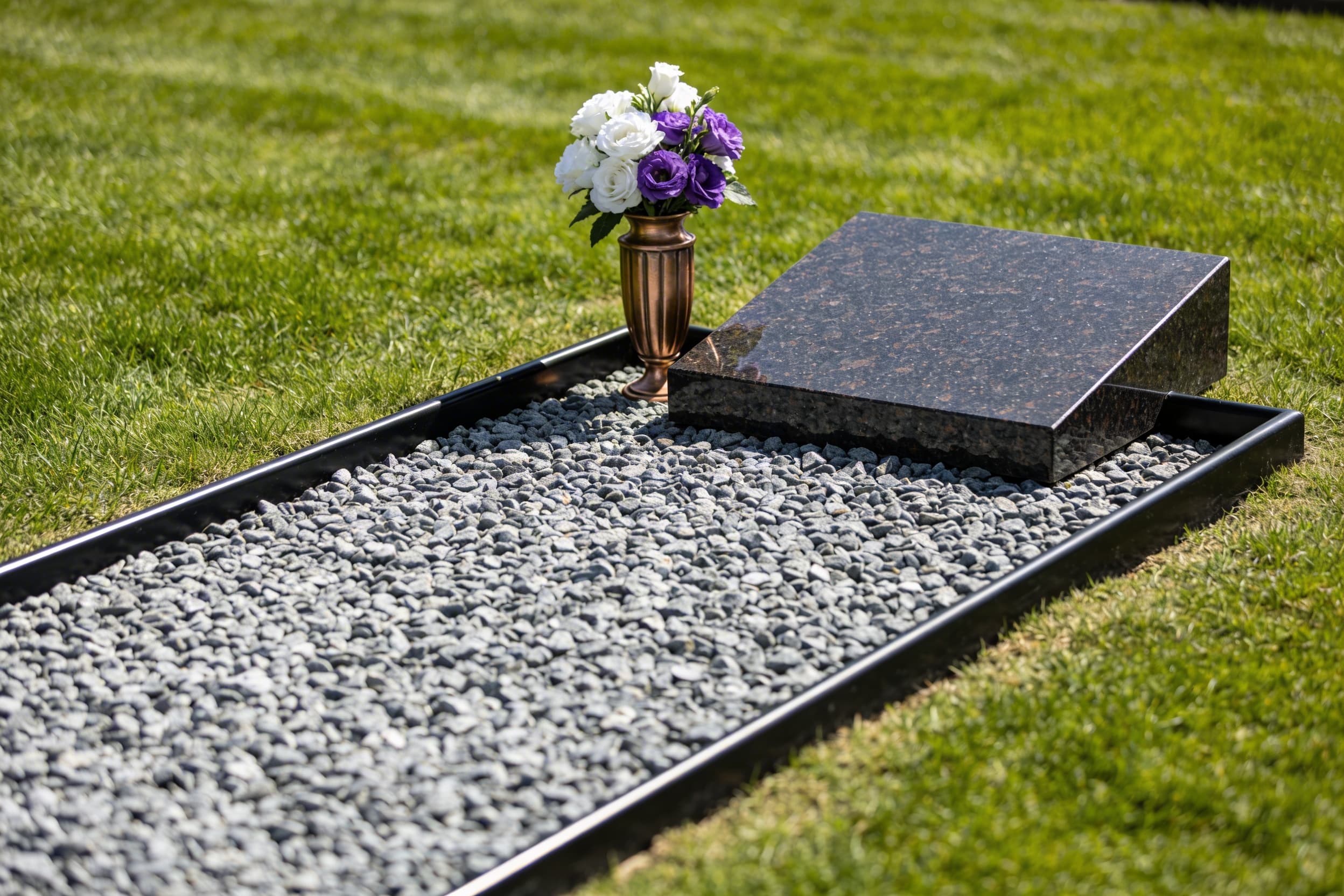
Steel, aluminum, and wrought iron are popular choices for families who want clean lines without the bulk of stone. Steel landscape edging sits flush with the ground and creates a crisp boundary between grass and gravel or mulch fill. It bends easily around curves, making it ideal for oval or rounded plot shapes.
Wrought iron offers a more decorative look — Victorian-style scroll edging and low railings were once standard in many American and British cemeteries. Aluminum is lighter and rust-resistant, though it lacks the visual weight of iron. Metal edging is generally mid-range in cost and easier to install than stone, but some cemeteries restrict metal borders because they can interfere with mowing equipment.
Concrete and Cement Borders
Poured concrete curbing and precast cement borders provide a durable, affordable middle ground. Concrete can be tinted, stamped, or finished to resemble stone, and it holds up well in most climates. Precast sections are available in straight, curved, and corner configurations.
The downsides are aesthetic: concrete tends to stain, crack, and sink over time, particularly in areas with heavy rainfall or clay soil. Repairs usually mean replacing entire sections rather than patching. That said, for families working within a tighter budget, concrete is one of the most practical ways to define a grave plot border.
Rubber and Composite Edging
Modern rubber landscape edging — often made from recycled tires — is a newer option in cemetery settings. Products like interlocking rubber curb sections are affordable, lightweight, and resistant to cracking and fading. They will not chip a mower blade if accidentally struck, which makes them more cemetery-friendly from a grounds crew perspective.
Rubber edging does not carry the same visual gravitas as stone or metal, but it works well for families who want a functional boundary without a large investment. It is also one of the simplest materials to install without professional help.
Natural and Living Borders
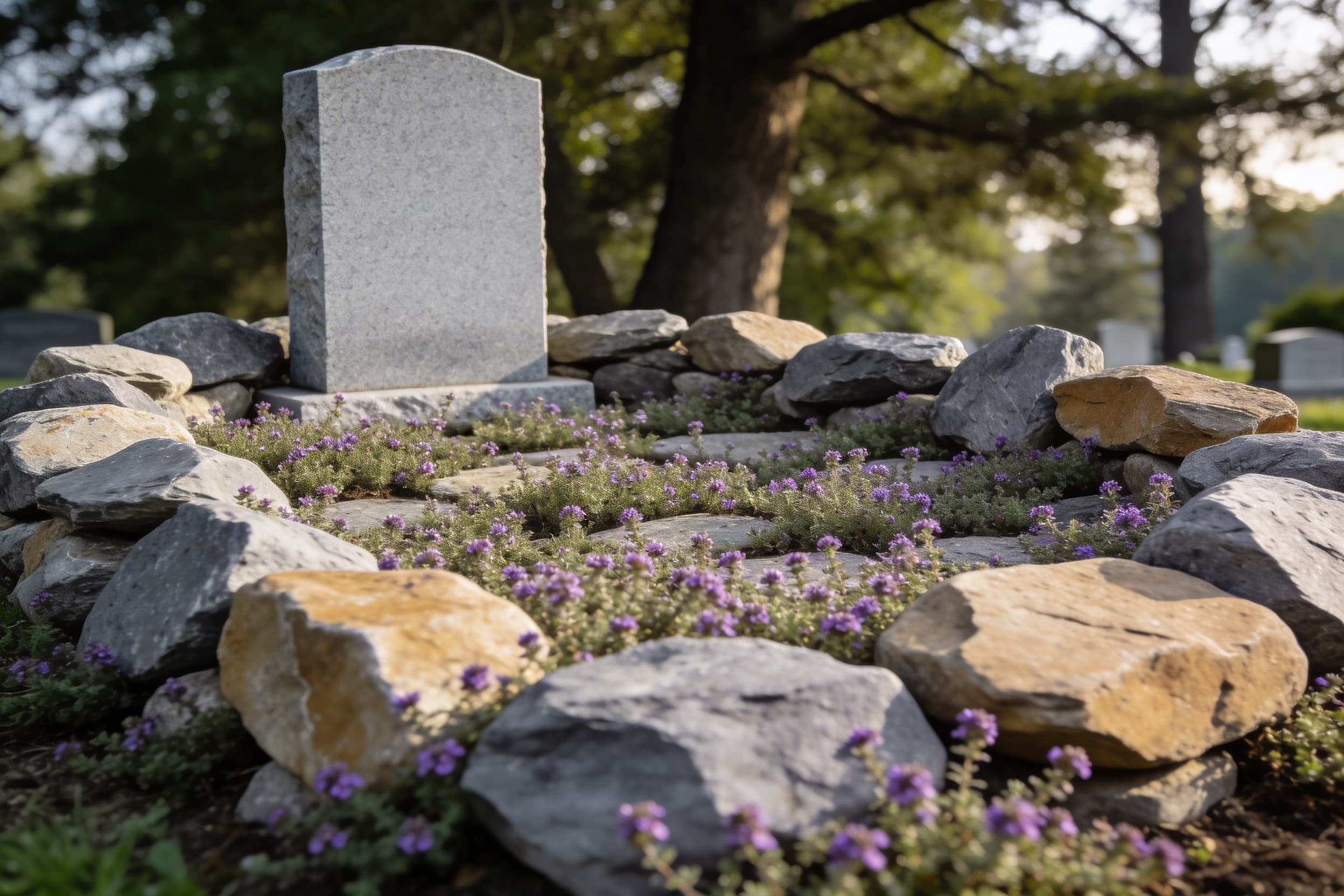
Low-growing ground cover plants, ornamental grasses, and small shrubs create a living edge that softens the look of a gravesite. Creeping thyme, sedum, dwarf mondo grass, and moss are common choices because they stay low, spread slowly, and tolerate foot traffic. A row of boxwood or lavender can form a more structured hedge border.
Living borders require ongoing care — trimming, watering during dry spells, and seasonal replanting. They are also the most vulnerable to damage from cemetery groundskeeping equipment. Many cemeteries allow plantings only within specific dimensions or require that they stay below a certain height. Checking the rules before planting prevents the disappointment of having vegetation removed.
Design Ideas by Style
The edging material you choose sets the tone, but the overall design pulls together the headstone, border, plantings, and any decorative accents into a cohesive look. Here are several design approaches organized by visual style.
Formal and Traditional
A formal grave plot uses matched granite or marble coping on all four sides, creating a raised perimeter that clearly defines the plot boundaries. The interior is often filled with polished gravel, white marble chips, or a carefully maintained grass surface. Graveside decorations such as a small bronze plaque, an engraved stone, or a flag holder sit centered within the border.
This style works best in older cemeteries and family plots where formality matches the surrounding monuments. It is the most expensive approach but also the most enduring.
Rustic and Natural
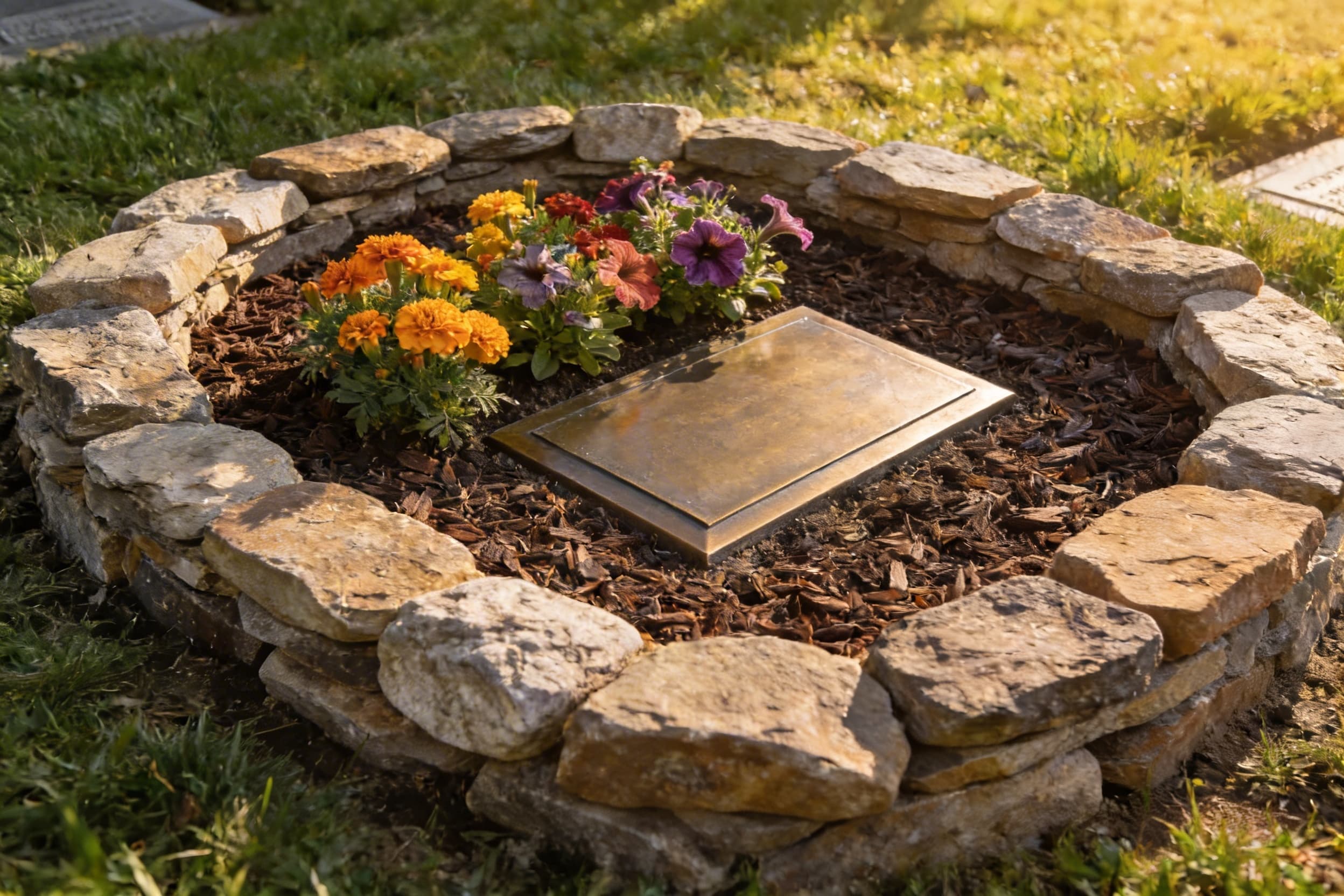
Fieldstone, river rock, or stacked slate arranged in an organic line creates a border that feels intentional without being rigid. Gaps between stones can be planted with creeping ground cover, blurring the line between edging and garden. A small memorial rock engraved with a name or short phrase makes a fitting centerpiece.
Rustic edging suits rural cemeteries, green burial grounds, and plots surrounded by mature trees and natural landscaping. It is also more forgiving to install — stones do not need to be precisely cut or leveled.
Contemporary and Minimal
Clean-lined steel or aluminum edging paired with a uniform ground cover like gray pea gravel or decomposed granite creates a modern, low-maintenance look. The border is subtle — often just an inch or two above grade — and lets the headstone be the focal point. Plants, if any, are limited to a single species in a tight grouping.
This approach appeals to families who value simplicity and easy upkeep. It also tends to comply with the widest range of cemetery regulations because it stays low and does not interfere with mowing.
Cottage Garden
Combining a low physical border — stone, brick, or scalloped concrete — with seasonal flowers and small shrubs creates a warm, garden-like setting around the grave. Families who enjoy visiting and tending the plot often choose this style because it gives them an ongoing activity that keeps the connection alive.
Pairing vases with your grave design allows you to rotate fresh or silk flower arrangements with the seasons while the permanent border stays in place. This style requires the most maintenance but creates the most personal, lived-in atmosphere.
How to Install Grave Edging: Step by Step
Installation methods vary by material, but the general process follows the same sequence. Always confirm with the cemetery office before beginning any work — many require advance notice or a permit, and some will only allow installation by approved contractors.
Step 1: Get Cemetery Approval
Contact the cemetery's administrative office and ask for their written guidelines on grave plot modifications. Key questions to ask include whether borders are allowed, what materials are permitted, maximum height and width dimensions, and whether you need to hire an approved installer. Do not skip this step — work that violates cemetery rules for gravesite modifications can be removed at the family's expense.
Step 2: Measure the Plot
Using a tape measure, mark the exact plot dimensions. Most standard adult graves are roughly 4 feet wide by 8 feet long, but sizes vary. Measure from the headstone foundation outward and mark corners with small flags or stakes. Double-check that your planned border stays within the plot boundaries — encroaching on adjacent plots is a common violation.
Step 3: Prepare the Ground
Remove sod or grass along the border line using a flat spade. Dig a shallow trench — typically 3 to 4 inches deep and as wide as the edging material. For stone or concrete, lay a 1-inch base of compacted gravel or sand to prevent settling. Level the trench with a hand tamper and check with a spirit level.
Step 4: Set the Edging
Place stone, concrete sections, or metal edging into the trench. For granite coping, use a masonry adhesive between joints and check alignment after each piece. Metal edging is secured with ground stakes driven every 12 to 18 inches. Rubber sections interlock and may not need additional fastening. Backfill around the edging with soil, tamping firmly to hold everything in place.
Step 5: Finish the Interior
Fill the bordered area with your chosen ground cover — gravel, mulch, decorative stone, or soil for planting. If planting, amend the soil with compost and water thoroughly. If using gravel, lay landscape fabric underneath to suppress weeds.
Step 6: Clean Up
Remove all excavated soil, sod, and debris from the cemetery grounds. Leave the surrounding area exactly as you found it. Take photos of the finished installation for your records.
Cemetery Rules for Grave Edging
Every cemetery has its own policies governing what families can and cannot add to a gravesite. Rules vary widely, but the most common restrictions involve the following areas.
Height and Width Limits
Most cemeteries that allow edging cap the border height at 4 to 6 inches above grade. Some require flush-mount edging only — meaning the border cannot protrude above the grass line. Width restrictions ensure that edging does not extend beyond the plot's surveyed boundaries.
Material Restrictions
Cemeteries managed by municipalities or veteran affairs departments often limit edging to specific materials. Granite and bronze are almost universally accepted. Metal, concrete, and rubber may or may not be allowed depending on local policies. Wood borders are rarely permitted because they deteriorate and become a maintenance problem.
Installation Requirements
Some cemeteries require that all stone or concrete work be performed by a licensed monument company. Others allow families to do their own installation with advance approval. National and state veteran cemeteries tend to have the strictest policies and may not allow any modifications beyond the government-issued headstone.
Maintenance Obligations
Once installed, the family is typically responsible for keeping the edging in good condition. If a border shifts, cracks, or becomes overgrown, the cemetery may issue a notice requiring repair within a set timeframe. Failure to maintain edging can result in removal. Building a regular schedule of grave care and upkeep into your calendar prevents small problems from becoming costly repairs.
Maintaining Your Grave Edging
All edging materials require some level of ongoing care, though the frequency and effort vary widely.
Stone and Granite
Wash granite coping once or twice a year with water and a soft brush. Avoid harsh chemicals — a mild dish soap is sufficient. Check joints for loosening or shifting, particularly after winter freeze-thaw cycles. Re-level any sunken sections by lifting the piece, adding gravel underneath, and resetting it.
Metal
Inspect steel edging for rust spots annually. Apply a rust-inhibiting spray to any exposed areas. Wrought iron may need repainting every few years. Check ground stakes to ensure they have not worked loose.
Concrete
Seal concrete borders with a masonry sealant every two to three years to prevent staining and moisture damage. Fill hairline cracks with a concrete patch compound before they widen. Replace sections that have sunk more than half an inch — re-leveling alone rarely holds long term.
Rubber and Composite
Clean rubber edging with a hose and brush. UV exposure can cause fading over time, but most products are treated to resist this for five or more years. Check interlocking joints and re-seat any sections that have shifted.
Living Borders
Trim ground cover and ornamental plantings monthly during the growing season. Replace dead plants promptly to prevent gaps. Water newly planted borders weekly until established. In cold climates, cut back perennials in late fall and mulch lightly to protect roots.
Complementary Gravesite Elements
Edging is the framework, but the elements inside and around the border complete the picture. Families often combine edging with other cemetery products to create a fully personalized gravesite.
Flower vases — either bronze-mounted or freestanding granite — hold fresh or silk arrangements inside the bordered area. Solar-powered lights placed at the corners of the border illuminate the gravesite after dark. Small engraved stones, religious statues, or photo plaques add personal meaning. The key is balance — a well-designed plot has a clear focal point (usually the headstone) with supporting elements that enhance rather than compete.
Frequently Asked Questions
Can you put edging around a grave in any cemetery?
No. Cemetery policies on edging vary significantly. Some cemeteries welcome borders as long as they stay within the plot boundaries and meet height restrictions. Others, particularly modern lawn-style cemeteries, prohibit any above-ground structures besides the headstone. Always request written guidelines from the cemetery office before purchasing materials or beginning work.
What is the most durable edging material for a cemetery grave?
Granite coping is the most durable option, with a lifespan measured in decades rather than years. It resists weather, UV exposure, and mower contact without cracking or fading. Granite is also the material most universally accepted by cemetery administrators.
How much does it cost to edge a cemetery grave?
Costs range widely depending on material and installation method. Rubber edging starts around $50 to $100 for a standard plot. Concrete borders run $150 to $500 depending on complexity. Granite coping — especially matched to an existing headstone — can range from $500 to $2,000 or more, particularly if installed by a monument company. DIY installation reduces costs, but some cemeteries require professional contractors.
Do you need permission to landscape around a grave?
Yes, in nearly every case. Even cemeteries with relaxed policies expect families to notify the office before making changes. Modifications made without permission risk being removed, and the family may be billed for the labor. Obtaining approval in writing protects your investment and avoids conflict.
What ground cover works best inside a grave border?
Creeping thyme, sedum, and dwarf mondo grass are among the most popular low-maintenance ground covers for grave plots. They tolerate foot traffic, stay short, and require minimal watering once established. Polished gravel and decomposed granite are non-living alternatives that eliminate the need for ongoing plant care.
Choosing the Right Border for Your Loved One
The edging you choose for a gravesite is both a practical decision and an emotional one. It creates a boundary that says this ground is cared for, this person is remembered. Whether you select polished granite that mirrors the headstone or a simple ring of river rock softened by creeping thyme, the border you build becomes part of how future visitors experience the memorial.
Start by confirming your cemetery's rules, settle on a material that fits your budget and aesthetic, and plan for the maintenance your choice requires. A thoughtfully edged grave becomes a place that invites return visits — a small garden of memory that grows more meaningful with time.