🏬Supersize Online Funeral Retailer🪦1000's of Headstones⚱️Over 10,000 Cremation Urns⚰️Caskets Overnight Delivery🛒Funeral & Memorial Superstore🚚FREE Shipping on ALL Orders👨👩👧👦Helping Families for over 20 Years💰Lowest Price Guarantee🏬Supersize Online Funeral Retailer🪦1000's of Headstones⚱️Over 10,000 Cremation Urns⚰️Caskets Overnight Delivery🛒Funeral & Memorial Superstore🚚FREE Shipping on ALL Orders👨👩👧👦Helping Families for over 20 Years💰Lowest Price Guarantee
🏬Supersize Online Funeral Retailer🪦1000's of Headstones⚱️Over 10,000 Cremation Urns⚰️Caskets Overnight Delivery🛒Funeral & Memorial Superstore🚚FREE Shipping on ALL Orders👨👩👧👦Helping Families for over 20 Years💰Lowest Price Guarantee🏬Supersize Online Funeral Retailer🪦1000's of Headstones⚱️Over 10,000 Cremation Urns⚰️Caskets Overnight Delivery🛒Funeral & Memorial Superstore🚚FREE Shipping on ALL Orders👨👩👧👦Helping Families for over 20 Years💰Lowest Price Guarantee
A cemetery vase gives your family a dedicated place to leave fresh or artificial flowers at a loved one's gravesite — a small gesture that transforms routine visits into moments of active remembrance. Choosing one that fits the headstone, meets cemetery rules, and holds up through years of weather takes a bit of planning. If you are navigating cemetery decisions for the first time, a vase is one of the more personal choices you will make because it shapes how the gravesite looks and feels every time someone visits.
This guide walks through the major material options, mounting styles, sizing considerations, and installation methods so you can choose a cemetery vase that serves the gravesite well for years to come. Whether you are from scratch or replacing an aging vase, the factors below will help you narrow your options quickly.
Material is the single biggest factor in durability, appearance, and cost. Each option carries trade-offs worth understanding before you order.
Granite
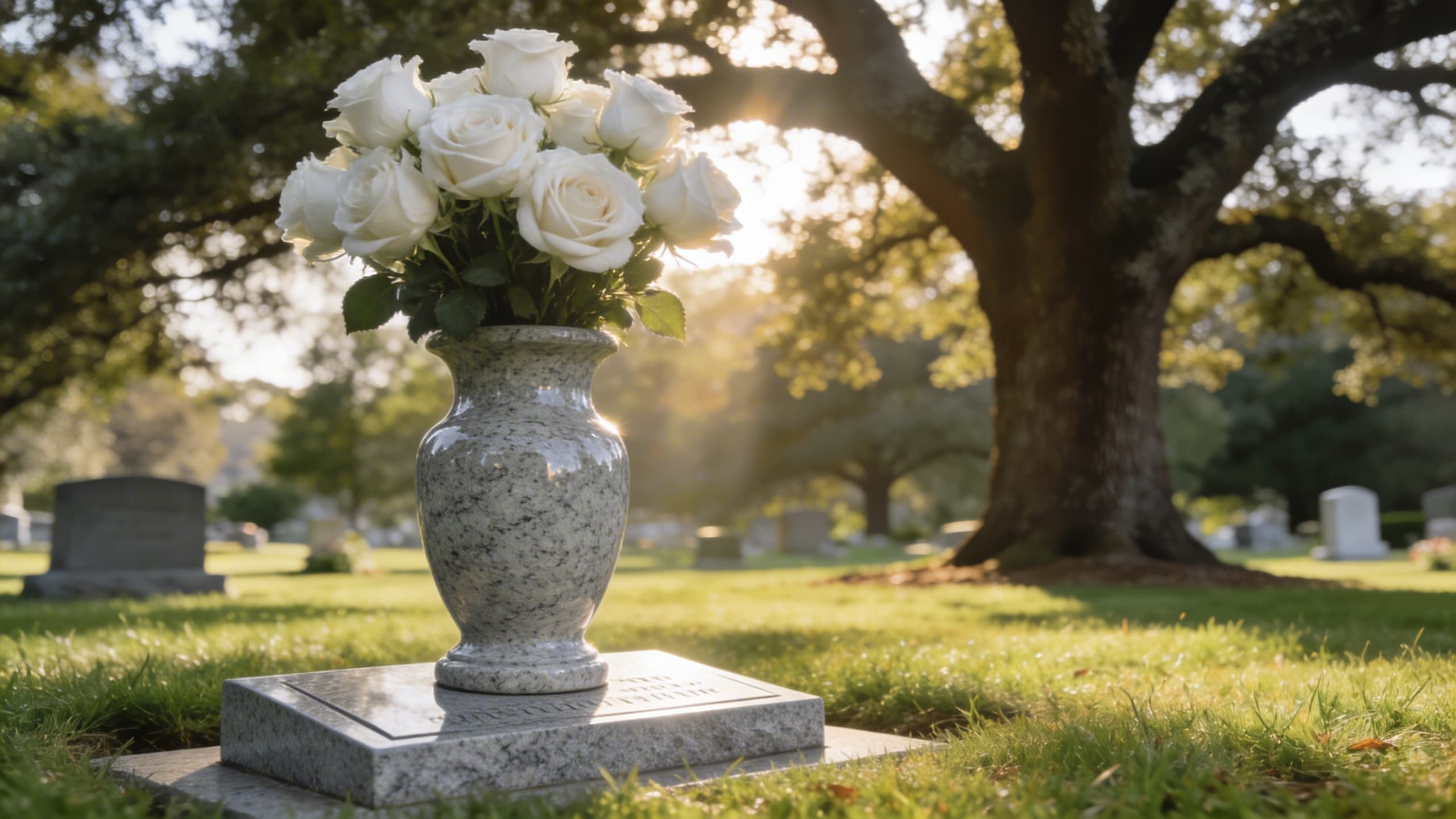
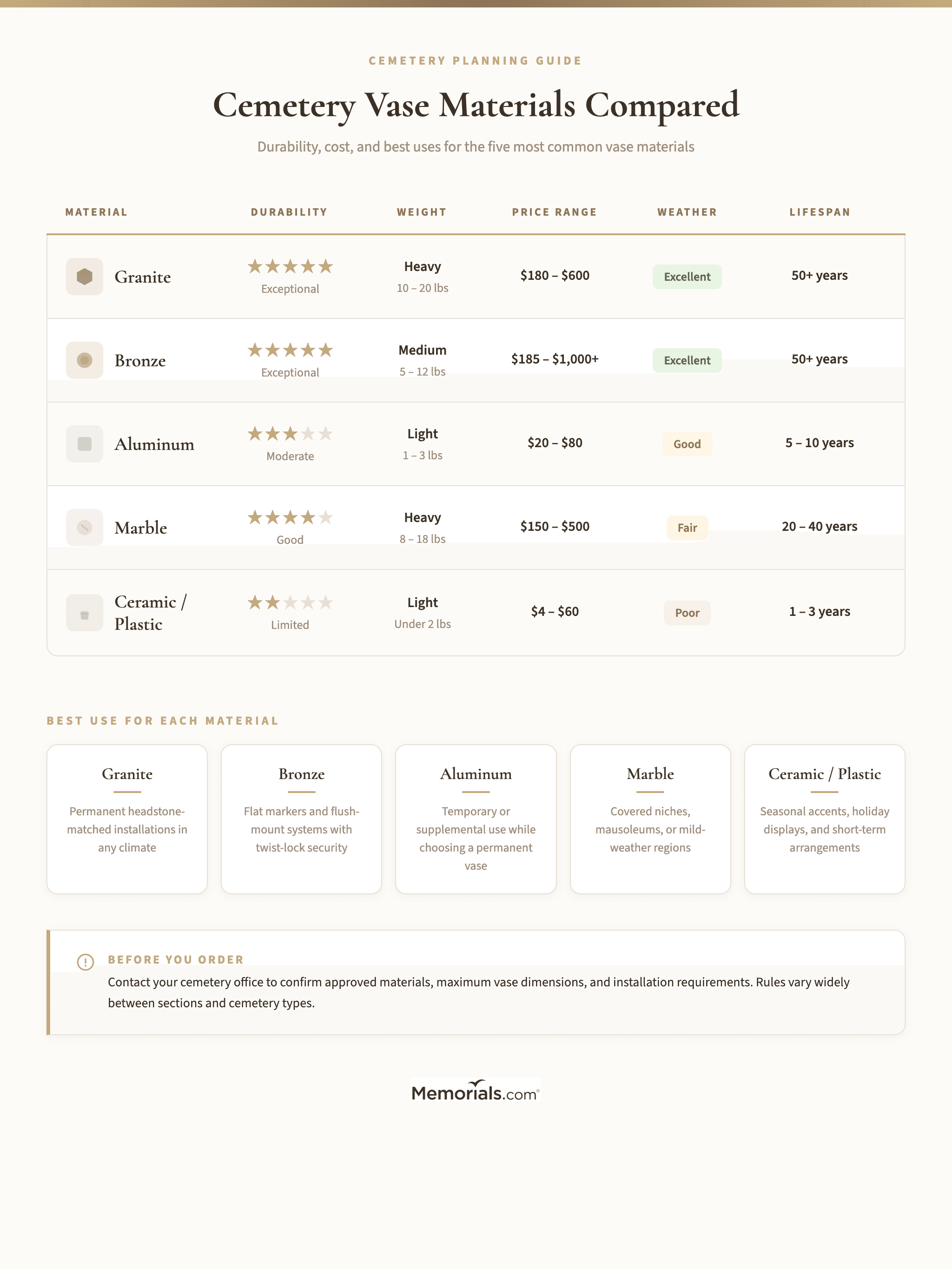
Granite vases are carved from the same natural stone used in most headstones, which makes color-matching straightforward. A polished granite vase resists staining, UV damage, and freeze-thaw cycles better than almost any alternative. Granite does not corrode, does not develop a patina, and looks essentially the same after a decade of outdoor exposure as it does on the day it arrives. Weight is the main drawback — a solid granite vase can weigh ten to twenty pounds, so it stays put in wind but requires careful handling during installation. Prices typically range from $180 to $600 depending on size and finish.
Bronze
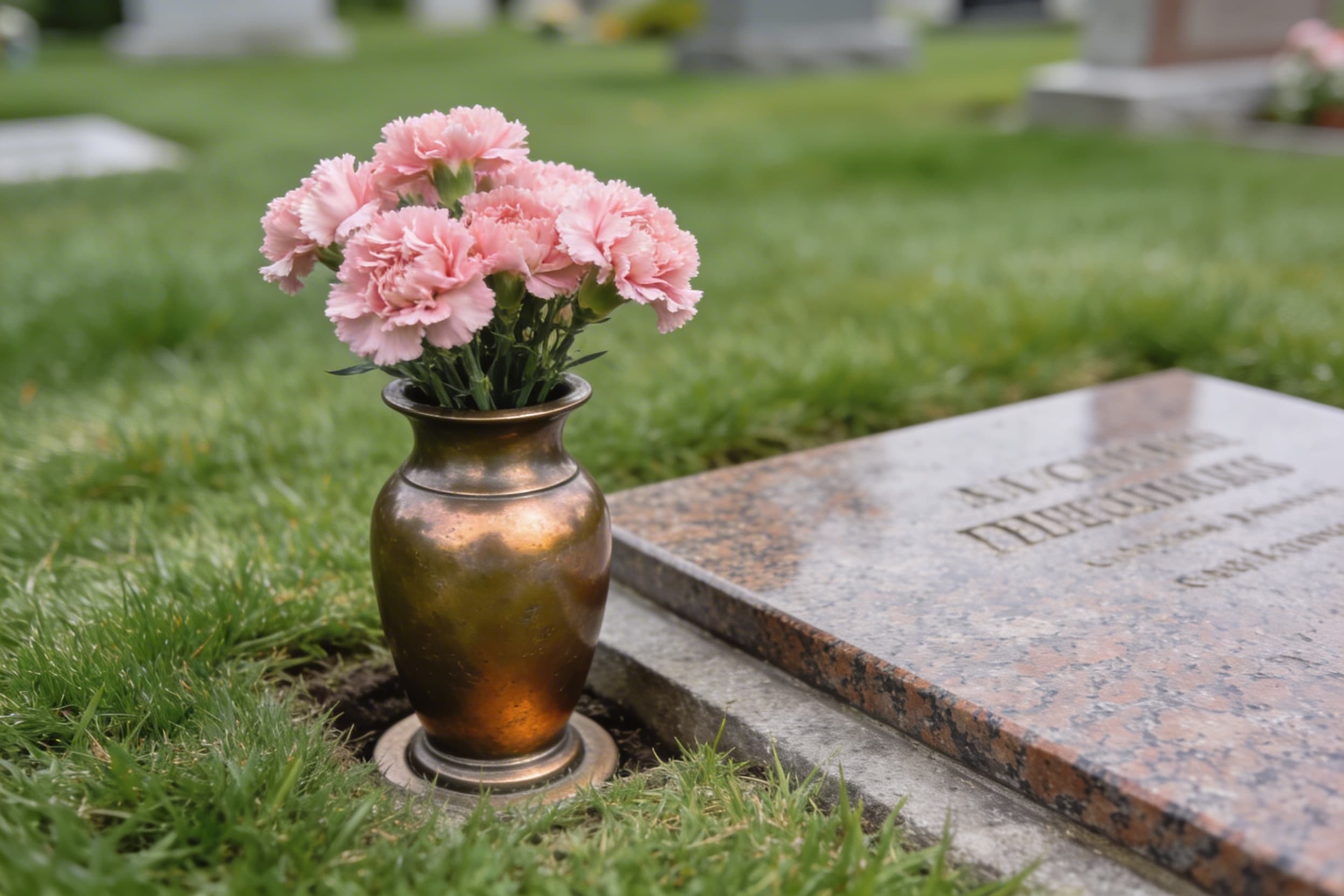
Bronze is the traditional choice for flat markers and flush-mount installations. A cast bronze vase develops a warm patina over time that many families find attractive, though others prefer to polish it periodically. Bronze holds up well against moisture and cold, and most bronze cemetery vases feature built-in locking or twist-lock mechanisms that secure the liner inside the casing. Prices range from roughly $185 to over $1,000 for custom or oversized models. If the headstone already has a bronze plaque or marker, a matching bronze vase creates visual continuity.
Aluminum
Aluminum vases offer a lightweight, rust-resistant alternative at a fraction of the cost of granite or bronze. They are available in anodized finishes that mimic bronze or pewter, and they weigh little enough to carry in one hand. The downside is longevity — thinner aluminum walls can dent, and anodized finishes may fade after several years of direct sun exposure. Aluminum works well as a temporary or supplemental vase while a family decides on a permanent option.
Marble
Marble vases share many of granite's strengths — natural stone beauty, substantial weight, and a polished surface that cleans easily. However, marble is softer and more porous than granite, which means it can absorb moisture and develop staining or hairline cracks in climates with harsh winters. Marble is best suited to covered niches, mausoleums, or mild-weather regions where freeze-thaw stress is minimal.
Ceramic and Plastic
Ceramic vases offer the widest range of artistic designs — hand-painted florals, glazed colors, and custom shapes — but they are fragile and vulnerable to frost. Plastic cone vases and stake vases are the most affordable option (often under $10) and can be replaced seasonally. Neither ceramic nor plastic is intended for permanent installation, but both serve well as short-term accent pieces or as holders for seasonal flower arrangements for graves.
Mounting Styles and Placement Options
Cemetery vases come in several mounting configurations. The right choice depends on the headstone type, cemetery regulations, and personal preference.
In-Ground (Flush-Mount) Vases
In-ground vases sit inside a cored hole in the headstone base or directly in the ground beside a flat marker. When no flowers are displayed, the vase drops flush with the surface so it is virtually invisible. A twist-lock or friction-fit mechanism holds the liner in place. Flush-mount vases are the most common style in modern cemeteries because they stay out of the way of mowing equipment and cannot tip over in wind.
Headstone-Mounted Vases
These vases attach directly to the top or side of an upright headstone using epoxy adhesive or a pre-drilled socket. They keep flowers at eye level, which many families prefer for upright monuments. Installation requires careful surface preparation — the stone must be clean and dry, and the epoxy must be rated for the specific stone material (granite epoxy differs from marble adhesive). A drain hole should face outward so rainwater does not pool inside the vase.
Freestanding and Companion Vases
A freestanding vase sits on the headstone base without adhesive, relying on its own weight to stay put. Companion-style vases — a matched pair placed on either side of the headstone — are popular for larger monuments. These arrangements work best with heavy granite vases that will not shift in wind. Some families add a small bead of clear silicone underneath for extra stability without permanently bonding the vase to the stone.
Hidden (Reversible) Vases
Hidden vases are built into the headstone itself. On a flat marker, the vase flips upside down into a recessed cavity when not in use, leaving only a small handle visible at ground level. On an upright monument, the hidden vase typically sits in a cored hole at the top of the stone. When the family visits, they lift the vase out, fill it with water, and display flowers. Between visits, the vase tucks away and the gravesite appears clean and uncluttered.
Sizing and Fit
Getting the size right prevents the vase from looking out of proportion or failing to hold a standard bouquet.
Height: Most cemetery vases range from 5 to 12 inches tall. Taller vases (10–12 inches) suit upright monuments and larger displays; shorter vases (5–7 inches) pair better with flat markers and flush-mount installations. Many cemeteries cap vase height at 8 to 12 inches, so check the rules before ordering.
Diameter: A 3.5- to 4.5-inch interior diameter accommodates a typical florist bouquet. Wider openings (5–6 inches) are better for lush arrangements or artificial flower bushes. Narrow-mouth vases focus the display but limit the stems you can fit inside.
Coring size: For in-ground or headstone-mounted installations, the vase's outer diameter must match the cored hole. Standard coring sizes are 4.25 inches and 4.5 inches. Confirm the coring measurement with the monument company or cemetery before ordering a replacement vase.
Weight: A lighter vase is easier to handle but more vulnerable to wind and theft. Granite and bronze vases rarely blow over or walk away; aluminum and plastic vases benefit from a locking mechanism or ground stake.
Installation Methods
How you install the vase depends on the mounting style.
Epoxy Adhesion (Headstone-Mounted)
Clean the headstone surface with mild dish soap and water — never ammonia or vinegar on polished granite. Let the surface dry completely. Mark the desired position with painter's tape, centering the vase and checking symmetry from multiple angles. Mix a two-part granite epoxy until the color is uniform, apply it to the vase base with a putty knife, and press the vase firmly into position with the drain hole facing outward. Secure with tape for 24 hours while the epoxy cures. Scrape any squeeze-out with a razor blade and damp towel.
Ground Coring (In-Ground Vases)
In-ground installation usually requires a professional with a core drill. The hole is cut into the granite base or into a concrete foundation set in the ground. The outer vase casing is placed into the hole, and the inner liner drops in. Most cemeteries prefer to handle or supervise this work to ensure uniform appearance across the grounds.
Stake and Spike Mounting (Temporary)
Plastic cone vases and stake vases push directly into the soil beside a marker. This is a DIY-friendly option that requires no tools. Choose a spot close to the headstone but clear of the mowing path. Spike-mounted vases work best in loose or moderately firm soil — if the ground is too hard or saturated, the spike may not hold securely.
Cemetery Regulations to Check First
Before purchasing a vase, contact the cemetery office and ask about these common restrictions:
Approved materials: Some cemeteries allow only granite or bronze vases. Ceramic, glass, and plastic are prohibited in many maintained cemeteries because they can shatter or deteriorate.
Size limits: Height and width maximums vary by section. Older sections with upright monuments may be more lenient than flat-marker sections governed by strict uniformity rules.
Installation requirements: Certain cemeteries require all permanent vases to be installed by an approved contractor. Others allow self-installation with advance notice.
Seasonal clean-up dates: Many cemeteries remove all flowers and temporary vases before major holidays — Memorial Day, Veterans Day, and Christmas are common clean-up dates. Any personal items left after the deadline may be discarded. Plan around these dates if you use removable vases.
Artificial vs. fresh flowers: A handful of cemeteries restrict artificial flowers because faded silk arrangements can look neglected. Others welcome artificial flowers because they reduce maintenance. Knowing the policy helps you choose a vase shape and depth suited to the type of flowers you intend to display.
Maintenance and Long-Term Care
A well-maintained vase keeps the gravesite looking its best and extends the life of the vase itself. Basic upkeep is simple but easy to overlook.
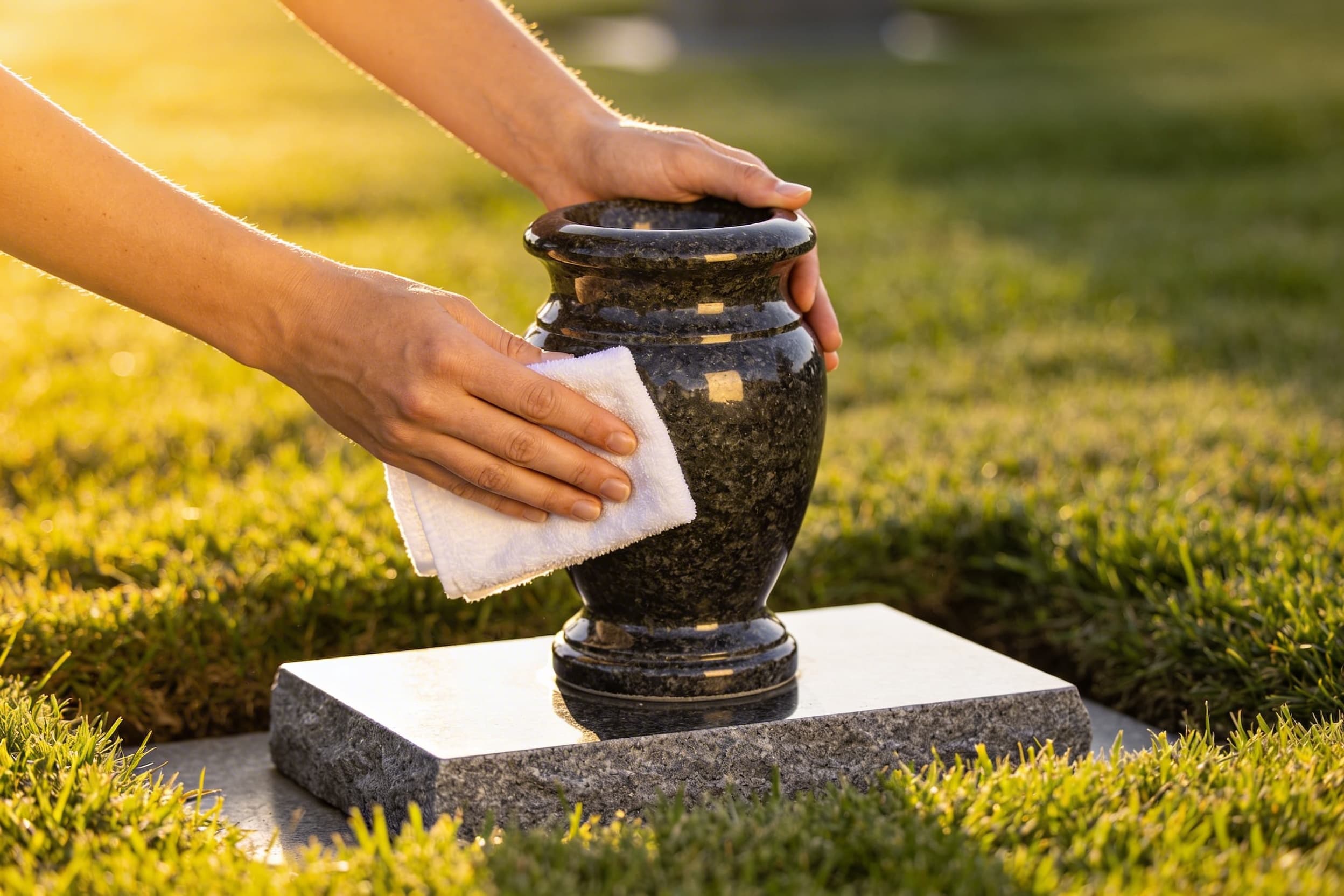
Cleaning: Rinse granite and bronze vases with clean water and a soft cloth a few times per year. Mild dish soap works for stubborn residue. Avoid abrasive cleaners, bleach, or acid-based solutions on any stone or metal surface. Bronze develops a natural greenish patina that some families appreciate; if you prefer a polished look, a bronze-specific cleaner and soft rag will restore the original sheen.
Drain holes: Make sure the drain hole stays clear. A clogged drain allows standing water to freeze in winter, which can crack the vase or weaken the adhesive bond on a headstone-mounted installation. A pipe cleaner or small brush run through the hole once a year prevents blockages.
Seasonal checks: Inspect the vase after winter thaw and after any severe storm. Look for loosening on headstone-mounted vases, shifting in ground-level installations, and cracks in stone or ceramic. Catching a small problem early prevents a costly replacement later. For a full year-round schedule, see our guide to caring for cemetery accessories.
Flower rotation: Remove wilted flowers promptly — decaying plant material stains the interior of light-colored vases and attracts insects. If you alternate between fresh and artificial arrangements, dry the vase thoroughly before switching to prevent mold.
Complementary Gravesite Enhancements
A cemetery vase is often one piece of a larger gravesite design. Families who want a finished, cohesive look frequently pair vases with other cemetery accessories such as solar-powered grave lights, engraved plaques, or small statuary.
Adding borders to a grave plot with stone or metal edging creates a defined frame that makes vases and other decorations appear more intentional. If you plan to add multiple elements over time, sketch a rough layout before installing anything permanently — repositioning an epoxied vase is difficult and can damage the headstone.
Frequently Asked Questions
Can I install a cemetery vase myself?
Temporary vases — plastic cone, spike-mounted, or freestanding stone — can be placed without tools or cemetery approval in most cases. Permanent headstone-mounted or in-ground vases usually require epoxy adhesion or core drilling, and many cemeteries ask that a licensed installer handle the work. Call the cemetery office first to confirm what is allowed.
What is the best material for a cemetery vase that will last decades?
Granite and bronze are the two most durable choices. Granite resists weathering, staining, and UV damage with virtually no maintenance. Bronze is equally long-lasting and develops a distinctive patina, though it may require periodic polishing. Both materials routinely last 50 years or more in outdoor conditions.
How do I prevent cemetery vase theft?
Choose a vase with a twist-lock or threaded mechanism that secures the liner to the outer casing. Epoxied headstone-mounted vases and in-ground flush vases are far less susceptible to theft than freestanding vases sitting loose on a headstone base. Heavy granite vases also discourage opportunistic removal simply because of their weight.
Are artificial flowers acceptable in cemetery vases?
Most cemeteries allow artificial flowers, and many families prefer them because they require less frequent replacement. Check with the cemetery office — a few maintained grounds restrict artificial arrangements to keep a uniform appearance. UV-resistant silk flowers hold their color longest.
How often should I clean a cemetery vase?
A quick rinse with clean water every two to three months keeps most vases in good condition. A more thorough cleaning with mild dish soap twice a year — typically in spring and fall — handles buildup from pollen, sap, and minerals in the water. Bronze vases benefit from an annual polish if you prefer a bright finish over a natural patina.
Choosing the Right Vase for Your Family
Selecting a cemetery vase is a small decision in the larger picture of memorializing someone you love, but it is one that shapes every future visit. A durable, well-matched vase gives your family a ready place to leave flowers, mark special dates, and spend a quiet moment in remembrance — without worrying about weather damage or cemetery rule violations. Start with the material that suits your climate and budget, confirm the mounting style allowed at your cemetery, and measure the headstone or coring before ordering. The right vase quietly does its job season after season, keeping the gravesite welcoming and cared for.
Explore our full collection of cemetery vases and grave marker vases to find the style and material that fits your loved one's memorial.