🏬Supersize Online Funeral Retailer🪦1000's of Headstones⚱️Over 10,000 Cremation Urns⚰️Caskets Overnight Delivery🛒Funeral & Memorial Superstore🚚FREE Shipping on ALL Orders👨👩👧👦Helping Families for over 20 Years💰Lowest Price Guarantee🏬Supersize Online Funeral Retailer🪦1000's of Headstones⚱️Over 10,000 Cremation Urns⚰️Caskets Overnight Delivery🛒Funeral & Memorial Superstore🚚FREE Shipping on ALL Orders👨👩👧👦Helping Families for over 20 Years💰Lowest Price Guarantee
🏬Supersize Online Funeral Retailer🪦1000's of Headstones⚱️Over 10,000 Cremation Urns⚰️Caskets Overnight Delivery🛒Funeral & Memorial Superstore🚚FREE Shipping on ALL Orders👨👩👧👦Helping Families for over 20 Years💰Lowest Price Guarantee🏬Supersize Online Funeral Retailer🪦1000's of Headstones⚱️Over 10,000 Cremation Urns⚰️Caskets Overnight Delivery🛒Funeral & Memorial Superstore🚚FREE Shipping on ALL Orders👨👩👧👦Helping Families for over 20 Years💰Lowest Price Guarantee
Cemeteries rely on general groundskeeping crews for mowing, road upkeep, and shared-area maintenance, but most do not tend to individual grave plots. Grass trimming around a headstone, cleaning biological growth from the stone surface, swapping seasonal flowers, and checking bronze accessories for tarnish all fall to the family. Without a plan, these tasks pile up, and a once-dignified site can look neglected within a single season.
This cemetery maintenance guide lays out a month-by-month calendar so you always know what your loved one's gravesite needs and when. If you are also weighing plot selection, burial types, or other long-range decisions, our guide to buying a cemetery plot walks through every step.
Before you plan your own care schedule, it helps to understand the line between the cemetery's responsibilities and yours.
Most cemeteries handle mowing shared lawn areas, trimming trees along roadways, clearing storm debris, and keeping communal walkways and benches in order. Some cemeteries include a basic level of individual-plot upkeep through what is known as perpetual care, a one-time fee collected at the time of plot purchase. Perpetual care funds typically cover only grass mowing over the grave and periodic leveling of settled turf. They rarely extend to headstone cleaning, floral plantings, border repair, or accessory replacement.
Everything beyond basic grass coverage is your responsibility. That includes cleaning the headstone or monument, maintaining any gravestone decorations you have placed, caring for bronze or brass grave marker components, tending planted flowers or shrubs, and ensuring that the overall plot stays level, weeded, and free of debris.
Always check your specific cemetery's regulations before doing any work. Some facilities restrict the types of cleaning solutions, plantings, and decorations allowed. Knowing these rules up front prevents wasted effort and avoids having items removed by staff.
How Often Should You Visit?
A dedicated visit roughly once per season — four times per year — is enough for most families. If the gravesite has live plantings, you may need a few additional stops during the growing season for watering and deadheading. Families who live far from the cemetery may prefer to consolidate their care into two or three focused visits per year, spacing them to cover the most critical transition points: early spring cleanup, midsummer maintenance, and a late-fall winterizing session.
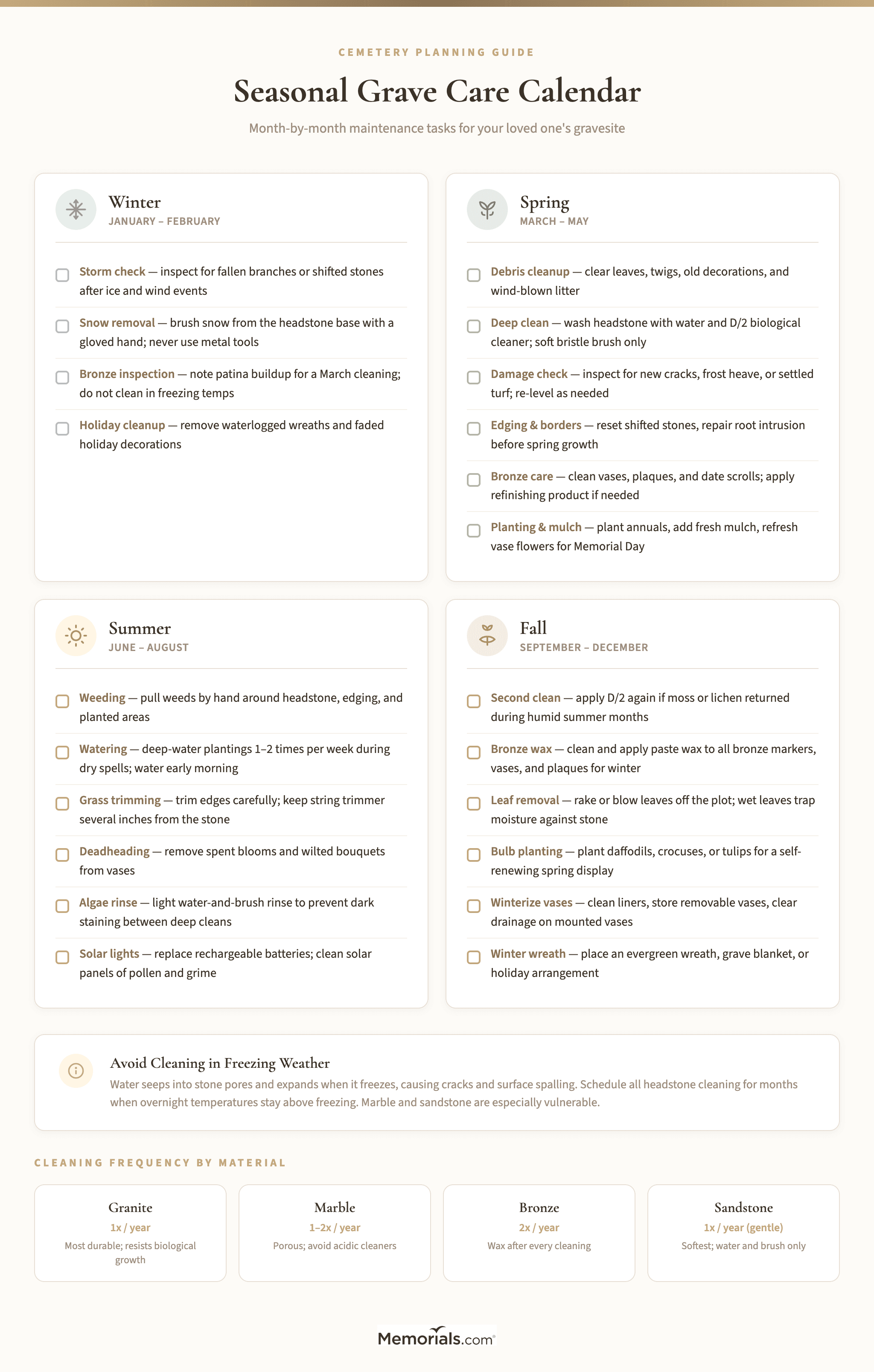
The calendar below breaks the year into monthly tasks. Not every task applies to every gravesite. Use the calendar as a menu: pick the items that match your headstone material, your climate zone, and the accessories you have in place.
Month-by-Month Grave Care Calendar
January and February: Winter Monitoring
Winter is typically a rest period for active gravesite work. Cleaning headstones during freezing temperatures can cause damage because water seeps into the stone's pores and expands as it freezes, a process called freeze-thaw weathering. Marble and sandstone are especially vulnerable.
Tasks:
Walk the site after heavy storms or ice events to check for fallen branches, displaced decorations, or shifted stones.
Remove accumulated snow from the headstone base if it is packing against the stone face. Gently brush it away with a gloved hand — never use a shovel or metal tool against the stone.
If you placed a winter wreath or holiday blanket in December, remove it once it becomes waterlogged or worn (usually by late January).
Inspect bronze elements for green patina buildup. Do not attempt to clean bronze in freezing weather; note the condition and plan for a March cleaning.
March: Spring Startup
March marks the beginning of the active care season in most climates. As frost subsides, this is the month to assess winter damage and set the stage for the year.
Tasks:
Clear all remaining winter debris: fallen leaves, twigs, old holiday decorations, and any wind-blown litter.
Examine the headstone surface for new cracks, chips, or areas where lichen or moss took hold during the wet months. For a full walkthrough of safe cleaning techniques for granite, marble, bronze, and sandstone, see our guide on how to clean a headstone.
Check the ground around the grave for settling or frost heave. Sunken turf can be re-leveled by adding topsoil and tamping it lightly.
If you have grave edging — stone, brick, or metal borders — inspect for shifting, cracking, or root intrusion. Maintaining grave borders after winter is easier when you catch problems before spring growth accelerates.
Clean bronze vases, plaques, and date scrolls with warm water and a soft cloth. For heavy oxidation on a bronze marker, a dedicated bronze refinishing kit can restore the original patina without damaging the casting.
April: Headstone Deep Clean
April is ideal for the year's first thorough headstone cleaning. Daytime temperatures are warm enough to work with water safely, and biological growth has not yet reached its summer peak.
Tasks:
Wet the entire headstone with clean water before applying any cleaner. Pre-wetting prevents the stone from absorbing the cleaning solution too quickly.
Use a non-ionic, pH-neutral biological cleaner such as D/2 Biological Solution. Apply it with a soft natural-bristle brush using gentle circular motions. Avoid wire brushes, pressure washers, bleach, and household cleaners — all of them can etch, stain, or weaken the stone surface.
Rinse thoroughly with clean water. For particularly stubborn lichen, apply D/2 and allow it to remain on the surface without rinsing. The biological growth will die and shed naturally over the following weeks.
Clean engraved lettering with a wooden craft stick or soft-bristle toothbrush. Metal picks can scratch the finish inside carved letters.
If the headstone has chips or hairline cracks, note them for professional assessment. Minor surface blemishes are cosmetic, but structural cracks or a stone that wobbles on its base may require a monument restoration specialist.
May: Spring Planting and Decoration Refresh
May is the primary planting window and a natural time to refresh the overall look of the gravesite. Memorial Day often brings families together at cemeteries, making this month a practical deadline for getting the plot into its best condition.
Tasks:
Plant seasonal annuals around the headstone if cemetery rules allow. Low-maintenance varieties like begonias, impatiens, and marigolds offer color through summer with minimal watering. Native ground covers such as periwinkle (vinca) or creeping phlox provide long-term coverage without replanting each year.
Replace worn or faded artificial flowers in cemetery vases with fresh arrangements. When selecting durable cemetery vases, look for materials that withstand sun exposure and wind without tipping.
Add fresh mulch to planted areas. A thin layer of natural mulch helps retain moisture, suppress weeds, and create a polished look. Avoid dyed mulches that can stain light-colored stone.
Check any solar lights for battery condition and clean the solar panels with a damp cloth. Panels covered in pollen or grime produce noticeably less light. For a deeper look at light types and placement, see our guide to servicing solar grave lights.
Place Memorial Day flags, flowers, or other patriotic decorations if appropriate.
June: Early Summer Check
The combination of heat, humidity, and rainfall in June can trigger rapid weed growth and accelerate algae on stone surfaces.
Tasks:
Weed around the headstone base, edging, and planted areas. Pull weeds by hand rather than using chemical herbicides near the stone.
Water planted flowers if rainfall has been sparse. Early morning watering reduces evaporation and discourages fungal growth.
Trim grass along the headstone edges with hand shears or a string trimmer held several inches away from the stone surface. Trimmer line hitting stone repeatedly can chip and abrade the finish over time.
Inspect any metal accessories — vase liners, flag holders, plaque fasteners — for rust. Light rust can be addressed with a fine steel wool pad and a protective wax coating.
July and August: Peak Summer Maintenance
Midsummer is the most demanding period for a planted gravesite. Heat stress, insects, and rapid grass growth all require attention.
Tasks:
Water plantings deeply once or twice a week during dry spells. Shallow, frequent watering encourages weak root systems.
Deadhead spent blooms to encourage continued flowering.
Remove any wilted or dead bouquets from vases. Decomposing plant material in a vase can stain the interior and attract insects.
Re-check the headstone for algae or dark biological staining. A light rinse with clean water and a soft brush keeps growth manageable between deep cleans.
If the gravesite includes a bench, gently clean the seating surface and check for loosened anchor bolts.
Replace batteries in solar-powered cemetery lights for graves if output has dimmed. Most solar grave lights use standard rechargeable AA or AAA batteries.
September: Transitional Cleanup
September bridges summer and fall. The growing season slows, giving you a chance to prepare the site before autumn weather arrives.
Tasks:
Remove spent summer annuals and any withered Memorial Day decorations that were left in place.
Apply a second round of D/2 or similar biological cleaner if moss or lichen reappeared during the humid summer months.
Inspect the headstone for any settling that occurred during the summer. Ground that was soft from spring rain can compact under summer heat, leaving the stone slightly tilted. Contact the cemetery or a monument professional if the stone is visibly off-level.
Check bronze markers and plaques again. Summer humidity accelerates oxidation, and a fall cleaning preserves the marker through winter.
Consider refreshing grave decorations with autumn-themed arrangements — dried flowers, small seasonal wreaths, or harvest-colored artificial bouquets work well and hold up in cooler temperatures.
October: Fall Preparation
Falling leaves and dropping temperatures signal the shift to winterizing tasks.
Tasks:
Rake or blow leaves from the grave plot and surrounding area. Wet leaves left on a headstone surface trap moisture against the stone and promote biological growth.
Plant fall bulbs (daffodils, crocuses, tulips) if cemetery guidelines permit. These will emerge the following spring with no additional effort.
Apply a protective wax or sealant to bronze markers and vases. A thin coat of paste wax repels moisture and slows winter tarnishing.
Tighten any loose edging stones or border bricks before the ground freezes.
Remove solar lights if they are not rated for freezing temperatures, or move them to a sheltered position at the headstone base.
November: Late Fall Wrap-Up
November is the final window for outdoor work in most climates. Focus on protecting the site for winter.
Tasks:
Complete a final mowing and edging pass if grass is still growing.
Remove any remaining artificial flowers, faded flags, or summer accessories that will deteriorate over winter.
Clean out vase liners and store removable vases indoors to prevent frost cracking.
If you use grave marker vases that are permanently mounted, ensure the drainage hole at the bottom is clear so standing water cannot freeze inside.
Place a Veterans Day flag or tribute if the deceased served in the military.
Apply a final coat of wax to any exposed bronze or brass surfaces.
December: Winter Decoration
December is typically about honoring rather than maintaining. Most hands-on care pauses until spring.
Tasks:
Place a winter wreath, grave blanket (a flat evergreen arrangement that covers the grave), or holiday flowers.
If the cemetery allows candles or luminaries, use battery-powered LED versions to avoid fire risk and wax staining on stone.
Take a photograph of the decorated gravesite to share with family members who cannot visit in person.
Confirm that no loose items are at risk of blowing away in winter storms. Secure lightweight decorations with ground stakes or weighted bases.
Headstone Material Quick Reference
Different stone types have different vulnerabilities. Knowing your headstone's material helps you prioritize the right tasks.
Granite is the most durable common headstone material. It resists weathering, scratching, and biological growth better than softer stones. Cleaning once or twice a year with water and a soft brush is usually sufficient. Polished granite shows water spots and fingerprints more readily but is not damaged by them.
Marble is porous and sensitive to acidic cleaners. Never use vinegar, lemon juice, or household bathroom products on marble. Stick to pH-neutral biological cleaners and rinse thoroughly. Marble is also susceptible to freeze-thaw damage, so avoid cleaning it during months when overnight temperatures drop below freezing.
Bronze requires regular attention to oxidation. A mild soap and warm water wash followed by a light wax coating is the standard approach. For markers with heavy green patina, a bronze refinishing product restores the original dark chocolate finish. Always rinse and dry bronze completely before applying wax.
Sandstone and limestone are the softest and most vulnerable materials. They absorb moisture quickly and erode faster than granite or marble. Limit cleaning to water and the gentlest possible brush pressure. Avoid scrubbing, and never use any chemical cleaner without consulting a conservator first.
When to Hire a Professional
Some maintenance tasks are beyond what most families should attempt on their own. Consider professional help for any of the following:
A headstone that has shifted, tilted, or separated from its base. Resetting a monument involves heavy lifting and precise leveling. Improperly reset stones can crack or topple. Significant cracks, breaks, or structural deterioration in the stone. Conservation-grade epoxies and fills require specialized materials and training. Historic markers made of fragile materials like slate, brownstone, or early marble. These need a conservator who understands period-appropriate repair methods. Large-scale cleaning of monuments with deeply embedded biological growth. Professionals have access to conservation-grade products and techniques that are safe for delicate surfaces.
If you are unsure whether your headstone needs professional attention, your cemetery's office can typically recommend local monument restoration services.
Frequently Asked Questions
How often should I clean a headstone?
Most headstones benefit from one deep cleaning per year, ideally in April or May when temperatures are mild and the stone has had time to dry from winter moisture. A second lighter cleaning in September addresses biological growth that accumulated over the humid summer months. Granite may need less frequent attention, while marble and sandstone may benefit from more careful monitoring.
Is it safe to use bleach or a pressure washer on a headstone?
Bleach and pressure washers are both harmful to headstones. Bleach can discolor stone, kill beneficial biological crusts that actually protect the surface, and leave chemical residues that accelerate deterioration. Pressure washers force water into micro-fissures, weakening the stone from within. Stick to clean water, a pH-neutral biological cleaner, and a soft natural-bristle brush.
What should I do if the ground over the grave has sunk?
Settling is common, especially in the first few years after burial. Small depressions can be filled with topsoil, tamped lightly, and reseeded with grass. If the settling is severe or if it causes the headstone to tilt, contact the cemetery office. Many cemeteries will re-level the grave as part of their grounds management, sometimes at no additional charge.
Can I plant flowers directly at the gravesite?
Cemetery rules vary widely. Some allow in-ground plantings within the plot boundaries; others restrict them entirely or limit plant heights and species. Always confirm with your cemetery before planting. If live plantings are not permitted, high-quality artificial arrangements placed in approved vases offer a lasting alternative.
Does perpetual care cover headstone cleaning?
In most cemeteries, perpetual care covers only basic lawn maintenance over the grave. It does not extend to headstone cleaning, decoration replacement, or accessory maintenance. Families are responsible for all monument-specific care unless they separately contract with a professional grave care service.
Your Gravesite, Your Legacy
A maintained gravesite reflects the care your family continues to extend to the person resting there. The tasks are simple, the tools are basic, and a modest time investment — four to six visits spread across the year — keeps the plot dignified and welcoming for every visitor. Start with the season you are in now, work through the calendar, and adjust the tasks to fit your specific headstone, your climate, and your cemetery's rules.
If you are still in the early stages of choosing a plot, selecting a headstone, or planning how you will use the space, building a maintenance mindset early ensures the site you create today stays beautiful for decades.