🏬Supersize Online Funeral Retailer🪦1000's of Headstones⚱️Over 10,000 Cremation Urns⚰️Caskets Overnight Delivery🛒Funeral & Memorial Superstore🚚FREE Shipping on ALL Orders👨👩👧👦Helping Families for over 20 Years💰Lowest Price Guarantee🏬Supersize Online Funeral Retailer🪦1000's of Headstones⚱️Over 10,000 Cremation Urns⚰️Caskets Overnight Delivery🛒Funeral & Memorial Superstore🚚FREE Shipping on ALL Orders👨👩👧👦Helping Families for over 20 Years💰Lowest Price Guarantee
🏬Supersize Online Funeral Retailer🪦1000's of Headstones⚱️Over 10,000 Cremation Urns⚰️Caskets Overnight Delivery🛒Funeral & Memorial Superstore🚚FREE Shipping on ALL Orders👨👩👧👦Helping Families for over 20 Years💰Lowest Price Guarantee🏬Supersize Online Funeral Retailer🪦1000's of Headstones⚱️Over 10,000 Cremation Urns⚰️Caskets Overnight Delivery🛒Funeral & Memorial Superstore🚚FREE Shipping on ALL Orders👨👩👧👦Helping Families for over 20 Years💰Lowest Price Guarantee
Choosing between a columbarium niche and a traditional burial plot is one of the most personal decisions families face when navigating cemetery decisions. Both options provide a permanent, dignified resting place, but they differ in cost, space, maintenance, and the overall experience of visiting a loved one. Understanding these differences helps you select the option that best honors your family's wishes, budget, and long-term preferences.
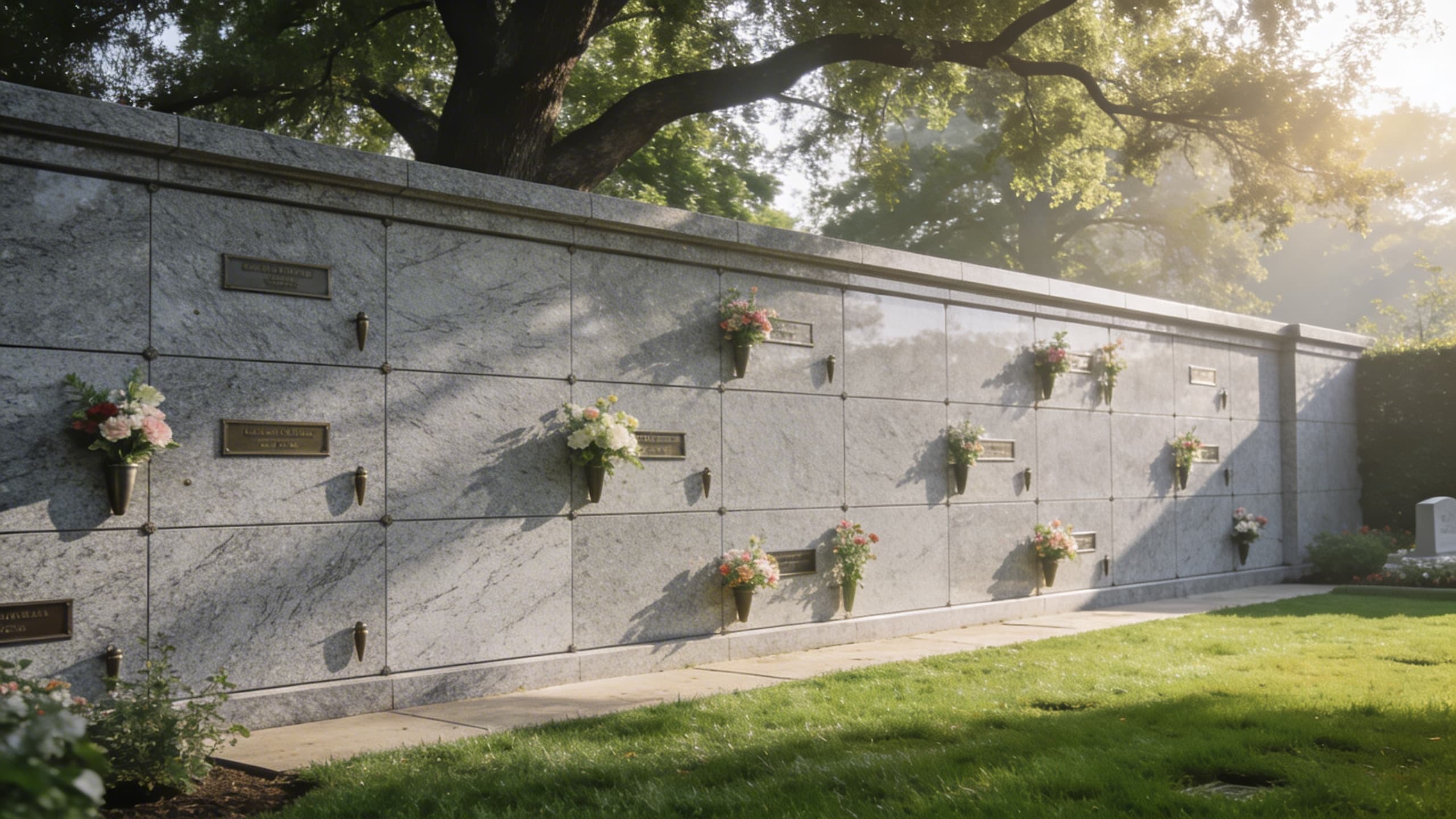
A columbarium is a structure built to hold cremated remains in individual compartments called niches. These structures can be freestanding walls in a cemetery garden, interior rooms within a mausoleum, or even sections within a church. Each is designed to hold one or two standard and is typically sealed with a marble, granite, or bronze front panel that can be engraved with names, dates, and personal inscriptions. For a deeper look at how these structures are built and organized, our guide explains .
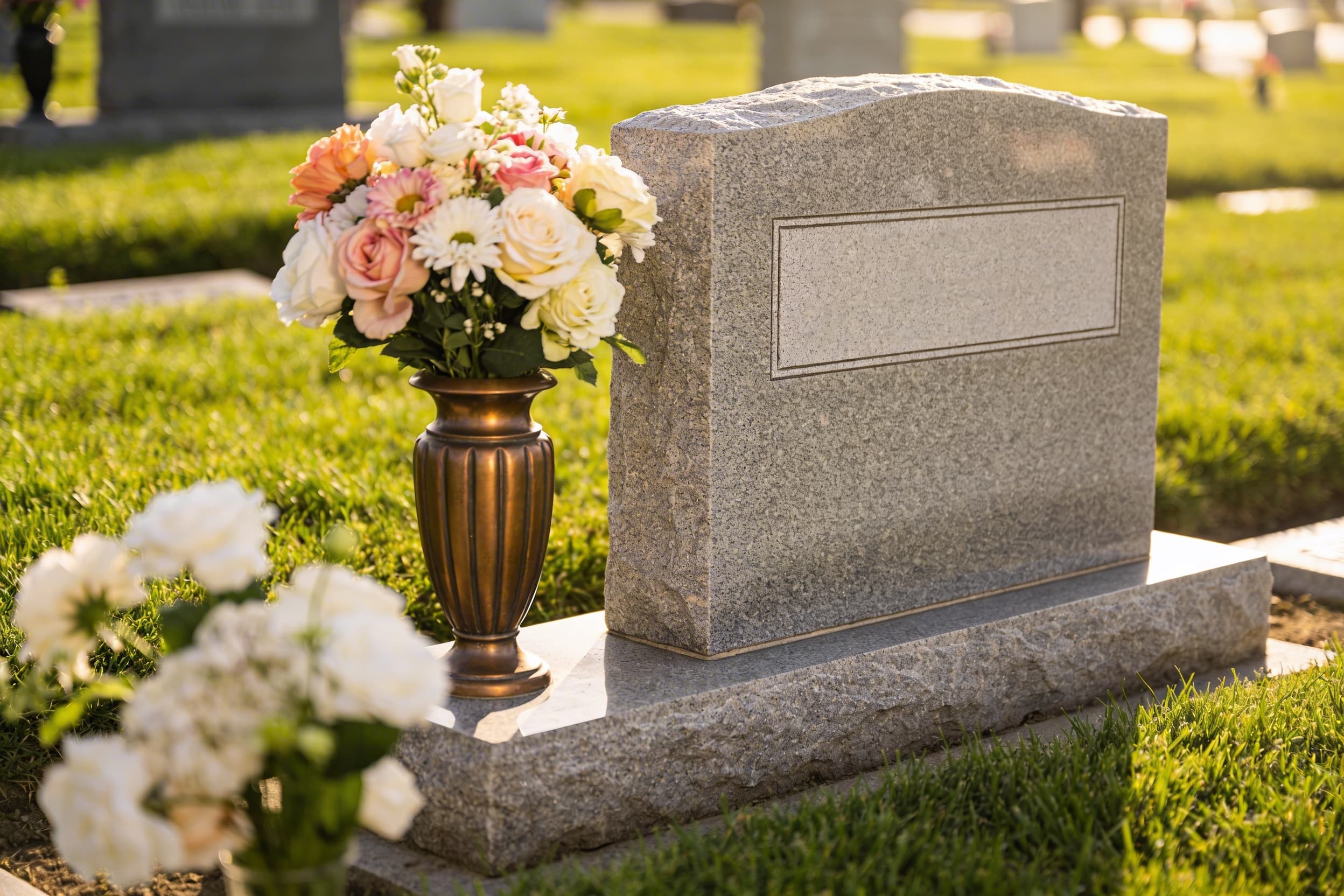
A burial plot, by contrast, is a designated section of cemetery ground where a casket or urn is interred below the surface. Plots are marked with headstones or flat grave markers, and many cemeteries require an outer container such as a vault to prevent the ground from settling over time. Each method carries distinct trade-offs worth examining side by side.
Cost Comparison
Cost is often the deciding factor for families weighing a columbarium niche against a burial plot. Here is how the major expenses typically break down.
Columbarium Niche Costs
A standard single niche ranges from roughly $750 to $2,800 when purchased before need. Indoor niches within a climate-controlled mausoleum tend to sit at the higher end, while outdoor wall niches are generally more affordable. Most niche purchases include the interment space, endowment care, one inurnment service, and a basic engraved front panel. Additional costs may include a companion niche upgrade, decorative porcelain photographs, or a glass-front panel that allows personal mementos to be displayed.
Burial Plot Costs
Traditional burial plots vary widely by region, cemetery type, and location within the grounds. A single plot may range from $1,000 in a rural public cemetery to $10,000 or more in a metropolitan area. Beyond the plot itself, families should budget for a casket, a vault or outer burial container, the opening and closing fee (typically $800 to $1,500), a headstone or marker, and ongoing perpetual care assessments. For a full breakdown of these expenses, see what cemetery plots cost.
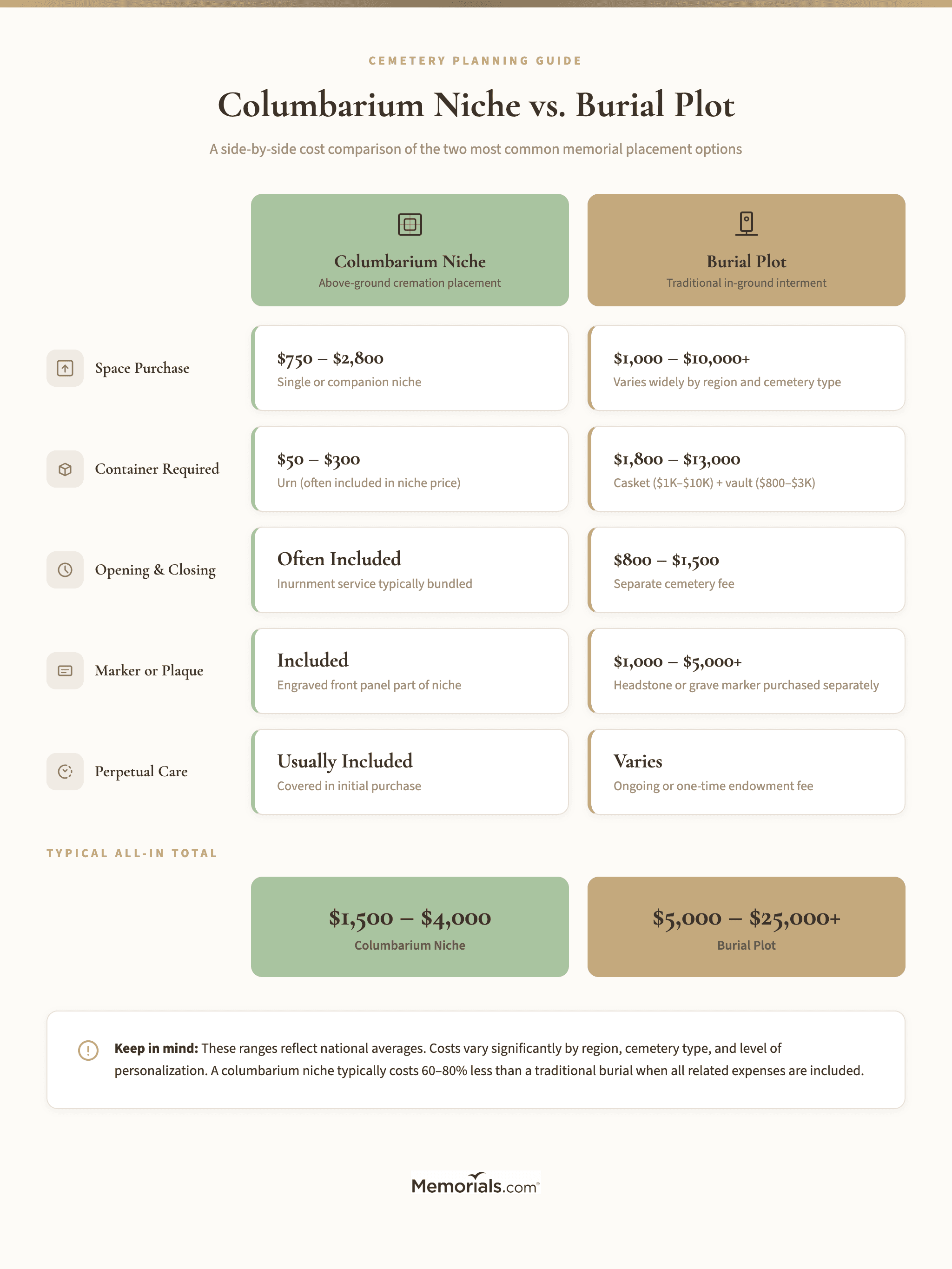
At a Glance
Expense
Columbarium Niche
Burial Plot
Space purchase
$750–$2,800
$1,000–$10,000+
Container required
Urn (included or $50–$300)
Casket ($1,000–$10,000) + vault ($800–$3,000)
Opening & closing
Often included
$800–$1,500
Marker or plaque
Often included in niche panel
Headstone $1,000–$5,000+
Perpetual care
Usually included
Ongoing or one-time fee
Typical all-in total
$1,500–$4,000
$5,000–$25,000+
Families who have already chosen cremation and are comparing placement options will also find helpful context in our cost of cremation vs. burial guide, which examines total service costs beyond just the resting place.
Space and Land Use
Space efficiency is one of the most practical differences between the two options. A single burial plot typically occupies about 32 square feet of cemetery ground, and that space serves one casket interment. Some plots accommodate a second burial at a deeper level (called double-depth), but even then, the footprint remains substantial.
A columbarium niche requires only about one to two square feet of wall space per interment. Because niches stack vertically in rows and columns, a single freestanding columbarium wall can hold dozens or even hundreds of cremated remains in a fraction of the ground area needed for the same number of burials. This compact footprint is one reason columbariums have become increasingly popular in urban cemeteries where available land is limited and plots are expensive.
For families who prefer cremation but still want an in-ground option, burying an urn in a cemetery plot is another possibility. An urn vault protects the urn below the surface and satisfies cemetery requirements. This approach splits the difference: it uses less space than a casket burial while still providing a traditional gravesite. Our guide covers urn placement options explained for families exploring this middle path.
Maintenance and Long-Term Care
Burial plots require ongoing attention. Grass needs mowing, headstones need periodic cleaning, and the ground may settle unevenly over time, sometimes requiring the marker to be reset. In regions with harsh winters, freeze-thaw cycles can shift stones and crack foundations. Families who live far from the cemetery may find it difficult to maintain the site themselves and may rely on the cemetery's perpetual care fund, which covers basic groundskeeping but not repairs to personal markers or decorations.
Columbarium niches are largely maintenance-free for families. The structure itself is managed by the cemetery or memorial facility, and because the remains are stored above ground in a sealed compartment, there is no settling, no grass to cut, and no weather-related shifting. The engraved front panel is protected from ground-level moisture and typically requires nothing more than an occasional wipe. Families who want minimal upkeep and a consistently presentable memorial often find this appealing.
Visitation Experience
The way families interact with each option differs more than many people expect. A burial plot offers a traditional graveside experience. Visitors can stand at the headstone, leave flowers on the ground, sit on a nearby bench, and spend quiet time in an open-air setting. Many cemeteries allow seasonal decorations, small plantings, and vase arrangements that personalize the gravesite over time.
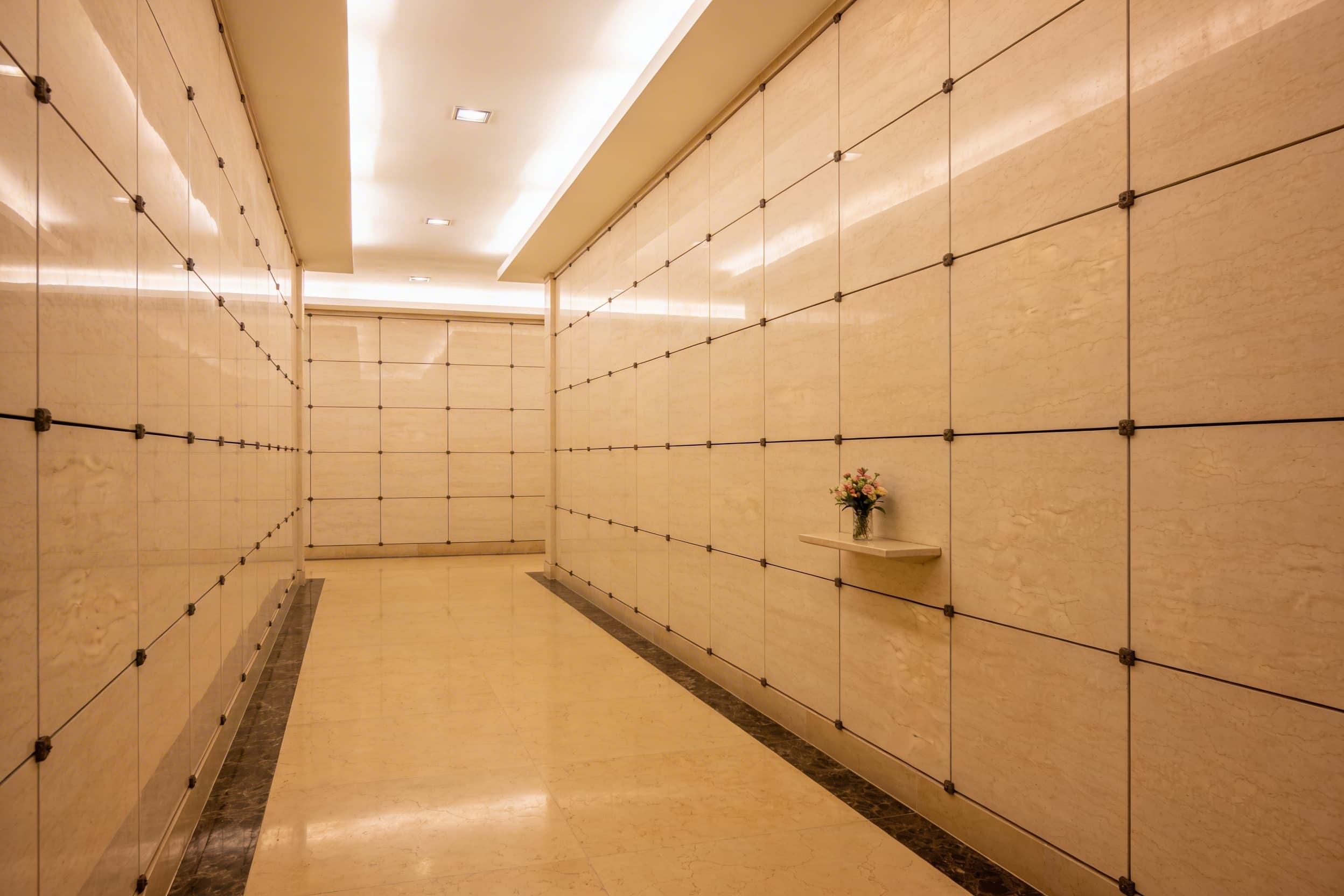
Visiting a columbarium niche is a different but equally meaningful experience. Indoor niches within a mausoleum provide a climate-controlled space that is accessible in any weather, which can be especially important for elderly family members or those with mobility challenges. Outdoor columbarium walls are set in landscaped gardens and offer a peaceful, park-like atmosphere. The niche itself is at standing height, making it easy to read inscriptions and touch the front panel. Glass-front niches allow families to see the urn and any personal mementos placed inside, creating an intimate connection.
Decoration policies tend to be more restrictive at a columbarium than at a burial plot. Most facilities limit what can be placed near a niche to preserve the structure's appearance and accessibility, so families accustomed to graveside flower displays may find the options more limited.
Religious and Cultural Considerations
Religious tradition plays a significant role in this decision for many families. The Catholic Church accepts cremation provided that the cremated remains are placed in a sacred and permanent location rather than scattered or kept at home. A columbarium niche within a Catholic cemetery satisfies this requirement and is increasingly offered alongside traditional burial. Many Catholic columbarium walls are blessed when they are first opened, marking them as sacred space.
Most Protestant denominations leave the choice between cremation and burial to individual preference, so both columbariums and burial plots are equally accepted. Judaism traditionally favors in-ground burial, and many Jewish cemeteries do not offer columbarium niches. Islam similarly emphasizes prompt ground burial and does not generally permit cremation. Hinduism and Buddhism both have strong cremation traditions, making columbarium niches a natural fit.
Families navigating these considerations should speak with their faith leader and the cemetery administration to confirm what is permitted. Some cemeteries have dedicated sections for specific faiths, and policies about niche placement, plaque inscriptions, and ceremonial requirements can vary.
Environmental Impact
Sustainability is becoming a more prominent factor in end-of-life planning. Traditional burial involves embalming chemicals, a casket (often metal or hardwood), a concrete vault, and significant land use. All of these carry environmental costs.
Cremation followed by columbarium placement reduces land consumption dramatically and eliminates the need for a casket and vault. The cremation process itself does produce carbon emissions, but the overall environmental footprint is generally smaller than a full traditional burial. For families prioritizing eco-friendly memorialization, a columbarium niche aligns with those values while still providing a permanent, visitable memorial.
Which Option Is Right for Your Family?
Neither option is universally better. The right choice depends on your family's priorities.
A columbarium niche may be the better fit if:
Your family has already chosen cremation and wants a permanent, low-maintenance memorial. You value climate-controlled or all-weather visitation access. Budget is a primary concern and you want to minimize total cost. You prefer a compact, space-efficient option. Your faith tradition embraces cremation and niche placement.
A burial plot may be the better fit if:
Traditional in-ground interment holds deep personal or religious meaning for your family. You want the flexibility to decorate the gravesite with flowers, plantings, and seasonal displays. You prefer a graveside visitation experience in an open-air setting. Your faith requires ground burial.
Some families choose both approaches within the same cemetery. One family member may be interred in a burial plot while another's cremated remains are placed in a nearby columbarium niche. Many modern cemeteries accommodate mixed preferences within the same section or memorial garden.
If the burial path requires a protective container, understanding do you need a burial vault and what types are available can help you plan for that additional cost and requirement. On the cremation side, families placing burial vaults for casket interments sometimes choose a columbarium niche for a second family member who prefers cremation, keeping everyone in the same cemetery.
Frequently Asked Questions
Can two urns be placed in the same columbarium niche?
Yes. Companion niches are designed to hold two urns side by side or stacked. The front panel is typically engraved with both names and dates, and many facilities allow the second engraving to be added later when needed. Companion niches cost more than single niches but are significantly less expensive than purchasing two separate spaces.
How long does a columbarium niche last?
Columbarium structures are built from durable materials like granite, marble, or reinforced concrete and are designed to last indefinitely. Most niche concessions include perpetual care, meaning the facility maintains the structure for the life of the cemetery. Some facilities offer fixed-term contracts (25 to 99 years) with renewal options.
Can you move remains from a burial plot to a columbarium?
It depends on the situation. If the original burial was a casket interment, the remains would need to be exhumed, which requires permits and significant expense. If the remains were cremated and buried in an urn vault, relocating the urn to a columbarium niche is simpler and less costly. In either case, contact the cemetery administration and check local regulations before proceeding.
Is a columbarium niche considered a grave?
In most legal and cultural senses, yes. A columbarium niche serves the same purpose as a grave: it provides a permanent, dedicated resting place for a deceased person's remains. Niches are treated as interment sites by cemeteries, and many states regulate them under the same laws that govern burial plots.
Do I still need a headstone with a columbarium niche?
No. The niche front panel serves as the memorial marker. It is engraved with the name, dates, and any additional inscription the family chooses. Some families add a decorative porcelain photograph or a small floral vase to personalize the niche further, but a separate headstone is not required.