🏬Supersize Online Funeral Retailer🪦1000's of Headstones⚱️Over 10,000 Cremation Urns⚰️Caskets Overnight Delivery🛒Funeral & Memorial Superstore🚚FREE Shipping on ALL Orders👨👩👧👦Helping Families for over 20 Years💰Lowest Price Guarantee🏬Supersize Online Funeral Retailer🪦1000's of Headstones⚱️Over 10,000 Cremation Urns⚰️Caskets Overnight Delivery🛒Funeral & Memorial Superstore🚚FREE Shipping on ALL Orders👨👩👧👦Helping Families for over 20 Years💰Lowest Price Guarantee
🏬Supersize Online Funeral Retailer🪦1000's of Headstones⚱️Over 10,000 Cremation Urns⚰️Caskets Overnight Delivery🛒Funeral & Memorial Superstore🚚FREE Shipping on ALL Orders👨👩👧👦Helping Families for over 20 Years💰Lowest Price Guarantee🏬Supersize Online Funeral Retailer🪦1000's of Headstones⚱️Over 10,000 Cremation Urns⚰️Caskets Overnight Delivery🛒Funeral & Memorial Superstore🚚FREE Shipping on ALL Orders👨👩👧👦Helping Families for over 20 Years💰Lowest Price Guarantee
Choosing a permanent resting place for cremated remains is one of the most meaningful decisions a family can make — and a cemetery offers more options than many people realize. Whether your loved one wanted to be close to family, resting above ground, or returned to the earth, there is a placement method that honors those wishes while giving future generations a place to visit and remember.
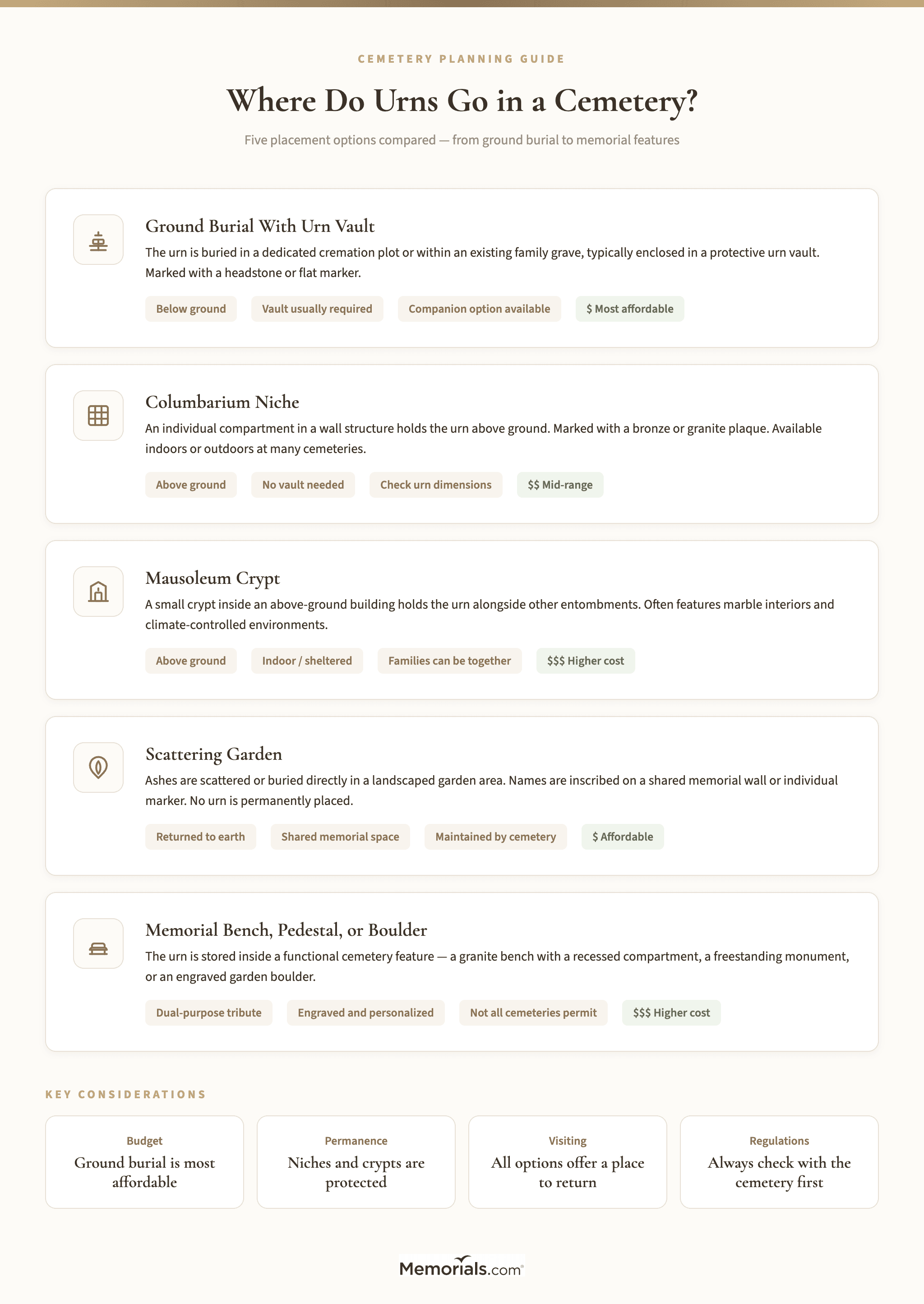
This article walks through the five most common ways cremation urns are placed in a cemetery, what each option involves, and how to decide which one fits your family's needs. For a broader look at buying plots, understanding costs, and navigating the entire cemetery process, see our complete guide to cemetery planning.
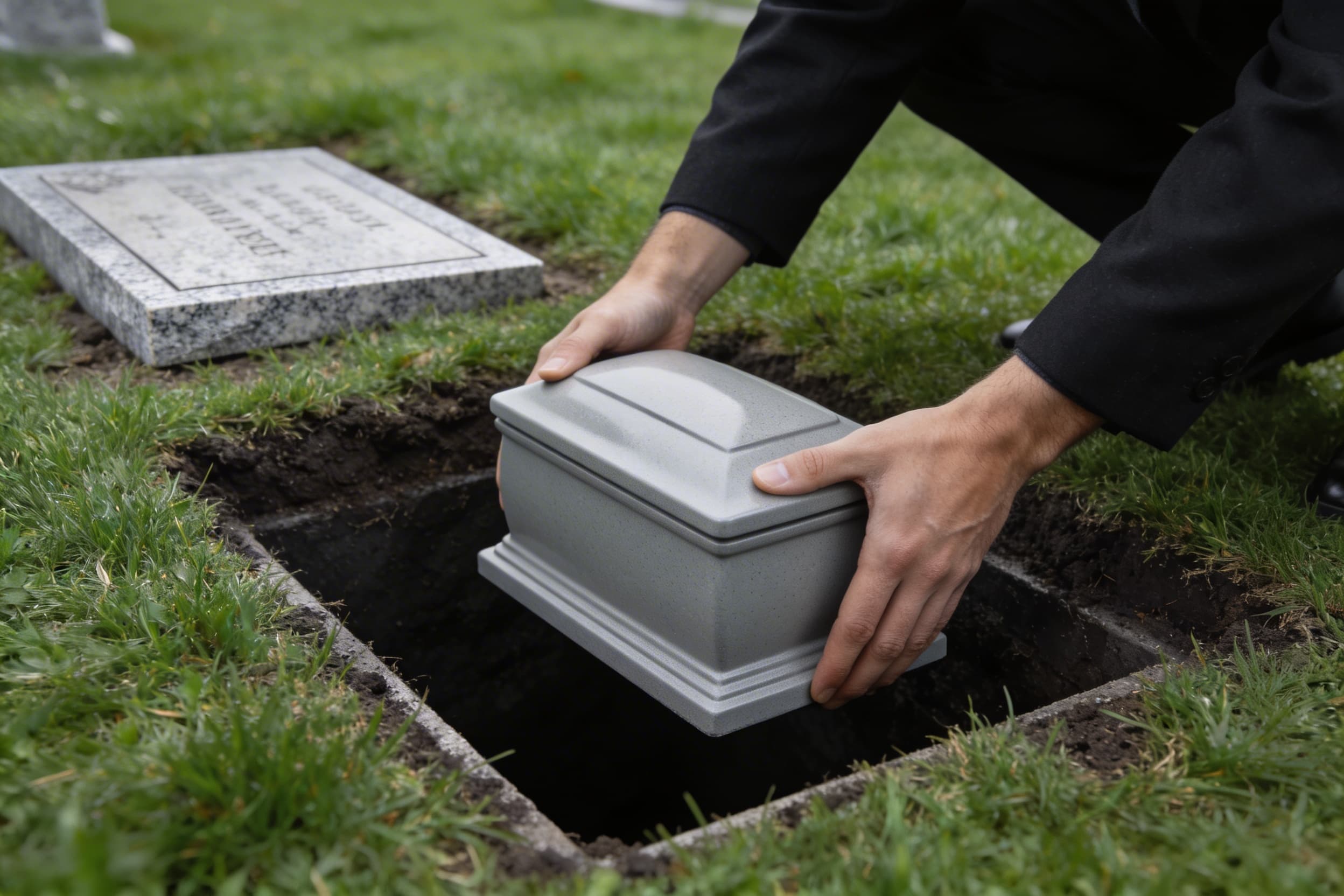
In-ground burial is the most familiar cemetery option for cremated remains. The urn is buried in a dedicated cremation plot or, in many cemeteries, within an existing family grave above the casket. Cremation plots are smaller and less expensive than full casket plots, making this a budget-friendly alternative to traditional burial.
Most cemeteries require that the urn be placed inside an urn vault before it goes into the ground. An urn vault is a protective outer container — typically made of high-density polymer, concrete, or stainless steel — that prevents the surrounding soil from shifting as the urn breaks down over time. Without a vault, cemetery grounds can become uneven, which creates maintenance problems and safety hazards for the grounds crew and visitors.
A few important details to know about ground burial:
Depth: Cemeteries typically bury urns with at least 12 to 24 inches of soil on top. Some require a minimum depth of 36 inches from the surface to the top of the vault.
Vault exceptions:Stone urns made from granite, marble, or cultured stone may not require a separate vault at certain cemeteries, since they resist soil pressure on their own. Always confirm with the cemetery office.
Green cemeteries: Environmentally focused cemeteries often allow biodegradable urns to be placed directly in the ground without a vault. These urns are made from materials like recycled paper, sand, or plant fibers and are designed to break down naturally over time.
Companion burial: Two urns can share a single cremation plot, and many cemeteries allow a cremation urn to be buried in the same plot as a previously interred casket — often at the head or foot of the existing grave.
After burial, families usually mark the site with a flat grave marker, upright headstone, or memorial bench for cemetery use. The marker gives loved ones a specific place to visit and serves as a lasting tribute engraved with names, dates, and personal messages.
Columbarium Niches
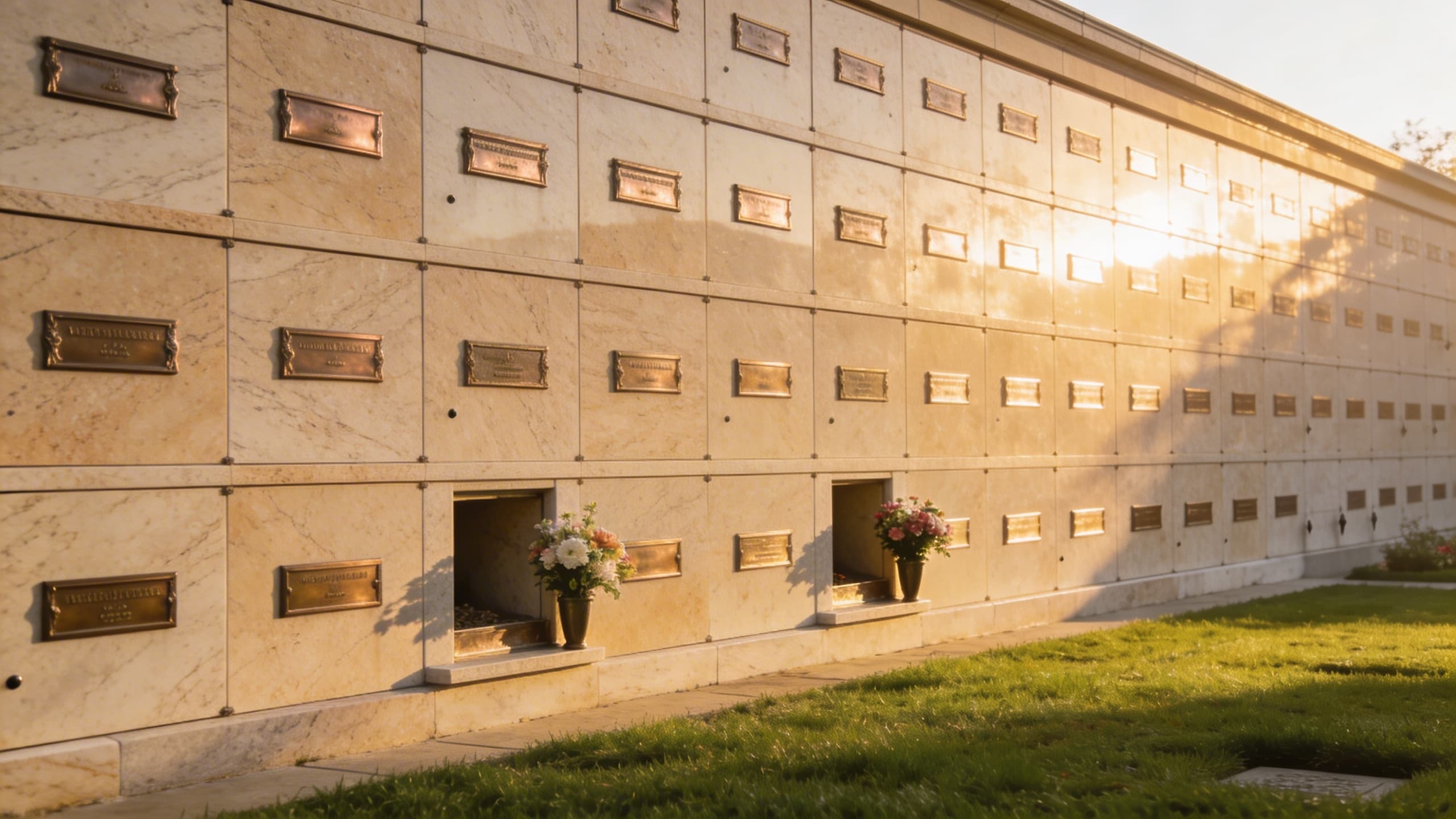
A columbarium is an above-ground structure — either freestanding or built into a wall — designed specifically to hold cremation urns. Individual compartments called niches are arranged in rows, and each niche holds one or two urns depending on its size. Columbariums are found in many traditional cemeteries, churches, memorial parks, and some mausoleums.
Families who prefer above-ground placement without the permanence of ground burial often choose a cremation niche. Niches keep the urn protected, visible behind glass in some designs, and accessible for families who want to visit without the formality of a graveside setting. For a full walkthrough of how columbariums work, sizing, costs, and what to expect, read our complete guide to columbariums.
What to expect with a columbarium niche
Cost: Niche prices vary widely depending on location, height level, and whether the facility is indoor or outdoor. Indoor niches and those at eye level tend to cost more. Pre-purchasing a niche before it is needed can save 20 to 25 percent compared to buying at the time of need.
Personalization: Each niche is marked with a bronze or granite plaque that displays the person's name, dates, and often a short inscription or design. Families putting thought into this tribute will benefit from selecting a plaque for a niche that matches the tone and style of their loved one's memory.
Multiple niches: Families can purchase adjacent niches to keep multiple urns together — parents beside each other, or eventually an entire generation in the same section.
Urn size considerations: Niches have specific internal dimensions, so it is essential to choose an urn that fits. Standard adult urns (200 cubic inches) usually fit, but oversized or unusually shaped urns may not. Ask the columbarium facility for exact measurements before purchasing.
Mausoleum Crypts
A mausoleum is an above-ground building that houses entombed remains. While mausoleums are traditionally associated with casket entombment, many also offer smaller crypts specifically designed for cremation urns. These cremation crypts function similarly to columbarium niches but are located inside a larger architectural structure that may also hold caskets.
Mausoleum placement appeals to families who value the permanence and dignity of a substantial building. Many mausoleums feature stained glass, marble interiors, and climate-controlled environments. Some families choose a mausoleum when a loved one was cremated but other family members are entombed there in caskets — keeping everyone in the same memorial space.
Cemetery mausoleums typically offer mausoleum crypt plates to mark each crypt. These bronze or granite plates display the person's name and dates, similar to columbarium niche plaques but often in a format that matches the mausoleum's existing design.
The cost of a mausoleum crypt is generally higher than a columbarium niche and comparable to — or slightly less than — a traditional burial plot, depending on the facility and region. Fees typically include the crypt space, a sealing service, and a basic nameplate. Upgraded bronze or granite crypt plates with custom engraving, emblems, or porcelain photos are available at additional cost.
One practical consideration: mausoleum crypts have fixed interior dimensions, just like columbarium niches. Measure your urn before purchasing a crypt to make sure it fits. If you are planning companion placement for two urns, confirm the crypt is sized for double occupancy.
Scattering Gardens and Memorial Gardens
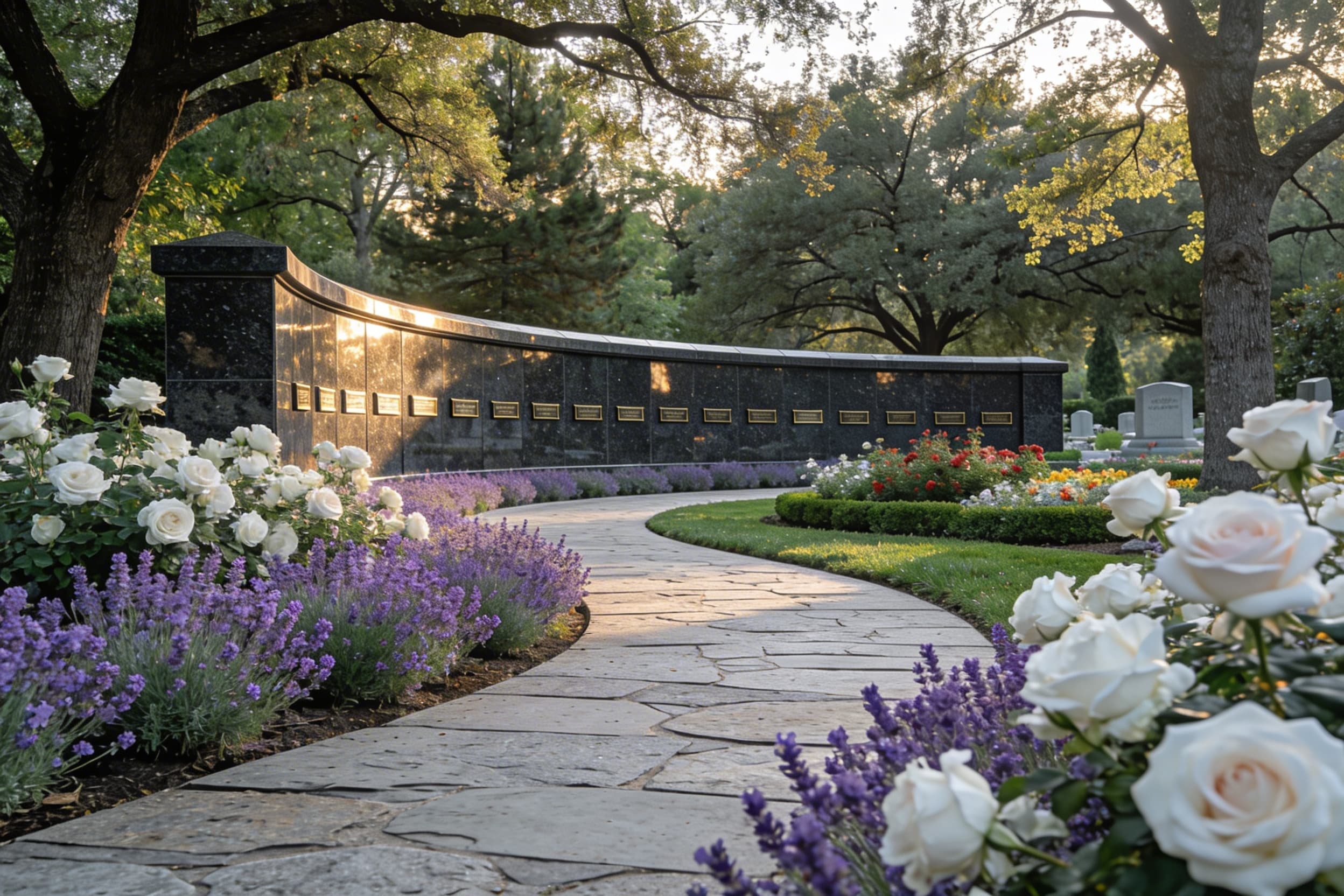
Many modern cemeteries designate a specific area — often called a scattering garden, memorial garden, or urn garden — where cremated remains can be scattered or buried directly in the earth. These spaces are typically landscaped with flowering plants, walkways, and a communal memorial wall or marker where names are inscribed.
Scattering gardens offer families a middle ground: the ashes return to the earth, but there is still a dedicated place to visit. Unlike scattering ashes in a private location — a lake, a mountainside, a favorite hiking trail — a cemetery scattering garden provides a permanent, maintained setting where future generations will always be able to find their loved one's name.
Some scattering gardens allow families to place a small memorial stone at the site, while others maintain a uniform appearance with only a shared plaque wall. Cemetery policies vary, so ask about permitted memorialization options before choosing this route.
Families weighing whether a scattering garden is the right fit may also want to explore how it compares to a more traditional niche or burial plot. Our columbarium or burial plot comparison breaks down the costs, permanence, and visiting experience side by side.
Memorial Features With Built-In Urn Storage
Beyond the four primary placement methods, some cemeteries allow cremated remains to be incorporated into memorial features that serve a dual purpose — honoring the person and enhancing the cemetery landscape. These include:
Memorial benches: A granite bench with a recessed compartment that holds one or two urns inside. The bench is engraved with the person's name and dates and provides seating for visitors. Memorial benches are especially popular among families who want a functional, lasting tribute that others in the cemetery can enjoy.
Urn pedestals and monuments: Freestanding granite or bronze monuments with internal chambers for one or more urns. These range from simple columnar markers to elaborate sculpted designs.
Garden boulders and rocks: Some families place a large engraved garden boulder over a buried urn, combining a natural aesthetic with permanent identification. These work well in green cemetery sections or memorial garden areas.
Not every cemetery permits these features, and size, material, and placement restrictions vary. Always confirm your plan with the cemetery office before purchasing.
How to Decide Which Placement Is Right
The best urn placement depends on several factors that are unique to your family:
Your loved one's wishes. If they expressed a preference — ground burial, above ground, scattered — that guidance carries the most weight.
Budget. Ground burial with a vault and marker is typically the most affordable cemetery option. Columbarium niches fall in a mid-range. Mausoleum crypts and memorial benches tend to cost more.
Visiting preferences. Some families want a specific, private spot they can tend and decorate. Others are comfortable with a shared wall or communal garden. Think about how you and future family members will visit over the decades ahead.
Cemetery regulations. Every cemetery sets its own rules about what is permitted. Some allow only ground burial; others may offer niches, scattering gardens, and memorial features. Call the cemetery office early in your planning to understand what is available and what restrictions apply.
Companion plans. If you are planning for two people — a spouse, a parent and child, or even a pet — options like companion niches, double-depth cremation plots, or memorial benches with dual compartments may simplify future decisions.
For families still deciding between cremation and traditional burial, or exploring what to do with ashes more broadly, our guide to choosing a cremation urn covers the full range of options from home display to burial to scattering.
Frequently Asked Questions
Can you bury a cremation urn in an existing family grave?
Yes, in most cemeteries. Cremation urns are small enough to be buried above an existing casket, typically at the head or foot of the grave. The cemetery will usually require an urn vault and may charge an interment fee. Contact the cemetery office to confirm their policy and schedule the burial.
Do all cemeteries require an urn vault for ground burial?
Not all. Most traditional cemeteries require a vault to protect the grounds, but green cemeteries typically allow biodegradable urns to be buried directly in the soil. Some cemeteries also waive the vault requirement for urns made from stone materials like granite or marble. Always check with the specific cemetery.
How much does it cost to place an urn in a columbarium niche?
Niche prices range from roughly $500 to $5,000 or more, depending on the facility, location within the columbarium (eye-level niches cost more), and whether the niche is indoors or outdoors. The price usually includes the niche space and a basic plaque; engraving and upgraded plaques may cost extra.
Can two urns share the same niche or burial plot?
Yes. Companion niches are designed to hold two standard-size urns side by side. For ground burial, many cemeteries allow two urns in a single cremation plot or even in the same plot as a casket. Ask the cemetery about companion options during your planning.
What happens if my urn doesn't fit in the niche I purchased?
Standard adult urns (approximately 200 cubic inches) fit most niches, but always verify the niche's interior dimensions before buying an urn. If the urn is too large, you may need to exchange it for one that fits or request a larger niche. The columbarium facility or cemetery office can provide exact measurements.