🏬Supersize Online Funeral Retailer🪦1000's of Headstones⚱️Over 10,000 Cremation Urns⚰️Caskets Overnight Delivery🛒Funeral & Memorial Superstore🚚FREE Shipping on ALL Orders👨👩👧👦Helping Families for over 20 Years💰Lowest Price Guarantee🏬Supersize Online Funeral Retailer🪦1000's of Headstones⚱️Over 10,000 Cremation Urns⚰️Caskets Overnight Delivery🛒Funeral & Memorial Superstore🚚FREE Shipping on ALL Orders👨👩👧👦Helping Families for over 20 Years💰Lowest Price Guarantee
🏬Supersize Online Funeral Retailer🪦1000's of Headstones⚱️Over 10,000 Cremation Urns⚰️Caskets Overnight Delivery🛒Funeral & Memorial Superstore🚚FREE Shipping on ALL Orders👨👩👧👦Helping Families for over 20 Years💰Lowest Price Guarantee🏬Supersize Online Funeral Retailer🪦1000's of Headstones⚱️Over 10,000 Cremation Urns⚰️Caskets Overnight Delivery🛒Funeral & Memorial Superstore🚚FREE Shipping on ALL Orders👨👩👧👦Helping Families for over 20 Years💰Lowest Price Guarantee
Digging a grave looks like the simplest job in a cemetery and it is one of the more technical ones. A grave is a trench in unstable ground, dug to a specification, in a space bounded by other people's graves, on a deadline set by a funeral that cannot move. It is also genuinely dangerous work — trench collapse kills people every year, and the depths involved are exactly the depths that do it.
This covers what a grave measures, how one is opened and closed, who is permitted to do it, and the specific situations in which a family might legally dig one themselves.
The Dimensions of a Grave Hole
There is no single legal standard, but the working dimensions are consistent across most of the industry because they follow the thing being put in.
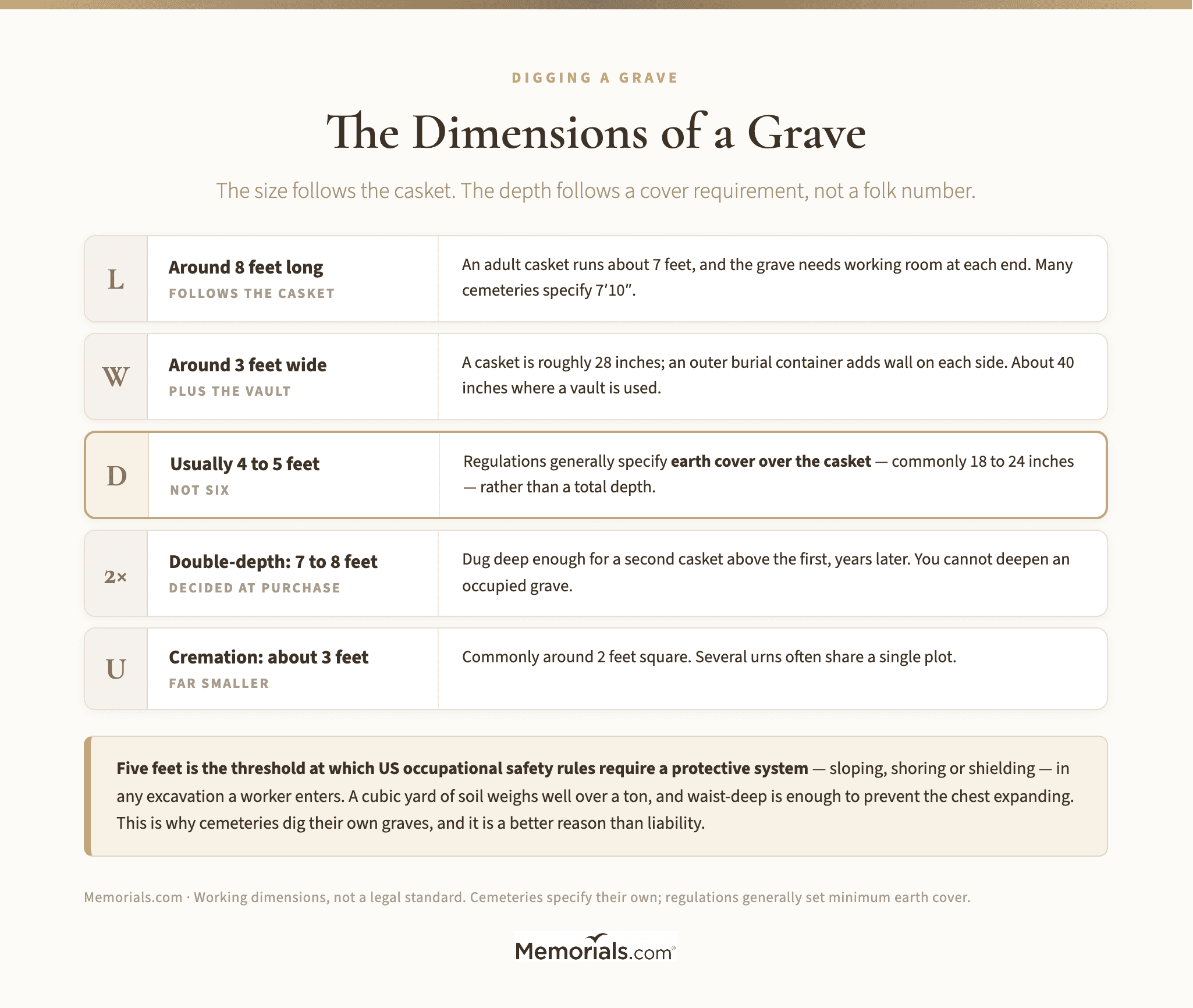
Length: around 8 feet. A standard adult casket runs about 7 feet, and the grave needs working room at each end. Many cemeteries specify 7 feet 10 inches or 8 feet flat.
Width: around 3 feet. A casket is roughly 28 inches wide, and an outer burial container adds several inches of wall on each side. Around 40 inches is a common specified width where a vault is used.
Depth: usually 4 to 5 feet, not 6. This surprises people, and it is the single most common misconception about graves. What regulations actually specify in most places is a minimum depth of earth cover over the top of the casket or vault — commonly 18 to 24 inches — rather than a total depth. A grave dug to take a vault typically ends up around 5 feet, and one taking a casket directly often less. Where the number six comes from is its own story, and our guide to why we bury people six feet deep covers it.
Double-depth graves are dug deeper — usually 7 to 8 feet — so a second casket can be interred above the first later. This is decided when the plot is sold, not afterward, and it is worth asking about. Our guide to how to buy a cemetery plot covers the questions that get asked too late.
Cremation graves are far smaller, commonly around 2 feet square and 3 feet deep, and several urns often share one plot. Our guide to urn placement in a cemetery covers the specifics.
The size follows the casket. The depth follows a soil-cover requirement, not the folk number.
Shop Burial Vaults and Markers
Outer burial containers and the flush granite markers that follow them
In a managed cemetery, the cemetery does — either with its own grounds crew or through a contractor who does nothing else.
This is not gatekeeping for its own sake. The cemetery is responsible for the stability of the surrounding ground, for not disturbing adjacent interments, for the accuracy of the plot map, and for the condition of the site afterward. A grave dug in the wrong place is an extremely serious problem, and the cemetery is the only party that knows exactly where the boundaries are.
The cost is almost always charged as an opening and closing fee, which covers excavation, protecting the site, setting up for the service, backfilling, and the follow-up visits to top up the settling ground. It is one of the larger line items in a burial and it is separate from the plot. Our guide to cemetery plot cost covers where it sits in the total.
A second fee applies for a winter or frozen-ground opening in cold regions, where the top layer has to be broken up or thawed before excavation can start.
How a Grave Is Opened
The sequence is more involved than a hole.
Locating and marking. The crew works from the plot map and from existing markers to establish the exact boundaries. In a crowded section this is the step that takes the longest and matters the most.
Lifting the sod. Turf is cut and set aside in sheets to be relaid afterward. A cemetery that does this well leaves almost no visible scar within a season.
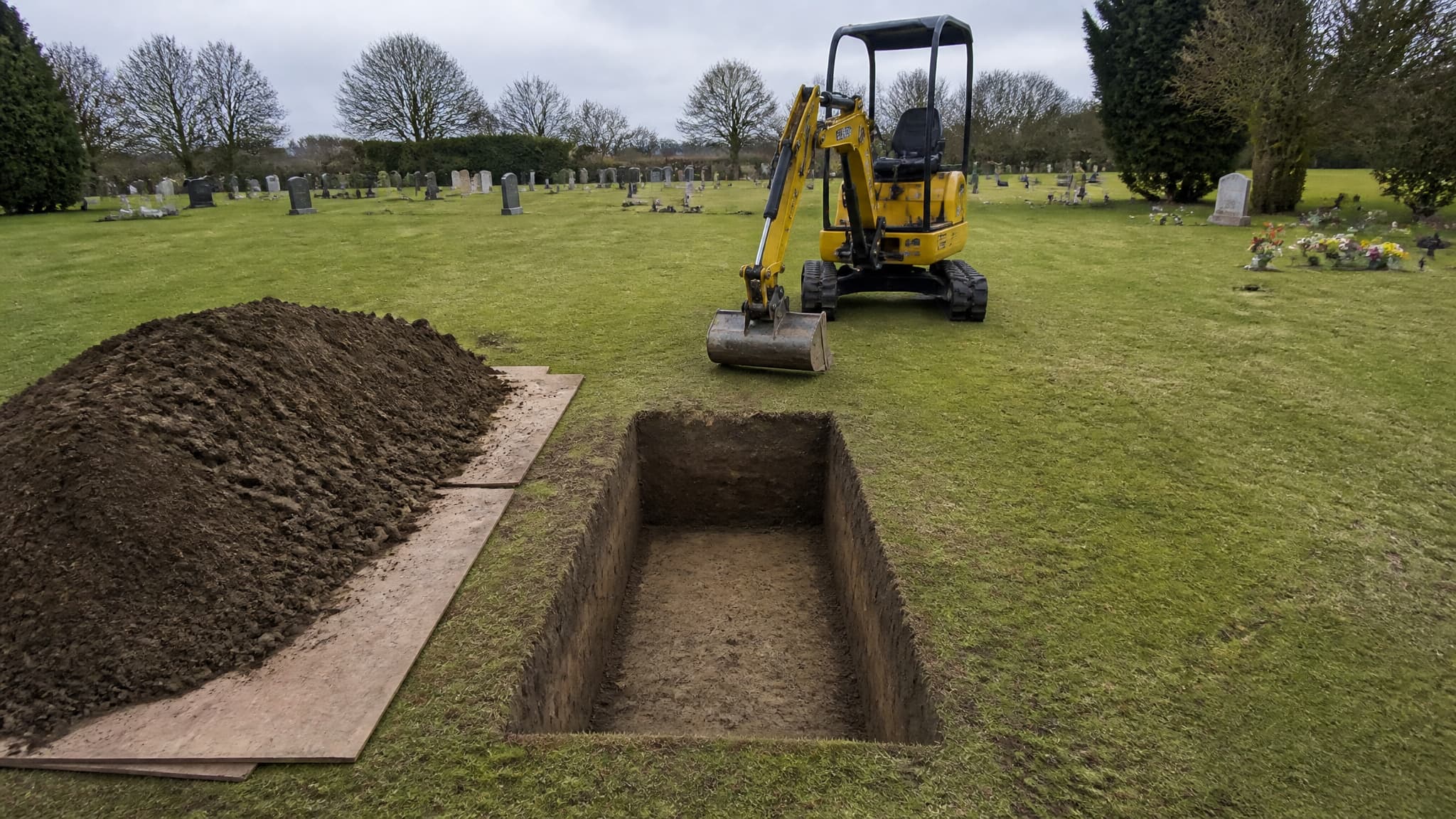
Excavation. A compact excavator is standard now. Hand-digging survives where access is impossible — tight historic sections, churchyards with narrow gates, or ground where machinery would damage adjacent monuments.
Managing the spoil. The excavated soil is heaped on boards or sheets rather than straight onto the grass, both to protect the turf and because loose soil piled at the edge is what makes a trench wall fail.
Shoring, where required. Deeper graves need the walls supported. This is not optional at depth and it is the part that gets skipped by people who should not be digging.
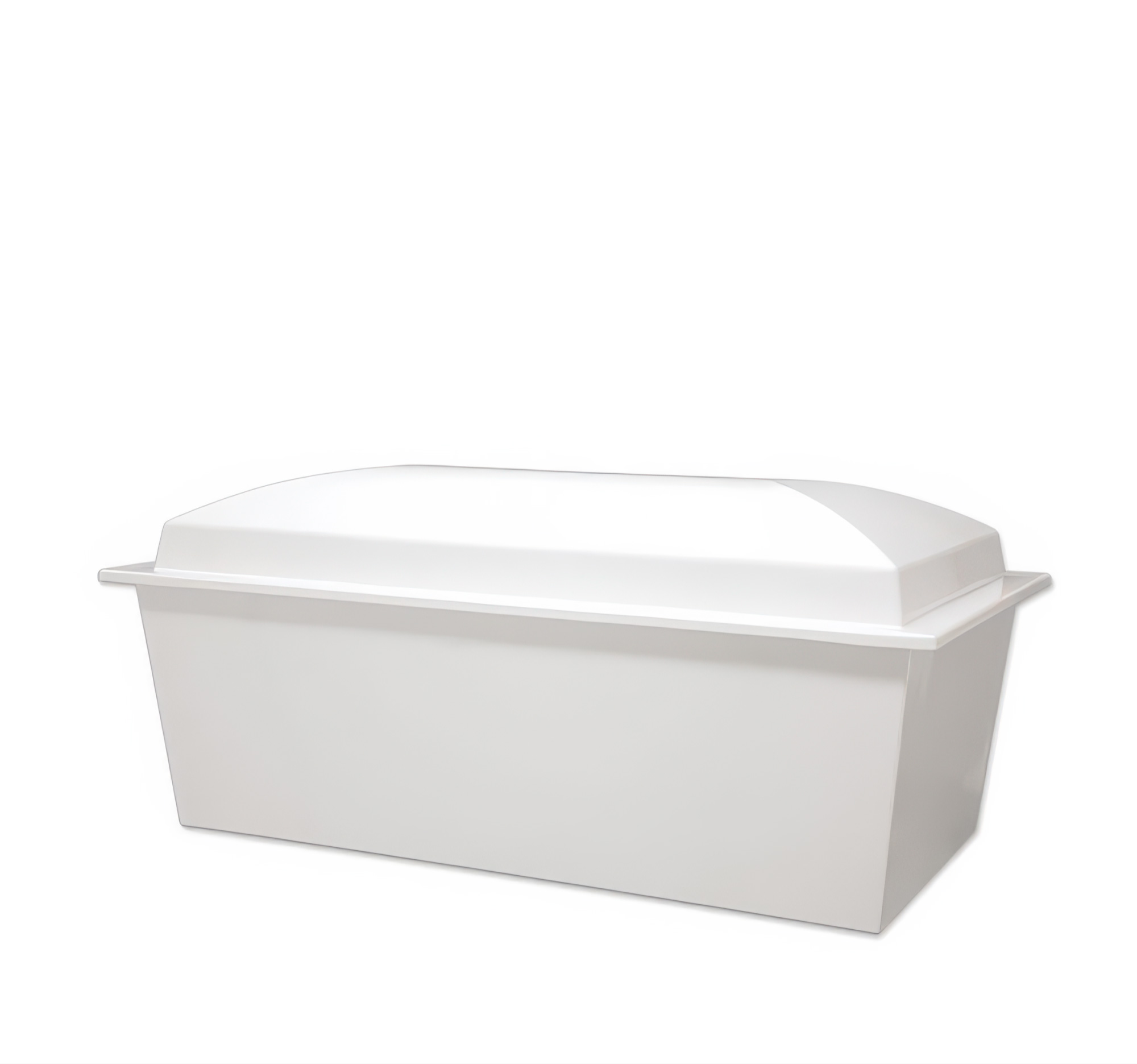
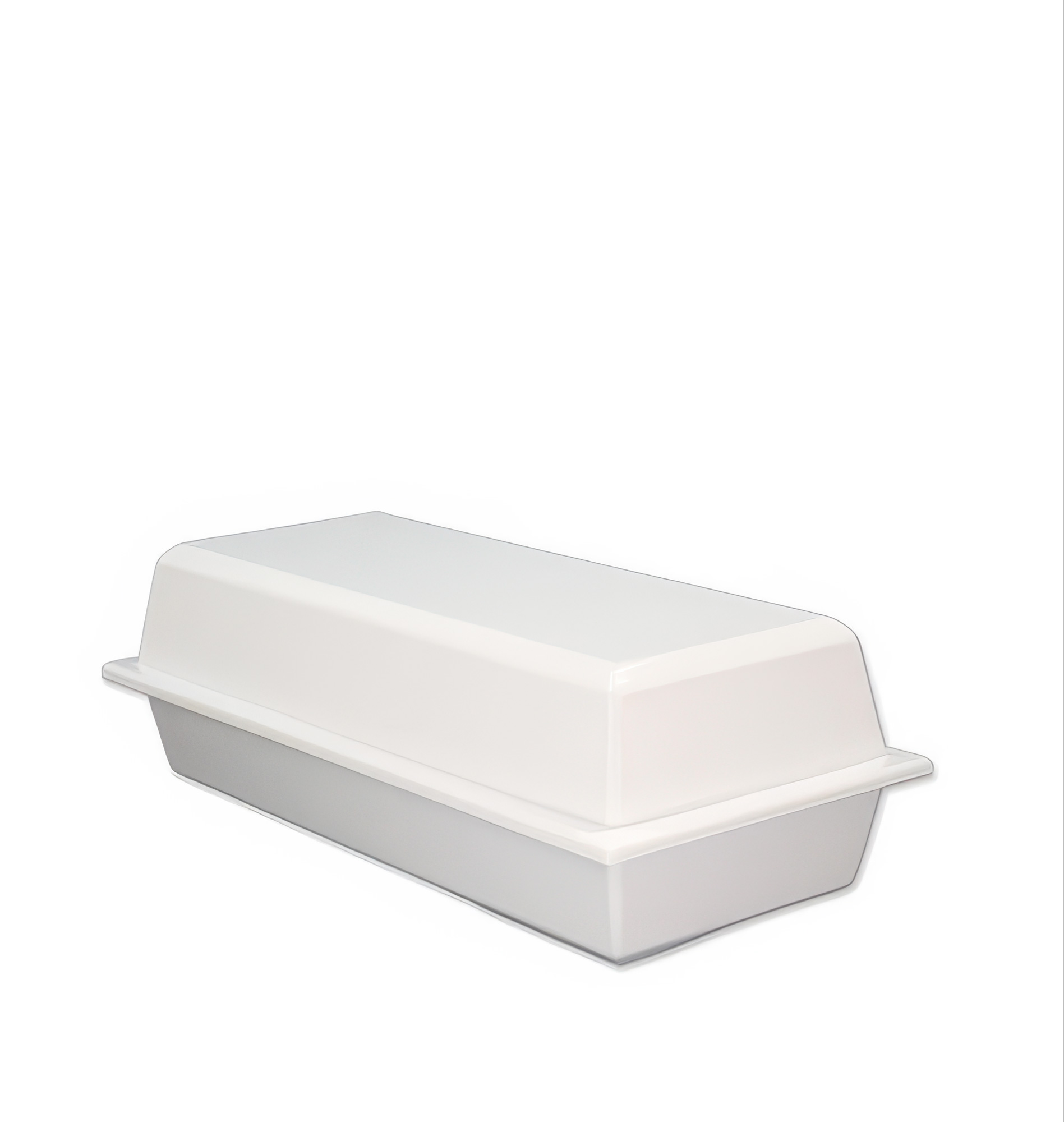
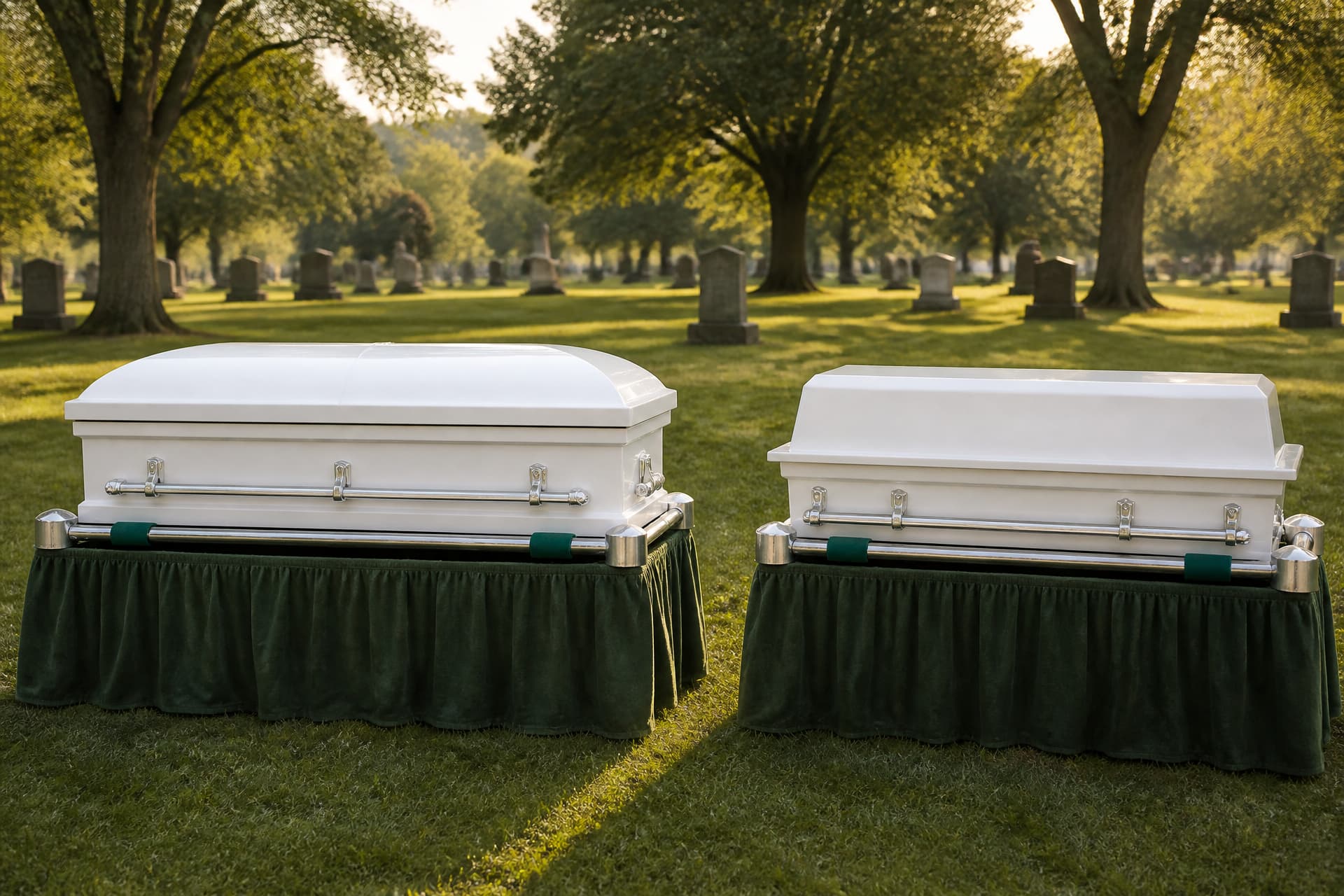
Setting the liner or vault. If an outer burial container is used, it is lowered in before the service. Our guide to what a burial vault is covers why most cemeteries require one, and our range of burial vaults covers the formats.
These are outer burial containers, not caskets, photographed above ground before interment. <p><em>Products from left to right: <a href="https://www.memorials.com/catalog/caskets/burial-vaults/dignity-casket-vault">Dignity Casket Vault</a> and <a href="https://www.memorials.com/catalog/caskets/burial-vaults/eternity-casket-vault">Eternity Casket Vault</a>.</em></p>
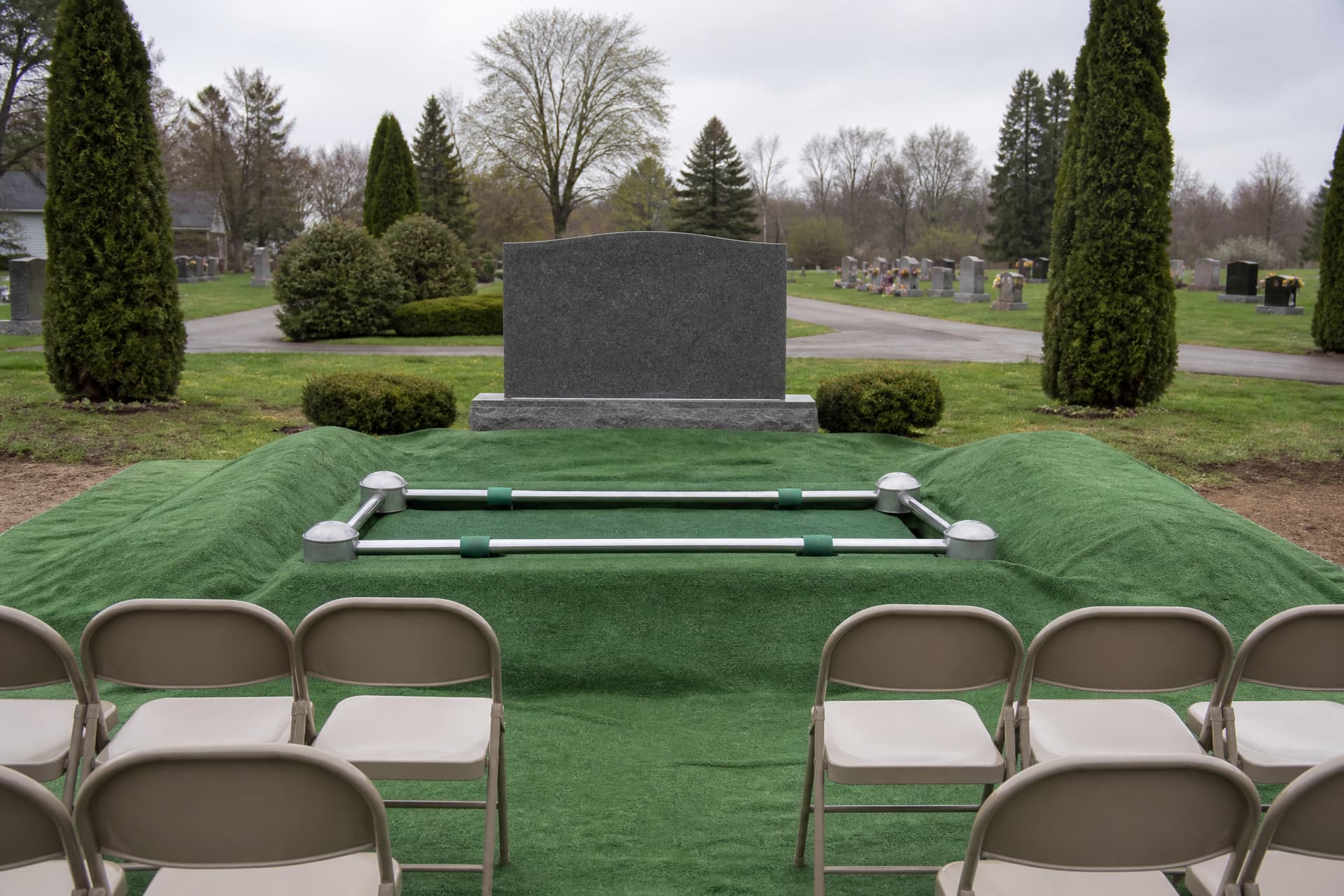
Dressing the site. Before mourners arrive the grave is covered with a lowering device, boards and artificial turf, so what the family sees is a neat rectangle rather than an excavation.
Backfilling and settling. Closing happens after the family leaves. The ground then settles for months, and the cemetery returns to top up and reseed — which is why a marker is usually not set for some time afterward.
What the family sees. The excavation, the spoil heap and the lowering mechanism are all under that turf, which is the point of dressing the site.
Why Hand-Digging Is Dangerous
Worth stating plainly, because it is the part that gets underestimated.
Soil weighs far more than people expect. A single cubic yard runs well over a ton. A collapse does not need to bury someone to kill them; waist-deep is enough, because the pressure prevents the chest from expanding.
Unsupported walls fail without warning. They do not creak or lean first. Freshly disturbed ground, previously dug ground, and anything wet are all substantially worse.
Five feet is the recognized threshold at which occupational safety rules in the United States require a protective system — sloping, shoring or shielding — in any excavation workers enter. A grave is at or past that depth by definition.
Getting out is part of the problem. A person standing in a narrow trench with no ladder cannot climb out quickly, and a partial collapse is what removes the option.
This is the reason cemeteries do not let families dig, and it is a better reason than liability.
When a Family May Legally Dig a Grave
Home burial is legal in most of the United States, with conditions, and it is the one situation where a family might dig a grave themselves.
The requirements vary by state and, more restrictively, by county and municipality. The ones that consistently appear:
A permit for the burial and usually for the transportation of the body
A minimum depth of earth cover, typically 18 to 24 inches over the casket or shroud, rather than a total depth
Setbacks from water supplies, property lines, and dwellings
Recording the burial against the deed to the property, so it is disclosed to any future owner
A licensed funeral director's involvement in some states, even where the burial itself is on private land
A green or natural burial is dug shallower on purpose — commonly around 3 to 4 feet — because decomposition in the upper soil layers is aerobic and faster. Our guide to green burials covers the practice and where it is available.
If you are considering this: talk to the county authority before anything else, and hire an excavator operator rather than digging by hand. The legal work is the complicated part; the hole is the dangerous part.
What Happens to the Ground Afterward
Two things families are not usually warned about.
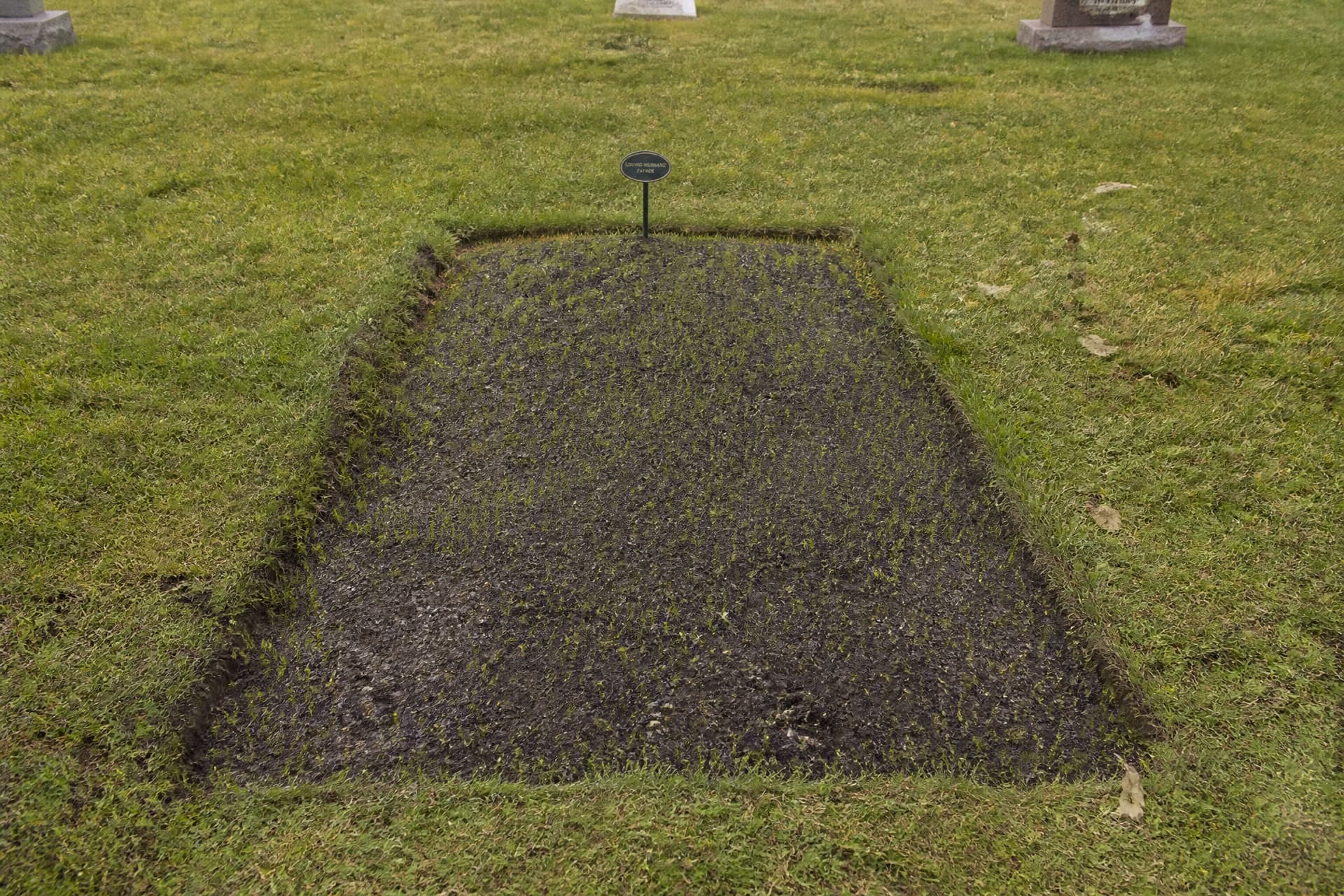
It sinks. Backfilled soil is looser than it was and it compacts over months, sometimes by several inches. Cemeteries expect this and return to top up and reseed. A depression over a recent grave is normal rather than neglect.
Settling, not neglect. The cemetery will return to top this up and reseed it, and that is why a monument cannot be set for months.
Nothing should be placed on it yet. Markers wait for the ground to settle — often several months — and plantings put in before the topping-up are destroyed by it. Our cemetery maintenance guide covers the first year.
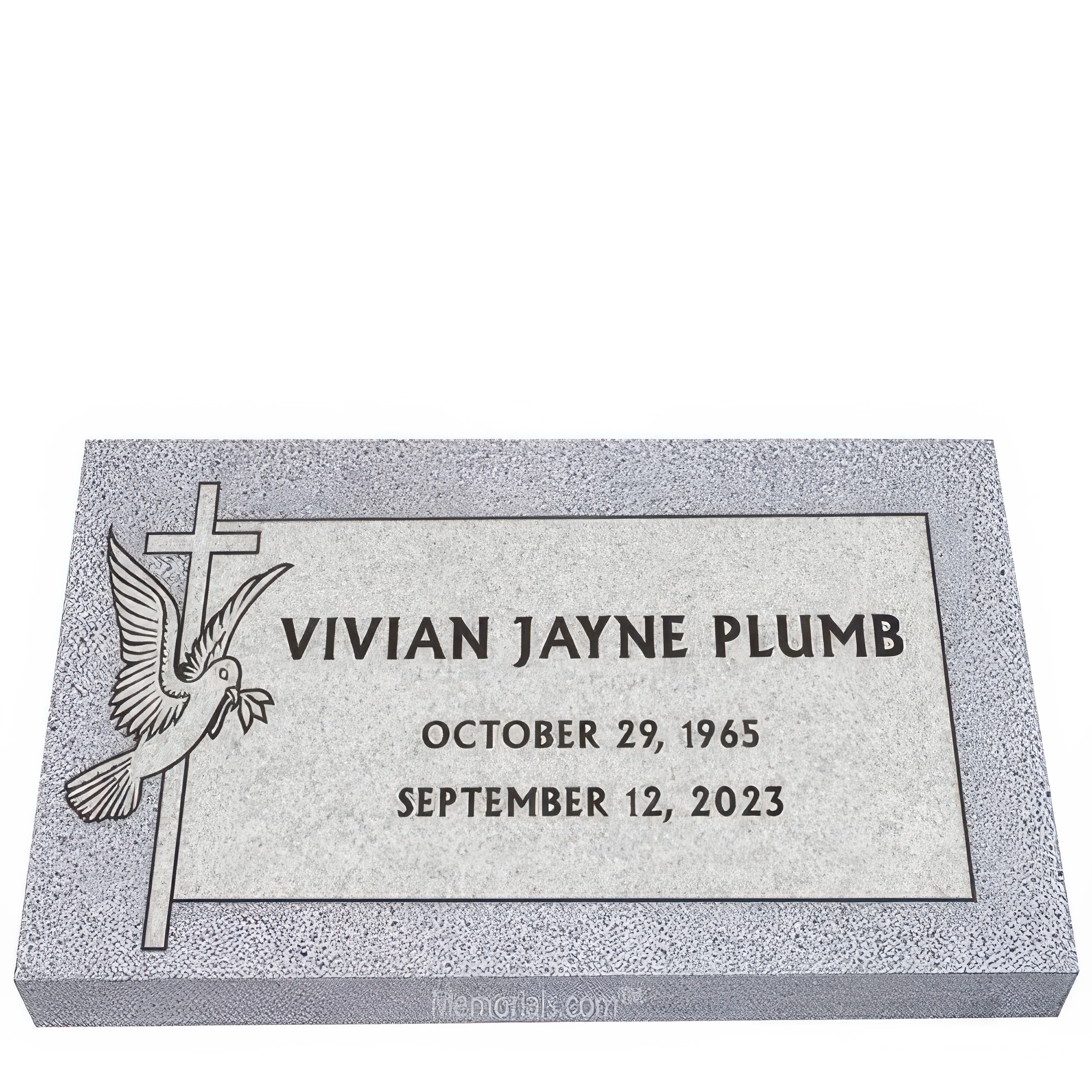
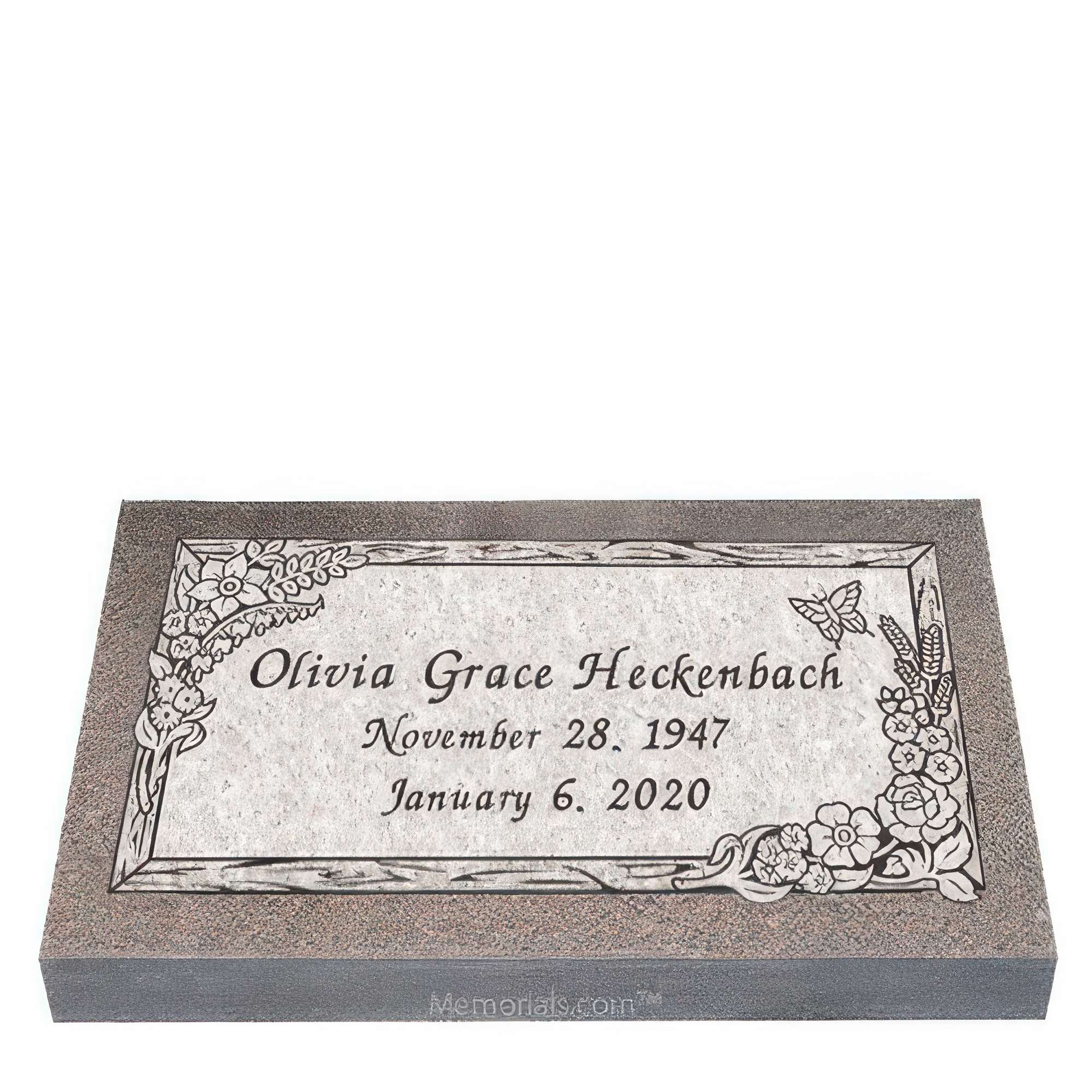
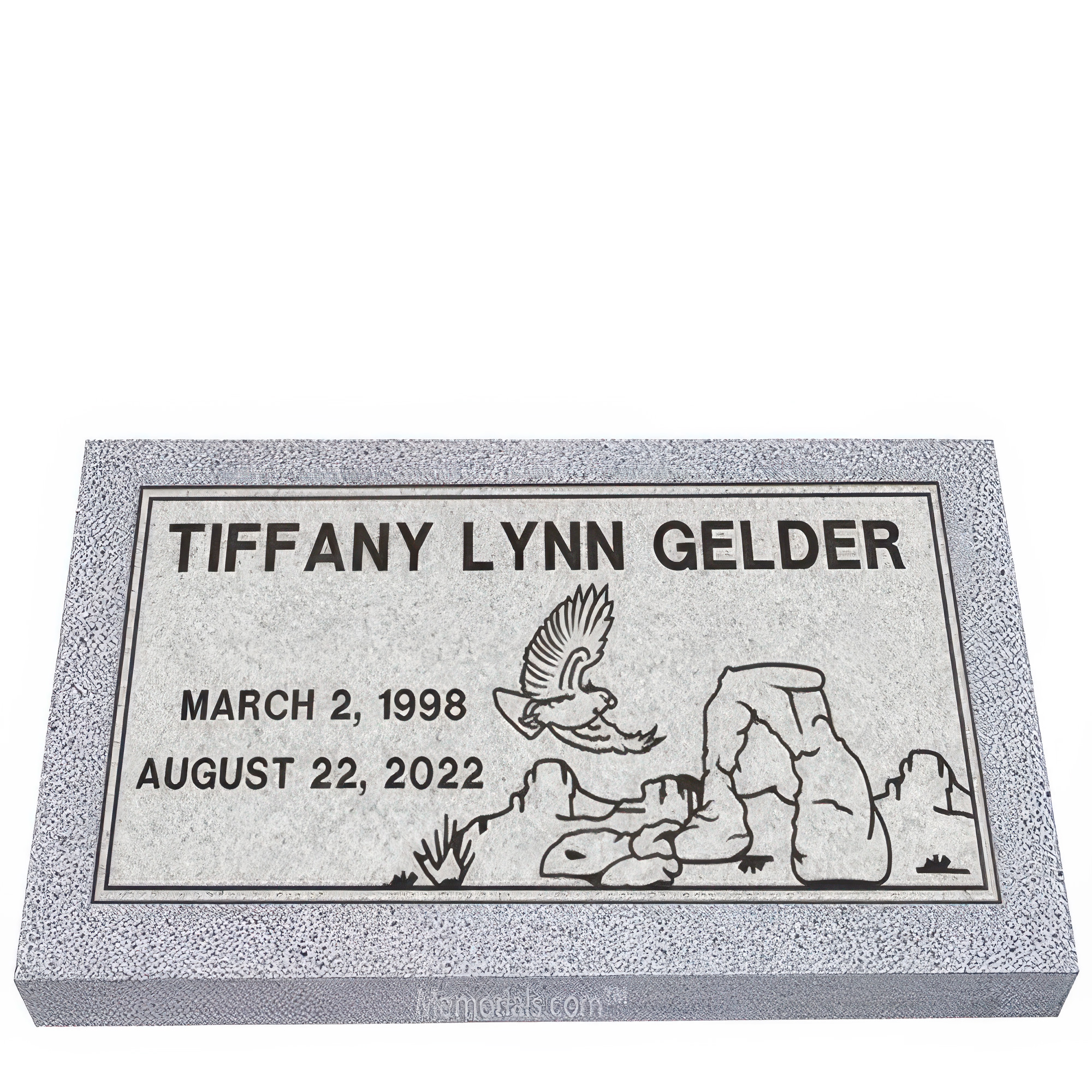
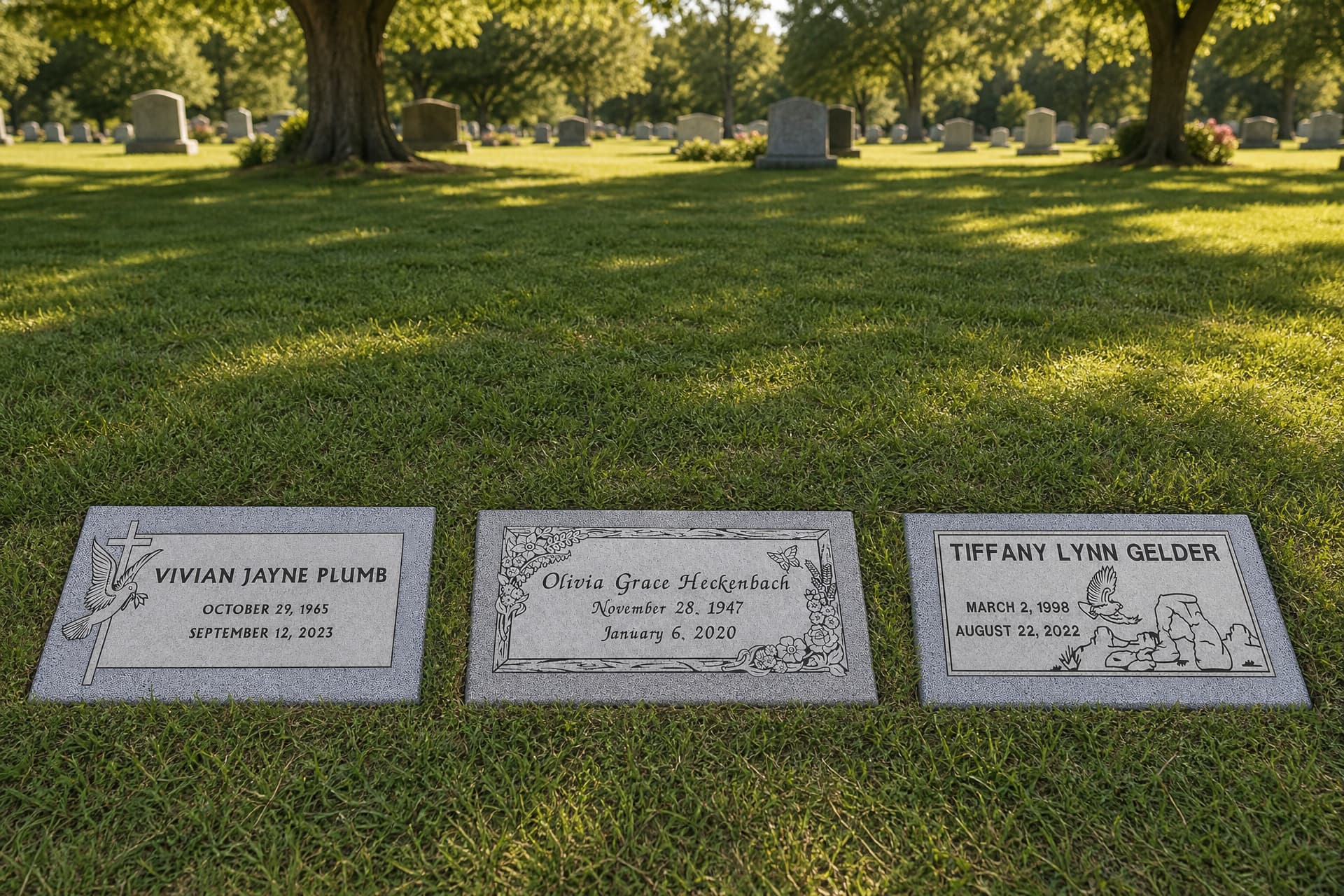
That wait is worth using. Settling time is when families choose the memorial without the pressure of the funeral week, and the choice benefits from it — our range of grave markers covers the upright and flush formats, and a temporary marker from the funeral home or the cemetery holds the spot in the meantime. Where the permanent memorial will be a plaque rather than a monument, our memorial plaques range covers those formats.
A second interment in an occupied plot is a different job again, and one families rarely anticipate.
Double-depth plots were dug deep at the first burial specifically so a second casket can sit above the first. The second opening is shallower and more delicate, because the crew is excavating down to a known vault rather than into undisturbed ground.
Side-by-side family plots avoid the problem entirely by using separate graves, which is why they are the more common arrangement where ground is available.
Adding cremated remains to an existing grave is the simplest case: a small excavation above the existing interment, well clear of it. Many cemeteries permit several urns in a plot that already holds a casket, and some charge a much reduced opening fee for it.
Disinterment — opening a grave to remove remains — is in a different category altogether, requiring permits, usually a court order or next-of-kin consent, and often the presence of a health official. Our guide to what it costs to move a grave covers the process and why it is expensive.
In all four cases the marker has to be lifted and reset, which is a separate cost from the opening and is easy to overlook when budgeting.
Frequently Asked Questions
How long does it take to dig a grave? With a compact excavator, a couple of hours for a standard single grave in ordinary ground. By hand, most of a day for two people, and considerably longer in clay, rock or frost.
How deep is a grave really? Usually 4 to 5 feet. Regulations generally specify earth cover over the casket — often 18 to 24 inches — rather than a total depth.
Can I dig a grave for a family member? Not in a managed cemetery. On private land, home burial is legal in most states subject to permits, depth, setbacks and recording requirements, which vary locally.
What are the standard dimensions of a grave hole? Around 8 feet long by 3 feet wide for a standard adult burial, deeper for a double-depth plot and far smaller for a cremation interment.
Is the grave dug on the day of the funeral? Usually the day before, so the site can be prepared and dressed, the lowering device positioned and tested, and the surrounding graves protected. Frozen ground, heavy rain or a burial scheduled early in the morning can all move that, and in cold regions some cemeteries open graves several days ahead simply to get through the frost while there is time.
Who fills the grave in? The cemetery crew, after the family has gone. Some grounds will allow family to place the first earth, or to participate in backfilling entirely, and many families find that meaningful — ask, because it is rarely offered unprompted.
Why is the grave covered with artificial turf during the service? Partly to spare the family the sight of raw soil and an open excavation, and partly for safety, since the covering spans the opening and gives the lowering device something to sit on. The heaped spoil is screened for the same reason.
What happens if it rains heavily before the burial? Water collects in an open grave and the walls weaken, so crews either pump it out and re-cut the sides or, in bad conditions, delay the opening until the morning of the service. This is the most common reason a grave is dug later than planned.
A Trench, Dug to a Specification
There is nothing mysterious about the work and a good deal that is technical about it: the dimensions follow the casket, the depth follows a cover requirement rather than a folk number, and the danger follows the physics of unsupported soil.
For the decisions that surround it — the plot, the vault, the marker and the rules governing all three — start with our cemetery planning guide.