🏬Supersize Online Funeral Retailer🪦1000's of Headstones⚱️Over 10,000 Cremation Urns⚰️Caskets Overnight Delivery🛒Funeral & Memorial Superstore🚚FREE Shipping on ALL Orders👨👩👧👦Helping Families for over 20 Years💰Lowest Price Guarantee🏬Supersize Online Funeral Retailer🪦1000's of Headstones⚱️Over 10,000 Cremation Urns⚰️Caskets Overnight Delivery🛒Funeral & Memorial Superstore🚚FREE Shipping on ALL Orders👨👩👧👦Helping Families for over 20 Years💰Lowest Price Guarantee
🏬Supersize Online Funeral Retailer🪦1000's of Headstones⚱️Over 10,000 Cremation Urns⚰️Caskets Overnight Delivery🛒Funeral & Memorial Superstore🚚FREE Shipping on ALL Orders👨👩👧👦Helping Families for over 20 Years💰Lowest Price Guarantee🏬Supersize Online Funeral Retailer🪦1000's of Headstones⚱️Over 10,000 Cremation Urns⚰️Caskets Overnight Delivery🛒Funeral & Memorial Superstore🚚FREE Shipping on ALL Orders👨👩👧👦Helping Families for over 20 Years💰Lowest Price Guarantee
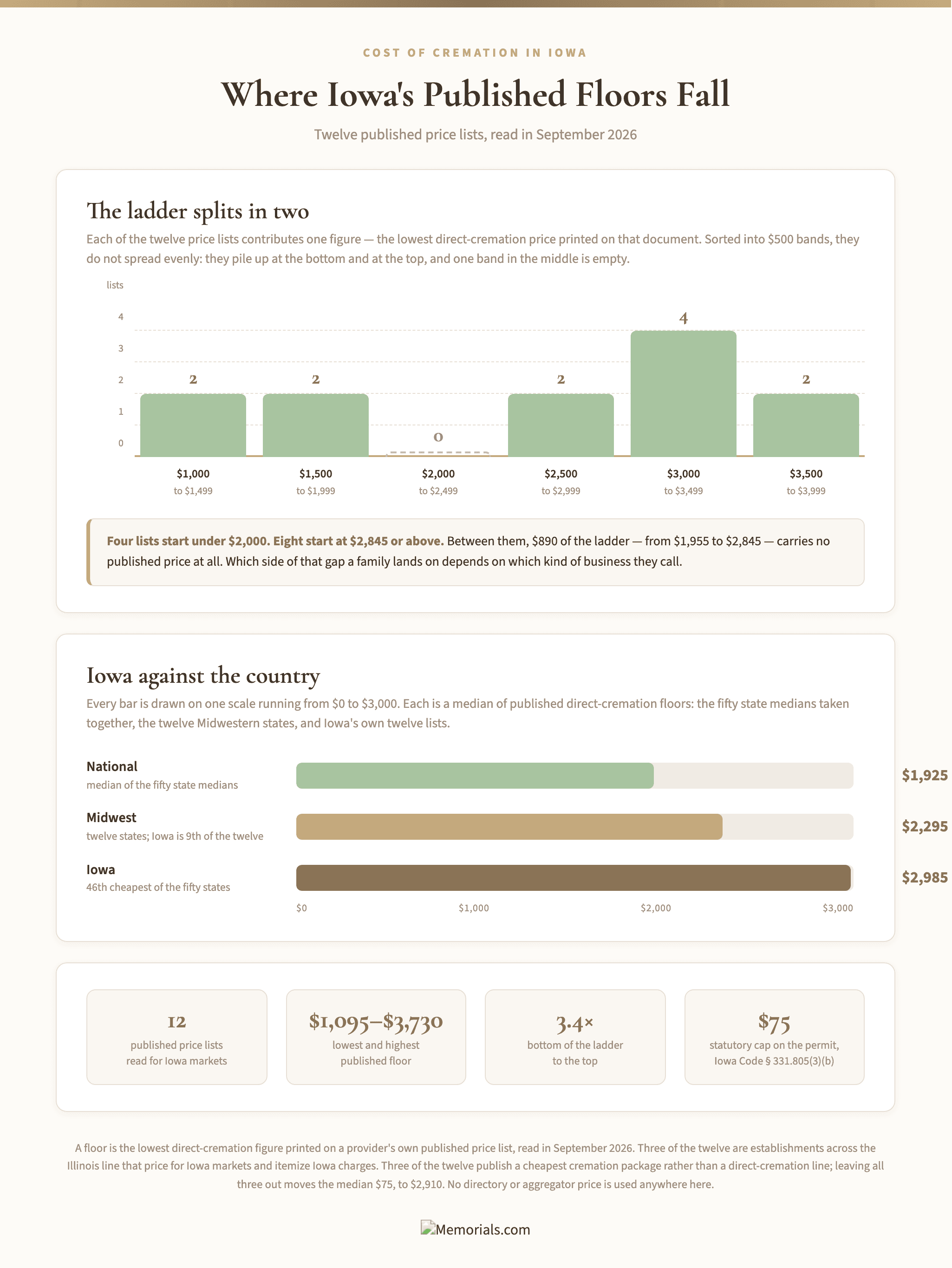
The cost of cremation in Iowa starts between $1,095 and $3,730, with a median of $2,985. That comes from reading 12 published Iowa-market price lists in 2026 and recording the lowest direct-cremation figure on each one.
That makes Iowa the 46th cheapest of the fifty states — the fifth most expensive — $1,060 above the national median of $1,925, and 9th of the twelve Midwestern states against a regional median of $2,295. Our cremation cost by state guide sets all fifty side by side with the evidence behind each.
Two things make Iowa its own case. Three of the four cheapest price lists an Iowa family can reach are published just over the Illinois state line, because not one national direct-cremation brand operates in this state. Ask how much is cremation in Iowa and the answer starts with where you live, how far you will drive, and which kind of firm you call.
Direct cremation in Iowa starts between $1,095 and $3,730, median $2,985. The bottom of that range is a cremation-only provider across the Illinois state line; the top is a full-service Iowa funeral home.
Every figure is a floor: the lowest direct-cremation price on that provider's own document. Bottom to top is 3.4 times.
Three of the twelve documents print no direct-cremation line at all, so the figure we recorded on those is the cheapest cremation package instead, which carries an hour of family viewing with it. Setting all three aside moves the median $75, to $2,910.
Look at where the state line falls. Four lists start under $2,000, eight at $2,845 or above, and the $890 between is empty. Three of the cheap four are published by Illinois establishments just over the border, and the fourth by a cremation-only provider that sells statewide. Every conventional Iowa funeral home among the twelve sits above the gap. Our cost of cremation in Illinois page covers that state on its own terms.
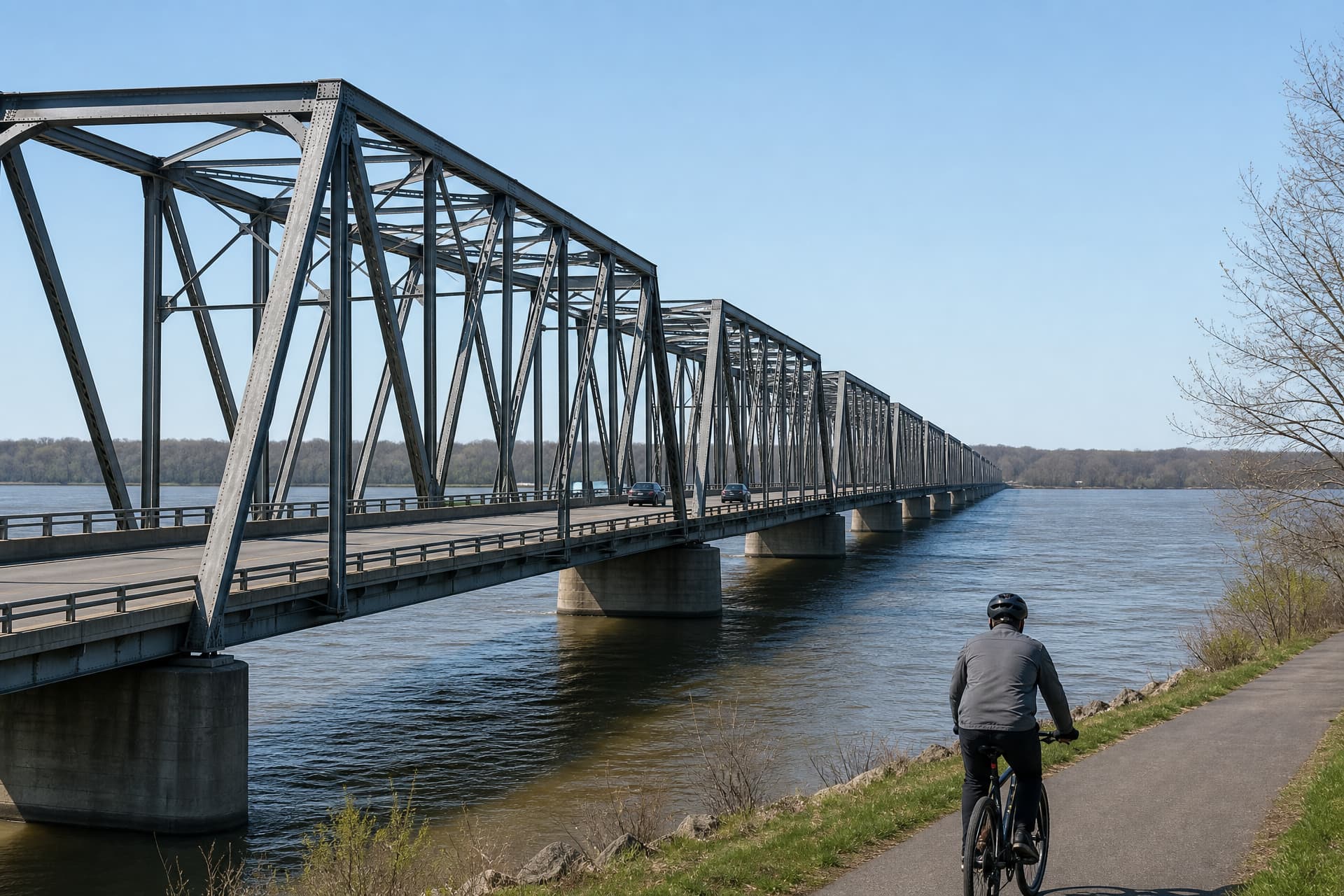
The Mississippi at the Quad Cities. Three of the four cheapest price lists an Iowa family can reach are published just over this water in Illinois, which is why a border family's shortlist should not stop at the state line.
And Iowa has no discounters. The national online cremation brands that set the floor in the cheapest states have no location here — we checked five of them against their own site indexes and none lists one in Iowa. In Arizona, the third-cheapest state in this guide, those same operators hold the market down. In Iowa nothing undercuts a local funeral home except a firm across a river.
Iowa's twelve published price lists do not spread evenly — they cluster below $2,000 and again above $2,845, and the state median sits above both the Midwest and the national figure.
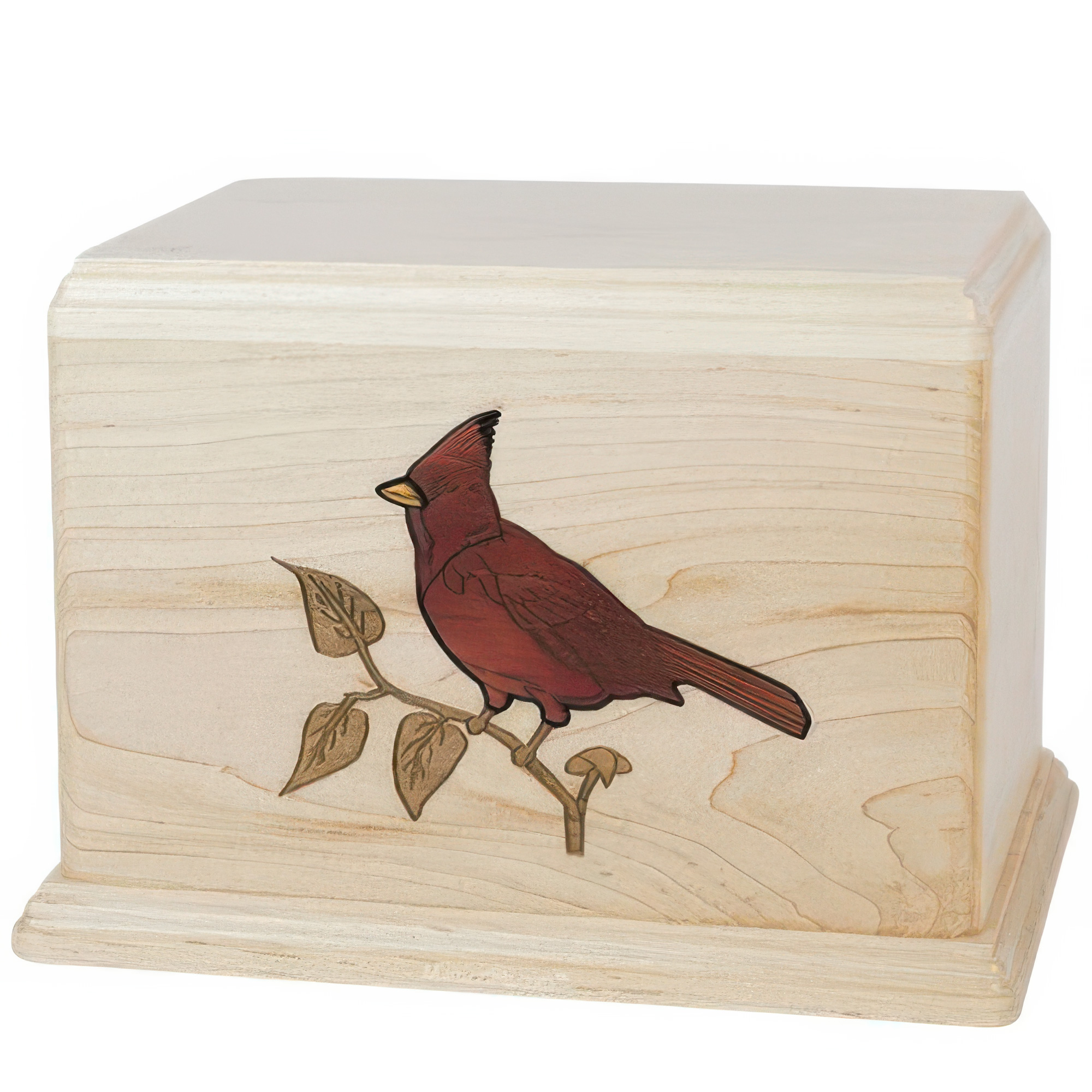
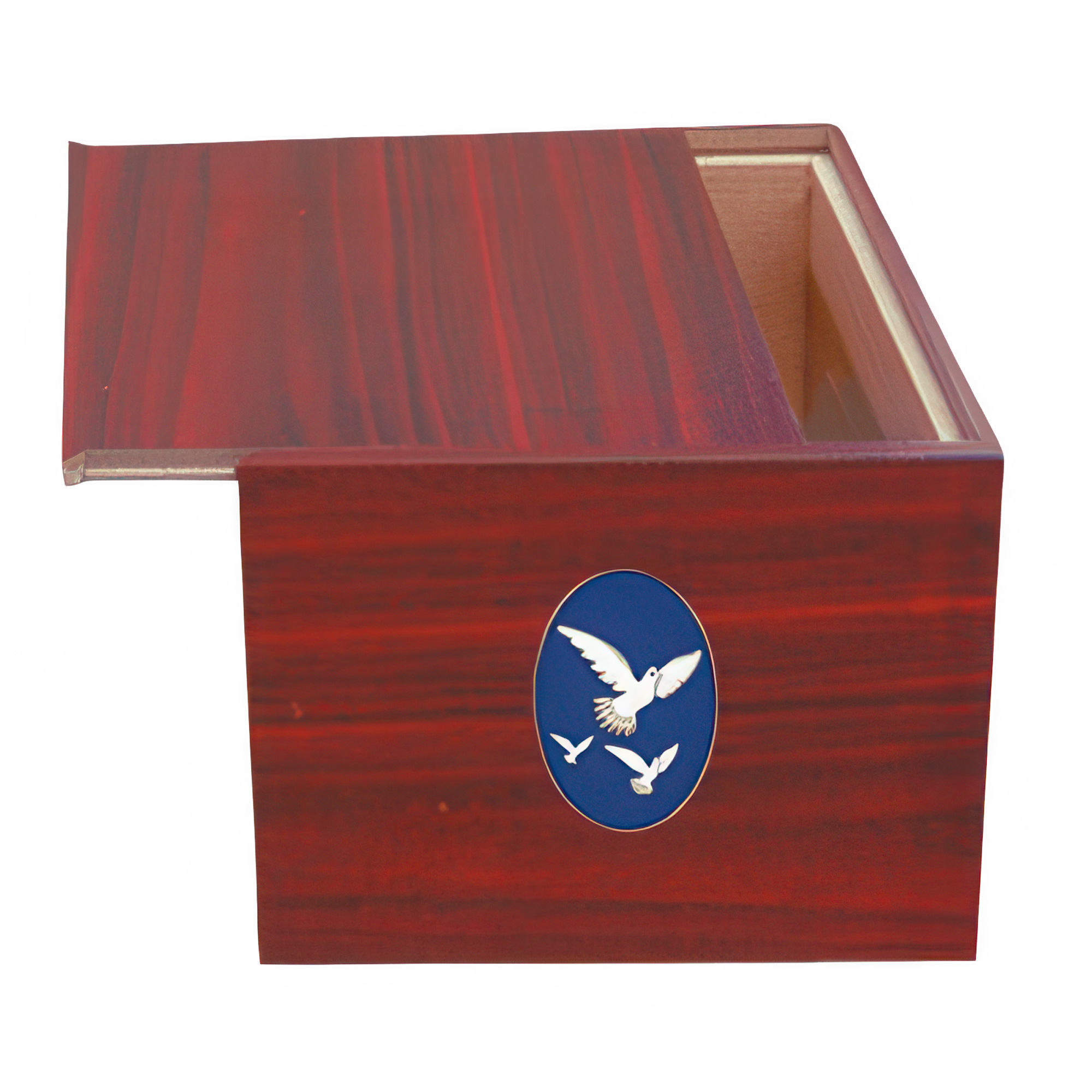
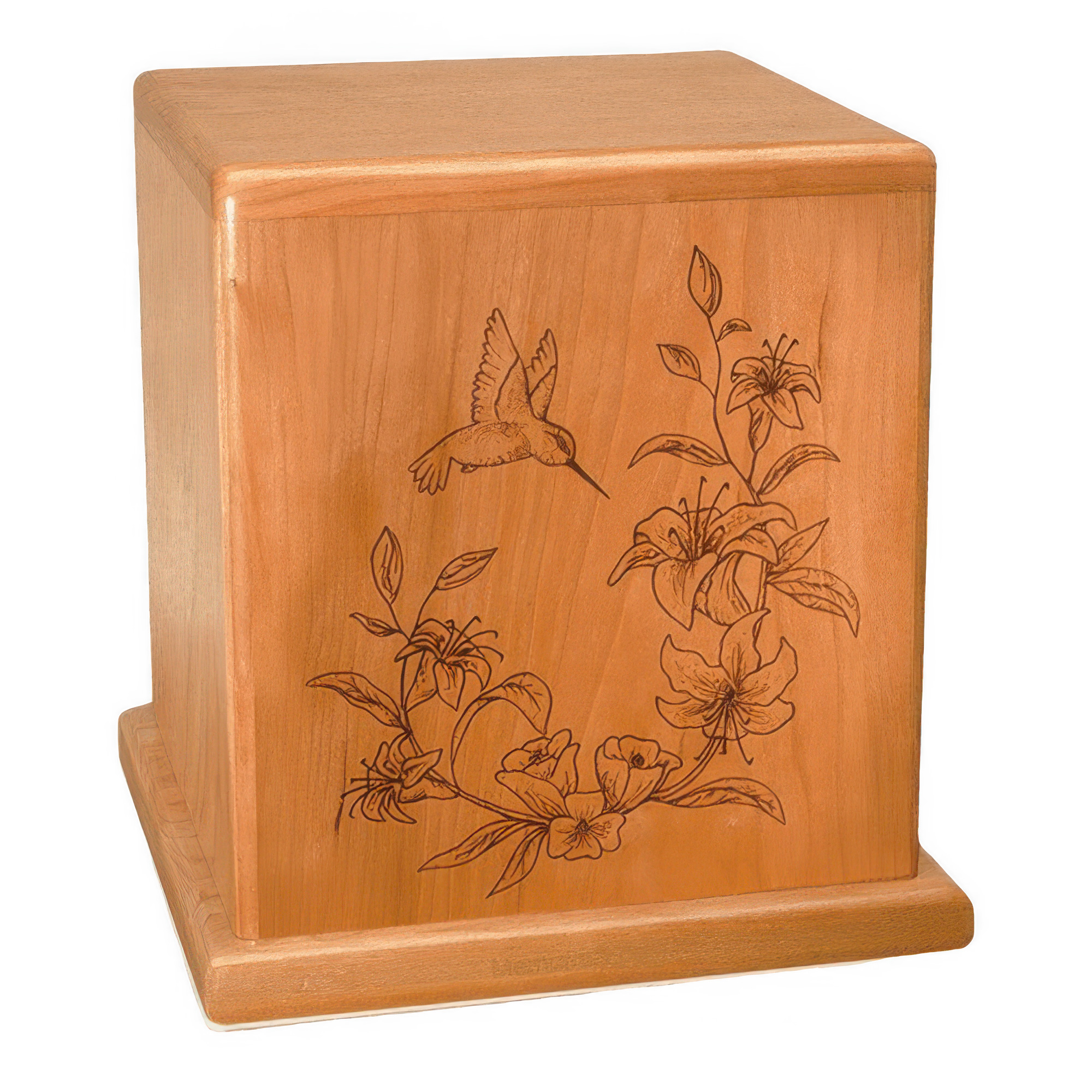
Cremation Urns to Choose Later, at Home
A permanent urn is never part of a direct-cremation price -- it is a later decision, made at home
Cremation Providers and Funeral Homes: Why One Is Cheaper
Most of the gap between $1,095 and $3,730 is one fact: the firms at the bottom of the Iowa range and the firms at the top are not the same kind of business. Work out which of the two you are shopping for before you compare a single figure.
A cremation-only provider owns a retort or contracts with a crematory and sells almost nothing else. There is no chapel; the arrangement happens by telephone or on a website, and the ashes are collected or mailed back. These lists say so on the page — one prints "We are not a funeral home and do not provide embalming services or memorial events." They are the firms that set the floor, here and everywhere.
A full funeral home is a building with staffed hours: a chapel, arrangement rooms, a preparation room, a transfer vehicle, a licensed director reachable at two in the morning. Direct cremation is one line on a document that also prices visitations, services with your loved one present, burials and a wall of caskets. Every conventional Iowa funeral home whose price list we read sits between $2,845 and $3,730 for the same disposition the cremation-only firms sell for under $2,000.
The cheaper firm is not undercutting anybody; it is selling less. The chapel, the staffed hours and the vehicle are real costs carried by the services that firm does sell, so buying direct cremation from a full funeral home puts a share of the building inside the price whether you use it or not. That is what a basic services fee is — and where an Iowa list shows its arithmetic, that one fee is about two thirds of the total.
What the cheap option cannot do is what families discover late. There is no viewing, because there is nowhere to hold one and often no embalming offered to make it possible; no service with your loved one present; no changing your mind to burial once the cremation is authorized. So the decision comes before the comparison. Decide first whether the family will want time with your loved one beforehand — if the answer is yes, price funeral homes, because the cheapest option in Iowa cannot give you a viewing at any price. If what you want is the cremation done and your loved one's ashes returned to you, a funeral home's floor buys you a chapel you will never enter.
Iowa's licensing does not sort the two for you. Iowa Code § 156.14(1) licenses funeral establishments and cremation establishments separately, and one building may hold both — but a cremation establishment may not sell to the public at all (481—900.10(2)). So the low-cost firms here hold no cheaper credential; they are ordinary funeral establishments with a narrow service model. Ask what the price contains, not what license is on the wall.
And the top of a published range is usually a box. Several Iowa lists print direct cremation as a range with a floor in the low thousands and a ceiling in five figures. The itemization always explains it the same way: the floor is the cremation with a plain container, and everything above it is whatever casket you select. The federal Funeral Rule requires a direct-cremation line to cover every container a provider stocks, which is why these ceilings exist. Anybody quoting a five-figure number as an Iowa cremation price is quoting merchandise.
What Is Included, and What Is Not
Iowa lists describe what they cover inconsistently — some itemize every line, some price direct cremation by which container you choose, some name only what they exclude. That is why the itemized list is the thing to ask for, and why two Iowa quotes are not comparable until you have both documents in front of you.
The cremation itself is sometimes inside the headline figure and sometimes a separate charge below it. More than one list describes its price as covering basic services, local transfer, sanitary care and paperwork — then prints a crematory charge of several hundred dollars further down the same page. One list manages to do both at once, heading its section "includes cremation fee" and then billing the crematory separately underneath. From the document alone you cannot tell, which makes it a question to ask out loud.
Inclusions run widest at the cheap end. One low-cost package folds in the crematory fee, an alternative container, refrigeration, a biodegradable urn, all necessary permits, one certified death certificate and sales tax. Higher up the range they narrow and vary list by list.
So ask, item by item, what is inside the number you were quoted: the cremation itself; the container; transfer into the firm's care and transport to the crematory; refrigeration or sheltering; the death certificate and the permits; and the basic services fee. Ask for the answer as a written itemized statement — federal law entitles you to one.
What the state charges on top
Iowa, unusually, puts the government's share in the statute.
Iowa Code § 331.805(3)(b) requires a cremation permit from a medical examiner, and caps what it can cost: where the person authorized under § 144C.5 has requested cremation, "a permit for cremation must be obtained from a medical examiner... Costs for the cremation permit issued by a medical examiner shall not exceed seventy-five dollars." That is a cap, not a price — $75 is the ceiling and the charge is set locally.
Most Iowa providers print that $75, and they disagree about which side of the line it falls on: inside the package on some lists, among the exclusions on others, folded in without a figure on the rest. Treat $75 as typical rather than a published government schedule, and ask the funeral home for the figure in the county where the death occurred. Two honest limits on it: no Iowa county we checked publishes what its medical examiner actually charges, and the practice rule asks only for the permit "if required in the jurisdiction of death" (481—900.10(4)(a)(2)).
The charge that starts at 72 hours
Iowa's embalming rule is where the law reaches into the invoice. Iowa Administrative Code 481—900.6(3)(a)–(b) allows embalming to be omitted "provided that interment or cremation is performed within 72 hours after death," extendable "up to 72 hours longer" with refrigeration at 38 to 42 degrees. Past that, a family is paying for refrigeration or for embalming.
Iowa lists that price the hold start the meter at exactly the rule's 72 hours, and among those that print a daily rate it runs from $35 to $155 a day — lowest at the cremation-only providers, highest at the full funeral homes. A holding charge is not an oversight, then: it is a state rule with a daily rate attached, and it is the likeliest reason an Iowa quote changes once the date of death is known.
Other charges sit outside the headline figure, and these move a quote most: mileage beyond a stated radius at $2.00 to $4.00 a mile, or a per-county band of $200 to $600 where a provider sells statewide; a surcharge for a transfer from a residence; pacemaker removal; mailing the ashes; witnessing the cremation; expedited and weekend service. Certified death certificates sit outside almost every list at $15 or $20 each — read how many death certificates you need first.
Ask for the list even where there is none online. Federal law makes every Iowa funeral home hand you an itemized general price list and quote prices over the telephone, but nothing requires any of them to put one on the internet — so the firm nearest you may have a figure no search will show. Two telephone calls beat an evening of searching.
Be careful with averages, too. Comparison sites publish Iowa "best prices" well under a thousand dollars, and no figure that low appears on any document we read; those headline numbers are usually one line item, with the basic service fee and the permit still to be added. Any Iowa cremation cost figure quoted without naming the document it came from is worth distrusting.
Iowa Cremation Laws That Affect Cost
There is no waiting period in Iowa. We read Iowa Code chapters 144, 144C, 156, 331 and 523I and Iowa Administrative Code 481—900 in full and found no minimum delay before cremation. Aggregator pages routinely give Iowa a 24-hour wait and attach it to 481—900.10(5)(a) — a rule that says the opposite: "A cremation establishment will cremate human remains within 24 hours of issuance of the delivery receipt." That is a maximum hold, not a minimum wait.
Every hours-number in Iowa law is a deadline, and one of them runs against the family. The death certificate must be filed "within three days after the death and prior to final disposition" (§ 144.26(1)(a)), and those last five words are the real gate. More sharply, under § 144C.8(2) the person with the right to decide forfeits it if they do not act within twenty-four hours of being notified, or forty hours after the death, whichever comes first, and the authority passes to the next person in line. Where several states give a grieving family a mandatory pause, Iowa gives them a deadline.
Who may authorize. Iowa Code § 144C.5(1) sets the order — a designee named in the person's own declaration, then the spouse, the children, the parents, and on down the degrees of kinship, with the county medical examiner last. Note what is missing: Iowa's list has no tier for a health-care agent or power of attorney, and none for an executor. Where the children decide, one may sign an affidavit that the others were notified and a majority assented, and the funeral director may accept it by fax or email.
Two permits, commonly confused. The burial-transit permit (§ 144.32) is the family-custody instrument, needed when someone other than a funeral director or medical examiner takes custody. Where a funeral director has custody — the ordinary case — it gates nothing, cremated remains never need one, and no fee for it appears in the law. The cremation permit is the separate document above, with the $75 cap.
The medical examiner, and who pays. For a death "affecting the public interest" under § 331.802(3) — violent or unexplained, in custody, or where no physician attended in the previous thirty days — § 331.805(3)(a) makes it unlawful to cremate until an examiner has completed an inquiry and any autopsy. That has no deadline attached and is the genuine source of delay, but the investigation is on the county, not the family. And § 331.804(1) is worth quoting to anybody who feels steered toward a particular firm: a funeral director is "chosen by a person authorized to control the remains... A medical examiner shall not use influence in favor of a particular funeral director."
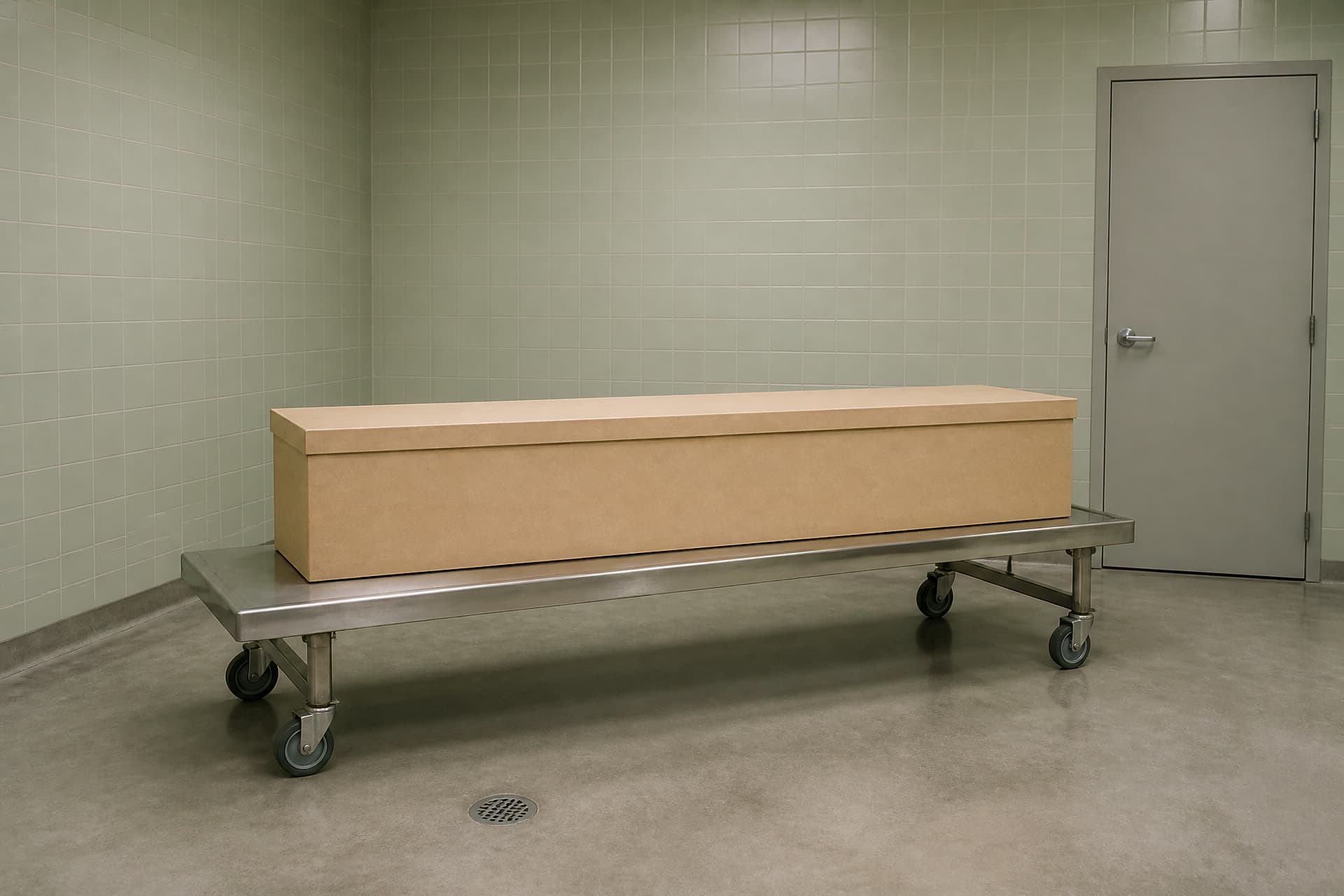
No casket is required, and Iowa says exactly what is. 481—900.10(5)(e): "No cremation establishment will accept human remains unless they are delivered to the cremation establishment in a container that prevents the leakage of body fluids." That is the whole requirement, and the rules define the alternative container as an unfinished wood box or other nonmetal receptacle "without ornamentation or a fixed interior lining." One further rule matters for money: the container "will be cremated with the human remains or safely destroyed," so whatever you buy is consumed. And § 156.2(1) puts casket and urn retailers outside the licensing scheme, so buying either elsewhere is lawful.
Iowa's entire container requirement is that the remains arrive in something that prevents leakage of body fluids — 481—900.10(5)(e). The rules then require that container to be cremated with the remains or safely destroyed, which is worth remembering when a price list prints a range whose top is a casket.
Scattering is where Iowa is genuinely restrictive. Rule 641—97.13(3), effective 1 July 2026, says local ordinances and cemetery rules "shall not allow the scattering of cremated remains upon public property or upon private property without the property owner's consent," and where no ordinance exists, scattering "shall not be allowed upon any public property." Where most states defer to the landowner, Iowa bars public land outright and forbids a city or county from permitting it. Private land is fine with the owner's consent, a cemetery may allow it on its own terms, and the rules expressly let ashes stay in the family's care at home. The rivers count as public property: no Iowa statute addresses inland water, and the federal ocean-disposal rule reaches only ocean waters three nautical miles out. Our guide to scattering ashes laws and etiquette covers the general position.
Two smaller rules with money attached. Ashes left with a funeral home become the family's bill after sixty days: 481—900.10(6)(c) lets the director dispose of them and makes the authorizing person responsible for "all reasonable expenses incurred." And a family may lawfully bury its own dead under a burial-transit permit (§ 156.2(4)), but cannot bring a loved one to an Iowa crematory itself — a cremation establishment may not contract with the public, and the authorization form needs a funeral director's license number and signature.
How to Lower the Cost in Iowa
Decide which kind of firm you want first. A cremation-only provider and a funeral home are not selling the same thing, so comparing their floors tells you nothing until you know whether the family will want a viewing.
Ask whether the cremation itself is inside the price. On some Iowa documents it is named in the package; on others it is a separate line of $400 to $550.
Ask which side of the line the $75 permit sits on. Iowa lists print it as an inclusion and as an exclusion, so the word "permit" in a quote settles nothing.
Ask what a delay costs, and say when the death happened. Iowa holding charges start at exactly 72 hours, at $35 to $155 a day. A Friday death is where it bites.
Ask about mileage before you choose on price. Iowa is rural and the cheap end is priced accordingly: $2.00 to $4.00 a mile beyond a stated radius, and $200 to $600 a county once you are outside a statewide provider's home area. A cheap statewide quote is a quote for its home market.
Look across the state line if you are near one. Along the Mississippi, Illinois establishments publish some of the cheapest lists an Iowa family can reach, and they price Iowa permits and Iowa death certificates on their own documents. Near Council Bluffs, check Omaha too.
Read the effective date, and call more than one brand. More than one list we read publishes today's prices under a header five years old. And sibling brands running a single template can publish the identical package at prices hundreds of dollars apart, so two calls in one city is not a wasted afternoon.
Some Iowa lists name an urn inside the price and many do not, so ask. Among the lists we read, one includes a biodegradable urn, another a "standard urn", another a "minimum urn", and one an urn with a register book. The urn is a later decision, and § 156.2(1) puts urn retailers outside the licensing scheme, so you need not buy one from whoever performs the cremation.
How much does cremation cost in Iowa? Between $1,095 and $3,730 to start, median $2,985, from 12 Iowa-market price lists read in 2026 — the 46th cheapest of the fifty states.
What is the average cost of cremation in Iowa? We publish the median rather than the mean; it is $2,985. Treat any figure for the average cost of cremation in Iowa with suspicion unless the page says which providers' own documents it came from.
Why is the cremation cost in Iowa so much higher than the national figure? Iowa sits $1,060 above the national median of $1,925, and on this evidence the reason is market shape rather than law: no national low-cost cremation brand operates here, so nothing holds the local floor down.
Is there a waiting period before cremation in Iowa? No. We read the chapters where such a rule would live and found none. The repeated "24-hour wait" misreads 481—900.10(5)(a), a maximum hold rather than a minimum wait.
What is the Iowa cremation permit fee? Iowa Code § 331.805(3)(b) requires a medical examiner's cremation permit and caps its cost at $75, and Iowa providers print that figure on their own documents. No county we checked publishes what it charges, so treat $75 as a statutory ceiling, and ask whether your quote already includes it.
Do I have to buy a casket for cremation in Iowa? No. The only container requirement is one that prevents leakage of body fluids, and Iowa defines the alternative container in its own rules. Where a published range tops out in five figures, that top is a casket, not a service.
Can I scatter ashes in Iowa? Not on public property. Rule 641—97.13(3) bars it and forbids local ordinances from permitting it. Private land is fine with the owner's consent, a cemetery may allow it on its own terms, and keeping the remains at home is expressly permitted. The rivers count as public property.
Can my family arrange a cremation ourselves in Iowa? You can file the death certificate and, with a burial-transit permit, bury your own dead. You cannot take your loved one to an Iowa crematory yourself: the rules bar a cremation establishment from contracting with the public, and the authorization form needs a director's license number and signature.
In Short
Iowa is an expensive state for a cremation, and the reason is not in its statutes. The median floor is $2,985, the range $1,095 to $3,730, with an empty $890 band through the middle of it and almost every conventional Iowa funeral home above that gap. No national cremation brand has an Iowa location, and three of the four cheapest lists a family here can reach are published just over the Illinois line.
Most of that spread is a choice between two kinds of business, so make that choice first: a cremation-only provider sets the floor and cannot hold a viewing, while a funeral home carries a building and prices accordingly. Then check the document. The statute caps the medical examiner's cremation permit at $75; the rules set the 72-hour mark, and Iowa holding charges start there. Ask which lines are inside the number you were quoted — that moves more money here than haggling ever will.