🏬Supersize Online Funeral Retailer🪦1000's of Headstones⚱️Over 10,000 Cremation Urns⚰️Caskets Overnight Delivery🛒Funeral & Memorial Superstore🚚FREE Shipping on ALL Orders👨👩👧👦Helping Families for over 20 Years💰Lowest Price Guarantee🏬Supersize Online Funeral Retailer🪦1000's of Headstones⚱️Over 10,000 Cremation Urns⚰️Caskets Overnight Delivery🛒Funeral & Memorial Superstore🚚FREE Shipping on ALL Orders👨👩👧👦Helping Families for over 20 Years💰Lowest Price Guarantee
🏬Supersize Online Funeral Retailer🪦1000's of Headstones⚱️Over 10,000 Cremation Urns⚰️Caskets Overnight Delivery🛒Funeral & Memorial Superstore🚚FREE Shipping on ALL Orders👨👩👧👦Helping Families for over 20 Years💰Lowest Price Guarantee🏬Supersize Online Funeral Retailer🪦1000's of Headstones⚱️Over 10,000 Cremation Urns⚰️Caskets Overnight Delivery🛒Funeral & Memorial Superstore🚚FREE Shipping on ALL Orders👨👩👧👦Helping Families for over 20 Years💰Lowest Price Guarantee
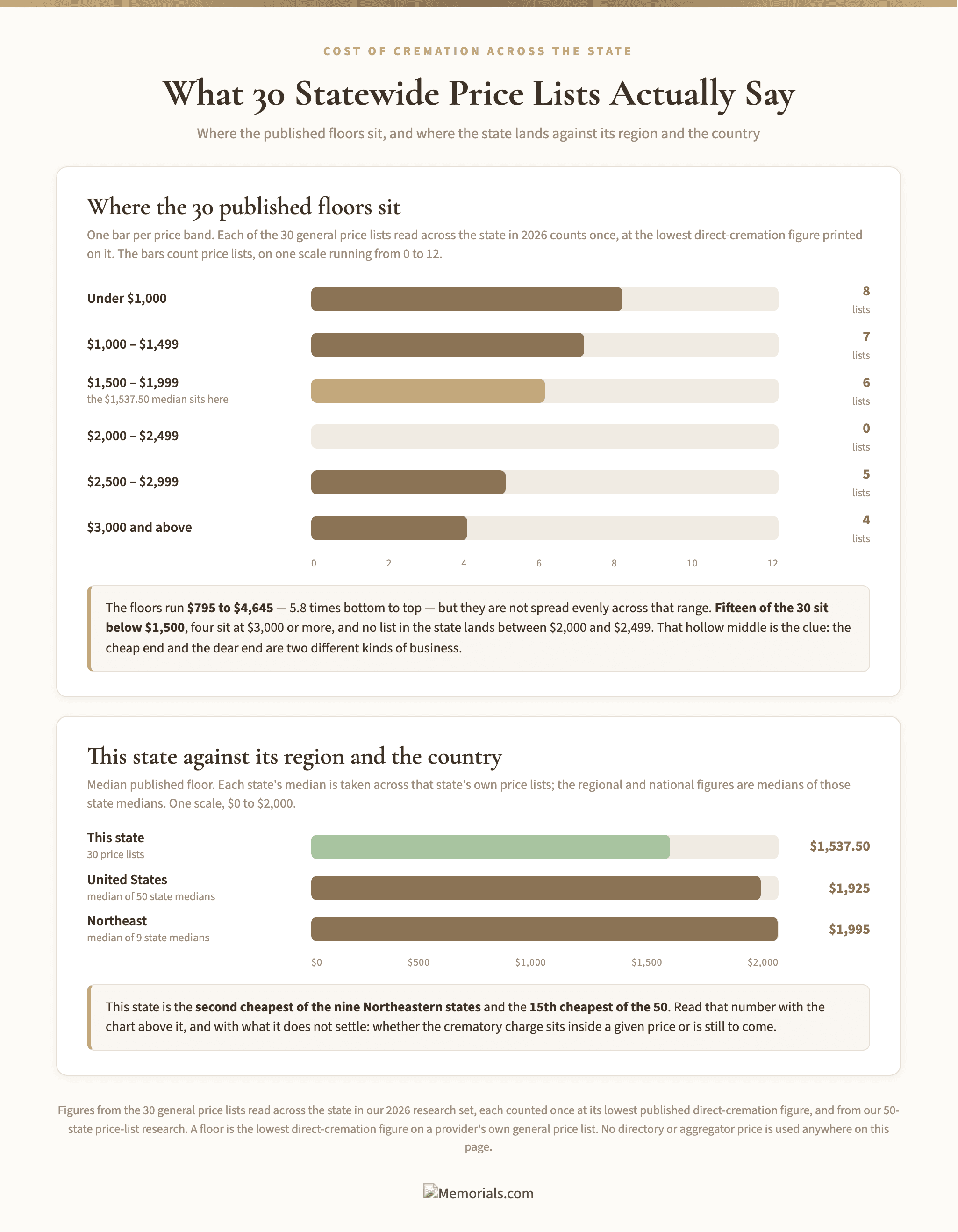
The average cost of cremation in New York State is better answered with a median than with an average. Across 30 published price lists read in 2026, taking the lowest direct-cremation figure printed on each one, the median is $1,537.50 and the floors run from $795 to $4,645.
That makes New York the second cheapest of the nine Northeastern states, and the 15th cheapest in the country. The regional median is $1,995 and the national median $1,925. For a state that contains the most expensive housing market in America, that is not the result most people expect.
The quoted price here also often stops short of the cremation itself. In this state the funeral home and the crematory are usually two businesses and two bills — the law puts them under two different agencies — and a published price commonly covers only the first. It is the most useful thing to know before you telephone anybody.
The whole state, from the 30 published lists we read:
Cheapest published floor
$795
Median floor
$1,537.50
Most expensive published floor
$4,645
Price lists read
30
National rank
15th cheapest of 50 states
Northeast rank
2nd cheapest of 9
Every number here is a floor: the lowest direct-cremation figure on a provider's own document, which usually assumes the plainest container the firm sells. It is not a quote, and in this state it is frequently not a total either.
Federal law is on your side here. Every funeral home in the state must hand you an itemized general price list and must quote prices over the telephone. Nothing obliges a firm to publish that list online, and for several of the largest names in the state we found no price we could read — so a call reaches numbers a search never will.
Floor to floor the state spans 5.8 times — wide even by the standards of this project, and not made the way a wide range is usually made. Elsewhere the container ladder does the stretching. Here it is something else.
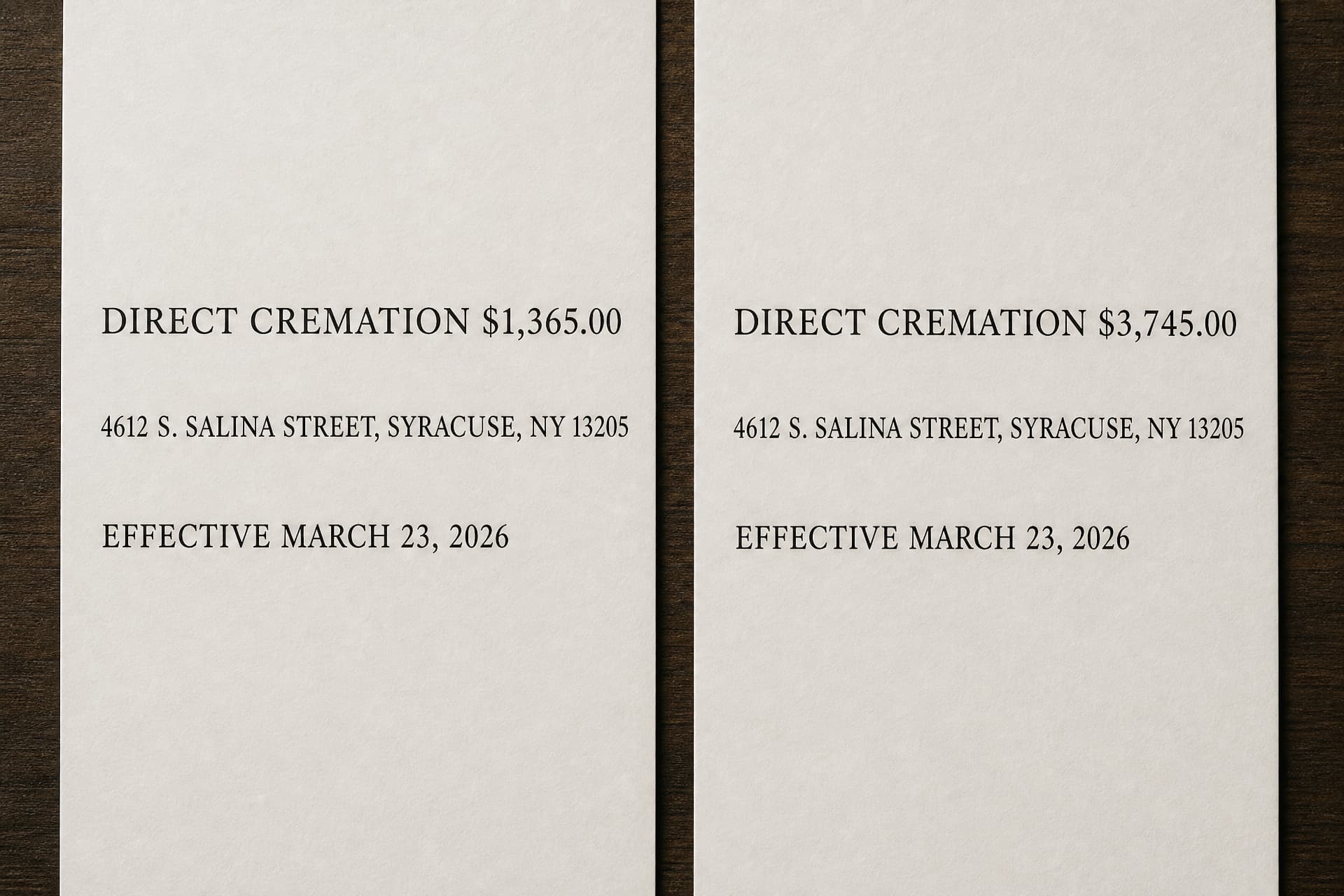
Two price lists, one street address. Two funeral homes trading under different names from the same building publish general price lists carrying the same effective date and word-for-word the same description of a direct cremation, and one of the two figures is nearly three times the other. Neither includes the crematory charge.
The floors bunch below $1,500 and then jump, leaving an empty band between $2,000 and $2,499 — the two ends of this range are two different kinds of business. What those same documents say they cover varies just as widely: some name the cremation itself inside the price, some name only the paperwork, and some say neither way. That is why a $1,537.50 median still has the crematory charge to come.
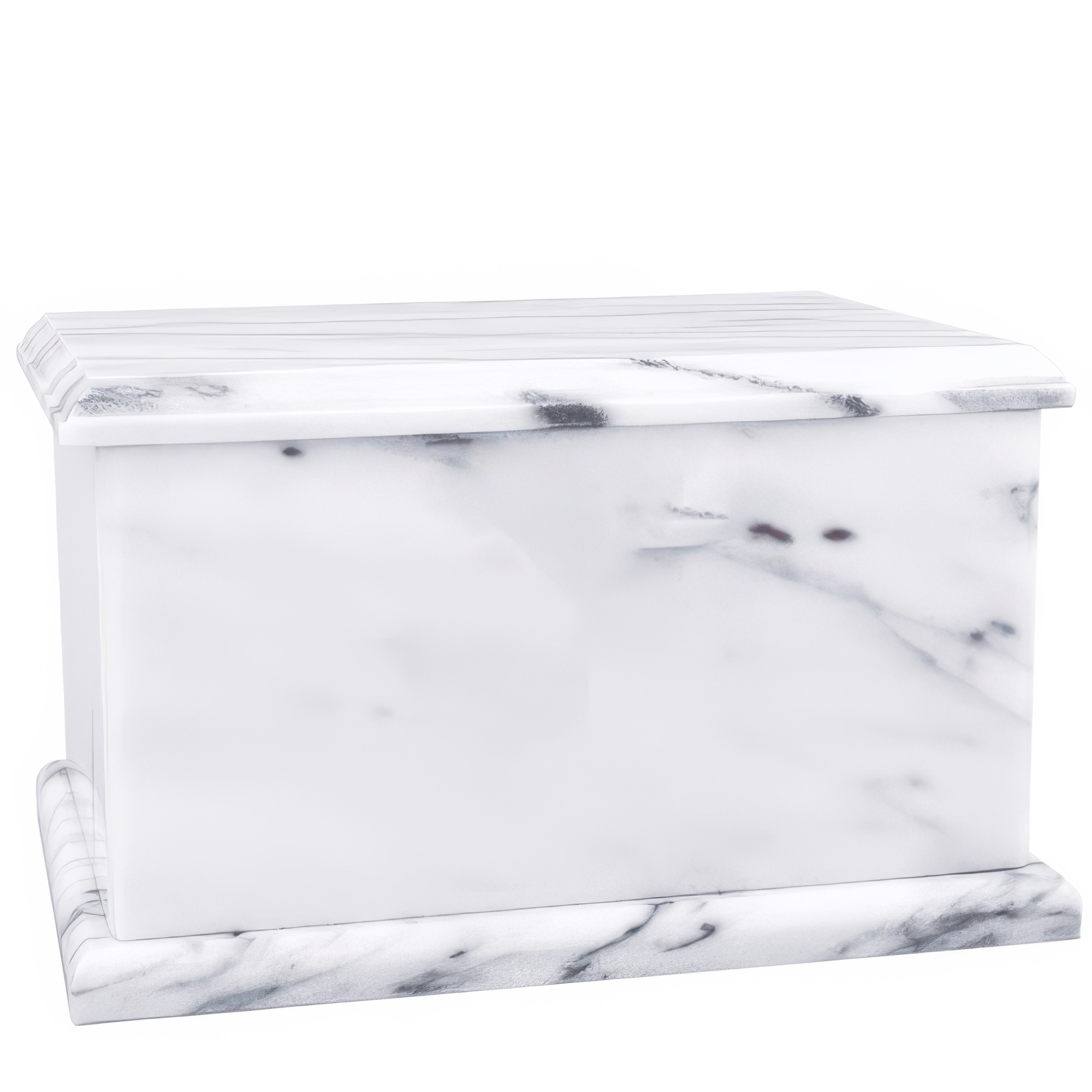
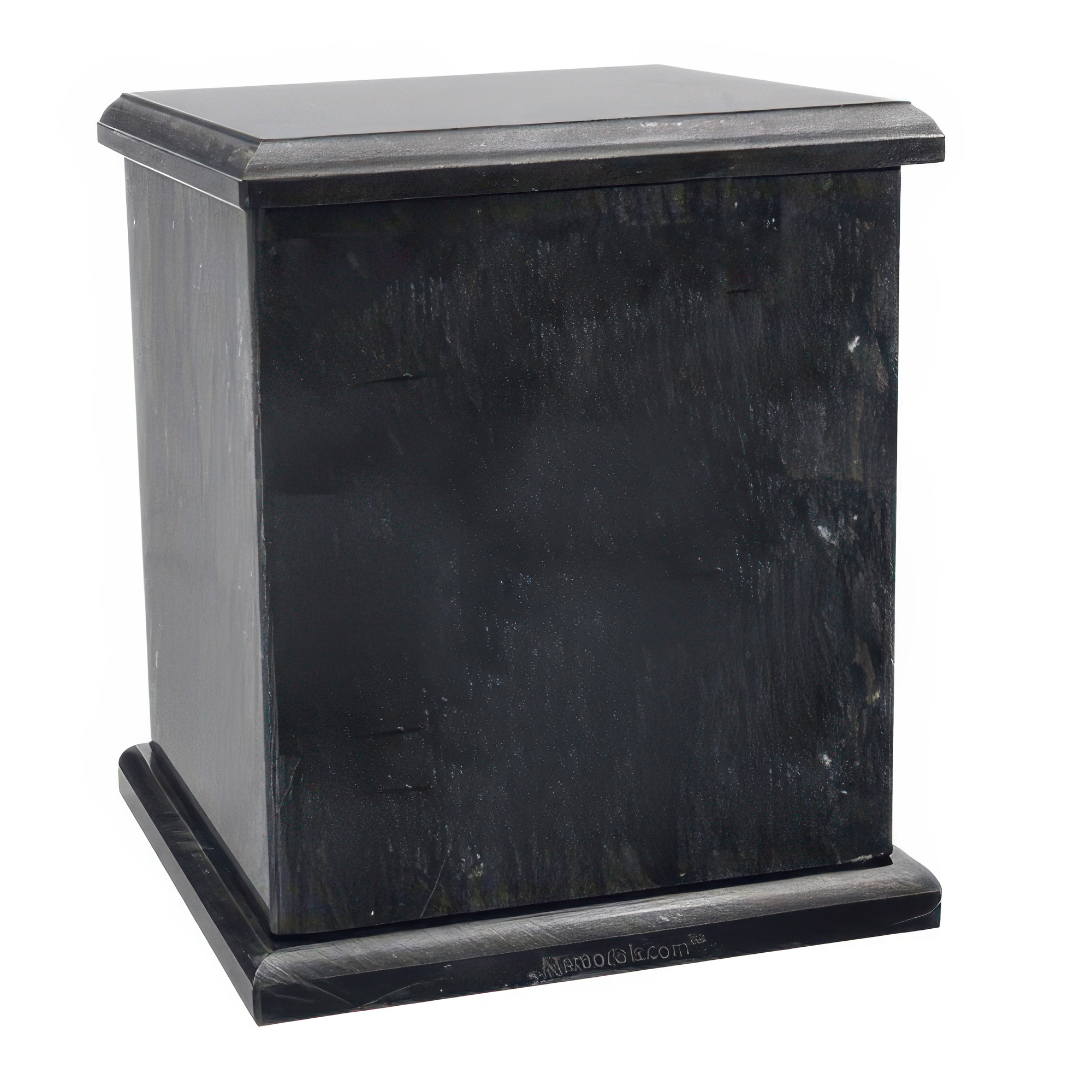
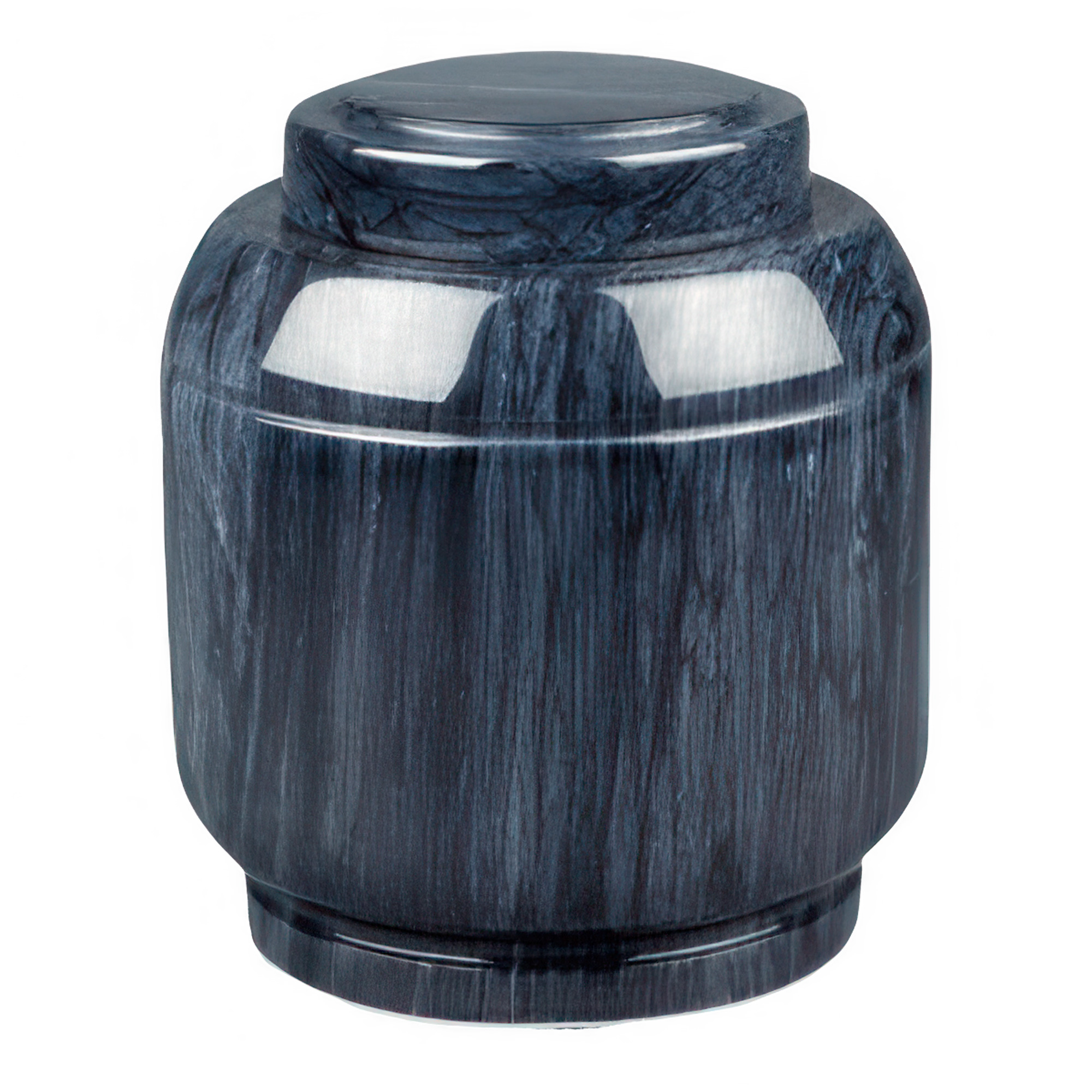
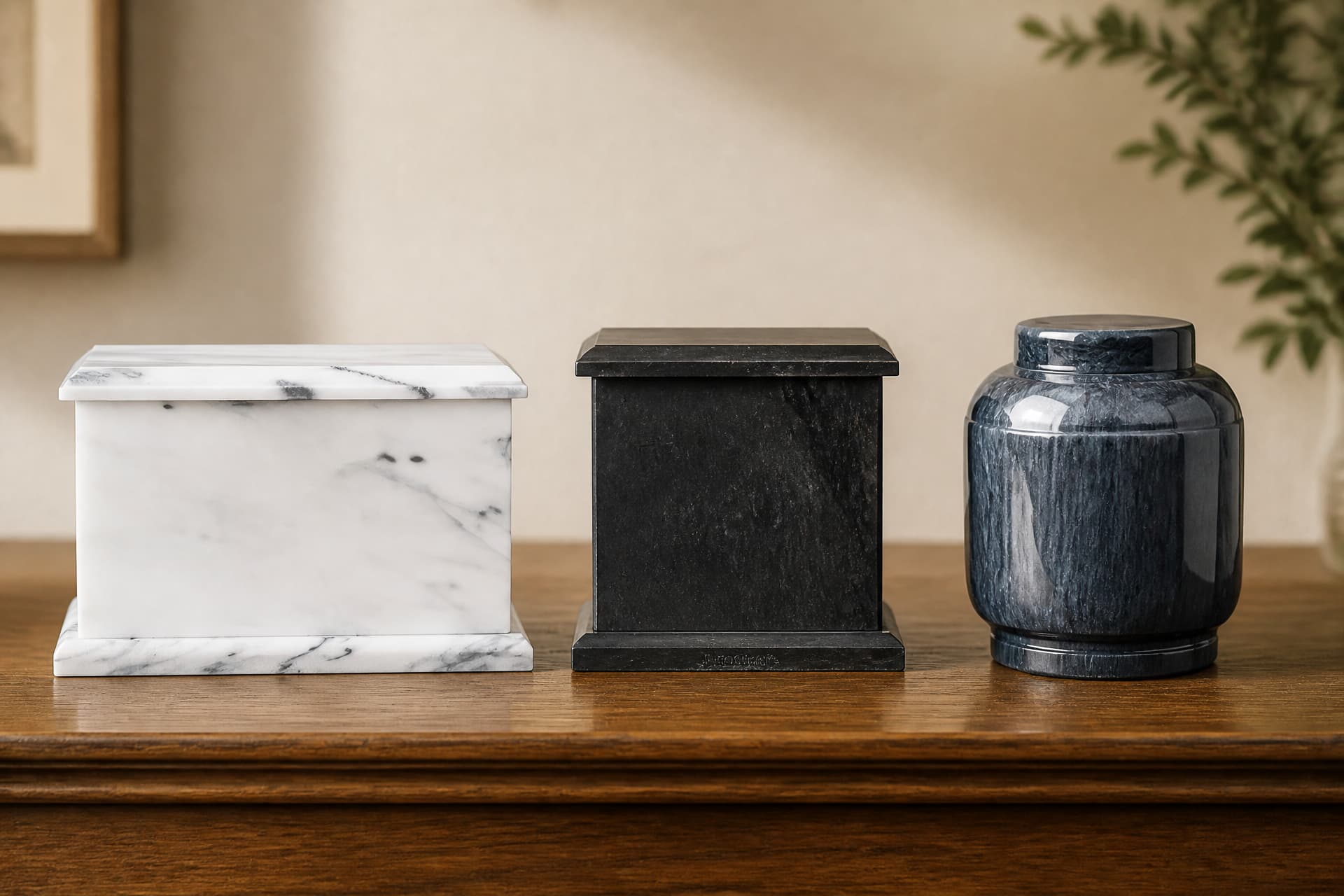
Keepsake and Marble Urns for After a Cremation
Only three of New York's 32 price lists include even a temporary urn
Cremation Services and Funeral Homes: Why One Costs Less
Most of that 5.8-times spread is explained by one thing: the firms at the bottom and the firms at the top are not the same kind of business. Which of the two you want decides which prices are worth comparing at all.
A cremation-only provider sells one thing. It owns a retort or contracts with a crematory that runs one, it takes arrangements by telephone or through a form, and it keeps no chapel and no counter staffed through the afternoon. Providers of that kind set the floor here, though not alone: the cheapest published floor in the state is shared by cremation-only providers and conventional funeral homes alike.
A full funeral home is a building before it is a service. It carries a chapel, refrigeration, vehicles and licensed staff reachable at hours nobody can predict, and it sells direct cremation as one item on a long list. Those firms fill the middle and the top of the range, and they are not being undercut so much as outsold on a narrower product: a chapel that stands empty during a direct cremation still carries a mortgage and an insurance premium, and the families who use it are the ones paying for it. Neither number is dishonest. They are prices for two different things that share a name.
Decide which of the two you want before you compare a single number. If the family will want time with your loved one beforehand — a viewing, or a service with them present — a cremation-only price is not a cheaper version of what you are after. It is a different purchase, and comparing them on price alone will send you to the wrong firm. If no gathering is planned, a cremation-only provider performs the same lawful cremation for a fraction of the chapel price. The licensing will not draw that line for you: the limit is capacity rather than credential, so the question to ask is simply whether the firm has a chapel and can arrange a service.
One operator can also charge very differently under two names, which is the other thing stretching the range. Two funeral homes in our set trade from a single address under different names, on price lists with the same effective date and identical wording, and one figure is nearly three times the other. None of it is hidden or unlawful — it is one company selling a low-service product under one name and a full-service one under another — but a second opinion from a sister brand is not a second opinion.
The container ladder does very little here. Federal law requires a general price list to quote direct cremation across every container the firm stocks, which in many states inflates the printed range enormously. Here it barely moves the number: across the lists we read, the gap between a container the family supplies and the firm's own cardboard alternative runs about $60 to $260. Our national cremation cost by state guide explains that ceiling; in this state it is a footnote rather than the story.
The national discount cremation brands are absent from New York. We found no listing in the state among the five largest of them, though all five publish prices in Arizona, California, Florida and Texas. The floor here is set by local firms.
What the Price Covers, and How to Find Out
Price lists here describe what they cover inconsistently: some itemize every line, some price direct cremation by container variant, and some print only what they exclude and leave you to infer the rest. That is exactly why the itemized list is the thing to ask for — it is the only version you can hold against another firm's.
Ask about each of these by name, because a document here may cover it, exclude it, or say nothing at all:
The cremation itself — the question that matters most here, because the crematory is usually a separate business with its own bill.
The container your loved one is cremated in, and the charge if the family does not supply one.
Bringing your loved one into the firm's care, and how far the radius reaches before mileage starts.
Transportation to the crematory, a separate journey from that first transfer.
The death certificate and the disposition permit, and how many certified copies are included.
Refrigeration or sheltering, which matters as soon as the certificate takes more than a day or two.
A temporary container for the ashes, so no urn has to be chosen in the first week.
The pattern is the part worth carrying with you: what a document names inside the price varies from firm to firm, and the cremation itself is the line to check first. A few say plainly that the crematory fee is included, a few say plainly that it is not, and the rest say nothing — which is the case to ask about, because silence is not a yes.
So what does the crematory actually charge? Only five of the 30 lists put a number on it, and where they do it runs $350 to $552. Add a charge in that band to a headline that excludes it and two floors a few hundred dollars apart can land the other way around, while a floor that already contains the fee does not move at all. Smaller charges sit outside a headline too — mileage beyond a fixed radius at $2.00 to $4.00 a mile, shipping the ashes home at $200, local transfer fees from under $400 to $1,200, and weight surcharges starting at $200.
What the state charges, and what it does not
The disposition permit is free, and the statute says so in terms. Public Health Law § 4144 forbids a registrar of vital statistics to take any fee for issuing a burial or removal permit. Most states will not give you a permit figure at all; the answer here is that there is not one.
The paperwork that does cost money is the certificate: PHL § 4174(2) sets a $30 fee for a certified copy from the State Commissioner, and local registrars charge their own, $10 to $30 on the lists we read. Families routinely need several, so our guide to how many death certificates you need is worth reading before you order them.
The City runs a cremation permit of its own, under the New York City Health Code. We could not find the City's own fee schedule for it. Two lists in our set bill it as a pass-through at about $40 — what those firms charge, not what the City does.
New York Cremation Laws That Affect Cost
There is no waiting period in the state's cremation statutes. We read the three places a delay would live — the death-registration and disposition sections of Public Health Law Article 41 Title IV, PHL § 4200 and Not-for-Profit Corporation Law § 1517 — and none sets a minimum interval between death and cremation. That is a finding about those sections, not about all 62 county health codes, which we did not read.
What actually sets your timeline is the certificate, then the permit. PHL § 4140 requires a death to be registered within seventy-two hours, § 4142 puts the certificate in front of the attending physician, nurse practitioner or medical examiner, and the registrar issues the permit only once it is complete. The bottleneck is a doctor's signature, and nothing you pay for moves it. Nor is there a cheaper route around the professional: PHL § 3420(1) forbids anyone unlicensed to engage in funeral directing.
Who may authorize the cremation is PHL § 4201, and the order here is not the usual one: a person named in a written instrument, then the surviving spouse, then the surviving domestic partner, and only then adult children, parents, adult siblings and the tiers below. Placing a domestic partner above adult children is unusual. Where several people share a tier the decision goes to a majority of that class who are reasonably available — which is where families with four siblings and no written instrument lose days.
No casket is required. No statute in this state requires one — N-PCL § 1517 expressly contemplates "the casket, alternative container, or external wrappings" — and the sentence to hold a provider to is federal: 16 CFR § 453.4(a)(1) makes it an unfair or deceptive practice to require a casket for direct cremation, and § 453.4(a)(2) requires every provider arranging direct cremations to offer an alternative container.
Two agencies split a cremation between them here, and that is why two bills reach you. Funeral directors are licensed by the Department of Health under PHL Article 34; crematories are not, because N-PCL § 1502 folds a crematory into the legal definition of a cemetery and puts it under the Division of Cemeteries at the Department of State. The stronger version of this — that a funeral home here simply may not own a crematory — we could not confirm. What the documents show is simpler: the crematory is usually a third party, and its charge usually sits outside the price the funeral home quotes.
Here the crematory is usually somebody else's building and somebody else's bill. N-PCL § 1502 folds a crematory into the legal definition of a cemetery, which puts it under a different state agency from the funeral home that arranges your cremation — and usually puts its charge outside the price that funeral home quotes you.
Scattering costs nothing and is barely regulated once the ashes are in your hands: N-PCL § 1517 stops governing them at the point they are handed over, and we found no statute here prohibiting scattering on private land with the owner's consent. We could not establish the rules for state parks, Forest Preserve land, inland waters or City parks, so ask whoever manages the land; our guide to scattering ashes laws and etiquette covers the general position.
New York City adds a step the rest of the state does not have
The Chief Medical Examiner must approve every cremation in the City — not only the violent, suspicious or unattended deaths that bring a medical examiner in anywhere else. City Health Code § 205.21(d) allows no cremation permit to issue without that approval, with no carve-out for a natural, physician-attended death. We could not establish whether it carries a fee or how long it takes; it is an extra agency standing between the certificate and the permit, and upstate families never meet it. Everywhere else a medical examiner enters only in the cases County Law § 673 describes, and then the certificate, the permit and the cremation all wait on that office.
How to Lower the Cost in New York
Ask one question before any other: is the crematory charge inside this price? Here it usually is not, and on the figures providers in the state actually publish the difference is $350 to $552.
Then ask for the total, itemized, including the permit and the certificates. One list in our set does that arithmetic in public, and the written-out total comes to about half again the advertised figure. A firm willing to put the same arithmetic in writing is the easiest one to compare.
Call four firms, and make them answer identical questions. Do you have a chapel, and can you arrange a viewing? Is the crematory charge in or out, and how much is it? Is the container in or out? How many certified death certificates, at what price each? How far does your transfer radius reach? The range in this state is 5.8 times wide, and the first question sorts it faster than the rest combined.
Check whether the two firms you are comparing are the same company, and read the effective date on the list you are handed. A second opinion from a sister brand is not a second opinion, and some of what is published online is years out of date — one list linked from a live 2026 site was priced in 2023.
Do not price a cremation here from a city-average page. One aggregator — a comparison site that publishes prices for funeral homes it does not run — puts the average in two of the state's largest markets above $2,100, while the published floors in those same markets start under $1,000. An average of unnamed providers cannot be checked against anything.
Consider the whole decision, not just the cremation. If you are weighing the alternatives, cost of cremation vs burial sets the two side by side, how much a funeral costs covers the full-service figure, and direct cremation explains what actually happens and in what order. If you are near a border, New Jersey sits at a $1,695 median and Connecticut at $2,475, so a provider on this side of the line is very often the cheaper call.
Choosing an Urn
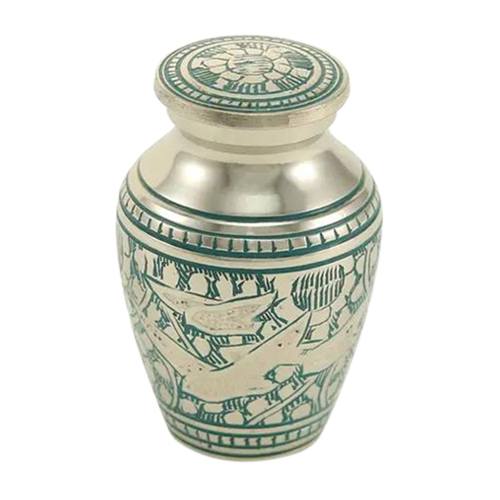
A price list here may or may not include a temporary container for the ashes, and it almost never includes an urn. What the crematory returns is a sealed, labeled container, and the family chooses the vessel afterwards, at home, with nobody selling across a desk.
If you want the fuller version of the decision, how much a cremation urn costs works through materials and price bands, and our full range of cremation urns is organized by how you plan to keep them.
Frequently Asked Questions
How much is cremation in New York? Direct cremation starts between $795 and $4,645 across the 30 price lists we read in 2026, with a median of $1,537.50. Expect to add the crematory charge to most of those figures — where it is published at all it runs $350 to $552 — so ask whether it is in or out before you compare two quotes.
What is the average cost of cremation in New York State? We publish the median, $1,537.50, rather than an average, because a handful of floors above $2,800 pull a mean upward and describe nobody. Treat any single average with suspicion unless the page says where it came from.
How much does cremation cost in New York City compared with upstate? The cheapest floors in the city sit above the cheapest upstate ones, though by less than most people expect. The larger difference is what the number contains: some city lists fold the crematory fee and the City permit into the price, which puts those figures closer to a true total — so ask which kind you are being quoted before you set it beside an upstate one.
Why is the cremation cost in New York quoted without the cremation? Because the crematory is usually a separate business here — state law puts it under a different agency from the funeral home — and its charge reaches you as a pass-through. It is a billing convention rather than a trick, and it is why an itemized total is the only comparable quote.
Is there a waiting period before cremation in New York? None appears in the state's cremation and death-registration statutes, which we read. What delays a cremation here is the death certificate: a physician or medical examiner must complete it and it must be filed before the registrar can issue the permit.
What does the New York cremation permit cost? Nothing, by statute. PHL § 4144 forbids a registrar from charging a fee for a burial or removal permit. Certified copies of the death certificate are the real paperwork cost — $30 from the State Commissioner under PHL § 4174(2), and $10 to $30 locally.
Does a medical examiner have to approve a cremation in New York? In New York City, yes — every one, under City Health Code § 205.21(d), with no exception for a natural death. Everywhere else a medical examiner enters only in the cases County Law § 673 describes: violent, suspicious, unattended or institutional deaths.
Can I scatter ashes in New York? On private property with the owner's consent, yes — N-PCL § 1517 names exactly that. We could not establish the rules for state parks, Forest Preserve land, inland lakes or City parks, so ask whoever manages the land. At sea, federal law allows scattering at least three nautical miles from shore.
In Short
The cremation cost New York families face is the second lowest in the Northeast, and among the hardest to compare, because the printed number here usually stops before the cremation itself. A $1,537.50 median against a regional $1,995 is the headline; the crematory charge, where anyone publishes it, runs $350 to $552.
Two decisions do most of the work. Decide first whether the family will want a chapel and time together with your loved one, or only a lawful cremation — those are two different products, and the cheaper one cannot become the other at any price. Then get the total in writing, itemized.