🏬Supersize Online Funeral Retailer🪦1000's of Headstones⚱️Over 10,000 Cremation Urns⚰️Caskets Overnight Delivery🛒Funeral & Memorial Superstore🚚FREE Shipping on ALL Orders👨👩👧👦Helping Families for over 20 Years💰Lowest Price Guarantee🏬Supersize Online Funeral Retailer🪦1000's of Headstones⚱️Over 10,000 Cremation Urns⚰️Caskets Overnight Delivery🛒Funeral & Memorial Superstore🚚FREE Shipping on ALL Orders👨👩👧👦Helping Families for over 20 Years💰Lowest Price Guarantee
🏬Supersize Online Funeral Retailer🪦1000's of Headstones⚱️Over 10,000 Cremation Urns⚰️Caskets Overnight Delivery🛒Funeral & Memorial Superstore🚚FREE Shipping on ALL Orders👨👩👧👦Helping Families for over 20 Years💰Lowest Price Guarantee🏬Supersize Online Funeral Retailer🪦1000's of Headstones⚱️Over 10,000 Cremation Urns⚰️Caskets Overnight Delivery🛒Funeral & Memorial Superstore🚚FREE Shipping on ALL Orders👨👩👧👦Helping Families for over 20 Years💰Lowest Price Guarantee
Cremated remains carry the weight of a lifetime. They are the physical trace of someone who was loved, and how those remains are treated after cremation reflects the care — or carelessness — of the people responsible for them.
Most families handle ashes with deep respect. But grief, confusion, or simply not knowing the norms can lead to decisions that feel wrong in hindsight, offend other family members, or even create legal problems. If you are in the early stages of planning a cremation, understanding what to avoid is just as important as knowing what options are available.
This guide covers the most common disrespectful things people do with cremation ashes — from careless disposal and illegal scattering to ignoring a loved one's wishes — along with the respectful alternatives that honor the person who has passed.
Respect is not a universal set of rules. What feels appropriate in one family, culture, or faith may feel deeply wrong in another. But a few principles apply broadly.
Cremated remains are the mineral fragments of a human body. They are not fireplace ash — they are coarser, heavier, and recognizable as bone material processed through intense heat. Treating them as waste, as a prop, or as an object of curiosity rather than as the remains of a person crosses a line that most people recognize instinctively. When families ask about how much cremated ashes weigh, they are often surprised to learn that an adult produces three to seven pounds of remains — a significant physical presence that deserves thoughtful handling.
Disrespect generally falls into three categories: actions that violate the deceased's wishes, actions that violate cultural or religious norms, and actions that violate the law. Many mistakes fall into more than one.
Careless Disposal of Cremation Ashes
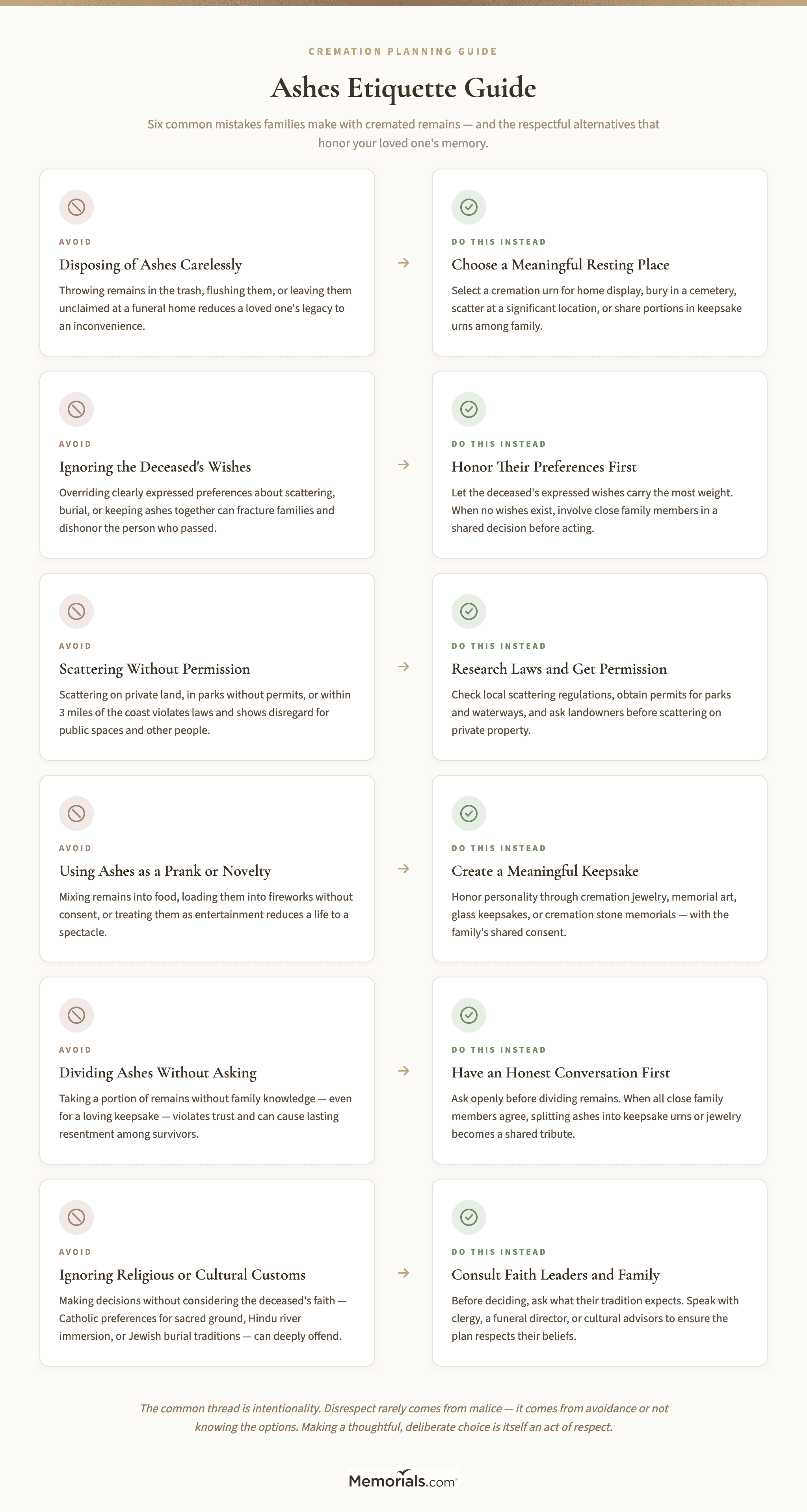
Throwing cremated remains in the trash, flushing them down a toilet, or leaving them in the back of a closet indefinitely are among the most commonly cited disrespectful acts. Each reduces the remains from a meaningful memorial to an inconvenience.
This happens more often than people realize. A 2019 survey by the Cremation Association of North America found that a significant percentage of cremated remains are never claimed from funeral homes, and an unknown number sit in storage closets, basements, and garage shelves for years — not out of malice, but because no one made a plan.
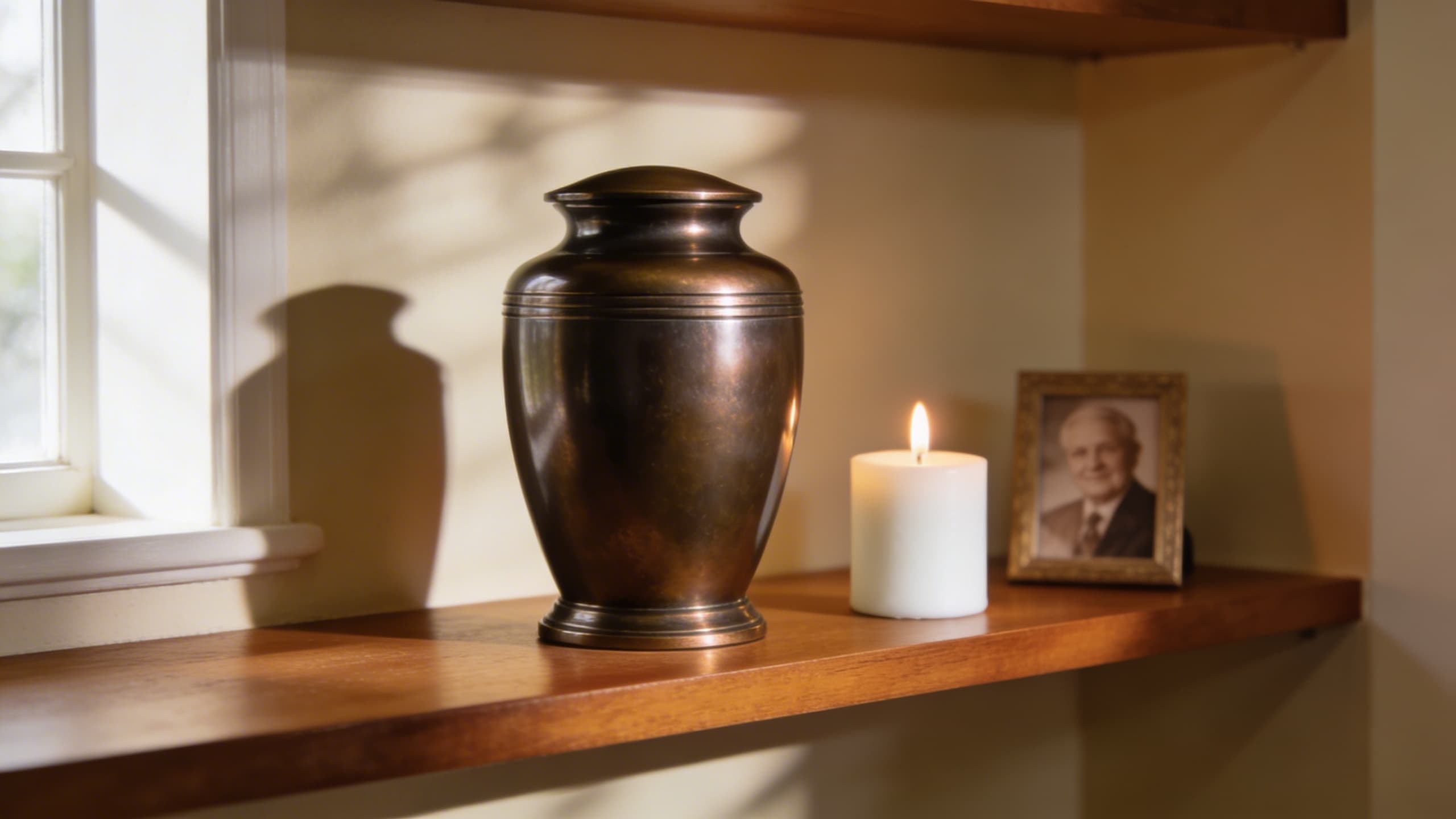
If you have ashes and are unsure what to do with them, there are several dignified options. You can place them in a cremation urn and display them at home. You can bury them in a cemetery plot or columbarium niche. You can scatter them at a meaningful location. You can divide a small portion into keepsake urns or cremation jewelry for family members. You can even incorporate them into cremation stone rocks that serve as lasting outdoor memorials. What matters is making a choice rather than deferring indefinitely.
Ignoring the Deceased Person's Wishes
If your loved one expressed specific preferences about what should happen to their remains — scatter them at the lake, keep them together, bury them beside a spouse — honoring those wishes is the most fundamental act of respect. Overriding those preferences without a compelling reason, or failing to communicate them to the rest of the family, can create lasting resentment among survivors.
This applies in both directions. A person who specifically asked to be cremated should be cremated. A person who asked that their ashes not be divided should have their remains kept together. The deceased's voice should carry the most weight in these decisions, even when it conflicts with what feels most comfortable for the living.
When no wishes were expressed, the family should make decisions collectively. A brief conversation among the closest relatives before anything permanent is done can prevent years of tension.
Scattering Ashes Without Permission
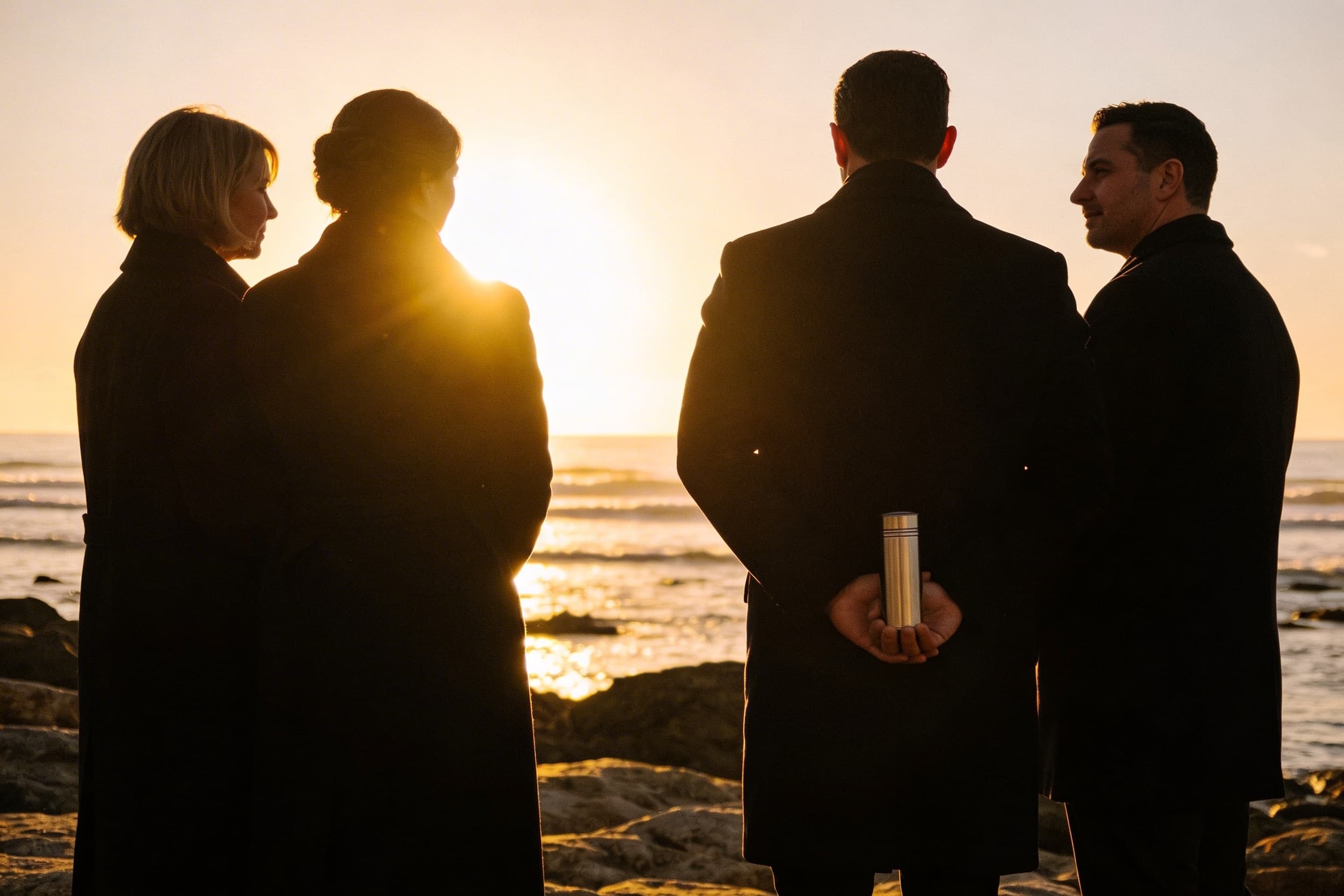
Scattering cremated remains is one of the most meaningful ways to return a loved one to a place they loved. It is also one of the most commonly mishandled.
Scattering without permission is both disrespectful and potentially illegal. Private property requires the landowner's consent. National and state parks often require permits or restrict scattering to specific zones. Scattering in ocean waters requires compliance with the EPA's Clean Water Act — remains must be released at least three nautical miles from shore, and the EPA must be notified within 30 days. Many municipalities prohibit scattering in certain freshwater bodies entirely.
Beyond the legal issues, scattering in public spaces where it disturbs other people — at a crowded beach, a restaurant, a sports stadium, or a playground — is inconsiderate to strangers and can result in complaints or fines. Knowing the scattering ashes laws for your intended location is essential before planning a ceremony.
Even when scattering is legal, doing it carelessly — pouring ashes upwind so they blow back onto attendees, leaving visible piles on the ground, or releasing remains without any acknowledgment of the moment — diminishes what should be a dignified farewell.
Using Ashes as a Prank or Novelty
Using cremated remains as a prank, mixing them into someone's food, loading them into fireworks without the family's knowledge, or incorporating them into novelty items like shotgun shells or party decorations crosses from disrespect into genuine cruelty. These acts reduce a person's remains to a spectacle, and they cause real harm to the people who loved them.
The internet has amplified some of these stories to the point where they feel almost normal. They are not. Cremated remains are not a prop. They are the physical legacy of a person who lived, and treating them as entertainment violates the trust that comes with being given custody of someone's remains.
If your loved one had a sense of humor and would have wanted something unconventional done with their ashes, that is their right — but it should be their clearly expressed wish, not someone else's idea of a joke.
Handling Ashes Without the Family's Consent
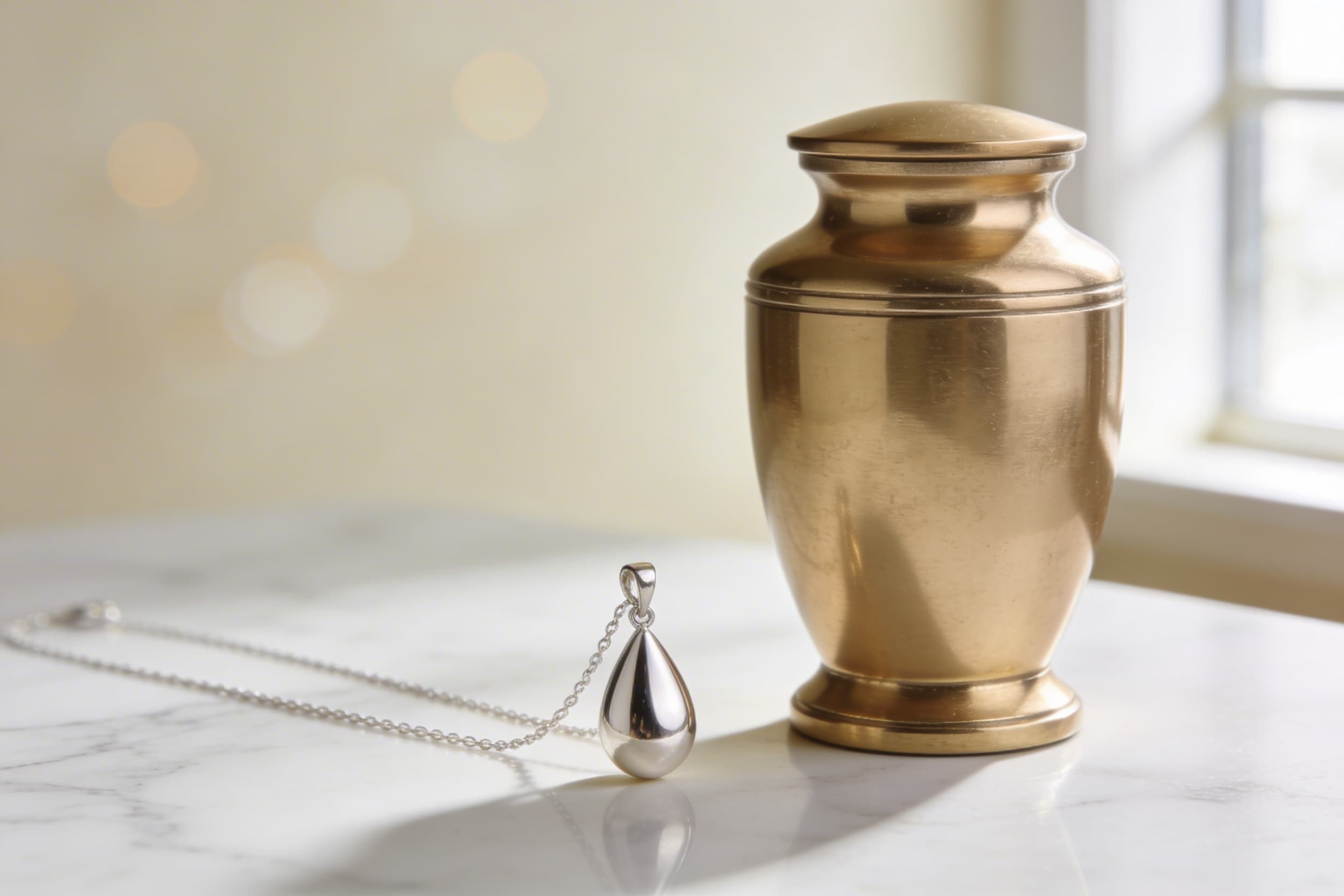
Taking a portion of cremated remains without the family's knowledge or agreement is a violation of trust. Even well-intentioned actions — removing a small amount for a keepsake necklace, giving some to a friend the family did not know well, or scattering a portion at a location without consulting other relatives — can cause deep pain.
The question of whether it's wrong to separate ashes does not have a single answer. What makes the difference between a respectful and disrespectful division is consent. When all close family members agree to divide remains among multiple keepsakes or locations, the act is a shared tribute. When one person takes remains without asking, it is a breach.
If you want a portion of a loved one's ashes, ask. A direct, honest conversation is almost always better received than a unilateral action discovered after the fact.
Ignoring Cultural and Religious Customs
Different faith traditions and cultural backgrounds have specific expectations about how cremated remains should be handled. Ignoring these norms — even unintentionally — can cause deep offense.
Catholic families should know that the Church permits cremation but requests that cremated remains be kept intact in a sacred place such as a cemetery or columbarium. The Vatican's 2016 instruction Ad Resurgendum Cum Christo discourages scattering, dividing, or keeping ashes in the home, though a 2023 clarification softened the position slightly, allowing families to retain a minimal portion under certain conditions.
Hindu families traditionally scatter ashes in a sacred river, and delay or failure to perform this ritual can be spiritually distressing. Keeping ashes at home indefinitely may conflict with the belief that proper immersion helps the soul achieve liberation.
Jewish and Muslim traditions generally oppose cremation itself. If cremation has occurred within these communities, handling the remains requires particular sensitivity and consultation with religious leaders.
Protestant Christian families have the widest latitude. Most denominations leave the disposition of ashes entirely to family preference, and the Bible does not specifically address cremation or ash handling.
The respectful approach is straightforward: before making decisions about someone's ashes, consider what their faith and culture would expect. If you are unsure, consulting a clergy member, spiritual advisor, or funeral director from that tradition can prevent an unintentional misstep.
Keeping Ashes Indefinitely Without a Plan
Keeping cremated remains at home is a legitimate choice that millions of families make. But there is a difference between an intentional home memorial and an urn gathering dust in a closet because no one has made a decision.
When ashes sit unclaimed, unstored, or forgotten, it often signals unresolved grief or family disagreement rather than a deliberate choice. Over time, the remains become an emotional weight that no one wants to address. Children inherit them without context. Spouses remarry and feel uncomfortable. The person who was loved becomes a logistical problem.
If you are keeping ashes at home, make the choice deliberately. Place the urn in a meaningful location. Consider planning a cremation memorial service, even months or years after the death, as a way to create closure. And if you eventually decide to scatter, bury, or share the remains, give yourself permission to do so — there is no expiration date on making a plan.
Some families worry about superstitions — whether it is bad luck to keep ashes in the house or whether an urn should never be opened. Neither of these beliefs has any basis in religion, culture, or science. Millions of families keep ashes at home without consequence, and opening an urn to transfer, divide, or prepare remains for scattering is a normal, practical act.
Mixing Ashes Without Consent
Combining the cremated remains of two different people — or mixing human ashes with pet ashes — without the explicit consent of all involved families is disrespectful. Even when the intention is loving (a spouse who wants their partner's ashes combined with their own, or a pet owner who wants their companion's remains together), the decision affects other family members who may have different wishes.
Companion urns exist specifically for families who want two sets of remains stored together in a single vessel. But the key word is "consent." Every family member with a stake in the decision should be included before remains are mixed permanently.
Respectful Alternatives: What to Do Instead
Every disrespectful action has a respectful counterpart. Here is what thoughtful families do:
Instead of disposing of ashes carelessly, they choose a cremation urn, keepsake, or memorial rock that reflects their loved one's personality.
Instead of ignoring wishes, they hold a family conversation to surface and honor the deceased's preferences.
Instead of scattering illegally, they research local regulations, obtain permits, and choose words for a scattering ceremony that give the moment weight and meaning.
Instead of dividing ashes without asking, they discuss the idea openly, agree on portions, and select keepsake urns or cremation jewelry that each family member can treasure.
Instead of letting ashes sit forgotten, they create a home memorial display, plan a ceremony, or choose a permanent resting place that gives future generations somewhere to visit.
The common thread is intentionality. Disrespect rarely comes from malice. It comes from avoidance, confusion, or not knowing what the options are. Making a choice — any thoughtful, deliberate choice — is itself an act of respect.
FAQ
Is it disrespectful to split cremated ashes among family members?
Not when done with the family's agreement. Dividing cremated remains so that siblings, children, or close friends can each keep a portion is a widely practiced and accepted choice. What makes it disrespectful is doing it secretly or against the wishes of other family members. When everyone agrees, splitting ashes is an act of shared remembrance.
What is the most disrespectful thing you can do with cremation ashes?
Using remains as a prank, mixing them into food or products without consent, or throwing them in the trash are broadly considered the most disrespectful acts. Ignoring the deceased's clearly expressed wishes — when those wishes are known — is also a serious breach of respect.
Is it bad luck to keep ashes at home?
No. There is no religious, cultural, or scientific basis for the belief that keeping cremated remains at home brings bad luck. The superstition draws from specific cultural traditions and pop culture depictions, not from any universal truth. Millions of families keep ashes at home as a source of comfort and connection.
Can you get in trouble for scattering ashes without permission?
Yes. Scattering on private property without the owner's consent can result in trespassing charges. Scattering in national parks without a permit can lead to fines. Scattering in ocean water within three nautical miles of shore violates the EPA's Clean Water Act. While enforcement varies, the legal risks are real, and the respectful approach is to always check regulations and obtain permission first.
What does the Bible say about cremation ashes?
The Bible does not specifically mention cremation or provide instructions about handling ashes. Most Protestant denominations leave the decision entirely to family preference. The Catholic Church permits cremation but prefers that remains be kept together in a sacred place. The often-quoted phrase "ashes to ashes, dust to dust" reflects the broader biblical theme that all bodies eventually return to the earth, regardless of the disposition method.
Treating Their Memory the Way They Deserve
Cremated ashes are not an obligation — they are an opportunity. An opportunity to honor someone's life, to give their memory a place in the world, and to bring comfort to the people who loved them most.
If you are ready to choose a meaningful resting place for your loved one's remains, Memorials.com offers cremation urns, keepsake urns, memorial rocks, and cremation jewelry designed to hold those remains with dignity and care.