🏬Supersize Online Funeral Retailer🪦1000's of Headstones⚱️Over 10,000 Cremation Urns⚰️Caskets Overnight Delivery🛒Funeral & Memorial Superstore🚚FREE Shipping on ALL Orders👨👩👧👦Helping Families for over 20 Years💰Lowest Price Guarantee🏬Supersize Online Funeral Retailer🪦1000's of Headstones⚱️Over 10,000 Cremation Urns⚰️Caskets Overnight Delivery🛒Funeral & Memorial Superstore🚚FREE Shipping on ALL Orders👨👩👧👦Helping Families for over 20 Years💰Lowest Price Guarantee
🏬Supersize Online Funeral Retailer🪦1000's of Headstones⚱️Over 10,000 Cremation Urns⚰️Caskets Overnight Delivery🛒Funeral & Memorial Superstore🚚FREE Shipping on ALL Orders👨👩👧👦Helping Families for over 20 Years💰Lowest Price Guarantee🏬Supersize Online Funeral Retailer🪦1000's of Headstones⚱️Over 10,000 Cremation Urns⚰️Caskets Overnight Delivery🛒Funeral & Memorial Superstore🚚FREE Shipping on ALL Orders👨👩👧👦Helping Families for over 20 Years💰Lowest Price Guarantee
Read the invitation, and then do what it says. That is genuinely the whole answer to what to wear to a celebration of life: if the family asked for bright colors, wear bright colors. If they asked for his favorite shirt, wear the loudest thing you own. If they said nothing at all, wear something smart in a soft color and you will be exactly right.
This is harder than it sounds, because every instinct trained into us says a service means black. Overriding that feels disrespectful. It is the opposite — the family chose this format deliberately, and turning up in mourning black when they asked for yellow makes their choice harder to hold, not easier.
This is the live question and the one every other page waves at, so here it is properly.
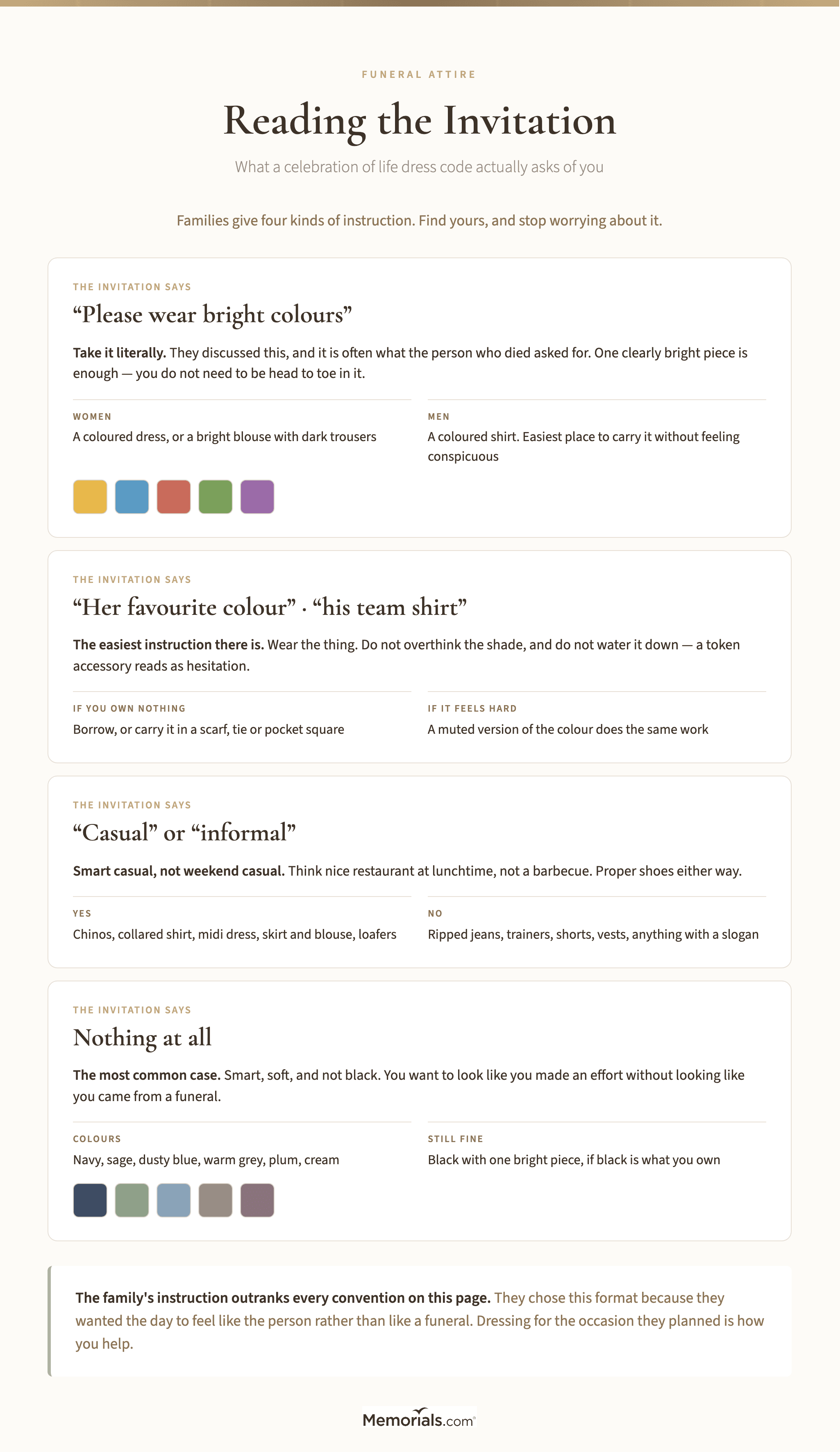
Take it at face value. When a family writes "please wear bright colors" on an invitation, they have usually discussed it, and often it is what the person who died asked for. It is not a politeness you are meant to decline. Wearing black to a color request is a small, visible act of not listening, and people notice it more than they would notice anything you actually wore.
How much color? One clearly bright piece is enough. A colored dress, a colored shirt, a bright blouse under a neutral jacket. You do not have to be head-to-toe in it, and nobody is measuring.
If you own nothing bright. Most people's wardrobes are darker than they think. In order: a colored shirt or blouse you already own; something borrowed; a scarf, tie or pocket square that carries the color; a bright top under something neutral. If none of that works, wear your softest, least funereal outfit — mid-blue, warm gray, cream — and do not spend money on this. Nobody will think you ignored them.
If you find it difficult. Some people are grieving too hard to feel like wearing yellow, and that is a real thing rather than an excuse. Wear a muted version of the color, or carry it in one small item. The gesture reads the same and you get to keep your composure, which matters more.
If they named a color, wear that color. "Wear purple, it was her favorite" is the easiest instruction there is. Do not overthink the shade.
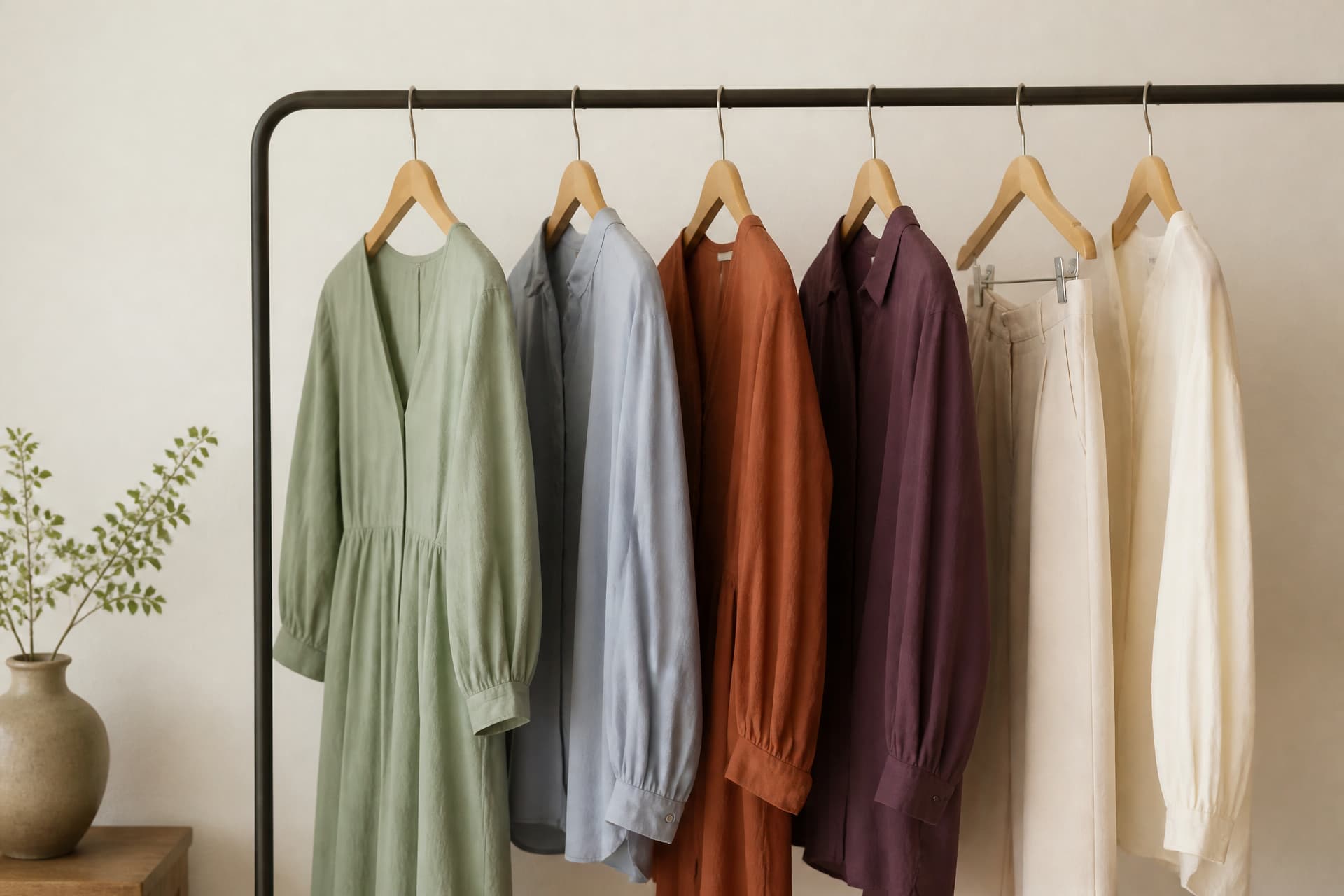
When the family asks for colour, soft and muted is the register — sage, dusty blue, warm rust. The request is an invitation, not an instruction to be bright.
If There Was No Instruction at All
Most invitations say nothing, and this is where people get stuck.
The default for a celebration of life dress code with no guidance is smart, soft, and not black. In practice:
Smart pants, a midi dress, a skirt and blouse, chinos and a collared shirt.
Shoes you could stand in for two hours.
Think of the register as "nice restaurant, daytime" rather than "church service". You want to look like you made an effort, without looking like you came from a funeral — because for many families the entire point of choosing this format was to avoid the funeral atmosphere.
If you genuinely cannot tell how formal it will be, ask whoever invited you. It is an ordinary question, and the honest answer is usually "oh, whatever you like" — which is itself the answer.
How to read a celebration of life when nothing was specified: what the invitation wording implies, what the venue tells you, and what to wear when the answer is genuinely unclear — which is smart-casual in muted colour, a step below a funeral and a step above a weekend.
How a Celebration of Life Differs From a Funeral
Worth being clear about, because the name is doing a lot of work.
A funeral is a service, usually within a week or two of the death, usually with the body or ashes present, and usually with a religious or formal structure. A celebration of life is a gathering, often weeks or months later, frequently with no body present, no fixed liturgy, and a deliberately warmer atmosphere. Some are held instead of a funeral; many are held in addition to one.
What that means for clothes is straightforward: the formality floor is lower and the color ceiling is much higher. It is closer to a memorial gathering or a wake than to a church service — though note that what to wear to a wake, viewing or visitation is still the darker end of the scale, because funeral visitation attire follows the service it belongs to.
If you are involved in arranging one rather than attending, our published guide to how to plan a celebration of life covers the format, the running order and the practicalities. This page stays on the clothes.
The Venue Changes the Answer
Every other page writes as if there is one venue. There is not, and the venue is the most useful single clue you have about celebration of life attire.
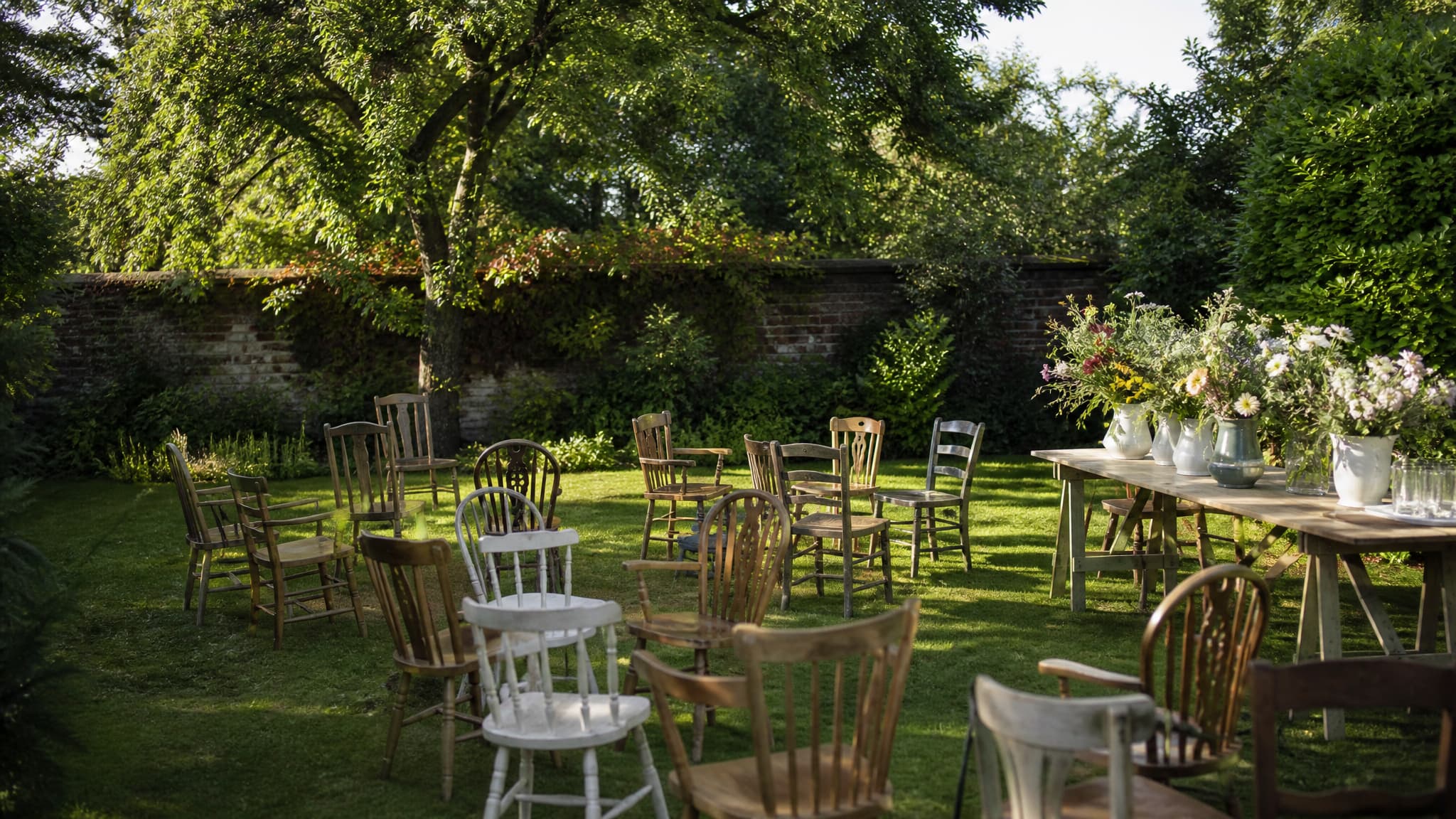
A garden or a home. Smart casual, and think about the ground. Heels sink into lawn. A light layer for when the sun goes.
A hotel or function room. The most formal of the informal options. Dress as you would for a daytime work event — this is where a jacket earns its place.
A pub, bar or club. Genuinely relaxed. A collared shirt or a nice top with dark pants or a skirt. Nobody is in a suit.
A beach or open field. Flat shoes, wind-proof layers, and fabric that will not fly up. Sand and heels do not work at all.
A church hall or community center. The middle of the range, and slightly more conservative because of the setting. Cover shoulders if the building is a religious one.
A restaurant. Whatever you would wear to eat there, in the colors the family asked for.
If you do not know the venue, ask. It changes the answer more than anything else here.
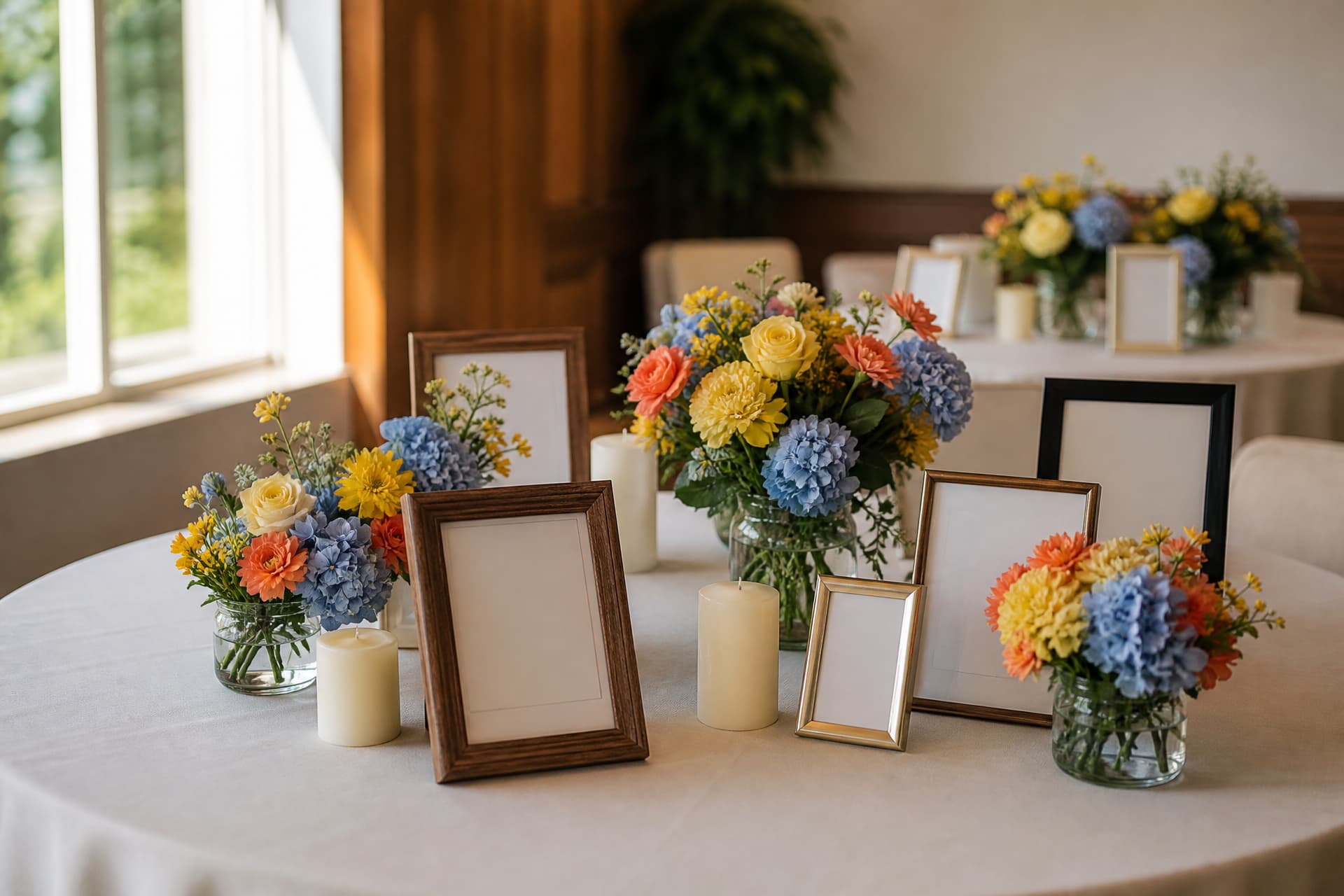
The room itself usually answers the question. Photographs, candles and bright flowers signal an occasion that is being celebrated rather than mourned.
What to Wear to a Celebration of Life as a Woman
Guidance on what to wear to a celebration of life women are attending is the same as everyone else's, with a few more options.
A midi dress in a soft or bright color is the single most reliable choice, and it works from a garden to a hotel.
Separates — a colored blouse with dark pants or a midi skirt — are equally correct and often more comfortable.
A patterned dress is fine here, unlike at a funeral. Florals, in particular, suit the occasion.
Layers. Most of these gatherings involve moving between indoors and out.
Shoes for the ground. Block heels, flats or wedges. Check the venue first.
Jewelry can be brighter than you would wear to a service. This is one of the few occasions in the hub where that is true.
Chinos or smart pants and a collared shirt, in a color. That is the answer at nine celebrations of life out of ten.
A jacket is optional and depends entirely on venue. Function room, yes. Garden, probably not.
Color lives in the shirt. This is the easiest place for a man to follow a color request without feeling conspicuous.
A polo shirt is acceptable at a genuinely casual gathering, which is not true at a funeral.
Shoes: loafers, brogues, clean leather. Not sneakers, even here.
Standard male funeral attire — dark suit, white shirt, dark tie — is not wrong at a celebration of life, but it is often more formal than the room and can read as though you did not read the invitation. If in doubt, wear the suit pants and skip the jacket and tie. The full version is in what to wear to a funeral as a man.
Do You Need a Tie?
At a celebration of life, almost certainly not. It is the least tie-appropriate occasion in this whole guide, and wearing one will usually make you the most formal person in the room.
The question comes up so often, though, that it is worth answering for services generally, because most people asking about a celebration of life are also weighing up the funeral itself.
Should you wear a tie to a funeral? At a traditional church or chapel service, yes if you own one — it is never wrong and it is still the expectation for immediate family and anyone with a role. Do you have to wear a tie to a funeral? No. A tie has not been mandatory for guests for years now, and a dark jacket over a pressed shirt with an open collar is completely acceptable.
If you do wear one:
Color. Plain black, charcoal or navy for a funeral. At a celebration of life, a color the family asked for.
Pattern. Plain is safest; a subtle texture or very small repeat is fine. Nothing novelty, nothing with a logo.
The knot. The best tie knot for funeral wear is whichever one you can tie neatly, and a four-in-hand is the sensible default. Nobody is assessing it, and a tidy simple knot beats a fumbled complicated one every time.
Bow ties are fine if that is genuinely how you dress. Otherwise skip.
Choosing a funeral tie is one of those decisions that feels much larger than it is. Any plain dark tie for funeral use will serve you for the rest of your life, and at a celebration of life you probably will not need it at all.
If the Service Is Months Later
Many celebrations of life happen well after the death — six weeks, six months, sometimes on the first anniversary. Nobody writes about what that does to the clothes, and it does quite a lot.
The further from the death, the warmer the register. A gathering held a year later is closer to a reunion than a service: people have done the acute part of their grieving, the conversation is more anecdotal than consoling, and the clothes follow. Color is more expected, not less. Black is more conspicuous, not less.
If the celebration is happening soon after the death and in place of a funeral, hold slightly closer to the conventional end — soft colors rather than bright ones — because for many people in the room this is still the funeral.
A service held months later sits in a warmer register than a funeral — the acute part has passed, and soft colours read better than black.
If You Are Family or Hosting
Different job entirely. You are not attending, you are receiving.
Dress a notch above the guests. Not formally, but deliberately. You set the register and people read it as they arrive.
If you asked people to wear color, wear it yourself, and wear it clearly. Guests hesitate, and seeing the family in color is what gives them permission.
Comfortable shoes, without question. You will be standing and greeting for hours.
Pockets or a small bag for tissues, orders of service and your phone.
Layers, because you will be in and out and you will not get to choose when.
Color Meanings, If You Want to Choose Deliberately
Some people want the color to mean something rather than just be bright. Different colors carry different associations in memorial contexts — white for peace, purple for dignity, yellow for remembrance and friendship — and our guide to what color represents remembrance sets out what each traditionally signifies.
Use it if it helps you choose. Do not let it stop you wearing the color the family actually asked for, which outranks every symbolic meaning.
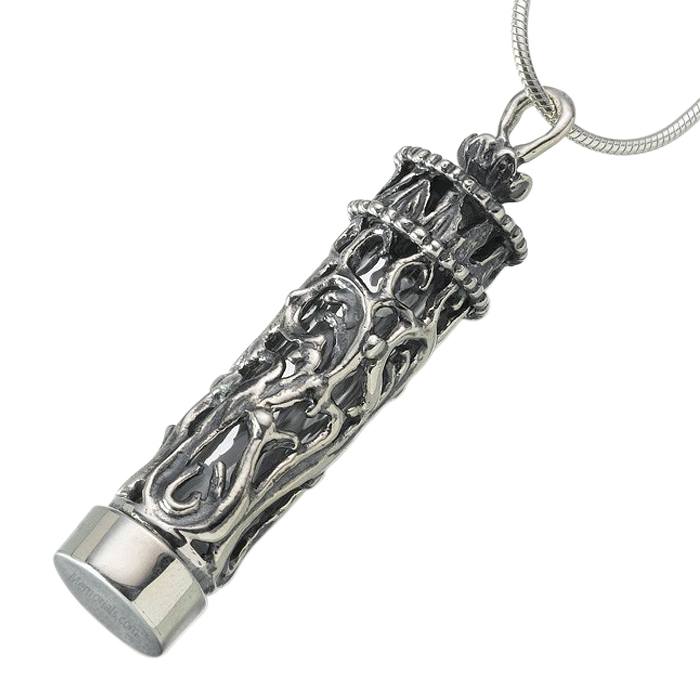
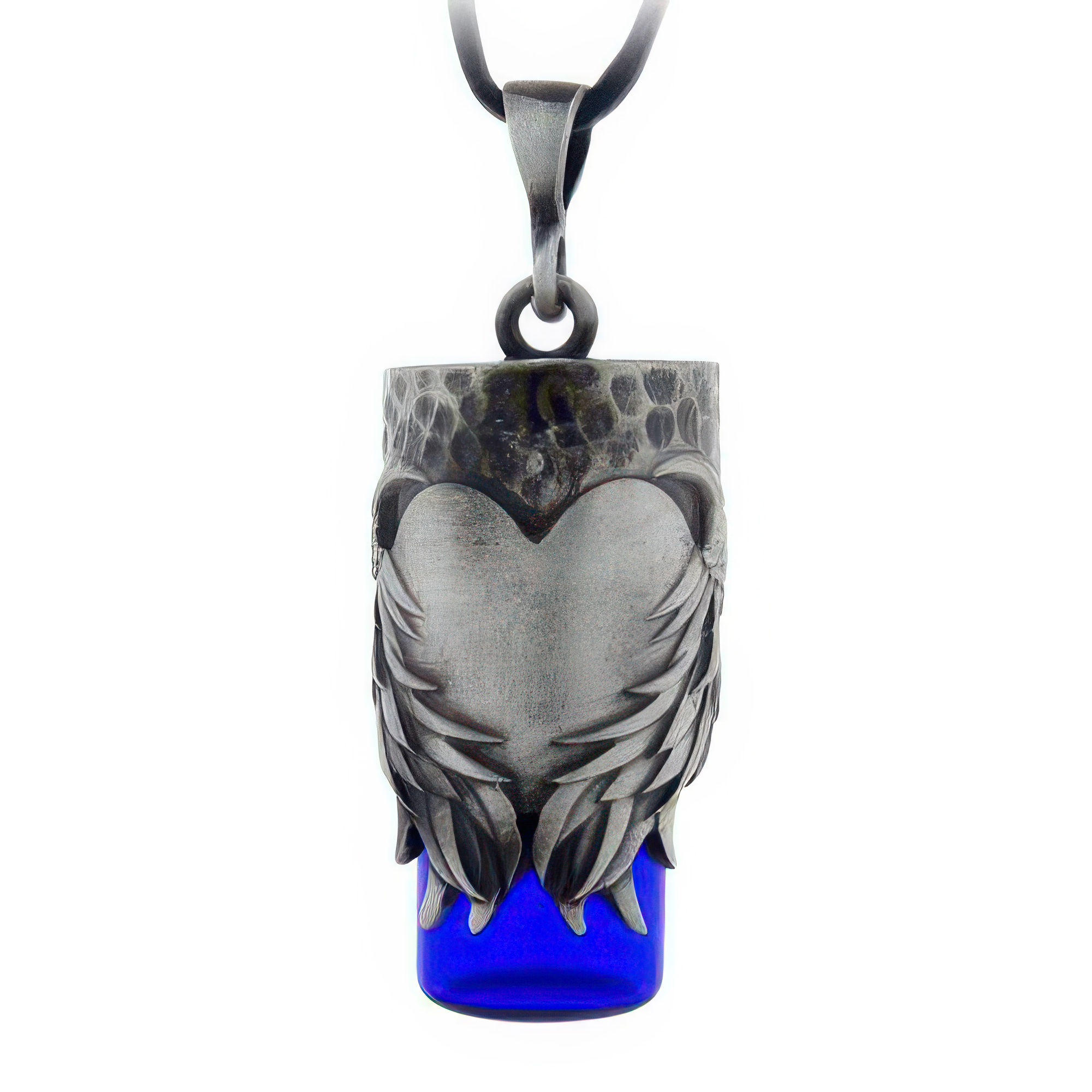
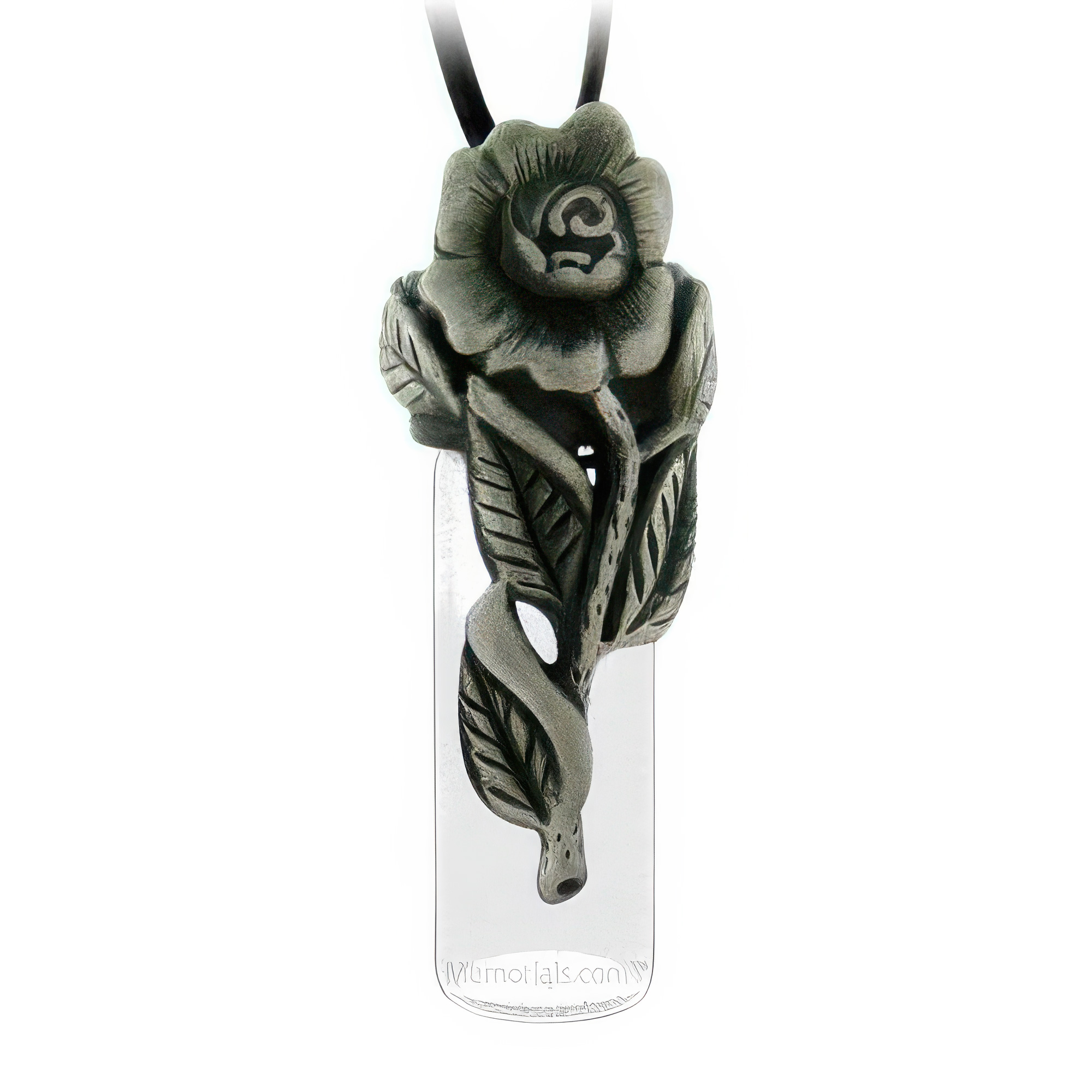
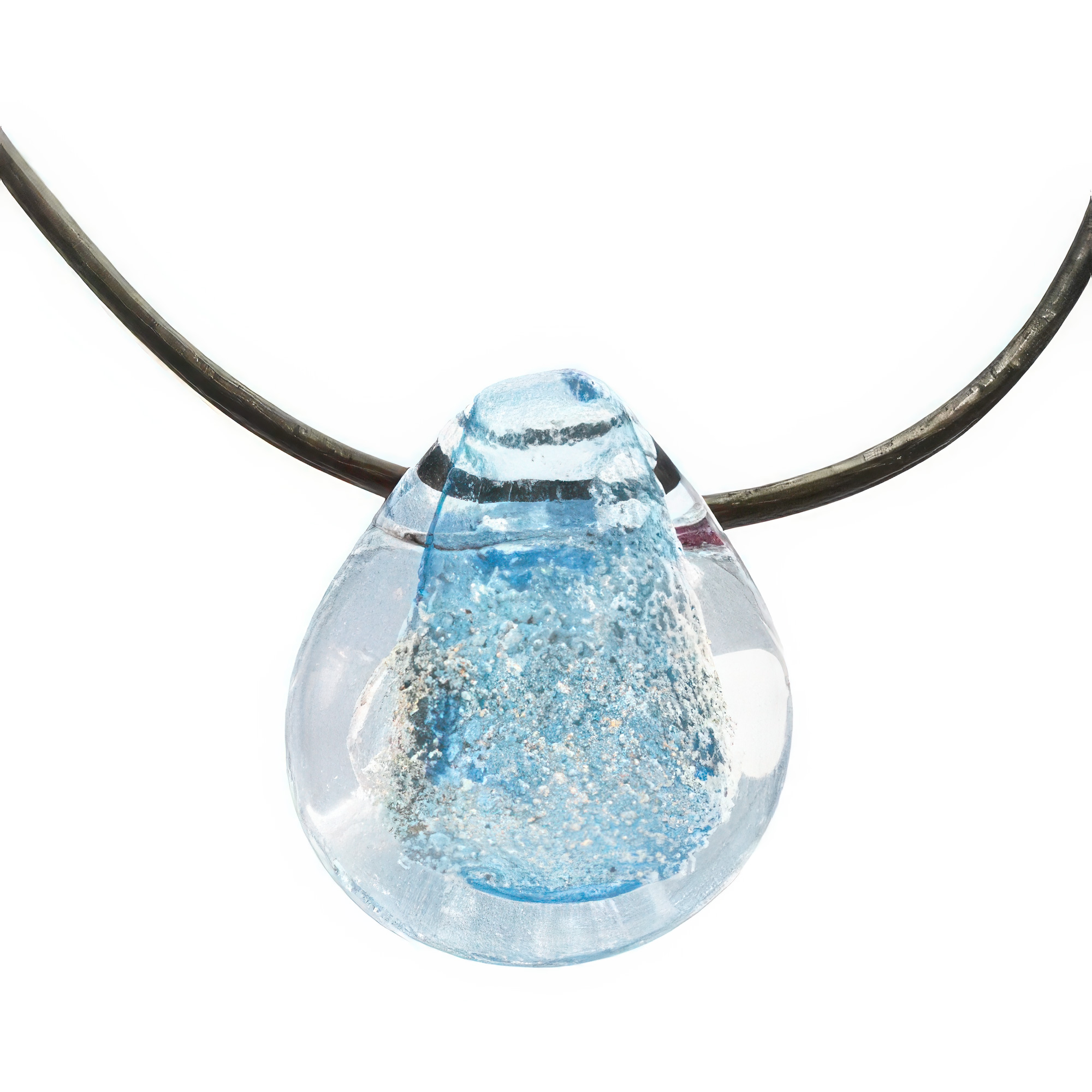
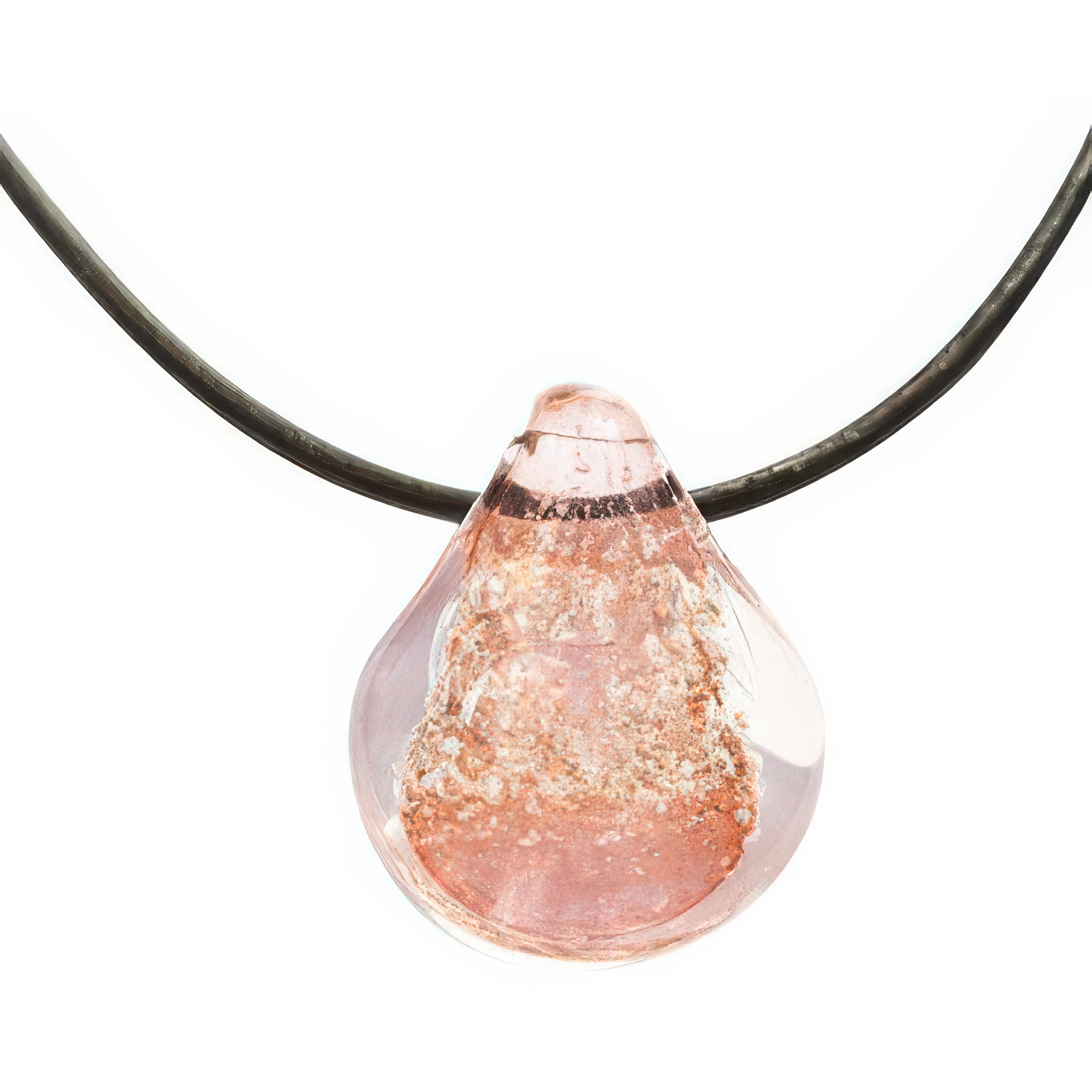
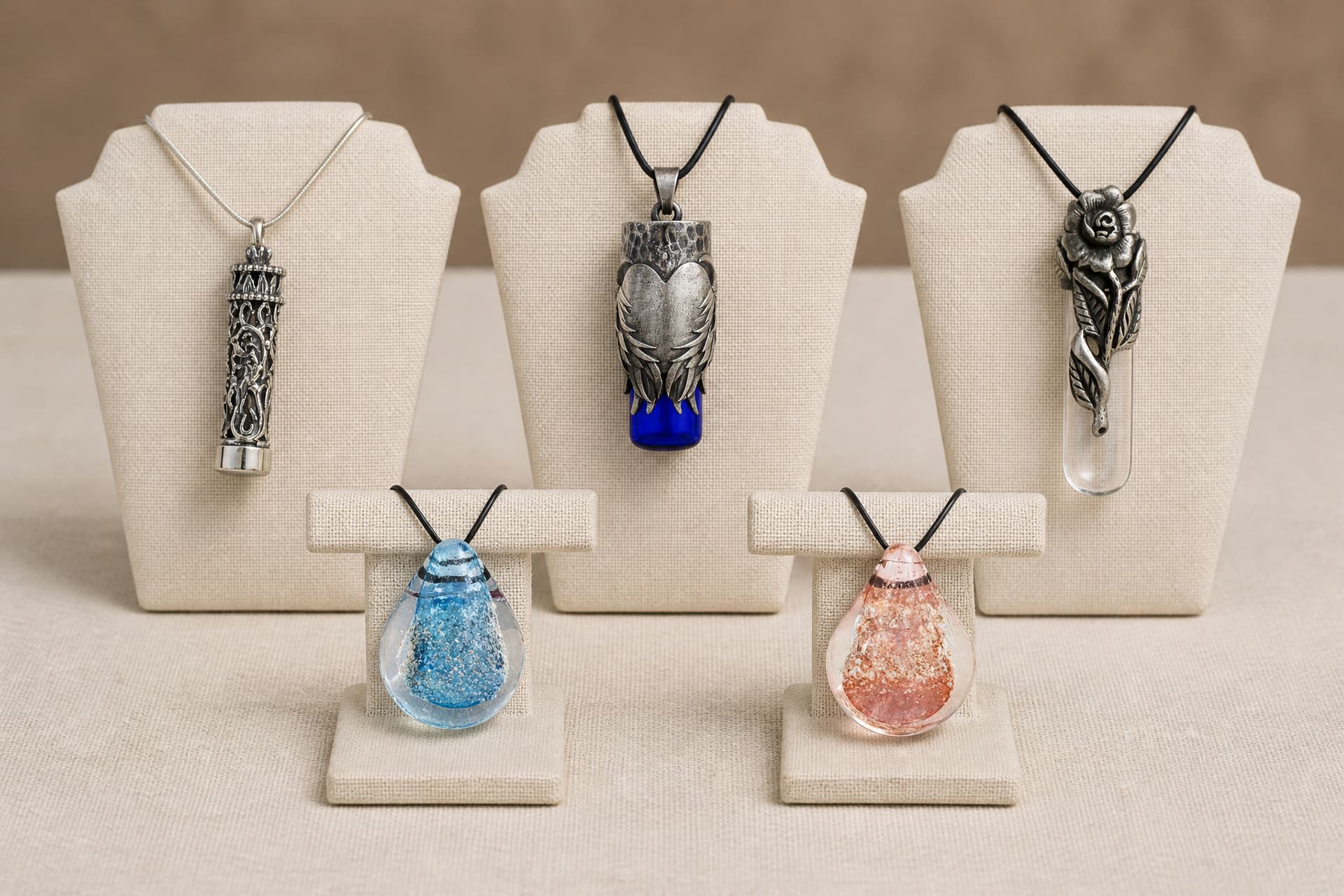
The same instinct sits behind wearing something of the person's. A piece of glass cremation jewelry holds ashes inside colored glass, which suits this occasion better than it suits a funeral — it is colorful by design, and at a gathering built around color that stops being incongruous and starts being the point.
Ripped, faded or distressed jeans. Dark, clean jeans can pass at a very casual gathering; damaged ones cannot.
Beachwear — shorts, vests, flip-flops — even at a beach celebration. Linen pants, not swim shorts.
Slogans, logos, band shirts — unless the family specifically asked, in which case wear it proudly.
Gym clothes and sneakers.
Anything you would be uncomfortable being photographed in. There are almost always photographs.
Head-to-toe funeral black, when the family asked for color. This is the only real mistake on the page.
Strong fragrance, in a crowded warm room.
Frequently Asked Questions
Is a celebration of life the same as a funeral? No. A funeral is a service, usually soon after the death and often religious. A celebration of life is a gathering, often weeks or months later, deliberately warmer and less formal. Some families hold both.
Can I wear black to a celebration of life? Yes, unless the family asked for color — and then you should follow their request. Black with a bright accessory is a good compromise if black is what you own and what you feel comfortable in.
What does "celebration of life casual" mean on an invitation? Smart casual. Chinos and a collared shirt, or a nice dress or top with pants. Not jeans and a t-shirt, and not a suit.
What do I wear if it is outdoors? Check the ground and the forecast, both. Flat or block-heeled shoes for grass and sand, a layer for when the sun drops, and fabric that copes with wind.
Should children wear color too? Yes, and it is much easier for them than for adults. Anything bright, clean and comfortable. Children at these gatherings are usually the least self-conscious people there.
What if I arrive and everyone else is in black? It happens, and it does not matter. You followed the invitation. Nobody will approach you about it, and if anyone mentions it the honest answer — "the invitation asked for color" — ends the conversation.
In Short
What to wear celebration of life gatherings comes down to one instruction, and it is not on this page — it is on the invitation. Read it, believe it, and follow it. If it asked for color, wear color. If it said nothing, wear something smart in a soft shade and skip the black.
The family chose this format because they wanted the day to feel like the person rather than like a funeral. Dressing for the occasion they actually planned is the way you help that happen.