🏬Supersize Online Funeral Retailer🪦1000's of Headstones⚱️Over 10,000 Cremation Urns⚰️Caskets Overnight Delivery🛒Funeral & Memorial Superstore🚚FREE Shipping on ALL Orders👨👩👧👦Helping Families for over 20 Years💰Lowest Price Guarantee🏬Supersize Online Funeral Retailer🪦1000's of Headstones⚱️Over 10,000 Cremation Urns⚰️Caskets Overnight Delivery🛒Funeral & Memorial Superstore🚚FREE Shipping on ALL Orders👨👩👧👦Helping Families for over 20 Years💰Lowest Price Guarantee
🏬Supersize Online Funeral Retailer🪦1000's of Headstones⚱️Over 10,000 Cremation Urns⚰️Caskets Overnight Delivery🛒Funeral & Memorial Superstore🚚FREE Shipping on ALL Orders👨👩👧👦Helping Families for over 20 Years💰Lowest Price Guarantee🏬Supersize Online Funeral Retailer🪦1000's of Headstones⚱️Over 10,000 Cremation Urns⚰️Caskets Overnight Delivery🛒Funeral & Memorial Superstore🚚FREE Shipping on ALL Orders👨👩👧👦Helping Families for over 20 Years💰Lowest Price Guarantee
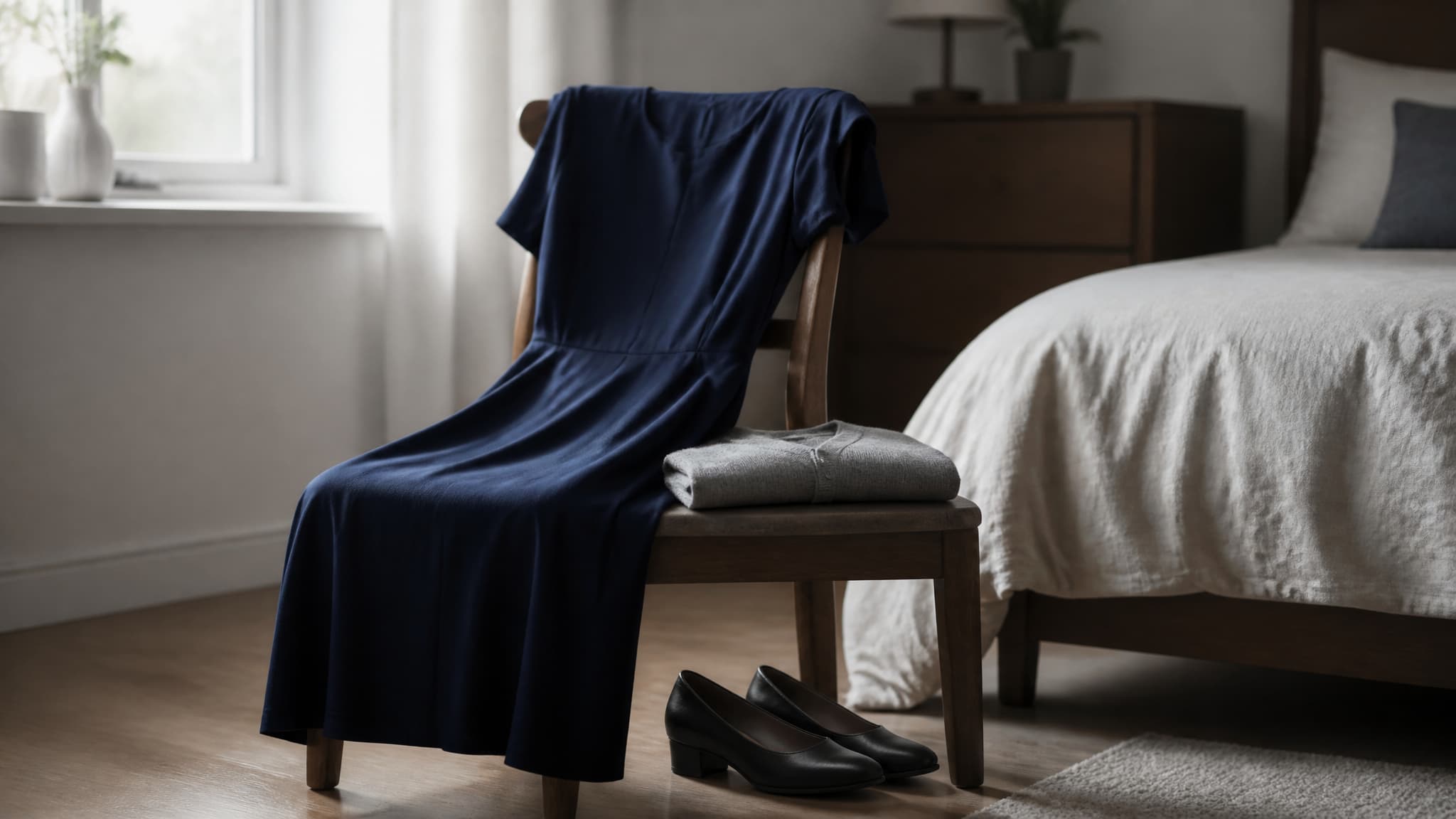
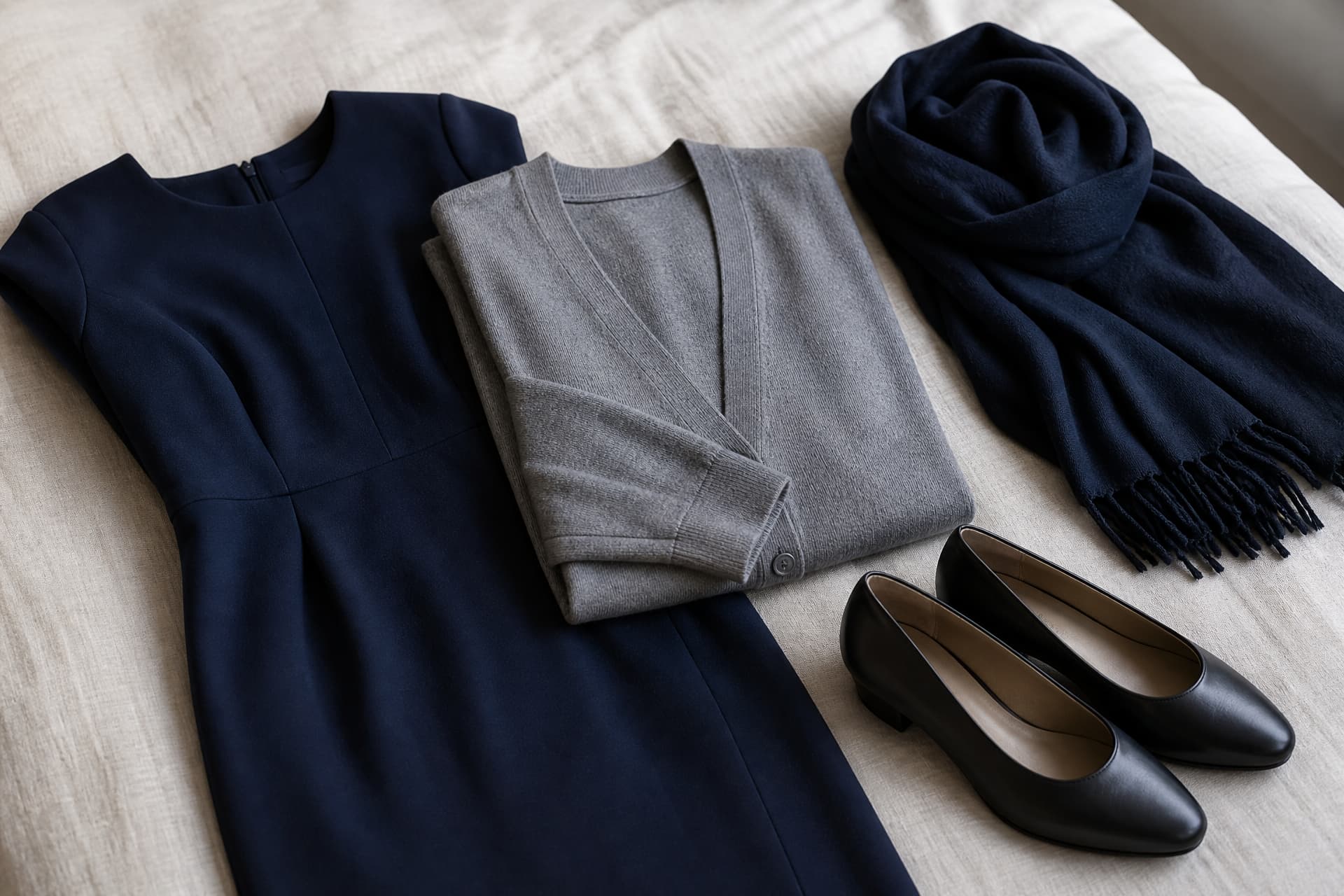
A dark dress with sleeves that sits at or below the knee, or dark pants with a dark top, and flat or low-heeled shoes you can stand in for an hour. That is what to wear to a funeral woman guests most often need to hear, and for the overwhelming majority of services it is the complete answer. Black is traditional. Navy, charcoal and deep gray are equally correct.
The harder question is usually not what the rule is. It is whether the one dark dress you already own counts — the one that is a little too short, or sleeveless, or has a sheen to it under the light. Almost always it can be made to work, and this page spends more time on that than on shopping.
Dark, plain, covered, comfortable. In practice that means one of four things:
A dark dress, knee-length or longer, with sleeves or worn under a cardigan or jacket.
A dark skirt with a plain blouse or knit.
Dark pants with a dark top and a jacket.
A dark suit, if you own one and the service is formal.
Add opaque tights in cold weather, closed-toe shoes you have already broken in, and a small dark bag. Nothing shiny, nothing sheer, nothing that catches light.
That is the whole of women funeral attire. Everything below is detail, edge cases, and how to work with what is in your wardrobe already — because most searches for what to wear to a funeral women end at a wardrobe rather than at a shop.
Dark, covered, and comfortable enough to stand in. Almost every woman already owns this outfit.
There is no written rule, which is exactly why the question causes so much anxiety. The funeral dress code female guests are working from is a convention passed on by observation, and conventions drift by region, by community and by generation.
The reasoning is simple and worth knowing, because it settles most edge cases on its own. Dressing dark and plain moves attention away from you and towards the family, who are the people being looked at that day. Anything that draws an eye — a bright color, a shine, an unusual cut — takes a little of the room's attention and points it somewhere it should not go.
That single idea answers questions no list can. Is a patterned scarf acceptable? If it is muted, yes. Is a red handbag? No. Is a navy dress instead of black? Of course — nobody looks twice at navy.
It also explains the exceptions. When a family asks for color, they are telling you attention is welcome. When the service is at a beach or in a garden rather than a chapel, the room has changed and so has the convention.
Dresses, Separates, and What Actually Works
Most funeral dresses for ladies fail on one of four specifics rather than on color.
Length. At or below the knee, seated as well as standing. A dress that is fine upright can ride up considerably on a low chapel chair.
Sleeves. Preferred, not required. A sleeveless dress becomes entirely correct under a cardigan, a blazer or a wrap, and that layer can come off at a reception afterwards.
Neckline. High enough that you are not adjusting it. If you find yourself checking a neckline in the car, it will distract you all morning.
Fabric. This is the one people miss. Matte reads as appropriate; shine does not. Wool, cotton, crepe, ponte and knit are all right. Satin, sequins, metallic thread and anything with a sheen are not, even in black. A shiny black dress can be less appropriate than a matte navy one.
Separates are often easier than a dress and nobody will notice the difference. Dark pants with a dark knit, or a longer skirt with a plain blouse, cover every requirement and are usually more comfortable for a long service.
Separates beat a dress for most services — a dark skirt or trousers with a plain top adapts to both the weather and the room.
If You Own One Dark Dress
This is the real situation for most people, and the answer is nearly always that the dress will do with one adjustment.
Too short? Add opaque tights and a longer jacket or cardigan that closes the gap visually. If it is very short, wear it over dark pants as a tunic, or choose separates instead.
Sleeveless? A cardigan, blazer, wrap or pashmina. This is the single most common fix and it is completely unremarkable.
Too shiny? Break up the surface with a matte cardigan or jacket over the top so the sheen reads as a panel rather than the whole outfit. If the whole dress is satin, separates are the better call.
Too tight, or it no longer fits? Comfort matters more than fit here. You will be sitting, standing and possibly walking on grass. A looser outfit you can move in is better than a correct one you cannot breathe in.
Not black — is that a problem? Almost never. Navy, charcoal, deep gray, brown, burgundy and dark green are all fine at the great majority of services.
The instinct to buy something is strong and usually unnecessary. If you do buy, buy one plain dark dress or jacket that fits and that you will wear again, rather than an outfit for one morning.
Plus Size Funeral Outfits
Searches for plus size black dresses for funeral are common and the advice available is thin, so here is the practical version.
Separates are frequently the easier route. A dark A-line or wrap skirt with a plain knit, or wide-leg dark pants with a longer tunic top, avoids the fit problems a single dress can create and gives you more control over length and neckline independently.
If you want a dress, look for a wrap style, an A-line, or anything with a defined waist and a skirt that falls rather than clings. Ponte, crepe and heavier jersey hold their shape and do not cling the way thin jersey does. Three-quarter sleeves are widely available and solve the sleeve question outright.
Two practical notes. Buy for the body you have today, not the one you are planning on — a garment that pulls will be uncomfortable for three hours. And if you are ordering online with a service in a few days, order two sizes and return one; delivery timing is the real risk, not fit.
Shoes, Bags, and Jewelry
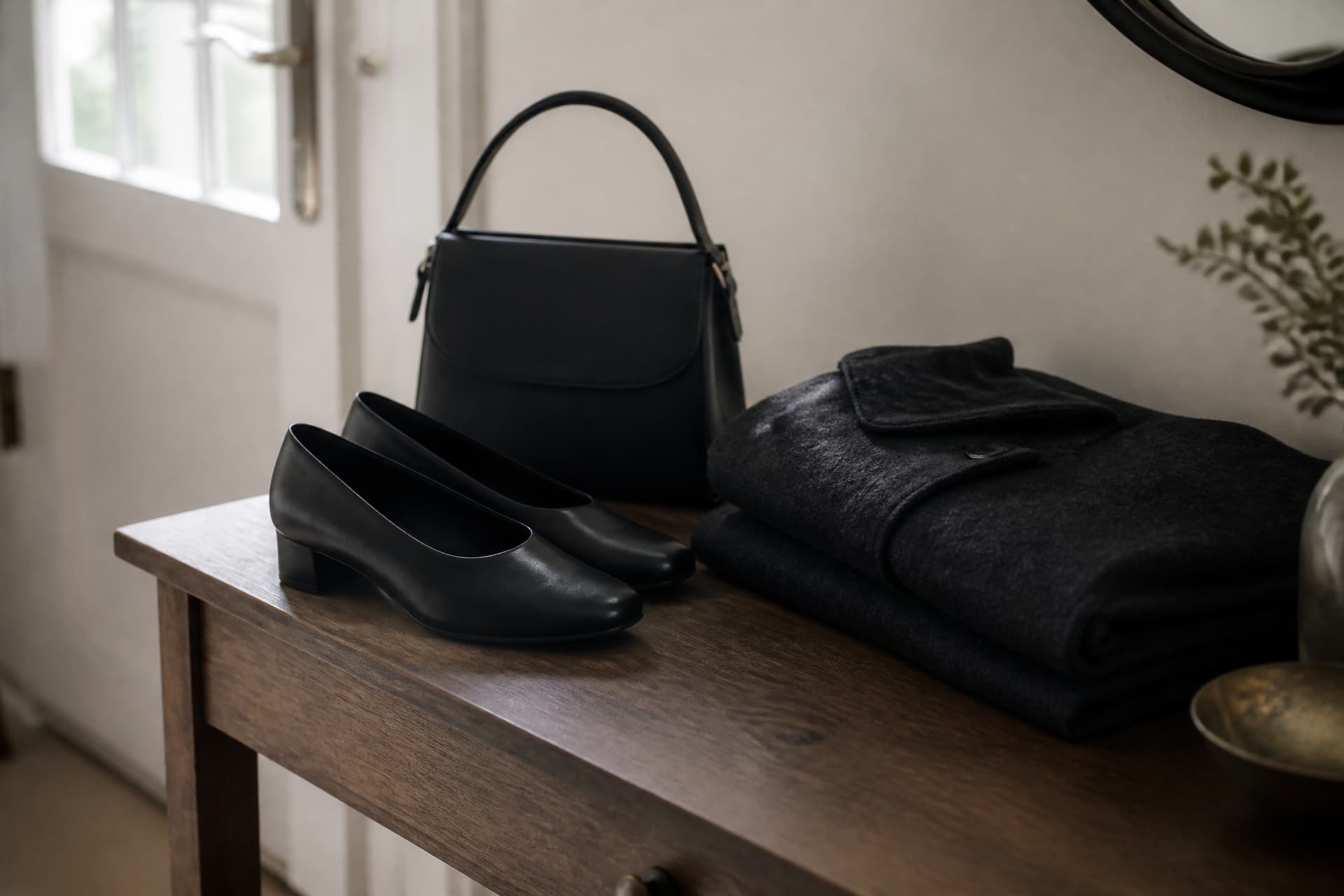
Shoes matter more than anything else you choose. Closed-toe, flat or a low block heel, and already broken in. Graveside services happen on grass that is frequently wet, and a narrow heel sinks into it. If you own one pair of plain dark shoes you can genuinely walk in, those are the correct shoes regardless of what else you are wearing.
Bags should be small, dark and plain. Whatever you carry will sit on your lap for an hour.
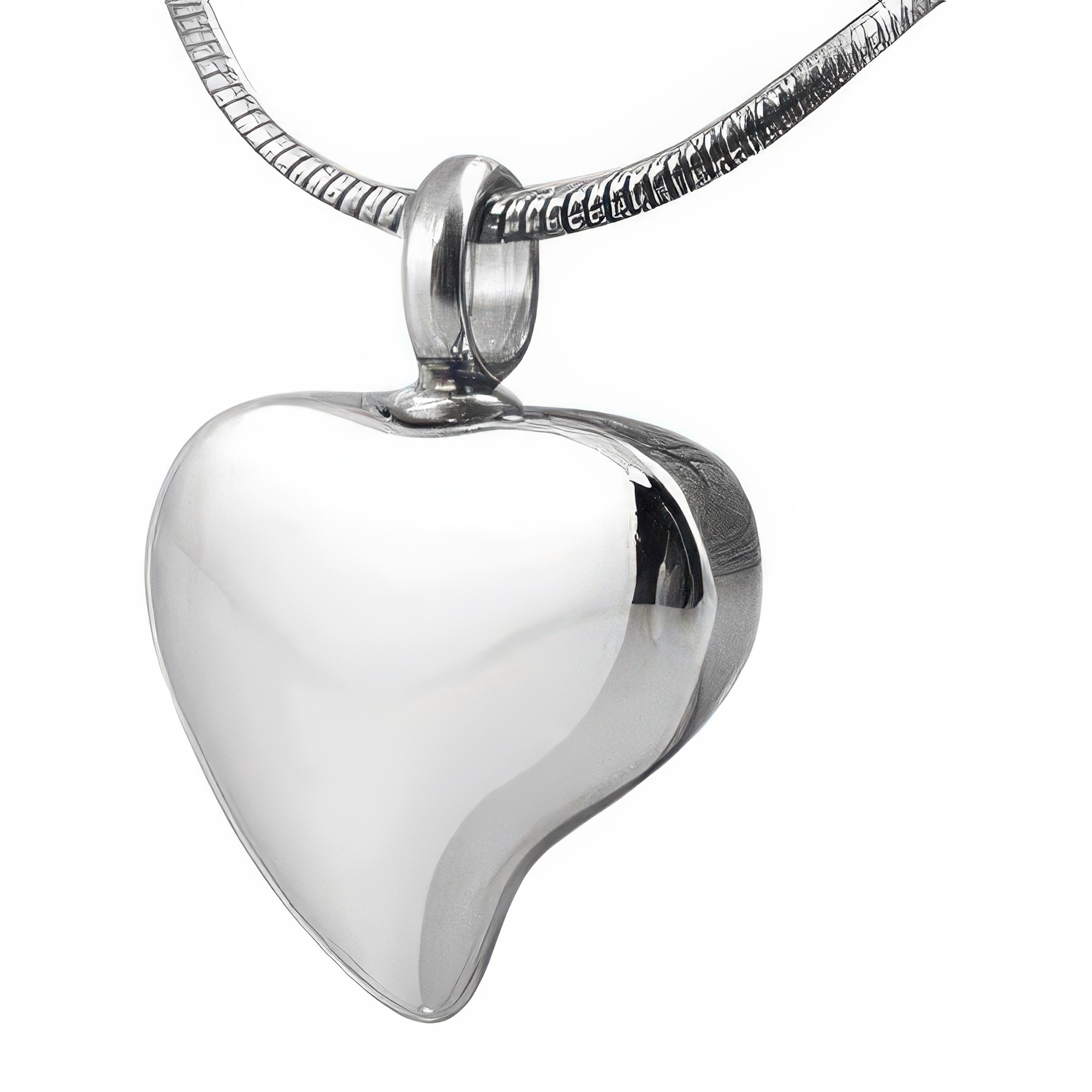
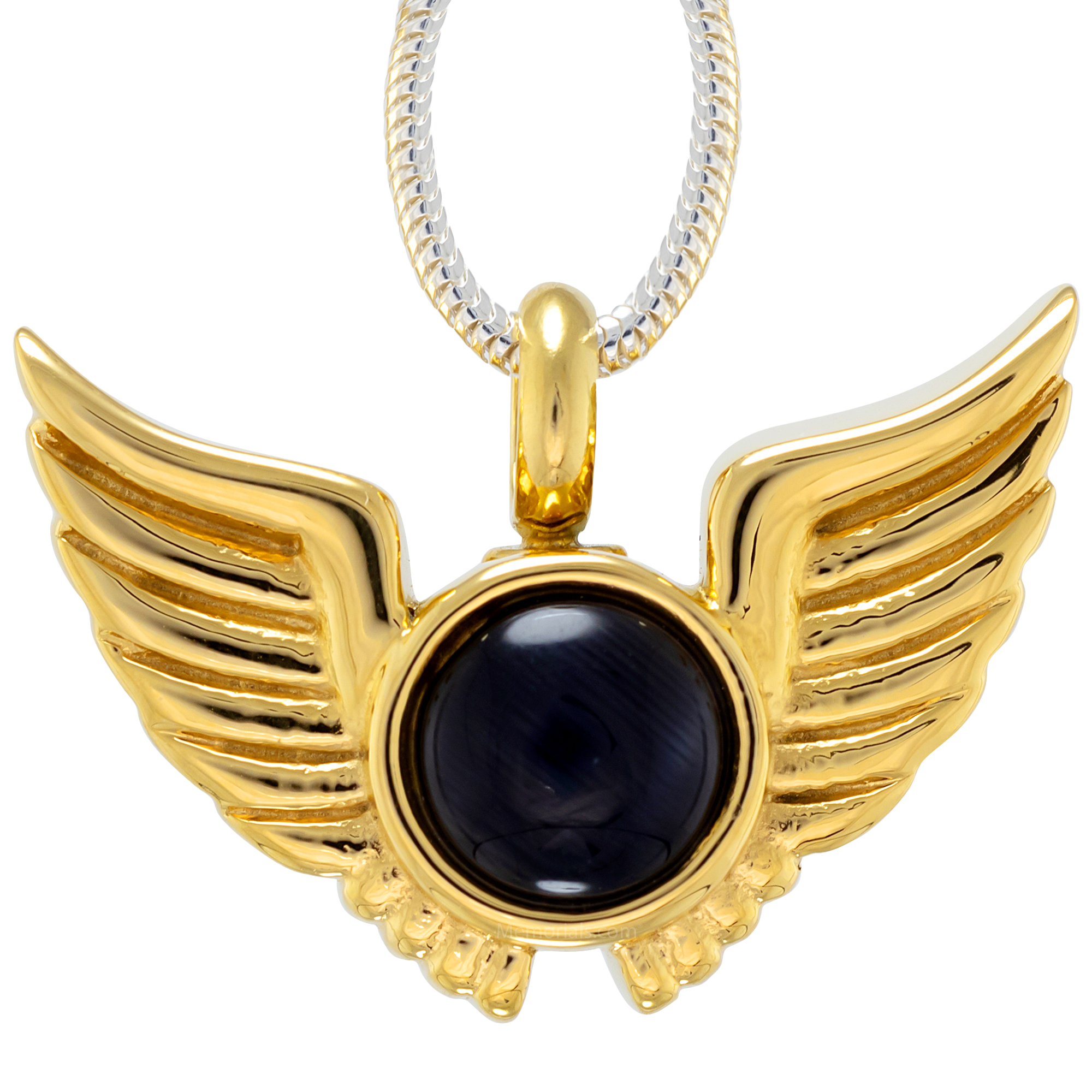
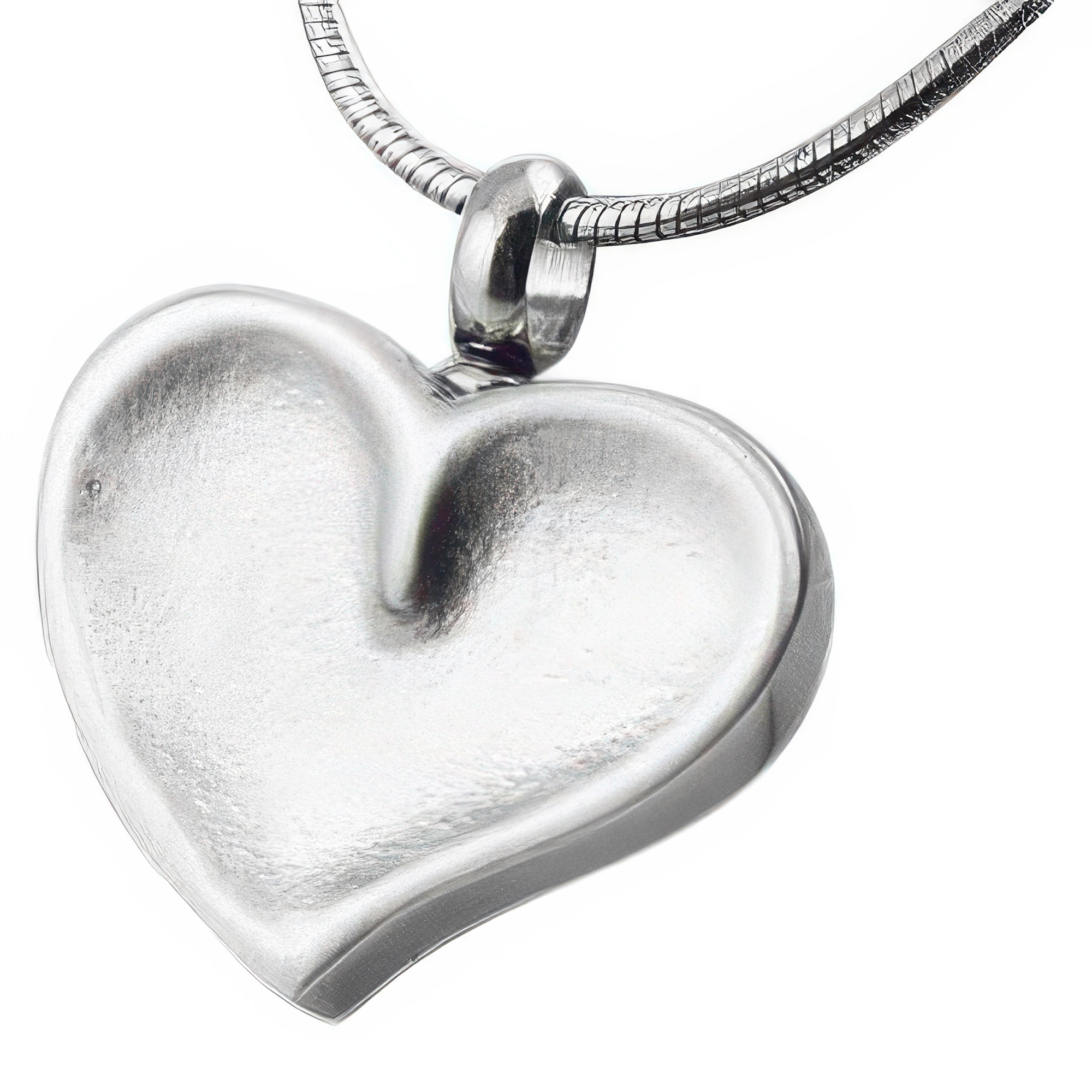
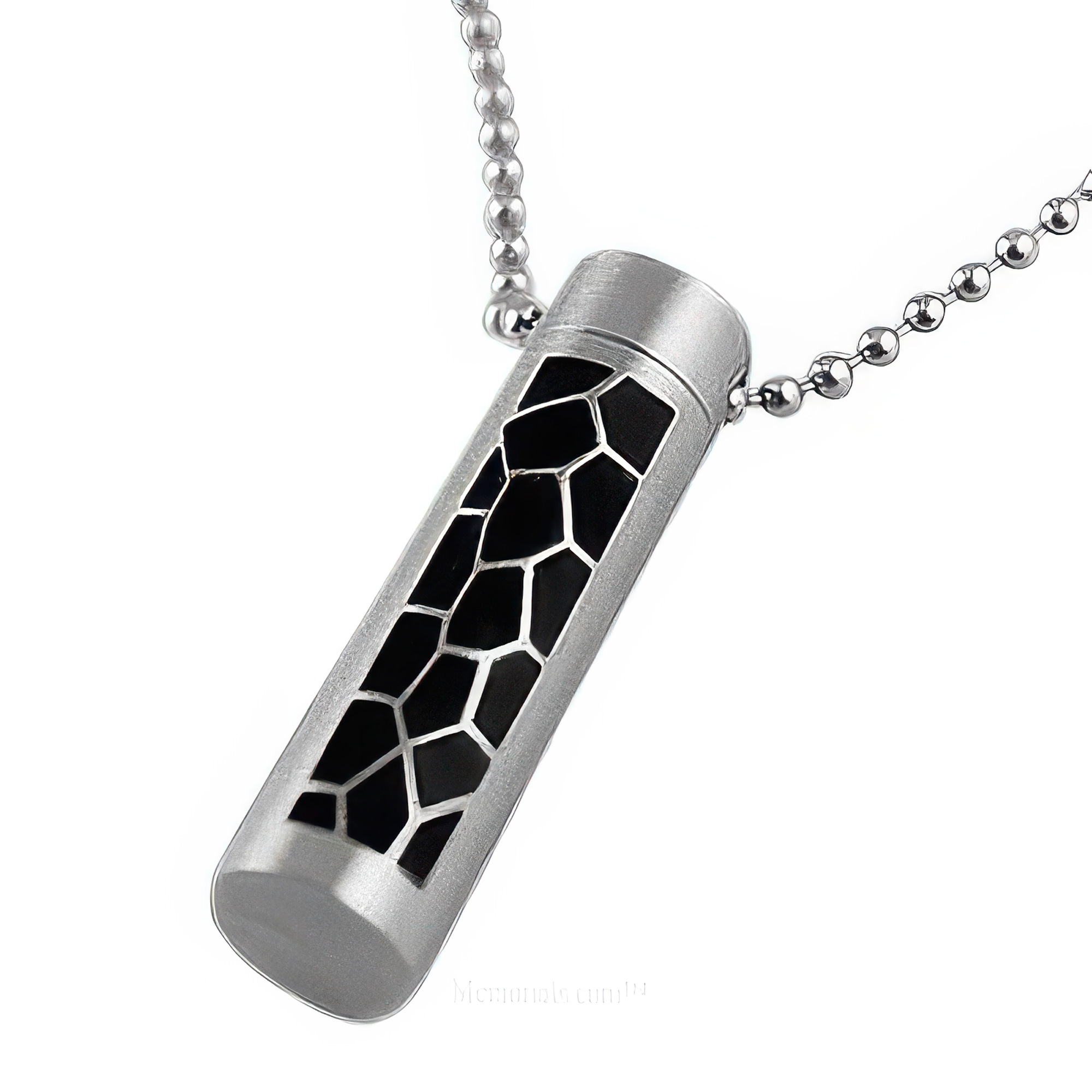
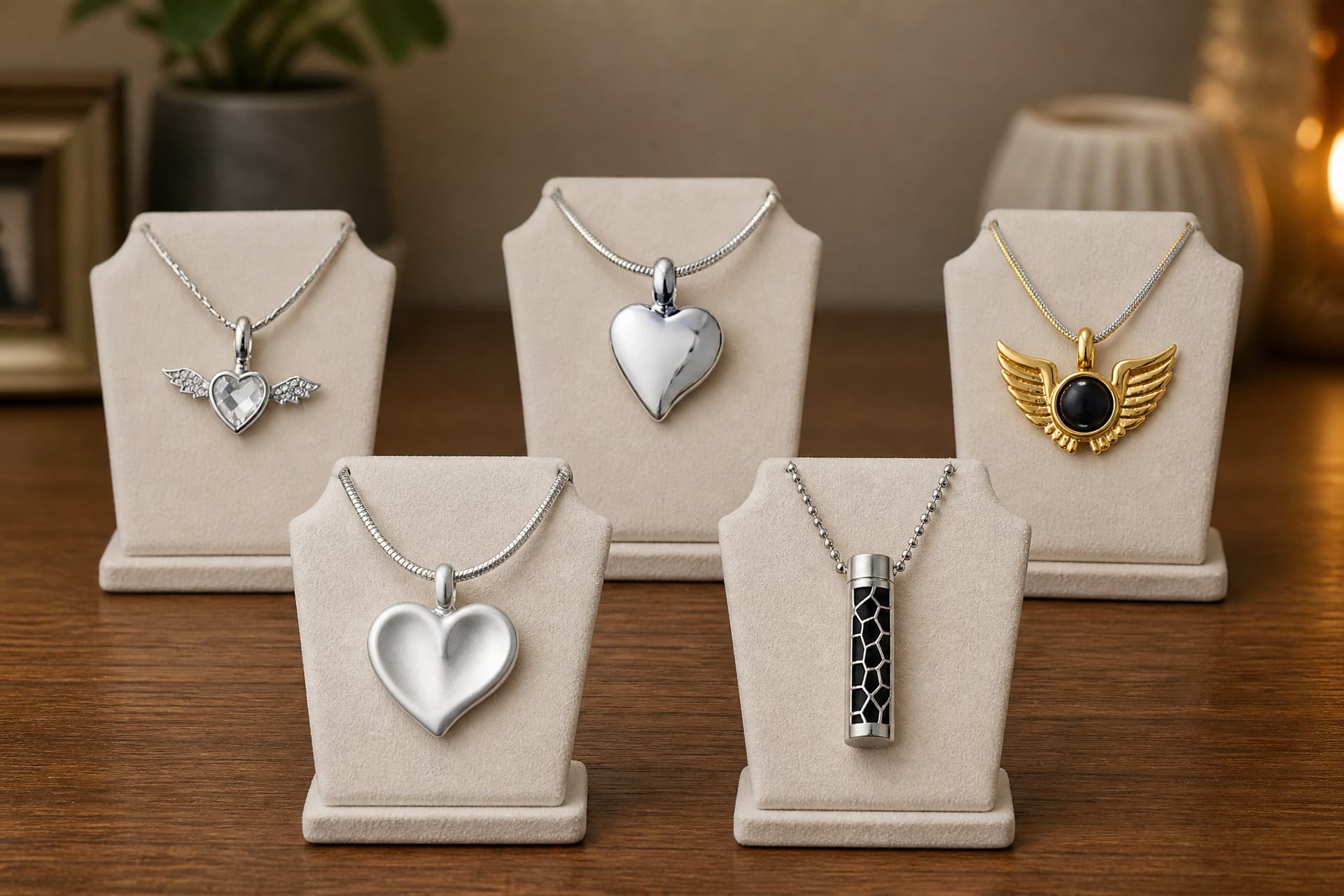
Jewelry is the one place where personal meaning is welcome rather than distracting. A wedding ring, a watch, small earrings, a cross or a Star of David — none of these read as ornament. Many women wear something that belonged to the person who died, and at a service for a partner or a parent it is common to see a piece of memorial jewelry holding a small portion of ashes. Worn quietly, it is the opposite of showy. Avoid anything that rattles or catches light across a room.
Makeup and fragrance should be understated, and fragrance especially light. A small warm room full of people, some of whom feel unwell, is not the place for anything strong. Waterproof mascara is a genuinely practical suggestion rather than a joke.
Outfit Ideas by Season
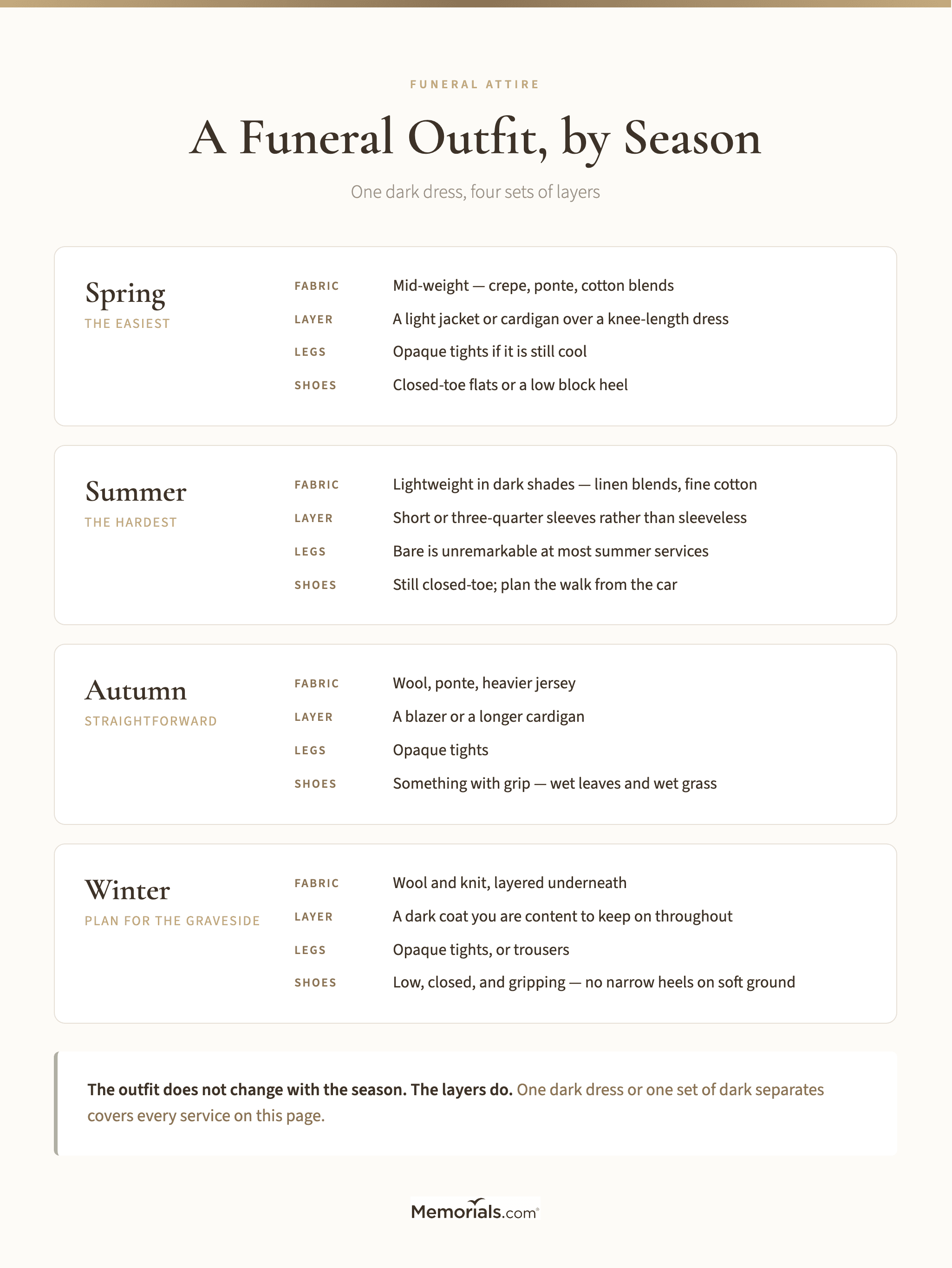
The rule does not change with the weather, but what makes it bearable does. These funeral outfit ideas are really about fabric weight and layers.
Spring and autumn are the easiest. A knee-length dark dress with a light jacket or cardigan, opaque tights if it is cool, and low closed-toe shoes.
Summer is the hardest, because a dark outfit in July is genuinely uncomfortable and much of the service may be outdoors. Lighter-weight fabrics in dark shades, short or three-quarter sleeves rather than sleeveless, and a plan for the walk from the car. There is more on this in what to wear to a funeral in the summer.
Winter means a dark coat that you are content to be photographed in, because you may not take it off at a graveside. Opaque tights, layers underneath, and shoes with grip. See what to wear to a winter funeral.
One dark outfit taken through four seasons: what changes in fabric, layers, legs and shoes, and what does not change at all. The base is the same garment in every column.
The best funeral outfit ideas women return to year after year are built on one dark dress or one set of separates plus different layers, rather than a different outfit each time. Treated that way, funeral wear women need amounts to a handful of pieces that already live in the wardrobe.
Low, closed, and already worn in. There is usually grass, and there is always standing.
Modern Funeral Attire — Is Black Still Required
Modern funeral attire female guests wear is noticeably softer than it was a generation ago, and strict black is no longer the expectation in most of the United States.
What has stayed constant is the underlying principle: understated, covered, not attention-seeking. What has relaxed is the color requirement and the formality. Navy and gray are unremarkable. Separates are unremarkable. A cardigan instead of a blazer is unremarkable.
What has not relaxed: shine, brightness, very short hems and bare shoulders in a house of worship still read as wrong, whatever the year.
If you want the full picture on color — including what to do when a family asks for something other than black — see do you have to wear black to a funeral. And if you have been asked to help carry the casket, the expectations shift and pallbearer attire covers what changes.
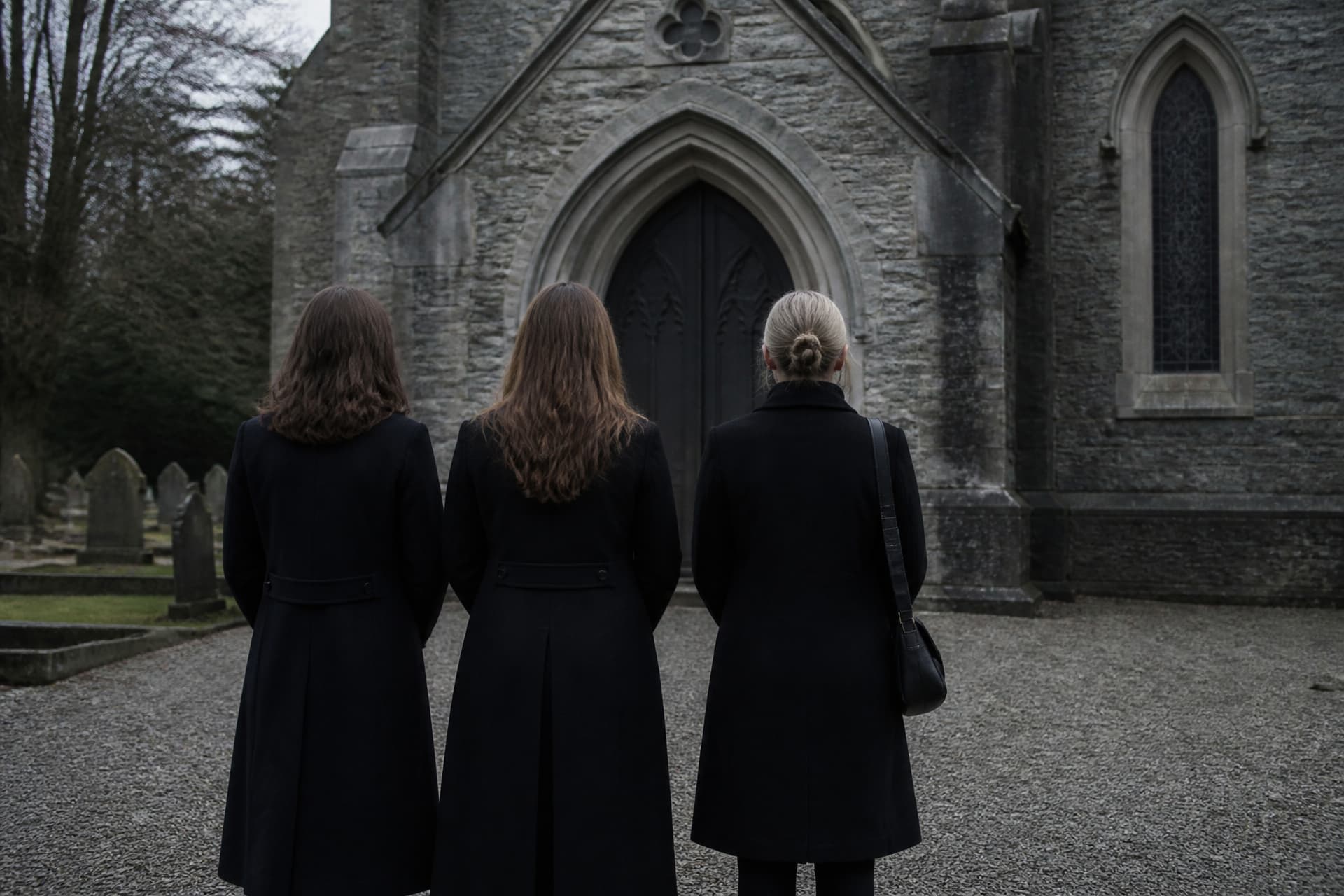
Advice on what to wear to funeral women attend as close family rather than as guests differs in one respect only: you will be looked at more, and for longer, so comfort matters more, not less. Nobody is judging the family's clothes.
When the Service Is a Different Tradition
Religious and cultural traditions override everything above, and getting them right matters more than any general rule. White is the mourning color across much of East and South Asia, so black can be the error rather than the safe choice. Head coverings are expected in some traditions. Some services ask guests to remove their shoes, which is worth knowing before you choose tights.
If you are attending a service in a tradition you do not know, ask whoever invited you. The question is welcome, and guessing is how people get it wrong. Our culture-specific guides cover the detail — indian funeral attire and japanese funeral attire are the two with the most distinct expectations.
If you are bringing children, funeral clothes for kids covers a much softer standard than anything on this page.
A Note on Burial Clothes
One search that lands on pages like this one is asking something different. Burial clothes for ladies means what the person who died will be dressed in, not what a guest wears — and that is a decision the family makes with the funeral home, usually within a day or two of the death.
Briefly: any outfit is permitted, funeral directors will work with whatever you bring, and most families choose something the person liked and felt like themselves in rather than something formal. Shoes are optional. If that is the question you came here with, speak to the funeral director — they handle it constantly and will make it easy.
Frequently Asked Questions
Can a woman wear pants to a funeral?
Yes, everywhere. Dark pants with a dark top and a jacket are completely standard and have been for years. In very traditional or conservative religious communities a skirt or dress may still be expected, and if you are unsure about a specific family, a longer skirt is the safer default.
Can I wear navy or gray instead of black to a funeral?
Yes. Navy, charcoal, deep gray, brown and other muted dark colors are all appropriate at the great majority of services. Black remains the most traditional and is never wrong, but it has not been required for decades.
Do I have to wear tights to a funeral?
Not as a rule. Opaque tights in a dark color are common in cold weather and at more formal or religious services, and bare legs are unremarkable in summer at most services. If the funeral is in a church and you are wearing a dress, tights are the safer choice.
What should I not wear to a funeral as a woman?
Bright or neon colors, loud patterns, shiny or sheer fabric, short hems, low necklines, bare shoulders in a house of worship, flip-flops or sneakers, and heavy fragrance. Distressed denim is the clearest example of what to avoid.
Is it acceptable to wear the same outfit to the wake and the funeral?
Entirely. Most people do, and nobody notices or minds. If you would like some variation, changing the top or the layer over a dress is more than enough.
Before You Go
The bar is lower than the worry suggests. A dark dress or dark separates, covered, matte, and shoes you can walk in — that is the whole requirement, and you almost certainly own it already.
If you are going to a service for someone very close to you, one small thing many people find helps: wear or carry something that belonged to them. A ring, a scarf, a watch. It gives you somewhere to put your attention during the parts of the morning that are hard.