🏬Supersize Online Funeral Retailer🪦1000's of Headstones⚱️Over 10,000 Cremation Urns⚰️Caskets Overnight Delivery🛒Funeral & Memorial Superstore🚚FREE Shipping on ALL Orders👨👩👧👦Helping Families for over 20 Years💰Lowest Price Guarantee🏬Supersize Online Funeral Retailer🪦1000's of Headstones⚱️Over 10,000 Cremation Urns⚰️Caskets Overnight Delivery🛒Funeral & Memorial Superstore🚚FREE Shipping on ALL Orders👨👩👧👦Helping Families for over 20 Years💰Lowest Price Guarantee
🏬Supersize Online Funeral Retailer🪦1000's of Headstones⚱️Over 10,000 Cremation Urns⚰️Caskets Overnight Delivery🛒Funeral & Memorial Superstore🚚FREE Shipping on ALL Orders👨👩👧👦Helping Families for over 20 Years💰Lowest Price Guarantee🏬Supersize Online Funeral Retailer🪦1000's of Headstones⚱️Over 10,000 Cremation Urns⚰️Caskets Overnight Delivery🛒Funeral & Memorial Superstore🚚FREE Shipping on ALL Orders👨👩👧👦Helping Families for over 20 Years💰Lowest Price Guarantee
Dark, covered, tidy, and not asking for attention. That is funeral attire in one line, and it has been for about a century.
Everything else — whether black is required, whether boots are acceptable, what changes in August, what a pallbearer needs, what happens when the family asks for color — is a variation on that one idea. This guide is the map. It answers the core question directly, sets out the three things that actually decide any particular case, and then points you at the specific page you need.
If you are going to a funeral this week and want the short version, what to wear to a funeral is the complete walkthrough.
The Short Answer
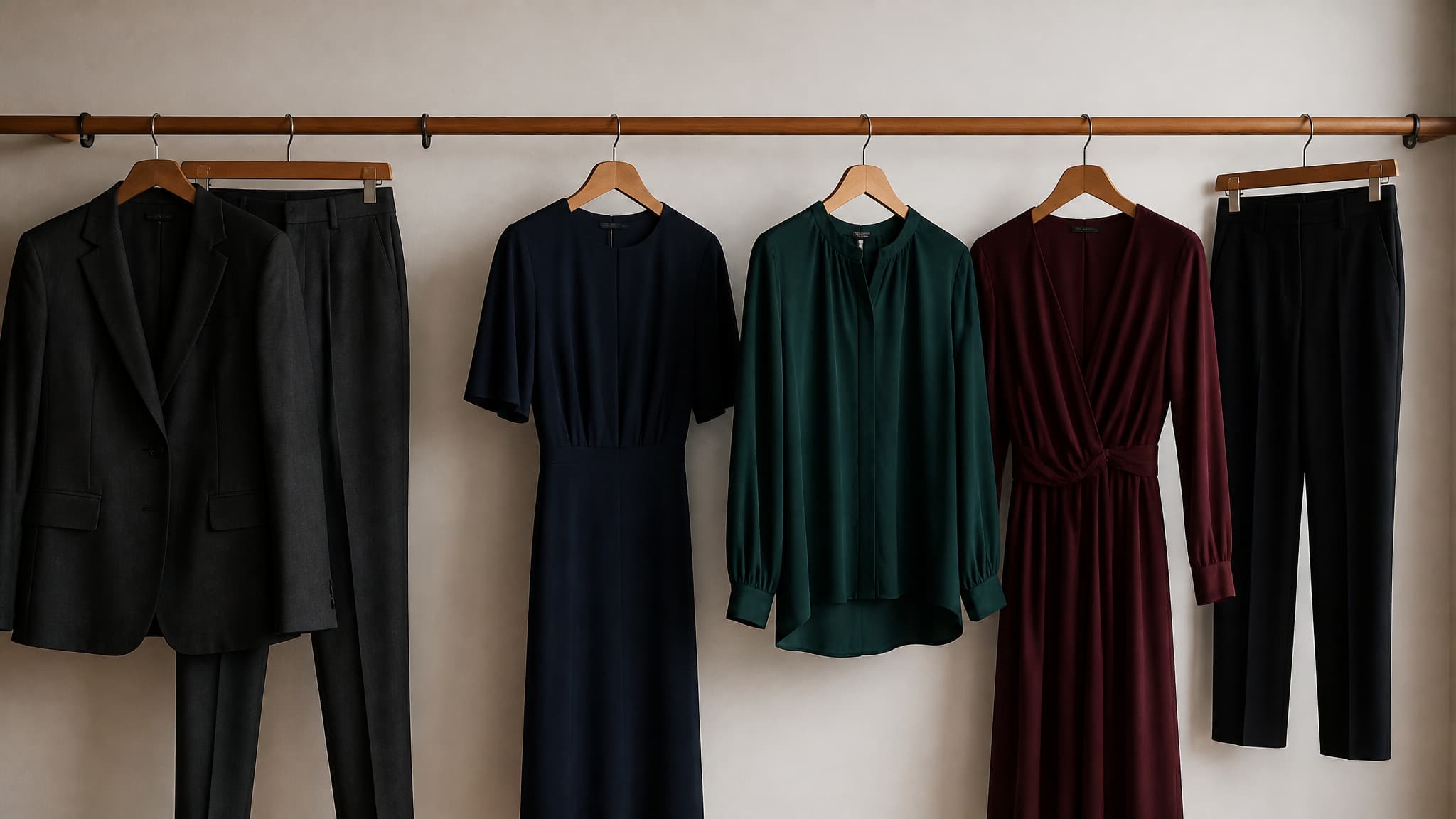
Dark and muted. Charcoal, navy, deep gray, black, forest green, burgundy. Black is not required.
Covered. Shoulders and knees, for everyone, at any temperature.
Tidy. Clean and pressed matters more than expensive or new.
Unobtrusive. No bright color, no bold pattern, nothing that draws the eye.
Shoes you can stand in, on grass if there is a burial.
Whatever the family asked for — that instruction outranks everything above.
Most people arrive here worrying about a specific detail — a tie, a color, a pair of boots. In practice three questions settle nearly every case, and once you have answered them the details follow.
1. Did the family say anything? If the invitation or the message asked for bright colors, or a football shirt, or "no black please", that is the answer and nothing else on this site overrides it. Families who make a request have discussed it, and it is very often what the person who died asked for. Following it is the respectful choice, not the casual one.
2. Is there a graveside portion? This is the single most under-asked question and it changes shoes, coats and fabric. A chapel is heated, sheltered and carpeted; a burial is twenty minutes standing on open ground in whatever the weather is doing. Dress for the second half and the first looks after itself. It is an entirely ordinary thing to ask whoever invited you.
3. Do you have a role? Guests have latitude. Pallbearers, ushers, readers and immediate family do not — the bar rises, and black moves from one option among several to close to an expectation.
Answer those three and the rest of this guide is detail.
"Dark and muted" is the real rule, not "black" — charcoal, navy and deep green all qualify, and most people already own something that works.
What "Dark and Muted" Actually Means
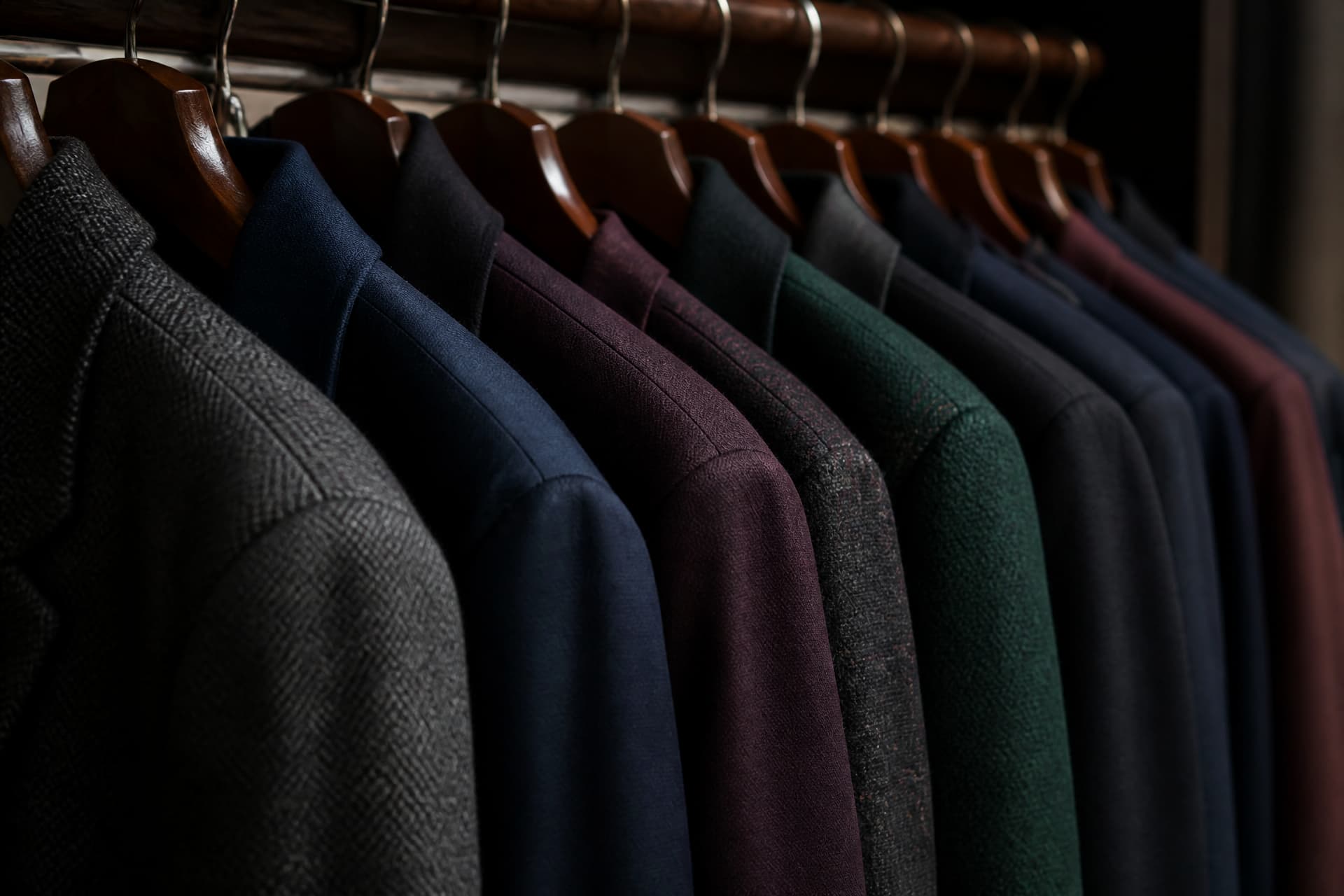
Every page on this subject says dark and muted and almost none of them says which colors. Here is the palette, defined once.
Correct anywhere, for anyone:
Charcoal — the most useful dark a person can own, and softer on most complexions than black.
Navy — equally formal, slightly warmer, and most people already own some.
Black — correct, traditional, and not required.
Deep gray — the same job as charcoal at lower contrast.
Correct, and slightly gentler:
Forest and bottle green — reads as considered rather than casual.
Burgundy and deep wine — one of the traditional half-mourning colors.
Aubergine and deep plum — the same, and flattering on almost everyone.
Dark brown and chocolate — fine, though do not pair with black.
Fine in the right setting — a daytime service, an outdoor one, a celebration of life: soft neutrals like taupe, stone and oatmeal, and deeper blues like teal and slate.
Avoid unless asked: red, orange, bright yellow, hot pink, anything neon. Not because they are disrespectful in themselves, but because they make you the thing people look at.
Two things that matter more than the color, and get far less attention:
Pattern. A faint stripe or a very small repeat is fine. A large floral, a bold check or a strong geometric is not, even in dark colors. Pattern draws the eye in a way a shade does not.
Sheen. Satin, patent leather, metallic thread and anything that catches light read as evening or celebratory. Matte fabric is the safer choice throughout, and it is the single most overlooked variable in the whole subject.
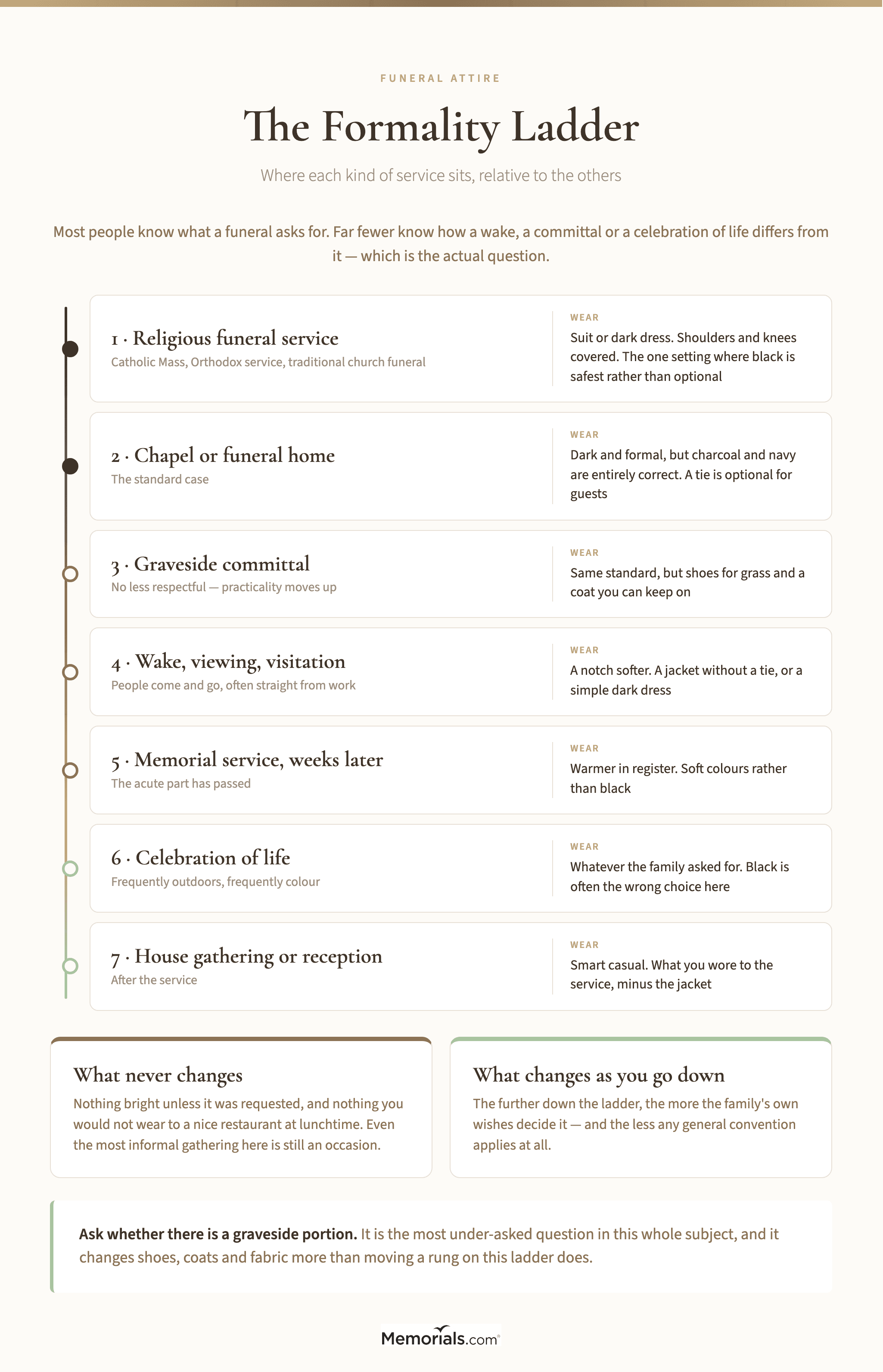
The Formality Ladder
The most useful thing a guide like this can give you, because no single article can: where each kind of service actually sits relative to the others.
From most formal down:
A religious funeral service — a Catholic Mass, an Orthodox service, a traditional church funeral. Suits and dark dresses, shoulders and knees covered, and the one setting where black remains the safest choice rather than one option.
A funeral at a chapel or funeral home — the standard case. Dark and formal, but charcoal and navy are entirely correct and a tie is optional for guests.
A graveside-only committal — no less respectful, but practical dress moves up the priority list. Shoes for grass, a coat you can keep on.
A wake, viewing or visitation — a notch softer. A jacket without a tie, a simple dark dress. People come and go, often straight from work.
A memorial service weeks later — warmer in register than a funeral, because the acute part has passed. Soft colors rather than black.
A celebration of life — the family's instruction is the dress code. Frequently color, frequently outdoors, and black is often the wrong choice.
A house gathering or reception — smart casual. Whatever you wore to the service, minus the jacket.
Two things travel all the way down that ladder without changing. Nothing bright unless it was requested, and nothing that would look out of place at a nice restaurant at lunchtime. Even the most informal gathering on this list is still an occasion.
And one thing moves in the opposite direction as you descend: the more informal the service, the more the family's own wishes decide it, and the less any general convention applies.
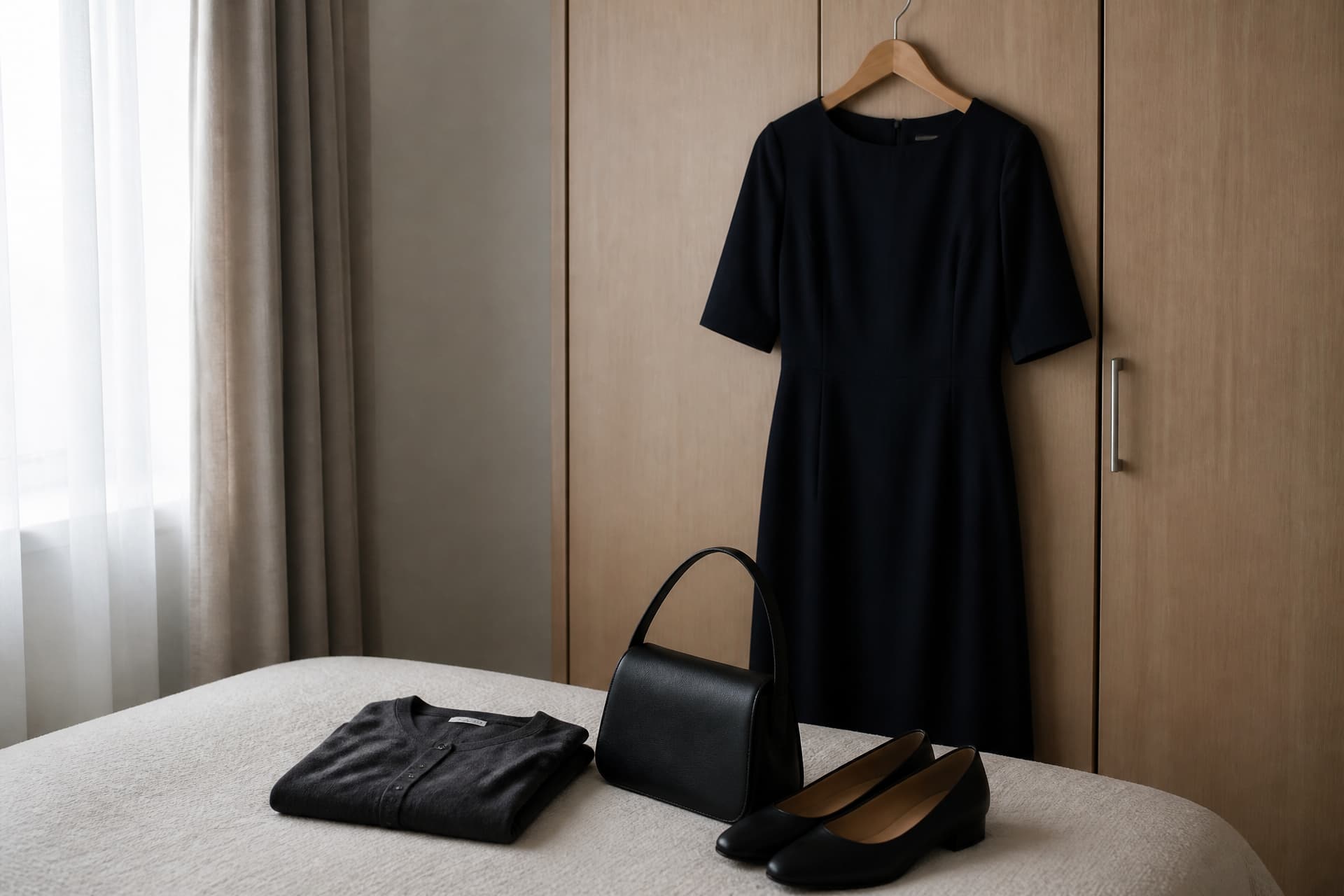
One outfit covers almost every service on the ladder: something dark, a layer that can come off indoors, and shoes you can stand in for an hour.
The seven kinds of service ranked from most to least formal — a religious funeral at the top, a house reception at the bottom — with what changes at each step. Two things hold all the way down: nothing bright unless it was requested, and nothing that would look out of place at a nice restaurant at lunchtime.
What Your Role Changes
Guests have latitude. Anyone with a job to do has less, and the bar rises fairly steeply.
A guest. Dark, covered, tidy. Everything in this guide applies as written, and nobody is looking at you.
Immediate family. The highest bar in the room, and the one everyone else reads. Black or near-black at a formal service, and worth borrowing or renting for if you do not own it. You are also the person guests take their cue from, so if you asked for color, wear it clearly.
A pallbearer. A suit if at all possible, and shoes with grip before anything else — you will carry two to four hundred pounds across ground you have not seen. Empty your pockets.
An usher or greeter. The first person people see, and standing for a long time. A suit and tie, and comfortable shoes.
A reader or eulogist. You will be at the front facing the room. A pressed shirt, a tie, and a mirror check before you leave — a collar sitting badly is visible from the back row.
Carrying a baby or minding children. Practicality wins outright, and everyone in the room knows it. Dark, comfortable, washable.
If you are not sure whether you are expected to do something, ask. It is an ordinary question and the answer changes what you wear.
Black Is a Habit, Not a Rule
The most common single question in this hub is whether black is required. It is not, and it has not been for decades.
The convention is dark and muted. Charcoal and navy are equally correct, more comfortable in summer, and more useful afterwards. Deep green, burgundy and aubergine are entirely appropriate and were traditional half-mourning colors in their own right.
Black became fixed in the nineteenth century for reasons that no longer apply — it signaled status as a mourner publicly and for a set period, a system that collapsed after 1918 and has been eroding since. What survived is the useful part: dress so as not to draw attention. Any dark color does that.
Three situations where black still carries real weight: immediate family at a formal service, anyone with a formal role, and the more traditional religious settings. Outside those, wear the dark thing you own.
A theme that runs through every page in this hub and is worth stating once, at the top.
Funeral clothing exists so that nothing about you asks for attention. Being visibly uncomfortable — too hot, too cold, limping in new shoes, peeling off layers during a eulogy — asks for attention. So comfort and correctness point the same way far more often than people assume.
In summer, the fix is fabric, not formality: tropical-weight wool and cotton rather than a lighter-colored suit.
In winter, almost everything that keeps you warm is invisible — thermals, tights, thick socks — so there is no trade-off at all.
For children, comfort is the whole strategy, because a comfortable child is a quiet one.
For pallbearers, the right shoes are a safety matter before they are a style one.
Nobody at a funeral is assessing your outfit. They are noticing whether you look like you made an effort, and whether you seem present.
If You Do Not Own the Clothes
Worth saying plainly, because it is the situation of a very large number of people reading this.
You do not need to buy a suit. Dark pants with a clean collared shirt is acceptable at the great majority of funerals, and it is what a substantial number of people in the room will actually be wearing. A jacket that does not match your pants is a legitimate way to dress, not a compromise. Borrowing is completely ordinary and most people are pleased to be asked.
If you are buying with limited money, the order of value is: pants first, then shoes, then a shirt, then a jacket, then a tie. A hundred dollars on pants and shoes does more than three hundred on a jacket worn over the wrong pants.
And for children — do not buy anything at all. School uniform, if it is dark, is entirely appropriate.
When the Tradition Is Not Yours
If you have been invited to a funeral in a tradition you do not know, the color convention may be the opposite of what you expect, and the mistake available is bigger than wearing the wrong shade of gray.
White, not black, is the mourning color in most Hindu, Sikh and Jain traditions, and traditionally in Chinese practice.
Red is actively wrong at a Chinese funeral — it is the color of weddings and New Year.
Japan is the strictest of the three covered here, and the most specified: plain black, white shirt, plain black tie.
Money given at a funeral goes in a white or black-and-white envelope, never a red one, in both Chinese and Japanese practice. The celebratory version sits on the same shop shelf.
Three things are true of all of them. Practice varies enormously by religion, region, generation and how long a family has lived abroad. You are not expected to wear the tradition's own dress — your own respectful clothes, adapted, are correct. And asking whoever invited you is normal, welcome, and more useful than anything a page can tell you.
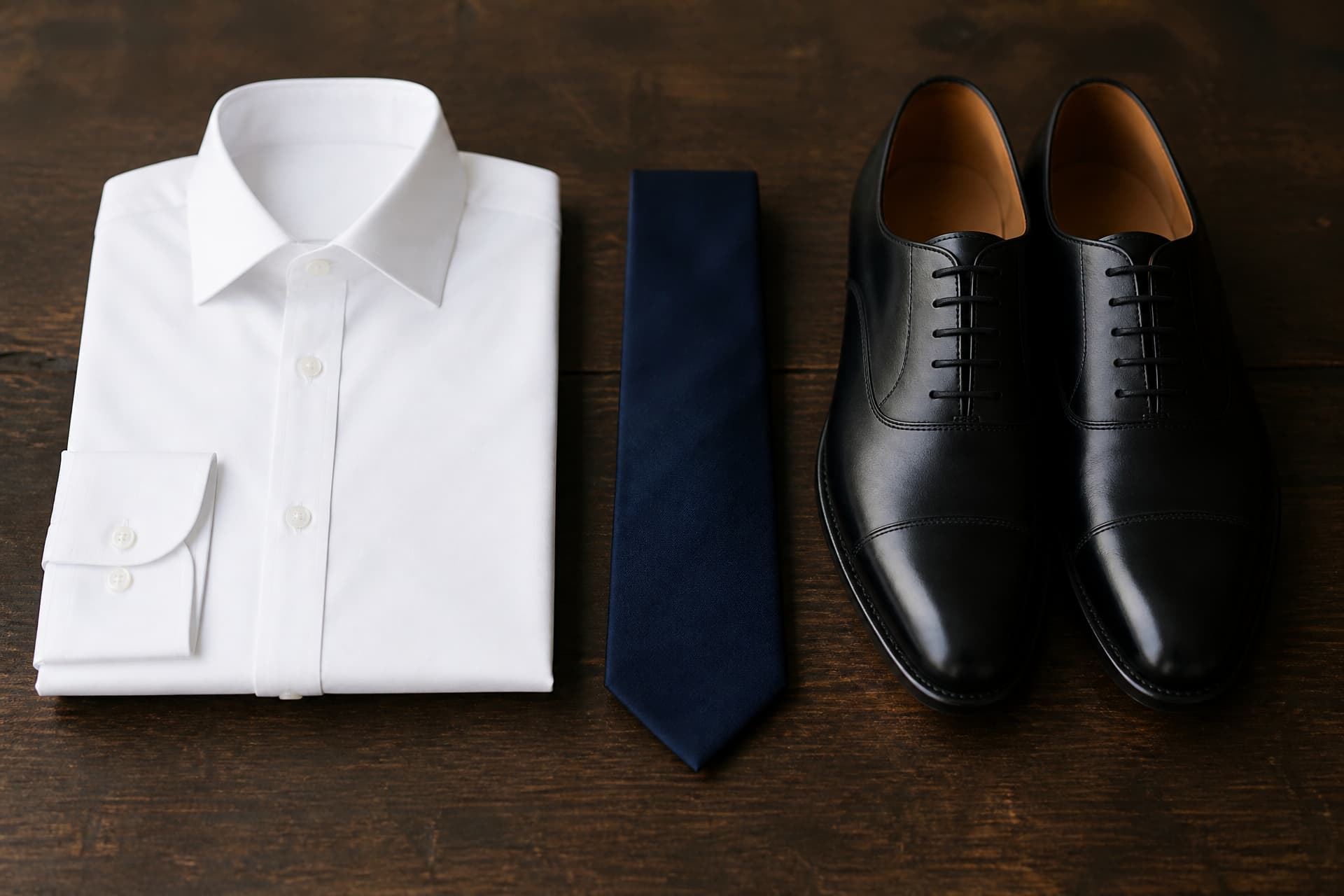
A white shirt with a plain dark tie is the most portable outfit in this guide — correct at a Catholic Mass, a Chinese funeral and a graveside committal alike.
What Almost Always Goes Wrong
Across every page in this hub, the same handful of mistakes recur — and none of them is about the cut of a jacket.
Shoes chosen for a carpet, worn on grass. Heels sink, leather soles slip. This is the most common practical error at any funeral with a burial.
Dressing for the chapel and forgetting the graveside.
A bright or sporty coat over careful clothes in winter — the coat is what everyone sees.
Buying something new that morning, which rubs, itches, or does not fit.
Wearing black when the family asked for color. The only real mistake at a celebration of life.
Red hiding in an accessory at a Chinese funeral — a tie, a lining, a bag.
Not asking. Almost every uncertainty in this guide is resolved by one sentence to whoever invited you.
If You Have Half an Hour
Sometimes the service is this afternoon. In order, and stopping whenever you run out of time:
Find dark pants or a dark skirt or dress. Anything in the palette above. This is 80% of the job.
Find a plain top — a collared shirt, a plain blouse, a plain sweater. White, pale blue, gray or dark.
Check both for stains, creases and pet hair, and press what needs pressing. A creased shirt undoes a good suit and is the most visible failure of effort there is.
Pick shoes you can stand in for two hours, and check the soles if there is a burial.
Take everything out of your pockets and remove anything that jingles or catches light.
Add one layer you can remove — a jacket, a cardigan, a wrap. Buildings are unpredictable.
Look in a full-length mirror in daylight, not in a bathroom. Thin fabric is more transparent outdoors than it looks indoors.
That is the whole procedure. If you have longer, the specific page for your situation is in the library below.
The Things That Are Not Clothes
Worth thinking about for thirty seconds, because they affect the day more than the outfit does.
Something to carry tissues in. Pockets or a small bag. You will want them, and so will someone near you.
Your phone on silent, not vibrate. A vibrating phone in a quiet chapel is audible.
Cash or a card, if there is a collection or a reception with a bar.
The order of service you will be handed, which needs somewhere to go.
Reading glasses, if there are hymns or readings.
Something for children — snacks, a quiet toy, spare clothes. This determines whether the service goes well far more than what anyone is wearing.
Nothing that needs holding. You will want your hands free for handshakes and for carrying a cup.
Something to Wear or Carry
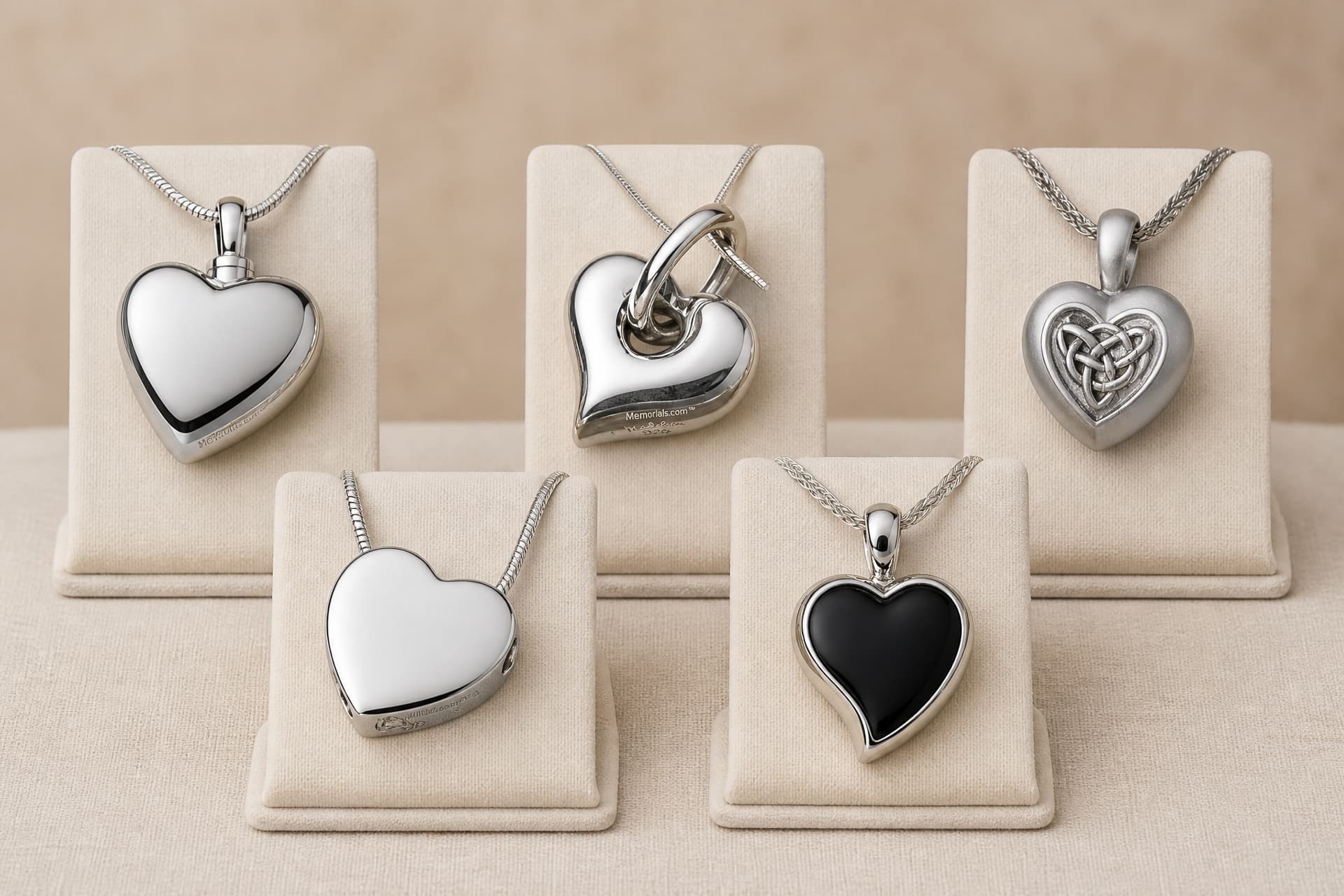
Many people want to bring something of the person with them, particularly at a service where the clothes themselves are deliberately plain.
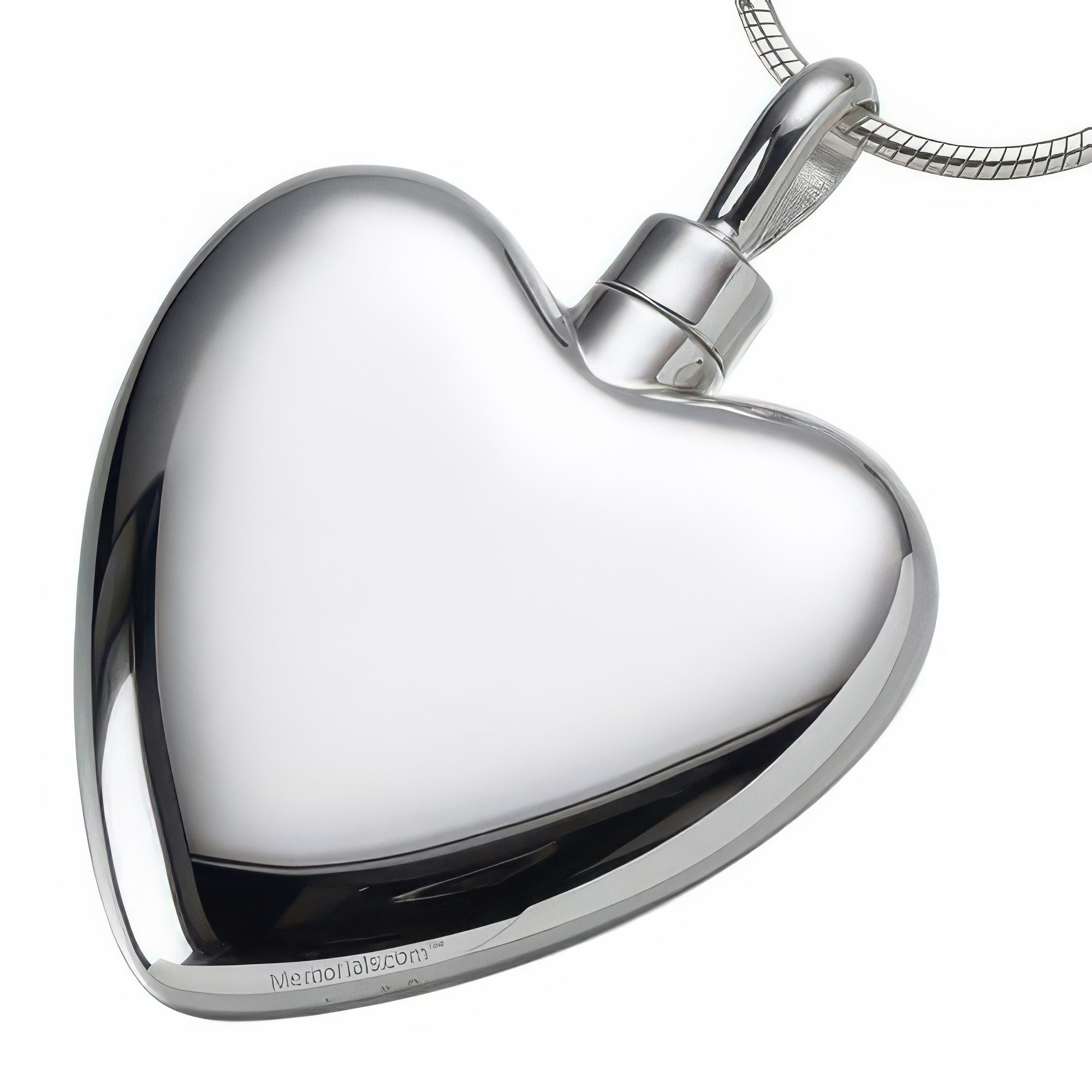
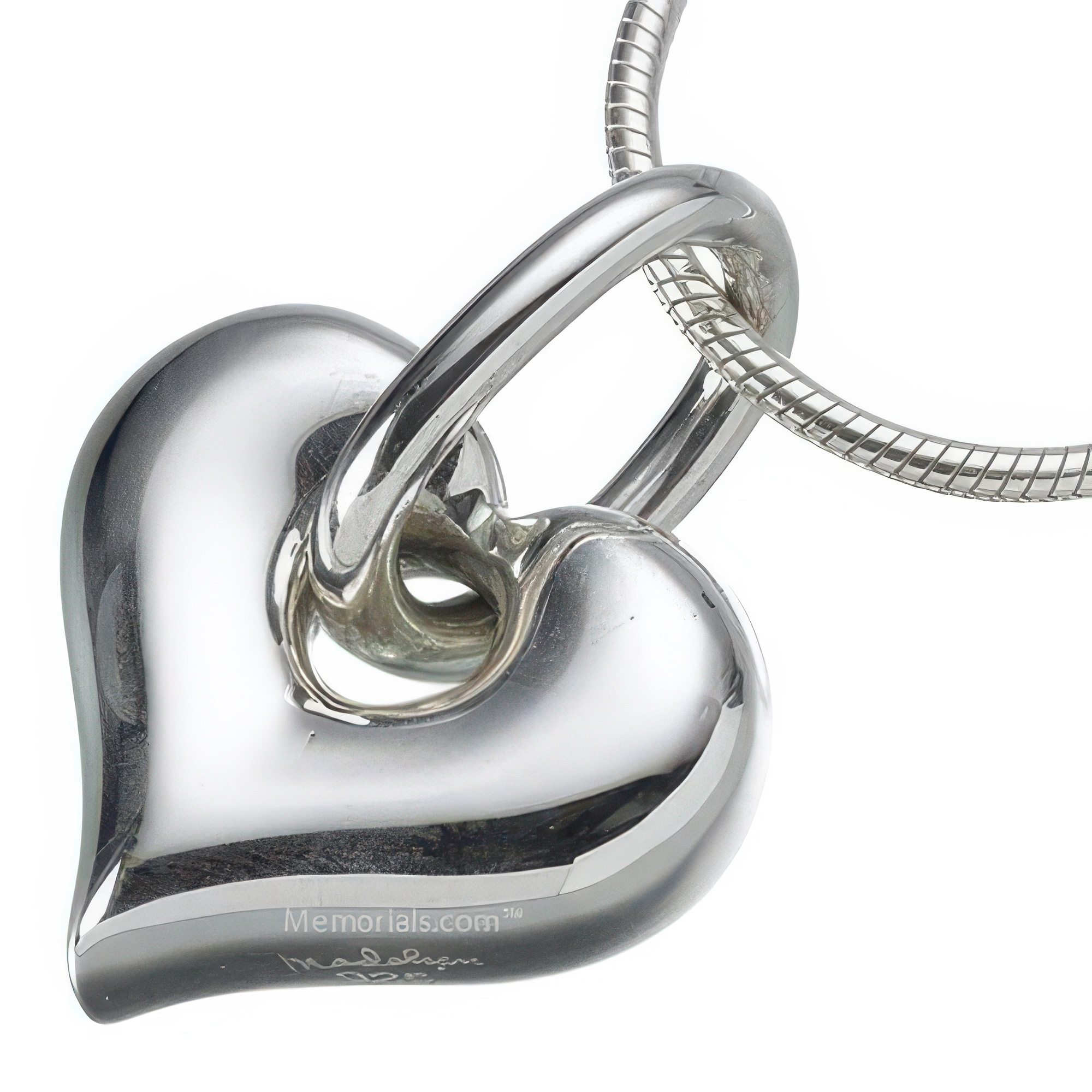
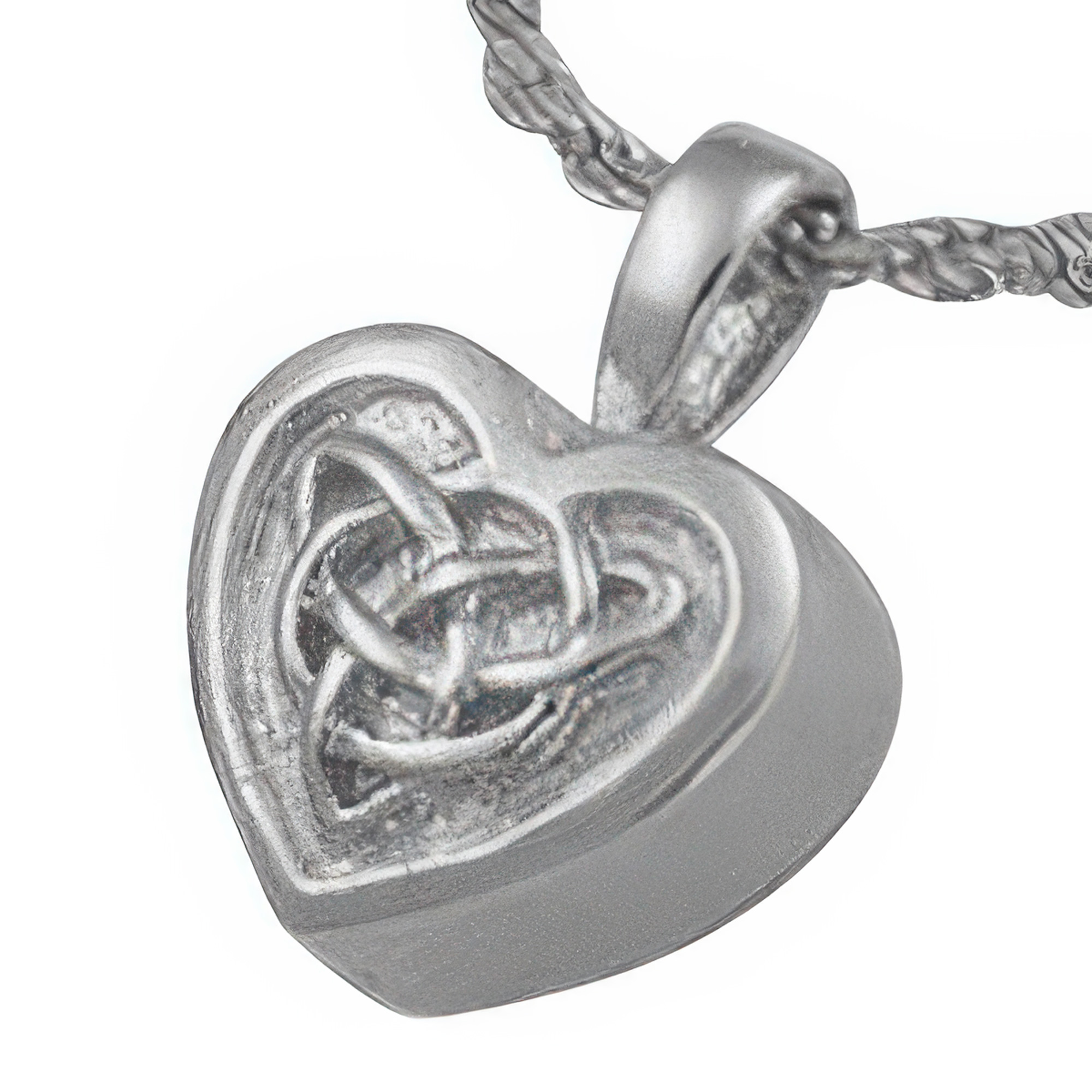
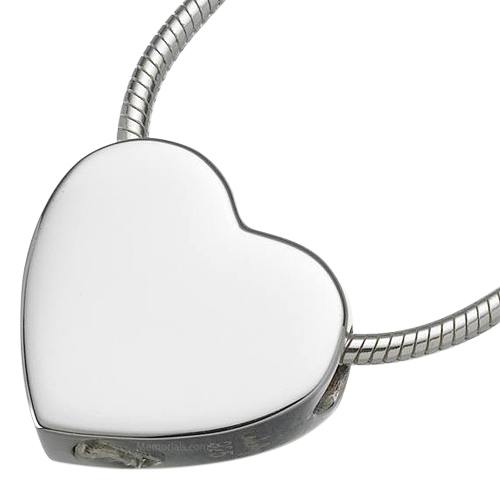
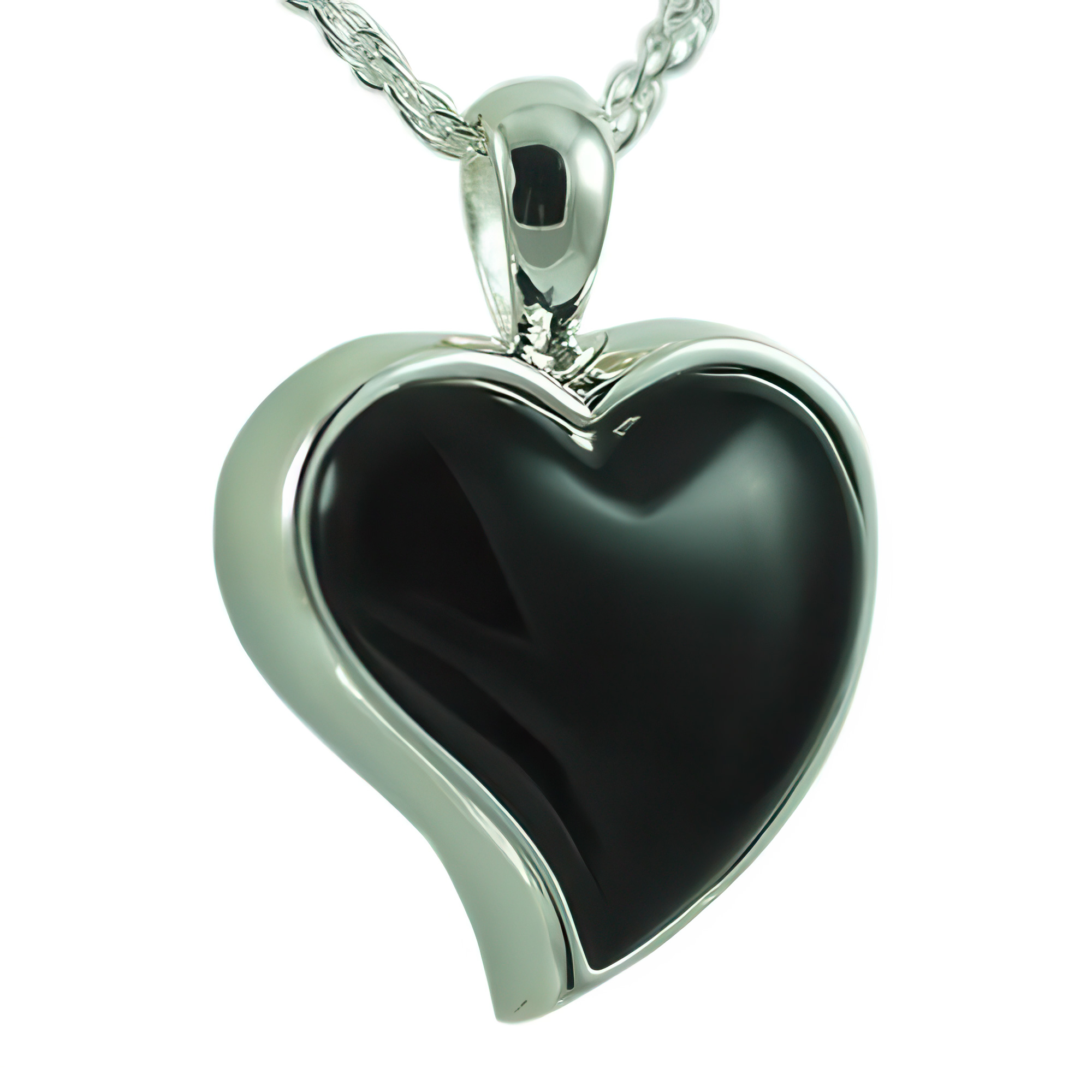
A small piece of memorial jewelry worn under a collar or a sleeve does that quietly, and it is one of the few things at a funeral that is entirely for you rather than for the room. It also outlasts the day, which the outfit does not.
This guide is part of the Memorials.com Funeral Attire collection. Every page below answers one specific version of the question, and each one goes considerably deeper than this overview.
Start Here
The complete walkthrough, covering every occasion, both genders and all seasons in one place.
What to Wear to a Funeral: A Complete Guide — The full answer, from the ten-minute version to the harder cases: what counts as dark, what covered means in practice, and what to do when you own none of it.
By Who You Are
The same convention, answered for the person actually standing in front of the wardrobe.
What to Wear to a Funeral: A Man's Guide — Written for the man who does not own a suit, or owns one that no longer fits. Includes the no-suit ladder and what to buy first if you are buying today.
Funeral Clothes for Kids: What Children Should Wear — Babies, toddlers and school age. Why you should not buy anything, why school uniform counts, and what to put in the bag — which matters more than the outfit.
By the Occasion
The events around a funeral each sit at a different point on the formality scale.
Weather changes the fabric and the footwear, not the standard.
What to Wear to a Funeral in the Summer — Which fabrics actually breathe, why pure linen is a trap, and dressing for an air-conditioned chapel and an open graveside on the same afternoon.
What to Wear to a Winter Funeral — Your coat is the outfit. Plus whether boots are acceptable, and why grip beats polish on a cemetery path.
The Color Question
Do You Have to Wear Black to a Funeral? — No. The named palette of what to wear instead, the three situations where black really is expected, and a straight answer on jeans.
By Tradition
Written for a guest attending a funeral in a tradition that is not their own. Each says clearly where practice varies and when to ask.
Indian Funeral Attire: What to Wear as a Guest — White rather than black, covered shoulders and knees, and shoes you can slip off. Plus which of the several events you have been invited to.
Dark, covered, tidy, unobtrusive. Ask whether there is a burial, ask whether you have a role, and do whatever the family requested.
Everything else in this hub is the detail of one of those, and if you only have ten minutes, the general guide will get you dressed correctly for any funeral you are likely to attend.