🏬Supersize Online Funeral Retailer🪦1000's of Headstones⚱️Over 10,000 Cremation Urns⚰️Caskets Overnight Delivery🛒Funeral & Memorial Superstore🚚FREE Shipping on ALL Orders👨👩👧👦Helping Families for over 20 Years💰Lowest Price Guarantee🏬Supersize Online Funeral Retailer🪦1000's of Headstones⚱️Over 10,000 Cremation Urns⚰️Caskets Overnight Delivery🛒Funeral & Memorial Superstore🚚FREE Shipping on ALL Orders👨👩👧👦Helping Families for over 20 Years💰Lowest Price Guarantee
🏬Supersize Online Funeral Retailer🪦1000's of Headstones⚱️Over 10,000 Cremation Urns⚰️Caskets Overnight Delivery🛒Funeral & Memorial Superstore🚚FREE Shipping on ALL Orders👨👩👧👦Helping Families for over 20 Years💰Lowest Price Guarantee🏬Supersize Online Funeral Retailer🪦1000's of Headstones⚱️Over 10,000 Cremation Urns⚰️Caskets Overnight Delivery🛒Funeral & Memorial Superstore🚚FREE Shipping on ALL Orders👨👩👧👦Helping Families for over 20 Years💰Lowest Price Guarantee
Can you be buried without a casket? In almost every case, yes. No state law in the United States requires a casket for burial, and a shroud burial — the body wrapped in cloth and placed directly in the ground — is lawful nearly everywhere.
The rule you will actually run into belongs to the cemetery, not the state, and that is the distinction that matters. A conventional memorial park will usually require a rigid container and a burial vault. A natural burial ground will often prefer no casket at all.
So the real question is not whether it is legal. It is where you are burying, and what that particular cemetery requires.
What the Law Says
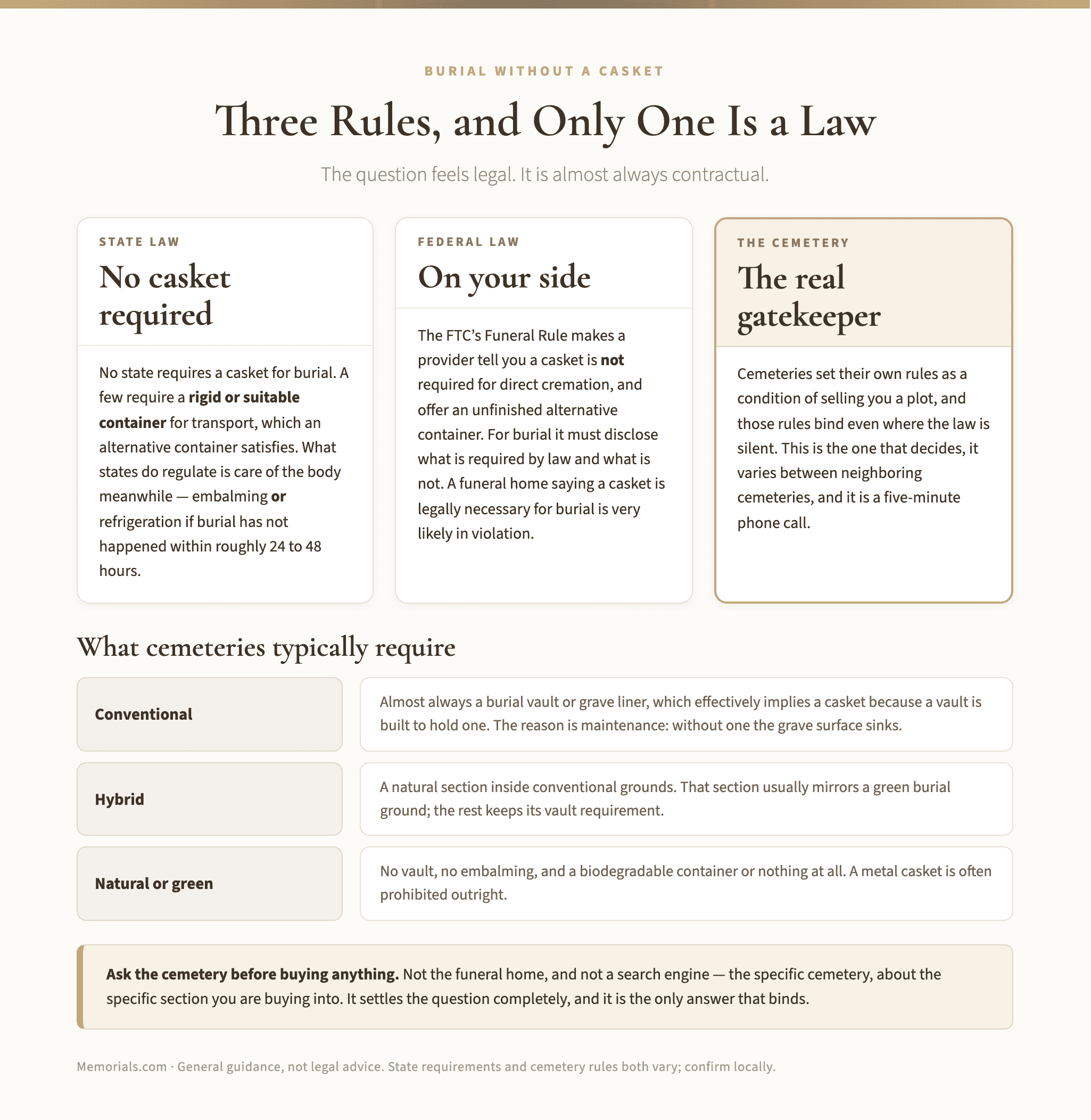
No state requires a casket for burial. A handful of states require a "suitable container" or a "rigid container" for transporting remains, which a sturdy alternative container satisfies, and a few require a container if the body is being transported by common carrier. None of that amounts to a casket requirement.
The federal position is equally clear. The FTC's Funeral Rule requires every funeral provider to inform you that a casket is not required for direct cremation, and to make an unfinished alternative container available. For burial, the Rule requires funeral homes to disclose which items are required by law and which are not — and if a funeral home tells you a casket is legally necessary for burial, that statement is very likely a violation.
What states do regulate is care of the body in the meantime: most require embalming or refrigeration if burial has not happened within roughly 24 to 48 hours. That is a separate requirement, and refrigeration satisfies it.
Two of the three say no. The one that actually decides is the cemetery, and its rule is contractual rather than legal — which is why it differs between two cemeteries in the same town.
The Cemetery Is the Real Gatekeeper
Cemeteries set their own rules as a condition of selling you a plot, and those rules are enforceable even where the law is silent. Three patterns:
Conventional cemeteries almost always require a burial vault or grave liner — a concrete or polymer box the casket sits inside. The reason is maintenance rather than dignity: without one, the grave surface sinks as the container gives way, which makes mowing difficult and tilts headstones. A vault requirement effectively implies a casket, because a vault is built to hold one.
Hybrid cemeteries set aside a natural section within a conventional grounds. Rules in that section usually mirror a natural burial ground, while the rest of the cemetery keeps its vault requirement.
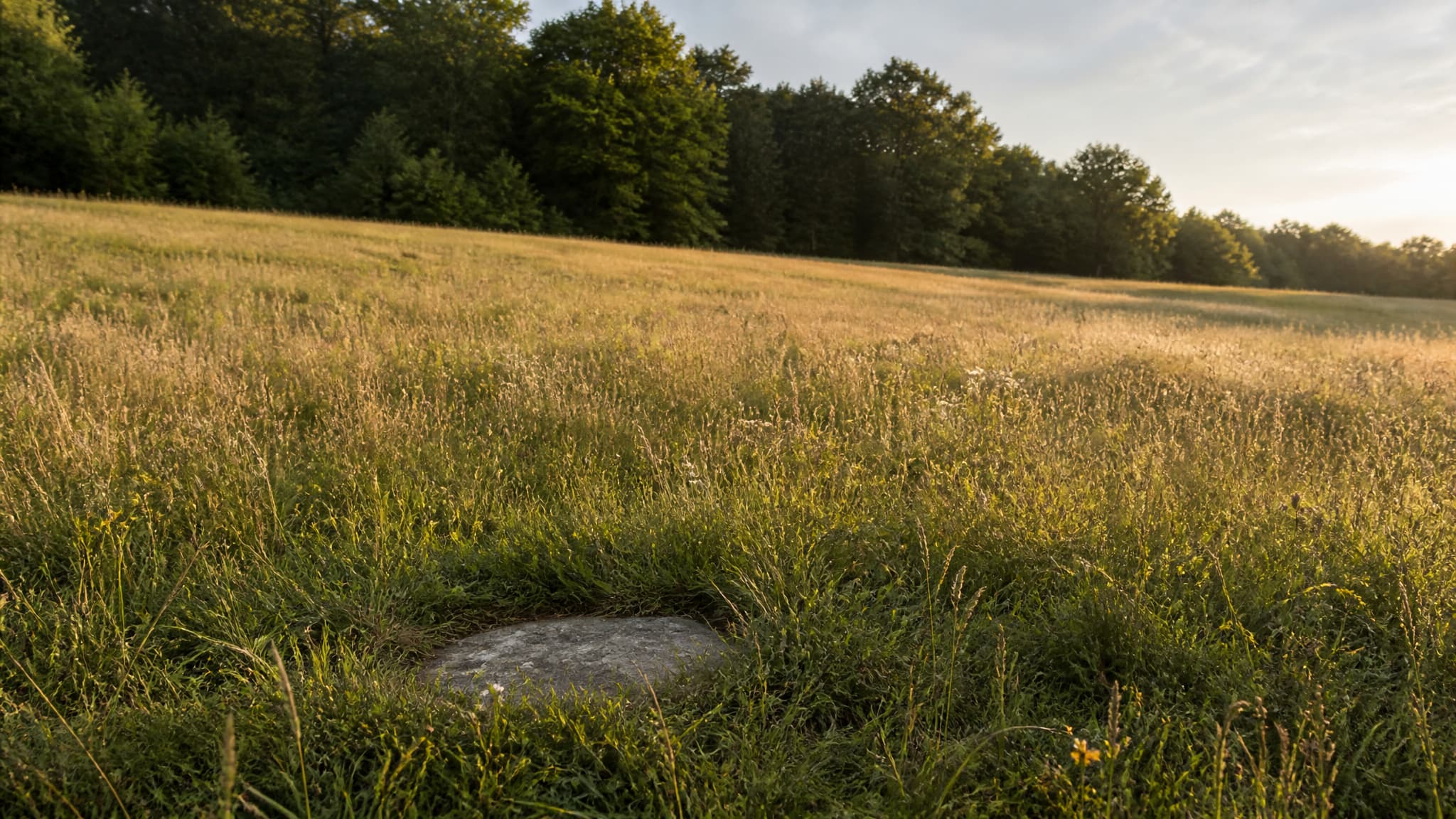
Natural or green burial grounds typically go the other way — no vault, no embalming, and a biodegradable container or nothing at all. Some require that anything buried be fully biodegradable within a set period. A metal casket is often prohibited outright.
Ask the cemetery directly, before buying anything. It is a five-minute phone call and it settles the question completely. Our guide to what a burial vault is explains why the requirement exists and what it costs.
The rule that decides this is almost never a state law. It is the cemetery's own, it varies from one to the next in the same town, and it is a phone call rather than a legal question.
Natural Burial: No Casket by Design
Natural burial no casket is not a compromise or a budget option — for most people who choose it, it is the point.
A natural burial places the body directly into the soil, wrapped in a shroud or in a container that will break down quickly, without embalming chemicals, without a vault, and usually at a shallower depth where biological activity is greatest. The aim is decomposition rather than delay.
What is used instead
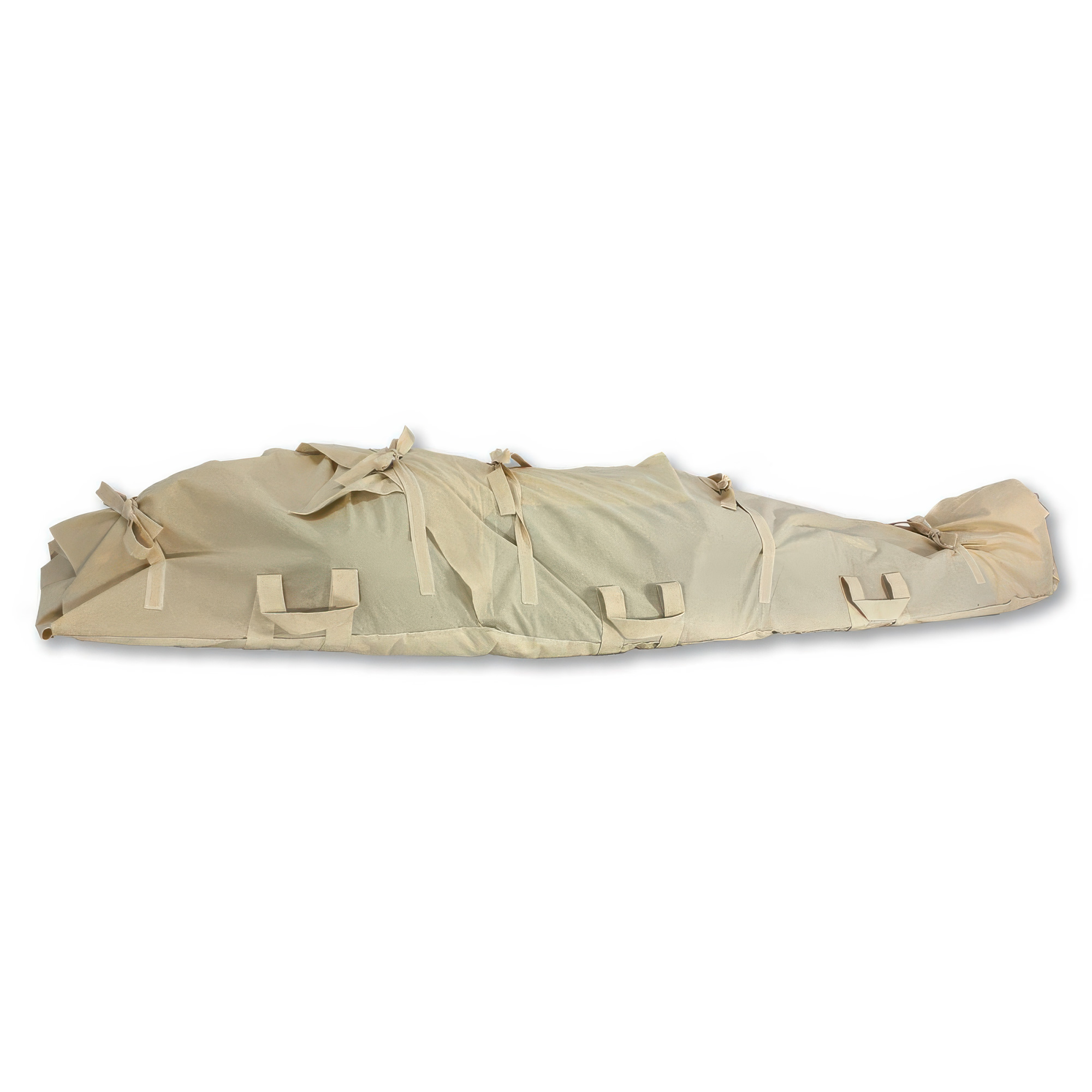
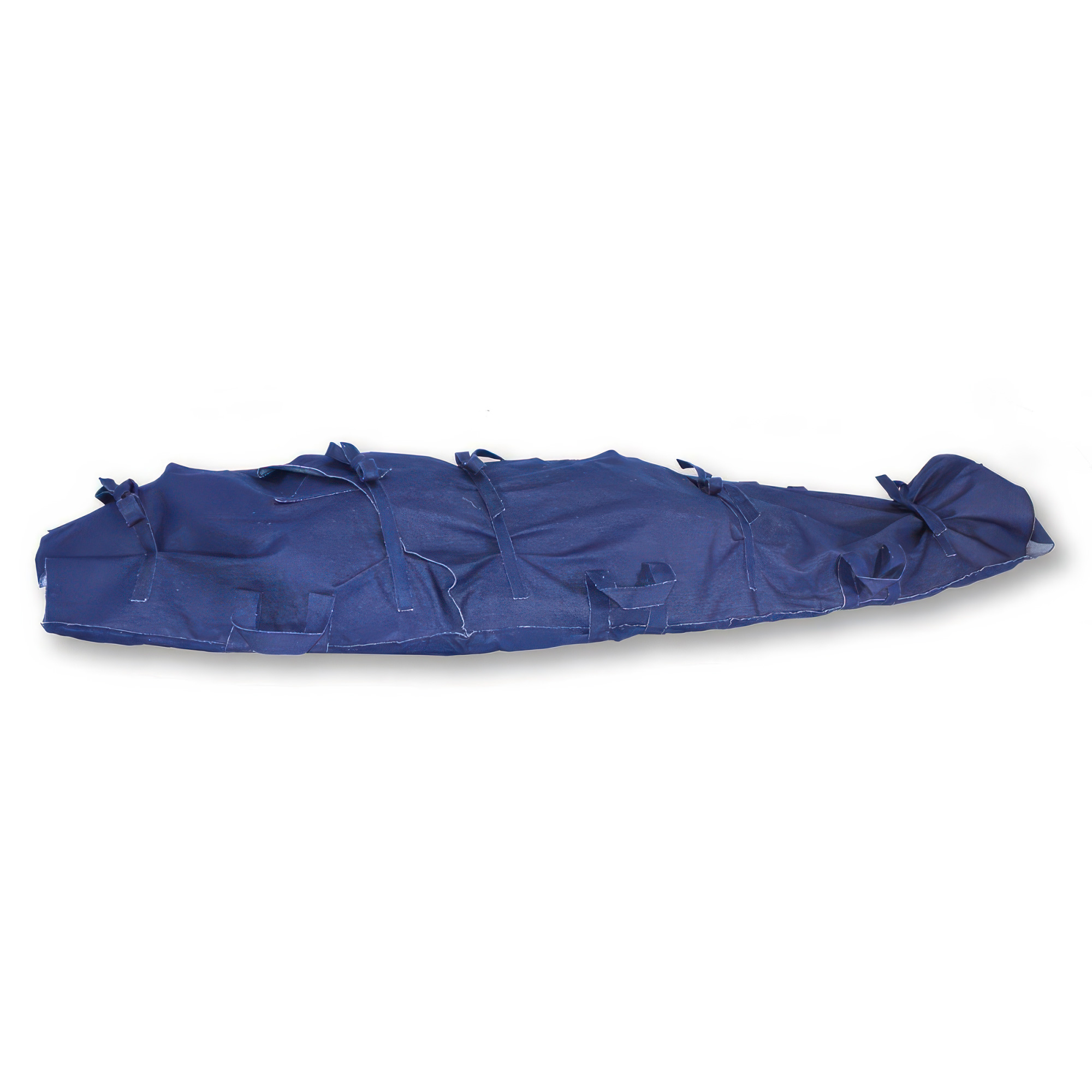
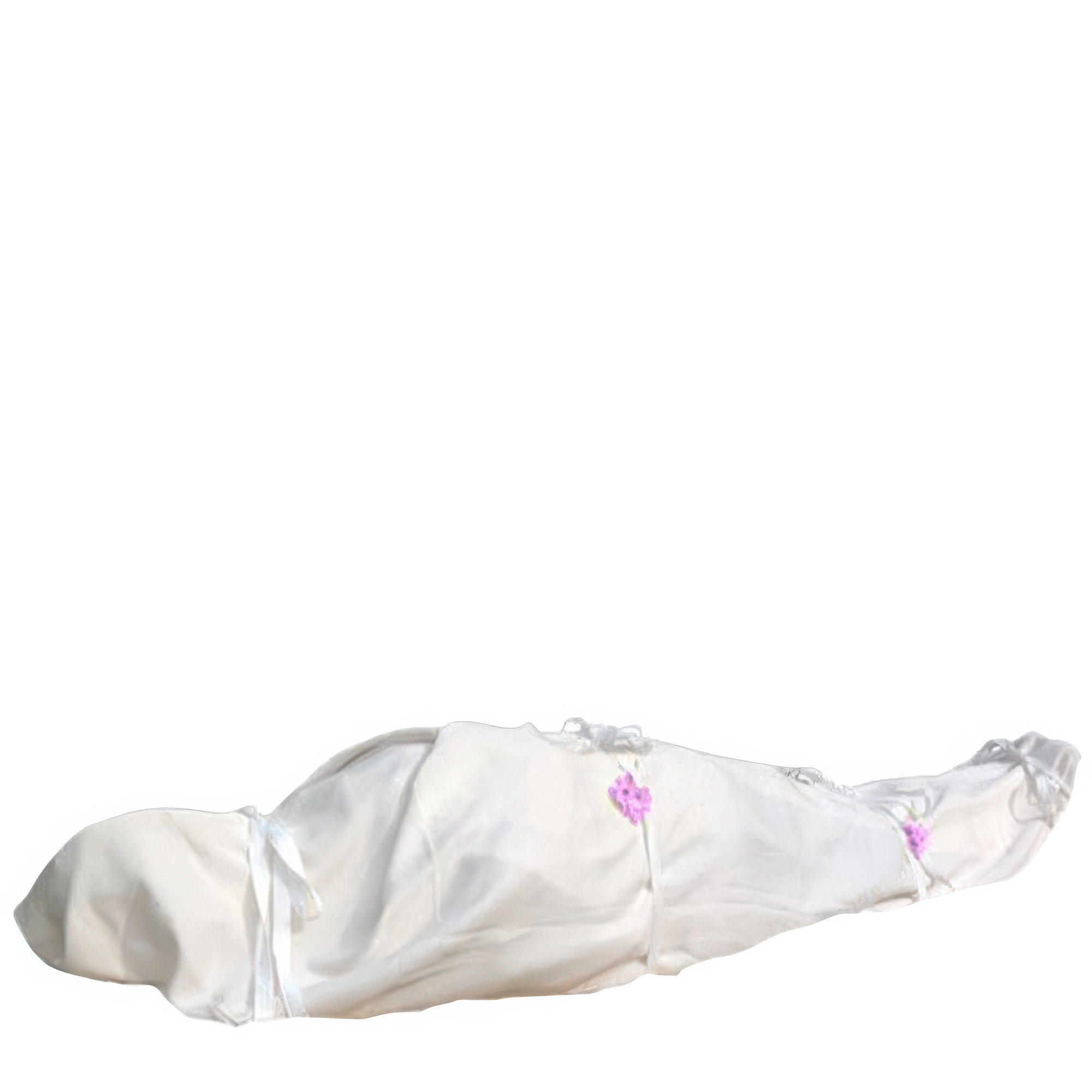
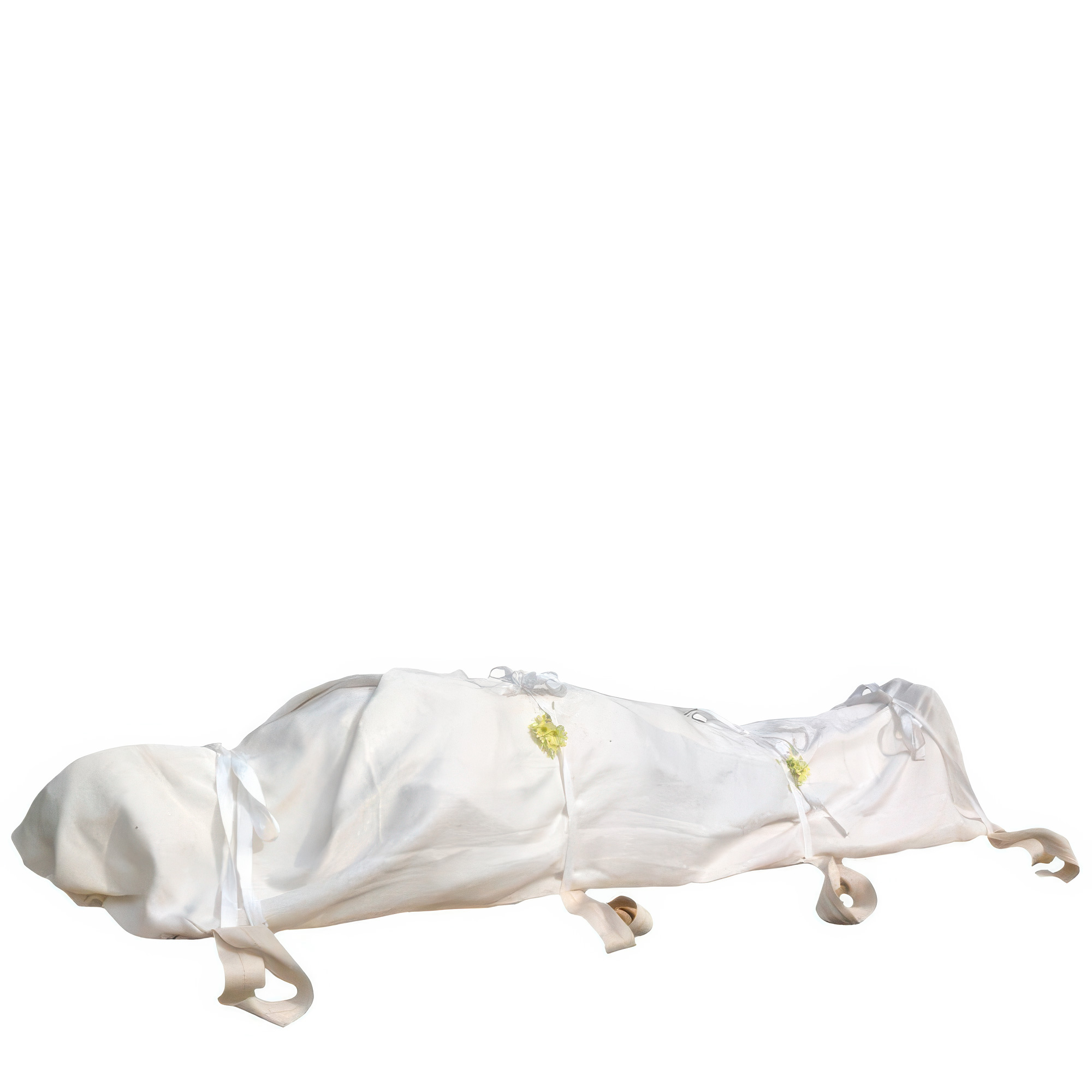
A shroud. Linen, cotton, wool, hemp or silk, often with a rigid board underneath so the body can be carried and lowered. Shrouds are the oldest burial practice in the world and remain standard in Jewish and Muslim tradition.
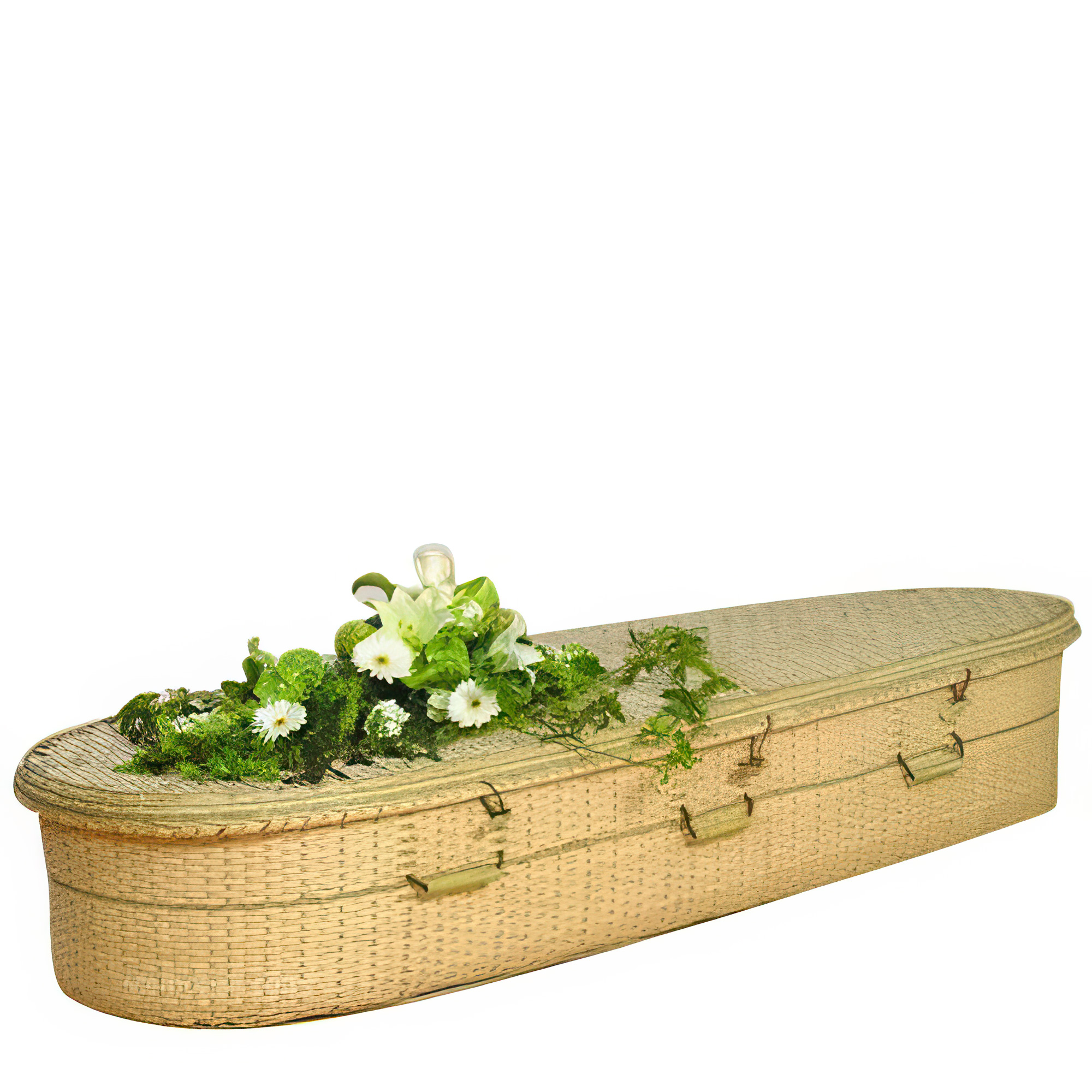
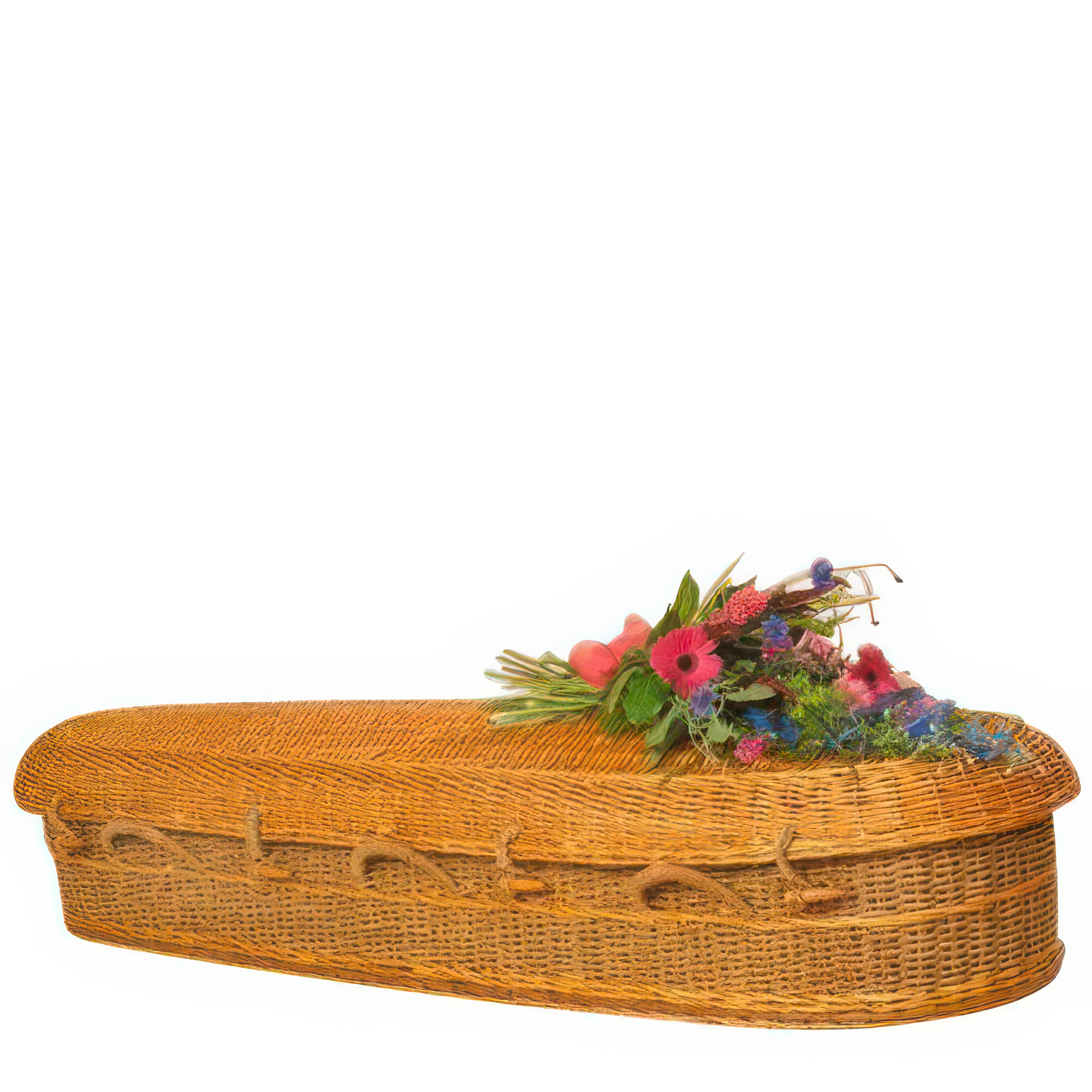
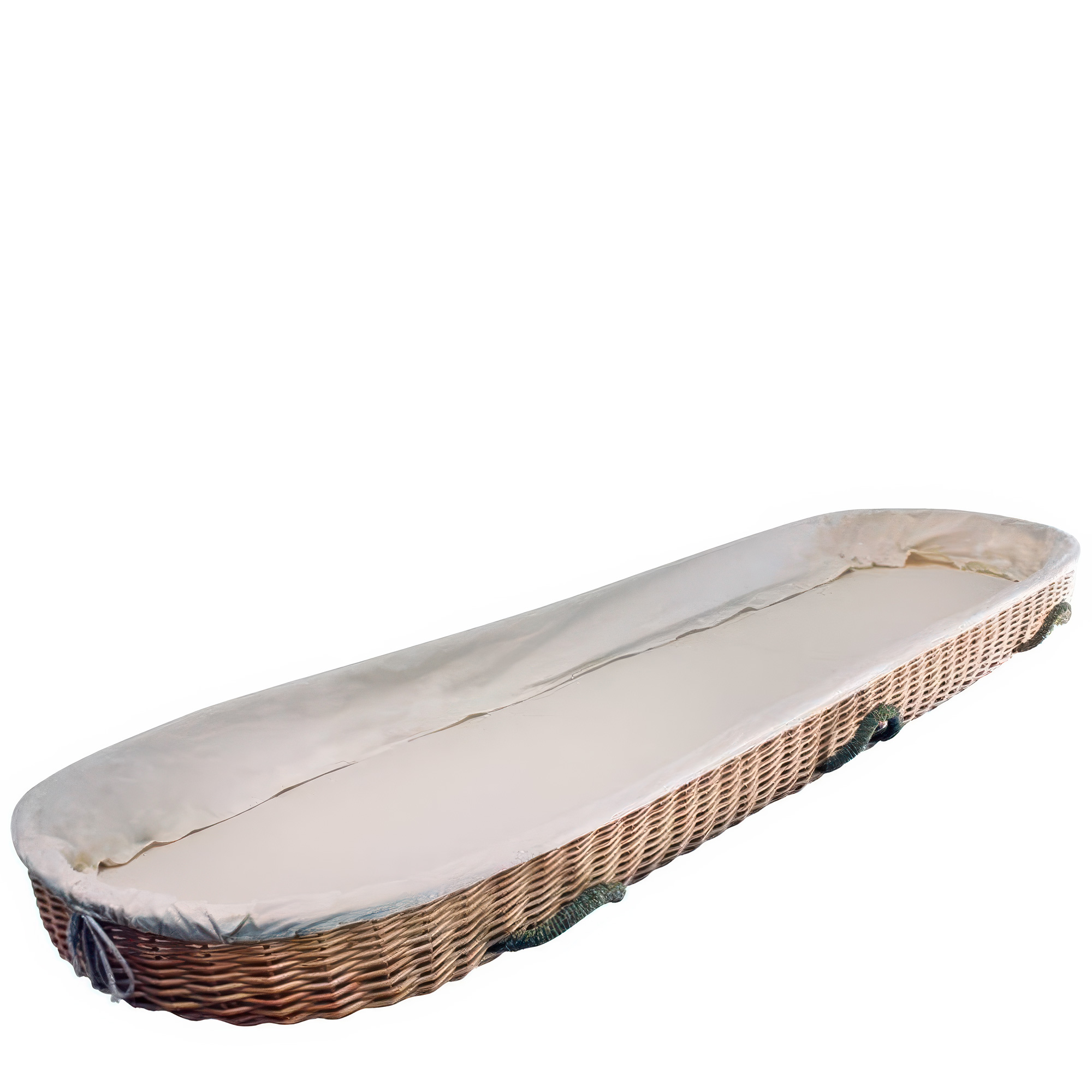
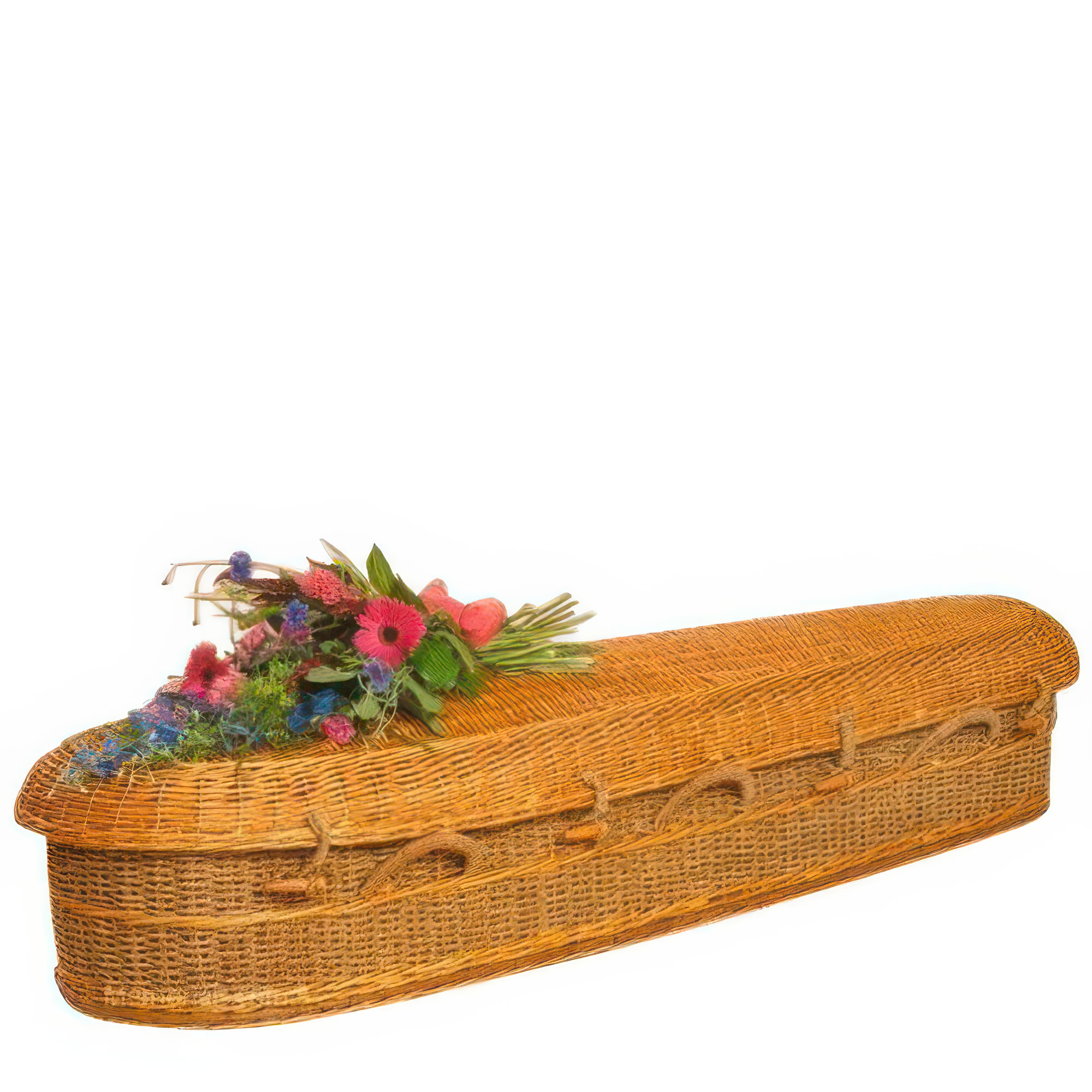
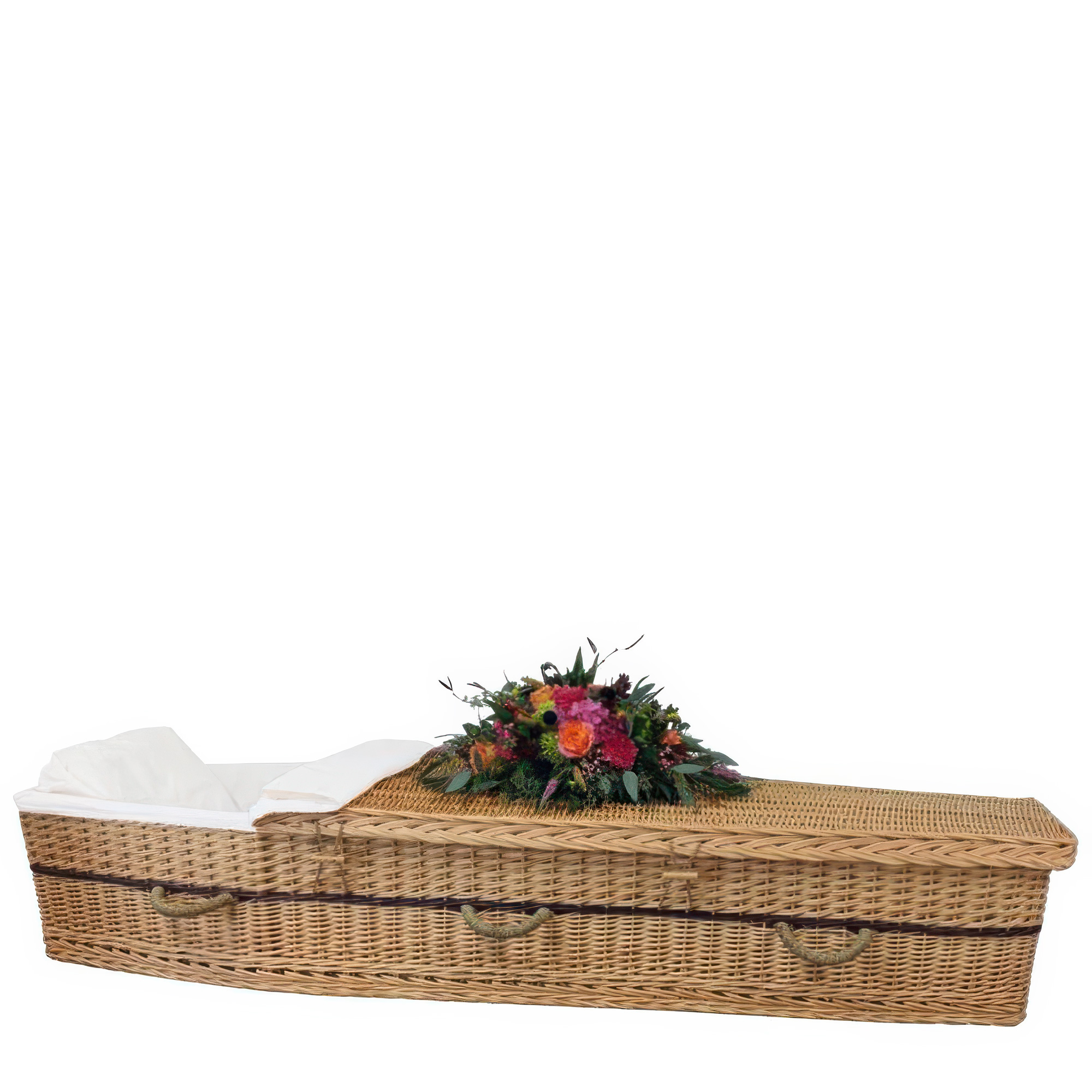
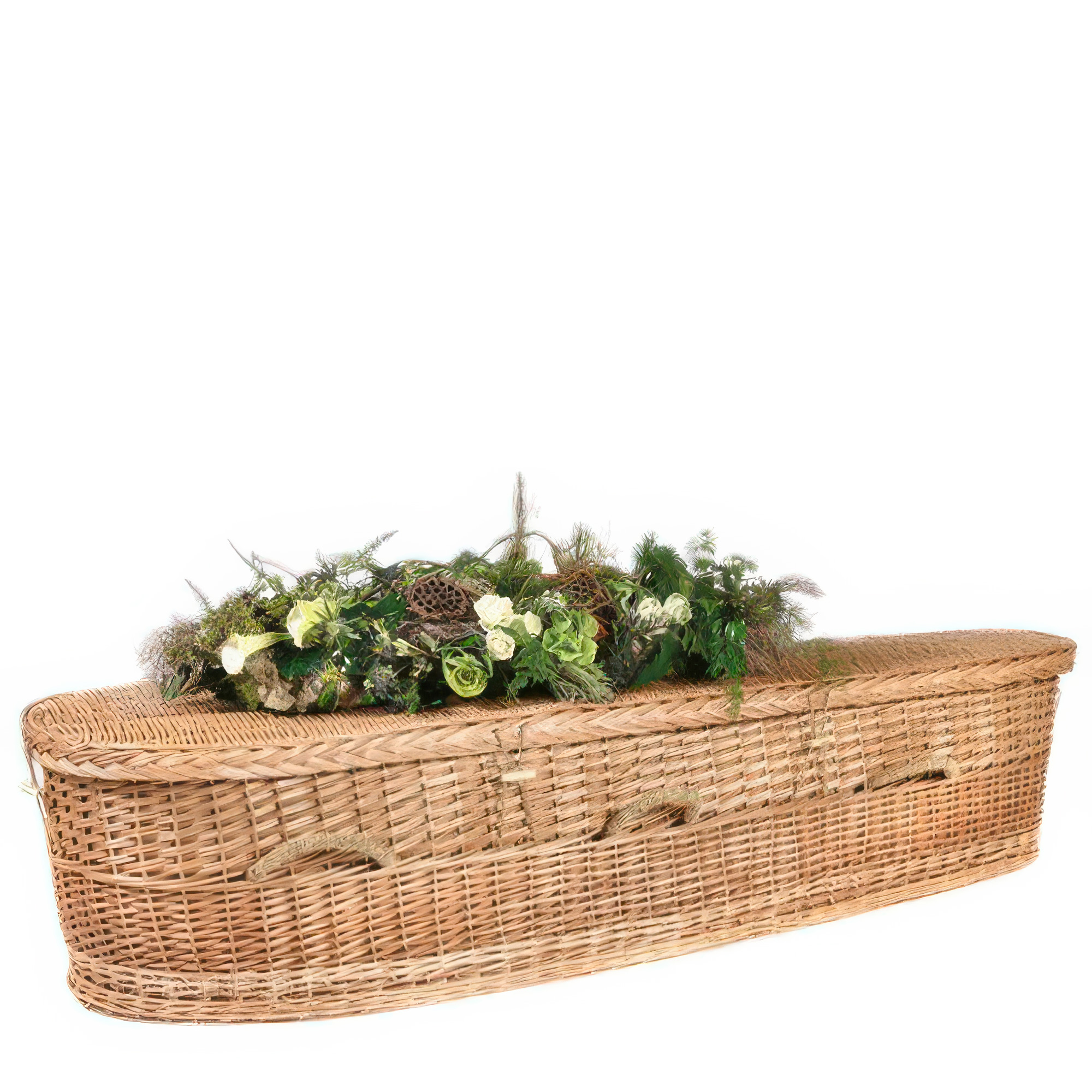
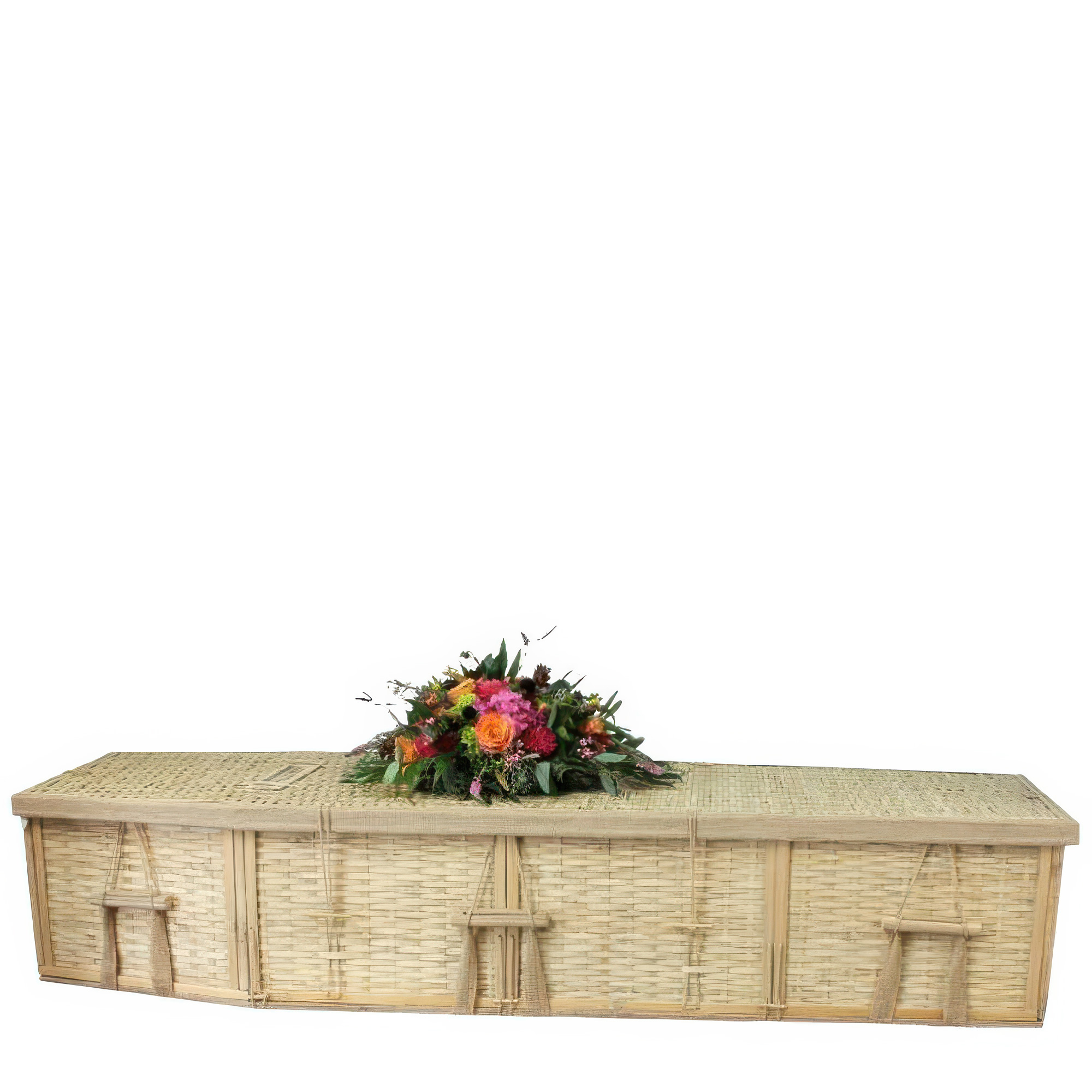
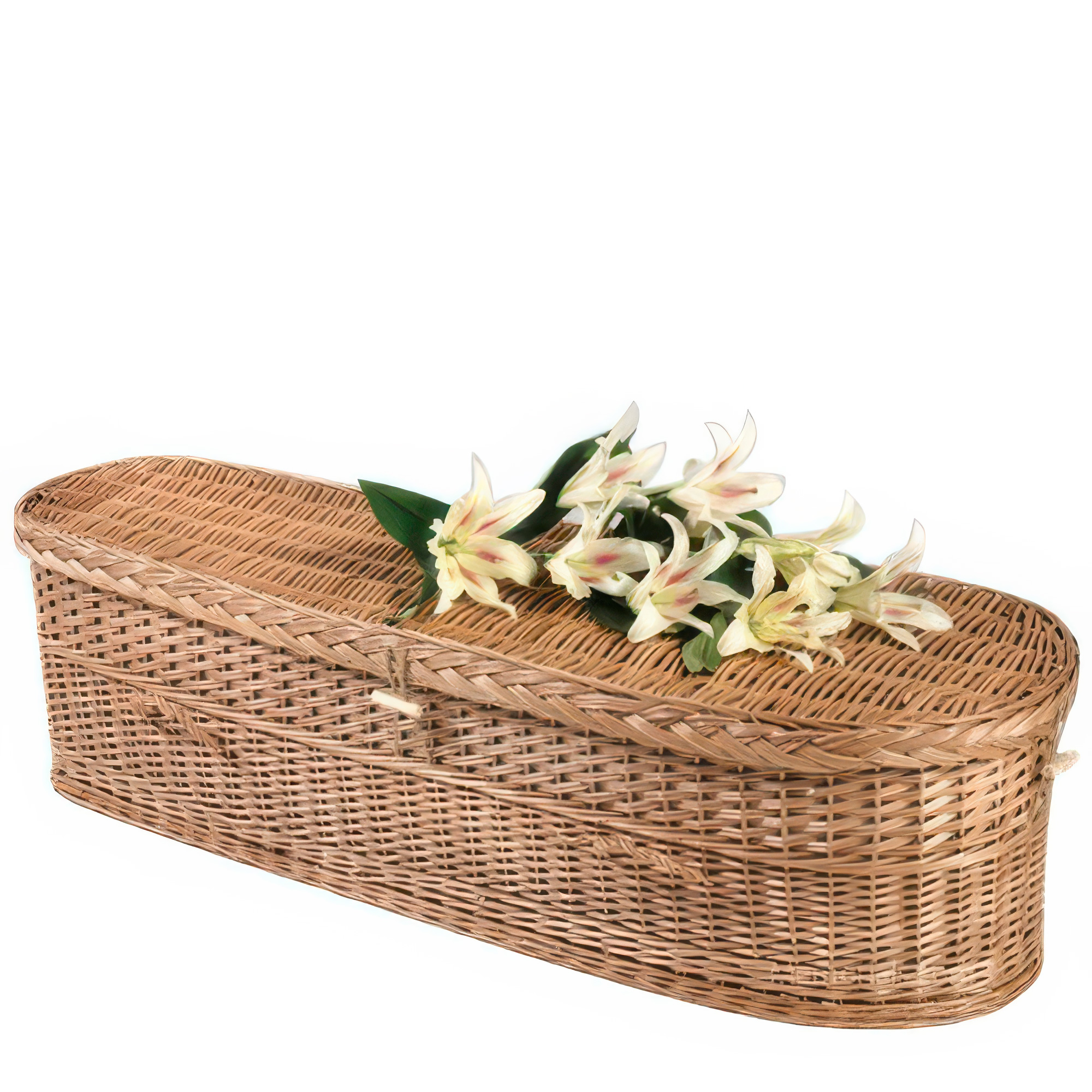
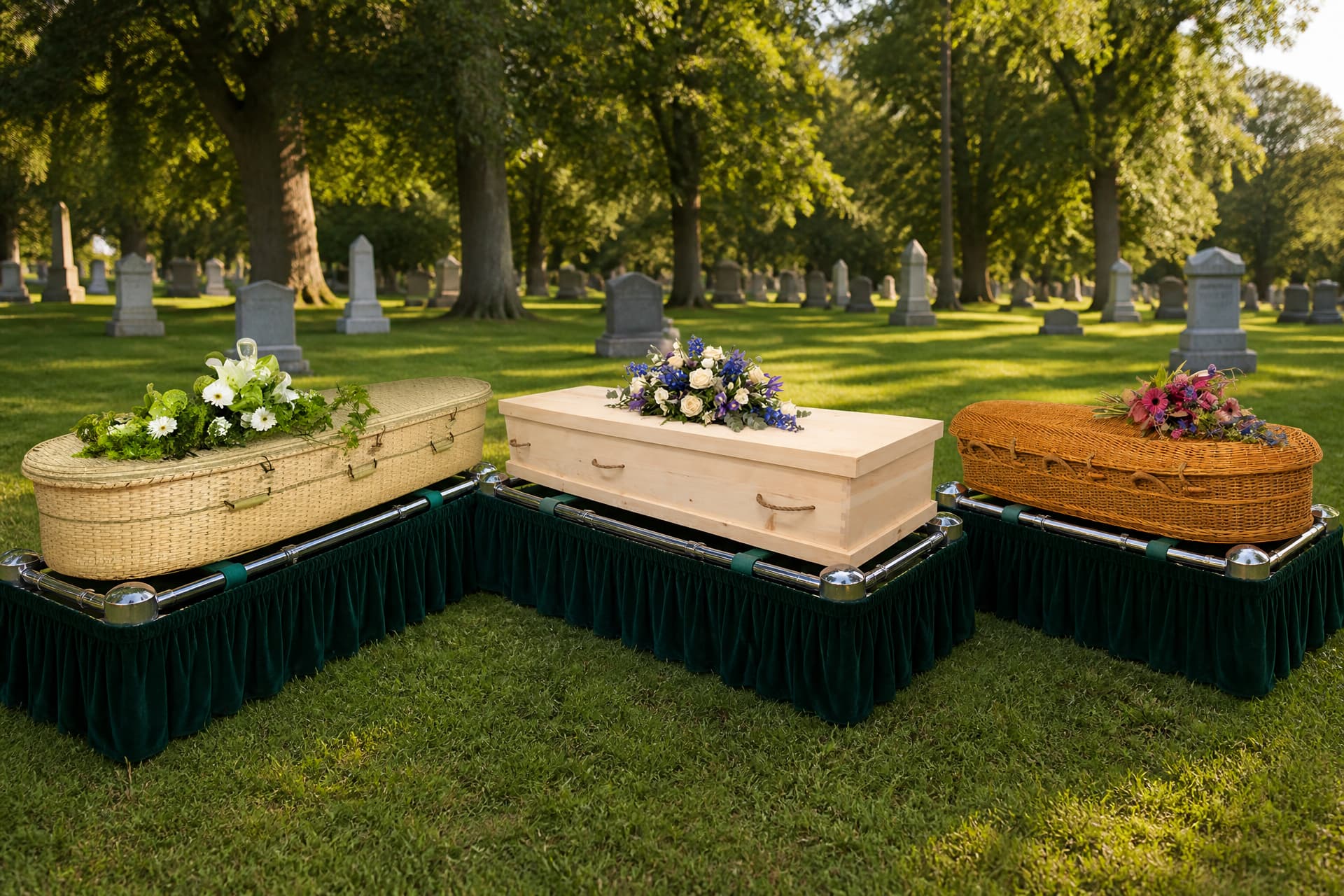
A woven casket. Wicker, willow, seagrass, bamboo. Lightweight, visually warm, and fully biodegradable.
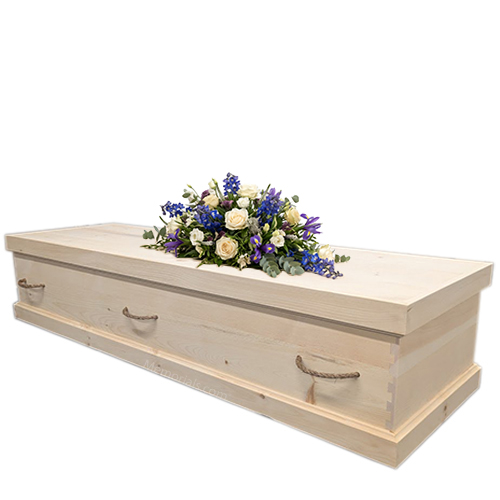
Unfinished softwood. A plain pine box with wooden pegs or dowels instead of metal screws.
Cardboard. Sturdy, inexpensive, and widely used for both burial and cremation. Often decorated by the family, which some find is the most meaningful thing they do that week.
Our green caskets cover this range and start at $284.
What natural burial grounds usually require
Rules vary, but the common set is: no embalming with formaldehyde, no vault or grave liner, biodegradable container or shroud only, no metal hardware, and a flat natural stone or a GPS record rather than a raised monument. Many limit grave depth to three or four feet, because the soil is biologically active there and decomposition is faster.
Two major traditions have practiced shroud burial continuously for thousands of years, and both predate the casket industry entirely.
Jewish burial uses a plain white shroud — tachrichim — and, where a casket is used at all, a plain unfinished wood coffin with no metal, sometimes with holes drilled in the base so the body returns to the earth. Simplicity is deliberate and egalitarian: the same shroud for everyone, regardless of means.
Muslim burial wraps the body in a kafan, traditionally three sheets of plain white cloth, and buries it directly in the earth where local law permits. Many US cemeteries accommodate this; some require a container, in which case a simple unfinished box is used.
Where a cemetery requires a rigid container and a tradition calls for none, the usual solution is a plain wooden box that satisfies the cemetery while keeping the practice intact. Funeral homes in areas with established communities know exactly how to handle this.
The other question families reach at this point is what happens to a container once it is in the ground. Do caskets decompose sets out the timelines by material, and why a vault slows every one of them down.
What It Costs
This is usually the second question, and the answer is that it is substantially cheaper — though not always as much as people expect, because the savings come from several lines rather than one.
Line
Conventional
Without a casket
Container
$2,000 to $6,000
$0 to $1,500
Burial vault
$1,000 to $3,000
Often not permitted
Embalming
$500 to $900
Usually declined
Plot
Varies
Often comparable
Opening and closing
$800 to $1,500
Sometimes lower — hand-dug graves vary
A natural burial commonly lands well below a conventional one, but a natural burial ground in a desirable area can charge more for the plot than a municipal cemetery charges for everything. Compare the total, not the container.
Cost is what brings many families to this question in the first place, and why are caskets so expensive explains where the money in a casket price actually goes.
How to Actually Arrange It
First, call the cemetery. Ask three questions: is a vault or liner required, is a rigid container required, and is embalming required for anything you plan to do. Their answers decide everything downstream.
Second, tell the funeral home what you want before the arrangement conference. A funeral home that does not handle natural burial will say so, and some will be visibly unenthusiastic. Others specialize in it.
Third, ask for the itemized general price list — and decline what is not required. Under the Funeral Rule you may.
Fourth, confirm transport. Some states require a rigid container for transporting remains even where burial needs none, which is satisfied by a simple box rather than a casket.
Last, plan the carrying. A shrouded body on a board is carried differently from a casket, and it is heavier on the hands than people expect. The burial ground will have done it before and will guide you.
What It Looks Like at the Graveside
This is the part nobody describes, and it is the thing families are most uncertain about when they are considering it.
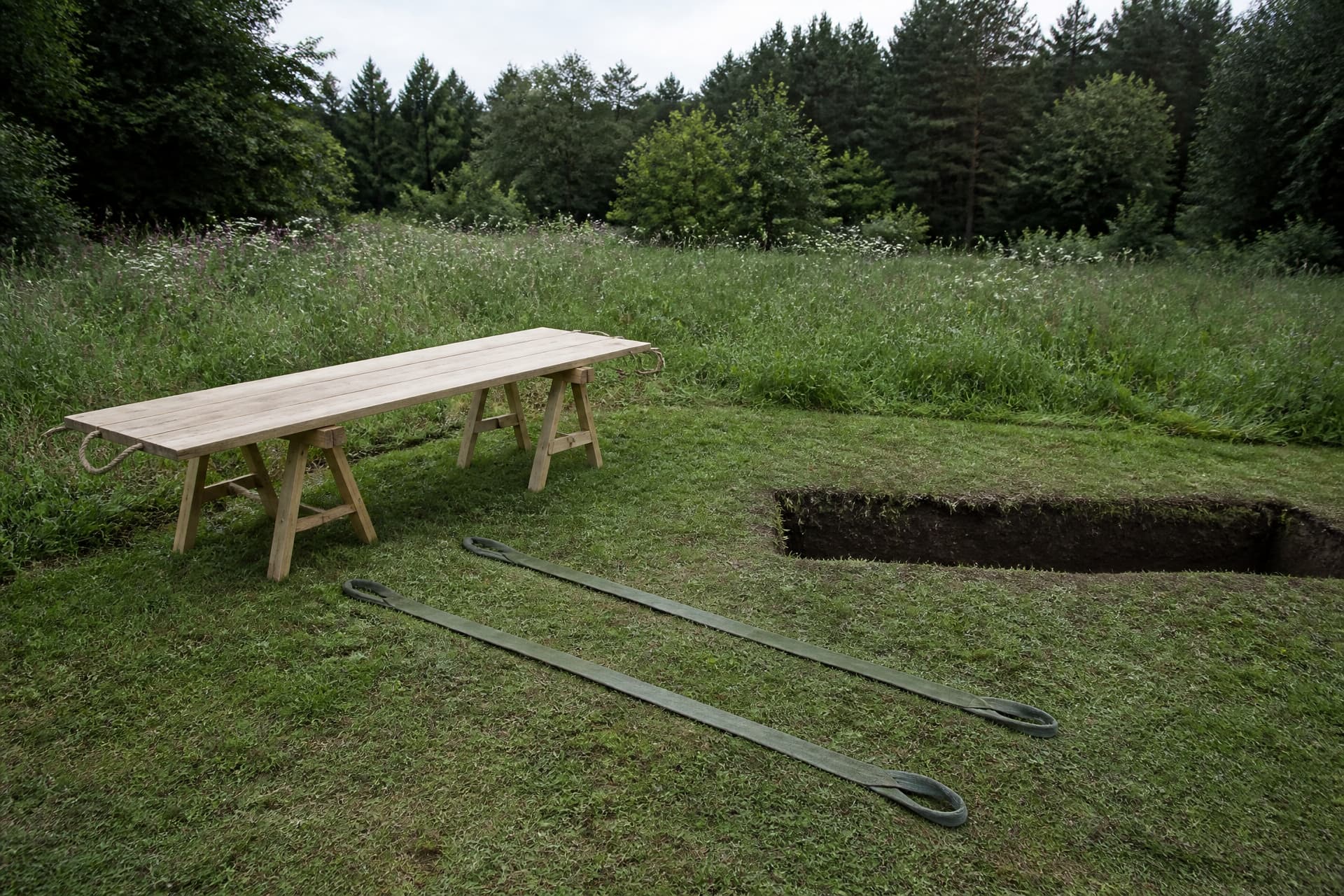
Your loved one is wrapped in the shroud and carried on a bier or a lowering board — a rigid board with handles, or a simple wooden frame. It is not carried by the fabric. The board takes the weight, the bearers take the board, and it looks and feels much like carrying a coffin.
At the grave the board rests on the lowering device or on planks across the opening. Webbing straps are passed underneath, and the shroud is lowered on the straps while the board stays at the surface. In many natural burial grounds the family does the lowering themselves, four or six people to the straps, guided by the burial ground's staff. It is slow and it is quiet and it is, by every account of it, the part people are glad they did.
The shroud is closed and stays closed. Your loved one is not visible at the graveside unless the family has specifically arranged a viewing beforehand, which is a separate decision made indoors and in private.
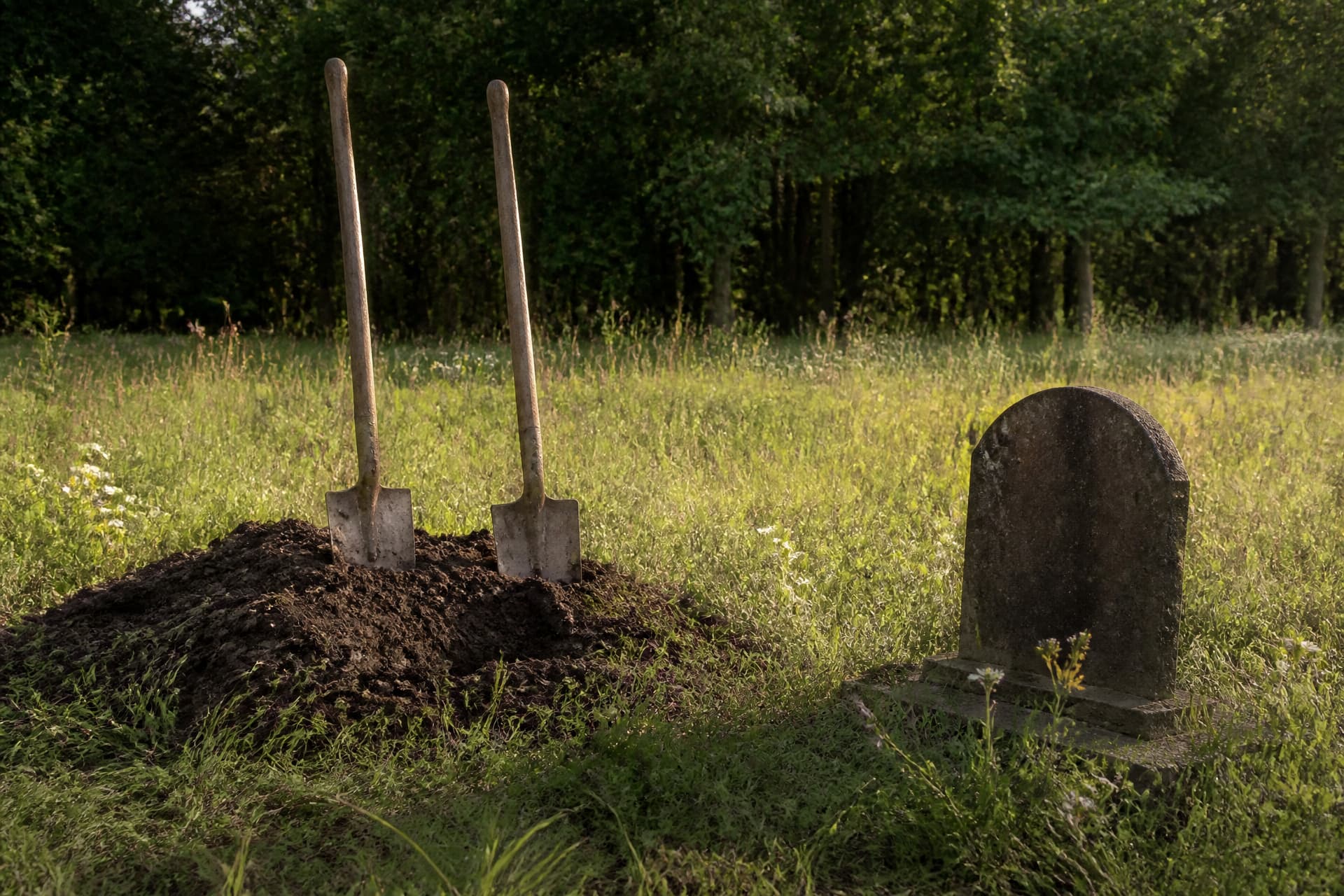
Then the grave is filled, and this is the other thing that differs. At a natural burial the family is usually invited to help, with spades left at the side. Some take a turn and some do not, and both are entirely normal.
Two practical notes. Rain changes things — a shroud handles a wet day less gracefully than a coffin, and burial grounds will have a plan for it, so ask. And brief the bearers beforehand. The grip on a board is different from the grip on a coffin, and thirty seconds of instruction in the parking lot removes nearly all of the anxiety.
The board takes the weight and the bearers take the board, so it is carried much as a coffin is. The straps pass underneath at the graveside, and the board stays at the surface.
Who Arranges It
A shorter list than people expect, and knowing it saves a lot of calling around.
Natural burial grounds do this routinely and will walk you through it. They are the easiest route by a wide margin, and many maintain a list of funeral directors locally who are comfortable with shroud burial.
A funeral director who has done it before. Ask that question directly rather than whether they can. Most can; the ones who have will be markedly better at it, and they will already own the boards and straps.
The family, in the states that allow it. Home funerals are lawful in most of the country, with a handful of states requiring a licensed funeral director for specific steps such as filing the death certificate or transporting across county lines. It is more work than people imagine and more achievable than they fear.
At a natural burial the family is usually invited to help fill the grave, with spades left at the side. Some take a turn and some do not, and both are entirely normal.
Why Families Ask This
Three reasons, and the honest answer differs for each.
Cost. A casket is the largest single line on most funeral bills, and removing it removes several thousand dollars. That is a legitimate reason and nobody should feel awkward raising it. The savings are real, and they are larger than the container alone because a shroud burial usually also removes the vault and the embalming.
Environmental conviction. A conventional burial puts metal, hardwood, concrete and preservative chemicals into the ground and keeps them there. For people who have thought about this, the casket is the most obvious thing to remove, and natural burial grounds exist precisely to make that possible.
A sense that it is simply more right. This is the reason people find hardest to say aloud and the one that comes up most in natural burial grounds' own accounts. Returning a body to soil, with nothing between, strikes many families as the plainer and more truthful thing to do. That is not a budget decision and it should not be treated as one.
None of the three requires justification to a funeral director. "We would like a shroud burial" is a complete sentence.
Frequently Asked Questions
Can you be buried without a casket legally?
Yes. No US state requires a casket for burial. Some require a rigid or suitable container for transport, which a plain box satisfies. The requirement you are most likely to meet comes from the cemetery, not from the law.
Is burial without casket the same as green burial?
Not quite. A burial without a casket is one feature of green burial, which also means no embalming, no vault, and usually a shallower grave in a natural setting. You can be buried in a shroud in a conventional cemetery if it permits it, and that is not a green burial.
Do cemeteries allow shroud burial?
Natural burial grounds usually do, and many welcome it. Conventional cemeteries often do not, because they require a vault. Hybrid cemeteries set aside a natural section with its own rules. Always ask the specific cemetery.
Do you need a burial vault if there is no casket?
Natural burial grounds do not permit one. Conventional cemeteries generally require one regardless, which in practice means a container too. No state law requires a vault at all — it is a cemetery policy.
Can a funeral home refuse to bury someone without a casket?
A funeral home may decline to provide a service it does not offer, but it may not tell you a casket is required by law when it is not, and it may not refuse a container you supply. If you meet resistance, another funeral home will handle it.
Is a cardboard casket allowed?
In most places, yes — for burial and for cremation. Cardboard alternative containers are standard for direct cremation, and many natural burial grounds accept them for burial. They are sturdier than the name suggests.
The Short Version
The legal answer is straightforward and the practical one is a phone call. No state requires a casket. Most conventional cemeteries effectively do, through their vault rule. Natural burial grounds usually prefer you did not use one.
If simplicity is what you are after, it is available, it is lawful, and it is much older than the alternative. Our funeral planning guide covers the rest of the sequence, and what a funeral costs puts the numbers in context.