🏬Supersize Online Funeral Retailer🪦1000's of Headstones⚱️Over 10,000 Cremation Urns⚰️Caskets Overnight Delivery🛒Funeral & Memorial Superstore🚚FREE Shipping on ALL Orders👨👩👧👦Helping Families for over 20 Years💰Lowest Price Guarantee🏬Supersize Online Funeral Retailer🪦1000's of Headstones⚱️Over 10,000 Cremation Urns⚰️Caskets Overnight Delivery🛒Funeral & Memorial Superstore🚚FREE Shipping on ALL Orders👨👩👧👦Helping Families for over 20 Years💰Lowest Price Guarantee
🏬Supersize Online Funeral Retailer🪦1000's of Headstones⚱️Over 10,000 Cremation Urns⚰️Caskets Overnight Delivery🛒Funeral & Memorial Superstore🚚FREE Shipping on ALL Orders👨👩👧👦Helping Families for over 20 Years💰Lowest Price Guarantee🏬Supersize Online Funeral Retailer🪦1000's of Headstones⚱️Over 10,000 Cremation Urns⚰️Caskets Overnight Delivery🛒Funeral & Memorial Superstore🚚FREE Shipping on ALL Orders👨👩👧👦Helping Families for over 20 Years💰Lowest Price Guarantee
Most celebration of life decoration ideas start with a color scheme. Start somewhere else.
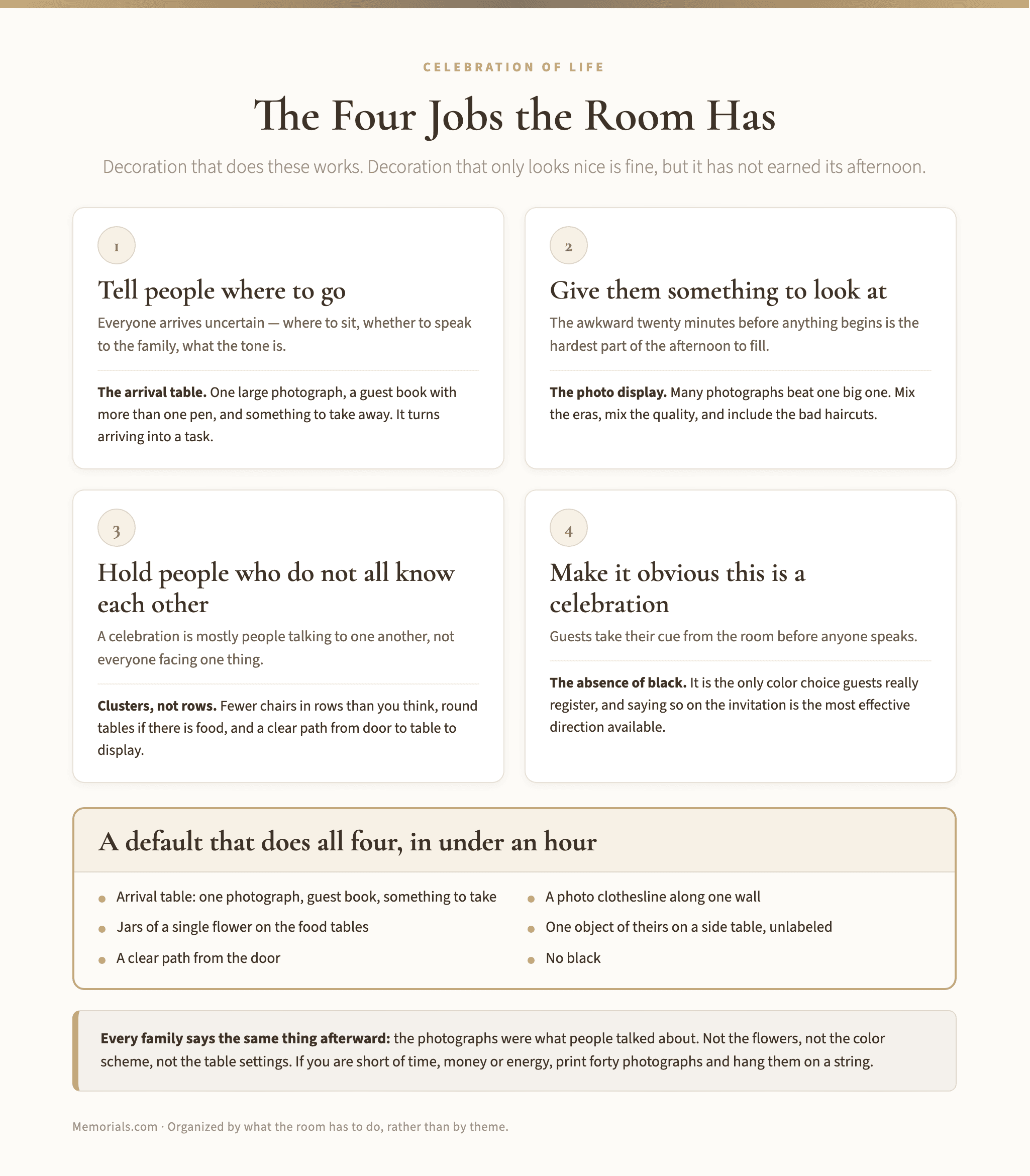
A celebration of life room has four jobs, and they are all practical: it has to tell people where to go when they arrive, give them something to look at in the awkward twenty minutes before anything begins, hold a hundred people who do not all know each other, and make it obvious that this is a celebration rather than a funeral.
Decoration that does those four things works. Decoration that only looks nice is fine but does not earn its afternoon. What follows is organized by job.
Organized by what the room has to do rather than by theme, because a celebration of life has jobs a party does not.
The single highest-value thing in the room, and the one most often left until last.
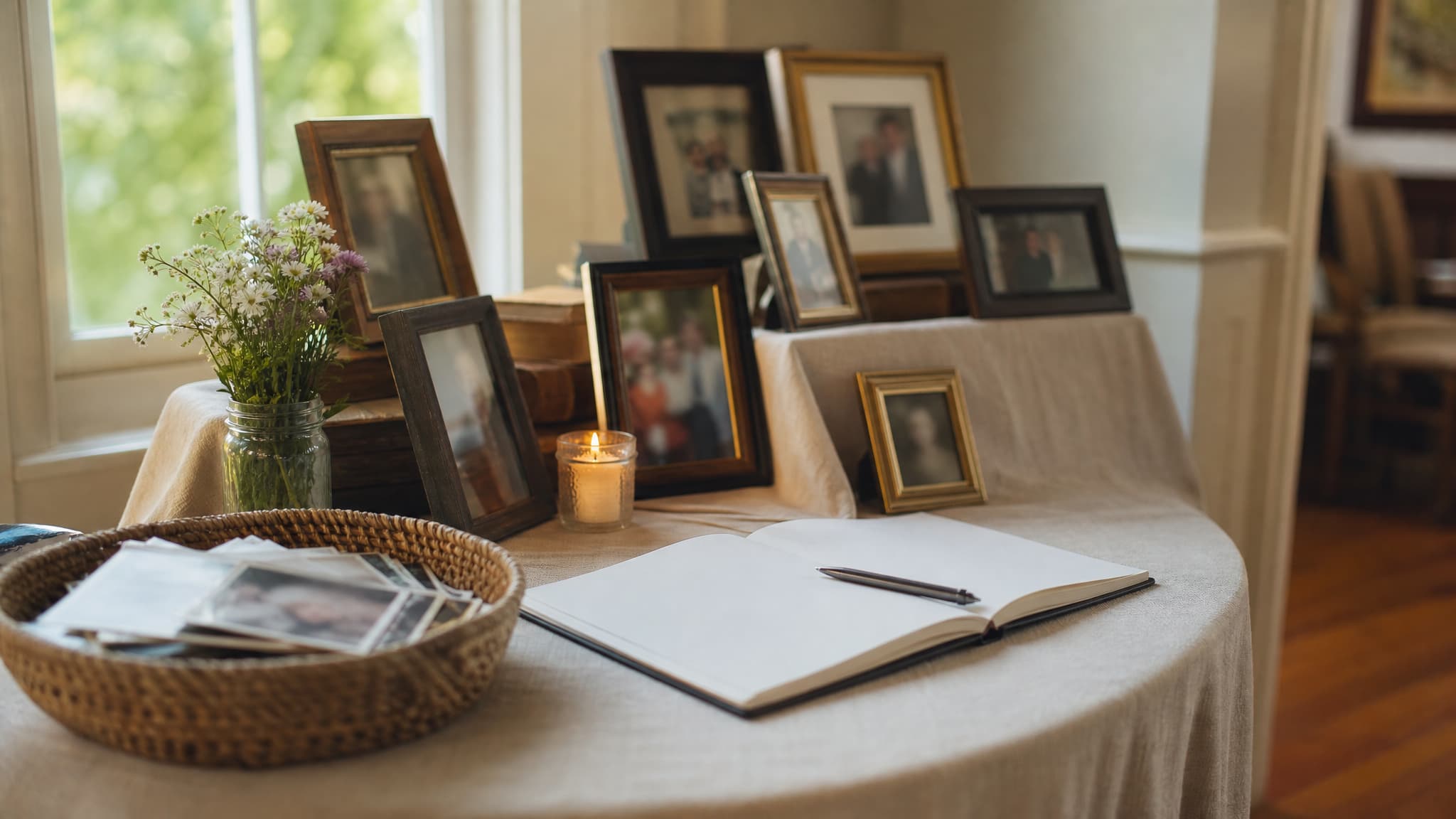
People arriving at a celebration of life are uncertain — about where to sit, whether to speak to the family, what the tone is. A table at the entrance solves all three by giving them a task.
Put on it:
A large framed photograph. One, not twelve. Chosen for the face rather than the occasion.
A guest book, with more than one pen. The pens run out or walk off.
A small sign saying what to do: "Please sign, and take a photo from the basket."
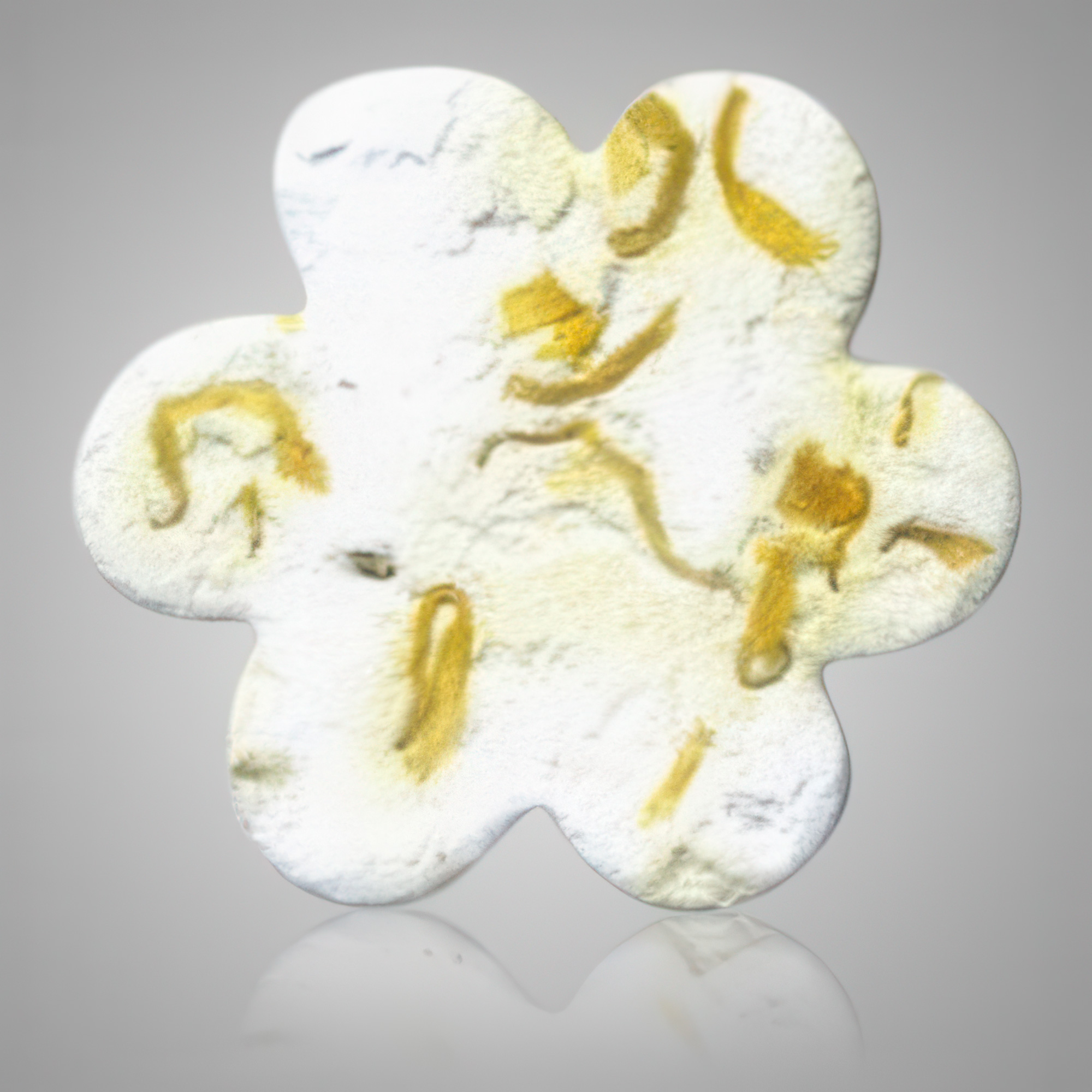
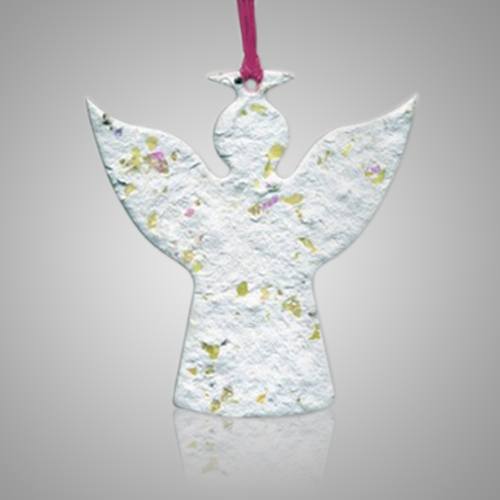
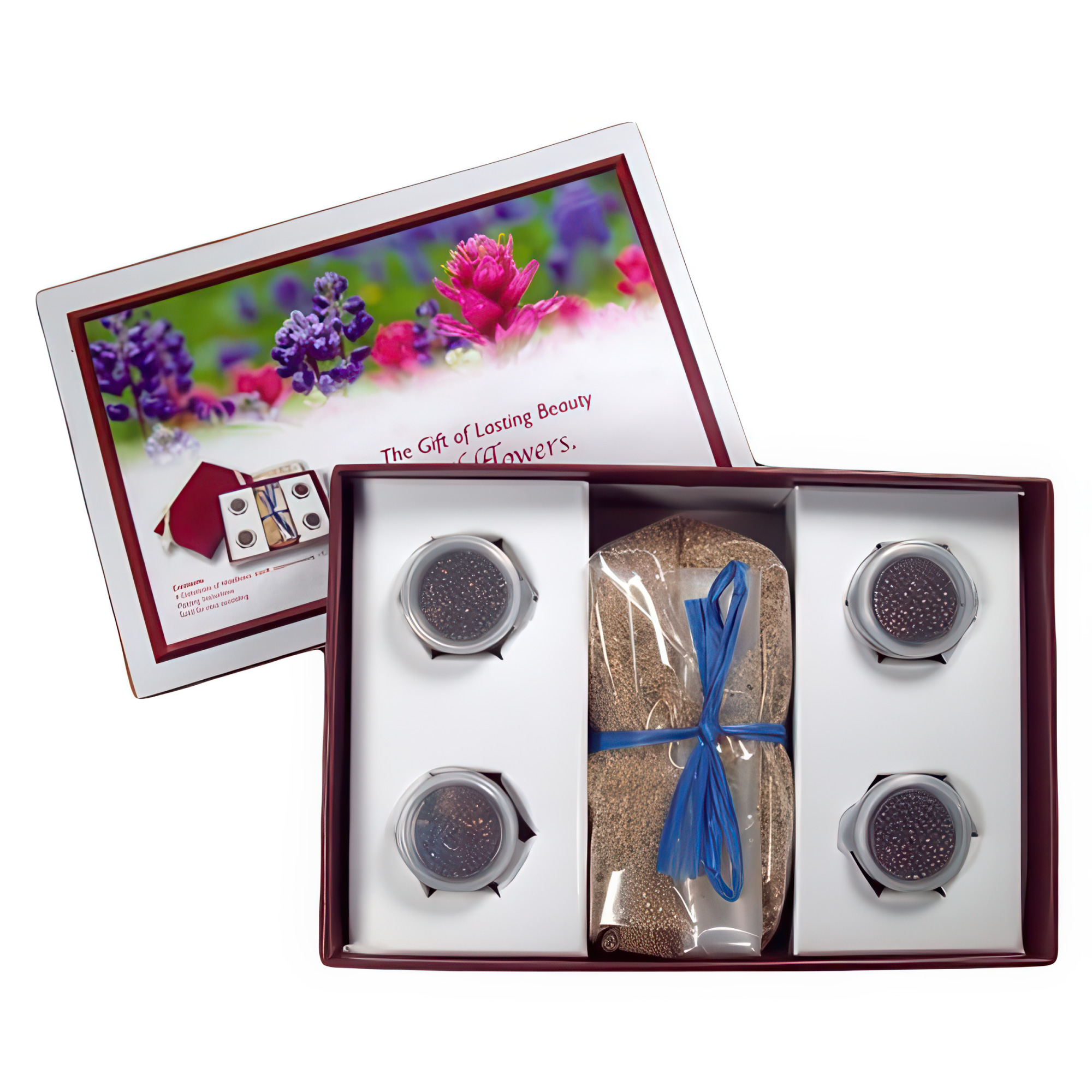
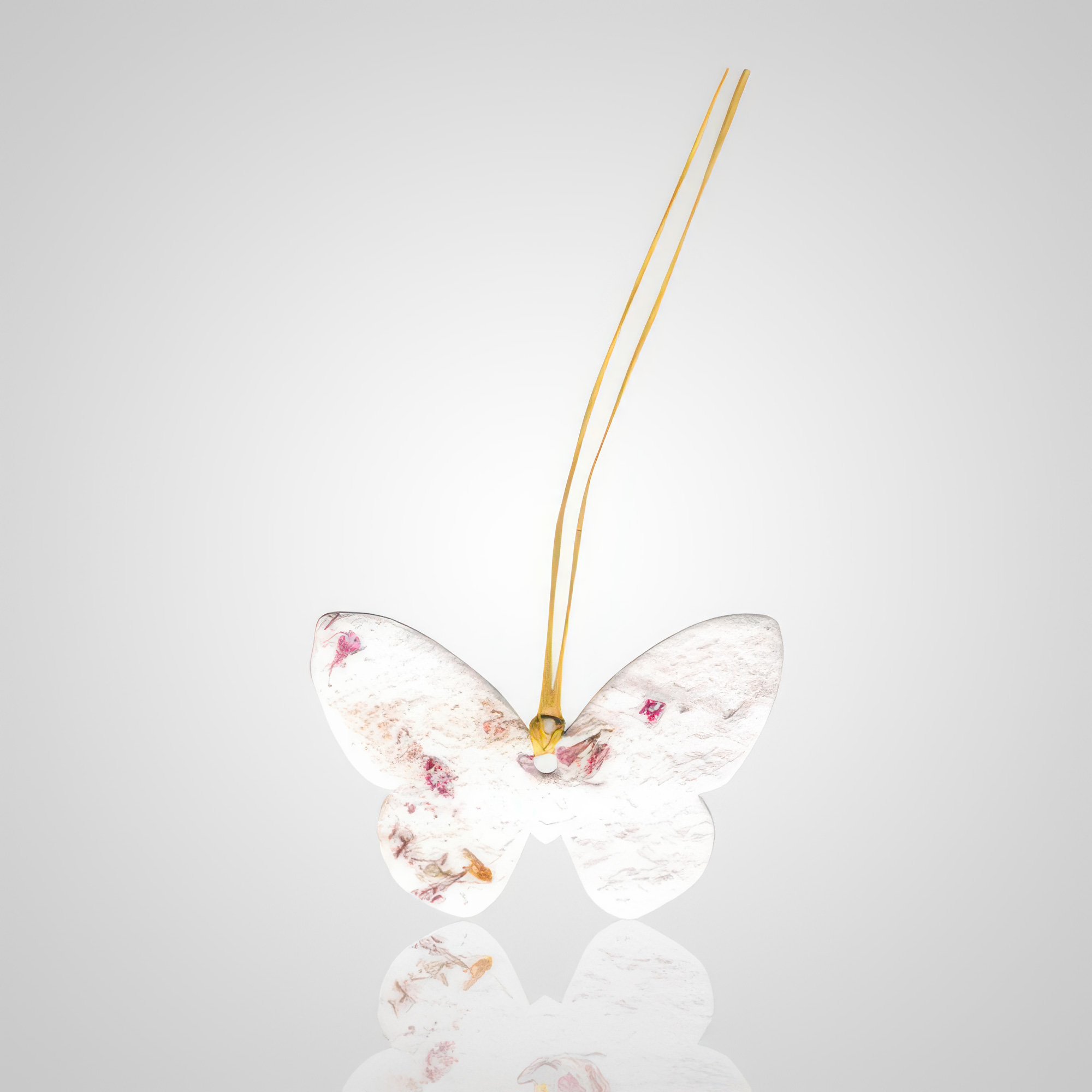
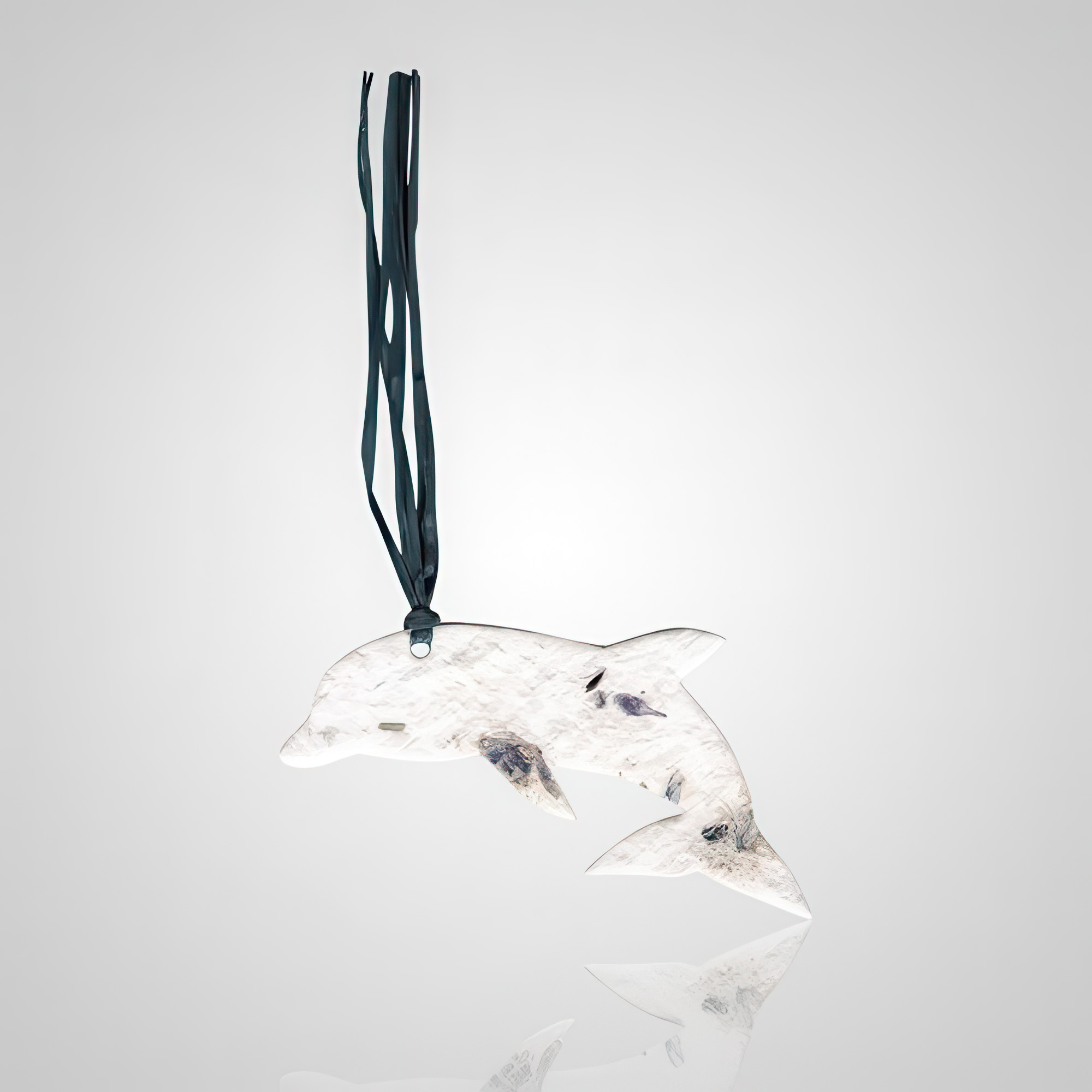
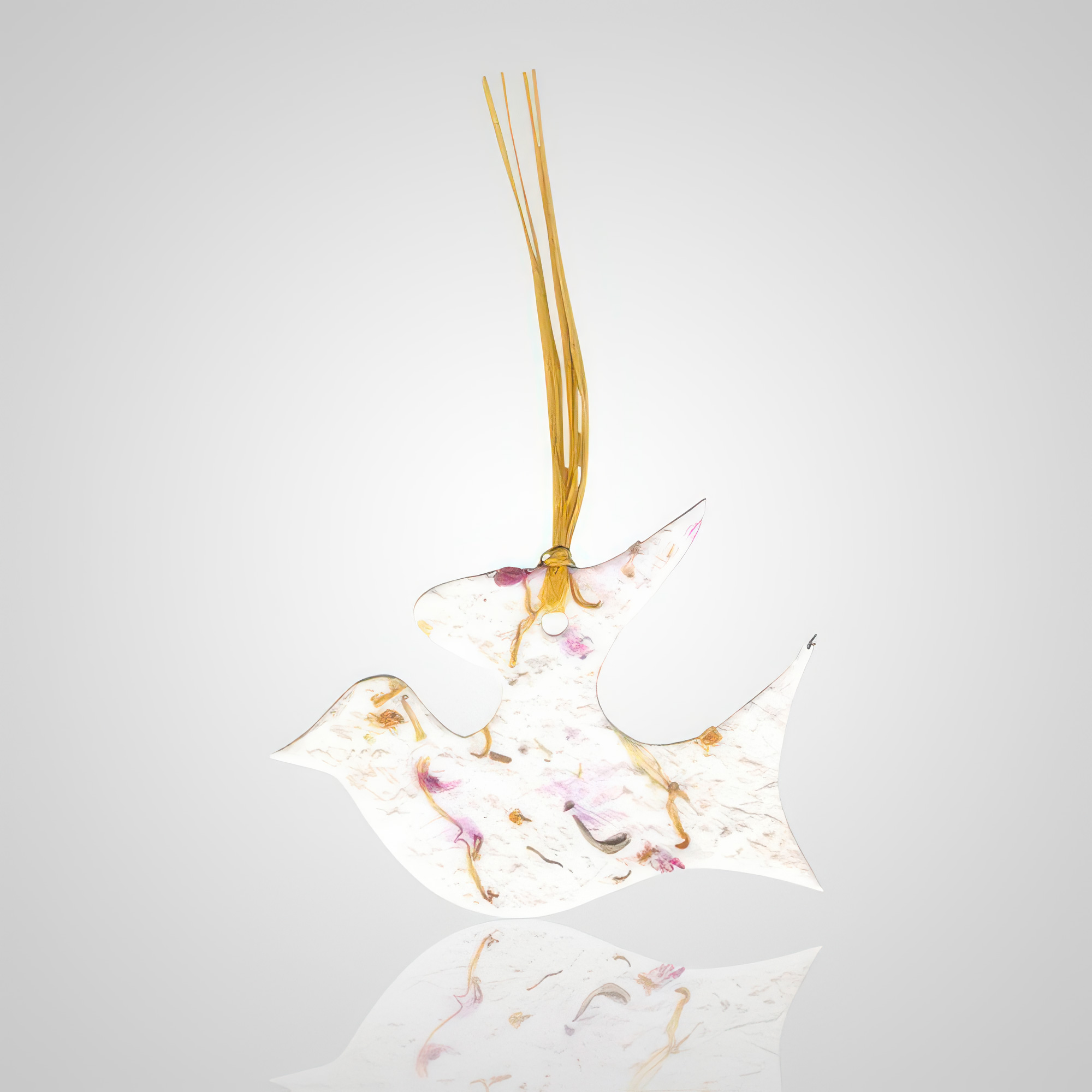
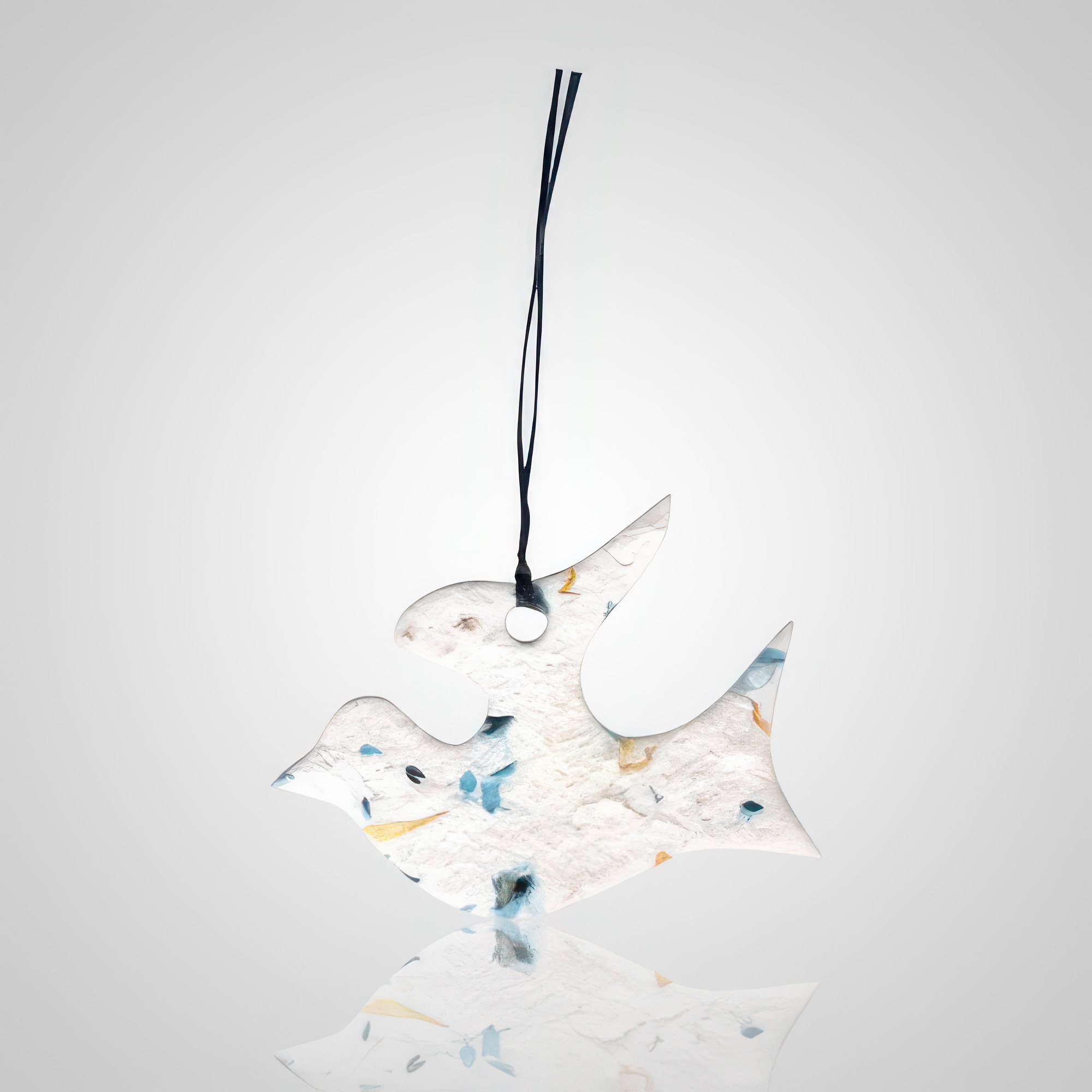
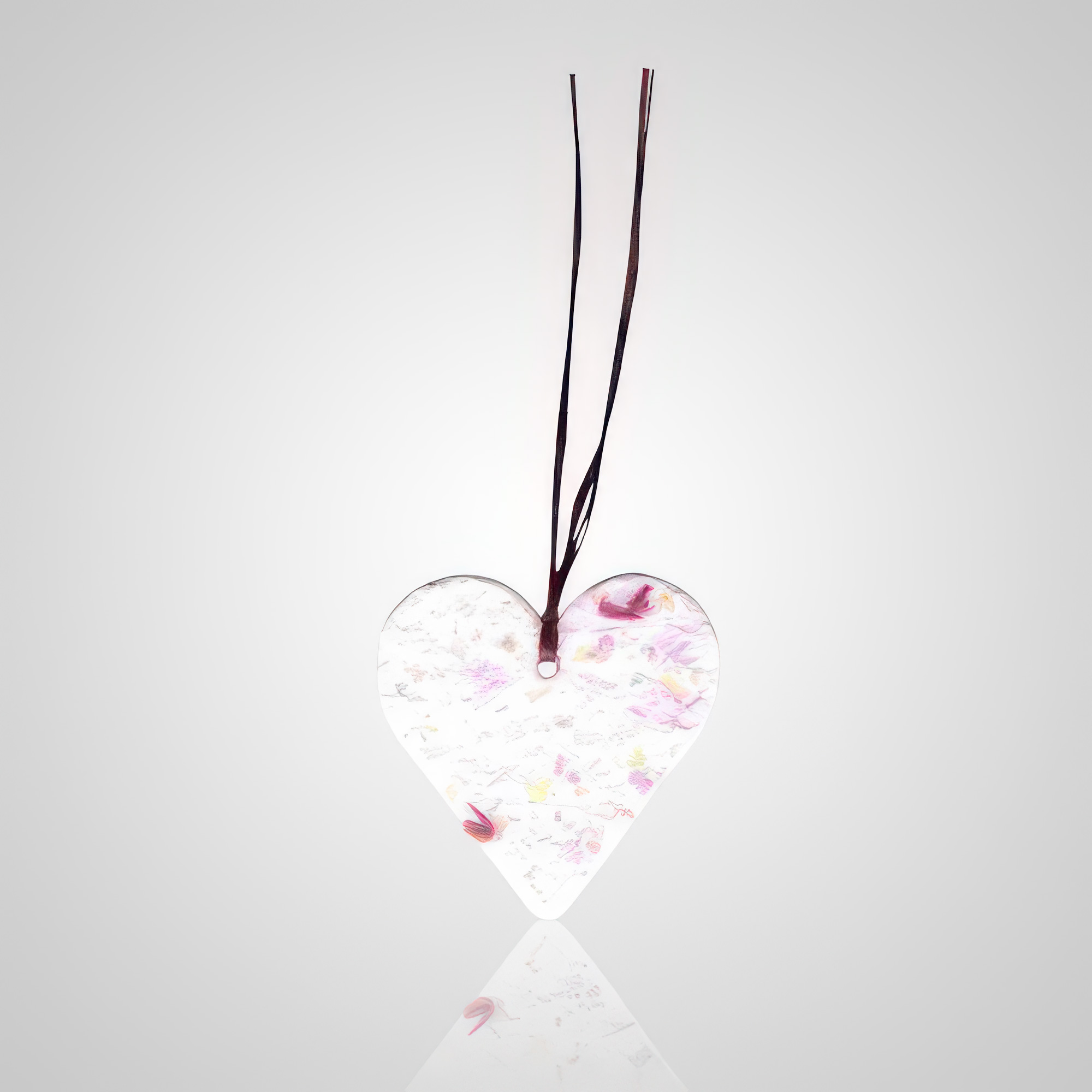
Something to take. A printed card, a seed packet, a photograph, a bookmark.
Flowers, but small ones. This table is a working surface.
The take-home item is the part people underestimate. It turns an arrival into a small ritual, and the guest leaves with something in their hand rather than only a feeling.
The heart of the room, and the thing people spend longest at.
Many photos beat one big one. A single portrait is formal. Thirty photographs across a life invite people to point and tell each other stories, which is precisely the behavior a celebration of life wants.
Mix the eras and mix the quality. The blurry one from 1987 with someone's thumb in it will get more attention than the professional portrait. Include the bad haircuts.
Label sparingly. A year and a place on a few of them helps people place a stranger. Labeling every photo turns a display into a museum.
Practical formats, roughly in order of effort:
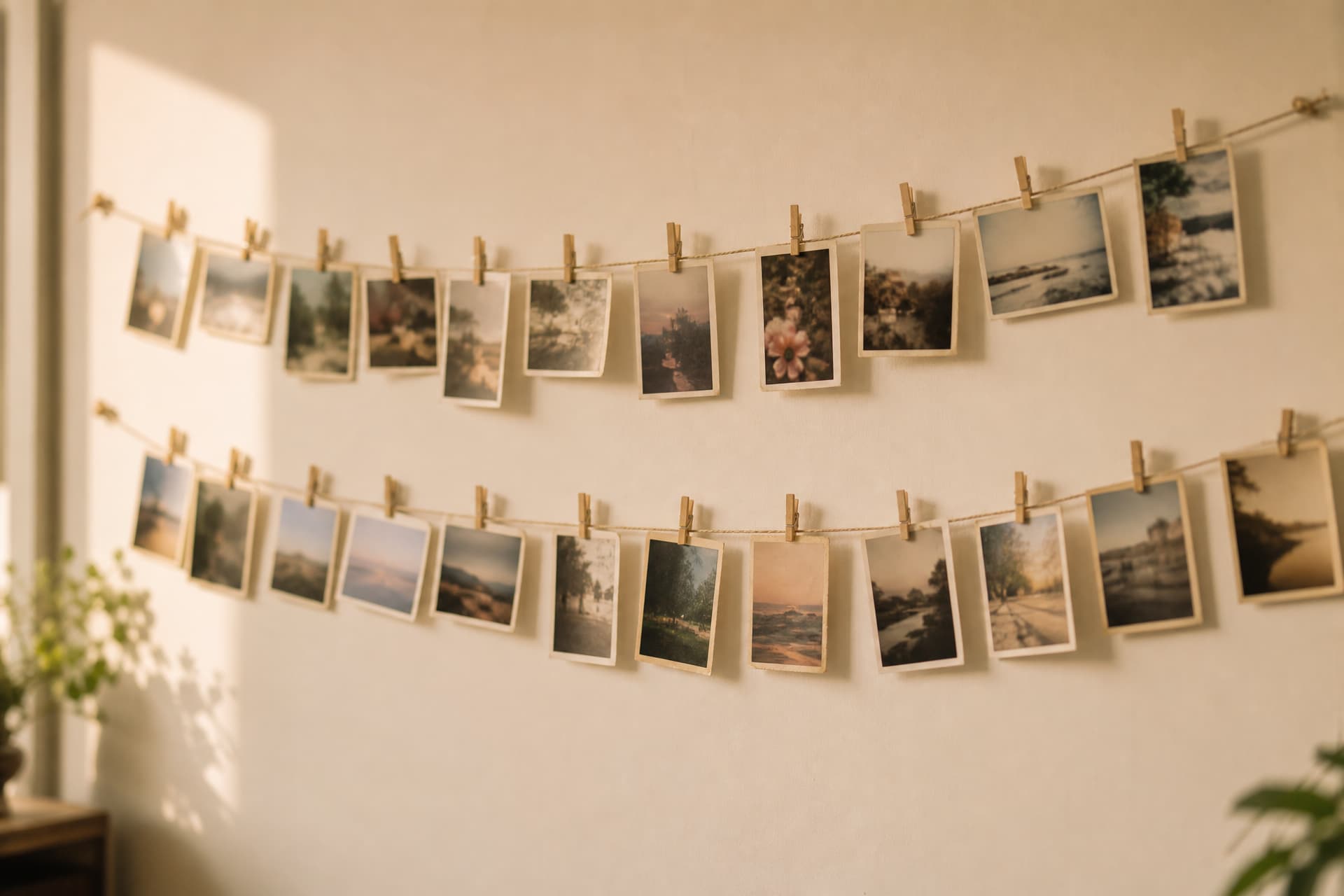
A clothesline and pegs. String, wooden pegs, prints. Ten dollars, forty photographs, and it reads as warm rather than solemn.
A tri-fold board. Cheap, freestanding, no wall required, and venues never object.
Frames of mismatched sizes on a table. Borrow them from family — nobody notices they do not match.
A slideshow on a screen. Good for a large room, but set it to advance slowly. The commonest mistake is a loop so fast nobody can finish looking.
If you are putting photographs on a table, raise some of them on books or boxes under a cloth. A flat table of frames is hard to look at; two or three levels is much better.
Ten dollars of string and pegs, forty prints, and it reads as warm rather than solemn. This is the decoration families say afterward was the one that mattered.
Memorial Service Decorations by Theme
Themed memorial service decorations work when the theme was genuinely theirs, and fall flat when it is generic. The test: could this room belong to anyone else?
The garden. Potted plants rather than cut flowers, given away at the end. Works especially well outdoors and costs less than an arrangement.
The workshop. Tools laid on a workbench cloth. A half-finished project, left as it was.
The kitchen. Their recipe cards propped on stands, the handwriting visible. Their actual cake, made from their actual recipe, by whoever inherited the ability.
The team. Scarves, caps, a jersey over a chair. One empty chair with their jacket on it is more powerful than a room of pennants.
The trip. A map with pins. Postcards they sent, pinned up with the messages facing out.
The bookshelf. Their books, stacked, with a sign saying take one. Half the room will.
One theme, carried in three or four places, beats a room where every surface has been decorated.
The one decoration decision families agonize over and guests barely notice — with a single exception.
The exception is black. A room without it announces itself as a celebration before anyone speaks. If the family wants a specific palette, saying so on the invitation is the single most effective piece of direction available, and guests are almost always relieved to be told.
Otherwise: their colors. The team's colors, the color they always wore, the color of the garden. Failing that, warm neutrals with one strong accent. Yellow, in particular, does something in a memorial room that white does not.
If a line of text is going on the arrival table or the display board, our collection of celebration of life quotes is grouped by where each one belongs.
Flowers Without a Florist Bill
Flowers are the largest line in most decoration budgets and the easiest to reduce.
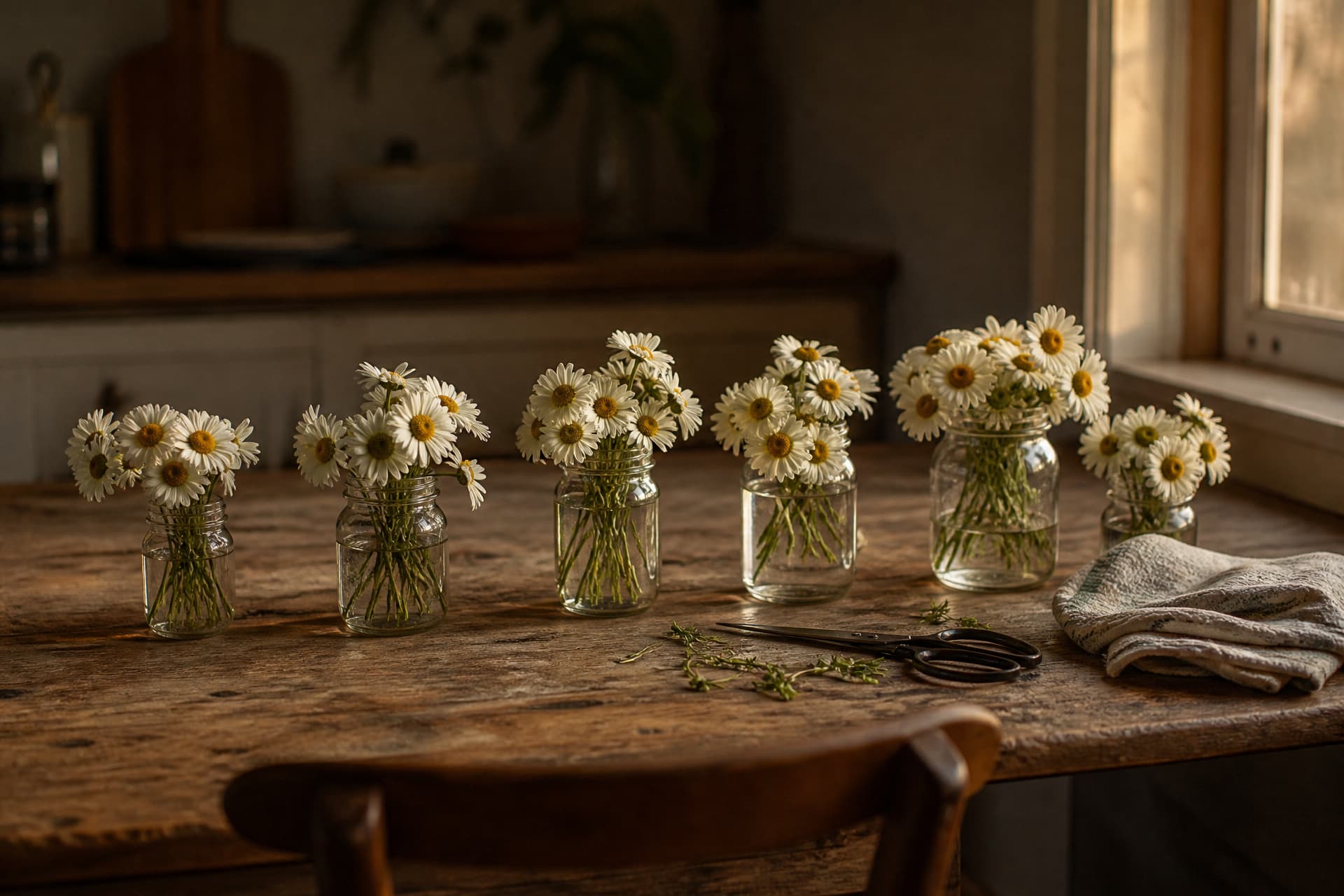
Buy in bulk and arrange them yourself the night before, in jars. Imperfect arrangements read as personal.
Grocery store flowers in good vessels look better than expensive flowers in bad ones.
Use one type in quantity. Thirty stems of one flower looks deliberate. A mixed handful looks like a mixed handful.
Potted plants last, go home with guests, and cost less.
Their own garden, if there is one and the season allows. This is the best option and costs nothing.
Skip the casket spray if there is no casket present. Many celebrations happen weeks after a cremation and the florist will still quote for one.
Thirty stems of one flower looks deliberate; a mixed handful looks like a mixed handful. Arranged the night before, in jars, imperfect arrangements read as personal.
Celebration of Life Setup: The Room Itself
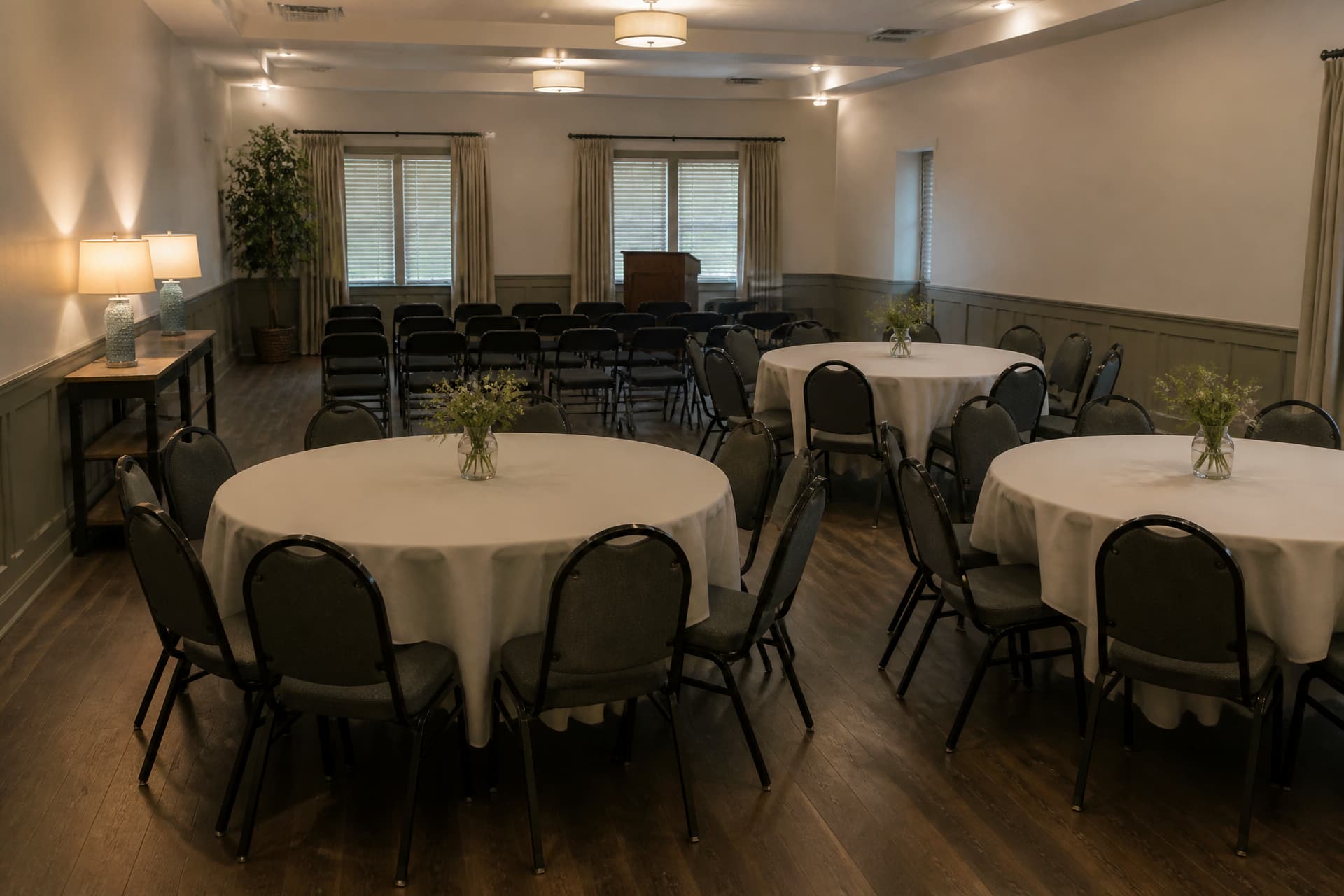
A celebration of life setup differs from a funeral setup in one structural way: rows face forward, clusters face each other. Funerals use rows because everyone is looking at one thing. Celebrations are largely people talking to each other, so the room should support that.
Fewer chairs in rows than you think. Enough for the speaking portion, then space to stand.
Round tables if there is food. Eight is conversational; twelve is not.
Leave a clear path from door to arrival table to photo display. People follow the path you give them.
Somewhere to sit down quietly. One or two chairs slightly out of the way. Someone will need them.
Check sightlines from the back before you commit to where the speaking happens.
Do not decorate the middle of the room. Whatever you put there will be moved within an hour.
Rows face forward; clusters face each other. Fewer chairs in rows than you think, then space to stand — and lamps from home do more to soften a strip-lit room than anything else you can carry in.
What to Skip
Anything that needs explaining. If a decoration requires a card telling guests what it means, it is not working.
Too many candles. Venues frequently prohibit open flame, and battery candles in quantity look like what they are. A few real ones where permitted, or none.
A formal receiving line, unless the family wants one. It turns a celebration back into a funeral and exhausts the people least able to afford it.
Balloon releases. Increasingly restricted by state law for environmental reasons, and a number of venues and cemeteries forbid them outright. Check before promising one to children.
Perfection. A room that looks professionally styled reads as a venue. A room that looks like a family did it reads as love. Guests can tell the difference instantly and prefer the second.
The room sets the register before anyone speaks, and the first two minutes finish the job. Our scripts for opening words for celebration of life cover what to say to start it.
A Simple Setup That Works Anywhere
If you want a default rather than a decision:
Arrival table with one photograph, guest book and something to take
Where it is held changes what the room needs more than any other factor.
At home. The least decoration required, because the house already carries the person. Clear surfaces rather than adding to them, put photographs where people naturally stop — hallway, kitchen island, mantel — and accept that the kitchen is where everyone will end up regardless of your plan.
A function room or hall. The most decoration required, because these rooms are deliberately neutral and read as corporate. Soft lighting if you can control it, fabric on the tables, and photographs at eye level on the walls rather than flat on surfaces. Lamps brought from home transform a strip-lit room more than anything else you can carry in.
A restaurant or bar. Almost nothing needed, and most venues limit what you may attach to walls anyway. One arrival table and framed photographs on the bar is enough. Ask in advance about music and about a private room.
Outdoors. Weather is the decoration problem. Anything paper needs weighting, photographs need protecting or accepting as disposable, and a wind that seemed mild at nine will take a display board over at two. Plan a covered corner for the photographs even on a clear forecast.
A funeral home. They have done this several hundred times and will have easels, tables and display stands ready. Ask what they supply before buying anything — families routinely spend on things the funeral home would have lent.
A Note on Doing It Yourself
There is a version of this article that recommends hiring someone, and for a family with the means and no appetite for the work, that is a reasonable choice.
But something is lost. The afternoon spent choosing forty photographs is, for most families, the first time they sit together with the whole life in front of them rather than the last week of it. People who have done it describe that afternoon as the part they remember — more than the service.
If there are cousins who want to help and nobody knows what to give them, this is the job. It is genuinely useful, it needs several pairs of hands, and it is the one task where doing it imperfectly is better than doing it well.
Taking It Down
Nobody plans this part, and it is worth ten minutes of thought beforehand.
Assign the takedown to someone who is not the family. A cousin, a neighbor, a colleague. The family should be able to leave when they are ready, and clearing a room is the single easiest useful job to hand to someone who has been asking how to help.
Decide in advance what happens to the photographs. Some families put the display board straight into a closet and are glad of it years later; others find it painful to have around. Both are fine, and deciding on the day is harder than deciding now.
Send the potted plants home with guests rather than loading them into a car. Say it out loud near the end — people are usually pleased to take one and will not presume otherwise.
Photograph the room before anyone arrives. Nobody remembers to, and it is the only record that the afternoon looked the way it did.
Frequently Asked Questions
What do you put on the tables at a celebration of life?
Small flowers in jars, framed photographs at varying heights, and one or two objects that were genuinely theirs. Keep the center of dining tables clear — people move whatever is there.
What are good memorial service decorations for a small room?
An arrival table and a photo display do almost all the work. In a small space, skip freestanding decorations entirely and use the walls.
What colors should I use for a celebration of life?
Their colors, or warm neutrals with one strong accent. The only choice guests really register is the absence of black, and saying so on the invitation helps everyone.
How much should decorations cost?
Under $200 is entirely achievable and often better than more. The photo display, which matters most, costs the price of prints.
Can you have a celebration of life at home?
Yes, and many are. Homes need less decoration than venues because they already carry the person. Clear the surfaces, add photographs, and leave the rest.
Is a slideshow better than printed photos?
Printed photos hold people longer and start more conversations, because a group can stand at a board and point. A slideshow suits a large room where a board would be unreachable. Many celebrations use both.
The Thing That Matters Most
Every family that has done this says the same thing afterward: the photographs were what people talked about. Not the flowers, not the color scheme, not the table settings.
If you are short of time, short of money or short of energy, print forty photographs and hang them on a string. That is the celebration of life decoration idea that works, and everything else is optional.