🏬Supersize Online Funeral Retailer🪦1000's of Headstones⚱️Over 10,000 Cremation Urns⚰️Caskets Overnight Delivery🛒Funeral & Memorial Superstore🚚FREE Shipping on ALL Orders👨👩👧👦Helping Families for over 20 Years💰Lowest Price Guarantee🏬Supersize Online Funeral Retailer🪦1000's of Headstones⚱️Over 10,000 Cremation Urns⚰️Caskets Overnight Delivery🛒Funeral & Memorial Superstore🚚FREE Shipping on ALL Orders👨👩👧👦Helping Families for over 20 Years💰Lowest Price Guarantee
🏬Supersize Online Funeral Retailer🪦1000's of Headstones⚱️Over 10,000 Cremation Urns⚰️Caskets Overnight Delivery🛒Funeral & Memorial Superstore🚚FREE Shipping on ALL Orders👨👩👧👦Helping Families for over 20 Years💰Lowest Price Guarantee🏬Supersize Online Funeral Retailer🪦1000's of Headstones⚱️Over 10,000 Cremation Urns⚰️Caskets Overnight Delivery🛒Funeral & Memorial Superstore🚚FREE Shipping on ALL Orders👨👩👧👦Helping Families for over 20 Years💰Lowest Price Guarantee
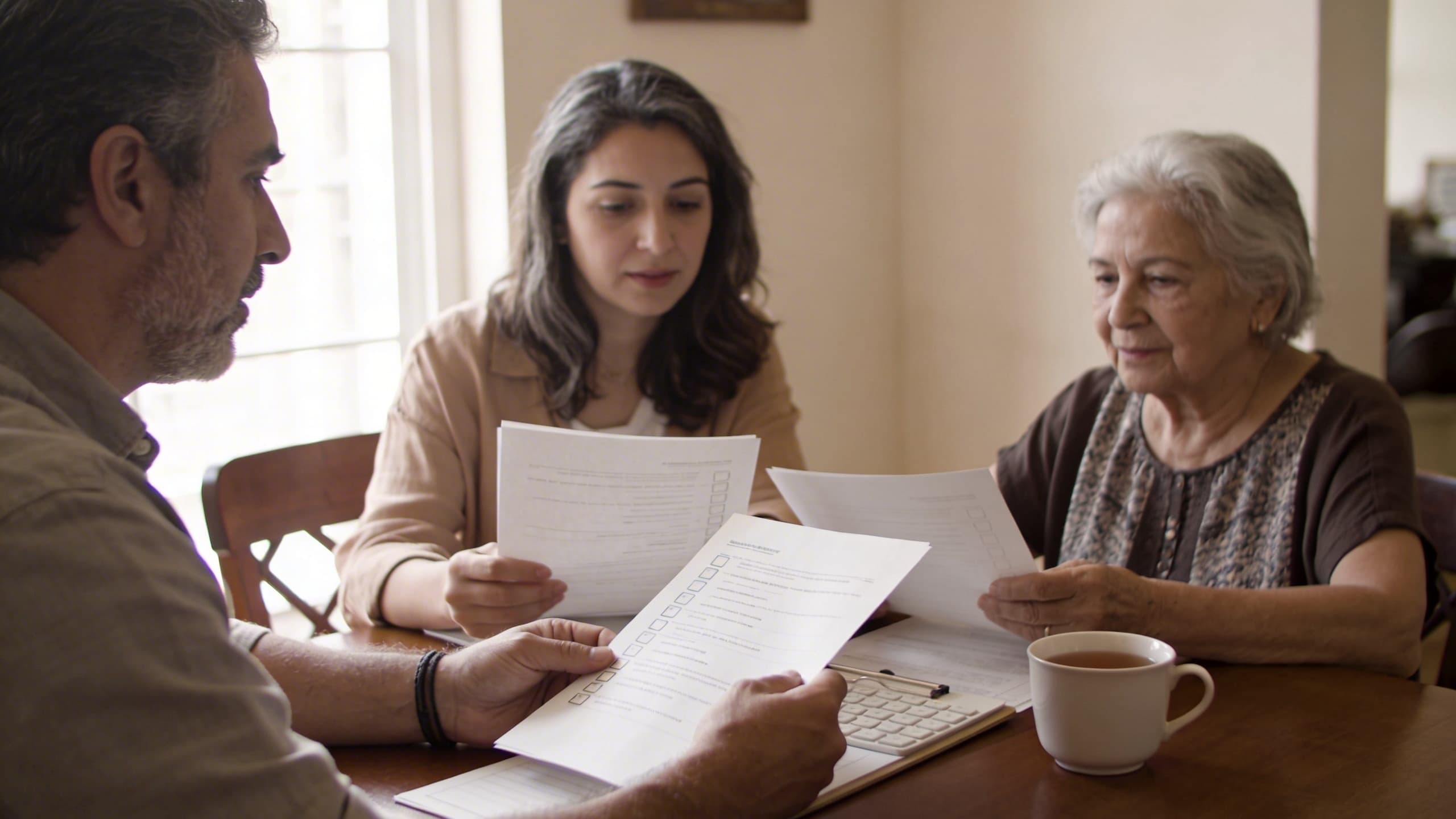
Planning a funeral is one of the most emotionally demanding responsibilities a family can face. Decisions must be made quickly, paperwork moves on firm deadlines, and the people responsible for coordinating everything are often deep in grief themselves. A clear funeral checklist for families takes the guesswork out of the process so you can focus your energy where it matters most — honoring your loved one and supporting each other.
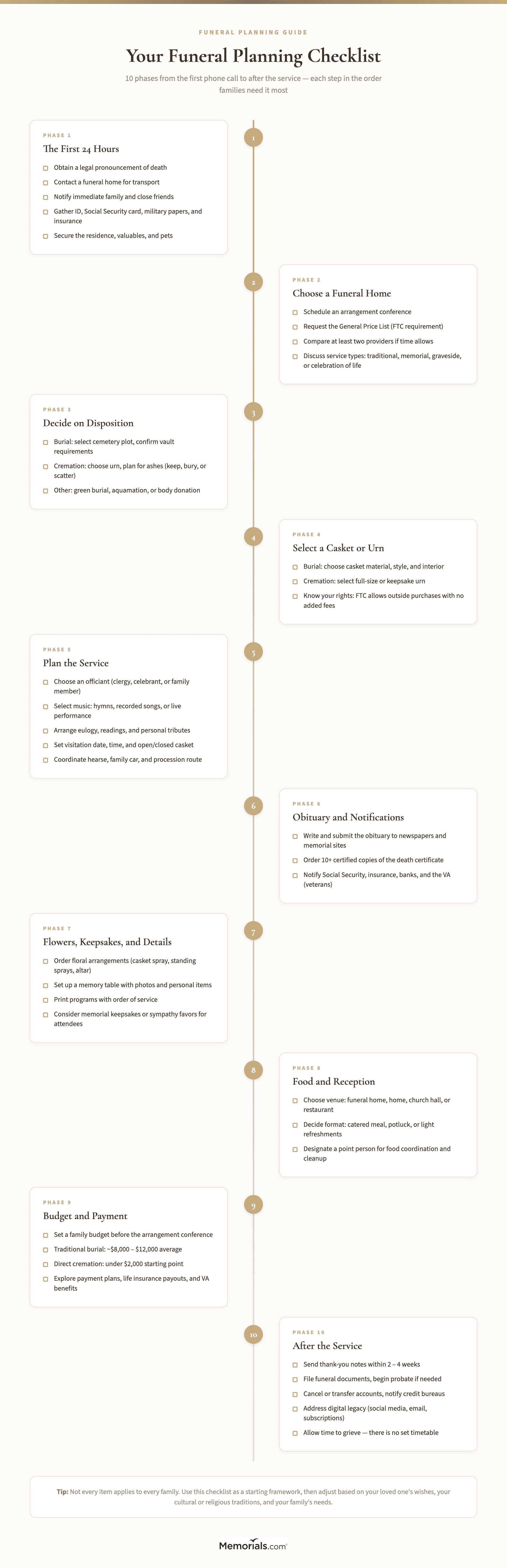
This guide walks through every major step in chronological order, from the first phone calls after a death through the final details of the reception. If you want a broader look at what to know when planning a funeral, our complete guide covers the philosophy and decision framework behind each of these steps. Here, we focus on the practical action items you can check off as you go.
The hours immediately following a death are disorienting, but a handful of time-sensitive tasks need attention right away.
Obtain a Legal Pronouncement of Death
If your loved one passed away in a hospital or nursing home, the attending physician or medical staff will handle this. If the death occurred at home under hospice care, the hospice nurse can make the pronouncement. For an unexpected death at home, call 911 so first responders or a clinician can officially declare the death. This pronouncement is the legal prerequisite for obtaining a death certificate.
Contact a Funeral Home
Reach out to a funeral home to arrange transportation of the deceased into their care. If your loved one had a pre-paid funeral plan or pre-arrangement agreement, locate those documents first — the funeral home specified in the plan should be your first call. If no pre-arrangement exists, ask family members or friends for recommendations, or compare providers in your area. Under the FTC Funeral Rule, every funeral home is required to provide an itemized price list over the phone or in person, so do not hesitate to ask. Our guide to the funeral general price list sets out what is on that document, and the four rights it comes with — including the right to buy a casket or urn anywhere you like.
Notify Family and Close Friends
Start by calling immediate family members and close friends directly. For wider circles — neighbors, coworkers, social groups, faith communities — phone trees, group texts, or email can help spread the word efficiently. Ask your loved one's employer as soon as possible so they can adjust payroll and inquire about any survivor benefits, pension, or final paycheck.
Gather Essential Documents
Begin collecting the following: a government-issued photo ID for the deceased, their Social Security card, any military discharge papers (DD-214) for veterans, life insurance policies, and the will or estate documents. You will need these repeatedly over the coming days and weeks for the death certificate, benefit claims, and legal filings.
Secure the Residence
If the deceased lived alone, lock the home and car, remove valuables, check the mail, discard perishable food, and arrange care for any pets. Forward mail to a trusted family member's address to prevent identity theft and missed bills.
Phase 2: Choosing a Funeral Home
The funeral director becomes your primary guide through the entire planning process, so this decision shapes everything that follows.
Schedule an Arrangement Conference
Most families meet with the funeral director within one to three days of the death. Bring all the documents you gathered in Phase 1, along with a recent photograph of the deceased for the obituary. If several family members will share decision-making, coordinate schedules so everyone can attend.
Understand Pricing
Request the funeral home's General Price List (GPL), which the FTC requires them to provide. This list breaks down costs for professional services, facility use, transportation, embalming, and merchandise like caskets and vaults. Compare prices from at least two providers if time allows. Understanding how much a funeral costs upfront prevents surprises and helps you set a realistic budget.
Discuss Service Options
Your funeral director will walk you through the main service types: a traditional funeral service with a viewing, a memorial service without the body present, a graveside service at the cemetery, or a celebration of life in a non-traditional venue. Each option comes with different logistical requirements and cost implications, so talk through the pros and cons with your family before committing.
Phase 3: Deciding on Disposition
Disposition refers to what will happen to your loved one's remains. This decision affects nearly every other item on your funeral checklist.
Burial
Traditional burial involves interring the body in a casket at a cemetery. You will need to select a cemetery plot (or confirm an existing one), determine whether a burial vault or outer container is required by the cemetery, and coordinate the graveside portion of the service. Consider whether you want a future headstone or grave marker, and start researching how much a headstone costs so you can budget for it — most families order the marker several weeks or months after the funeral.
Cremation
If the family chooses cremation, you will need to decide what to do with the cremated remains: keep them in a cremation urn at home, bury them in a cemetery plot or columbarium niche, or scatter them at a meaningful location. Some families divide ashes among multiple keepsake urns so each family member can hold a portion.
Other Options
Less common but growing in popularity are green burials (using biodegradable containers and natural settings), aquamation (water-based cremation), and body donation to medical science. Your funeral director can explain what is available in your area and what permits or additional arrangements these alternatives require.
Phase 4: Selecting a Casket or Urn
This is one of the most visible decisions families make, and one where costs can vary widely.
For Burial
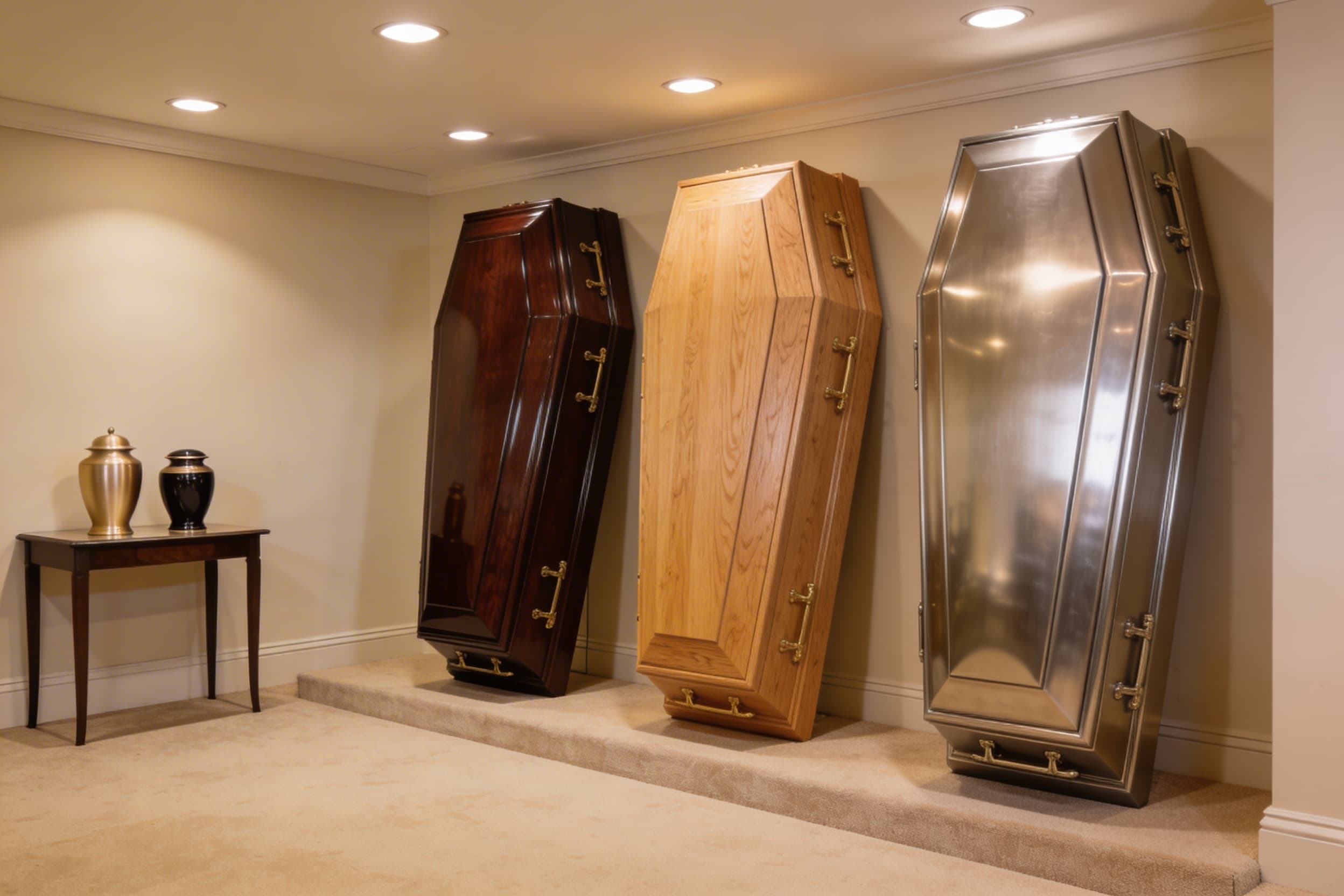
If you have chosen a traditional burial, you will need to select a casket. Options range from simple cloth-covered wood to elaborate hardwood or metal designs with custom interiors. Our guide to choosing a casket covers materials, sizing, seal types, and how to balance quality with budget. Keep in mind that you are not required to purchase a casket from the funeral home — the FTC Funeral Rule gives you the right to buy from any provider without additional handling fees.
For Cremation
Families choosing cremation can select an urn that suits their plans for the remains. A full-size urn holds the ashes of one adult, while keepsake urns allow you to distribute portions among relatives. Materials include wood, ceramic, metal, biodegradable options for water or earth scattering, and hand-blown glass. If you plan to bury the urn, check with the cemetery about vault requirements.
Phase 5: Planning the Service
With disposition and merchandise decisions made, the focus turns to designing a service that reflects your loved one's life.
Choose an Officiant
The service may be led by a member of the clergy, a funeral celebrant, or a family member. If your loved one had a religious affiliation, contact the church, synagogue, mosque, or temple to coordinate with their clergy and confirm the venue's availability and scheduling rules.
Select Music
Music sets the emotional tone of the service. You might choose hymns, classical pieces, or your loved one's favorite songs. Many families play recorded music, while others arrange for a live pianist, soloist, or choir. Think about what the person would have wanted and what will bring comfort to those attending.
Plan Readings and Tributes
Decide who will deliver the eulogy and whether additional family members or friends will share readings, poems, or personal memories. Coordinate with each speaker ahead of time and provide a rough time limit — most eulogies run five to ten minutes. Written tributes can also be included in the printed program.
Arrange the Visitation or Viewing
If you plan to hold a visitation (also called a viewing or wake), set the date, time, and location with the funeral home. Decide whether the casket will be open or closed. Many families hold a visitation the evening before the funeral or in the hours immediately preceding the service. Select the clothing and any personal items — glasses, jewelry, a favorite hat — you would like your loved one to wear.
Coordinate Transportation
The funeral home will arrange a hearse for the deceased and may offer a family car or limousine. For a graveside service, discuss whether a formal funeral procession will travel from the service venue to the cemetery, and whether you need a police or motor escort. Provide driving directions or a map for attendees who will follow.
Phase 6: The Obituary and Notifications
The obituary serves as both a public announcement and a written tribute to your loved one's life.
Write and Submit the Obituary
Gather the biographical information the funeral director will need: full legal name, age, date and place of birth, date of death, surviving family members, education, career highlights, hobbies, community involvement, and any organizations or causes the person supported. If you are unsure where to begin, our guide on how to write an obituary walks through structure, tone, and what to include. Submit the completed obituary to local newspapers, online memorial sites, and the funeral home's website.
Order Death Certificates
Request at least ten certified copies of the death certificate through the funeral home or your state's vital records office. You will need certified originals for insurance claims, bank accounts, property transfers, Social Security, and the probate court. Some institutions accept photocopies, but financial and legal entities typically require the certified version. Ten is a starting point rather than an answer — how many death certificates you need works it out from your own list of banks, policies and titles, and adds two spares for the copy somebody loses.
Notify Key Organizations
Contact the Social Security Administration to report the death and inquire about survivor benefits or the one-time lump-sum death payment. Reach out to your loved one's insurance providers (life, health, auto), banks, credit card companies, and investment accounts. If the person was a veteran, contact the Department of Veterans Affairs about burial benefits and military honors.
Phase 7: Flowers, Keepsakes, and Personal Touches
Small details can make a funeral feel deeply personal and meaningful.
Order Floral Arrangements
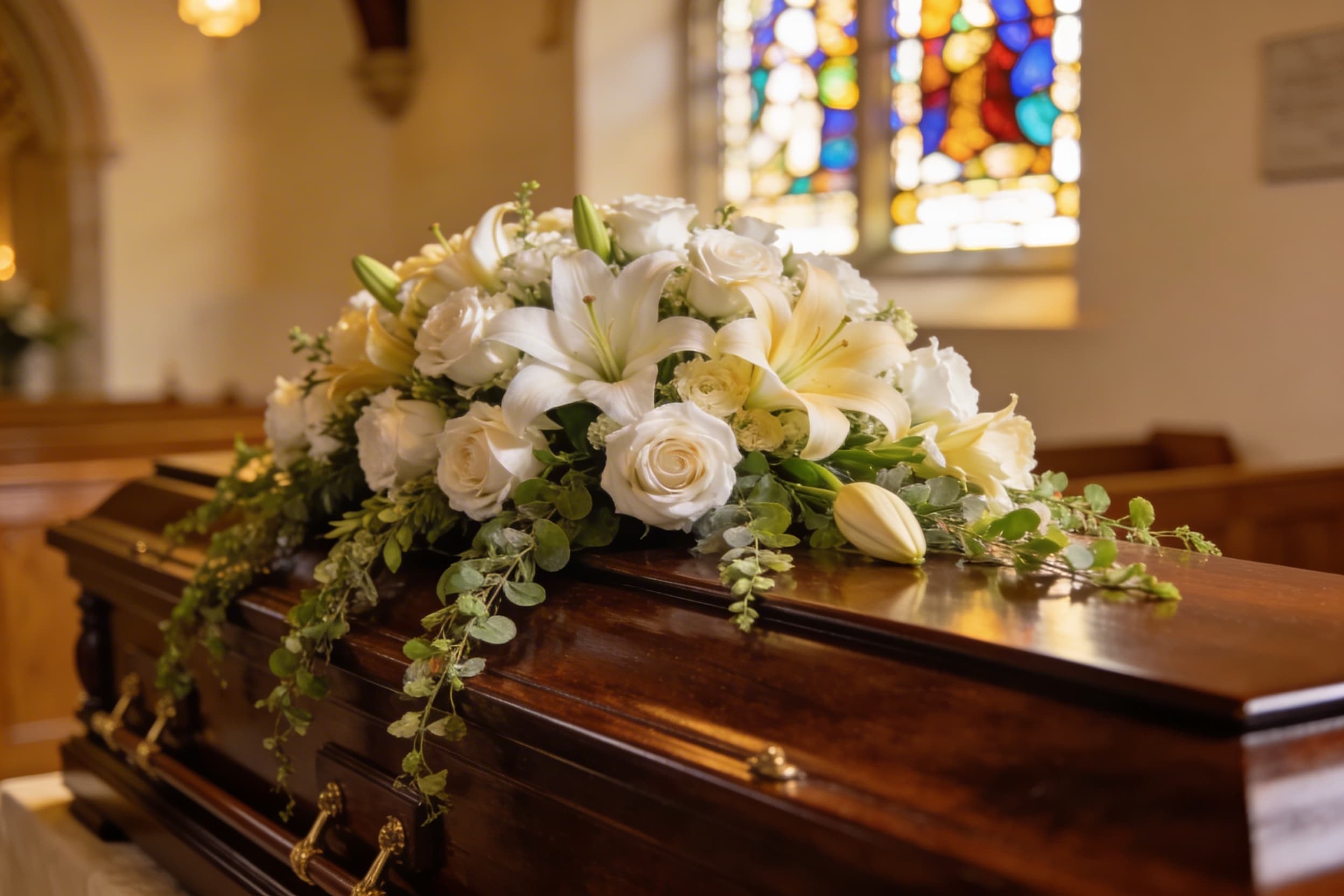
Flowers for the casket spray, standing sprays, and the altar or podium are traditionally ordered by the immediate family. Additional arrangements may arrive from friends, extended family, and colleagues. Coordinate with the funeral home on delivery logistics and decide whether flowers will travel to the cemetery after the service or be donated to a hospital or nursing home.
Prepare Display Items
Many families create a memory table near the entrance of the service venue featuring photographs, awards, hobbies, military medals, or other personal items. A printed program with the order of service, a recent photo, and a favorite quote gives attendees a keepsake to take home. Some families also offer sympathy gifts or memorial favors — a small candle, a seed packet, a bookmark with a meaningful verse — as a token of gratitude for those who attended.
Consider Memorial Keepsakes
If cremation was chosen, cremation jewelry or keepsake urns allow family members to carry a small portion of ashes with them. Fingerprint jewelry, photo lockets, and engraved pendants are all popular options that give each person a tangible, wearable connection to the person they lost.
Phase 8: Food and Reception Planning
Many families host a gathering after the funeral for a shared meal and an opportunity to reconnect.
Plan the Reception
The post-funeral reception — sometimes called a repast or mercy meal — can be held at the funeral home, a family member's home, a church hall, or a restaurant. Decide on the format: a catered sit-down meal, a potluck organized by friends and neighbors, or a simple spread of light refreshments. Our guide to funeral food planning covers what to serve, how to organize volunteers, and cultural food traditions that may apply.
Delegate Food Responsibilities
Friends and community members often ask how they can help — food is one of the most practical answers. Designate a point person to coordinate drop-offs, manage the setup and cleanup, and accommodate dietary restrictions. If the reception is catered, confirm the headcount, menu, and delivery time with the caterer at least two days in advance.
Phase 9: Budget and Payment
Funeral costs can add up quickly, and understanding where the money goes helps families avoid financial stress on top of emotional strain.
Set a Budget Early
Before the arrangement conference, agree on a spending range with your family. Average funeral costs in the United States run roughly $8,000 to $12,000 for a traditional burial service, while direct cremation can start under $2,000. Your budget should account for the funeral home's professional fees, merchandise (casket or urn), cemetery charges, flowers, the obituary, the reception, and any headstone or marker you plan to order later.
Explore Payment Options
Ask whether the funeral home offers payment plans or accepts credit cards. Check your loved one's life insurance policy — some insurers will issue an expedited payout or assignment to the funeral home. Veterans may qualify for a burial allowance through the VA. Some families set up crowdfunding campaigns to help offset costs. Keep receipts for every expense, as the executor of the estate will need them for probate accounting.
Phase 10: After the Service
The funeral may be over, but several important tasks remain.
Send Thank-You Notes
Within two to four weeks of the service, send handwritten thank-you notes to pallbearers, the officiant, musicians, anyone who sent flowers or food, and close friends who provided emotional or logistical support. A brief, personal message acknowledging their specific contribution is more meaningful than a generic card.
Organize Important Papers
File all funeral-related documents — the death certificate copies, the funeral home contract, receipts, and cemetery paperwork — in a single, secure location. If your loved one had a will, contact the executor and the estate attorney to begin the probate process. Cancel or transfer utility accounts, subscriptions, and memberships. Notify credit bureaus (Equifax, Experian, TransUnion) to place a deceased alert on the credit file and prevent identity theft.
That sentence covers about a year of work, and it is where the funeral checklist ends and a different one begins. What to do when someone dies sets out the whole of the administration in order — the accounts, the agencies, the digital services and the paperwork — so nothing on it has to be remembered from here.
Address the Digital Legacy
Memorialize or close social media accounts on Facebook, Instagram, and other platforms. Cancel email and streaming subscriptions. If your loved one had important photos or files stored digitally, back them up before closing any accounts.
Allow Time to Grieve
There is no timetable for grief, and no requirement to "move on" by any particular date. Give yourself permission to feel whatever you feel — sadness, relief, anger, numbness, or all of these at once. If grief begins to interfere with daily life, talking to a counselor or joining a bereavement support group can help. Many funeral homes and hospice organizations offer aftercare programs at no cost.
Frequently Asked Questions
How far in advance should I start planning a funeral?
Most families begin planning within 24 to 48 hours of the death, with the funeral or memorial service typically held three to seven days later. If your loved one left pre-arrangement instructions, the timeline may move faster because key decisions are already made. There is no rule that says the service must happen within a specific window — take the time you need to gather family and organize details thoughtfully.
Can I plan a funeral without using a funeral home?
In most states, families have the legal right to handle funeral arrangements independently, including transporting the body, filing paperwork, and conducting a home funeral. However, some states require a licensed funeral director for certain steps, such as filing the death certificate or obtaining a burial or cremation permit. Check your state's regulations before proceeding without professional assistance.
What is the FTC Funeral Rule and how does it protect me?
The Federal Trade Commission's Funeral Rule requires funeral homes to provide itemized pricing, both over the phone and in person, so families can compare costs and select only the services they want. It also prohibits funeral homes from requiring embalming unless state law mandates it, and from charging a handling fee if you purchase a casket or urn from an outside provider.
What documents do I need for a funeral arrangement meeting?
Bring a government-issued photo ID for the deceased, their Social Security number, any military discharge papers (DD-214), life insurance policies, the will or trust documents, and a recent photograph for the obituary. If a pre-paid funeral plan exists, bring that contract and the associated documentation as well.
How many death certificates should I order?
Order at least ten certified copies. You will need them for life insurance claims, bank and investment account closures, property title transfers, Social Security, the probate court, and the DMV. Some of these institutions require certified originals rather than photocopies, so having extras on hand avoids delays.
A Final Word
A funeral checklist for families is not about reducing a meaningful farewell to a to-do list. It is about giving yourself the structure and clarity to make thoughtful decisions during a time when thinking clearly is hard. By working through each phase — from the first phone call to the final thank-you note — you ensure that nothing falls through the cracks and that your loved one receives the tribute they deserve.
When you are ready to select a casket, urn, or memorial keepsake, our catalog is here to help you find the right fit for your family's needs and budget.