🏬Supersize Online Funeral Retailer🪦1000's of Headstones⚱️Over 10,000 Cremation Urns⚰️Caskets Overnight Delivery🛒Funeral & Memorial Superstore🚚FREE Shipping on ALL Orders👨👩👧👦Helping Families for over 20 Years💰Lowest Price Guarantee🏬Supersize Online Funeral Retailer🪦1000's of Headstones⚱️Over 10,000 Cremation Urns⚰️Caskets Overnight Delivery🛒Funeral & Memorial Superstore🚚FREE Shipping on ALL Orders👨👩👧👦Helping Families for over 20 Years💰Lowest Price Guarantee
🏬Supersize Online Funeral Retailer🪦1000's of Headstones⚱️Over 10,000 Cremation Urns⚰️Caskets Overnight Delivery🛒Funeral & Memorial Superstore🚚FREE Shipping on ALL Orders👨👩👧👦Helping Families for over 20 Years💰Lowest Price Guarantee🏬Supersize Online Funeral Retailer🪦1000's of Headstones⚱️Over 10,000 Cremation Urns⚰️Caskets Overnight Delivery🛒Funeral & Memorial Superstore🚚FREE Shipping on ALL Orders👨👩👧👦Helping Families for over 20 Years💰Lowest Price Guarantee
Choosing a casket ranks among the most significant decisions families face during funeral planning — and one of the most expensive. Caskets typically represent the single largest line item in a funeral bill, with prices spanning from a few hundred dollars to well over $10,000 depending on material, construction, and personalization. The decision touches everything from the type of service you're holding to the cemetery's requirements, your family's values, and the budget you're working within.
This guide walks through each factor step by step so you can make an informed, confident choice. For families still working through the broader logistics of arranging a service, our complete funeral planning guide covers every stage of the process from notification to post-service tasks.
Start with the Disposition: Burial, Cremation, or Green Burial
Before comparing materials, linings, or price tags, the first question to settle is how the casket will be used. The type of final disposition shapes virtually every decision that follows.
Traditional burial is the most common use case. Families select a full-size casket — typically wood or metal — that serves as both the centerpiece of the funeral service and the permanent burial container. Most cemeteries require the casket to be placed inside a burial vault or grave liner to prevent the ground above from settling. Metal caskets with gasketed seals offer additional protection from the elements, though no seal preserves a casket indefinitely.
Cremation with a service requires a different approach. If the family plans a viewing or funeral before cremation, a cremation casket made entirely from combustible materials — typically wood, bamboo, or wicker — can be used for both the service and the cremation itself. Metal hardware is not permitted inside the cremation chamber, so any casket used for cremation must be free of metal components. Alternatively, many families rent a ceremonial casket for the viewing and then transfer the body to a simpler alternative container (cardboard or fiberboard) for the actual cremation. A rental casket typically costs $750 to $1,500, making it a practical middle ground between appearance and cost.
Direct cremation — cremation without a preceding service — requires only an alternative container. These basic containers cost as little as $50 to $200 and are not intended for viewing.
Green burial restricts materials to those that decompose naturally without releasing toxins into the soil. Metal caskets are not permitted, and wooden caskets must be finished with non-toxic sealants or left unfinished entirely. Popular green and biodegradable casket options include bamboo, willow, seagrass, and sustainably sourced pine. Some families forgo a casket altogether and use a burial shroud. If you're considering a natural cemetery, confirm their specific container requirements before purchasing — guidelines vary by facility.
Understanding the full picture of cremation vs burial costs helps families weigh these pathways against their budget and values.
Casket Materials: Wood vs. Metal vs. Eco-Friendly
Material drives both the appearance and the cost of a casket. The three primary categories — wood, metal, and eco-friendly — each serve different needs.
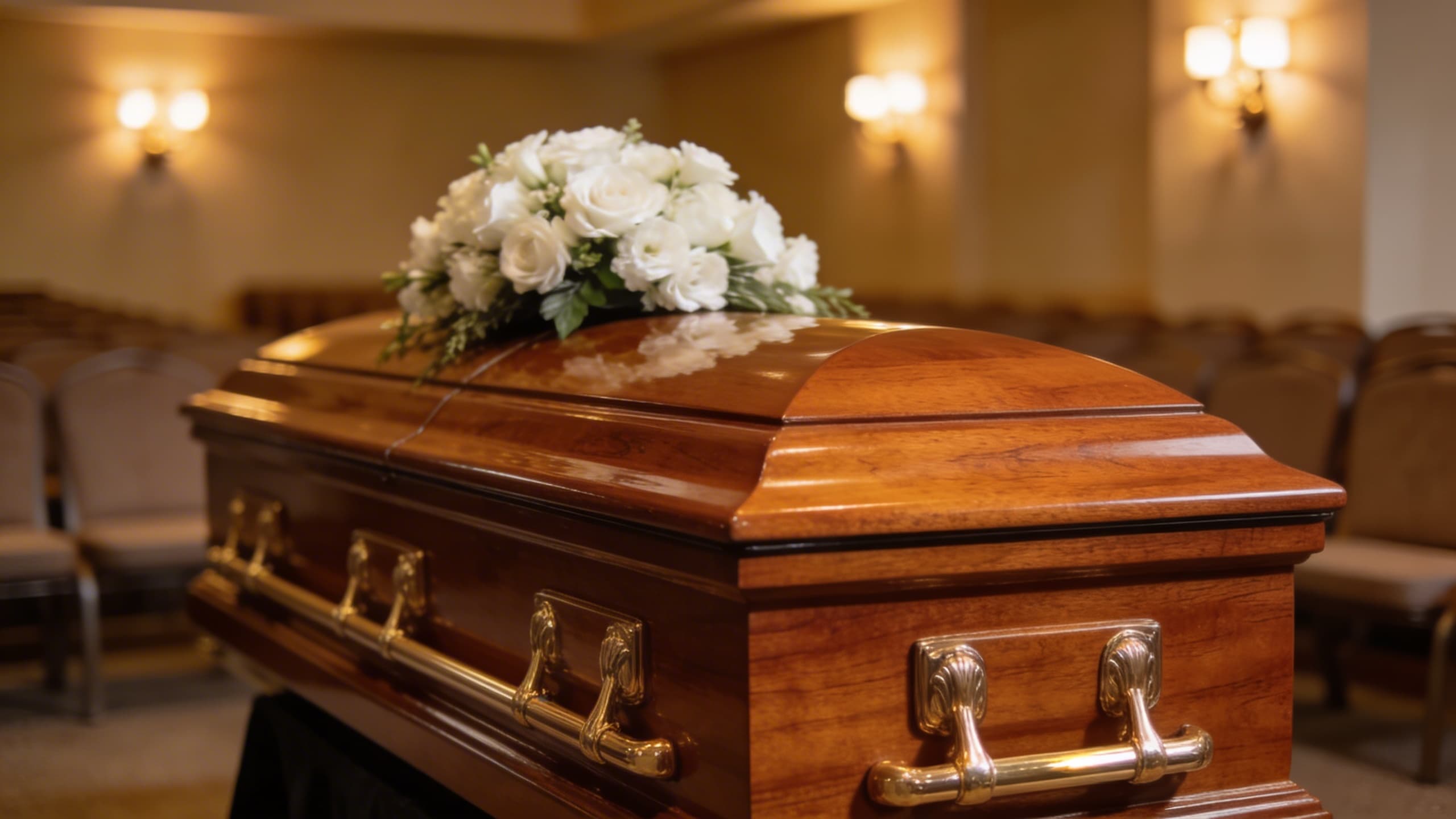
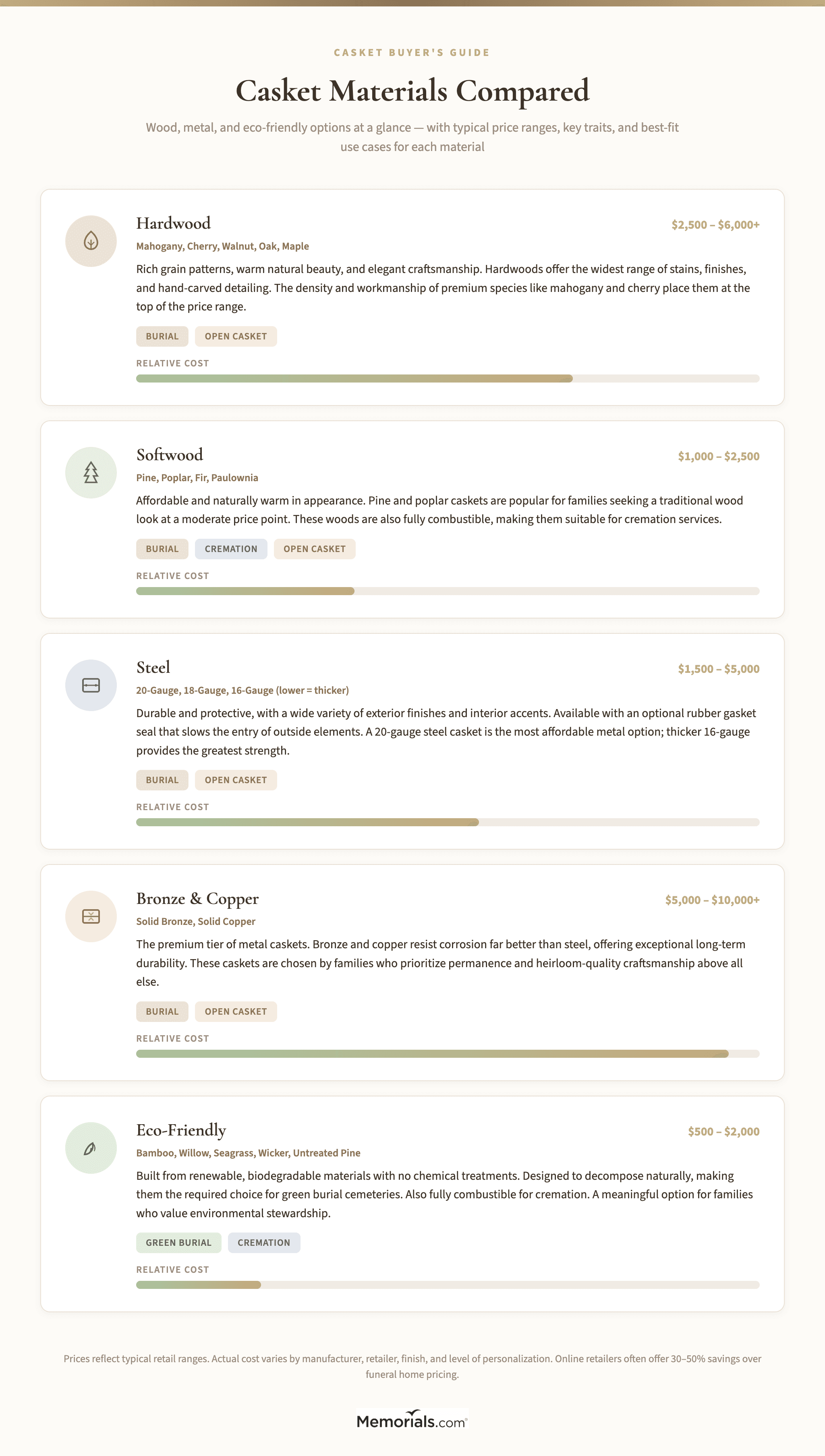
Wood caskets are chosen for their natural warmth, rich grain patterns, and timeless appearance. Common species include mahogany, cherry, walnut, oak, maple, and pine. Hardwoods like mahogany and cherry sit at the higher end of the price spectrum ($2,500–$6,000+) due to their density, beauty, and workmanship. Softwoods like pine and poplar are more affordable ($1,000–$2,500) and are also suitable for cremation. Wood caskets are available in a wide range of stains and finishes, and many manufacturers offer engraving or hand-carved detailing on the exterior.
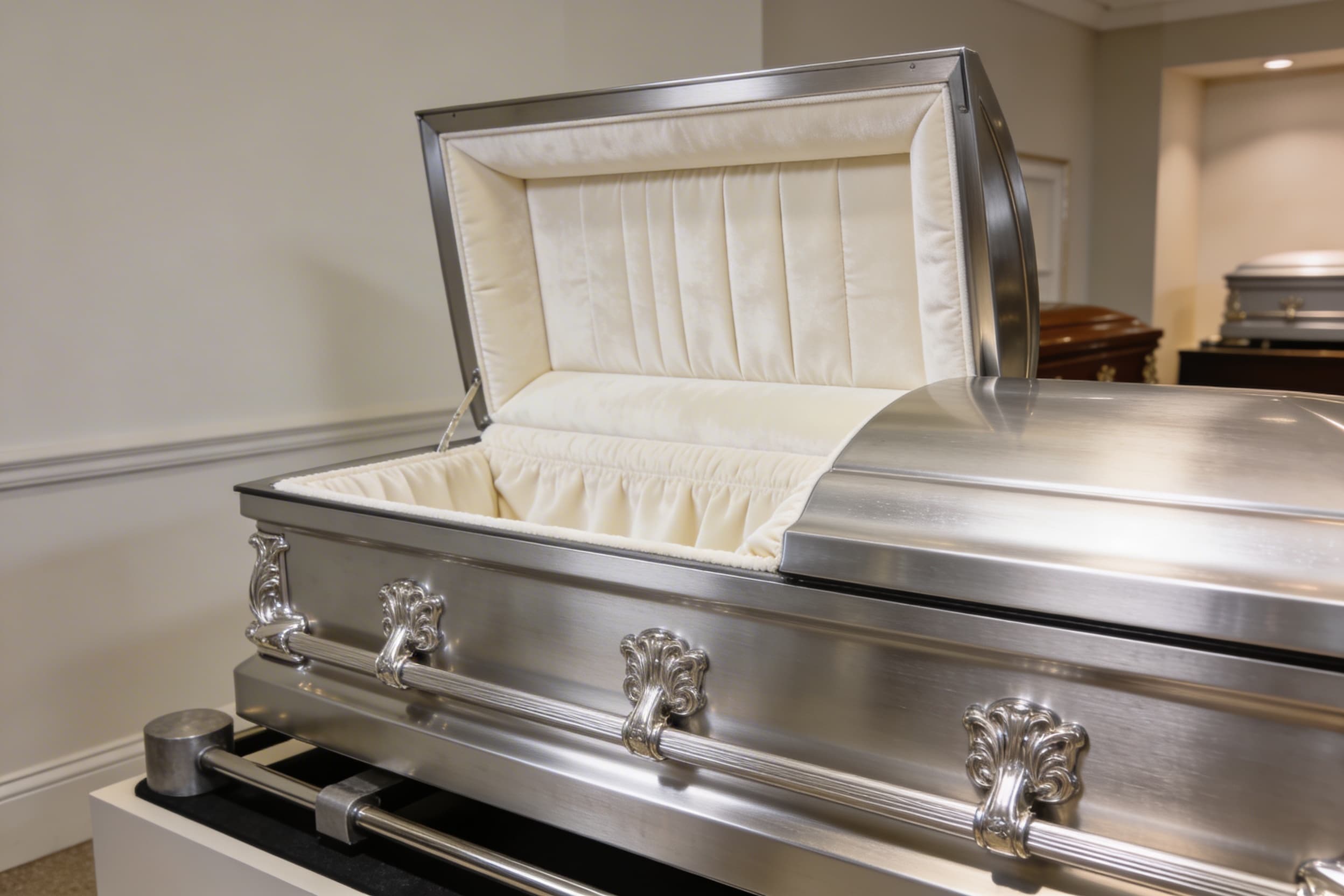
Metal caskets prioritize durability and long-term protection. The most common metals are steel (available in 20-gauge, 18-gauge, and thicker 16-gauge options), bronze, and copper. Gauge numbers work in reverse — a lower number means thicker steel and greater durability. A 20-gauge steel casket is the most affordable metal casket option, usually ranging from $1,500 to $3,000. Bronze and copper caskets are considered premium choices, often exceeding $5,000, because these metals resist corrosion far better than steel.
Many metal caskets include a rubber gasket seal — also called a "sealer" or "protective" casket — that creates a more airtight closure. While a gasketed casket slows the entry of outside elements, it does not preserve the contents permanently. Non-gasketed metal caskets remain a sound choice for families who prefer simplicity.
For a deeper look at the full range of available materials and styles, our guide to types of caskets covers each option in detail.
Eco-friendly caskets are built from renewable, biodegradable materials and finished without chemical treatments. Wicker caskets (willow, bamboo, or seagrass), untreated pine boxes, and even wool or cotton shroud-style caskets fall into this category. Prices are often lower than traditional wood or metal — typically $500 to $2,000 — and these caskets are compatible with both green burial and cremation. Families drawn to environmental values find these options meaningful without sacrificing dignity.
Casket Sizing: Standard, Oversized, and Child Sizes
Standard adult caskets measure approximately 24 inches wide and 79 inches long. This accommodates most adults comfortably. However, if the individual was taller than about 6'1" or weighed over 300 pounds, an oversized casket may be necessary. Oversized models extend to 28 inches wide or wider and up to 84 inches long. Your funeral director can help determine the correct fit based on the individual's measurements.
For families arranging services for an infant, toddler, or young child, child caskets are available in several smaller sizes. These caskets are designed with the same care and craftsmanship as adult models and range from compact infant sizes (18–24 inches) to youth sizes for older children.
Choosing the right size matters both for the comfort of presentation during a viewing and for meeting cemetery vault or crypt specifications. Cemeteries and mausoleums have interior dimensions that must accommodate the casket, so confirming compatibility before purchase avoids last-minute complications.
How Much Does a Casket Cost?
Casket prices range widely. A basic cloth-covered casket suitable for cremation may cost $500 to $1,000, while a premium solid bronze casket can exceed $10,000. Most families spend between $2,000 and $5,000.
Here's how the price spectrum breaks down by material:
Budget range ($500–$1,500): Cloth-covered caskets made from pressed wood or fiberboard, basic 20-gauge steel caskets, pine caskets, and eco-friendly wicker or bamboo options. These are dignified, functional choices — particularly well-suited for cremation or green burial.
Mid-range ($1,500–$4,000): Solid hardwood caskets (oak, maple, poplar), 20-gauge and 18-gauge steel caskets with interior upgrades and gasketed seals, and more elaborate wood finishes. This is where the majority of families find caskets that balance quality, appearance, and budget.
Premium range ($4,000–$10,000+): Cherry, mahogany, and walnut hardwoods with hand-finished detailing; 16-gauge steel with high-end interiors; and bronze or copper caskets. These represent the highest levels of craftsmanship and material quality.
The casket is often the most significant expense in a funeral. For context on how it fits into the total cost, see our breakdown of how much a funeral costs with itemized averages for every component.
Where to Buy: Funeral Home, Online, or Third-Party Retailer
Families have more purchasing options today than ever before, and the Federal Trade Commission's Funeral Rule protects the right to buy a casket from any source — including online retailers — without the funeral home charging a handling fee.
Funeral homes remain the most common source. The convenience is undeniable: the casket is right there, the funeral director can walk you through options in person, and delivery logistics are handled internally. The tradeoff is cost. Funeral home markups on caskets are significant, and families often see a narrower range of options than they would shopping online.
Online retailers like Memorials.com offer a broader selection at lower prices because they operate with less overhead than a brick-and-mortar funeral home. Most online casket sellers provide overnight or two-day delivery, and many offer direct-to-funeral-home shipping so the casket arrives where it's needed. Families who shop online frequently save 30–50% compared to funeral home pricing on comparable caskets.
Casket showrooms and warehouse retailers serve as a middle ground — more selection than a funeral home, in-person viewing, and competitive pricing. These are less common and tend to exist primarily in larger metro areas.
Regardless of where you buy, a reputable seller should provide a full written price list, clear photographs, material specifications, and a return or exchange policy. The FTC Funeral Rule requires funeral homes to accept any casket purchased from an outside source and forbids them from charging fees for doing so.
Personalization Options
A casket can be personalized in numerous ways to reflect the personality, interests, or beliefs of the person being honored.
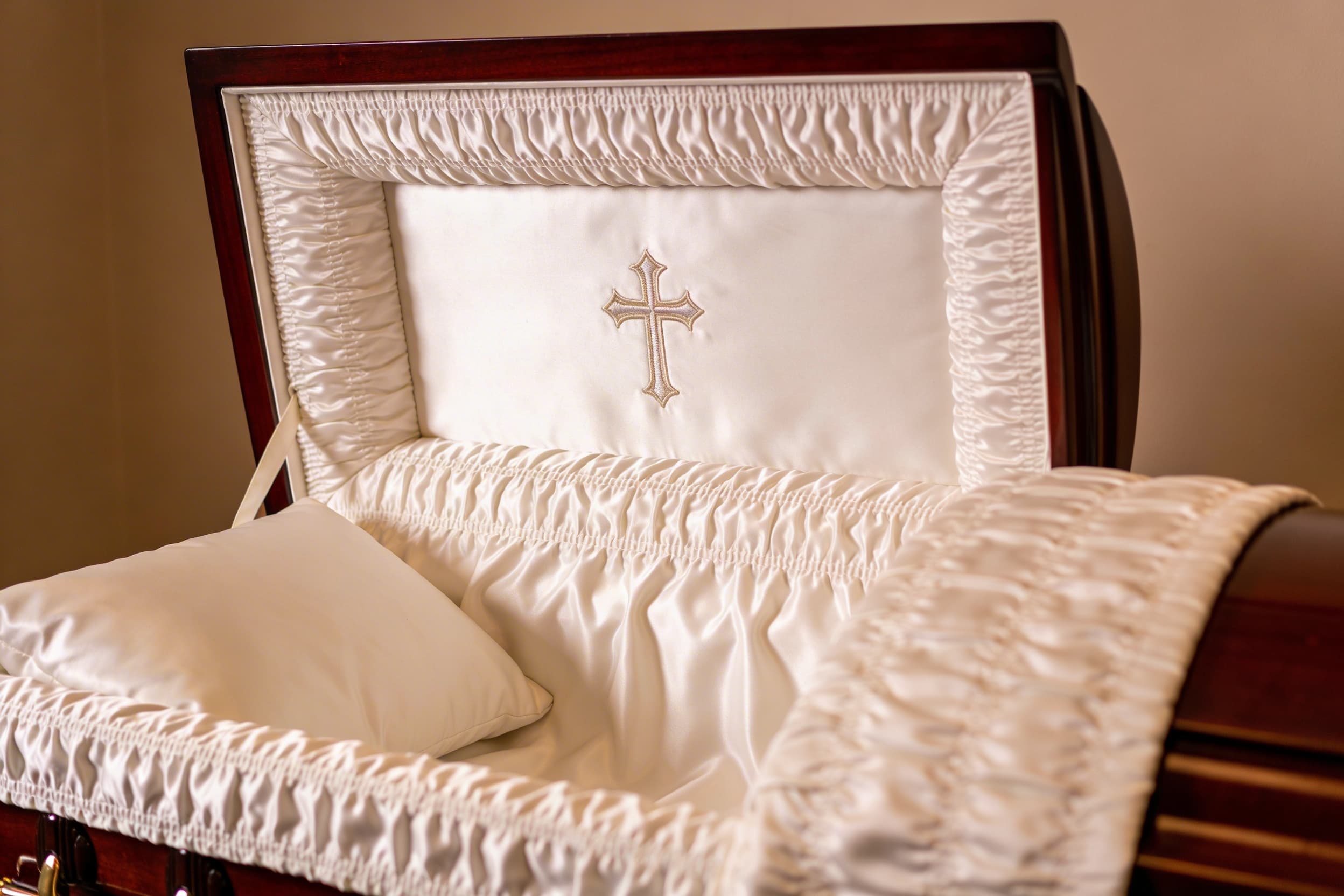
Interior lining is the most visible customization during a viewing. Satin, velvet, and crepe are the most common lining materials, and families can often choose the color — white, champagne, blue, pink, or the deceased's favorite hue. Some caskets include embroidered panels on the lid interior (known as the head panel or cap panel) with a name, dates, religious symbols, or a short verse.
Exterior engraving and casket corners add personal touches to the outside. Casket corners — decorative pieces that attach at the four corners — can depict hobbies, religious symbols, military service, fraternal affiliations, or nature scenes. Some families opt for custom caskets with full exterior artwork or photo panels.
Lid style determines how the casket is presented during a viewing. A half-couch (or half-lid) casket opens only the upper half, which is the standard for most American funerals. A full-couch casket opens the entire lid, allowing the full body to be visible — a choice some families prefer for religious or cultural reasons.
Memory drawers and accessories built into the foot end of some caskets provide space for letters, photographs, small keepsakes, or other meaningful items that the family wants to include with the burial.
For families serving a veteran, military caskets are available with branch-specific emblems, flag holders, and patriotic interior designs that honor the individual's service.
Casket Rental: A Practical Option for Cremation Families
If the family has chosen cremation but still wants a traditional viewing or funeral service with the body present, renting a casket is a practical and increasingly common solution. A rental casket looks identical to a purchased casket from the outside, but it includes a removable interior insert — typically a simple wood or cardboard tray. The body rests in the insert during the service. Afterward, the insert is removed and sent with the body to the crematory, while the outer casket shell is cleaned and prepared for future use.
Rental fees typically range from $750 to $1,500, depending on the funeral home and the style of the rental casket available. This approach offers the emotional comfort of a traditional casket display while keeping costs aligned with a cremation budget.
The Burial Vault Question
Most cemeteries require a burial vault or grave liner to house the casket once it's placed in the ground. The vault serves a structural purpose: it supports the weight of the earth above (and the heavy maintenance equipment that drives over cemetery grounds), preventing the surface from collapsing as the casket settles over time.
Burial vaults range from basic concrete liners ($700–$1,500) to reinforced vaults with interior linings ($1,500–$5,000+). Some families mistakenly budget only for the casket and are surprised by the additional vault expense. If you're comparing total burial costs, factor the vault in from the start.
Green cemeteries and natural burial grounds typically do not require vaults — the point of natural burial is to allow decomposition to occur without barriers. Always confirm vault requirements with your specific cemetery before finalizing your casket choice.
A Step-by-Step Decision Framework
Sorting through casket options is more manageable when you follow a structured path. Here's a practical sequence:
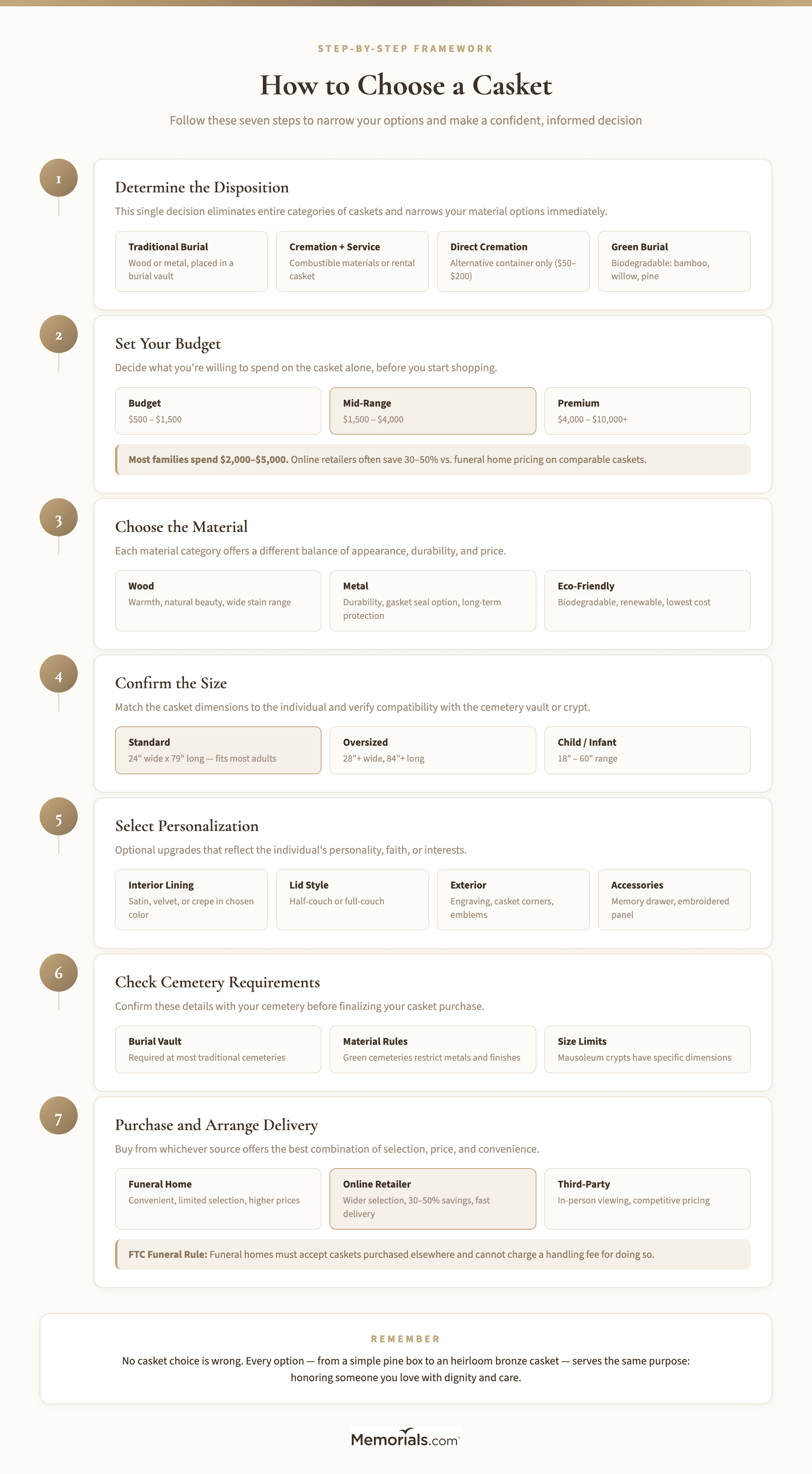
Step 1 — Determine the disposition. Burial, cremation with a service, direct cremation, or green burial. This one decision eliminates entire categories of caskets and narrows your material options immediately.
Step 2 — Set your budget. Decide what you're able and willing to spend on the casket alone, separate from other funeral expenses. Having a number in mind before you start looking prevents emotional overspending. Remember that you're not required to buy from the funeral home.
Step 3 — Choose the material. Wood for warmth and natural beauty, metal for durability and long-term protection, or eco-friendly for environmental alignment. Within each category, narrow by price tier: budget, mid-range, or premium.
Step 4 — Confirm the size. Standard, oversized, or child — based on the individual's measurements and the cemetery or mausoleum's vault dimensions.
Step 5 — Select personalization. Interior lining color and material, half-couch or full-couch lid, exterior engraving, casket corners, and any accessories like memory drawers. Personalization adds cost, so weigh each upgrade against your remaining budget.
Step 6 — Check cemetery requirements. Confirm whether a burial vault is required, whether there are restrictions on casket materials (especially for green burial), and whether the cemetery has specific size limitations.
Step 7 — Purchase and arrange delivery. Whether buying online or in person, confirm the written price, delivery timeline, and return policy. If purchasing from an outside retailer, coordinate delivery directly with the funeral home — they are legally required to accept it.
After the casket is selected, it connects into the broader funeral timeline. Our funeral planning checklist helps families track every task from notification through post-service responsibilities.
Your Rights Under the FTC Funeral Rule
The Federal Trade Commission's Funeral Rule — formally known as the "Trade Regulation Rule Concerning Funeral Industry Practices" — gives consumers several critical protections when purchasing a casket:
Price transparency. Funeral homes must provide an itemized General Price List (GPL) to anyone who asks, whether in person or over the phone. The GPL must list the price of every casket available, along with all other funeral goods and services.
Freedom to purchase elsewhere. You may buy a casket from any source — an online retailer, a casket showroom, a big-box store — and the funeral home must accept it without charging a handling fee or imposing a surcharge.
No required purchases. No law requires families to buy a casket for cremation. Many crematories require only a rigid, combustible container. If a funeral home suggests otherwise, ask to see the specific requirement in writing.
These protections exist because the casket is the single largest variable expense in most funerals, and families making decisions under time pressure and emotional stress are particularly vulnerable to overpaying. Knowing your rights helps you shop with confidence.
Frequently Asked Questions
What is the difference between a casket and a coffin?
A casket is rectangular with four sides and a hinged split lid, which is the standard style used in American funerals. A coffin is hexagonal or octagonal — wider at the shoulders and tapering toward the head and feet — and is more common in European and historical contexts. In everyday conversation, the two terms are often used interchangeably, but retailers and funeral professionals distinguish between them based on shape.
Can I buy a casket online and have it delivered to the funeral home?
Yes. Under the FTC Funeral Rule, funeral homes are legally required to accept caskets purchased from any outside source, including online retailers. Most online casket sellers offer overnight or two-day delivery with direct-to-funeral-home shipping. The funeral home cannot charge you a fee for receiving or handling a casket you purchased elsewhere.
Do I need a casket for cremation?
Not necessarily. Most states and crematories require only a rigid, combustible container — which can be as simple as a cardboard or fiberboard box. However, if you plan to hold a viewing or funeral service before cremation, you may want a cremation casket or a rental casket for the service itself.
How do I know what size casket to get?
Standard adult caskets are approximately 24 inches wide and 79 inches long, which fits most adults. If the individual was significantly taller or heavier, oversized caskets in wider and longer dimensions are available. Your funeral director can help determine the right size based on the person's measurements, and online retailers typically publish exact interior dimensions.
Is a gasketed (sealed) casket necessary?
A gasketed casket creates a tighter seal that slows the entry of air and moisture. Some cemeteries or families prefer this feature, but it is not legally required and does not permanently preserve the casket or its contents. Non-gasketed caskets close securely and remain a perfectly appropriate choice for burial.