🏬Supersize Online Funeral Retailer🪦1000's of Headstones⚱️Over 10,000 Cremation Urns⚰️Caskets Overnight Delivery🛒Funeral & Memorial Superstore🚚FREE Shipping on ALL Orders👨👩👧👦Helping Families for over 20 Years💰Lowest Price Guarantee🏬Supersize Online Funeral Retailer🪦1000's of Headstones⚱️Over 10,000 Cremation Urns⚰️Caskets Overnight Delivery🛒Funeral & Memorial Superstore🚚FREE Shipping on ALL Orders👨👩👧👦Helping Families for over 20 Years💰Lowest Price Guarantee
🏬Supersize Online Funeral Retailer🪦1000's of Headstones⚱️Over 10,000 Cremation Urns⚰️Caskets Overnight Delivery🛒Funeral & Memorial Superstore🚚FREE Shipping on ALL Orders👨👩👧👦Helping Families for over 20 Years💰Lowest Price Guarantee🏬Supersize Online Funeral Retailer🪦1000's of Headstones⚱️Over 10,000 Cremation Urns⚰️Caskets Overnight Delivery🛒Funeral & Memorial Superstore🚚FREE Shipping on ALL Orders👨👩👧👦Helping Families for over 20 Years💰Lowest Price Guarantee
A wicker casket is not made from a single material — it is made using an ancient weaving technique. Wicker refers to the process of interlacing flexible plant fibers into a rigid, functional shape, a method that traces its origins to ancient Egypt and has been used for burial containers for centuries. Today, families choosing a natural, eco-friendly casket can select from handwoven options crafted in willow, bamboo, seagrass, or rattan, each with its own character, strength, and environmental profile.
If you are weighing green burial practices or simply want a casket that reflects a simpler, more natural farewell, this guide covers everything you need to decide: what each material looks and feels like, how much wicker cost, whether they meet Green Burial Council standards, and what cemetery rules to verify before purchasing. For families navigating the full range of funeral decisions, walks through each step from start to finish.
Traditional caskets are built from metal or hardwood using industrial manufacturing. A wicker casket takes the opposite approach: skilled artisans weave thin strips of natural plant fiber over a supportive frame, creating a container that is lightweight yet surprisingly strong. Most handwoven caskets support up to 350 pounds despite containing no nails, screws, or metal fasteners.
The result is a one-of-a-kind burial container with a warm, organic texture that many families find more peaceful and personal than a polished metal or lacquered wood alternative. Wicker caskets belong to the broader family of biodegradable caskets — when buried, they decompose naturally over three to four years, allowing the body to return to the earth without introducing toxins, varnishes, or non-biodegradable components into the soil.
Because the term "wicker" describes a technique rather than a material, the characteristics of a wicker casket depend entirely on which plant fiber was used. Understanding those differences is the key to choosing the right casket for a green burial, cremation, or traditional service.
Wicker Casket Materials Compared
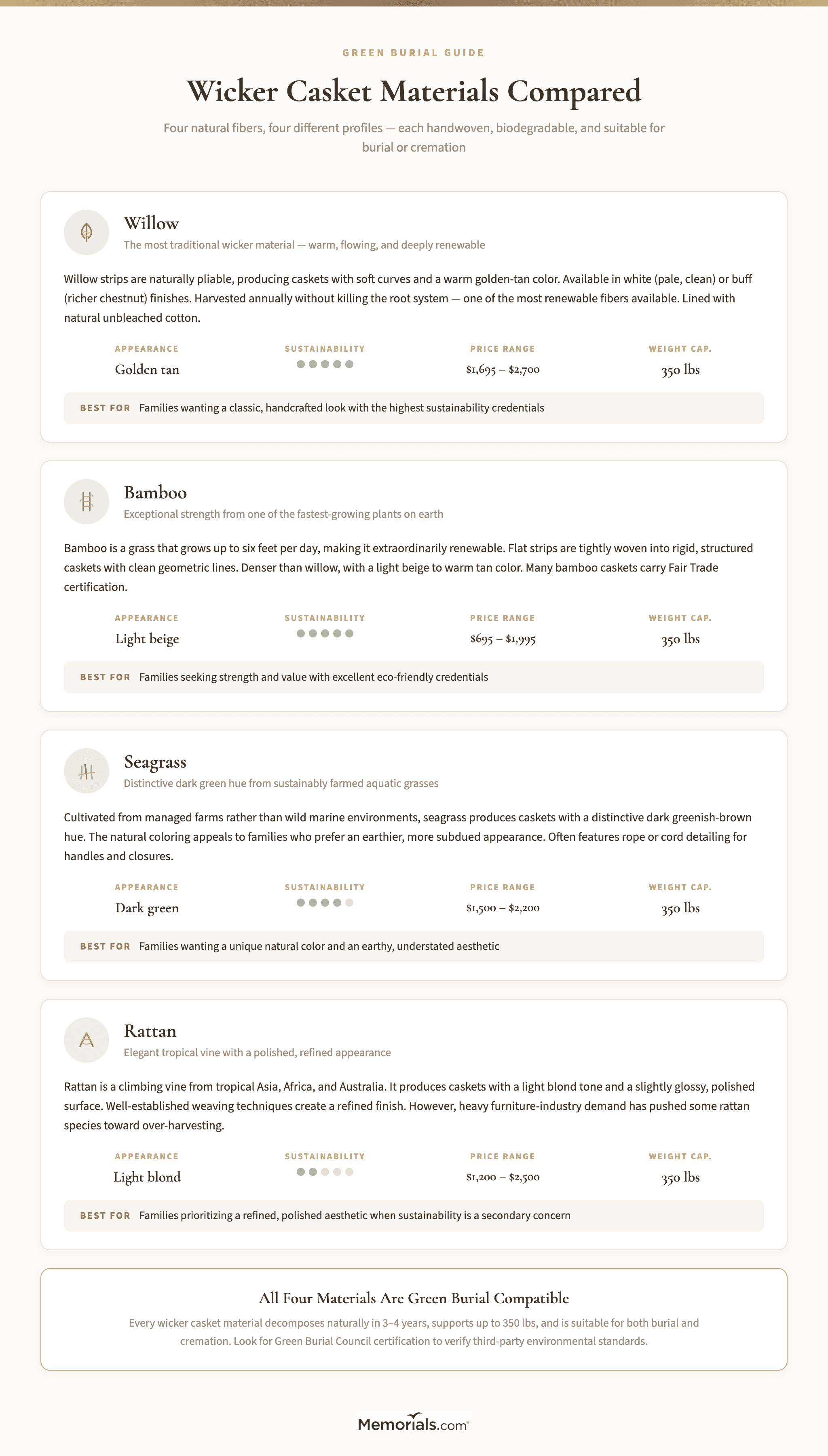
Four plant fibers account for nearly all wicker caskets sold in the United States. Each brings a different combination of appearance, sustainability, and price.
Willow
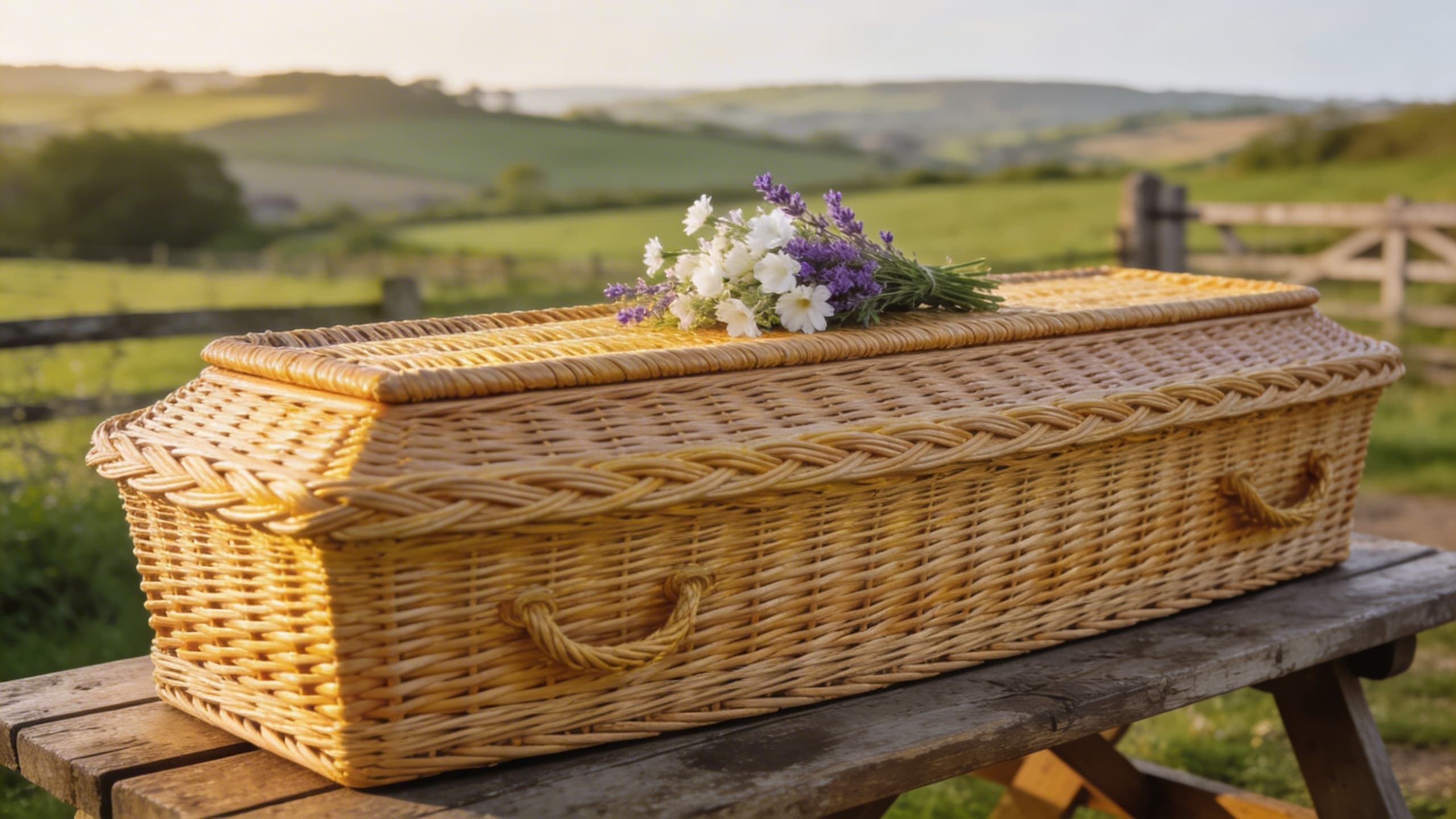
Willow is the most traditional wicker coffin material and the one most commonly associated with handwoven caskets in the UK and Europe. The plant grows rapidly — it can be harvested annually without killing the root system — making it one of the most renewable fibers available. Willow strips are naturally pliable, producing caskets with soft, flowing lines and a warm tan or golden color that darkens slightly with age.
Manufacturers process willow in several ways. White willow is peeled and dried immediately after harvesting, giving it a pale, clean appearance. Buff willow is boiled before peeling, which produces a richer chestnut tone. Both are structurally identical, so the choice is purely aesthetic. Willow caskets typically include a natural unbleached cotton liner, a matching pillow, and a privacy shield, and they are suitable for both burial and cremation.
Bamboo
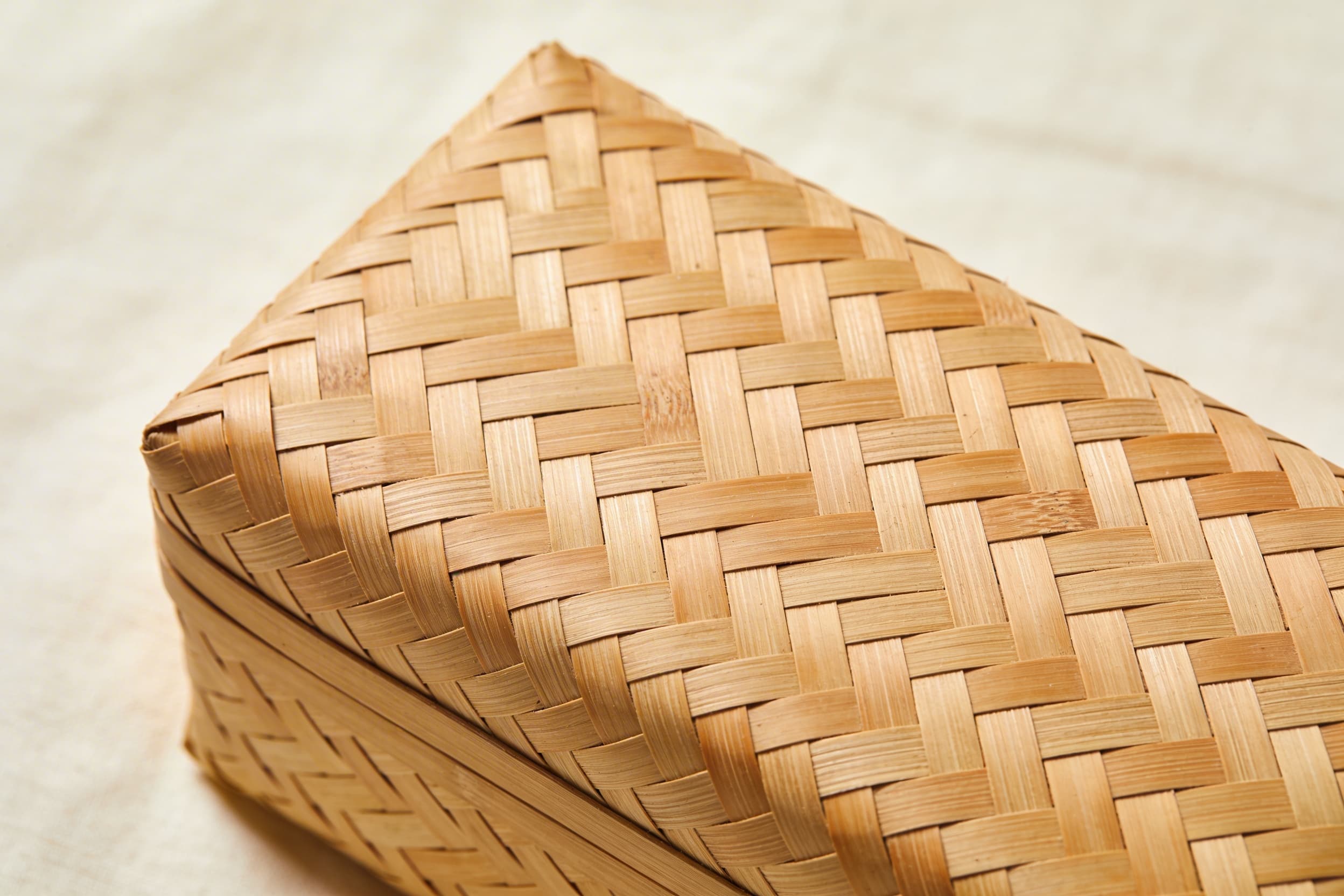
A bamboo casket offers exceptional strength relative to its weight. Bamboo is a grass, not a tree, and some species grow up to six feet per day, making it among the fastest-renewing natural resources on earth. Casket manufacturers cut bamboo into flat strips and weave them tightly, producing a rigid structure with clean geometric lines and a light beige to warm tan color.
Because bamboo fibers are naturally denser than willow, bamboo caskets tend to feel sturdier and more structured. They are an excellent choice for families who want the environmental benefits of a woven casket but prefer a look that is slightly more angular and defined than the softer curves of willow. Many bamboo caskets are Fair Trade certified, meaning the artisans who produce them receive equitable compensation.
Seagrass
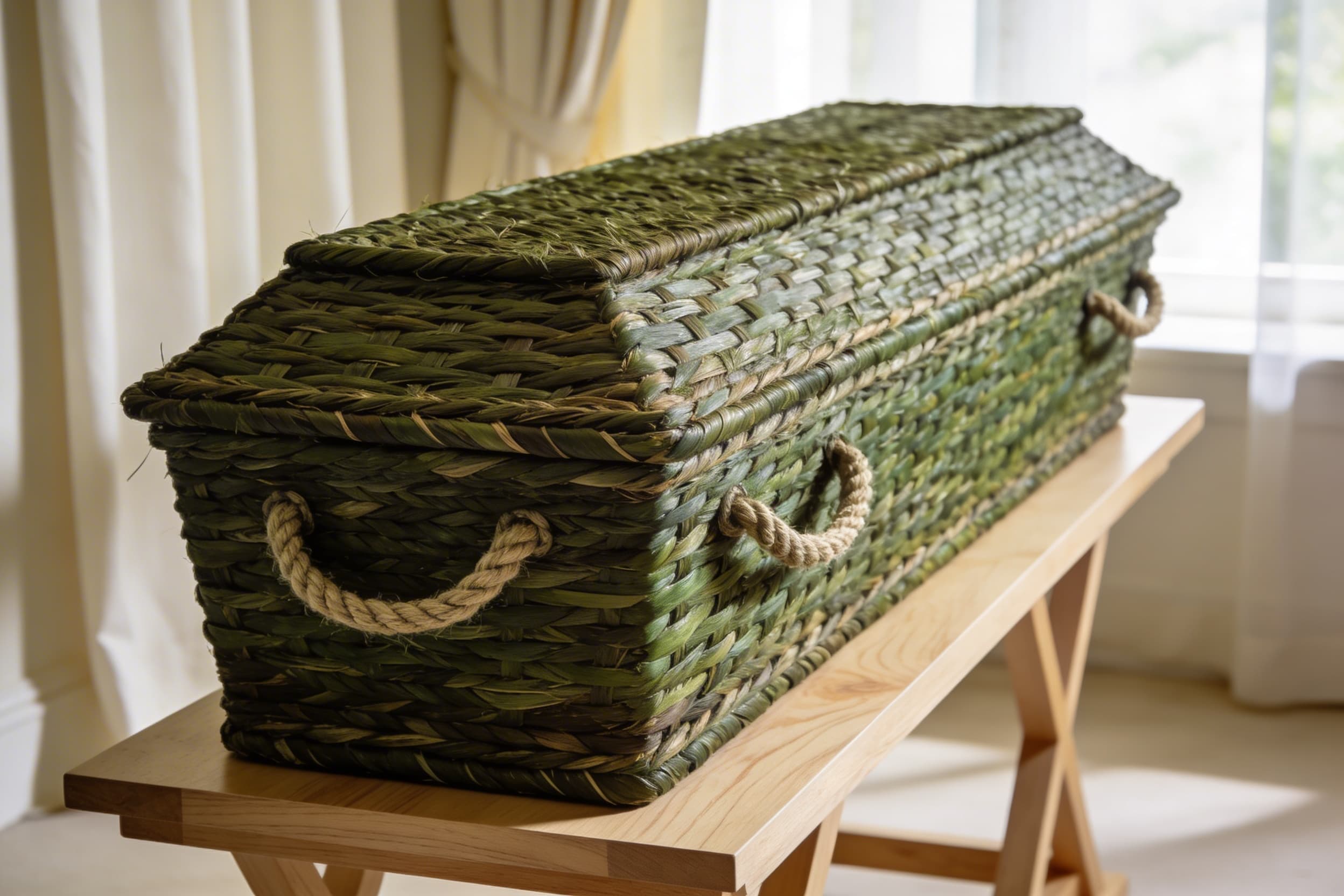
Seagrass caskets are woven from cultivated aquatic grasses, producing a distinctive dark greenish hue that sets them apart from other wicker options. The fibers are harvested from managed farms rather than wild marine environments, preserving delicate coastal ecosystems. Seagrass caskets often feature a combination of seagrass body panels with rope or cord detailing for handles and lid closures.
The natural coloring of seagrass appeals to families who prefer an earthier, more subdued appearance. These caskets are fully biodegradable, appropriate for green burial, and can be used as cremation containers. Seagrass is sometimes blended with other fibers — you may see caskets marketed as "seagrass and willow" — so check the product description carefully if material purity matters to you.
Rattan
Rattan is a climbing vine that grows primarily in tropical regions of Asia, Africa, and Australia. It produces caskets with an elegant, light blond tone and a slightly glossy surface. Rattan has been widely used in furniture making for decades, which means weaving techniques are well-established and the finished product has a refined, polished feel.
However, rattan is the least sustainable of the four common wicker materials. Heavy demand from the furniture industry has pushed some rattan species toward over-harvesting, and it grows more slowly than willow or bamboo. Families who prioritize environmental impact may want to choose willow or bamboo instead, reserving rattan for situations where its specific aesthetic is desired.
How Wicker Caskets Fit Into Green Burial
A wicker casket is one component of a broader green burial approach. Green burial emphasizes returning the body to the earth using nontoxic, biodegradable materials and avoiding practices that interfere with natural decomposition — no embalming with formaldehyde-based chemicals, no concrete burial vaults, and no caskets made from non-degradable metals or treated woods.
The Green Burial Council (GBC) is the primary certification body for eco-friendly funeral products in the United States. To earn GBC certification, a casket must be constructed entirely from plant-derived, natural, or animal materials, including the shell, liner, and all adornments. Fasteners and handles made from brass are exempt, but the overall product must be free of toxic chemicals, carcinogenic ingredients, and persistent environmental pollutants. Most willow, bamboo, and seagrass wicker caskets meet these requirements easily because their construction uses no adhesives, varnishes, or synthetic components.
Cemetery compatibility is a separate and equally important consideration. Not every cemetery accepts wicker caskets, and not every green-friendly cemetery has the same rules. GBC-certified cemeteries fall into three categories: hybrid cemeteries (conventional grounds that offer a green section), natural burial grounds (stricter standards, no vaults), and conservation burial grounds (the most ecologically committed, with land stewardship mandates). Natural and conservation burial grounds typically welcome wicker caskets without requiring an outer burial container. Traditional cemeteries, on the other hand, may require a burial vault or concrete liner even if the casket itself is biodegradable — which defeats much of the environmental purpose.
Before purchasing, confirm these details with your chosen cemetery:
Does the cemetery accept wicker caskets? Most do, but some have material restrictions.
Is an outer burial container required? If so, the burial is not truly "green" regardless of the casket material.
Is viewing permitted? Most wicker caskets can be ordered with a three-quarter viewing lid for open-casket services.
What paperwork is needed? Some green cemeteries require a biodegradable nameplate with the deceased's details, especially if cremation follows.
Families interested in alternative funeral options beyond wicker should also know that the natural burial space is evolving rapidly. Mushroom coffins and burial suits, which use mycelium to accelerate decomposition, represent one of the newest entries in the eco-friendly casket category and pair well with the same natural and conservation burial grounds that accept wicker caskets.
How Much Does a Wicker Casket Cost
Wicker caskets are generally less expensive than traditional hardwood or metal caskets, though prices vary significantly based on material, size, construction quality, and whether a viewing lid is included. Here is what to expect in 2026:
Bamboo caskets typically range from $695 to $1,995. They tend to sit at the lower end of the wicker price spectrum because bamboo is abundant and efficient to harvest.
Willow caskets range from $1,695 to $2,700 for standard adult sizes, with artisan-crafted models from specialty makers occasionally exceeding $3,000. Willow is the most labor-intensive wicker material because the strips are thinner and require more passes to complete the weave.
Seagrass caskets fall in the $1,500 to $2,200 range, landing between bamboo and willow in most retailers' catalogs.
Rattan caskets vary widely based on sourcing and craftsmanship, from roughly $1,200 to $2,500.
For comparison, the Federal Trade Commission notes that a traditional casket averages slightly above $2,000, while premium hardwood and metal caskets routinely reach $5,000 to $10,000. A wicker casket at $1,200 to $2,000 represents a meaningful savings — and families who purchase from an online third-party retailer rather than through a funeral home often save further. Under the FTC's Funeral Rule, funeral homes must accept caskets purchased elsewhere and cannot charge a handling fee for doing so.
The contrast with a conventional casket is stark, and why are caskets so expensive explains where the money in a traditional casket price goes.
Can a Wicker Casket Be Used for Cremation
Yes. All four common wicker materials — willow, bamboo, seagrass, and rattan — are suitable as cremation containers. They ignite cleanly, produce minimal emissions compared to metal or heavily varnished wood caskets, and leave no residual hardware that must be removed from the cremated remains.
If a family plans a viewing or memorial service before cremation, wicker caskets work well for this purpose. The casket provides a dignified, beautiful setting for the service and then accompanies the deceased into the cremation chamber, eliminating the need for a separate rental casket. Some families appreciate the cohesiveness of using a single, meaningful container for the entire process rather than transferring to a utilitarian alternative cremation box.
One detail to confirm: some crematories require a nameplate or identification tag on the casket for chain-of-custody purposes. Most wicker casket sellers include a biodegradable nameplate, but verify this with both the vendor and the crematorium. Reviewing the full range of casket materials and styles can help you compare how wicker stacks up against other cremation-compatible options.
Some families go further still and use no container at all — can you be buried without a casket covers shroud burial and what a cemetery will accept.
Strength, Durability, and Practical Considerations
One of the most common concerns families raise about wicker caskets is durability. The weaving technique itself addresses this: tightly interlaced plant fibers distribute weight across the entire structure rather than concentrating it at stress points. Most commercially available wicker caskets are weight-tested to between 300 and 350 pounds and are reinforced with a solid wood base and internal frame beneath the woven exterior.
Wicker caskets are lighter than hardwood or metal alternatives, which has practical implications for pallbearers — a willow casket weighs roughly 30 to 45 pounds empty, compared to 150 to 200+ pounds for a standard steel casket. This reduced weight makes the procession more manageable, particularly for outdoor or graveside services on uneven terrain.
A few practical notes worth knowing:
Storage and timing. Wicker caskets should be stored in a dry environment and are best used within a reasonable timeframe of purchase. They are not designed for extended above-ground storage.
Customization. Families can decorate wicker caskets with fresh flowers, greenery, ribbons, photographs, or handwritten messages woven directly into the fibers. The open texture of the weave makes it easy to thread stems and decorations through the surface — a personal touch that is difficult to achieve with sealed metal or lacquered wood.
Viewing options. Most wicker caskets are available with a full lid (no viewing), a three-quarter split lid (suitable for open-casket services), or no lid at all. Confirm the lid configuration before ordering, as this affects both cost and functionality.
Buying a Wicker Casket: What to Know
Purchasing a green burial casket involves a few decisions that differ from buying a conventional casket.
Buy direct or through a funeral home. Families can purchase wicker caskets from online retailers and have them shipped directly to a funeral home, residence, or cemetery. Under federal law, the funeral home must accept delivery and cannot levy a handling surcharge for third-party caskets. Buying direct often saves $500 to $1,500 compared to funeral home pricing for similar products.
Verify GBC certification. If green burial is the goal, look for caskets that carry the Green Burial Council's product certification seal. This confirms the casket meets third-party environmental standards — not just the manufacturer's own claims. In a market where greenwashing is increasingly common, GBC certification provides meaningful assurance.
Check cemetery requirements first. Confirm that your cemetery accepts wicker caskets, check whether a vault or liner is required, and ask about any size limitations specific to their grave plots. For natural burial grounds, wicker is typically the preferred container type, but each site has its own policies.
Confirm sizing. Standard adult wicker caskets typically measure between 5'9" and 6'4" in interior length and 20" to 24" in width. Oversized options are available from some manufacturers. Measure carefully and order with a small margin of extra length.
Frequently Asked Questions
How long does a wicker casket take to decompose?
Most biodegradable wicker materials break down in three to four years under normal soil conditions. The body begins decomposing while the casket is still intact, and as the fibers gradually disintegrate, the remains return fully to the earth. Decomposition speed varies depending on soil type, moisture, and burial depth, but wicker is among the fastest-degrading casket materials available.
Is a wicker casket strong enough for pallbearing?
Yes. Commercially manufactured wicker caskets are weight-tested to between 300 and 350 pounds. Solid wood bases and internal frames provide structural reinforcement beneath the woven exterior. Pallbearing is safe and comfortable, and the lighter weight (30 to 45 pounds empty) actually makes wicker easier to carry than metal or hardwood alternatives.
Can you have an open casket with a wicker coffin?
Most wicker caskets are available with a three-quarter split lid that opens for viewing during a funeral service and closes before burial or cremation. The woven texture creates a warm, natural backdrop that many families find more calming than polished metal. Confirm the lid style you need when ordering.
Do funeral homes accept wicker caskets from outside vendors?
Yes. The FTC's Funeral Rule requires funeral homes to accept caskets purchased from third-party sellers, including online retailers. The funeral home cannot charge a fee for handling an outside casket. This applies to all casket types, including wicker, bamboo, and other biodegradable options.
What is the difference between a wicker casket and a wicker coffin?
The terms refer to shape rather than material. In American funeral terminology, a casket is rectangular with four sides, while a coffin is hexagonal (six-sided) and tapers at the head and feet. Both can be made using the wicker weaving technique. Most U.S. retailers sell rectangular wicker caskets, though six-pointed wicker coffin styles are available as special orders, particularly from UK-based manufacturers.
Are eco-friendly caskets accepted at all cemeteries?
Not universally. Green burial grounds and natural cemeteries almost always accept them. Traditional cemeteries may accept the casket itself but still require an outer burial vault, which diminishes the environmental benefit. Always confirm your specific cemetery's policies before purchasing.
Choosing a Natural Farewell
A wicker casket offers families a meaningful way to honor someone's life while treading lightly on the earth. Whether crafted from English willow, sustainable bamboo, cultivated seagrass, or tropical rattan, these handwoven containers carry a quiet beauty that reflects a commitment to simplicity and environmental stewardship. The growing network of green burial grounds across the United States — now numbering over 470 — means more families than ever have access to natural burial options that welcome these caskets.
For families still exploring the broader landscape of green burial practices, the decision often extends beyond the casket to questions about embalming, vault requirements, and cemetery selection. Starting with the right casket and working outward is a solid approach. And if eco-conscious burial resonates but you have not yet worked through the full range of funeral planning decisions, our complete funeral planning guide can help you organize the steps ahead.
Browse biodegradable caskets at Memorials.com to explore handwoven options in willow, bamboo, and seagrass — all with free shipping and delivered directly to your funeral home.