🏬Supersize Online Funeral Retailer🪦1000's of Headstones⚱️Over 10,000 Cremation Urns⚰️Caskets Overnight Delivery🛒Funeral & Memorial Superstore🚚FREE Shipping on ALL Orders👨👩👧👦Helping Families for over 20 Years💰Lowest Price Guarantee🏬Supersize Online Funeral Retailer🪦1000's of Headstones⚱️Over 10,000 Cremation Urns⚰️Caskets Overnight Delivery🛒Funeral & Memorial Superstore🚚FREE Shipping on ALL Orders👨👩👧👦Helping Families for over 20 Years💰Lowest Price Guarantee
🏬Supersize Online Funeral Retailer🪦1000's of Headstones⚱️Over 10,000 Cremation Urns⚰️Caskets Overnight Delivery🛒Funeral & Memorial Superstore🚚FREE Shipping on ALL Orders👨👩👧👦Helping Families for over 20 Years💰Lowest Price Guarantee🏬Supersize Online Funeral Retailer🪦1000's of Headstones⚱️Over 10,000 Cremation Urns⚰️Caskets Overnight Delivery🛒Funeral & Memorial Superstore🚚FREE Shipping on ALL Orders👨👩👧👦Helping Families for over 20 Years💰Lowest Price Guarantee
A pallbearer carries the casket. That is the whole of the job description and almost none of the job, because six people moving one heavy object in step, over ground none of them has walked, in front of a grieving family, is a coordination problem more than a strength problem.
If you have been asked, you will almost certainly be fine. The things that go wrong are small, they are all preventable, and every one of them is decided before anybody lifts. This page covers what a pallbearer does before, during and after the service, how many you need and why, who can be one, and what to do if you cannot carry.
What is a pallbearer, at its plainest: one of the people who carries the casket at a funeral. The word comes from the pall, the cloth draped over a coffin, and originally described the mourners who walked alongside holding its corners rather than the ones taking the weight underneath. Both jobs survive today — the carrying role, and the honorary pallbearer who is named but does not lift.
Two spellings are in circulation and both are read as correct: pallbearer as one word is the standard American form, and pall bearer as two appears often enough that nobody will blink. The pallbearers meaning has not changed in either case.
Being asked is not a small thing. Families choose people who mattered to the person who died, and they are asking you to do the last physical thing anyone will do for them.
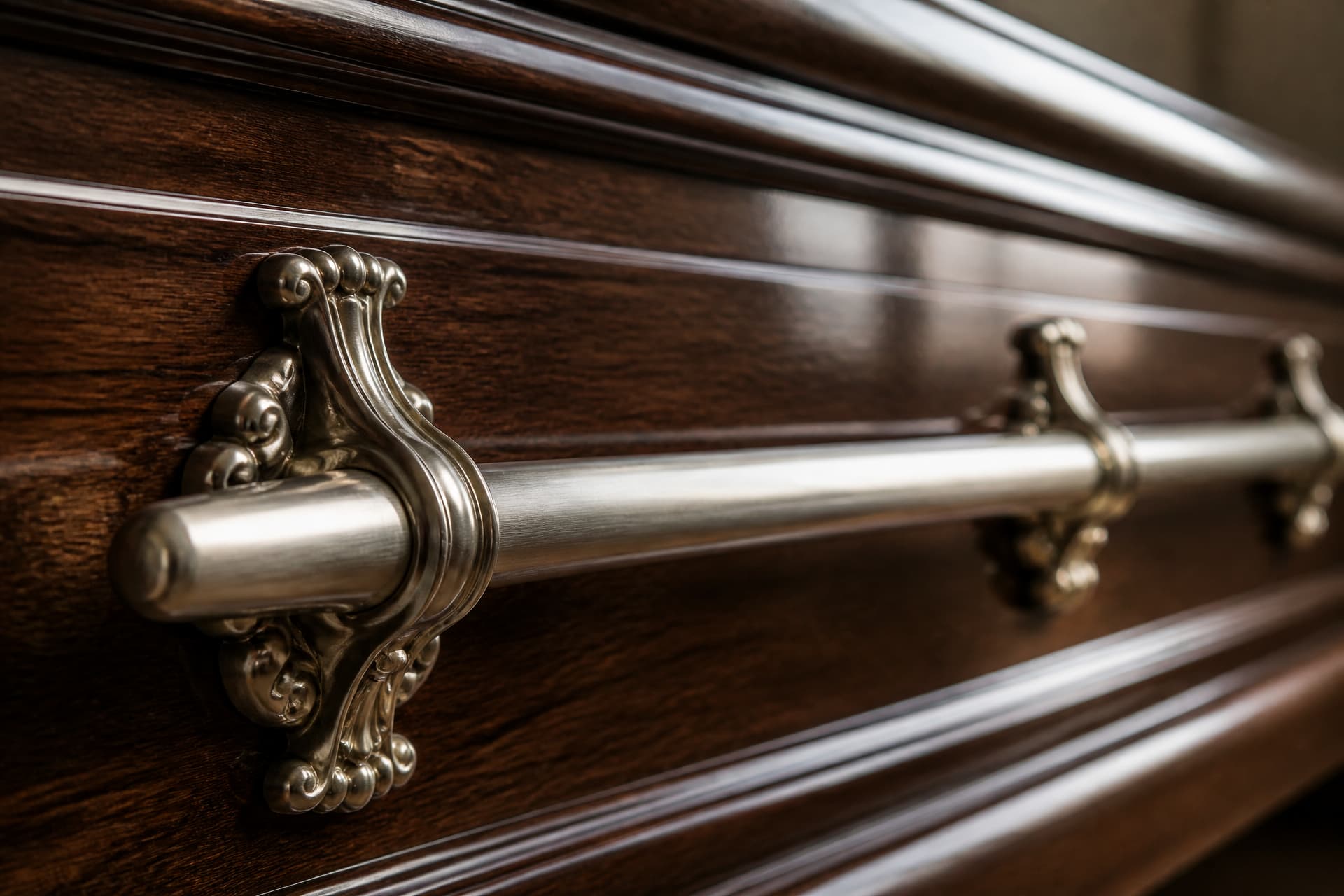
This is what you will actually hold. Most full-size caskets use a continuous bar along each side rather than separate handles, so the number of carriers is set by how many people fit comfortably along the rail — not by counting grips.
What Does a Pallbearer Do?
What does a pallbearer do, in order:
Before the service
Arrive thirty minutes early, before the family. This is the single most useful thing on this page.
Find the funeral director and say who you are. They will tell you which side you are on, where you are standing, and what the signal to lift is. It takes two minutes and it removes every question you have.
Empty your pockets. Keys, phone, loose change. They swing, they dig in, and a phone going off mid-carry is a thing that has happened.
Take off anything on your wrists, and rings with raised stones. They scratch the casket and they hurt under load.
Walk the route if you can. Look for the step down at the door, the gravel, the slope, the curb.
During the service
Sit where you are put, usually together near the front on one side.
Stand and move on the director's cue, not on the music and not on the person next to you.
Lift on the count. Everyone lifts at the same moment, or the weight lands on whoever moved first.
Walk slowly. The most common mistake is a nervous quick pace, which makes the group uneven and the family hurry.
Look ahead, not down. The person in front sets the line; you keep the spacing.
After the carry
Wait to be released. The director will say when you are done — usually after the casket is set at the graveside or the front of the chapel.
Sit with the family if that is what has been arranged, or return to your seat.
Nothing further is expected of you. Pallbearer duties end when the casket is set down.
How Many Pallbearers Do You Need?
Six is the usual answer, three on each side, and the reason is physical rather than ceremonial: most full-size caskets carry a continuous bar rail along each long side, and three adults per side is what fits along one without crowding. Four is common for a smaller or lighter casket, and eight appears at services where the casket is heavy or the walk is long.
The practical guidance is straightforward:
Situation
Usual number
Standard adult casket
6 — three per side
Smaller or lighter casket
4
Heavy casket, or a long or uneven route
8
More people should be honored than the casket needs
6 carrying, the rest named as honorary
Two things are worth knowing before anyone worries about weight. First, the funeral home does most of the distance for you — a church truck, which is a wheeled trolley the casket rides on, covers everything except the few yards where it is actually carried. Second, an uneven six is worse than a smaller number. If one person cannot take their share, the load transfers to the two beside them at exactly the moment nobody can stop.
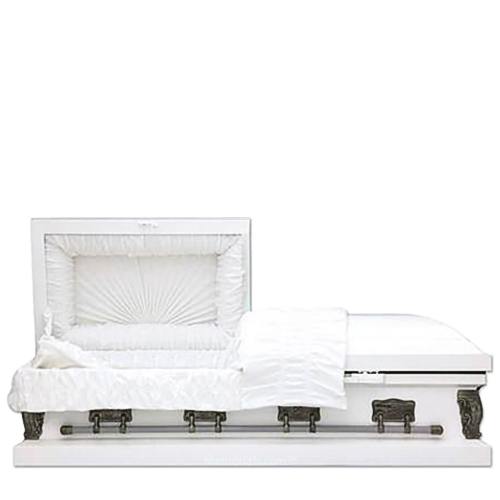
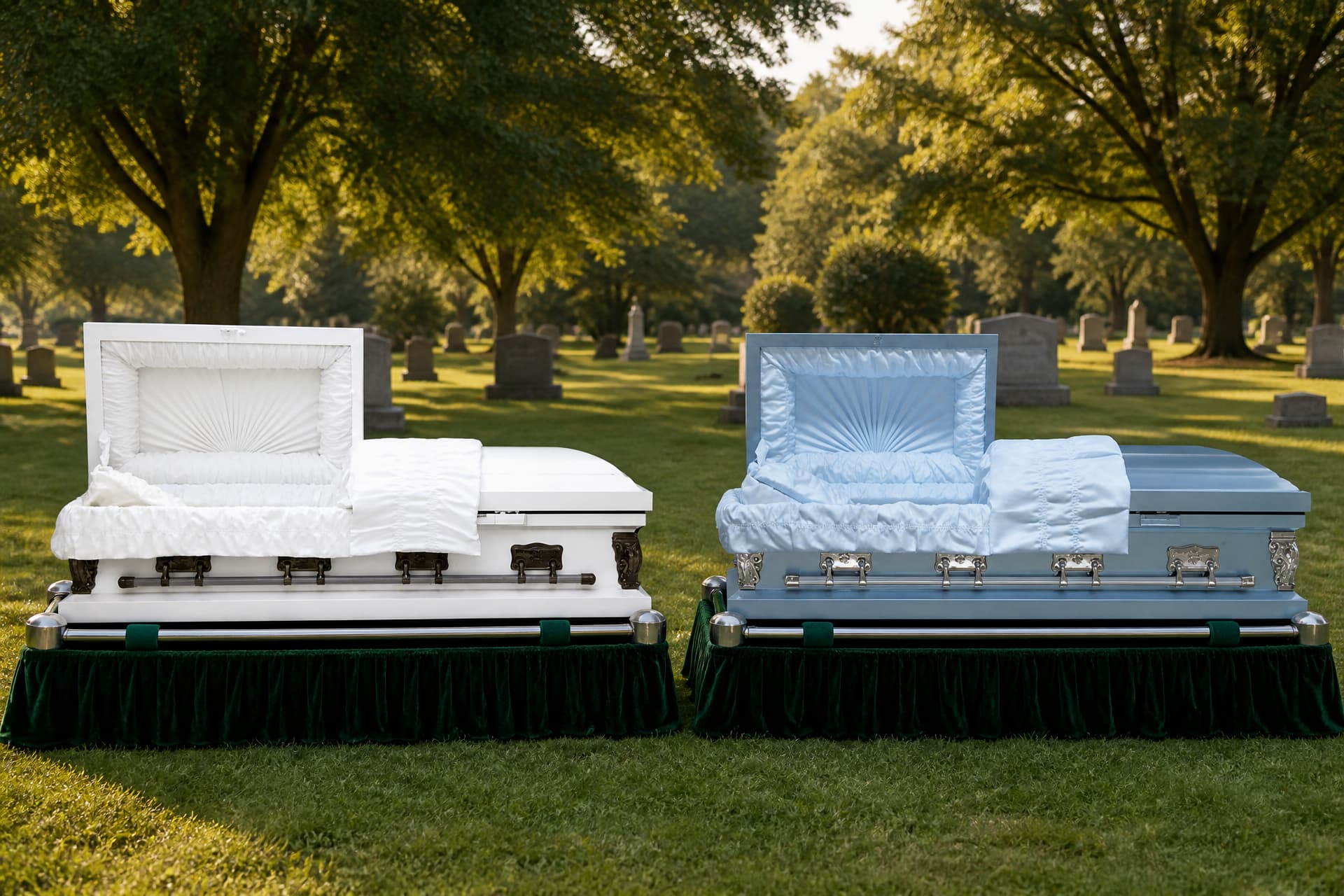
Both of these are gauge steel, and the side rail runs the full length of each — which is what sets three carriers a side. Left to right: Auburndale Casket and Brewster Blue Metal Casket.
Match roughly for height when you assign sides. A tall carrier at one corner and a short one at the next tilts the casket toward the shorter person, who then takes more than a sixth of it for the whole walk.
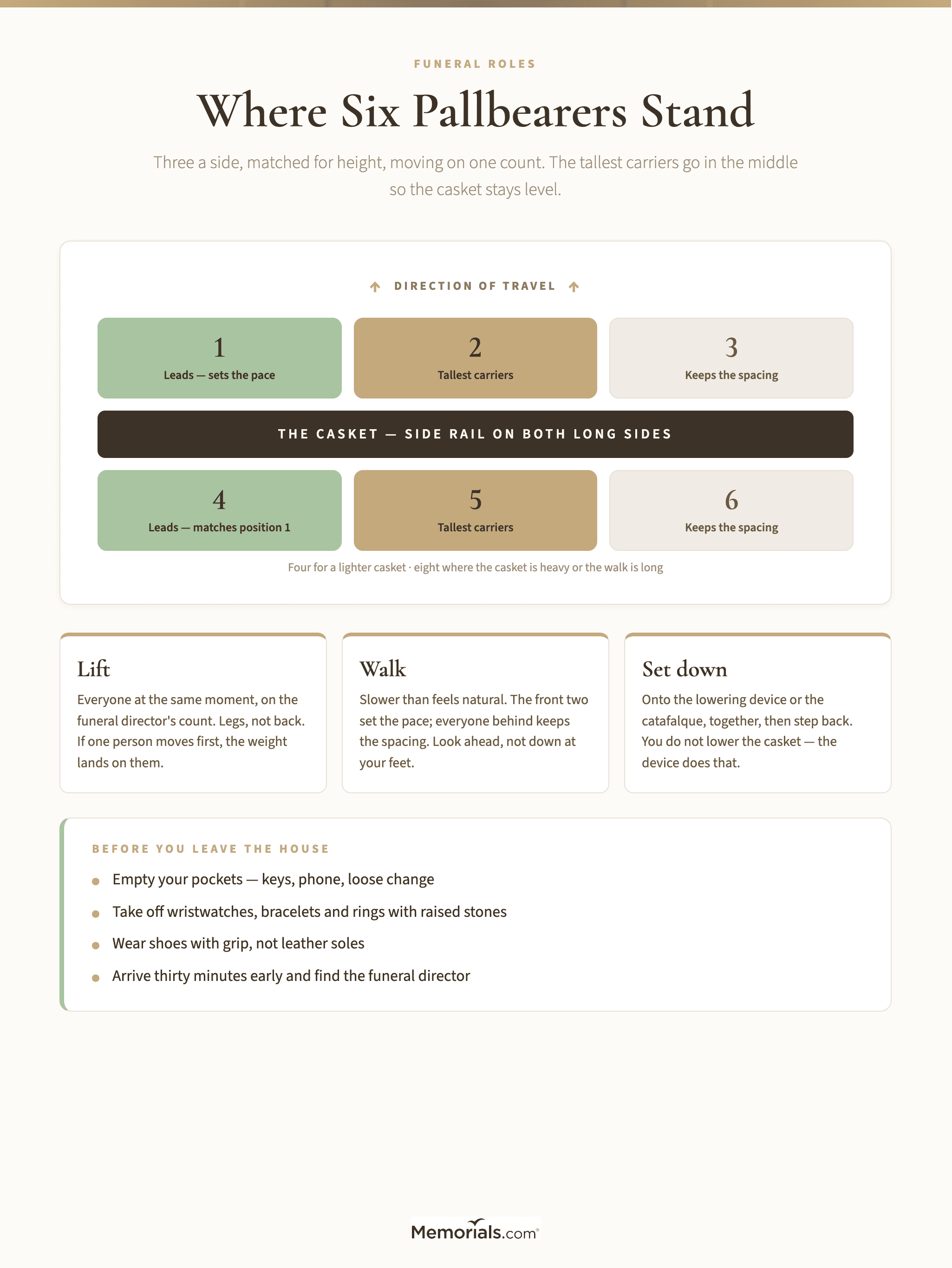
Six positions, three a side. The two at the front set the pace and everyone else keeps the spacing; the tallest carriers go at the middle positions rather than the ends, so the casket stays level. The lift, the walk and the set down all happen on the funeral director's count, not on the music.
Who Can Be a Pallbearer?
Almost anyone. There is no rule, no qualification, and no tradition that holds up to much examination.
Family and close friends are the usual choice — adult children, siblings, nephews, grandchildren, lifelong friends.
Women carry as often as men now, and always could.
Colleagues, unit members, teammates — anyone whose relationship was real.
Teenagers can carry, though they are often paired with an adult on the same side.
Funeral home staff will step in where a family has nobody to ask, and there is no shame in it whatsoever. Ask the director; they will have done it many times.
The one genuine requirement is that you can take a share of the weight and walk a short distance without difficulty. If that is not you, say so — the next section is about exactly that, and asking is not a refusal.
Walk the route before the service if you can. What you are looking for is the step at the door, the change from carpet to gravel, and anything that makes the group break stride — the things you cannot see once you are carrying and looking ahead.
What Do Pallbearers Wear?
A dark suit, a white shirt, a plain dark tie, and shoes with grip rather than leather soles. That last item matters more than the rest combined, because you will be on wet grass and you cannot see your feet.
That is the whole answer at this length; pallbearer attire covers the detail, including what to do if you own no suit, whether do pallbearers wear gloves is up to you or the funeral home, and what women carrying should wear.
Pallbearers at a Cremation Service
A pallbearer for cremation is the same role with a different object, and sometimes with nothing to carry at all:
A cremation with a service beforehand usually uses a rental casket or a cremation casket, and the carry is exactly as it would be at a burial.
A memorial service after the cremation has an urn rather than a casket. One person carries it, often a close family member, and everyone else named is honorary by circumstance.
A direct cremation with a later gathering has nothing to carry. Families still name pallbearers, and the title does the same work it always did.
The walk is the part people rehearse in their heads. The graveside is the part nobody describes, and it is shorter and calmer than expected.
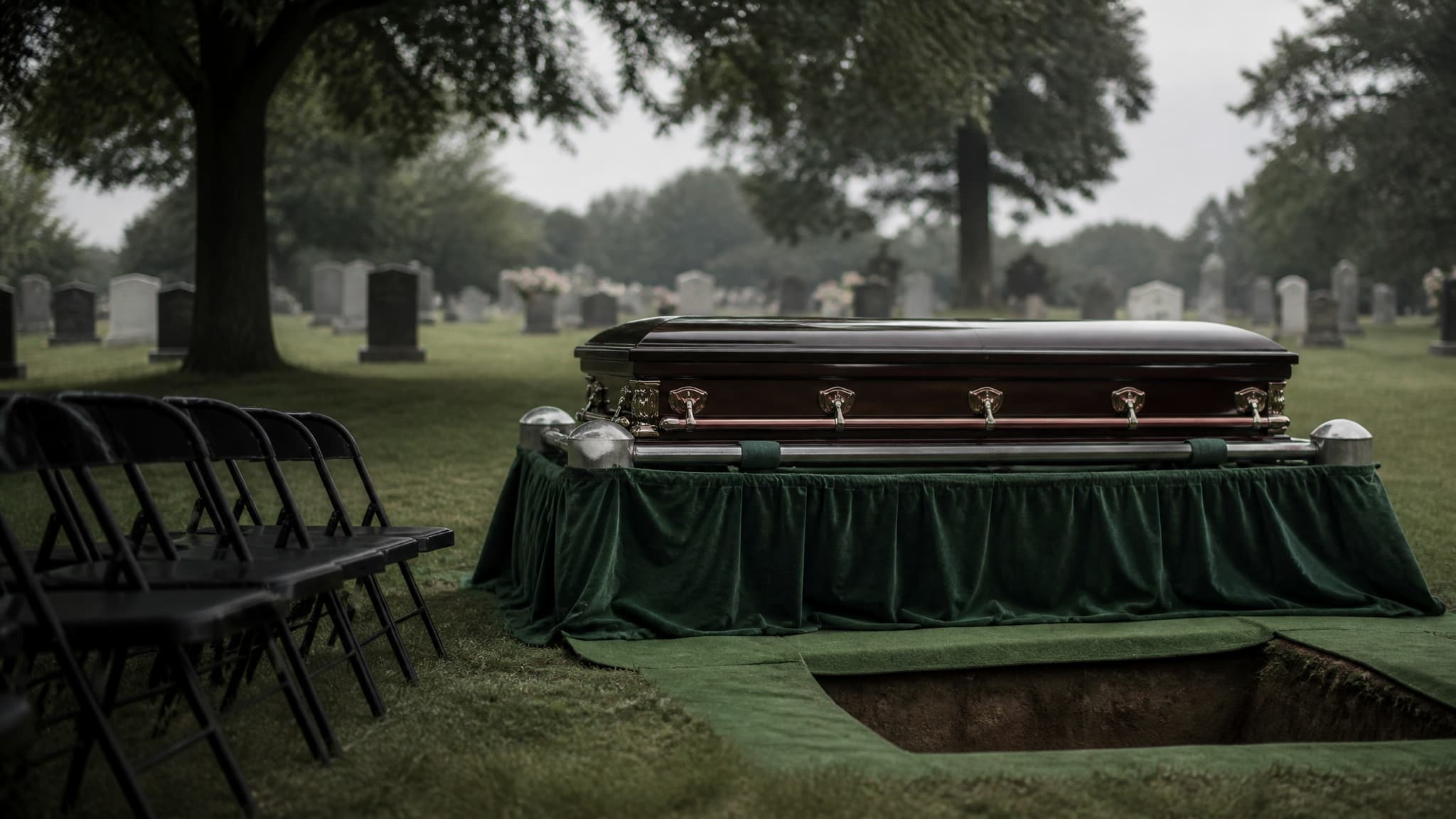
The casket comes off the trolley and is carried the last few yards to the grave, where it is set down on the lowering device — a metal frame that straddles the opening with wide straps running underneath. Pallbearers set it down, step back, and are done. You do not lower it. The device does that, usually after everyone has gone, and at many services the casket is simply left resting on the frame while the committal is read.
Two small things worth knowing, because they surprise people. Some funeral homes ask pallbearers to lay a boutonniere or a single flower on the casket as they step away, and they will hand it to you at the last moment without much explanation — take it and place it, there is nothing more to it. And at a graveside the ground beside an open grave is covered with matting or artificial turf laid over boards; it feels different underfoot than the lawn you walked in on, which is the last moment in the whole day where footing matters.
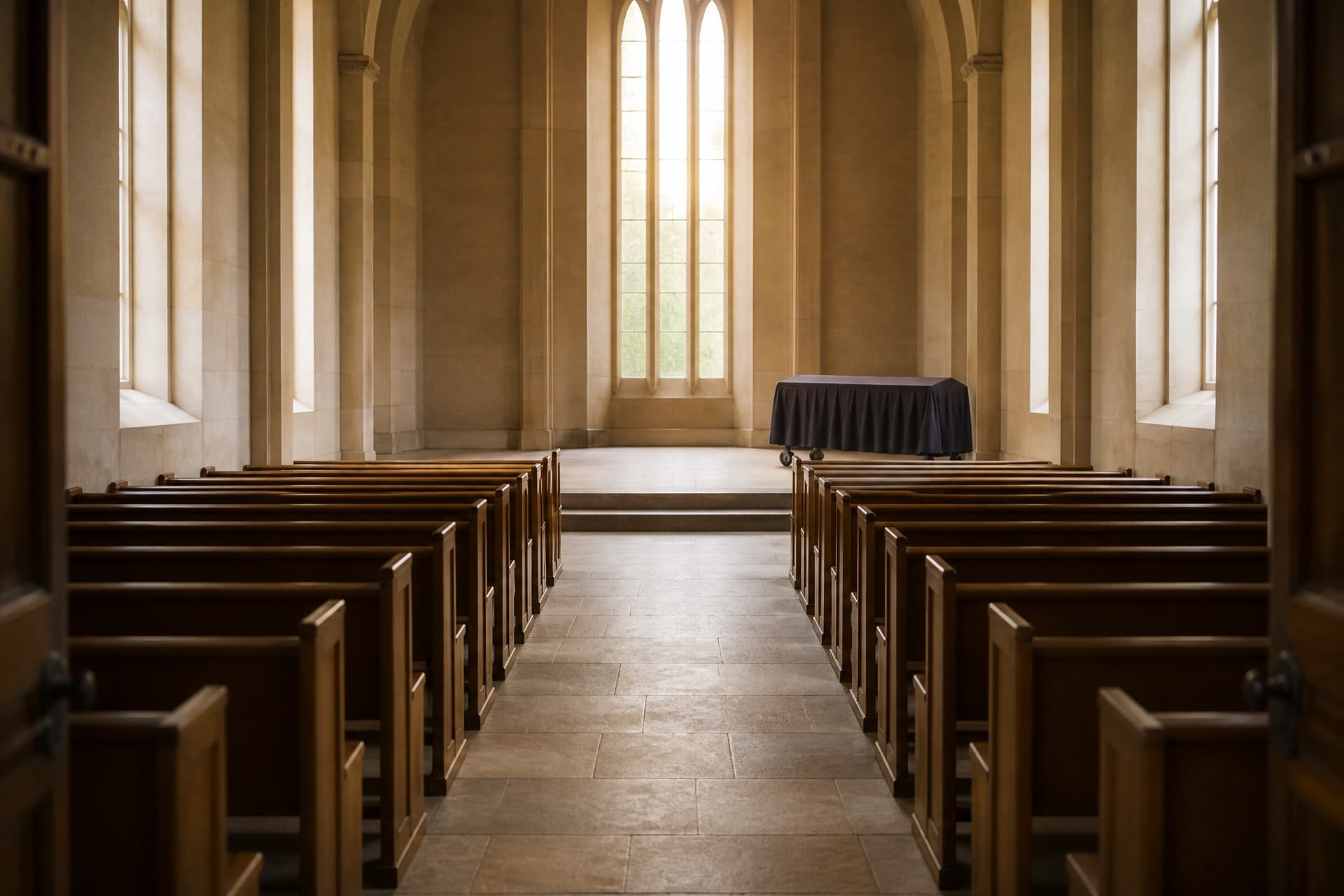
At a chapel or crematorium the equivalent moment is setting the casket on the catafalque at the front, stepping back together, and returning to your seats. There is no lowering, and the curtain or committal happens later without you.
If You Cannot Carry
Say so now rather than on the day, and say it to the family rather than to nobody.
A back that is not reliable, a shoulder that gives, a recent operation, or simply not being confident on uneven ground are all ordinary reasons and all of them are common. There is a role built for exactly this situation — an honorary pallbearer is named in the program and walks with the casket without taking any of the weight — and asking for it instead is not turning the family down. The names appear together either way.
The one thing not to do is accept and hope. Six people are relying on the count, and a carrier who cannot hold their share transfers it sideways at the worst possible moment.
The Casket Itself
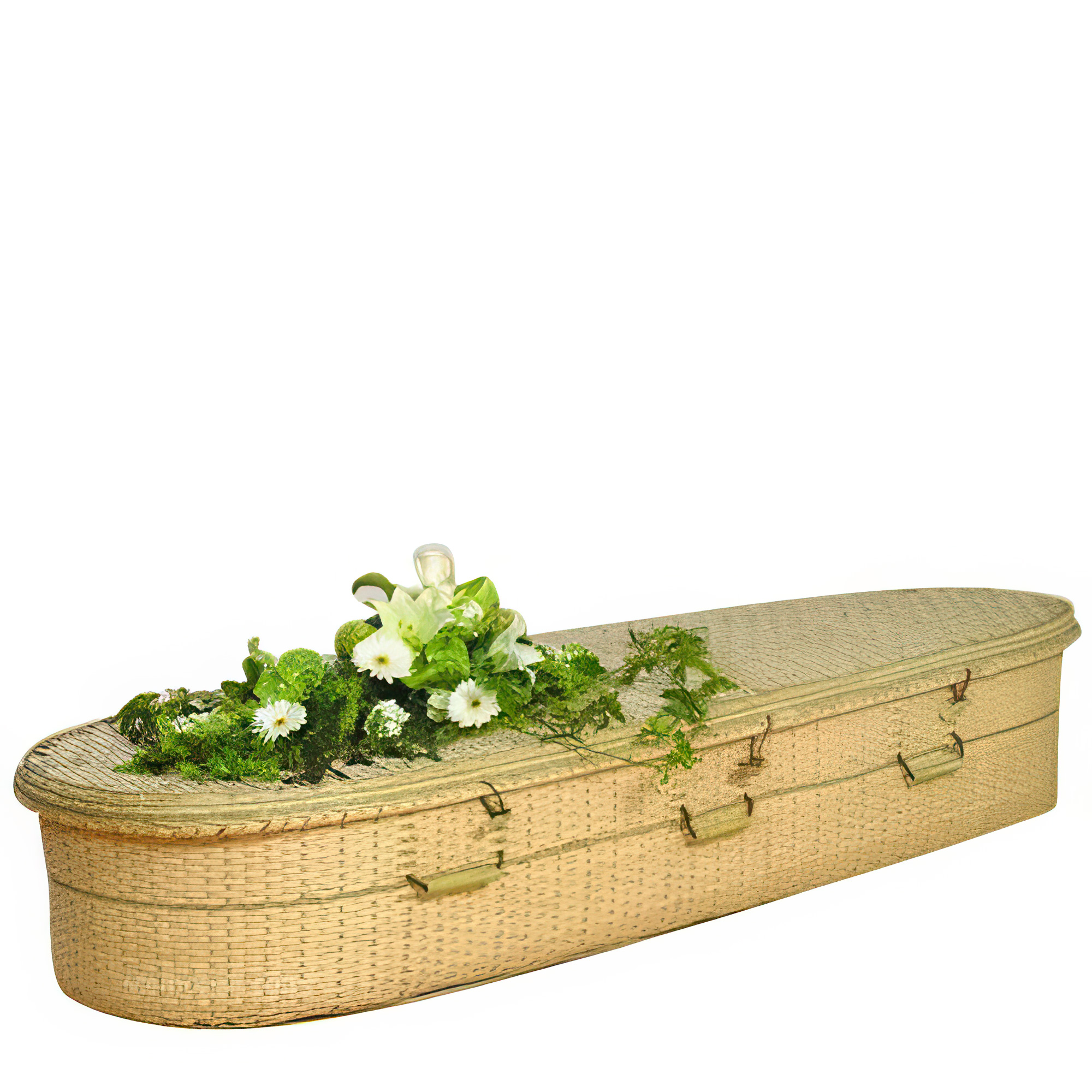
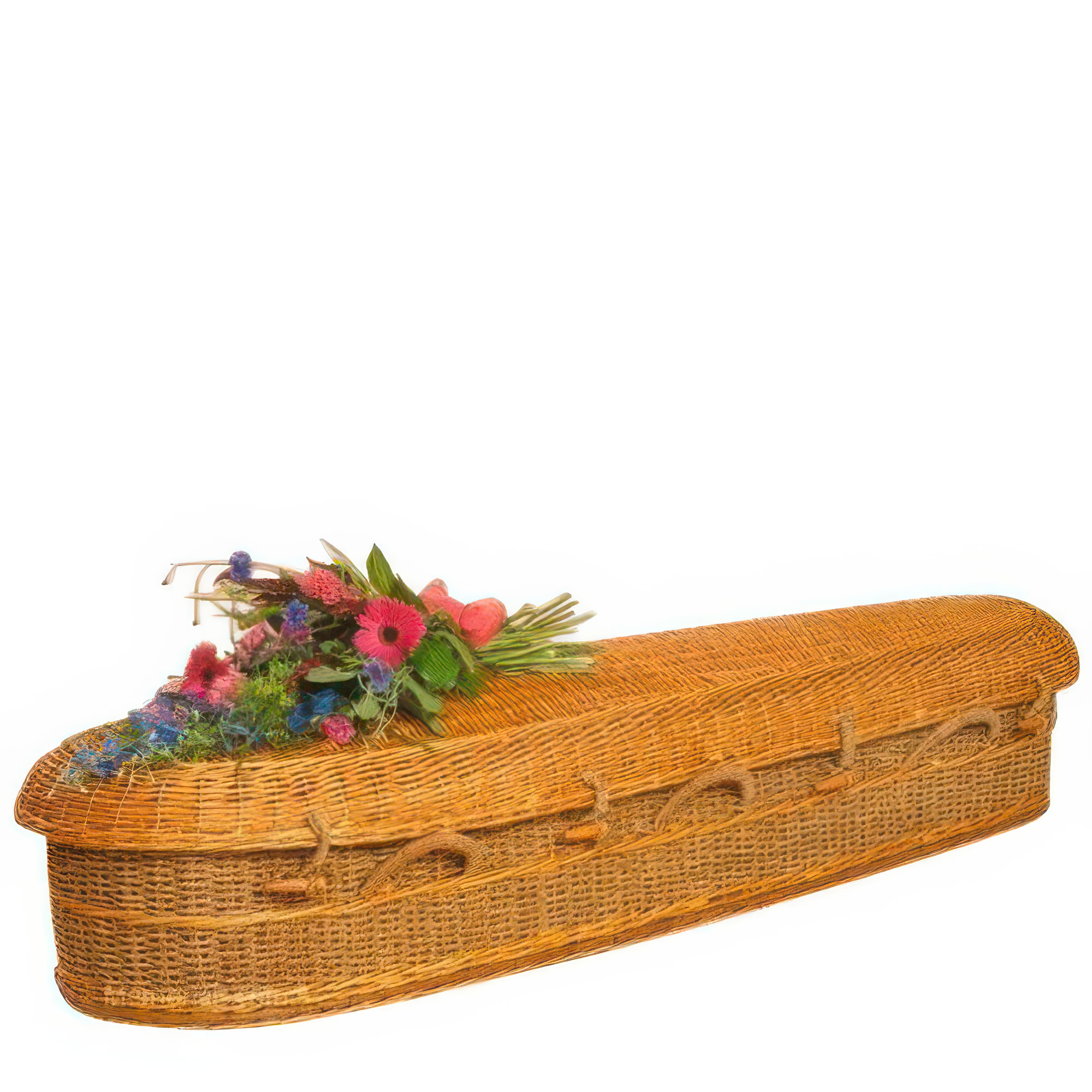
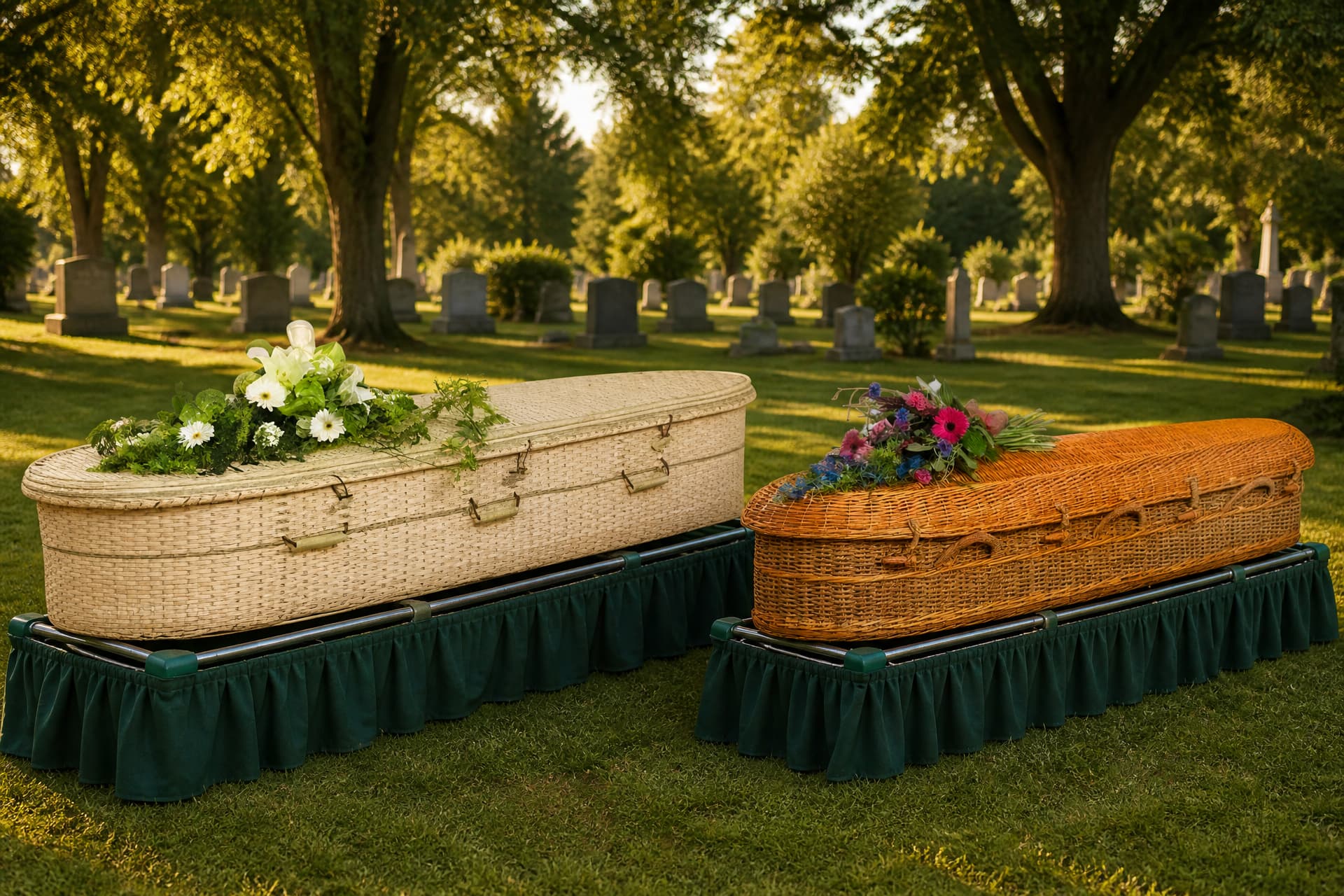
If you are choosing rather than carrying, the casket decides most of what this page describes. Weight varies enormously between a solid hardwood casket, a gauge steel one and a woven biodegradable casket, and so does what you actually hold — a steel casket gives you a continuous metal bar along each side, and a bamboo or seagrass one gives you rope handles set into the weave.
Types of caskets covers the materials and what they cost. If the answer matters for the carry rather than for the budget, ask the funeral director directly: they handle these every week and will tell you plainly whether six people will manage it.
Thanking Pallbearers Afterwards
Both kinds of pallbearer are usually thanked in writing, and both are often forgotten in the two weeks after a funeral when nobody has slept. A note of three lines is plenty — what they did, why it mattered, and a close. Funeral thank you etiquette covers timing and wording for the rest of the list.
Frequently Asked Questions
What is a pallbearer, in one sentence? One of the people who carries the casket at a funeral service.
How many pallbearers are there usually? Six, three on each side. Four for a lighter casket, eight where the casket is heavy or the walk is long.
What does a pallbearer do besides carry? Arrives early, takes instruction from the funeral director, sits with the group, and moves on the count. The carrying itself is a small part of the time you are there.
Is a funeral pallbearer paid? No. Where a family has nobody to ask, funeral home staff carry as part of their service.
Can a woman be a pallbearer? Yes, and it is entirely ordinary.
How do you spell pallbearers? One word is standard in American usage. Two words appears widely and is not treated as an error.
What if I drop it? You will not. The weight is shared six ways, most of the distance is on a wheeled trolley, and the funeral director is watching the whole time and will stop the group if anything looks wrong.
Do pallbearers have to be family? No. Friends, colleagues and unit members are all common, and so is asking the funeral home.
In Short
A pallbearer arrives early, listens to the funeral director, empties their pockets, lifts on the count, and walks slower than feels natural. Six is the usual number because that is what fits along the rail, the weight is shared, and the trolley does most of the work.
If you have been asked, say yes. If you cannot carry, ask to be honorary instead — and ask this week rather than on the morning.