🏬Supersize Online Funeral Retailer🪦1000's of Headstones⚱️Over 10,000 Cremation Urns⚰️Caskets Overnight Delivery🛒Funeral & Memorial Superstore🚚FREE Shipping on ALL Orders👨👩👧👦Helping Families for over 20 Years💰Lowest Price Guarantee🏬Supersize Online Funeral Retailer🪦1000's of Headstones⚱️Over 10,000 Cremation Urns⚰️Caskets Overnight Delivery🛒Funeral & Memorial Superstore🚚FREE Shipping on ALL Orders👨👩👧👦Helping Families for over 20 Years💰Lowest Price Guarantee
🏬Supersize Online Funeral Retailer🪦1000's of Headstones⚱️Over 10,000 Cremation Urns⚰️Caskets Overnight Delivery🛒Funeral & Memorial Superstore🚚FREE Shipping on ALL Orders👨👩👧👦Helping Families for over 20 Years💰Lowest Price Guarantee🏬Supersize Online Funeral Retailer🪦1000's of Headstones⚱️Over 10,000 Cremation Urns⚰️Caskets Overnight Delivery🛒Funeral & Memorial Superstore🚚FREE Shipping on ALL Orders👨👩👧👦Helping Families for over 20 Years💰Lowest Price Guarantee
Funeral thank you etiquette is mostly a set of permissions, and almost everybody arriving here believes they owe more than they do.
The three rules that matter: not everyone needs a note, there is no deadline that expires, and printed acknowledgment cards are perfectly acceptable for most of the pile. If you take only those three, you can close this page and get through the stack this evening.
What follows is who genuinely needs one, how long you actually have, and what to do when you cannot face any of it. For the wording itself, funeral thank you messages has sixty lines and this page will not repeat them. The sympathy and condolence guide is the wider starting point.
Do you send thank you cards after a funeral? Yes — but to a much shorter list than you are imagining.
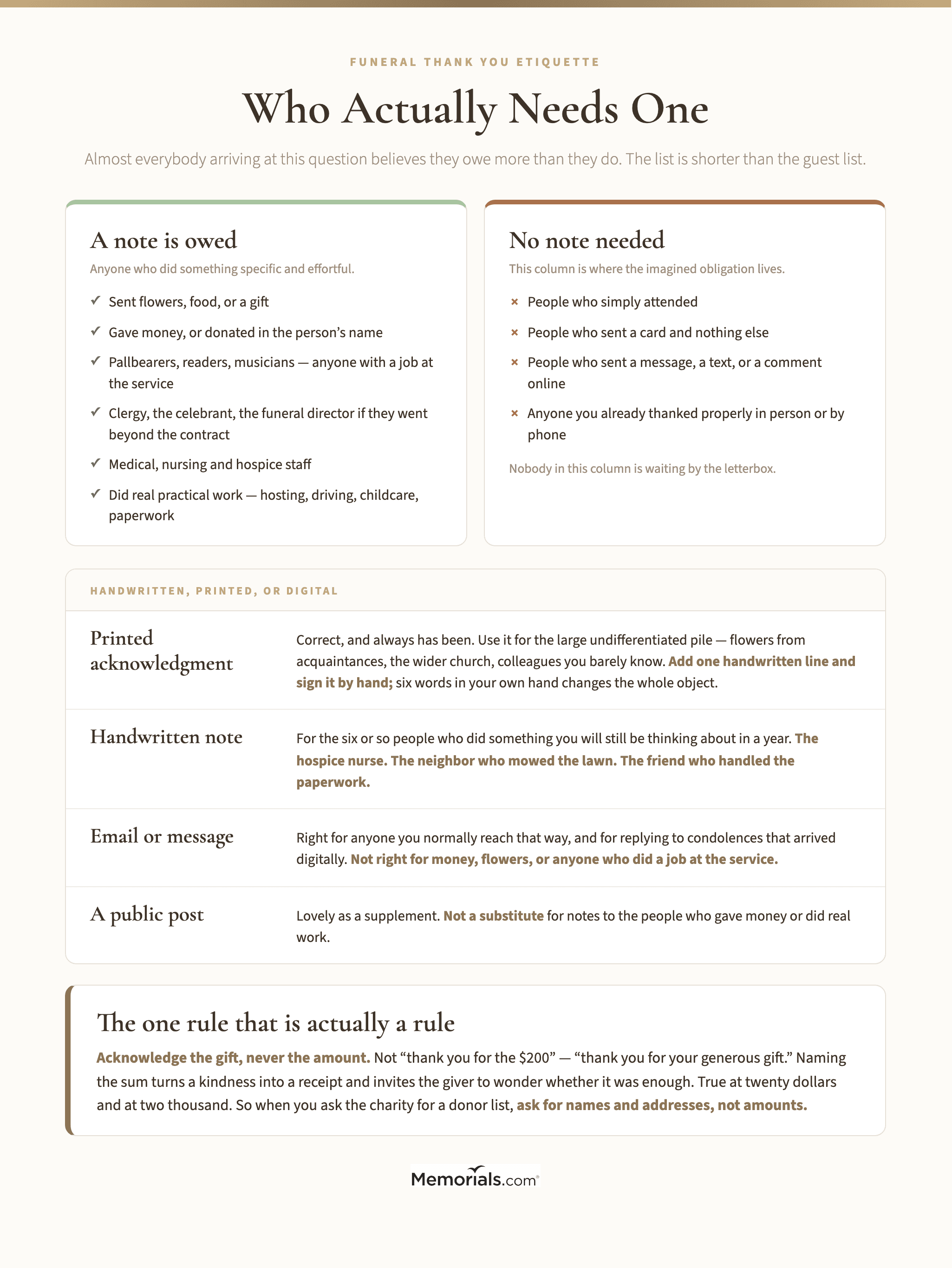
A note is owed to anyone who did something specific and effortful. It is not owed for attendance, and it is not owed for sympathy alone.
Send one to:
Anyone who sent flowers, food, or a gift
Anyone who gave money or made a donation in the person's name
Pallbearers, readers, musicians, and anyone with a job at the service
Clergy, the celebrant, and the funeral director if they went beyond the contract
Medical, nursing, and hospice staff who cared for them
Anyone who did real practical work — hosting, driving, childcare, paperwork
You do not need to send one to:
People who simply attended
People who sent a card and nothing else
People who sent a message, a text, or a social media comment
Anyone you have already thanked properly in person or by phone
That second list is where most of the imagined obligation lives. Who gets thank you cards after funeral arrangements is a much smaller group than the guest list, and nobody in the second column is waiting by the letterbox.
Nor is leaving them off a slight. How to offer condolences is built around not adding to the family's workload, so a card or a message that asked for nothing back was doing exactly what it was meant to do.
The list is shorter than you think. Attendance does not earn a note; a specific effort does.
For the Six That Matter
Small markers for the people who did the extraordinary things
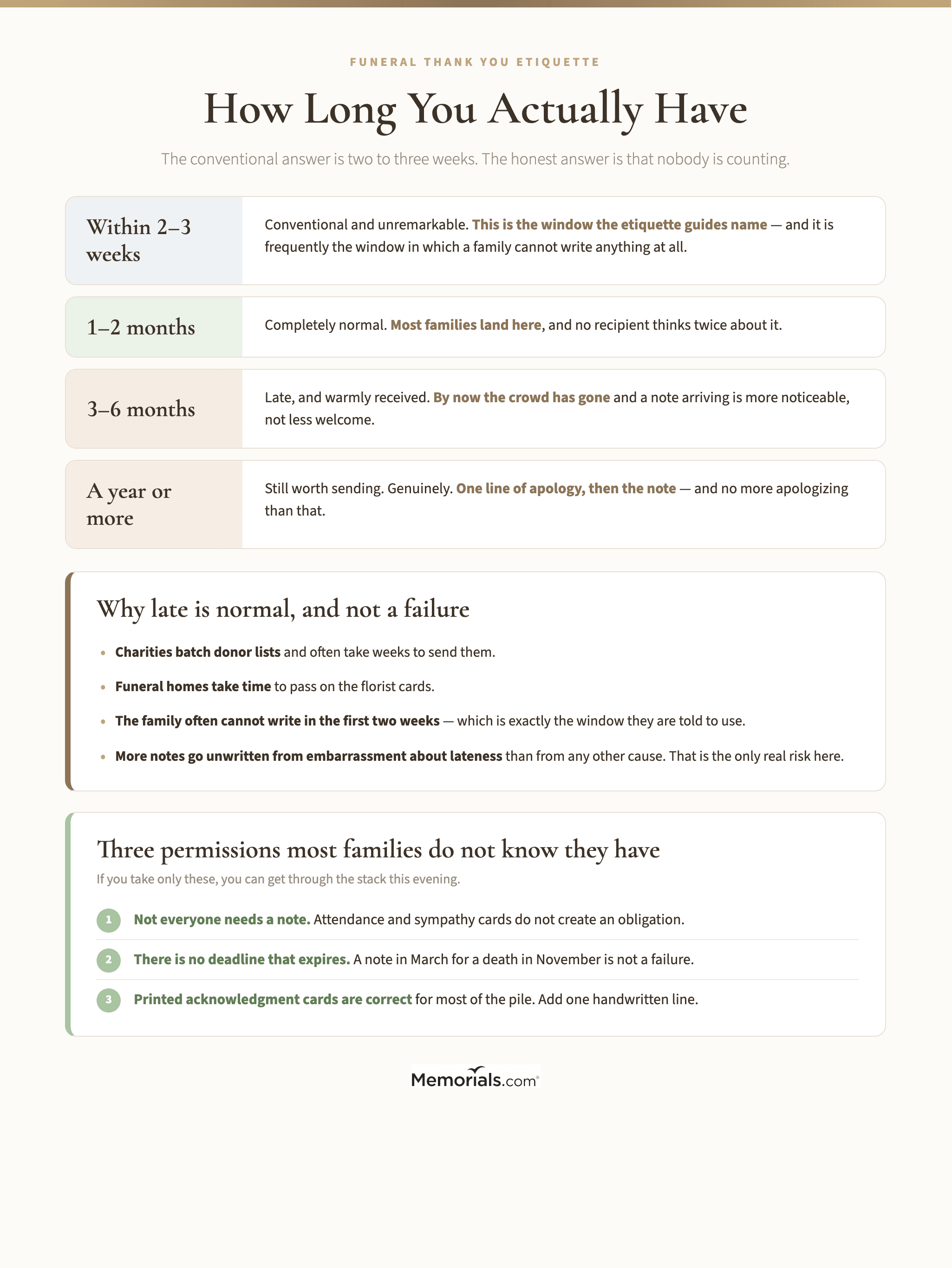
Asked when to send thank you cards after funeral arrangements are over, the conventional answer is two to three weeks. The honest answer is that nobody is counting, and a note in March for a death in November is not a failure.
Here is the real shape of it:
When
How it reads
Within 2–3 weeks
Conventional and unremarkable
1–2 months
Completely normal. Most families land here.
3–6 months
Late, and warmly received. By now the crowd has gone.
A year or more
Still worth sending. Genuinely.
Why late is fine, and sometimes better. Charities batch donor lists and often take weeks to send them. Funeral homes take time to pass on florist cards. And the family is frequently not able to write anything at all in the first two weeks — which is precisely the window etiquette guides tell them to use.
The one real timing rule about how soon to send thank you notes is this: do not let the deadline stop you sending them at all. More notes go unwritten from embarrassment about lateness than from any other cause. When to send thank you after funeral obligations have gone stale is simply now, with one line of apology and no more.
Handwritten, Printed, or Digital
All three are acceptable. The distinction that matters is not formality but effort proportional to what was given.
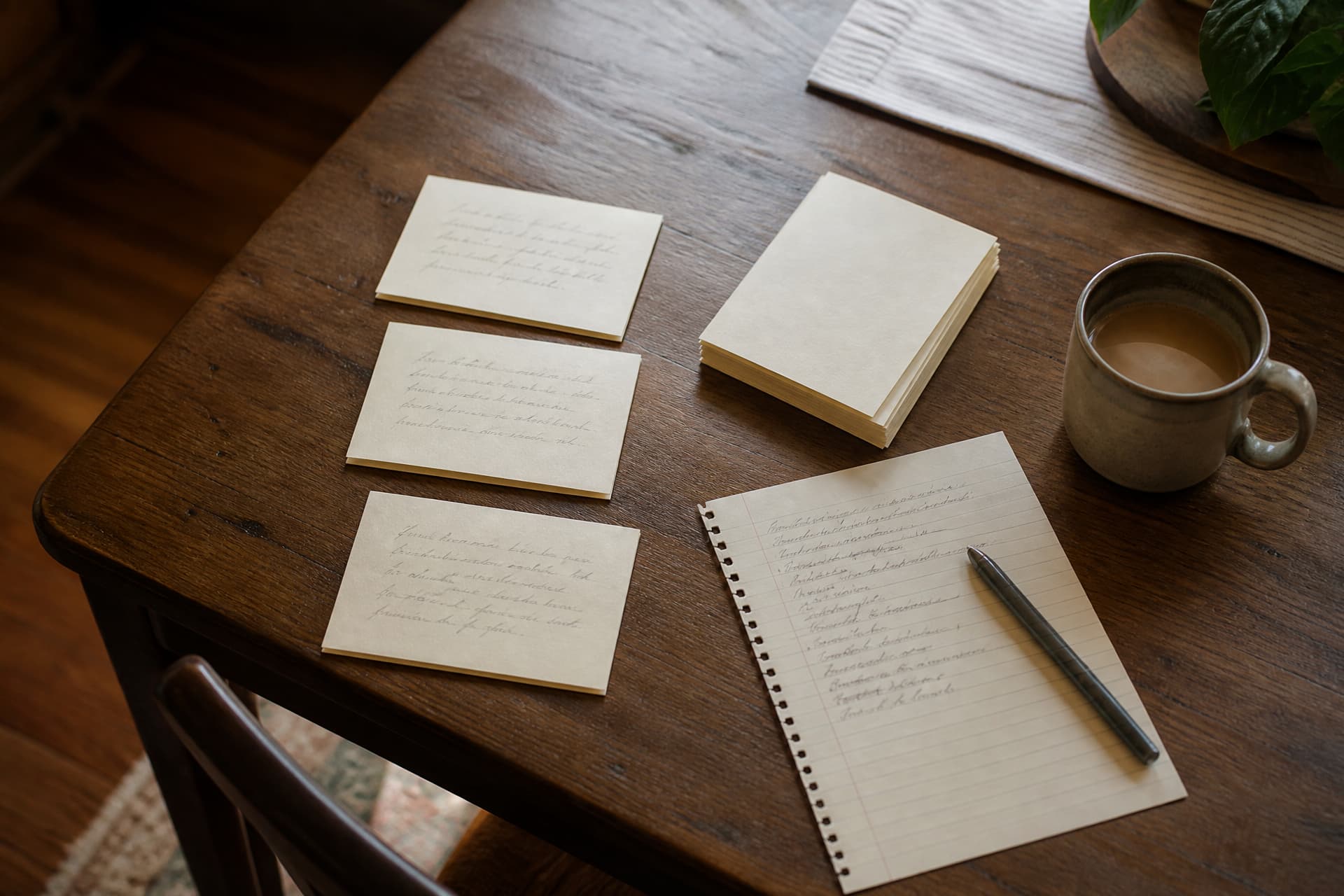
Printed funeral acknowledgement cards — the pre-printed cards the funeral home offers, with the family's name and a standard line — are correct and always have been. Use them for the large, undifferentiated pile: flowers from acquaintances, the wider church, colleagues you barely know. Adding one handwritten line at the bottom transforms them and costs seconds.
Handwritten notes belong to the six or so people who did something you will still be thinking about in a year. The hospice nurse. The neighbor who mowed the lawn. The friend who handled the paperwork.
Email or a message is right for anyone you normally reach that way, and for replying to condolences that arrived digitally. It is not right for money, for flowers, or for someone who did a job at the service.
One thing that is not acceptable: a single public post thanking everyone collectively instead of notes to the people who gave money or did real work. As a supplement it is lovely.
The middle column is the point. Attendance and sympathy cards do not create an obligation; specific effort does.
Who Signs, and Who Writes
Two questions that stall families more than any wording problem.
Signing. "The [Surname] Family" for anyone at arm's length. Your own name for anyone who wrote to you personally. The widow or widower alone when the note concerns the marriage.
Writing. The notes do not all have to be written by one person, and there is no rule that they must come from the closest relative. Split the pile by whose people they are — your father's colleagues are yours, your mother's book group is your sister's. This halves the stack and is the single most useful piece of funeral thank you note etiquette nobody states.
If one person genuinely cannot write, someone else can write on their behalf and say so: Mom has asked me to write and thank you for the flowers — she is not up to much correspondence yet, but she wanted you to know. That is correct, kind, and nobody minds.
What If You Cannot Face It
This is the part etiquette guides skip, and it is the reason most notes go unsent.
Do the six that matter and stop. If you write nothing else, write to the people who did the extraordinary things. Everyone else can have a printed card or nothing, and the world will keep turning.
Let somebody else address the envelopes. Genuinely half the work, and it asks nothing of you emotionally.
Ten at a time, not sixty. A stack of sixty is a wall.
More notes go unwritten from embarrassment about lateness than from any other cause.
Or delegate the whole thing. Ask a sibling, an adult child, or a friend to run it. They will need the list, the cards, the stamps, and permission — and most people offering help are desperate for a job this concrete.
Worth explaining plainly, because families are handed these at the funeral home without much context and then are not sure whether using them counts.
Funeral acknowledgement cards are pre-printed folded cards, usually supplied in a pack of fifty or a hundred, carrying a standard line — The family of Margaret Ellis gratefully acknowledges your kind expression of sympathy — and sometimes a verse, the person's name, and the dates. They are often included in the funeral director's package, and if they are not, most will order them.
They count. There is no tier of etiquette in which a printed acknowledgment is a failure. They exist precisely because a bereaved family cannot hand-write a hundred notes, and they have been the correct answer for a century.
Three things make them land better:
Add one handwritten line. Anything. Thank you for the lilies, Aunt Peg. Six words in your own hand changes the whole object.
Sign it by hand, even if the printed line already names the family.
Do not use them for money, or for anyone who did a job. Those are the two exceptions. A printed card for a $200 donation reads as a form letter, because it is one.
If the funeral home did not supply them, plain cream cards from anywhere are equally correct. Nobody has ever examined the cardstock.
If You Are the Person Helping
A short section for whoever is running this on the family's behalf, because delegation is the single most effective thing in this whole article and nobody explains how.
Take the whole job, not part of it. Ask for four things: the list, the cards, the stamps, and permission to write on their behalf. Half-delegation — where you ask which wording they would prefer for each one — is worse than not helping.
Build the list from three sources. The funeral director's record of flowers, the charity's donor list, and the family's own memory of who did what. Between them you will have almost everyone.
Sort it before you show them. Bring back three piles — printed card, printed card plus a line, handwritten — and let them only make the decisions that need a family member. Most people will hand-write six and let you do the rest.
Then chase the charity. Donor lists arrive slowly and are the most common reason a pile stalls in month three. One email from you rather than from the family is a genuine kindness.
The one point of funeral thank you cards etiquette that is genuinely a rule rather than a convention:
Acknowledge the gift, never the amount.
Not thank you for the $200. Thank you for your generous gift. Naming the sum turns a kindness into a receipt and invites the giver to wonder whether it was enough. This holds whether it was twenty dollars or two thousand.
Two consequences worth knowing:
When you ask the charity for a donor list, ask for names and addresses, not amounts. You need the names to write the notes. Knowing the amounts makes the notes harder to write and changes nothing about what you should say.
Thank the giver even though the charity also will. The charity's letter is a receipt; yours is the thank-you. In lieu of flowers covers the giving side of this, including the form field that decides whether you ever learn who gave.
Special Cases
A donation to a charity you dislike. Thank them for the gesture and say nothing about the cause. Thank you for the donation you made in Dad's name — it was a kind thought.
Money from someone who cannot afford it. Thank them exactly as you would anyone else. Refusing or remarking on it embarrasses them.
An anonymous gift. Nothing to write. If the funeral home knows, they will usually pass on a message.
Someone who was difficult at the funeral. Thank them for coming and leave it there. The note is not the venue.
Notes in another language. If the family speaks Spanish, do not translate a card with an app — condolences in Spanish has phrasings that work and the literal translations to avoid.
Split the pile by whose people they are. It is the step that turns sixty notes into thirty.
Should You Send Something as Well?
Almost never, and it is worth saying plainly because families ask.
A note is the whole obligation. Sending a gift back to someone who sent you one starts a loop nobody wants during the worst month of their life.
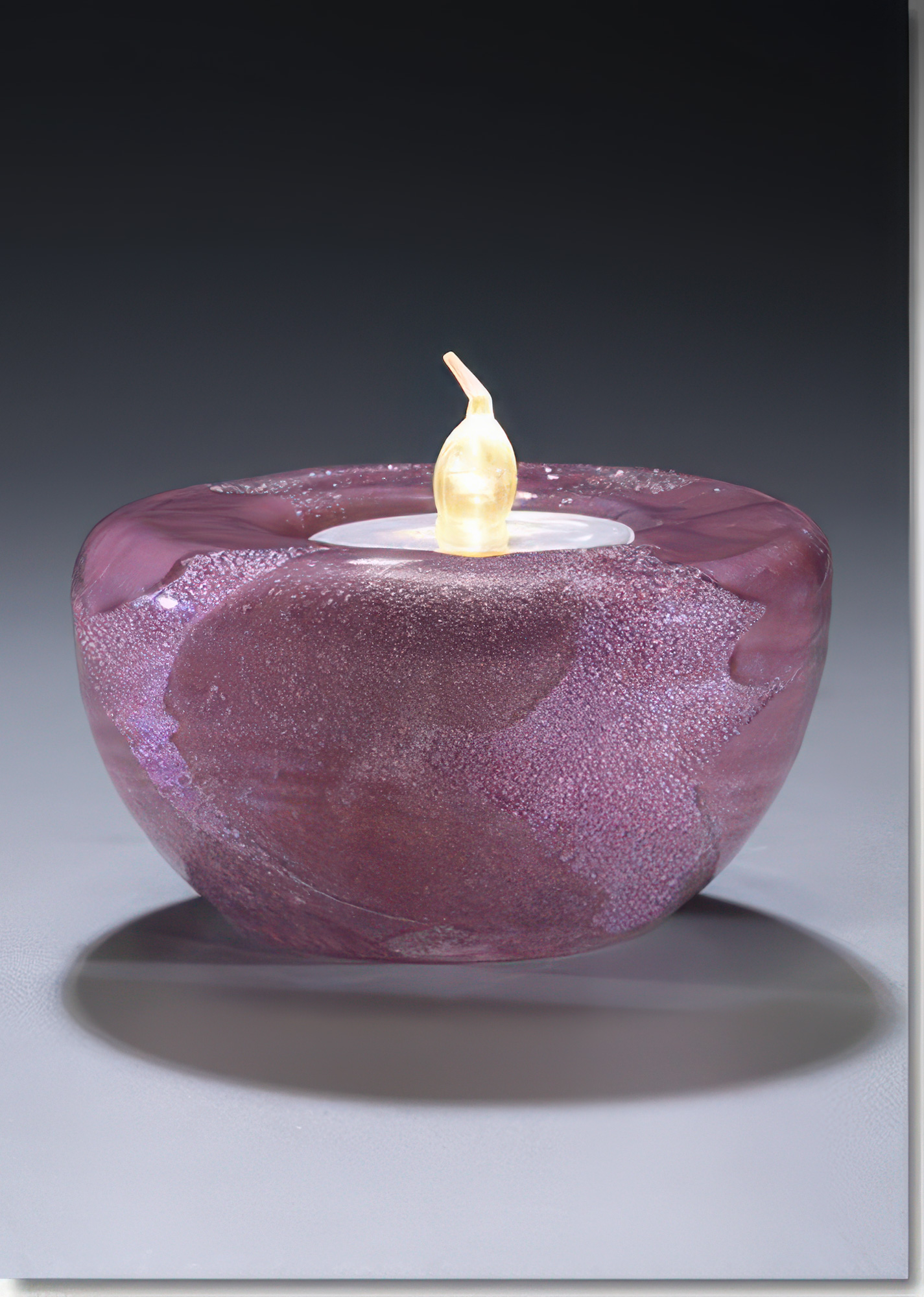
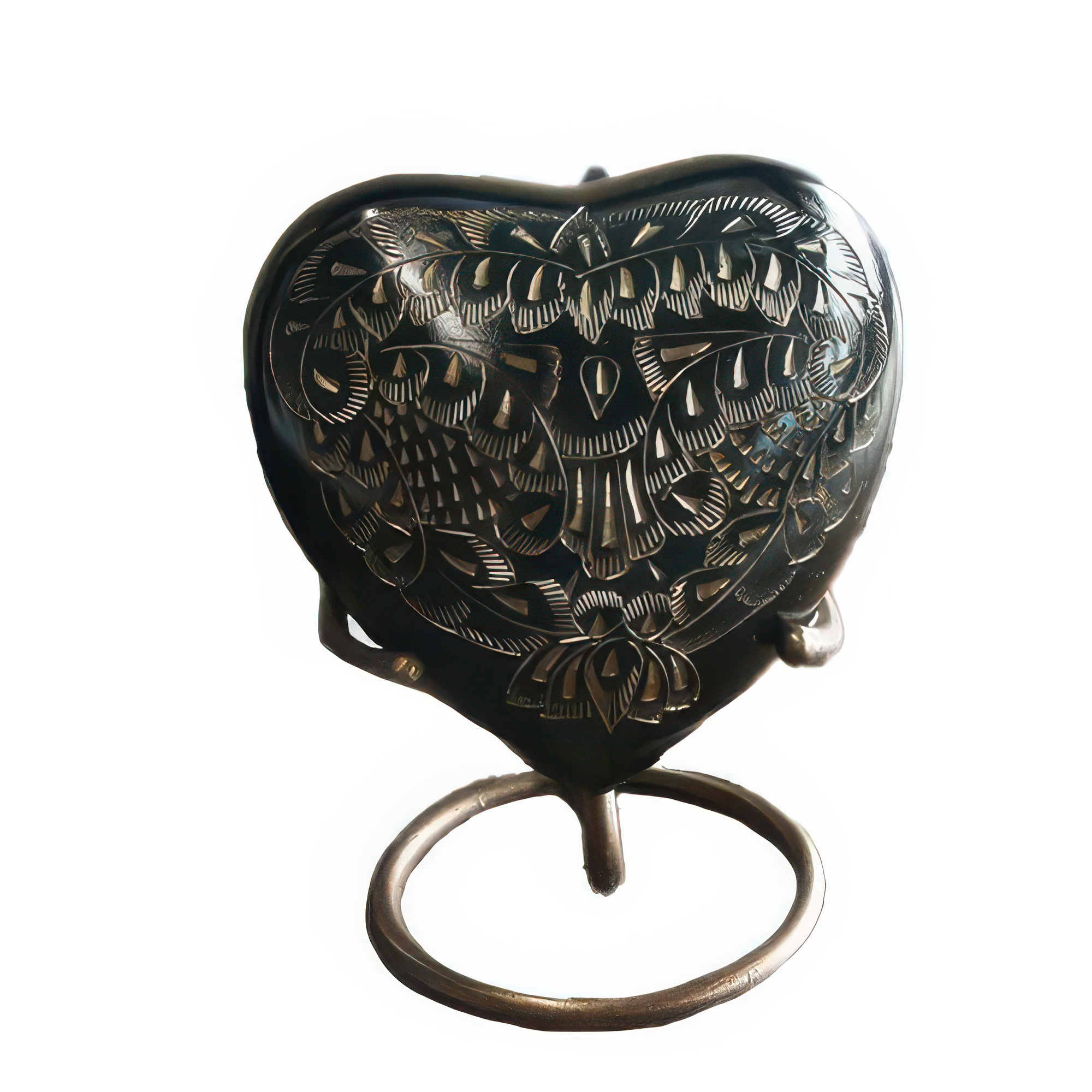
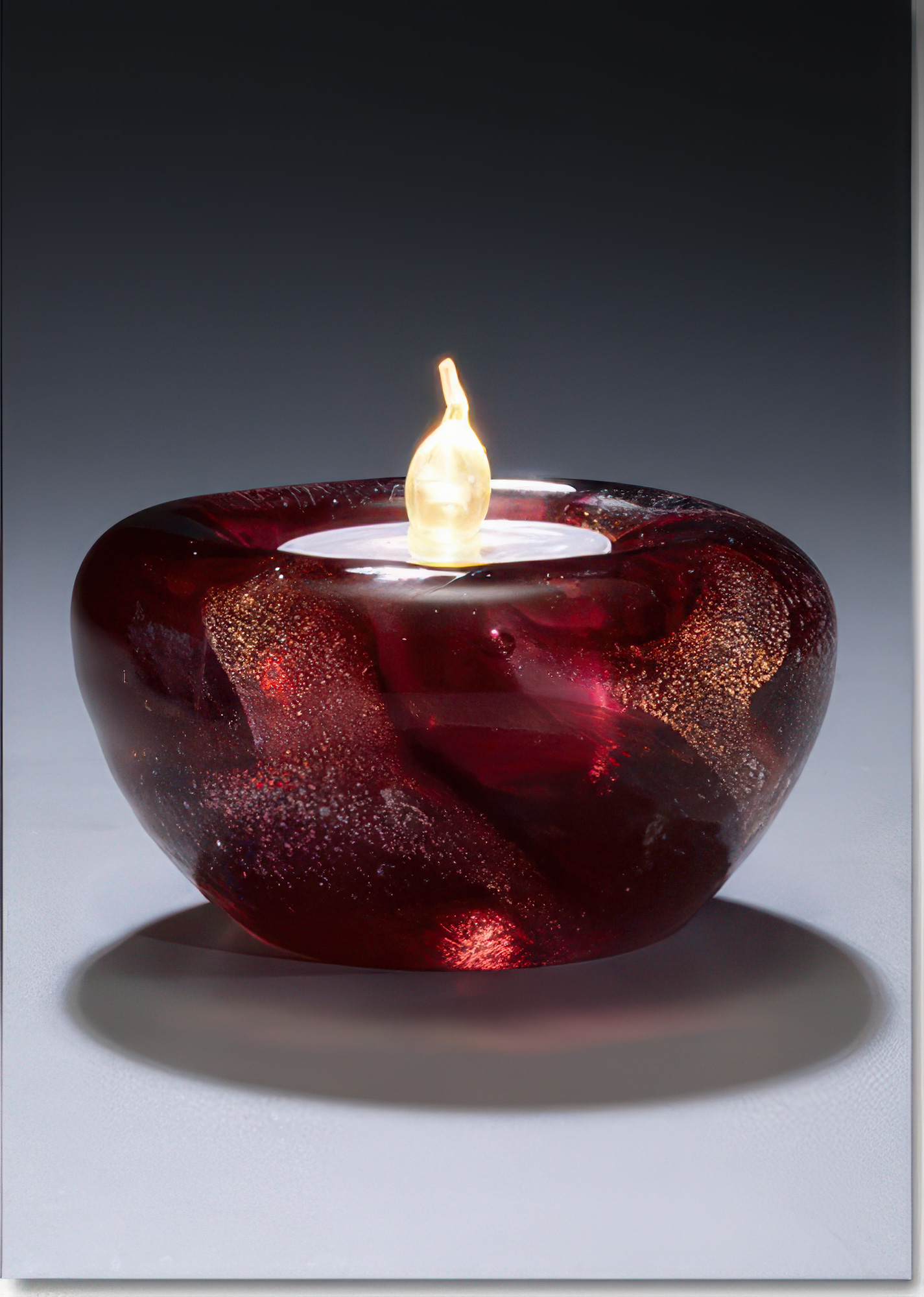
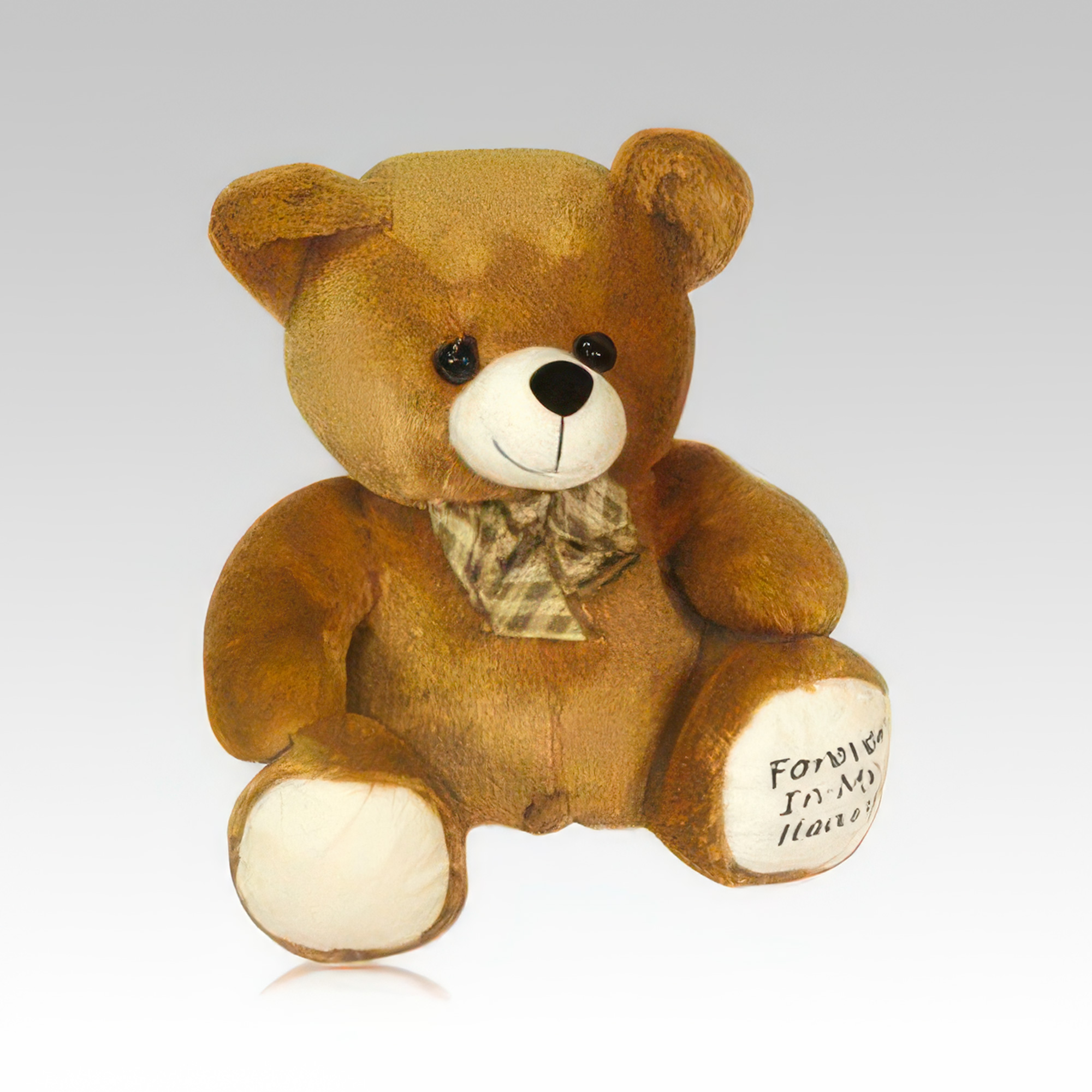
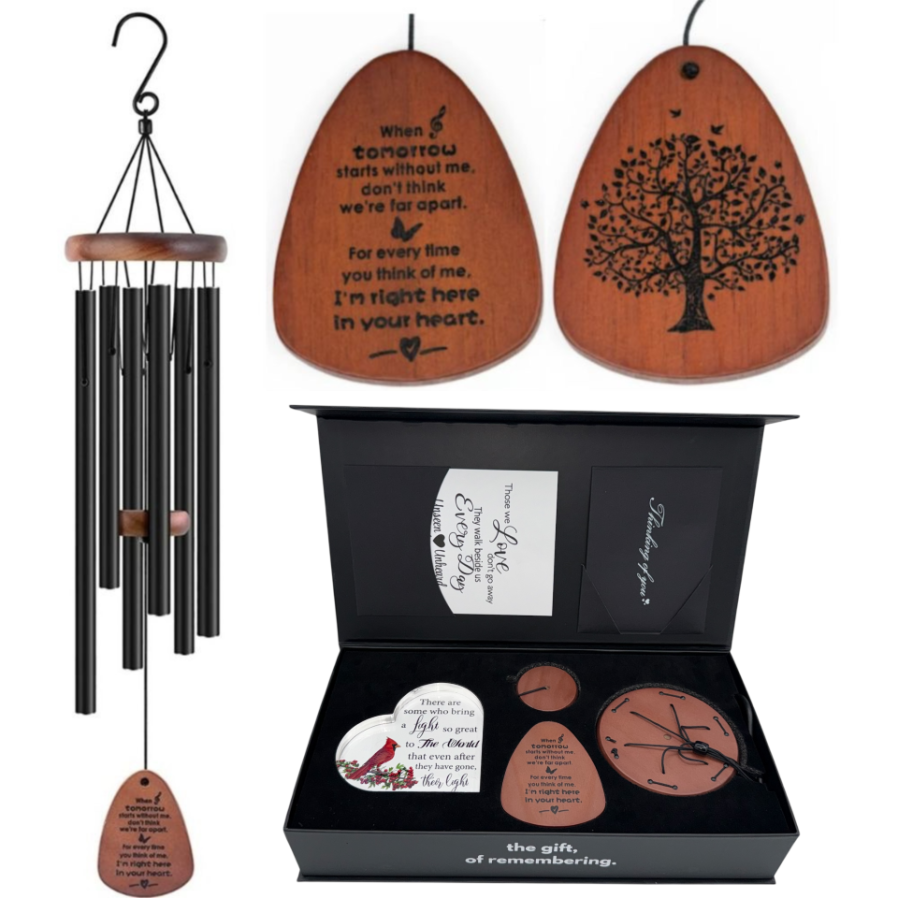
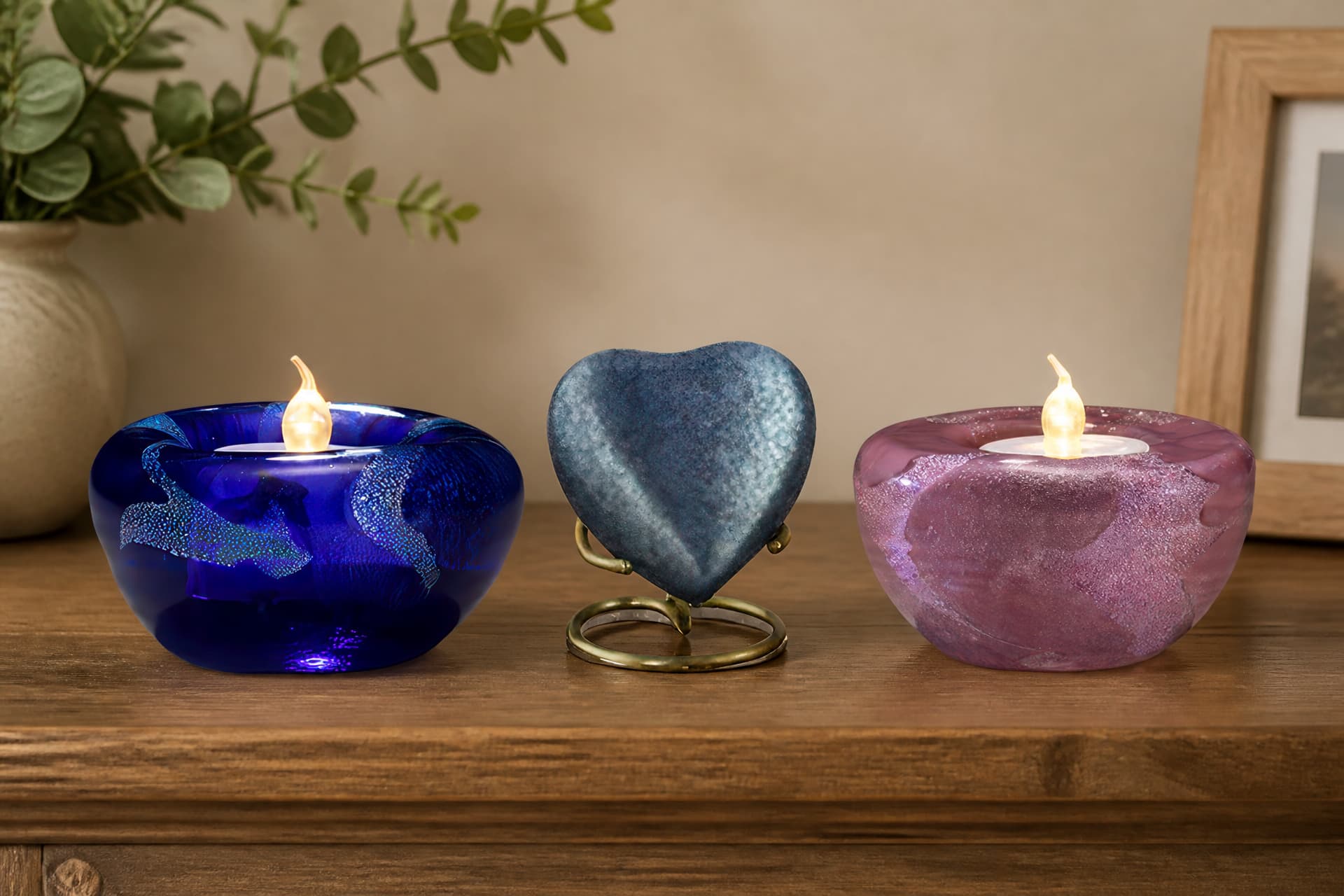
The exception is narrow: the handful of people who did the extraordinary things — the hospice nurse, the friend who ran the whole week, the neighbor who took the children. A small object there is not repayment, it is a marker. Among remembrance gifts for loss the pieces that suit are small and unfussy; funeral keepsakes covers the range.
Nobody is counting. More notes go unwritten from embarrassment about lateness than from any other cause.
Frequently Asked Questions
Do you have to send thank you cards after a funeral? Only to people who did something specific — flowers, food, money, a job at the service, real practical help. Attendance and sympathy cards do not create an obligation.
How soon should they go out? Two to three weeks is conventional; one to two months is completely normal. There is no point at which it becomes too late.
Is it rude to send a printed card? No. Printed acknowledgment cards are correct for the large undifferentiated pile. Add one handwritten line and they read as personal.
Who gets a handwritten note? The six or so people who did something you will still be thinking about in a year.
Do I have to write them all myself? No. Split the pile by whose people they are, or ask someone to write on your behalf and say so in the note.
What do I write about money? Thank them for the gift and never name the amount. Say what it went toward if you know.
What if it has been a year? Send it. One line of apology, then the note. It will be more welcome than it would have been in week two.
In Closing
Write the six that matter. Use printed cards with one handwritten line for the rest. Never name an amount.
And if the pile has been sitting on the dining table since November, that is not a failure of etiquette — it is the most common outcome there is. Send them now.