🏬Supersize Online Funeral Retailer🪦1000's of Headstones⚱️Over 10,000 Cremation Urns⚰️Caskets Overnight Delivery🛒Funeral & Memorial Superstore🚚FREE Shipping on ALL Orders👨👩👧👦Helping Families for over 20 Years💰Lowest Price Guarantee🏬Supersize Online Funeral Retailer🪦1000's of Headstones⚱️Over 10,000 Cremation Urns⚰️Caskets Overnight Delivery🛒Funeral & Memorial Superstore🚚FREE Shipping on ALL Orders👨👩👧👦Helping Families for over 20 Years💰Lowest Price Guarantee
🏬Supersize Online Funeral Retailer🪦1000's of Headstones⚱️Over 10,000 Cremation Urns⚰️Caskets Overnight Delivery🛒Funeral & Memorial Superstore🚚FREE Shipping on ALL Orders👨👩👧👦Helping Families for over 20 Years💰Lowest Price Guarantee🏬Supersize Online Funeral Retailer🪦1000's of Headstones⚱️Over 10,000 Cremation Urns⚰️Caskets Overnight Delivery🛒Funeral & Memorial Superstore🚚FREE Shipping on ALL Orders👨👩👧👦Helping Families for over 20 Years💰Lowest Price Guarantee
When someone you care about loses a loved one, the desire to do something — anything — can feel urgent. But uncertainty follows close behind. What kind of gift is appropriate? Should you send it now or wait? Does it matter whether the loss was a parent, a spouse, or a colleague's family member? These questions all fall under the umbrella of sympathy gift etiquette, and getting comfortable with the answers can help your gesture land with genuine warmth rather than unintended awkwardness.
The reality is that most sympathy gifts are welcomed simply because they acknowledge what has happened. The bar for "getting it right" is lower than most people assume. Still, a few principles around timing, relationship context, and cultural awareness can make your gesture more meaningful and less stressful for the person receiving it. For a broader walkthrough of how to choose the right gift for any situation, see .
Timing is one of the most common sources of hesitation. People worry about sending something too soon — before the family has had a chance to process — or too late, when they fear the gesture will seem like an afterthought. The truth is that both extremes are rare. What matters more is matching the type of gift to the stage of grief the family is navigating.
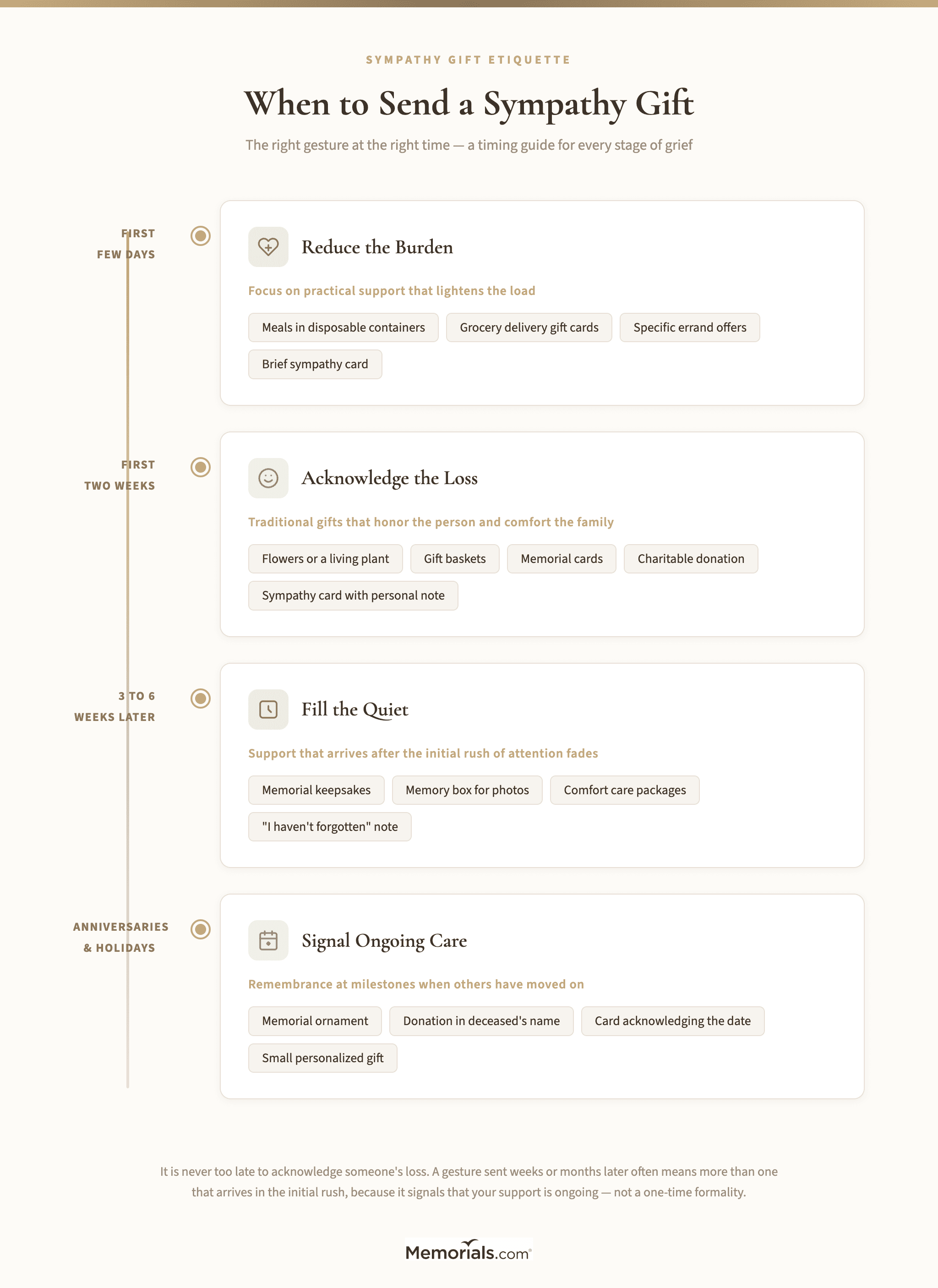
The First Few Days
In the immediate aftermath of a death, families are often consumed by logistics: notifying relatives, making funeral arrangements, fielding phone calls, and managing details they never expected to handle all at once. Gifts sent during this window should reduce burden, not add to it.
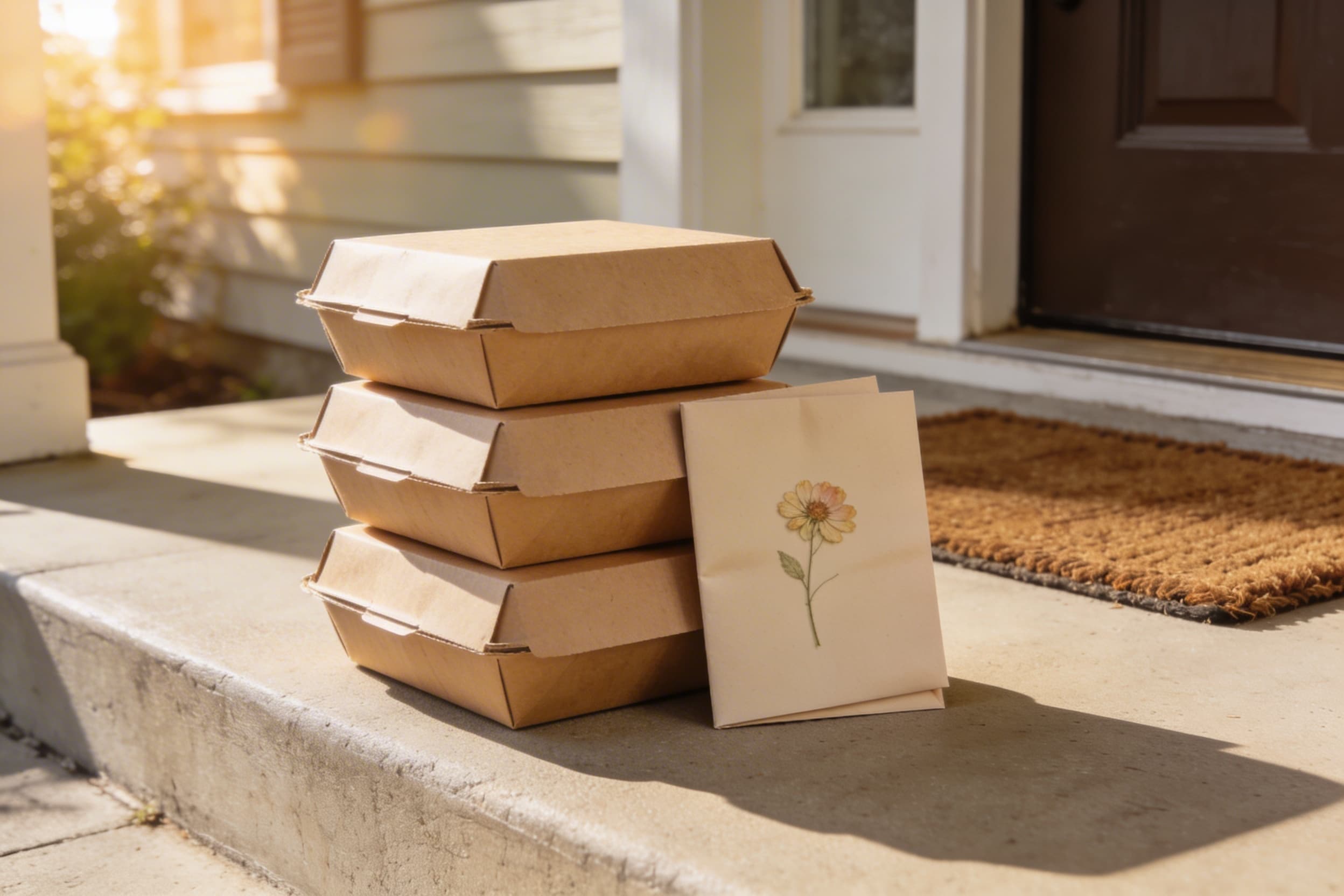
Practical support works best here. Meals that can be frozen and reheated without instructions, grocery delivery gift cards, or offers to handle a specific errand ("I'm picking up your kids from school on Thursday") are the kinds of gestures that actually lighten the load. If you send food, use disposable containers so the family is not left tracking down whose casserole dish belongs to whom.
A sympathy card paired with something practical is enough. Keep the card brief — acknowledge the loss, name the person who died if you knew them, and resist the urge to explain the loss or offer perspective. "I'm thinking of you and your family" says everything it needs to say.
During the First Two Weeks
This is the traditional window for sending a sympathy gift, and for good reason. The funeral or memorial service is typically within this timeframe, and the family is still in the initial phase of grief where outside acknowledgment carries real emotional weight. Flowers, gift baskets, memorial cards, and charitable donations all fit naturally here.
If the family has requested donations in lieu of flowers, honor that request. You can still send a brief note letting them know a donation was made. If no guidance has been given, flowers remain a safe and widely appreciated choice — with a few cultural exceptions covered below.
Weeks and Months Later
Here is where sympathy gift etiquette diverges from what most people practice. The first two weeks after a death are typically full of visitors, phone calls, and incoming gestures of support. Then the quiet arrives. Friends go back to their routines, messages slow down, and the grieving person is left alone with the weight of daily life minus someone they loved.
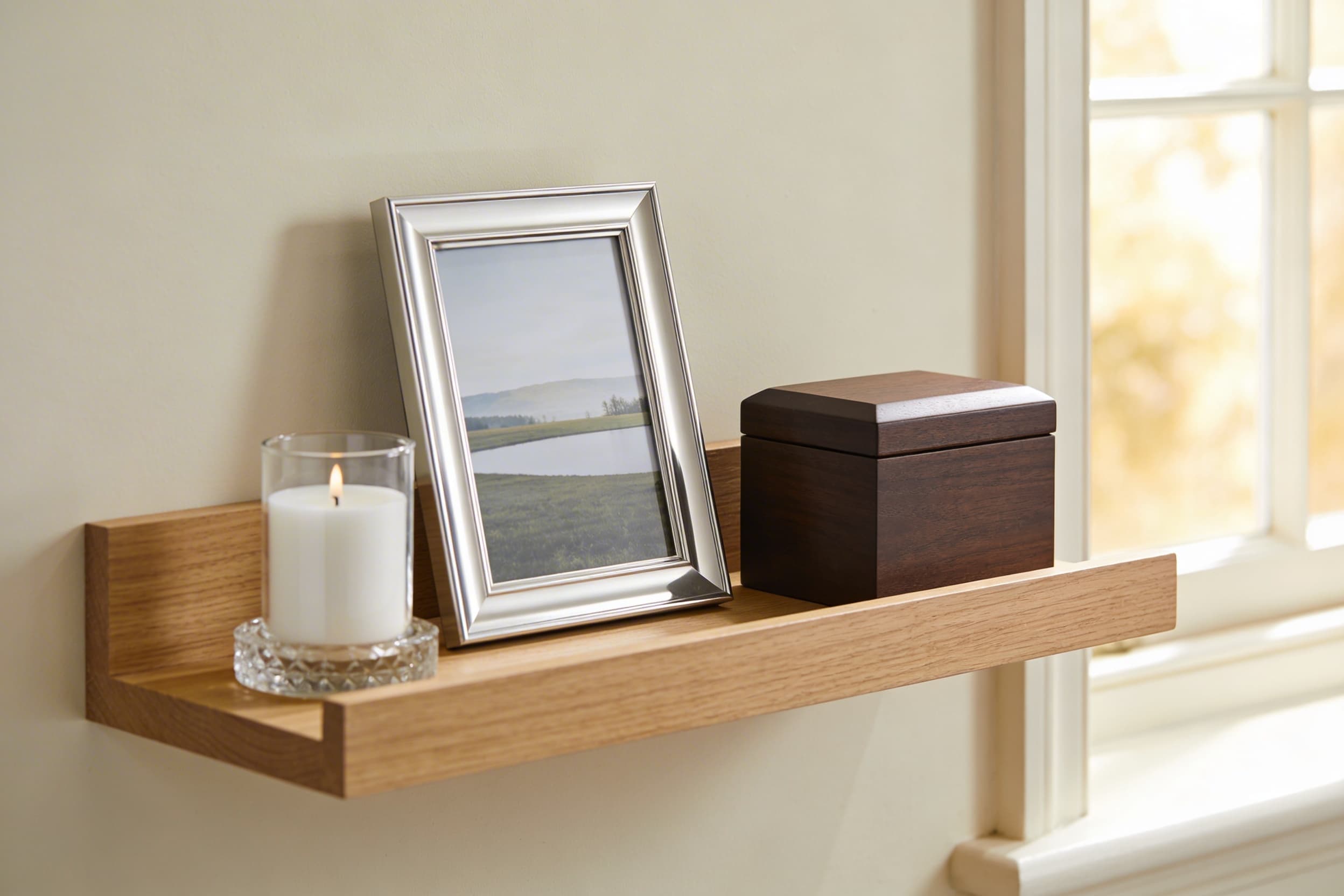
A gift sent three weeks, six weeks, or even three months after the loss can be profoundly meaningful — sometimes more so than anything that arrived during the initial rush. At this stage, comfort gifts, remembrance keepsakes, a memory box for photographs and mementos, or simply a handwritten note saying "I haven't forgotten" can be exactly what someone needs to feel less alone.
If nothing obvious comes to mind, our guide to unique bereavement gifts works through the keepsakes that are still in the house a year later, and makes the case for sending one in exactly this window — when almost nothing else is arriving.
Anniversary gifts — sent around the one-year mark, the deceased person's birthday, or a meaningful holiday — are another thoughtful gesture that few people think to make. They signal that your support is ongoing, not a one-time formality.
What to Send Based on Your Relationship
The closeness of your relationship to the bereaved person — and to the person who died — should shape what you send. An overly personal gift from a distant acquaintance can feel intrusive, while a generic gesture from a close friend can feel hollow. Matching the depth of your connection to the nature of the gift is one of the most important sympathy gift rules to follow.
Close Family and Lifelong Friends
When you are close to the grieving person, your gift can be personal, lasting, and emotionally intimate. This is where memorial gifts for loss carry the most weight. A photo album compiled from your own collection, a framed photograph of the deceased, cremation jewelry that holds a small amount of ashes or a lock of hair, or a personalized keepsake engraved with the deceased's name — these are gifts that become anchors over time.
You are also in the best position to offer gifts for a grieving friend that reflect their actual daily life. If they are struggling to feed themselves, set up a recurring meal delivery. If they mention dreading an empty house, offer to come sit with them — no agenda, no conversation required. The gift of presence often means more than any object.
For close family, financial contributions toward funeral expenses can be appropriate and deeply appreciated, especially when the death was unexpected. If direct cash feels uncomfortable for the cultural context, a targeted gift card for groceries, fuel, or a restaurant the family frequents can serve the same purpose without the awkwardness.
Friends and Extended Social Circle
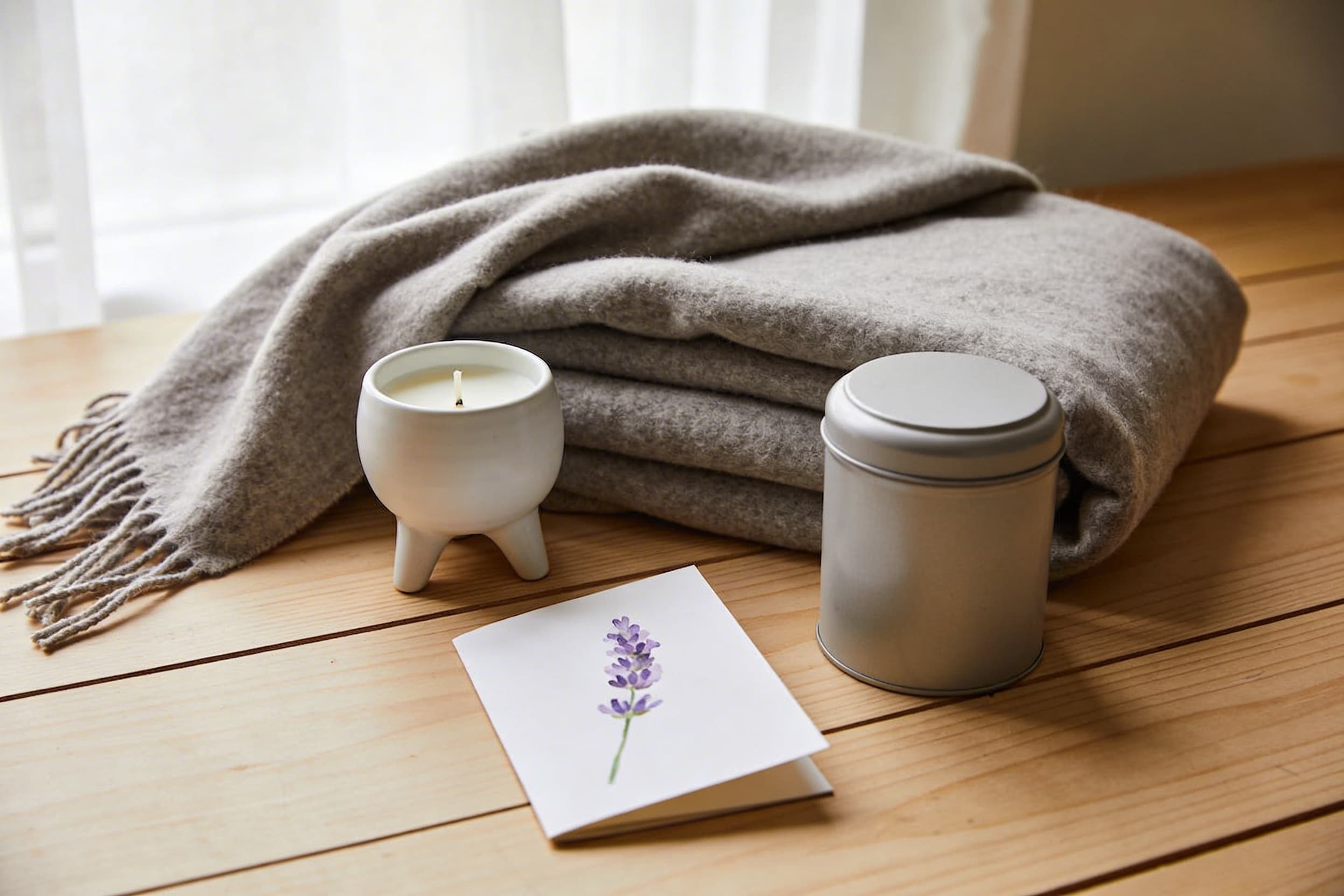
For friends who are not part of your innermost circle, the goal is a gesture that communicates care without overstepping. Flowers, a food basket, a comfort care package (soft blanket, tea, a candle, a journal), or a small plant are all appropriate choices. A sympathy card with a genuine, personal note is essential — the card is often what the person remembers most, not the gift itself.
Avoid gifts that require the recipient to do something — assemble a piece of furniture, plant a garden, read a specific book, or write in a grief journal right away. The best gifts at this level of relationship are ones that can be appreciated passively, without any action or decision on the part of the receiver.
Coworkers and Professional Relationships
Workplace sympathy follows its own rhythm. The gift should acknowledge the loss without becoming too personal or creating an obligation. Group gifts work well here — a team can pool resources for a quality food basket, a charitable donation, or a gift card, with everyone signing a single card. This avoids the awkwardness of multiple individual gifts arriving at someone's desk.
For more guidance on navigating this specific dynamic, including what to write in a workplace sympathy card and how to organize group giving, see our guide to professional sympathy gift options.
Acquaintances and Neighbors
A card, a brief text message, or a simple food drop-off is appropriate here. You do not need to send a formal gift. If the person's loss is visible — they are a neighbor whose spouse died, a fellow parent at your child's school — a short, genuine note slipped under the door or a plate of cookies left on the porch communicates kindness without requiring a face-to-face exchange during a vulnerable moment.
Cultural and Religious Considerations
Sympathy gift etiquette varies meaningfully across cultural and religious traditions. A gift that is perfectly appropriate in one context can feel tone-deaf in another. When you are unsure about the bereaved person's customs, a brief check — asking a mutual friend, searching online, or simply choosing a universally safe option — prevents unintended missteps.
Judaism
Jewish mourning traditions generally do not include flowers at the funeral or during the shiva period (the seven days of mourning observed at home after burial). Food sent to the shiva house — particularly prepared meals, fruit, or baked goods — is the most common and appreciated gesture. Charitable donations made in the deceased's memory are another customary option. If you attend shiva, bringing food and being present are more valued than any wrapped gift.
Christianity
Most Christian traditions welcome flowers, sympathy cards, food, and memorial keepsakes. Catholic families may appreciate prayer cards, a Mass said in the deceased's name, or a rosary. Protestant families typically have fewer specific customs around gifts, making the general principles in this guide a reliable framework.
Islam
During Islamic mourning, the community typically provides meals for the bereaved family for the first three days. Flowers are generally acceptable but not expected. Food donations, charitable giving in the deceased's name, and offers of practical help are the most appropriate forms of support.
Hinduism
Hindu mourning customs vary by region and family tradition, but flowers are sometimes considered inappropriate, particularly white flowers at the funeral. Food gifts are generally welcomed after the initial mourning period. Charitable donations are also a respectful gesture.
Secular and Non-Religious Contexts
When you do not know the family's religious background — or when the family is non-religious — default to practical gifts, food, comfort items, or charitable donations. These gestures translate across traditions without risk of cultural friction.
What Types of Gifts Work Best by Occasion
Not all losses are alike, and the occasion surrounding the gift — a funeral, a memorial service, a quiet visit weeks later — also shapes what is appropriate.
For the Funeral or Memorial Service
Standing floral arrangements, wreaths, and sympathy sprays are traditional choices for the service itself. These are typically sent directly to the funeral home, not the family's residence. Sympathy cards can be handed to the family or mailed to their home — either is acceptable.
If the family has asked for donations in lieu of flowers, respect the request. You can still send a brief card to the home letting them know a contribution was made.
For the Home After the Service
Meals, grocery gift cards, comfort care packages, and small plants are ideal for the home. Avoid gifts that are loud, heavily scented, or demanding of attention. The home after a funeral is a quiet, exhausted place. Your gift should match that atmosphere.
For Anniversaries and Holidays
The first birthday, wedding anniversary, or major holiday without the deceased person is often harder than the funeral itself. A small gesture — a card, a memorial ornament, a donation in the person's name — tells the bereaved that their loved one is still remembered. These delayed gestures are among the most emotionally impactful sympathy gifts you can send, and they cost very little.
Common Etiquette Mistakes
Even well-intentioned gifts can miss the mark. A few patterns come up repeatedly, and being aware of them helps you steer clear. For a deeper look at what not to do, including specific gift types that tend to backfire, read our article on sympathy gifts to avoid.
Gifts that create work. Anything requiring assembly, care instructions, a decision, or a return creates a task for someone who already has too many tasks. Keep it simple.
Overly personal gifts from distant acquaintances. A personalized memorial with the deceased's name engraved on it can be deeply meaningful from a close friend and uncomfortable from a casual work contact. Match the intimacy of the gift to the intimacy of the relationship.
Unsolicited grief advice. Books about grief, self-help titles, or religious texts should only be sent if you know the person would welcome them. Otherwise, they can feel prescriptive rather than supportive.
Forgetting about the card. A beautiful gift without a note can leave the recipient wondering who sent it and why — especially during the overwhelming first weeks when dozens of deliveries may arrive. Always include a brief, handwritten note.
How Much to Spend
There is no correct dollar amount for a sympathy gift. The appropriateness of a gesture has far more to do with thoughtfulness and timing than price. A homemade meal and a heartfelt card can outweigh an expensive flower arrangement that arrives with a generic printed message.
That said, general ranges can help if you are unsure. Acquaintances and neighbors typically spend $20–$40 on a card and small gift. Friends often spend $30–$75. Close family and lifelong friends may spend $50–$150 or more, depending on financial means and the nature of the loss. Group gifts from a workplace often pool $10–$25 per person into a collective gift of $100–$300.
How a gift arrives matters more than most people realize.
Ship directly when you cannot be there. If you are out of town, having a meal, gift basket, or flowers delivered directly to the home is perfectly appropriate. Include a personal note — not just the florist's pre-written message.
Drop off without expecting a visit. Leaving a gift on the porch with a note ("No need to open the door — just wanted you to know I'm thinking of you") respects the family's privacy while still making your support tangible.
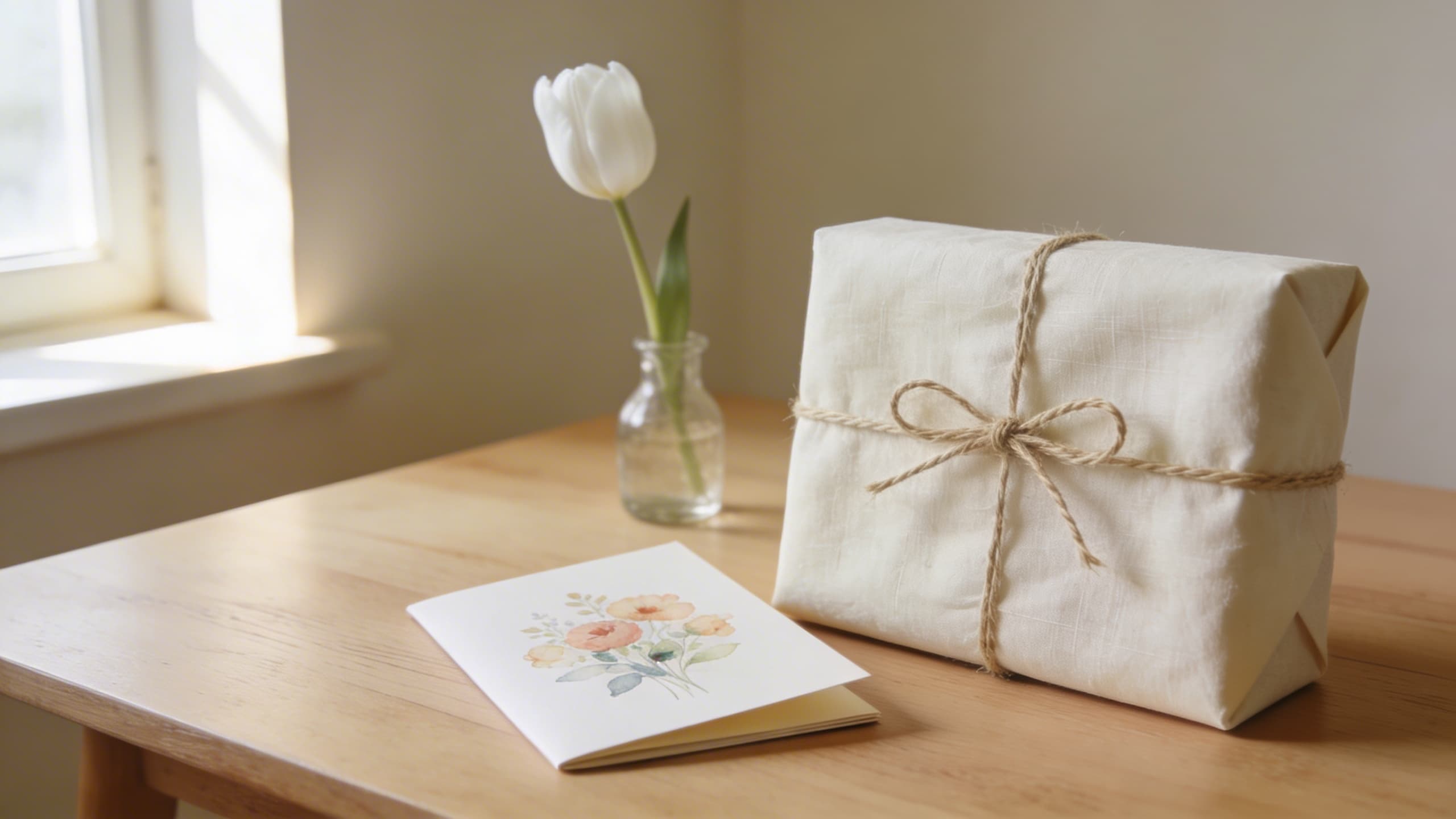
Do not wrap sympathy gifts formally. Unlike birthday or holiday gifts, sympathy gifts should be easy to open. A simple bag, a basket, or unwrapped items with a card attached are all appropriate. Formal gift wrapping can feel tone-deaf.
Send to the home, not the workplace. Unless the gift is a group workplace contribution being presented at the office, send personal sympathy gifts to the recipient's home address.
What to Put in a Sympathy Basket
Assembling a basket yourself is often kinder than ordering one, because you can choose for the person rather than for the occasion. The useful way to think about it is in two halves: what helps this week, and what they still have in a year.
The part that helps this week. Food that needs no cooking — bread, fruit, a good soup, something for the freezer. Tea or coffee. Paper plates and cups, which sound unromantic and are the most-used thing in a grieving house. Nothing that has to be dealt with quickly.
The part that lasts. One keepsake, chosen with care, is worth more than a basket filled with things that will be gone in two weeks. A memory box gives somewhere to keep the service program and the cards. Keepsake gifts and tear bottles are small enough to sit in a basket and personal enough to be kept long after it is empty.
Keep it easy to open. The same rule as any sympathy gift: no formal wrapping, no ribbon that needs scissors, nothing that asks the recipient to perform gratitude at the door. A card attached to the handle is enough.
What to leave out. Anything perishable that needs attention within a day, strongly scented candles, and alcohol unless you know the household well. If you are unsure whether a basket suits at all, our range of sympathy gifts covers what to send on its own.
FAQ
Is it ever too late to send a sympathy gift?
It is never too late to acknowledge someone's loss. While the traditional window is within the first two weeks, gifts sent weeks or months later — especially around milestones like birthdays, anniversaries, and holidays — are often even more appreciated because the initial wave of support has typically faded by then.
Should I send a sympathy gift if I did not know the person who died?
Yes. If you have a relationship with the bereaved person, your gift acknowledges their loss and your care for them, regardless of whether you knew the deceased. A card and a simple gesture — food, a gift card, or a comfort item — is always appropriate in this situation.
What if the family says "no gifts, please"?
Respect the request. A heartfelt card or a brief personal message is still welcome and does not violate the family's wishes. If the family has suggested donations to a specific charity, that is the best way to honor their preference while still making a gesture.
Is cash an appropriate sympathy gift?
In many families and cultural contexts, financial contributions are not only appropriate but deeply helpful — particularly when funeral costs are significant. If giving cash directly feels uncomfortable, targeted alternatives like grocery gift cards, meal delivery credits, or a contribution toward a memorial fund serve the same purpose.
How do I choose between flowers and a non-floral gift?
Flowers are traditional, widely accepted, and easy to send. They work best for acquaintances, coworkers, and situations where you are unsure of the family's preferences. For closer relationships or when the family has signaled "in lieu of flowers," a practical gift, comfort item, or memorial keepsake is often more meaningful and longer-lasting.