🏬Supersize Online Funeral Retailer🪦1000's of Headstones⚱️Over 10,000 Cremation Urns⚰️Caskets Overnight Delivery🛒Funeral & Memorial Superstore🚚FREE Shipping on ALL Orders👨👩👧👦Helping Families for over 20 Years💰Lowest Price Guarantee🏬Supersize Online Funeral Retailer🪦1000's of Headstones⚱️Over 10,000 Cremation Urns⚰️Caskets Overnight Delivery🛒Funeral & Memorial Superstore🚚FREE Shipping on ALL Orders👨👩👧👦Helping Families for over 20 Years💰Lowest Price Guarantee
🏬Supersize Online Funeral Retailer🪦1000's of Headstones⚱️Over 10,000 Cremation Urns⚰️Caskets Overnight Delivery🛒Funeral & Memorial Superstore🚚FREE Shipping on ALL Orders👨👩👧👦Helping Families for over 20 Years💰Lowest Price Guarantee🏬Supersize Online Funeral Retailer🪦1000's of Headstones⚱️Over 10,000 Cremation Urns⚰️Caskets Overnight Delivery🛒Funeral & Memorial Superstore🚚FREE Shipping on ALL Orders👨👩👧👦Helping Families for over 20 Years💰Lowest Price Guarantee
When a friend loses someone they love, the impulse to help is immediate — but knowing what to actually do can feel paralyzing. You want to offer more than words, yet you also don't want to overstep. The right sympathy gift bridges that gap. It says "I see your pain and I'm here" without requiring your friend to respond, explain, or perform gratitude.
If you're weighing options and unsure where to start, our guide to choosing a meaningful sympathy gift walks through every relationship and occasion. This article focuses specifically on the friend dynamic — the gifts, the timing, and the unspoken rules that make your gesture land the way you intend it to.
Family members typically shoulder funeral arrangements, legal paperwork, and the logistics of loss. Friends occupy different territory. You're often the person a grieving friend turns to for normalcy — for the conversation that isn't about death, for the reminder that life outside the loss still exists.
That position shapes the kind of gift that resonates. Family gifts can be deeply personal and elaborate. Friend gifts work best when they're meaningful but not presumptuous. The ideal condolence gift from a friend acknowledges the loss without assuming you know exactly what your friend is feeling. It offers comfort without obligation.
The most appreciated bereavement gifts tend to fall into a few categories: lasting keepsakes that honor the person who died, practical items that ease daily burdens, and comfort-focused gifts that give your friend permission to slow down and grieve.
Lasting Memorial Keepsakes
A keepsake is a tangible reminder that someone is remembered — not just by the grieving person, but by the people around them. When you give a friend a memorial keepsake, you're telling them that the person they lost mattered to you, too.
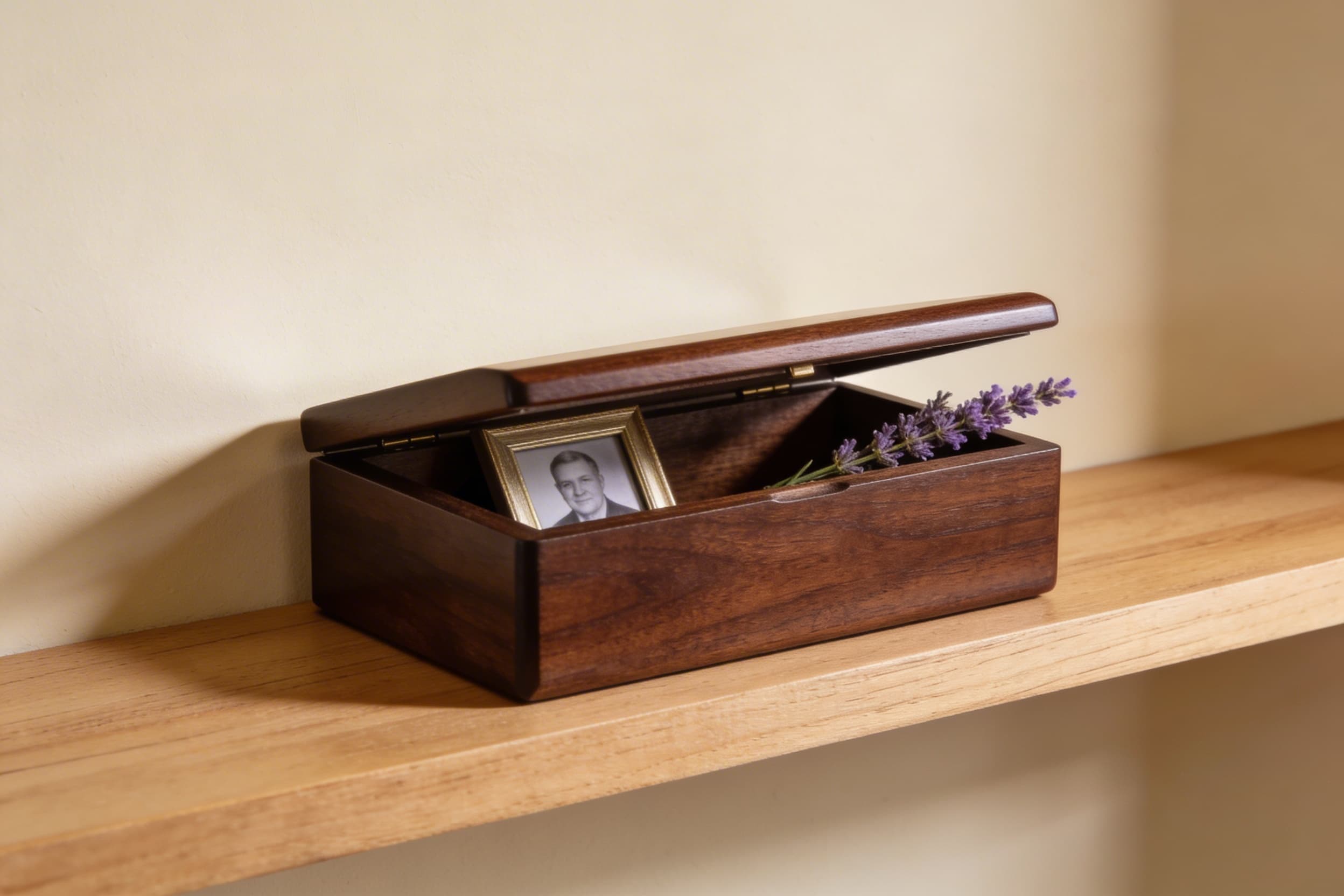
Memory Boxes and Keepsake Boxes
A memory box gives your friend a dedicated place to gather photographs, letters, small personal items, and other mementos. Over time, the box itself becomes a meaningful object — a quiet archive of a life lived. Choose a box that's well-crafted and large enough to hold more than a few items. Your friend will likely add to it for years.
If your friend is a parent who lost a child, or a child who lost a parent, a memory box is particularly fitting. It provides structure for preserving memories during a time when everything can feel scattered and overwhelming.
Memorial Wind Chimes
Wind chimes are among the most popular remembrance gifts, and for good reason. Each time the breeze catches the chimes, the sound serves as a gentle, unexpected reminder. Many memorial wind chimes are engraved with comforting phrases or symbols like the tree of life. They work especially well for friends who spend time outdoors or have a garden or porch.
Personalized Photo Gifts
A framed photograph, a custom photo album, or a photo-etched crystal keepsake transforms a digital image into something your friend can hold and display. If you have photos of your friend with their loved one — especially candid moments they may not have seen — a photo gift carries enormous emotional weight. The effort of selecting and presenting a specific image shows your friend that you paid attention to the relationship they lost.
Comfort and Self-Care Gifts
Grief is physically exhausting. Sleep is disrupted, appetite fades, and the body absorbs stress in ways that compound over weeks. A thoughtful self-care package acknowledges what your friend's body is going through, not just their heart.
Consider assembling a gift basket with items that promote rest: a soft throw blanket, calming herbal teas, a quality candle, bath salts, or a journal. The key is choosing items that feel indulgent rather than obligatory. Your friend shouldn't feel like they have homework — they should feel like they have permission to pause.
Meal Deliveries and Food Gifts
Practical support is one of the most underrated forms of grief care. Bringing a freezer-friendly meal, arranging a meal delivery service for a few weeks, or sending a gift card for a food delivery app removes one daily decision from your friend's overloaded plate. Food gifts work best when they're specific and easy: a home-cooked casserole with reheating instructions, a curated snack basket, or a prepaid meal kit subscription.
If you're coordinating with other friends, a meal train — where each person signs up for a different day — can provide steady support without any single person bearing the full burden.
Small but Meaningful Tokens
Not every sympathy gift needs to be large or expensive. Some of the most appreciated gifts for a grieving friend are small enough to carry in a pocket or place on a nightstand.
Angel Keepsakes and Figurines
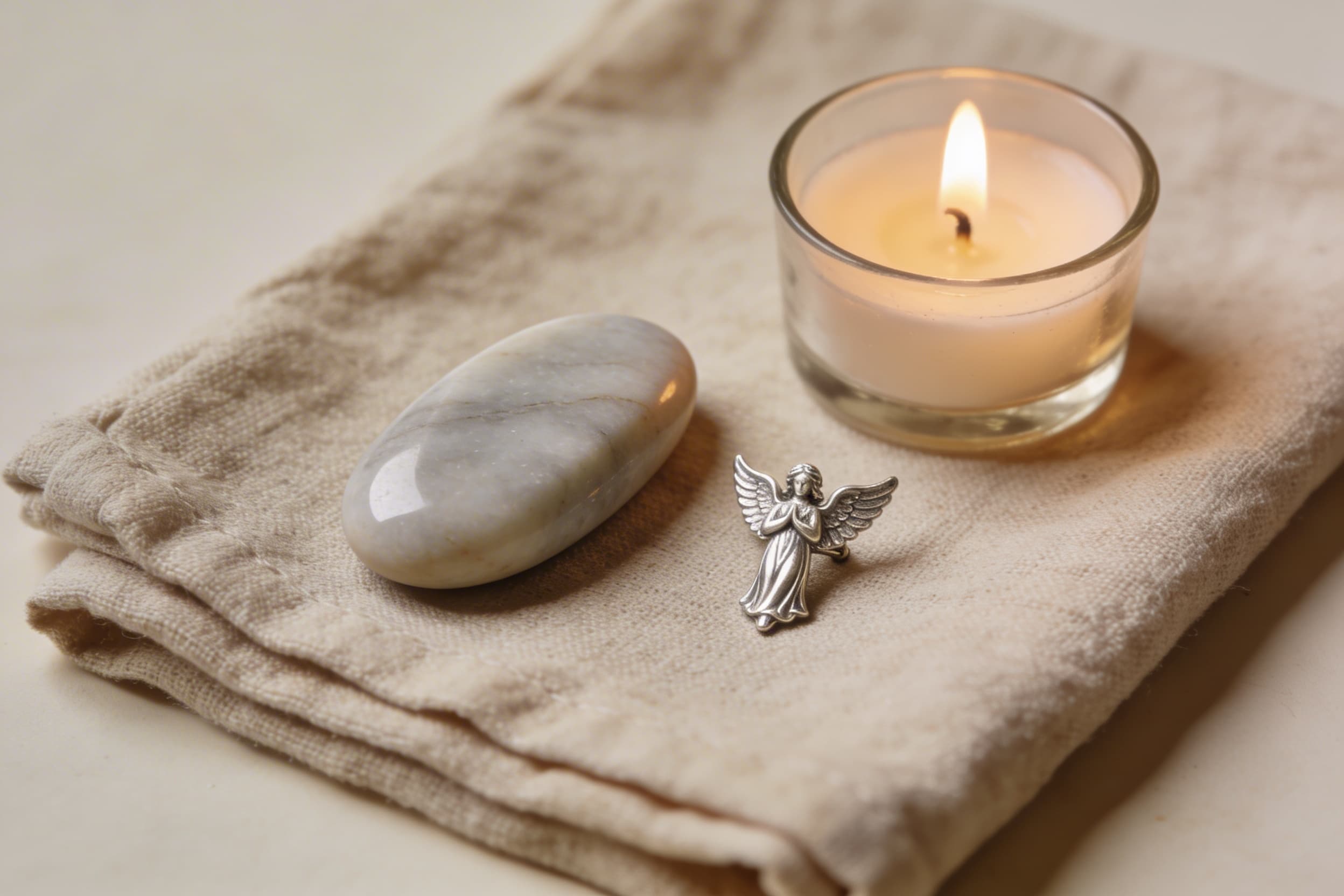
An angel keepsake — whether a small figurine, a lapel pin, or a picture frame with an angel motif — provides quiet spiritual comfort. These pieces are understated enough that your friend can display them at home or keep them private, depending on their preference. Angel figurines are a particularly thoughtful gesture for friends who hold religious or spiritual beliefs.
Comfort and Worry Stones
A worry stone fits in the palm of your hand and provides a tactile source of comfort during anxious moments. Many people who are grieving find that having something small to hold — during a difficult meeting, a quiet moment at home, or a sleepless night — helps ground them. Guardian angel worry stones and comfort stones shaped with soothing symbols are popular choices for friends because they're personal without being intrusive.
Memorial Keychains
A memorial keychain is a discreet, everyday keepsake. Your friend carries it with them wherever they go, and the small weight of it serves as a constant, private connection to the person they lost. Engraved or personalized keychains with a name, date, or short phrase add an extra layer of meaning.
Candle Holders
A candle holder paired with a quality candle creates a small ritual of remembrance. Lighting a candle in memory of someone who has died is a tradition that spans nearly every culture and religion. For a friend, this gift provides both an object and a practice — something they can return to on difficult evenings, anniversaries, or holidays.
Angel Vases
An angel vase offers a beautiful way to keep fresh flowers in a space dedicated to remembrance. Hand-crafted ceramic vases with angelic designs can sit beside a photograph or urn, serving as a gentle visual reminder. They're a fitting gift for friends who appreciate having a small memorial display in their home.
Wearable Memorials and Jewelry
Some friends find comfort in wearing a physical reminder of the person they lost. Cremation jewelry — necklaces, bracelets, and rings designed to hold a tiny amount of cremated remains — allows someone to keep their loved one close throughout the day. If your friend has mentioned wanting to carry something of their loved one with them, a piece of memorial jewelry can be a deeply personal gift.
Even outside of cremation jewelry, a simple necklace or bracelet engraved with initials, a birthstone, or a meaningful date can become a daily touchstone. The best wearable memorials are subtle enough for everyday wear — a quiet reminder visible only to the person wearing it.
Choosing a Gift Based on the Type of Loss
The relationship your friend had with the person who died shapes what kind of gift will mean the most. A friend grieving the loss of a partner will have different needs than a friend who lost a grandparent or a colleague.
If your friend lost a parent, the grief often carries layers of identity and childhood memory that run deep. Gifts that honor the parent-child bond — a custom photo book, a memorial garden stone, or an engraved keepsake — acknowledge the magnitude of that loss. For more tailored guidance, see our article on gifts for someone who lost a parent.
If your friend lost a spouse or partner, practical support often matters as much as symbolic gifts. Their daily life has been restructured overnight. Meal deliveries, help with household tasks, and gifts that provide self-care moments can be just as meaningful as a keepsake.
If your friend lost a child, tread gently. Gifts that specifically name or reference the child — a personalized ornament, a memorial stone with the child's name, or a donation in the child's honor — show that you recognize this particular loss, not loss in the abstract.
When and How to Give a Sympathy Gift
Timing matters more than most people realize. Understanding basic sympathy gift etiquette helps your gesture arrive at the right moment and in the right way.
The First Week
During the first few days after a loss, your friend is often surrounded by family, consumed by arrangements, and operating on adrenaline. Simple, practical gifts — food, a sympathy card with a genuine handwritten message, an offer to help with specific tasks — are most appropriate here. Save larger or more personal gifts for after the funeral or memorial service, when the initial wave of support from others begins to recede.
Weeks Two Through Six
This is often when grief hits hardest. The funeral is over, visitors have gone home, and your friend is left alone with the reality of their loss. A thoughtful gift arriving during this window — a memorial keepsake, a self-care package, a handwritten letter sharing a memory of the person who died — can feel like a lifeline. Many grieving people say that the gifts they received weeks or even months after the loss meant more than anything that arrived in the first few days.
Anniversaries and Holidays
The first birthday, the first holiday season, the first anniversary of the death — these dates carry enormous weight. A small gesture on one of these days tells your friend that you haven't forgotten. A sympathy card, a memorial ornament, or simply a text message acknowledging the day can make a profound difference.
What Not to Give
Certain gifts, however well-intentioned, can miss the mark or cause unintended hurt. Avoid overly religious gifts unless you know your friend's beliefs. Skip anything with prescriptive language about grief stages or timelines — your friend doesn't need to be told how to feel. Steer clear of gifts that create obligations, like elaborate flower arrangements that need daily maintenance during a time when your friend can barely function.
The most meaningful sympathy gifts don't just mark the moment of loss — they become part of how your friend remembers and honors their loved one over time. A keepsake box that sits on a bookshelf, a wind chime that sounds in the garden, a candle holder that gets lit on quiet evenings — these objects weave themselves into your friend's daily life.
If your friend expresses interest in building a dedicated memorial space, you might encourage them to explore creating a memorial at home. A small shelf with a photograph, a keepsake, a candle, and a vase of fresh flowers can become a place of reflection and comfort. Your gift might be the piece that anchors that space.
The Gift That Matters Most
Beyond any object you can buy or send, the single most valuable thing you can offer a grieving friend is your continued presence. Grief doesn't end after the funeral. It doesn't resolve in a month or even a year. The friends who matter most are the ones who keep showing up — who send a text on a random Tuesday, who say the name of the person who died out loud, who don't treat grief as something that should have an expiration date.
A sympathy gift opens the door. Your ongoing attention and care is what keeps it open. Whether your gesture is a handwritten card, a memorial keepsake, or a home-cooked meal dropped off without fanfare, the message behind it is the same: you are not alone, and your loved one is not forgotten.
Frequently Asked Questions
How much should I spend on a sympathy gift for a friend?
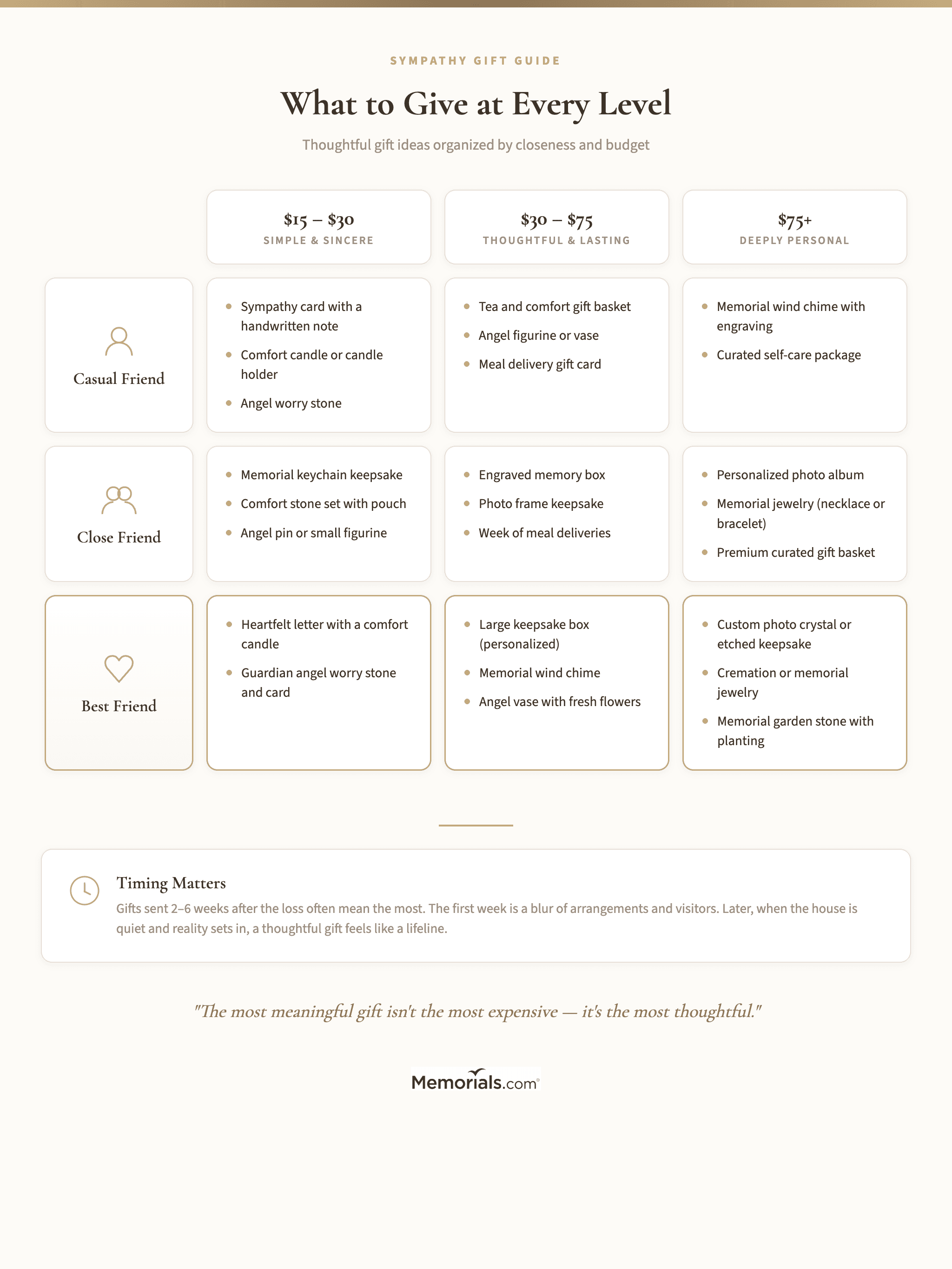
There is no fixed rule, but most sympathy gifts for friends fall in the $20 to $75 range. Close friends may spend more on a personalized keepsake or gift basket, while casual friends can express genuine care with a sympathy card and a smaller token like a worry stone or candle. The thoughtfulness behind the gift always matters more than the price tag.
Is it too late to send a sympathy gift weeks after the loss?
Not at all — in fact, many grieving people say that gifts arriving weeks or months after the funeral meant more than those received immediately. The initial days are a blur of activity and visitors. A gift that arrives later, when the house is quiet and the grief is settling in, can feel especially meaningful.
Should I send a sympathy gift to the funeral or to my friend's home?
Send it to your friend's home. Funeral venues can be chaotic, and gifts brought to the service may get lost or misplaced. A gift delivered to the home gives your friend space to open it privately and at their own pace. If you're attending the service, bring a sympathy card and deliver any physical gift separately.
What should I write in a sympathy card to a friend?
Keep it short and sincere. Acknowledge the loss directly — use the name of the person who died if you can. Share a brief, specific memory if you have one. Avoid clichés like "everything happens for a reason" or "they're in a better place." A simple "I'm so sorry about [name]. I loved their [specific quality]. I'm here for you" carries more weight than a long, elaborate message.
Can I give a sympathy gift if I didn't know the person who died?
Absolutely. Your gift is for your friend, not for the person who passed. You're acknowledging your friend's pain and offering support. A comfort-focused gift — a self-care package, a meal delivery, a journal — is perfectly appropriate even if you never met the deceased.