🏬Supersize Online Funeral Retailer🪦1000's of Headstones⚱️Over 10,000 Cremation Urns⚰️Caskets Overnight Delivery🛒Funeral & Memorial Superstore🚚FREE Shipping on ALL Orders👨👩👧👦Helping Families for over 20 Years💰Lowest Price Guarantee🏬Supersize Online Funeral Retailer🪦1000's of Headstones⚱️Over 10,000 Cremation Urns⚰️Caskets Overnight Delivery🛒Funeral & Memorial Superstore🚚FREE Shipping on ALL Orders👨👩👧👦Helping Families for over 20 Years💰Lowest Price Guarantee
🏬Supersize Online Funeral Retailer🪦1000's of Headstones⚱️Over 10,000 Cremation Urns⚰️Caskets Overnight Delivery🛒Funeral & Memorial Superstore🚚FREE Shipping on ALL Orders👨👩👧👦Helping Families for over 20 Years💰Lowest Price Guarantee🏬Supersize Online Funeral Retailer🪦1000's of Headstones⚱️Over 10,000 Cremation Urns⚰️Caskets Overnight Delivery🛒Funeral & Memorial Superstore🚚FREE Shipping on ALL Orders👨👩👧👦Helping Families for over 20 Years💰Lowest Price Guarantee
When someone you care about loses a loved one, sending a gift feels like the right thing to do. And most of the time, it is. But grief changes how people experience everyday gestures, and a gift that seems perfectly fine under normal circumstances can land differently when someone is in the middle of the hardest days of their life. For a broader look at choosing the right gesture, the sympathy gift selection guide walks through how to match your gift to the relationship and the moment.
This article is not about shaming anyone who has sent the wrong thing. Nearly everyone has been there. It is about recognizing why certain sympathy gifts miss the mark so you can choose something that genuinely helps. For each common mistake below, you will find a clear explanation of why it backfires and a better alternative to send instead.
Grief puts people into a state of emotional and physical exhaustion. Tasks that normally feel effortless, like opening mail or arranging flowers in a vase, can feel overwhelming. A gift that requires effort, explanation, or an emotional response from the recipient can add pressure at a time when they have nothing left to give.
The other challenge is projection. People tend to choose gifts based on what would comfort them, not what would comfort the grieving person. A self-help book might feel empowering to the sender but patronizing to the recipient. A basket of sweets might be the sender's go-to comfort, but the recipient may have no appetite at all.
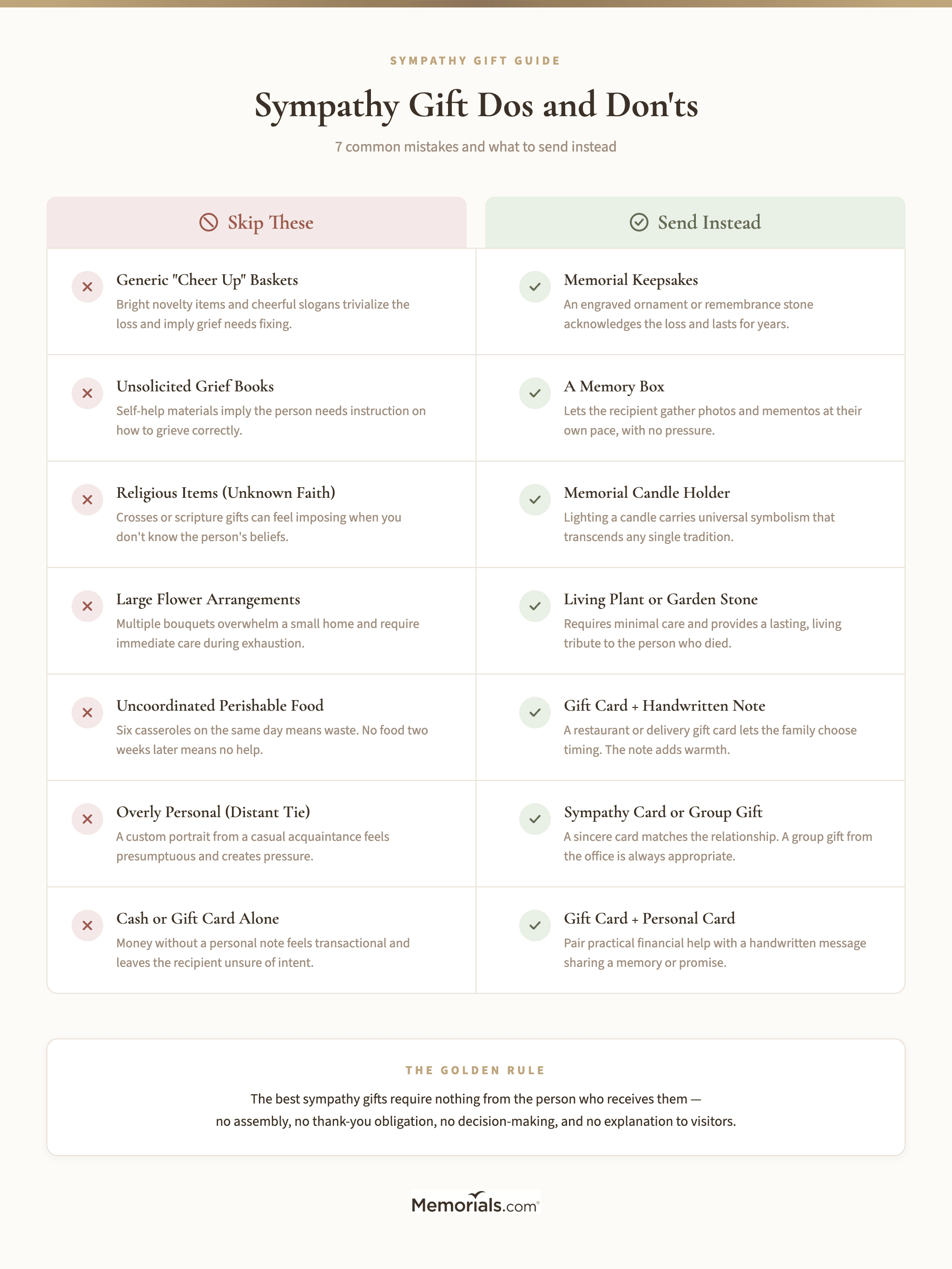
The best sympathy gifts require nothing from the person who receives them — no assembly, no thank-you obligation, no decision-making, and no explanation to visitors about what it is or where it came from.
Seven Sympathy Gift Mistakes That Miss the Mark
1. Generic "Cheer Up" Baskets and Novelty Items
Bright-colored gift baskets stuffed with candy, balloons, and cheerful slogans might work for a birthday. After a funeral, they feel tone-deaf. Items printed with phrases like "turn that frown upside down" or "look on the bright side" tell the grieving person — intentionally or not — that their sadness is a problem to be fixed rather than a natural response to loss.
Why it backfires: Grieving people do not need to be cheered up. They need to feel seen. A gift that ignores the weight of their loss communicates that the sender is uncomfortable with grief rather than willing to sit with it.
What to send instead: A memorial keepsake gives the recipient something meaningful to hold onto long after the funeral is over. A small personalized item, such as an engraved ornament or a keepsake with the loved one's name, acknowledges the loss directly and shows real thought.
2. Unsolicited Grief Books and Self-Help Materials
Sending someone a book titled "How to Get Through Grief in 30 Days" or a journal with prompts about healing can feel prescriptive. The underlying message, even when unintended, is that the recipient needs instruction on how to grieve correctly or that they should be actively working toward "getting over it."
Why it backfires: Grief is not a project to manage. Most people, especially in the first weeks after a loss, are not ready for structured reflection. A grief workbook sitting on the counter can feel like homework assigned by someone who has never done it.
What to send instead: If you want to give something the person can revisit on their own timeline, a memory box lets them gather photos, letters, or small mementos at their own pace. It offers space for remembrance without dictating how or when they should process their feelings. For more options tailored to close relationships, our guide to thoughtful gifts for a grieving friend can help.
3. Overly Religious Items When You Do Not Know Their Beliefs
A cross, a prayer card, or a scripture-themed plaque can be deeply meaningful to someone who shares that faith. When the recipient does not share those beliefs, however, the gift can feel imposing or exclusionary. This is especially common in workplace settings, where colleagues may not know one another's spiritual background.
Why it backfires: Grief already makes people feel vulnerable. Receiving a religious symbol that does not match their worldview can create an awkward moment at a time when they have no energy for awkward moments. They may also feel pressured to display the item out of politeness.
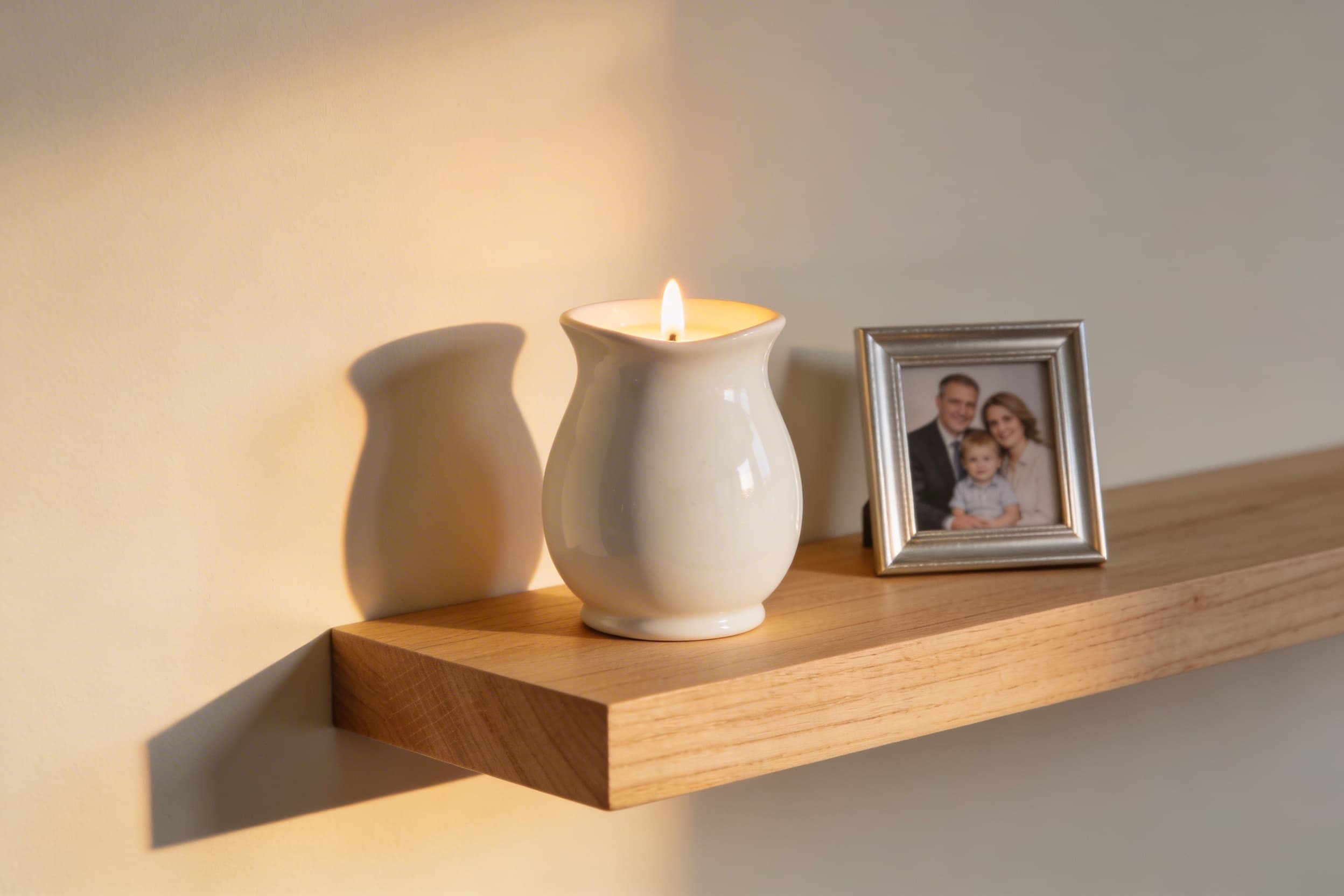
What to send instead: Unless you know the person's faith tradition well, choose a gift that focuses on remembrance rather than theology. A candle holder with a simple, elegant design carries universal symbolism — light as a tribute, warmth as comfort — without tying the gesture to a specific belief system. Lighting a candle in memory of someone transcends nearly every cultural and religious boundary.
4. Large Flower Arrangements Without Checking First
Flowers are the default sympathy gesture, and for good reason — they are beautiful and they communicate care. But multiple large arrangements arriving at a grieving household can quickly become a logistical problem. Someone has to find vases, trim stems, find counter space, and eventually dispose of wilting bouquets. In some religious traditions, including certain Jewish and Hindu customs, sending flowers to a mourning family is not part of the tradition and may be unwelcome.
Why it backfires: Flowers require immediate attention (water, trimming, placement) at a time when the recipient can barely get through the day. Several arrangements arriving simultaneously can overwhelm a small home. And once the flowers die — usually within a week — their disposal can feel like a second, smaller loss.
What to send instead: A living plant or a small memorial garden stone lasts far longer and requires less immediate care. If you want to send something beautiful that also honors the person who died, personalized sympathy gifts like engraved keepsakes or remembrance ornaments stay on the shelf for years, not days.
5. Perishable Food That Arrives Without Coordination
Homemade casseroles and meal deliveries are among the most genuinely helpful gifts a grieving family can receive. The problem arises when six families all send food on the same day, or when a large fruit basket shows up unannounced and sits on the porch for hours. Coordinating food deliveries through a meal train or group text prevents waste and makes sure the family has support spread across weeks, not just the day after the funeral.
Why it backfires: Grieving families often receive an avalanche of food in the first 48 hours and then nothing for weeks. Uncoordinated deliveries can result in spoiled food, duplicated dishes, and the guilt of throwing away something someone made with love.
What to send instead: If you want to provide a meal, coordinate with other friends or family to spread deliveries across two to three weeks. Alternatively, a gift card to a local restaurant or a meal delivery service gives the family control over timing. Pair it with a handwritten sympathy card so the gesture feels personal rather than transactional.
6. Anything Too Personal From a Professional or Distant Relationship
A colleague you see at quarterly meetings sending a deeply personal memorial plaque for the home can feel intrusive. Similarly, a distant acquaintance commissioning a custom portrait of the deceased may unsettle the family rather than comfort them. The closeness of the relationship should guide the intimacy of the gift.
Why it backfires: An overly personal gift from someone the recipient does not know well creates social pressure. The recipient may wonder about the sender's motives or feel obligated to respond with a level of emotional intimacy they are not prepared for. It can also feel presumptuous — as if the sender is claiming a closer connection to the loss than they actually have.
What to send instead: Match the gift to the relationship. For professional or distant connections, a simple sympathy card with a sincere message is always appropriate. A modest group gift from the office, like a sympathy basket or a donation in the loved one's name, works well too. For a thorough breakdown of timing and appropriateness, see our guide on when and how to send sympathy gifts.
7. Cash or Gift Cards Alone, Without a Personal Note
Money can be genuinely helpful — funeral costs, time off work, and unexpected expenses pile up quickly after a loss. But handing someone an envelope of cash or mailing a gift card with no note attached feels like an afterthought. The gesture lacks the personal connection that transforms a transaction into an act of care.
Why it backfires: Without context, money can feel cold. The recipient may not know whether to use it for funeral costs, personal expenses, or something else entirely. And without a note, the gift says "I did something" rather than "I see your pain and I care."
What to send instead: If you want to help financially, pair a gift card with a handwritten card that says something specific — a memory of the person who died, an acknowledgment of what the family is going through, or simply a promise to check in next month. This combination offers both practical help and emotional support.
Thoughtful Alternatives That Provide Real Comfort
The most meaningful sympathy gifts share a few qualities: they require nothing from the recipient, they acknowledge the loss directly, and they last longer than a few days. Here are categories of gifts that consistently provide comfort.
Memorial keepsakes are among the most appreciated sympathy gifts because they give the grieving person something tangible to hold onto. Engraved ornaments, personalized picture frames, and remembrance stones become part of how a family honors their loved one for years to come.
Candle holders and memorial lights carry deep symbolic meaning across cultures. Lighting a candle in someone's memory is a quiet, personal ritual that can bring a moment of peace during an otherwise chaotic time.
Practical support gifts often mean the most in the first weeks after a loss. Meal delivery gift cards, house cleaning services, and even prepaid grocery deliveries address the daily tasks that feel impossible when grief takes over. These are especially powerful when sent two to three weeks after the funeral, when most other support has tapered off.
Personalized sympathy gifts strike the balance between meaningful and appropriate. An engraved keepsake with the loved one's name and dates, a custom memorial garden stone, or a remembrance wind chime shows thought without overstepping. For those on a tighter budget, there are affordable sympathy gift alternatives that are just as meaningful.
How to Choose the Right Alternative for Any Situation
Selecting the right gift comes down to three questions:
How close is your relationship? Close family and lifelong friends can send something personal — a memorial keepsake, a photo-based gift, or a handwritten letter sharing a specific memory. Professional contacts and acquaintances should lean toward a sympathy card, a modest group gift, or a donation in the loved one's name.
What does the grieving person actually need? In the first week, practical help matters most: meals, errands, childcare. After the initial wave of support fades, memorial gifts and keepsakes become more meaningful because they arrive when the rest of the world has moved on but the grief has not.
Does the gift require anything from the recipient? If the answer is yes — assembly, care, a response, a decision — reconsider. The best gifts are the ones the person can simply receive.
Frequently Asked Questions
Is it ever appropriate to send flowers as a sympathy gift?
Flowers remain one of the most traditional and widely accepted sympathy gestures, and many families genuinely appreciate them. The key is checking whether the family's cultural or religious traditions welcome flowers and, when possible, coordinating with others so the family does not receive a dozen arrangements on the same day. A single, modest arrangement or a living plant is almost always well received.
How long after a loss is it appropriate to send a sympathy gift?
There is no expiration date on sympathy. Gifts sent two to four weeks after the funeral can be especially meaningful because they arrive after the initial wave of support has faded. Anniversary gifts — sent on the loved one's birthday or the anniversary of the death — also show continued care. Many people say these later gestures meant the most to them.
What should I write in a sympathy card?
Keep it genuine and specific. Mention the deceased by name. Share a brief memory if you have one, or simply say that you are thinking of the family. Avoid platitudes like "they're in a better place" or "everything happens for a reason." A sentence like "I will always remember how [name] made everyone in the room feel welcome" is far more comforting than any generic phrase.
Is it okay to send a sympathy gift to a coworker?
Absolutely. A simple card, a modest gift basket, or a group donation in the loved one's name is appropriate in a professional setting. Avoid anything too personal or intimate. If you are unsure, a handwritten card with a sincere message is always the right call.
What if I accidentally sent an inappropriate sympathy gift?
Do not panic. Your intent matters far more than the gift itself. Most grieving people understand that choosing the right gesture is difficult. If you are worried, a follow-up card or a brief, sincere message — "I've been thinking of you and just wanted you to know I care" — goes a long way toward reinforcing what the gift was meant to say.