🏬Supersize Online Funeral Retailer🪦1000's of Headstones⚱️Over 10,000 Cremation Urns⚰️Caskets Overnight Delivery🛒Funeral & Memorial Superstore🚚FREE Shipping on ALL Orders👨👩👧👦Helping Families for over 20 Years💰Lowest Price Guarantee🏬Supersize Online Funeral Retailer🪦1000's of Headstones⚱️Over 10,000 Cremation Urns⚰️Caskets Overnight Delivery🛒Funeral & Memorial Superstore🚚FREE Shipping on ALL Orders👨👩👧👦Helping Families for over 20 Years💰Lowest Price Guarantee
🏬Supersize Online Funeral Retailer🪦1000's of Headstones⚱️Over 10,000 Cremation Urns⚰️Caskets Overnight Delivery🛒Funeral & Memorial Superstore🚚FREE Shipping on ALL Orders👨👩👧👦Helping Families for over 20 Years💰Lowest Price Guarantee🏬Supersize Online Funeral Retailer🪦1000's of Headstones⚱️Over 10,000 Cremation Urns⚰️Caskets Overnight Delivery🛒Funeral & Memorial Superstore🚚FREE Shipping on ALL Orders👨👩👧👦Helping Families for over 20 Years💰Lowest Price Guarantee
A headstone is one of the most personal decisions a family will make after losing someone they love. It becomes a permanent marker of a life, visible to generations of visitors, and its design carries weight that few other purchases share. The shapes, materials, engravings, and finishing touches you choose all work together to tell a story about the person resting beneath it.
This guide walks through the major headstone design categories — from classic upright monuments to sleek flat markers — along with the materials, engraving techniques, and personalization options that bring each one to life. If you want a step-by-step walkthrough of the full purchasing process, our complete headstone buying guide covers ordering, pricing, and installation from start to finish.
The shape of a headstone sets its visual tone before a single word is carved. Cemetery regulations often dictate which shapes are permitted, so checking with your cemetery before committing to a specific style is an essential first step.
Upright Headstones
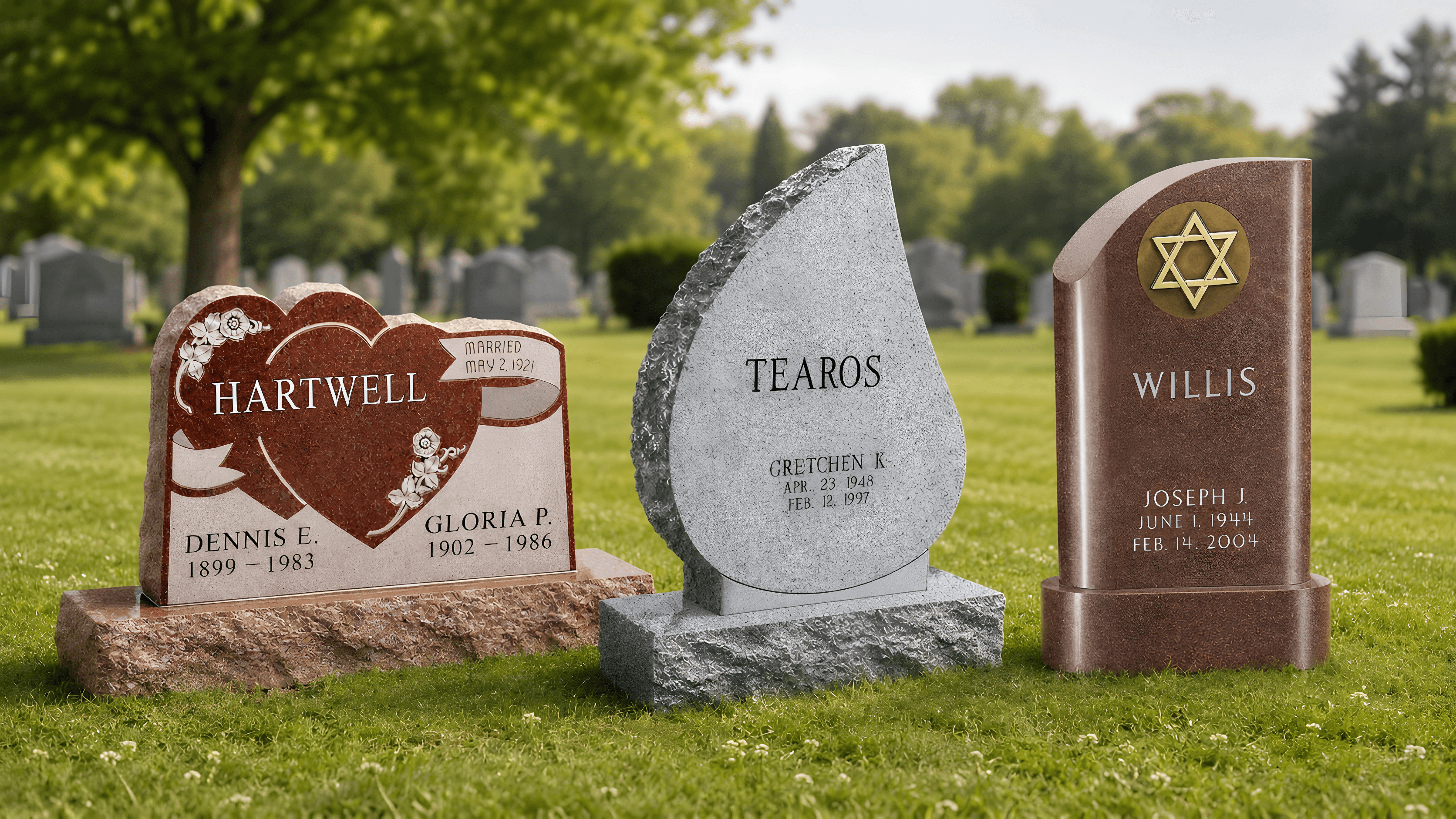
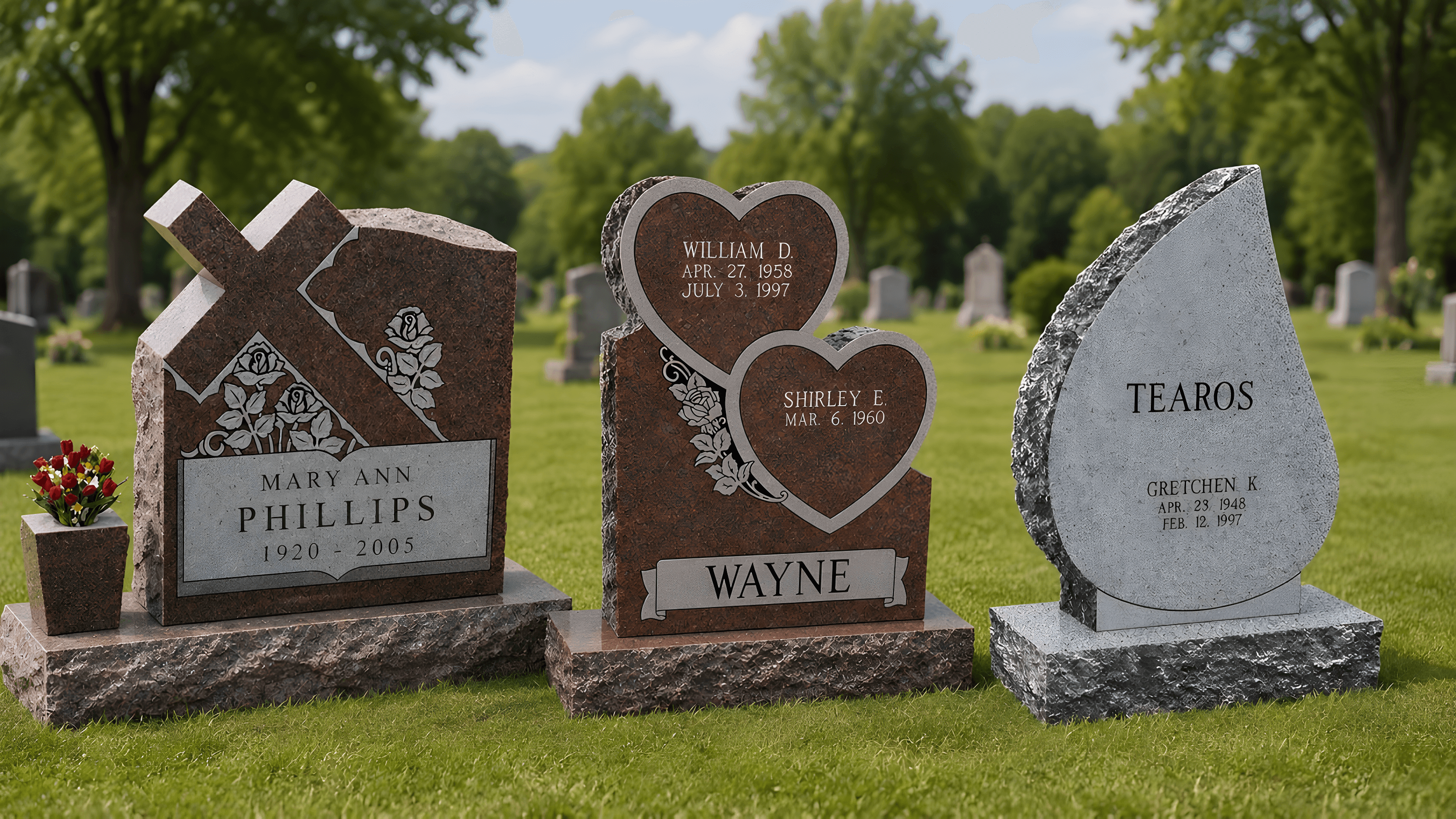
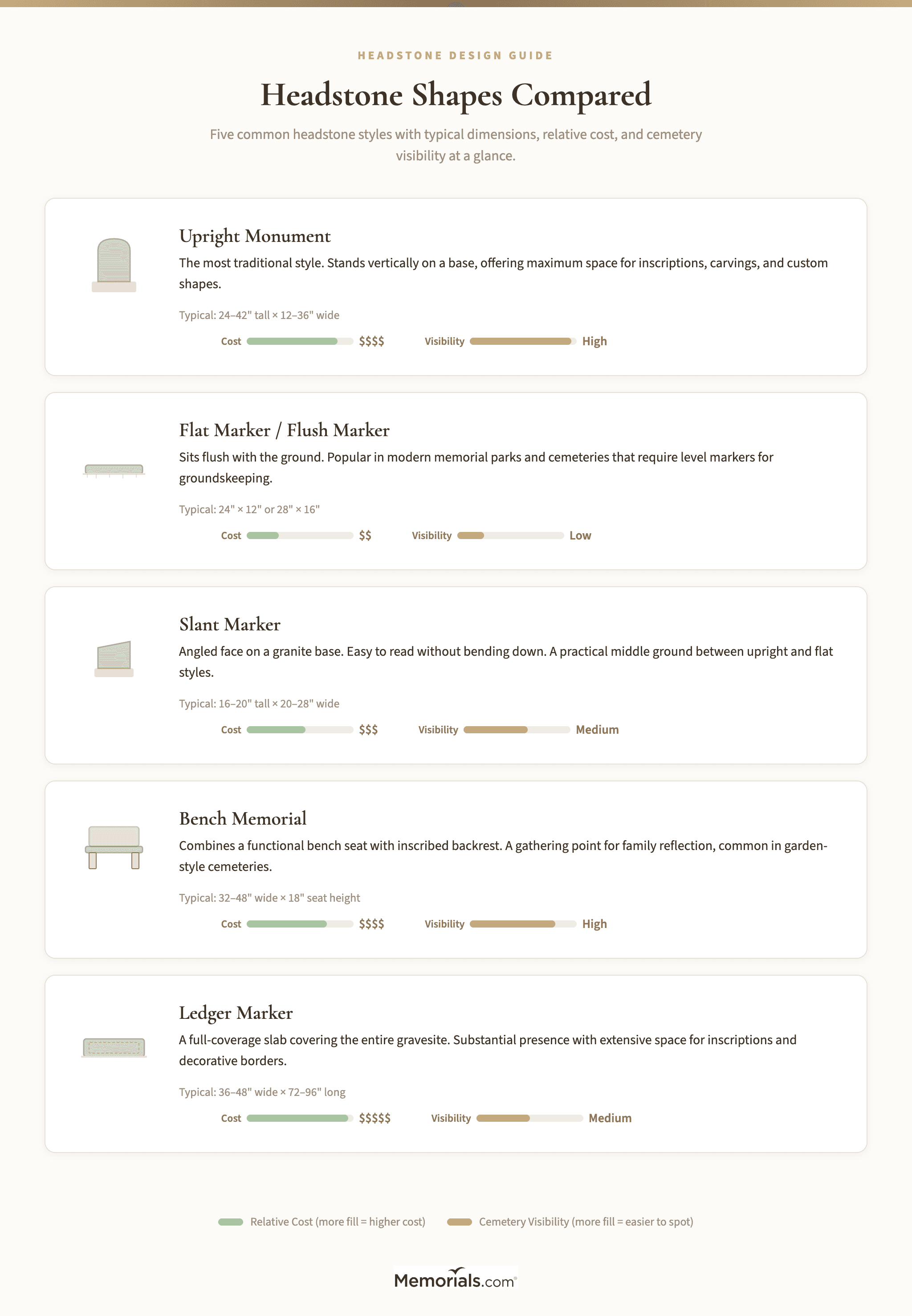
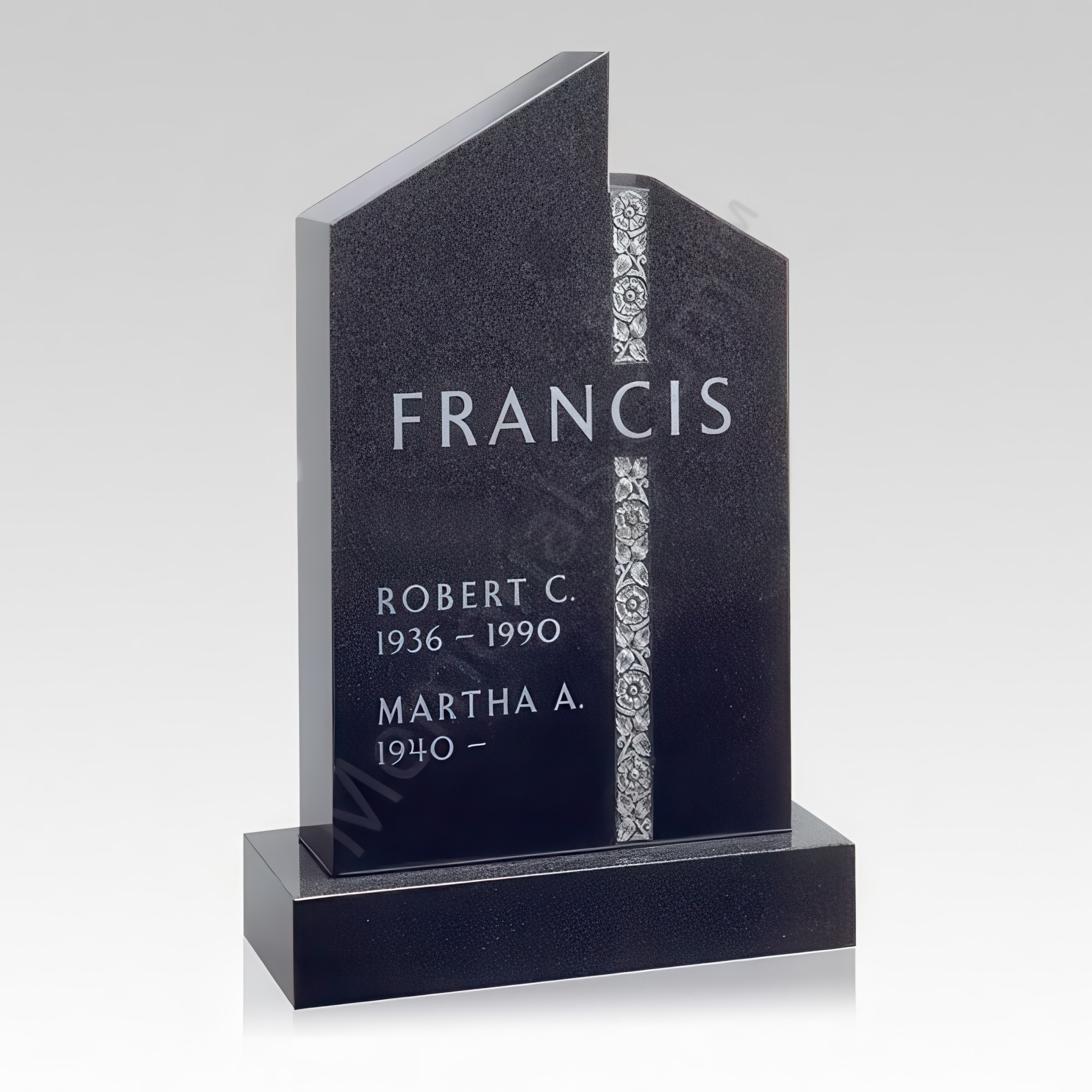
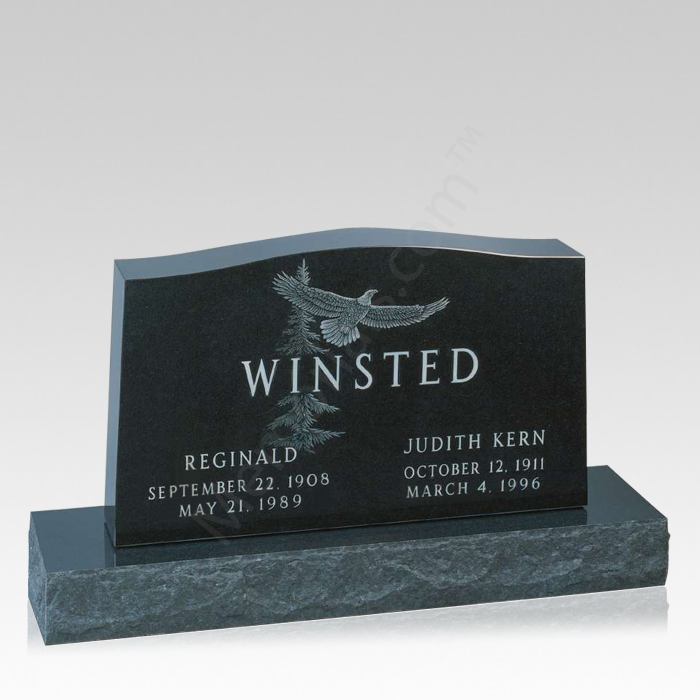
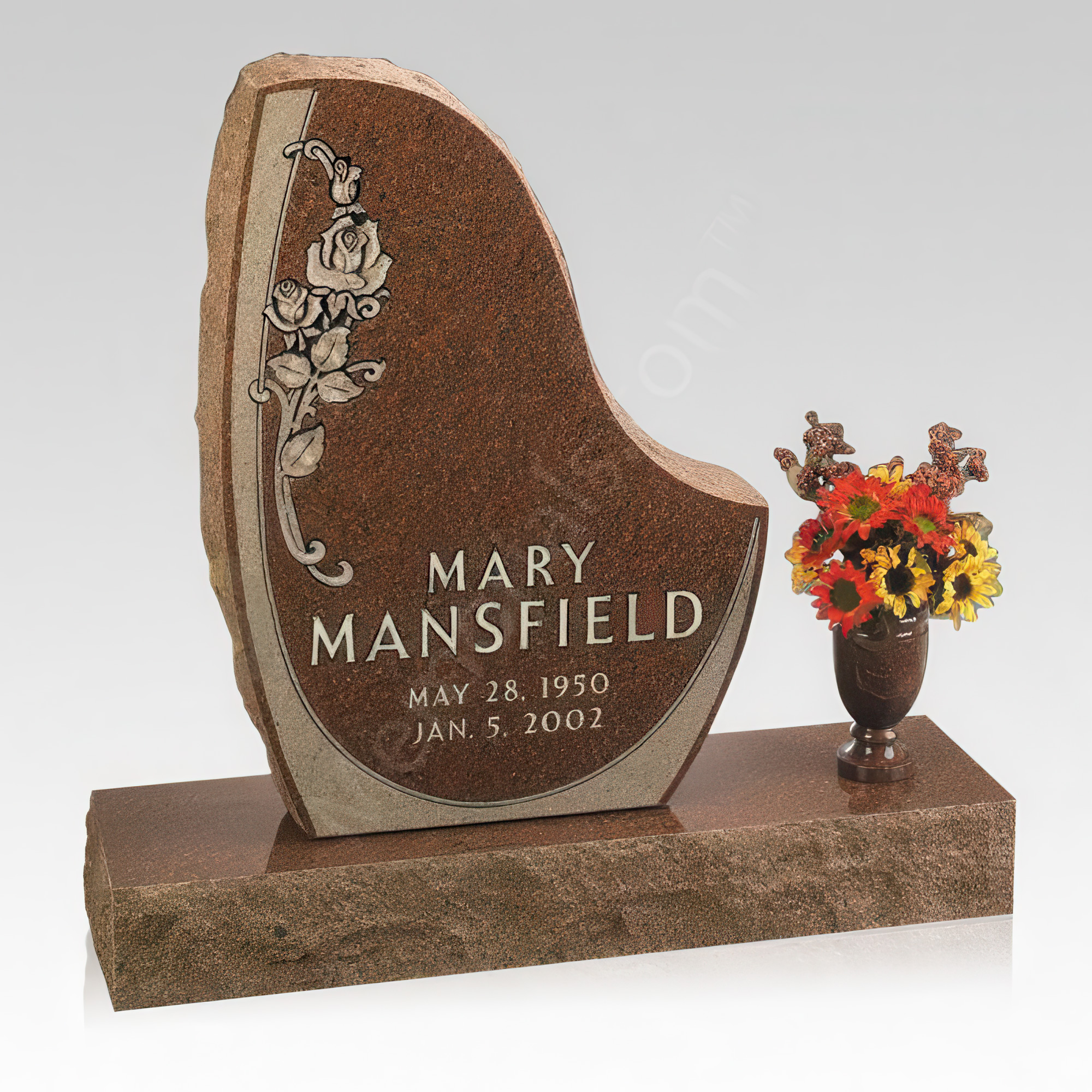
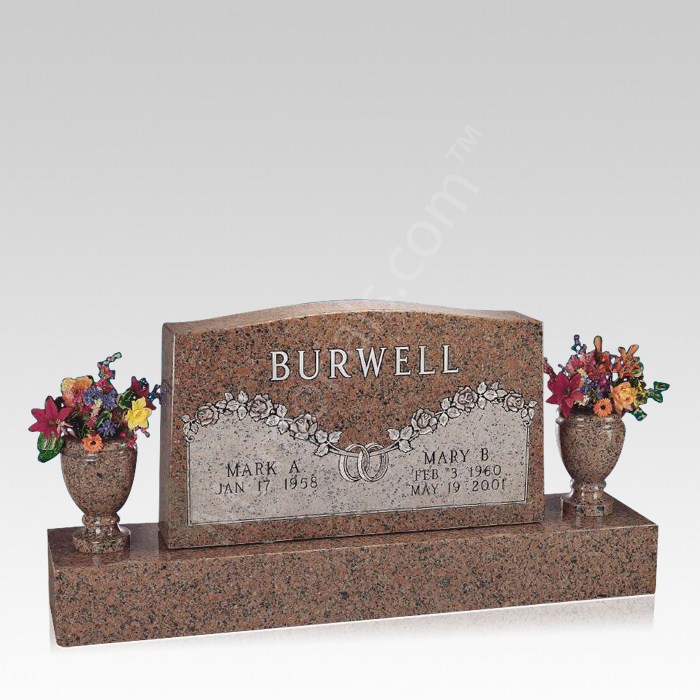
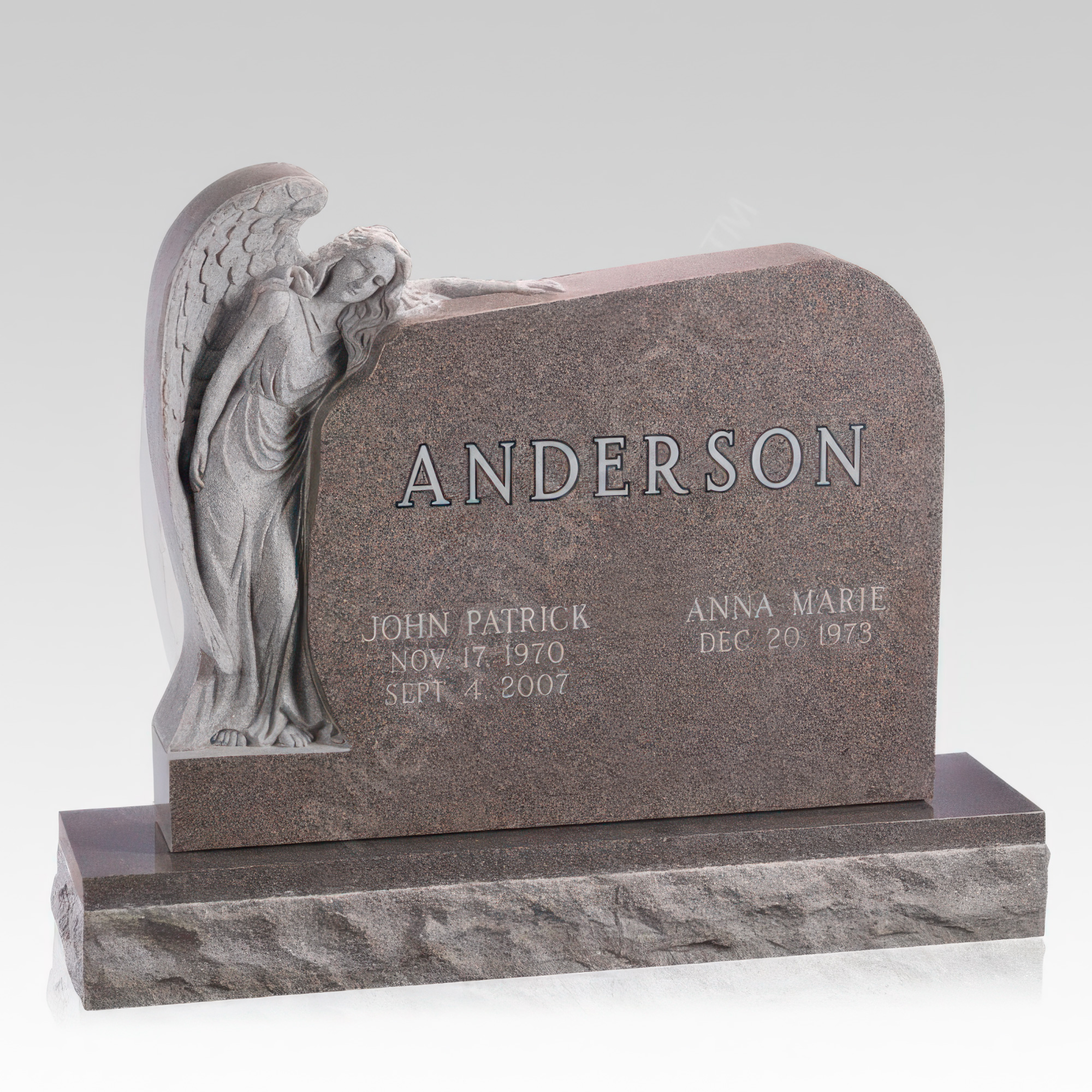
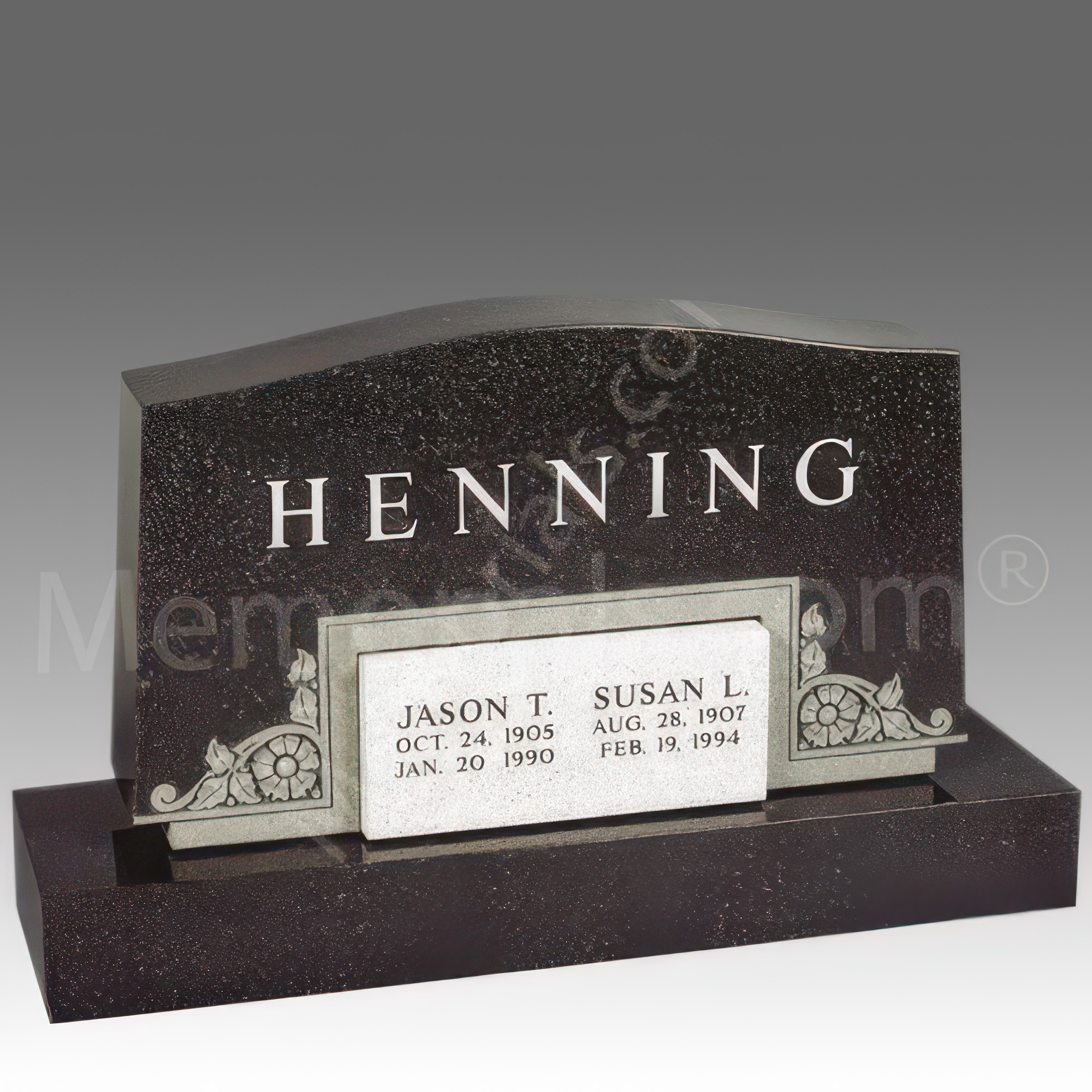
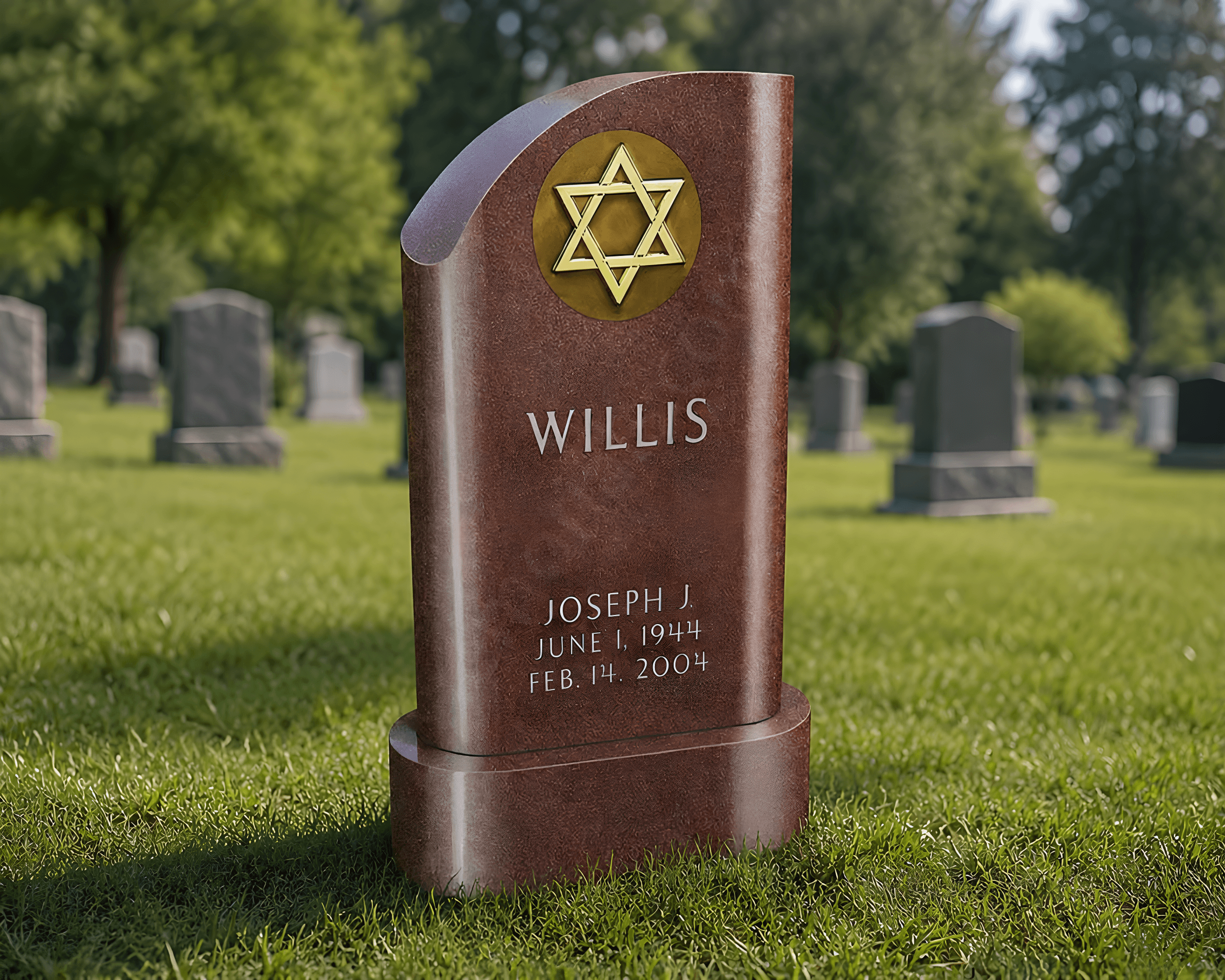
Upright headstones are the most recognizable style in American cemeteries. They stand vertically on a granite base and offer the most surface area for inscriptions, engravings, and decorative carving. Upright monuments come in a range of top contours, and each one changes the feel of the memorial significantly.
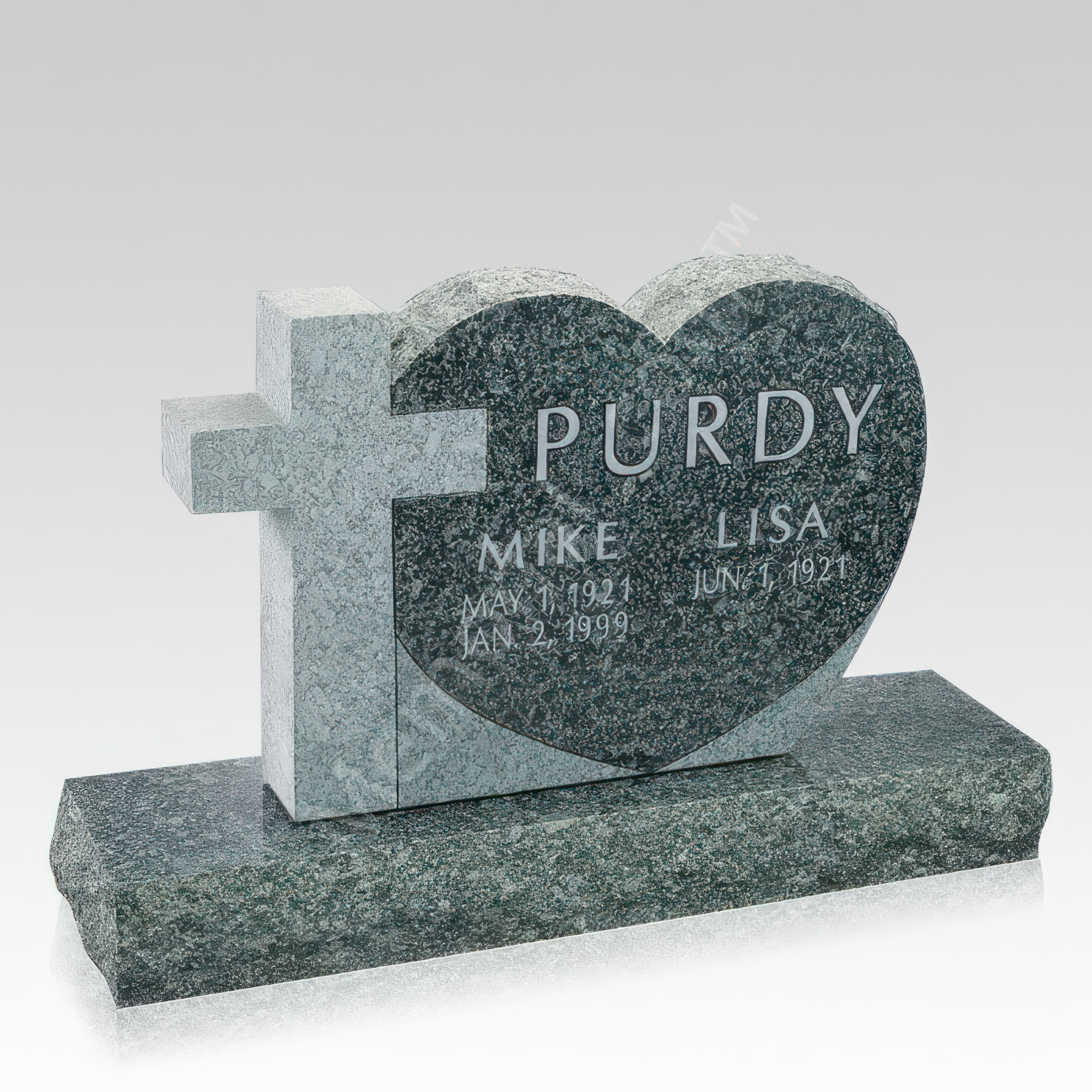
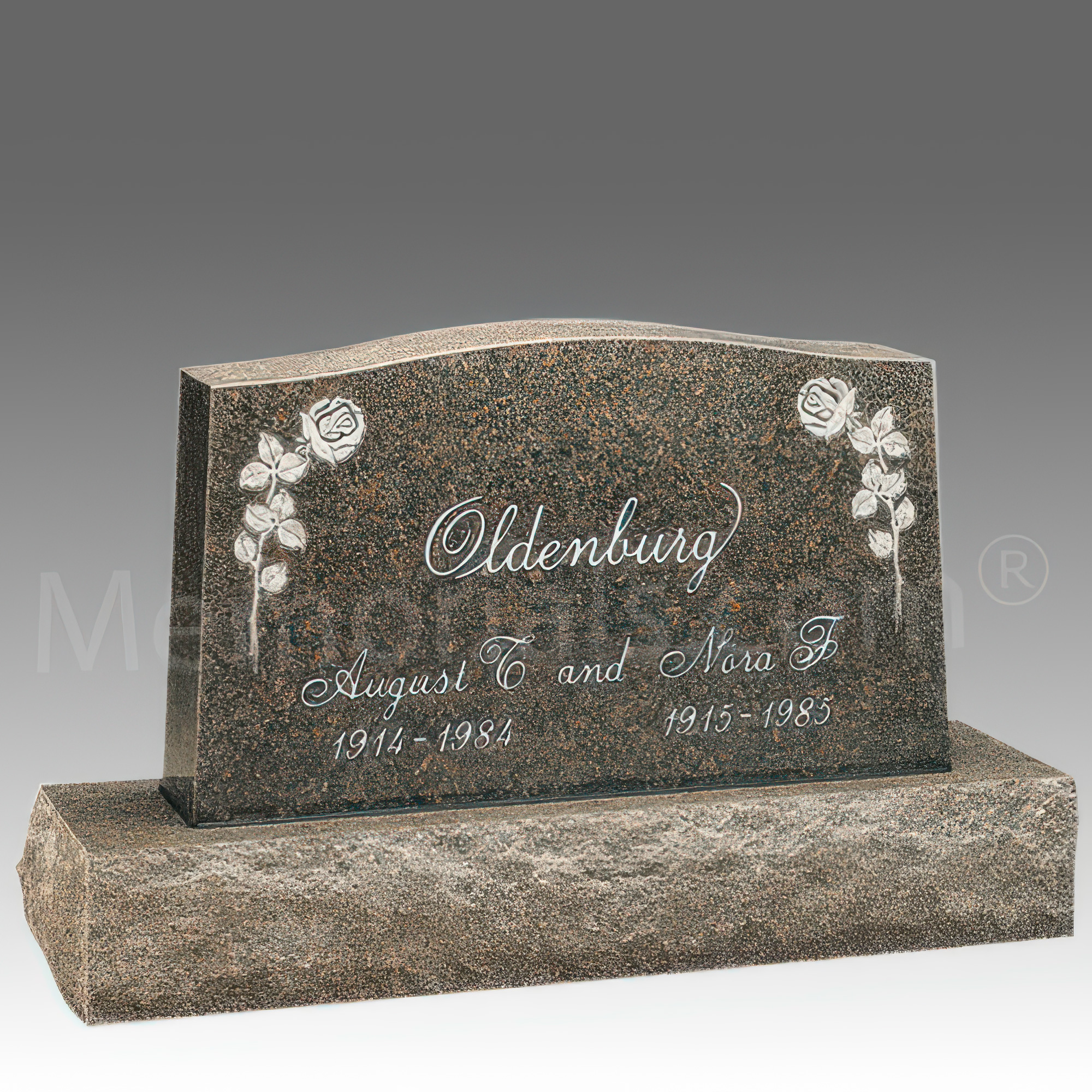
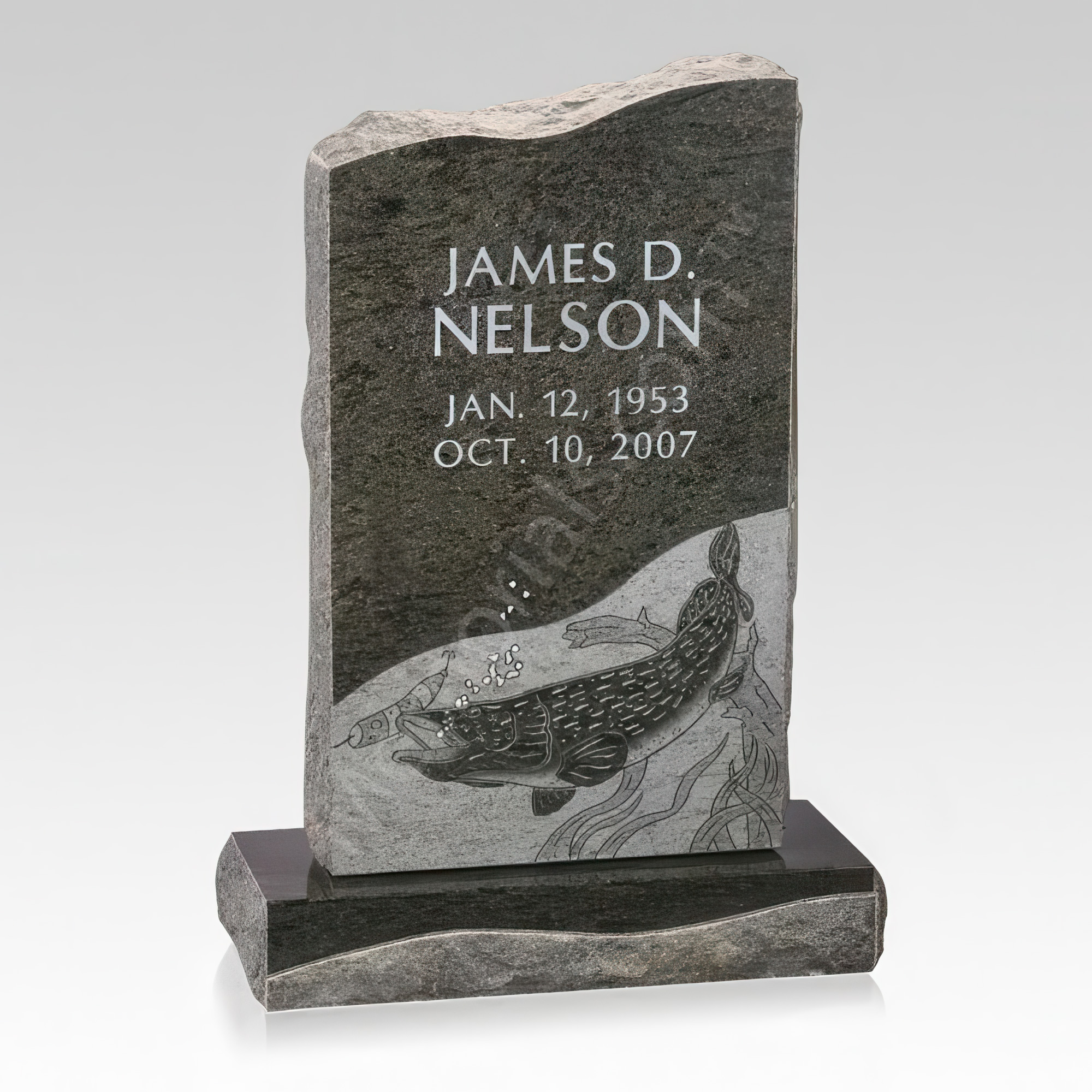
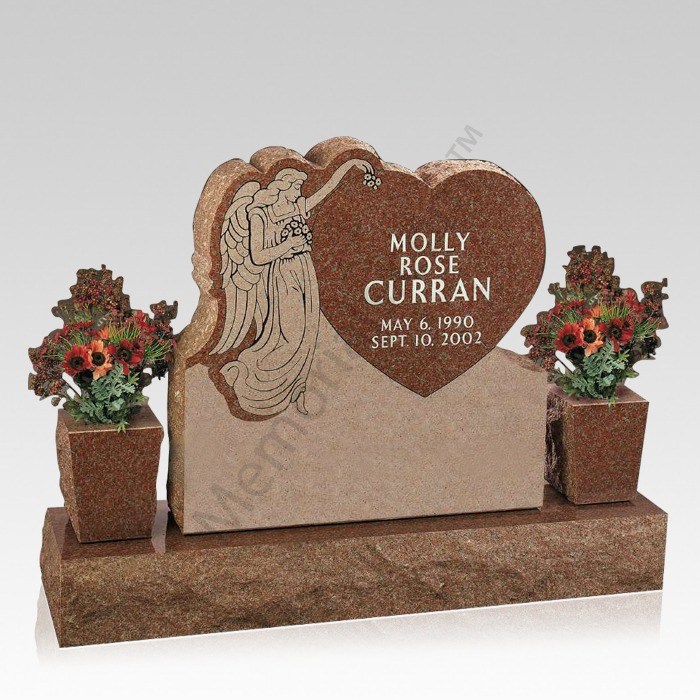
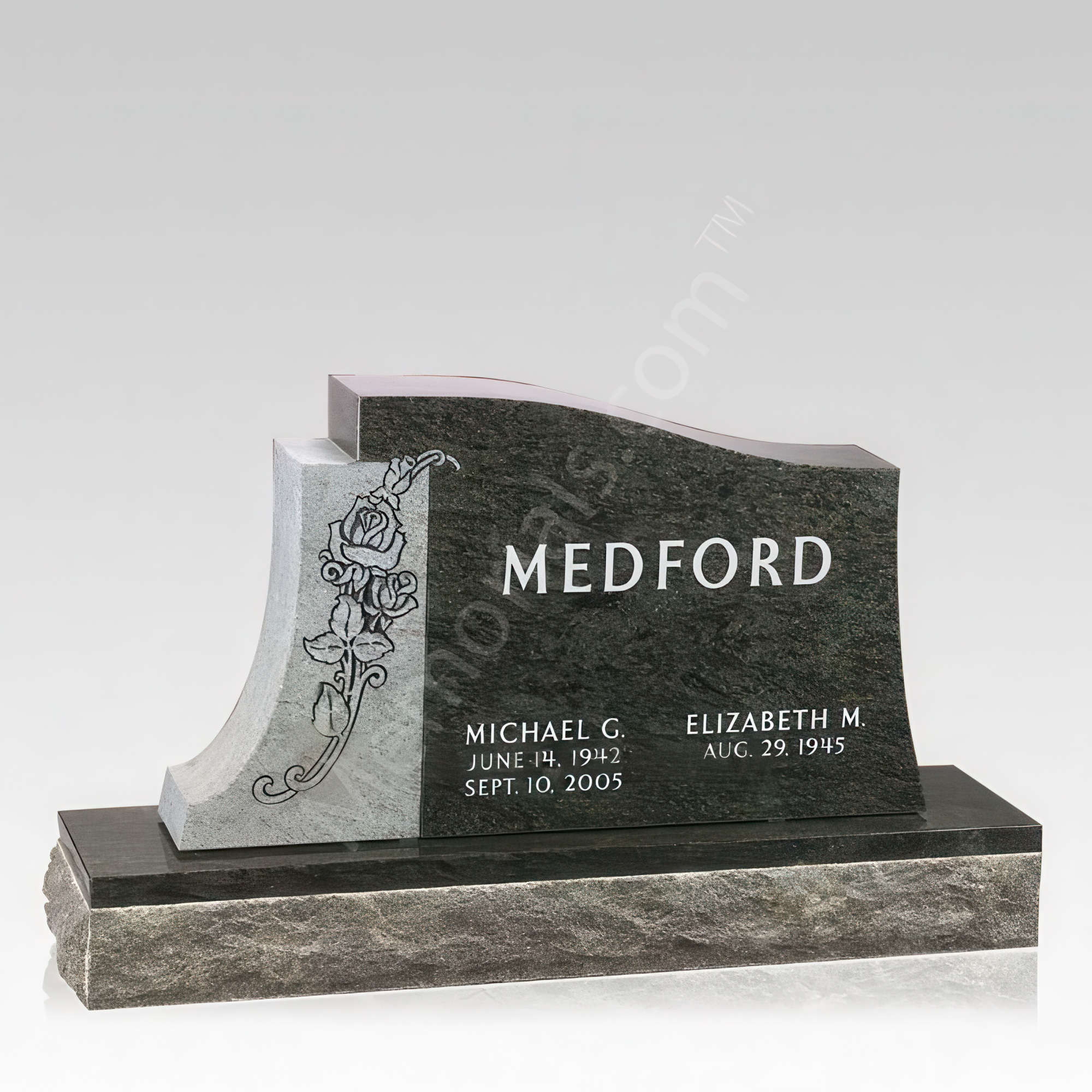
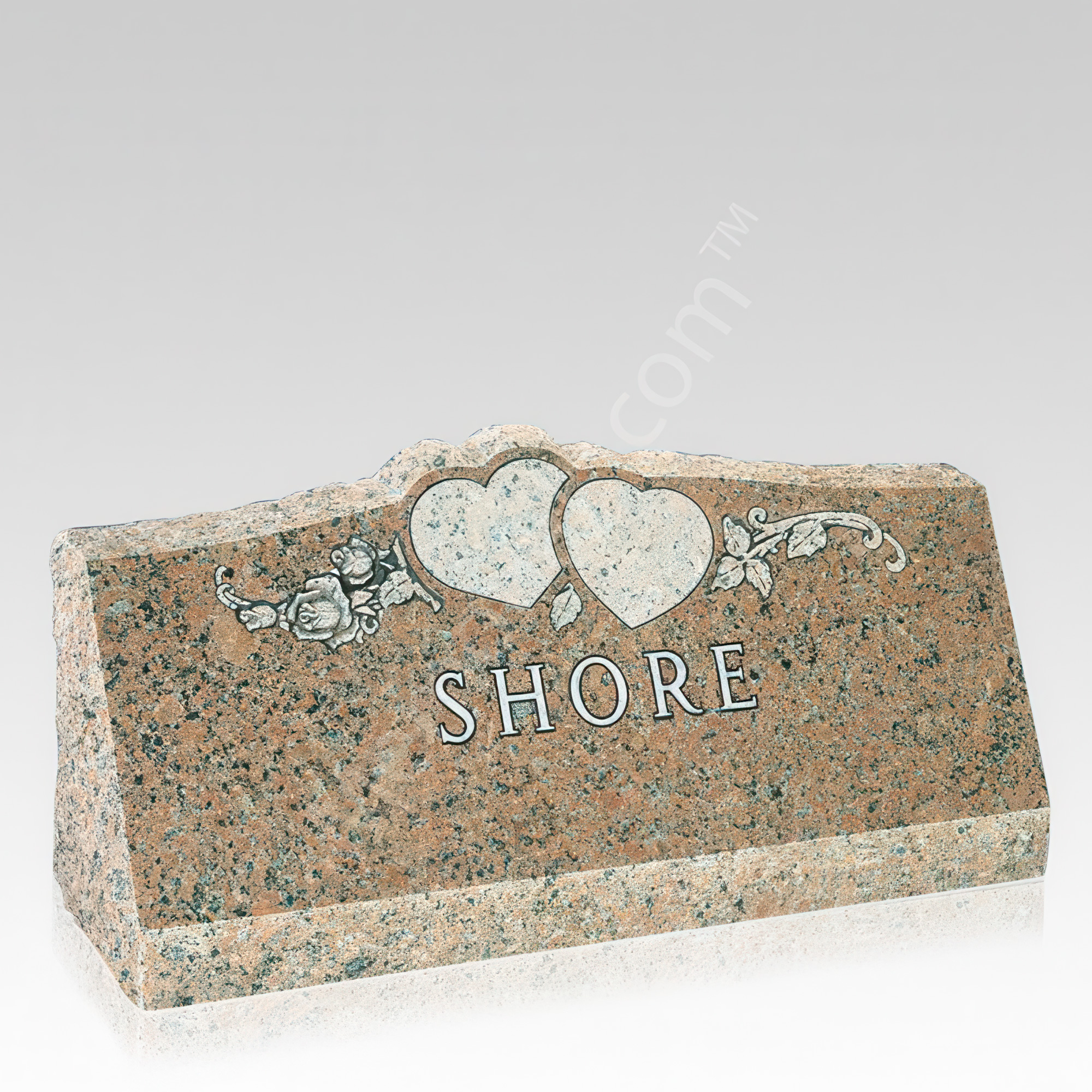
Common upright shapes include the serpentine top, which uses a gentle S-curve across the upper edge for an elegant, flowing silhouette. The half-round or oval top keeps things simple and symmetrical. Peaked or gabled tops introduce architectural lines reminiscent of Gothic cathedrals. And custom silhouettes — hearts, crosses, open books, or nature scenes carved into the stone's profile — give families complete creative freedom.
Upright monuments typically range from 24 to 42 inches tall and 12 to 36 inches wide, though larger estate monuments can exceed those dimensions. The size directly affects what you can include on the stone, from simple name-and-date inscriptions to full portrait etchings or carved scenes.
Flat Headstones and Grave Markers
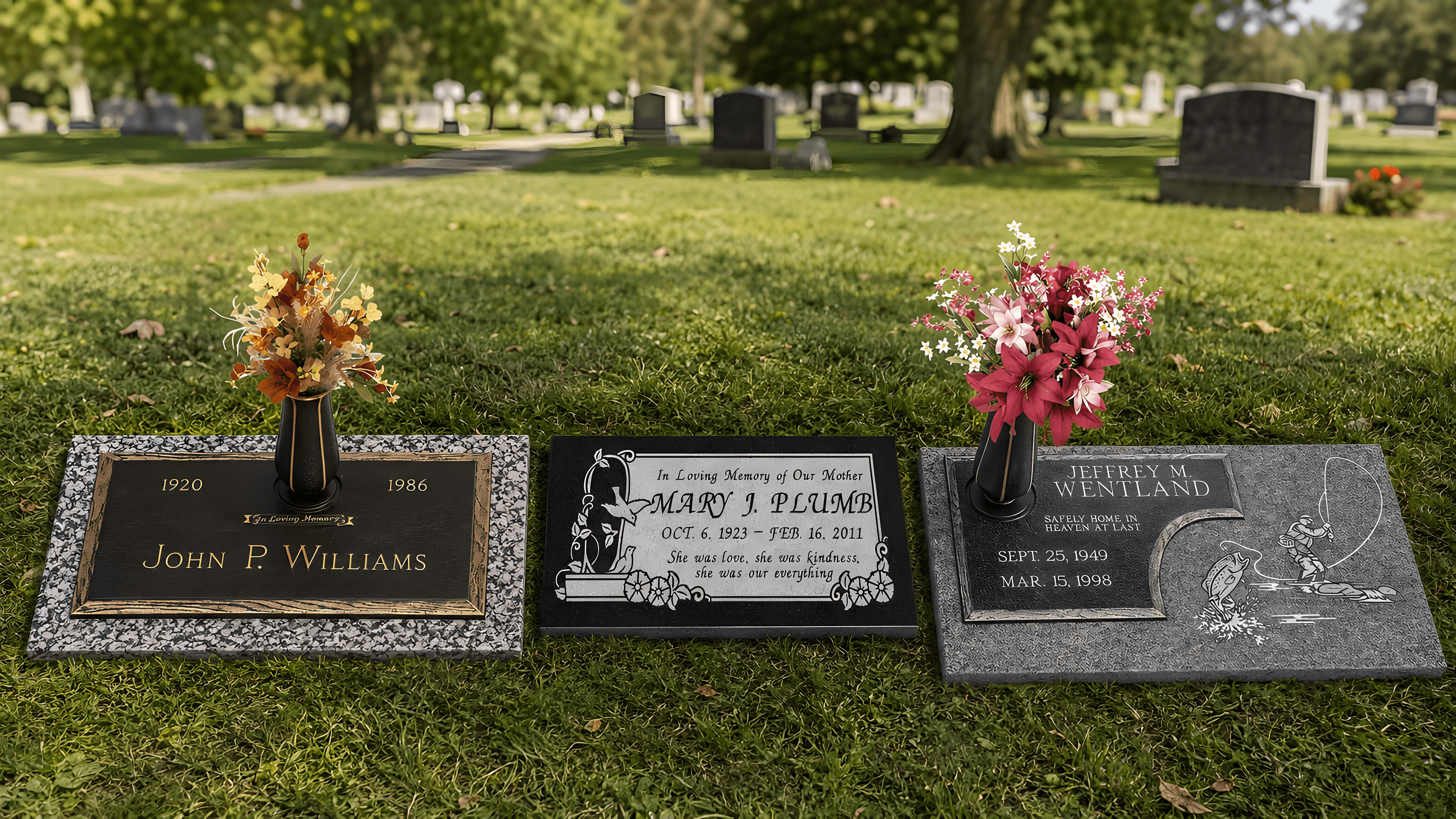
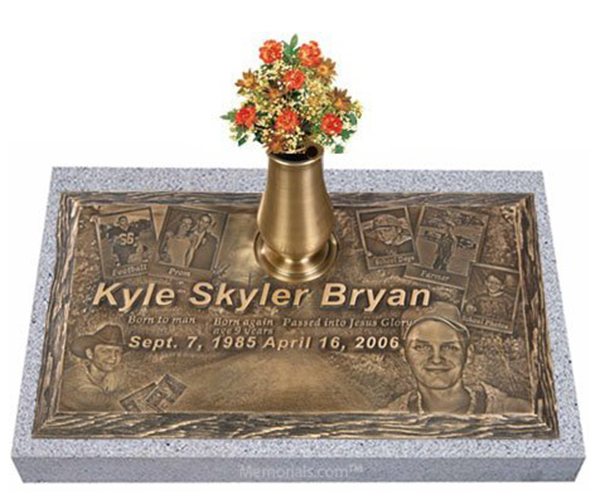
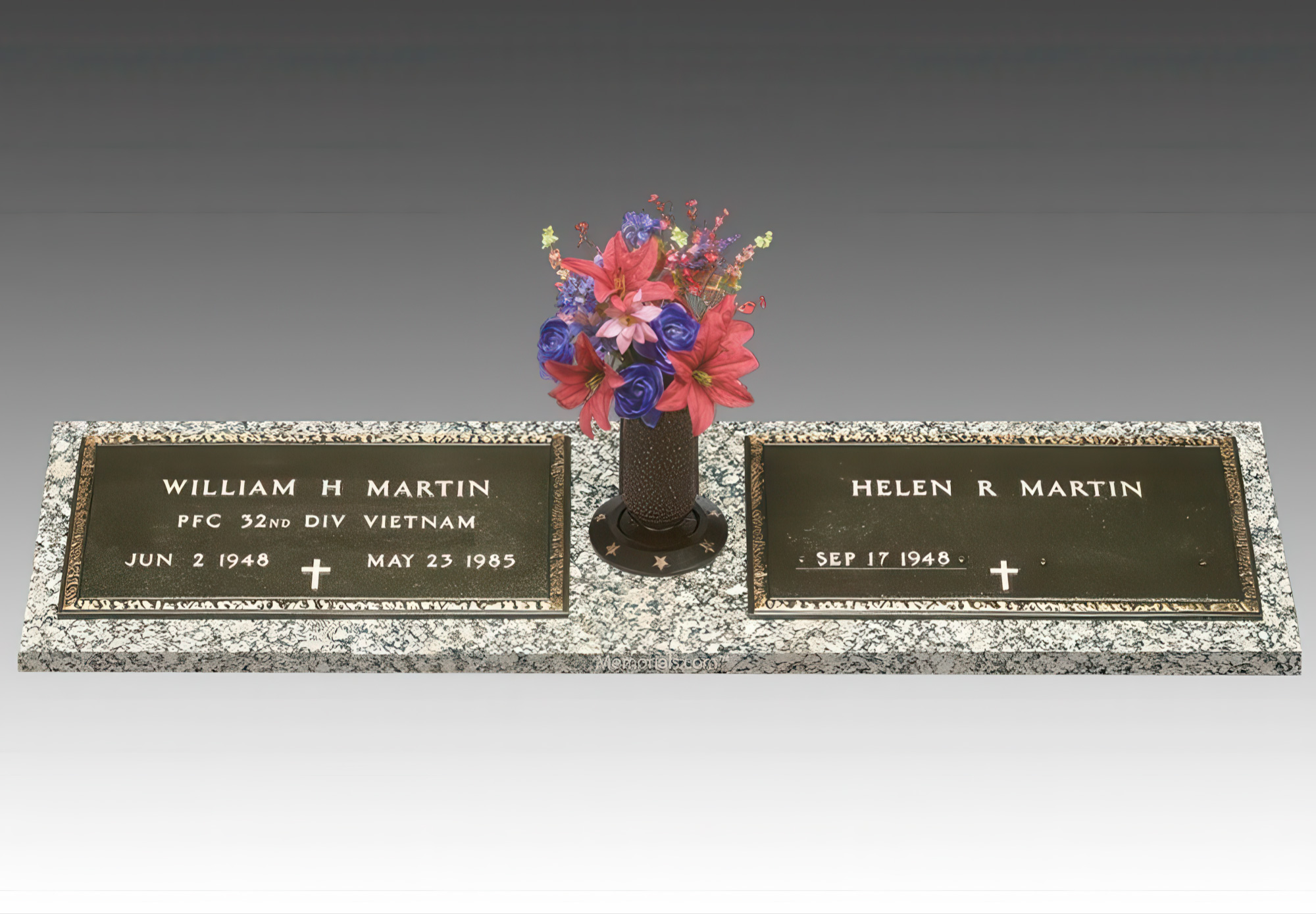
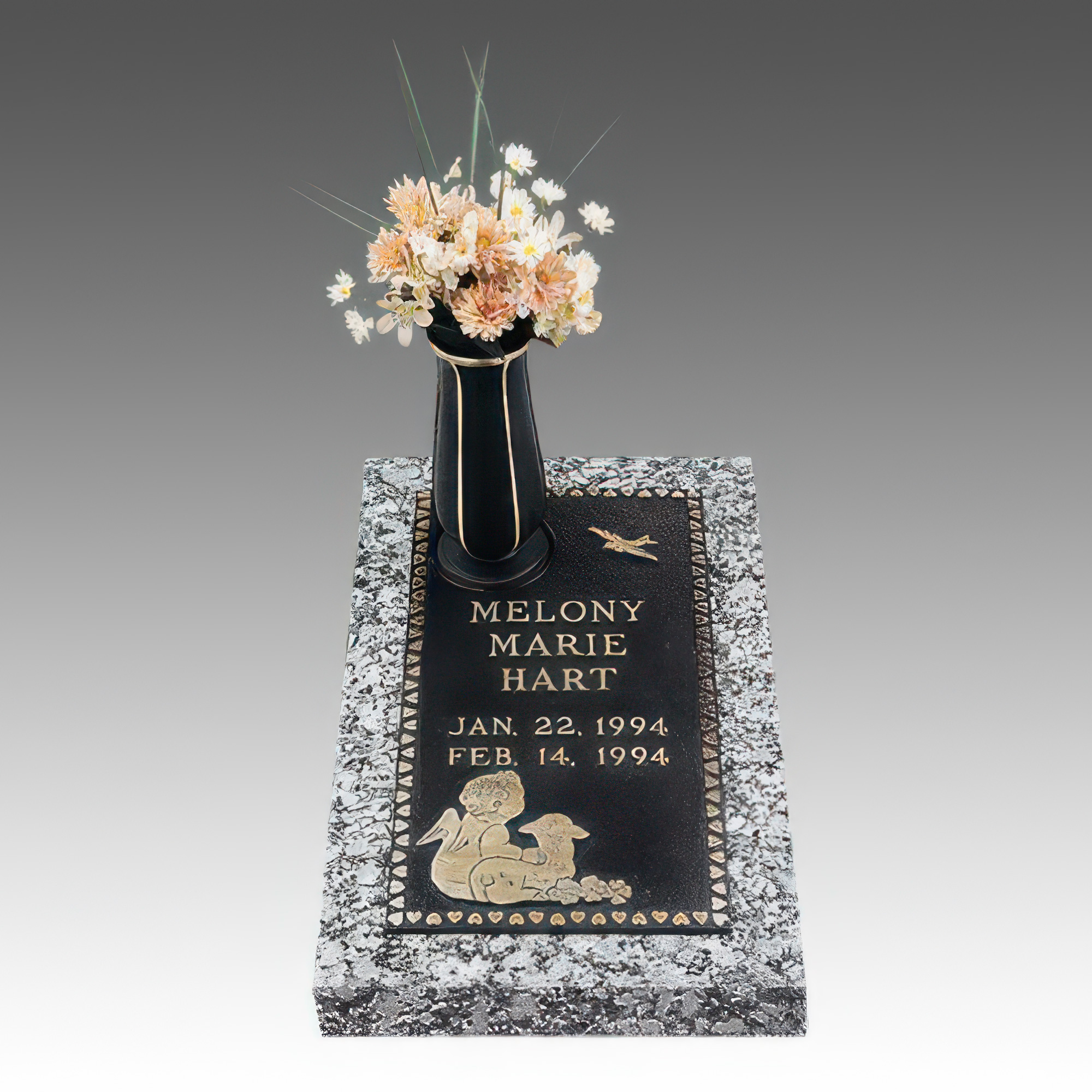
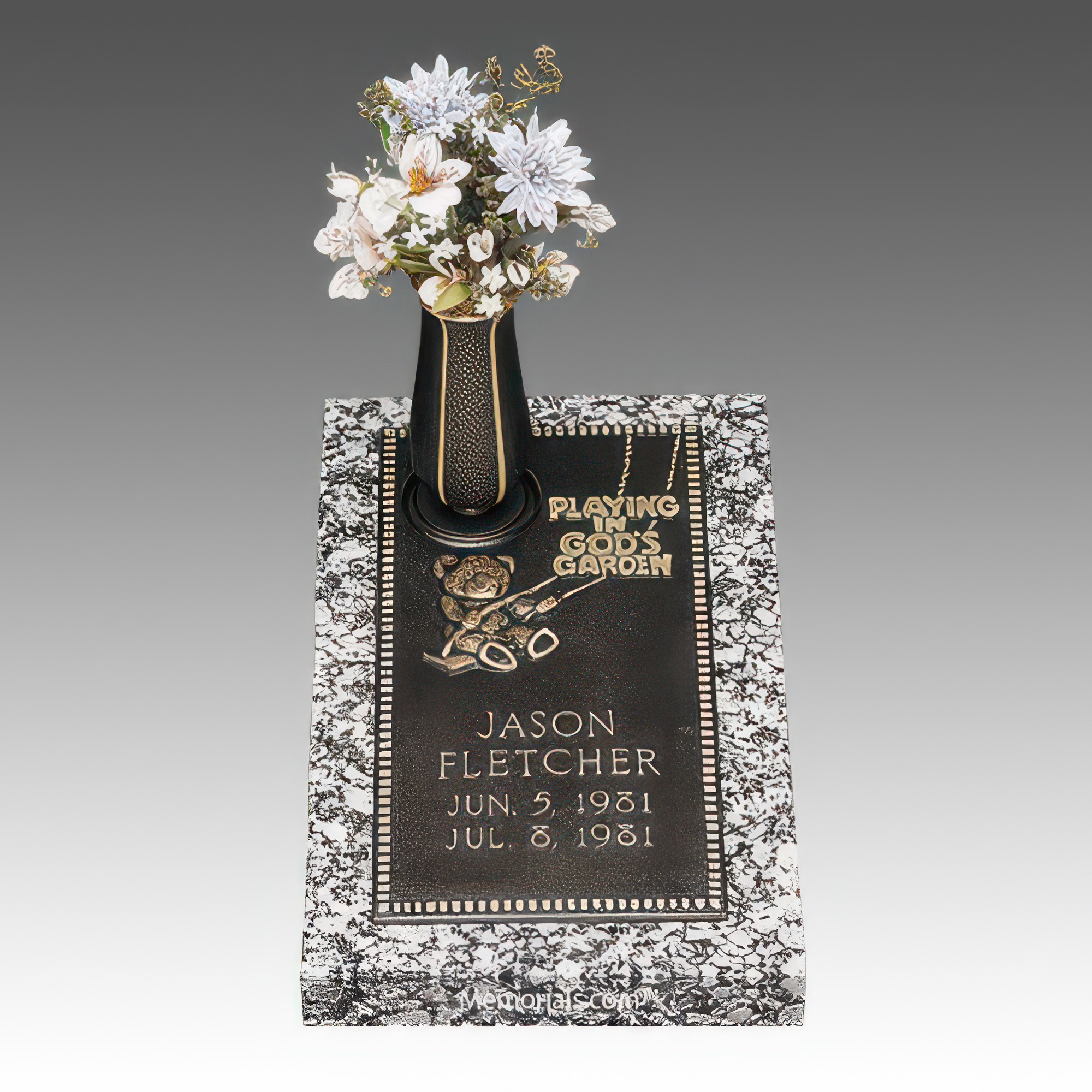
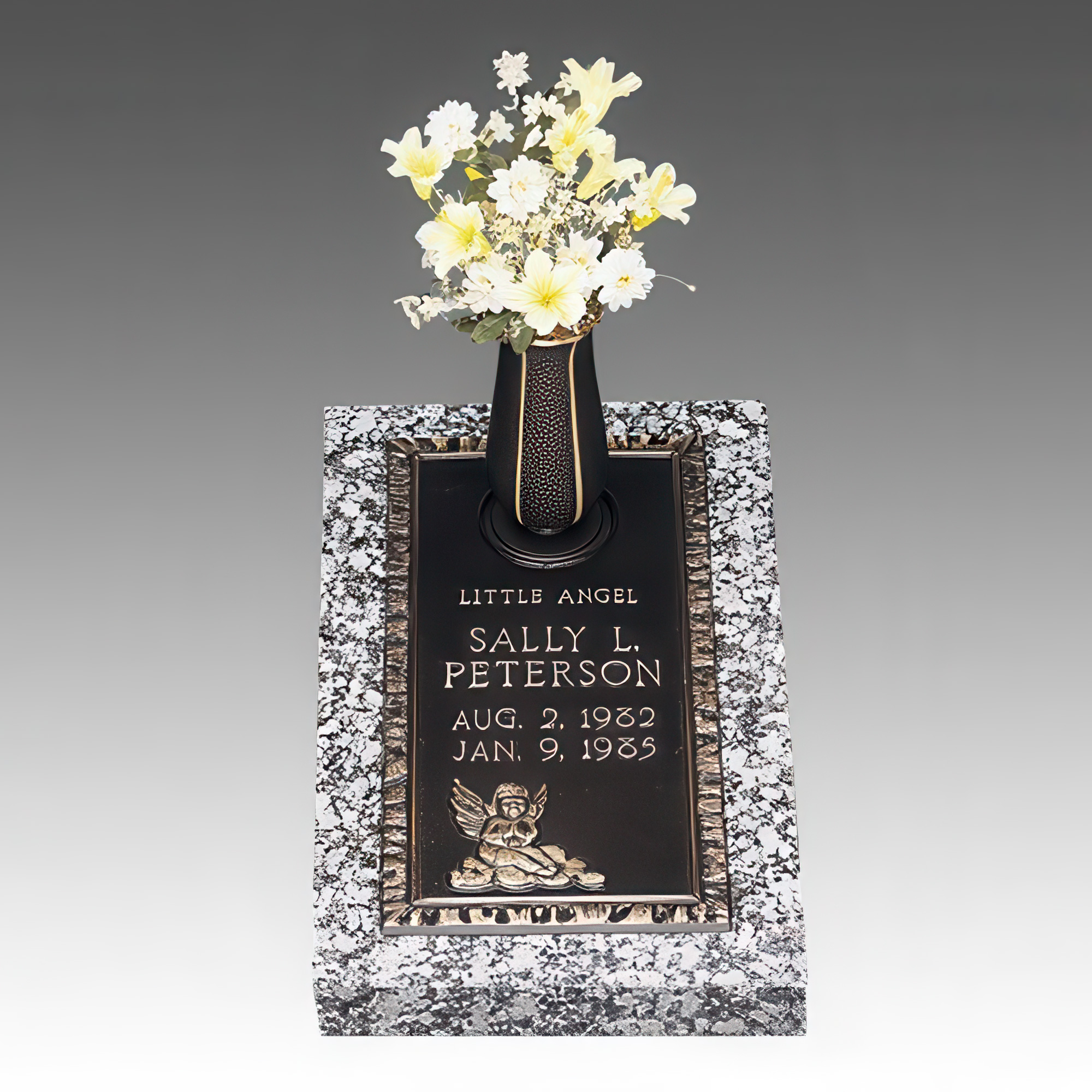
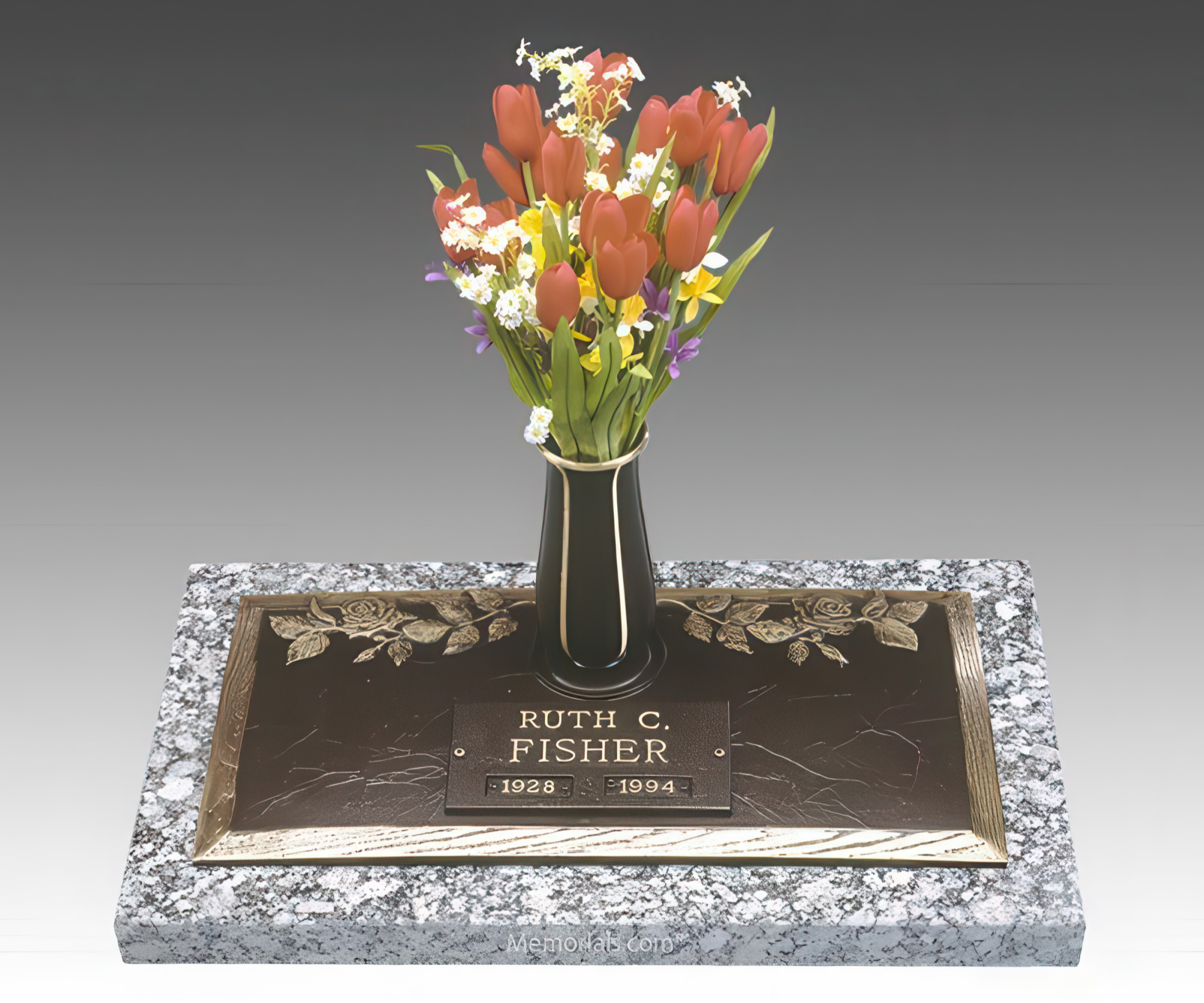
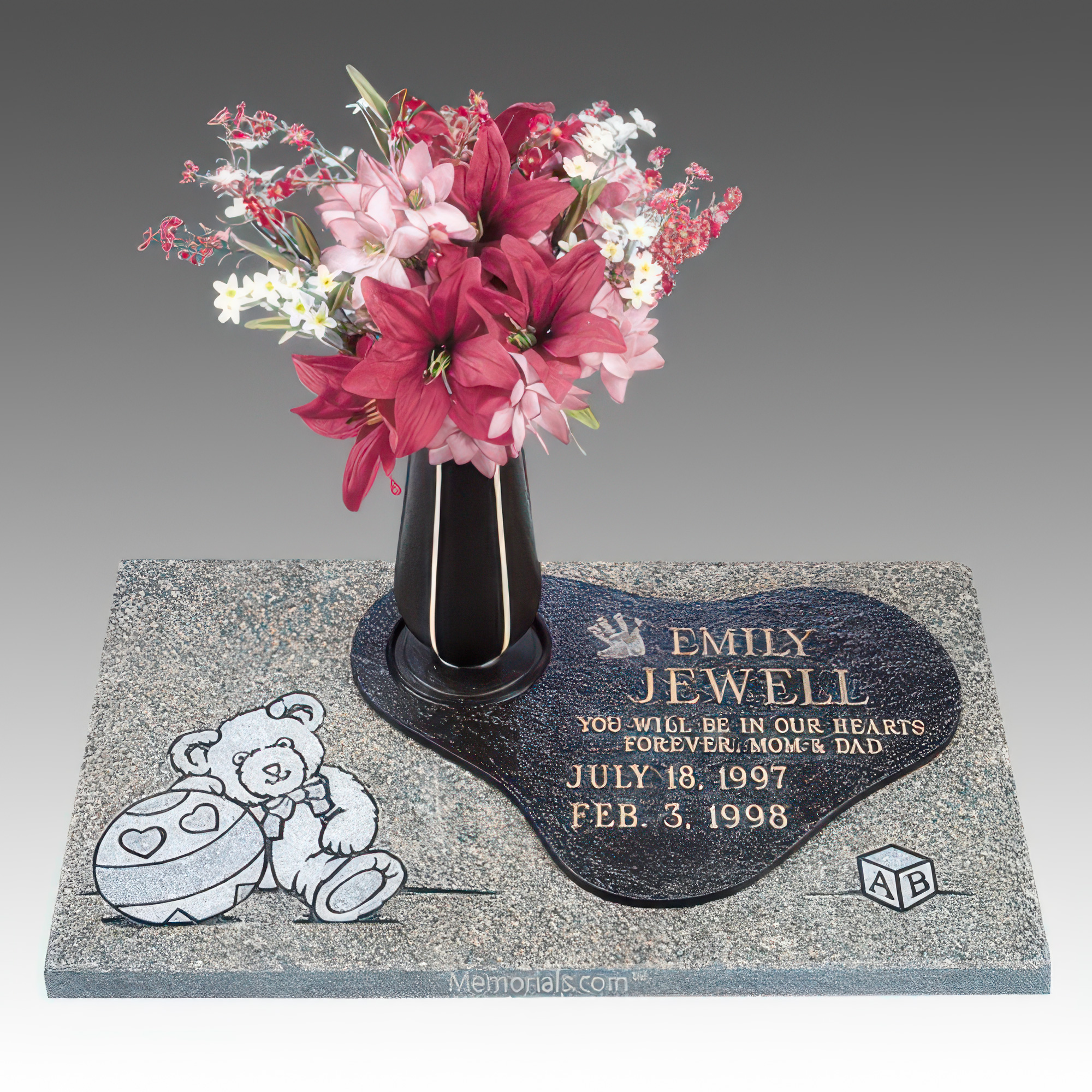
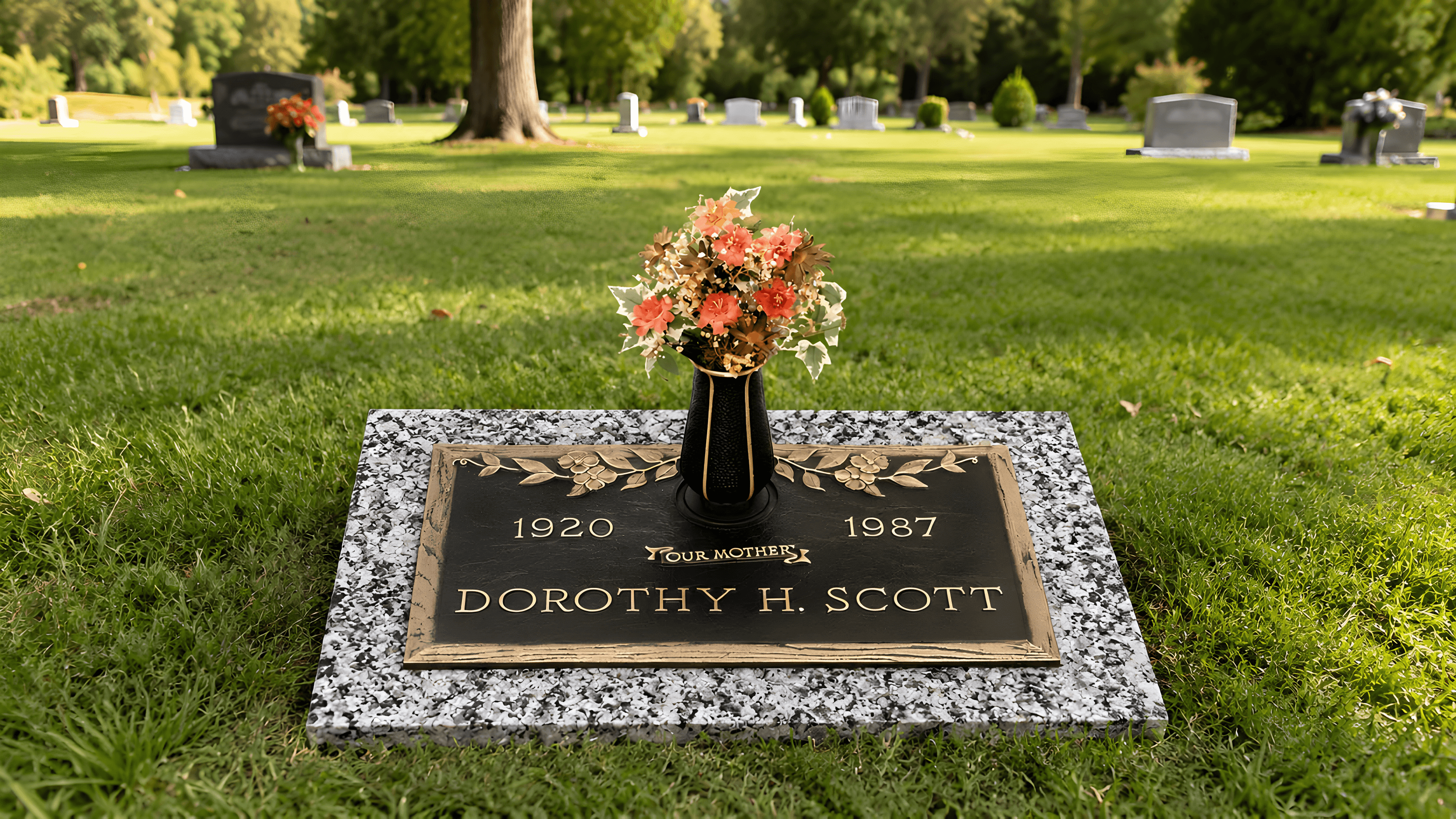
Flat headstones sit flush with the ground or rise just slightly above it. Some families choose them for their understated elegance, while others are guided by cemetery rules that require flush markers for easier groundskeeping. Despite their compact size, flat markers still support engraved text, small etchings, and bronze inlay plaques.
Flat markers work especially well in modern cemetery sections and memorial gardens. They pair naturally with flower vases or flag holders mounted directly into the stone or set alongside it. If the cemetery permits both styles, the choice between flat and upright often comes down to personal preference and budget.
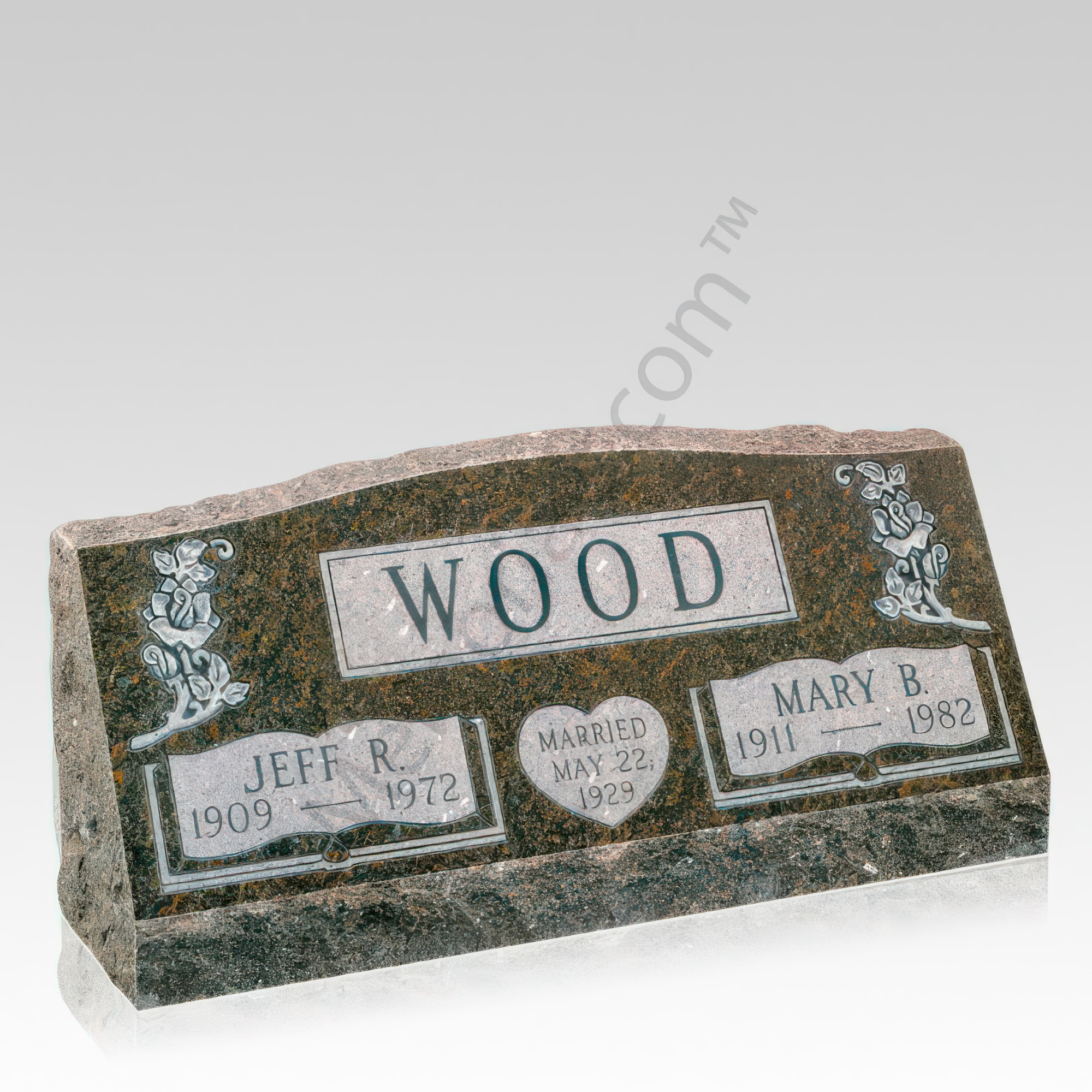
Slant Headstones
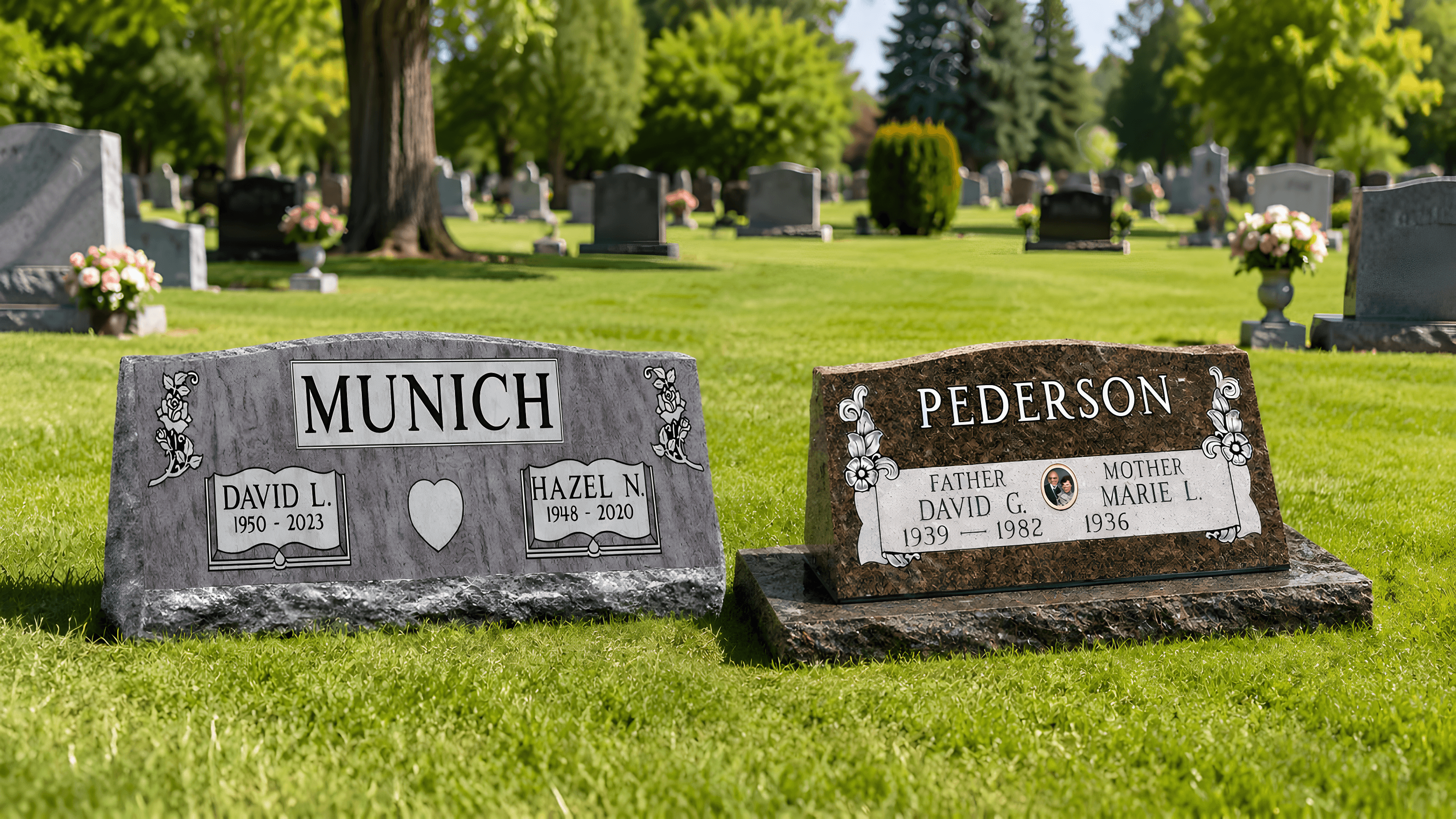
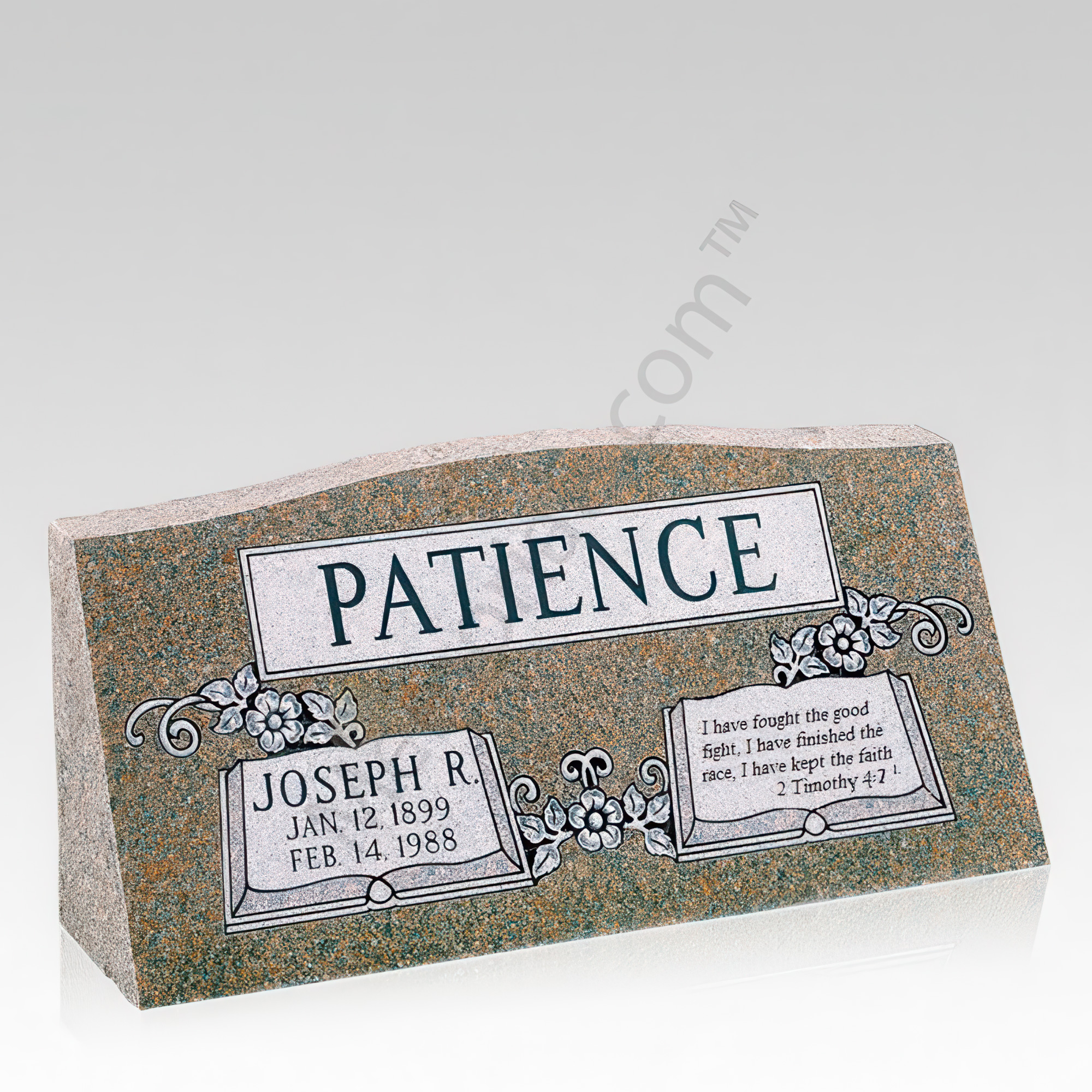
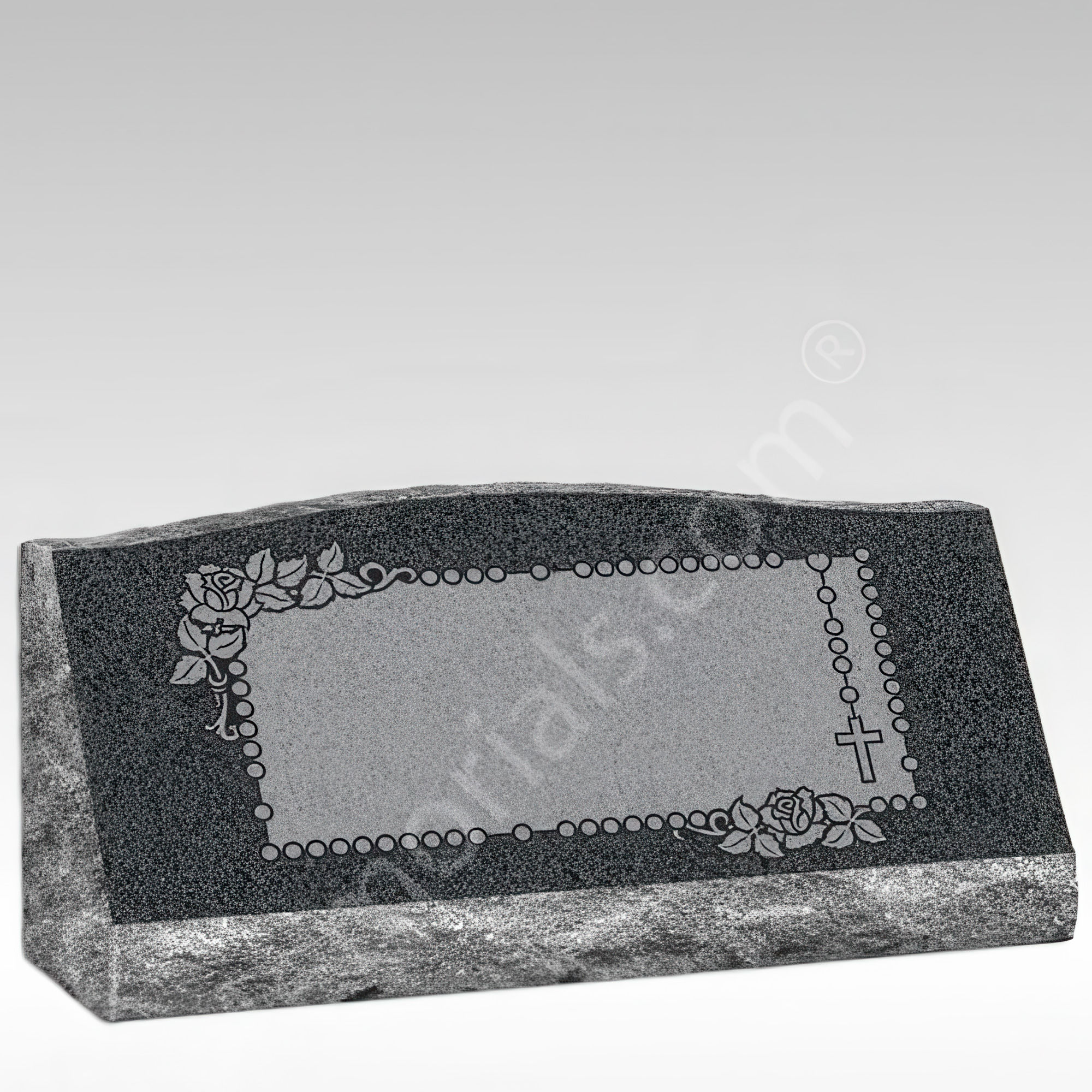
A slant marker sits at an angled position on a granite base, tilting the face upward toward visitors. This style splits the difference between the visibility of an upright monument and the subtlety of a flat marker. The angled face is easy to read without bending down, and it supports the same engraving and etching techniques used on upright stones.
Slant markers are particularly popular for families who want a traditional look without the full height of an upright monument. They also tend to cost less than upright headstones of comparable quality, making them a practical middle ground.
Memorial bench headstones combine function and tribute in a single piece. The bench seat offers visitors a place to sit and reflect, while the backrest or seat surface carries the inscription and design elements. Bench memorials are often placed in garden-style cemeteries or family plots where they serve as gathering points for remembrance.
Ledger Markers and Full-Coverage Stones
Ledger markers cover the entire gravesite with a single large slab of granite, typically 3 to 4 feet wide and 6 to 8 feet long. This style makes a substantial visual statement and provides extensive space for inscriptions, symbols, and decorative borders. Ledger markers are less common than upright or flat styles, but they carry a sense of permanence and grandeur that other shapes cannot match.
Headstone Materials and Finishes
The material you choose affects the headstone's appearance, durability, cost, and engraving options. Three materials dominate the modern headstone market.
Granite
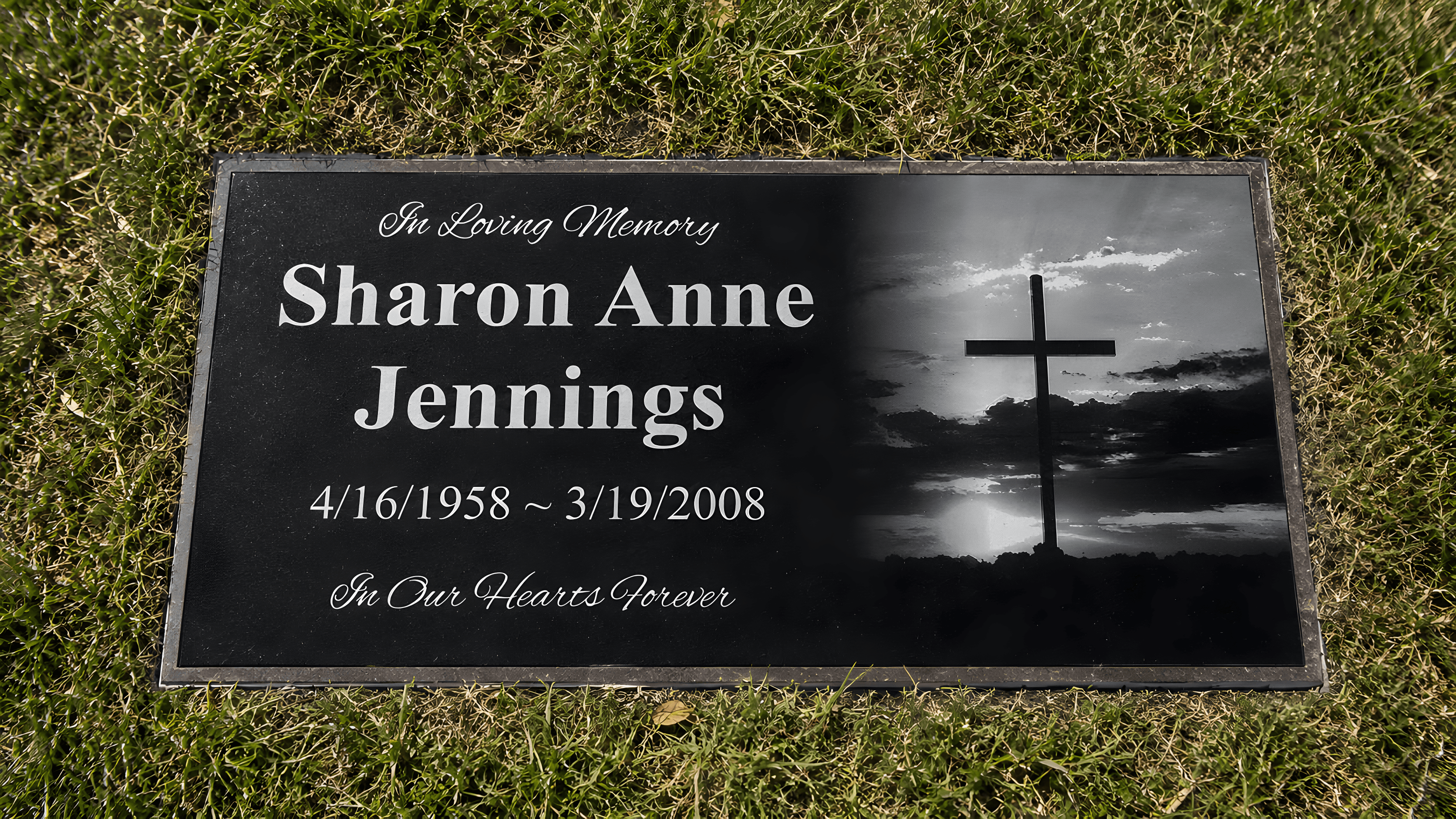
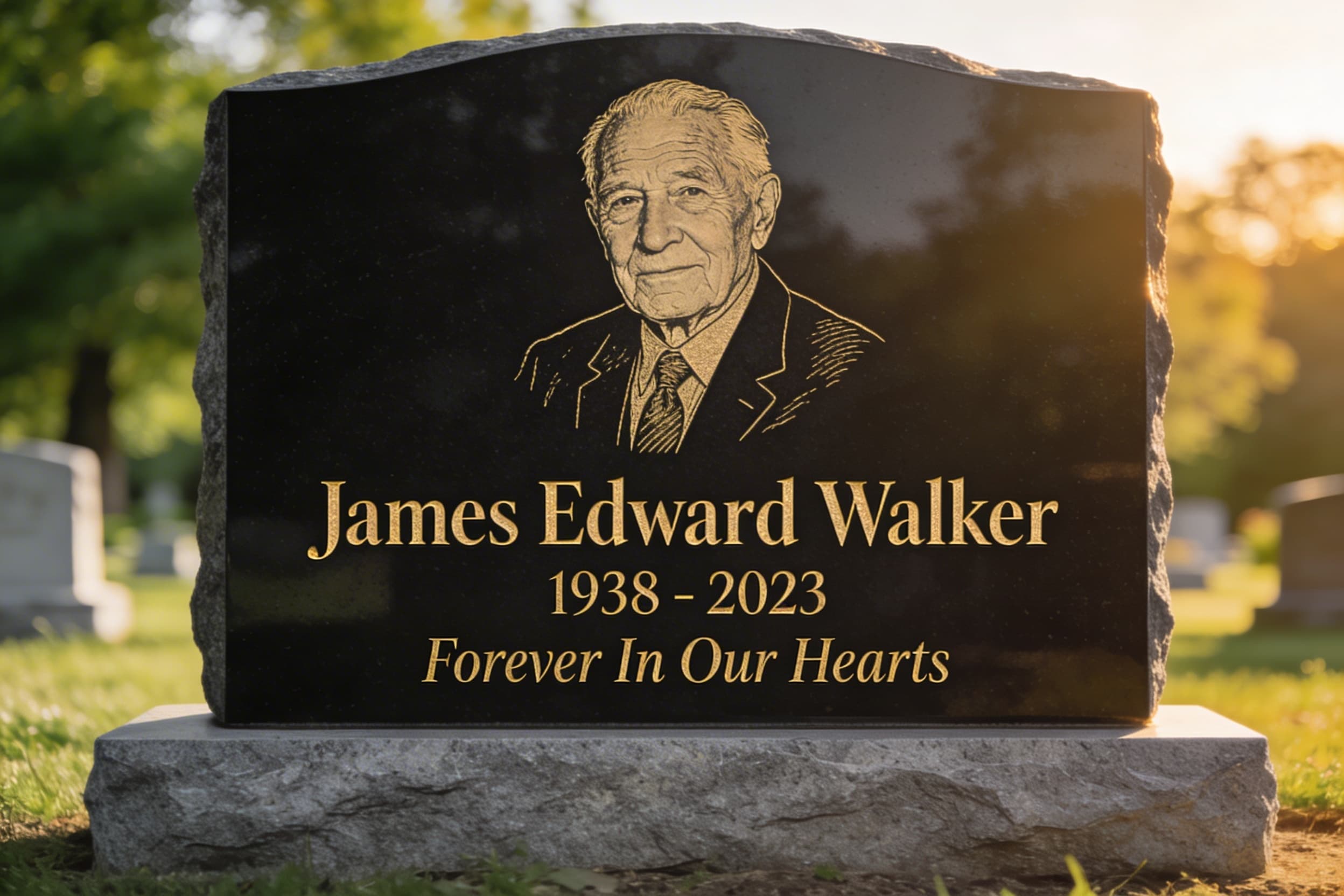
Granite is the most widely used headstone material in the United States, and for good reason. It resists weathering, accepts both engraving and etching with crisp detail, and comes in dozens of natural colors. Gray granite is the most affordable and widely available option. Black granite produces the sharpest laser-etched images and offers dramatic contrast for white or gold lettering. Other popular colors include mahogany, blue pearl, imperial red, and emerald green.
Families drawn to dark stone should explore black granite headstone designs, which showcase the material's ability to hold photographic-quality laser etchings and high-contrast inscriptions.
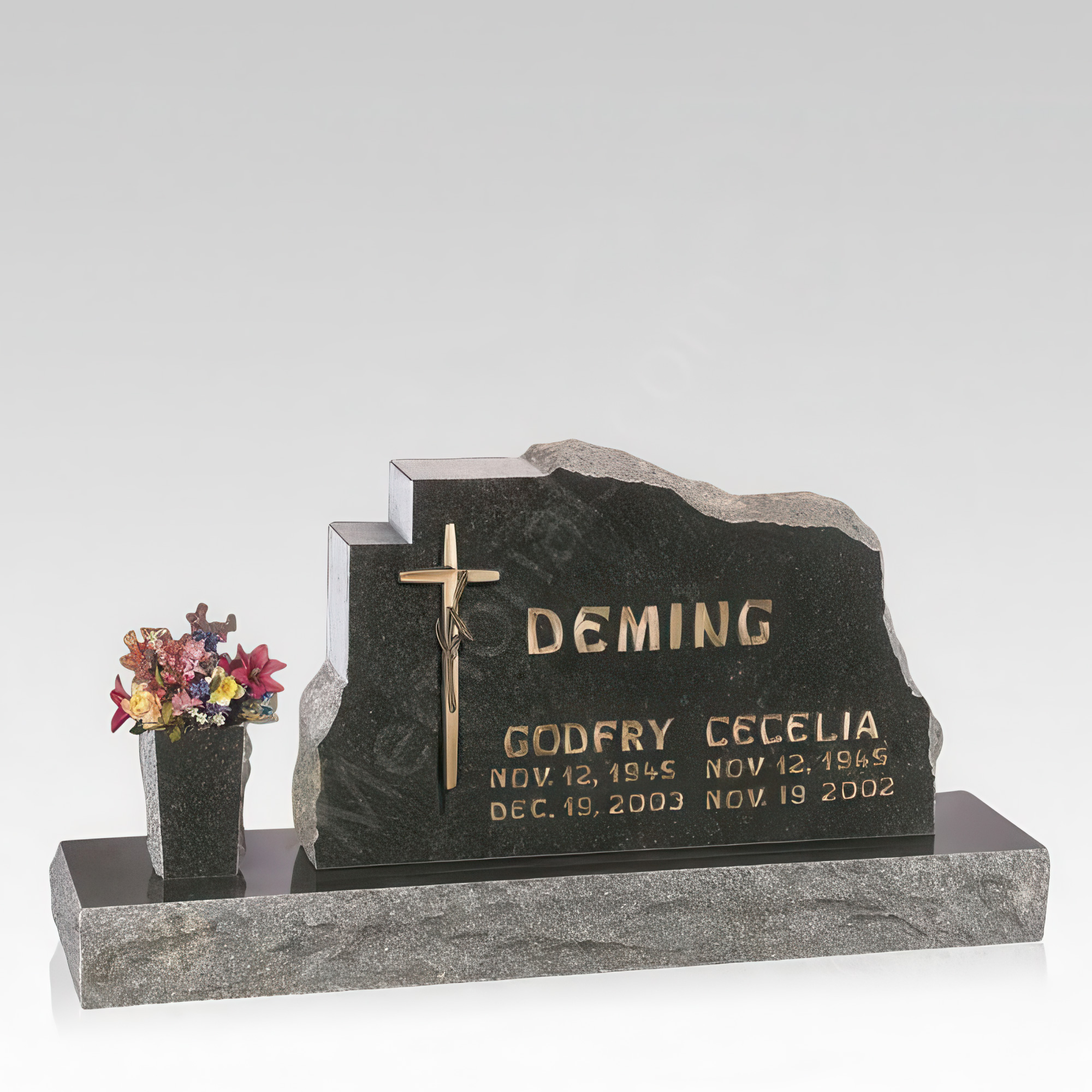
Granite finishes affect the stone's texture and reflectivity. Polished finishes create a mirror-like surface ideal for laser etching. Honed or steeled finishes leave a smooth but matte surface that softens the stone's appearance. Rustic or rock-pitched edges leave the natural stone texture exposed around the borders, framing the polished face with raw character.
Browse Our Most Popular Headstones & Grave Markers
Handcrafted memorials to honor your loved one for eternity
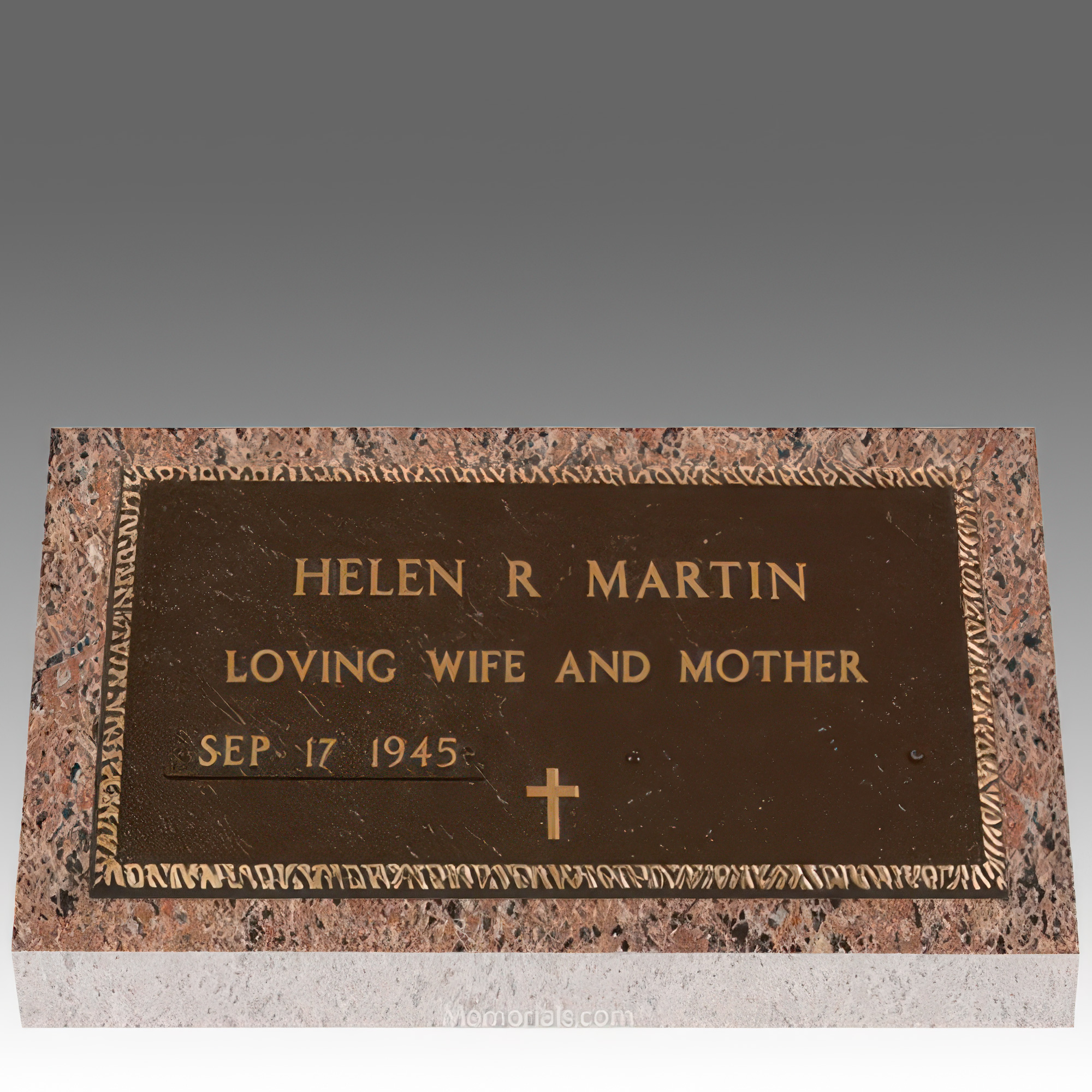
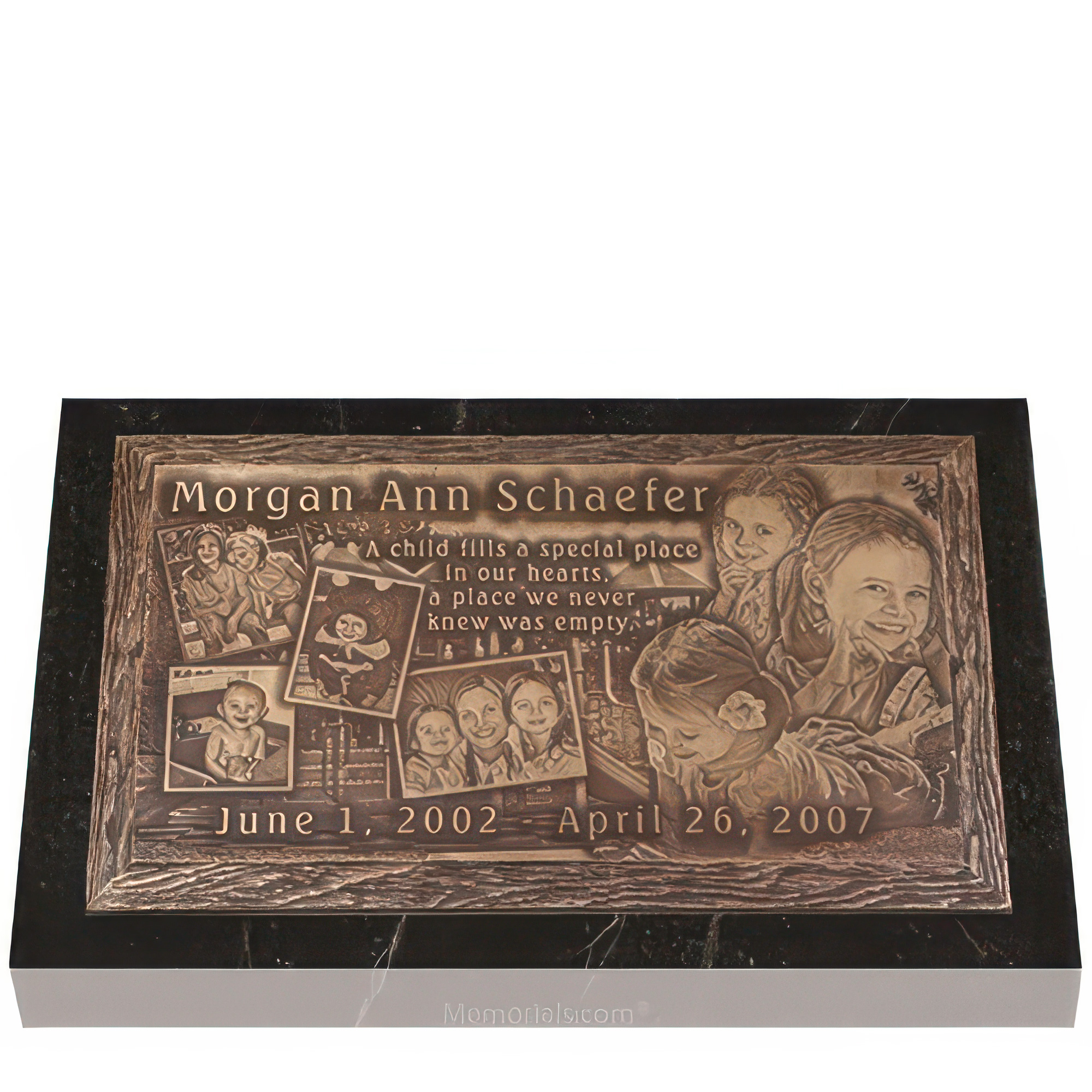
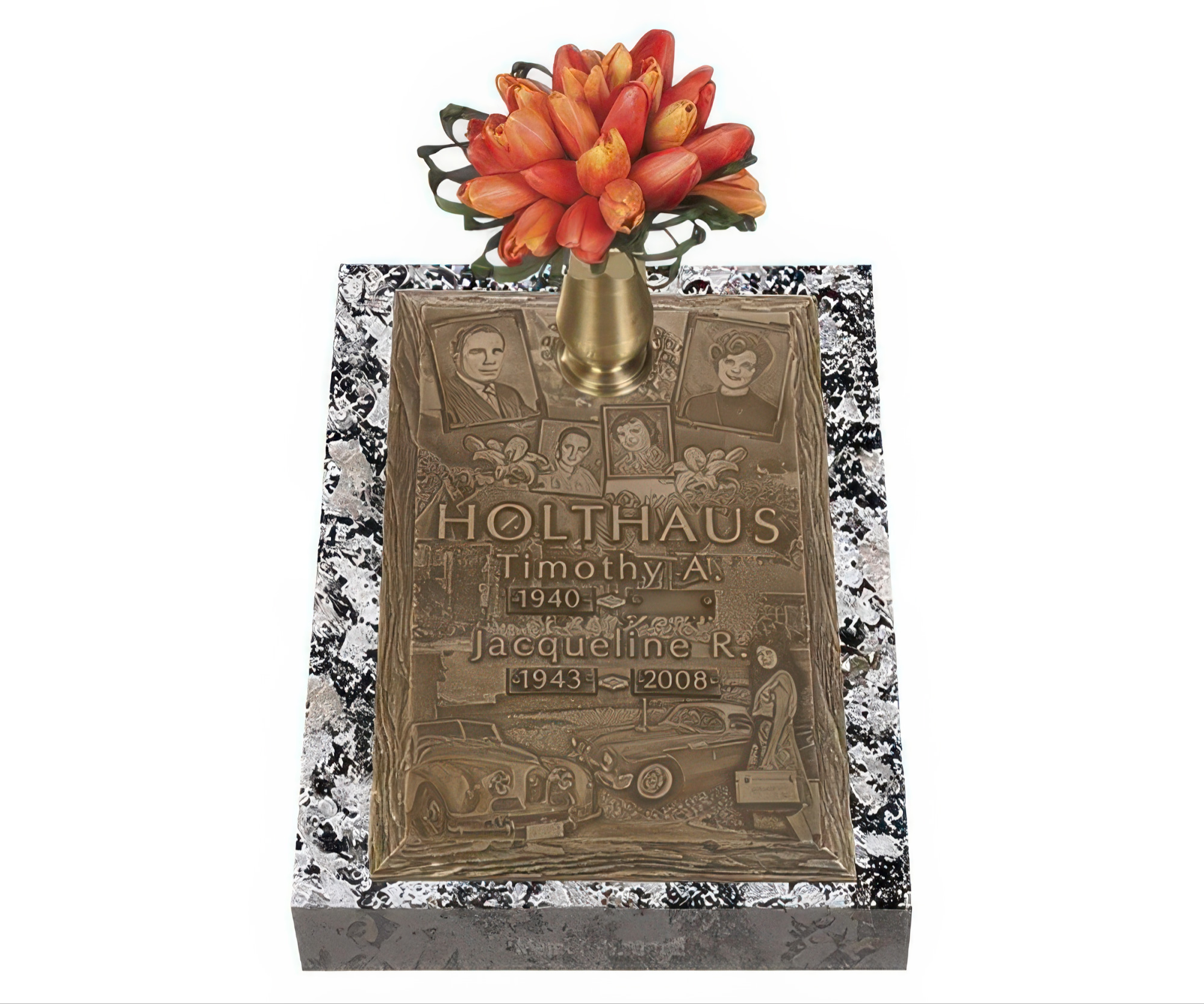
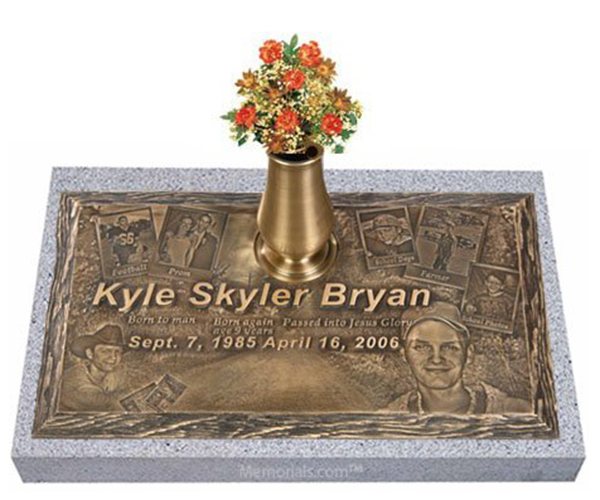
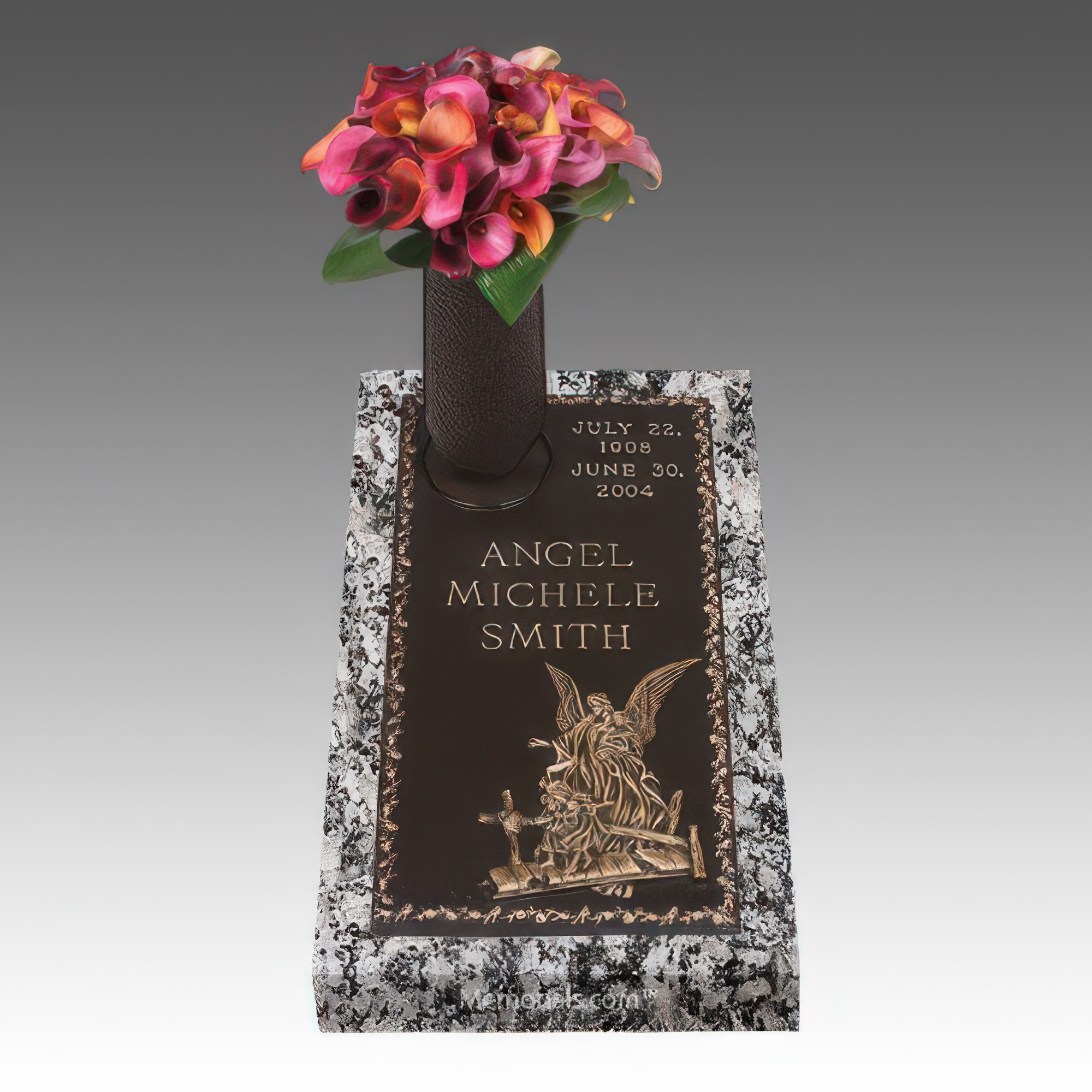
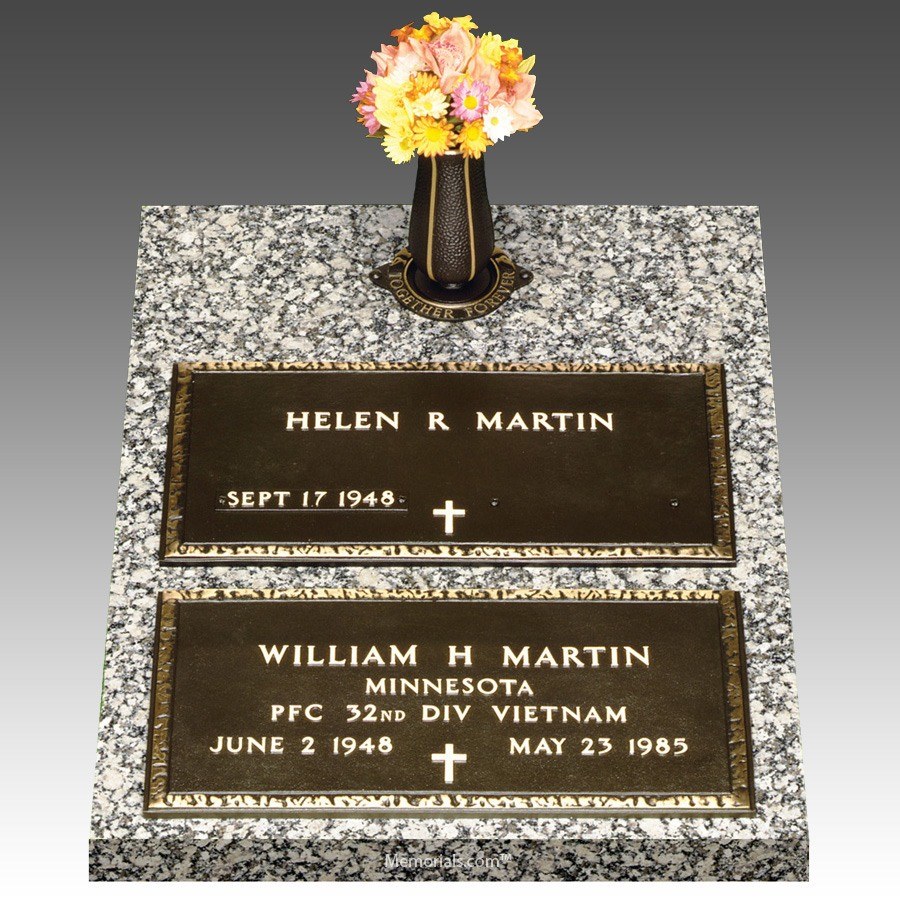
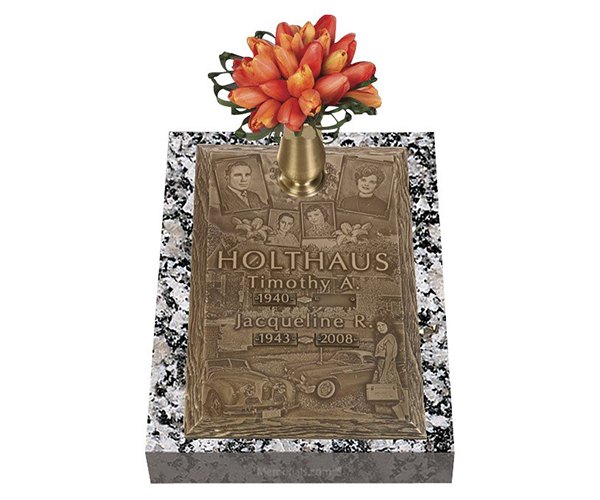
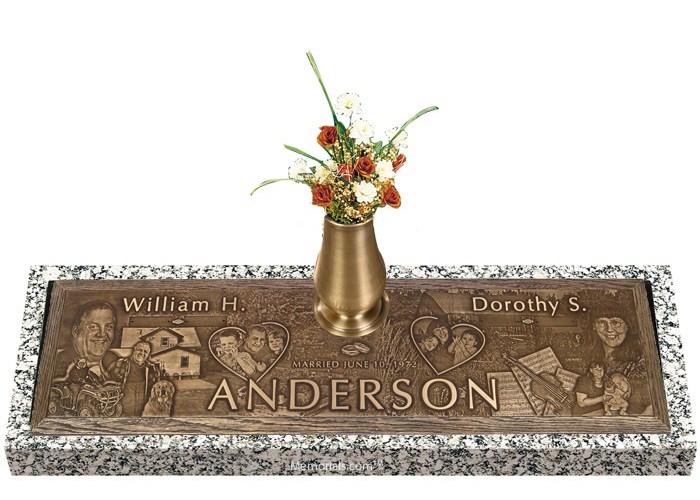
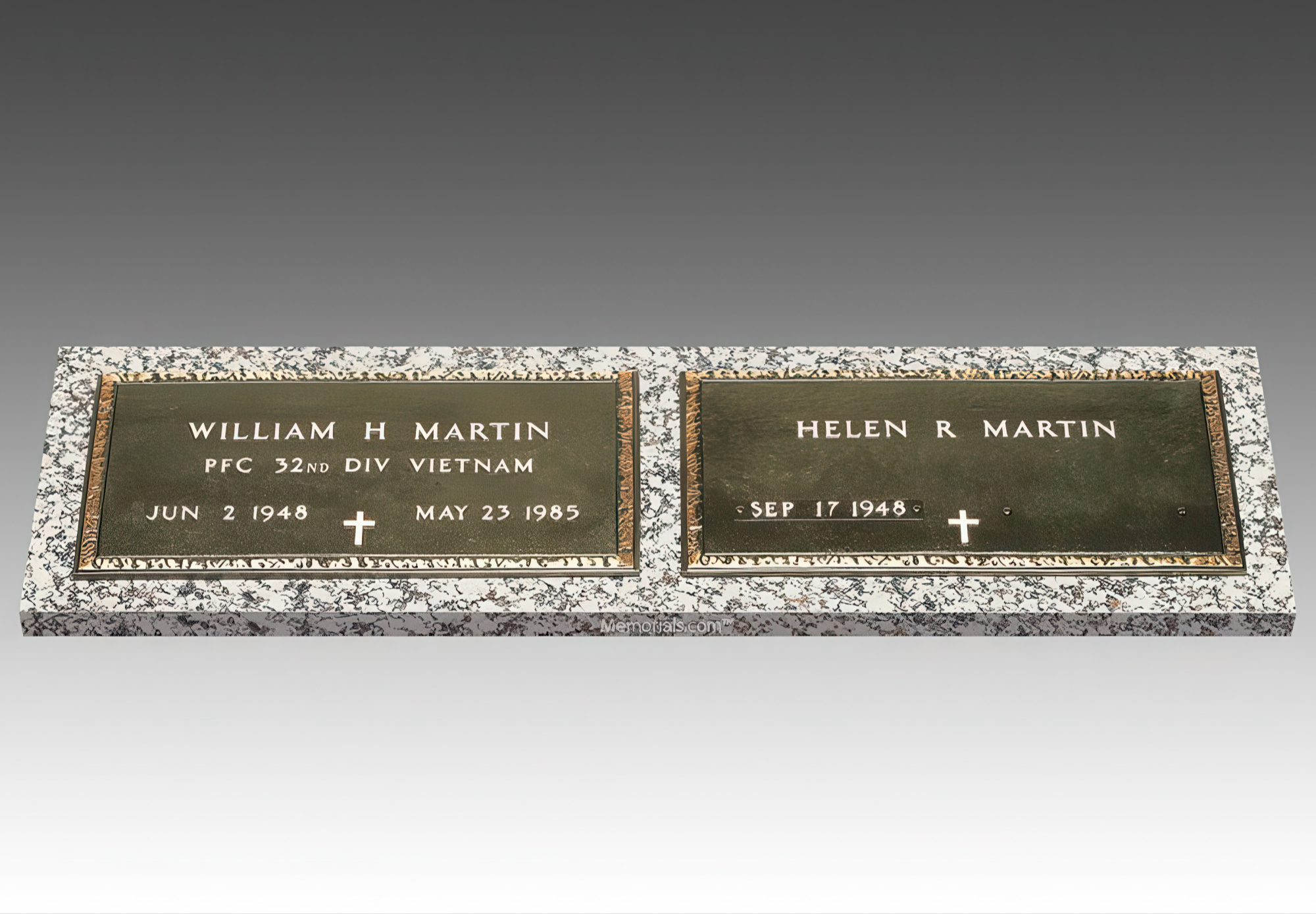
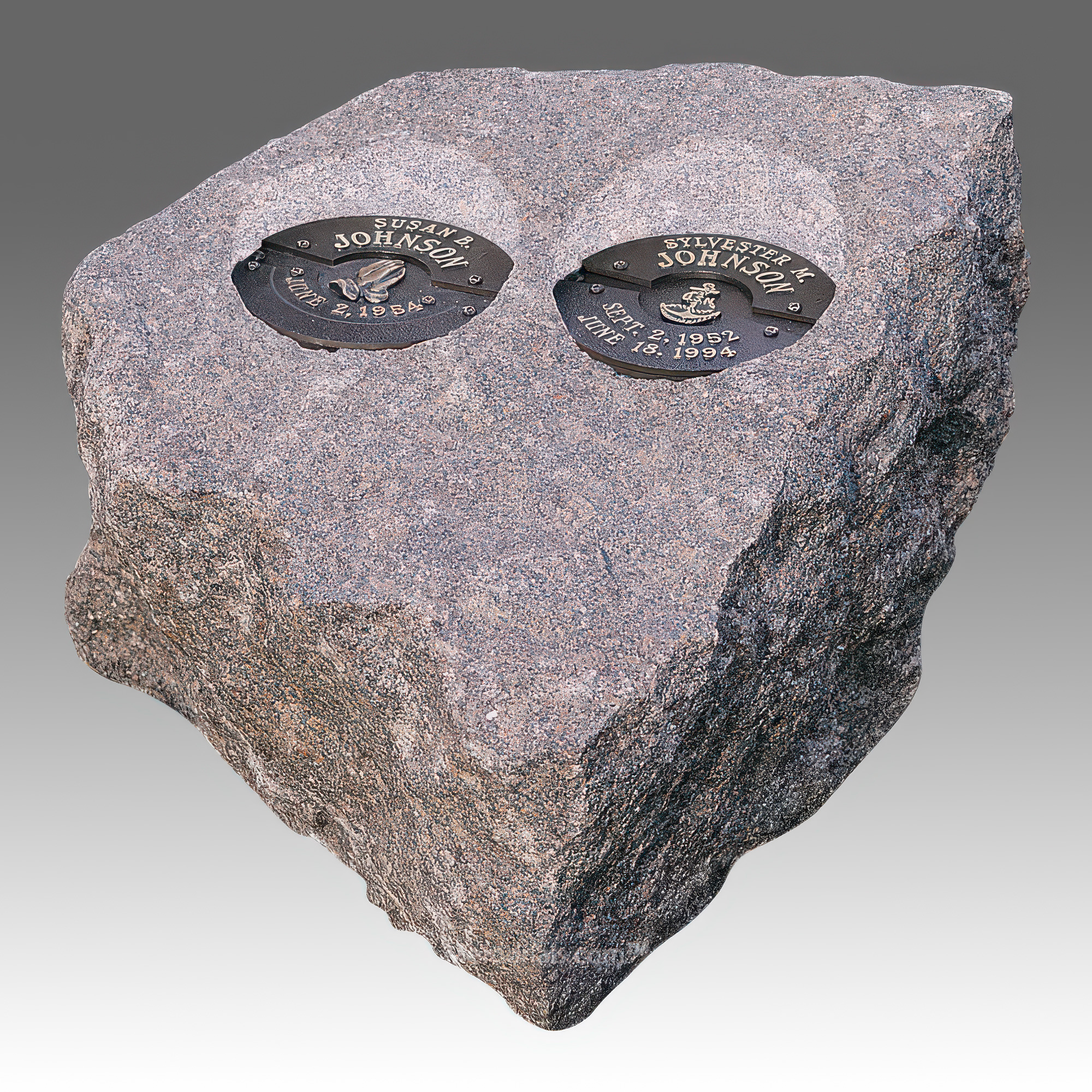
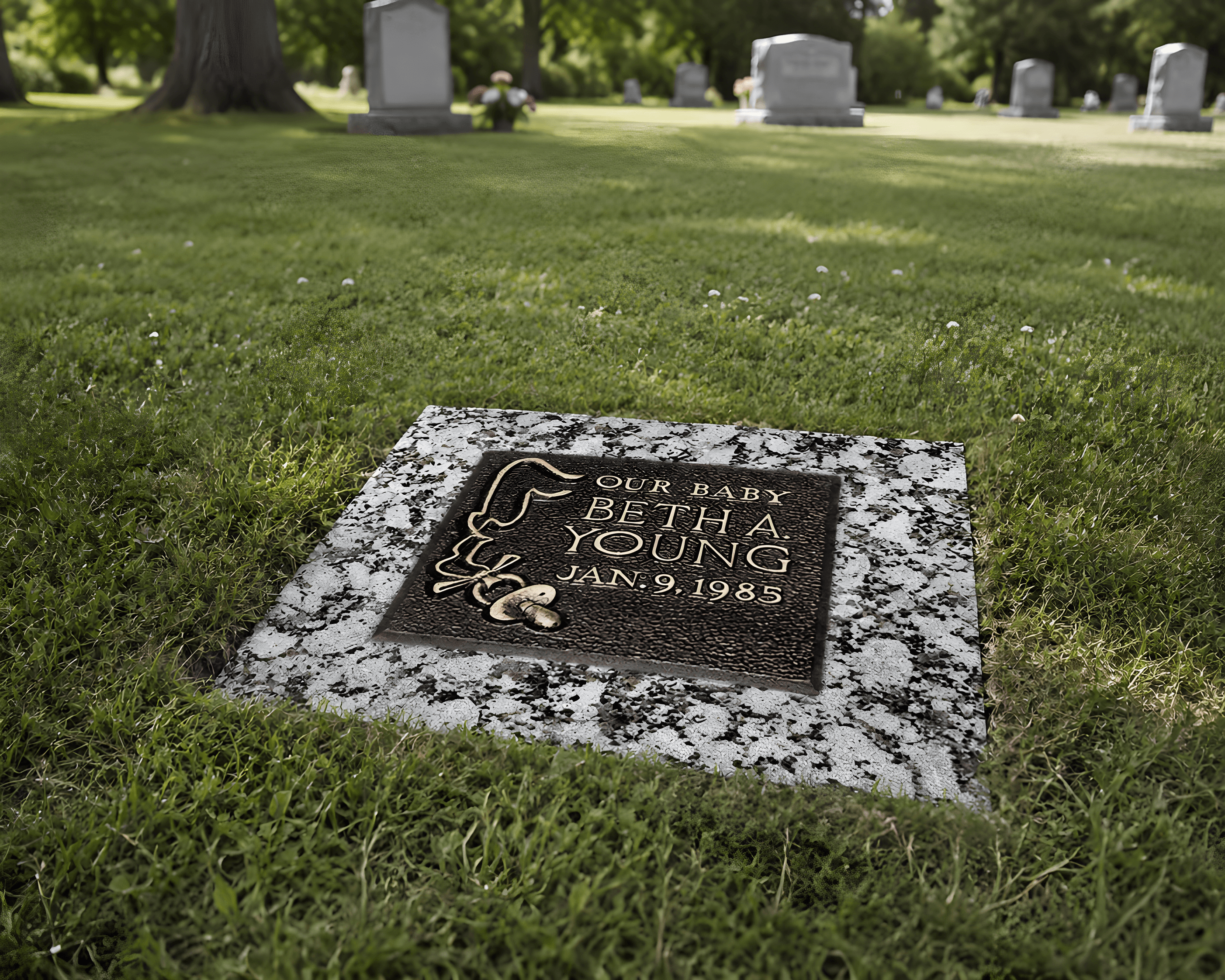
Bronze headstones use a bronze plaque mounted on a granite base. The plaque is cast from a mold that captures raised lettering, portraits, and decorative elements in three-dimensional detail. Bronze develops a natural patina over time that many families find distinguished, though polishing can restore the original luster.
Bronze markers are particularly common in national cemeteries, veteran memorial sections, and cemeteries with strict uniformity requirements. They pair well with granite bases in complementary colors and support photo medallions, emblems, and custom artwork cast directly into the plaque.
Marble was the dominant headstone material for centuries, and its soft white surface creates a classic, traditional appearance. However, marble is softer than granite and more susceptible to weathering and acid rain erosion over time. Historical cemeteries are full of marble headstones with inscriptions that have softened or faded after decades of exposure.
Slate and sandstone appear primarily on antique gravestones. While beautiful when new, both materials erode faster than granite and are rarely used for modern installations. Limestone offers a warm, cream-colored surface but shares marble's vulnerability to the elements.
Engraving, Etching, and Carving Techniques
The method used to apply text and images to a headstone determines how the design looks, how much detail is possible, and how long it will last.
Sandblast Engraving
Sandblasting is the most common engraving method for granite headstones. A rubber stencil protects the polished surface while compressed sand or abrasive media cuts the lettering and designs into the stone. The result is clean, deeply incised text that remains legible for centuries. Sandblasted letters can be left natural (showing the lighter raw granite beneath the polished surface) or painted white, gold, or black for added contrast.
Laser Etching
Laser etching uses a focused beam to create finely detailed images on polished granite, especially black granite. This technique can reproduce photographs, landscapes, portraits, and detailed illustrations with a level of realism that sandblasting cannot achieve. Laser-etched images appear as lighter gray tones against the dark polished surface, creating a subtle but striking effect.
For families seeking the highest level of craftsmanship, hand-carved elements bring depth and dimension to a headstone. Bas relief carving raises images above the stone's surface, creating three-dimensional flowers, scrollwork, or figures. Band carving wraps a continuous design — often floral or vine patterns — around the edges of an upright monument. These techniques require skilled stone artisans and add significant cost, but the results are unmistakably handcrafted.
Personalizing Your Headstone Design
Personalization transforms a headstone from a simple marker into a meaningful tribute. The options range from carefully chosen inscriptions to custom artwork that captures a person's passions.
Inscriptions and Epitaphs
The words on a headstone carry enormous weight. Beyond the standard name, birth date, and death date, many families add epitaphs — short phrases, scripture passages, or personal quotes that capture the spirit of the person they've lost. Some choose formal language drawn from religious texts, while others prefer conversational phrases that sound like something their loved one would have said. Families looking for wording inspiration can browse beautiful words for a headstone to find phrases organized by theme and tone.
Symbols and Imagery
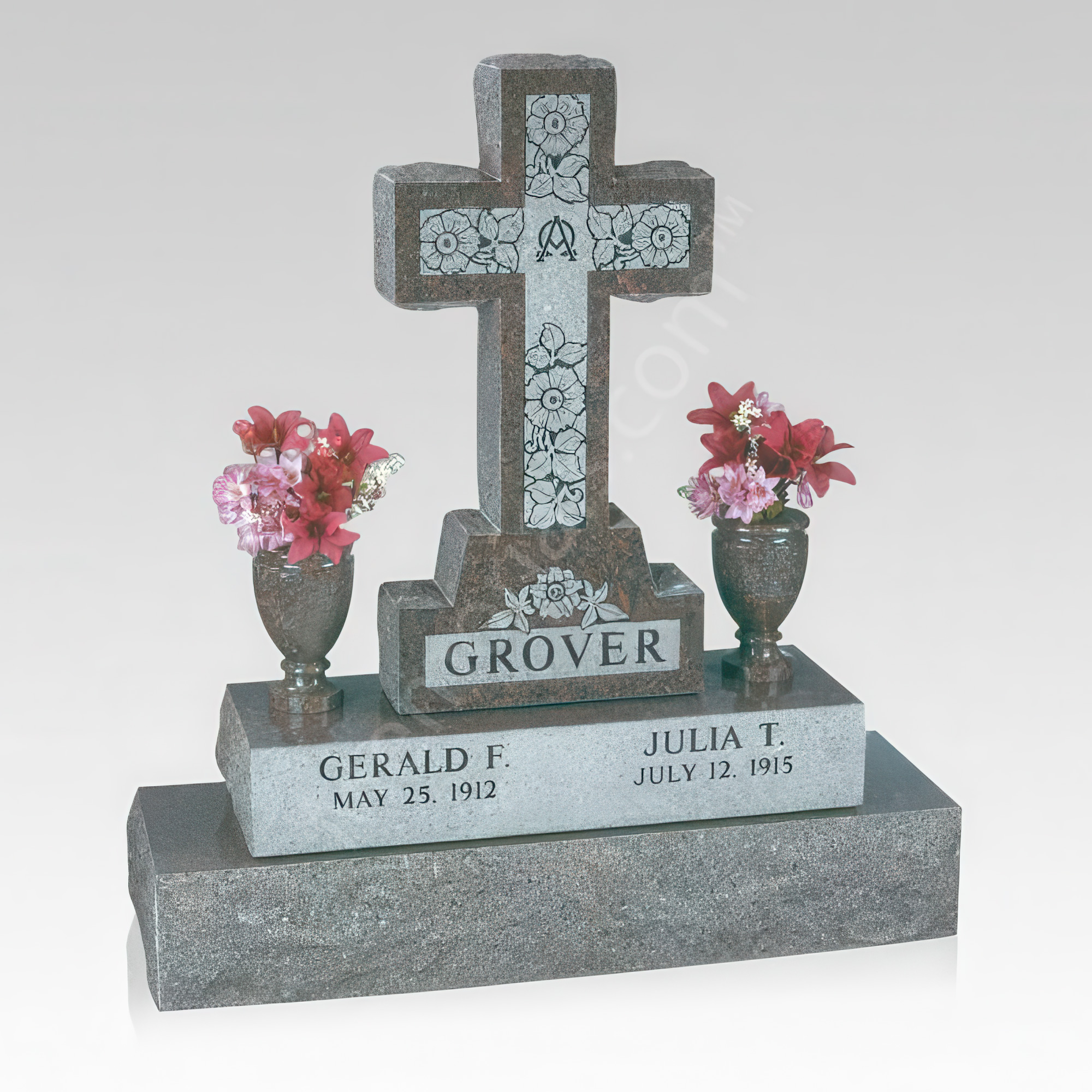
Headstone symbols carry centuries of meaning. A cross speaks to Christian faith. A Star of David represents Jewish heritage. An anchor symbolizes hope or a maritime life. Roses can represent love, purity, or a life cut short depending on how they are depicted. Military emblems, fraternal organization logos, and hobby-related imagery all help tell the story of who a person was.
Families interested in faith-based memorial artwork can explore angel and religious headstone designs, which covers everything from simple cross engravings to elaborate sculpted angel monuments.
Photo Medallions and Portraits
Photographs add an unmistakable personal touch. Ceramic photo medallions mount directly to the headstone surface and are designed to withstand decades of outdoor exposure. Laser-etched portraits on black granite offer a more integrated look, turning the stone itself into a photographic canvas. Bronze cast portraits provide yet another option, with raised three-dimensional detail that weathers gracefully alongside the rest of the memorial.
For the best results, choose a high-resolution photograph with a simple background. Profile shots and close-up portraits tend to translate better to stone than full-body images or group photos.
Design Ideas by Relationship
Different relationships often inspire different design approaches. Here are some of the most common design frameworks families consider.
Companion and Double Headstones
Married couples and lifelong partners often choose double headstone ideas for couples — a single monument that memorializes both people. Companion headstones feature shared surnames at the top with individual first names, dates, and sometimes separate inscriptions for each person. Some designs join both names under a unifying image — clasped hands, intertwined rings, or a shared landscape scene — that represents the couple's bond.
The second person's dates can be left blank and added later, allowing one headstone to serve both partners across different timeframes.
Children and Infant Memorials
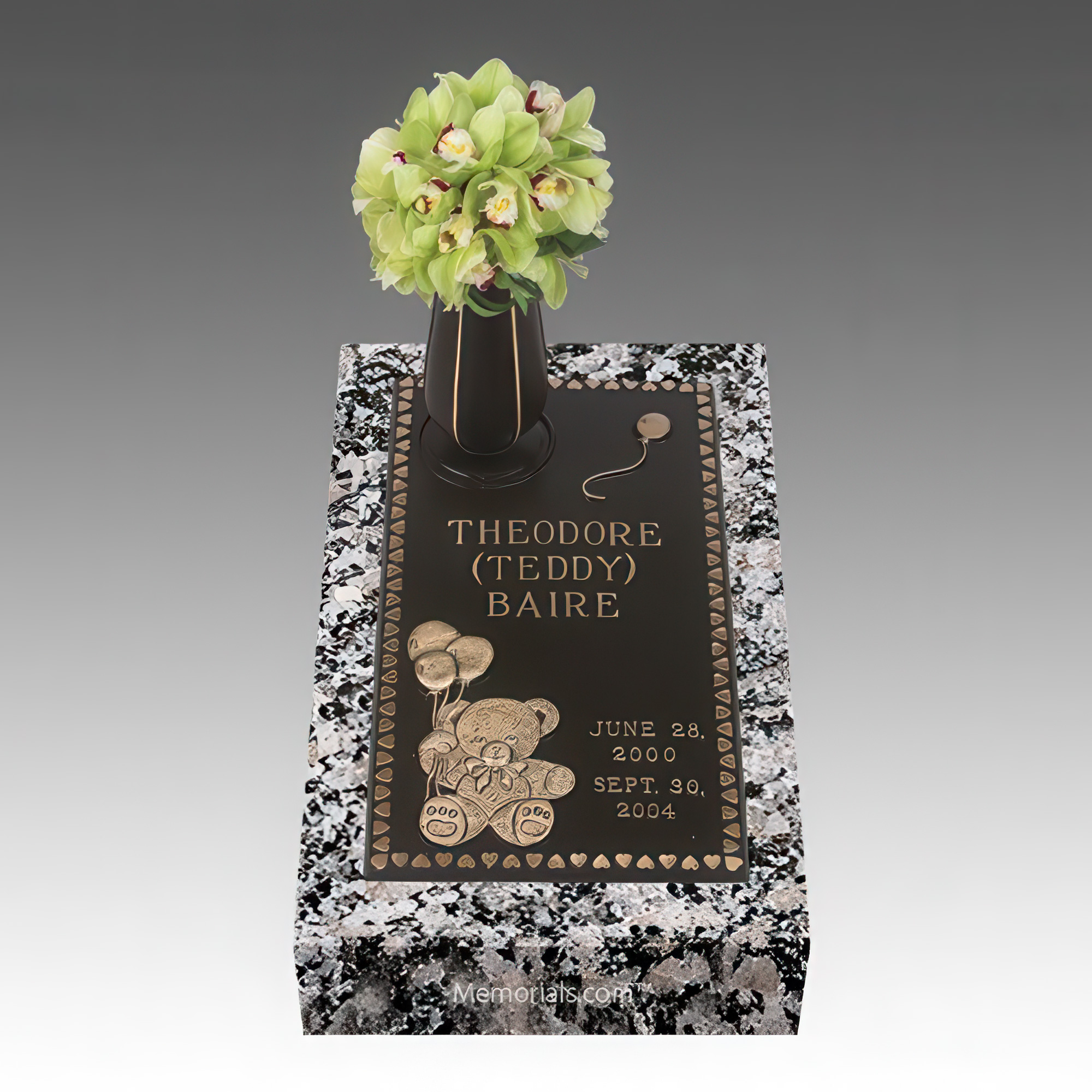
Headstones for children and infants tend to feature softer imagery: teddy bears, lambs, butterflies, angels, and flowers are common motifs. Heart shapes and smaller sizes reflect the tenderness of the loss. Many families choose pastel granite colors or white marble for children's memorials, though these decisions are deeply personal and there is no single correct approach.
Veteran memorials often incorporate service branch emblems, rank insignias, campaign ribbons, and patriotic imagery like flags and eagles. The Department of Veterans Affairs provides free government-issued headstones, but many families choose privately purchased headstones with custom designs that go beyond the standard government marker while still honoring the veteran's service.
Themed and Custom Design Ideas
Some of the most memorable headstones draw inspiration from hobbies, careers, and personal passions. A lifelong fisherman might have a largemouth bass etched into black granite. A musician's headstone could feature a guitar silhouette or a measure of their favorite song rendered in carved notes. A gardener's memorial might incorporate sculpted roses or a vine-wrapped cross.
Nature scenes — mountain landscapes, ocean sunsets, forest clearings — are among the most requested custom etchings. These scenes work best on larger upright monuments where the artist has enough surface area to create depth and detail.
For a curated gallery of standout examples, see our guide to the most beautiful headstone designs, which features extraordinary memorials in granite, bronze, and mixed media.
Working With Cemetery Requirements
Before finalizing any design, confirm what your cemetery allows. Most cemeteries regulate headstone size, shape, material, and even color. Some sections are restricted to flat markers only. Others may prohibit certain types of engraving or require specific base dimensions.
National cemeteries and many private cemeteries maintain strict uniformity standards that limit design options. Garden-style and natural burial cemeteries may have different restrictions centered around environmental impact. Requesting your cemetery's monument regulations in writing before placing an order prevents costly surprises after the headstone is fabricated.
A knowledgeable headstone provider can help navigate these requirements and design a memorial that meets cemetery standards without sacrificing personalization.
Frequently Asked Questions
What is the most popular headstone shape?
Upright monuments with a half-round or serpentine top remain the most popular choice in American cemeteries. Flat markers are a close second, especially in newer memorial parks that require flush installations for groundskeeping efficiency.
Can I design my own headstone?
Many headstone providers work with families to create fully custom designs. You can specify the shape, material, color, inscriptions, symbols, engravings, and finishing details. Some providers offer online design tools that let you preview your choices before placing an order.
How much does a custom headstone design cost?
Custom headstone pricing depends on the material, size, and complexity of the design. A standard flat granite marker starts around $500, while a fully customized upright monument with laser etching and hand carving can exceed $5,000. Bronze headstones with cast plaques fall somewhere in between. The level of personalization is the biggest cost driver beyond the stone itself.
Do cemeteries allow any headstone design?
No. Most cemeteries have specific regulations governing headstone dimensions, materials, shapes, and installation requirements. Some restrict certain sections to flat markers only or require approved materials. Always request the cemetery's monument guidelines before ordering.
How long do headstone engravings last?
Granite engravings can remain legible for centuries with minimal maintenance. Bronze lettering and plaques develop patina but remain readable indefinitely. Marble and sandstone engravings fade faster due to the softer stone surface, which is why granite has largely replaced marble as the standard headstone material.
Choosing a Design That Tells Their Story
The best headstone designs are the ones that feel unmistakably personal. A shape that echoes their strength. A material that reflects their taste. An inscription that sounds like something they would have said. When those elements come together, the memorial becomes more than a marker — it becomes a place where their story continues to be told.
Browse the full collection of headstones for graves at Memorials.com to explore upright monuments, flat markers, slant headstones, and bronze memorials in a range of styles and sizes. Each piece can be personalized with the engravings, inscriptions, and finishing touches that make it uniquely theirs.