🏬Supersize Online Funeral Retailer🪦1000's of Headstones⚱️Over 10,000 Cremation Urns⚰️Caskets Overnight Delivery🛒Funeral & Memorial Superstore🚚FREE Shipping on ALL Orders👨👩👧👦Helping Families for over 20 Years💰Lowest Price Guarantee🏬Supersize Online Funeral Retailer🪦1000's of Headstones⚱️Over 10,000 Cremation Urns⚰️Caskets Overnight Delivery🛒Funeral & Memorial Superstore🚚FREE Shipping on ALL Orders👨👩👧👦Helping Families for over 20 Years💰Lowest Price Guarantee
🏬Supersize Online Funeral Retailer🪦1000's of Headstones⚱️Over 10,000 Cremation Urns⚰️Caskets Overnight Delivery🛒Funeral & Memorial Superstore🚚FREE Shipping on ALL Orders👨👩👧👦Helping Families for over 20 Years💰Lowest Price Guarantee🏬Supersize Online Funeral Retailer🪦1000's of Headstones⚱️Over 10,000 Cremation Urns⚰️Caskets Overnight Delivery🛒Funeral & Memorial Superstore🚚FREE Shipping on ALL Orders👨👩👧👦Helping Families for over 20 Years💰Lowest Price Guarantee
Faith, love, and remembrance meet in stone when families choose a religious design for a memorial. A weeping angel headstone is one of the most recognizable and emotionally powerful symbols in cemetery art, but it is far from the only option.
Cross headstones, praying hands headstones, and Virgin Mary headstone designs each carry centuries of meaning and offer a deeply personal way to honor someone who lived by their beliefs. If you are exploring , this article focuses specifically on religious and angel-inspired designs — the history behind them, the materials they work best with, and how to choose one that truly reflects a life of faith.
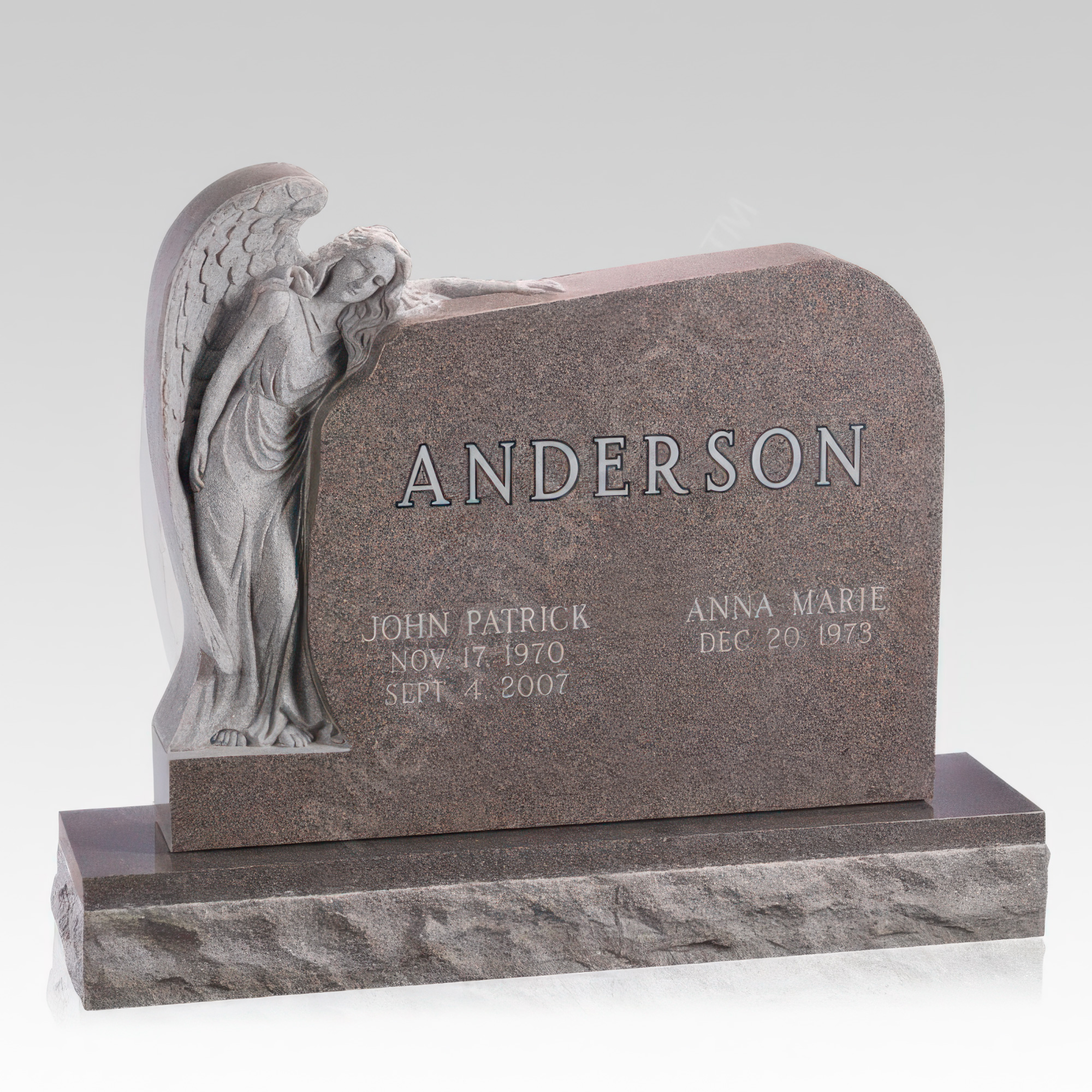
The image of an angel draped in grief over a grave is one of the most copied motifs in funerary art. Its origins trace back to 1894, when the American sculptor William Wetmore Story completed a monument to his wife, Emelyn, at the Protestant Cemetery in Rome. Known today as the Angel of Grief, the sculpture shows a winged angel collapsed over a tombstone with outstretched arms, her wings drooping in sorrow. The piece was so moving that it has been reproduced on memorials around the world ever since.
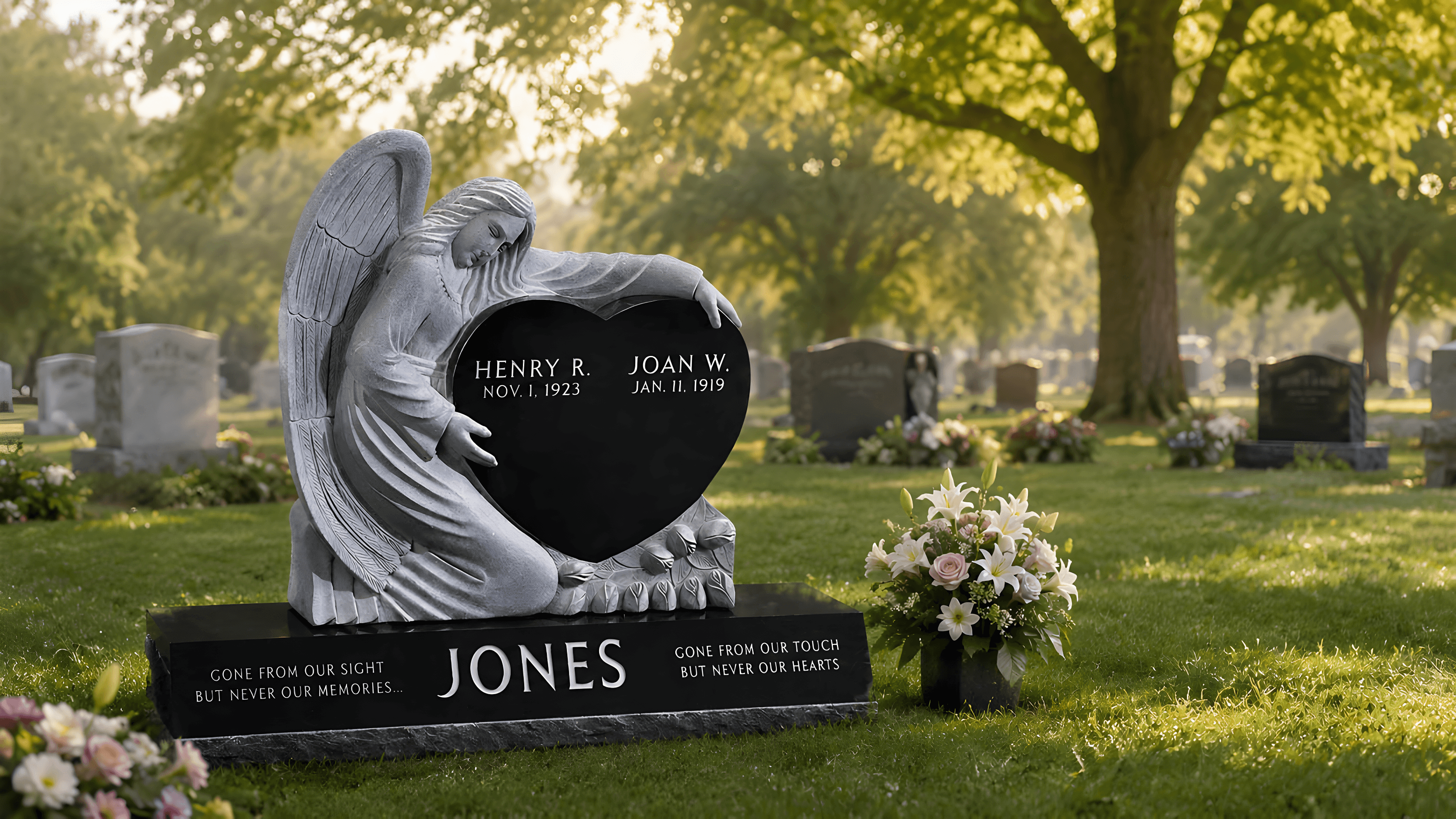
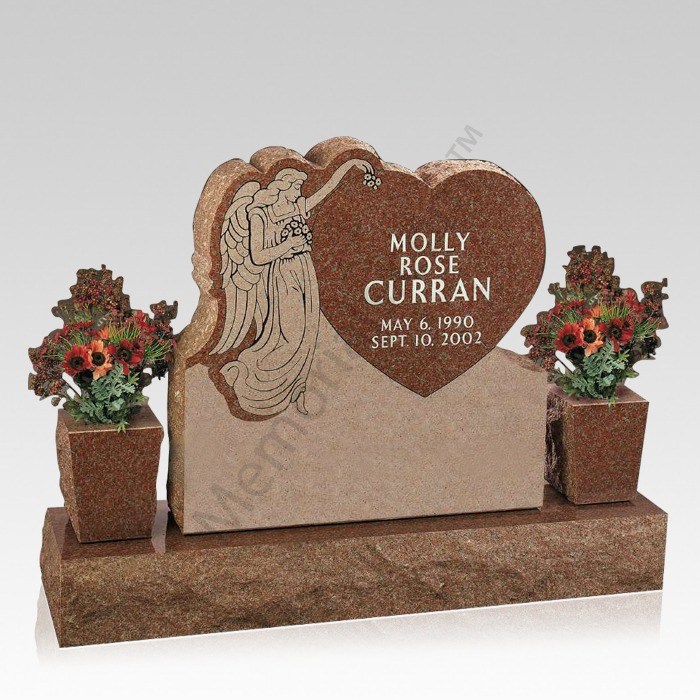
A weeping angel headstone traditionally represents mourning, profound loss, and the grief of those left behind. It is especially common on graves marking an untimely or unexpected death, and many families choose it for a child's memorial. But the symbolism extends beyond sadness. The angel's protective posture — arms spread across the stone, wings shielding the grave — also conveys guardianship and the belief that a celestial presence watches over the departed.
Modern weeping angel designs range from full three-dimensional sculptures mounted on upright headstones to intricate laser-etched portraits on polished black granite headstones. Some families opt for a relief carving where the angel appears to emerge from the stone surface, while others prefer a realistic etching that captures every feather and fold of fabric with photographic detail.
Browse Our Most Popular Headstones & Grave Markers
Handcrafted memorials to honor your loved one for eternity
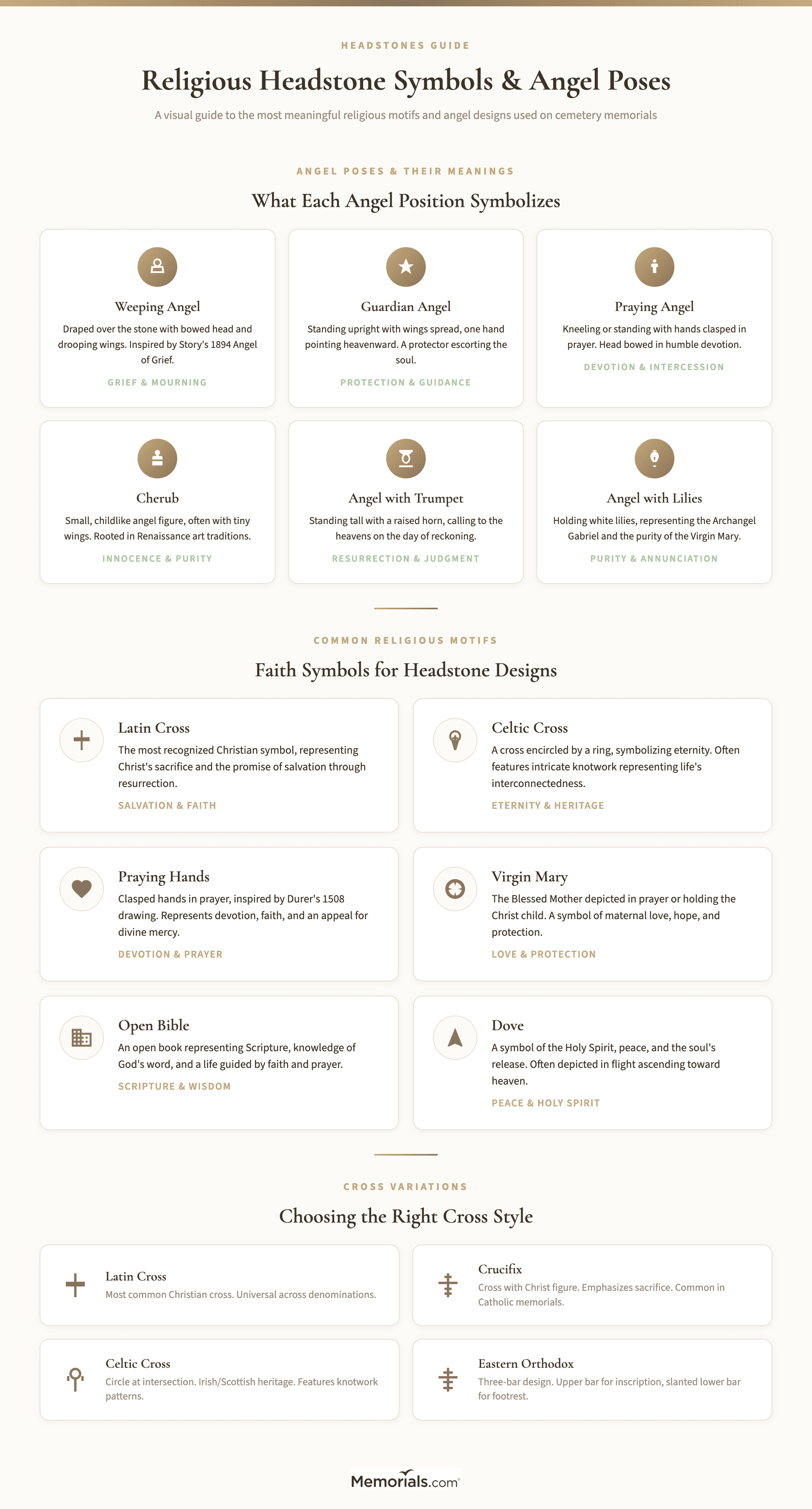
Angel motifs appear in many forms beyond the classic weeping pose. Each position carries its own significance, and understanding these differences helps families select a design that matches the message they want the memorial to convey.
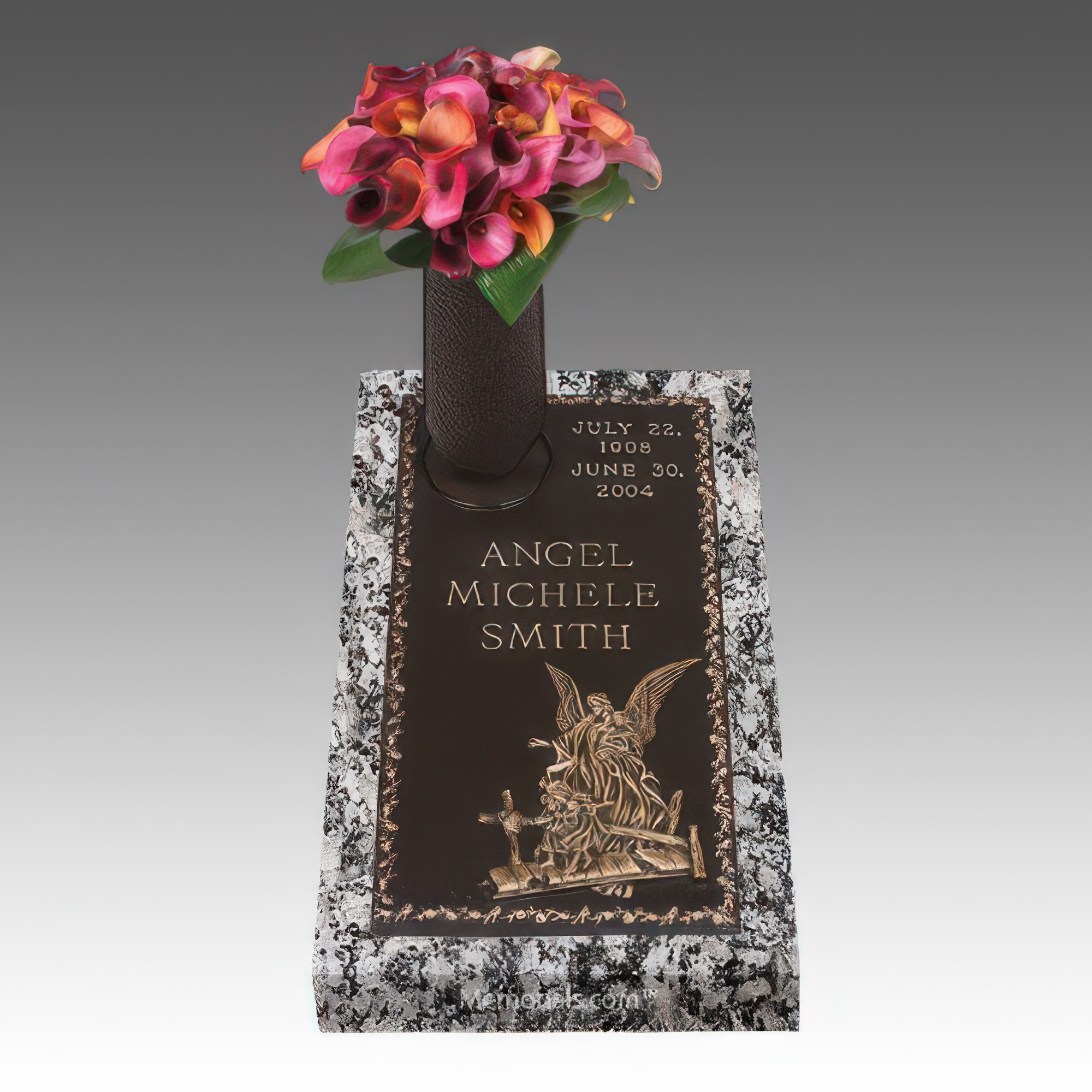
Guardian Angels stand upright with wings spread wide and often point one hand toward heaven. This pose represents the belief that the angel is guiding the soul upward, offering both direction and protection. A guardian angel design is popular among families who find comfort in the idea that their loved one is escorted safely into eternity.
Praying Angels are shown kneeling or standing with clasped hands, their heads bowed in reverence. This design signals the devotion of the person who has passed and suggests that the angel is interceding on their behalf. It is a common choice for families with strong Catholic or mainline Protestant traditions.
Cherubs and Infant Angels feature small, childlike figures that symbolize innocence and purity. Rooted in Renaissance art, cherubim designs appear most often on baby headstones and children's memorials. They convey tenderness and the belief that the child has been welcomed directly into divine care.
Angels Holding Objects add another layer of meaning. An angel carrying lilies represents the Archangel Gabriel and the purity of the Virgin Mary. An angel holding a scroll symbolizes the recording of a life's deeds, while one bearing a trumpet represents the call to resurrection and judgment.
Cross Headstone Designs
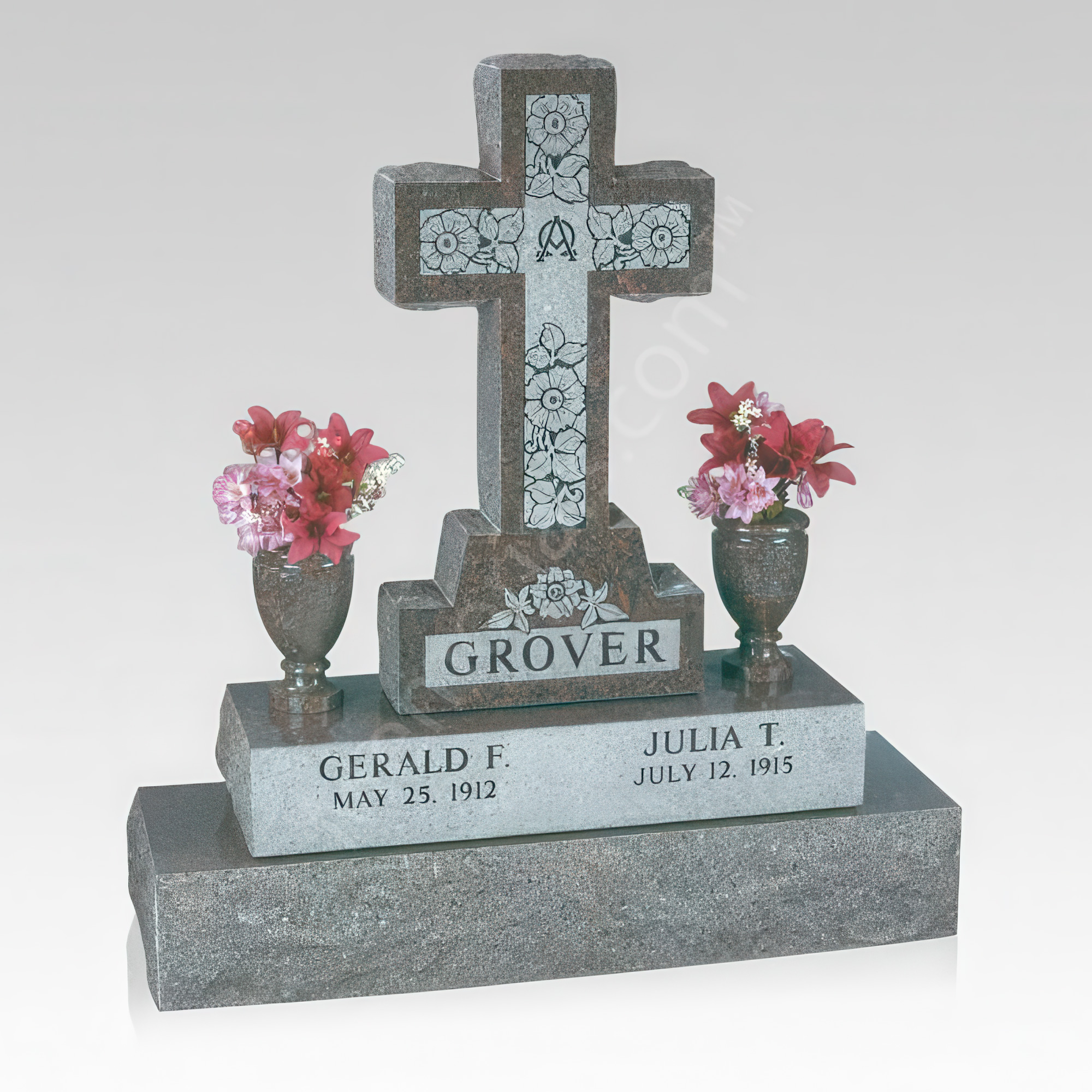
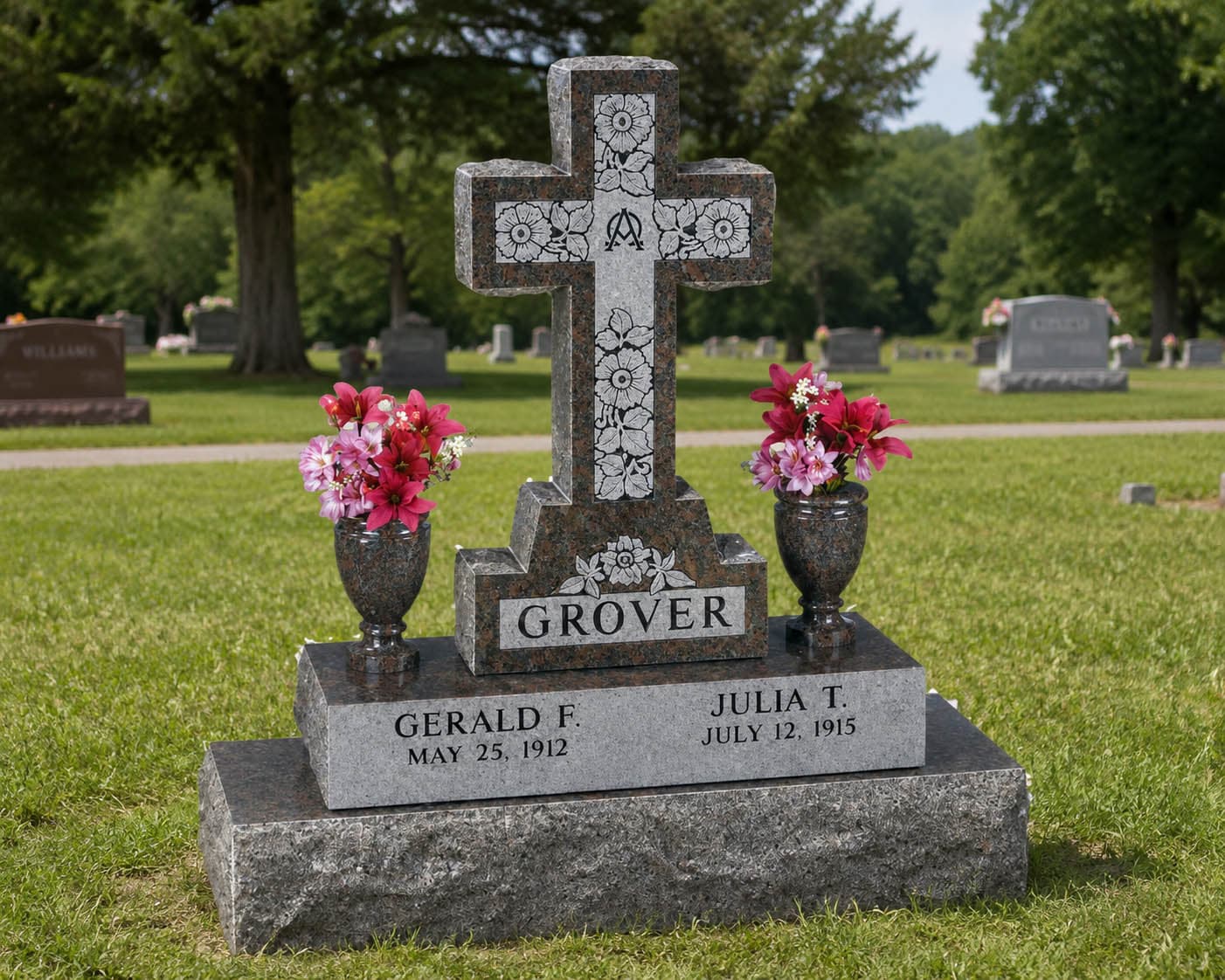
The cross is the most universal Christian symbol and the most frequently requested religious element on headstones. Cross headstone designs range from simple and understated to ornate and deeply personalized. Understanding the variations helps families find the style that best reflects the denomination, heritage, and personality of the person being memorialized.
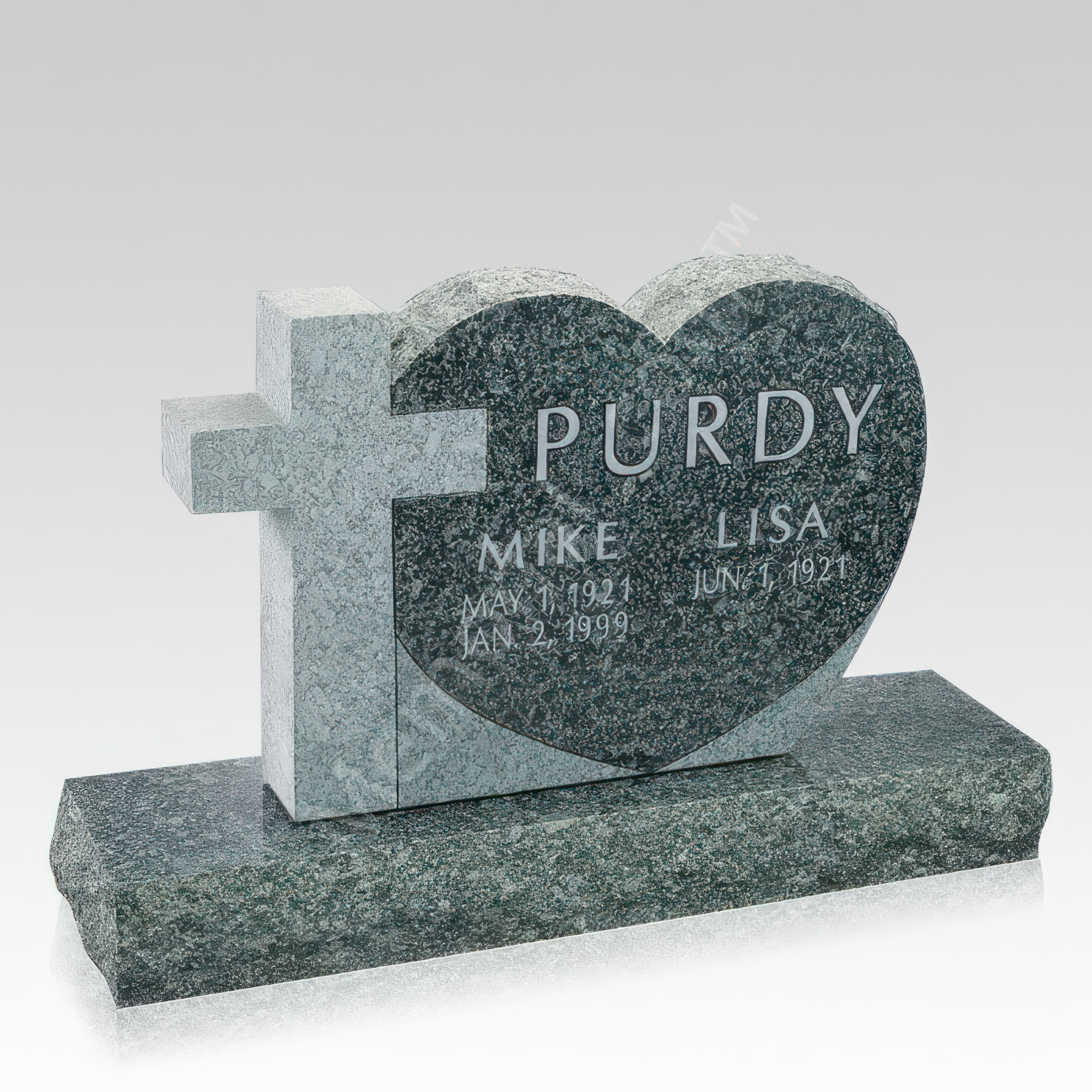
The Latin Cross is the most traditional form — a vertical beam crossed by a shorter horizontal bar — and it represents Christ's crucifixion and the promise of resurrection. It appears on every type of memorial, from flat markers to tall upright monuments.
Celtic Cross Headstones combine the classic cross with a circular ring at the intersection, a design with roots in early Irish Christianity. The ring symbolizes eternity or, in some interpretations, the blending of Christian faith with older sun-worship traditions. Celtic crosses frequently feature intricate knotwork patterns that represent the interconnectedness of life, death, and rebirth. Families with Irish, Scottish, or Welsh heritage often choose this style.
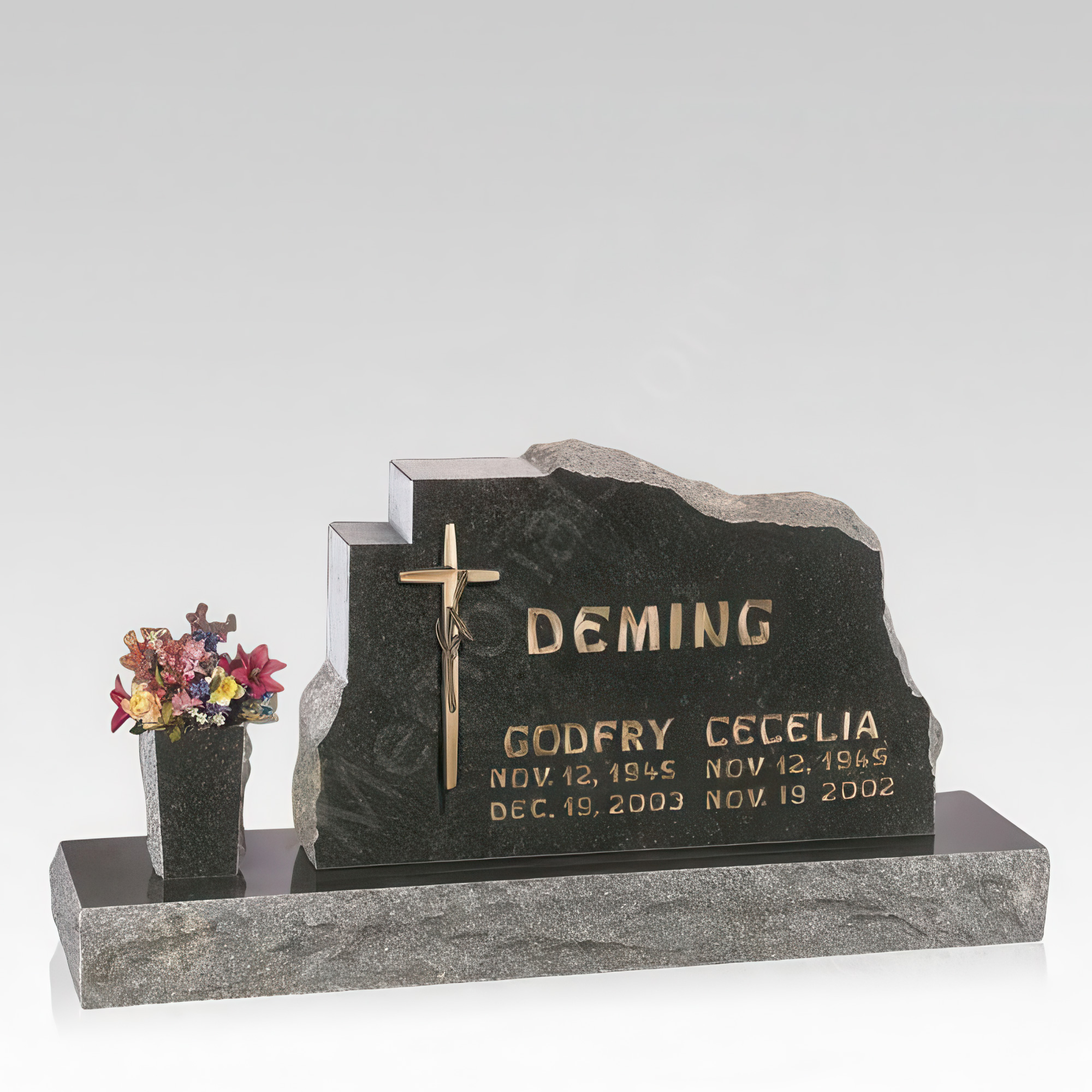
The Crucifix — a cross showing the figure of Christ — emphasizes sacrifice and divine mercy. It is a particularly meaningful choice for Catholic families. A crucifix design may appear as a raised relief carving, a bronze casting mounted to the stone, or a detailed laser engraving.
The Botonée Cross features three-lobed ends shaped like a trefoil, representing the Holy Trinity. It is a refined and elegant design that appeals to families seeking a traditional yet distinctive cross motif.
The Eastern Orthodox Cross includes a shorter upper bar (representing the inscription above Christ's head) and a slanted lower bar (representing the footrest). It is an important cultural and religious marker for families from Russian, Greek, or other Eastern Orthodox traditions.
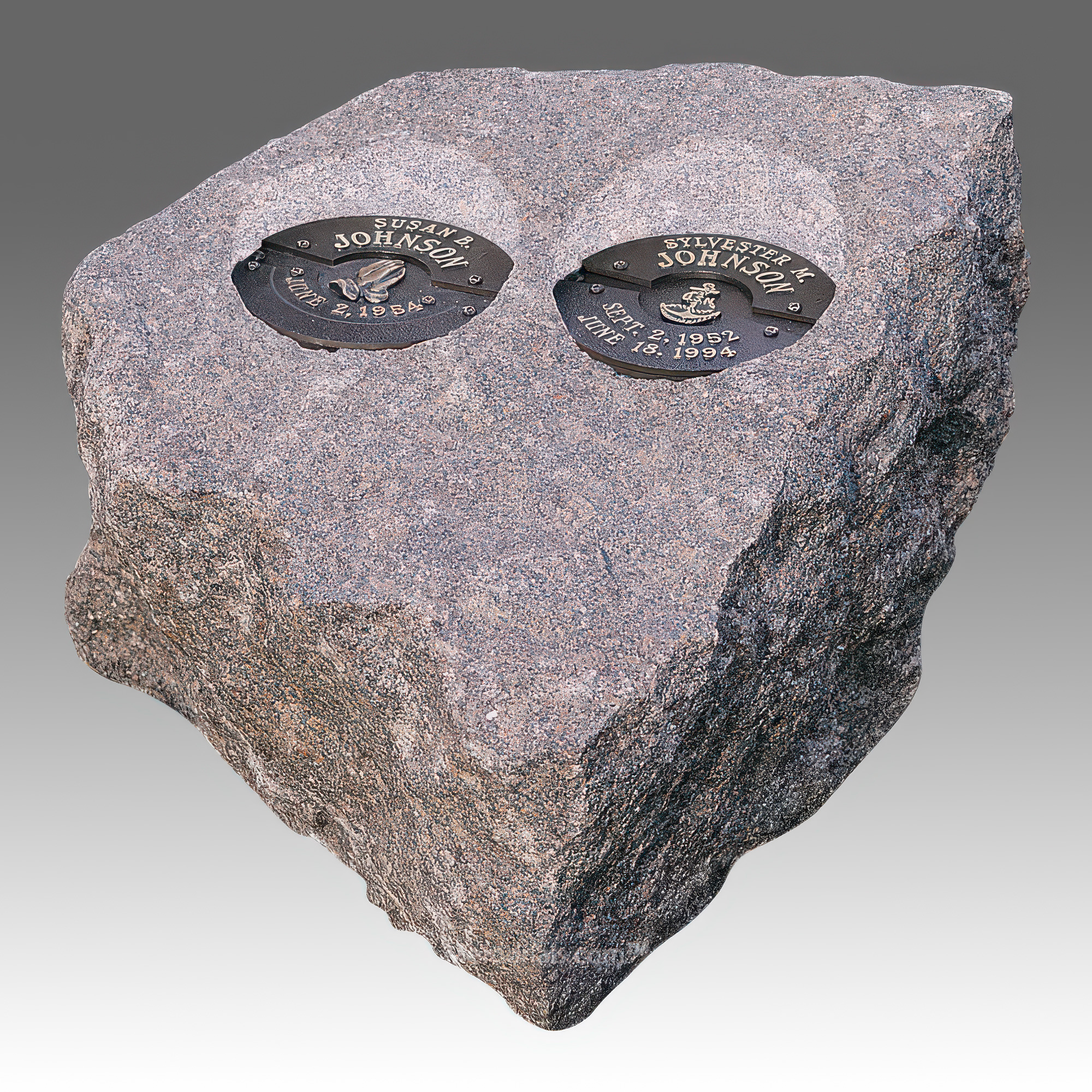
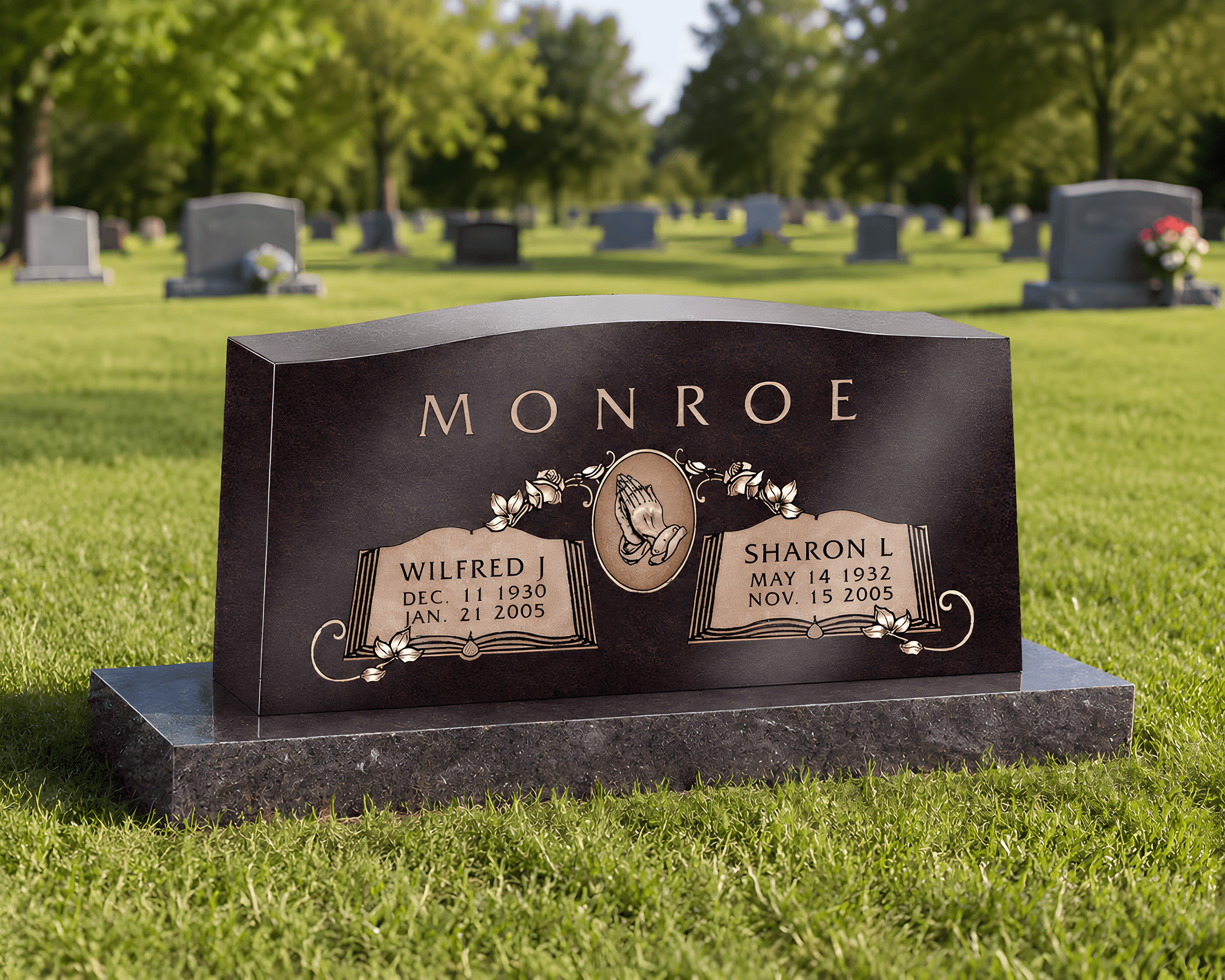
Praying hands are among the most requested religious engravings on memorials. The image originates from Albrecht Dürer's famous 1508 drawing, Study of the Hands of an Apostle, though its use in funerary art became widespread during the Victorian era. A praying hands headstone communicates the deceased's devotion and faith, and many families see it as an appeal for God's mercy and peace.
Praying hands can appear as the central design element on the headstone or as one element in a larger composition. Common pairings include praying hands with a cross, praying hands cradling a rosary, or praying hands framed by an open Bible. These compositions can be sandblasted into the granite surface, laser-etched for photographic detail, or cast in bronze and mounted onto the stone.
The design works beautifully on both flat markers and upright monuments. On bronze headstones, a praying hands motif can be cast in dimensional relief, giving the image a sculptural quality that catches light and shadow throughout the day.
Virgin Mary and Saints Headstone Designs
Depictions of the Virgin Mary — also known as the Blessed Mother, Our Lady, or the Madonna — hold deep significance for Catholic and Orthodox Christian families. A Virgin Mary headstone design often shows Mary with arms extended in welcome, hands clasped in prayer, or cradling the Christ child. The image represents unconditional love, hope, protection from sin, and maternal comfort. It is a popular choice for mothers and women of deep faith, though it may honor anyone with a special devotion to Mary.
Other saint imagery frequently appears on religious memorials as well. St. Michael the Archangel, depicted in armor with a sword, represents protection and victory over evil. St. Francis of Assisi, shown surrounded by animals or nature, appeals to families who valued a life of simplicity and compassion. The choice of saint often reflects the patron saint of the deceased, their parish, or a quality the family most wants to remember.
These designs can be deeply personal. Many families combine a saint image with a favorite Bible verse, a rosary border, or a simple inscription such as "In God's Hands" or "Rest in His Light." When exploring broader headstone symbols and meanings, religious imagery stands out for the depth of comfort it provides both to the family placing the memorial and to anyone who visits the grave.
The material you choose affects how well your religious design translates to stone, how long it lasts, and what your budget allows.
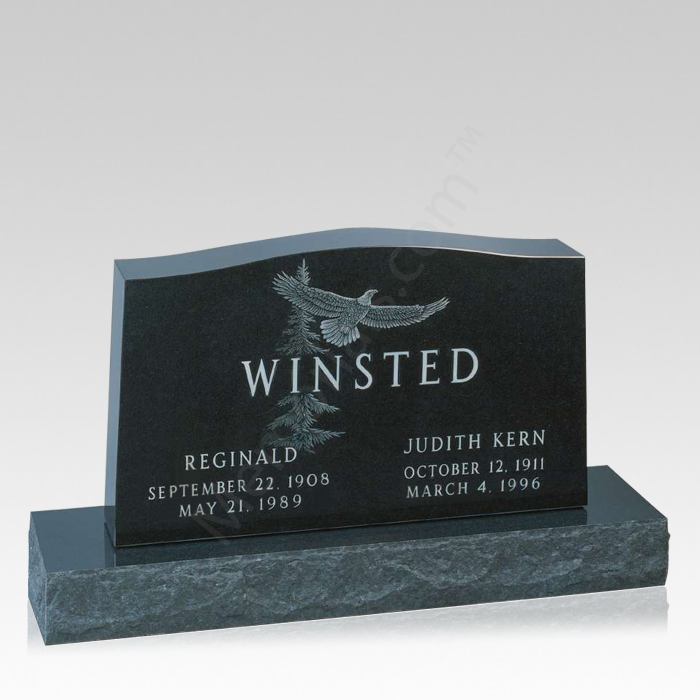
Granite is the most popular material for religious headstones. It is extremely durable, weather-resistant, and available in dozens of colors, from classic gray and polished black to warm reds, greens, and blues. Black granite is especially well-suited for angel designs because laser etching produces exceptionally crisp, photographic-quality images on dark polished surfaces. Lighter granites work better for sandblasted or hand-carved relief work, where the contrast between the rough carved area and the polished surface creates the visual design.
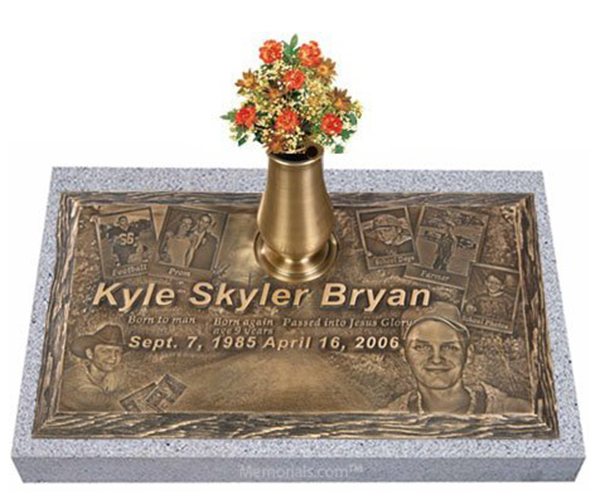
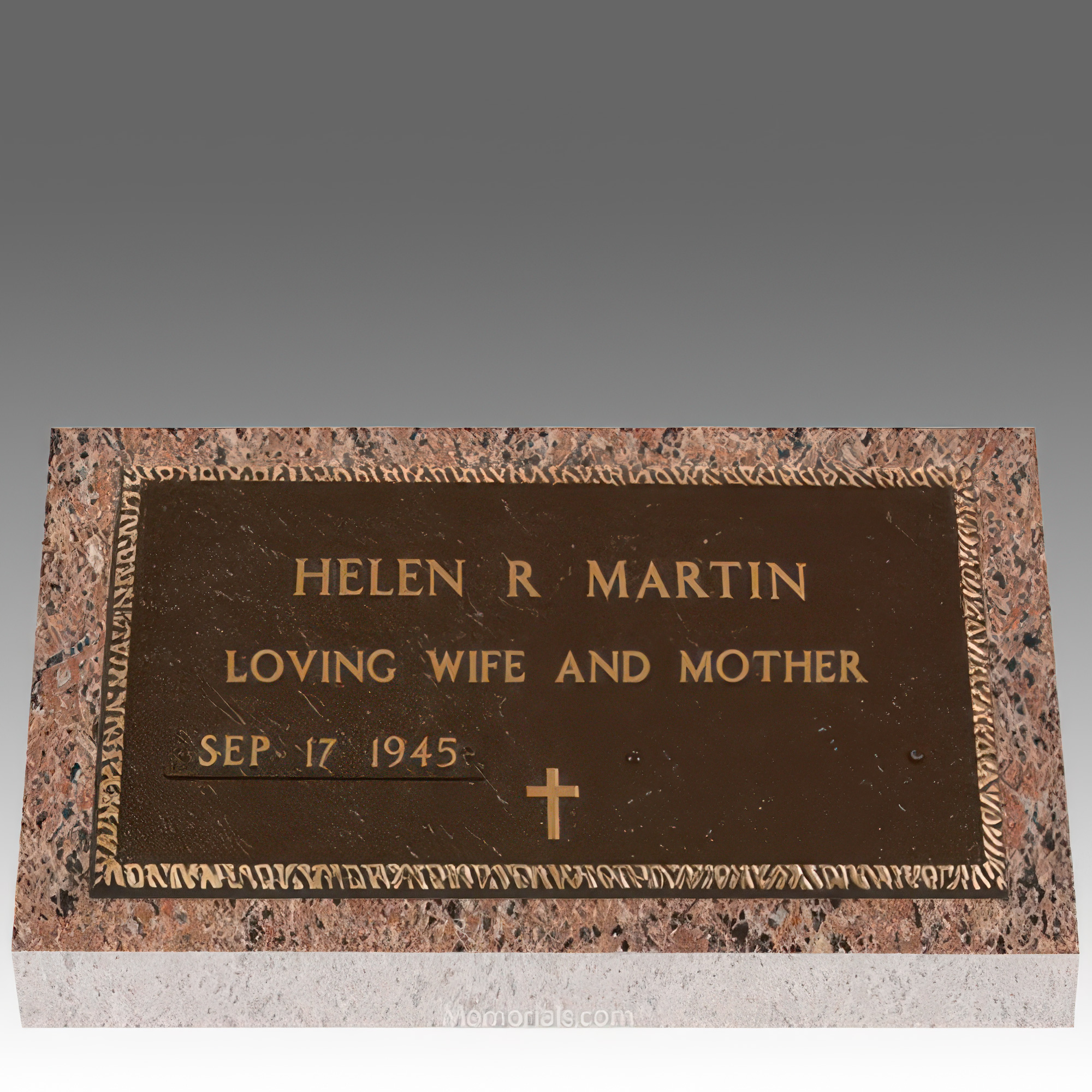
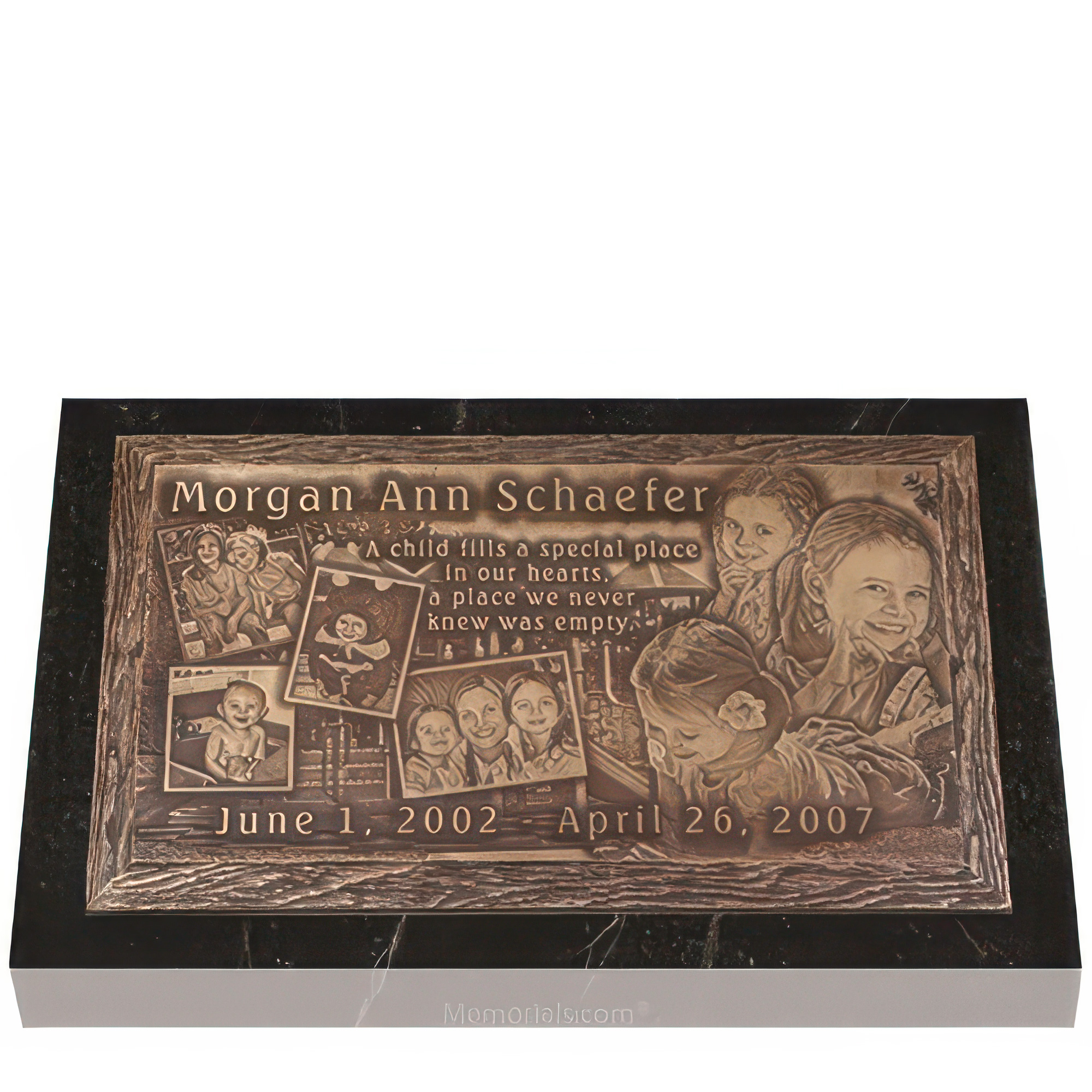
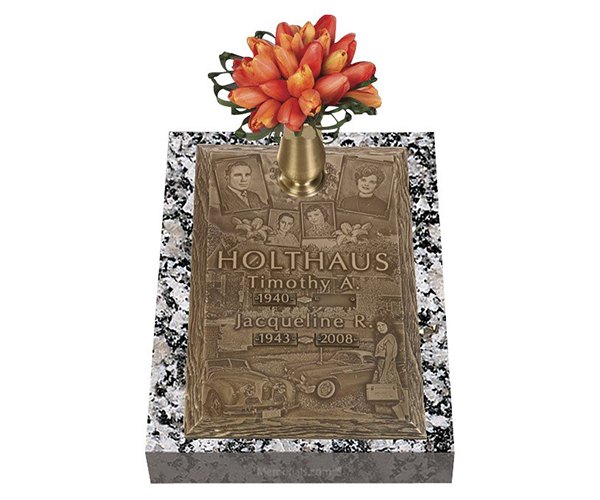
Bronze offers a timeless, distinguished appearance. Bronze headstone plaques can feature deeply sculpted religious imagery with remarkable three-dimensional detail. A bronze angel or cross mounted on a granite base combines the durability of stone with the artistic detail of cast metal. Bronze develops a natural patina over time that many families find adds character and warmth.
Marble was historically the stone of choice for sculpted angel monuments — the original Angel of Grief was carved in marble. While beautiful, marble is softer than granite and more susceptible to weathering, acid rain, and biological growth. It remains a viable choice for mausoleums, indoor columbaria, or climates with mild weather, but granite and bronze are generally better options for outdoor cemetery settings that need to endure for generations.
Combining Religious Designs
Many of the most beautiful headstone designs combine multiple religious elements into a single cohesive memorial. Rather than choosing only a cross or only an angel, families often layer symbols to tell a richer story of faith.
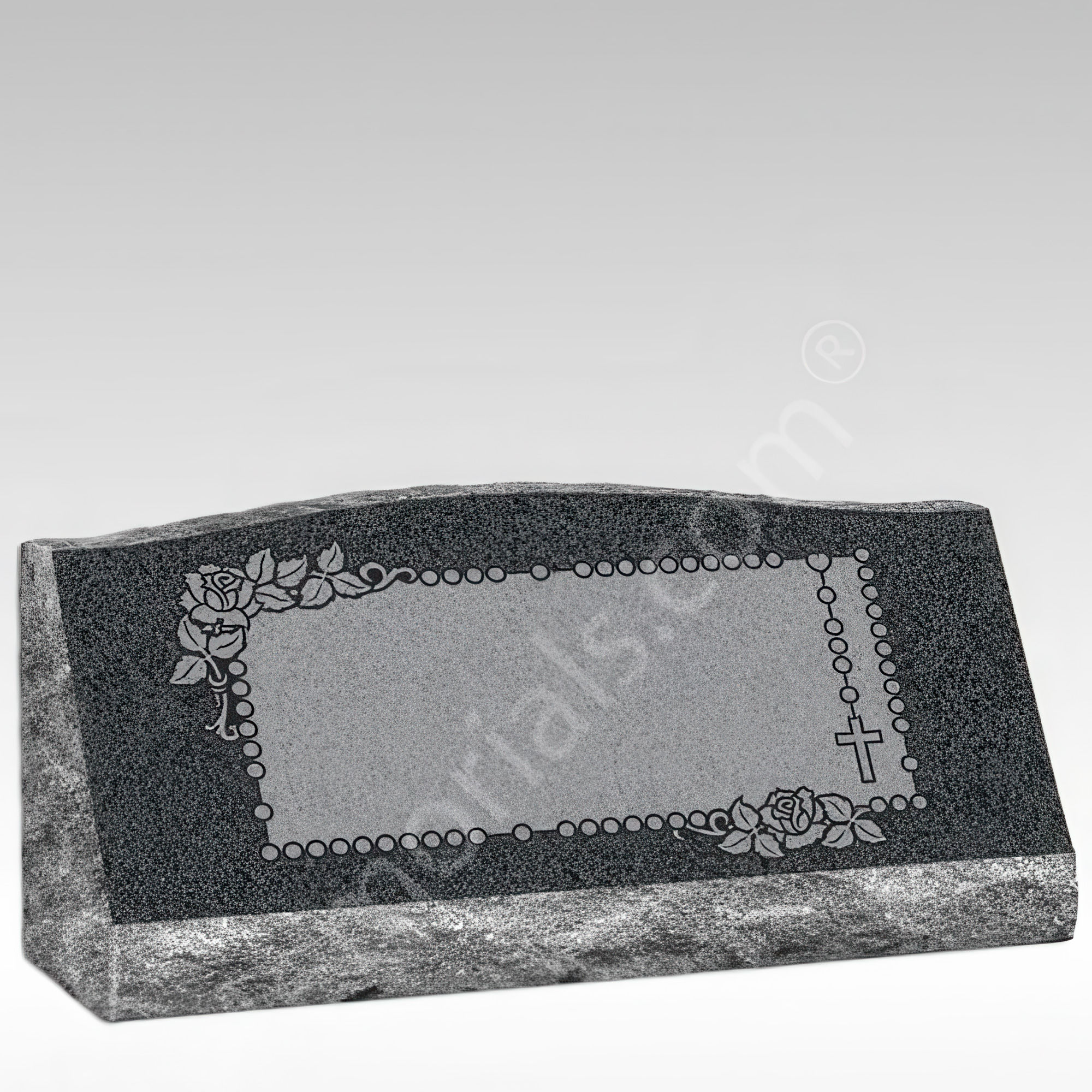
Popular combinations include a weeping angel draped over a cross-shaped headstone, praying hands engraved beneath a large Celtic cross, or a Virgin Mary etching framed by rosary beads along the border of the stone. An angel with outstretched wings can serve as the top contour of an upright monument, with a cross, Bible verse, and personal inscription carved into the body of the stone below.
When combining elements, balance matters. A skilled memorial mason will compose the design so that one element serves as the focal point — typically the angel or cross — while supporting imagery and text complement it without crowding the surface. White space on the stone is just as important as the carved areas; it gives the eye room to rest and lets each element carry its full symbolic weight.
Families who appreciate photo personalization may also consider adding a photo to a headstone alongside religious imagery. A ceramic or laser-etched portrait paired with an angel or cross creates a memorial that is both spiritually meaningful and deeply personal.
Angel Headstones for Children
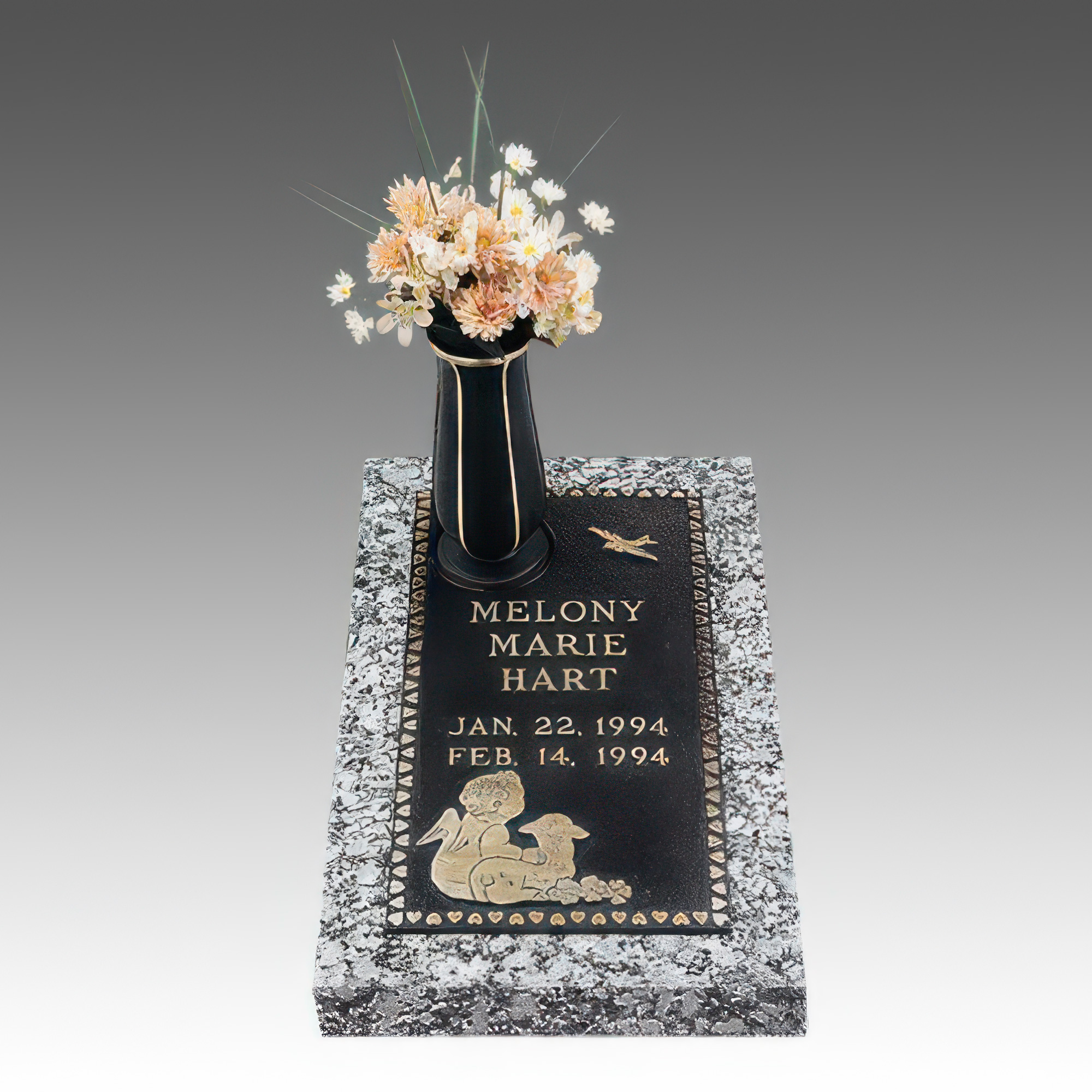
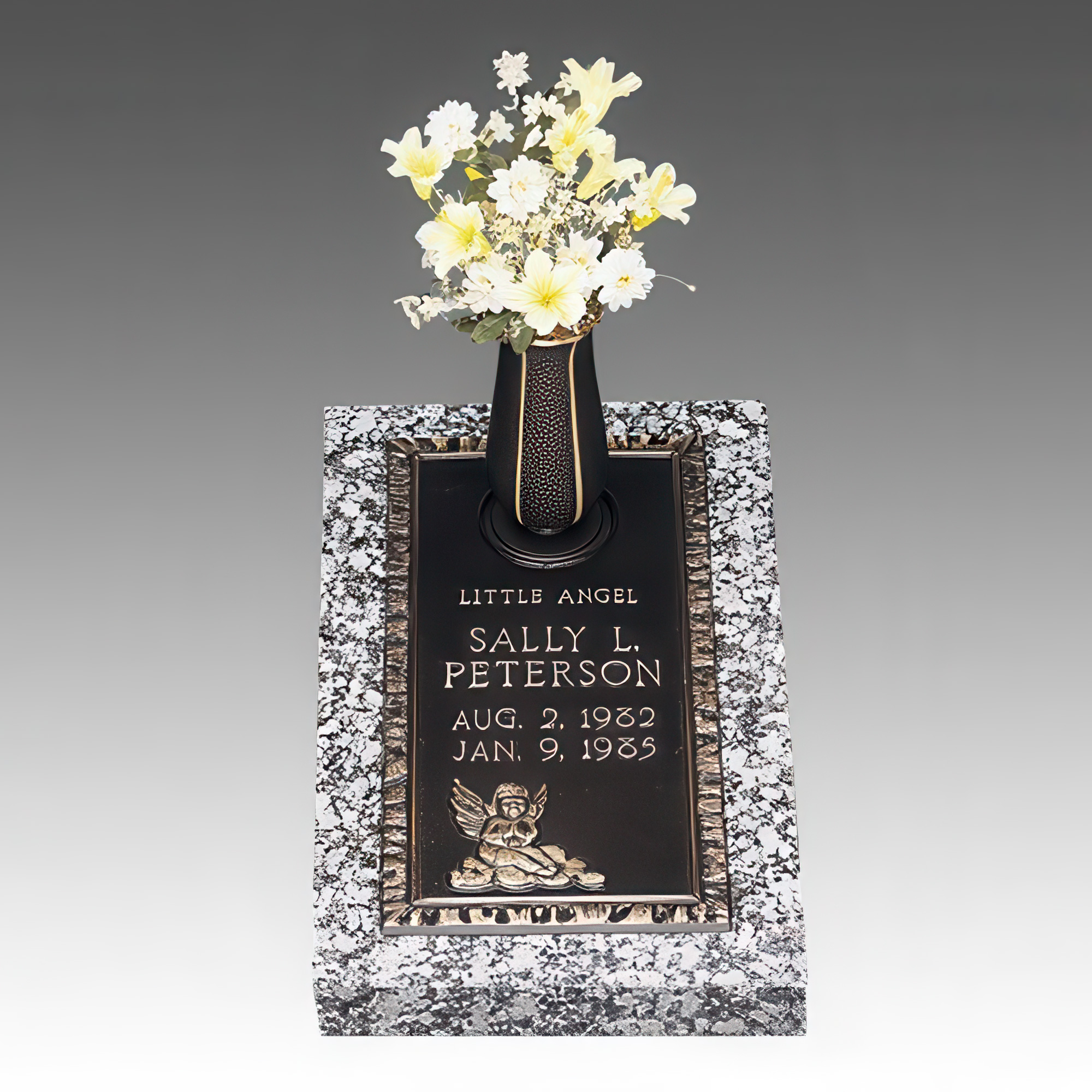
Angel headstones carry special significance when used for infant and children's memorials. Cherub figures, sleeping angels, and guardian angels cradling a child are among the most requested designs for young lives lost too soon.
A sleeping angel — shown resting peacefully with folded wings — conveys the gentleness of eternal rest and offers bereaved parents the comforting image of their child at peace. Guardian angel designs, where a larger angel stands protectively over a smaller figure, express the belief that the child is being watched over and guided.
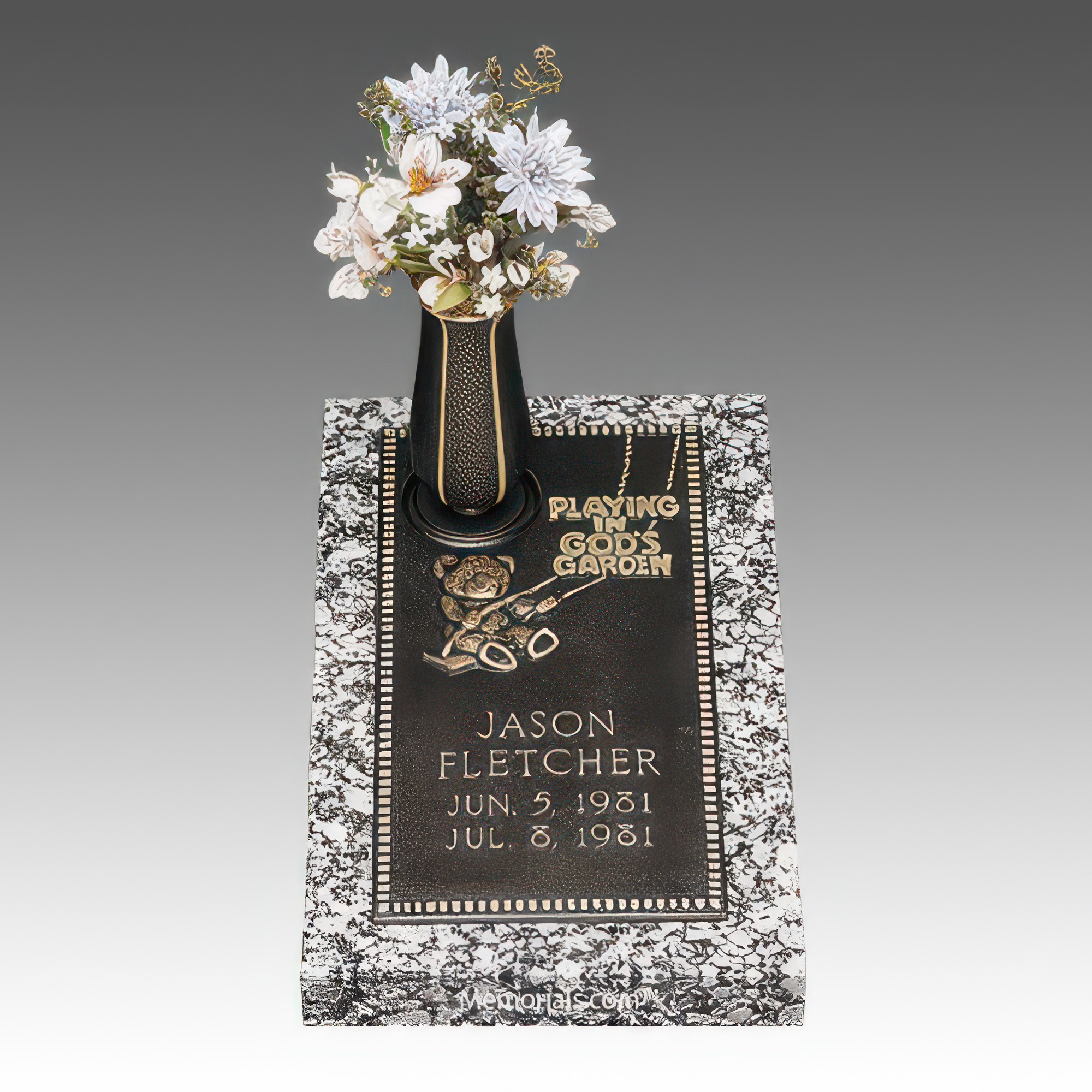
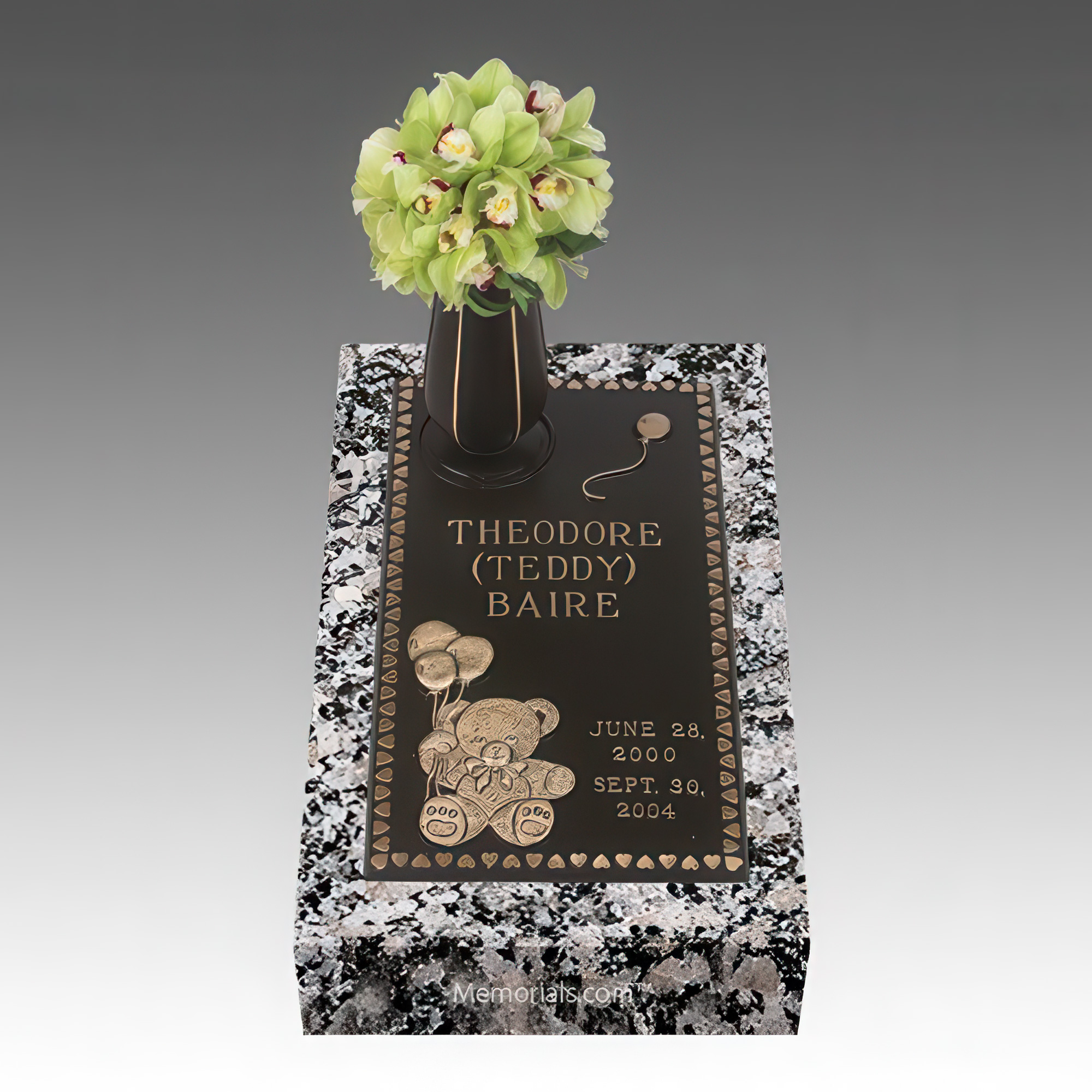
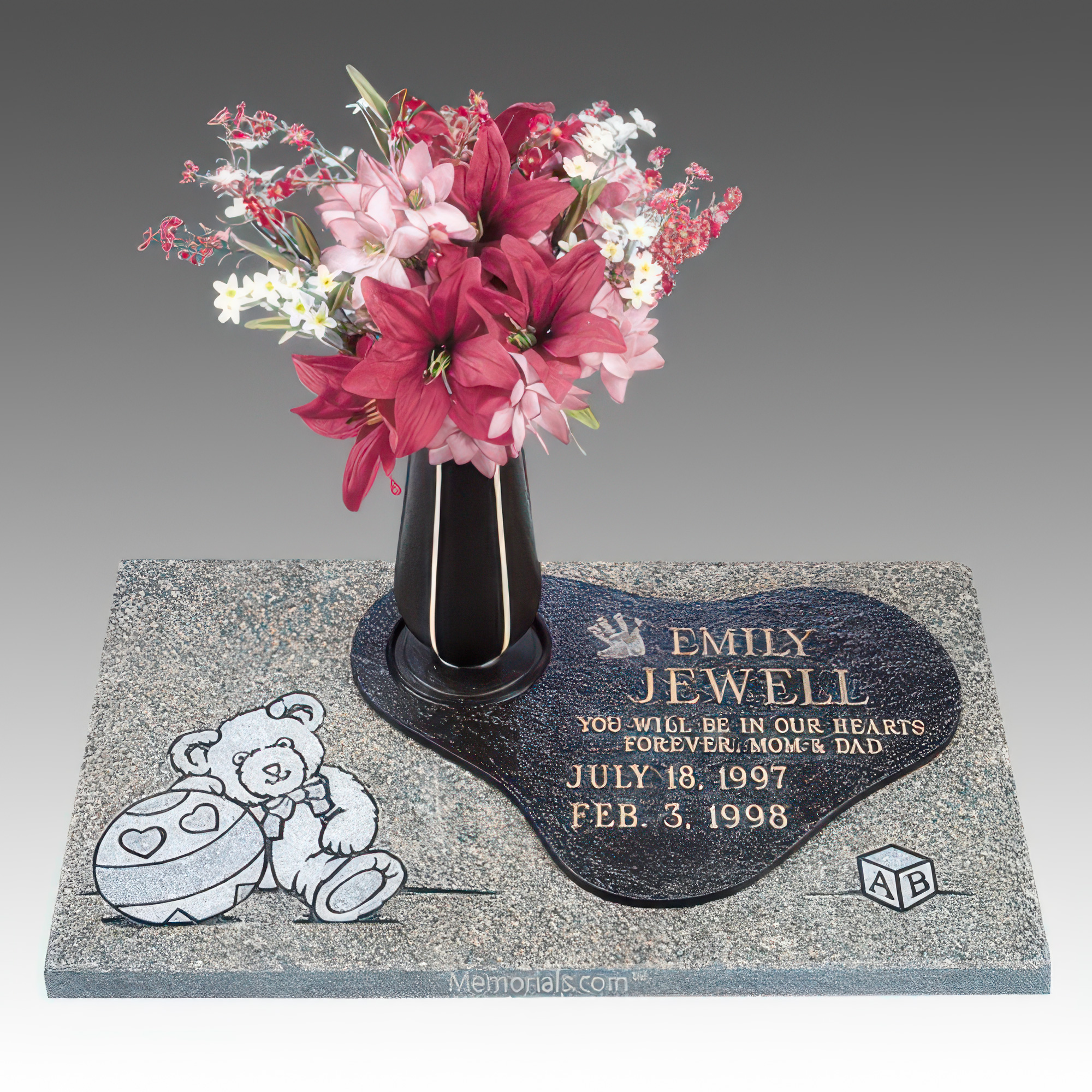
Small, sculpted angel figures can be mounted atop flat markers or set into the base of upright monuments. Many families also choose cherub etchings with personalized elements — a favorite toy, a small animal, or the child's name written in a soft, handwritten-style font that feels less formal and more tender.
Faith-Based Traditions That Influence Headstone Design
Religious headstone choices are shaped by denomination, cultural heritage, and sometimes specific cemetery regulations. Understanding these influences helps families make selections that are both meaningful and permitted.
Catholic traditions frequently feature the crucifix, the Blessed Mother, saints, rosary imagery, and the IHS monogram (a Christogram representing Jesus). Many Catholic cemeteries have guidelines about the size and type of monuments allowed, so checking with the diocese or cemetery office before ordering is important.
Protestant traditions tend to favor simpler cross designs, open Bibles, and praying hands without additional saint imagery. The preference for understated elegance reflects many Protestant denominations' emphasis on the directness of faith.
Eastern Orthodox traditions use the distinctive three-bar cross, icons of saints, and the Chi-Rho monogram. Orthodox headstones may also include the phrase "Memory Eternal" in Greek, Slavic, or English.
Jewish tradition generally discourages elaborate figurative imagery on headstones. Simple markers with the Star of David, a menorah, or the Kohen hands (priestly blessing) are standard. Angel and cross imagery does not appear on Jewish memorials.
Islamic tradition favors modest, unadorned stones or markers with Arabic calligraphy, Quranic verses, and the crescent moon symbol. Figurative imagery is typically avoided.
Some families also honor veterans with religious headstone designs. Military cemeteries allow approved religious emblems on government-issued markers, and many families add a private headstone with both a cross or Star of David and military insignia. To learn more about memorial customs across cultures and military traditions, the article on coins left on headstones tradition explores one of the most enduring cemetery practices.
How to Order a Religious Headstone
Bringing a religious headstone design from concept to finished memorial involves several steps, and knowing the process upfront helps families feel confident in their choices.
1. Review cemetery regulations. Before selecting any design, confirm what the cemetery permits regarding monument size, height, material, and imagery. Some cemeteries only allow flat markers, while others accept full upright monuments. Catholic and denominational cemeteries may have additional design requirements.
2. Choose your material and style. Decide between granite, bronze, or a combination. Select an upright monument, slant marker, or flat marker based on the cemetery's rules and your personal preference.
3. Work with a memorial provider. Share your design vision — reference photos, symbol preferences, inscription text, and any photos you want included. A reputable provider will create a proof or digital rendering for your approval before carving begins.
4. Approve the design proof. Review every detail carefully: spelling, dates, the position and scale of religious imagery, and the font style for inscriptions. Changes are easy at this stage but costly after carving has started.
5. Understand the timeline. Custom headstones typically take four to twelve weeks from design approval to delivery and installation. Sculpted three-dimensional angel monuments on the higher end of complexity may take longer.
For broader headstone design inspiration beyond religious themes — including nature scenes, hobby motifs, and personalized artwork — explore the full range of design options available.
Frequently Asked Questions
What does a weeping angel on a headstone mean?
A weeping angel represents grief, mourning, and the sorrow of those left behind after a loss. The design originated from William Wetmore Story's 1894 sculpture The Angel of Grief and has become one of the most recognizable motifs in cemetery art. It is especially common on memorials marking an untimely death or the passing of a child. The angel's protective posture also symbolizes spiritual guardianship — the belief that a heavenly presence watches over the departed.
Can you put a cross on any headstone?
A cross can be engraved, etched, or carved onto most headstone materials, including granite, marble, and bronze. However, cemetery regulations may limit the size, shape, or imagery allowed on markers. Always check with the cemetery office before ordering a cross headstone to make sure the design complies with their guidelines.
How much does an angel headstone cost?
Costs vary widely based on material, size, and the complexity of the angel design. A laser-etched angel portrait on a standard granite headstone may add $200–$500 to the base price, while a fully sculpted three-dimensional angel monument can range from $3,000 to $15,000 or more. Bronze-mounted angel figures fall somewhere in between. Your total cost will also depend on the headstone size, granite color, inscription length, and installation fees.
What is the difference between a cherub and a weeping angel on a headstone?
A cherub is a small, childlike angel figure that symbolizes innocence and purity. It is most often found on children's and infant memorials. A weeping angel is a full-sized, adult angel figure depicted in a mourning pose — typically draped over a tombstone with bowed head and drooping wings. The weeping angel represents grief and loss, while a cherub conveys tenderness and the belief that the child has been received into divine care.
Are religious headstone designs available for non-Christian faiths?
Religious symbolism on headstones is available across many faith traditions. Jewish memorials commonly feature the Star of David and the menorah. Islamic headstones may include Arabic calligraphy and Quranic verses. Buddhist and Hindu memorials can incorporate lotus flowers, Dharma wheels, and Om symbols. Most monument providers can accommodate custom designs for any faith tradition. Confirm with both the provider and the cemetery that the design meets any applicable guidelines.
Choosing a Religious Memorial That Honors a Life of Faith
A religious headstone does more than mark a grave. It speaks to what the person believed, what sustained them through life, and what their family hopes awaits beyond it. Whether the design is a weeping angel that captures the depth of loss, a Celtic cross that honors heritage, or a pair of praying hands that reflects a lifetime of devotion, the right choice transforms stone into testimony.
Memorials.com offers a wide selection of headstones for graves in granite and bronze, with options for custom engraving, laser etching, and personalized religious imagery. Browse the full collection to find a design that speaks to your family's faith and honors the memory of someone you love.