🏬Supersize Online Funeral Retailer🪦1000's of Headstones⚱️Over 15,000 Cremation Urns⚰️Caskets Overnight Delivery🛒Funeral & Memorial Superstore🚚FREE Shipping on ALL Orders👨👩👧👦Helping Families for over 20 Years💰Lowest Price Guarantee🏬Supersize Online Funeral Retailer🪦1000's of Headstones⚱️Over 15,000 Cremation Urns⚰️Caskets Overnight Delivery🛒Funeral & Memorial Superstore🚚FREE Shipping on ALL Orders👨👩👧👦Helping Families for over 20 Years💰Lowest Price Guarantee
🏬Supersize Online Funeral Retailer🪦1000's of Headstones⚱️Over 15,000 Cremation Urns⚰️Caskets Overnight Delivery🛒Funeral & Memorial Superstore🚚FREE Shipping on ALL Orders👨👩👧👦Helping Families for over 20 Years💰Lowest Price Guarantee🏬Supersize Online Funeral Retailer🪦1000's of Headstones⚱️Over 15,000 Cremation Urns⚰️Caskets Overnight Delivery🛒Funeral & Memorial Superstore🚚FREE Shipping on ALL Orders👨👩👧👦Helping Families for over 20 Years💰Lowest Price Guarantee
Losing a beloved pet is one of life's most difficult moments. As pet parents increasingly seek ways to honor their companions while protecting the environment, biodegradable pet urn options have become a meaningful and eco-conscious alternative to traditional pet urns. These sustainable memorials allow your pet to return to nature while creating a lasting tribute to the bond you shared.
Whether you're considering a peaceful water ceremony, a garden memorial, or releasing your pet's ashes to the wind, biodegradable urns offer a way to celebrate your pet's life that aligns with your values. Explore other options for pet ashes to understand how biodegradable urns fit into the broader range of memorial choices. This guide explores the options, legal considerations, and practical steps to help you choose the right approach for your furry, feathered, or scaly friend.
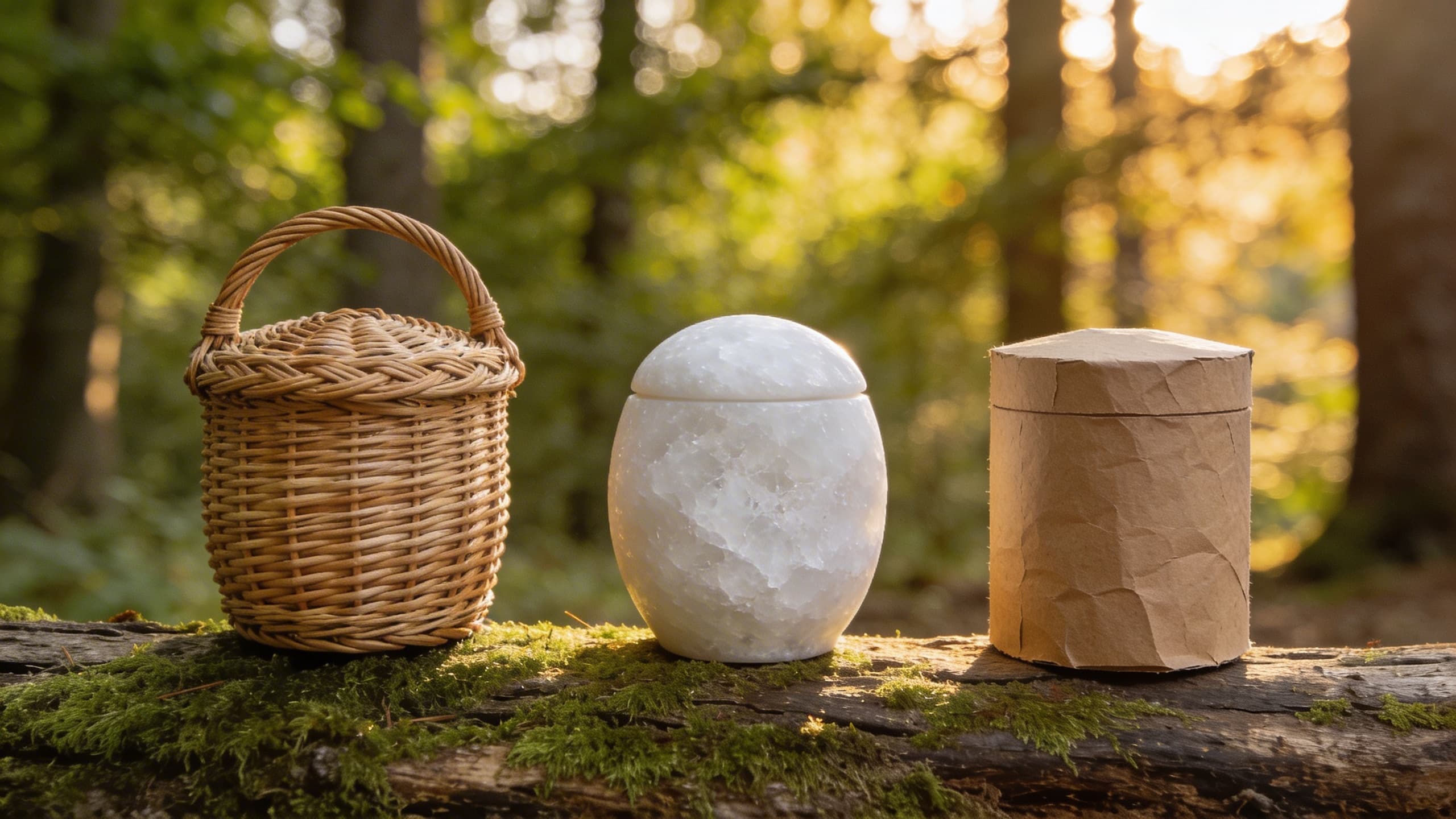
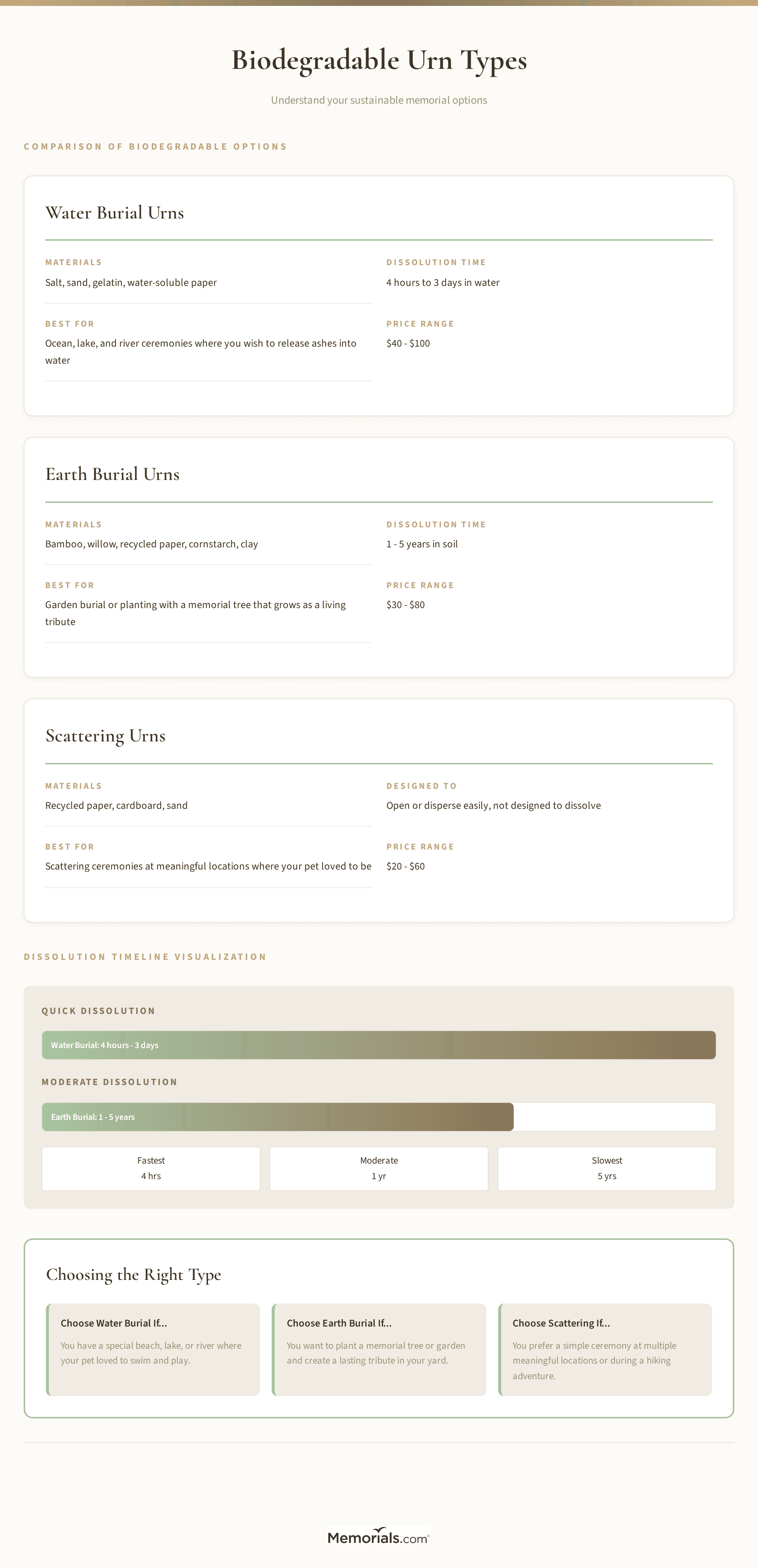
Biodegradable pet urns are containers crafted from natural, plant-based, or recycled materials designed to safely hold your pet's ashes and return them to the environment through one of three methods: water burial, earth burial, or scattering. Unlike traditional urns made from ceramic, metal pet urns, or stone, these eco-friendly alternatives naturally decompose, leaving no permanent footprint.
Common Biodegradable Materials
Modern biodegradable pet urns are created from a thoughtful selection of materials:
Recycled paper and kraft materials – Lightweight and designed to dissolve quickly in water or soil
Bamboo – A sustainable, fast-growing resource that biodegrades within months to a few years depending on placement
Salt-based compositions – Unique options that dissolve completely in saltwater, leaving nothing behind
Sand and clay mixtures – Natural earth materials that return to soil over time
Cornstarch and plant fibers – Compostable materials that break down similarly to food waste
Natural tree bark – Handcrafted using traditional papermaking techniques, creating beautiful, one-of-a-kind urns
Recycled plant fiber blends – Combinations designed to biodegrade within 2-5 years of burial or water immersion
Each material has different dissolution timelines and biodegradation properties, which we'll explore in detail as we discuss each burial method.
Water Burial for Pet Ashes
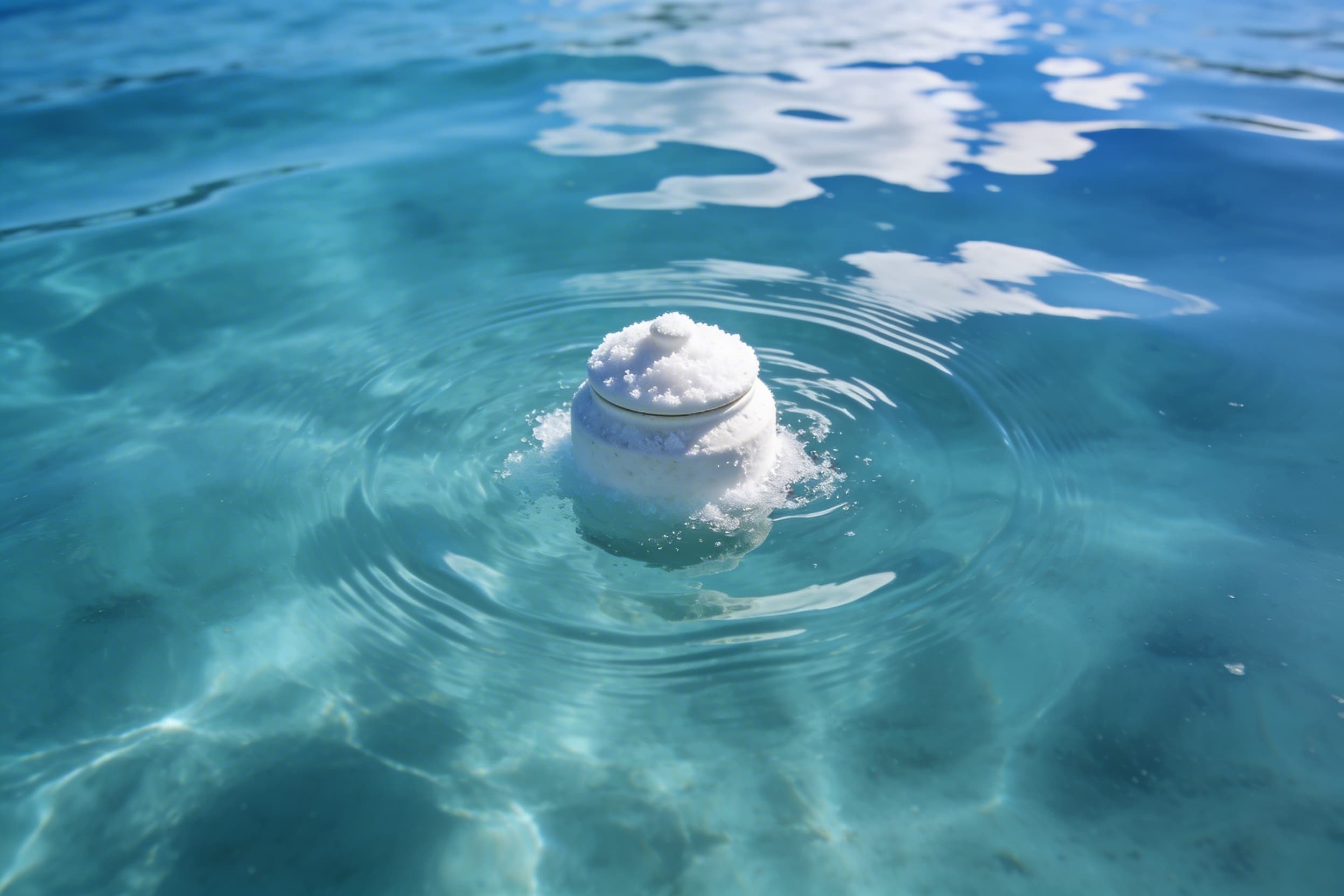
Water burial is a serene and deeply meaningful option for honoring your pet. This method involves placing your pet's ashes in a biodegradable urn designed for water immersion, then releasing it into a chosen body of water during a peaceful ceremony with loved ones.
How Water Burial Works
Water burial ceremonies typically unfold in these steps:
Select your location – Choose a meaningful waterway (ocean, lake, river, or pond)
Choose your urn – Select a biodegradable water urn that floats initially or sinks gradually
Plan your ceremony – Arrange the time, invite family and friends, and prepare meaningful words
Release the urn – Many families rent a boat for ocean burials, or wade into freshwater from the shore
Scattering – Some water urns scatter ashes gently as they dissolve; others sink intact and decompose over time
The entire process creates a meaningful ritual where your pet's remains return to nature while you create lasting memories with those who loved your companion.
Saltwater vs. Freshwater Burial
The type of water you choose affects the urn's performance and the timeline for dissolution:
Saltwater (Ocean) Burial
Faster dissolution in salt-based urns (designed to dissolve in salt environments)
Best for salt-specific biodegradable urns; other materials may degrade more slowly
Creates a meaningful connection as your pet becomes part of the vast ocean ecosystem
Typical dissolution timeline: 4-12 weeks depending on material
Freshwater (Lake, River, or Pond) Burial
Works well with paper-based and plant fiber urns
Slower dissolution than saltwater in some materials; typically 8-24 weeks
Creates an intimate setting in a place of personal significance
Less current and wave action means urns may remain visible longer during the ceremony
Dissolution Timeline
Biodegradable water urns biodegrade at varying speeds based on materials and water conditions:
Salt-based urns: 2-8 weeks in saltwater; 8-16 weeks in freshwater
Paper and kraft urns: 6-12 weeks in water
Bamboo-composite urns: 8-16 weeks depending on thickness and water conditions
Plant fiber blends: 4-12 weeks in active water; slower in still water
Water temperature, salinity, and current all influence degradation. Warmer waters and saltwater environments typically speed the process.
Water Burial Ceremony Ideas
Making your water burial ceremony personal transforms it into a powerful memorial:
Sunrise or sunset service – Release your pet's ashes during a beautiful time of day with family gathered
Personal readings – Share favorite memories, poems, or favorite songs that remind you of your pet
Flower petals or wreaths – Scatter biodegradable flowers or create a floating flower arrangement to accompany the urn
Pet's favorite item – Include a small, biodegradable toy or treat to send with your pet one last time
Write letters – Have family members write letters to your pet and read them aloud before release
Photo or video ceremony – Capture the moment to preserve the memory and share with those who couldn't attend
Where Water Burial Is Legal
Water burial laws vary significantly by location:
Ocean Water (Saltwater)
Permitted in U.S. federal waters at least 3 nautical miles from shore
Requires MPRSA (Marine Protection, Research, and Sanctuaries Act) permit from the EPA
Check your state's Department of Environmental Protection for additional regulations
International waters have different rules; research your country's environmental laws
Lakes and Rivers
Laws vary by state and local jurisdiction
Many states require permits from the Department of Natural Resources or Environmental Quality
Some public lakes prohibit all ash scattering; others allow it with permits
Private lakes on your own property may not require permits (confirm with local authorities)
Private Ponds
Generally permitted on your own property without permits
Confirm no environmental restrictions apply to your specific location
Check if your pond is connected to public waterways, which may require permits
Always verify: Contact your local environmental agency, parks department, or water authority before planning your ceremony. Regulations change and vary widely.
Earth Burial for Pet Ashes
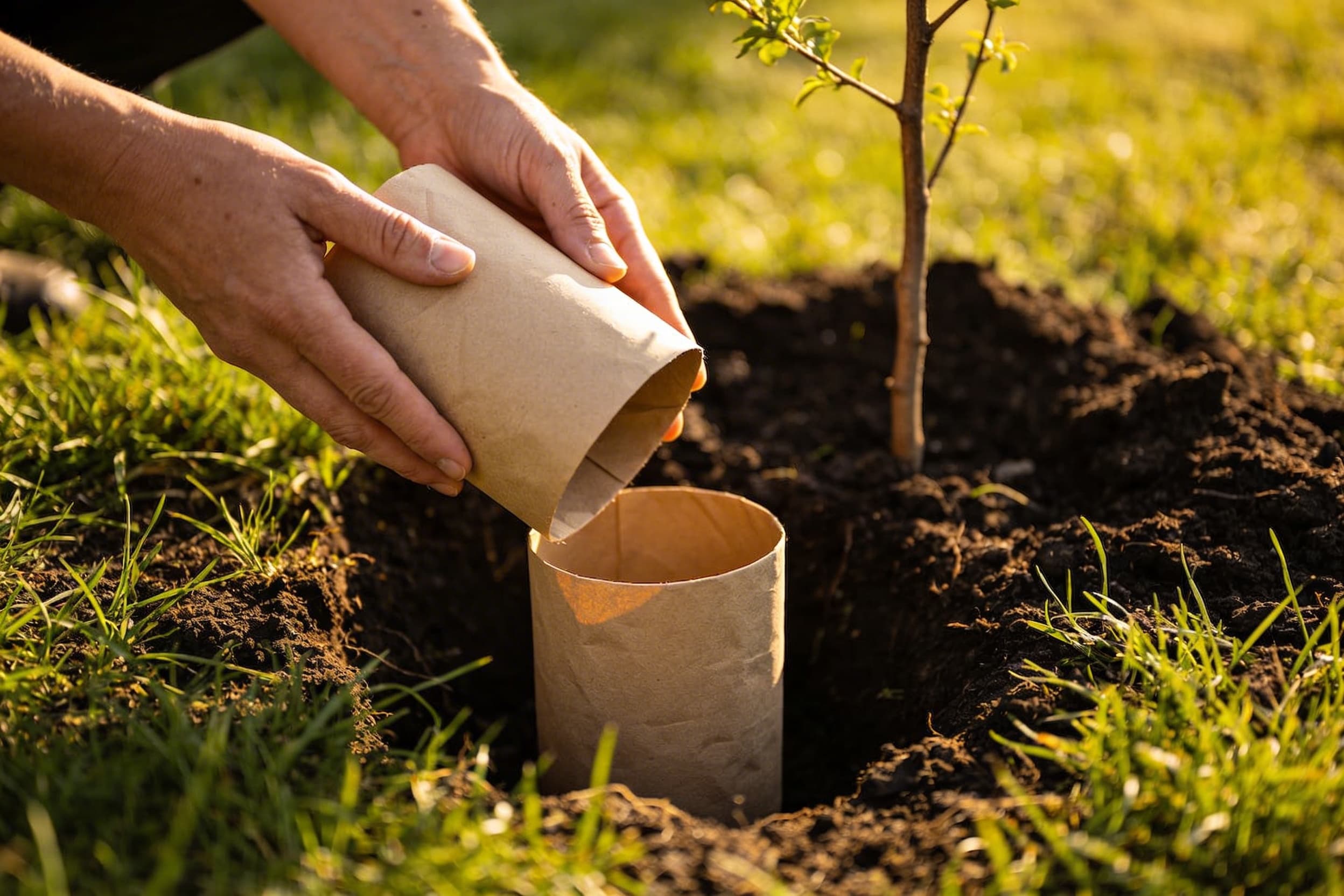
Earth burial offers a grounded, permanent memorial option where your pet's ashes return to soil. Many families plant a memorial tree or garden flowers over the burial site, creating a living tribute that grows and changes with time.
How Earth Burial Works
Earth burial is a straightforward process:
Select a location – Choose a meaningful spot in your garden, family property, or pet cemetery
Prepare the burial site – Dig a hole at the appropriate depth (see guidelines below)
Place the urn – Gently position your biodegradable urn in the prepared hole
Backfill with soil – Cover the urn with earth and mark the location
Create a memorial – Plant flowers, a tree, or place a pet memorial stone to mark the spot
Unlike water burial, the entire urn remains in place as it biodegrades, allowing the ashes and urn materials to gradually return to the soil.
Burial Depth Requirements
Proper burial depth protects the urn and ensures safe, respectful decomposition:
Minimum depth: 12 inches for small urns (cats, small dogs)
Standard depth: 18-24 inches for most pet urns
Larger pets: 24-36 inches for large dogs and other substantial remains
Deeper burial: 2-3 feet reduces animal disturbance and speeds decomposition in undisturbed soil
Depth recommendations also vary by:
Local regulations – Pet cemeteries and municipalities may have specific depth requirements
Soil type – Clay and dense soils require deeper burial; sandy or loose soils allow shallower placement
Water table – Avoid areas with high water tables that may flood the burial site
Animal presence – Deeper burial prevents disturbance from digging animals
Garden Placement and Living Memorials
Earth burial transforms your pet's resting place into a living memorial:
Tree Planting Over the Burial Site
Choose trees suited to your climate and the urn's size
Popular choices: Dogwood, maple, Japanese maple, fruit trees, or magnolia
Space the tree appropriately to grow and mature over years
The tree becomes a growing tribute to your pet's memory
Consider a tree's mature size; avoid planting too close to home structures or utilities
Flower Gardens
Plant perennials that return each year as a cycle of remembrance
Pet-safe options (non-toxic for wildlife): Black-eyed Susans, coneflowers, daylilies
Create a defined memorial garden area with a stone or marker
Annual flowers can mark special dates or occasions
Native shrubs support local wildlife while honoring your pet
Grass and Ground Covers
Plant clover or native groundcovers for a subtle memorial
Place stepping stones or a dedicated marker nearby
Creates an integrated, natural-looking space
Timeline for Decomposition
Biodegradable pet urns biodegrade at different rates in soil:
Paper and kraft urns: 1-3 years in moist soil; longer in dry conditions
Salt-based urns: May dissolve slowly without water; better for water burial
Bamboo composites: 2-4 years depending on soil moisture and temperature
Plant fiber blends: 2-5 years in standard soil conditions
Clay and sand urns: 3-5 years; very durable in dry climates; faster in wet conditions
Decomposition speed increases with:
Higher soil moisture and water drainage
Warmer climate and longer growing seasons
More active soil microorganisms and earthworms
Looser, more porous soil types
Complete biodegradation ensures that within 5 years in most climates, your pet's remains have fully returned to the earth.
Scattering Urns for Ash Dispersal
Scattering represents the most flexible option—your pet's ashes are released to the wind, across land, or into water during a meaningful ceremony. Specialized scattering urns make this process simple and dignified.
How Scattering Urns Work
Scattering urns are designed with specific features to control ash dispersal:
Floating Scattering Urns (water scattering)
Float for several minutes, allowing family time to say goodbye
Dissolve gradually or have openings that release ashes slowly
Used from boats or shorelines for ocean and lake scattering
Transition smoothly from visible memorial to natural return
Biodegradable Scattering Urns (land scattering)
Held upright or tilted to release ashes to the wind
May include internal baffles to control dispersal speed
Can be kept as-is or held during a ceremony for personal connection
Wind Scattering Urns
Designed for open dispersal from mountain tops, cliff sides, or open land
Often trumpet or funnel-shaped to direct ashes appropriately
Minimize wind interference and ensure ashes travel meaningfully
Made from fully biodegradable materials that dissolve after use
Dispersal Mechanisms
Different urn designs handle ash release in various ways:
Tilt-to-disperse: Gently tilt the urn to release ashes; controlled by your actions
Float-and-dissolve: Urn floats momentarily then gradually releases ashes as it sinks
Scoop and scatter: Remove a biodegradable scoop from inside the urn and use it to release ashes
Natural dissolution: Urn dissolves gradually in water or on land without active dispersal
The right mechanism depends on your preferred ceremony style and the location where you'll scatter.
Legal Locations for Scattering
Scattering pet ashes is permitted in many locations, but regulations vary significantly:
Private Property
Generally legal on your own land without permits
Confirm with local zoning or homeowners association
Check that no deed restrictions prohibit scattering
Safest, most private option for many families
Public Land
National parks often prohibit ash scattering; check individual park regulations
State forests and public lands have varying policies
Some allow scattering with permits; others prohibit it entirely
Contact the managing agency before planning your ceremony
Beaches (Public)
Scattering on public beaches varies by state and municipality
Some beaches welcome ash scattering with no restrictions
Others limit scattering to designated areas or require permits
Obtain written permission from the local parks or recreation department
Ocean Scattering
Legal at least 3 nautical miles offshore in U.S. federal waters
Requires MPRSA permit from EPA
State regulations may impose additional requirements
Private boat charters often handle permits for organized ceremonies
Lakes and Rivers
Many states allow scattering on public waterways with permits
Some prohibit it in specific protected areas
Always contact your state's Department of Natural Resources first
Private waterways follow your own-property rules
Cemeteries and Pet Cemeteries
Many welcome ash scattering if owner or operator grants permission
Some offer designated scattering gardens
Others prohibit scattering on grounds
Always ask before planning a ceremony
Never scatter on: Military bases, tribal lands, or properties without owner permission. Always research your specific location's regulations. For details on burial regulations for pet ashes, including legality in your state, review our comprehensive guide.
Comparing Biodegradable Urns to Traditional Urns
Understanding the differences helps you choose an option aligned with your values and budget:
Feature
Biodegradable Urns
Traditional Urns
Materials
Paper, bamboo, salt, clay, plant fibers
Ceramic, marble, brass, wood
Environmental Impact
Return to nature; zero permanent footprint
Permanent; remain unchanged indefinitely
Cost
$30–$150 (often less expensive)
$100–$1,000+ (often more costly)
Permanence
Dissolves in 1–5 years
Lasts indefinitely
Ceremony Options
Water, earth, or scattering burial
Display, columbarium placement, or scattering
Personalization
Minimal; focus on material choice
Extensive; engraving, custom designs
Space Requirements
No permanent display space needed
Requires shelf, mantle, or columbarium space
After-Care
None; returns to nature
Periodic cleaning, protection from damage
Eco-Consciousness
Aligns with environmental values
Standard option; ongoing presence
For families prioritizing environmental responsibility and returning their pet to nature, biodegradable urns offer a meaningful alternative that honors both the pet and the planet.
Choosing the Right Biodegradable Option for Your Situation
Your choice between water burial, earth burial, and scattering depends on several practical and personal factors:
Decision Framework
Water Burial works best if:
You have access to a meaningful body of water (ocean, lake, or river)
You prefer a flowing, transitional ritual
You can obtain necessary permits
You want the ceremony itself to be the lasting memorial (no permanent marker)
Your pet was a water-lover or had a connection to the sea
Earth Burial works best if:
You own property where burial is permitted
You want a permanent, grounded memorial location
You'd like to plant a living memorial (tree or garden)
You prefer having a specific place to visit and remember
Your pet spent significant time in your garden
For families undecided between biodegradable and traditional options, consult our pet urn selection guide to weigh all factors.
Scattering works best if:
You want flexibility and a portable option
You don't own property or prefer not to bury remains
You want to honor your pet's favorite outdoor location
You prefer a dispersal that symbolizes freedom and release
You value having no ongoing maintenance or location commitments
Personal Considerations
Beyond logistics, your choice reflects personal values:
Environmental impact: All three options are eco-friendly; earth burial with tree planting creates the largest living legacy
Ceremony style: Water and scattering center on the ritual itself; earth burial creates an ongoing memorial space
Memory placement: Do you want to visit your pet's resting place, or prefer release and freedom?
Cultural or spiritual traditions: Some practices emphasize water return, others earth burial, others sky release
Multiple pets: Families may choose different methods for different beloved companions
Cost Comparison: Biodegradable Urns vs. Traditional Urns
Biodegradable urns are often the most budget-friendly option for pet memorials:
Biodegradable Urns
Basic paper or kraft urns: $30–$60
Premium bamboo or plant fiber urns: $60–$120
Specialty water or scattering urns: $75–$150
Total ceremony cost: Low to moderate (no permanent placement fees)
Memorial items (plaques, markers, trees): $20–$300+
For families on a budget, biodegradable urns offer meaningful memorial options at a fraction of the cost of traditional urns, especially when avoiding ongoing columbarium or cemetery fees.
Frequently Asked Questions About Biodegradable Pet Urns
Can I use a biodegradable urn for scattering if I change my mind about burial?
Yes. Many biodegradable urns work for multiple methods. You can hold a biodegradable water or earth burial urn and scatter your pet's ashes to the wind instead, or choose scattering initially and switch to burial if circumstances change. The flexibility is one advantage of biodegradable options. However, scattering urns and burial urns have slightly different designs, so choose one that matches your primary plan.
How do I know if water burial is legal where I live?
Contact your state's Department of Environmental Protection, Department of Natural Resources, or local environmental agency. Have your specific location in mind (ocean, lake, river, or private pond). Federal law permits ocean burial at least 3 nautical miles from shore with an EPA MPRSA permit, but state and local laws may be stricter. Ask about permit requirements and any restrictions in your area. Many cremation services and pet funeral homes can guide you through local regulations.
Will the biodegradable urn break apart in water or soil before all ashes are released?
Reputable biodegradable urns are engineered to remain intact through their dissolution timeline, gradually releasing or dispersing ashes over weeks or months rather than breaking apart suddenly. Materials like bamboo-composite, kraft paper, and plant fiber blends are designed to weaken slowly as they absorb water or moisture, ensuring a controlled process. However, quality varies by manufacturer. Choose urns from established providers that specify dissolution timelines and materials clearly.
Can I use a biodegradable urn if I want to spread ashes across multiple locations?
Yes. You can divide your pet's ashes among multiple biodegradable urns (scattering urns are designed for this) or use one urn and portion out ashes during a ceremony. Some families create multiple earth burial sites (one at the family home, one at a beloved hiking location), use scattering urns at multiple meaningful places, or perform a water burial and save ashes for scattering later. Discuss cremation options with your pet crematory; they can divide remains into multiple urns or containers.
What happens to the biodegradable urn material in soil—is it safe for plants and wildlife?
Yes. Biodegradable materials break down into organic compounds that become part of the soil ecosystem. Paper, bamboo, plant fiber, and clay are all natural substances that earthworms, bacteria, and fungi process safely. The decomposed urn material enriches the soil in the same way leaves, wood, and other organic matter do. This is especially beneficial if you're planting a memorial tree or garden—the degraded urn materials contribute to soil health. No harmful chemicals or toxic residues remain.
Next Steps: Planning Your Pet's Memorial
Choosing a biodegradable urn option is a loving way to honor your pet's memory while respecting the environment. Here's how to move forward:
Reflect on your preference: Water burial, earth burial, or scattering?
Research local regulations: Contact your environmental agency about legal requirements for your chosen method and location
Choose your urn: Select from our biodegradable urn collection that matches your chosen burial method
Plan your ceremony: Decide on location, attendees, readings, or memorial elements
Consider additional memorials: Learn about memorial trees, keepsake urns, or pet grave markers for added remembrance
If you're exploring other options for your pet's remains, our guides on what to do with pet ashes and how to choose a pet urn provide comprehensive comparisons. For families considering cremation versus burial, our cremation vs. burial guide offers detailed insights. Explore our complete guide to pet memorials to understand all the meaningful ways to honor your beloved companion.